Archive

Posts Tagged ‘Entrepreneur’

Yolanda Diaz success story with Little Miss Fashion nets her new recognition

May 5, 2016 1 comment

One of Omaha’s most successful fashion designers, Yolanda Diaz, has earned many accolades  for her Little Miss Fashion designs and for her entrepreneurial spirit. She was recently honored in Omaha and at the White House in Washington D.C. as Nebraska’s Small Business Person of the Year. Her story of perseverance and persistence is one we can all learn from. Her story also reminds me that the most commercially successful artists, in her case designer, are very entrepreneurial and must be in order to make a go of it. Through a lot of hard work she has mastered both the creative side of her work along with the business side. Most artists or creatives fail on the business side of things. She has been determined to not let that happen.


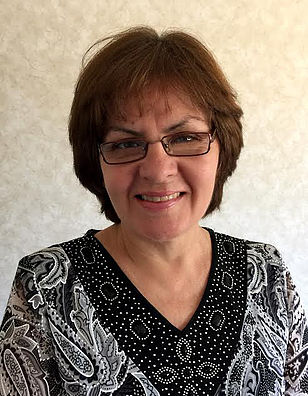
Yolanda Diaz


Yolanda Diaz success story with Little Miss Fashion nets her new recognition

©by Leo Adam Biga

Originally appeared in El Perico


Yolanda Diaz dreamed of being a fashion designer growing up in Monterey, Mexico. Living in poverty far from any fashion capitals, it seemed an unrealistic aspiration to some. Not to her. She actually realized her dream in Mexico and then did so all over again in America. Her clothing manufacturing company in South Omaha, Little Miss Fashion, has become such a success that she’s been named Nebraska Small Business Person of the Year.

The recognition comes from the U.S. Small Business Administration. Diaz will accept her award at May 1-2 ceremonies in Washington D.C., where she will be joined by other state winners. The 2016 National Small Business Person of the Year will be announced then.

She is also being honored May 3 at the Nebraska Small Business Person of the Year Award Luncheon and Entrepreneurial Workshops at the Salvation Army Kroc Center at 2825 Y Street. The 8:30 a.m to 12:30 p.m. event is free and open to the public. Registration is required. Call 402-221-7200 to register.

This is not the first time Diaz has been singled out for her entrepreneurial achievements. Her story has captured the imagination of business organizations and media outlets since 2011. Still, this newest recognition was not something she expected..

“Honestly, it surprised me,” she says. “However, I feel very happy. Even though my business has not grown as fast as I would like, it has grown in ways I didn’t expect. I have been working hard for years and I think the award is recognition not just for me but for all the people who work hard like I do in the community. There are a lot of people around me working hard and there are institutions and organizations helping me.

“It is an honor for me to have the opportunity to get this recognition.”

Aretha Boex, lead center director for the Nebraska Business Development Center, nominated Diaz for all that she’s done to find success. “She is hard working to the core. Her tenacity and her drive is very contagious. When you work with someone like her you buy into their passion and their idea,.” Boex says. Boex’s admiration grew when she discovered Diaz has mentored women at the Latina Resource Center and trained correctional facility inmates to sew. “She cares and she’s really out there to make a difference.”

Diaz’s children’s collections are sold online through Zulily and Etsy and in select boutiques. The business has seen ups and downs and she’s learned many hard lessons, but through business workshops and loans she’s grown her operation to where she now employs nine people. Her husband and son also assist.

She says news of the award is encouraging her local network of English-as-second-language entrepreneurs.

“They say, ‘Well, one day I will be in the same place as you,’ and I say, ‘You can do it, you will. If you work hard you will get the recognition one day.’”

Boex says there’s plenty in Diaz’s story to inspire others. “She’s a woman who built her business from the ground up. She moved here from Mexico to pursue the American Dream. There’s a lot to take away from her experience and how hard work really pays off. She had the resilience and the courage to build this from scratch. She’s a great success story. We love working with her.”

Diaz’s road to success began in Mexico, where she learned to stitch on an antique sewing machine.

“I really loved doing it, I fell in love with fashion because it gives me everything I want. ”


Yolanda Diaz works on a skirt in her Little Miss Fashion shop in Omaha. (Photo by Mike Tobias, NET News; all photos by Mike Tobias, NET News, unless otherwise noted))

Marta Chavez (front) and Dolores Diarcos (back) working at Little Miss Fashion


Diaz holds her best-selling Little Miss Fashion design.


Diaz hopes to move Little Miss Fashion production into a location nine times larger in the near future.


Little_Miss_Fasion.jpg

(Diaz, owner of Little Miss Fashion LLC, Janell Anderson Ehrke, GROW Nebraska CEO, Laurie Magnus Warner, Central Plains Foundation Board Member)


From an early age she began making her own school apparel from old clothes and fabric scraps. Her ever-changing personal wardrobe drew much attention. Her dreams were encouraged when her talent was identified by a mentor who became her first client and referred other clients to her. Diaz even landed a contract to create school uniforms.

She steeped herself in her craft and built a successful business, learning from seamstresses and studying at design schools. Her business thrived but her then-husband didn’t support her pursuits. That proved frustrating to Diaz. who self-describes as “very independent.” After she and her family came to the States in 1996, her first marriage ended. She remarried and worked regular jobs searching for her niche here. She made pet tents before making children’s clothes. She started her company in 2003 under a different name, at first targeting the Latino market before expanding to the Anglo market. Along the way, she’s participated in the micro loan program Grameen America and taken classes at the Juan Diego Center, the Nebraska Business Development Center (NBDC) and Gallup University.

“She built her business while she had a night job, fulfilling all the orders herself, cutting and assembling by hand, which meant long hours, in addition to having a family. So she really believed in this,” says Boex.

A regular designer at Omaha Fashion Week, Diaz showed a collection that sparked interest from Zulily. The onset of online sales orders forced her to outsource production to Mexico, where family members pitched-in. Now everything’s done in-house in Omaha. An SBA microloan from the Omaha Small Business Network provided working capital to grow her business enough to meet large orders. Little Miss Fashion now averages $10,000 sales a month from online orders. Last May Diaz received a second SBA microloan through Nebraska Enterprise Fund. The loans allowed her to buy additional commercial sewing machines, purchase materials and hire more workers. She gets ongoing management consulting and export support from NBDC. Diaz recently sealed a deal to sale her clothing lines through the German e-commerce company Windelbar.de.

Every step of her journey, from improving her English to learning how to write a business plan to doing budgets to managing employees, has helped her succeed.

“I like challenges. I never say never,” she said. “A lot of work, but a lot of fun. I still learn something new every day.”

True to her entrepreneurial spirit, Diaz envisions growing into more markets, a larger production facility and her own retail shop. But for now, she’s content knowing she’s “doing what I’ve wanted to all my life – I’m following my passion.”

Follow Little Miss Fashion on Facebook or visit http://littlemissfashionusa.com/.


Deadeye Marcus “Mac” McGee still a straight shooter at 100

March 15, 2016 4 comments

I met the late Marcus “Mac” McGee shortly after he turned 100 years old.  He was a small man in stature but he exuded high character in the way he conducted himself.  He spoke with rhythmic charm and he dressed in classic style.  He was a gentleman through and through.  Having come out of the Deep South to make a life for himself and his family in Omaha, you knew that he had seen a few things.  The more I talked to him and to others who knew him from back in the day, I learned he had built a thriving business in North Omaha, the Tuxedo Barber Shop, that made him a pillar in his community.  He gave and commanded respect.  He was also something of a legend in his own time for his deadeye marksmanship as a hunter and trapshooter.  He and his shop and the role they played in the community when a village really did raise a child represented something treasured and lost.  Here is a profile I wrote about this unforgettable personality.


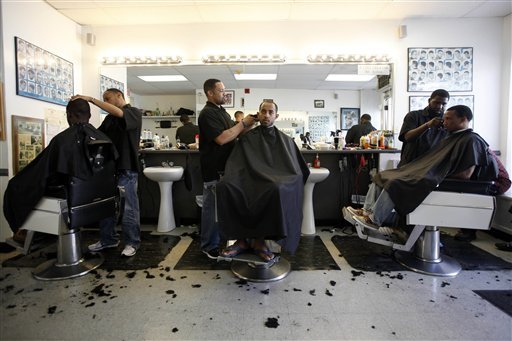
black barber shop


Deadeye Marcus “Mac” McGee still a straight shooter at 100

©by Leo Adam Biga

Originally appeared in the Omaha Weekly


As Americans enjoy increasingly longer life spans, octogenarians and centenarians grow more commonplace. But as 100-year-old Marcus “Mac” McGee of Omaha proves, no one who has lived a century should be taken for granted. Start with the fact this lifelong boxing fan sounds uncannily like one of his favorite prizefighers from the past – Muhammad Ali. Right down to the soft, melifluous voice and braggadocio style. A fiercely proud and stubborn descendant of both African-American slaves and white slave owners, McGee can be a cantankerous sort these days. He is entitled to sone orneriness though after spending the better part of a century forging a life of substance against all odds.

It would be easy to ignore McGee or any of his fellow residents at the Maple-Crest Care Center in Benson. But that would be a mistake, for these ancient ones are reservoirs of rich life experiences. Take McGee, for example. Talk to him for awhile and you soon learn about the beloved Tuxedo Barber Shop he owned and operated for decades on the Near North Side.  While strictly against nursing home rules, McGee still plies his barber skills now and then by giving his roommate a trim and shave. He fussily lays out the tools of his trade on a tray. Clippers, tweezers, brushes, combs, creams, tonics, lotions. His small hands are surprisngly steady and his nimble fingers move with well=practiced precision. You learn too this avid sportsman was a crack shot and expert small game hunter. In his late 80s he could still hit 100 of 100 targets at trapshooting ranges. Even now, he maintains the lean body of an athlete. One of his fondest memories is going to New York City to see his idol, the great heavyweight black boxer Jack Johnson fight at Madison Square Garden.

“I sat there live and watched Jack Johnson knock a man’s natural teeth out of his mouth. I saw him do that, yeah,” he said.


Louis McDowell demonstrates how to sharpen a straight razor at his shop in Paterson, New Jersey, in 1994. Via the Library of Congress.


Unlike many Maple-Crest residents, who are bedridden or wheelchair-bound, he navigates the sprawling complex on his own two feet, albeit with the aid of a cane. And where most residents appear disshelved, his features always remain well-groomed and his dress nattily-attired. He entrusts his own smartly-trimmed hair to one of his barbering proteges. Last September McGee cut a dashing figure for a 100th birthday party held in his honor at the social hall of Clair Memorial United Methodist Church, 5544 Ames Avenue. A crowd of friends and family, including dozens of grandchildren and great-grandchildren, gathered to pay tribute to this man of small stature but big deeds.

When he ponders what it means to have lived 100 years, he ponders a good long while. After all, considering a lifespan covering the entire 20th century means contemplating a whole lot of history, and that takes some doing. It is an especially daunting task for McGee, who, in his prime, buried three wives, raised five daughters, prospered as the owner of his own barber shop, served as the state’s first black barbershop inspector, earned people’s trust as a pillar of the North Omaha community and commanded respect as an expert marksman. Yes, it has been quite a journey so far for this survivor of Jim Crow and participant in the Great Migration.

One hundred years sure is a long time, someone suggested.

“It sure is,” McGee said in his sweet-as-molasses voice, his small bright face beaming at the thought of all the high times he has seen.

Escorted into the hall by his five daughters, his entrance sparked a rousing round of applause and cheers. Too bad he could not share it all with his wife of 53 years, LaVerne, who died in 1996. After two earlier marriages failed, McGee finally got it right with the former Laverne Lawson, who kept all the books at his shop. “They were quite a team,” said daughter Marcia Butler, an Omaha school teacher. As well-wishers offered congratulations or shared reminiscences, the party put in focus all that McGee once was and still is – a meticulous man of many roles and skills. While not as physically spry or mentally sharp as he would like, he remains a vibrant soul with a lifetime of stories to tell.

Born and raised along the Mississippi-Louisiana border in a period when the Ku Klux Klan still reigned, his family of ten escaped the worst of Jim Crow intolerance as landowners under the auspices of his white grandmother Kizzie McGee, the daughter of the former plantation’s owner. Kizzie, who lived nearby, maintained contact with the black side of the family. McGee’s people hacked out a largely self-sufficient life down on the Delta. The runt of the litter, McGee, toughened himself working on the livestock-laden farm. It was there he learned two skills that he would build his life around – shooting and barbering.

His father taught him how to handle a gun at a young age. Even though it was too much weapon for him at the time, he often used a single-barrel 12-gauge shot gun as a boy. He recalls an incident when the gun nearly got the better of him. “I was about 10 or 12 years old. A hog got out after the chickens. My mother ran out hollering at the hog. I got the gun. I dragged it outside by the barrel. My mother said, ‘What are you going to do with that?’ I said, ‘I’m going to kill that hog.’ I broke it (the gun) down, I put the shells in and I closed it up. I raised it up but the stock was too long for me. I looked down the barrel with my eyes open and I pulled the trigger, and the hog went one way and the gun went the other way and I went to the ground. My mother laughed. But from then on I could go out with my gun hunting and kill everything I shot at.”

He left school early to help provide for the family’s needs, variously bagging wild game for the dinner table with his deadeye marksmanship and cutting people’s hair for spare change with his dexterous mastery of scissors.

Just out of his teens he followed the path of many Southern blacks in what became the Great Migration to the North, where conditions were more hospitable and jobs more plentful. During his wanderings he picked up spending money by cutting heads, including those of railroad gang crewmen and field laborers he encountered out on the open road. Never one to back away from a challenge, he recalls how a large man in Falls City, Neb. teased him about his diminuitve size, whereupon McGee promptly threw him to the floor and pinned his shoulders down until the man begged for mercy.

He eventually made his way to Omaha in the early 1920s. Before the Great Depression hit the still new century was a fat time for most Americans, unless you happened to be black or Hispanic. “The hardest times I had was when I first got here. I didn’t have any money. I didn’t have a job.” Like many new arrivals to the area he finally found employment in the Omaha packing plants. “I went to work in a packing house cleaning hog innards. I didn’t like working there. I said to myself, What am I doing here? I should be in a barber shop. So, after two or three weeks there, I quit. I walked out and I never went back. I started cutting heads.”

That decision changed his life, as did his earning a state barber’s license in 1928. “When I got that license, that’s all I needed,” he said. He eventually opened his own place and it was at the Tuexedo Barber Shop in the historic Jewell Building on North 24th Street that he became his own man.

“The best times for me was when I got that shop there. I got the business going really good. It was quite a shop. We had three chairs in there. New linoleum on the floor. There were two other barbers with me. We had a lot of customers. Sometimes we’d have 10-15 people people outside the door waiting for us to come in. I enjoyed that. I enjoyed working on them, and I worked on them, too. I’d give them good haircuts. I was quite a barber, Yes, sir, we used to lay some hair on the floor. We sure did.”


An abiding perfectionist. McGee has always been a sticler for doing things a certain way. His way. As a former barber under him said, “There may have been a better way, but his way stood.” For more than 50 years, McGee’s will prevailed. “I was particular about a lot of things,” he said. For one thing, no profanity was allowed in the shop. And no drinking or smoking on the job was tolerated. Obsessive about running a clean clip joint, McGee swept the floor incessantly and pressed his family into serve at night to wipe things down. “I didn’t let nothing get dirty,” he said. “I had it looking good.”

His fastidiousness no doubt led to him being appointed the state’s first black barber shop inspector, a post he held several years. Together with his longtime and equally bullheaded partner, the late James Bailey, the two made an indomitable pair.

Even into the 1970s the Tuxedo was strictly an old-school establishment – from the atmosphere to the discourse to the service. No fancy hair styles there. Just a neat, clean cut and a smooth, close shave. “If you didn’t see things the way Daddy and Mr. Bailey saw them, you might as well have gone to another shop. It was their way or no way, even down to the haircut,” said another daughter, Leanna Simmons. “If you said, ‘I’d like my hair this way,’ it was, ‘Nope,’ zip, zip, zip, okay, goodby. They cut it the way they wanted it cut.”

Leanna’s son and one of McGee’s many grandchildren, Anthony Lawrence Simmons, confirms that’s how it was. “Every grandchild would go down there to get their hair cut. Grandpa didn’t care what hair style you wanted. If it was the latest style out, you were not getting it. You only got what he wanted. He knew what was right. Yet his place was always busy, so everybody liked him. He gave a clean haircut. It may not have been what you wanted, but it looked good. He made sure you left his shop looking sharp.”

For proof of just how particular McGee and Bailey could be, the shop’s third chair sat vacant many years because the barbers they tried out turned out to be “loafers” in their eyes. Finally, an enterprising young clipper by the name of Clyde Deshazer measured up to their expectations and they took him on to stay. Except they couldn’t get used to his tongue-tripping name, so they nicknamed him Youngblood. The name stuck. Today, Youngblood’s Barber Shop is THE haircutting emporium in North O.

When McGee finally closed his own shop in the late ’70s, he went to cut at Youngblood’s, where he remained until 1988. It was a case of the master working under the former pupil. “He was set in his own ways,” Deshazer said,  “He still wanted to charge like $2.50 for a haircut but we were charging $4 by then. I said, ‘When I worked for you, I went by your prices, now that you’re working for me, you go by my prices. Things have just changed a little bit.’ After that, we didn’t have any more problems. We got along fine. Like father and son.”

The Tuxedo was among dozens of thriving black-owned businesses in North Omaha before the expansion of the Interstate system and the explosion of the riots in the late ’60s resulted in disruption and decline. In its heyday the Tuxedo drew an eclectic mix of customers. Businessmen. Blue-collar workers. Squares. Hipsters. Pool sharks frequented a popular billiards hall adjacent to it. Jazz and blues musicians played the Dreamland Ballroom above it. In classic barber shop tradition, the Tuxedo was a hangout for guys to talk guns and sports, politics and women. McGee’s favorite topic, of course, was shooting.

“If you started talking about trapshooting you might be in that chair an hour, ” Deshazer said. “He loved that.”

For Keith A. Ross, who shined shoes there during the tumultous civil rights era, the shop was an awakening and an education rolled into one. “Besides learning to shoot pool at the pool hall next door, the shop was where I first learned about the NAACP and the Urban League. It was a friendly shop where people gathered and had conversations about different issues affecting the North Omaha community. It was grownup talk.”


John Butler, former head of the local chapter of the NAACP, recalls, “We talked about a lot of issues there. As a matter of fact, Mr. McGee was instrumetnal in helping us and molding our ways,” he said, referring to early Omaha activists like himself.

Beneath the hard core exterior of the proprietor resided a soft heart.

“As ornery as he and Bailey were, they were good people,” Leeana said. “I remember Momma saying Daddy would sometimes accept in lieu of payment for a haircut a watch or a ring. It was kind of like a little pawnshop. Adds Marcia, “People would come in and get loans from him if they lost their job and they needed to pay their rent or something like that.”

Ross recalls McGee as a stern but benevolent figure. “The first job I ever had was shining shoes in his barber shop. He really treated me well. He was very protective and very caring. In order to get to the shop I had to walk through an area where the boys on the corner, so to speak, were dealing. Theirs was a flashy life, but it was ugly. I could have been on that track, too, but I always kept his form of discipline in mind. He said, ‘Always be on time or otherwise you suffer the consequences.’ I never found out what those consequences were because I was never late. I really didn’t want to let him down. I still don’t. It’s why I think I’ve got such a healthy work ethic now.”

According to Ross, his mentor was part of a different breed then. “Mr. McGee and owners of the other small businesses there gave you a real sense of the history of the development of the area. They would come out on the street and interact with us. It was a community feeling. I don’t see where we have that now. He probably developed in me my sense of peoplehood.”

Back in the day, North O was a community within a community where everybody looked out for everybody else and where, decades before the Million Man March, strong black men took a hand in steering young black males. McGee and Bailey were among a gallery of mentors along North 24th Street.

Richard Nared recalls, “Oh, we had a bunch of role models. John Butler, who ran the YMCA. Josh Gibson. Bob Gibson. Bob Boozer. Curtis Evans, who ran the Tuxedo Billiards. Hardy “Beans” Meeks, who ran the shoe shine parlor. Mr. McGee and Mr. Bailey who ran the Tuxedo Barber Shop. All of these guys had influence in my life. All of ‘em. And it wasn’t just about sports. It was about developing me. Mr. Meenks gave a lot of us guys jobs. In the morning, when I’d come around the corner to go to school, these gentlemen would holler out the door, ‘You better go up there and learn something today.’ or ‘When you get done with school, come see me.’

“Let me give you an example. Curtis Evans, who ran the pool hall, would tell me to come by after school. ‘So, I’d…come by, and he’d have a pair of shoes to go to the shoe shine parlor and some shirts to go to the laundry, and he’d give me two dollars. Mr. Bailey used to give me free haircuts…just to talk. ‘How ya doin’ in school? You got some money in your pocket?’ I didn’t realize what they were doing until I got older. They were keeping me out of trouble. Giving me some lunch money so I could go to school and make something of myself. It was about developing young men. They took the time.”

McGee’s son-in-law Larry Simmons (Leanna’s husband) values the life lessons his elder taught him. Simmons said McGee instilled in him and his friends a respect for rules, manners and traditions. “It was a high standard he made for all of us. You did not walk into his house with a hat on your head or your shirt outside your pants. He’s always been a fanatic about that kind of stuff. Even with his own dress today, his tie is neat, his shoes are shined, his belt is in its proper place. He has everything down to a tee. He taught us all of that.”


Louis Armstrong gets a haircut in his local barbershop in Queens, New York, circa 1965. Via "LIFE" Magazine.


The fussy McGee’s penchant for tidiness and exactness extended to other areas of his life. At home, for example, he operated a sewing machine to make and mend his own own shooting-hunting vests and related apparel items. Veteran trapshooter Dick Gradowski  of Blair, Neb. said McGee was a veritable fashion plate even at the range. “He was always neatly dressed. I don’t think I ever saw him in a pair of blue jeans. He was always very particular about his appearance. ” McGee was just as finicky about the shells he used – fashioning his own with a special machine. Hr built his own shooting gallery in his dirt basement. He carefully cleaned his large collection of Browning rifles and kept them safely locked in a case. Brought up to be self-sufficient, he harvested fruits and vegetables from country fields and his own backyard gardens for canning and freezing.

Choosy about what he ate, he avoided pork and salt and he whipped up elixder-like brews of honey, hot water and milk and blended fruit and vegetable concoctions. He bagged pheasants, quail, squirrel and all manner of small game on hunting outings and he hooked fish by the stringer-full at area lakes and rivers. He was, by all accounts, a good cook, too.

He won countless turkeys and hams, in addition to trophies, at area trapshootung tournaments. He also pocketed cold, hard cash from the many side bets he won from shooting companions. A member of an amateur trapshooting hall of fame. McGee’s love of the sport is such he turns most any conversation over to the many guns he owned, many of which are now classics, and to the many shooting exploits he compiled.

“Oh, man, I loved to shoot. I’d go out every Sunday. I don’t know how many turkeys and hams I won, but I had to rent a locker at Bickel’s Meats to store all that meat in a freezer there. I don’t know how much money I made, but I’d come home with a potful sometimes. Maybe $200-$300. My wife would say, ‘What’d you bring home?’ I’d say, ‘I brought a little change home.’ And she’d go, ‘Well, let me have it then.'”


Silhouette of a young man shooting with a long rifle against sunset sky


His reputation for dominating the field scared off some in shooting cirlces. Fewer and fewer challengers were willing to take him on.

“I would break that target so easy. I’d tear it up every time. I’d whip them fellas down to the bricks. They wouldn’t tackle me. Oh, man, I was tough,” he said.

Butler, Deshazer and Gradowksi all saw him in action and attest to the fact his skill could discourage others. Butler said, “He had an eye. When he went hunting he used to wait for everybody else to shoot and if you missed your quail he would get it.”

DeShazer said, “Oh, yeah, he was a marksman. He once killed 17 quail out of 18 shots. Not too many people beat him. If you neat him, he was going to try to figure out a way a way to beat you,”

Gradowski added. “He was a very, very good shooter in his time. you had to watch out for him.”

At age 88 McGee finally had to give up his two loves – shooting and barbering – following a motor vehicle accident in which he suffered a severe head injury. He lapsed into a coma but regained consciousness a few days later. He made a full recovery except for the loss of some motor skills. Through a rehabilitation program that included weight training he got back most of his motor functions, although his shooting days were over. Shooting is never far from his thoughts, however.

“I miss everything about shooting,” he said.

He said he sometimes dreams of being back on the range. There he is again, locking, loading, sighting the soaring trap and firing. Naturally, he never misses.

“Yeah, man, I was one tough shooter.”


Tim Christian: Changing the face of film in Nebraska

September 13, 2015 1 comment

Tim Christian may not look the part of a revolutionary figure in his three-piece suit and with his button-down manner, but what he’s doing in the film space in his hometown of Omaha is provocative enough to be considered far on the fringe stuff.  Well, at least it’s breaking new ground and shaking things up in this relative film financing wasteland.  My Omaha Magazine (http://omahamagazine.com) profile of Christian and what he’s doing that’s getting people’s attention follows.  Watch for a future story about Christian and his film endeavors on this blog. I have a distinct feeling I will be writing about him and his film projects for years to come.


Tim Christian

Tim Christian

Changing the face of film in Nebraska


September 9, 2015
Photography by Bill Sitzmann
Originally appeared in the September/October 2015 issue of Omaha Magazine (http://omahamagazine.com/)

Nebraska lacks an infrastructure to support a film industry. Omaha Creighton Prep graduate Timothy Christian is trying to change that. After years away pursuing a music industry and new media career, he’s returned to base his feature film financing and production company, Night Fox Entertainment, here.

Where most local film ventures are micro-sized with no-name talent, Christian backs real projects with $10 million-plus budgets boasting recognizable cast and crew. Case in point, Z for Zachariah. Shot in New Zealand, the post-apocalyptic drama stars Margot Robbie, Chiwetel Ejiofor, and Chris Pine. It’s directed by Craig Zobel, whose 2012 Compliance made waves. Z netted strong reviews at Sundance and will get a 2015 theatrical release.

In post-production now is the thriller Headlock starring Andy Garcia, Justin Bartha, and Dianna Agron.

Night Fox further limits investor exposure by only financing pictures with strong pre-foreign sales, capping individual contributions, and spreading capital around several projects. That model is securing local movers and shakers to buy into projects, including Tenaska’s recently retired Paul Smith, also a Night Fox partner.

Christian says film financing can be a “tough sell to people who are of a conservative investment nature,” adding, “They need to see kind of black and white what you have, what you’re doing, how the money looks, so we have to make sure the approach is right.” Once it “makes sense,” he says investors “are all interested in being part of growing a business not prominent in Omaha.”

Besides, having a piece of a project with stars, premieres, awards, trailers, and posters has a “cool” factor other opportunities don’t offer.

More than anything, Christian says people invest in him.

“People have to like you. Even if they don’t like the other people involved, they have to like you. If they don’t like you, they’re not going to want to work with you or give you their money.”

Being a Nebraskan helps him relate to investors.

“They like to deal with someone away from that Hollywood mindset. They want a straight shooter, someone who they deem as honest and down-home who has Midwest values. That goes a long way.”

Upon meeting him for the first time, some folks reveal surprise that he’s African-American.

“Once they understand I know the business, I know what I’m talking about, I know how to protect their money, then all that goes out the window.”

As a Nebraska film financier, he’s already an outlier. As an African-American doing it, he’s pushing new boundaries.

“From a cultural standpoint I think it’s really significant because it gives some hope to other young African-Americans in terms of what they can do. That means a lot.”

Christian, married with one child, mentors at Jesuit Middle School in North Omaha.

An advantage to being in Nebraska (Night Fox also has an office in L.A.) is giving investors first shots at projects otherwise being shopped only on the coasts.

His next step in making the state a film player is East Texas Hot Links adapted from the Eugene Lee play. Omaha’s own John Beasley is a producer and actor in it. Samuel L. Jackson is an executive producer. The film may shoot in-state. If not, Christian’s committed to bringing future projects here as he believes film production can be an economic engine that employs people and boosts tourism.

Tim Christian 2

Aisha’s Adventures: A story of inspiration and transformation; homelessness didn’t stop entrepreneurial missionary Aisha Okudi from pursuing her goals

July 10, 2014 2 comments

The Reader July 10 - 16, 2014


If you’re looking for a pick-me-up story to lift you out of the self=pity blues or doldrums then you’d be hard-pressed to top the story of Aisha Okudi, an Omaha woman who has not let anything stop her, including homelessness, from pursuing her entrepreneurial missionary purpose and dream.  This is my new cover story about her for The Reader (www.thereader.com).  I did a previous story about Aisha and her path of inspiration and transformation which you can find on this blog.


Aisha’s Adventures:  A story of inspiration and transformation; homelessness didn’t stop entrepreneurial missionary Aisha Okudi from pursuing her goals

Her Sha Luminous by Esha Jewelfire line of beauty products serves African missions dream

©by Leo Adam Biga

Appeared in The Reader (www.thereader.com)

Entrepreneurial African missionary Aisha Okudi, 37, laid the foundation for her thriving business and ambitious humanitarian work during a period when she and her children were sometimes homeless. She’d been through worse.

Regardless of how bad things have gotten, she’s remained focused on her mission because she considers her story of transformation a testimony to her faith in a Higher Power she serves for the greater good. The Omaha visionary is proud of how far she’s come with her Sha Luminous line of organic shea butter skin rejuvenation and beauty products. Sha Luminous is available at HyVee supermarkets in six states as well as Akins Natural Food Stores, No Name Nutrition, Jane’s Health Market and select salons. She’s working to get in Whole Foods.

She’s humble about her success because she’s following a plan she feels called to. She views everything about her journey, even the dark side, as a conduit for the missionary work that is her real passion.

The base of her hand-crafted products is butter extracted from the shea nut, a natural plant indigenous to the same rural African provinces she serves. After years helping poor African children by sending supplies and making donations, she visited Niger in 2010 through the auspices of the international NGO, Children in Christ. She made connections with villagers, tribal leaders, fellow missionaries, government representatives and American embassy officials. She purchased a missionary house to accommodate more evangelists.

She says she’s tried getting Omaha churches on board with her work but has been rebuked. She suspects being a woman of little means and not having a church or title explains it. Undaunted, she works closely with CIC Niger national director, Festus Haba, who calls her work “a blessing.” In addition to Niger, where she once considered moving, she also visited Togo on that 2010 trip.

She visited Ghana in 2012. She’s returning to Africa in August, this time to Mali. With the help of Haba and CIC she’ll explore growing her business there to create import-export streams. At one time she weighed developing holistic herbal health clinics in West Africa.

“I want to create job opportunities for people because this business is about helping people who come out of poverty just like me.”

She wants more Africans enjoying the fruits of the shea nut grown there by employing locals in its production and sale and by making her products affordable so more locals can enjoy their health benefits.

It’s a far cry from the self-centered, destructive path she was on from the early-1990s through 2004. Growing up in Omaha and Des Moines she long headed for a hard fall. Her family often moved. Finances were always tight. She was a head-strong girl who didn’t listen to her restless mother and alcoholic father. She got in trouble at school.

“There were issues at home. I was always told no coming up and I got sick of hearing that. I felt I was a burden, so I was like, ‘I’m going to get out and get my own stuff.'”
At 15 she left home and began stripping. A year later she got pregnant. She gave birth to the first of her four children at 17.

“I found myself moving around a lot. I really didn’t know what stability was. I never had stability, whether having a stable home or just being stable, period, in life. I was young and doing my thing. My dad walked in the club where I was stripping. My sister told on me.”

The ensuing confrontation only drew her and her parents farther apart.

“I was trying to live that life. I wanted to have whatever I wanted to have. I danced, I sold my body and I made lots of money from it. I did it for about 12 years. I wanted to have it all, but it was not the right way.”


She got caught up in the alcohol, drug abuse and theft that accompany life on the streets.

“I was in and out of prison a lot. I used to steal to make money.”

In 1997 she served time in the Douglas Country Correctional Center for theft by receiving stolen property.

In 2004 she was crying in an Iowa jail cell after her second Operating While Intoxicated offense. Her arrest came after she left the strip club where she performed, bombed out of her head.

“I had to get drunk so I could let these men touch me all night,” says Okudi, who drove her car atop a railroad embankment, straddling the tracks, poised to head for a drop-off that led straight into a river.

That night in jail a decade ago is when it all came to a head. “I just sat there and I thought about my kids and what I just did,” she says. She felt sure she’d messed up one too many times and was going to lose her children and any chance of salvaging her life, “I was crying out and begging to God. I had begged before but this time it was a beg of mercy. I was at my bottom. I surrendered fully.”

To her relief the judge didn’t give her prison time at her sentencing hearing. “I told the judge, ‘I will never do this.’ He said, ‘If I ever see you in my courtroom again it will be the last time.’ I burnt my strip clothes when I got out, and I didn’t turn back. I got myself into treatment.” She’d been in treatment before but “this time,” she says, “it was serious, it wasn’t a game. I enrolled in school.”

Ten years later she has her own business and a higher calling and, she says, “I’m so proud that I write the judge and tell him how I’m doing.” Okudi’s learned how to live a healthy lifestyle and not surround herself with negative influences and enablers.

Her life has turned many more times yet since getting straight and sober. In 2006 she seemingly found her soulmate in George Okudi, an ordained Ugandan minister and award-winning gospel artist. They began a new life in Washington DC and had two children together. Then she discovered he was still married to another woman in Africa. The couple is separated, awaiting a divorce.

She’s learned to forgive, but she’s only human. “Even though I’ve grown sometimes it feels like, When is it going to end? But to much is given, much is required. You’ve just gotta consistently stay on track. No matter what it is, stay focused.”

Even as recently as 2012 and 2013 there were tests and setbacks, including bouts of homelessness. The difference then and now is that when adversity strikes she doesn’t get too high or too low, she doesn’t feel entitled to act out. She claims she experienced an epiphany in which God spoke to her and set her on her Esha Jewelfire mission.

“When I had that vision and dream I was pregnant with my youngest son. I was living with my grandmother. I was newly separated from my husband. I said to my grandmother, ‘I don’t know if I’m going crazy or what, but the Lord said I will build like King Solomon and go and help my people in Africa.'”

Since childhood this Africaphile has expressed a desire to help alleviate poverty overseas. Her visit to Niger and the overwhelming reception she received confirmed she’s meant to serve there.

“It was immediate. I was able to blend in wherever I went. I know that’s where my calling is. I cook African, my children are African, my friends are African. It’s just a natural thing for me.”

She even speaks some native dialects.

She’s long made a habit of sending clothes and other needed items to Africa. But a call to build was something else again.

“Where am I going to get the money from to help these people in Africa?” she asked her grandma. “I didn’t know.”

Then by accident or fate or divine providence a friend introduced her to shea butter, an oil used in countless bath and beauty products. “And that’s how the idea for my business came up,” Okudi says.

Shea is gritty in its natural state and only transforms with love. Sound familiar? “I researched it and found that it moisturizes, it cleanses, it refreshens, it heals, it brightens, it just makes you shine. It’s naturally rich in vitamins A, E and F. So I figured out what I needed to do with it.”

Her experiments led to lightly fragranced shea butter-based products, including lotions, creams and scrubs. She began marketing them.

She gets raw shea in big blocks she breaks down by chopping and melting. She incorporates into her products natural oats and grains as well as fruit and herb oils to lend pleasing textures and scents. The fresh fruit and herbs are pressed by hand. Nothing’s processed. “All this stuff comes from God’s green earth — oils, spices, herbs, organic cane sugar,” she says. Nothing’s written down either. “I have it all in my head. I know every ingredient in everything I make. Everything is made fresh to order and customized. Everything is hand-packaged, too.”

Selling at trade shows, house parties, off the Internet, the small business “started really growing and taking off for me,” she says. With her products now in chain stores, she contracts workers to act as sales demo reps where her products are carried. She also has a contract with a hand-mass manufacturing firm in Nashville, Tenn. She’s in discussions with a majo beauty products manufacturer-distributor.

She says besides her line being “bomb diggity,” retailers and customers alike respond to “the mission purpose behind it,” adding, “It’s purposeful, its meaningful, there’s life to my company.”

Her business has been based at various sites, including the Omaha Small Business Network. Production’s unfolded in her mother’s kitchen, in a friend’s attic, in her house, wherever she can find usable space. “My business is simple, it doesn’t really need a big plant or office.”

Having a store of her own though was a dream. A few years ago “an angel” came into her life in the form of Robert Wolsmann, who within short order of meeting Okudi wrote her a check for $10,000 – as a loan – to help her open her own shop.

Wolsmann is not in the habit of lending such amounts to near total strangers but something in Okudi struck him. Besides, he says, “I could see she needed help. She showed me what she made and I was so impressed I presented her with that money. I couldn’t resist investing.”

“He’s an awesome person,” Aisha says of Wolsmann. “We’ve become great friends.”

She says her dynamic personality attracts people to her. She feels what Wolsmann did is evidence “things work in mysterious ways – you don’t know what’s going to happen, you’ve just got to be prepared.”

Her Organically Sweet Shea Butter Body Butter Store opened in 2010. The labor of love proved star-crossed when after two months her landlord evicted her. Okudi’s opened and closed two more stores to pursue new opportunities .

“Entrepreneurs go where they have to go to get things done.”

Evictions from two rental homes found to be uninhabitable took their toll. “I asked God, “What is going on? Why does this keep happening to me?’ I didn’t have nowhere to go. I was seeing myself back living from place to place like I’ve always been, still trying to take care of my kids and do my business.” Stripping’s fast money lured her back for a short time. She and her kids stayed at the transitional housing program, Restored Hope, but when things didn’t work out there they went back to couch surfing before finding stability at the Salvation Army Shelter.

“It kept me focused on my mission. I’ve been called to be that missionary, so I’m not so upset anymore about why I’ve been bounced around or why things have happened the way they have. There’s a way bigger purpose. If you just be really humble and wait and be patient to see what God’s doing, He’ll turn things around.”


A Restored Hope residence


Aisha and her wares at a store


It’s why she no longer dwells on the past or worries about what she doesn’t have right now.

“Nothing matters when it comes to material things. The only thing that matters to me is my health and just doing what I know is right in my heart to do. Even though I lived the way I lived, basically homeless, I realized I am very blessed and I remained grateful.

“God only gives you what you can handle. He obviously knew I was equipped to do it. You just do it, but there’s preparation to everything. Nothing goes to waste. Everything I’ve been through I’ve actually used as a powerful testimony to either encourage someone else or to inspire myself to move forward.”

For the past year she’s earned enough money to find stable living in her own downtown condo.

Often asked to share her story before church congregations and community groups, her message is simple:

“To persevere, period. I don’t care what your situation is you’ve got to keep going. The world doesn’t stop, time doesn’t stop, problems never cease. You have to go through them. I go through my trials and tribulations and I never ask God to remove me out of them because it builds character, strength and perseverance for you to move on. I always tell people, ‘Don’t stop, just keep going.’ The fight is not easy, the fight ain’t no joke, it’s a war, it’s a battle. You’ve got to put full armor on and fight. God don’t have punks in his army.

“You’ve got to be a soldier for everything you put hour hands to.”

She’s aware her success amid myriad struggles inspires others.

“It reminds me who I am and that when I don’t think people are watching me they are. I’ve always been a happy, giving, loving person. Even when going through something, I pick myself up. Even my father said, ‘If you can be changed from where you came from, I know there’s a God.’ Now, he’s stopped drinking. He’s reborn.”

She realizes her own rebirth may be hard for some to swallow. “People who knew me in my past might say, ‘Oh no, not Aisha, with what she used to do?'” She acknowledges she couldn’t transform without help.

“When I got the call to start my business to support the Africa missions I had no business training or education, I just did it. I’ve learned as much as I can from experts and entrepreneurs who’ve already been there and done it. I’ve seen what not to do and what to do. I’ve learned to listen more, to be more patient, to look at all options instead of just what I know, because it’s not about what I know it’s about what I need to know. This has been a very humbling and hard faith thing for me.”

In 2011 she graduated from Creighton University’s Financial Success Program for low income single mothers.

“I learned how to be very resourceful working within my means, how to budget and how to cut out unnecessary costs.”

She was introduced to EcoScents owner Chad Kampschneider, who became a mentor and ended up picking up her product line.

After being accepted to tape an episode of Shark Tank she decided to pass on the opportunity rather than risk gaining partners who would wrest control of her vision.

“I’ve gotten this far with my mission and purpose and I don’t want to get detoured on another path. I figure one day I’ll be a shark myself helping people grow their businesses and realize their dreams. If I continue to follow the path I’ve been following I’ll get there. I see myself global helping in poverty areas through my company.”

She’s determined to complete her mission.

“I just get up knowing I gotta do what I gotta do, and I live one day at a time. I don’t let my financial and emotional path haunt me. There’s nothing you can do but do what you need to do every day and be a part of hope. Too many people are hopeless. There’s no light in them. I’m not about that, I’m about life and living to the fullest and being happy with what I have and where I’m at because I know greatness will come some day for me. I’m a very favored woman in all things I do.

“I haven’t been at a standstill. I’ve come a long way and I continue to grow. I’m still transforming, I’m still moving forward. I still reach out for help in areas I need help in.”
She suspects she’s always had it in her to be the “apostolic entrepreneur” she brands herself today. “Sometimes you don’t discover it until things happen to you. I think I had it but I didn’t embrace it then. I heard so much negative in my life coming up that it turned me away…I said, ‘I’ll show you,’ and I made wrong decisions. What the devil meant for bad, God turned it for good.

“I’m a natural born hustler but I hustle in the right way now.”

This month Okudi will be at select Walmarts and No-Frills stores seeking donations for her African missions.

For more about her products, visit her Facebook page, Sha-Luminous-by-Esha-Jewelfire.


One of Aisha’s many different looks

From Omaha to Paris to Omaha, with Love, Anne-Marie Kenny’s Journey in Song and Spirit

June 21, 2012 3 comments

I am drawn to stories of people whose lives are clearly journeys of transformation and discovery and stepping outside comfort zones in pursuit of dreams.  Anne-Marie Kenny’s life story is one such journey.  I tell it here in short form but you can find on this blog a much more extensive profile of her I did.  She’s a cabaret singer and an entrepreneur and a generous soul.

Anne-Marie Kenny


From Omaha to Paris to Omaha, with Love, Anne-Marie Kenny’s Journey in Song and Spirit

©by Leo Adam Biga

Originally appeared in Omaha Magazine


Before becoming a world citizen, Anne-Marie Kenny made a coming of age trip to Paris, alone, at 21.

“I just knew I needed to spread my wings,” said Kenny, a native Omahan who eventually made her second homes in Paris and Prague. where she forged careers as a cabaret singer and entrepreneur. After years away this once expatriate returned to Omaha in 2001. Her hometown’s now the base of her performing, vocal instruction and corporate consulting work.

She became a Francophile studying French at Mercy High. The City of Lights symbolized romantic possibilities. She recalled, “I was on the train from Marseilles to Paris when an elderly woman asked, ‘What will you do in Paris?’ and for some reason I said, ‘I’m a singer, I’m going to sing.’ That’s the first time I admitted that to myself.”

She and her three older sisters had performed locally as a four-part harmony group. They studied piano. Not all was idyllic,. Their attorney-father drowned when they were young, leaving their mother to raise and support them. To help make ends meet the girls took jobs. Anne-Marie worked at St. James Orphanage.

“I think life might have been a little bit harder had we not had music,” said Kenny. “Music was our outlet.”

Once in Paris she found work as an au pair. Her pluck led her to an Argentine guitarist and the two became street performers on the Champs Elysees.

“I was determined,” she said.

The duo was quickly discovered, landing a gig on a popular radio variety show.

Returning to Omaha, she studied voice and honed her chops at M’s Pub and V Mertz. She then met her late husband, Bozell & Jacobs ad man John Bull. All the while she pined for Paris. Bull did, too, and the couple moved there. She studied voice with Janine Reiss and at the Juilliard and Peabody conservatories and Ecole Normale de Musique de Paris. Kenny soon made a name for herself as a cabaret artist at posh spots in Paris and the South of France.

Her repertoire includes American, French and Italian tunes. She’s done some recording. She’s also worked in musical theater and has appeared in three feature films shot on the Riviera. She and John shared an apartment on the Seine’s Ile Saint-Louis. She appreciates France’s “very high regard for artists.”

Life took a turn when a poem-song she wrote for newly elected Czech president Vaclav Havel earned an invitation to perform it at Praugue’s famed Reduta Jazz Club. Caught up in the new free market opportunities there, she put her music career aside to form an employment agency serving international companies. The same engaging presence that works a room wins over clients as well.

Just as business boomed John fell ill and died in 1998. She’s since sold the business and made Omaha home again. She operates her vocal performance studio at her brick ranch dwelling, aka, cultural salon. She said, “I am as passionate about teaching as I am about performing now. It’s so much fun seeing people go from having a good natural voice to being able to technically do things they never thought they could do.” She teaches the Bel Canto method.

Her community work includes leading the Siena Francis House Singers, whose ranks are composed of the homeless and in-treatment residents.

Europe is still her playground. She was back last October. Recent U.S. performing gigs included the Sarasota Yacht Club in Florida and the Omaha Community Playhouse. This summer she’s doing a concert for Alliance Francaise d’Omaha.

On the entrepreneurial side. she’s an intercultural relations consultant. “To put kind of a credential on my experience,” she earned a master’s degree in organizational leadership, with a concentration on cultural studies, from the College of St. Mary. She led the start-up of the college’s Center for Transcultural Leaning.

Whether doing art or business, she said, “I’m being creative in both. “They’re both very risk taking and they’re not marching to the conventional beat.” For her, home is where the heart is. “I am so glad now to be back in Omaha. I’m here because I want to be here. I think Omaha has so much going for it. I feel I can flourish here.”

Omaha’s Pitch Man: Entrepreneur Extraordinaire Willy Theisen is Back with His Next Big Business Venture

April 25, 2012 7 comments

Willy Theisen’s self-made success story is an American classic.  I have known of him since the breakout success of his Godfather’s Pizza chain in the 1970s but it wasn’t until I was assigned the following profile that I finally met him.  I interviewed him for the piece in early March and the story will appear in an upcoming issue of Omaha Magazine.  It all started for him in his adopted hometown of Omaha, which happens to be my hometown as well.  Omaha has been the launching pad and testing ground for some of his original ideas, most notably Godfather’s but he’s also gone far afield to follow his passion for the restaurant business.  He is an entrepreneur through and through. When he fixes on an opportunity, whether a concept he’s created himself or an existing one he sees he can take to the next level, he appies his high energy,  long vision, laser focus, risk tolerance, and indefatigable hunger to realize his ideas into reality.

Willy Thiesen Willy Theisen

Omaha’s Pitch Man: Entrepreneur Extraordinaire Willy Theisen is Back with His Next Big Business Venture

©by Leo Adam Biga

A version of the story appeared in the May/June 2012 issue of Omaha Magazine


Willy Theisen has done it all in the restaurant business. He founded a national name brand in Godfather’s Pizza that became the fastest growing pizza chain in America. He’s been a successful innovator, franchisor and franchisee. He’s opened thousands of restaurants across the country. He’s a millionaire many times over.

He’s far from done, too, as he’s about to replicate his latest concept, the popular Pitch Coal-Fire Pizzeria in Dundee. Always hungry for “the next thing,” you can bet Pitch won’t be his last hurrah either.

Part of his wheeler-dealer’s genius is selling others on his ideas.

“You’re only as good as the product you’re selling, and that could be yourself, too. You’ve got to be confident in yourself and then you have to share that confidence and knowledge base with others,” he says. “I take it as a compliment when someone says, ‘You’re a great salesman, you’re a good pitchman.'”

His entrepreneurial bent showed early growing up in Clinton, Iowa. He liked earning his own money delivering papers, stenciling addresses on curbs and flipping burgers. While attending Northern Iowa University in Cedar Falls he became a top door-to-door salesman of cookware. Before starting Godfathers he leased commercial real estate.

Appearing fit, energetic and jaunty in an all-black ensemble and looking several years younger than his age (66), he’s still the driven dynamo who hit the ground running in his late 20s to make himself an overnight Player in the fast-food industry.

Just as he still retains his knack for recognizing opportunities, he still possesses the initiative for seizing the day and staying out front of the competition.

“My idea of an entrepreneur is having the ability to see things possibly other people don’t see. Having an eye for opportunity I think is key to my success. I don’t know that you train for it or study for it. Either you have it or you don’t have it. You can see a location, you can see the potential for a business in there, you can see potential in people and bring the best out in them or make them better than they are.

“That’s what makes someone successful – the ability to perceive and receive what people want.”

Identifying a good idea is one thing. Making it profitable is another.

“Recognizing and then doing something with it,” he says, “is a trait you gotta have.”

Being a successful entrepreneur, he says, means taking calculated risks. “It’s making a commitment and pulling the trigger on an idea or a concept or any opportunity that is there. I can identify it as one word, and that’s timing.” It’s knowing when to get in and when to get out.

“With businesses exit strategies are always important,” says Theisen, who sold Godfather’s in 1983 for hundreds of millions of dollars and saw it enjoy continued success. “Anybody can find the front door but once you go in, what’s your exit strategy? What is the life span of a concept, of an investment? Things come in and go out. How long is this going to be good?

“And when you go onto another business, you have to leave some meat on the bone for the next operator. There has to be some future for it.”

If not Godfather’s, would he have still made a killing in some other business?

“It just happened that way,” he says. “I don’t know if it would have happened if I was in the car business or if I sold life insurance. I was confident but I wasn’t to the point of being blind to the fact things don’t always work.”

This self-described “food maven” would likely have found a niche in some food business segment. He gets too much satisfaction watching people enjoy themselves dining and drinking not to. Then there’s the gratification of conceiving winning venues.

“The toughest job of what I do is to try to figure out what everybody’s going to like. Ultimately I’ve got to figure out what tastes good to people, where they like to go, where they like to park, how long they want to stay, what they want to happen while they’re there. It takes time to do it. You just don’t wake up one morning and go, ‘I’ve got it all figured out.’ There’s a process and there’s a lot that goes into that.”

Before opening Pitch he did his due diligence. 

“I wanted to go into a neighborhood, I wanted trees, I wanted people walking dogs, I wanted slow moving traffic, I wanted soul, nurturing families, a university, light retail. That’s the ingredient for the location. The ingredient for the food is separate. First I had to figure out where I was going to do what I was going to do.

“I spent a lot of time looking around. Of course, I wanted to do it in Omaha. There’s such a thing as a home court advantage when you’re first starting, and my knowledge base was the best here because I’ve been here the longest. So I ended up in the Dundee area. I sat across the street on this bench by myself for several afternoons, with a pad of paper and a cell phone. After several days and discussion with some others I decided that was where I was going to do it.”

Pitch is Theisen’s most refined dining model yet. He says it’s intended to be the kind of “special place” – from decor to food to vibe –  “you discover when you’re out of town and say, ‘I wish we had one of those here.’ That’s what I’ve built. I wanted to give it a pedigree. I think it’s so much different than a lot of things I’ve done but it’s also an accumulation of a lot of things I’ve done. It’s on the progressive side. The foods are more broad-based. It’s current, it’s going after a lot of different demographics..”

If his instincts are right, then Pitch will soon be a household name all over.

“We don’t want it to be one and done. It’s got a future life in other locations out of the city,” says Theisen, who adds he has lined up people “very much interested in taking this brand and developing it. My plan is by year’s end to open company-owned restaurants in six other cities throughout the Midwest and then simultaneously open it up to franchising joint ventures.”

Theisen’s been down this road before.  He conceived Godfather’s while working for Omaha developer Tom Fellman, who had a planned unit development in a southwest suburb. Theisen leased all the available commercial space save a 5,000 square foot bay he saw opportunity in. Apartments with single adults and young families surrounded the heavily trafficked spot.

In 1973, with help from an uncle and a Small Business Association bank loan, he opened the combined Wild Willy’s beer garden and Godfather’s Pizza, brazenly capitalizing on the popular The Godfather. Wild Willy’s faded away but Godfathers took off.

Within a year Theisen began franchising, first in Columbus, Neb., then expanding across the state, the Midwest and nationwide.

“It seems like the success kind of fed itself,” he says. “We hit the ground running with these things. There were many people at our doors wanting franchises. We built by the model, and we managed by the model, and we kept it very simple because we were opening many locations simultaneously.”

At its peak Godfather’s had nearly 1,000 locations in 40-plus states. He revolutionized the industry by using conveyor ovens and introducing free, refillable Coke containers.

After selling Godfather’s he took time off to focus on himself. He worked his magic again buying and selling GB Foods (Green Burrito). Hebecame Famous Dave’s first pure franchisee, winning operator awards and guiding it in new directions. Then he developed Pitch.

Through it all, he’s gained local icon status as one of Omaha’s favorite self-made success stories, yet he’s a Chicagoan by birth and was raised in Iowa. He only ended up here when his Ford Falcon broke down on his way to California in 1969.

Omaha long ago became home. His deep affection for where his success began is expressed in many ways. He’s served on the Omaha Airport Authority and Creighton University boards. Mayor Jim Suttle just appointed him to the Metropolitan Entertainment and Convention Authority (MECA) board. Theisen’s helped make the fortunes of Nebraskans who’ve become owner-operators of his ventures. He also encourages emerging entrepreneurs who seek his advice.

“I’m so blessed. I’m really at peace with what I’m doing, giving back, the things I’m involved in, the people that come to me for assistance or questions or what-ifs.

I just think where I am and what I’m doing gives me great pleasure. Of course, I like my cars and certain other items. Those are my hobbies. I like working out. I try to go to the gym regularly to keep my body in pace with my mind because sometimes my mind runs a little quicker than my body can run at my age.

“I don’t deny I’m getting a little bit older but there’s never a bad time for a good idea and that’s what I’m striving to do with Pitch.”

The man who built a 20,000 square foot Regency mansion has moved beyond conspicuous consumption. He doesn’t need to prove anything to anybody.

“I think I’ve evolved, not only as a businessperson but as a person. You change as you grow older, at least I do. Things may have been important to me early in life and now its not about having things, it’s about giving back, it’s about my community and what I can impact in a positive way.

“I’ve just been very fortunate. My dad said the harder you work the luckier you’ll get, and maybe those are hand in hand. I’m not so sure though that if I’d gone to Calif. that would have been a smart move. Maybe I was fortunate my car broke down and I was forced to stay here. Omaha is the key to what I’ve been, what I’ve done.”

The single Theisen also enjoys quality time with his family.

Though he’s hands-on and nothing escapes his scrutiny, he’s more the big picture- strategy guy today with his business pursuits.

“I make sure the day to day stuff is done, don’t get me wrong, but I don’t do it myself. I’ve got to stay a little ahead of that. I cant personally worry about a burned-out light bulb. That gets me off track. Don’t you think I don’t look at those light bulbs, and don’t you think I don’t go in our bathrooms, like I’ve done for years. They’ve got to be right, the kitchens have to be clean, everything’s got to be in order.”

It’s not like he has some Midas touch either. It’s more that he pays attention to details and doggedly stays after it.

“I’ve struggled like everybody else. I tried some things that didn’t work. But I always had a couple things going. I didn’t bank on one thing. I hate losing more than I like winning. I just don’t like to lose, and I don’t give up. I’m not known to throw in the towel too often or too quick.”

He admits he can reach too far too fast. Then again, that’s his nature as a risk-taker. He likes the action. He also has the power of his convictions. “People around me make suggestions and then I have to make decisions. It’s a big responsibility and it all comes down to being able and willing with good information to make that decision, whatever it may be, and so I try to attract the best people possible.”

Never one to rest on his laurels, he’s determined to make Pitch his next legacy.  Beside, he couldn’t slow down if he wanted. He’s tried retiring and it didn’t take.

“I think that’s possibly the true definition of an entrepreneur – they really can’t stop. They continue to try to think ahead. Yeah, you’ve got to have that fire in your belly, and you either have it or you don’t, and I have it. I’ve always got something cooking.”


Related articles

Linda Lovgren’s sterling career earns her Greater Omaha Chamber of Commerce Business Hall of Fame induction

March 26, 2012 6 comments

Wherever one lives there are those high achievers whose professional work and community service connote on them the epitome of respect, and that’s certainly the case with the subject of this profile, Linda Lovgren, a marketing-public relations expert known for her keen strategic thinking and execution.  I can attest to her not only being extremely professional but eminently approachable as well.   She’s just what you’d expect from a Midwest entrepreneur, too, with her legendary work ethic and unassilable integrity combined with that down-to-earth humility that makes her rather uncomfortable talking about herself.  Of course, she makes her living polishing the image of others and so naturally she prefers deflecting attention away from herself to her clients.  But it’s easy to see why clients would develop an easy rapport with her and place their trust in her.  Yes, she’s as salt-of-the-earth as they come.  But don’t assume that means she’s unsophisticated.  Her blue plate client roster is proof she’s fully engaged in 21st century   marketing-public relations techniques.


Linda Lovgren’s sterling career earns her Greater Omaha Chamber of Commerce Business Hall of Fame induction

©by Leo Adam Biga

Originally appeared in the New Horizons


“I’ve kind of always been a carpe diem or seize the day sort of person,” says new Greater Omaha Chamber of Commerce Business Hall of Fame inductee Linda Lovgren.

The highly respected public relations maven began her Lovgren Marketing Group in 1978 at the age of 30. It was an era when relatively few women, especially women that young, went in business for themselves. Growing up and working on her family’s far northwest Iowa farm taught the former Linda Hoeppner the independence and conviction necessary for being an entrepreneur. Her parents were both teachers but they left that field to run a farm and later formed another business. With that enterprising model as an example, Lovgren made the leap from working for others to working for herself only eight years after graduating college.

“It never occurred to me I could fail,” she says.

She’s keenly aware of the glass ceiling many women report encountering in the corporate world, then and now, but she didn’t experience it herself.

“I felt like when I started my business I had an equal opportunity to go after new business or to make people aware of what I was doing and to integrate into the community,” she says. “Now those aren’t things you do overnight, it takes time to grow a business, to grow relationships, and one connection leads to another connection. It’s this large linkage you begin to build.”

With businesswomen scarce then, her mentors were the opposite sex.

“As I discovered there weren’t very many women in business and so that made it a little bit tougher, and so a lot of my business mentors have been men.”

She says former Chamber president Bob Bell was a big help at the start.

“I went down to get a Chamber membership and I met Bob and told him what I was going to do and he said, ‘Well. let’s see what we can get you involved in that would be good.’ He kind of started to help connect me in various ways.”

Those connections not only aided her in getting established but forged a strong relationship with the Chamber that culminated in her serving as its first female chairman in 2003.

Several other prominent men have taken her under their wing.

Hal Daub was clearly one of them,” says Lovgren, who’s been active in Republican party politics. “I got to know Hal when he was running for Congress and he hired me to do marketing work with him and we became very good, lifelong friends. In fact, when he was running for reelection in 1980 I had young children at home and one night we needed to have a meeting but I couldn’t leave because my husband had some obligation and I had kids to put to bed. So the meeting came to my house and Hal put my kids to bed. He read them the stories while his staff and I worked on the campaign. We always chuckle about that a little bit.

“Roy Smith, another Omaha icon, was a great mentor. I met him through the Chamber and Hal. Mike McCarthy of the McCarthy Group has been a great business advisor to me over the years.”

The late Bob Reilly, an Omaha PR-advertising legend, proved an invaluable resource as well.

“When I first started in business I realized I knew a lot about advertising and public relations but I didn’t know a lot about running the business. I didn’t know the business management practices for billing and managing. I called up Bob, who had been a partner in Holland, Dreves, Reilly and was teaching at UNO at the time, and I said, ‘Can I hire you to consult with me and help me through this startup phase?’ We talked things over at what turned out to be a long lunch and we developed a long friendship and great relationship.”

For someone as forward-thinking and confident as Lovgren, making a go of it on her own was a strategic move to advance her career. She entered the adventure with a come-what-may attitude that prepared her for whatever happened.

“As I look back on it now I just kind of looked at it as this is the next step in what I’m going to do, and if it works out that is spectacular, and it has been, and if it doesn’t work out, there will be another door opening.

Besides, when she and her husband moved to Omaha after college she tasted the disappointment of not finding the dream job she had her sights set on, yet she landed on her feet anyway and soon found the pathway to her career.

“I really had wanted a job in an advertising agency,” she says. “I had gone around and knocked on all the doors and dropped off my resume and nothing happened.”

She considered working in television, whether in front of or behind the camera. She acted in theater productions and did public speaking throughout high school and college. She studied broadcast journalism as part of her communications program at Indiana University, where she interned at the school’s TV station.

“I really wanted to work in that creative field of writing and production.”

Among other things, she was the IU station’s weather girl. “I knew nothing about the weather,” she admits. “It was all about the performance,” And about a pretty face and nice figure. Thus, she says, “my first job interview in Omaha was to do the weather on KMTV. But Carol Scott got the job.” With her TV and advertising aspirations foiled, Lovgren moved onto the next best thing.

“I went to work for KRCB Radio in Council Bluffs. I was doing the writing for all the direct accounts and doing a lot of voice-over production. If the news person got sick I did the news. It was a small family station at the time. This was before it was acquired by the Mitchell Broadcasting Company.”

Linda Lovgren briefs the media at a CSO press conference in 2010 at Spring Lake Park.

Linda Lovgren briefs the media at a CSO press conference in 2010 at Spring Lake Park.

Her big break finally came when veteran ad man Howard Winslow offered her a position with his Winslow Advertising agency.

“His clients included Sears, McDonalds, Shavers Food Marts and a number of retail stores. As creative director I was the writer-producer of all the spots we did. I really was well-suited for that. I enjoyed working with the clients.”

In seven years with Winslow she says “I got a broad education from him. That was a good foundation.” He was the first in that string of male mentors who aided her professional development.

Branching out on her own after working for Winslow was “a defining moment” in her personal and professional life, she says. Making it an even greater challenge was the fact she had a 16-month old child at home, with her second child on the way. Going it alone while pregnant was a big decision. She knew being a mother, wife and owner-operator would severely test her and the family.

She got the idea to go in business for herself when, she says, “some of the clients I had been working with came to me and said, ‘We know in a few months you’re going to take some time off but we would really like to continue to work with you.’

So I thought about that for awhile and decided I was going to start the company.”

She says she and her husband, Robert W. Lovgren, then a fresh from college Mutual of Omaha manager and now longtime executive with the company, discussed the pros and cons. “We talked about all of this and he said, “I know you really well and I know you’re not going to be happy unless you try because you’ll always look back and say, Should I have done this?’ So I had great support from him to start with.”


She concedes there were sacrifices and struggles being a working mom but she wouldn’t trade the experience for anything.

“I know I was a happier person because I was working, which means my children were probably happier kids. It meant that when we spent family time together we spent very focused, productive family time together, and so that’s a positive. It was just a matter of figuring out how to make all the pieces fit.”

Finding the right balance, she says, was key. That was no easy thing either for this self-described “workaholic.” Having a driven nature is characteristic of virtually every successful entrepreneur and she’s no different. Her hectic schedule as a new business owner and mother was all she could handle.

“I had childcare in the mornings, so that”s when I’d see my clients and do my work  outside of the house. Then I’d come home in the afternoons and do naps and activities with the kids, fix dinner at night and put the kids to bed. We would do that as a family. And then I’d resume work again.

“I’ve always been a late night person which probably was a good thing in this case.

I would always enjoy that peaceful time in the evening to work and think about the strategies for my clients and do creative things.

She says young entrepreneurs need “to think about how they want to use their time and what kind of balance do they want in their life. As their business grows and if they have a family then the pressures on priorities start to grow as well. There were times when I don’t think I did the best of job balancing those priorities but now when I talk to my kids who are adults and have children of their own they say, ‘Boy, Mom, we didn’t realize it then, but we’re kind of wondering how that all worked out.’ And it did, too, because they both have great families.”

A favorite way she maintains balance is by enjoying the great outdoors, particularly her sport of choice, fly fishing.

“I grew up on the Minnesota-Iowa border and my mom and my dad and my brother and my grandmother loved to fish. I learned to spin fish for bullheads and crappies and bass when I was growing up.”

She says she hadn’t fished for maybe 20 years when she and her husband were off on one of their backpacking, hiking, camping trips in Estes Park, Colorado and she noticed a promotion for a fly fishing instructional.

“I thought, That looks really interesting, I’m going to go do that, so I went on this Sunday night four-hour excursion to learn how to fly fish and that was it. I have taken to it you might say like a fish to water. I love it. Part of the reason I love it is it’s physical and what I do day to day isn’t very physical.

“I also enjoy the peace and quiet and just the serene atmosphere. It’s just you and the fish. It’s an opportunity to think about things that aren’t day to day work. It’s just kind of that emotional release and, of course, catching a fish is a lot of fun. It has skill and it has art. But most of all it has an emotional attachment with the people I’m around when I fly fish.”

The sport took on deeper meaning for her when it became part of her own and other women’s ongoing healing as breast cancer survivors.

“About three years ago I was diagnosed with breast cancer and I was home recovering from a minor surgery reading a fly fishing magazine and there was  something about an organization called Casting for Recovery. It’s a program that does fly fishing retreats for breast cancer survivors because the therapy of the fly fishing is good for the muscles in the arms and chest area. I contacted them and got together a group of friends and we had our first retreat in Nebraska last September.

Fourteen women. We went out to Valentine and fished on the Snake River.”

She emphasizes she was “very lucky” in her own bout with cancer because the doctors caught it early.”

Life throws curves at her like it does at everyone else sand she says it helps to cultivate positive attitudes and friends.

“I guess you could say I always had confidence but it didn’t mean I always got what I wanted and I think that’s really an important lesson to learn, too – that sometimes even though you think you’re the best or you’ve done it the best you aren’t going to win all the time, and in a way those are good growing experiences, too. I’ve never regretted and I’ve never looked back.

“I surround myself with a very eclectic group of people that I like to be around. They’re all energetic, they’re all achievers in their own way. Some are professionals, some are stay-at-home moms. Some of them are my fly fish pals. They all like to get out and do things. They’re all looking forward to what’s the next adventure we can have. They’re also people that are very loyal to each other. If you need help and you call them, they’re there.”

It helped that she knew what she wanted when she launched Lovgren Marketing. Thirty four years later she still looks forward to coming to the office every day. Her hunger has never left and it’s reflected in the can-do attitude she brings to the image enhancement, branding, message control and media liaison work she does.

“Get there, do what you can, do it with enthusiasm, and if things don’t go the way you want, pick up the pieces and find out how to put them back on track. That’s what I love about it, and no two days are ever the same.

“What keeps me going every day is that I really love what I do and I enjoy the  relationships I build with clients.”

One of her firm’s big ongoing projects is the Clean Solutions for Omaha or CSO Program that includes sewer separation in northeast Omaha. Lovgren Marketing has been recognized for its work on the project with multiple awards from the Public Relations Society of America – Nebraska Chapter.

“When the city’s CSO project came along we were selected to do the public involvement work on it, so for the last six-plus years we’ve been doing public education in all sorts of fashions: marketing materials, media management and training, speaking to civic groups, working with schools and doing presentations to students about the environmental reasons for the project and how it will affect them into the future.

“It will be 15 years before the project’s implementation is finished and many years beyond that before we finish paying for it. I’ve gotten to meet people from literally every corner of this city, from the Mormon Bridge to Bellevue, from the Missouri River to Elkhorn, and I really get energized by talking to other people and finding out what they’re thinking and why they’re thinking it.”

She says public involvement projects like this are a new niche for her firm.

“When we started out we were primarily a retail advertising organization. We worked for restaurants, a clothing store, an appliance store, a car dealer, a bank and for Countryside village shopping center. Krug’s Men’s and Boys Clothing was our original client. We were very active in political campaigns for two and a half decades. About seven years ago we started doing a lot of work with municipal organizations.”

Lovgren Marketing Group led the advocacy campaign for the Omaha Convention Center and Arena bond issue.

Her company also does its share of earned media and event marketing. “We’ve done things like the ground breaking and ribbon cutting for Pay Pal and Gallup and the CenturyLink Center.”

As communications has evolved so has her business.

“The public relations field today is not just about news conferences and news releases,” she says. “It involves Facebook and Twitter and all the social media activities that are available now to help people get their messages out and to help manage messages. So staying up with technology, understanding how that technology can impact a client, those are all important.

“As time has gone on our business has changed dramatically. Twenty years ago we didn’t have personal computers. We do probably three times as much business with one person because of the computers and the Internet and the ability to communicate and get more information quickly. We can design more quickly and certainly make design changes more efficiently, and that’s good for the client.”

Technology can only take you so far though. Her profession, she says, is still about

“thinking and strategy to come up with the best product you can.” She feels her staff of five have some built-in advantages, including “the ability to connect our clients to the right people to get their business done. Because we are experienced and mature we have a lot of network and connection throughout the community, so we’re able to help people find the right places to get information effectively to market their products or services.”

She brings a wealth of experience and a considerable tool box to the table.

“I think I’m really good at sitting down with a client and saying, ‘What do you want to achieve?’ and then figuring out very useful strategic ways for them to meet their goals through marketing and public relations. And obviously one of the skill sets in that industry is having some creativity, being able to brainstorm with the client what creative ideas might help get that message to the public, what’s going to connect their product or service to their target audience.

“Over the years I think I’ve really honed a skill set that helps me get through all of the discussion and figure out what really is the underlying strategy for doing that.”

She’s quick to add, “i don’t do this on my own. In fact, sometimes I look at the organizational chart and I think I’m on the bottom of it. There are very talented people on our staff who do design and writing and PR and keep the organization functioning as a whole. We’ve had amazing talented people work here who I have enjoyed a lot. It’s a very collaborative kind of business. It’s like a family. Everyone has a task to do but as a whole we are so much better doing it together.”

What keeps her hungry for more after all these years is essentially the same thing that’s always motivated her.

“I think the thing I love the most is getting to the end of the day and knowing we helped a client or clients take one more step toward their success. You got the meeting you needed or got the ad finished and it looks great. Whatever that is it just makes you feel good when you go home.”


Lovgren-Staff2


Lovgren Marketing team


An indication of the mark she’s made locally is that she’s among very few women in the Omaha Chamber Business Hall of Fame. This year’s unusual in that she’s one of three women inductees, along with Ree Kaneko (Bemis Center for Contemporary Arts and KANEKO) and Lori Hogan (Home Instead Senior Care). The other 2012 inductees are Land Title Company founder and former Omaha Mayor Mike Fahey, Midlands Business Journal founder and publisher Bob Hoig and the late co-founder of Pamida, D.J. “Tex” Witherspoon.

Lovgren feels Omaha abounds with many “capable” women professionals and that it’s only a matter of time before more of them fill top management and executive roles in corporations and other organizations. She points out that many of the most accomplished women are, like her, Kaneko and Hogan, owners of their own businesses. Women CEOs are harder to find.

“It will come,” she says.

A chapter in her life that once again found her in a male-dominated field was her involvement with the GOP. “I worked very hard in party politics from 1976 to 1980.”

She was state party vice chairman before becoming interim chair. “It’s a huge responsibility. I enjoyed it tremendously, and I learned a lot. I certainly met people all over the state. It was a great time.”

While working on the state committee to elect Ronald Reagan she went on a campaign junket the then-candidate made across Nebraska.  She flew on the press plane and then got to sit next to Reagan in his limo on the way to a speech he was making in Grand Island. ”

“I spent 15 minutes talking to him. That was very exciting.”

At the 1980 national GOP convention in Detroit she was part of a team that put together a daily newspaper delivered to delegates. She was on the convention floor and attended various parties. “It was a lot of fun,” she says.

“I did stay involved in party politics for a long time after that in other ways,” she adds, but today she’s more calculated in her political deliberations.

“I’m very interested in politics and where it leads because it has an impact on us every day in terms of the policy that’s made. I think it’s very important for people to pay attention to the candidates and the issues surrounding us.”

Just as politics can be topsy turvy, her life and career have had ups and downs but she tries keeping an even keel through it all. She buys into the conventional wisdom that one learns more from failures than successes.

“I do agree with that, and sometimes they aren’t big failures either. You know, in our business we have great clients but sometimes they merge with someone else or they sell their company or the relationship just doesn’t work and you move on and they move on. I never look at those as failures in the sense that a lot of people might. I look at them and say, What opportunity does that present for me to build a better company and to build better relationships with the clients we do have? So I think you learn from everything you do.”


Some of Lovgren Marketing’s projects

Little Steps, Big Impact
Omaha Storm Chasers
City of Omaha Public Works
CSO (Clean Solutions for Omaha)
National Strategic Research Institute
YPO US Capital


As a matriarch in her field, she feels she has something to offer young people coming into the profession and embraces sharing her knowledge base with them.

“I take every meeting that I can get with them. Not only young women but young men, too. I enjoy talking with them because they come with new ideas and fresh perspectives. I think it’s important for them to understand what they want to do, what they want to be, and if I can help them sort that out I’m happy to do it. I haven’t done it all right but I’ve done enough things right.”

She says part of the satisfaction she takes from her career is when a former employee goes on to success of their own and tells her they couldn’t have done it without her. “That tells me I made a difference for somebody,” she says, “and that’s what we all hope to do in our life.”

For Lovgren, whose give back has included volunteering with the State Fair Board, Nebraska Kidney Foundation, Mid-America Boy Scouts of America and Habitat for Humanity, “the prize in the end is not one thing,” adding, “The prize is – Did I accomplish what I wanted to accomplish for the people who surround me and work hard for the company, for my family who have come along for this whole effort, for the clients we work for? It’s really more about knowing you have accomplished something that has made a difference for all of those people.”