Archive
Small but mighty group proves harmony can be forged amidst differences
Small but mighty group proves harmony can be forged amidst differences
This fall marks the 30th anniversary of an all black congregation and an all white congregation merging to form a new racially diverse house of worship in North Omaha called Church of the Resurrection, Omaha. That’s right, blacks and whites set aside their fears and differences for the greater good in one of the most segregated cities north of the old Mason Dixon Line in order to create just what its motto reads:
“We are a diverse family united in God’s love.”
Two episcopal churches on the North Side – all white St. John’s and all black St. Philip’s – found themselves struggling by the early 1980s. The writing was on the wall: find an infusion of new members or close. Neither church wanted to call it quits but going it alone offered little hope. Each had a dwindling membership dying off or moving away. That’s when the neighbor churches began exploring the possibility of combining congregations and founding a brand new Episcopal house of prayer that not only embraced diversity but that depended on it for survival.
This union didn’t happen overnight or without distrust and acrimony. To test the waters, the congregations shared some services and activities together. When those experiments in worshiping and doing fellowship together went over well, the two groups then proceeded to formalize the coupling under the new organization and name. As with any change in affiliation and leadership, there were some hurt feelings and defections. Traditions and practices from each former church had to be integrated into the new entity without favoring one or the other. Naturally, there were disagreements and compromises and not everybody who started with Church of the Resurrection remained there. But COR, as the church goes by for short, survived and even thrived through the transition. COR is still going strong three decades later. The small congregation is still mixed, though its black numbers have decreased due to attrition. But on any given Sunday should you visit you will see for yourself this, for Omaha, historic blending continues.
COR’s diversity is intentionally embedded and reinforced in its culture because the church’s very existence and ethos are predicated on folks of different persuasions doing praise and worship together and breaking bread together. In this time of division, fear and anger, much of it raclalized, Church of the Resurrection is a beacon of hope and light for the truth that differences can be overcome or surmounted where there is love, respect and willingness to meet your fellow man half-way. It takes a commitment to talk things through and to hear each other out. You may still not agree or see eye to eye on things, and you may not end up in the same pew on Sunday, but in making an authentic connection you will have humanized The Other and broken down another wall or barrier to understanding.
This has been happening at COR since 1986. Its tight church community is far from insular though and is in fact inclusive in the peace greeting that unfolds during service, in the fellowship that happens after service, in the Thanksgiving dinner, Soul Food Sunday, Annual Fish Fry, neighborhood block party, pantry, holiday meal and gift baskets and many other community outreach events, programs and services it provides. Everybody is always welcome.
I can speak from personal experience about COR because I have been semi-regularly attending there for about 15 years. My late life partner Joslen (Johnson) Shaw brought me to the church, She had grown up in St. Philips and she and her family stayed through the merger. Her mother Juanita Johnson is a deacon there today. My present life partner, Pamela Jo Berry, and I split our Sunday worship time between COR an her church, Trinity Lutheran. They are about two blocks apart on North 30th Street opposite Miller Park. Both churches are venues for the Arts Crawl that happens each August as part of Pam’s North Omaha Summer Arts.
Below is a link to a story I did several years ago about the formation of Church of the Resurrection and of another blended church in North Omaha, New Life Presbyterian, whose members include my dear friends Nola Jeanpierre and Carole Jeanpierre.
Both churches are filled with giving hearts and gentle spirits of people who are black and white, rich and poor, and where the only qualification for entrance is a desire to love and be loved.
LINK TO THE STORY HERE–
OR READ IT RIGHT HERE–
This story is personal. I occasionally attend an Episcopal church in north Omaha that was formed by a merger of two previous churches, one with an all-black congregation and one with an all-white congregation. This blending had its ups and downs at first but the church has survived and a couple decades later it is a model of multicultural, interracial harmony. It’s called Church of the Resurrection. A similar story resulted in the formation of New Life, a blending of two north Omaha Presbyterian congregations, one white and one black, and like Church of the Resurrection it remains an intact interracial house of worship. The reason I attend Church of the Resurrection is that my girlfriend and her mother attend there. The people are warm and welcoming to newcomers. I am Catholic and I have never felt out of place there or pressured to be something I’m not. When I discovered the history behind the church I knew I would one day want to write about how it came into being, and that’s what prompted the article here. The piece originally appeared in The Reader (www.thereader.com).
©by Leo Adam Biga
Originally published in The Reader (www.thereader.com)
Martin Luther King Jr. scornfully observed that 11 o’clock Sunday morning “is the most segregated hour in this nation.” His indictment rings as true today in worship places as 50 years ago.
Organized, affiliated Christian churches are historically houses divided regardless of location or denomination. Witness Omaha, where defacto segregation is reinforced by geographic racial lines. With rare exceptions whites and blacks exclusively attend their own churches. That’s true even when a white congregation and black congregation of the same religious organizationare within close proximity.
The difficulty of achieving a racially mixed congregation is evident by the story of Augustana Lutheran Church in Omaha. The documentary A Time for Burning portrayed the upset that even timid attempts at interracial outreach caused within white Augustana in the mid-1960s. The film and a CBS news special about it elicited national discussion. The congregation underwent a self-study to examine their hearts. Augustana responsed to its neighborhood’s increasing African-American presence through outreach programs. Despite all this, the church has had little or no success in attracting black members. Why that should be so there and at many other churches is hard to answer without looking at the past.
Given America’s racial history, whites could always attend black churches without repercussions. Few did. Blacks attending white churches were made to feel unwelcome. Manifestations of this exclusion were designated inner-city Catholic, Episcopal, Presbyterian, Methodist, Baptist churches set aside for blacks.
Anymore, it’s not about being banned, barred or shunned. There’s more inclusion today. Chalk it up to enlightenment or political correctness. Of course, anything smacking of racism may generate a lawsuit or a YouTube-Facebook-Twitter campaign. Independent, nondenominational churches are most likely to be mixed. Without a compelling reason to integrate, most churches remain segregated because it’s easier to remain in their comfort zone.
Circumstances can lead two racially-defined, old-line churches to unite as one. It happens when they fall on hard times. Rather than move or close, they merge. Often, these unions fail. Even when they work, it’s by no means a smooth ride. Two successful Omaha inner-city blendings are Episcopal Church of the Resurrection, 3004 Belvedere Blvd., and New Life Presbyterian Church, 4060 Pratt Street.
Each was a marriage of convenience. When all white St. John’s and all black St. Philip the Deacon faced declining rolls in the ‘70s, members reviewed options and elected merger. It took effect in 1986 with Resurrection, housed in the former St. John’s building. The same scenario happened with Fairview and Calvin Memorial, only nominally white Fairview was already integrated and predominantly black Calvin resulted from a previous merger between black Hillside and white Bethany churches. New Life opened in 1991 in the former Fairview building. Calvin was one of two black churches that tried fellowship with Augustana.
By all accounts, New Life and Resurrection make multicultural diversity work. Challenges remain: each has only about 100 active members whose average is 60-plus; few members live in their church neighborhoods; the neighborhoods are rife with poverty and violence; physical plant needs persist; short budgets are stretched thin. But the journey of each church is a lesson in how we can heal the racial divide.
Sisters Johnice Orduna and Nola Jeanpierre share a unique perspective on both churches. Orduna, a licensed minister, attended Resurrection in the ‘90s and now serves as “a supply preacher” at New Life until a permanent pastor’s found. Jeanpierre grew up at Calvin, she experienced the birth of New Life, where she’s a member, and she’s now Resurrection’s choir director.
“I think the folks at New Life and Resurrection have made the decision, ‘We’re going to be here and we’re going to be together doing this regardless, and we’ll work through whatever it takes.’ If more congregations would do that then we wouldn’t have these rifts,” said Orduna. “We’ve gotta get past this business of Sunday being the most segregated day of the week. I think we have been convinced by society we can’t do it any differently, and it’s just not true. But we have to be intentional and we have to learn to respect that culturally we’re going to want to do some things differently, and that’s OK. I mean, it’s wonderful.”

Church of the Resurrection
A merger doesn’t just happen. “It’s a process,” said Orduna. “You have to be intentional, you have to be diligent, you have to commit.”
Member Pat Tooles said New Life “overturns the myth African-Americans and whites can’t worship together because they have two different worship styles.” Presbyterians, white or black, favor a sedate service light on emotional displays and heavy on orderly structure, although there’s some call-and-response at New Life.
Whether at the pulpit, in the pews, working on the building and grounds or breaking bread together, the people at New Life and Resurrection say they see how they are more alike than different. They view their differences as gifts not threats. They embrace their diversity as enriching, even branding their faith communities that way. Resurrection describes itself “…a culturally diverse family united in God’s love.” New Life’s mission statement begins, “We believe we are called to be a congregation of diverse backgrounds, ages and races…”
“I just think we have so much every day all the time to learn from each other,” said Orduna. “Sure, there are tiffs, but they’re not gamebreakers.”
Lesley Dean grew up in St. Philip’s at 26th and Binney. Her parents were active members. She moved away and once returned was “heartbroken” her beloved home parish was no more. In her absence the merger happened, She liked what she found at Resurrection.
“I immediately felt comfortable there. I felt like this was the next step of St. Philip’s, especially because of the blending of the two congregations. It just seemed natural. I think one of the things that made me be able to accept it and to go with the flow is because I lived in San Francisco for 20 years, so I had already experienced different cultures coming together and getting along. That wasn’t anything thing new to me. I thought it was great actually.”
She wasn’t there for the merger but knows it wasn’t all roses.
“I don’t think it was anything instantaneous,” she said. “That blending did not come along easily. It took a lot of work from my parents and all the other elders that came before me. They just worked very hard to build a sense of trust amongst the rest of the congregation. And I just think they all learned from that — from the bickering and whatever else was going on. When I came back it was just like, What was all that for? — let’s just start anew, we’re all human beings, we all deserve to be treated with respect and dignity. They just kind of formed that alliance. Then the generations that came after, like me, have just taken it a step further.”
Deacon Juanita Johnson was there. Coming from St. Philip’s, she confirmed Resurrection’s first years saw conflict. Disputes arose over the racial composition of lay leadership roles. Any hint of favoritism took on a racial slant.
“At that time it was very important to keep everything racially balanced because there were people from St. Philip’s that weren’t completely on board with the merger,” she said, adding the same was true with some from St. John’s.

There was also resentment from St. Philip folks over sacrificing their building for the move to St. John’s.
A black splinter group alleged racism against Resurrection’s first rector, Rev. John Nelson, who was white, and against the local Episcopal diocese’s all-white administration. A national consultant was brought in to get people talking. Some folks left — black and white — but the core remained. New membersof both races joined.
“The people that stayed wanted it to work,” said Johnson, whose experience told her it could. As a University of Nebraska-Lincoln student in the late ‘40s she and fellow black students were denied admittance to campus dormitories. They resided instead at International House, where they lived harmoniously with students from Europe, Asia, et cetera. She also did interracial outreach while a Fisk University student in Nashville, Tenn. with students from nearby white colleges.
“I had that background, so I knew it could work.”
Resurrection’s long past how many blacks-whites serve on the vestry. Those things work themselves out. St. Philip’s took a sense of ownership by incorporating elements from their old church, such as stained glass windows and candles, into the Resurrection sanctuary. A more vital music liturgy of gospel, spirituals, even jazz, was introduced. A popular fish fry St. Philip’s held was adopted.
Tim and Cheri Oelke got married at St. John’s. They left long before the merger. Then they visited Resurrection and were hooked by the “inspirational” black hymns. The couple are the last St. John’s members left there. For Cheri, the spirit of the place is not an edifice, an icon or an event. “It’s not in the building as much as it is the people. I think the reason we want it to work now is that we all care about each other, and if we do it in this building or if we have to do it in another building we want to worship together. Bonds have been formed, friendships have been formed, and we feel like we’re all a family.”
Helping ease the transition were shared Lenten worship services and other events St John’s and St. Philip’s hosted prior to merging. Still, old habits die hard.
“For a long time it was just the two churches worshiping at the same time in the same building but still two identities,” said Resurrection’s new rector, Rev. Jason Emerson, who previously served as an intern and curate there. Tim Oelke said, “It’s the Church of the Resurrection now, it’s not St. John’s. St. John’s was certainly special but that’s in the past.”
New Life’s tribulations were similar. Former Fairview member Janet Decker recalls a meeting where Bernard Grice voiced Calvin’s concerns. “He got up and said he hoped we didn’t do the same thing the whites did at Bethany, which was disappear.” She said Fairview’s integrated ranks avoided that. “We had only one family who decided not to continue to come — absolutely everyone else stayed. We didn’t have this feeling of giving up a thing. We were gaining. We knew if we were going to survive we needed to merge. We’re very comfortable with each other.”
Change was more traumatic at Calvin, not due to race but turf. “There were a lot of hard feelings. It was like giving up our church,” said Nola Jeanpierre. Calvin members like she and Michael Maroney did abandon their beautiful building at 24th and Wirt. “It was not an easy or smooth transition inside Calvin. There was a lot of contention in terms of how Calvin was actually dissolved,” said Maroney. “In hindsight, it probably went the way it had to go.” Those wounds healed.
Just as Resurrection eased into things pre-merger, New Life did. Joint worship services and soup suppers were held at Calvin and other events at Fairview “so the two congregations could be together and people could kind of get to know each other,” said Rick Rudiger, who belonged to Fairview. “You kind of have that courtship time. If you try to force it, you’ll probably fail.”
Carolyn Grice, whose father Bernard was a leader at Calvin, served with Rudiger on the merger committee. “We met weekly to start ironing out stuff. It pretty much started from scratch — what is it we want to see and then how are we going to get there. We had lots of disagreements but we’re all friends now,” said Grice. Rudiger said people tended to draw lines along Fairview or Calvin. “You had to reinforce it all the time of who we are — we’re New Life now, so let’s move on. Change is hard for everybody. Some accept it. For some it’s very difficult. The way you have to deal with change is you do things a little at a time.”
Jeanpierre said it’s imperative to “come in open-minded and ready to work together and not to exclude anyone, not to remove anyone from a post or role. You’re talking about a marriage, about one family meeting the in-laws and basically trying to make everything work for both in-laws, so that the family as a whole and on both sides can come together and find a common ground.”
After a few interims New Life’s first full-time pastor helped solidify things. “We had a strong female minister who kind of got us turned around and really focused on becoming New Life,” said Rudiger. “I would say overall we really have grown strong. I don’t think there’s too much thought even of what Fairview used to do or what Calvin used to do — it’s what’s New Life’s doing.”
Decker said there’s appreciation for what each faith community contributed. “There’s a lot of things we do now because that’s what they brought with them (from Calvin).” That includes spirituals. On a more practical level, she said, “they brought the numbers (more members) and we had the place.”
Ruth York, who came over from Calvin, said “those of us that have seen it through have been through quite a bit, financially and so forth, but we’ve stayed strong and stuck together like a family, and we’re stronger for it.”
Just as New Life is on its second generation, Resurrection is, too. Lesley Dean feels a legacy calling.
“I have really worked hard to make sure some of the traditions of St. Philip’s continue on, like our Black History month celebration and the fish fry named after my dad. Myself and some others have tried to make sure our African-American culture was not lost in the merger. We still needed an identity and the St. John’s people were willing to embrace that.”
Dean said sensitivity makes all the difference.
“That’s how people get along. Ignorance is I believe why we have so much discrimination and racism in society because people don’t take the time to learn about each other. I just really feel Church of the Resurrection is a family. We are accepting and welcoming of every one and there’s a genuineness to that acceptance — it’s not just for show or not just for money.”
Richard Artison and his wife were St. Philip’s members and then moved away for his career. Once back, they went church shopping before settling on Resurrection.
“We’ve been to some churches that were very cold and impersonal and you feel like a number and we’ve gone to churches where nobody would speak to us. Just got ignored. This church has a lot of warmth and a lot of love. We like it,” he said.
Emerson’s proud his church is so inviting.
“The least worry I ever have at this congregation is that somebody new will walk through the door and not get spoken to. That just does not happen. They’re going to get spoken to. They’re going to get greeted, they’re going to get welcomed and I don’t have to do anything to make that happen. Other congregations, you have to work at that, it’s not as ingrained in their nature. It’s a problem in Episcopal churches churchwide, and that’s not the case here.”
He said Resurrection’s open mat, Sunday social hour/lunch and ministries targeting the underserved — including an after-school program, an emergency pantry, a transitional living site — reflect the church’s origins.
“I firmly believe this congregation’s history has led them uniquely to a high level of hospitality and I don’t know mean they just put on a good food spread, which they do. That attitude, that desire, that passion for outreach and justice comes from the two churches melding and the level of hospitality they had to practice to each other to come together and become one parish.”
He said Resurrection’s reputation for tolerance is why it’s a player in the Tri-Faith Initiative for a shared Episcopal-Jewish-Muslim campus.
Dean senses Resurrection’s come a long way in the eyes of a diocese that’s been slow to accept it. “For the longest time we felt they looked down on us, they didn’t want to participate in any activities we were doing, basically because we’re in north Omaha and the media portrays north Omaha as this horrible place. Our congregation has fought really hard to change that image, and it’s working. Some of the other diocesan churches are now participating in some of our ministries, so that’s a good feeling. We’ve got a lot further to go, but it’s a beginning.”
New Life’s at-risk kids mentoring program continues the legacy of the two socially conscious churches preceding it. Fairview ran Head Start and Project Embrace prpgrams. Calvin was active in youth job/leadership training and civil rights.
Orduna said the unity embodied by New Life and Resurrection “has the possibility to create a strong, trustworthy identity that could really be powerful force in bringing this whole neighborhood back to God.” Artison said, “I think church is the one place where we should come together. I think we’re an example for others.” Decker said churches that resist diversity “don’t know what they’re missing.”
Harmonious, luminescent pairing of art – “Prayer” and “Share” – on exhibit at Florence Mill ArtLoft Gallery
A harmonious, luminescent pairing of art called “Prayer” and “Share” on exhibition at the Florence Mill ArtLoft Gallery through October 10.
The show closes the 2016 ArtLoft Gallery season with an inspired “Amen.”
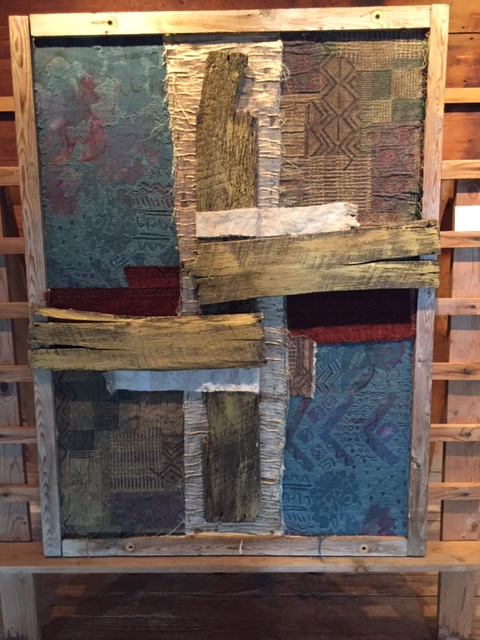
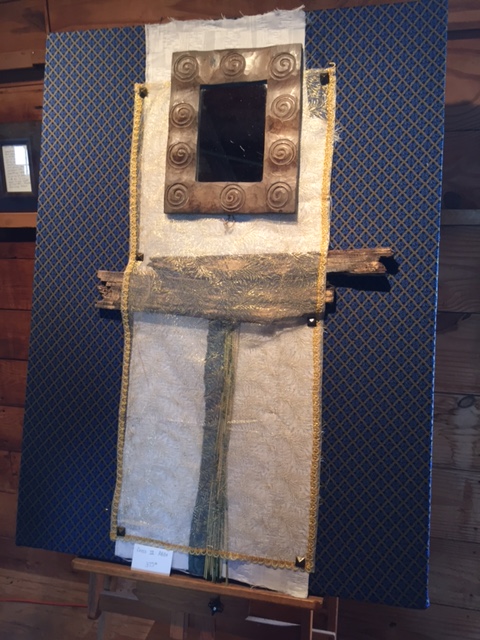
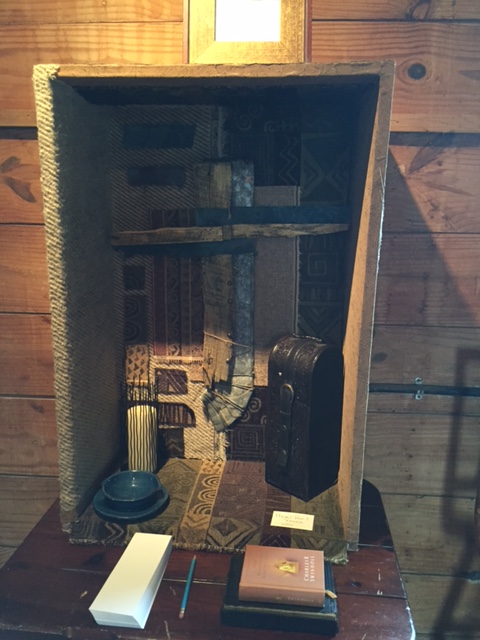
Pamela Jo Berry explores spirituality in mixed media and photographs. Katie Cramer explores grace and fellowship through vessels. It is an art show that feeds the spirit and nurtures the soul. A display of beautiful aesthetics and inspiring intentions by two artists in touch with their spiritual dimensions.
Please come out and support these two Omaha artists and their heartfelt art. It is a pairing made in Heaven.
The exhibition continues through October 10.
Gallery hours are the same as the Mill: Wed. through Saturday, 1 to 5 pm; Sunday, 10 am to 3 pm. Sundays feature a Farmers Market.
Florence Mill ArtLoft
9102 North 30th Street…Omaha
Next to I-680 & Exit 13
402-551-1233
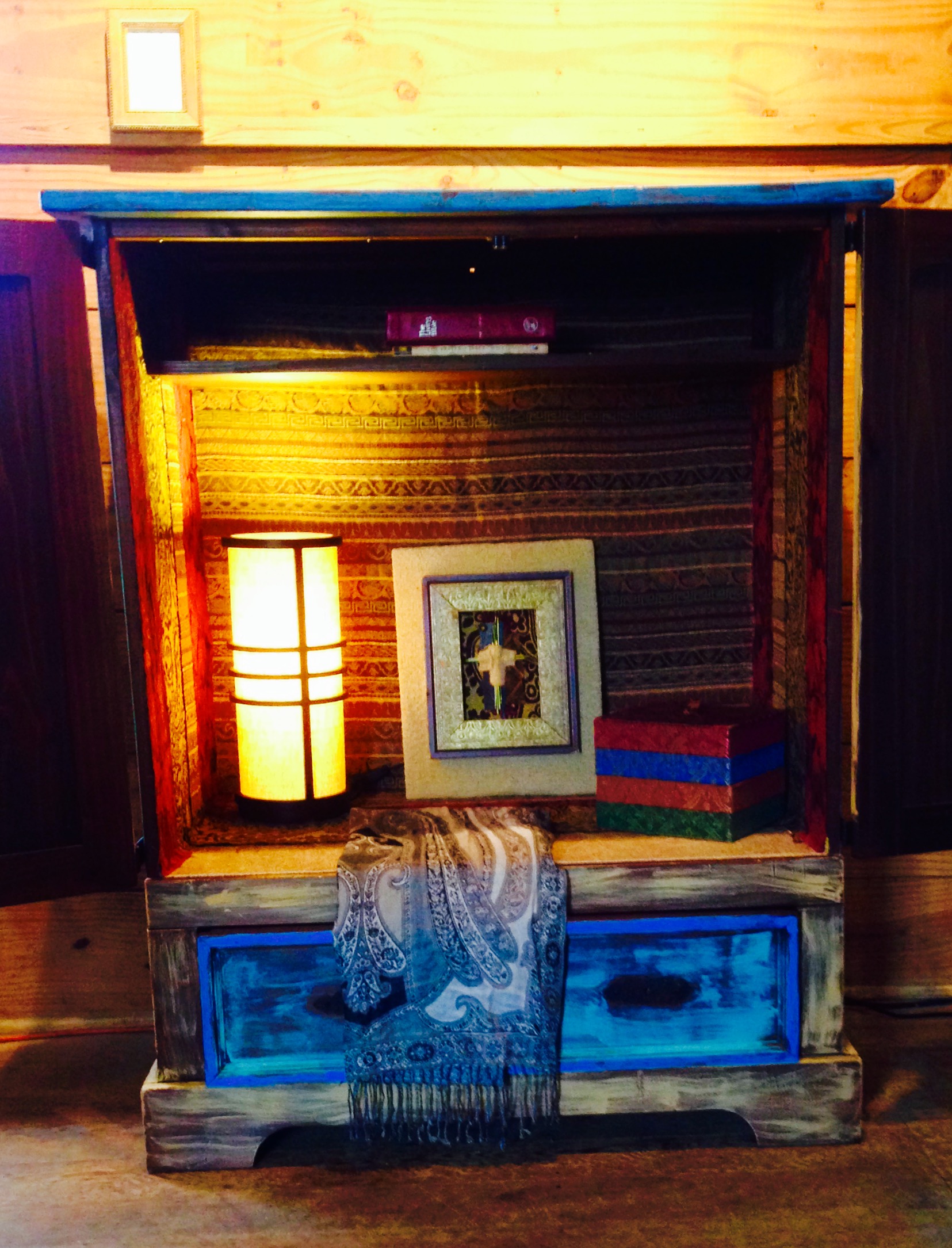
Artist Statement by Pamela Jo Berry for “Prayer”:“Prayer is that down to earth conversation we have with God when we realize we are not in control and we need … want to know that God… someone greater than us is out there… right here waiting to help us with our needs, our mistakes, our direction , our provision… and is ready to give a miracle if necessary. Prayer is that sacred moment when we sit in silence… after going over every scenario with God…. exhausted, we surrender and finally listen willingly for our answers…our direction… our next step in this life. Prayer is what we do for others when we know we cannot help with what they are crying out for. Prayer is the thank you and praise we give to God for the blessings and miracles we see in our lives and the lives of others…each day. It could be a smile, a hug, a healing…favor or something that comes out of the blue to save our lives. Prayer is a community standing for one person to be healed… and it is one person standing for healing in a community without hope. Prayer can be as loud as shouting for help and as quiet as a whisper of praise or as silent as a tear of realization that we are heard. Prayer is as simple as saying ‘God are you there?'”
Pamela’s Artist Bio:Pamela Jo Berry …. She is an artist… mixed media/ photographic. She is a writer/poet. For the last six years she has organized the North Omaha Summer Arts. She is an Omaha Native. Pamela Jo is the mother of Jesse Berry and Beaufield Berry Fisher. And she is the Gemma (grandmother) of Shine Avett Fisher… her little grandson.
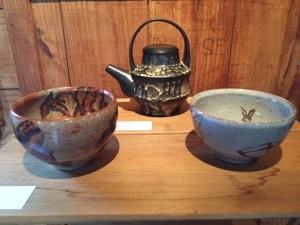
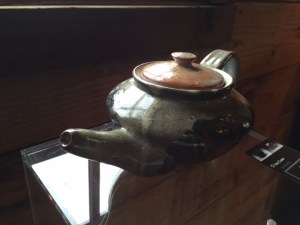
Artist Statement by Katie Cramer for “Share”Food is the most common and diverse ways to bring people together. Sharing it is meaningful culturally and historically throughout all regions of the world. I view pottery as vessels that share not only food, but the conversation and company that occurs. Many of these items are meant to be viewed as a set. The surface and aesthetic qualities from piece to piece is completely different, just like the people sharing the experience. The fact that they are placed in the same setting is what makes them come together.Katie’s Artist Bio:Katie Cramer was born and raised in Omaha. She took her first summer pottery class when she was 10 years old and completely fell in love with clay and the potter’s wheel. Her experience at Omaha North High School heightened this adoration for ceramics and pushed her to attend the University of Nebraska-Lincoln, where she is in the process of earning her Bachelor’s of Fine Arts with an emphasis in Ceramics. She is currently a 3rd year student with full intentions of pursuing ceramics as a profession.
Two-person art show: “Prayer” by Pamela Jo Berry & “Share” by Katie Cramer – Florence Mill ArtLoft Gallery
Two-person art show: “Prayer” by Pamela Jo Berry & “Share” by Katie Cramer – Florence Mill ArtLoft Gallery, Sept. 3 to Oct. 10
“Prayer and Share” closes the 2016 ArtLoft season with an inspired “Amen.”
“Prayer” by Pamela Jo Berry & “Share” by Katie Cramer.
Pamela explores spirituality in mixed media and photographs.
Katie explores grace and fellowship through vessels.
Artists reception 1:30 to 4:30 pm this Saturday, September 3.
Please come out and support these two Omaha artists showing together for the first time. Join us for refreshments, good spirits and heartfelt art.
The exhibition runs through October 10.
Florence Mill ArtLoft
9102 North 30th Street…Omaha
Next to I-680 & Exit 13
402-551-1233
|


NOSA Arts Crawl to feature diverse art and artists – Friday, August 12
Come do the Crawl!
NOSA Arts Crawl to feature diverse art and artists – Friday, August 12
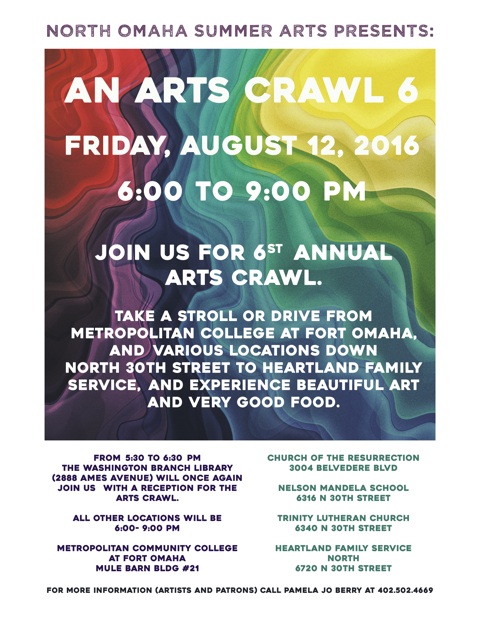
The 2016 edition of North Omaha Summer Arts has seen the addition of new events and community partners and now NOSA’s gearing up for its 6th Annual Arts Crawl on Friday, August 12.
Founded in 2011 by North Omaha resident Pamela Jo Berry, NOSA is an entirely free, summer-long festival dedicated to the proposition that the arts can heal and build community. Berry, a mixed media artist, saw a need to infuse more art in all its forms into North Omaha and to give artists more opportunities to explore and showcase their work. The festival features some recurring events, such as the gospel concert in Miller Park in June, an Art and Gardening class at the Florence Branch Library in July and the Arts Crawl in August. A weekly women’s writing series just concluded and its students’ work will be published in an anthology.
New this year to the NOSA schedule are a variety of Pop-Up Art events, including the recent Thoreau Meets the Harlem Renaissance and Painting Bird Houses events. More Pop-Up Art happenings are planned. NOSA often works with community partners to present events, including recent collaborations with Compassion in Action, Girls Inc. and the Intergenerational Human Services Campus.
The highlight of NOSA each year is the Arts Crawl. This walkable, continuous art show presents the diverse work of emerging and established artists at venues on or near North 30th Street. This year’s Crawl runs from 6 to 9 p.m. on August 12. It starts at the Metropolitan Community College Fort Omaha campus Mule Barn building and ends at the North Heartland Family Service – with Church of the Resurrection, Nelson Mandela School and Trinity Lutheran in between.
The public is invited to walk or drive to each location to view art in various mediums, enjoy art demonstrations and speak with artists about their practice. Live music will be performed at some venues.
Many of the featured artists are from North Omaha.
For this year’s Crawl, each veteran artist is showing alongside a younger or less experienced artist with whom they share a close connection. For example. Gabrielle Gaines Liwaru is showing her art photography beside her daughter Cheamera Liwaru’s own photographs and Aaryon Lau Rance Williams is showing his paintings next to art created by youth from the after school arts program he operates.
“NOSA would like to welcome art lovers from around the metro to come out for this each-one-to-teach-one and it-takes-a-village celebration of community, family and art,” Berry said. “We are thrilled to be in our sixth year with North Omaha Summer Arts and we are thankful for all the partners, artists and volunteers who help make it happen and keep it a free event.”
A reception kicking off the Crawl will be held at the Charles B. Washington Branch Library, 2868 Ames Avenue, from 5:30 to 6:30 p.m. Tara Evans and the Golden Thread Quilters, sponsored by Community Quilting Center Inc., will feature approximately 40+ quilts throughout the library. Both traditional and artistic quilts will be on display.
Free snacks and refreshments will be abatable at each stop along the Crawl route.
For more information, call 402-502-4669.
Visit the NOSA Facebook page at–
http://www.facebook.com/NorthOmahaSummerArts
Visit the Arts Crawl event page at–
https://www.facebook.com/events/1133908166708406/
Follow and like NOSA at–
https://www.facebook.com/NorthOmahaSummerArts/?fref=ts# or https://www.facebook.com/groups/1012756932152193/

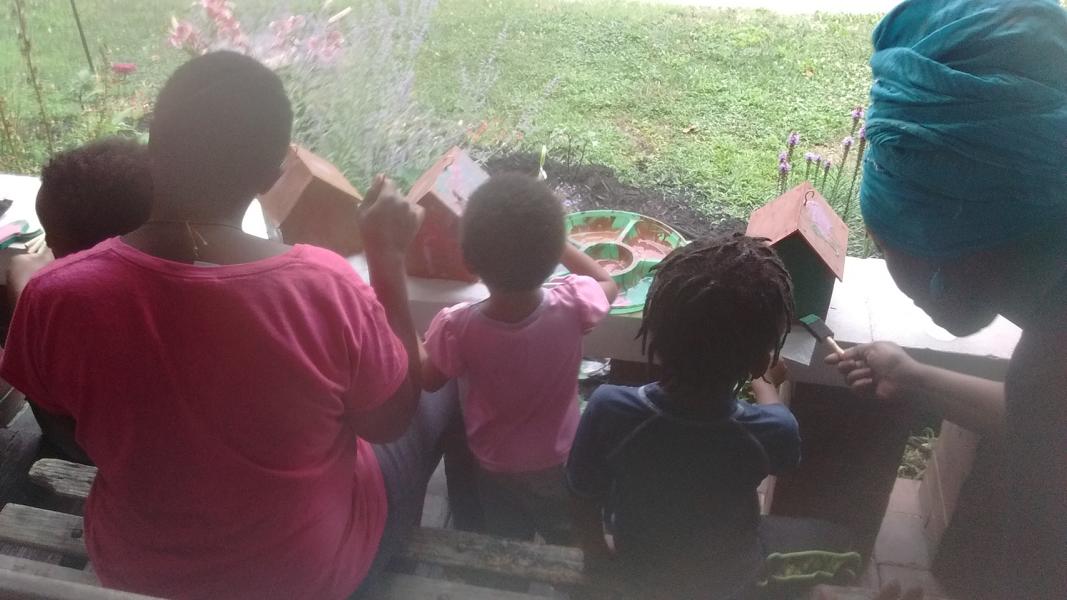
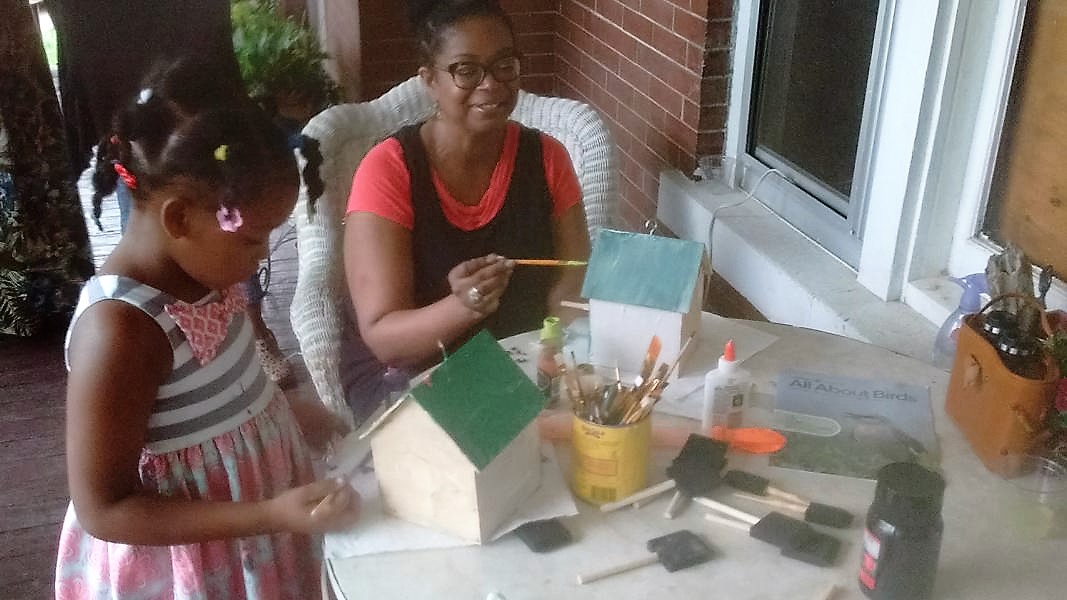
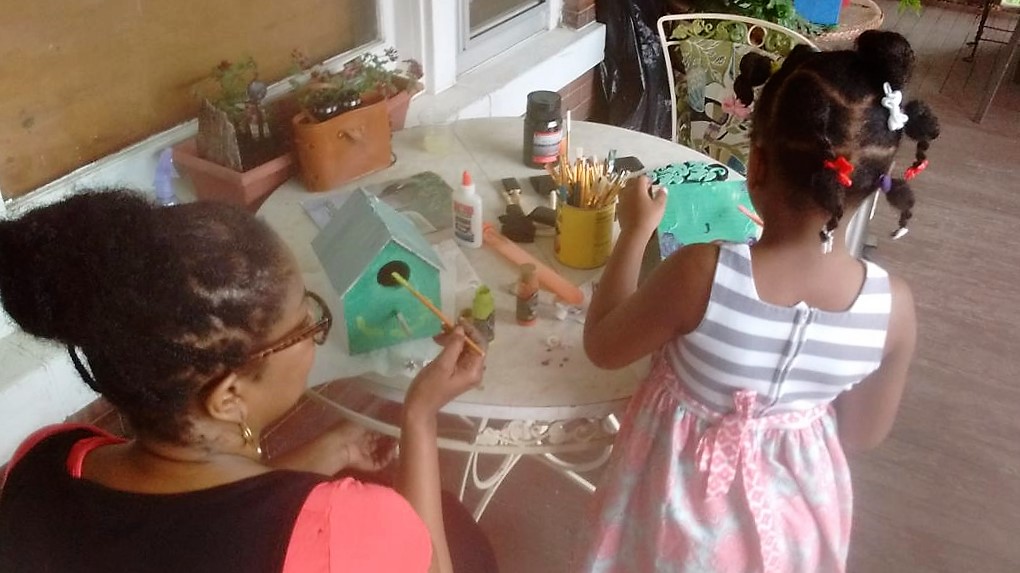
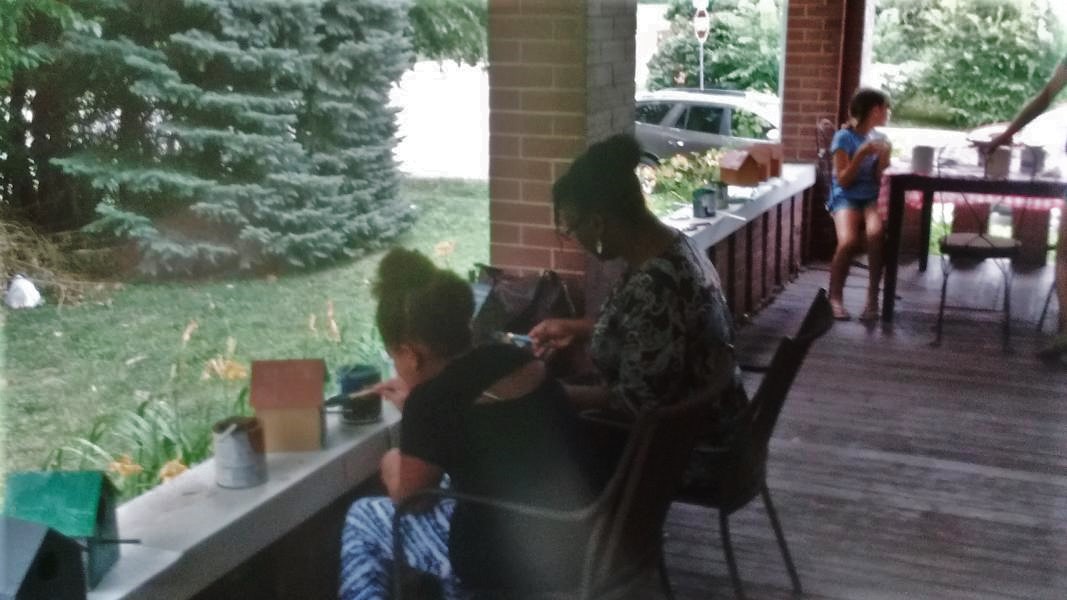
Scenes from NOSA’s Painting Bird Houses Pop-Up Art Event
Scenes from NOSA’s Painting Bird Houses Pop-Up Art Event
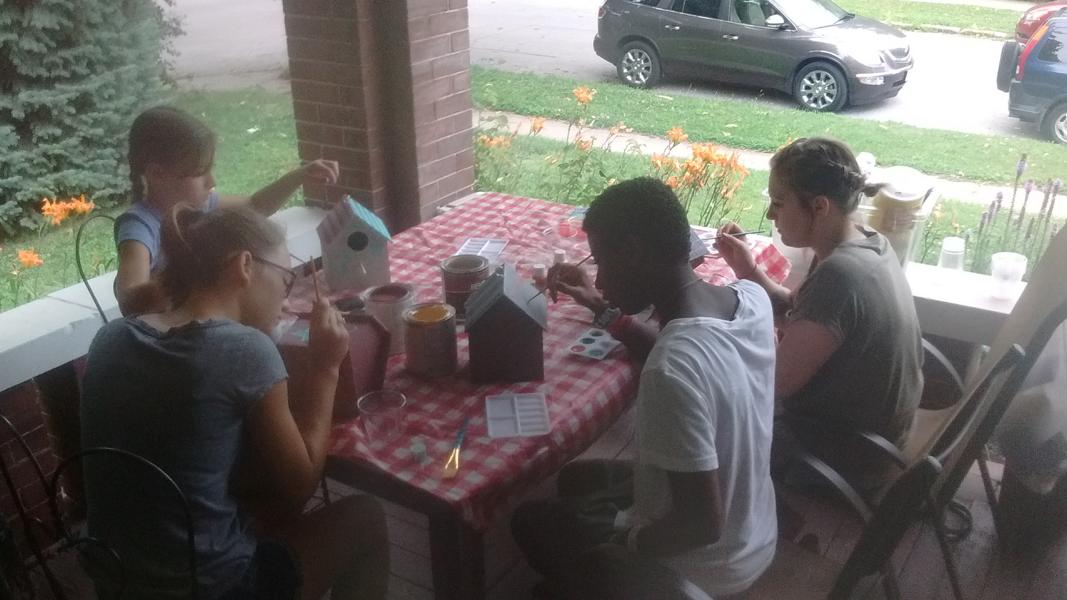
North Omaha Summer Arts has added Pop-Up Art Events this season, including a recent Thoreau Meets the Harlem Renaissance event at the Malcolm X Birthsite. The images posted here are from the Painting Bird Houses event held at the home of the artist Evance, who hosted and facilitated the class/happening on the wrap-around porch of her beautiful North Omaha home. Adults and children participated.
©Photos by Hans Hillie
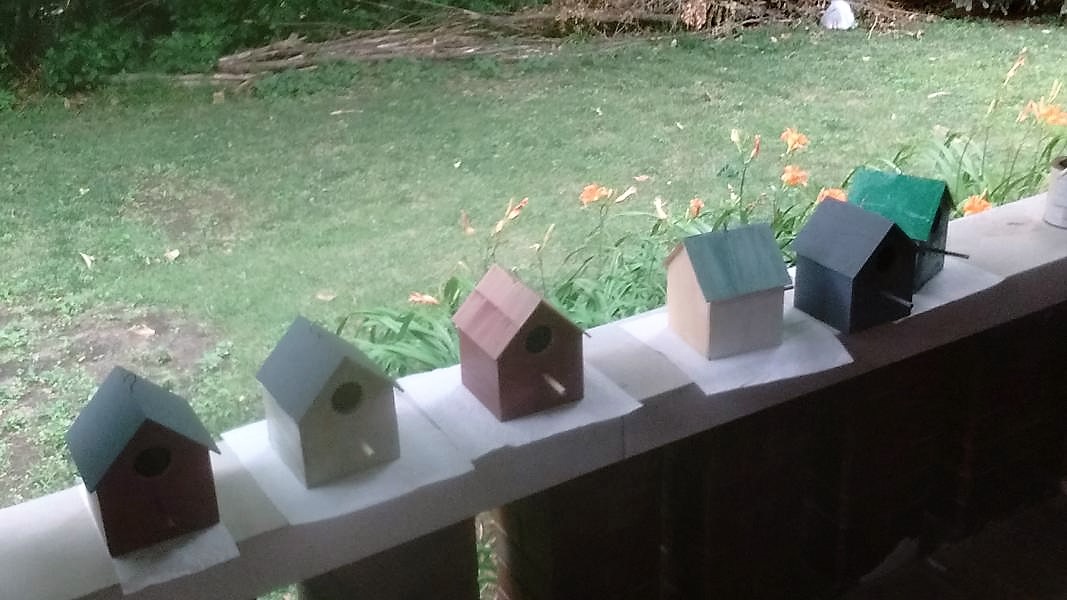
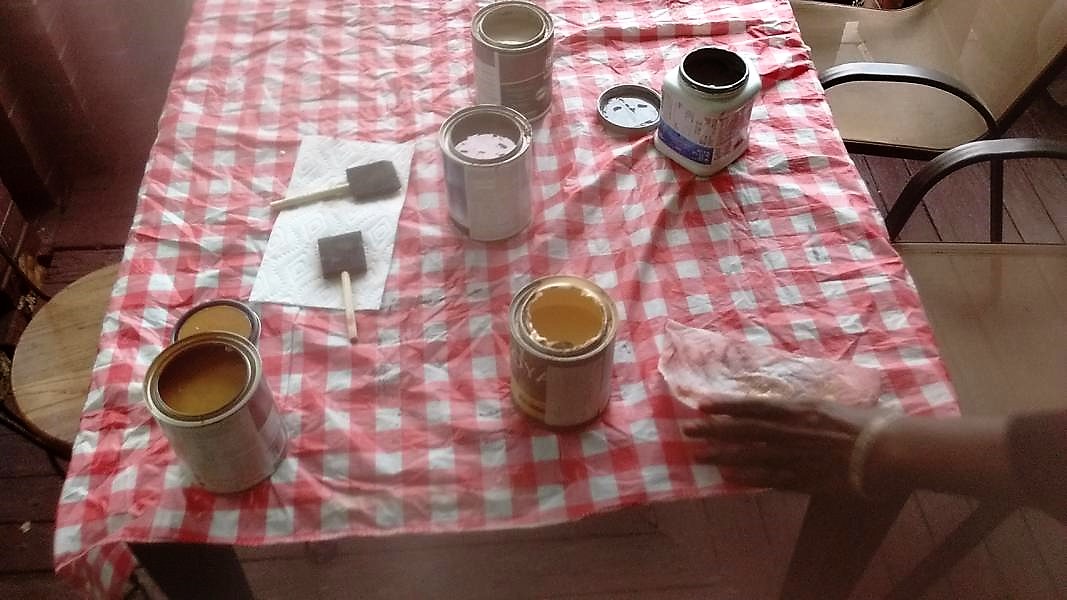
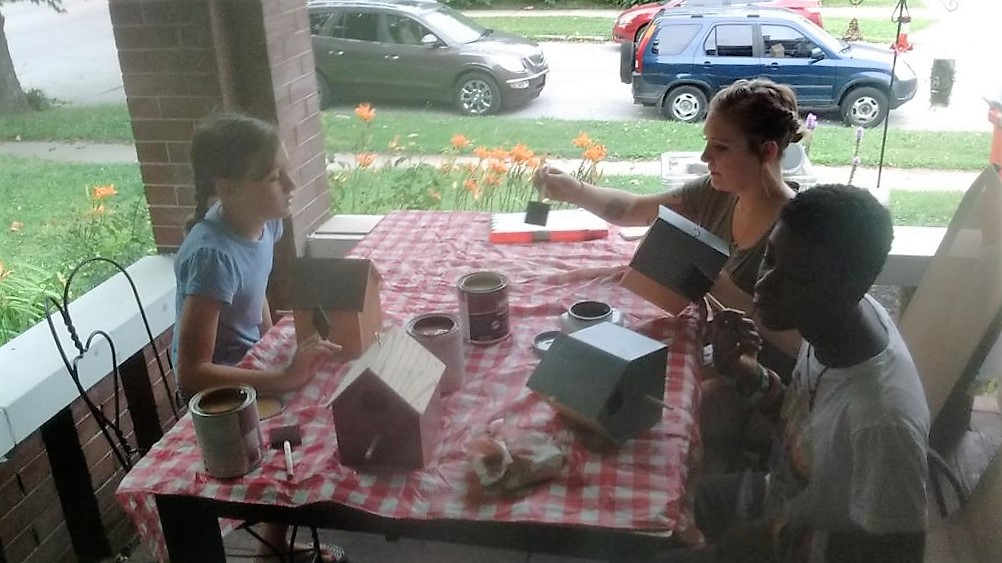
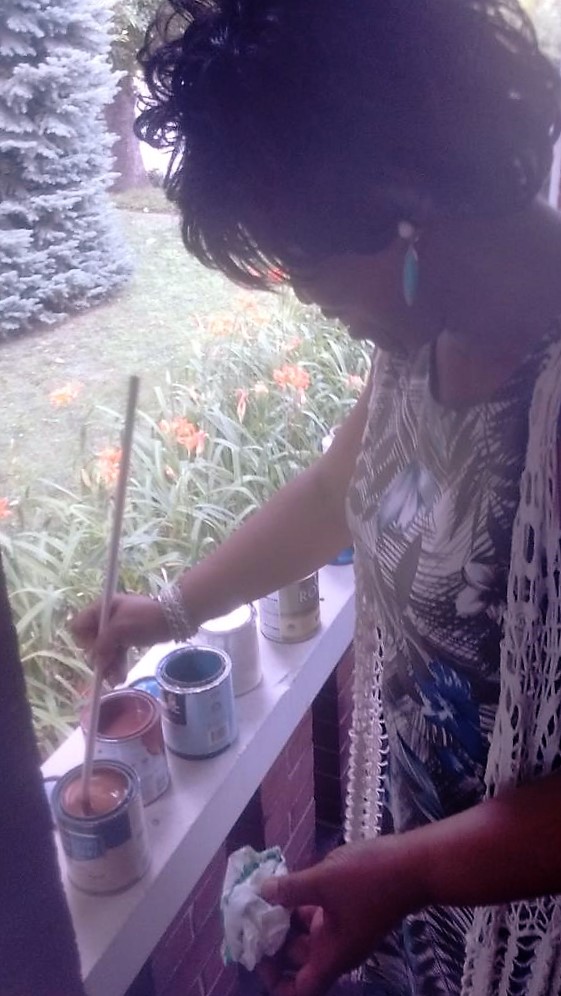
NOSA is collaborating with more community partners than ever before for arts events, including recent collaborations with Compassion in Action, Girls Inc. and the Intergenerational Human Services Campus. Look for posts about these happenings.
Meanwhile, the Women’s Writing Classes and Retreats have been going strong throughout the summer. Participants’ writing will be collected and published in an anthology.
And don’t miss the 6th Annual NOSA Arts Crawl happening in August–
Arts Crawl
Friday, August 12
Reception at Charles Washington Branch Library
5:30-6:30 pm.
The Crawl at several venues on or near North 30th Street
6 to 9 pm
This walkable, continuous art show showcases the diverse work of emerging and established artists at venues on or near North 30th Street. The 6th Annual Crawl starts at the Metropolitan Community College Fort Omaha campus Mule Barn building and ends at the North Heartland Family Service – with Church of the Resurrection, Nelson Mandela School and Trinity Lutheran in between. Walk or drive to view art in a wide variety of mediums, to watch visual art demonstrations and to speak with artists about their practice. Enjoy live music at some venues. Many of the featured artists are from North Omaha.
For this year’s Crawl, each veteran artist is showing alongside a younger or less experienced artist with whom they share a close connection. For example. Gabrielle Gaines Liwaru is showing her work beside her daughter’s and Aaryon Lau Rance Williams is showing his paintings next to art created by youth from the after school arts program he operates.
NOSA invites you come out for this each-one-to-teach-one and it-takes-a-village celebration of community, family and art.
North Omaha Summer Arts continues its art and nature themes with Thoreau Meets The Harlem Renaissance – Friday, July 15
 g
g
North Omaha Summer Arts continues its art and nature themes with:
Thoreau Meets The Harlem Renaissance
Come and join us…
Friday, July 15
9 am to 1 pm
Malcolm X Mermorial Foundation
3463 Evans Street
We are exploring the connection between American author, poet, philosopher, abolitionist, naturalist and historian Henry David Thoreau with The Harlem Renaissance.
Drawing instruction by artist Ronald Sykes.
Writing instruction facilitated by author Kim Louise.
We will take time to walk, draw and write in the beautiful woods located in the middle of North Omaha at the Malcolm X birthsite.
Lunch and discussion, plus spoken word performance by Felicia WithLove Webster. And we will document pictures of your creations for our virtual gallery on the North Omaha Summer Arts (NOSA) Facebook page.
No drawing or writing experience necessary.
Supplies provided
This class is free of charge.
Bring your chairs and blankets
For registration or questions, call 402-502-4669.
Follow and like NOSA’s free community-based arts festival at–
https://www.facebook.com/NorthOmahaSummerArts/
Mark you calendars for the 6th Annual Arts Crawl on Friday, August 12 from 6 to 9 pm at several North 30th Street venues.
Some thoughts on the HBO documentary “My Fight” about Terence Crawford
Terence Crawford: My Fight – Trailer (HBO Boxing)
- on Jun 27, 2016
- 38 views
- Comment
©by Leo Adam Biga
There are sections of contemporary life in this city that most Omahans would rather forget and would certainly do everything to avoid because they represent uncomfortable truths and realities. Terence Crawford’s rise to professional prizefighting’s upper ranks cannot be divorced from where he grew up and from where he still has his heart and continues to have a strong presence. That place is northeast Omaha. The inner city. The Hood. Its tough people and conditions formed and forged him. Rarely if ever is there a screen portrait of that community that goes beyond stereotype or surface. Usually, those screen representations are TV news reports about the aftemath of violent crimes. Over and over again. An exception is the new HBO documentary “My Fight” that profiles Terence in advance of his July 23 title fight with Viktor Postol. It shows an authentic glimpse of the neighborhood and streets, the family and friends he comes from. Not all of northeast Omaha is like what is portrayed. It’s a more diverse landscape than this or any media report paints it to be. But his film gives us a well-rounded look at this man’s life. His routines, his hangouts, his grandmother’s home, his childhood block, his church, his gym, his fishing spot. It’s good for all Omahans to see this film because it does, as much as any one film can, virtually place you there in that community and lifestyle. The psychic-social-cultural-economic-political barriers that continue separating folks are not going away anytime soon but maybe a film like this can at least help put folks there who would never venture there other than maybe for a church mission project. It shows that we’re all just people doing the best that we can. In Terence Crawford, northeast Omaha has a local hero and champion in a way that’s it’s never quite had before. Along the way, as the film makes clear, he’s become Omaha’s hometown champion who is embraced by diverse fans. Perhaps there is more to Terence’s ascendance than we know. Perhaps he can be a unifying figure. He has stayed in Omaha. He remains true to his roots. But at the end of the day he is only one man and this is only one film. Unless and until we can openly, freely and without fear or judgement sit down and break bread together, work together and live together in every part of the city, then a film like this will remain a safe way for people to look with curiosity at how the other half lives and leave it at that. Sadly, that is still how it is in much of Omaha. Maybe just maybe though we can all rally behind Terence and what he wants for his community, which is opportunity and justice.
Northeast Omaha has only been portrayed on film a handful of times. There was “A Time for Burning” Then “Wigger” Now add to the list the new HBO documentary “My Fight” that profiles Terence Crawford in the inner city neighborhood and community that he sprang from and that he still has close ties to. Meet some of the key people in his life. You get a real sense for how things are there and for the people he is a part of. Those conditions and characters made him who he is. Click below to watch the full film, which is produced at a very high level. I have covered Terence for a few years now and my stories touch on just about everything the film does. I even went to Africa with Bud. I accompanied him on one of his two trips to Uganda and Rwanda with Pipeline Worldwide’s Jamie Nollette. I have charted his life story in and out of boxing and I look forward to doing more of this as his journey continues.
Link to my stories about The Champ at–
https://leoadambiga.com/?s=terence+crawford
Come to my July 21 Omaha Press Club Noon Forum presentation Seeing Africa with Terence Crawford and Pipeline–
https://www.facebook.com/events/1019250964856726/
North Omaha Summer Arts doing art workshops and projects with youth at community organizations

North Omaha Summer Arts doing art workshops and projects with youth at community organizations
North Omaha Summer Arts (NOSA) is partnering with many organizations this season. A new partner is Compassion in Action led by Teela Mickles. Its RAW DAWGS Youth Corps Gang Prevention Program works with boys and Teela arranged for NOSA founder-director Pamela Jo Berry, who is a mixed media artist, to do an art workshop with these children. You can see some of the boys engaged in the project in the photos. Teela shares her testimony below about the workshop.
NOSA is also working with Girls Inc. on an art project led by the artist Evance. Look for a future post reporting about that activity.
If your organization is interested in partnering with NOSA, call 402-445-4666.
NOSA’s free community-based arts festival continues with:
Painting Birdhouses
Wednesday, July 13, 9 am to 1 pm, 2004 Binney Street
w/the artist Evance and a bird expert Tisha Johnson–
https://www.facebook.com/events/267627600264807/
Thoreau Meets The Harlem Renaissance
Friday, July 15, 9 am to 1 pm, Malcolm X Birthsite, 3463 Evens
w/artist Ronald Sykes, guest performer Felicia WithLove Webster and author Kim Louise–
https://www.facebook.com/events/366425010148428/
Arts Crawl
Friday, August 12
Reception at Charles Washington Branch Library
5:30-6:30 pm.
The Crawl at several venues on or near North 30th Street
6 to 9 pm
This walkable, continuous art show showcases the diverse work of emerging and established artists at venues on or near North 30th Street. The 6th Annual Crawl starts at the Metropolitan Community College Fort Omaha campus Mule Barn building and ends at the North Heartland Family Service – with Church of the Resurrection, Nelson Mandela School and Trinity Lutheran in between. Walk or drive to view art in a wide variety of mediums, to watch visual art demonstrations and to speak with artists about their practice. Enjoy live music at some venues.
NOTE: Watch for posts about Crawl’s visual and performing artists roster.
Follow and like NOSA at–
https://www.facebook.com/NorthOmahaSummerArts/
Here’s what Teela Mickles said:
Compassion In Actions RAW DAWGS Youth Corps Gang Prevention Program participated in the North Omaha Summer Arts Program with director Pamela. The boys were asked two questions to express their art. What gifts has God given you?” and ” What is something you do from your heart?” The next day, the parents came to our Art Exhibit for the boys to show their art and had light refreshments. We are thankful and honored to have been chosen to participate in this wonderful summer project with the North Omaha Summer Arts Program. Thank you Pam for choosing us and God bless you.


North Omaha Summer Arts continues with Art and Gardening – Saturday, July 9
REMINDER – North Omaha Summer Arts continues Saturday, July 9 with–
Art and Gardening from 10:30 am to 12:30 pm at the Florence Branch Library. We are painting great art on clay pots and planting flowers. The theme is Artists, Authors & Gardens – The Power to Transport. Details below. Hope to see you there.

Details
Join North Omaha Summer Arts, friends, family and neighbors for Art and Gardening at the Florence Branch Library on Saturday, July 9 from 10:30 to 12:30 p.m. The theme is Artists, Authors & Gardens – The Power to Transport.
The event is free and open to the public
We are painting great art on clay pots and planting flowers. Pots and plantings provided, but bring your own if you desire. Facilitator Cheri Oelke is an artist and a gardener.
No art experience necessary.
Presented in cooperation with No More Empty Pots and Florence Library.
For more information or to register, call 402-502-4669. Or visit–
https://www.facebook.com/events/1316384515056428/
Art and Gardening is part of NOSA’s summerlong community arts festival. Look for Pop-Up Art event announcements.
Creative to the core: John Hargiss and his handmade world
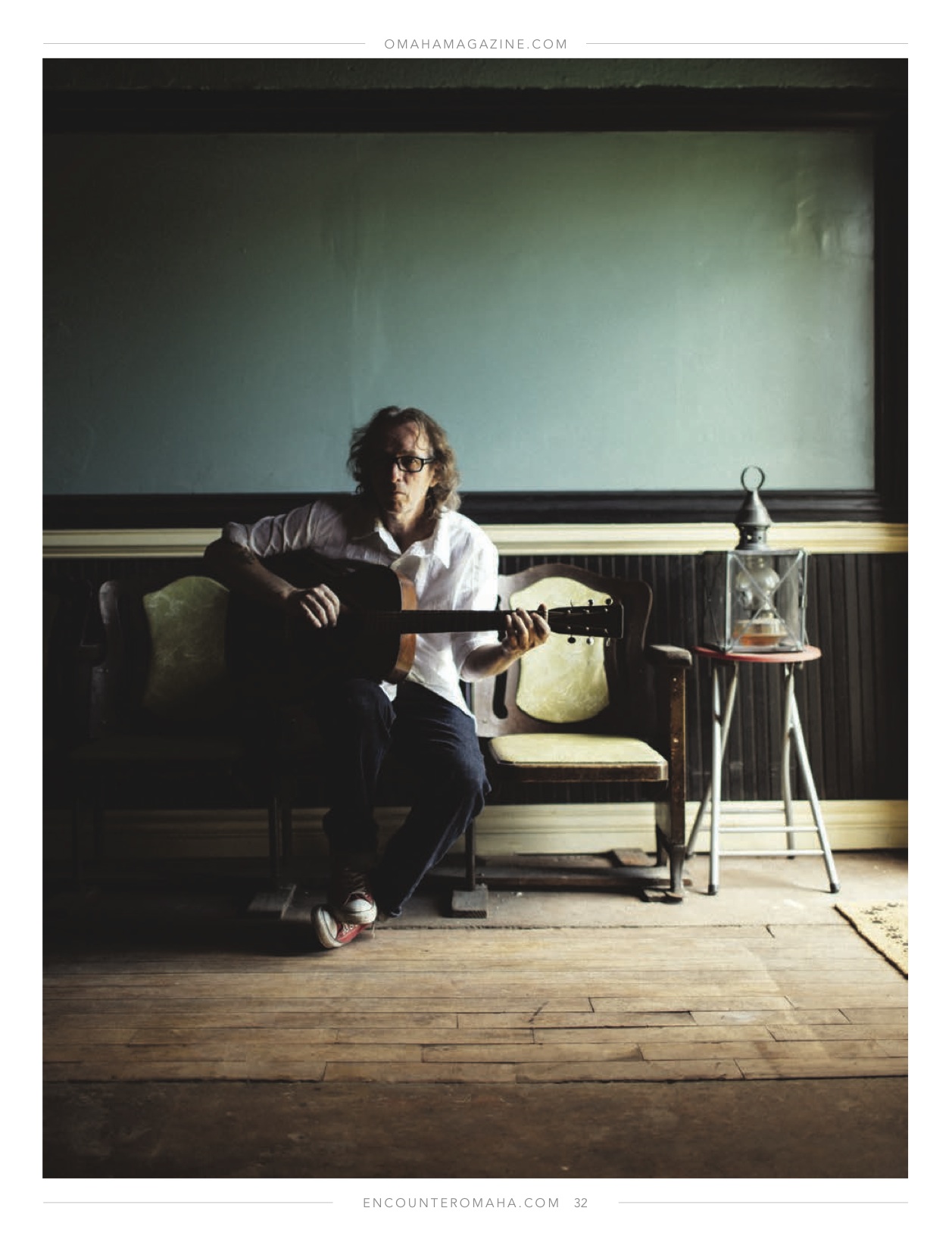
Creative to the core: John Hargiss and his handmade world
©by Leo Adam Biga
©Photos by Bill Sitzmann
Appearing in the July-Auguat 2016 issue of Omaha Encounter Magazine (http://omahamagazine.com/category/publications/the-encounter/)
Master craftsman and stringed instrument maker John Hargiss learned the luthier skills he plies at his North Omaha shop from his late father Verl. In the hardscrabble DIY culture of their Southern Missouri hill and river bottom roots, people made things by hand.
“I think the lower on the food chain you are, the more creative you become. I think you have to,” Hargiss says.
He observed his late father fashion tables and ax handles with ancestral tools and convert station wagons into El Camino’s with nothing more than a lawnmower blade and glue pot. Father and son once forged a guitar from a tree they felled, cut and shaped together. The son’s hands are sure and nimble enough to earn him a tidy living at his own Hargiss Stringed Instruments at 4002 Hamilton Street. His shop’s filled with precision tools (jigs, clamps_, many of vintage variety.
Some specialized tools are similar to what dentists use. “I do almost the same thing – polish, grind, fill, recreate, redesign, restructure.”
Assorted wood, metal and found objects are destined for repurposing.
“I have an incredible way of looking at something and going, ‘I can use that.’ Everything you see will be sold or used one way or the other.”
In addition to instrument-making, he’s a silversmith, leather-maker and welder.A travel guitar he designed, the Minstrel, has sold to renowned artists, yet he still views himself an apprentice indebted to his father.
“He just made all kinds of things and taught me how to use and sharpen tools. Being around that most of my life it wasn’t very difficult for me to be like, ‘Oh, that’s how that works,’ For some reason my father and I had a connection. I couldn’t get enough of that old man. He was a mill worker, a mechanic, a woodsman. When he wasn’t doing that he was creating things. He was a craftsman. Everything I know how to create probably came from him. Everything I watched him do, I thought, ‘My hands were designed to do exactly what he’s doing.’ On his tombstone I had put, ‘A man who lived life through his hands.'”
Hargiss also absorbed rich musical influences.
“You were constantly around what we don’t see in the Midwest – banjo players, violin players, ukulele players, dulcimer players. There are a lot of musicians in that part of the world down there. Bluegrass. Rockabilly. Folkabilly, That would be our entertainment in the evenings – music, family, friends. Neighbors would show up with instruments and start playing. Growing up, that was our recreation.”
He feels a deep kinship to that music.
.”The roots of country music and the blues come out of being suppressed and poor,” he says. “All those incredible sad songs come from the bottom of the barrel.”
His father had a hand in his musical development
“My daddy was a good musician and he taught me to play music when I was about 9. By 11 I was already playing in little country and bluegrass bands. I can play a mandolin, a guitar, a banjo, a ukulele, but I’m pretty much a guitar player. And I sing and write music.”
Hargiss once made his livelihood performing. “I like playing music so much. It’s dangerous business because it will completely overpower you. I knew I needed to make a living, raise my children and have a life. so playing music became my hobby. I worked corporate jobs, but I kept being pulled back. It didn’t matter how hard I tried. I’d no more get the tie and suit off then I’d be out in the garage making something else. The day I quit that job I went to my boss and said, ‘I can’t do this anymore, my heart’s not in it. I’m going to start building things.”
It turned into his business.
Hargiss directly traces what he does to his father.
“I watched him repair a guitar he bought me at a yard sale. The strings were probably three inches off the finger board. I remember my daddy taking a cup of hot coffee and pouring it in the joint of that neck and him wobbling that neck off, and the next I knew he’d restrung that guitar. I think that’s when I knew that’s what I’m going to do.”
The memory of them making a guitar is still clear.
“The first guitar I built me and my daddy cut a walnut tree, chopped it up and we carved us a dreadnaught – a traditional Martin-style guitar. I gave that to him and he played that up to the day he died.”
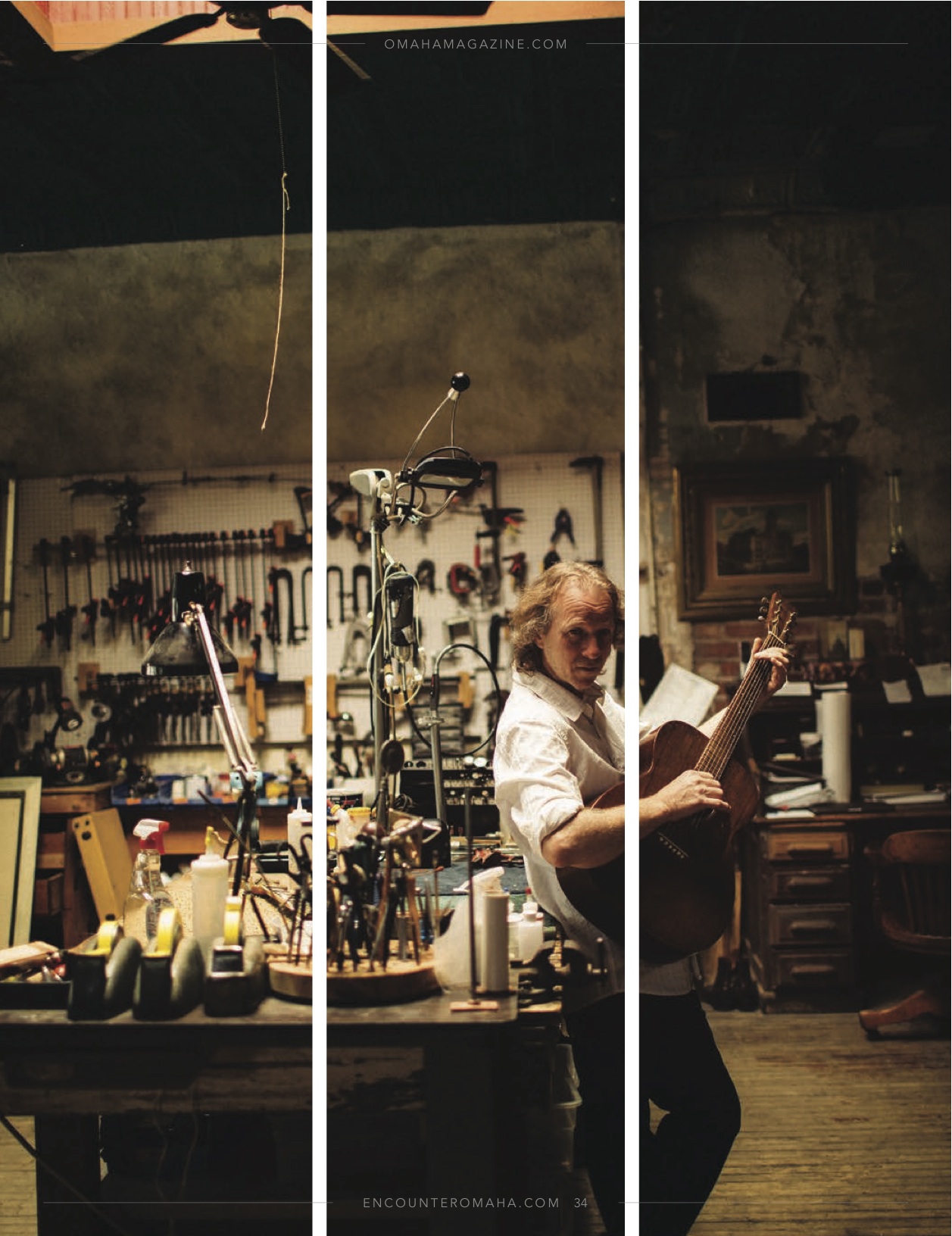
“I’m fascinated by architectural design in what I create and in what I make. I study it.”
He called on every ounce of his heritage to lovingly restore a vaudeville house turned movie theater he didn’t know came with the attached North O buildings he purchased five years ago. The theater lay dormant and unseen 65 years, like a time capsule, obscured by walls and ceilings added by property owners, before he and his girlfriend, Mary Thorsteinson, rediscovered it largely intact. The pair, who share an apartment behind the auditorium, did the restoration themselves.
The original Winn Theatre opened in 1905 as a live stage venue, became a movie theater and remained one (operating as the Hamilton and later the 40th Street Theatre), until closing in 1951. Preservation is nothing new to Hargiss, who reclaimed historic buildings in Benson, where his business was previously located. At the Hamilton site he was delighted to find the theater but knew it meant major work.
“I’ve always had this passion for old things. When we found the theater I remember saying, This is going to be a big one.”
Motivating the by-hand, labor-of-love project was the space’s “potential to be anything you want it to be.” He’s reopened the 40th Street Theatre as a live performance spot.
Hargiss is perpetually busy between instrument repairs and builds – he has a new commission to make a harp guitar – and keeping up his properties. Someone’s always coming in wanting to know how to do something and he’s eager to pay forward what was passed on to him.
The thought of working for someone else is unthinkable.
“I get one hundred percent control of my creativity. I’m not stuck, I’m not governed by, Well, you can’t do it this way. Of course I can because the sound this is going to produce is mine. When you get to control it, then you’re the CEO, the boss, the luthier, the repairman, the refinisher, the construction, the engineer, the architect. You’re all of these things at one time.”
Besides, he can’t help making things. “There’s a drive down in me someplace. Whatever I’m working on, I first of all have to see myself doing it. Then I go through this whole crazy second-guessing. And then the next thing I know it’s been created. Days later I’ll see it and go, ‘When did I do that?’ because it takes over me and it completely consumes every thought I have. I just let everything else go.”
Creating is so tied to his identity, he says, “It’s not that I can’t find peace or can’t be content” without it, “but by lands I like it.”


 Leo Adam Biga's My Inside Stories