According to Burks, “Saying the words of such a powerful writer as August Wilson is like speaking the words of my own Shakespeare because his work is about my people and what we do and what we are as a community. I can relate with that. Not that I can’t with Shakespeare. But I have more ties with these types of characters that we play. In my neighborhood where I was born and raised in Birmingham, Alabama, I saw these same people. I knew these same people.”
Archive
Posts Tagged ‘Television’
The Gabrielle Union chronicles
August 21, 2010
1 comment

Image via Wikipedia
My first couple interviews with Gabrielle Union were by phone. She was smart, funny, gracious, and generous with her time. My last couple interviews have been in person, and I found her exactly the same. She’s a sweet person. Yes, her beauty leaves you breathless and is a bit distracting at first, but she’s completely down to earth and after awhile you don’t focus on her looks, you focus on what she’s saying and what she’s about. This article for The Reader (www.thereader.com) appeared about five years ago, and in it she speaks extensively about some things she’s passionate about, including the difficulties that actresses of color have in finding suitable subject matter and her efforts to try and change that. More recently, the formation of her new production company, Stew U, with Nzingha Stewart, finds her really taking matters into her own hands.
In the last couple years, she’s made as much news off the screen as on it due to her relationship with NBA superstar Dwyane Wade. The couple have been to Omaha, where Gabrielle’s from, and they caused quite a stir here as you might imagine. I wouldn’t be surprised if they become regular fixtures her before too long, at least during Native Omaha Days. I hope to catch up with Gabrielle again in the near future.
The Gabrielle Union chronicles
©by Leo Adam Biga
Originally appeared in The Reader (www.thereader.com)
Let’s face it, the girl can’t help it. With a to-die-for combo of beauty and attitude, Omaha-born and bred actress Gabrielle Monique Union embodies what it means to be fabulous. The It Girl’s parlayed early television-film roles as the sharp-tongued foil and love interest babe into a regal-like, real-piece-of-work brimming with confidence, intelligence and class. This enticing package of goodies makes her a presence in the Hollywood glam machine. Despite The Honeymooners fizzle, her profile is about to explode owing to her work in a handful of new feature films awaiting release that show her in a new light and a starring role in the new ABC series Night Stalker that premieres September 29.
“I’ve been trying to branch out and do different kinds of projects people wouldn’t necessarily expect me to do, and I’m very proud of the work coming out” she said, while in town for Native Omaha Days, looking absolutely fabulous despite no sleep after wrapping Night Stalker that same morning and catching a red eye to O.
Yes, the many sides of Gabrielle are showcased these days. She recently shared the cover of Ebony with Honeymooners’ co-star Cedric the Entertainer, doing her best Alice Kramden domestic next to his Ralph Kramden bombastic. Depending on the gig, she’s whatever she wants to be. But no matter how much she appears all-together, she confided to The Reader some of the anxieties attending stardom and some of the frustrations that go with being black in a white-dominated field. Partly to determine her own fate and image, she’s about to start producing her own projects. Meanwhile, she plays the game, transforming herself into our fantasies.
When on the red carpet-runway circuit, she’s the preening diva in designer wear, perfect makeup and flawless hair who flashes I-love-my-public smiles and blows kisses in classic movie star fashion. In those Nutrogena TV spots, she’s the oh-so-fresh-and-so-clean girl-next-door of our dreams. For magazine spreads, she projects the epitome of style and elegance. She plays it sultry-urban-cool guesting on shows like BET’s Rap City: Tha Bassment, or turns on the charm chatting it up with Jay or David or Jimmy or Regis. She turns serious young artist at events like the NAACP Image Awards. On the big screen, she’s the hottie object of desire of LL Cool J, Jamie Foxx and Will Smith. Lately, she’s taking parts that don’t so much exploit her head-turning attributes and sex symbol defying smarts as display her acting depth.

In the drama Neo Ned, fresh off rave reviews at the 2005 TriBeca Film Festival, her disturbed character gets involved with a fellow patient at a mental health hospital. She’s a victim of abuse somehow under the delusion she’s Hitler. He’s a neo-Nazi hater of blacks and Jews. Upon recovery and release, this odd pair still try forging a life together. InConstellation, which beat out both Hustle and Flow and Crash for the Audience Prize at the Urbanworld film fest’, she’s the matriarch of a troubled Southern family whose secret legacy leads back to her own private crucible. In Running with Scissors, the much-awaited adaptation of Augusten Burroughs’ tell-all book, she’s the possessive lover of Annette Bening, whose messy life she makes messier. In Night Stalker, an update of a 1970s show, she’s part of an investigative reporting team examining unexplained homicide cases. With a creative staff from The X-Files, it’s not surprising Stalker casts Union as Perrie, a skeptic trying to rein-in her overly curious partner Kolchak (Stuart Townsend), who suspects the supernatural, paranormal or extraterrestrial in every unsolved murder. Sound familiar? Union was sold on the show, despite “not being a fan of the genre,” by the quality of the scripts and the chance it offered “to grow with my character.”
All this comes on the heels of her small but weighty appearance in the Emmy Award-winning HBO drama, Something the Lord Made, her first period piece.
Ten years after breaking through, she’s sufficiently got-it-going-on to be in the select company of such single name Star Sistas as Halle, Queen, Beyonce, Angela, Oprah and Vivica — adding flava to an otherwise bland look-alike white girl scene.
But a rising career for a black or Latina actress, no matter how talented or lovely she is, is not the same as it is for a white actress. Union bristles at the inequity that gives a Reese Witherspoon or Cameron Diaz carte blanch when she’s restricted from certain roles due to her race.
“It’s the option of doing different kinds of things,” she said. “They have the option of doing any kind of movies they want. Anything that could possibly pop into their head, that kind of script is there for them. Whereas with me, I’m offered the same exact things over and over and over again.”
This relative lack of choices, she said, not only means a more limited artistic palette to pick from, but a smaller financial reward, too. “There is a financial reality in what we do. Those bills, darn it, pop up every month. That dang mortgage has to be paid. You can pass, pass, pass, pass pass and hope for better material, but when it’s just not coming, at a certain point you end up doing the same sort of material. As actors of color we don’t have the same luxury and we’re certainly not paid anywhere close to what they (majority actors) get paid,” Union said.
Then there’s industry-wide casting practices that unfairly limit actors of color. Producers often can’t or won’t hire blacks and Hispanics for non-race specific roles because the suits’ experience/perception of the world doesn’t include racial-ethnic minorities in certain guises, especially opposite whites.
“That just happened last spring. I was told, ‘Gabrielle, you gave the best read. If we decide to go ‘black,’ you’re at the top of the list.’ It’s still a big fight to get people to think someone like me could be the friend or colleague of a white character, male or female. I’m not even talking about trying to convince somebody I could be Angelina Jolie’s sister or something like that. I’m talking about being her friend or associate or whatever. It’s the nature of the business” to stereotype us, she said.
But as her slate of new projects attests, Union’s not backing down or giving up. She’s a fighter and a survivor, instincts that helped her run-off the armed man who raped her in the early 1990s and cope with the trauma of that attack. A former competitive athlete, Union’s lately redirected her fire to her career, where she aggressively pursues the kinds of parts traditionally reserved for her white counterparts. She’s landing some of these jobs, but she wants more.
“You have these little victories and you hope to spin these little victories into a bigger victory,” she said, “and that’s just kind of been the basis of my career. I’m still waiting to sort of win the battle. But I’ve had a lot of fun on the path. Some of the battles I have lost have taught me so much about myself and about my inner resolve and who I am, and the fact that I don’t lay down and just die when I don’t get what I want. I learn to kind of regroup and fight harder. There’s nothing else I can do but stay prepared and stay ready for that opportunity. And I am prepared.”

Far from passively sitting by waiting for that breakthrough role to plop in her lap, she’s actively looking to develop properties and projects via a talent/marketing consulting agency now expanding into film production, Prominent Enterprises. The company is in the family, so to speak. It’s owned and managed by Union’s husband, Chris Howard, an ex-NFL player, in partnership with her former publicist, Alejandra Cristina. Although a new player in Hollywood, Prominent’s raising a sizable film fund to finance productions for Gabrielle to produce and/or star in.
“They’ve put together an investment group that’s put up $20 million to make anywhere from one to five films, so we’ve been poring over scripts. Nothing I’m going to star in yet, but I’m definitely going to produce,” she said. “The investment group has the capability of distributing and marketing a film, all in-house, so we don’t have to go pander our films to a studio to get distribution. I’d rather learn producing through my husband’s company than out there alone. We’ll definitely be putting our friends to work and you’ll be seeing people in roles that you would never anticipate them in. I’m excited about getting to work with my friends. It’s all happening very quickly. A lot quicker than we anticipated.”
Taking charge of her career is nothing new for Union, who’s taken pains in recent years to control her image by virtue of the parts she chooses and the type of pub she does. For her, not doing nude scenes, for example, is not so much about protecting her good-girl persona in the industry as it is honoring her family.
“I think it’s the respect I have for my parents and the respect I have for my husband. It’s also been a learning process. I’ve taken jobs and I’ve done photo spreads in the past I wouldn’t necessarily do now — understanding the reaction and aftermath that follows. My parents are alive and a part of my life and I’m not estranged from anybody. My husband has to go to work and face people. It’s just not worth it to me to do things that are going to embarrass them. My folks raised me to be a certain kind of person and I want my roles to be reflective of that and I want the kind of press I do to be reflective of that. Sometimes I stray, but it’s all a learning curve, and I’m learning I have the power to say no and the world’s not going to end and my career’s not going to stop.”
An example of her emancipation came during her recent Omaha visit, when she refused agent-publicist entreaties to fly her out of town for an ABC affiliate appearance. Instead, she opted to party-on-down with family and friends at the Native Omaha Days festival, where befitting her status, everywhere she and her small entourage went caused a stir. Just the rumor she might show some place got joints jumping and crowds buzzing. Hundreds attended a ceremony naming the Adams Park pond after her. The fans, many of them relatives from her large extended family on both sides, crowded inside the rec center for an autograph or some piece of their “Nikki.” Her appearance marked the first time “when everybody sort of came together since my wedding. They’re all here. More than I expected. People I didn’t even know came back. It’s exciting,” she said.
With such “a big family” and her “time always so limited” when in town, there’s added pressure to please everyone, so they don’t feel “cheated.” It’s also a reality check, not that her parents or sisters would let her get away with a big head. Her folks, Theresa and Sylvester Union, who are divorced, both said their star daughter is amazingly “grounded.”
Besides being selective in how she represents herself, there are the meatier roles Union’s been holding out for. Where she can coast playing brassy characters “cut from the same cloth that I’ve been cut from,” she has to stretch when cast in roles far from herself. “It’s a lot easier to play when the part’s close to who you are.” she said. “I take pride in bringing strong depictions of women to the screen.” With more substantial roles come more challenges.
Although she’s used to playing characters who are hell-on-wheels, Union’s part in Running with Scissors is a departure in that she portrays a drugged-out gay woman. “She’s a lesbian, a speed freak and a psychologically touched young woman who falls in love with Annette Bening’s character and disrupts her life. It’s a great kind of crazy character that’s really challenged me in new ways, and I just had a ball doing it. I think my mom is still getting used to the idea of me being a lesbian, but as long as Annette Bening is my girl friend, she’s OK with it,” Union said, laughing.
“To tackle” the role of an abused woman in Neo Ned, Union reopened the wounds of her own rape by going “back through my journals and to times when I was in therapy and to times when I was completely out of sorts and out of control. I was able to convey certain aspects of my own experience into the character’s, but at the time I wasn’t sure I’d be able to do it without going nuts.” She made it through OK, but she said far from being cathartic, reliving her own trauma was harrowing.
“It was only afterwards I found it therapeutic, when at the Q & A that followed the film’s opening, people were saying — and it always happens — ‘Me too, me too.’ It’s always comforting for me and others to know — I’m not alone in my experience. I’m not alone in my surviving and in being able to still lead a decent, functional life. That these obstacles are surmountable.”
Union has long used her celebrity to openly discuss her rape and recovery and to advocate for victims’ rights and the importance of counseling, which she received.
As much as she enjoys educating people about empowering themselves, she realizes she’s still learning both her craft and this whole business of being a star. Therefore she seeks out mentors to school her in acting and in managing fame. Diva soul singer Patti LaBelle is among those who’ve taken Union under their wing, teaching her how to stay “who she is” and keep “what she stands for” amid the hoopla. The more high profile projects Union does, the more seasoned veterans she calls on.
“It’s the only way you’re going to get better. Unfortunately, a lot of young people in our industry lack humility. That whole idea of wanting to be the biggest fish in the pond doesn’t appeal to me. You can learn so much more if you just shut up and watch, which is what I do. I don’t know enough to keep talking. I watch the masters work and try to absorb as much as I can about how they work and how they handle different situations. That’s been the biggest help to me and my career — being able to watch what to do and what not to do.”
Asked if working with a Bening in Scissors, Alan Rickman in Something the Lord Made or Billy Dee Williams in Constellation obliges her to raise her own level, she answered emphatically, “Oh, hell, yes. They make you step up your game. And especially as I’m not formally trained, I don’t have that wealth of knowledge to fall back on. I have to learn from my co-workers.”
To help prep for difficult parts, she works with acting coach Dennis Lavelle, an actor/director who gets her to “fine tune stuff,” like nailing a Nashville accent for Something, and “on point” for portraying characters undergoing emotional crisis.

She’s still insecure and starstruck enough that she gets tongue-tied around her idols, such as Diahann Carroll, whom she “chickened out” meeting. On the set of Constellation, she lost her composure working alongside icons Williams and Rae Dawn Chong. “I got intimidated. I didn’t know where to begin the scene — to not be buried,” she said, “because they were all bringing it.” She uses the work ethic of fellow pros to motivate herself. “When I see them doing their homework, running lines or doing theater, I’m like, I need to go home and study more. The people I look up to never stop growing…never stop working. So, I need to step it up.”
To her surprise, serious theater offers have come her way. Thus far, she’s passed, admitting she feels out-of-her-depth there.
“I’ve been offered things I have no business being offered. I mean Broadway productions — all off the strength of something like Bring It On. But I have too much respect for the craft and for the theater to take a job I’m not ready for and to bring down a whole production. I have too much respect for the amazing talent that’s underemployed to take a job I don’t deserve and I haven’t earned — just because I can. I don’t want that on my shoulders.”
The props, the perks, the offers, the adoring crowds, the intrusive fans and the unwanted stares are all part of the bargain, good and bad.
“It’s weird. I don’t feel worthy of that sort of adoration. Ultimately, it’s nice that people appreciate what you do and to know your work is not in vain,” she said.
Negotiating fame is a-work-in-progress for her and husband Chris Howard. “It’s been a long path to kind of figuring that out,” she said. “When we want a fun, cool time, either with him and I or with our friends, we don’t do it at premieres or parties. We do it at our homes. We keep it private. So that whatever we’re doing or talking about or wearing or not wearing, no one’s going to know about it except for us. That’s how we stay strong.”
Careerwise, she has her thing and he has his. Even with the overlap from Prominent Enterprises, she’s the one out front. He’s in the background, where he prefers it. It’s their way of maintaining separate identities. “When I do travel for work and go to premieres or parties, he doesn’t always come,” she said. “He’s like, ‘That’s your life. I don’t want to stand around and hold your purse. I have my own career and a whole life outside yours.’ And that’s made it a lot easier.”
Being the center of attention, she said, “sometimes is a drag.” Having to look gorgeous, smile, press the flesh, sign the stills, pose for pics, answer questions. Her well-known penchant for slumming at Target has even gotten problematical, with shoppers and clerks wanting to stop and talk. “There’s times you just don’t feel like it. You’re tired. You just want a quiet evening with family. You just want to be. But when they don’t fuss over you, that’s when you go, What happened?”
The spotlight will only get hotter once her new films break and Night Stalker, airing Thursdays at 9 p.m. (CST) on ABC, debuts. There’s also two more features, Donut Hole andSay Uncle, in the can and still another, 32 and Single, in development.
Inking the deal for Night Stalker, which she wanted against the advice of her management, was done partly to get more “alone time with my husband,” she said. “Now that I’m home in L.A. shooting the series, even though the hours are crazy, we have a little bit more time together. It almost feels like we’re starting over because I’m home now.” Starting a family is not a priority yet. “I don’t want to be jealous of a child for taking me away from my man. Once we get enough alone time and we travel and we do all the things we want to do, than we’ll expand.”
Related Articles
- Gabrielle Union & Dwyane Wade: Heat Seekers (justjared.buzznet.com)
- For the Love of The Game (clutchmagonline.com)
- Gabrielle Union FlashForwards to Soho House (justjared.buzznet.com)
- Gabrielle Union & Jamie Foxx Get Cozy In Vegas [PHOTOS] (hellobeautiful.com)
- The Ties that Bind, One Family’s Celebration of Native Omaha Days (leoadambiga.wordpress.com)
- Back in the Day, Native Omaha Days is Reunion, Homecoming, Heritage Celebration and Party All in One (leoadambiga.wordpress.com)
- Yolonda Ross Takes It to the Limit (leoadambiga.wordpress.com)
- Arno Lucas, Serious Sidekick (leoadambiga.wordpress.com)
- Enchantress “LadyMac” Gets Down (leoadambiga.wordpress.com)
- PHOTOS: Gabrielle Union Is 39 and Gorgeous! (huffingtonpost.com)
Gabrielle Union: A Star is Born
August 21, 2010
2 comments

Cover via Amazon
I have to believe that some folks are surprised to discover that the stunning actress Gabrielle Union is from Omaha, Neb. That’s because a large chunk of America either draws a blank when the city and state are mentioned or else conjure up images of corn fields and small towns devoid of black people. Well, it is true that most of Nebraska is crop and range land. This is a Great Plains agricultural state after all, and agriculture is what drives the state’s economy. It is also true that most of the communities dotting the state’s wide expanse are small towns that generally do have few residents of color, particularly African-Americans, although some have large Latino populations. But Nebraska also has two large cities in Lincoln and especially Omaha, and while the black population in Omaha has never been huge, its always been significant, in the tens of thousands, and African-Americans here own a long and rich heritage of cultural and intellectual achievement. She belongs to a large and prominent extended family whose annual reunion is more than a hundred years old and draws hundreds from all over the region and the nation. Gabrielle is proud of her roots and she usually makes it back for that reunion, particularly when it coincides with the biennial Native Omaha Days, a week-long black heritage celebration.
So, when you know the facts, you realize Gabrielle hails from an urban African-American environment here not so dissimilar from those in cities with major black populations, and through all her success she’s remained fiercely loyal to this place and the old haunts in the inner city. The following is the first of two cover stories I did on her for The Reader (www.thereader.com). This piece appeared just as she was breaking big on the national scene. Just as she’s done with other journalists, she spoke thoughtfully and candidly with me about a whole range of subjects, including her family, her growing up here, her surviving an assault, and her forging a career. Although she’s enjoyed a nice long run in film and television, I’m not sure she’s quite reached the heights that she or others saw ahead. But she’s still young, still fabulous, and still working hard to develop projects that provide positive images of African-Americans and that put her and other African-Americans in control of those images. To that end, she and director Nzingha Stewart have formed their own production company, Stew U. Good luck with it, Gabrielle, you are a face of poise, beauty, and strength for many females who see you as a role model. You also give America and the world a whole other idea of who lives in Omaha.
Look for my followup story about Gabrielle on this same site.

Gabrielle Union: A Star is Born
©by Leo Adam Biga
Originally published in The Reader (www.thereader.com)
The next Halle Berry?
If, as some predict, Gabrielle Union, co-star of the new action sequel Bad Boys II, is poised to be the next ebony screen idol, then don’t expect the rising young actress with the suave sultriness of a classic Hollywood siren to do any cartwheels in anticipation of It happening. Not that the hard-bodied ex-athlete — she competed in track, soccer and basketball while growing up in Omaha and Pleasanton, Calif. — couldn’t do a flip if she wanted. It’s just that this sophisticated lady, who first made an impression playing smart, sassy babes in the teen comedies Bring It On and She’s All That and who more recently revealed a deeper dramatic range as a hard-boiled seductress in Welcome to Collinwoodand as a meddling man-hater tamed by Mr. Right in Deliver Us From Eva, remains firmly grounded. After all, she well recalls the vagaries of her unexpected cinema ascent, which soared despite no formal acting training. Unlike some stars to whom success comes early on, she’s savvy enough to seek advice and hungry enough to hone the craft that first chose her. Sweet.
“I have no problem humbling myself and asking a lot of stupid questions of veteran actors and of people who’ve been there-done that. I’m not into taking myself so seriously that I can’t go, I’m in a little over my head — can you help me out here? Yeah, I think a director would rather have you ask questions than waste takes. Luckily, people have taken me under their wing and helped me along the way. I’ve found really great mentors the last couple of years who’ve helped me sort of deal with my insecurity and say, Obviously you’re doing something right — you’re working, so whatever it is you’re doing don’t stop that, but also don’t stop asking questions,” she explained by phone from the Los Angeles area home she shares with husband Chris Howard, a former University of Michigan and NFL football player.
One reason Union doesn’t think she’s all that is because she views her film career as a kind of fluke. Not so long ago she still held out the possibility of falling back on her sociology degree if this movie thing didn’t work out (Her mother and two aunts have worked as social workers.). You see, the UCLA grad stumbled into acting only when her striking good looks and poised manners got her mistaken for a model at an agency where she interned. Before she knew it she found herself going up for and landing parts in ads and then television shows, debuting on Moesha, doing guest spots on ER and Steve Harvey and nabbing recurring roles on Sister Sister, 7th Heaven and City Of Angels. A year ago she was just another fetching supporting player in a string of moderately successful films, but was still best known as the first African-American love interest on the hit NBC series Friends. It was really the buzz behind her Friends guest shots, combined with her scene-stealing turn as a diva head cheerleader in 2000’s Bring It On and her portrayal of a tough yet tender sista in 2001’s The Brothers that added steam to the career she never intended.
2003 is shaping up as a breakout year for Union between her performances in the already released Abandon, Cradle 2 the Grave and Eva and her featured appearance opposite Will Smith and Martin Lawrence in Bad Boys II. In the expected summer blockbuster she plays the vexing Syd, a woman raising the heat and danger for Miami police detectives Mike Lowrey (Smith), who falls for her, and Marcus Burnett (Lawrence), her half-brother. She may really turn heads with her on-the-limb portrayal of a disturbed mother in the now-under-production Neo Ned, a gritty project by indie director Van Fischer (Blink of An Eye, Urban Jungle). Her persona as a beautiful, brainy, brassy black woman coincides with the growing crossover appeal of women-of-color artists — from Jennifer Lopez to Beyonce Knowles to Halle Berry — whose urban, hip-hop vibe is redefining the image of female sex symbols. Where, only a few years before, Union doubted if she even belonged, she’s paid her dues and now finds herself on the verge of A-list status. Not coincidentally, she’s since fallen in love with acting.

“I have, actually. Certainly after working on Welcome to Collinwood with Joe and Anthony Russo — who are very much actors’ directors — they really made it a different kind of experience. It wasn’t just about coming to work and knowing your lines. It was — How can we elevate this material? How can we make this better? How can we make this completely organic? We’d be doing exercises on set. We’d be doing tons of rehearsals. And through that process there was so much more discovery about the character and about the text that I really became enamored with what they did. It’s definitely experiences like that that make me really enjoy what I do now. It’s not so much a means to an end.”
Challenges are something Union, a fierce competitor at Scrabble or anything she competes in, welcomes. Her never-say-die-attitude, which surfaced when she fought back against a rapist that attacked her at 19, was instilled by her old-school ex-Army and ex-jock father, Sylvester, who pushed her, like a drill instructor, to excel in sports and academics from the time she was a child. She feels this boot-camp rearing gives her an edge in swimming with the sharks. “I’ve learned how to navigate tough waters, whereas a lot of actors are used to being coddled. I have a very thick skin. Screaming directors or difficult actors or whatever…it’s not a big deal. I mean, after you’ve dealt with my father, it’s all easy.”
The mettle that comes from a trial-by-fire background is why Theresa Union is “not surprised” by her daughter’s success. “She’s very disciplined. She’s self-reliant. She’s a natural-born competitor. She takes advantage of things that come her way. Her confidence and ability to pick up things fast give her an edge,” she said.
After playing largely decorative roles early in her career, Union, who can now afford to be choosy, is embracing more ambitious parts. “With certain kinds of things I was doing it wasn’t that hard to figure out and you sort fell into a lull,” she said of the stock best friend and girl friend characters she played. “But as the projects got a little bit more complex and a little bit more challenging it became a lot more fun for me because I had to push myself to see what I could do better than the day before. For me, it’s like when I played up an age group in basketball or in soccer, where the players were bigger, faster, stronger, better and you had to kind of raise your level of ability to meet that challenge. It’s the same with acting. As the projects get a little bit more in-depth and complex you have to raise your game to work with the William H. Macys and the George Clooneys. You can’t just sort of rest on, Well, I did a few sitcoms for UPN. So, I work with a coach (acting) now to make sure I’m sharp and ready to compete.”
Of the tests posed by her latest films, Union said: “For Eva, the challenge was how to make this really difficult woman likable. For Bad Boys, it was how to do action and not make it seem like you’re just a cardboard cutout in this high-concept movie. This movie I’m shooting now — Neo Ned — will probably be my most challenging to date. I play this woman who was molested as a child. She’s a bed-wetter. She’s trying to deal with the shame that comes with these experiences. She keeps checking herself into mental institutions. She’s not necessarily crazy, she’s just very overwhelmed. She develops this character, if you will, of this girl who feels like she’s got the soul of Hitler trapped inside her. She goes as far as to learn German and she ends up falling for this neo-Nazi, Ned. So, it’s incredibly challenging on a lot of different levels.”
Making the role even more demanding for the actress is that it requires her to be more emotionally raw on screen than ever before. “Usually, I’m cast as someone strong — with bolder-type qualities. But with this, she’s damaged and sort of on the path of trying to put herself back together. I kind of wanted to challenge myself in that sense in being able to convey the vulnerability and the trust issues that victims have and some of the things that go along with being violated.”

Union is careful not to take on roles too close to the real-life trauma she endured, saying she accepted Neo Ned because it deals with the aftermath of the attack rather than its depiction. “I’ve turned down other projects where the character was brutally raped on-screen,” she said. “It’s not a problem talking about it or expressing it or conveying the emotions of what it feels like to have all control taken away from you, but to have someone physically simulate raping me, that would be above and beyond what I’m emotionally able to do. So, I know my limitations.” Her fear of having to relive her horror during a City of Angels shoot whose storyline concerned a serial rapist first led Union to divulge her own story. “I had so much anxiety that my character would be next that I was like, ‘Oh, my God, I can’t go through that again. You see, I never talked about it. No one ever knew to not write my character to be raped. That, combined with the very cavalier attitude a lot of people on the set were taking about the storyline, made me come out to a magazine reporter I was doing an interview with in the midst of all this. I just felt it was my duty to come out and use my voice for something worthwhile. Reporters ask you a lot of stupid questions, like who’s cuter — Freddie Prinze. Jr. or Paul Walker? Well, who cares? How about what I’ve experienced and what I’ve overcome. I still finished college and I still got a pretty cool career for myself in spite of all this. Why don’t we talk about that and help people?”
She said it’s only after “years and years of therapy” that she’s able to be “normal again and somewhat sane.” Although once the victim of a brutal crime, Union is no victim for life. Her defiant attitude then and now stems from the way she was brought-up. “My parents always said, Don’t ever start a fight, but you damn well better finish it. You know, it was like — Don’t bring your ass home defeated. I certainly never solicited to have that (rape) happen to me, but when I saw an opening to sort of take back control of the situation I gave it my all. I put up a really valiant fight and have the scars to prove it.” As first related to Vibe Magazine, she wrestled the armed perpetrator to the ground, flailing at him with her fists, and managed to grab his gun and fire. “But in the end I wasn’t successful. He went on to rape another girl and ultimately turned himself in. A part of me was disappointed I didn’t kill him or didn’t at least wing him, so he could be apprehended sooner. I wanted to be the one that put an end to it.” She is proud, however, for having “the tenacity and courage…to make sure he was prosecuted and served his time and got a little dose of good old-fashioned prison justice,” she said. “All of that definitely goes back to how I was raised.”
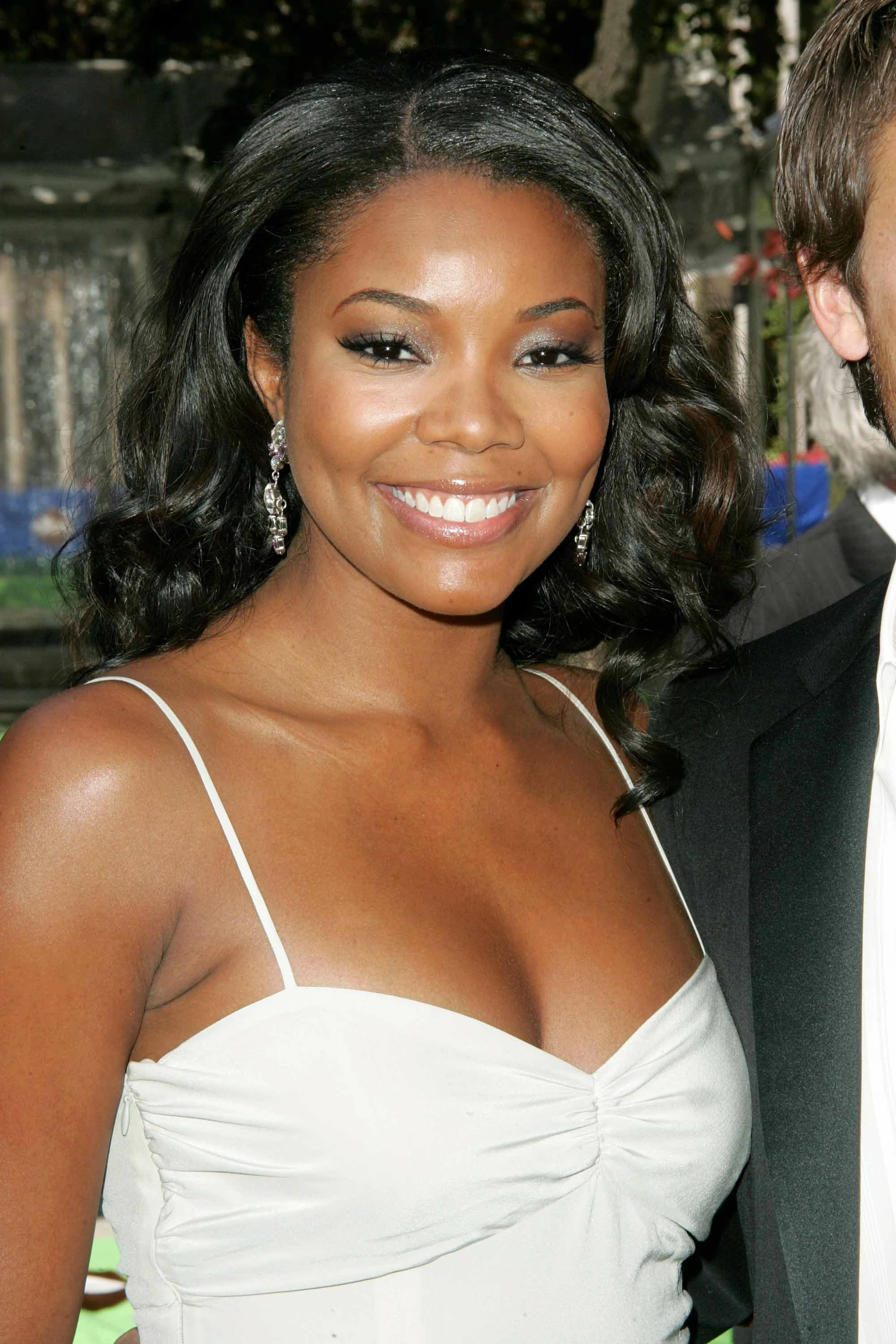
Where her father has been the driving disciplinarian in her life, her mother, Theresa, a former dancer, has been the nurturing, artistic influence. Her mother’s family, the Bryant-Fishers, is one of the oldest and largest black families in Nebraska. So entrenched are they that as part of their annual weekend-long August reunion — 85 years and running — the family stages their own parade down 24th Street. Union recalls that after her family moved from Omaha, where her father was an AT&T manager and her mother a social worker, her mom would take her and her two sisters to such Bay Area cultural events as poetry slams, ethnic festivals and gay pride parades. Union, a tomboy at heart, was 8 when she left Omaha but her ties led her to attend the University of Nebraska-Lincoln, whose women’s soccer team she competed on and whose football team she still madly cheers. Homesickness soon led her back to the coast, where she attended Cuesta College in San Luis Obispo before entering UCLA. After getting her B.A. she considered law school before being “discovered” at the Fontaine Modeling Agency.
Despite lacking a prestigious acting school pedigree, Union said, “I feel confident about what I bring to the table.” In a sense, she’s been in training from the start by being a keen observer. “I’ve always been the kind of person, even as a young kid, who would just sit somewhere and watch people. I’ve always been fascinated by human nature and by what motivates people to do certain things…and that’s kind of a big chunk of acting. That, coupled with the fact I was a sociology major and wrote tons of term papers on inter-group conflict and on what makes people tick…which is a lot of what goes into theater studies.”
Then, she said, there’s the side of the profession no drama school can simulate. “Nothing prepares you for Hollywood. There’s no class on how to deal with a psycho director or a co-star on cocaine or on how to get along with people. Those are just sort of common sense things and a lot of that goes into who works and why. A lot of it is just like manners. Being on time. Working well with others. Literally being one of those people that others like to spend three or four months out of a year with. Part of that is definitely being professional, but part of it too is not taking yourself so seriously that you don’t have a good time. I mean, if I’m going to work in Miami I’m taking a very professional attitude, which means I’m going to be at work on time, I’m going to know my lines, I’m going to hit my marks and you’re not going to have to wait for me. But I’m also going to have a good time while I’m there. No one’s ever going to accuse me of being a fuddy-duddy.”
The vivacious Union is also no shrinking violet. Having grown up in the suburbs, she’s used to being “the black girl” in classes, on teams and, more recently, on sets, which means taking on “the responsibility of sort of educating people, correcting people and letting people know…little different nuances of race and class. It can be a little tiresome. It’s so much different on the set of a predominantly minority cast and crew, when you can free yourself up to just work and not have to worry about somebody saying something offensive or not understanding why I need a black hair stylist or why pink lipstick doesn’t look so great on a black person. It’s nice not to have those little struggles.”
Union is riding a wave that is seeing a more inclusive American cinema than, say, 10 years ago. But, as she can attest, Hollywood is still no where near to being as diverse as the society it purports to mirror. “There’s so much more that needs to be done for minorities, period, just to make films reflective of a multicultural America. Unfortunately, most of the writers employed come from privileged, homogeneous backgrounds not representative of the changing face of America, especially among younger people who, with the infusion of hip-hop, have a completely different mind-set,” she said. “For the younger generation, it’s not a big deal to have a black person kissing a white person or to have a Latino and an Asian as a couple. If those are the dollars Hollywood’s trying to get, then the projects need to be reflective of those attitudes, which are much more open.”


Casting, she said, is still replete with racism. While Berry broke down barriers playing a Bond girl, the buzz behind that “goes away and it’s back to fighting to play certain roles not written race specific. Why does the star’s secretary have to be blond? Why does Tom Cruise’s love interest have to be white? What’s the problem?” More insidious, she said, is the practice of casting light-skinned minorities in positive roles and dark-skinned minorities in negative roles. “When I was auditioning to play the pretty girl friend or the well-educated snob, the other girls in the room were either very fair or biracial and it was like, OK, clearly we have a mind set about what’s attractive, what’s well-to-do and what those faces look like. But a single mother crack-head who just lost her baby’s daddy to a gangland shooting, oh yeah, those girls are going to be dark. It’s just what people feel comfortable with I guess. It’s weird. But hopefully we’re slowly changing that.”
Along with her counterparts, Union hopes to open doors for more actors-of-color. “People in Hollywood always say, It’s not a black thing or a white thing, it’s a green thing, and in a sense that’s true. I’ve been lucky enough that some of my films have made money. Deliver Us From Eva made triple its budget, which you can’t say about many other movies, and that means something to Hollywood, which says, Here’s a movie about four sisters who all have jobs, who all have relationships and it made made money — Hmmm, let’s have more of this.”
Black or white, part of being a starlet in Hollywood is glamming it up, something Union, who can otherwise be found kicking it at home in sweats or shorts, enjoys doing for occasional magazine spreads and industry bashes, when she looks as cool and posh and fabulous as anyone. “It’s an escape from reality and a nice release to be a part of that whole Hollywood glamour machine,” she said. “It’s a lot of fun, but it’s not something I could keep up every day, certainly.”
She still gets back to Omaha, most recently for the January funeral of her great-grandmother, Ora Glass, who was 110. And she keeps tabs on other native Omaha film artists, such as actress Yolonda Ross (Antwone Fisher). An admirer of Alexander Payne, who’s a fan of hers, she said if he ever shoots in town again she’s “willing to be a P.A. or grip to help him around north Omaha,” adding with her typical sauciness, “I love his work, but you don’t see all of Omaha reflected.” Hint, hint.
Related Articles
- Gabrielle Union & Dwyane Wade: Hard Rock Hotties (justjared.buzznet.com)
- Gabrielle Union joins possible “Army Wives” spinoff (reuters.com)
- Gabrielle Union & Jamie Foxx Get Cozy In Vegas [PHOTOS] (hellobeautiful.com)
- The Ties that Bind, One Family’s Celebration of Native Omaha Days (leoadambiga.wordpress.com)
- Native Omahans Take Stock of the African-American Experience in Their Hometown (leoadambiga.wordpress.com)
- Back in the Day, Native Omaha Days is Reunion, Homecoming, Heritage Celebration and Party All in One (leoadambiga.wordpress.com)
- Omowale Akintunde’s In-Your-Face Race Film for the New Millennium, ‘Wigger,’ Introduces America to a New Cinema Voice (leoadambiga.wordpress.com)

Theater-Fashion Maven Elaine Jabenis
August 4, 2010
3 comments

©Photo by Bill Sitzmann
Cities the size of Omaha or smaller have their local theater legends. Omaha claims many, including at least two figures, in Henry Fonda and Dorothy McGuire, who became legends on a much larger stage. One of the local legends who stayed local but whose talent might have played well beyond these confines had she sought to try is the subject of this New Horizons story. As I was growing up, Elaine Jabenis epitomized glamour by the way she carried herself in theater, in fashion, in television, and at community events. She was a queen and a diva without the baggage. She seemed apart from yet wholly approachable. When I finally met her seven years ago I found she is still that charming mix of Grande Dame and down-to-earth hometown girl. She’s still full of vitality and curiosity. I must admit that I’ve never seen her perform in the theater, the domain where she perhaps made her biggest impact. But I saw enough of her on television to appreciate her expressive talents. And even interviewing her at her home I was captured by her magnetic charm. She gives off a positive energy that you can’t help but be energized by yourself.
As if I needed proof, not long after my story appeared Elaine appeared with Michal Simpson in the SNAP! Productions staging of Richard Alfieri’s Six Dance Lessons in Six Weeks, earning as usual rave reviews. She’s gone on to win a series of lifetime achievement awards. Look for a new story about Elaine and her unaging passion in a coming post.
Theater-Fashion Maven Elaine Jabenis
©by Leo Adam Biga
Originally published in the New Horizons

Elaine Jabenis
When considering her charmed life, Elaine Jabenis, that pert, pretty, petite bundle of energy Omahans have come to know as a well-versed radio-television personality, veteran stage actress, longtime fashion maven, seasoned author and perennial woman of style, has to admit it reads like “a storybook.”
Take the time she was waiting out a rain storm in the Times Building as a young newlywed in 1944 New York, where her husband Mace, a Kansas City native, was stationed as a flight crew member aboard Army Air Transport Command missions over the Atlantic, when she decided, on a whim, to put in an application at that bastion of American newspapering — the New York Times.
Mind you, she’d never worked on anything but the Omaha Central High School Register staff and had only taken a few courses at Northwestern University’s prestigious Medill School of Journalism before her money ran out. But, showing the penchant for imagination that would define her life, she bent the truth a little, well, a lot, by inventing from whole cloth a high-gloss work background, including a fictitious World-Herald reporting stint. What gave her the chutzpah to pull such a cheeky stunt?
“I was really doing it as a kind of lark,” she said. “I exaggerated, never in the world expecting to get a job. I was just playing this silly little game. This was the sense of drama in me” coming out, a vivacious Jabenis said in an interview from the home she shares with hubby Mace in Omaha’s exclusive Loveland neighborhood. The rich, tasteful decor of the home, featuring art objects from the couple’s wide travels to China and elsewhere, is a reflection of Jabenis, whose well-coiffured hair, stylish ensembles and trim figure, still make her every inch the fashionable lady.
After all, there wasn’t a chance in hell she’d get on at the venerable Times, right? Wrong. In a case of being at the right place at the right time, she was on her way out the building when a certain Mr. Tootle flagged her down and, much to her disbelief, offered her, on the spot, a temporary job filling-in for a secretary taken ill that day. She accepted and in typical Jabenis fashion she displayed such poise, industry and charm that at the end of her term she was kept on as an assistant in the high-octane city room. Thus, what began as a lark turned into a three-year whirlwind that provided invaluable experience and exposed her to the high-end creative world she would make her life’s work. “That application was probably the best piece of fiction I ever wrote,” is how she sums up the episode today.
Despite the frivolous attitude she adopted when applying at the Times and the fortuitous manner in which she got hired there, she really did have a hankering to write. Growing up one of three children of Sol and Ida Lagman, Russian immigrant grocers whose Laggie’s Market was a north Omaha fixture, she said, “I always had a pencil and pad under my pillow and I was always writing poems and stories.” At Central, she was encouraged to pursue writing by journalism department head Anne L. Savidge, who persuaded her to continue her studies at Northwestern.

At the Times Jabenis was first assigned to the Town Hall page and later as an aid to several experienced journalists under whose doting tutelage she learned a thing or two about writing, working under deadlines and trusting her muse. As a young reporter-in-training, she did a little of everything, from fielding phone calls to fixing copy, and sometimes accompanied beat writers on assignment, once to the first meeting of the United Nations security council.
One of her mentors was education editor Benjamin Fine, who advised Jabenis on her ambition to be a serious writer with this admonition: ‘Go home and write a million words and then tell me you’re a writer. The only way to be a writer is to write all the time.’” And, like a good pupil, she took his sage advice years later when, writing “every single day,” she authored a suspense novel, The Burning of Georgia, set amidst the fashion world, an arena she knows well from her years as fashion guru for J.L. Brandeis & Sons Department Stores. In the early 1970s she penned the first of her two long-in-print fashion merchandising college texts published by John Wiley & Sons. She’s also written the book for two musical plays. Her Generation to Generation, with music and songs by composer and producer Karen Sokolof Javitch, is “a celebration of life” about a dying Jewish woman passing on her legacy to the grandchild she won’t live to see. Generation won the best new script award from the Theater Arts Guild.
Two other Times staffers she worked for, drama critic Brooks Atkinson and film reviewer Bosley Crowther, were living legends whose printed words carried much weight, but none more so than those of Atkinson whom Jabenis describes as “the most feared theater critic of all time. I mean, if Brooks Atkinson put his thumb down on a show, it could close tomorrow. He didn’t pull any punches.”
Looking back on her Times experience, she said, “It was a wonderful training ground. I gained so much while I was there. I was like a sponge just soaking up all that knowledge.” Her association with Atkinson afforded privileged access, via her Times press pass, to stars, including rubbing shoulders with Rex Harrison at the swank Stork Club, and taking in scores of Broadway opening nights for such classics as Oklahoma and Moon for the Misbegotten. Her total Broadway immersion prompted her own passion for theater, until she knew her place was not in the audience anymore but on stage. “I began to think — I don’t want to be down here, I want to be up there. I just began to love it. It was always there, that desire to act or to perform. If that basic temperament is there, it only needs cultivation to bloom.”
With a hoped-for life in theater or journalism before her, Jabenis was in an envious position, but reality has a way of tempering dreams. It was, after all, wartime and she had more pressing concerns than what professional path she should take. She explains, “My husband was crossing the Atlantic on ATC missions and my mind was more on, Is he coming home safely this trip? than on what I would do” for a career.
A life in the theater did indeed come to fruition for Jabenis, only in her hometown of Omaha, where she and Mace moved a year after the war ended, not in New York, where she longed to study at the famed Actors Studio but never found the time and where she ached to trod the boards but never took the plunge. As she would soon discover, her destiny as an actress lay on the Omaha Community Playhouse stage, not on Broadway. But before launching her six-decade run of success with the Playhouse, which in July honored her with its Dick Boyd Award for lifetime achievement, she had an unexpected brush with Hollywood.
About the same time her thespian ambitions flowered in New York, she said, she was offered a screen test by a major Hollywood studio, she thinks Paramount, a heady thing to have happen to “a country girl” with stars in her eyes and greasepaint in her veins. Flattered and flummoxed by the offer, Jabenis sought the counsel of one of her Times mentors, Crowther, whose resulting bromide may have dramatically changed her life. “
He said, ‘Elaine, don’t do it.’ And I said, ‘Why, because you don’t think I have the talent or the warmth or something?’ He said, ‘No, you probably have both, but you don’t have a killer instinct and without a killer instinct they’ll destroy you. You don’t want to be a part of that world and those ruthless people.’” A deflated Jabenis heeded the warning, even though “it was very hard to hear,” at the time, she said. “He just decided I was a nice Midwestern girl” unsuited to the cruel vagaries of Hollywood or New York. “Later, I was so grateful because after I got back here (Omaha) I had the best of both worlds. Not only could I have theater as an avocation, I had New York through my fashion career and I was able to raise my children and have a decent life.”
In Omaha Jabenis wasted little time embarking on her entertainment career. “Almost immediately I got a job as a continuity writer at WOW Radio,” then aligned with WOW-TV. “I wrote commercials and copy for on-the-air people,” she said. Then, one day an unlikely chain of events propelled her into the performing spotlight.
As Jabenis recalls, “Shaver’s Food Mart wanted a commercial tailor-made for them” and she obliged with one, which the general manager had her put on tape. “I went in the announcer’s booth of a little studio and recorded it and they took it over for Mr. Shaver to hear and he liked the concept really well and bought the package.” Then, the story goes, when Shaver was told, “We’ll get you an announcer” to cut the spot, he balked, saying, “No, I want the voice I heard on that tape.” When pointed out to him the voice belonged to a writer, he persisted, “I don’t care, I like what she said and the way she said it.” Acceding to “the customer is always right” credo, WOW put Jabenis on the air and, she said, “before I knew it I had a show of my own” — Saturday’s Scrapbook — and a star was born.
Saturday’s Scrapbook, which Jabenis co-hosted with Ray Olson, was what she calls “a forerunner of the talk show.” She added, “We talked back and forth. We had music and special topics. We did it quite loosely, but I think that’s what made it work.”
The program was recognized by Billboard Magazine as one of the best of its kind. Soon, she joined the television side of WOW, serving as spokes-model for commercials on evening newscasts, as featured guest on local morning programs and as host of prime time special event broadcasts, such as the Ak-Sar-Ben ball. It was all live, too. “There was no such thing as teleprompters or idiot boards. You just got up there and talked. It was very stimulating,” she said of those halcyon days. “Back then, television was just coming in and none of us knew what we were doing. We just did it. It was, Let’s try this, let’s try that.”
Among the talents at WOW she worked with was a young fire brand named Johnny Carson. At the time he was hosting his Squirrel Cage TV show and one day she came on to read some prepared copy when Carson, already known for his free-spirited, anything-goes ad-libbing, forced her to improvise as she joined him on set.
“I came in scripted and he knew I was going to want to look at those notes and he just tore up the script and cleared off the desk, sending stuff flying across the studio, and he said, ‘OK, Lainie, what did you want to tell me?’ That taught me.” From then on, she said, she knew to be ready to just wing it. Lainie is what Carson always called her and the nickname, which no one else but her mother used, endeared him to her. “It was such fun. He was always doing silly things. We always had a good time together. We were good friends. I like him a lot.”
The rapport they enjoyed is evident in a 1966 interview he gave her during one of his rare Nebraska visits. On the tape, the two engage in the easy, intimate banter and horse play of old chums, as she playfully slaps him and they embrace like schoolkids. “It’s so funny to be in this position of interviewing you,” she tells him.
She and Carson stayed in touch over the years. Once, returning from the West Coast after having given himself a year to make it out there, he tried coaxing Jabenis to join him in L.A., where he predicted great things for her. But she declined. By then, she and Mace had started a family and well, just like the Hollywood opportunity before, who’s to say whether she really would have succeeded or not and whether it was right for her or not? “I wasn’t that adventurous to pack up and move my family and risk everything on that chance.” Mace was in business then with his brother Eli as owners of Travelware Luggage.
In her career Jabenis has had the privilege of working with major talents. There was Carson, who forever put his stamp on the late-night talk format as host of The Tonight Show, and, more recently, there was John Beasley, a top character actor in movies (The Apostle) and television (Everwood). “Absolutely. I have found that when you’re around very talented people it just brings your level up,” she said. “I know when I played opposite an actor of the caliber of John Beasley in Driving Miss Daisy at the Playhouse it was a thrill because John is such a perfectionist and a professional. He really brought me to places where I never knew I could go.”

Elaine Jabenis, center, hosting live TV special atopening of the new Playhouse
Jabenis got so busy working as a freelance commercial talent with Bozell and Jacobs and its stable of clients that some nights found her hurrying from station to station to pitch products on the evening newscasts.
“I would be booked into a commercial at Channel 3 for Peter Pan Bread, which I’d have to commit to memory and do live, and then I’d get in the car with the script for another spot beside me and as I drove up to WOW I’d be reviewing the lines I had to do for MUD and its new gas ranges. And then I’d go over to host a late-night movie show on Channel 7 and do the live cut-ins.” The excitement was intoxicating. “You just had to really move. But, boy, that really taught you to think fast on your feet. I loved the action. I loved the electricity of all those personalities and how ideas bounced off of each other. You began to pick up the pace of that kind of life. It was really wonderful.”
While her TV career flourished, she pursued a parallel career in drama.
“There was that pull to go into the theater,” she said.
So strong was the pull that in 1952, six weeks after giving birth to her second child, she played the ingenue in Father of the Bride at the Playhouse, then at 39th and Davenport. Years of award-winning lead and character roles followed, the most recent a 2001 supporting turn in My Fair Lady. Like a true calling found, the theater became her second home. “Yeah, I really loved it. I could just hardly wait to get into the next play, but it was very hard at first because I was raising our two children. I kept watching to see what was coming up next that had a good part for me.” Her passion extended to all aspects of theater. “There were times I worked backstage…props, costumes…I would do just about anything because I wanted to be in the environment of the thing I loved.” She could only pull it all off, she said, with “the support of Mace.”
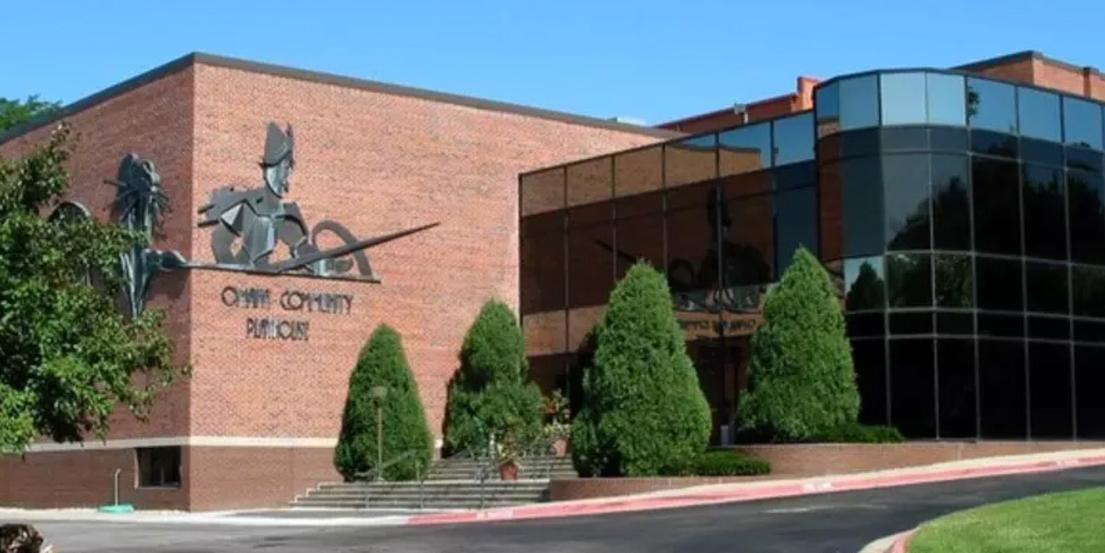
Omaha Community Playhouse
Whether as a radio-TV personality or theater actor, Jabenis proved a natural. Without any formal training, she simply took to it.
“I had an aptitude for it, I guess,” is how she explains it. “Nobody had to tell me. I just think it’s something you do and you know. I think it’s in here,” she said, patting her heart. Natural or not, Jabenis still battled stage fright. “I was terrified every time I went on camera, but the minute the light went on I was fine. That’s the same way it was with the theater. I’d stand back in the wings and feel like I was going to have a heart attack before the curtain went up, but once on the stage I forgot about Elaine and became whatever I had to become.”
Her absorption in her craft is complete. Take her approach to acting.
“What I think is important is to have a moment of truth with the audience…to give an honest interpretation of the author’s words. It’s exciting when it happens. It really is,” she said. Now, forget the glamour of the theater and consider the grind of working a full-time job, as she did 23 years at Brandeis, then coming home to shower and catch a bite to eat before spending hours in rehearsal or performance. “Once I got involved with the Playhouse it was totally consuming,” she said. “You have to be up every night.” Her devotion is such that one night during the run of Wingless Victory the trouper went on despite a high fever. “I was just going on sheer guts,” she recalls. “I just had to do it.” After her final exit she was delirious in the wings. “I didn’t know where I was. I was really sick. I was in bed the next two days.”
Broadcasting and acting success led Jabenis into another creative field — fashion. It happened this way. Having covered the Ak-Sar-Ben ball, Jabenis “got very well acquainted with the buyers and presidents of the stores furnishing gowns for the event. Brandeis invited me to be a guest commentator for fashion shows and this and that. Then, one day I got a call from Dick Einstein of Brandeis asking if I’d like to make it a permanent arrangement.”
As Brandeis fashion coordinator and, later, fashion merchandising director, she canvassed the designer market by reading the industry trades and by frequently visiting New York, Los Angeles and Europe to catch the biggest shows and identify the hottest trends. She met the top name designers — from de la Renta to Cardin — and worked with celebrities — from Irene Dunn to Vanna White. She recommended entire lines and styles of clothing for the store to purchase and pitched those fashions via all size and manner of shows.
“I was probably the first one to introduce theatrical pieces into fashion shows here when I started adding singers and dancers and that kind of thing,” she said, adding that she drew on her theatrical acumen in staging events. After Brandeis was sold she formed her own fashion production company and dished-out fashion advice as a TV and print commentator. Her biggest fashion forum has become the Woman of the Year Gala she created as a benefit for the Arthritis Foundation. As she said, “All stops are pulled,” for the extravaganzas. “That’s right up my alley.”
Reticent about revealing her age for professional reasons, it’s safe to say Jabenis is years removed from traditional retirement age, but she does not concede anything to mere numbers. “I haven’t retired from anything, honey,” she told a visitor to her home. “I don’t believe in that. I’m not going to let chronological years interrupt what I want to do.” What she wants to do is continue traveling, writing and acting. She’s already planning her next novel and she’s awaiting the next prime part to come her way.
“I’ve always felt there’s some kind of little angel sitting on my shoulder guiding me and taking care of me. I feel like I’ve led a charmed life.”
Related Articles
- Elaine Stritch and Other Matrons of ‘Night Music’ (nytimes.com)
- Theater Talkback: The Replacements’ Greatest Hits (artsbeat.blogs.nytimes.com)
- Omaha Arts-Culture Scene All Grown Up and Looking Fabulous (leoadambiga.wordpress.com)
- Canceled FX Boxing Show, ‘Lights Out,’ May Still Springboard Omahan Holt McCallany’s Career (leoadambiga.wordpress.com)
- Omaha Fashion Show: VIP Spring Runway Show (thebrunetteone.com)
- Quiana Smith’s Dream Time (leoadambiga.wordpress.com)
- Great Plains Theatre Conference Ushers in New Era of Omaha Theater (leoadambiga.wordpress.com)
- Kevyn Morrow’s Homecoming (leoadambiga.wordpress.com)
- Walking Behind to Freedom, A Musical Theater Examination of Race (leoadambiga.wordpress.com)
- A Q & A with Edward Albee: His Thoughts on the Great Plains Theatre Conference, Jo Ann McDowell, Omaha and Preparing a New Generation of Playwrights (leoadambiga.wordpress.com)
- Playwright/Director Glyn O’Malley, Measuring the Heartbeat of the American Theater (leoadambiga.wordpress.com)
Categories: Advertising, Brandeis Department Store, Elaine Jabenis, Entertainment, Journalism, Media, Omaha Community Playhouse, Television, Theater, Writing
Brooks Atkinson, Elaine Jabenis, Entertainment, Journalism, Medill School of Journalism, New York Times, Omaha Community Playhouse, Omaha Nebraska, Television, Theater
Ron Hull’s magical mystery journey through life, history and public television
July 11, 2010
5 comments
For years I only knew Ron Hull through the prism of television. He was an affable, erudite executive and sometime host on the PBS affiliate in my state, Nebraska Educational Television. I knew that he was a friend of Dick Cavett‘s and over the years I prevailed upon Hull more than once for his help in contacting Cavett for various projects I was working on. But it wasn’t until a couple years ago I finally met Hull, who proved as amiable and generous in person as he was by phone. I long wanted to profile him but had never quite gotten around to it. Then a couple things happened: In the course of interviewing Cavett, the former talk-show host mentioned some things about his longtime friend Hull that peaked my interest even more; and then I read a local newspaper story about Hull that hinted at some colorful origins I wanted to flesh out in more detail. That’s exactly what I do in the following profile, which originally appeared in the New Horizons. By the way, this blog site also contains some of the articles I’ve written about Cavett and at least one of those pieces references Hull.
Ron Hull’s magical mystery journey through life, history and public television
©by Leo Adam Biga
Originally published in the New Horizons
Only recently has Nebraska Educational Television pioneer Ron Hull, 77, come to appreciate the remarkable arc of his life, one that’s literally gone from bastard child of a bordello to chairing the board room.
“I went from that situation to this situation. It’s incredible when you think about it,” Hull said from his NET office in Lincoln.
His journey’s taken him around the world, introduced him to legends, given him access to inner circles of power and allowed him to indulge his love for the arts, the humanities and history. Perhaps none of it would have happened if not for the kindly madam, Dora DuFran, whose house of ill repute he began life in.
He’s come a long way from that dubious start in a Rapid City, S.D. den of inequity. He never knew his real parents. His adoptive parents, who got him as an infant, gave him a good home in town. His father was a mechanic and his mother, a former country school teacher, a realtor. His dad opened his own garage and used car lot. His folks made extra money buying old properties and renovating them for resell.
“There was never any doubt about how much they thought about me. I couldn’t have had better parents,” Hull said. “Coming out of the Depression my parents had nothing except each other and lots of integrity. But they really worked hard. They were very industrious people and they gave me every opportunity. I’m very lucky.”
From such modest roots, he’s forged a substantial public television career here and in the nation’s capitol. The Nebraska Broadcasters Association Hall of Fame inductee helped build the statewide NET network, considered one of the best in the PBS chain, and once wielded major influence in Washington, D.C.
In the course of his work he’s developed friendships with notables from the worlds of stage, screen, literature, media and politics. Talk show host Dick Cavett is a pal.
His much-traveled life has taken him from the Black Hills to Hollywood to New York City and back to the Midwest. Except when he worked back east as an executive with the Corporation for Public Broadcasting and with the Public Broadcasting System, Nebraska is where he’s made his home since 1955. There have also been extended stays as a guest lecturer in international broadcasting in Taiwan and as a television advisor to the government of South Vietnam during the Vietnam War.
The Lincoln, Neb. resident is still very much a citizen of the world. He’s as likely to be visiting favorite haunts in Manhattan or Los Angeles or off on some adventure in Asia, Europe or Africa as he is to be at home. He has friends all over the world.
After 52 years in public TV he’s still in the game. He serves as a special advisor at NET, where keeps a hand in programming, archiving, fundraising and just about anything he cares to involve himself in. He also teaches international broadcasting at the University of Nebraska-Lincoln, where he’s a professor emeritus.
History, though, remains a top priority for the man who helped initiate The American Experience, the acclaimed documentary series that remains a PBS staple. He pushed for the series while director of the CPB Program Fund, a $42 million annual kitty he controlled and doled out to producers from 1982 to 1988.
His D.C. stint taught him the vagaries of power and politics. Producers seeking funding for their projects schmoozed him. He had to separate what was real from what wasn’t. “Every morning I’d get out of bed the first thing I’d say to myself was, ‘It’s the money they like.’ That really kept me on a pretty even keel.” The CPB board he reported to was comprised of Presidential appointees who displayed their partisan colors. As conservative Republicans exerted more influence, he left.
Back home he’s nurtured NET’s film production unit, whose Oregon Trail, Willa Cather, Standing Bear and Monkey Trial documentaries have aired nationally. He’s the founder and director of the Nebraska Video Heritage Library, an archive of thousands of programs that touch on life in the state over the past half-century. Among these gems are interviews with Nebraska writers John G. Neihardt, Mari Sandoz and Wright Morris, actress Sandy Dennis and entertainer Dick Cavett as well as coverage of legislative sessions, political campaign debates, et cetera. Hull’s enlisted Cavett’s interviewing-vocal talents for many NET and UNL projects.

The history bug first bit when Hull produced the NET series, Your Nebraska History, which led to an association with Sandoz, whom he convinced to do several shows. He’s headed the Sandoz Society. He’s served on the board of the Willa Cather Pioneer Memorial in Red Cloud. Then there’s his decades-long work with the Neihardt Center in Bancroft. He emcees the annual Neihardt Days. Neihardt was another key figure in the early life of NET, he said, as the poet’s appearances lent credence to public TV as a prime cultural source. Hull also led the Lewis & Clark Bicentennial Commemoration committee for seven years.
Hull’s made it his mission as a broadcaster to satisfy what he says is a basic human desire for people “to know who they are” and “where they come from.” He often refers to something Cather noted. “She said, ‘The history of every country begins in the heart of a man or a woman.’” These questions and concepts have taken on personal import for Hull ever since learning at age 15 that he’s adopted.
“I discovered it by accident…I found a birth announcement in my grandmother’s house. Of course she disavowed that. I’m sure she was so embarrassed. I have to hand it to all the relatives. Nobody ever talked. Nobody ever told me. Not my grandparents. Not my aunt who lived nearby. Nobody. They had to of known.”
He didn’t broach the subject with his folks right away.
“I didn’t have the nerve to ask my parents,” he said. “It was about a year later I went down to the courthouse to check the birth records because I knew I was born in Pennington County. I took my best friend. We said were on a school assignment and had to see our birth records.
“They looked up my friend’s. ‘Yep, here you are,’ the clerk said. Then my turn came. ‘You’re not here.’ I said, ‘Well, I have to be. I know I was born in this county. If I was born in this county and I’m not listed here, why not?’ The clerk said, ‘Well, I’m sure this isn’t your case, but illegitimate children aren’t listed in the county of their birth, those records are at the state capitol in Pierre.’”
The disclosure, Hall said, was “a big clue.” As those records were under seal, his search was stymied for a long time. Unable to keep silent anymore, he confronted his mother. She admitted the truth. “She told me as much as she could. She didn’t know much,” he said. “She had a friend, Mrs. Benjamin, who ran the social agency and she told her they’d like to adopt. She liked my mother” and an arrangement was reached to contact the Halls should a child come available.
From the time of these revelations Hull’s life’s been all about seeking answers. His search intensified over time. In 2002 he obtained a court order to unseal his birth records. The discovery of his true identity and the unusual circumstances that led to his adoption made his journey from townie to sophisticate all the more unlikely.
The brothel he entered the world in was owned and operated by one of the American West’s best-known madams, Dora DuFran. “She’s a colorful character. I’ve done a lot of research into her,” he said. DuFran got her start in the sex trade in Deadwood, S.D., that infamous frontier outpost of wild and woolly goings on.
A late 19th century immigrant from England, DuFran settled in Nebraska before making her way north to Deadwood, a gold rush town she cleaned up in. She expanded to run stables of sporting girls at brothels in Sturgis, Rapid City and Belle Fourche. Like many a successful madam she cultivated strong allies in the form of her gambling magnate husband, Joseph DuFran, and local authorities, whose ranks no doubt included regular customers.

Deadwood
It was in Deadwood DuFran befriended Calamity Jane, a former scout under William F. Cody, aka Buffalo Bill, whose Wild West Show she performed in. Renowned for her horsemanship, shooting and rowdy ways, Calamity knew iconic gunman-turned-lawman Wild Bill Hickok. A young Calamity once worked for DuFran and when down- and-out near the end of her life DuFran took her in. Hull’s link to the notorious DuFran and her historical cohorts is more than passing. Among other things she was a midwife and, yes, it turns out she delivered Hull. On his birth certificate the word physician is crossed out. Written over it is “midwife” and “Dora DuFran.”
“And I only know this because my mother told me,” Hull said, “but Dora DuFran carried me herself down to the Alex Johnson Hotel where the social office was and gave me to Mrs. Benjamin. Mrs. Benjamin called my mother up and said, ‘Come and get him,’ and that was me. So, anyway, I owe Dora DuFran a lot.”
As a teen Hull worked as a bell hop summers at the Alex Johnson. He didn’t know then his connection to it. “I always wondered what brought me to apply there, but I never figured it out,” he said.
DuFran’s Rapid City house also served as a popular speakeasy during Prohibition. Upon her death in 1934 the Black Hills Pioneer referred to her as “a noted social worker.” Her grave in Mount Moriah Cemetery in Deadwood, which Hull’s visited, is near Calamity’s and Wild Bill’s plots. DuFran’s grave features four urns, each adorned with grinning imps in recognition of her four houses of pleasure. She authored a 1932 book entitled Low Down on Calamity Jane that contained her recollections of “the untamed woman of the wild, wild west.”
What Hull’s learned about DuFran, he likes.
“She was that proverbial madam,” he said, referring to her reputed heart of gold. “The sheriff, the police — everybody loved her. She’d be down at the railroad station on Thanksgiving bringing hoboes and bums back to her place to feed them Thanksgiving dinner. She was a midwife, she was a lot of things. And I was born in Dora DuFran’s house of prostitution in Rapid City. She had nine girls working for her at one time. It was a thriving business.”
This “back story” of unwanted pregnancy, abandonment and adoption has given Hull an inkling as to why he’s felt compelled to continually prove himself and why he’s rushed off to faraway places in search of some larger meaning.
“I can tell you one thing, I’m very sympathetic to anybody that’s adopted because if they’re like me you eternally wonder why somebody didn’t want you,” he said. “You could couch it another way. You can intellectualize it. She couldn’t take care of you, she couldn’t afford you, look how lucky you are…You can do all that, but the bottom line is — why didn’t they want me? And it hurts.
“It’s just something every adopted kid has to deal with…On the positive side, it’s a very powerful motivation to measure up. Am I going to be good enough? You always feel like you have to prove yourself. I decided I’d show ‘em.”
He feels strongly enough about giving lost children a home that he and his wife Naomi adopted their first child, Kevin. The couple added three children “the hard way.” Their son Brandon and his wife Linda continued the family tradition of adopting by flying off to China to bring home a baby girl, Eliza.
Hull continues trying to piece together his own pedigree. He knows the name of his birth mother, Jeanne May Ramsey, but doesn’t know if she worked as a prostitute at DuFran’s house or if she went there for help as “a girl in trouble.” He’s learned the name of his biological father, Paul Vaughn. Again, he’s unsure if he was a john or boyfriend or one night stand. He’s found his given name at birth was Theodore Vaughn Ramsey. Once adopted, his parents named him Kenneth, which he was called for a year or so, before they changed his name to Ronald.
However, he’s been unable to track down any more about his birth parents. “I have had no luck finding either parent,” he said. “I’ve really searched.” He just knows they weren’t married, which explains why his birth certificate has a box checked ‘No’ under the heading ‘Legitimate.’ He said the law changed at some point to remove “the stigma” of illegitimacy on birth records.
The intrigue of his own roots reminds Hull of life’s rich tapestry and how his work as a producer, director and programmer has tried to capture that richness.
He’s found a niche for himself in television, where he’s nurtured a lifelong love for the humanities, yet he fell into the field by happenstance. Still everything he did as a young man prepared him for his career.
Growing up in Rapid City his passion for the arts made him an odd duck. “I had certain proclivities for music,” he said. “I took piano. I loved theater.” He loved to read. His parents, meanwhile, “were not cultured people. They loved to dance, they loved to play cards. They had a lot of friends. They were very social. But I had the tickets to the concert series, to the Broadway theater league, they didn’t. All those things, from the time I was in the 7th grade, they saw to it I had them. You just have to say I was cut out of a different piece of cloth, and they knew that.”
He was delighted to move with his parents to North Hollywood, Calif. for his junior year of high school. “They always saw that as the end of the rainbow,” he said. “While I was perfectly happy out there my parents weren’t. It was just too hard for them to sever all the friendships, ties and everything. They realized they’d made a mistake.” He moved back with his folks for his senior year in Rapid City. It wasn’t long before he returned to Calif. — this time to study theater at the then-College of the Pacific. He gained valuable experience on stage in high school and college.
Hull once again went home, this time to please his strong Methodist parents by completing his theater studies at Dakota Wesleyan, a church-affiliated school in Mitchell, S.D. He and Naomi met there. Upon graduating Hull heeded the call many young people feel — to make it in the Big Apple. The military draft was hanging over his head and he, Naomi and friends opted to try their luck in New York.
“I just knew we had to get Manhattan under our belt. I knew an educated person had to have an appreciation for New York City — that’s the Acropolis of our culture. We all got jobs. Our intent was to see every play on Broadway and if we really saved our money — the Starlight Roof at the Waldorf Astoria.”
He also hoped to break into the New York theater world. “Yeah, that was always in the back of my head,” he said. Then, just as he feared, he got drafted. He wound up at Fort Sill, Okla., assigned to Special Services. He worked as a recreation equipment clerk — “…the most boring job in the world,” he recalled.
One day a sergeant came by and changed his life forever. A check of Hull’s file showed his theater background, which was enough for the young private to be offered a new job producing a TV show on Fort Sill for the post’s commander. Sensing a golden opportunity, Hull fibbed when he told the sergeant he knew something about TV when, in fact, “I didn’t know anything.”
Given only days to prepare a script, he went right to the base library to learn the basics. He spoke to a director at a local station to learn what cameras do. Before he knew it he was lining up members of the 89th Army Band to play music and signing up the wife of a major to sing in the studio. That just left interviews with soldiers coming back from or going off to Korea.
Producing-directing-writing-emceeing all came naturally to the then-22 year-old, which he chalks up to the fact that “I had a lot of experience in plays by then in summer theater.” He did 95 weekly TV shows before his hitch was over, enough experience to convince him he wanted a career in television.
“I thought, This is pretty good for me because, you know, television combines any aspect of life you want. I mean, there’s music, drama, culture, news, public affairs, documentary. It’s the whole thing.”
He used the GI Bill to study television at what’s now known as Syracuse University’s Newhouse School of Public Communications, where he earned a master’s degree. He’s since been invited back to speak as one of its distinguished alums. Naomi was with him at SU, working in the speech department. “That was a wonderful time in Syracuse. We loved it,” he said.
Hull assumed he would go into commercial broadcasting but while at SU he heard about this newfangled educational television “where you might do something, like Pollyanna, to improve people’s lives, and that really attracted me. Everybody said, ‘Well, you don’t want to go into that because you don’t make any money.’ They were certainly right about that,” he said, smiling.
He hit the road in search of a job, traversing the Midwest and South on a Greyhound Bus. “California was my goal — that golden green place out there,” he said. Except he didn’t go there. Instead, he stopped in Denver, Amarillo, Oklahoma City, Memphis, Atlanta and Chicago, leaving his resume everywhere he went, getting interviews here and there. Mostly he applied at commercial stations. Then he heard about an opening at the fledgling educational station in Lincoln, Neb.
“By this time I’d been on the road for about two weeks,” he said. “I was exhausted from the bus, from everything.”
He interviewed with Jack McBride, the father of NET and the man Hull considers his best friend. The final interview was with the university’s crusty old PR man, George Round. Hull, who had other offers, was noncommittal. Finally, Hull said, an impatient Round bluntly asked, Listen, do you want the job or not? Well, yeah, OK, Hull replied. “And I took the job,” he said. “I didn’t plan to stay here.” But Hull fell in love with Nebraska and its people. He’s remained loyal to his adopted state. He’s always returned to live here, even after extended stays abroad and back East.
“I don’t know if this place has claimed me but I certainly have claimed this place. It’s just who I am, you know. It’s where I established my family. It’s the values of the Midwest I revere. I think the people out here know how to work really hard and are basically honest. You can trust them.”
Among the first people he and Naomi met here were the parents of Dick Cavett. The Hulls, Cavetts and some other couples formed a social-cultural club called the CAs or Critics Anonymous, whose motto was, We criticize everything. A young Dick joined in on some of the activities. Hull and Cavett became close.
Upon accepting the state’s 2000 Sower Award for Humanities, Hull articulated the symbiosis he feels with Nebraskans. “We’re talking about relationships when we talk about the humanities,” he said “To me, relationships are the essence of our lives, the relationships that we have with each other…how fortunate I am, how thankful I am to have the privilege of being a part of you…in this state.”
In a real sense Hull feels he’s a steward for the state’s culture and history, not surprising when you realize he was there nearly from the start of what became NET. He arrived in October 1955. KUON had gone on the air only the previous November — the ninth public TV station to transmit. It was a humble launch.
“There’s nothing like starting at the beginning,” he said. “There were four of us. I was a producer-director, I wrote the continuity…You did everything. We were completely live. We had to be because we had no videotape, we had no network. We shared a studio with KOLN Channel 10. Our signal’s radius was maybe 35 miles.”
Live TV offered a visceral, ephemeral, enervating experience unlike any other.
“I really miss the live shows,” he said. “It makes such a demand on the people in front of the camera and behind the camera that you get a level of energy going all around. Every nerve ending is alive. It’s electrical. You can sense it, you can feel it. We used to say, ‘Poof in the night.’ You can’t replicate those experiences.”
On the down side, he said, “we made some terrible gaffes. You’ve got to be grateful there’s nobody to play those back.” A memorable one he recalled came when, “while introducing a travel film ‘live,’ our host, smiling into the camera, said, ‘Today we visit Hawaii — those lovely islands of beautiful beaches and flat sandy women.’”
Hull said video-digital technology not only eliminates the possibility of most mistakes, it “serves the viewer in the long run” by affording repeats. But he said live TV “was a little more honest” than today’s canned version.
He recalled an example of spontaneity that could never happen now.
“I was directing an interview with (Neb. Gov.) Frank Morrison, a big, lanky wonderful man. I’m sitting at the counsel (control booth) and the phone rang. ‘Hello.’ The voice at the other end said, ‘Ron, this is Maxine.’ ‘Oh, yes, Mrs. Morrison.’ ‘Tell Frank to sit up!’ ‘Yes, Ma’am.’ So I told the floor manager, ‘Make a big sign saying, Frank, sit up! — Maxine. I can still him going, Ohhhh…rolling his eyes and sitting up. Well, that’s live, interactive. It’s a different level of communication.”
Being responsive to people is a big part of public television.
“To me, one of the important things about public broadcasting is never to lose that local connection with local Nebraska people,” Hull said. “They own the station. So you’ve got to be in communication with them at every level you can be by listening to what they say and providing the things you think are useful to them and their lives. And we’ve always run this place based upon that.”
Legislative support for NET “has been wonderful,” he said. “They’ve provided us state-of-the-art equipment — millions of dollars worth. They believe in it.” Despite budget-staff cuts, NET boasts fine facilities, adequate resources and top talent.
Even as the Internet threatens TV’s hold on mass communication, the medium still reaches huge audiences and affords the possibility of informed public commerce.
“We’re trying and I think we’re getting closer and closer to make public broadcasting the central meeting place, the town hall where the issues are debated, where people have a say. I don’t detract from what commercial television does but we are the last vestige of local programming and documentaries.”
Where commercial TV once considered news-public affairs a higher calling, distinct from entertainment, he said it’s now part of the profit line along with situation comedies and reality shows. Networks and local stations don’t produce documentaries the way “they used to,” he said. “Those are expensive and nobody spends that money anymore. But you look at our schedule and we spend 600,000 bucks on Willa Cather: The Road is All documentary. That takes two years to produce but what you get is something that is worth people’s time to watch.”
Hull’s belief in the public service potential of TV remains undiminished.
“Television affects how people think. It goes right into their heads,” he said. “It is a terribly, terribly powerful instrument of persuasion that has the potential to be used for the good of the common man. I always identified with that from the beginning. The measure’s always been — Is this going to enhance somebody’s life?”
That doesn’t mean skirting hard realities or controversial subjects, he said, “because you have to show the other side of things and people have to be able to make up their own mind about things. But basically I have believed from the beginning we have an opportunity to make people’s lives better, to give people a perspective on the world and their place in it they can’t get any other way.”
He points to NOVA, Frontline, The News Hours, American Experience, American Masters and Great Performances as TV at its best. “To me, those series are the most thought-provoking, serious programs available to the American public.” Hull is proud, too, of public TV’s noyed work in children’s programming, led by Sesame Street, and how PBS has carried fare its commercial counterparts do not, such as American Playhouse, Meeting of the Minds, Steambath and Anyone for Tennyson?
New York producer Bill Perry had pitched his concept for Tennyson — mini-dramas bringing to life history’s great poets and their poems — to no avail until he approached Hull. “I liked the idea,” Hull said and the two put the series together at NET, enlisting such “brilliant actors” as Henry Fonda, Jack Lemmon, Claire Bloom, Irene Worth, Ruby Dee and Vincent Price. Hull became close friends with the show’s “first-class director,” the late Marshall Jamison. Hull, who calls the show “my favorite,” said it may have had a small audience but it made a big impact.
“I’ve never ever believed in measuring our success by the number of people who watch,” he said. “Rather you measure your success by what effect you had on people. It’s really hard to measure, but I prefer to believe there are people out there who learned from these programs.”
Similarly, he believes the programming he did in Vietnam made a difference. His experience trying “to win the hearts and minds” of its people gave him a new outlook on public service. Desiring an overseas adventure he parlayed state department contacts to get assigned a foreign service post as a TV advisor to South Vietnam. He was there in ‘66-67 and periodically the next few years to oversee construction and operation of stations in Saigon and outlying cities. Programming centered on public health and education — from potable water to immunizations.
The war raged around Saigon and casualties did not exclude those in the TV ranks.
“During the (1968) Tet Offensive all of our American engineers working at the Hue station were marched off and shot. I wasn’t in-country at the time,” he said.
He arrived in Vietnam a supporter of U.S. policy there but left convinced America “had made one of the major blunders in our country’s history.” He found distasteful the role that he and other Westerners played as outsiders looking in.
At the fancy Caravel Hotel in Saigon he and other noncombatants from the Free World bent their elbows at the rooftop Romeo and Juliet Bar. A frequent drinking companion was correspondent Peter Arnett. “We would look down at those streets to the Saigon River, the area beyond all controlled by the VC (Viet Cong). We would watch planes fly in and see the tracers any night of the week. The flares lit up the countryside. And we’re sitting there — who the hell are we? — drinking our little wine…I’m not proud of that,” he said. “But that’s the position we were in.
“Everybody who was there has to deal with the fact they were part of that war — I don’t care who you were or what your job was.”
Hull returned to Vietnam in 1999, in part to see the fruits of his labors there. Before going he was advised by foreign service veterans not to expect too much in the way of visible, tangible progress from the project he’d led.
He went to the very station in Saigon, now Ho Chi Minh City, he’d officed in decades earlier. He met with the station manager, a reserved man in a military uniform. The man answered Hull’s questions without any elaboration. Anxious to know more, Hull confided, “I was here teaching your people how to run this station in 1971-72. Where were you?” Hull said the manager “looked at me and said, ‘I was in Tay Ninh Province in the People’s Revolutionary Army. Mr. Hull, you and I were not on the same side.’ And then I knew where he was coming from. I said, ‘I knew what your people wanted. They wanted one Vietnam, one country. I am really happy you have your country.’ With that, his defenses went down. He showed me everything.”
What Hull saw impressed him. “My gosh, they had the news in French, Vietmanese, English. There was a ballet going on in one studio and the news being set up in another studio. The place was vibrant, alive and kicking, fabulous. I walked out of there with a happy heart. They’ve taken what we did and they’ve thrived.”
Asia is one of his favorite regions of the world. He occasionally visits China, where he stays with friends. On his last trip there he traveled via the Trans-Mongolian Railway from China to Russia, where he continued his trek on the Trans-Siberian Railway into Moscow. “It’s a fabulous trip. The cultures are fascinating,” he said. He continued on to Copenhagen to visit more friends. “I love travel,” he said.
An annual international broadcasting convention he attends takes him to exotic places. The next is set for Johannesburg, South Africa. He’s anxious to go — ever curious, ever eager to seek out new experiences.
“One of the secrets to having a good career is having a good time,” he said. “I always tell my kids, ‘If you’re not having a good time, you’re doing something wrong.’ It’s how I’ve lived. That’s the only way you stay healthy…”
Still, never far from his thoughts are nagging questions that may never find answers.
“I did find my niche in life, although I am forever this insecure, why-did-they-throw-me-away person who is still searching for Shangrila.”
Related Articles
- PBS chooses Bellingham to show sustainable economy (seattletimes.nwsource.com)
- PBS Ombudsman Criticizes Shultz Series (mediadecoder.blogs.nytimes.com)
- PBS fund searching for Explorer-friendly pitches – RealScreen (countercultureprodco.com)
Categories: Celebrity, Dick Cavett, Entertainment, Media, Pop culture, Ron Hull, Television, Writing
Dick Cavett, Dora DuFran, Entertainment, History, Mari Sandoz, Media, NET, PBS, Ron Hull, Television
Get your jitney on: August Wilson play “Jitney” at the John Beasley Theater resonates with cast and crew
June 18, 2010
1 comment

Image by macwagen via Flickr
I am drawn to stories with multiple layers and textures, and the following story I did for The Reader (www.thereader.com) is a good example, as it resonates on social, cultural, historical, and artistic levels, among others. The piece uses the production of the August Wilson play Jitney to look at the gypsy cab phenomenon that is the context for the drama and to look at the theater company that put on this production and its founder-director, John Beasley. When I found out that Beasley himself had driven a jitney in his hometown of Omaha, the symmetrey was complete. Beasley has a distinguished track record acting in Wilson plays in regional theater and he is personally responsible for introducing Wilson’s work to Omaha. His company, the John Beasley Theater & Workshop, has performed virtually the entire cycle of Wilson plays and is considered a fine interpreter of the late playwright’s work. Beasley knew Wilson and for the production of Jitney I wrote about here he brought to Omaha two more veterans of Wilson plays in the actors Anthony Chisolm and Willis Burks.
Get your jitney on: August Wilson play “Jitney” at the John Beasley Theater resonates with cast and crew
©by Leo Adam Biga
Originally published in The Reader (www.thereader.com)
Gypsy cabbies are at the heart of a milestone event in Omaha theatrical history unfolding this month at the John Beasley Theatre & Workshop, located in the South Omaha YMCA at 3010 Q Street.
For its current production of celebrated American playwright August Wilson’s drama Jitney, the JBT’s assembled some of the leading interpreters of the two-time Pulitzer Prize winner’s work. Its director, Claude Purdy, is perhaps the dramatist’s foremost collaborator outside famed director Lloyd Richards. Adding luster and weight to the ensemble cast are award-winning regional theatre and Broadway actors Anthony Chisholm and Willis Burks, members of Wilson’s stock company. The actors are joined on-stage by the theatre’s namesake, John Beasley, a Wilson regular who’s worked with Chisholm. In a first, Beasley appears in Jitney with each of his sons, Tyrone and Michael, both of whom he shares intense scenes with.
Boasting four artists closely associated with his signature plays, there’s even talk Wilson may visit Omaha to catch Jitney during its JBT run. Like his Broadway-produced Seven Guitars, Two Trains Running, The Piano Lesson (Pulitzer-winner for best drama), Joe Turner’s Come and Gone, Fences (Pulitzer and Tony Award-winner for best drama) and Ma Rainey’s Black Bottom, Jitney’s set in Pittsburgh, Pa.’s black Hill District. The Wilson “canon,” as Chisholm calls it, is richly evocative of the monumental struggles and triumphs of the African-American experience, from slavery till today, as filtered through the rise and fall of one neighborhood Wilson knew as a child and rediscovered as an adult. It’s the place that nurtured him as an artist and that he’s chosen as a prism for telling The Black American Story.
Wilson has said his Hill plays are about “the unique particulars of black culture…I wanted to place this culture onstage in all its richness and fullness and to demonstrate its ability to sustain us…through profound moments in our history in which the larger society has thought less of us than we have thought of ourselves.”

August Wilson
Jitney is one chapter in this epic story. The circa-1970s drama takes place in a storefront gypsy cab stand amid a decayed inner city landscape reeling from urban renewal. Off-the-books earnings of jitney drivers figure in an underground economy where numbers running, drug dealing and loan sharking go on. Unlike these more unsavory pursuits, jitneys provide a community service — public transportation — that’s lacking or lagging. When events conspire to threaten the livelihood of Jitney’s men, they are angry, then resigned and, finally, moved to take action.
In telling the story, the JBT’s gathered an unusual confluence of talent that president/artistic director John Beasley sees as a step towards his vision of making the two-year-old facility a regional theatre. It’s his hope the JBT continues being a magnet attracting top talent from around the country as well as a training ground and launching pad for local actors, directors, playwrights in pursuing their craft.
Nothing quite like this has happened on the Omaha theatre scene. Touring troupes from the Royal Shakespeare Company and Guthrie Theatre have done residencies. An occasional New York director or actor has come through. But Omaha hasn’t had this many artists of this caliber work in a locally produced play, unless you count opera, since 1955. That’s when two Hollywood-Broadway icons at the peak of their powers, native Nebraskans Henry Fonda and Dorothy McGuire, returned to perform in an Omaha Community Playhouse benefit production of The Country Girl. Henry’s ingenue daughter, Jane, made her debut in that same show.
Now, half-a-century later, the JBT is stamping itself as an important regional presenter of a living master playwright’s work. The New Yorker’s John Lahr has said of Wilson, “No one except perhaps Eugene O’Neill or Tennessee Williams has aimed so high and achieved so much in the American theater.”
Although set in Wilson’s hometown of Pittsburgh, the action reverberates with the wider black experience. For example, John Beasley drove a jitney out of two Omaha stands — Chappie’s Corner and Speedy Delivery – in the late 1960s. “Yeah, those were the days, man,” he said. “We’d go into the jitney stand in the morning and give the owner something like a $6 fee. It’d say ‘Pickup and Delivery’ on the window of the store, but everybody knew what it was. And then when the calls came in you took ‘em in order. Some of us had regular customers. They’d call in and ask for certain guys. ‘You got a car? Yeah, where you going?’ A dollar would carry you most places. You used your own car. Unmarked. I had a little raggedy Ford at the time. I think the farthest west we went was the Crossroads.”
Unregulated cabs have long been a fixture on Omaha’s Near Northside, where they serve a gap left by city sanctioned and state licensed cab companies reluctant to serve residents there. Since the displacement of homes and businesses by the riots and North Freeway construction of the late ‘60s, north Omaha’s high crime rep has made regular cabbies even more leery of taking calls or cruising for fares there. “There’s still jitneys today. Cabs don’t want to come to the north side. It provides a service to people who maybe don’t have cars or don’t have licenses. And as high as gas is going, a lot of poor people can’t afford to drive,” Beasley said.
Jitneys are officially banned, but authorities look the other way because they do fill a need. As Beasley put it, “What are they going to do? Nobody else is serving the neighborhood.” Anyone in north Omaha can tell you where to find one. Postings for their services adorn public bulletin boards. Former University of Nebraska at Omaha public administration professor Peter Suzuki drove a jitney in Omaha in the early ‘70s to research a series of published papers he wrote on the subject. He said drivers of that era were typically young men — as Beasley was then — or retirees looking to make ends meet. Jitney stands, bookie joints and after-hours spots were vital parts of the black community. “That’s why the story resonates with me so much,” Beasley said. “It’s a black experience. A personal experience.”
Partly based on the denizens of a Pittsburgh jitney operation, the play gives voice to a working-class segment of black American culture. Anthony Chisholm said, “It shows how this cab station contributed to the service of the community. It was a lifeblood of the Hill. It gives you a peak into a certain category of lives there that made up the mosaic of the whole. It shows black men in the throes of survival.”

A building in Pittsburgh’s Hill District
Amid their patter, invective and humor is revealed an authentic, vital vignette of inner city street life rarely glimpsed by non-black audiences. But the real power of the words and ideas is they are culturally specific yet universal. Chisholm suggests that with only minor changes the play would work equally well with “white working class” characters. Their lives are similar. “The soul and humanity in these words are in every human being on this planet,” he said. “There’s a lot of humanity in Jitney.”
Guest director Claude Purdy said that above all, he loves “the language” of Wilson. “He’s a poet.” Purdy’s strong ties with Wilson put him on intimate terms with the icon. Their friendship goes back to when they were emerging artists in their shared hometown of Pittsburgh, whose Hill District is the inspiration for the writer’s projected ten-play cycle chronicling 20th century African-American life. It was Purdy who suggested Wilson turn his Black Bart poems into a play and leave Pittsburgh for St. Paul, Minn.’s lively theater scene. Purdy preceded him there to direct at the Penumbra Theatre Company, a black regional theater. It was, indeed, in St. Paul where the largely self-educated Wilson turned playwright. He only found his voice, however, after returning to Pittsburgh and steeping himself in its culture.
Among the venues where Purdy’s mounted Wilson’s work is the American Conservatory Theatre, the L.A. Theatre Center, the Pittsburgh Public Theatre, the Penumbra and the Milwaukee Repertory Theatre. He’s also directed regional-national tours of various Wilson works. Guest actors Anthony Chisholm (Burr Redding on HBO’s Oz, the film Beloved) and Willis Burks (CBS’ Law & Order, the film Sunday) have worked extensively in Wilson plays. They workshopped Jitney with him. They and castmates of the original 2000 New York production won Drama Desk/Obie Awards for best ensemble performance. Jitney won the Drama Critics Circle Award as best play of the year, one of seven Wilson works so honored. Chisholm appears in Wilson’s new play, Gem of the Ocean, opening on Broadway in the fall. Each man considers it “a privilege” to speak Wilson’s words.
“He’s a philosopher and a poet along with being a great storyteller,” Chisholm said. “He writes really deep stuff. His passages are food for thought for everyone. I always recommend anyone take the time to read his plays. If you read O’Neill or Tennessee Williams or Shakespeare or Chekhov, or you’re just in the habit of reading, then his work is a must.”
John Beasley claims his own Wilson connection. The owner of major props in film (Rudy, The Apostle) and TV (Everwood), the Omahan first came to prominence in Wilson plays on Minneapolis, Chicago and Atlanta regional theatre stages.
Under Beasley’s guidance, the JBT is fast becoming an August Wilson showcase. Housed in the site of the defunct Center Stage Theatre, where Beasley honed his own acting chops, the JBT grew out of a kind of rescue mission. In 2002, he reopened the abandoned Center Stage by mounting Wilson’s Tony Award-winning drama Fences, which he directed and starred in. Its success led the Omaha Housing Authority, which oversees the La Fern Williams Center the theatre is part of, to rename the Center Stage in Beasley’s honor. That’s when he and son Tyrone, himself a regional theatre veteran, began taking ownership of the JBT.
Since Fences, the JBT’s presented Ain’t Misbehavin and the Wilson plays Joe Turner’s and Two Trains and Ntozake Shange’s For Colored Girls Who’ve Considered Suicide When the Rainbow is Enuf. It’s no accident Jitney is the fourth Wilson play among the JBT’s six offerings to date. “August Wilson is arguably America’s greatest living playwright,” Beasley said. “His work is always well-received. But I still don’t see theaters around here taking on his plays. I think it’s essential, especially in Omaha where we really don’t have a minority media voice, to have this arena,”.
In Beasley’s eyes, Wilson reveals a story often withheld or obscured. “Basically, he deals with every decade of the 20th century…with blacks migrating from the south to Pittsburgh and what they faced once they got there,” he said. “His characters talk about what happened back down south and touch on some of the reasons they came north. It’s always their stories. The plays deal with the era of urban renewal, when a lot of black businesses and neighborhoods were being boarded-up and blight set in and how, once redevelopment came in, blacks were being forced out. You can see the same pattern here in Omaha. He’s really telling the black American story, but the thing about August’s work is it’s not just the black experience, it’s the human experience, and that’s why I love August.”
Beasley’s elicited the same strong identification from white audiences playing Troy Maxson in Fences as he has playing Willie Loman in Death of a Salesman. “Both are tragic figures who had a dream dashed,” he said. Each craves recognition, affirmation. As Loman says, “attention must be paid.”
Anthony Chisholm
The men in Jitney share similar regrets and rants. They comprise an independent, disparate breed of urban entrepreneurs threatened by encroaching “progress.” Representing a variety of ages and life experiences, they must all hustle to get by. There’s Becker, the weary cab stand owner whose heart has grown cold over the terrible mistake his son Booster made. In his stage debut, KETV photojournalist and Kaleidoscope host/producer Ben Gray plays Becker. Tyrone Beasley essays the estranged Booster. As Turnbo, the resident gossip always messing in other people’s business, John Beasley assumes a role he’s performed many times before. In the part of Youngblood, the upwardly mobile Vietnam vet desperate to escape The Life, is Michael Beasley. The former pro basketball player made his JBT debut last year in Two Trains under the direction of his brother Tyrone.
As Fielding, a former tailor who drinks too much pining for his ex-wife, Anthony Chisholm recreates one of the roles he’s become identified with. Playing Doub, the sardonic Korean War vet, is Omaha actor Vince Alston. Shealy, the good-natured numbers runner, is recreated by Willis Burks. Familiar Omaha actor Kevin Williams appears as Philmore, a frequent customer and the stand’s drunk comic relief. The only female character, Rena, is the distressed wife of Youngblood. She’s played by Iris Perez, a Hot 107.7 FM on-air personality and just one of many talented local actresses the JBT’s developed in its ongoing acting workshops.

Willis Burks
Tensions and jokes abound among the men of Jitney. Personal baggage weighs them down. Their lively exchanges and monologues ring with the authentic African-American vernacular, idiom, patios and sensibility that Wilson could only get from careful observation and listening, something he did haunting the Hill District’s juke joints, bars, diners, clubs, hotels, whore houses, jitney stands and bookie parlors.
Chisholm and Burks have walked with Wilson through those same streets, going to some of those very places and meeting the colorful figures he’s based characters on. They’ve heard the laughter and despair. Wilson is known to write listening to the strains of Bessie Smith and other great black music stylists and his spoken words do echo the plaintive tone, lyrical jive and lift-up-thy-voice testimony of gospel, soul, jazz and the blues. “All of his work has that really nice rhythm about it,” said Beasley. “It’s jazz. That’s how his plays sound to me. I compare him to Shakespeare. It wasn’t until I learned the music of his writing that it really flowed for me. Every word is well chosen for a certain rhythm…for a certain effect.”
The words are often quite funny, too. Burks said he and Chisholm were part of an early tour of Jitney on “the chitlin circuit,” where they played to audiences in broad comic strokes. “It can go in that direction,” he said. “The laughs are there.” It was later brought back to its dramatic roots. The actors also witnessed Wilson expand the play by more than an hour. “It was a different play then from what it is now,” Burks said, adding that whole characters were dropped and others made over. Burks character Shealy became “less fly” and more “respectable.” Chisholm’s Fielding was “rounded out” and given a “back story” drawn from the actor’s tailor-father. Booster was made less “gangsta” and more “educated.”
When the Jitney men learn the surrounding neighborhood is slated for demolition, their cab stand becomes a kind of metaphorical last stand for all they hold dear. In the end, each stands alone, yet together. “What is it about is a tough question to answer because it’s such an ensemble piece. Every character has his own story,” said JBT associate artistic director Tyrone Beasley. “It’s like a slice of life that comes into focus at this critical moment in their lives.”
“That’s what Jitney is, it’s a slice of life,” John Beasley said. “The interesting thing to me is the relationships between each of these individuals and how they eventually pull together for a common goal. Even Turnbo, who’s a pain in the ass. They’ve got a business to save. Like one of ‘em says, ‘Where else can you make $40 a day?’ That was pretty good money in the black community in those days. It was a decent enough way to make a living. It was a necessary business, too.”
What Beasley’s doing with Jitney is part of a stated mission to move his theatre to the next level. “I want to do things not being done by other theatres in town, which is basically plays by and about minorities. I want this to be a regional theatre where established artists can come and work with local artists. What I’m finding is, it’s taking on a life of its own,” he said.
Jitney’s guest artists say they’re down for return engagements and support the JBT’s aim of joining America’s handful of black regional theatres. “In regional theater it’s all about putting it together and making a good ensemble piece. It’s working with people who respect the writer and respect the process. And from what I’ve seen, it’s the same thing here,” said Burks. Chisholm added, “It’s a great opportunity to work your chops.”
Related Articles
- Stephen McKinley Henderson, an August Wilson Stalwart (nytimes.com)
- A Private Jitney for Jeff Koons’ Balloon Dog? (observer.com)
- Millburn Jitney Stop to Stay (maplewood.blogs.nytimes.com)
- Jitney minibuses offer a cheaper option for N.J. passengers, but ride can be risky (nj.com)
- Award-Winning Playwright Lanford Wilson Dies (foxnews.com)
- Anthony Chisholm is in the House at the John Beasley Theater in Omaha (leoadambiga.wordpress.com)
- What Happens to a Dream Deferred? Beasley Theater Revisits Lorraine Hansberry’s ‘A Raisin in the Sun’ (leoadambiga.wordpress.com)
- Crowns: Black Women and Their Hats (leoadambiga.wordpress.com)
John Beasley: Making his stand
June 6, 2010
2 comments

Image via Wikipedia
It has been my privilege to write about actor-director John Beasley and his John Beasley Theater & Workshop a number of times. This is the first and most extensive piece I have done on him. Most of the other articles have been about productions at his theater, usually August Wilson plays. Look for me to post future Beasley pieces. John has been an actor and storyteller from an early age, but he did not enter professional acting until well into middle-age. He was too busy making a living the ways he knew how and raising his family. He’s like many of those old Hollywood stars and directors who lived rich, full lives before ever stepping foot in Hollywood. It shows in his work on screen and on the stage. If his name is not familiar, his face is. You’ve likely seen him in a film or TV series or two. The theater he was just starting up when this article appeared in the Omaha Weekly has become something of an institution by now. That paper was not so lucky — it no longer exists. John is sure to give us many more fine performances.
This blog also features stories about a Beasley Theater production of August Wilson’s Jitney, with more Beasley related stories to follow.
John Beasley: Making his stand
©by Leo Adam Biga
Originally published in the Omaha Weekly
Noted film and television character actor John Beasley of Omaha brings a reality and gravity to his roles that is more than an expression of his considerable craft, but also a product of the rich life he lived before ever becoming a fixture on the big and small screen.
For years, the solidly-built Beasley studied acting while working at just about anything to support his family. He served a hitch in the Army. He swung a hook as a longshoreman on the Philadelphia waterfront. He bluffed his way into a producing job at a Philly TV station and, later, finagled his way into a news director’s slot at now defunct Omaha radio station, KOWH.
He tried the entrepreneurial thing when he and his brother opened a Philly cheese steak sandwich shop. After finding success in Omaha theater circles in the 1980s, he continued laboring as a clerk and janitor at Union Pacific Railroad and as a machine operator at the now closed Vickers hydraulic manufacturing plant. He viewed it all as a means to an end — an actor’s life. Even though he was 45 by the time he got his first paying acting gig, he did not look upon himself or his situation as a failure, but rather as a-work-in-progress.
“I was content, even when I was a janitor, because I was doing what it is I love to do — the theater,” he said. “There were people who looked down on me and I always said to myself, ‘Well, just wait. I know who I am, and pretty soon you will know who I am.’ I’ve just always felt I could do whatever it is I wanted to do. A lot of times I would do things just to prove to myself I could do them and then, after doing that, I would move on because it didn’t matter anymore.”
Now, only a decade removed from his days as a nameless, blue-collar shift worker, the 58-year-old is a bankable property. Between his role as Chairman of the Joint Chiefs of Staff in the summer blockbuster The Sum of All Fears and his recurring role as the narrator in the new WB series, Everwood, which debuts this fall, Beasley has done the improbable — nearing the “A” list of Hollywood supporting players while living in Omaha, where he was born and raised and has resided virtually his entire life. In addition to his film and TV work, he has established a non-profit foundation that looks to revive the old Center Stage Theater in south Omaha. The actor hopes the newly renamed John Beasley Theater at the Center Stage, located in the LaFern Williams Center, opens its inaugural season in the fall.
It is all quite a leap for a man who, not long ago, cleaned toilets while nurturing his fledgling acting career. Those unfamiliar with Beasley’s background may see his recent prominence as an overnight success story when it is actually the result of a long journey that has given him a reservoir of experiences to draw on for his work. Instead of regretting his relatively late entry into the big leagues of acting, he views his gradual rise up through the ranks as a plus.
“There’s that life experience I have,” he said. “I’ve paid my dues, and I know that. The foundation was already set. I’ve always been content and confident that I could have made it as an actor years ago. But I wasn’t ready at that time to do what it would take. I mean, I had a young family that I was raising, and I love my family. I love the time I spent with them. And if I had started this (career) earlier I would have lost all of that. I have no regrets.”
While making a living always came first, Beasley built a solid base for his stagecraft. A life on stage was almost a birthright for Beasley, who grew up on the near northside immersed in the vivid stories told by his high-achieving family (His father was an electrician and his grandfather an entrepreneur who held interests in a movie theater, taxi stand and restaurant.).

John Beasley
“I’m from a family of storytellers. My uncle Pal (David Triplett) was a great storyteller. He’s a preacher and he would make up stories with characters out of the Bible. He had a character named Nicodemus McDooglesprout. He told stories about his dog Fritz. Kids came from blocks around to hear him. He’d put us in the stories, and if he put one of us in a bad light we’d start crying. As a little kid I always wanted to entertain…acting, singing songs. It’s just a passion. I really enjoy sharing my passion with other people. Sharing emotional moments. Making people cry. Making them laugh. Being able to emote is just a gift God has given me. I guess that’s just part of who I am.”
At Technical High School, the budding athlete came under the influence of drama and speech coach Kenneth Roy, winning awards for his oral interpretation of prose literature and performing in school plays. After three years in the service, he returned to Omaha and enrolled at then-Omaha University, where his focus was more on football (He was a two-way star as a freshman on a squad featuring future NFL great Marlin Briscoe.) than academics. Before dropping out of school, he participated in a couple stage projects there — Readers Theater and the play In White America.
His formal theater training came a few years later when, after living and working in Philadelphia (where he heeded the itch to act again at the Germantown Theater), he came back home and resumed his studies at UNO. He has high praise for the training he received from the dramatic arts staff there, particularly one William Smith, a former UNO instructor whom he is still in contact with today. “Bill taught me how to be an actor. He taught me movement and voice and things I still rely on when I go tackle a role. He got me to the next level.”
It was at a UNO theater workshop conducted by members of the visiting Royal Shakespeare Company that Beasley further honed his skills and gained added affirmation of his talent.
“I wanted to learn more, and the people from the Royal Shakespeare Company took to me. A lady instructor really kind of singled me out. She was having us do poetry readings. Then it was my turn, and so I read my thing and she whispered in my ear, ‘John, black people have soul…I want you to read that again and I want you to read it from here,’ and she put her hand on my stomach. I read it, and the class was just in silence. When I finished, everybody applauded. Right there, I learned to get out of my head and to get into my gut. That was a big learning point for me.” Another instructor was David Suchet (who played the title role in the A&E series Poirot). Suchet also saw something in Beasley and worked with him. “David Suchet taught me what it is to be a professional at what I do. During the workshop he cast me in A Streetcar Named Desire in the role of Mitch, the love interest of Blanche. I was the only black in the cast.”
Beasley said the color-blind casting he found at UNO was an exception for that era of Omaha theater.
“The script didn’t have to say, ‘a black actor,’ for UNO to cast me in a role. David Suchet said, ‘I don’t see why a black couldn’t play anything.’
An emboldened Beasley began auditioning at area community theaters, breaking down some color barriers along the way. He was cast by director Charles Jones as Horatio in an Omaha Community Playhouse production of Hamlet. Then, he and black Omaha actress Margaret Bates began testing the waters together, auditioning for the leads in On Golden Pond — which they did not get — and Come Back Little Sheba — which they did get and for which they received local theater guild nominations for Best Actor (he lost) and Best Actress (she won) in a dramatic play.
He went on to win many traditionally white roles in Omaha-area theater productions, including Willie Loman in Death of a Salesman at the Center Stage, Midge in I’m Not a Rappaport at the Chanticleer Theater in Council Bluffs and Big Julie in Guys and Dolls at the Firehouse Dinner Theater. Other venues were not so accommodating. “A lot of theaters and directors didn’t have the courage to do that,” he said. “Some directors felt if the script didn’t say ‘black,’ they weren’t going to look at you.” As far as opportunities for black actors in Omaha today, he said, “they’re not really great, and never have been to tell you the truth. I will say this for the theater community. If you show the talent, they will accept it and appreciate it, but they’re not going to go out looking for black actors.”
He believes many minority artists eliminate themselves from the running by not trying for non-ethnic specific parts when, in reality, directors may be open to casting minorities.
“A lot of times blacks won’t audition because they think, ‘Well, OK, there’s nothing for me,’ where, with me, I see the parts I want to do, like a Willie Loman or a Horatio, and I go after them.” Because racial stereotypes persist, Beasley makes it a point to infuse his characters with pride. It is something he learned from watching Sidney Poitier’s film performances. “Sidney Poitier brought dignity to everything he played. What that’s meant for me in my acting career is that I have never played a character that did not have dignity. That’s very important to me and I think that’s why I get the roles I do — because I bring a certain amount of dignity to a character.”
His goal for the Beasley Theater is to make it a showcase for minority drama. “I want to get up a production of Blood Knot (the Athol Fugard play about two brothers’ response to South African apartheid), and then do some August Wilson (the American playwright who chronicles black life) and then try to reach out to the large Hispanic community in south Omaha and see what it is they would like done. I don’t think of it as being just ‘a black theater.’ I want to involve the community. I want to do things not being done by other theaters in town, which is basically plays by and about minorities. August Wilson is arguably America’s greatest living playwright. His work is always well-received. But I still don’t see theaters around here taking on his plays. I think it’s essential, especially in Omaha where we really don’t have a minority media voice, to have this arena.”
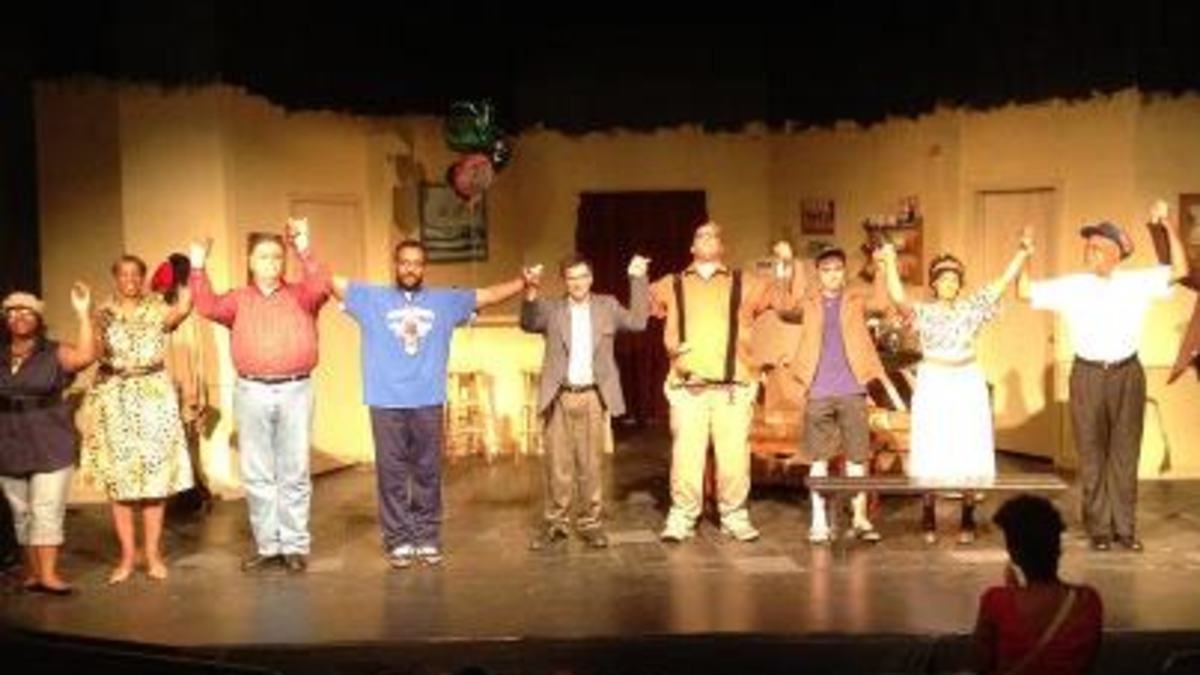 John Beasley Theater & Workshop
Race aside, Beasley made a name for himself on various Omaha stages in the ‘70s and ‘80s. Still, it was not until 1990 he abandoned the 9-to-5 routine and pursued acting as his livelihood. It was a daring thing to do for a middle-aged man with a family and mortgage, but he made the leap anyway. He figured the time was right. His youngest son was in college. He and his wife Judy, a medical secretary at UNMC, had a comfortable life. It was now or never.
“I was very dissatisfied (with the Vickers job), so I quit. I convinced my wife to let me try making it as an actor. She’d been fighting me all along. She didn’t want any part of being married to an actor. I didn’t do it earlier becaue I didn’t want her to suffer being married to a struggling actor,” he said. “But I finally told her, ‘I’m going to Minneapolis, and if I don’t make it in three weeks I’ll be back and I’ll get a normal job.’ She said, ‘OK.’ So, I went out there and within two-and-a-half weeks I was turning down plays.”
After taking the vibrant Minneapolis theater scene by storm, performing at the Mixed Blood Theater, he found success at major Equity theaters in Chicago (the Goodman) and Atlanta (the Alliance). Besides playing great roles in classic works, including Othello, he has shared the stage with notables Roscoe Lee Browne, Eric La Salle and Don Cheadle. As he made his presence known on the regional theater circuit, he helped pay the bills acting in commercials and corporate films.
He was so intent on making it he often undertook grueling road trips that found him driving from Omaha to Chicago to Minneapolis and back home again in a single 24-hour span. In the process, he became a much-in-demand interpreter of Pulitzer Prize-winning playwright August Wilson’s (Troy Maxson in Fences, Mr. West in Two Trains Running, Turnbo in Jitney) characters. Beasley adores the work of Wilson, whom he’s met, and even selected Wilson’s Fences, a story about a bitter father and his estranged son, as the play he reopened the Center Stage Theater with last summer. Beasley both starred-in and directed the production.
“I love August Wilson. Basically, he deals with every decade of the 20th century… with blacks migrating from the south to Pittsburgh (where Wilson is from) and what they faced once they got there. His characters talk about what happened back down south and touch on some of the reasons they came north. It’s always their stories. The plays deal with the era of urban renewal, when a lot of black businesses and neighborhoods were being boarded-up and blight set in and how, once redevelopment came in, blacks were being forced out. You can see the same pattern here in Omaha.
 |
John Beasley as Troy Maxson in Fences
“He’s really telling the black American story, but the thing about August’s work is it’s not just the black experience, it’s the human experience, and that’s why I love August. When I’ve done Fences I’ve had white men and women come up to me after the play with tears in their eyes and say, ‘That was my father.’ I mean, to me, Troy Maxson (the protagonist) is Willie Loman. Both of them are tragic figures who had a dream that was dashed. Troy could never let go of the fact he never got a chance to play major league baseball. That but for the color of his skin he could have been greater than any of them.”
While TV and film commitments limit the stage work he does these days, Beasley said he would still stop drop everything if a juicy part in a Wilson play opened up. For him. Wilson’s work is not only inspirational but instructive.
“August talks about relationships which, when I’m teaching acting workshops, is all I talk about. How we relate to each other. How we deal with each other from the heart. How we overcome obstacles. Because that’s what you have to bring to the table as an actor — that inner feeling. If you know what it feels like inside, then it’s going to come out.” Feelings tapped by a play sometimes cannot be contained within the boundaries of the stage. “I remember doing Willie Loman and how after each performance I’d just break down and cry because, emotionally, it’s such a draining experience. I found myself doing that every night. The same with Troy Maxson — I’d just have to breakdown. I had to get that release.”
He next made waves in episodic TV, including a 1990 role in Oprah Winfrey’s short-lived but much-talked-about series Brewster Place. Soon thereafter he landed his first feature film roles and became a regular TV guest star. He hasn’t stopped working in film and TV since.
He became a known commodity among moviegoers with small but convincing portrayals in the hits The Mighty Ducks and Rudy. He first caught the attention of critics with his strong supporting performance as a retired Southern preacher in Oscar-winner Robert Duvall’s 1998 critically-acclaimed film The Apostle.
He has appeared in other high-profile Hollywood pics (Losing Isaiah, The General’s Daughter) along with indie films (Journeyman). His TV appearances have included spots on Millennium, The Pretender, C.S.I. and Judging Amy and the TNT movie Freedom Song. He has worked with everyone from Duvall and Poitier (on a cable movie remake of To Sir With Love) to John Travolta, Melanie Griffith, Morgan Freeman and Della Reese.
His standing in the industry is such that he turned down a coveted lead role opposite Angela Bassett in John Sayles’ new film Gold Coast for a smaller but bigger-paying turn in The Sum of All Fears. While he rues having given up a lead, something he’s worked hard for, he feels the buzz around Sum, combined with his work on the well-reviewed Everwood, starring Treat Williams, have put him in line for more choice roles. He feels well-served to date by his keen eye for material. “I’ve been very picky about the things I’ve done on stage and I think that’s carried over into films.” He has also been promised a chance to direct episodes of Everwood and hopes to do more directing down the road.
With his career in high gear now, he is weighing buying a house in L.A. for those Tinseltown trips he makes every year. He insists, however, his lifestyle has not changed much from when he was just another middle-class Everyman. “I was never that interested in money, per se. My life has been full without money for a long time and now that I’m earning a little money, I’m not impressed with it still.”
He stays hungry and humble remembering where he came from and how far he has gone to reach his destination. His advice to aspiring actors: “Don’t be afraid to try and to leave your comfort zone.” He offers himself up as proof of how, with enough preparation and poise, an Omaha actor really can conquer Hollywood.
Related Articles
- Black Playwrights Convening, part 2: Isaac Butler reports (timeoutny.com)
- Bloggers cover the Black Playwrights Convening (timeoutny.com)
- Anthony Chisholm is in the House at the John Beasley Theater in Omaha (leoadambiga.wordpress.com)
- What Happens to a Dream Deferred? Beasley Theater Revisits Lorraine Hansberry’s ‘A Raisin in the Sun’ (leoadambiga.wordpress.com)
- Crowns: Black Women and Their Hats (leoadambiga.wordpress.com)
- Back in the Day, Native Omaha Days is Reunion, Homecoming, Heritage Celebration and Party All in One (leoadambiga.wordpress.com)
- Yolonda Ross is a Talent to Watch (leoadambiga.wordpress.com)
Kooky Swoosie: Actress Swoosie Kurtz conquers Broadway, film, television
June 6, 2010
4 comments
It’s always a pleasure to interview a star you have admired. That certainly was the case when I did a phone interview with actress Swoosie Kurtz. The occasion was a Tony nomination for her role in Frozen, a drama co-produced by friends and family in her native Omaha, which if you’ve been reading my article posts you know by now is my hometown and place of residence. She was every bit the fun and funny bright spirit I had come to expect. The Omaha connection extended to her having worked with Alexander Payne on his debut feature, Citizen Ruth, which was shot here. My own career has intersected with Payne, whom I have been covering since he completed that project in the mid-1990s. As I write this, I am about to call Payne to arrange a face-to-face interview with him about his recent shoot of The Descendants in Hawaii, where he just wrapped on Friday. One final Omaha connection involving Swoosie is my having written about the Omaha company that co-produced Frozen and my scripting a documentary that that same company shot and edited. Small world.
My Swoosie piece appeared in The Reader (www.thereader.com).

Kooky Swoosie: Actress Swoosie Kurtz conquers Broadway, film, television
©by Leo Adam Biga
Originally published in The Reader (www.thereader.com)
Frozen
Omaha native Swoosie Kurtz, that sometimes kooky stage, film and television actress with the dizzy name to match, is dead serious about her work. The depth of this consummate artist’s craft is on full display in the current Broadway drama Frozen, in which she plays a mother coming to grips with the void of her missing daughter, whose terrible fate she doesn’t know for 20 years.
The story revolves around the daughter’s disappearance and how this event connects the girl, the mother, the serial killer that took her and the therapist trying to discover what set this tragedy in motion. The theme of child abuse looms large in the killer’s own past and drives him to revisit his horror on others. Brian O’Byrne won a Best Actor Tony for his performance as the killer. Critics are calling Kurtz’s Tony-nominated portrayal of the shattered mother a tour de force.

Brian O’Bryne and Swoosie Kurtz in Frozen
“My character goes through this 20-year journey of having her child taken and not knowing she’s dead. She goes through all the stages — mourning, anger, depression — and, finally, into acceptance, but in a very beautiful way. The second act of the play, particularly, is uplifting and life-affirming and redemptive,” said Kurtz.
Her process is a melding of the interior Method approach that uses emotional exploration and the more classical exterior approach that focuses on body, voice, movement, makeup, et cetera. “What works best for me is a kind of working from the outside in. When I can picture a character — how they sit, how they walk, the kind of clothes they wear — it tells me a lot about the inside of the character. The process is partly intuitive and partly technique. I think a lot of actors starting out today rely too much on the intuitive and the instinctual. You have to learn your craft,” she said in a 1999 Tony Awards Online interview.
Roots
Born in Omaha as the only child to a war hero father and society matron mother, she did part of her growing up here — attending Field Club School — before her family moved west. Her career military father, the late Col. Frank Kurtz, was the most decorated U.S. airman of World War II. She was named after the B-24 bomber he flew, dubbed the Swoose after a Kay Kyser song about a half swan, half goose. Before the war, Col. Kurtz was already famous as a world class platform diver. He won a bronze medal in the 1932 Olympics and competed in the ‘36 Berlin Games.
Her mother, the former Margo Rogers, authored a book, My Rival the Sky, about being the wife of an absent war hero. Margo hailed from an old money Nebraska family headed by her father, Arthur Rogers, a cattle tycoon who headed the Omaha Livestock Commission in the stockyards’ heyday. Kurtz recalls him taking her to the yards, plopping her atop a horse and playfully telling her to “wrangle those cattle. I weighed about 45 pounds, but because he told me to do it, I thought I could. I never questioned it.” Her enterprising grandma, Gigi Rogers (formerly Conant), built three downtown hotels — the Conant, the Sanford and the Henshaw.
Kurtz had one familial tie to show biz. A maternal great uncle, Homer Conant, was a set and costume designer for legendary impresarios Ziegfeld and Shubert in 1920s New York. “So, I’m revisiting the scene of the crime here on Broadway,” she said.
Kurtz stayed with her grandparents in Omaha when her much-traveled parents were away on missions and war bond drives. Of her grandparents, she said, “They were a huge influence on me in my formative years. They were incredible. They had this big country house that my mom grew up in and I partly grew up in. When I was in town doing Citizen Ruth (Alexander Payne’s 1996 film), I went to the house, just to see it, and it brought back amazing memories to revisit it.”
Her father’s many transfers meant frequent moves for her and her family. Being an only child forced her to cultivate her imagination. “I would play different games with myself and become different people and talk to myself in different voices. The characters would talk to each other. Only children have their own way of survival.”
A Eureka Moment
The theater first enchanted her when, as a kid, she attended Broadway plays with her folks. Her earliest stage acting came at Hollywood High. “I was in this drama class at Hollywood High and I did this scene from Dark Victory or some other Bette Davis movie and it was like, Whoah. Something fell into place in that moment and clicked and it was like, I can communicate with people this way better than I can on my own. It was just a eureka moment.” She began formal dramatic studies at the University of Southern California, where her parents graduated, before crossing the pond to complete her training at the London Academy of Music and Dramatic Art. There, she fully immersed herself in acting.
If anything, her Tony-nominated turn in Frozen is a reminder of Kurtz’s versatility and penchant for sinking her teeth into challenging roles. Much of her best-known work has seen her essay women-on-the-edge-of-a-nervous-breakdown in plays by some of the world’s greatest living dramaturgists. Her whimsical, lost souls are tinged with a deep well of sadness and display a sharp wit.
Among her stage triumphs are her turns as Gwen in Lanford Wilson’s The Fifth of July and as Amy John Guare’s The House of Blue Leaves. Her many film portrayals include: a hockey groupie in Slap Shot; the wry hooker in George Roy Hill’s The World According to Garp; the frothy wife in A Shock to the System; the ambitious mother in Stephen Frears’s Dangerous Liaisons; “the world’s laziest woman” in David Byrnes’s True Stories; and a scheming abortion war fanatic in Payne’s Citizen Ruth. For television, there was her Emmy Award-winning portrayal of high society living, cancer surviving Alex in the popular NBC-TV series Sisters and a socialite dying of AIDS in the HBO drama And the Band Played On.
Dangerous Ground
Even though its subject matter put her off, she felt compelled to do Frozen. The play’s executive producer is an Omaha cousin, Thompson Rogers, whose Oberon Properties owns the screen rights. “This play just knocked the breath out of me,” she said. “I hadn’t read anything like this ever. I think the issues of child abuse hit me the hardest. What struck me on my first reading of the play is that the serial killer character of Ralph, who takes my daughter, has been horribly abused as a child. And I firmly believe what the play is hypothesizing is that when children are abused…certain parts of their brain get stunted and the part that has empathy and compassion and remorse simply doesn’t develop in the way that it should.”
Playwright Bryony Lavery’s disarming examination of abuse, trauma, loss, regret, forgiveness and grace drew her in. “Just the sheer poetry of the way this subject is handled,” she said. “It’s a subject we see all the time on television and, so, we think we know all about it, and then this play comes along and presents this in a way that defies any expectation you have.”
She knew Frozen was a must-do project when reading it unnerved her. “When something scares me as much as this play did, I have to do it,” she said. “It’s so dangerous, this piece. It’s so risky. I thought, How are we going to rehearse this play? How the hell do you work on something like this and not just be a wreck? And, actually, we laughed a lot in rehearsal, which sounds really irreverent, but that was the whole key — to be irreverent about the material. Because the audience’s experience of it is very different from ours. We have to do it and go through it and it’s up to them to have the emotional response.”
Kurtz believes in challenging the gods rather than playing it safe. She recalls the time she essayed identical twins in Paula Vogel’s play The Mineola Twins, which not only required her to be two separate people, but to be on stage for all but a few seconds. Again, she asked herself, How am I going to do this? As usual, the motivation of the challenge allowed her to find a way to make it work. That discovery and accomplishment, she said, is what makes the journey into the abyss worthwhile. “And then it’s such a great feeling when you prove to yourself that you can,” she said. “You’re like, You know what? I did it. I took the leap.”
Making real the ultra-sensitive, bereaved, even mad characters she inhabits means muting the obvious comic notes to express the inner beauty. It’s about being nonjudgmental “and also having great compassion for the character,” she said. “I always find I turn a corner in rehearsal when somehow the character moves me.”
She said she learned not to play the fool when the legendary Jerry Zaks, with whom she worked on House of Blue Leaves, gave her “the best piece of direction I ever got. In my mind, I thought, I have to let the audience know right away that this woman, Amy, is a little out of touch with reality. I had this line, ‘Is it light yet?’ And I was doing it kind of spooky, like a strange woman would. And Jerry said, ‘Swoose, you are the happiest, most normal housewife in Queens.’ It was a brilliant thing that resonated through that whole piece and everything I do because people who are on the edge or neurotic or insane think they’re totally normal. And it’s that everydayness or normalcy what is sometimes so shocking.”
Citizen Ruth
If ever a performance has embodied the power of subtlety over histrionics it’s her rendering of Diane Siegler in Citizen Ruth. In this one character, Kurtz plays an arc of extreme types, but believably so within the framework of Diane’s fanaticsm. When we and the title character, Ruth Stoops (Laura Dern) first meet Diane, she appears to be a prim holier-than-thou pro-life advocate. Then, as we and Ruth learn, it turns out Diane’s only posing as a pro-lifer, but in reality is an openly gay pro-choice agitator who’s infiltrated the enemy camp in order to spy and reek carnage on their campaign. Diane’s hilarious “coming out,” complete with removing her dowdy wig and eye glasses to show her true identity and sympathies, is all the funnier and more surprising because Kurtz underplays it so matter-of-factly. “What was so great about that was I got to do play two people,” said Kurtz.

Swoosie Kurtz, Laura Dern, Kelly Preston from Citizen Ruth
She was impressed with fellow Omahan Alexander Payne, who co-wrote Citizen Ruth and made it his feature film directing debut. “He was so grounded and so real in his approach to everything,” she said. “Well, you know, he’s from Omaha. But he is so smart, on so many levels, that I think he sometimes had a plan in mind that we didn’t know about, and we didn’t have to know about it. He had his map in his head very clearly, but he was also very open to experimentation and open to whatever was happening in the moment.
“If we happened to ad-lib something, he was delighted with it and very often would use something. He just came up with these great sort of subversive, out-of-the-box ideas. He’d just throw some curve at us right before the take and it’d be something I would never have thought of in a million years.”
As an example, she recalls a scene in the kitchen at the country house where she and her lover (Kelly Preston), are putting up Ruth Stoops. The phone rings and Kurtz’s Diane Siegler “answers the phone as the lesbian liberal activist and then” — when it turns out the caller’s a pro-lifer — “I put on my (eye) glasses in order to talk to her. And that was Alexander’s idea. And I thought, Oh, my God. What an incredibly bizarre and amazing idea” to have her put her defense/disguise back on.
Payne is equally impressed with her. “I remember her as being so delightful and cooperative and professional. She knows her dialog. She comes prepared. She has good ideas. Highly directable. I mean, she’s a total pro. And she’s funny,” he said.
The film, still unappreciated among general movie audiences, is a favorite of hers. “I’ve never seen a movie like it. It’s just unto itself. It’s an amazing film,” she said.
Feeling the Most Alive on Stage
Kurtz has been nominated for eight Emmys (winning one for Carol and Company) and has stolen scenes in dozens of big and small screen pics, but her stage work is what makes her a living legend. She has two Best Actress Tonys to her credit (for Fifth of July and House of Blue Leaves) in addition to Drama Desk Awards, an Outer Critics Award and an Obie. She moves effortlessly from one medium to another, but the boards is her true calling. It’s where she feels most engaged as an artist.
“An actor on stage has more responsibility than in any other medium,” she said. “You are so much more responsible for what happens out there on the stage. Film is definitely the director’s medium. They shape the film. They take what of your performance they want. They choose what the audience is looking at at any particular point. Your face may not even be on camera at that moment. On stage, you control everything. You control your body, your voice…whether the audience is seeing your profile or the front or back of you. You control how loud you are. You control the timing of everything.
“I’m not sayng film and television are easier by any means, because they’re all enormously challenging, But, ultimately, you are much more accountable in the theater for what happens that night on stage.”
Acting, for Kurtz, feeds her like nothing else. “It’s when I feel most alive,” she said. “I definitely think when I’m acting I’m my true self. You know how in therapy they talk about your true self? I think that joy just comes out. I mean, I was on stage the other night thinking, I’m so happy right now. I’m so alive.” Where real life once seemed boring compared to acting’s hyper intensity, she sees it differently now.
“I’m getting a lot more enjoyment now out of real life. Thank God, because there’s a lot of that around,” she said, unleashing her happy, kooky, bright spirit’s laugh.
Related Articles
- Swoosie Kurtz discusses her new role on ‘Mike & Molly’ (hollywoodnews.com)
- New CBS Series Trailers: Shit My Dad Says, Hawaii 5-O, The Defenders, Blue Bloods and Mike & Molly (geektyrant.com)
- ‘Chuck’ Taps on Fred Willard and Swoosie Kurtz (buddytv.com)
- An Appraisal: Lanford Wilson’s Losers, Beloved by Their Creator (nytimes.com)
- Kevyn Morrow’s Homecoming (leoadambiga.wordpress.com)
- Playwright John Guare Talks Shop on Omaha Visit Celebrating His Acclaimed ‘Six Degrees of Separation’ (leoadambiga.wordpress.com)
- A Q & A with Theater Director Marshall Mason, Who Discusses the Process of Creating Life on Stage (leoadambiga.wordpress.com)
- Playwright/Director Glyn O’Malley, Measuring the Heartbeat of the American Theater (leoadambiga.wordpress.com)
- Omowale Akintunde’s In-Your-Face Race Film for the New Millennium, ‘Wigger,’ Introduces America to a New Cinema Voice (leoadambiga.wordpress.com)
Howard Rosenberg’s much-traveled news career
June 2, 2010
3 comments

Image via Wikipedia
I am a sucker for stories about fellow Omahans who have left this place and made successes of themselves on a national scale. One such subject is Howard Rosenberg, a much-honored newsman whose career in investigative journalism has seen him break major stories over the past three decades or more. I did this profile on him for the Jewish Press in Omaha and I share it here because Rosenberg’s life and career add up to a good yarn that I think a general readership will find interesting. You be the judge.
Howard Rosenberg’s much-traveled news career
©by Leo Adam Biga
Originally published in the Jewish Press
The pursuit of a hot story brought ABC news producer Howard Rosenberg from the network’s Washington, D.C. bureau to his hometown of Omaha in mid-September. He was on the trail of Supreme Court Justice Clarence Thomas, an avid Husker football fan who attended the September 15 Nebraska-Southern Cal football game.
Thomas’ wife, Ginni, is a native Nebraska and a University of Nebraska-Lincoln grad.
While in state Thomas was interviewed by ABC News legal correspondent Jan Crawford Greenburg. Rosenberg produced that segment as well as other recent interviews Greenburg conducted with Thomas, who’s plugging his autobiography, My Grandfather’s Son. The Thomas segments produced by Rosenberg ran October 1 on Good Morning America, World News Tonight with Charles Gibson and Nightline.
Growing up in Omaha, Rosenberg and his family attended Beth Israel Synagogue. His late parents were Monroe and Pearl Rosenberg. His two siblings, Marilyn Tripp and Maynard Rosenberg, reside in Omaha.
A veteran print and television journalist, Rosenberg’s been on the hunt for news since entering the U.S. Navy in 1972. He went in on the promise his nascent journalism skills, first developed at Omaha Central High School, would find good use in the service. They did. He edited a service magazine and freelanced.
For much of his news career he’s done investigative reporting, perhaps the highest calling for a journalist. It’s a mission he takes quite seriously. He said while “there’s a solitary aspect” to the research “there’s also an excitement to it; that you’re on the chase and you’re really searching for something and you’re looking for that moment, for that document, for that bit of information that’s going to make a difference. It’s very satisfying in that regard.”
He’s uncovered some major wrongdoings in his time, from top secret documents revealing illegal U.S. government-sponsored human experiments to tapes implicating key players in the Iran-Contra arms-for-hostages operation.
After more than 30 years in the business, including a long stint at CBS, he remains remarkably unjaded, especially given he’s spent much of that time in Washington, D.C. He possesses the healthy skepticism necessary to do his job, but not the cynicism you might expect. At 55, he retains the same faith in his profession — and the difference it can make in people’s lives — that he did when he first got into it.
“The end result and the objective is to help people understand something or learn something they didn’t know before,” he said. “There’s a concept in Judaism, that sort of underpins the ethos of the faith, of tikkun olam, which means repair the world. And anytime you meet a young journalist they generally all have the same sort of idealism — that they’re going to go out and change the world.
“I think of it very much as a calling and something that is a useful career for people like us to do because I think in some small measure you accomplish a minor repair by stitching up a hole of knowledge on something that’s important.”
His repairs have come for many prestigious news groups. He’s written pieces for Mother Jones, The New Republic, The Progressive, Parade, The Washington Post and The New York Times. He’s produced in-depth segments for the CBS Evening News, 60 Minutes, ABC World News Tonight, Primetime Live and Nightline. None of it might have happened, though, without his hitch in the Navy. He was 21 and unsure what to do with his life. All he had going for him was an ability to write. The Navy gave him a focus to perfect his craft.
“Navy recruiters were so anxious to get someone who could write a declarative sentence, which I could, they guaranteed me I could be a Navy journalist,” Rosenberg said from the Regency Marriott he stayed in during his recent visit. “They also gave me the rank of E3 out of boot camp, which meant I made more than my fellow recruits, which was fine with me.”
His reason for joining the Navy, rather than another branch of service, was quirky.
“Truth? I don’t like to wear ties and with a Navy uniform you don’t have to wear a tie. It’s as simple as that,” he said, smiling broadly.
He had enlisted in the service after “a very undistinguished academic career” at UNL, where he piled up lots of credits in creative writing and journalism, but came away with little else to show for his time there.
The Navy “was a fantastic turn of events for me,” he said, “because it gave me time to mature and I worked in a very interesting job.” The experience gave him a training ground to “hone” his skills for his subsequent news career.
After his honorable discharge he studied journalism at George Washington University, an elite private college in the nation’s capitol. “I could never have afforded to go,” he said, “without my Uncle Sugar paying the tab.”
The 1976 honors grad soon landed his first big break — as an associate editor of the late muckraker, Jack Anderson, in Washington, D.C., where Rosenberg’s been based his entire career. He, his wife and their two sons live in Chevy Place, Md.
Before Rosenberg ever went to work for Anderson, he’d been told he was cut from the same prickly mold as the crusading news hound.
“There was a lieutenant — one of the last commanders I worked for in the particular (Navy) division I was in — who saw me as somewhat of an iconoclast. I was a bit of a troublemaker, And one day this lieutenant said to me, ‘You know, Rosenberg, you’re kind of a (epithet) and you ought to go work for that other (epithet) — Jack Anderson.’ And I said, ‘Oh, that’s not a bad idea,’ and so I did.”
Rosenberg joined a group of idealistic journalists flush with power-of-the-press ambitions in the wake of Woodward-Bernstein’s expose of the Watergate cover up.
Jack Anderson
“Jack had at that point won a Pulitzer Prize and he had a staff of young turks who were all in their 20s, many of whom went onto careers in journalism,” he said. Besides Rosenberg and the lofty credits he’s since accrued, there were: Howard Kurtz, now a Washington Post reporter; Brit Hume, an ABC correspondent; Gary Cohen, a Pulitzer-winner with the Baltimore Sun and now an L.A. Times reporter; and Hal Burton, part of the Pulitzer-team at the Seattle Times.
“A lot of good journalists came out of there,” Rosenberg said. “It was a great place to work. I was 25 years old and I had a press credential that got me into press conferences at the White House, where I would go and ask questions of the President of the United States. It was very exciting.”
In Anderson, Rosenberg found “very much a mentor.”
“He was a Mormon, so he was very paternal. You know, ‘We’re all a big family.’ We played together, we worked together. I learned a lot,” Rosenberg said.
Looking back, the Omahan was fated to be a writer and a storyteller, which is how he ultimately thinks of himself.
“I had an interest not just in journalism but in writing, much of which was encouraged both by my late mother and by a teacher I had at Omaha Central High School named John Joseph Francis Keenan. He was just an inspirational teacher.”
The late Keenan preceded Rosenberg in the school’s hall of fame, whose distinguished ranks include many notables in the fields of arts and sciences. Rosenberg was accepted to the hall in 2005.
Rosenberg’s mother, the former Pearl Schneider, was a Central grad herself. Her inclinations sparked his own passions. “She was a great fan of moviedom and I loved to go to movies. She took me to movies when I was a child,” he recalled. What fascinated him most weren’t the actors but the stories. Somebody had to write the scenarios, after all, and thus began a lifelong interest in screen writing. “I always liked that aspect of the medium and thought a lot about it,” he said.
Rosenberg wrote a book, Atomic Soldiers (1980), “hoping it would become a movie.” It did. The book details how American servicemen were recklessly exposed to harmful levels of radiation during Cold War atomic weapons tests. It relied in part on classified documents he obtained through the Freedom of Information Act. It took a lot of digging, a lot of persistence. With docs in hand he felt emboldened, as his old boss Jack Anderson used to say, that “now the story can be told…”
“I was very interested in what happened to these soldiers,” he said. “The story of the atomic tests on soldiers had never really been told in the mass media since the time it happened…and then it was cast in a very controlled way by the federal government because it was all part of a Cold War propaganda strategy.”
Atomic Soldiers began as a magazine article but the more research he did the more he realized it was a subject that demanded a more thorough telling. The process of going from page to screen took longer than he imagined. Nine years to be exact. He said it took so long because the ultra-conservative political climate then was not receptive to learning that American servicemen were used as human guinea pigs by their own country in tests that compromised their health. The soldiers were not told of the risks they faced. His book’s subtitle says it all: American Victims of Nuclear Experiments. “A lot of political ground had to be covered. There was not a lot of interest in taking on that subject anywhere,” he said. “It was a very difficult movie to get made.”
Screenwriter Tom Cook (China Syndrome) eventually adapted the book for a 19889 TNT cable movie called Nightbreakers starring Martin Sheen and Emilio Estevez. The film version pleased Rosenberg.
“I thought it was wonderful,” he said. “You know how authors always say, ‘Ah, they butchered my book.’ I didn’t feel that way at all. I mean, Tom (Cook) wrote a fictionalized teleplay and it was its own work of art…his own artistic vision of the story and the best way to tell the story. It was like a dream come true in the sense that here was a story I had written that was made into a movie. My only regret was that my mother didn’t live to see it.”
As often happened in his career, one project led to another. His book research got him onto another story he then developed into a cover expose for Mother Jones, which in turn first brought him to the attention of network TV news.
“The article in Mother Jones grew out of a minor, sort of sidebar I learned about in writing my book,” he said. “It was about these children who were taken to a chamber” at a federal cancer care center in Oak Ridge, Tenn. “and (unwittingly) exposed to total body irradiation in an effort to cure them of various forms of blood malignancies — leukemia and so forth. These human experiments were conducted on behalf of NASA and the old Atomic Energy Commission” from 1957 to 1974 and “used nuclear sources on children.” The article suggested some of the children were denied conventional therapy in favor of the radical radiation treatment. “Every one of them died,” Rosenberg said of the young patients.
He can still hardly believe what horrors the children suffered in the name of science. The more he dug, the more it resembled Frankenstein or, more chilling yet, the Nazi medical experiments of World War II.
“It was almost like science fiction,” he said. “The more I Iearned about it it seemed like something out of someone’s imagination. Not to disparage him, but one of the physicians who ran this clinic had a deformity…a hunch back.”
Rosenberg was so struck by the story he revisited it 12 years later — this time as producer of a 60 Minutes segment. “I was able, through a source I had, to get into the chamber” where the experiments were done. The space was now a storage room. “I took back a woman who had lived in that chamber with her child while he was being irradiated, so she was irradiated, too.” The woman he brought to the site of so much grief was the mother of Dwayne Sexton, who died at age 6.
The Mother Jones story “got a lot attention. All three networks did stories on their nightly news broadcasts about this story I had written,” he said. New opportunities soon presented themselves. One came from the Center for Investigative Reporting, which approached Rosenberg and colleague Howard Kohn to open a Washington bureau. The two journalists, collaborators on Rolling Stone and Outside Magazine pieces, directed a year-long project on nuclear arms policy. By this time Rosenberg had become identified as an expert on the topic.
“I learned a lot about nuclear weapons — how they’re made, what effects they have, who the people are designing them, what the national security plans and implications of having a nuclear arsenal are. It was all part of my research.”
Thus, he said, he got “pigeonholed…every time somebody wanted to know something about nuclear weapons or nuclear weapons policy or testing, they’d say, ‘Well, let’s go to the guy that wrote that book.’”
His specialization paid dividends when the networks came calling.
“A certain light went on and I started asking myself, Well, why not cut out out the middle man? And that was really kind of one of those seminal moments where you sort of figure things out and say, This could be a really stimulating way to go — to combine my limited skills as a writer with my interest in visual media,” he said.
For his first forays into TV he still kept one foot in the print world, filing stories for both magazines and the networks.
“In those days the networks were interested in expanding their reach into investigative reporting,” he said. “But there weren’t a lot of people in television who were familiar with the kind of rigorous and mind-numbing work you have to do in investigative reporting. There was a fellow who worked at the time for the CBS Evening News who had an idea to go to people who were doing investigative reporting and form partnerships with them.”

The way it worked was a publication like Mother Jones and a network like CBS would work cooperatively on select projects, combining resources to break stories at the same time. The idea appealed to Rosenberg as it introduced him to the way television news is done, got his foot in the door at the networks, netted his stories bigger audiences and compensated him better than before.
“It was fine with me because investigative reporting is not just tedious and labor intensive, it’s time intensive,” he said, “and so you spend an awful lot of time for a relatively modest return in terms of financial renumeration.”
He began at CBS, then the most respected name in TV news. Icons abounded. Walter Cronkite, Dan Rather, Don Hewitt, Morley Safer, Mike Wallace.
“It was really a very heady place with just a storied history,” he said. “There were just a lot of wonderful reporters there. George Herman, Robert Shackney. All these legendary names. People with great pipes, great voices.”
He began by working directly for Rather, who’d just taken over the anchor slot, from Cronkite, on the CBS Evening News. Rosenberg was one of the producers of the taped segment that preceded Rather’s famously contentious 1988 interview with then-candidate George Bush. He eventually moved over to 60 Minutes. He found working for the original news magazine, “a very, very rewarding experience.” His mentor was its creator and executive producer, Don Hewitt.
“I learned a lot from Don Hewitt, whose mandate was, ‘Tell me a story.’ Some people describe 60 Minutes as formulaic and mean it as a disparagement, but at the same time it is a formula that works in terms of storytelling. It has its limitations, as all of us as storytellers do. It is in some ways very black and white. You’re got your good guy and your bad guy and there’s not a lot of gray.
“There’s a certain pattern of the process that’s in some ways quite predictable. But at the same time it’s very comfortable.”
He worked on too many stories he liked, including several included among Classic 60 Minutes, to easily name his favorites. “The truth is usually the story I’m working on is the one that I like the best,” he said.
Pressed, he cited the story about the human experimentation at Oak Ridge. “That’s one of the most fascinating stories I’ve ever worked on,” he said. “I was very proud of that. The first story I ever did for 60 Minutes, called ‘The World’s Biggest Shopping Spree,’ was sort of a tour of these giant warehouses that covered hundreds of acres of Defense Department supplies in storage since the Korean War.
That’s one of my favorites.”
Then there was Olliegate.
“It was only a minute and 30 seconds, but it had quite an impact,” he said, referring “to the story of the security system outside of then-Colonel Oliver North’s house that ended up getting him indicted and sort of unraveled the entire criminal enterprise. All of the people involved in that (Iran-Contra operation run by North) were indicted under federal conspiracy charges.”
All the convictions were overturned on appeal, he added.
Other Rosenberg segments for 60 Minutes range from the controversial “Confessions of a Tobacco Lobbyist” to “The Letter,” a two-part probe of jury-tampering during the O.J. Simpson murder trial.
In’ 97 he left CBS for “a better offer” from ABC. The new post allowed him more time at home with his family. Not long into his ABC tenure he found himself in the awkward position of investigating former friends and colleagues at CBS. Rather had come under fire over a 60 Minutes report that offered documents purportedly showing President George W. Bush shucked a portion of his National Guard service.
Rosenberg said, “It was actually quite ironic in the sense that I ended up not just reporting on it but discovering the information that ended up unraveling the entire cover up by CBS” — hence known as Memogate. “I found two document examiners who had been consulted by 60 Minutes and by Dan Rather’s producer. They warned CBS the documents could not be authenticated. I also visited with the nation’s finest expert on typewriters. He said very explicitly it was impossible for any typewriter of that particular vintage to have created a superscript ‘th’ in the way it appeared in the documents. That was only possible in the computer age.”
“It was a joyless scoop,” said Rosenberg, as the fallout from the ABC report “ultimately led I think to Rather’s fall. I have a lot of personal affection and admiration for him. He is a person of great personal courage and great integrity.”
The two men have since met and spoken about the affair “and to his credit,” Rosenberg said, Rather “did not hold it against me because he understood himself as a journalist that the ultimate arbiter of what we do is the truth.”
Nightline assignments keep Rosenberg on the move. In the past year alone he’s been to: Guantanamo Bay, Cuba; Afghanistan; Lebanon and China. He’s produced segments featuring the first network TV interviews with the Chief Justice of the Supreme Court and coverage of the recent Minneapolis bridge collapse.
His ABC credits also include: writing/producing the hour-long specials, “Rumsfeld’s Rules of War” and “9/11: Moment of Crisis;” co-writing/co-producing the hour-long reports, “The Hunt for Osama bin Laden,” “Attack on the USS Cole,” “American Terrorist: In His Own Words” and a special Nightline edition, “The Lost Convoy” — the story of the Army’s 507th Maintenance Company ambushed in Iraq.
He’s often asked, what does a producer do? His answer: “Whatever you have to do to put the light in the box.” Any news segment, he said, is a team effort and “I can’t say enough about how important each part of the team is to the process, from the editors and audio engineers to the graphic artists to the producer to the correspondent. To the guy you hire to stand there at the entrance to the hotel with a flak jacket on and a semi-automatic rifle to make sure nobody comes in.”
“The collaborative nature of television is what I find most exciting and satisfying because unlike the solitary tedium of investigative reporting, you’re part of a team and there’s a real team spirit, especially in a show like Nightline. And especially when news is breaking or when you’re in a war zone, it’s just such an enveloping feeling. People bring different strengths and skills to the process.”
Ultimately Rosenberg is a journalist because of his undying “curiosity,” the same quality, he said, “that makes for any good journalist and makes this a great career for people who are interested in learning. When I talk to young people and they ask me about journalism I say…it’s a great career for people with short attention spans and…for people who like to go to school. What you do is you learn everything you can possibly learn about something and then you have a final exam, which in this case is you write your story or produce your segment. And then you forget about it and go on to the next thing. It’s like you’re a student all the time.”
It all sometimes seems too good to be true.
“I just feel so fortunate I want to pinch myself and say how lucky I am. Wow. And I’m getting paid to do this,” he said.
Related Articles
- How Journalists Can Incorporate Computational Thinking into Their Work (poynter.org)
- A Look Back At the Last 5 Years in Blogging (mashable.com)
- Carl Bernstein: The “Golden Age” of Investigative Journalism Never Existed (bigthink.com)
- Julian Assange: The “60 Minutes” Interview (cbsnews.com)
Categories: Authors/Literature, Jewish Culture, Journalism, Media, Omaha, Pop culture, Television, Writing
ABC World News Tonight, Atomic Soldiers, Authors/Books/Literature, CBS Evening News, Howard Rosenberg, Jewish Culture, Journalism, Media, Nightline, Omaha, Omaha Central High School, Primetime, Television, Writing
Extremities: As seen on TLC’s “Hoarding: Buried Alive” – Mary Thompson takes her life back one piece at a time
May 19, 2010
9 comments

Image via Wikipedia
UPDATE: My friend Mary Thompson’s hoarding got her featured on TLC and since the story I wrote about her last year she’s made steady progress decluttering her home and her life. So much so that she’s been able to reclaim the furniture she had to move out to make room for her stuff and she’s thrown off the shackles of her old job for a new one. She proves one is really never too old to change.
The first time I went to Mary Thompson’s home to get my taxes done I knew I’d walked into a story. She is a hoarder with a compulsion to collect a seemingly endless number of things and an inability to throw anything away. For years neither she nor I made any comment about the condition of her place. But the mass of stuff everywhere, the difficulty moving around in her home, the fact that even the staircase was littered with things, plus the ever-present cats, all amounted to the 800-pound gorilla in the room that even though never acknowledged always weighed heavy on our meetings.
As Mary and I got to know each other better, and I shared some of my own eccentric, even addictive tendencies, we began to talk a bit more openly about ourselves. Then one day I flat out asked if I could profile her for an Omaha publication, making sure she understood that meant discussing her affliction with hoarding. She agreed. Nothing came of it until late 2009 when she called to tell me she was going to be profiled on a cable TV reality series about hoarders. So we chose that as the hook to hang my story about her on, as my editors might put it. The resulting piece appeared in The Reader (www.thereader.com), and I am pleased to report that Mary liked what I did with it, neither overdramatizing her story nor avoiding its extremities, the word I chose for the title or headline. Mary is much more yet than what I portray in the piece, but given the space limitations I had to work with I think I captured enough of her to satisfy both of us.
My story about Mary’s late mother, the equally eccentric Lucile Schaaf, can be found on this blog as well. It’s entitled. “Lucile’s Old Market Mother Hubbard Magnificent Obsession.”
Extremities: As seen on TLC’s “Hoarding: Buried Alive”
Mary Thompson takes her life back one piece at a time
©by Leo Adam Biga
Appeared in The Reader (www.thereader.com)
The front door to this Old Mother Hubbard house opens to reveal a small, vibrant woman who gingerly ushers you inside. The caution is a concession to the bursting-at-the-seams interior, where there’s but inches to spare in any direction due to a staggering assortment of things splayed out before you. Wherever you look, a pastiche of shapes, colors and masses catches your eye. A sprawling assemblage of grab-bag miscellany.
If this were a department store warehouse, the sheer volume of goods heaped about in piles, columns, stacks and bundles would rightfully be called inventory. Only this is retired IRS agent Mary Thompson’s home. All three floors over-brim this way. As do the basement and storage spaces under eaves and stairs.
So what does that make this snarl of odds and ends? Junk? Not unless you count Fifth Avenue designer hats junk. Not everything is so swank. But hoarders like Mary have strong emotional attachments to everything they own. Nothing is inconsequential to them.
Her affliction is profiled Sunday at 9 p.m. in the TLC series, Hoarding: Buried Alive. A crew twice visited her Little Italy home to chart her journey of surrender.
In a recent interview at her place, she said, “It’s become easier for me to disown things, to give up ownership.” A daughter, Becca, helps her sort through the maze for recycling or Goodwill donation. She said her mother’s tendency to ritualize the sorting draws out the process.
Yet, a second-floor den previously inaccessible is now an oasis or sanctuary amid the chaos. A spot where Mary can relax alone or entertain guests.
“I love it — the feeling that I get from having an empty place where I can come in, sit down, have a glass of wine, and visit,” she said. “I have a place that’s clear. I walk through this empty space and it feels so good.”
The rest of her home however is so constricted she barely has room to sleep on the floor. Her main furniture is “visiting” other homes for lack of anywhere to put it in her own. What’s there is buried under mounds of mishmash. The organized clutter represents her eclectic interests and fixations on display: hats and cashmere sweaters (hundreds each), dresses, costume jewelry, luggage, thousands of books, board games, silverware sets, catering equipment, tools, office supplies…
It’s not that she’s so possessive she won’t give anything away. Her daughter-in-law, Christy, said, “she’ill give you the shirt off her back. She’s very kind.” For all her generosity though, Christie said her mother-in-law can’t stand to part with anything if she doesn’t know what’s going to happen with it.
Suggest her possessions must represent a lifetime’s collecting and Mary says, “No, this accumulation is just from 1986.” The bungalow next door is hers, too — the basement stuffed; the garage between the two dwellings completely filled as well.
Then there’s the cats. Feral ones outside and domesticated ones indoors.
Big house items are packaged, bagged, boxed, loose. Mirrors and paintings adorn walls. Vases line mantels. Even the staircase is a makeshift storage conveyor.
“I’ve been collecting stuff forever,” said Mary, whose late mother, Lucille Schaaf, was an eccentric known for her acquisition of all things Christmas and of architectural remnants. Lucille was dubbed the Christmas Lady for the elaborate Xmas displays she mounted and the Lady in Orange for her penchant of dressing in orange from head to foot. She became one of the original Old Market denizens.
Mary, who does not argue she is an eccentric herself, is variously known as the Hat Lady, the Tax Lady and the Tax Witch.
“I’m what a lot of people refer to as a collector’s collector,” she said, “because if they’re looking for something specific they can call me, and if I don’t have it I know where I can find it. I probably use that to justify my junk shopping.”
Since the TLC shoot she said she’s only been to a thrift or pawn shop once. “In a sense it’s like withdrawal,” she said of dropping her old habit.
Her children long pestered her to clean house. It’s not like she was oblivious to its disarray. She acquired self-help books with the titles Simply Your Life, Organize from Within and Let It Go. “I’ve been trying,” she said. “That’s hard.” She appreciates the disconnect between intent and reality.
She’s paid a price for her home’s over-run condition, saying her children “didn’t even want my grandkids to come over because they feared for their safety. What does it take to admit you have a problem and you need some help?” In her case, she said, it took committing to the TLC program before admitting “I should probably do something about it.” She found TLC’s call for hoarders on Craig’s List and responded, never imagining she’d be selected.
“When she made the first step I knew she was going to make it work,” said Christy, whom producers flew in for the taping. “Others tried helping before but she wasn’t ready to do it. She’s come a long way.” “We’re really proud of her,” said Becca.
The show stipulated Mary work with a psychologist and professional organizer. Her family agreed to lend support. and Mary agreed to accept it. She said her family’s been “super” pitching in with the purge that proceeds ever so slowly.
When the crew arrived the first time in December, she said, “I had accepted it and I was ready for it.” She said the experience turned out to be “one of the funnest things I ever signed up for.” Her only worry was the crew “breaking something.” She said “they were gentle up to a point.” Only a couple mishaps, The consensus of the family is the crew were sensitive to Mary’s situation, not exploitive.
Producer Krys Kornmeier said, “I feel my job is to tell these people’s stories as honestly and genuinely as I can.” She said she hopes viewers come away aware there is no “quick-fix” for compulsive hoarding. “It’s an ongoing issue that needs ongoing support and I think Mary’s got a great family that’s supportive.”
Christy said Mary went through highs and lows during the filming but handled the intrusion and transparency well. “They were long days, but she was a trouper.”
Kornmeier added, “Mary was gracious and funny. She went along with it, but I’m sure she had moments. It’s really hard to ask for help when you’re as independent and competent as she is.” As for comparisons, she said some subjects “have less stuff, some have more stuff, but what they all have is too much stuff, and they’re all overwhelmed in some form or another by their stuff. Mary’s included in that.”
She said what Mary did to go from “goat trails” to clearing out a salon-like sitting room marked real progress. “She was as excited as I was to see it.”
Weeks after the shoot, hints of denial persist. For example, Mary said when she watches other hoarders on TLC she concludes, “I don’t think I’m as bad as a lot of them.” What she calls “my multitasking” and “hints of OCD (Obsessive Compulsive Disorder) and ADD (Attention Deficit Disorder)” interfere with her progress. “I sometimes get easily distracted,” she said. The incessant phone calls she takes from folks seeking tax advice interrupt the clean-up. She runs the local AARP office’s tax assistance program, one of many activities that keep her on the go.
“It’s frustrating, but I’m the one who has offered myself to everybody. I sometimes find I don’t understand the word or the concept no.”
Still, with the help of Becca and a handyman named Stanley, Mary’s feeling a sense of relief and hope she can reach her goal of having enough cleared away by her July 5 birthday to move her furniture back in. Others aren’t so optimistic but they note that at least she’s visualizing action steps.
“People say there’s even a difference in me, that I seem much lighter and freer, that I’m excited talking about getting this done,” said Mary. “Well, I am, I really am. I don’t regret it. It’s one of the most interesting experiences I’ve ever embarked on.”
If nothing else, she said, “I realize I’m not alone in this.”
As for having her story out there, she said, “when it’s going to be on television it’s not going to be pretty.” She expects people “might be embarrassed” for her. Some are sure to be shocked she lives like this. “I’ll get over it,” she said. “Everybody’s got some of those tendencies — what’s wrong with being truthful?”
The task ahead is daunting as she’s barely scratched the surface of what’s a multi-year project. The removal of an object or a bin-full can take days or weeks. as she must convince herself she can let it go. Becca said, “It’s baby steps. She recognizes that and we recognize that. If we were to get in there and really push and not have any respect for her emotions then we would lose her immediately. She has to make those decisions. I’m not going to deny her that.”
Mary’s self-aware enough to know she’s not there yet.
“I’m still working on it. It’s a work in progress. I’ve got a long way to go. But I made up my mind, I’m going to get it done, I am going to get it done, I will have it done.”
Related Articles
- In a Hoarder’s Home, Going All Out to Find the Floor (nytimes.com)
- Drowning in junk: Hoarding called a public health issue (cnn.com)
- Hoarding disorder can consume households (seattletimes.nwsource.com)
- Under the Clutter: The Psychology Behind Hoarding (foxnews.com)
- Hoarding: How Collecting Stuff Can Destroy Your Life (time.com)
Categories: Health/Wellness, Hoarding, Mary Thompson, Old Market, Omaha, Personalities-Characters, Pop culture, Television, TLC, Writing
Hoarders, Hoarding, Hoarding: Buried Alive, Home, Mary Thompson, Obsessive–compulsive disorder, Old Market, Omaha, Pop Culture, Reality television, Television, TLC
Being Dick Cavett
May 1, 2010
2 comments

Image by trainman74 via Flickr
Former TV talk show host Dick Cavett has been kind enough to grant me several interviews over the years, but we had always spoken by phone, that is until last summer, when we finally met face to face. This story is largely drawn from that encounter. I have always liked Cavett for his wit and charm and genuine fondness for his native Nebraska.
The story appeared in The Reader (www.thereader.com) more or less as it is here.
Being Dick Cavett
©by Leo Adam Biga
Originally published in a 2009 issue of The Reader (www.thereader.com). Access the story there at Cover – TheReader.com | Omaha Weekly Reader.
While Johnny Carson’s ghost didn’t appear, visages of the Late Night King abounded in the lobby of the University of Nebraska-Lincoln’s Temple Building.
Carson’s spirit was invoked during an Aug. 1 morning interview there with fellow Nebraska entertainer, Dick Cavett. That night Cavett did a program in its Howell Theatre recalling his own talk show days. Prompted by friend Ron Hull and excerpts from Cavett television interviews with show biz icons, the program found the urbane one doing what he does best — sharing witty observations.
The Manhattanphile’s appearance raised funds for the Nebraska Repertory Theatre housed in the Temple Building. The circa-1907 structure is purportedly haunted by a former dean. Who’s to say Carson, a UNL grad who cut his early chops there, doesn’t clatter around doing paranormal sketch comedy? His devotion to Nebraska was legendary. Only months before his 2005 passing he donated $5.4 million for renovations to the facility, whose primary academic program bears his name.
The salon-like lobby of the Johnny Carson School of Theatre & Film is filled with Carsonia. A wall displays framed magazines — Time, Life, Look — on whose covers the portrait of J.C., Carson, not Christ, graced. Reminders of his immense fame.
A kiosk features large prints of Carson hosting the Oscars and presiding over The Tonight Show, mugging it up with David Letterman. In one of these blow-ups Carson interviews Cavett, just a pair of Nebraska-boys-made-good-on-network-TV enjoying a moment of comedy nirvana together.
It’s only apt Cavett should do a program at a place that meant so much to Carson. They were friends. Johnny, his senior by some years, made it big first. He hired Cavett as a writer. They remained close even when Cavett turned competitor, though posing no real threat. Cavett was arguably the better interviewer. Carson, the better comic.
They shared a deep affection for Nebraska. Carson starred in an NBC special filmed in his hometown of Norfolk. He donated generously to Norfolk causes. Cavett’s road trips to the Sand Hills remain a favorite pastime. Though not an alum, he’s lent his voice to UNL, and he’s given his time and talent to other in-state institutions.
Looking dapper and fit, Panama hat titled jauntily, Tom Wolfe-style, the always erudite Cavett spoke with The Reader about Carson, his own talk show career, his work as a New York Times columnist/blogger, but mostly comedy. In two-plus hours he did dead-on impressions of Johnny, Fred Allen, Katharine Hepburn, Marlon Brando, Charles Laughton. His grave voice and withering satire, intact. He dropped more names and recounted more anecdotes than Rex Reed has had facelifts. Walking from the UNL campus to his hotel he recreated a W.C. Fields bit.

He’s so ingrained as a talking head Cavett’s comedy resume gets lost: writing for Jack Paar, Carson, Merv Griffin; doing standup at Greenwich Village clubs with Lenny Bruce; befriending Groucho Marx. He hosted more talk shows than Carson had wives. He’s had more material published than any comic of his generation.
On the native smarts comedy requires, Cavett said, “comedy is complete intelligence.” He said the best comics “may not be able to quote Proust (you can bet the Yale-educated Cavett can), but there’s an order of genius there that sets them apart. There aren’t very many stupid, inept, dumb comics. There are ones that aren’t very talented and there are the greatly talented, but the comic gift is a real rare order. It doesn’t qualify you to do anything else but that.”
Good material and talent go a long way, but he concedes intangibles like charisma count, too. He said, “Thousands of comics have wondered why Bob Hope was better than they are. What’s he got? I’ve got gags, too.”
For Cavett, “Lack of any humor is the most mysterious human trait. You wonder what life must be like.” He appreciates the arrogance/courage required to take a bare stage alone with the expectation of making people laugh.
“Oh, the presumption. It’s not so bad if the house isn’t bare but that has happened to me too at a club called the Upstairs at the Duplex in the Village, where many of us so to speak worked for free on Grove Street. A great motherly woman named Jan Wallman ran this upstairs-one-flight little club with about seven tables. Joan Rivers worked there. Rodney Dangerfield, Bob Klein, Linda Lavin. Woody (Allen) worked out some material there early on.”
He knows, too, the agony of bombing and that moment when you realize, “I have walked into the brightest lit part of the room and presumed to entertain and make people laugh and I’m doing apparently the opposite.” A comic in those straits is bound to ask, “What made me do this?” The key is not taking yourself too seriously.
“If you can get amused by it that will save you, and I finally got to that point at The Hungry Eye,” he said. “I knew something was wrong because I’d played there for two weeks and been doing alright and then one night, nothing, zero. The same sound there would be if there was no one seated in the place. Line after line. It was just awful. You could see people at the nearest tables gaping up at you like carp in a pool, not comprehending, not laughing, not moving. And I finally just said, ‘Why don’t you all just get the hell out of here?’ It gave me a wonderful feeling.
“Two, what Lenny Bruce used to call diesel dikes sitting in the front row with their boots up on the stage, one of whose boots I kicked off the stage, taking my life in my hands, got up to leave. And as they got to the door I said, ‘There are no refunds,’ and one of them said, ‘We’ll take a chance.’ And she got a laugh. So they (the audience) were capable of laughing.”
He finished his set sans applause, the only noise the patter of his patent leathers retreating. Inexplicably, he said, “the next show went fine. Same stuff.” For Cavett it’s proof “there is such a thing as a bad audience or a bad something — a gestalt, that makes a room full of unfunnyness, and I don’t think it’s you. It might be something in you. Whatever it is, you’re unaware of its source, not its presence.”
Anxiety is the performer’s companion. It heightens senses. It gets a manic edge on.
“Whether you want it, you’re going to get some,” he said. “I can go into a club and perform without any nerves of any kind now. But if it isn’t there you want a little something, and there are ways you can get it. Like be a little late. Or I found with low grade depression, before diagnosed, not knowing what it was, I would do things like go back and rebrush my hair or put another shirt on. ‘This is dangerous, they’re going to be mad,’ I’d think. ‘But that’s alright somehow.’ I didn’t realize the somehow meant it’s giving me adrenalin that lifted the depressed seratonin level. It raises you a little bit above the level of a normal person standing talking to other normal people. It’s a recent realization. I’ve never told that before.”

Dick Cavett and Johnny Carson on “The Tonight Show” in an undated photo. (Courtesy of NBC)
Cavett was always struck by how Carson, the consummate showman, was so uptight outside that arena. “I’ve said it before, but he was maybe the most socially uncomfortable man I’ve ever known. At such odds with his skills. There are actors who can play geniuses that aren’t very smart seemingly when you talk to them, but whatever it is is in there and it comes out when they work. I have a sad feeling Johnny was happiest when on stage, out in front of an audience. I don’t know that it’s so sad. Most people are sad a lot of the time, but some don’t ever get the thrill of having an ovation every time they appear.”
“It’s funny for me to think there are people on this earth who have never stood in front of an audience or been in a play or gotten a laugh,” he said.
People who say they nearly die of nerves speaking in public reminds him he once did, too. “I had the added problem of every time I spoke everybody turned and looked at me because of my voice. It was always low. If I heard one more time ‘the little fellow with the big voice’ I thought I’d kick someone in the crotch.”
He said performers most at home on stage dread “having to go back to life. For many of them that means the gin bottle on the dresser in a hotel in Detroit. On stage, god-like. Off-stage, miserable.”
In Cavett’s eyes, Carson was a master craftsman.
“He could do no wrong on stage. I mean in monologue. He perfected that to the point where failure succeeded. If a joke died he made it funnier by doing what’s known in the trade as bomb takes — stepping backwards a foot, loosening his tie…’” Not that Carson didn’t stumble. “He had awkward moments while he was out there. Many of them in the beginning. My God, the talk in the business was this guy isn’t making it, he’s not going to last. It’s hard to think of that now. Merv Griffin began in the daytime the same day as Johnny on The Tonight Show. Merv got all the good reviews. He was the guy they said should have Tonight, and Merv really died when he didn’t get it.”
When the mercurial Paar walked off Tonight in ’62 NBC scrambled for a replacement. Griffin “was actually seemingly in line” but the network anointed Carson, then best known as a game show host. In what proved a shrewd move Carson didn’t start right away. Instead, guest hosts filled in during what Cavett refers to as “the summer stock period between Paar and Johnny. People don’t remember that. Everybody and his dog who thought he could host a talk show came out and most of them found out they couldn’t.” Donald O’Connor, Dick Van Dyke, Jackie Leonard, Bob Cummings, Eva Gabor, Groucho. Some were serviceable, others a disaster.
Carson debuted months later to great anticipation and pressure. “At the beginning he was really uncomfortable, drinking a bit I think to ease the pain, and as one of my writer friends said, ‘with a wife on the ledge.’ It was a very, very hard time in his life to have all this happen” said Cavett, “and then he just developed and all this charm came out.”
Off-air is where Carson’s real problems lay. “Many a time I rescued him in the hall from tourists who accidentally cornered him on his way back to the dressing room after the show. They’d made the wrong turn to the elevators and decided to chat up Johnny, and he was just in agony.” The same scene played out at cocktail parties, where Carson hated the banter. It’s one of the ways the two were different. Said Cavett, “I don’t seek it but I don’t mind it. He couldn’t do it and he knew he couldn’t do it and it pained him.”
That vulnerability endeared Carson to Cavett. “I liked him so much. We had such a good thing going, Johnny and I. It dawned on me gradually how much he liked me. I mean, it was fine working for him and we got along well, and when I was doing an act at night he’d ask me how it went, and we’d laugh if a joke bombed. He’d say, ‘Why don’t you change it to this?’ He’d give me a better wording for it. I feel guilty for not seeing him the last 8 or 10 years of his life, though we spent evenings together. The staff couldn’t believe I ate at his house. ‘You were in the house?’ On the phone he was, ‘Richard’ — he always called me Richard, sort of nice — ‘you want to go to the Magic Castle?’ I’d say, ‘Who is this?’ ‘Johnny.’ And I would think somebody imitating him, even though I’d been around him a million times.”
Something Brando once told Cavett — “Because of Nebraska I feel a foolish kinship with you” — applied to Cavett and Carson.
Cavett realized a dream of hosting his own show in ’68 (ABC). In ’69 he went from prime time to late night. A writer supplied a favorite line: “‘Hi, I’m Dick Cavett, I have my own television show, and so all the girls that wouldn’t go out with me in high school — neyeah, neyeah, neyeah, neyeah, neyeah.’ It got one of the biggest laughs. Johnny liked it.”
Getting more than the usual canned ham from guests was a Cavett gift. Solid research helped.
“I often did too much. I’d worry, ‘Oh, God, I’m not going to get to the first, let alone the 12 things I wrote down. Or. ‘I’ve lost the thread again.’ Only to find often the best shows I did had nothing I’d prepared in it. The best advice I ever got, which Jack Paar gave me, was, ‘Kid, don’t ever do an interview, make conversation.’ That’s what Jack did.” A quick wit helps.
At its best TV Talk is a free-flowing seduction. For viewers it’s like peeking in on a private conversation. “Very much so,” he said. “You’d think that can’t be possible because there are lights and bystanders and an audience, and it’s being recorded, and yet I remember often a feeling of breakthrough, almost like clouds clearing. ‘We’re really talking here. I can say anything I want .’”
With superstar celebs like Hepburn, Bette Davis, Robert Mitchum, Orson Welles and his “favorite,” Groucho, Cavett revealed his fandom but grounded it with keen instincts and insights. “That did help. I could see on their faces sometimes, Oh, you knew that about me? I guess I have to confess to a knack of some sort that many people commented about: ‘How did you get me to say those things?’”
He said viewing the boxed-set DVDs of his conversations with Hollywood Greats and Rock Greats reveals “there was a time when nobody plugged anything” on TV. Then everyone became a pimp. “When first it happened it was rare. Then it was joked about,” he said, “and then it got so it was universal — that’s the reason you go on.”
Today’s new social media landscape has him “a bit baffled and bewildered.”
“I have wondered at times what all has changed, what’s so different. It did occur to me the other day looking at the Hollywood Greats DVD — who would be the 15 counterparts today of these people. I might be able to think of three. And that’s not just every generation thinks everything is better in the past than it is now. I know one thing you could start with is the single act that propelled me here — the fact I was able to enter the RCA Building via the 6th Ave. escalators, which were unguarded, and walk up knowing where Paar’s office was, and go to it.”
He not only found Paar but handed him jokes the star used that night on air, netting Cavett a staff writing job. “No career will start that way today,” he said. Then again, some creatives are being discovered via Facebook and YouTube.
In terms of the talk genre, he said, “it doesn’t mean as much to get a big name guest anymore. They’re cheap currency now,” whereas getting Hepburn and Brando “was unthinkable.” He’s dismayed by “how much crap” is on virtually every channel.” He disdains “wretched reality shows” and wonders “what it’s done to the mind or the image people have of themselves that allows them to think they’re still private in ways they’re not anymore.”
Comedy Central is a mixed bag in his opinion. “I like very little of the standup. I don’t see much good stuff. They all are interchangeable to me. They all hold the mike the same and they all say motherfucker the same. You just feel like I may have seen them before or I may not have. And I don’t believe in the old farts of comedy saying ‘we didn’t need to resort to filthy language’ and ‘they don’t even dress well.’ That’s boring, too.”
Cavett’s done “a kind of AARP comedy tour” with Bill Dana, Mort Sahl, Shelley Berman and Dick Gregory. “It was pretty good.” But he’s about more than comedy nostalgia. He enjoys contemporary topical comics Jon Stewart, Stephen Colbert and Bill Maher, about whom he said, “he gives as good as he gets and gets as good as he gives.” He’s fine not having a TV forum anymore: “I’ve lived without it and I got what I wanted mostly I guess in so many ways.” Besides, who needs it when you’re a featured Times’ blogger?
“Yeah, I like that, although it can be penal servitude to meet a deadline.”
His commentaries range from reminiscences to takes on current events/figures. His writing’s smart, acerbic, whimsical, anecdotal. He enjoys the feedback his work elicits. “My God, they’re falling in love with Richard Burton,” he said of reader/viewer reactions to a ditty on the Mad Welshman’s charms. He covers Cheever-Updike to Sarah Palin. “My Palin piece broke the New York Times’ records for distributions, responses, forwarding. The two from that column most quoted about her: ‘She seems to have no first language’ and ‘I felt sorry for John McCain because he aimed low and missed.’ Many, many people extracted those two.”
He said Times Books wants to do a book of the columns.
When his handler came to say our allotted 90 minutes were up, he quipped, “Oh, God, it went by as if it were only 85.” And then, “I’ve got a show tonight but I said everything. Biga has had my best.” Before leaving he asked his picture be taken beside the Cavett-Carson repro. Two Kings of Comedy together again.
Related Articles
- Dick Cavett on the Ground Zero Mosque (boingboing.net)
- A Master Class in Songwriting (lithe.wordpress.com)
- Art Did the Darndest Things . . . to Your Jokes (opinionator.blogs.nytimes.com)
- Anne Hill: Dick Cavett on the Mystery of Dreams (huffingtonpost.com)
- ‘Mel Brooks and Dick Cavett Together Again,’ Hour-Long Special Reuniting Comedy Greats Debuts Sept. 9 on HBO (tvbythenumbers.zap2it.com)
- Dick Cavett Remembers His Friend, Johnny Carson (aarp.org)
- Johnny Carson’s near comeback, and other stories from his friends (latimesblogs.latimes.com)
- When Dick Cavett Shared Carnegie Hall With Groucho (wnyc.org)
- Here’s The Thing: Dick Cavett (ritholtz.com)


 Leo Adam Biga's My Inside Stories