Archive
Pot Liquor Love: A Real Food Find: Finicky Frank’s
Pot Liquor Love:
A Real Food Find: Finicky Frank’s
©by Leo Adam Biga
Upon discovering a great restaurant like Pam and I did last night at Finicky Frank’s, I am immediately thrown into conflict. Part of me wants to share the find with the world and part of me wants to keep it our little secret. Obviously, the former insitnct won out over the latter and with this post I am gladly spilling the beans and sharing the love about this charming place that serves up real food at the foot of Ponca Hills. I had heard some good things about Finicky Frank’s but being somewhat finicky myself, I wasn’t prepared to believe the hype, especially after being disappointed more times than not by supposedly good dining spots. This one though really does live up to the glowing reviews and recommendations. Mind you, I’ve only eaten there once, but the experience – from the food to the service to the decor to the vibe – was well above average and among the best I’ve had in Omaha. I rate the experience highly enough that it makes me confident and eager to go back and try more things on the menu. Before I get to what we ate there, I will tell you it features a small but well curated menu of burgers, sandwiches, pizzas, seafood dishes, pasta dishes and salads. This is New American Comfort Food. It’s not highly refined but it is prepared with love and passion. It is a made from scratch place that equally prides itself on fresh and whenever possible locally sourced ingredients. The proof is in the food and the flavor. For my dinner I actually ordered the lump meat crab cakes off the appetizer’s list and a house salad. The crab cakes were among the best I’ve ever had. Meaty, moist, luscious, flavorful. Quite good-sized too. More than filling enough for a dinner entree. One can also get a crab cake sandwich (served on a Broiche bun) with a choice of hand-cut fries or hand-battered onion rings on the side. But I wanted the crab to stand out, and it did. The salad I had was a nice mix of greens and veggies accented by a well balanced not too tart or sweet vinaigrette. Pam ordered the seafood enchilada. The idea was for us to sample each other’s dishes but we were so busy devouring our respective meals that neither of us got around to try the other’s. All I can say about hers is that it looked delicious and she raved about its generous filling of salmon, shrimp and crab and the homemade Alfredo sauce that topped the whole works, all of it baked to a yummy crusty gooey goodness. It’s a mid-ranged price restaurant where you can dine alone for $10 to $20 bucks and as a couple for $35 to $45. The couple that run the place – she’s the chef and he runs the bar and the front of the house – show a real commitment to excellence in every aspect of the operation. Real food, spot on service, a super clean evirronment, good art on the walls, a carefully considered design. All of it works well in concert together. There’s just a good flow and energy about it. But at the end of the day it’s all about the food, and this right here is the real thing. No pale, fake imitations or substitutions will do at Finicky Frank’s. If you’re looking for authentic, this is the place to go. It’s located at 9520 Calhoun Road just north of where McKinley Street intesects North 30th Street.
Follow my Pot Liquor Love food blogging at leoadambiga.com and on Facebook at My Inside Stories. And since food and movies are such a good pair, remember to follow my Hot Movie Takes on the same two social media platforms.
Requiem for the Bohemian Cafe
Requiem for the Bohemian Cafe
©by Leo Adam Biga
News that the Bohemian Cafe will close in September leaves me with mixed feelings. Don’t get me wrong, I love the place and all its high-caloric staple dishes, faux motherland decor, kitsch Czech knickknacks, waitresses from another era, and old-line customers who waddle in and out in the haze of an oncoming food coma, I am one of those customers. I was introduced to the place when I was a child. It was a go-to venue for extended family celebrations on my Polish side, which is the Biga side. Like many of you, I grew up hearing its radio ad jingle on KFAB, “Dumplings and kraut today, at Bohemian Café, draft beer that’s sparkling, plenty of parking, see you at lunch, okay?” and I am certain I will never be able to get it out of my head.
The other side of me is Italian (Pietramale) and of course Omaha’s Little Bohemia enclave is only a dumpling’s throw away from the Little Italy district.
More than once a gathering of Bigas occupied the party room at the Bohemian Cafe when I was growing up. It always seemed like a culturally excotic immersion experience. As the years passed, I continued going. It was one of my late parents’ favorite places to dine at. When they finally moved from North Omaha to South 9th Street right across from Grace University, I actually ended up eating more than ever before at the Bohemian. Usually with both of them or one of them. My brothers long since moved away to Colorado and as far as they were concerned the Bohemian was a must stop.

The owner of the cafe had it right when he told the World-Herald that a restaurant like his is more than just about the food, it is an emotional experience. Emotions easily rule out reasoning. There’s nothing wrong with the food there. For what it is, it is very good indeed. Unique among eateries here, too. But let’s just say it’s highly doubtful more than, say. 10 percent of its menu items are anywhere in the vicinity of heart healthy and maybe 10 percent of its ingredients are fresh, locally sourced, organic. It’s not the kind of place, I dare say, that has relationships with area small famers and purveyors. That’s just not what it does. That’s just not part of its DNA or character. It is all about doing things the same way. That’s both good and bad, of course.
The local restaurant scene has a few old independent holdovers left around who also remain unchanged. I expect they will all soon be gone, too. Not necessarily because the mass of us are choosing or demanding healthier, fresher options, though more and more of us clearly are, but in fact because there are so many more good restaurants to choose from today than 5, 10, 15 years ago, and each with its own indvidual take on cuisine. The options are staggering. And they simply do things at a higher level. Their food may not always taste as good as the Bohemian’s but it’s comfort good done at a fine dining or gourment level. For about the same price.
The Cafe’s owner acknowledged he and his staff are out of touch with the times, including the need for 24/7 social media branding. If I could make it happen, i would choose to keep the Bohemian going, but with some updates and other changes, while keeping the integrity of what sets it apart. The owner has said he would embrace someone taking it over, It’s possible, I suppose, but I don’t see that occurring. I will miss it. You can be sure i will enjoy at least one more authentic Czech meal there, probably one of its veal dishes, soaking up the delectable richness of that pot liqoured gravy, and happily stagger out in the midst of a diabetic onset episode. if you come upon me in the throes of that delirium, please don’t interfere – it is all part of the experience. And so, South 13th and environs loses another anchor amenity (I miss you Marino’s and St. Wenceslaus and Angies and all the rest). But we do have new amenities in the House of Loom and the Blue Barn. We have reactivated amenities in the Burlington Station becoming the home to KETV. Change happens. You lose things, you get new things.
I just don’t know what I’m going to do to feed my kolache fix come this fall. Oh, I know I can find kolaches elsewhere, but the point is they will never be the same. Same with the sweet and sour cabbage and the bread dumplings. Now, kindly join me in a tribute, nostalgic singalong of “Dumplings and kraut today…” while we knock back a cold dark stout.
Lourdes Gouveia: Leaving a legacy but keeping a presence
One of the smartest and kindest people I know, Lourdes Gouveia, has stepped down from directing the Office of Latino/Latin American Studies of the Great Plains or OLLAS, a program she helped found at the University of Nebraska at Omaha. A sociologist by training and practice, she and her program have helped the university, policymakers and other stakeholders in the state better understand the dynamics of the ever growing and more fluid Latino immigrant and Latin American population. OLLAS has become a go-to resource for those wanting a handle on what’s happening with that population. She is very passionate about what she’s built, the strong foundation laid down for its continued success and the continuing research she’s doing. Though no longer the director, she’s still very much engaged in the work of OLLAS and related fields of interests. She’s still very much a part of the UNO scene.

Lourdes Gouveia: Leaving a legacy but keeping a presence
©by Leo Adam Biga
Appearing in El Perico
When sociology professor and researcher Lourdes Gouveia joined the University of Nebraska at Omaha faculty in 1989 it coincided with the giant Latino immigration wave then impacting rural and urban communities.
Little did she know then she would found the Office of Latino/Latin American Studies of the Great Plains or OLLAS in 2003. She recently stepped down as director of that prestigious center she’s closely identified with.
The idea for OLLAS emerged after her field work in Lexington, Neb. documenting challenges and opportunities posed by the influx of new arrivals on communities that hadn’t received immigrants in a century. She focused on the labor trend of Latinos recruited into meatpacking. While doing a post-doctorate fellowship at Michigan State University she came to see the global implications of mobile populations.
“It really did become a transformative experience,” recalls the Venezuela native and University of Kansas graduate. “It gave me a whole new level of understanding of issues I had been working on. It opened opportunities I had no idea we’re going to be so influential and consequential in my life. These were colleagues as motivated as I was to try to understand this tectonic and dramatic shift going on of increased immigration from Latin America accompanied with an economic recession in the United States.
“I learned a tremendous amount. It just opened a lens that gave me confidence to understand this shift in a larger context.”
When Gouveia returned from her post doc she accepted an invitation to head what was just a minor in Latino Studies at UNO.
“I said yes but with a condition we explore something larger. Many of us were beginning to realize the minor was just not enough of a space to understand, to educate our students, to work with the community on issues of this magnitude.”
She led a committee that conceived and launched OLLAS and along with it a major in Latin American Studies.
“OLLAS was built upon a very clear vision that Neb. and Omaha in particular was seeing profound changes in the makeup of the Latino immigrant and Latino American population. Neither the university nor the community, let alone policymakers. were sufficiently prepared to understand the significance of those changes and their long-term consequences or respond in any informed, data-driven, rationale way. That message resonated with people on the ground and at the top.”

Lourdes Gouveia (far right) is the Director of OLLAS at UNO. (Photo Courtesy UNO)
Significant seed money for making OLLAS a reality came from a $1 million U.S. Department of Education grant that then-Sen. Chuck Hagel helped secure.
From the start, Gouveia says OLLAS has existed as a hybrid, interdisciplinary center that not only teaches but conducts research and generates content-rich reports.
“Community agencies, policymakers, students and others tell us they find enormous value in those research reports and fact sheets we produce. That is a mainstay of what we do. It’s done with a lot of difficulty because they require enormous work, expert talent and rigor and we don’t always have the resources at hand. Yet we have maintained that and hope to expand that.”
She says OLLAS is unlike anything else at UNO.
“We’re an academic program but we’re also a community project. So we’re constantly engaging, partnering, discussing, conversing with community organizations, even government representatives from Mexico and Central America, in projects we think enhance that understanding of these demographic changes. We’re also looking at the social-economic conditions of the Latino population and what it has to do with U.S. immigration or U.S. involvement in Latin America.”
OLLAS also plays an advocacy role.
“We use our voices in public, whether writing op-ed pieces or holding meetings and conferences with political leaders or elected officials. We use our research to make our voices heard and to inform whatever issues policymakers may be debating, such as the refugee crisis.”
Gouveia says the way OLLAS is structured “allows us to be very malleable, more like a think tank.” adding, “We define ourselves as perennial pioneers always trying to anticipate the questions that need answers or the interests emerging we can fulfill. It’s extremely exhausting because we’re constantly inventing and innovating but it’s extremely rewarding. We’re about to put out a report, for example, on the changes of the Latino population across the city. Why? Because we are observing Latinos are not just living in South Omaha but are spread across the city. As we detect trends like this on the ground we try to anticipate and answer questions to give people the tools to use the information in their work. That guarantees we’re always going to be relevant to all these constituencies.”

OLLAS faculty and staff
OLLAS has grown in facilities and staff, including a project coordinator, a community engagement coordinator and research associates, and in currency. Gouveia says, “I’m very satisfied we did it right. We thoughtfully arrived correctly at the decision we just couldn’t be a regular department offering courses and graduating students but we also had to produce knowledge. Our reports are a good vehicle for putting out information in a timely manner about a very dynamic population and set of population changes.”
She says OLLAS could only have happened with the help of many colleagues, including Jonathan Benjamin-Alvarado and Theresa Barron-McKeagney, “who shared enthusiastically in the mission we were forging.” She say OLLAS has also received broad university support and community philanthropic support.
“There was resistance, too,” she adds. “It’s a very creative space that breaks with all conventions. Like immigrants we create fear that somehow we’re shaking the conventional wisdom. But I think our success has converted many who were initially skeptical. I think we’ve pioneered models that others have come to observe and learn from.”
One concern she has is that as Latino students in the program have increased UNO’s not kept apace its hiring of Latino faculty.
A national search is underway for her successor.
“I feel very good about stepping out at this time. It surprised a lot of people. As a founding director you cannot stay there forever. Once you have helped institutionalize the organization then it’s time to bring in the next generation of leaders with fresh visions and ideas.”
Besides, there’s research she’s dying to get to. And it’s not like this professor emeritus is going away. She confirms she’ll remain “involved with OLLAS, but in a different way.”
Visit http://www.unomaha.edu/ollas/.
Omaha couple unofficial ambassadors for Ghana, West Africa
Omaha couple unofficial ambassadors for Ghana, West Africa
©by Leo Adam Biga
Now appearing in the Omaha Star
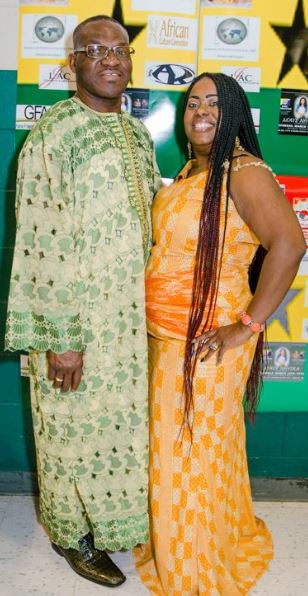
Omaha couple Martine and Sam Quartey’s passion for Ghana finds them promoting aspects of that West African nation through various cultural, commercial and charitable activities. One of their activities is an every-other-year group trip they lead to Ghana, where Sam was born and raised. They organize the trip via their own S&M Tours. The next tour is scheduled December 20-31. Reservations are closed.
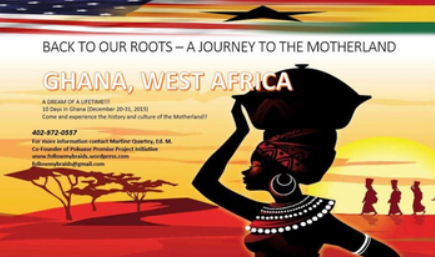
They call their tours Back to Our Roots – A Journey to the Motherland. This time around the couple will take a travel party of eight to see various sights in and around the capital city of Accra and the country’s next largest city Kumasi. Among the historical spots they will visit are some of Ghana’s coastal slave castles where thousands of Africans were detained against their will bound for slave trade ships making The Passage to the Americas and the Caribbean.
Sam Quartey, who works as an automotive mechanic, said it’s not unusual to see visitors cry upon touring the slave castles. “It’s a big story and very emotional,” he said.
Martine Quartey said she found herself “overwhelmed” by the experience.
With its southern border situated on the Atlantic Ocean, Ghana today is a tourist magnet with stunning beachside resorts and history-laden landscapes. Rich in mineral deposits and in cocoa production, the country is more developed than many first time visitors expect.
The December tour will be the fourth the couple’s led to Ghana. They enjoy introducing travelers to a continent and a nation they feel has much more to offer than many realize.
“There’s a lot to see – the beautiful scenery, the vivid colors and bold patterns of the clothing, the entrepreneurial spirit of the people, the bustling markets, the highly developed cities,” Martine said. “There’s also the painful history of slavery and colonization and the successful bid for independence.
“We invite people to take the journey with us, to cross those bridges and cultural boundaries to experience something they don’t expect to find.”

Ghana, like all of Africa, is known for the warm hospitality of its people. Americans are well-received, Martine said, but for African-Americans it truly is a heritage homecoming with deep currents.
“Because we are of our ancestors, we are returning in a sense and Ghanians greets us by saying, ‘Welcome back my sister, welcome back my brother.’ It’s so beautiful to hear that because finally you feel like you’re at home.”
Ever since she met Sam she has been fascinated with his homeland and she has developed an appreciation for its food and fashion, among other things. She and Sam often dress in Ghana attire and he cooks many traditional dishes. He is president of the Ghana Friendship Association of Nebraska (http://www.ghanafan.org/). The organization holds events that keep alive traditional culture for Ghanians living here, it helps new arrivals from Ghana adjust to American life and it supports schools and clinics in Ghana.
Martine made her first trip to Ghana in 2011, a year after the couple married. Whenever the couple go they bring back authentic garments and accessories as well as natural bath and beauty products because they and Omaha’s resident African community crave such hard to find items here. There is also high demand by local African-Americans for Ghana-ware and incidentals.
Requests for these goods got so frequent the Quarteys saw a business opportunity. Thus, they opened their S&M African Boutique in August. The small store at 6058 Ames Ave. features a surprisingly large array of fashion, bags, jewelry, art, fragrances, oils and shea butter products.
“The boutique is kind of birthed out of feedback we were getting from friends and family” to have these things year-round,” Martine said.
S&M African Boutique is open only on Saturdays from 10 a.m. to 5 p.m. Visit https://www.facebook.com/SandMAfricanBoutique.
The Quarteys have also formed the Pokuase Promise Project Initiative to support a school they adopted in the village of Pokuase. Sam’s grandfather settled the village. Sam’s father and uncle followed as village leaders. In a spirit of giving back, the couple collect donated supplies (books, computers, markers) they variously ship or personally deliver to the school serviing elementary through senior high students.
To consolidate their school assistance efforts, the couple are building an International Headquarters house in nearby Accra. It will have ground floor storage bays for supplies and a second story private residence. When in Ghana the Quarteys will stay and operate the Pokuase Project from there. They hope to have someone run the Project in country when they are back in the States.
The International House also represents Sam fulfilling a commitment he made to his late mother. The family owns the land the house is being constructed on and Sam’s mother made him promise to do something of substance on it.
“I told my wife about it and she said, ‘Yeah, let’s honor her wishes,’ so we started the project,” Sam said.
His dream is to build a library for the school and dedicate it to the man responsible for him coming to America, the late Bishop William Henry Foeman, who was a much revered and recognized foreign missionary. Sam and his oldest son lived for a time with Foeman, who came to Omaha to pastor Mount Calvary Community Church, where Sam is still a member today.
Working with the school is meaningful to Martine, an education professional. She is an administrative assistant in the Omaha Public Schools’ superintendent’s office and a part-time adult education instructor at Metropolitan Community College.
The Quarteys’ Ghana work is borne of a love that keeps expanding.
“It’s a beautiful thing because it’s blossomed,” Martine said, “and it’s all connected. We have our trips, we have our boutique and we have the school.”
There is also the blog she writes, “Follow My Braids, I Love Ghana, West Africa” at https://followmybraids.wordpress.com/.
The couple are available to speak about Ghana to media and groups.
They will soon be taking reservations for a late fall 2017 trip to Ghana.
For more information, call 402-972-0557.
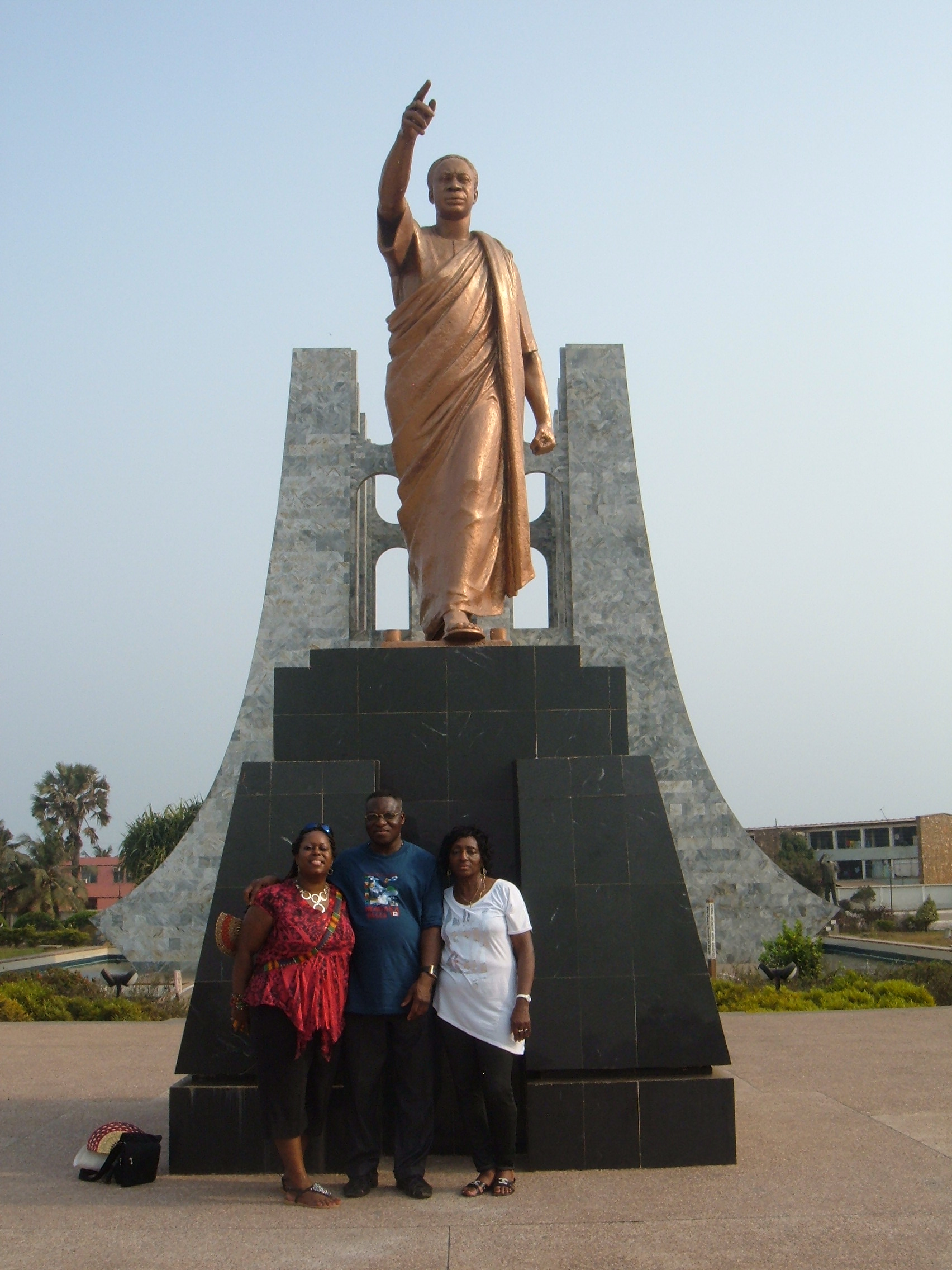
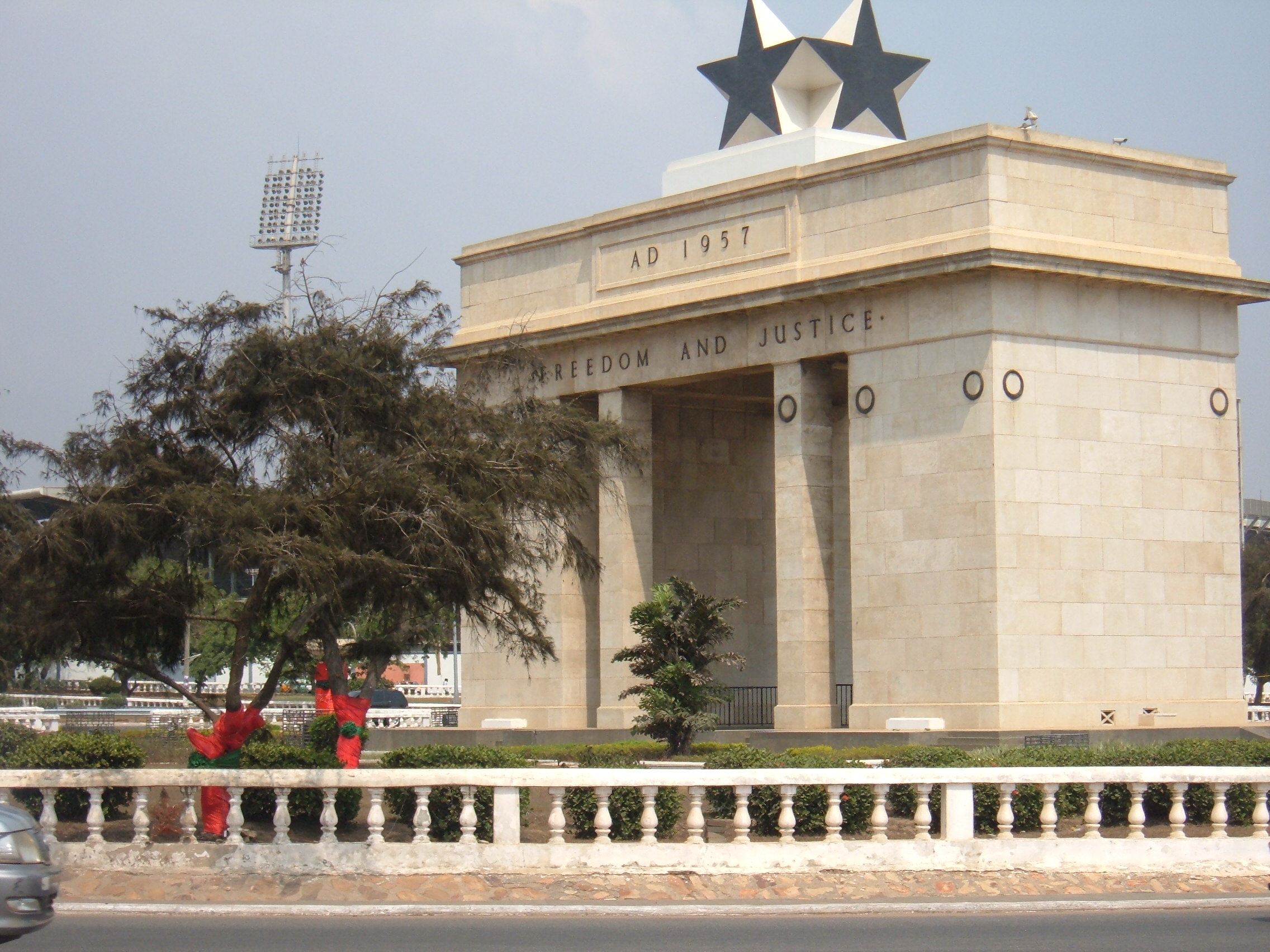
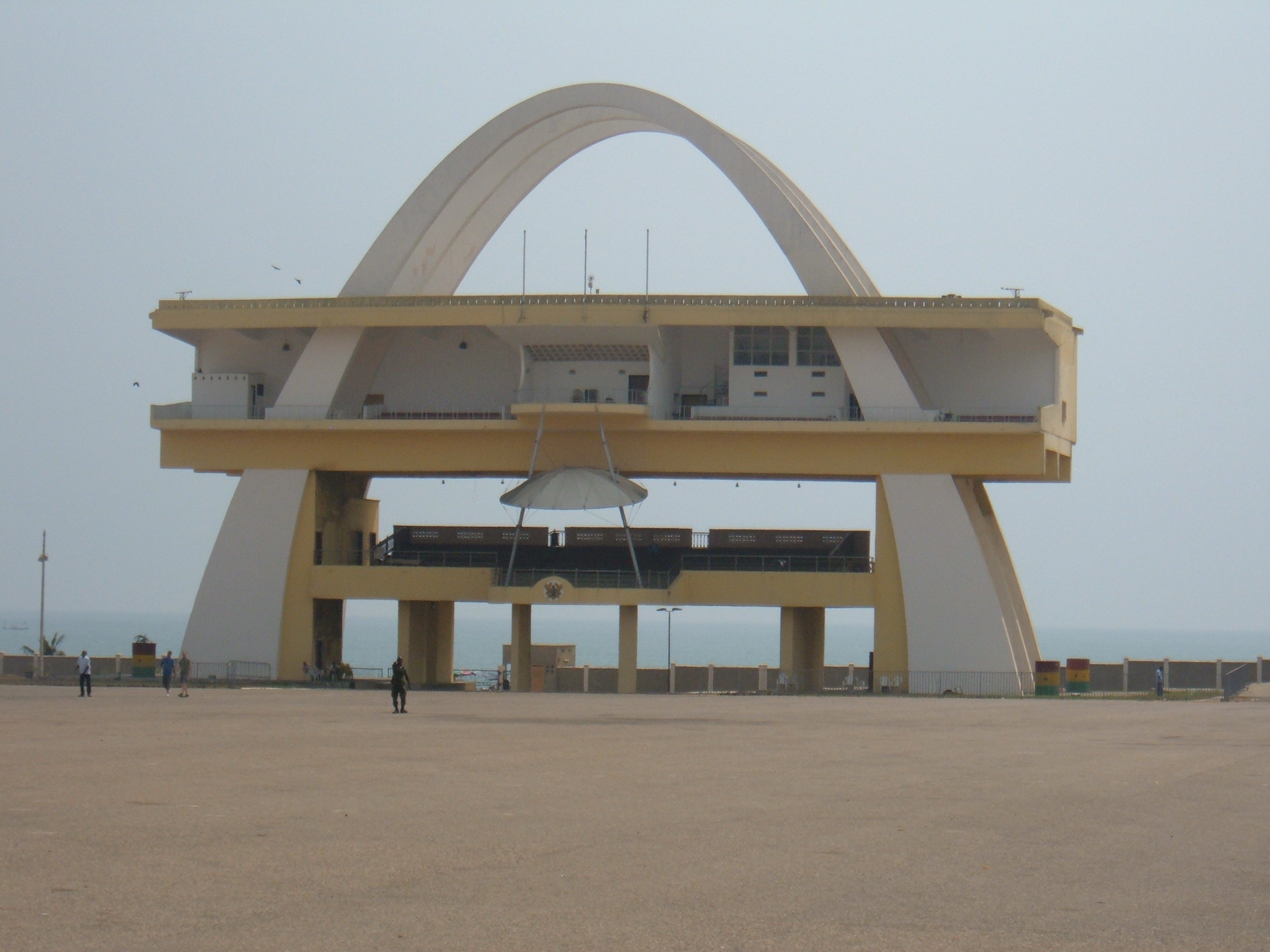 Independence Arch (a part of the Independence Square – represents Ghana’s struggle for independence from Great Britain)


 Leo Adam Biga's My Inside Stories