Archive
Room with a view: Omaha Design Center
The Omaha Design Center is THE swank new spot to hold events in town. It’s owned and operated by the people behind Omaha Fashion Week and they’ve crafted a flex space that hosts a diverse slate of events. Read my story about the Omaha Design Center and the entrepreneurs who make it happen in the Fall issue of Metro Magazine (http://www.spiritofomaha.com/Metro-Magazine/The-Magazine/).

Room with a view: Omaha Design Center
Creative space is new home for Omaha Fashion Week and more
©by Leo Adam Biga
Appearing in Fall 2016 issue of Metro Magazine (http://www.spiritofomaha.com/Metro-Magazine/The-Magazine/)
If Nick and Brook Hudson appear calmer at Omaha Fashion Week (OFW) this fall, it’s because they’ve found a permanent home for this once gypsy event at their recently opened Omaha Design Center (ODC).
Upon founding Fashion Week in 2008, the Hudsons were its sole proprietors and producers until bringing in Greg and Molly Cutchall as partners. Now the two entrepreneurial couples have joined forces as owners of Omaha’s newest event facility. Located in the former TipTop Ballroom at 1502 Cuming Street, ODC opened in March with the Spring OFW show. Omaha native Kate Walz, an OFW veteran and star Parsons School of Design student, was the first designer to show there. The space has earned raves from the fashion community from clients who’ve held weddings, parties, receptions and charity events there.
“People are just amazed at how beautiful and open the space is,” Brook Hudson says. “It’s impressive.”
“We’ve gotten lots of good responses,” Greg Cutchall confirms.
Nick Hudson says Fashion Week regulars and newcomers “loved it,” adding, “Our attendance was up 15 percent. People really like the energy of the space.” Its size and flexibility allows OFW to do more shows, including a new Kids Rule Fashion Show.
A 31,000 square foot flex space that is Fashion Week’s own rather than leased and that seamlessly accommodates diverse, design-oriented events is what drew the partners to purchase and refurbish the facility.
Supply and demand meet vision
The deal made sense for Fashion Week and for the catering operations the Cutchalls have. The couples met when Greg’s catering division started doing food and beverage service for Fashion Week VIP tents. They saw a shared opportunity for a year-round event space. The Cutchalls purchased the building last December and financed the remodel work. The Hudsons became co-owners in a stock swap.
“Nick and Brook are the marketing force behind the business. They’re great at creating and branding events of all kinds. My wife and I and our office team are more the business and operations side,” Greg says.
The architectural firm Alley Poyner Macchietto, who offices next door at the TipTop Building, did the redesign. The firm’s Laura Alley, a business development and community relations administrator, first recommended the site to the Hudsons.
“When Alley Poyner Macchietto Architecture moved into this building and this neighborhood, we saw the potential for what it could be and we began looking for others who loved design in all its various forms. First we filled our space, then the Co-Lab next door. Then we started thinking of the ballroom. Ryan Ellis with PJ Morgan Real Estate suggested Nick and Brook might be looking for space. They were exactly the kind of passionate, design-minded, creative people we hoped to connect with.
“The space had all the right parts to fit their needs, and our design team – led by Michael Alley and Katrina Stoffel – was able to help them envision how the space could look. We are beyond thrilled to have the Omaha Design Center as our neighbor. It serves as a catalyst for some of our city’s most creative and passionate minds.”
Eight weeks of demo and construction produced an as-new, ready-to-use event space “That’s kind of how it all came together. It was a big undertaking,” Greg says.
Makeover transforms facility
The facility’s once dull, generic banquet interior has been been remade as a chic, industrial warehouse-meets-party room. Extraneous walls and a drop ceiling were removed to open up the space, whose main ballroom has a high exposed ceiling. Polished concrete floors accent towering glass chandeliers suspended by chains from the metal beam-works. There’s also a smaller adjacent ballroom. An L-shaped granite-topped, mirror-backed bar is built into the lobby. A portion of the lobby serves as an art gallery. Another section supports pop-up vendor wares. Satellite bars can be easily set-up throughout the facility. Vintage furnishings round out the hybrid retro-contemporary feel.
Movable panels covered by sheer curtains can turn the space intimate or expansive. The panels are backlit with colored LED lights that can be programmed to create any mood or atmosphere – from casual to formal, from fun to romantic, from bridal or ball to rave.
“The lighting is immersive – it’s all around you,” Brook says. “It feels like you’re not just looking at the stage but you are a part of it. It’s really interesting.”
The remodel added state of the art lighting and sound systems. Backstage are ample amenities to support events and crowds from 200 to 2,000. There are dedicated bridal and grooms suites that double as green rooms or dressing rooms. two commercial kitchens, storage bays, a loading dock. Offices and meeting rooms are planned.
“We finally have everything we need in one spot,” Brook says, adding that OFW no longer has to bring in things like portable restrooms or to rent off-site storage units.
The whole works remedies issues the Hudsons contended with during OFW’s first eight years, when the event got staged at various indoor and outdoor sites, most recently under a football field-sized tent in the Capitol District downtown. Certain risks and limitations come with leasing spaces others control. And where the outdoors in Nebraska is concerned, weather plays a factor.

Finding home
Nick says, “Everything possibly that could go wrong at those events would go wrong. The building helps make Fashion Week more stable.”
Before, Brook says, “when things came up, such as inclement weather or equipment failures, we were hostage to the site. Here, we know what to expect. It’s predictable. We know it’s going to be air conditioned and heated, it’s not going to get flooded. It’s a home.”
Participants finally have a venue to display their skills to full effect.
“There’s a lot of different people involved and it’s really important they have a good platform to showcase what they’re doing for their experience and their work,” Nick says. “It’s a very growing and building experience for designers and models, for hair and makeup people, for the photographers, musicians and artists. It is too for the people planning and producing the event. Brook has a whole program of young volunteers and interns who make it their career. This new space means they can have a better experience.”
Brook says, “It’s a place where they can come and be their best.”
“The reason Fashion Week became successful was the basic concept we’re giving a professional platform for all these different creative young people who wouldn’t normally have that opportunity for free,” Nick says. “Now we can do it even more professionally. That is a huge breakthrough for us. The reason we kept moving is we could never find a space quite right in terms of infrastructure. The ceilings were too low, the space backstage was too cramped,”
Brook says, “It took a lot of energy just to compensate for all that and to reinvent the wheel every season and now we know what the wheel is. Now we can focus on just continuing to improve the productions and the creativity and the entertainment value. It opens up so much more time and energy to focus on things we’ve never been able to do before because we were busy getting water and air conditioning.”
Fashion Week audiences can expect ever more theatrical shows to go along with full, well-outfitted guest services at OFW events.
Nick says not only do participants have a better experience, the audience does, too. That’s important to an event that’s been so embraced. “Lots of people have really supported this event over the years, they’ve helped it grow, in some cases they’ve helped support some of the creatives, and because the creatives can focus more on being creative the audience is going to benefit from that as well and have a great evening, so it’s a really big step up for our community.”
Staging events in this flex space affords unlimited possibilities.
“When we have Fashion Week we design it how we want it to look and in a lot of spaces that’s harder to do – you have to take it how it is.
Here, it’s very easy to adapt it individually to what you’re looking to create,” Nick says. “It’s very creative inspiring. You come in here and personalize it to your tastes. There’s lots of things you can do.”
Brook says, “It’s a blank canvas and a playground. It can be used for many different events, in many different ways. It imposes few restrictions. Every time you walk in we have totally different events with totally different setups. It’s always something different. It’s really great.”
Design central
The owners saw that a single venue that could provide the right fit for many kinds of events is in short supply in Omaha.
“There’s a void in the market for facilities that can accommodate mid-range sized events,” Greg Cutchall says.
“We realized if we needed something like this for Fashion Week there were all these other people who needed something like this for their nonprofit or their family or their business,” Nick says “We called it the Design Center to reflect the designing of individual events here but also because we encourage design. Besides Fashion Week we do design-oriented things here, which is exciting, and were trying to help the fashion eco system, which this is now a big part of. The fact that it’s in the heart of this North Downtown neighborhood that could be Omaha’s design district is even more exciting.”
Creatives abound in the area. As a creative hub and staging ground,
Omaha Design Center aligns well with creative community neighbors Co-Lab, Alley Poyner Macchietto, the Mastercraft, the Hot Shops Art Center, Slowdown, Film Streams and the coming Kiewit University.
The Center is also within walking distance of several hotels and a short drive from the airport and the Old Market. The site’s already seen a broad menu of events, including a Terence Crawford victory celebration, the Berkshire Hathaway MoneyBall, a fight card and a comedy troupe. It is hosting College World Series events, a Halloween bash and a New Year’s Eve party. Everyone from models to boxers to aerialists to fire dancers to musicians have performed there. Weddings will always be, as Cutchall says, “our bread and butter.”
“We thought there would be demand for something like this and there has been,” Brook Hudson says. “We started promoting it in December and I don’t think this space has been empty since April.”
Nick Hudson says, “We’re now facilitating events for these other communities here in town. It’s exciting having these different communities and organizations coming in and doing events here. It’s all about creating community and the community building you get through events. We’re big fans of diversity. It’s always been very important to us having a really diverse crowd of people doing different things and we’re getting that same thing here. Now we just want more people to be aware there is this new space available to come celebrate through events.”
Brook says, “Yeah, we want people to come make some memories.”
“Bookings are going stronger than we anticipated our first year,” Greg Cutchall notes. ‘We’ve been very pleased and we think it will continue to grow as more people learn about the facility and see what we have to offer.”
After all the moving around OFW did, Brook Hudson is just glad to have a place she and others can count on.
“It’s good to be home,” she says. “My team is excited about that as well. All of our interviews, meetings and programming happen here now. And we get to share this great space with other communities.”
Fall Omaha Fashion Week unfurls there August 22-27.
Creative to the core: John Hargiss and his handmade world
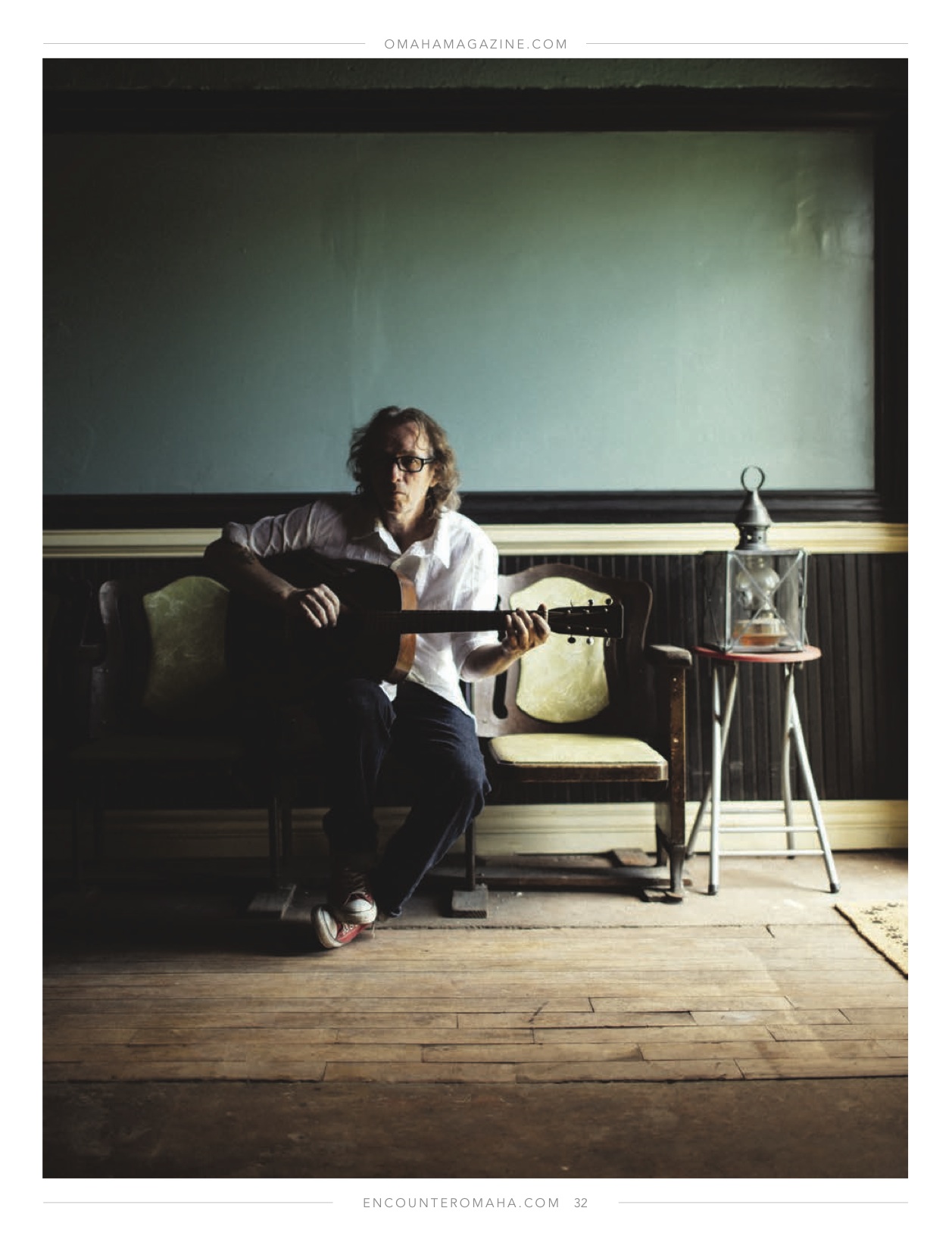
Creative to the core: John Hargiss and his handmade world
©by Leo Adam Biga
©Photos by Bill Sitzmann
Appearing in the July-Auguat 2016 issue of Omaha Encounter Magazine (http://omahamagazine.com/category/publications/the-encounter/)
Master craftsman and stringed instrument maker John Hargiss learned the luthier skills he plies at his North Omaha shop from his late father Verl. In the hardscrabble DIY culture of their Southern Missouri hill and river bottom roots, people made things by hand.
“I think the lower on the food chain you are, the more creative you become. I think you have to,” Hargiss says.
He observed his late father fashion tables and ax handles with ancestral tools and convert station wagons into El Camino’s with nothing more than a lawnmower blade and glue pot. Father and son once forged a guitar from a tree they felled, cut and shaped together. The son’s hands are sure and nimble enough to earn him a tidy living at his own Hargiss Stringed Instruments at 4002 Hamilton Street. His shop’s filled with precision tools (jigs, clamps_, many of vintage variety.
Some specialized tools are similar to what dentists use. “I do almost the same thing – polish, grind, fill, recreate, redesign, restructure.”
Assorted wood, metal and found objects are destined for repurposing.
“I have an incredible way of looking at something and going, ‘I can use that.’ Everything you see will be sold or used one way or the other.”
In addition to instrument-making, he’s a silversmith, leather-maker and welder.A travel guitar he designed, the Minstrel, has sold to renowned artists, yet he still views himself an apprentice indebted to his father.
“He just made all kinds of things and taught me how to use and sharpen tools. Being around that most of my life it wasn’t very difficult for me to be like, ‘Oh, that’s how that works,’ For some reason my father and I had a connection. I couldn’t get enough of that old man. He was a mill worker, a mechanic, a woodsman. When he wasn’t doing that he was creating things. He was a craftsman. Everything I know how to create probably came from him. Everything I watched him do, I thought, ‘My hands were designed to do exactly what he’s doing.’ On his tombstone I had put, ‘A man who lived life through his hands.'”
Hargiss also absorbed rich musical influences.
“You were constantly around what we don’t see in the Midwest – banjo players, violin players, ukulele players, dulcimer players. There are a lot of musicians in that part of the world down there. Bluegrass. Rockabilly. Folkabilly, That would be our entertainment in the evenings – music, family, friends. Neighbors would show up with instruments and start playing. Growing up, that was our recreation.”
He feels a deep kinship to that music.
.”The roots of country music and the blues come out of being suppressed and poor,” he says. “All those incredible sad songs come from the bottom of the barrel.”
His father had a hand in his musical development
“My daddy was a good musician and he taught me to play music when I was about 9. By 11 I was already playing in little country and bluegrass bands. I can play a mandolin, a guitar, a banjo, a ukulele, but I’m pretty much a guitar player. And I sing and write music.”
Hargiss once made his livelihood performing. “I like playing music so much. It’s dangerous business because it will completely overpower you. I knew I needed to make a living, raise my children and have a life. so playing music became my hobby. I worked corporate jobs, but I kept being pulled back. It didn’t matter how hard I tried. I’d no more get the tie and suit off then I’d be out in the garage making something else. The day I quit that job I went to my boss and said, ‘I can’t do this anymore, my heart’s not in it. I’m going to start building things.”
It turned into his business.
Hargiss directly traces what he does to his father.
“I watched him repair a guitar he bought me at a yard sale. The strings were probably three inches off the finger board. I remember my daddy taking a cup of hot coffee and pouring it in the joint of that neck and him wobbling that neck off, and the next I knew he’d restrung that guitar. I think that’s when I knew that’s what I’m going to do.”
The memory of them making a guitar is still clear.
“The first guitar I built me and my daddy cut a walnut tree, chopped it up and we carved us a dreadnaught – a traditional Martin-style guitar. I gave that to him and he played that up to the day he died.”
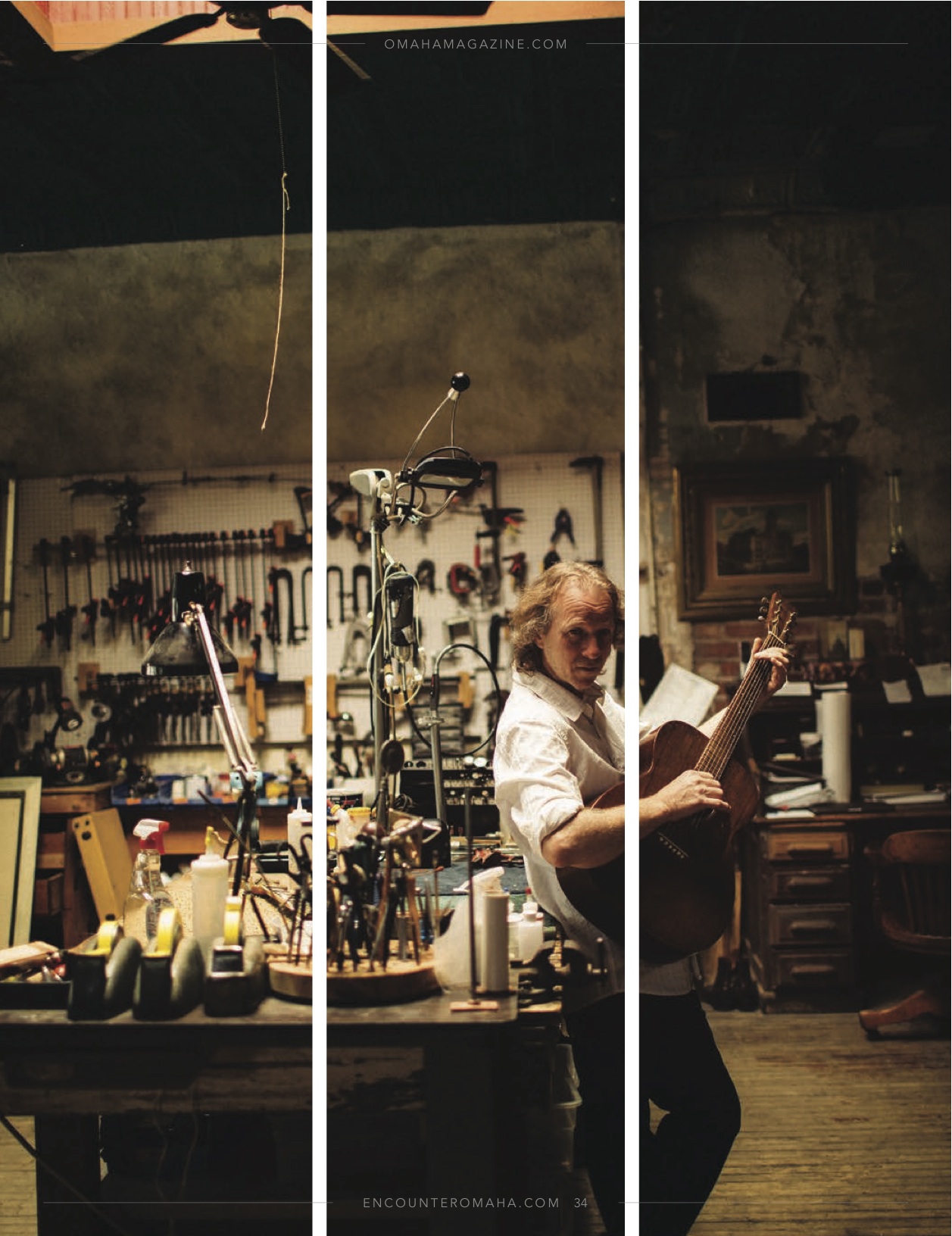
“I’m fascinated by architectural design in what I create and in what I make. I study it.”
He called on every ounce of his heritage to lovingly restore a vaudeville house turned movie theater he didn’t know came with the attached North O buildings he purchased five years ago. The theater lay dormant and unseen 65 years, like a time capsule, obscured by walls and ceilings added by property owners, before he and his girlfriend, Mary Thorsteinson, rediscovered it largely intact. The pair, who share an apartment behind the auditorium, did the restoration themselves.
The original Winn Theatre opened in 1905 as a live stage venue, became a movie theater and remained one (operating as the Hamilton and later the 40th Street Theatre), until closing in 1951. Preservation is nothing new to Hargiss, who reclaimed historic buildings in Benson, where his business was previously located. At the Hamilton site he was delighted to find the theater but knew it meant major work.
“I’ve always had this passion for old things. When we found the theater I remember saying, This is going to be a big one.”
Motivating the by-hand, labor-of-love project was the space’s “potential to be anything you want it to be.” He’s reopened the 40th Street Theatre as a live performance spot.
Hargiss is perpetually busy between instrument repairs and builds – he has a new commission to make a harp guitar – and keeping up his properties. Someone’s always coming in wanting to know how to do something and he’s eager to pay forward what was passed on to him.
The thought of working for someone else is unthinkable.
“I get one hundred percent control of my creativity. I’m not stuck, I’m not governed by, Well, you can’t do it this way. Of course I can because the sound this is going to produce is mine. When you get to control it, then you’re the CEO, the boss, the luthier, the repairman, the refinisher, the construction, the engineer, the architect. You’re all of these things at one time.”
Besides, he can’t help making things. “There’s a drive down in me someplace. Whatever I’m working on, I first of all have to see myself doing it. Then I go through this whole crazy second-guessing. And then the next thing I know it’s been created. Days later I’ll see it and go, ‘When did I do that?’ because it takes over me and it completely consumes every thought I have. I just let everything else go.”
Creating is so tied to his identity, he says, “It’s not that I can’t find peace or can’t be content” without it, “but by lands I like it.”
Welcome to Leo Adam Biga’s My Inside Stories @ leoadambiga.com

Welcome to Leo Adam Biga’s My Inside Stories @ leoadambiga.com, where–
I write stories about people, their passions and their magnificent obsessions
Here are some cover story images associated with my blog posts. The stories represented by these images, like every post on the blog, are written by me. You can click on some of the covers to access the stories.
I invite you to visit the site, take a little or a lot of time, explore and enjoy the ride. Be sure to bookmark favorites and share links with family and friends.
I invite you to join thousands of others in following the blog. You can get email or Facebook updates whenever I post.
The blog by the way feeds into my Facebook page, My Inside Stories, as well as into my Twitter, LinkedIn, Google, Tumblr, AboutMe and Amazon pages.
Hope to see you here again @ leoadambiga.com
The site for My Inside Stories about people’s passions & magnificent obsessions
A compendium of Arts, Entertainment, Culture, Lifestyle, Sports, Style, Fashion, History, Society, Issues, Personalities, Creatives, Entrepreneurs and More
AS YOU CAN SEE, DIVERSITY IS THE NAME OF MY GAME


Love Donor – Larry & Amee: A Father/Daughter Love Story
Here is a story I did some time ago about a prominent father and daughter in Omaha, Larry Kavich and Amee (Kavich) Zetzman. Their family business All Makes Office Equipment is a four generation success story. Just as Larry succeeded his father, who succeeded his own father in running the business, Larry eventually passed the business onto his daughter Amee and his son Jeff. After putting it in their good hands Larry was leading a carefree life enjoying his many hobbies and pursuits when he got sick. Suffering from advanced renal failure – his kidneys failing – his only option became an organ transplant. Amee became the donor for this life saving procedure that has given him a new lease on life and brought the already close father-daughter relationship even closer together than before.
I did this story for Metro Magazine (http://www.spiritofomaha.com/Metro-Magazine/The-Magazine/) and I am posting it here for the first time.
Read an earlier story I did about the multi-generational All Makes at–
Bedrock values at core of four-generation All Makes Office Furniture Company
Love Donor– Larry & Amee: A Father/Daughter Love Story

Larry Kavich and his daughter Amee Zetzman have always been close. They worked together at the family’s fourth generation All Makes Office Equipment Co., where Larry headed things until turning the business over to his son Jeff and daughter Amee a few years ago.
All In The Family
The proud papa gave his “little girl” away in marriage. Amee and her husband Ted Zetzman have given Larry and his wife Andi two grandchildren. But the father-daughter bond went to a whole new level when Larry’s advanced renal failure necessitated a transplant earlier this year and she donated her kidney.
Thus, Kavich became one of an estimated 28,000 persons to receive an organ transplant in the U.S. annually. More than 114,000 are waiting list candidates. Amee’s one of 7,000 live donors projected to give an organ this year.The procedures took place March 19 at the Mayo Clinic in Phoenix, Arizona, near Larry’s and (wife) Andi’s snowbird residence in Scottsdale. Father and daughter went into pre-op together and separate teams performed the surgeries in adjoining operating rooms. Weeks of testing preceded the transplant to ensure the best possible match. After four hours of general surgery Larry had a new kidney and just as hoped his body accepted it without complications.
After only four days in the hospital and frequent followup visits, he’s back to the full, active lifestyle he knew before his kidneys failed.
Far from the arduous experience Zetzman says donating is assumed to be, the two-hour laparoscopic procedure left only “three little scars.” Compared to her C-sections, she says it’s “no big deal…it’s doable.”
Hours after the transplant she walked down the hall to find her father sitting up in bed. She returned to work half-days about a week later.
Kavich says “it’s a miracle” she gave him this gift and resumed her life without major interruption. Amee feels she only did what anyone would in the same situation. “If you knew you could change someone’s life and you would still be OK wouldn’t you do it?” she asks.
Still, her father expresses gratitude every week. And not just to Amee. His son Jeff Kavitch also offered to donate. (Mayo will only test one candidate at a time until a suitable match is found.) The siblings decided who would be tested first with a coin flip. Once her donor suitability was confirmed the transplant was scheduled. Amee says she and her family were “very proactive” in educating themselves and pressing for answers. “You have to be your own advocate,” she says.
“I have a fabulous support team in my family,” Larry notes. “We’re the poster family for how things should happen. We’re very fortunate to have had everything that could have gone right go right, and for that I’ll be forever grateful to Mayo and to my children and my wife.”
A Curious Journey
As Kavich readily admits, he’s an anomaly in how his transplant journey unfolded . His new kidney functioned just as it should from the moment of insertion. His creatinine level and glomerular filtration rate steadily improved to where today they’re normal, something they hadn’t been since this all started in 1981. That’s when Kavich, who’s beaten Krohn’s disease and prostate cancer, was diagnosed with a rare disorder, Wegner’s Granulomatosis, that attacks kidneys and other organs.
“I had it 31 years ago and then the disease subsided and 15 years ago it came back,” he says. “On each occasion I was put on chemotherapy and high doses of steroids. It was a very unusual circumstance because I never manifested the symptoms that my numbers would have indicated.”
No loss of appetite or energy. No curtailed activities. It left doctors scratching their heads and Kavich feeling “I’ve been blessed.” He was always told that despite how well he felt he’d one day need dialysis and a transplant. Not wanting to believe it, he says he was “living in the land of denial” in one respect but also maintaining his natural optimism in another respect.
He says Nebraska Kidney Association CEO Tim Neal connected him with people who are transplant success stories and provided “support and encouragement.” He learned healthy regimens for eating right, drinking plenty of water and exercising. His wife filtered out any negative info. He wanted to keep everything positive.
He continued feeling well and living an unrestricted life despite progressive kidney disease, but late last year he finally had to face facts. He needed a transplant and doctors said he shouldn’t hesitate if he had a living, willing donor. His children had already offered but he’d refused. Waiting for a cadaver donor could take years and his condition would require dialysis in the interim. The one thing he didn’t want was a compromised life.
No Other Options
At a doctor’s urging he and Andi visited a dialysis center, where he says, “I saw what would have been my worst fear come to pass. I completely broke down. That’s when my wife called the kids and advised them I was in trouble.” After Amee emerged as his donor she pressed for the procedure to happen as soon as possible so that her father could bypass dialysis.
“Once I got approved I was very persistent and they were totally accommodating in working with us, and my father did avoid dialysis.”
In the extensive physical-psychological vetting process to determine a live donor match she says great pains are taken to ensure donors like herself are doing it for the right reason, i.e. not getting paid. She says it’s made clear that one can opt out at any time for any reason.
Did she have any second thoughts? “I didn’t. Once I made up my mind I was, ‘Let’s get this done.’” Transplant day, she says, is a blur of feelings. “It’s an emotional situation for the family because we’re both being wheeled away to surgery at the same time. It definitely affects the whole family, in all aspects.”
Like her father she’s struck by “the miracle of it,” saying, ““It is pretty unbelievable that they can take part of my body and make it work with his. And his numbers from day one were great. Mine went back to normal quickly as my body adjusted to just having one kidney. It just all worked so fast.”
Just as her father had ample support, she counts herself lucky to have had a support network. Her husband and kids, she says, “were on board, they knew papa was having issues. I have a good circle of friends who covered all my bases, and I have a brother who covered my office base. Not everyone is in that position,” she says, adding that the National Kidney Foundation is trying to devise programs” to assist donors with things like childcare and out-of-work benefits they may need.
Enhancing Lives
The family wants the public to know what a difference organ donation can make, whether getting on the national donation registry or volunteering to be a live donor.
“Towards the end when my kidneys were definitely failing my future and my ability to live any sort of life was impaired. I would not be leading the life I’m leading had the transplant not occurred,” says Kavich. “I am the richest guy you know and it has nothing to do with money.”
He gives back today by volunteering with the Arizona Kidney Foundation. “I will go anywhere and talk to anyone about my experience,” he says.
Another way to assist the donation community is by contributing to your local kidney foundation or association to help its mission of building awareness through education, screening and referral programs-services. For details, go to http://www.kidneyne.org or call 402-932-7200.
Yolanda Diaz success story with Little Miss Fashion nets her new recognition
One of Omaha’s most successful fashion designers, Yolanda Diaz, has earned many accolades for her Little Miss Fashion designs and for her entrepreneurial spirit. She was recently honored in Omaha and at the White House in Washington D.C. as Nebraska’s Small Business Person of the Year. Her story of perseverance and persistence is one we can all learn from. Her story also reminds me that the most commercially successful artists, in her case designer, are very entrepreneurial and must be in order to make a go of it. Through a lot of hard work she has mastered both the creative side of her work along with the business side. Most artists or creatives fail on the business side of things. She has been determined to not let that happen.
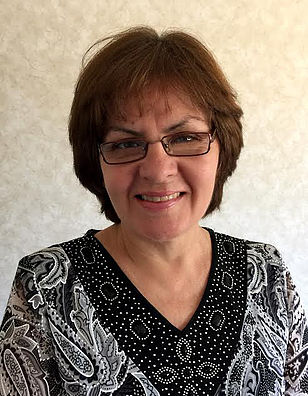
Yolanda Diaz
Yolanda Diaz success story with Little Miss Fashion nets her new recognition
©by Leo Adam Biga
Originally appeared in El Perico
Yolanda Diaz dreamed of being a fashion designer growing up in Monterey, Mexico. Living in poverty far from any fashion capitals, it seemed an unrealistic aspiration to some. Not to her. She actually realized her dream in Mexico and then did so all over again in America. Her clothing manufacturing company in South Omaha, Little Miss Fashion, has become such a success that she’s been named Nebraska Small Business Person of the Year.
The recognition comes from the U.S. Small Business Administration. Diaz will accept her award at May 1-2 ceremonies in Washington D.C., where she will be joined by other state winners. The 2016 National Small Business Person of the Year will be announced then.
She is also being honored May 3 at the Nebraska Small Business Person of the Year Award Luncheon and Entrepreneurial Workshops at the Salvation Army Kroc Center at 2825 Y Street. The 8:30 a.m to 12:30 p.m. event is free and open to the public. Registration is required. Call 402-221-7200 to register.
This is not the first time Diaz has been singled out for her entrepreneurial achievements. Her story has captured the imagination of business organizations and media outlets since 2011. Still, this newest recognition was not something she expected..
“Honestly, it surprised me,” she says. “However, I feel very happy. Even though my business has not grown as fast as I would like, it has grown in ways I didn’t expect. I have been working hard for years and I think the award is recognition not just for me but for all the people who work hard like I do in the community. There are a lot of people around me working hard and there are institutions and organizations helping me.
“It is an honor for me to have the opportunity to get this recognition.”
Aretha Boex, lead center director for the Nebraska Business Development Center, nominated Diaz for all that she’s done to find success. “She is hard working to the core. Her tenacity and her drive is very contagious. When you work with someone like her you buy into their passion and their idea,.” Boex says. Boex’s admiration grew when she discovered Diaz has mentored women at the Latina Resource Center and trained correctional facility inmates to sew. “She cares and she’s really out there to make a difference.”
Diaz’s children’s collections are sold online through Zulily and Etsy and in select boutiques. The business has seen ups and downs and she’s learned many hard lessons, but through business workshops and loans she’s grown her operation to where she now employs nine people. Her husband and son also assist.
She says news of the award is encouraging her local network of English-as-second-language entrepreneurs.
“They say, ‘Well, one day I will be in the same place as you,’ and I say, ‘You can do it, you will. If you work hard you will get the recognition one day.’”
Boex says there’s plenty in Diaz’s story to inspire others. “She’s a woman who built her business from the ground up. She moved here from Mexico to pursue the American Dream. There’s a lot to take away from her experience and how hard work really pays off. She had the resilience and the courage to build this from scratch. She’s a great success story. We love working with her.”
Diaz’s road to success began in Mexico, where she learned to stitch on an antique sewing machine.
“I really loved doing it, I fell in love with fashion because it gives me everything I want. ”


Marta Chavez (front) and Dolores Diarcos (back) working at Little Miss Fashion

Diaz holds her best-selling Little Miss Fashion design.

Diaz hopes to move Little Miss Fashion production into a location nine times larger in the near future.

(Diaz, owner of Little Miss Fashion LLC, Janell Anderson Ehrke, GROW Nebraska CEO, Laurie Magnus Warner, Central Plains Foundation Board Member)
From an early age she began making her own school apparel from old clothes and fabric scraps. Her ever-changing personal wardrobe drew much attention. Her dreams were encouraged when her talent was identified by a mentor who became her first client and referred other clients to her. Diaz even landed a contract to create school uniforms.
She steeped herself in her craft and built a successful business, learning from seamstresses and studying at design schools. Her business thrived but her then-husband didn’t support her pursuits. That proved frustrating to Diaz. who self-describes as “very independent.” After she and her family came to the States in 1996, her first marriage ended. She remarried and worked regular jobs searching for her niche here. She made pet tents before making children’s clothes. She started her company in 2003 under a different name, at first targeting the Latino market before expanding to the Anglo market. Along the way, she’s participated in the micro loan program Grameen America and taken classes at the Juan Diego Center, the Nebraska Business Development Center (NBDC) and Gallup University.
“She built her business while she had a night job, fulfilling all the orders herself, cutting and assembling by hand, which meant long hours, in addition to having a family. So she really believed in this,” says Boex.
A regular designer at Omaha Fashion Week, Diaz showed a collection that sparked interest from Zulily. The onset of online sales orders forced her to outsource production to Mexico, where family members pitched-in. Now everything’s done in-house in Omaha. An SBA microloan from the Omaha Small Business Network provided working capital to grow her business enough to meet large orders. Little Miss Fashion now averages $10,000 sales a month from online orders. Last May Diaz received a second SBA microloan through Nebraska Enterprise Fund. The loans allowed her to buy additional commercial sewing machines, purchase materials and hire more workers. She gets ongoing management consulting and export support from NBDC. Diaz recently sealed a deal to sale her clothing lines through the German e-commerce company Windelbar.de.
Every step of her journey, from improving her English to learning how to write a business plan to doing budgets to managing employees, has helped her succeed.
“I like challenges. I never say never,” she said. “A lot of work, but a lot of fun. I still learn something new every day.”
True to her entrepreneurial spirit, Diaz envisions growing into more markets, a larger production facility and her own retail shop. But for now, she’s content knowing she’s “doing what I’ve wanted to all my life – I’m following my passion.”
Follow Little Miss Fashion on Facebook or visit http://littlemissfashionusa.com/.
Interface Web School: Coding, Collaboration, Community
Shonna Dorsey is the face of one of Omaha’s new technology success stories, Interface Web School, and she does a great job of selling the endeavor through her personality and passion and her savvy use of social and traditional media. She’s the rare co-founder of a tech company with a real facility and flair for communication. This is a short piece I did for B2B Omaha Magazine on Shonna and Interface Web School. I will soon be posting a longer feature I did about her and the company for another publication. She is a real force on the Omaha startup scene and she does a great job, as the headline of my piece here says, of combining coding, collaboration and community. She’s passionate about putting the tools and skills of technology in the hands of more people. We will all be hearing much more from her in the years to come as she’s sure to consolidate her place as a dynamic leader and entrepreneur.

Interface Web School: Coding, Collaboration, Community
©by Leo Adam Biga
Appearing in the Winter 2016 issue of B2B Omaha Magazine
(http://omahamagazine.com/category/publications/b2b-magazine/)
Shonna Dorsey has merged an aptitude for technology with a desire to help others via Interface Web School, Omaha’s latest cyber ed alliteration. It’s not the first time she’s combined her entrepreneurial, networking and community interests. She’s done that as a Leadership Omaha participant and as co-founder of the monthly Coffee and Code meet-up she hosts with Autumn Pruitt of Aromas Coffee.
Long tabbed a real comer, Dorsey’s been recognized with the 40 Under 40 Award from the Midlands Business Journal.
In 2013 she cofounded Interface with Dundee Venture Capital’s Mark Hasebroock and others. She serves as managing director of the school that until recently housed in north downtown’s tech-haven Wareham Building but now offices in the AIM Building, which is also known as The Exchange at 19th and Harney Streets.
The North High graduate studied technology at the University of Nebraska at Omaha, where she earned bachelor’s and master’s degrees.
“A turning point for me as a master’s student came working on a project for an organization that serves child abuse survivors – Project Harmony. Our small student team developed an application to store and monitor videos. That was such a meaningful project. It really sparked something to see that people can really benefit from what techies like us know and do.
“It made me think, How can I do this and make it my career?”
While working corporate jobs she mentored for Hasebroock’s startup accelerator Straight Shot. Before long, they formed Interface.
“I’ve always had a knack for saying, ‘OK, this is risky but I can see the reward on the other side.’ That was how I felt about Interface,” Dorsey recalls. “Even though it was definitely a huge leap of faith at the time it made sense when I looked at the market and what the needs were.”
Many tech jobs go unfilled in-state due to a shortage of qualified prospects. Interface strives to bridge that gap.
“We’ve all been affected by this need for more talent in technology, whether it be web developers or project managers or user interface designers,” she articulated in a Nebraska Entrepreneurship video. “We wanted to put together a pretty intensive program people could go through, which started at 200 hours over 10 weeks and has been adjusted to 200 over 15 weeks, meeting three times per week to accommodate students who need to hold down full-time positions during training..”

Dorsey concedes there are online services that teach coding, but she says many Interface students “have tried those tools and realized a more structured approach is necessary.” Among the benefits of a physical versus virtual class is having on-site mentors who personally “help you overcome hurdles and explain why your code isn’t working.”
Interface serves largely nontraditional students.
She says, “Currently 80 percent are full-time employees. Ten percent are minorities. Most are mid-career, late 20s-early 30s, just looking for a way to transition into a new career in web development or tech or to add more skills in order to add more value to their organization. Or to potentially start their own business.
“We usually have a stay-at-home mom or two in every class.”
Interface requires prospects complete an on-line application, in-person interview and assessment.
“It’s been a really effective tool to gauge aptitude and motivation,” she says. “Those things help determine how successful applicants might be.”
Flexible, interactive class offerings are proving popular.
“Students complete weekly evaluations of their performance and how they feel about the class. It allows us to make tweaks and changes as they’re going through it. Students constantly apply what they learn, build on what they know. It’s all pretty hands-on. We’re able to get you to a level of proficiency where you’re marketable at the end.”
In 15-week courses, students design actual applications, portals, websites for nonprofits.
“That’s an important part of what we do. Students really get excited about creating something that is their own by applying what we’re teaching to something very specific. It’s pretty impactful knowing you’re helping organizations who otherwise couldn’t afford development work. It’s a great way for students to get experience working with a client and building a real-world product. It’s good for clients to understand what it’s like to work with developers.”

It all follows Interface’s emphasis on immersive serving learning.
“The nonprofit projects give our students a chance to extend the learning beyond the classroom and maybe learn something new.”
Developer-client Interactions are just as critical as programming.
“There’s so much to web development that cannot be taught in a class. Even if you’re a great technologist if you can’t work well with people then it makes it difficult to stay employed or get promoted. Skills like collaboration, project management and communication are important no matter what our students decide to do outside Interface.”
Dorsey says employers are hiring and promoting Interface grads, many of whom report salary gains. Some employers partner with Interface.
“We’re happily surprised with how much traction we’ve gained in terms of employer support. We have several companies, including Hudl and Agape Red, that offer tuition reimbursement for our students. That’s really helped us on the student enrollment side.”
Dorsey and her partners have cultivated” close relationships” with the AIM Institute and the Omaha Chamber of Commerce. Additionally, Heartland Workforce Solutions provides financial assistance and Affirm provides tuition financing.
From the school’s inception Dorsey’s been its most public face through the networking and training she does.
“I started offering free workshops through the Omaha Public Library. It proved a great way to get Interface’s name out there and help people get exposed to web development and all the opportunities available. Since then I’ve transitioned to teaching at small startups almost every weekend. We’re starting to offer workshops outside Omaha.”
She says when Interface announced its bootcamp approach, some skeptics questioned its effectiveness.
“Our average reported starting salary is $51,000 after training with us. We’ve had students make $20,000 a year more in a new position. That’s a pretty incredible return on investment. So, the outcomes are real and what students are able to do is real and their jobs are real.”
For Dorsey, having a hand in making people tech savvy and empowered is a heady thing.
“I really do enjoy it so much and I love what we’re able to do in terms of the life changes we help facilitate and get to witness. I could not ask for a better job.”
Visit https://interfaceschool.com/.
Omaha couple unofficial ambassadors for Ghana, West Africa
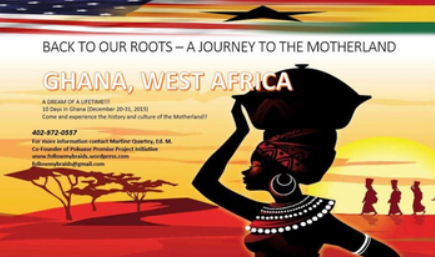
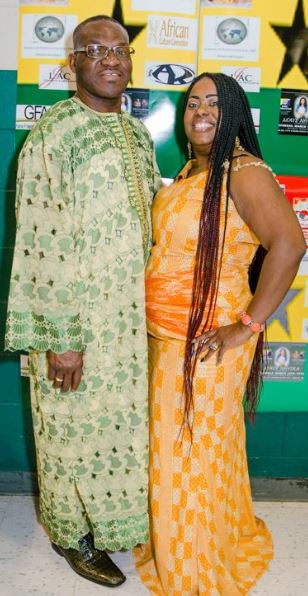
Omaha couple unofficial ambassadors for Ghana, West Africa
©by Leo Adam Biga
Now appearing in the Omaha Star
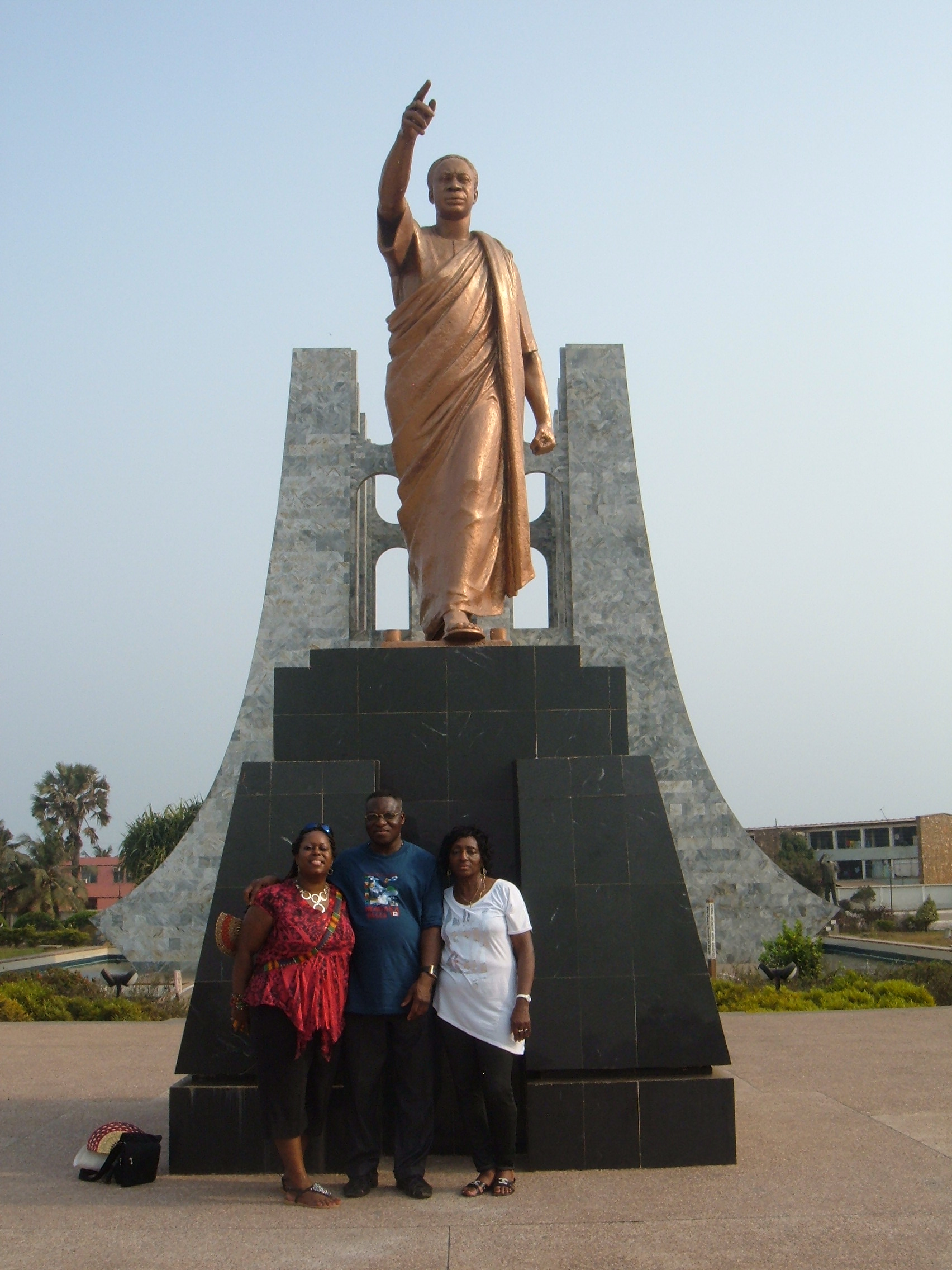
Omaha couple Martine and Sam Quartey’s passion for Ghana finds them promoting aspects of that West African nation through various cultural, commercial and charitable activities. One of their activities is an every-other-year group trip they lead to Ghana, where Sam was born and raised. They organize the trip via their own S&M Tours. The next tour is scheduled December 20-31. Reservations are closed.
They call their tours Back to Our Roots – A Journey to the Motherland. This time around the couple will take a travel party of eight to see various sights in and around the capital city of Accra and the country’s next largest city Kumasi. Among the historical spots they will visit are some of Ghana’s coastal slave castles where thousands of Africans were detained against their will bound for slave trade ships making The Passage to the Americas and the Caribbean.
Sam Quartey, who works as an automotive mechanic, said it’s not unusual to see visitors cry upon touring the slave castles. “It’s a big story and very emotional,” he said.
Martine Quartey said she found herself “overwhelmed” by the experience.
With its southern border situated on the Atlantic Ocean, Ghana today is a tourist magnet with stunning beachside resorts and history-laden landscapes. Rich in mineral deposits and in cocoa production, the country is more developed than many first time visitors expect.
The December tour will be the fourth the couple’s led to Ghana. They enjoy introducing travelers to a continent and a nation they feel has much more to offer than many realize.
“There’s a lot to see – the beautiful scenery, the vivid colors and bold patterns of the clothing, the entrepreneurial spirit of the people, the bustling markets, the highly developed cities,” Martine said. “There’s also the painful history of slavery and colonization and the successful bid for independence.
“We invite people to take the journey with us, to cross those bridges and cultural boundaries to experience something they don’t expect to find.”

Ghana, like all of Africa, is known for the warm hospitality of its people. Americans are well-received, Martine said, but for African-Americans it truly is a heritage homecoming with deep currents.
“Because we are of our ancestors, we are returning in a sense and Ghanians greets us by saying, ‘Welcome back my sister, welcome back my brother.’ It’s so beautiful to hear that because finally you feel like you’re at home.”
Ever since she met Sam she has been fascinated with his homeland and she has developed an appreciation for its food and fashion, among other things. She and Sam often dress in Ghana attire and he cooks many traditional dishes. He is president of the Ghana Friendship Association of Nebraska (http://www.ghanafan.org/). The organization holds events that keep alive traditional culture for Ghanians living here, it helps new arrivals from Ghana adjust to American life and it supports schools and clinics in Ghana.
Martine made her first trip to Ghana in 2011, a year after the couple married. Whenever the couple go they bring back authentic garments and accessories as well as natural bath and beauty products because they and Omaha’s resident African community crave such hard to find items here. There is also high demand by local African-Americans for Ghana-ware and incidentals.
Requests for these goods got so frequent the Quarteys saw a business opportunity. Thus, they opened their S&M African Boutique in August. The small store at 6058 Ames Ave. features a surprisingly large array of fashion, bags, jewelry, art, fragrances, oils and shea butter products.
“The boutique is kind of birthed out of feedback we were getting from friends and family” to have these things year-round,” Martine said.
S&M African Boutique is open only on Saturdays from 10 a.m. to 5 p.m. Visit https://www.facebook.com/SandMAfricanBoutique.
The Quarteys have also formed the Pokuase Promise Project Initiative to support a school they adopted in the village of Pokuase. Sam’s grandfather settled the village. Sam’s father and uncle followed as village leaders. In a spirit of giving back, the couple collect donated supplies (books, computers, markers) they variously ship or personally deliver to the school serviing elementary through senior high students.
To consolidate their school assistance efforts, the couple are building an International Headquarters house in nearby Accra. It will have ground floor storage bays for supplies and a second story private residence. When in Ghana the Quarteys will stay and operate the Pokuase Project from there. They hope to have someone run the Project in country when they are back in the States.
The International House also represents Sam fulfilling a commitment he made to his late mother. The family owns the land the house is being constructed on and Sam’s mother made him promise to do something of substance on it.
“I told my wife about it and she said, ‘Yeah, let’s honor her wishes,’ so we started the project,” Sam said.
His dream is to build a library for the school and dedicate it to the man responsible for him coming to America, the late Bishop William Henry Foeman, who was a much revered and recognized foreign missionary. Sam and his oldest son lived for a time with Foeman, who came to Omaha to pastor Mount Calvary Community Church, where Sam is still a member today.
Working with the school is meaningful to Martine, an education professional. She is an administrative assistant in the Omaha Public Schools’ superintendent’s office and a part-time adult education instructor at Metropolitan Community College.
The Quarteys’ Ghana work is borne of a love that keeps expanding.
“It’s a beautiful thing because it’s blossomed,” Martine said, “and it’s all connected. We have our trips, we have our boutique and we have the school.”
There is also the blog she writes, “Follow My Braids, I Love Ghana, West Africa” at https://followmybraids.wordpress.com/.
The couple are available to speak about Ghana to media and groups.
They will soon be taking reservations for a late fall 2017 trip to Ghana.
For more information, call 402-972-0557.
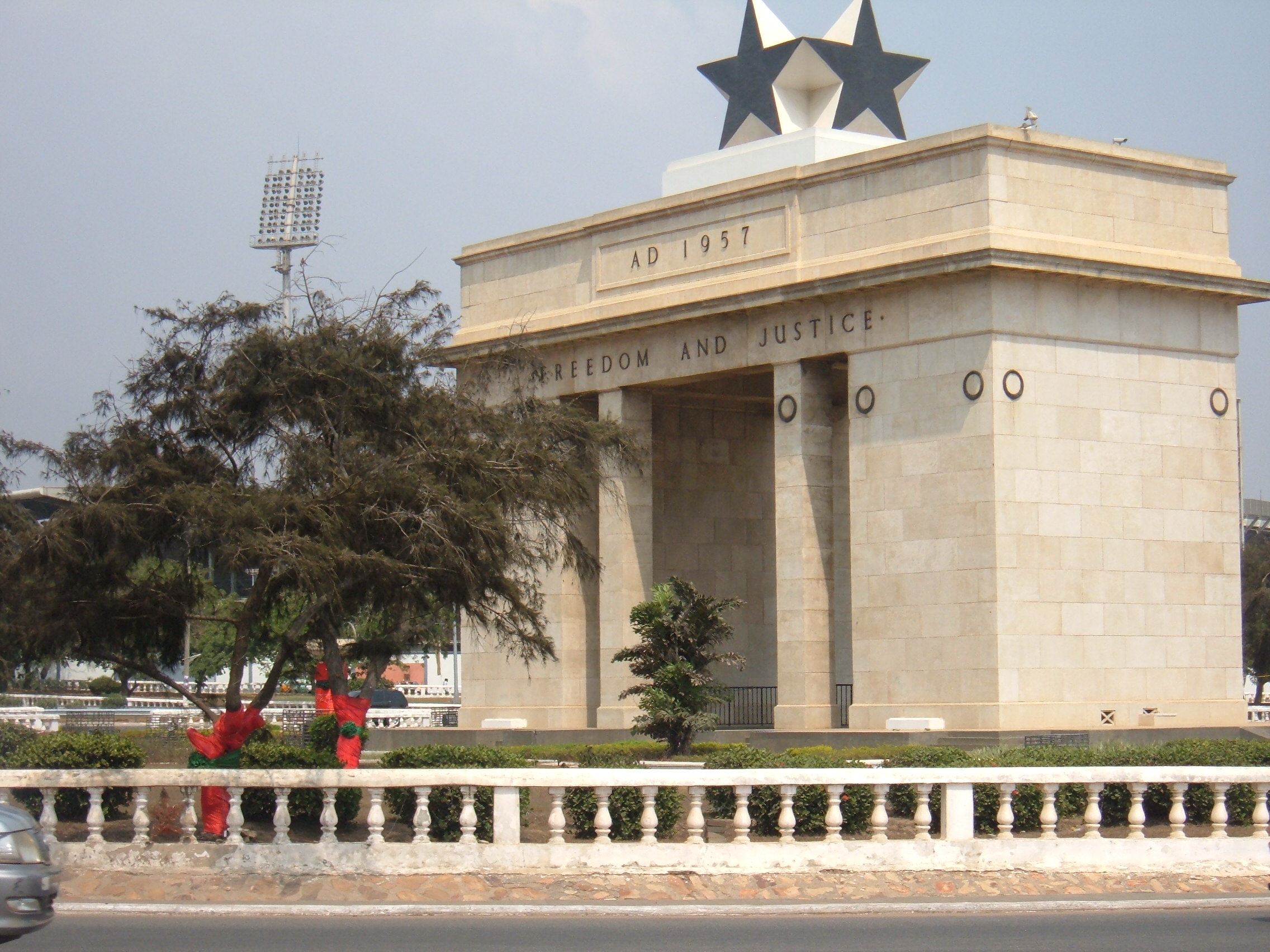
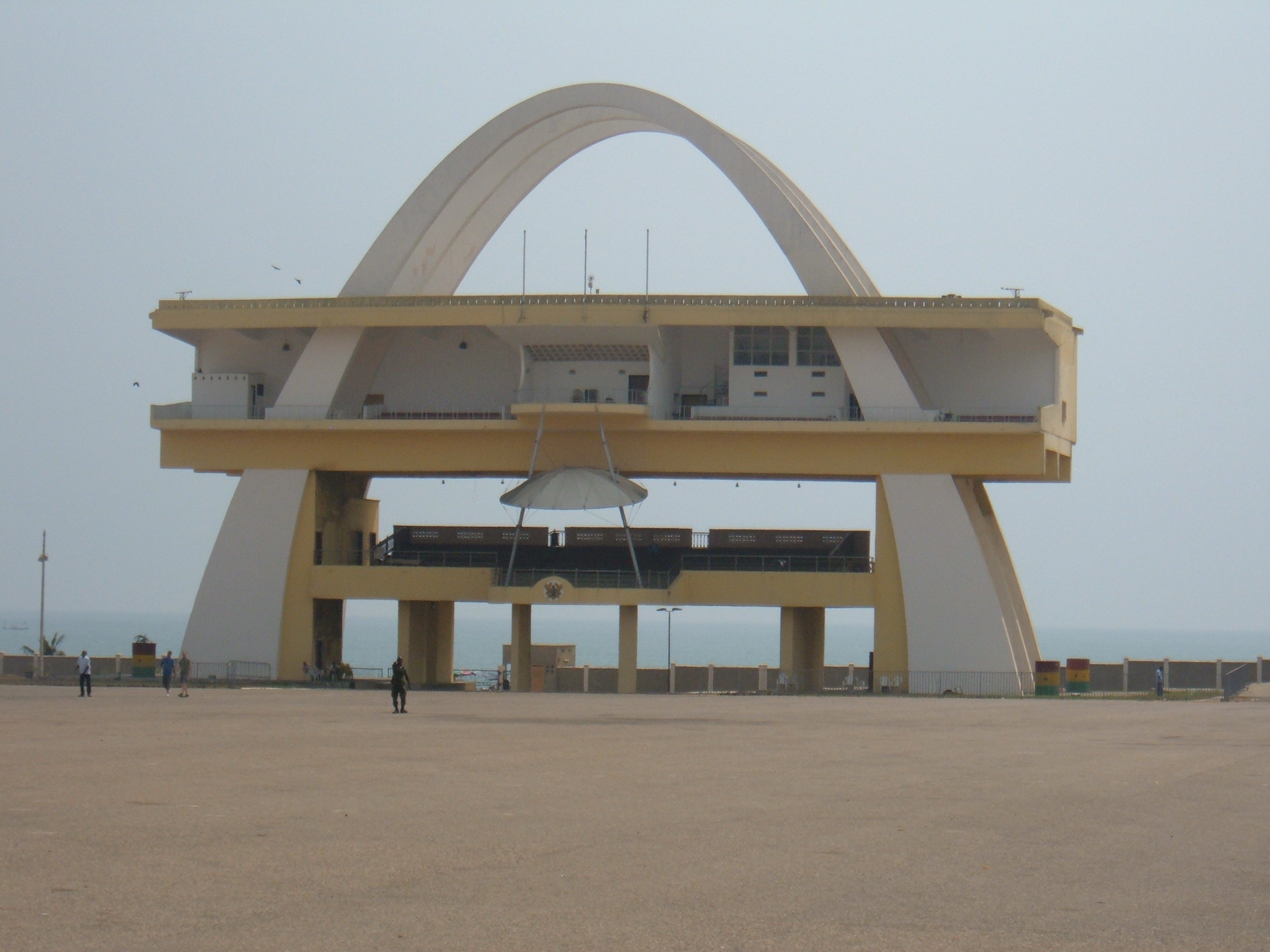 Independence Arch (a part of the Independence Square – represents Ghana’s struggle for independence from Great Britain)


 Leo Adam Biga's My Inside Stories