Archive

Archive for the ‘Sports’ Category

A case of cognitive athletic dissonance

March 17, 2017 1 comment

A case of cognitive athletic dissonance

©by Leo Adam Biga


Like a lot of you out there who root for the athletic programs of all three in-state universities competing at the Division I level, I’m feeling conflicted right now. While it does my heart good to see the Creighton men’s and women’s hoops teams seeded so high in the NCAA Tournament, and this coming off strong performances by the Bluejay men’s soccer and women’s volleyball teams, I’m disappointed that both the University of Nebraska’s men’s and women’s basketball teams suffered historic losing seasons and didn’t stand a chance of making the Big Dance. The fact is that every major Husker men’s team sport – basketball, football and baseball – is in a down cycle. Indeed, among revenue generating sports in Lincoln, only volleyball is a year-in and year-out winner with the national prestige and conference-NCAA titles to show for it.

NU softball is still competitive but it’s been a long time since one of its teams has made a real run in the NCAA Tournament.

On the men’s side, NU used to be able to point to nationally relevant programs across the board as a selling tool to recruits. That just isn’t the case anymore. Baseball has been adrift for a while now and it doesn’t look like Darin Erstad has what it takes to make it a College World Series contender again.


Although it likely was in use long before, I first found the block N as it appears here in the 1970 media guide. If anyone can find it much earlier, please let me know. Huskers_script_2016.gif (9489 bytes)


Logo


Men’s hoops in Lincoln has been a joke for a long time now and it’s no longer funny. The succession of coaches from the early 1980s on has bred instability and NU just can’t seem to get it right in terms of hiring the right person for the job. Many of us suspect the real problem is a lack of institutional will and support to make basketball a priority of excellence. While the men have not been able to get their act together, we could usually count on the women to get things right. Yes, the program did go through some bumps with its own succession of coaches before reaching new heights under Connie Yori but then it all unraveled in seemingly the space of one chaotic season that saw Yori forced out amidst a scandal and player revolt. Where it goes from here under Amy Williams is anybody’s guess but a 7-22 record was not exactly a promising start, though she admittedly stepped into a program riddled with personnel holes and damaged psyches. Williams has the pedigree and track record to resurrect the program but how it collapsed so suddenly is still a shock.

Even the volleyball program. though still a perennial national contender, has lost ground to Creighton’s program. That’s actually a good thing for not only CU but the entire state and for the sport of volleyball in Nebraska. It’s another indicator of just how strong the volleyball culture is here. But I’m not sure NU ever thought CU would catch up in volleyball. The Bluejays have. The two programs are very close talent-wise and coaching-wise. In fact it’s become readily evident the Bluejays possess the potential to overtake the Huskers in the near future, many as soon as this coming season.

Then there’s the Omaha Mavericks. Its linchpin hockey program just lost its most important tie to national credibility with coach Dean Blais retiring. He got the Mavs to the promised land of the Frozen Four. Will whoever his successor ends up being be able to get Omaha back there and make the program the consistent Top 20 contender the university expects? Only time will tell. Since that run to the Frozen Four in 2015, hockey’s taken a decided step back, but the Omaha men’s basketball program has shown serious signs that it could be the real bell-weather program before all is said and done. Omaha came up just short in securing an automatic berth in the NCAA Tournament but still had post-season options available to it only to say no to them, which is strange given the university is desperate for a nationally relevant athletics program.

Ever since Omaha made the near-sighted decision to drop both football and wrestling, which were its two most successful men’s sports, the university has hung all its athletics fortunes on hockey. Now that hockey has seemingly plateaued and lost its legendary leader, basketball becomes the new hope. But basketball is a crowded field nationally speaking and no Maverick sport other than hockey has ever really caught on with Omahans. I would like to think that Omaha Maverick hoops could but I won’t believe it until I see it.

With basketball still struggling to find a following despite its recent rise, I bet university officials are wishing they still had wrestling and football around to balance the scales and give Omaha athletics more opportunities for fan support and national prestige. The way the NU football program has continued to struggle, a kick-ass Omaha gridiron program at the Football Championship Subdivision level would sure be welcome right about now. Omaha could have kept football and potentially thrived as a FCS powerhouse. But NU regents, administrators and boosters didn’t want Omaha to potentially sap Big Red’s fan and recruiting base. Too bad, because the two programs could have found a way to co-exist and even benefit each other.


Steven M. Sipple: Different boss, same message: Win and win big

Shawn Eichorst


Bruce Rasmussen, Creighton athletic director

Bruce Rasmussen


Trev Alberts said as UNO inches closer to the end of the transition to D-I, the Mavericks are ready. (Courtesy Photo UNO Athletics)

Trev Alberts


All of which takes us back to Creighton. Of the three in-state DI universities, CU’s proven to have the best contemporary model for successful, competitive and stable athletics. The Bluejays have built sustainable, winning men’s and women’s programs and they’ve found the right coaches time after time. Other than two major misses in Willis Reed and Rick Johnson, CU men’s basketball has been remarkably well led for more than 50 years. Women’s hoops has enjoyed the same kind of continuity and leadership over the last 35 years. And so on with the school’s other athletic programs. Over a long period of time the one constant has been Bruce Rasmussen, a former very successful coach there whose performance as athletic director has been nothing short of brilliant.

Culture is everything in today’s thinking and CU’s culture borne of its values-based Jesuit legacy and direction is rock solid and unchanging. This small private school has turned out to be the strongest in-state DI athletic department in the 2000s. Rasmussen’s excellent hires and big picture vision, plus the support of university presidents, have given the Bluejays a foundation that NU must envy. Even CU’s drastically upgraded facilities now favorably compare to or exceed NU’s.

Trev Alberts at UNO has proven a stronger administrator as athletic director than anyone on the outside looking in imagined, but I believe, though he’ll never admit it, that he regrets or will regret giving up the two programs that meant the most to the university. Even with that miscue, he’s built a firm foundation going forward. Baxter Arena is a nice addition but there’s no proof yet that area fans will pack it for UNO athletics other than hockey. If hoops doesn’t fly there, then UNO basketball is never going to capture fans the way it deserves to and that’s a shame.

Nebraska, meanwhile, stands on shaky ground. This is the weakest spot NU’s been in, in terms of overall athletic success, since the late 1960s-early 1970s. When other sports struggled then, the Husker athletic department always had its monolithic football program to fall back on, bail it out and keep it afloat. After nearly a generation of below par results, if things don’t dramatically change for the Big Red on the field and soon then NU’s once automatic crutch is in danger of no longer being there. If there’s no elite basketball program to pick up the football slack, NU athletics has nothing left to hang its hat on. Does anyone really have faith that NU athletic director Shawn Eichorst is making the right moves to return NU to where it once was? A lot of what’s come down is beyond his control, but the hires he makes are very much in his control. The four big questions are whether Mike Riley, Darin Erstad, Amy Williams and Tim Miles are the right coaches leading their respective programs. My opinion is that Riley is not. The sample size at NU is still too small to justify letting him go now but his overall career record indicates he won’t get done here what he couldn’t do elsewhere. Erstad has had enough time on the job and I’m afraid his excellence as a player hasn’t transferred to coaching. He’s got to go. Williams will likely prove to be a very good hire as she rebuilds the women’s hoops program. Miles is, like Riley, a guy who’s shown he has a limited ceiling as a coach and I’m afraid he’s been at NU long enough to show he can’t get the Huskers past a certain threshold. He should not have been retained.

All this uncertainity is weakening the Husker brand. Part of any brand is an identity and in college athletics that identity is often set by the head coach. Right now, it’s hard to get behind any of these coaches because, as an old expression goes, there’s no there-there. Winning sure helps but even when NU wasn’t winning big in basketball and baseball, it had some coaches who stood out. Joe Cipriano brought some verve and passion the way Danny Nee did. Cipriano got sick and had to step down as coach. Nee eventually wore out his welcome but he sure made things interesting. Between them was Moe Iba, whose own dour personality and his team’s deliberate style of play turned off many, but the man could coach. Everyone after Nee has been a let down as a coach and as a brand maker. John Sanders turned NU baseball around but he ended up alienating a lot of people. Dave Van Horn took things to a new level before he was inexplicably fired. Mike Anderson continued the surge until he too was let go after only a couple down seasons.

When NU was dominant in football and nationally competitive in basketball and baseball, tickets were hard to come by. Boy, have times changed. Yes, NU still mostly draws well at home, but not like the old days. A few more losing seasons and it will start to be a sorry sight indeed with all the empty seats.

By contrast, Creighton appears to be in great shape to maintain its success in basketball, both men’s and women’s, as well as soccer, volleyball and softball. CU is among the nation’s kings of college hoops attendance-wise and support for its other programs is very healthy. As NU anxiously faces an uncertain future in terms of success and support and as UNO figures out where it fits into the in-state DI picture, CU boldly adds to its winning ways and is the clear-cut winner in this competition for the hearts and minds and pocketbooks of area sports fans.

Who would have ever thought that?

The Chubick Way comes full circle with father-son coaching tandem at Omaha South

March 3, 2017 1 comment

This is a piece I recently wrote about the father-son Nebraska high school boys basketball coaching duo of Bruce Chubick aI nd Bruce Chubick II at Omaha South.. The father is the head coach and the son is his top assistant. The story was published in El Perico newspaper before the team claimed a spot in the state tournament, where the Packers will try to repeat as Class A champions. Not surprisingly, these two men have a similar way of doing things. They’re both hard-nosed, straight-shooters who value work ethic above all else. The dad coached his son in high school. Bruce Jr. grew up around the game from the time he was a toddler and went on to be one of the better outstate prep players in Nebraska history before becoming a heavy contributor to some very good Husker teams. Ever since his dad, the venerable high school coach,  took the job at South, Bruce Jr. has been assisting him. Last year they guided the Packers to the school’s first hoops title in a quarter century. Bruce Sr. said his son is one of the best players he’s ever coached and both father and son say their star player, Aguek Arop, is better than Bruce Jr. was at this same stage. Aguek led South to the title last year but he had an experienced team around him. All that experience graduated and this year he’s had to play with a bunch of varsity newcomers. That’s meant some growing pains. But that young talent has matured and Arop may be playing the best ball of his high school career. Opponents have to be concerned that the Packers have been on a roll since the beginning of February and appear to be peaking at just the right time. Whatever happens, the father and son will approach things the Chubick Way.


The Chubick Way comes full circle with father-son coaching tandem at Omaha South

©by Leo Adam Biga

Originally appeared in El Perico


Things have come full circle for a father-son coaching duo.

Omaha South head basketball coach Bruce Chubick I guided South to its first state Class A hoops title in a quarter century last year with help from assistant Bruce Chubick II. Thirty years ago the father coached the son to Atkinson-West Holt’s Class C-1 state title. Considered among the state best small school players in history, the 6-7 son played four seasons at Nebraska and eight more professionally.

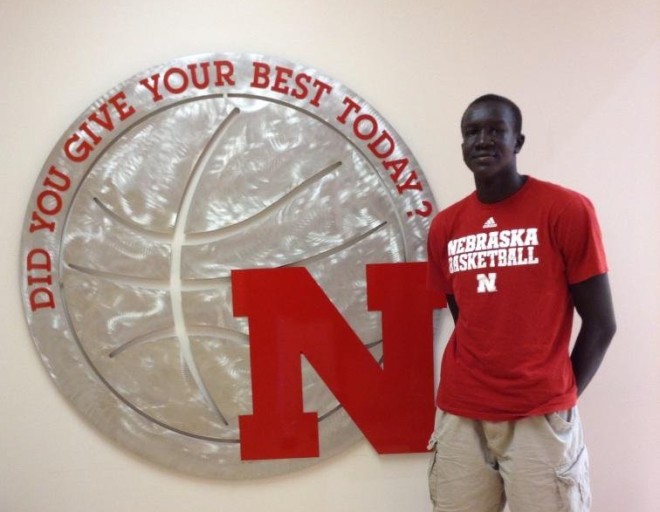
Today, the Chubicks coach 6-6 senior Aguek Arop, who they feel has a huge future. In 40-plus years, Chubick I can count on one hand his elite players. Since 2013 he’s had one beside him on the bench and another performing for him on the court. Just as Bruce Jr. pursued hoops dreams, Arop, a former Nebraska commit, may be off to prep school to eventually pursue Division I and pro careers.

But first they hope to land in Lincoln for another state title run.

“Little” Bruce grew up around hoops. “We kind of knew from the get-go he was special,” his dad said. Before ever suiting up for his father, the two made a pact.  “We agreed when he’s on the court he’s just another player and I’m just another coach, and off the court there was not going to be any critiquing of what went on during practices or games.”

“If anything, he was probably harder on me than he was on the other players,” Chubick II said, “but I knew the reason why – he expected more. I’d been around the game longer. There were some days I didn’t like what he said to me, but I understood the reason.”

Coaching together is special.

“How many people get to say they had a chance to coach with their dad? That’s a great thing. I’ve been approached by a few schools about coaching them and I said, ‘I made my dad a promise that until he’s done, I’m here.’ Philosophically we’re pretty close. He listens but he doesn’t miss a whole lot. With his experience he sees a lot more than I do. He’s got so much knowledge.”


Image result for bruce chubick sr bruce chubick jr omaha south


At 65, Chubick I is the metro’s oldest coach. Even after surviving a heart attack and winning it all he returned this year because he promised his star, Arop, he’d see him through his high school career.

Forget about the senior Chuibck being too old.

“What he’s teaching still works. He’s adapted his style to match the times,” said the son who reminds his excitable dad to ease down.

“There are times when he has to get after these guys and I’m like, ‘Maybe we need to back down about one click because I don’t want to try out my CPR skills right now.’ But he’s fine. Stress is something that concerns me. Hopefully, we assistants help ease some of that. I’ve taken a lot more responsibility.”

Besides, with South an annual contender, it’s no time to retire.

“We’ve kind of built something here and it’s fun to see. He thought about hanging it up a few years ago. He said, ‘If I stop, what do I do?’ and I said, ‘Exactly As long as you feel you’ve got something to give the school and your energy and health is there, why would you stop?’ He’s earned the right to be able to stay in it until he feels like he can’t or doesn’t want to.”

Chubick I confirms “I still like being around the kids.”

Meanwhile, a player they both admire, Arop, reigning Nebraska Player of the Year and sure-fire bet to be 1st team all-state again, has carried more of the load after South graduated a talented senior class.

“He’s been pretty patient with going from one of the best teams in the history of the state to playing with a bunch of inexperienced guys,” Chubick I said. “If I was in his position, I think I would have been in people’s butts. He’s just not that way.”

Despite his star lacking a supporting cast like last season’s 28-1 squad, the head coach said his team’s gelled after a mid-schedule lull.

“They’re coming around. I said at the beginning of the year if we won 14 or 15 and made it to Lincoln that’d be a heckuva year. We’re right there. I think that’s what’s going to happen.”


_omaha south_0105.jpg


If they make it, the Packers will go as far as the shy Arop carries them.

“I think he knows if he doesn’t we’re not going to reach our potential,

Chubick I said.” He has to step up and show leadership. It can’t all come from the bench.”

Chubick II sees Arop doing well post-South. Several colleges are eying him.

“His work ethic’s great. Skills-wise, he’s ahead of where I was, no question. His ceiling is not anywhere close to where he’s at right now.”

Chubick I sees a player “cut out of the same fabric” as his son.

“I don’t know if Aguek’s quite as hardcore, but he’s got that same drive.

His motor runs hot all the time. He plays both ends of the court. He’s a team player. Aguek’s a winner.”

It takes two to know one.

What if Creighton’s hoops destiny team is not the men, but the women?

February 8, 2017 1 comment

What if Creighton’s hoops destiny team is not the men, but the women?

©by Leo Adam Biga


Wouldn’t it be weird if the local college hoops team of destiny this year wasn’t the men’s squad as we all assumed through mid-January, but in fact their female counterparts on campus? Maybe, just maybe, we got this narrative wrong. No worry, there’s still time to jump on the bandwagon and rewrite history. Sound crazy? Not so fast. The Bluejay men are not the same since losing Maurice Watson and even though the Jays are still a quaity team and even still control their own fate, each loss from here on out during the remainder of the regular season and on through the Big East tournament will only further hurt their standing in the eyes of the national pollsters and NCAA selection committee. Unless CU can play very strong the rest of the way, its once realistic if not probable shot at a No. 2 seeding will be long gone and the Jays could very well end up in their customary No. 8 or 9 spot. The once 17-0 Jays have come back down to earth and are not 3-4 in their last seven games. More importantly. they are now exceedingly fragile bunch mentally speaking. Meanwhile, the women’s team, which traditionally gets off to slow starts, once again struggled mightly early in the year, opening at 1-3. They entered the 2016-2017 campaign with a deep, talented and experienced roster, but injuries hurt them early on. Since getting healthier and adjusting to the loss of one of their own top players, they have gelled to go 16-3. The team gets steady contributions from nine, even ten players. At 17-6 and 11-2 the Lady Jays sit just outside the Top 25 and are poised to enter the Big East Tournament in great shape and further enhance their chances for a decent NCAA seed that could help them advance to the second weekend of March Madness. Steady at the helm is veteran head coach Jim Flanery, who has established himself as one of the state’s better college hoops coaches, men’s or women’s side, in the last quarter century. He seems to get the most ouf of his players year in and year out.


Bluejays Bytes Podcast: Episode 15, Sponsored by Lawlor’s Custom Sportswear


The great thing about the CU women’s program is that it’s heavily built on Midwest student-athletes. Almost all the players come from within an 8-hour driving radius. There are three Nebraska kids on the roster and the rest come from Kansas, Iowa, Minnesota and Illinois. The lone outlier is from Oklahoma. The Jays doesn’t do any one thing particularly well but they do most everything pretty well and their balance and depth is hard for other teams to match even though CU is often overmatched athletically at certain spots. Being fundamentally sound and hard-nosed can make up for a lot of deficiencies, especially against teams that are about even in terms of overall talent. I’m not saying the Hilltop women’s team will go farther than the men’s team, but they do have the advantage of being on a roll that is weeks long in process and showing no signs of slowing down whereas the guys are still in herky jerk mode trying to adapt to the loss of their indisputable leader on and off the court. Even though his career was prematurely cut short and he only played one and a half seasons in a CU uniform, Watson will go down as one of the school’s all-time top talents in the same category as Silas, Portman, Harmon, Apke, Johnson, McKenna, Benjamin, Gallagher, Harstad, Buford, Sears, Walker, Korver, Tolliver, Funk, McDermott. The same is true of Justin Patton, who may be off to the NBA as soon as next year, and Khryi Thomas, who before all is said and done may be the best of the lot. Marcus Foster has the potential to be in this conversation, too, but he needs to be better than he has been since Watson went out or else he will be remembered as no more than a pretty good scorer and super athlete but certainly not a great or even a difference-maker of a player. I mention all this because by contrast the Creighton women don’t have any one player who can be considered a certifiable star compared to all-time program greats like Halligan, Gradoville, Yori, Nenman, Janis. They are all about team and the whole being greater than the parts. Audrey Faber, Marissa Janning, Brianna Rollerson, Sydney Lamberty. Jaylyn Agnew. Laura Works and Baily Norby are the interchangable heart and soul cogs of the team and have had to be since M.C. McGrory was lost for the season after only nine games. Because the Lady Jays lost one of their best players so early compared to the men losing their best player mid-season the women have had the advantage of more time adjusting to her absence and they’ve compensated well enough that they’re in contention for the Big East title and a nice NCAA tourney seeding.


Creighton locks down Villanova in the second half to remain unbeaten at D.J. Sokol Arena


To be fair, the women losing McGrory was not nearly the blow the men endured when Watson went down, but what the Lady Jays have done since is not only comendable but darn impressive. And coach Jim Flanery deserves much credit for the job he’s done in taking over for school legend Connie Yori and turning out competitive teams year after year with less than eye-popping talent. What he’s done compares favorably with what CU volleyball coach Kirsten Bernthal Booth – reigning National Coach of the Year – has done. Bernthal Booth led CU to the Elite Eight this past season and I would love to see Flanery get his hoops program there one of these years. It would be a long shot, for sure, but, hey, it was a longshot for the volleyball team to get there, too. But they did it. Maybe this is the year he makes it happen. Wouldn’t it be amazing if the women’s basketball team does it the same season the volleyball team did? Why stop there? How about both the men’s and women’s teams advancing to the Sweet Sixteen? Neither program has ever done it. Why not this year? Why not do it when both team

Marlin Briscoe: Still making history

December 10, 2016 1 comment


Marlin Briscoe: Still making history

Now that he’s in the College Football Hall of Fame, will the Pro Football Hall of Fame be next?

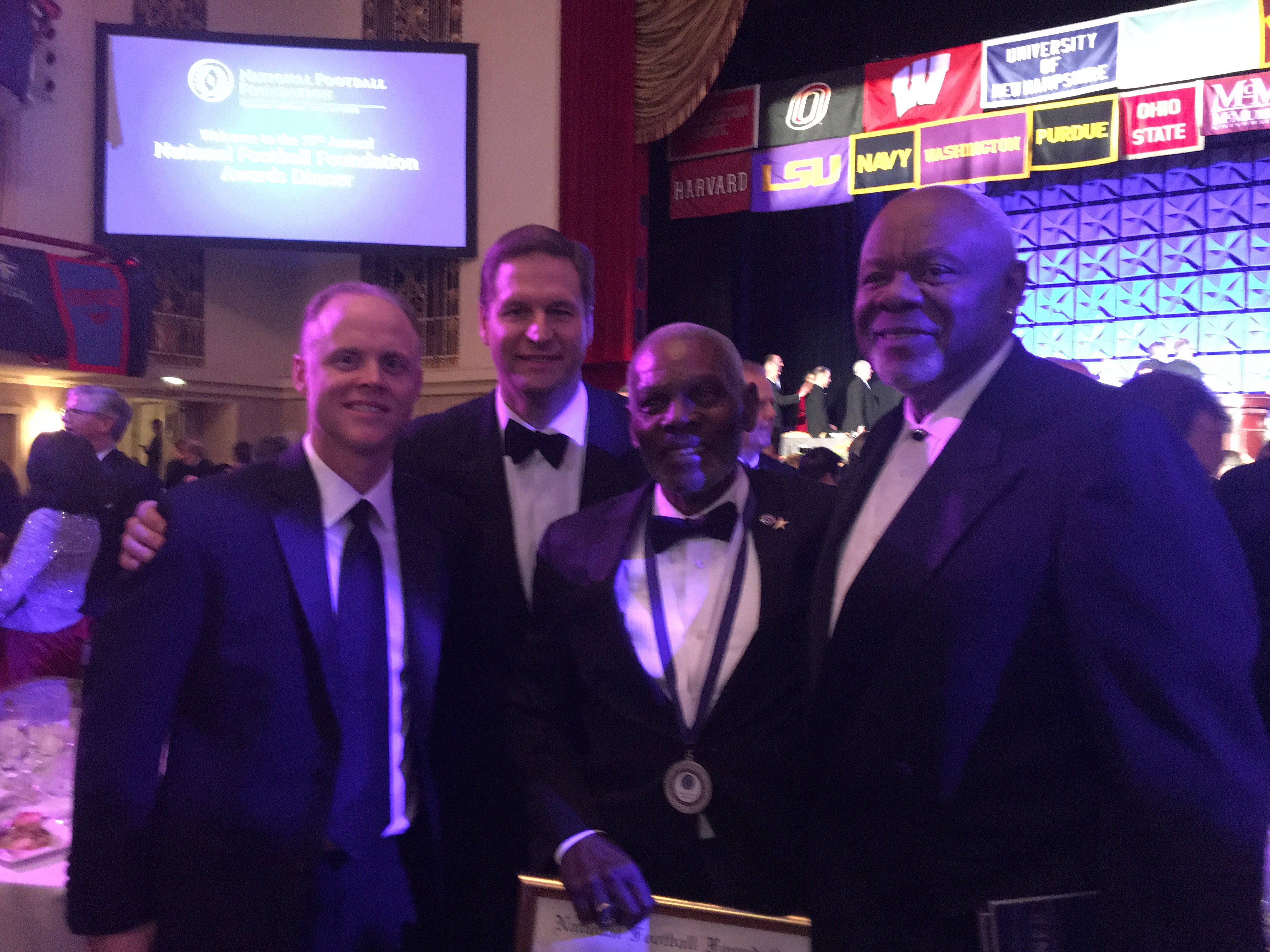
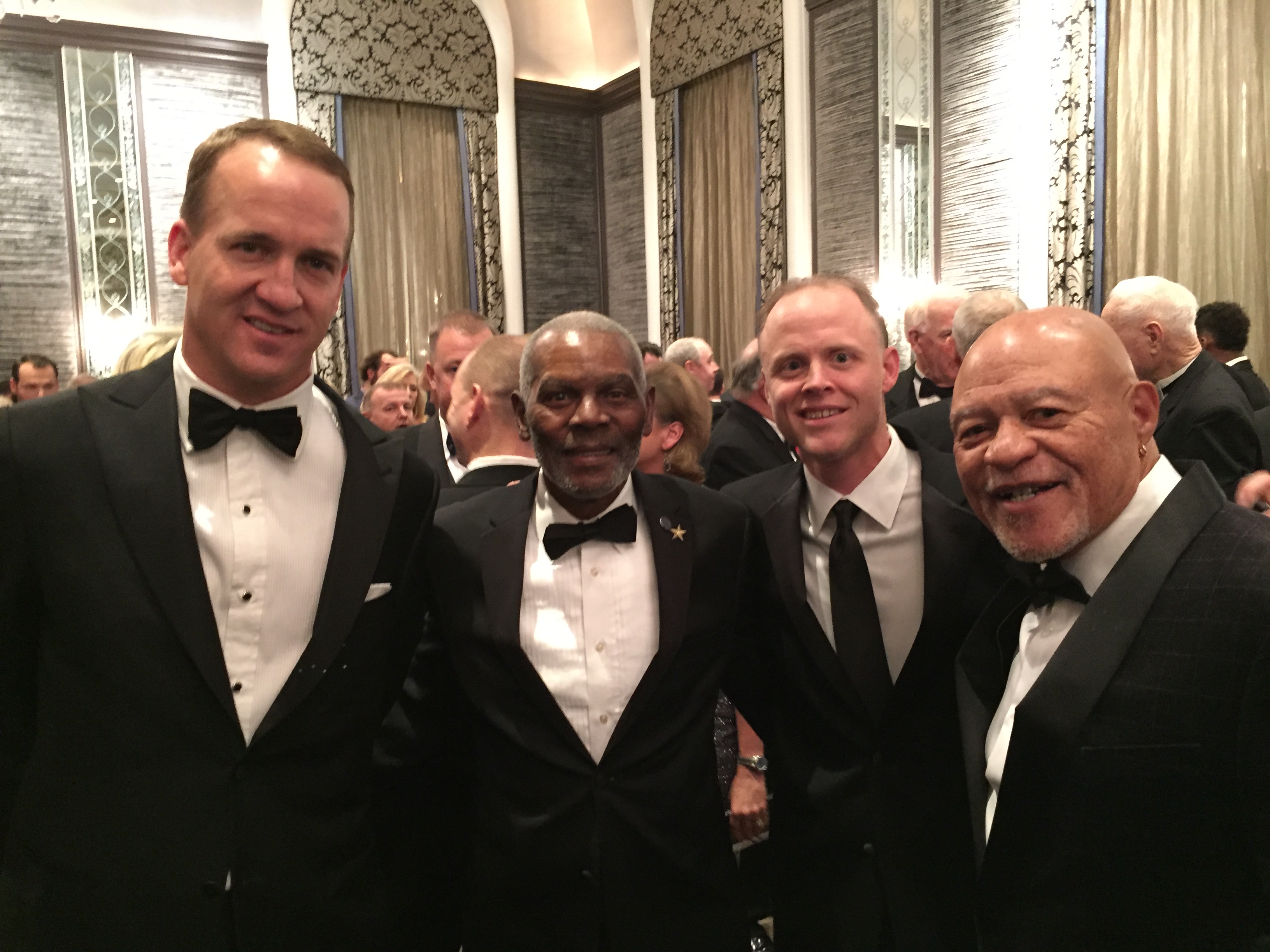
Marlin Briscoe was just inducted into the College Football Hall of Fame on Tuesday in New York City and a strong contingent of Omahans made the trek to honor one of their own. Here is a tribute video of Marlin that UNO Athletics created from the two-day ceremony earlier this fall that paid homage to this sports legend who, pound for pound, might have been the greatest athlete to ever come out of Nebraska.

Now that he’s in the College Football Hall of Fame, will the Pro Football Hall of Fame be next? I think it will happen sooner rather than later now. Certainly, all the attention that’s come his way the last couple decades helps and with the movie of his life in the works, it should be plenty to put him over the top with the Veterans Committee. What he did by making it in the NFL as a defensive back, a quarterback, a wide receiver and a holder, and playing nine productive seasons in the league, is more than enough to get him in. The fact that he was the first black starting QB should seal the deal. But in my opinion, his transitioning from a very good quarterback who nearly won Rookie of the Year honors to being a Pro-Bowl caliber wide receiver is enough all by itself to get him in.

Link here to an appreciatIon I wrote about Marlin on the occasion of that UNO recognition–
https://leoadambiga.com/…/marlin-briscoe-finally-getting-h…/

You can also link to this profile I wrote about Marlin as part of my Omaha Black Sports Legends series, Out to Win – The Roots of Greatness–
https://leoadambiga.com/…/prodigal-son-marlin-briscoe-take…/

And you can link to the entire Out to Win collection of stories at–
https://leoadambiga.com/out-to-win-the-roots-of-greatness-…/

Look for my coming Omaha Magazine feature on Marlin. And look for updates on the movie to be made about his remarkable life, “The Magician” is due to start shooting in the spring.

And look for a new post making the case for Marlin as the best athlete, pound for pound, that Nebraska’s ever produced.

Former Omaha University quarterback Marlin Briscoe is among the class of 2016 inducted into the College Football Hall of Fame. During…
YOUTUBE.COM
Some photos courtesy UNO of Marlin and Friends at the College Football Hall of Fame event:

img_3256

img_3247

img_3222

Terence “Bud” Crawford is Nebraska’s most impactful athlete of all-time

December 9, 2016 2 comments


terence crawford vs Viktor Postol

Mikey Williams/Top Rank


Terence “Bud” Crawford is Nebraska’s most impactful athlete of all-time

©by Leo Adam Biga


Has there ever been a native Nebraska athlete who has made as big an impact as Terence “Bud’ Crawford? I submit there has not. In fact, it’s not even close when you consider the concentrated impact he’s made in a short time.

Mind you, I’m not suggesting he’s the best athlete to ever come out of here, but the one who’s had the greatest affect.

These things really can’t be measured because much of what I refer to by impact is intangible stuff like motivation, inspiration, popularity, hopes and dreams. However you look at it though, you have to concede that Crawford has surely given a lot of youth a new or renewed sense of possibilities because of how far he’s come from humble beginnings to being on top of the professional boxing world. That’s not to mention the sheer entertainment he’s provided by his winning performances in the ring, including three sold-out fights at his hometown CenturyLink Center, where there’s about to be a fourth sell-out for his championship fight this weekend against John Molina Jr. He has a following unlike anything we’ve seen around here before for a native born athlete.

Then there’s the pride he’s engendered in his huge hometown fan base who love his success and how he’s put Omaha on the map as a boxing city that matters for really the first time ever nationally, except for the time Ron Stander fought Joe Frazier in that heavyweight championship bout at the now reduced to rubble Civic Auditorium. But that was 44 years ago and it was a one-off event – there’d never been a title fight here before then and there hadn’t been one since then until Bud emerged as a title holder a few years ago. Thanks to Bud, it’s becoming a regular thing. This won’t last forever, but it’s a wonderful ride for him, for the city, for the sport and for anyone who needs affirmation that dreams do come true with enough talent and work.

Omaha also hosted the national Golden Gloves a couple of times, once notably when Bud lost a close, controversial decision in what turned out to be his final amateur bout. But by the time the city held those tournaments the Gloves were not what they used to be in a sport that had fallen far off most people’s radar.

Bud’s emergence as a world-class, perhaps one day hall of fame worthy fighter and his hugely embraced title defenses on his home turf, broadcast on HBO and pay per view no less, have taken boxing from irrelevance here to renewed interest. He has made boxing big time again, at least for his fights, and he’s become a local sports hero every bit as big or bigger than legends Bob Gibson, Bob Boozer, Gale Sayers, Marlin Briscoe, Johnny Rodgers, Mike McGee, Ahman Green and Eric Crouch ever were at their respective peaks. I mean, he’s even gotten a coterie of movers and shakers to endorse and advise him. Plus, he’s been feted in every way a sports figure can be – named athlete of the year, inducted in local athletic halls of fame, throwing out the first pitch at ballgames, using his name and fame to raise funds, being featured in big print spreads and in television documentaries. And on and on…

He’s big news and his fights mean big gates and presumably big business for downtown, Old Market, midtown and North Omaha bars and restaurants

Then there’s the fact that Bud has remained thoroughly rooted in his community. His family still lives in The Hood, an environment that he’s never really left and that’s never really left him, and his B&B Boxing Academy is right there within a stone’s throw of where he grew up and where he still trains part of the time.

As I have posted before, in my opinion the single greatest indicator of his impact is how he has dominated his sport over a few years time in a manner that no other Nebraska athlete has since Bob Gibson’s dominance from the mid-1960s through the early 1970s as a pitcher with the St. Louis Cardinals. Bud has a ways to go to match that extended period of mastery but he appears fully capable of doing it.

I have been privileged to help document some of Bud’s unfolding story and rise to greatness. You can find my collection of stories about him, including a trip to Africa I made with him, at the following link–

https://leoadambiga.com/?s=terence+crawford

Let me also reiterate a point I’ve made in previous posts that the trajectory of Bud’s career and the impact he’s made is similar in many ways to another native Omahan who’s risen to the top of his profession – filmmaker Alexander Payne. They are from the same city but from two totally different worlds and generations and yet their single-minded pursuit of their passion has gotten them to where they are and in that respect they both model the benefits of hard work, intense study, laser sharp focus and ultimate commitment to craft. Their rise to the top didn’t happen overnight but only with deliberate, intentional steps with their eyes always fixed firmly on the prize,

The same parallels can be seen in another Omahan, Warren Buffett, who has in fact jumped on the Crawford bandwagon because he recognizes a fellow winner when he sees one.

Win or lose this weekend, Bud’s story will continue to be one worth following because his legacy will only grow with time, not diminish. That’s how special what he’s done is and he has a whole lot of fighting left in him to ever more burnish his record and impact. But even if he were to quit fighting after the Molina match, I believe he’s already become the most impactful Nebraska athlete of all time. As someone who has covered Alexander Payne for 20 years, I believe the best is yet to come from the Oscar-winning filmmaker, and as someone who’s covered Bud for five years, I believe the best is yet to come from the world championship fighter.  Bring it on.


Diversity finally comes to the NU volleyball program

November 14, 2016 1 comment

Briana Holman
Photo Courtesy Stephanie Carpenter/Nebraska Communications


Diversity finally comes to the NU volleyball program

©by Leo Adam Biga
Kudos to the Nebraska volleyball program for finally joining the 21st century by building a diverse roster of student-athletes that includes African-Americans. Better late than never. For decades the Husker volleyball program has been elite but its rosters have been lily-white, with an occasional Asian-American player, but you would have to look long and hard to find a black girl on any of those teams going back to the early 2000s and even mid-to-late 1990s. That omission always seemed strange and awkward to me but became particulalry glaring the last decade or so as more and more of NU’s peer conference programs, going back to the Big 12 and now in the Big 10, as well as peer national programs featured rosters with one or two or three or more African-American players. I could never understand how a perennial NCAA title contending program that recruits nationally could find itself year after year devoid of even one black player. I mean, what are the odds of that? What if that happened in basketball or softball? Wouldn’t that be cause for concern or called out as something in need of redress or examination? But to my surprise I never heard or saw the situation broached by NU coaches, staff, players or by media covering the program or by fans supporting it. I am quite sure the situation would not have been tolerated or overlooked or pooh-poohed in a sport like basketball. So why was it different with the volleyball program? I expect because the program was so successful in continuing to vie for and win championships and to produce All-Americans and Olympians. Of course, there was a period of time where NU slipped competitively, not by much mind you, but fell behind its elite sister programs and experienced a title drought, clearly falling behind some programs that coincidentially or not did feature black players here and there. Then, out of the blue, LSU All American Briana Holman transferred to Nebraska, though she had to sit out a season, the very year NU returned to championship form. She was the first black player to my knowledge to play for the Huskers in at least 15 years. That same year a second African-American, Tiani Reeves, from Gothenburg, Neb. of all places, joined the team and sat out as a redshirt. As the Huskers look to defend their national title this year Holman has become, as expected, a key cog as a middle blocker and attacker. Reeves has seen only limited action but she possesses great promise for the future. Both players will take leadership spots next season as NU loses the dynamic and dominating Rolfzen twins. And now comes word that of NU’s 5 new signees for the 2017 recruitment class 2 are student-athletes of color and are in fact African-American: Jazz Sweet from Kansas and Chesney McClellan from Tennessee. (See the link below for info on these girls and the other signees).


Tiani Reeves 2243654

Tiani Reeves


Jazz Sweet
Jazz Sweet


This is a great if long overdue development for the program and for black girls playing volleyball in Nebraska and the greater Midwest. More and more African-Americans are playing the sport at a high level in club and high school programs and volleyball affords a great avenue and opportuity for college scholarships. The Omaha Starlings volleyball program has been a platform for several area girls, several black girls among them, to earn scholarships at mid-major colleges. Creighton has been ahead of this trend locally and has featured a number of black players the past few years, including a girl from Nebraska and another from Iowa. I can’t speak to why it took so long for black girls to find their way into the Husker program but I am glad it’s finally happened and has seemingly become a thing. I’m sure there wasn’t any intentional bias happening to not recruit black players but the perception from the outside looking in sort of made it seem that way when season after season the complexion of the team never changed to include a black face. That was a bad look for Nebraska. I’m just glad that the Huskers are now among the many teams embodying diversity and not just giving it lip service. You go, Briana and Tiani. You go girls. And can’t wait for Jazz and Cheesney to make a quartet where there used to be none.

Here’s the link to the story about the NU recruiting class that includes Jazz and Cheesney:
http://www.huskers.com/ViewArticle.dbml?DB_OEM_ID=100&ATCLID=211284120

Thoughts on recent gathering of Omaha Black Sports Legends

September 29, 2016 1 comment


Thoughts on recent gathering of Omaha Black Sports Legends 

It is unlikely there will be another communion of Omaha Black Sports Legends like the one that happened on September 22 at Baxter Arena in Omaha. That’s because in a single room there were Omaha native greats of a certain age whose achievements in football, basketball and baseball saw them reach the pinnacles of their sports.

Just consider who was present:

Bob Gibson – Baseball Hall of Fame inductee, CY Young Award-winner, two-time World Series MVP and multiple All-Star with the St. Louis Cardinals

Roger Sayers – Elite sprinter and dynamic football player at the then-University of Omaha set school records in each sport

Marlin Briscoe – College Football Hall of Fame inductee, Small College All-American at Omaha University, NFL’s first black starting quarterback and member of two Super Bowl-winning teams

Ron Boone – Pro basketball “iron man” who led Utah to an ABA  title

Johnny Rodgers – College Football Hall of Fame inductee, Heisman Trophy Winner and member of two national championship teams at Nebraska

Who was not there:

Gale Sayers – College and Pro Football Hall of Fame inductee, All-American at Nebraska and All-Pro with the Chicago Bears

Mike McGee – All-American at Michigan and member of NBA title team with the Los Angeles Lakers

Don Benning – If not for illness that finds him living in a memory care facility, Benning,  the first African-American head coach at a predominantly white university, would have been there. Benning began the wrestling dynasty at UNO, where he was a mentor to many.

Bob Boozer – The late Boozer, who won both Olympic gold and an NBA title, would have fit right in with his fellow legends; as would have the late Marion Hudson, who not only integrated Dana College but set football and track and field records there that still stood six decades later.

And lest we forget, the late Fred Hare, the Omaha Technical High and University of Nebraska great, would have been right at home among his peers.


The fact that so many deserving figures were not there due to scheduling conflict, illness or death underscores the fact that these legends are leaving us and will continue leaving us as time marches on. Gibson, Sayers, Briscoe  Boone and Rodgers look great for their ages, but they are 80, 73, 70, 71 and 65, respectively. I mean, God grant them many more years but the fact is even these legends will eventually pass on to meet their eternal just reward. Yes, as unthinkable as it is, they will one day all be gone, too.

So, kudos to the committee that organized the An Evening with the Magician event for bringing all these gentlemen together for what could very well be the last time. Without this fitting tribute to one of their own, Marlin Briscoe, happening when it did it could have proved too late if left to some indeterminate time in the future.

That Omaha native film, TV, stage actor John Beasley served on the committee that made it happen was apt since he and Briscoe were teammates at then-Omaha U. and he is producing a major motion picture of Marlin’s life called The Magician.

What an experience it was to be in the presence of these guys who made history in their respective sports. All know and respect each other. Some grew up together. Some tested their abilities against each other. All learned lessons in the tight-knit  inner communities they grew up in that, as Briscoe said in his remarks that night, prepared them for the rigors of life. Their personal stories and life experiences have much to teach us. It was great that upwards of 200 Omaha Public Schools students were on hand to witness much of the evening. This is important local history they were exposed to.

More than a decade ago I had the distinct pleasure of interviewing these historic figures (minus McGee) and others for a series I wrote called Out to Win: The Roots of Greatness – Omaha’s Black Sports Legends. I personally look forward to catching up with the legends still living for a book I intend writing about their shared Omaha background and athletic success at the highest levels of their sports.

You can check out my series at–

OUT TO WIN – THE ROOTS OF GREATNESS: OMAHA’S BLACK SPORTS LEGENDS

Will the time come when more contemporary Omaha Black Sports Legends have the occasion to gather like their predecessors did Sept. 22? Will John C. Johnson, Larry Station, Randy Brooks, Kerry Trotter, Andre Woolridge, Ron Kellogg, Cedric Hunter, Keith Jones, Calvin Jones, Ahman Green, the Wrestling Olivers, Terence Crawford, Kenzo Cotton, and others find a reason to come together? Will they turn out to celebrate one of their own or to honor their shared roots? I don’t know. But here’s wishing they will – because they should. Not only for themselves, but for the community.

And what about the women? Maurtice Ivy, Mallery Ivy, Jessica Haynes, Angee Henry, Peaches James, Reshea Bristol, LaQue Moen-Davis, Brianna McGhee, Chloe Akin-Otiko and many more, have distinguished themselves through athletics. They deserve their due, too.

Thanks to Ernie Britt for being the driving force behind the Nebraska Black Sports Hall of Fame that does indeed recognize these figures and provide a forum for bringing them together.

Here’s hoping these celebrations continue happening. I would recommend that whenever possible sponsors be found to make these events free and open to the public so that more segments of the community can share in them. And wherever possible, students should be invited to these events. I also advocate that the stories of these and other high achieving African-Americans from Omaha and greater Nebraska be part of an ongoing curriculum in the Omaha Public Schools. Let’s not wait until these figures are gone, Tell these stories while these figures are still alive and cthey an visit classrooms and speak before school assemblies and be the suhject of programs like Making Invisible Histories Visible.

Storybook hoops dream turns cautionary tale for Omaha South star Aguek Arop

September 18, 2016 2 comments

As Division I collegiate athletics have become an ever larger big business segment for insitutions of higher learning, the recruitment of promising young student-athletes has gotten out of hand. Recruitment starts ever earlier and proceeds with an intensity far out of proportion to the reality that finds very few of these kids ever making much of a mark, athletically speaking, in college, much less in the professional ranks. Often times lip service is given to their academics. This pipedream on both ends of the transaction makes kids over-hungry to be courted and colleges over-zealous to secure their pledges and services. When money is at the root of things, as it is here, bad consequences are more apt to occur, including rash, cruel decisions based on cold calculations, not on the best interests of all involved. A cautionary tale of what can happen is the story of Aguek Arop, an Omaha South High hoops phenom who accepted a University of Nebraska scholarship offer tended to him when he was barely 15. After recently learning NU was no longer excited to have him, he’s reopened his recruitment just a few months before the start of his senior season at South. As my El Perico story reports, the way things played out left South Coach Bruce Chubick none too happy. He feels NU did his young star wrong and he’s not mincing words about it. He also feels Arop will wind up in a better situation, as there are several Division I schools now recruiting him, and will use the motivation of this rejection to have a great senior year. Arop and his teammates are defending the state Class A title his Packers won last year.


Storybook hoops dream turns cautionary tale for Omaha South star Aguek Arop

©by Leo Adam Biga

Originally appeared in El Perico


Aguek Arop


Aguek Arop

ERIC GREGORY/Journal Star


In 2014 Omaha South High’s Aguek Arop realized a hoops dream when, at 15, he accepted an athletic scholarship offer from Nebraska. Now this once storybook wedding between promising player and program has turned cautionary tale.

His Husker commitment made him the latest Omaha Sudanese athlete to make waves in local hoops. But he recently re-opened his recruitment after NU coach Tim Miles, who can’t comment per NCAA rules, made the offer conditional. In August, Miles, reportedly asked Arop, now 17 and a senior who led South to the Class A state title last year, to attend a post-graduate prep school for developmental purposes.

Observers say it’s an odd change of heart about a heralded player from a program fresh off two straight losing seasons and lacking any in-state scholarship players. Miles surprised many when he offered Arop so early but shocked more with this twist.

South coach Bruce Chubick Sr. said, “It’s an unknown quantity down there. I think they’re in panic mode.”

Upon getting the news Arop, reigning Gatorade Player of the Year in Nebraska, said, “I think my mind just kind of went blank. I didn’t really know what to think, I’ve now moved on. I didn’t take it personal. I looked at it as business.”

Chubick knows his star felt a deep sting.

“Nobody likes to be rejected. He was hurt and I was hurt. He’s like one of my kids and when your kids hurt, you hurt. I knew it was a tough thing for him. He loves Nebraska. He stayed true to his word. I’m proud of him for that.”

As for questions about Arop’s readiness, Chubick feels he’s ahead of two other Division I players he coached at this same point in their careers: his son Bruce Chubick and John Turek, both of whom starred at NU and professionally overseas. He said Arop has things you can’t measure in terms of “heart and determination,” not to mention a 6-foot-6 frame, 7-foot-plus wing span, high motor and huge athleticism.

“That kind of gets lost in the shuffle.”

Chubick doesn’t like the way NU handled the situation.

“I kind of felt in the spring they were getting cold feet about the fact he hadn’t grown, that he’d got hurt – missing his sophomore season. I mean, there were some indicators we kind of picked up on,” said Chubick.

“If they would have just set Aguek down and told him, nobody would have been happy but at least they would have been up front. You see, he played in all these tournaments all over the country and played really well, but all the college coaches knew he was committed to Nebraska, so they left him alone. So, he pretty much went through the summer circuit and then they (NU) pulled the plug after the fact, when it was too late to be recruited by these schools.”


Dgjsz9gdemecvuqaf2hl

2017 Omaha South G/F Aguek Arop will move on from Nebraska and has reopened his recruitment.


Chubick also didn’t appreciate Miles passing the buck.

“They wanted me to break it to him,” Chubick said, “and I wasn’t real fond of that because it’s not really my place. I mean, he held true to his commitment.”

Though NU technically didn’t de-commit, Chubick said their loss of interest got couched “under the ruse of going to a prep school, which to me meant they didn’t have a plan for him.” He said, “If Nebraska would have said we want you to redshirt that first year, that would have been the indicator they really had a plan.” In his opinion no redshirt option was broached because NU’s “loaded at the 3 spot, which is probably what he would have to play.” He noted, “They have a freshman and a transfer coming in who play Aguek’s position. The math doesn’t add up.” Meaning, he said, even if Arop went the prep school route, “they wouldn’t have a scholarship for that position and they’re all about numbers down there, which I think is a mistake.”

Chubick said, “I’ve told Aguek, things happen for a reason and maybe this is a good thing. A couple schools that have expressed interest in him were in the NCAA tournament.”

He expects Arop to play his final South season proving a point.

“Oh, I think he’s going to be hungry as all get out. I want him to be pissed and have the I’m-going-to-show-you attitude, and I think he’s got that. ”

Arop simply said, “I can’t wait for the season to start.” He appreciates his coach having his back. “He’s always looking out for us. He doesn’t let anyone try to take advantage of us.”

As for where he’ll play in college, he said he’ll choose “the best fit for me” and one “somewhat close to home.”

South opens its season in December.

The Silo Crusher: Or How I Learned to Stop Worrying and Love Trev Alberts

August 27, 2016 3 comments

Full disclosure: When the University of Nebraska at Omaha unceremoniously dropped the school’s highly successful football and wrestling programs five years ago, I took out my disappointment and frustration in some posts that might have read like rants. The posts were not written as a journalist trying to be objective but as a UNO grad, former UNO sports information staffer and lifelong Omaha resident who had grown close to both programs through my work as a journalist. My posts were my personal opinion and presented as such. The only time I wrote anything about those events in my role as a journalist was in a New Horizons cover story I did on Mike Denney in the immediate aftermath of it all. My siding with Denney definitely bled over into the story and I make no apologies for that because it was a passionate and honest response to a traumatic severing. My sympathies were entirely with Denney and I let him have his say, though he was actually quite tame in his comments, even though he was deeply hurt by what happened. I do regret not getting athletic director Trev Alberts and chancellor John Christensen to comment for the story, though I think I tried. If I didn’t, well then that’s my bad. As fate would have it, I was recently assigned to do a piece on the state of UNO athletics five years after those events and this time around the assignment called for me to tell the story from UNO’s point of view, which meant interviewing Alberts and Christensen. I must say that after talking to those two men, particularly Alberts, I have a mcuh better appreciation and understanding of why the deicison to eliminate the two sports was made and just how wrenching it was for them to make. I believe the rationale they lay out today is more telling than what they communicated then, but that may be a function of my not wanting to hear what they said before. I am sharing here the new story that I did for Omaha Magazine  (http://omahamagazine.com/). It’s featured in the Sept/Oct 2016 issue.


TrevAlberts1

The Silo Crusher

Or How I Learned to Stop Worrying and Love Trev Alberts

August 26, 2016
©Photography by Bill Sitzmann
Illustration by Matt Wieczorek
Appearing in the Sept/Oct 2016 issue of Omaha Magazine (http://omahamagazine.com/)

The story of athletics at the University of Nebraska at Omaha has fluctuated from wild success to heartbreak (and back). All-Americans, post-season runs, and national title traditions collided with mismanagement and sparse spectator attendance.

Then a fresh Maverick joined the fray. Trev Alberts—one of the most decorated defensive players in the history of Huskers football and a former ESPN anchor—took the mantle of UNO’s athletic director in April of 2009.

Tensions bubbled behind the scenes. Chronic budget shortfalls clashed with fractious booster relations. Although new to his administrative role, Alberts knew enough about balance sheets and group dynamics to recognize systemic disarray and dysfunction. “We were in trouble and we needed to find some solutions,” he says.

The current academic year marks five years since Alberts dismantled UNO’s beloved wrestling and football programs. Alberts looks back on his crucial decisions without regrets. But the “solutions” didn’t come easily. In 2011, the former football star had to cut the sport that defined his own athletic career.

He saw that the financial equation for UNO’s splintered athletic programs no longer worked. A struggling Division I hockey program could not prop up the remaining Division II programs. Even with a hefty university subsidy, low athletic revenue painted a bleak picture amidst rising costs.

UNO’s bold response was to transition its entire athletic program to Division I by joining the Summit League in 2011. Because the conference does not accommodate wrestling or football, those two sports had to go.

News broke with awkward timing. Maverick wrestlers had just clinched the Division II national championship for the third straight year. A few hours after their victory, UNO Athletics began reaching out to notify celebratory wrestling coaches of the grim news.

Public rancor ensued. Coaches and student-athletes of the winning programs were left adrift. History, however, has proven the difficult decisions were healthy for the university and its athletics department.

Alberts found a key ally in chancellor John Christensen. The man who had initially recruited Alberts promoted him to vice chancellor in 2014, thus giving athletics a seat at UNO’s executive leadership table. “There needs to be absolute integration and now we have internal partnership, collaboration,” says Christensen.

Five years have passed. Athletics programs are stable. Sport teams no longer operate in silos. Alberts dismantled the barriers to build a strong overall athletic department: “When I got here, it appeared we had 16 different athletic departments,” he says. “There was no leadership. We hated campus. The mindset was the university leadership were out to get us, didn’t support us, didn’t understand us. The athletic department would blame the university; the university would blame the athletic department. 

“Strategically, my job was to get on the same page as part of the university team. I asked John Christensen to define his goals. He said community engagement, academic excellence, and (being) student-centered. I had to explain to staff everything we do is going to try to help the university advance its goals and every decision we make, if it isn’t student-centered and doesn’t support academic excellence and community engagement, we’re going to ask ourselves why are we doing that.”

Since then, the athletic department has made major strides. The hockey team made the 2015 Frozen Four, men’s basketball contended for the 2016 Summit title and saw a 65 percent attendance increase, and other sports have similarly fared well. With added academic support, the cumulative student-athlete grade point average of 3.4 is among the nation’s highest.

Alberts says that cutting the beloved football and wrestling programs meant “a really trying time, but galvanized the department and the university.” He continues,“We came together as a university. This was an institutional decision. It wasn’t John and I in a corner room deciding. We had a lot of people involved.”

Even with unanimous University Board of Regents approval for the athletic department shake-up, emotions ran high among constituents opposed to the cuts. Despite pleas to save wrestling and football, Alberts says, “The data was going to drive the decision-making. We weren’t going to manage the outcome of a good process. We moved to Division I because the market had an expectation about what the experience would be like, and we weren’t able to meet that expectation.” Maintaining the programs, especially football, would have required larger expenditures at the next level and exacerbated the fiscal mess.

Everything was on the table during deliberations: “We looked at trying to stay at Division II and regaining profitability in hockey, we looked at Division III, we looked at having no athletics, and then we looked at Division I. The conclusion was Division I would bring us an opportunity to get at more self-generated revenue through NCAA distributions.”

It was all about athletics better reflecting the “premiere urban metropolitan university” that Christensen says defines UNO. As the strategic repositioning set in, academics flourished, new facilities abounded, and enrollment climbed. Christensen says going to D-I was “a value-add” proposition.

“We looked at our peer doctorate-granting institutions and they were all Division I,” Alberts says. “The real value an athletics department has to a campus is essentially a brand investment. You have alumni come back, you have student engagement. That’s really the role you play. We are the front porch of the university.”

What followed was the rebranding of UNO to associate more with Omaha and embrace what Alberts and Christensen call “the Maverick family.” The rebrand is encapsulated in the construction of Baxter Arena, a D-I sporting facility adjacent to UNO’s midtown campus that also provides a venue for community events.

The past five years were not without tumult. Some longtime donors withdrew financial support in response to UNO cutting wrestling and football. Businessman David Sokol reportedly cut part of his pledged donation in reaction. But donors have since returned in droves.

Van Deeb, another longtime booster and a former UNO football player, was initially an outspoken critic of UNO cutting wrestling and football. “My big disappointment was not that it did happen but the way it happened. Even being on the Maverick athletic board, we had no clue it was coming,” says the Omaha-based entrepreneur.

“But that’s in the past,” says Deeb. “I couldn’t be prouder of where UNO is headed as an athletic department and as a university. I’m 100 percent behind the progressive leadership of Trev Alberts and John Christensen. They’re all about the student-athlete and the future.”

Alberts realizes that some hard feelings linger. “We have people who I don’t think will ever be a part of what we’re doing, and I understand that,” he says.

Regardless, there was enough community buy-in that private donations reached new heights ($45 million) and helped build the showplace Baxter Arena. Alberts cites the construction of Baxter Arena as a tangible result of the move to Division I.

Deeb says Baxter Arena has propelled UNO to another level. “When you’re around campus or at a UNO event there’s a level of excitement I can’t describe,” he says. “It’s a great time to be a Maverick supporter.”

The arena has proven a popular gathering spot for greater Omaha. This past spring, some 100,000 people attended high school graduations there, a realization of the chancellor and Alberts’ desire for greater community engagement.

Although few of UNO’s current students remember what campus was like before the rebrand, that doesn’t mean that Alberts or his team have forgotten. They still recognize the historic importance that the canceled sports provided to the university.

In fact, Alberts joined Van Deeb and several other community leaders on a steering committee seeking to honor one of UNO football’s greatest athletes, Marlin Briscoe. “An Evening with The Magician,” will celebrate the school’s most decorated football player, an Omaha native and civil rights trailblazer, at Baxter Arena on Thursday, Sept. 22.

As a quarterback at UNO (then called Omaha University), the Omaha South High School grad set 22 school records (including 5,114 passing yards and 53 touchdowns during his collegiate career). Briscoe became the first African-American starting quarterback in the NFL during his 1968 season with the Denver Broncos. He played for several franchises during a nine-year NFL career, spending the majority of time in the league as a wide receiver with the Buffalo Bills. He won two Super Bowls with the Miami Dolphins.   

On Friday, Sept. 23, UNO will unveil a life-size statue of Briscoe on campus. Alberts says he envisions that the sculpture might be added to “a champions plaza” whenever the south athletics complex gets built-out. “This is not necessarily a UNO thing; it’s an Omaha thing,” Alberts says. “Marlin is a great person with a great story, and it’s been an honor to get to know him.”

Under Alberts’ leadership, the university does not seek to diminish the importance of those former storied programs. But he has to keep an eye toward the future. “I’m absolutely bullish on where we are today and where we can go,” says the optimistic Alberts. “We’re only scratching the surface. We are an absolute diamond in the rough.”

Visit baxterarena.com for more information.

TrevAlberts1


This is what greatness looks like. Terence Crawford: Forever the People’s Champ

July 24, 2016 2 comments


©Photos by Mikey Williams/Top Rank

Terence_CrAWFORD_MEDIA_DAY_POSE (720x508)

Terence_Crawford_Portrait2 (720x510)

Terence_Crawford_Mediaday_speedbag2 (720x515)

Terence_Crawford_mediaday_SPeedBag (720x530)

Terence_Crawford_mediaday_heavybag (720x477)

Terence_Crawford_mediaday_pose2 (600x720)

Terence_Crawford_MediaDay_Jumprope (720x480)

Terence_Crawford_heavybag2 (720x495)

This is what greatness looks like.
Terence Crawford: Forever the People’s Champ–
©by Leo Adam Biga

The coronation of Terence “Bud” Crawford as the world’s best prizefighter pound-for-pound has officially begun, though this crowning has been in the works for three years. His complete dismantling of Viktor Postol last night in a unification bout waged in Las Vegas on Pay Per View sealed the deal, as it was the latest and perhaps most complete performance yet in a string of dominant showings Bud’s made against top contenders and champions. You could just hear in the ringside commentators’ words that there is no longer any doubting his greatness. His opponents always look vastly inferior. That’s caused some to question the quality of his foes but now the consensus is that while they may not be all-time great fighters themselves, they are world-class for this era and the fact of the matter is that Bud is that much better than them because he is The Truth and for real as an elite fighter on his way to all-time great status himself. His dramatic rise to the top of his profession took many by surprise and caused some to wonder if he’d really been tested. Well, there are precious few fighters left in his division to issue much of a challenge. He’s answered the call every time. Now, it seems, he’s fought his way into position to finally facing one of the two legends in the lighter divisions, Manny Pacquiao, who is ending his retirement. They could meet as soon as November. That matchup would push Bud into the $100 million range as far as purses go and should he win, and I would guess he’d be a slight favorite, Bud will become a legend in his own right and join the likes of Manny and that other icon, Floyd Mayweather, in the pantheon of Boxing Gods. Mayweather would then presumably come out of retirement to square off with Bud. The growing greatness of Omaha’s own world champion is happening before our eyes and it’s a beautiful thing to see. In the space of a little over three years he’s gone from being a rising young star with potential to the No. 1 fighter in the world, period. He’s become a darling of HBO, whose new documentary about him has helped to immortalize and mythologize him while simultaneously making him more human. He’s become Bob Arum’s and TopRank’s new moneymaker and branded superstar.

The grooming of him to be the next big thing in boxing has been under way and Bud keeps reinforcing that image and reality. This has all happened in a very short time by pro boxing standards. Bud’s become a fan favorite well beyond Omaha for his success in the ring, where he has proven to be a master tactician and technical fighter who also has great toughness, heart, stamina and more power than you might think. His ability to fight both lefty and righty and to go back and forth between the two is not only uncanny but unnerving to foes. His gift for diagnosing fighters and adapting his strategy and tactics as needed while in the throes of action is rare and makes him especially difficult to beat. And as the commentators admire, Bud uses the first two or three founds to feel and figure out his foe and then once he adjusts to whatever he’s seeing, he really gets down to business and presses the attack with great skill and patience. Then there’s the story of his life that appeals to many because, as that HBO film makes clear, he’s always had to fight to get ahead. Well, he’s made it to the pinnacle of his sport and he’s remained fiercely loyal to his hometown, family and friends. He represents his community like no one else.

The Champ is the best fighter in the world and the single most important and dynamic athlete to ever come out of Nebraska, with the possible exception of Bob Gibson and Gale Sayers. The biggest difference between them and Bud is that they achieved their brilliance within the context of team sports, whereas Bud is all on his own in that square circle. Of course, Bud’s the first to acknowledge the superb team he has around him in his trainers, coaches, managers, mentors and advisors. But pound-for-pound, man-for-man, Bud is the best and no one, not Gibson, not Sayers, not Johnny Rodgers, was as masterful at what they did as Bud is at what he does. Hail, hail, Omaha’s own champion of the world.

Link to my other stories about Bud at–

https://leoadambiga.com/?s=crawford