Archive
Saving one kid at a time is Beto’s life work
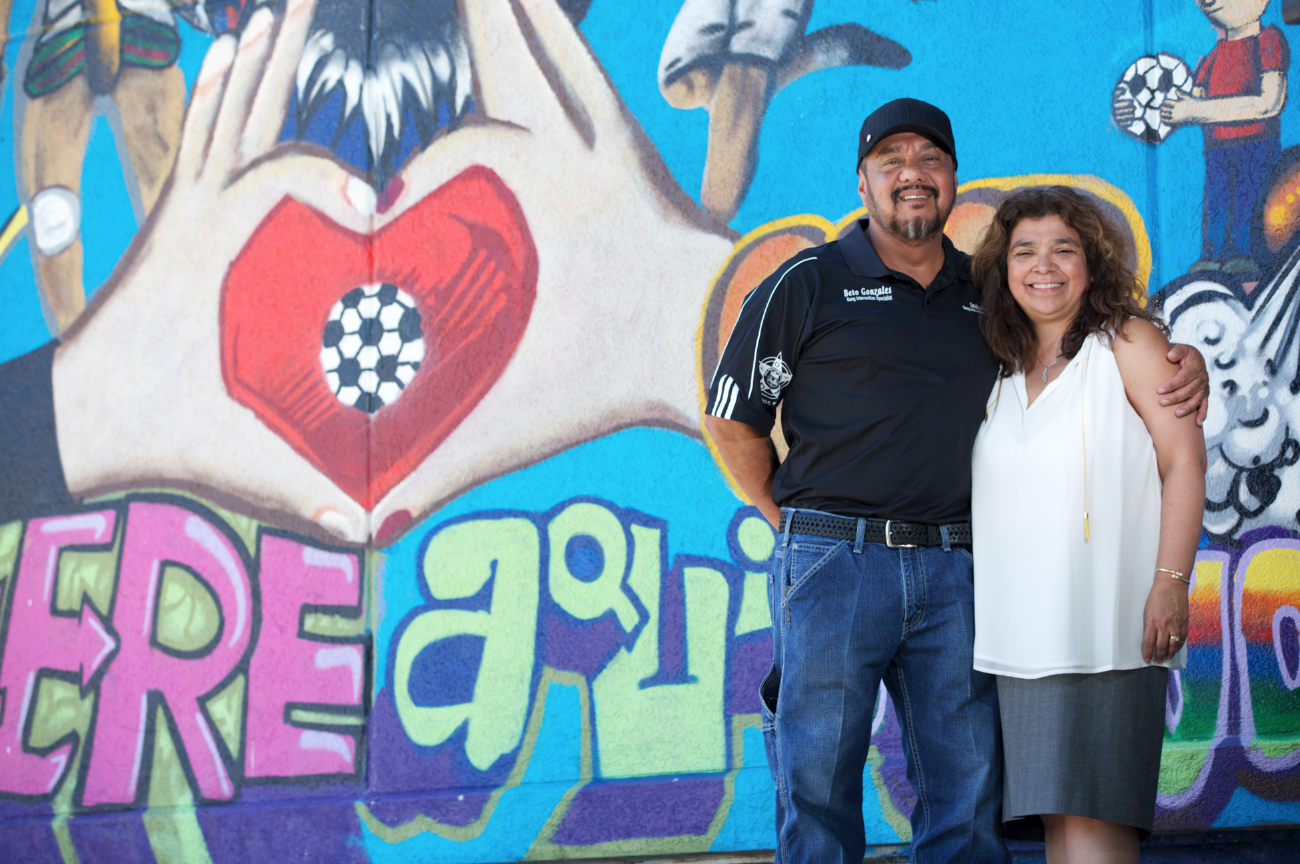
He goes by Beto. Though middle-aged now Alberto “Beto” Gonzales can relate to the hard circumstances youths face at home and in the barrio because he faced difficulties at home and on the streets when he was their age. He knows what’s behind kids skipping school or getting in trouble at school because he did the same thing to cover his pain when he was a teen. He can talk straight to gang members because he ran with gangs back in the day. He knows what addiction looks and feels like because he’s a recovering addict himself. His work for the Chicano Awareness Center, the Boys and Girls Clubs of the Midlands, and other organizations has netted him many honors, including a recent Martin Luther King Jr. Legacy Award from Creighton University. Beto is a South Omaha legend for the dedication he shows to saving one kid at a time. My profile of him for El Perico tells something about the personal journey of transformation he followed to turn his life around to become a guiding light for others.
Here is a link to a more recent story I did about Beto-https://leoadambiga.com/category/alberto-beto-gonzales/

Saving one kid at a time is Beto’s life work
©by Leo Adam Biga
Appeared in El Perico
Alberto “Beto” Gonzales believes working one-on-one with youths is the best way to reach them. His work as a mentor and gang prevention-intervention specialist has earned him much recognition, most recently the Martin Luther King Jr. Legacy Award from Creighton University.
Gonzales grew up in the South Omaha barrio he serves today as a Boys and Girls Clubs of the Midlands counselor. He does outreach with truants, many of whom come from dysfunctional homes. He knows their stories well. He grew up in a troubled home himself and acted out through gangs, alcohol and drugs. He skipped school. He only turned things around through faith and caring individuals.
“I was just an angry kid,” says Gonzales, who witnessed his father verbally abuse his mother. Betro’s internalized turmoil sometimes exploded.
“At 17 I almost went to prison for 30 years for assault and battery with the intent to commit murder. Then I got hooked on some real heavy drugs.”
“My mother prayed over me all the time and I think it’s her prayers that really helped me get out of this. I just decided to give my life to the Lord. ”
When he’d finally had enough he completed his education at South High at 20.
The Chicano Awareness Center changed his life’s course. A social worker there saw potential in him he didn’t see in himself. Then he was introduced to a nun, Sister Joyce Englert, who worked as a chemical dependency counselor.
“She heard me out,” he says. “I talked to her about my drug addiction, how I couldn’t keep a relationship and all kinds of crap going on. What’s cool about that is she asked me if I would go talk to kids about the dangers of drugs and alcohol even though she knew I was an abuser. She said, ‘I think it’s important kids hear your story.’ I found myself crying right along with the kids as I shared it.
“She told me I had a passion for this and asked what I thought about becoming a counselor. Well, I’ve done a lot crazy, dangerous things in my life but the most frightening and hardest thing was to tell the truth that I couldn’t read or write that well.”
Sister Joyce didn’t let him make excuses.
“With her help I got a chemical dependency associates degree from Metropolitan Community College, which led me into working in the schools with adolescents dealing with addiction issues, and I loved it, I just loved it.”
He also got sober. He has 33 years in recovery now.

Then he responded to a new challenge.
“When the gangs started surfacing I changed my career to working with gang kids,” he says. “That’s been my passion.”
He worked for the center until 2003, when he joined the Boys and Girls Clubs.
Having walked in the shoes of his clients, he commands respect. He uses his story of transformation to inspire.
“I had a faith my mother blessed me with, then I met a woman of faith in Sister Joyce who gave me my direction, and my job now is to give kids faith, to give them hope.”
He says it comes down to being there, whether attending court hearings, visiting probation officers, providing rides, helping out with money or just listening.
“It really takes a lot of consistency in staying on top of them. All that small stuff really means a lot to a kid who’s not getting it from the people that are supposed to be doing it for them, like mom and dad.
“Gangs ain’t never going to go away. The only thing we can do as a society is to find the monies to hire the people that can do the job of saving one life at a time. That’s what Jesus did. He then trained his disciples to go out and share his word, his knowledge, and they saved one life at a time. That’s all I’ve been doing, and I’ve lost some and I’ve won some.”
His job today doesn’t allow him to work the streets the way he used to with the hardcore kids.
“I’m not out there like I used to be.”
However, kids in his Noble Youth group are court-referred hard cases he gets to open up about the trauma, often abuse, they’ve endured. Talking about it is where change begins.
In a high burn-out field Gonzales is still at it, he says, because “I love what I do.” It hasn’t been easy. His first marriage ended over his job. Then tragedy struck home.
“There was a time in South Omaha when we were losing kids right and left and one of the kids killed was my cousin Rodolfo. It’s painful to see other people suffer but when it’s in your own family it’s a different story. Rodolfo was a good kid, I loved him, but he was deep in some stuff. When he got killed I lost it. That was a struggle. I told my employer, ‘I can’t do this anymore.’ I took a sabbatical, I just had to get away. I did a lot of meditation and praying and it only made me stronger.”
He’s not wavered since.
“I’ve got my faith and I’ve learned you’ve got to hand everything over to God, Don’t try to handle it yourself because you will crumble.”
Related articles
- Drugs, gangs blamed for Okla. City homicide spike (sfgate.com)
- Child grows into woman before abuser is sentenced (omaha.com)
- Alleged gang leader arrested at Garfield High School (q13fox.com)
- Finding Her Voice: Tunette Powell Comes Out of the Dark and into the Spotlight (leoadambiga.wordpress.com)
The Wonderful World of Artist and Social Entrepreneur Jeffrey Owen Hanson
Jeffrey Owen Hanson is one of those unexpected and inspirational success stories I run into from time to time. This young artist and social entrepreneur has found his niche as a pop art painter in spite of or perhaps because of his low vision and he’s using the sell of his much coveted work to support charitable causes. The following profile I did on hin for an upcoming issue of Omaha Fashion Week explores how he came to discover his artistic gift and to make it the vehicle for philanthropy and details how he’s come to hand-paint dresses showcased at Omaha Fashion Week.

The Wonderful World of Artist and Social Entrepreneur Jeffrey Owen Hanson
©by Leo Adam Biga
Soon to appear in Omaha Fashion Magazine
The unexpected artist
Self-taught artist Jeffrey Owen Hanson likes saying “I see through Swiss cheese” to explain the visual impairment an optic nerve tumor left him and the unique way it gives him of apprehending the world. Chemotherapy and radiation treatments destroyed the tumor and curbed any further vision loss. The tumor, along with some learning disabilities, are the result of a genetic disorder he’s lived with since birth called Neurofibromatosis.
None of it’s impeded his remarkable ascent as an artist and social entrepreneur. His highly collectible abstract renderings, including hand-painted dresses, are sought after by celebrities and raise major monies for charitable causes close to his heart. At 19 he’s on pace to reach his goal of raising $1 million in charitable proceeds by age 20.
He’s even grateful for his limited visual perception because it’s led him to use color and texture in original ways that make his vibrant, tactile art singularly his own. Indeed, before his vision got really bad he’d never shown the slightest inclination for art.
“I painted on rocks and I did dot art and that type of thing” as a child, he says. “He did the kinds of crafts and arts things that kids always do but really his art wasn’t anything special,” his mother Julie Hanson confirmed. At her suggestion he began painting notecards for something he and his friends could do when he had visitors over while recovering from treatments, What began as a routine diversion soon evolved into a serious artistic and philanthropic outlet. His early watercolors on notecards were sold from a lemonade stand next to his mom’s homebred goodies in the driveway of the family’s suburban home. Within a few years he’d gravitated to acrylics on canvas sold in galleries and auctions, the works commanding five figure prices apiece. Commissions for his work now flood in every week from around the nation, even around the world.
It’s why his parents have come to call their only child “the accidental artist.”
The fact he’s turned an impairment into a gift and made his art a platform for helping others is why his work and story have touched people from all walks of life and well beyond his Overland Park, Kansas home. The Hanson magic has even reached Omaha, where his first line of hand-painted dresses debuted during the grand finale of last August’s Omaha Fashion Week. He’ll have a new line for the OFW Spring show and another in the August showcase.
The standing ovation he received in Omaha for artwork adorning dresses designed by Caine Westergard added to his growing recognition. He’s been named Young Entrepreneur of the Year, he’s been profiled in the Huffington Post, he’s met everyone from Warren Buffett to Elton John. He’s the subject of a YouTube video and a new book authored by his father, Dr. Hal Hanson, entitled “Lessons from Clod.” Clod is the name Jeffrey gave his tumor. Among the lessons he learned from that old nemesis he eventually embraced as a friend is that it’s better to focus on what you can do than on what you can’t do.
Seven years since clod’s disappearance he’s sold hundreds of paintings, enjoyed solo exhibitions, and seen his work purchased by the rich and famous at live charity auctions.
None of this was supposed to have happened.
Seeing past blindness
His father, an emergency room physician at Ransom Memorial Hospital in Ottawa, Kansas, simply calls what’s transpired “amazing,” adding, “We call Jeff the accident artist because no one was intending art being anything more than a childhood hobby. What started out as kid art just sort of evolved. He’s a person that’s totally naive to art, totally untrained, didn’t go to art school, and yet he’s become an in-demand artist with a whole career in front of him.”
Julie Hanson says right from the start of Jeff painting the notecards he showed an aptitude the other kids didn’t. “Jeff’s notecards were fabulous and this consistently kept happening.”
The mystery of how he could go from no apparent artistic ability and without any formal training to exceptional ability and the admiration of professionals may never be fully answered though the family has some theories. Much of his approach to art seems intuitive rather than drawn from any obvious influence, though his impressionistic landscapes are often inspired by places he’s visited.
“There’s no talent in our family for art to start with,” Jeff says by way of eliminating the possibility of some inherited art gene from his immediate lineage.
Where does he think his talent comes from then? “I don’t know,” he says. “I just think I have a good eye for color.” And texture. “Almost all of my paintings have really thick modeling paste spread all over it to give it texture.” He often incorporates wire, rope and other materials into his work, even making woven canvases, to add layers of depth and form. Always though his work exudes the most iridescent tones. “The colors I like to use are bright colors, like lime green, pink, purple. Bright happy colors.” The buoyant colors are a direct reflection of his joyful personality.
Could his visual impairment somehow give him a heightened appreciation for color as a way of compensating for other deficits? “Maybe, I don’t know, possibly,” he says. “Well. I mean I don’t know what I cant see. I see through Swiss cheese. My vision has holes.”

In preparing the book about their son and his unexpected journey in art his parents pressed Jeff about his methodology and discovered things that shed light on how and why he creates what he does.
“We started talking to Jeff about, ‘Well, how did you decide to paint that? Why did you put those two colors together?’ We asked him, ‘What are your rules here?” And we came up with a dozen things that he does that aren’t even at a conscious level for him,” says Hal Hanson. “He doesn’t sit and think about it, but when we tried to pin him down he would say things like, ‘Well, I have low vision so I don’t like to put two light colors next to each other. I have to put a dark color next to a light color because it’s high contrast and I can see the border. And I don’t like things that are flat. I like things that are chunky because I can see the texture when the light catches it.’ So he likes things that are really high contrast, high texture and with big, bold loud colors.
“He doesn’t like any piece of art that has a million little things going on all over it.
It’s gotta have big expanses of calm with nothing going on because it’s hard for him to see a million little things. His eye doesn’t know where to go. So it turns out a lot of what he does is guided by his low vision. Where we once thought his art is popular despite of his low vision, it’s popular because of his low vision. His vision is peculiar enough or impaired enough that it kind of forces him into a certain style. It has sort of guided him in a direction of, ‘Well, here’s what works for me,'”
Then there’s the possibility other guidance is at work, too,
“Don’t you think this is a gift from God?” Julie asks Jeff at one point during the interview. “Yeah,” he answers matter-of-factly.
How else to explain Jeff creating paintings that captivate so many?
Art as career and mission
It took a long time for his mother and father to realize his paintings appealed to far more than just their parental pride. When others began responding to his art they at first thought people were simply being kind or sympathetic to his overcoming challenges to raise funds for NF research. But as his art kept getting more and more attention and interest, they realized something bigger was at work.
“We saw this going on but none of the three of us ever intended this to go anywhere,” says Hal. “For the longest time I thought what they really wanted was a piece of the story. That they’d heard about this kid who had low vision who was painting and giving the paintings to charity auctions. That they weren’t really interested in the art, they just wanted a piece of the story.
“I didn’t consider the possibility that people liked his art for its own sake until we found out people were buying it and they didn’t even know the story, they didn’t know he had low vision and gave the money to charity. That was sort of a revelation to us that, ‘Oh my God, people actually like the art.’ His fans, his clients kept telling us, ‘This isn’t just kid art.’ What we thought was something you would put on your refrigerator with a magnet turned into things selling at an auction for $10,000 and $15,000.”
Artist Rachel Mindrup of Omaha responds to both Jeff’s story and his art. She’s made him a subject in a series of portraits she’s painting of people with Neurofibromatosis who, she says, “are changing the world.” She says he’s a deserving subject for the series she calls The Many Faces of NF “because he’s done so much for NF and for the Children’s Tumor Foundation.”
Like many others, she finds Hanson to be an inspiration.
“Not only has he overcome many limitations he’s going way beyond expectations,” Mindrup says. “It’s cool when an idea like his art philanthropy takes on a life of its own and goodness begets goodness. If you have a good heart and you’re doing things to help other people that seems to grow exponentially.”
As she’s gotten to know Jeff she’s come to admire his “strong work ethic,” adding,
“He’s a working, living artist. He gets up and works every day. He does what any artist should be doing. I find him to be really inspiring, I really do. Here’s a kid who had this disability and instead of woe-is-me he’s doing something positive.”
Even if he didn’t have a heart-tugging story, she says, his art’s good enough to stand on its own.
“His artwork is a treasure in and of itself regardless of his genetic code. Who cares if he has NF or not? It’s like the paintings speak for themselves. They’ve got vivid colors and juicy brush strokes, they’re tactile, they’ve visually pleasing. Anybody who looks at the paintings, regardless if they know Jeff’s story or not, will find them engaging and interesting and will react to them, enjoy them. Without even knowing his biography, they work, they’re wonderful.”
Interior designer Emily Dugger of Omaha treasures the two Hanson paintings hanging in her home, including a custom piece she and her husband commissioned him to make using colors they selected. “We love them both,” she says of his works. “He’s very talented and he’s just extremely sweet. I’m very drawn to his story and his life and his passion.”
Before the Hansons knew it, the accidental artist selling his wares from a lemonade stand morphed into a full-fledged art enterprise. Jeff’s parents recently worked with a professional to devise a strategic plan for finding ever new revenue streams for Jeff’s art in order to sustain his career and his philanthropy.
“It was never intended to be a career at all, it kept snowballing to the point that we realized one day, ‘I guess we have an art business,’ and here we are,” says Hal Hanson.
“The whole world is moving so fast that if you want to continue to have a career in art and be successful you’d better be entrepreneurial and philanthropic,” Julie Hanson explains. “Theres all kinds of things we keep simmering in the business. We’re trying to let this be his career and be very successful at it while also giving to the world.”

Hanson’s new frontier: Hand-painted dresses
Fashion art wasn’t something the Hansons conceived Jeff doing until a consultant identified it as a viable option.
“Fashion certainly was in that plan,” says Julie. “There was no intent of doing it quite so soon, however Omaha Fashion Week caught wind of Jeff and producer Brook Hudson said, ‘What if he would try hand painting dresses?’ And we talked with them about it. because that was exactly what we wanted to do. Jeff was invited to be in the grand finale. The door of opportunity opened and when it opens, Jeff…” “Run and go do it,” he says to finish his mother’s thought.
The next order of business was finding a designer whose dresses he could hand paint. It just so happened that Jeff’s cousin Heather has a friend at Iowa State University studying apparel design, Caine Westergard. Working on a tight schedule mere weeks from the OFW show’s start, Westergard and the Hansons collaborated on three dresses.
“I went ahead and started sketching and used some patterns I had,” says Westergard. “They sent me some paintings they thought would be interesting on some garments and let me have free reign of all the designing aspects of taking which paintings I liked and completely designing the dresses as to what I would think would complement their design. Then I mailed my dresses to the Hansons and they went ahead and painted them.”
“She came up w three blank slates, three blank canvasses if you will for Jeff to apply three different hand-painted styles on these dresses,” says Julie Hanson. “And there’s no secret, we have to help Jeff with that kind of thing a lot. Imagine being given one hand-made original dress and fresh paint is going to go onto it, and guess what, you can’t mess it up, and Jeff’s visually impaired, so we help Jeff with that a lot.”
Westergard appreciates how “extremely textured” Jeff’s work is. “Until you actually see it in person you don’t realize how many different levels and pieces there are
and what is actually beneath the paint and built up. They truly are works of art.”
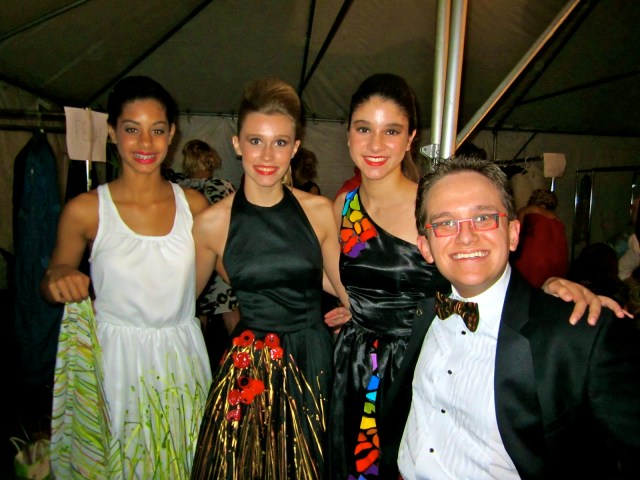
Inspired by some his impressionistic landscapes, she created three dresses. For “The Grasse”s she imagined “standing out in an open field or prairie” and being caressed by the wind and the colors of the grass. “I really wanted that dress to be long and flowy. I wanted it to have a kind of wave as it walked down the runway with high-low skirt.”
“For “The Poppy” dress I cued off its vibrant color to create a more elegant feel. I wanted to make more of a ball gown of that dress. For “The Water Reservation” or “On the Water Rez” there’s so many different blocks and colors. It’s very bright and flowy. I just chose a very simple black satin with a peek-a-boo skirt. When you look at the garment you can see a little bit of the painting but not until the model walks and the peek-a-boo skirt opens can you actually see the painting on the skirt.”
She couldn’t be sure how Jeff’s art would work with her dresses until the hand-painting was complete.
“The first time I saw the dresses totally finished with my work and their work was the day of the fashion show. It was a little nerve wracking. I had complete faith in them but hand-painting a dress you only have one shot at it. It wasn’t like we had time for me to design another dress or for them to re-hand paint it. But they really turned out to be three really unique pieces that I’m definitely proud of and I know they’re really excited about.”
The audience roared its approval, too. “Seeing that our work was really impacting people was really neat.”
Refilling the bank of dreams
Hal Hanson never anticipated it would come to this. His son walking down the runway hand-in-hand with a promising young designer, surrounded by gorgeous models wearing hand-painted Hanson originals, lapping up the adoring cheers and applause of onlookers.
“I’m speechless,” Hanson says. “As a father, your kid is born and you have this dream bank. You look at your baby for the first time and you think, ‘OK, you’re going to be the quarterback of the football team’ or whatever and then events start occurring that start chipping away at your dreams. And you realize, ‘I guess we’re not going to do that,’ and before you know it he can’t drive a bicycle or roller-skate or see stars in the sky and you keep making withdrawals from your dream bank to the point you don’t’ have any more dreams.
“And that’s where I got pretty rock bottom. I was like, ‘I don’t see anything he can do between his learning problems and his vision problems.’ And then for him to start making and selling art, are you kidding me? Till the day you’re on this runway and people are liking these dresses. It’s just miraculous. My dream bank is bulging with deposits now. It was depleted five years ago, so it’s a huge turnaround.
“It’s turned into something amazing.”
Keep up with Jeff’s burgeoning career at http://jeffreyowenhanson.com.
Related articles
- Low Vision Resource Center helps blind and visually impaired residents (mysanantonio.com)
- Artist Adriana Groza Launches Debut Paintings Collection 2013 (fineartamerica.com)
- A Colorful Life: Claire Desjardins (artsyforager.com)
- How One Social Entrepreneur Is Tackling Poverty in Cambodia (fuzeus.wordpress.com)
Parenting the Second Time Around Holds Challenges and Delights for Senior Kinship Caregiver Theresa Glass Union, Who Always Puts Family First

Parenting the Second Time Around Holds Challenges and Delights for Senior Kinship Caregiver Theresa Glass Union, Who Always Puts Family First
©by Leo Adam Biga
Soon to appear as the cover story in the December issue of the New Horizons
After raising three daughters in the 1970s-1980s and nearing retirement in the early 2000s, Theresa Glass Union thought she knew what her later years would look like. Even though still working, she envisioned socializing and traveling with friends and family. When she could finally retire it’d mean free time like she hadn’t known in ages.
The Omaha native had just moved back here after more than 20 years in Calif. She was divorced, eager to start a new life and catch up with old mates and haunts. Then a family crisis erupted and her selfless response led her to join the growing ranks of kinship caregivers raising young children.
Reports indicate that upwards of 6 million children in America live with grandparents identified as the head of household. Nearly half of these children are being raised by someone other than the parents or grandparents. The number of children being parented by non-birth parents has increased 18 percent since 2000, according to a report from the Annie E. Casey Foundation.
Some kinship caregivers do it informally, others through the state child welfare-foster care system. Being informed of rights, regulations and benefits takes work.

Theresa is a kinship caregiver to children of a niece who’s long battled drug addiction. The niece is the mother of six children by different fathers, The three oldest variously live with their fathers or their fathers’ people. When the niece got pregnant with each of her three youngest children, now ages 5, 4 and 2, they came to live with Theresa shortly after their births.
It’s not the first time Theresa’s dealt with tough circumstances inside and outside her family. She has a younger sister with a criminal past who happens to be the mother of the niece whose children Theresa is raising. Years spent in social service jobs dealing with clients living on the edge have given Theresa a window into the bad decisions that desperate, addicted persons make and the hard consequences those wrong choices bring.
At age 65 and two-and-a-half decades removed from raising three grown daughters, one of whom is film-television star Gabrielle Union, Theresa’s doing a parenting redux. She never thought she’d be in charge of three pre-school-aged kids again, but she is. She’s since legally adopted the two older siblings, both girls, and is awaiting an adoption ruling on their “baby” brother.
As the babies came to her one by one she found herself knee deep again in diapers and baby bottles, awakened in the middle of the night by crying infants, figuring out formulas and worrying about fevers, sniffles, coughs and tummy aches. Now that the kids are a little older, there’s daycare, pre-school and managing a household of activity.
It’s not what she imagined retirement to be, but how could she not be there for the kids? They were going to be removed from their birth mother and placed in a system not always conducive to happy outcomes. Child welfare officials generally agree that childcare fare better in kinship care settings than in regular foster care.
Kinship caregivers may get involved when the parents are incarcerated, on drugs or deceased. In the case of Theresa, drugs were found in the systems of the two oldest children she’s adopted, Keira and Miyonna. Theresa felt they needed unconditional family love. The girls are doing fine today under the care of Theresa and her brother James Glass. The girls’ brother, Amari, was born drug-free.
With so much stacked against the children to start life, Theresa wasn’t about to turn her back on them. Family is everything to her. She’s the oldest of seven siblings, all raised Catholic – churched and schooled at St. Benedict the Moor, the historic African-American parish in northeast Omaha. It’s where she received all her sacraments, including marrying her ex-husband Sylvester Union.
“The church is central to my family here.”
She graduated from Sacred Heart High School.
She and Union moved to San Francisco during the Summer of Love in 1967 and they returned to Omaha a year later. They both ended up working at Western Electric. Like other black couples then they ran into discriminatory real estate practices that flat out denied them access to many neighborhoods or steered them away from white areas into black sections of North Omaha. Their first home was in northeast Omaha but they eventually moved into a house in the northwest part of the city, where their three daughters went to school.
In the 1970s Theresa, who studied social work at the University of Nebraska at Omaha, worked for Omaha nonprofit social service agencies, including CETA (Comprehensive Employment & Training Agency) and GOCA (Greater Omaha Community Action). After a long stint in corporate America she returned to the non-profit field.
The family left here in 1981 for Pleasanton, Calif., where they lived the sun-dappled Southern Calif. suburban life. She worked for Pacific Bell and completed her bachelor’s degree in human relations and organizational behavior at the University of San Francisco. After her divorce she and her brother James Glass returned to Omaha in 2003. A few years passed before Theresa’s troubled niece came for help. At various times the family tried interventions, once even getting the niece into rehab, but each time she fled and resumed her drug habit.

As a former field worker with Douglas County Health and Human Services and as a one-time Child Protection Service Worker with Nebraska Health and Human Services, Theresa’s seen the despair and chaos that result when siblings are separated from each other and extended family. It’s why when her niece kept getting pregnant while hooked on drugs and unable to take care of herself, much less children, Theresa intervened to ensure the kids would go to her.
“Some of the things children said to me when I was a social worker have just stayed with me,” she says.
On one call she visited three young siblings in a foster home.
“I was like the fifth social worker since they’d been brought into the system. The 8-year old boy said, ‘Please don’t take us away, we get fed three times a day here. ‘Well. that told me they’d been staying with some people (before) who weren’t feeding them regularly. Who does that? The foster parent let him walk me around the home and this little boy was just adamant he be with his brothers.”
In another case several siblings were divided up among different foster families.
“One of the siblings got to see her sisters at school but she no longer got to see her brothers, and she asked me, ‘Can I see my brothers?’Her foster parent had made the request but nothing had happened, so I looked into it and found that each sibling had a different social worker and had been placed at a separate time. I got it worked out that the siblings got to visit each other.”
System shortfalls and breakdowns like these were enough to make Theresa bound and determined to arrange in advance with hospital social workers for her to be the foster placement parent for her niece’s three youngest kids. When Keira and Miyonna tested positive for drugs the state, by law, detained them and they were put in Theresa’s care two days after their births. She did the same with their brother. She simply wouldn’t let them fall outside the family or be separated.
“After Keira was born I was already a resident foster placement and I’d already contacted everybody involved to let them know if there was another baby that ends up in the detention system I want to be the foster parent of choice because I didn’t want these kids to go into the system. My idea is that the kids all need to be raised together. They deserve to have their siblings .
“I was working for Child Protective Service, so I knew all the ins and outs of what was going to happen. I knew how many times we were going to have to go to the doctor before the baby’s cleared. I knew that babies wake up in the middle of the night and children with drugs in them can find it more difficult sleeping, eating. I was prepared for all that. It didn’t happen, I was thanking God that Keira’s and Miyonna’s little withdrawal things were just a few days. The biggest problem we had was figuring out formula.”
Daughter Kelly Union, a senior analyst with US Airways, admires her mother’s by-any-means-necessary fortitude.
“My mom always looks for more solutions, other options, different ways to climb a mountain. That determination helps me when I hit a brick wall at work, in my marriage, with my kids. My mom also sees all glasses as half full. There is a positive in everything and we just need to find it. My mom’s best attribute, however, is being strong against all odds—she finds the strength to hold up everything and everyone, including herself despite what she is up against. I get my strength from her.”
The way Theresa sees it she did what she did in order to “preserve the continuity of the children’s lives, so that they know their family members, the cousins, the aunts and uncles, the lineage back, like my grandma Ora Glass and my grandma Myrtle Fisher Davis, and the head of our family today, Aunt Patricia Moss.”
Theresa hails from one of the largest and oldest African-American families in the region, the Bryant-Fishers, whose annual picnic is 95 years strong.
Her bigger-than-life late grandmother, Ora, the longtime matriarch, lived to 110. Ora gained celebrity as a shining example of successful aging, even appearing on Phil Donahue’s show and running her fingers through the host’s hair. In her younger years Ora was a housekeeper and nanny for some of Omaha’s elite families. One packinghouse owner family even brought her out to Calif. to continue her duties when they moved there. She survived the Red Summer of 1919, when blacks were targeted by racists in riots that wreaked havoc from coast to coast, including Omaha and Orange County, Calif..
“My grandmother had a whole lot of stories,” says Theresa.
In her 70s and 80s Ora “reinvented” herself from a very strict, prim and proper lady with politics tending toward the conservative” to loosening up on things like relationships and social issues, notes Theresa. “She told me, ‘I’m losing so many old friends that I have to make new friends and I have to use new opinions and I have to make new decisions.’ She began reaching out and making new friends and gathering new family to her. She started trying different things. She went to political science classes at UNO. She learned ceramics.”
Even when she had to use a walker, Theresa says. Ora maintained her independence, riding the bus downtown for Mass at St Mary Magdalene’s Church, a repast at Bishop’s Cafeteria and taking in all the sights.
Ora was then and is now an inspiration to Theresa. She carries her grandmother’s boundless curiosity, determination and affirmation inside her.
“She always persevered. She said, ‘Whatever you do you always do it to the best of your ability.’ She said, ‘You can always make more family’ and she always did generate more and more family for herself.”
Ora was godmother to Omaha native Cathy Hughes, founder of the Radio One and TV One media empires, and played a big role in the mogul’s early life.
Ageless Ora ended up a resident at the Thomas Fitzgerald Veterans Home (the military service of her late husband Aaron Glass entitled her to stay there) and Theresa says her grandmother “recruited families from St. Vincent dePaul parish to visit residents there. There were a couple of families she adopted. The kids came and they called her grandma and they brought her gifts.”
It’s figures and stories like these that Theresa didn’t want her three new children to miss out on. The family takes great pains to maintain its ties, celebrate its history and record the additions and losses as well as the triumphs and tragedies among their family trees. Help abounds from loved ones she says because “there’s so many of us. There’s like 1,500 of us (dispersed around the country).”
She values the traditions and events that bind them and their rich legacy and she wouldn’t want the children now in her care to be deprived of any of it.
“We’re called the Dozens of Cousins. Yeah, I do take a lot of pride in that. I get that a lot from my aunt Patricia Moss because she wants there to be the continuity. We do have continuity.”
Regarding the big August reunion, when hundreds gather at Levi Carter Park, she says, “I try to always make it. Since coming back home in 2003 I haven’t missed any, and when I was younger it wasn’t an option, you were there. We have the family picnic, we have family birthdays, we have that kind of continuity and I think children need that to grow in their own maturity and emotional strength,” she says. “It can give them that stability. You’re not going to get that from strangers. And knowing at some point there’s going to be questions about who mom is, I have all those baby pictures and all that stuff. I can give them a sense of who she is if she doesn’t care to come around.”
Having a large family around gives Theresa a ready-made support network.
“I have a supportive family around me. I have everybody lined up that’s going to keep this continuity. My brother James wouldn’t say it before that he’s helping raise the kids, but he’s saying it now. My sister and cousins call and make sure I have break times. My granddaughter Chelsea came from Arizona recently to watch the kids so I could have a break time. When my daughter Tracy has breaks from work she comes in and helps out.
“So I have a support system around me and they’re all kin to these children, so they’re never outside of family.”

Kelly Union says even if there wasn’t all that family support her mother would have done the same thing.
“Without a doubt, she would have been that beacon without all of us supporting her. That is her character, that is the legacy she inherited and the legacy she is passing on to all of us. We have all been known to help someone else, even when it isn’t easy or comfortable and that is a direct reflection of her.”
The respite family provides Theresa has proven vital as she’s realized she’s not capable of doing everything like she was the first time she raised kids. She’s much more prone now to ask for help. Another difference between then and now is that her older daughters were spaced out three or four years, whereas the kids she’s raising today are all just a year or two apart.
“My oldest was 4 before I had my second and then my second was 7 before I had my third. It’s a different experience when you can devote your time to the one child at a time. And then by the time I had the second child the oldest child had more of her own things she was doing that she didn’t need me while I was taking care of this other one. And then the two of them did not need me as much when I was taking care of the third one, so every kid got to be like an only child.”
Things stated out different the second time around.
“‘I found I was now taking care of two kids at the same time, so if I’m changing a diaper the other one’s right there fussing and attention grabbing. and boy that’s more wearing on me. The energy for two young ones is just wearing.
“When I first got Keira and Miyonna I was working, so I got to take them to day care. But I could not keep my mind going well enough during the day to do a social work job. I could not keep up and my caseload was falling farther and farther behind. I even asked for more training, but I just couldn’t manage it. I thought I was super lady but my energy level is not the same as it was, trust me.”
The two girls don’t need quite the attention they did before, which is good because their little brother needs it now.
“We got through that and Keira and Miyonna started doing real good together. I even have them sleeping together in a big double bed. They sleep all night.”
In terms of parenting, she says she’s learned to “let some things go” that she would have stressed over before. For example she doesn’t worry whether the kids’ clothes or hair or bedrooms are perfect. “You do the best with what you have and you gotta innovate,” she says.
Her adult daughters may be the best gauge for what kind of mother Theresa is. The oldest, Kelly, wrote in an email:
“My mother was always the “you can do it”, “give it a try” type of parent. She supported all our whims—Girl Scouts, musical instruments, sports, school plays, dance class. Whatever struck our fancy at the moment, she backed our efforts. No is not a big word in her vocabulary. Not that she was a permissive parent who let us get away with things. But more in the way that she was willing to let us try and learn our own likes, dislikes, pleasure and pain first hand.
“My mom was never really a yelling, scolding type of mom and that worked well for us. Life lessons taught with logic, love and support goes a long way to shaping a child the right way.”
Kelly doesn’t see any marked difference in her how mom parents now than before.
“No, the core is very much the same. My mom is home more with them but the attention, the opportunities, the lessons are all still the same.”
Theresa would like for the children’s birth mother to be involved in their lives but thus far she says her niece has shown little interest. In fact, Theresa’s lost most contact with her niece, whose exact whereabouts she’s unsure of.
“She actually did visitation with Miyonna for the first three weeks of her life and then she back slid all the way and did a disappearance act. We didn’t know where she was.”
The instability and unreliability of the mother were huge factors in Theresa taking charge and getting the kids in a safe home surrounded by family. She says she never wanted to have happen to these children what she’s seen happen to others, such as when kids age out of the system never having been reunited with family, much less visited by them. With their biological mother out of the picture, Theresa saw no option but to step up.
“It’s hard to forge your own identity when your identity has been connected with state administrators,” she says of foster children.
It’s not the first time she’s taken in loved ones in need. When her uncle Joe Glass lived in a Milwaukee nursing home and was going to be transferred to a veterans home near the Canadian border, far from any family, Theresa and her brother James brought him to Omaha.
Growing up, she saw the example of her family take in childhood friend Cathy Hughes when Cathy’s musician mother Helen Jones Woods was on the road. Hughes said growing up she and Theresa thought they were “blood sisters.”
Theresa’s three birth daughters have embraced her returning to parenting young kids again all these years later. She says they’ve all accepted and bonded with their new siblings and go out of their way in spoiling them. “They don’t want for anything,” she says of her little ones.
Kelly speaks for her sisters when she says they all admire and support their mother in assuming this new responsibility at her age but that it doesn’t surprise them.
“That is just my mom. I don’t think she thought of it as parenting at her age, she just saw a need and filled it. Age really didn’t play into it, although she did discuss it with us because doing the right thing would impact all of us. My mom always does the ‘right thing,’ and right doesn’t mean easy and she accepts that whenever she takes on a task, a role, a responsibility.
“My grandmother raised her and this is what my grandmother did and would have done if she was alive. Her opting to raise the kids did not surprise any of us in the least. It is the one characteristic both my parents had and handed down to us: Do what you can, when you can and share of yourself, your home, your belongings and your wealth (regardless of how much money you have or don’t have). It’s the right thing to do to help someone else, especially family.”
Kelly and her sister Gabrielle have each assumed similar super-nurturing roles as their mother. Kelly, who has three children of her own, has acted as a surrogate mom to athletes coached by her husband. Gabrielle is now the adult female figure in the home of her equally famous boyfriend, NBA superstar Dwyane Wade, whose two sons and a nephew live with him in Miami.

Theresa’s justifiably proud of her three grown children, each a successful, independent woman in her own right. Kelly’s a corporate executive. Tracy’s a facilities coordinator at Arizona State University and Gabrielle’s the movie star. Just as she feels she well prepared her older girls for life she hopes to do the same for their young siblings.
“I got my three grown daughters there healthy and educated and then they had to travel it on themselves. Hopefully I can do this another time and the three young ones will be healthy and educated and they’ll be able to move on and enjoy their lives. Nobody has to be famous but you have to be able enjoy and sustain your life. I think my girls have done really well and I hope the next ones do, too.
“This time it’s a different experience and we’re working it out.”
She says most of her parenting the first time happened in the suburbs compared to the inner city, where she, her brother and the kids live today. She’s struck by the stark difference between the two environments and their impact on children.
Gun violence and street gangs were foreign to west Omaha and Pleasanton but the northeast Omaha she’s come back to is rife with criminal activity. Where Pleasanton lacked for no amenities North Omaha has major gaps.
“It’s interesting that this neighborhood doesn’t have the things that we had when we were young. The (black) population has been dispersed throughout the city. Things you take for granted, conveniences you have right there in the suburbs, are not so readily available in the inner city. It’s a lack of resources, lack of everything right in this neighborhood for raising children. So I had to start looking for the village (the proverbial village that helps raise a child). My village is right here. I have Kellom School and I have Educare.”
Gabrielle says the way her mother intentionally seeks out educational and cultural opportunities for the young kids she’s raising now reminds her of how she did the same thing when she and her sisters were coming up. She says her mom’s always been about expanding children’s minds through enriching experiences.
Theresa says the dearth of programs for young kids in northeast Omaha “is what prompted me to join the board of the Bryant Center Association – so we could add things (like recreation activities and counseling services).”
The nonprofit association operates the Bryant Center, a community oasis at 24th and Grant Streets that aims to improve the lives of youth, young adults and seniors. Administrators are looking to expand programming. Theresa recently prevailed upon Cathy Hughes to co-chair the association’s capital fundraising campaign.
In the final analysis Theresa doesn’t consider rearing young children at her age as anything heroic or out of the ordinary. It all comes back to family and doing the right thing. “I don’t call it being a saint,” she says. “You always take care of your own.”
She wants others to know they can do what she’s doing. An aunt or a grandmother or another relation can be the parent when Mom and Dad cannot.
“It is a doable process, especially in Omaha, because there is other help available. There are families out there that could do this with their own because there is support for you in the community. Sometimes you have to really search for it depending on what your needs are. But even if there’s a problem where the natural parents aren’t available to participate, you can raise the children so they are still a part of a family.”
Helping navigate the experience is ENOA’s Grandparent Resource Center. It offers free monthly support group meetings, crisis phone intervention, transportation assistance, access to legal advice and referrals to other services and programs. Participants need only be age 55 or above.
Center coordinator Debra Scott, who is raising her granddaughter, says caregivers need to know they don’t have to do it alone. “Don’t be afraid to ask for help,” she says. “I’m learning I can’t be everything to everybody, I need to ask for help and that’s where this program comes in.”
Call 402-444-6536, ext. 297 to inquire how the center may be able to help you or a senior caregiver you know.

Theresa Union & Gabrielle Union pictured at the ‘Cadillac Records’ premiere after party at Marquee in New York City on December 1, 2008. RD / Dziekan / Retna Digital
Related articles
- Agencies work to unite foster, biological parents (miamiherald.com)
- Wanted: Parents willing to take in children (newsherald.com)
- SPITZ: From foster to forever family (metrowestdailynews.com)
- Gabrielle Union Takes Serious Turn in BET Drama ‘Being Mary Jane’ and PBS Documentary ‘Half the Sky’ (leoadambiga.wordpress.com)
- Kinship Celebration Brings Together Community in Support of National Adoption Awareness Month (virtual-strategy.com)
Freddie Gray Stands Fast on Her Handling of Sebring Scandal, OPS School Board President Survives Vote to Continue Her Mission
By definition, news happens without warning, which can make it tough for media periodicals that only come out once a month or once week. I recently wrote a dual profile of an Omaha power couple – Omaha School Board President Freddie Gray and Omaha City Councilman Ben Gray – for the August issue of the New Horizons, a monthly newspaper I regularly contribute to. That issue was put to bed when all hell broke loose concerning Freddie’s handling of the already controversial Nancy Sebring incident that saw Sebring resign shortly after being hired as Omaha Public Schools superintendent when sexually charged emails she exchanged with her lover came to light. Newspaper reports revealed that Gray and school board counsel didn’t share some information they had about the emails with the rest of the board. Gray suddenly found herself the target of allegations that she’d breached the public trust and some even called for her to resign or to be removed. Her side of the story is that she didn’t know the full extent of Sebring’s communications and, besides, this was a personnel issue that there’s a whole set of protocols for handling. Also, Gray didn’t want to prejudice the board should they have had to convene a termination hearing over Sebring’s employment. Sebring’s resignation saved herself and the district futther embarassment. The timing of this brouhaha meant there was no chance to update or revise my story. So be it. But I did get the opportunity to do a new interview with Freddie after she was retained by the board in a special vote. The result is this story for The Reader that tries to lay out what it was like for her to be on the receiving end of vitriol and rancor. Through it all, she kept her composure and never engaged in the kind of name calling and reputation bashing that others subjected her to. You can find my earlier, dual profile on Freddie and Ben Gray on this blog, under the title Gray Matters or in the Omaha Public Schools or Education categories.
Freddie Gray Stands Fast on Her Handling of Sebring Scandal, OPS School Board President Survives Vote to Continue Her Mission
©by Leo Adam Biga
Originally appeared in The Reader (www.thereader.com)
Freddie Gray knows being second-guessed and scrutinized comes with the job of Omaha Public School Board President. But when she came under fire over her handling of the Nancy Sebring scandal she got more than she bargained for, including allegations she’d violated the public trust and calls for her resignation or removal.
Sebring is the former Des Moines Public Schools superintendent OPS hired in the spring only to resign after sexually charged emails she exchanged with her lover became public.
The controversy about what Gray did and didn’t do in response to the scandal culminated at an August 6 school board meeting where a special vote retained her by an 8 to 4 count.
Until the blow up Gray slipped under the radar as a veteran but low profile public servant. She certainly never found herself on the hot seat quite like this. Often overshadowed by her husband, Omaha city councilman and former television journalist Ben Gray, she endured a public referendum on her character despite a seven month record as board president even her detractors don’t fault.
Gray was appointed to the board in February 2008 to replace Karen Shepard and ran unopposed that fall to retain the seat. She serves on local, state and national education initiative boards. Her Omaha school board peers thought enough of her to name her president at the start of 2012. Amidst the recent storm that led to Gray facing removal she refused to say she erred and balked at apologizing.
“Whatever the pleasure of the board was going to be that night it was something I needed to live with,” she says, “but I was not going to compromise my integrity and myself and say I was wrong when that’s not true.
“You can’t buy me that way. I did the right thing, I know I did the right thing.”

Gray asserts she and OPS board counsel Elizabeth Eynon-Korkda acted properly based on what they knew at the time about the nature of Sebring’s emails. Gray says she and Eynon-Korkda treated the matter as a personnel issue and therefore outside the board’s purview because Sebring was already a district employee when the emails surfaced as an issue.
“The personnel issue was the context of what was done and why it was done the way it was done,” says Gray, adding she “didn’t want to poison the well” and risk biasing the board should Sebring come before a termination hearing
When the full extent of the sexually charged emails came to light, Sebring stepped aside.
Gray can live with the “differing views” critics voice but she describes as “troubling” and “disturbing” the anonymous, expletive-filled postal letters and phone messages she says she’s received at home.
“There are people who took advantage of the situation. They didn’t talk about what the issue was, it was just name calling, ugliness. I have grandchildren that were exposed to language totally inappropriate for them to hear.
“I just find those people to be real cowards. You know, if you’ve got something to say to me then man up or woman up and say it to me.”
The negativity was counterbalanced by expressions of support, including her mate’s presence at the July 30 and August 6 school board meetings.
“I have a fabulous husband. He was very supportive. My family of course, not just my children but my sisters, my nieces and nephews. my extended family in Cleveland. The prayer chains people had going on. I had so many emails, phone messages, Facebook posts from people saying they had my back.”
She says her “trust and belief in a Supreme Being was never shaken” though “there was that question of why me and why now.”
Encouraging words too came, she says, from other school district leaders and from peers at the state and national levels. The morning that decided her school board presidency fate she spoke before an assembly of district principals who gave her a standing ovation upon her introduction.
“That blew my mind. I had no clue what to expect when I walked in that room. It was quite moving and a great way to start the day.”
She says perhaps the most hurtful thing in this episode was that her “very long line of public service,” including the Douglas County Board of Health, the African-American Achievement Council and years of mentoring, became obscured.
‘”In a very long history of being actively engaged with the community my detractors tried to define me by one thing. It was heartbreaking that people would do that. It was like everything else I had done in my life was valueless.”
She says she regrets the imbrogolio distracted from the “great progress the board’s been making” and to the “gains” the district’s made in graduation and truancy rates. Her overriding concern now, she says, is moving the district forward, something she expects to still be doing after this fall’s district elections. She’s running against fellow Democrat James M. English, a former OPS teacher and administrator .
Gray says no one can legitimately question her devotion to the district.
“My reason to be there is nothing more than pure academic success for all students . If you look at what I’ve done, the places I’ve been, the people I’ve met, the messages I’ve carried through the community, statewide and nationally you’ll see I’m working very hard for the children of Nebraska and specifically for children in my district.”
Gray oversaw the board’s recent hiring of interim superintendent Virginia Moon and will oversee its search to find a permanent replacement for the retiring John Mackiel. Though she concedes repair needs to be made to a divided board, particularly among members who wanted her out, she foresees no problem getting the work of the district done.

Related articles
- Gray Matters: Ben and Freddie Gray Fight the Good Fight Helping Young Men and Women Find Pathways to Success (leoadambiga.wordpress.com)
- Omaha school board votes to retain president (sfgate.com)
When a building isn’t just a building: LaFern Williams South YMCA facelift reinvigorates community
All kinds of human services are delivered in buildings, including some nondescript, institutional edifices that can appear cold on the outside. But of course it is what goes on on the inside that matters. Take the South Omaha YMCA, for instance. I cannot even find an image of it on the Web, which is just as well since it’s a dull, quasi-governmental-looking structure that hardly hints at the warm embrace that staff extend to visitors or at the fun activities and programs offered to members. When a building truly engages a neighborhood and community the way this one does, it isn’t just a building anymore, it’s something much more personal.
When a building isn’t just a building: LaFern Willams South YMCA facelift reinvigorates community
©by Leo Adam Biga
Originally published in The Reader (www.thereader.com)
South Omaha’s renaissance unfolds on many fronts. From scores of new businesses to construction of a new community center, library and athletic stadium to the expansion of Metropolitan Community College’s south campus, the area’s booming again after a three-decade lull.
Facelifts also contribute to this turnaround. The most obvious makeover is to the 24th Street business district, whose once thriving streetscapes-storefronts dimmed but now overbrim with color and activity in a plaza-like marketplace.
More recently, a $1.25 million renovation to the LaFern Williams South YMCA at 30th and Q has infused new life into a community anchor that had seen better days.
The Y’s flip is not easily observed until you go inside, but it’s accounting for a surge of activity not seen there since the building’s heyday.
YMCA of Greater Omaha COO Linda Butkus said compared to a year ago the South branch has seen a 30 percent increase in member scans, a 25 percent increase in member revenue and 209 more individuals join as Y members.
“We’re seeing more use, we’re getting more memberships, were expanding beyond just kids to serving more families and adults as well,” she said, “and I think the renovations are the reasons for the increases.”
Three phases of capital improvements are complete. Interior upgrades encompass a redesigned lobby, a new gymnasium floor, enhanced lighting, fresh carpeting and paint, a refurbished fitness room, a large computer room, a new security system and a new chiller. Outside, a new parking overlay is done and a new roof in-progress. In line with the physical changes new programs have been implemented.
Butkus said, “We have more for individuals to do in the way of programming, we have more fitness equipment and the overall feel of the facility is much better. It was a dark and old interior. Now it’s very nice, it’s very bright. The amenities have been upgraded. It feels good to be there. It’s been a complete facelift. When you walk in you go, ‘Wow.’ That’s the feedback we’re getting.”
South branch executive director Brian Owens said the Y’s commitment has resulted in “a buy-in” from area residents. “It’s given people a sense of pride to say, ‘You’re investing in our community.’” He said members lost to other branches are returning now. To accommodate higher volume he’s expanded the hours of operation.
He said to stay in touch with the expectations of a diverse clientele “we’re being very intentional and diligent about launching our programs. We’re going out and asking our member base, ’What do you want in this building?’, instead of us telling them what they’re getting. That’s been pretty successful so far.”
Responding to the ever growing Latino population fitness classes infused with merengue and salsa are offered. ESL and Spanish language classes are possibilities.
“Our Latino base has grown tremendously,” he said. “That’s our demographic and we’re ecstatic that we do have that buzz in the Latino community.”
Smaller than some Ys and lacking a pool, the branch accentuates what it has that others Y don’t. Owens said, “We have a smorgasbord of cultures who frequent this branch” — Latinos, Sudanese, Native Americans, whites. “We have that unique opportunity to be able to cross cultures and to share with one another, and that’s a great scene.”
Brenda Kremlacek’s three boys attend the South Y, where, “they’ve met a variety of ages and nationalities, and that’s good,” she said. “I’ve seen a lot of progress with the boys’ attitudes. They look forward going. They have a lot of good friends.”
The absence of a swimming hurts but Owen said the branch compensates with “the largest gym in the (Omaha) association.” That gym sees heavy use for hoops, via basketball programs/leagues, and fitness/martial arts classes. He’s hoping when the nearby Kroc Center opens in 2009 his members will be able to access its pool.
He feels his Y’s proximity to the neighboring South Side Terrace Homes and “its 800-plus young people” is an advantage for attracting and retaining youth and family members. He’s keenly aware the facility’s long drawn many users from the Omaha Housing Authority’s South Terrace complex. The low-income housing project includes many at-risk youths who access the Y’s after-school and summer club programs and Kids Cafe, which provides free nutritious meals and snacks. An OHA liasion offices at the Y.
One of South Side’s own played a key role in pushing for the building, which was owned and operated by OHA from 1977 until 2007. The facility’s provided recreational, educational, community and social agency services and programs its entire life. It fulfilled the vision of LaFern Williams, a South Side tenant and community activist who “was very instrumental in convincing the powers-that-be” to construct a recreational/childcare facility for residents, said OHA executive director Stan Timm. Her dream of a safe haven for children was realized and the building became the LaFern Williams Center after her death.
The center also housed the award-winning Center Stage Theatre, whose alums include actor-directorJohn Beasley Owens said, “This facility was one of the most happening scenes in the ‘80s.” By the start of this decade the Center Stage was no more and the building showing its age and a decline in usage. A half-dozen years ago Beasley resurrected live theater there by forming the John Beasley Theater & Workshop. Even with the JBT’s success the center was not the beehive activity it was before. In 1999 the Y leased the ground floor to present an array of programs and activities. The name changed to South Omaha Community YMCA. Other tenants have included Educare, Head Start and South Omaha Weed & Seed.
When OHA could no longer afford the cost of maintaining the building, plans called for the center to be sold. An outcry led by South Side residents made the structure’s fate a public issue. That’s when the Y stepped in to buy and renovate it with the help of a $1 million challenge grant from the Peter Kiewit Foundation.
As an enticement for Beasley’s company to remain, the Y showed some love by installing new seats and carpeting in the auditorium housing his theater. Owens said having the theater there “is a unique opportunity and presence. Mr. Beasley’s a renowned artist and his productions are tremendous. We wanted to make the upgrades to let him know we respect him and appreciate what he provides.”
Additional plans for the auditorium call for the addition of a drop-down projector to accommodate Power Point II presentations, which Owens hopes will attract organizations to use the facility during the day for meetings and trainings.
As a nod to the legacy of the woman who made the center a reality, Y officials renamed it the LaFern Williams South YMCA. While Owens never met Williams he said, “we’re honored to carry Miss LaFern’s name and her mission to be a beacon or a cornerstone for this community. I’m proud to be that steward that fights for those whose arms get tired. I don’t take that lightly.”
He said the deep meaning the place has in the community is reflected by the fact it’s only been tagged once in the seven years he’s been there. “I think that has a lot to do with respect. That this is kind of off-limits. This is the hub. This facility has such a lineage and a history. A lot of young people’s parents, brothers, aunts, uncles participated here. It’s like we take care of our own.”

Related articles
- A South Omaha Renaissance (leoadambiga.wordpress.com)
- Turning Kids Away from Gangs and Toward Teams in South Omaha (leoadambiga.wordpress.com)
- Where Community, Neighborhood and Representative Democracy Meet (leoadambiga.wordpress.com)
- Home is Where the Heart Is for Activist Attorney Rita Melgares (leoadambiga.wordpress.com)
- El Puente: Attempting to Bridge the Divide Between Grassroots Community and The System (leoadambiga.wordpress.com)
- Omaha South High Buffett Outstanding Teacher Award Winner Maria Walinski-Peterson Follows Her Heart (leoadambiga.wordpress.com)
Maria Walinski-Peterson: Omaha South High Buffett Outstanding Teacher Award winner follows her heart
A lot of negative things are said about the state of American public education but most schools and teachers do a fine job within the parameters they’re given. If you ever find yourself despairing about the situation give this profile of a master teacher a read and you’ll likely feel a bit better about the caliber of people teaching our kids. Maria Walinski-Peterson may not be average or typical but she’s certainly not an aberration. The Omaha South High School social studies teacher is a product of the very system (Omaha Public Schools district) and school she teaches in. Yes, she’s won some major awards and been recognized as a stellar classroom instructor, but she’s one of many thousands of outstanding teachers fighting the good fight who’ve learned under great teachers before them and are influencing great teachers ahead of them.
Maria Walinski-Peterson:
Omaha South High Buffett Outstanding Teacher Award winner follows her heart
©by Leo Adam Biga
Originally published in El Perico
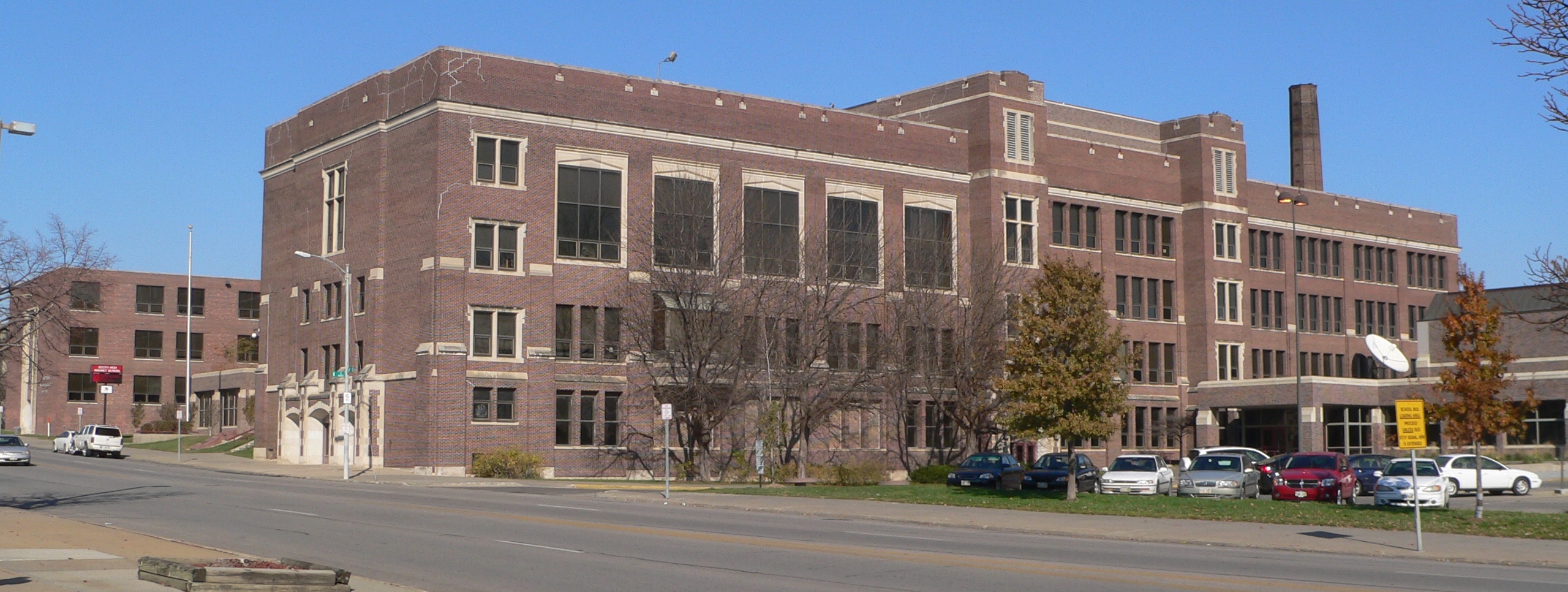
When Omaha South High Magnet School social studies teacher Maria Walinski-Peterson thinks about her 2011 Alice Buffett Outstanding Teacher Award, she’s reminded of master teachers she had as a student there. Teachers like Sally Fellows and Jim Eisenhardt.
“They were models of teachers who knew what they were talking about, who had some energy, some enthusiasm, and who made me want to pay attention. They had a kind of charisma. I wanted to do a good job for them,” says Maria.
“That’s a pretty tall order to get that breadth and depth. The fact that anybody thinks I have even a small piece of that…” she says, her voice trailing off. “When that call came about the Alice Buffett, I thought, Really? I’m not Sally Fellows yet, I’m not Jim Eisenhardt yet, I’ve only been doing this nine years, this is too soon.
“But I learned from the best, and I knew if I’m going to truly follow this vocation I have to give these kids something they’re not going to necessarily get from somebody else.”
The recognition and the $10,000 that come with the award means raised expectations.
“There are people looking at me like, ‘Really, you got a Buffet? What’s so great about you?” The pressure is enormous. Other people are like, ‘Oh, just relax and enjoy it.’” To which her response is, “Are you freaking kidding me?’ If students and colleagues have said you’re one of the best in your profession — guess what? — I have to be one of the best. I don’t get to slack off. People are watching.”
She may feel added pressure, she says, “because I’m relatively young. You don’t usually get a lifetime achievement award until you’ve put in a lifetime.”
There’s pressure, too, teaching where she once attended school, but she couldn’t see herself working anywhere else.
“I lobbied diligently to be here. After I got my teaching certificate and master’s degree at Drake University, I was sending emails and calling people back here saying, ‘Make sure there’s a spot for me — I need to student teach in this building, so that I can teach in this building.’ This place gave me so much. It’s simply payback. It’s a calling and I just knew this is where I had to be.”
If anything, her loyalty has only deepened. She says she recently declined “a cushy gig” at a suburban school to stay at South. In light of what happened last fall, she can’t imagine ever leaving. Days from being married, her best friend and intended maid of honor, fellow South social studies teacher Stacey Klinger, died when a truck struck her as she crossed the street in front of school.
Maria will never forget how students consoled her. “These kids literally and figuratively put their arms around me and said, ‘We’re here for you. What do you need?’ We bonded in a way you can’t bond in any other way. We have that history together. They have seen me at a level of humanity they don’t see too many teachers in.”
As an Academic Decathlon and African-American History Challenge coach she’s bonded with yet more kids. “I just know we’re always going to be like this,” she says, clasping her hands together. “I love those people and they love me back.”
The daughter of a retired Lutheran-Episcopal-Orthodox Christian priest, Maria was born in upper New York state. She likes saying she was at Woodstock, where her mother Joan was pregnant with her in 1969. At age 11 Maria moved with her family here when her father was assigned the pastorship at St. Martin of Tours Episcopal Church across from South.
She was expected to attend private school, but she preferred the more diverse public school experience afforded by South.
“I wanted to be in the real world,” she says.
This teacher of human geography loves the cultural melting pot there.
“South Omaha’s always had working class diversity and it’s always been an immigrant landing strip,” she says, “but now those immigrants are coming from other places than just western and eastern Europe. They’re coming from the Sudan. We’ve got a lot of Karen kids from Burma. We’ve obviously got a lot of Central and South American kids.
“South High is the most ethnically diverse high school in Nebraska. In any given class period I’ve got that rainbow looking right back at me. We have a microcosm of the planet right here.”
For her, geography is more than a subject. “It’s the world,” she says.“Geography is life.”
As teachers, she says she and her colleagues are “in the business of building people.” The art and science of reaching today’s kids with their shorter attention spans and passive learning habits can be frustrating.
“There are many days when I’m like, ‘I’m not doing this, this is hard, I’m going to quit,’ and my kids all just laugh and go, ‘You’re a lifer.’ Even my husband Glenn says, ‘If you told even one of those kids you’re going to give up teaching, the look on their face would change your mind like that,” she says, snapping her fingers.
She knows he’s right. Besides, she loves “the creativity” of lesson planning. Then too, she says, “I’m really not good for anything else. This is all I know.. so I guess I better stick it out.”
Related articles
- Masterful: Omaha Liberty Elementary School’s Luisa Palomo Displays a Talent for Teaching and Connecting (leoadambiga.wordpress.com)
- Turning Kids Away from Gangs and Toward Teams in South Omaha (leoadambiga.wordpress.com)
- Home is Where the Heart Is for Activist Attorney Rita Melgares (leoadambiga.wordpress.com)
- Where Community, Neighborhood and Representative Democracy Meet (leoadambiga.wordpress.com)
- Community Trumps Gang in Fr. Greg Boyle’s Homeboy Model (leoadambiga.wordpress.com)
- A South Omaha Renaissance (leoadambiga.wordpress.com)
- El Puente: Attempting to Bridge the Divide Between Grassroots Community and The System (leoadambiga.wordpress.com)
- Gray Matters: Ben and Freddie Gray Fight the Good Fight Helping Young Men and Women Find Pathways to Success (leoadambiga.wordpress.com)
Peter Buffett completes circle of life furthering Kent Bellows legacy
The Buffetts are to Omaha what the Vanderbilts and the Rockefellers and the Fords were to their home cities only the Buffetts don’t build brick and mortar edifices as expressions of their wealth they way those other mega-rich families did. No, the Buffetts are creatives, not industrialists, and therefore the contributions they make are in ledger books and programs and services and, in the case of Peter Buffett, in compositions. This is a story I did a few years ago for Metro Magazine about Peter and his passions for music, art, youth, and social justice. It also goes into the encouragement he received from his late mentor, the artist Kent Bellows of Omaha and his support for the Kent Bellows Studio and Center for Visual Arts in Omaha.
-
 Peter Buffett
Peter Buffett completes circle of life furthering Kent Bellows legacy
©by Leo Adam Biga
Originally published in Metro Magazine
The sudden death in 2005 of American Realism master Kent Bellows reverberated throughout the art world. Among those affected by his passing was musician Peter Buffett, an Omaha native and youngest son of billionaire investor Warren Buffett.
Decades earlier Peter was befriended by Bellows, eight years his senior, when his parents became the artist’s patrons. Bellows, who had an affinity for young people, mentored Peter. Over time, the two remained close, a relationship that lasted until the artist’s death at age 56 from natural causes at his mid-town studio.
In the back of that studio, whose loft contained Bellows’ living quarters, the artist held court with a coterie of friends, creatives all. Buffett was a frequent visitor.
“I just really found his intellectual curiosity, coupled with his creativity, infectious,” Buffett said by phone from his New York City home. “He was just a very warm, open, likable person. He also played piano. I loved to hear him play. He had a very unique style.”
The widely collected and exhibited Bellows lived and worked in a century old structure overbrimming with the toils of his discipline. The building’s now home to the Kent Bellows Studio and Center for Visual Arts, 3303 Leavenworth St., where his tools, ephemera and backdrops are preserved the way he left them. The result is a tableaux-like, three-dimensional still life of the creative process.
The center, whose mission is to “ignite the create spark” in individuals and encourage their “potential through self-expression in the visual arts,” conducts a mentoring program pairing professional artists with area high school students.
Fulfilling potential is a theme of Buffett’s new book, Life is What You Make It (Harmony Books), a part memoir, part inspirational primer.

On April 30 he presented Life is What You Make It, A Concert and Conversation benefit for the nonprofit center. Performing before a packed house at Joslyn Art Museum‘s Witherspoon Concert Hall, he sang and spoke about finding one’s bliss.
“I think self-reflection and responsibility is sometimes the missing piece for people. They’re not really willing to take a hard look at their own actions,” he said. “It’s much easier to blame something or someone else.”
He believes “a lot of people short change themselves. Our own minds can wreak havoc on our dreams for sure. It is too bad we get trapped by our own thinking that we’re not good enough.” He said he held himself back musically for years because of self-doubt. In his book he discusses some of his failures or missed opportunities. Recognizing those moments can help us seize the next day, he says.
He credits encouragement from his parents and from mentor figures like Bellows for preparing him to fulfill his own potential.
Event proceeds also supported a Bellows exhibition opening September 25 at Joslyn, the first major retrospective of the artist’s work since his death. A young Bellows studied masterworks in Joslyn’s galleries and some of his own early work showed there.
The Bellows center and exhibition are close to Buffett’s heart because they perpetuate the spirt of a man whose loss is still fresh for him and they complete the circle of life.
-
 Kent Bellows
“Kent’s somebody I think about very often,” said Buffett. “When you know anybody well there’s certain things about them you remember. He had a great laugh, he had a great quality to his voice. So, viscerally you can feel and hear his presence. He’s definitely still around.”
Buffett’s built a life embodying the Bellows mantra of following one’s passion. Buffett’s parents modeled a similar philosophy: his father Warren as entrepreneur and philanthropist; his late mother Susie as community activist and singer. Peter suspects Susie saw Bellows as a kindred spirit who would nurture and guide him .
Bellows center executive director Anne Meysenburg said of Peter, “He’s a product of Kent’s mentoring.” Buffett agrees and often references the influence of his departed friend. As Kent did, Buffett’s carved out a creative niche for himself that expresses his deepest feelings. As a Kent Bellows Foundation founder and board member, he’s keenly aware of carrying on the generosity Bellows was famous for.
“As Kent was to me, the foundation is to the kids it’s mentoring and supporting. That was the brilliance I think of Kent’s sisters and Anne (Meysenburg) really saying, What was Kent’s role in the lives of the people he touched and how can that be extended to what the foundation does? They’ve really hit it, too. It really is that supporting, mentoring role.”
“The center gets to give that back to young people in perpetuity,” said Meysenburg.
In turn, mentors and students engage the communit in positive social action through public art projects. Meysenburg said Buffett is “a guiding force. He’s got a very holistic view. He comes from a funder’s perspective but he also understands the plight of the nonprofit. He provides a lot of insight. He has incredible passion for the organization. Peter is very focused on the two sides of our mission, which are honoring Kent’s legacy and creative development in the community.”
Giving back is a dimension of Buffett’s humanist ideals. He and his wife Jennifer’s NoVo Foundation works to empower girls in developing nations. He said this focus is predicated on the belief societies need to move “from domination and exploitation to collaboration and partnership” by valuing the disenfranchised.
“We talk about that in the context of girls and women because they’re certainly wildly misrepresented in the world compared to their numbers,” he said.
He believes supporting girls and women has a ripple effect through families and communities.
“The bottom-line for me is that only a girl will be the mother of every child and because of that if you can support, educate, provide health care and a livelihood to a girl she’s going to be a different kind of mother, and therefore everyone will be better off. It’s not unlike my father’s investment philosophy — you find something undervalued in the marketplace, you recognize its true value, you invest in it, support it, and wait until the market catches up and your investment pays off. And to me that’s a girl, she’s undervalued. That’s where we want to put our money.”
He said there’s no substitute for visiting a country to understand its challenges. “It’s invaluable to do. My line is, ‘You won’t know if you don’t go.'” Jennifer was recently in Uganda for the foundation. The couple log many miles together. The Uganda visit was the first major foundation trip he’s not been on.
Not long ago Buffett was best known as a composer-producer of New Age-style projects, but he’s fast-gained notoriety for personal recordings, some political, featuring his singing voice. The first social justice awakening in his music came with his Native American work (Spirit – The Seventh Fire) and a collaboration with Chief Hawk Pope. He’s lately collaborated with R&B artist/rapper Akon and Afropop artist Angelique Kidjo. He and Akon performed in the United Nations General Assembly in remembrance of slave trade victims.
He said his ever evolving career “is a testament to following what you love” as opposed to a rigid goal. “I’m much more into being than doing because I’m finding the more I follow this thing that’s inside of me I’m able to put these interior feelings in the music in a way that people respond to.” He never imagined himself a singer but he believes events opened him to the possibility.
“Kent’s death was a big piece of that, as was my mom dying the year before. Jennifer and I went through a very difficult time, so songs started coming out, and I really just wrote them for myself and my relationship. I was surprised by the fact they sounded OK. I still don’t think of myself as a singer. I’m still getting used to it frankly. But when you’re sitting in the General Assembly of the U.N. and Akon is singing with you and Nile Rodgers is backing you up on guitar, you think, How the hell did this happen? How cool is this?”
Buffett is the only male to perform on stage for V-Day, a movement to stamp out violence against females. By using music to speak out against social ills, such as his songs “Can We Love?” and “Bought and Sold,” he’s fulfilling a long-held desire. He said, “I always wanted the music to do something — to serve a higher purpose.”
In an era of diminishing resources and widening inequities, he’s a proponent of people in developed countries making do with less.
“We’re stuck in this world that tells us we need things to feel whole,” he said. “I think you can never fill whatever inside you that feels empty with stuff. Some brilliant ad man a long time ago figured out that you can make people think that they can. Now we’ve built an economy on it, and when it collapses what will we have? We won’t have the sense of community and connections we’ll need to really survive.”

He appreciates the irony of someone from privilege raising the question, “How much is enough?,” but points out that for all the Buffett’s riches they live frugally and do give back. His father’s famously earmarked his fortune to charitable causes, including foundations run by Peter and his siblings that address social problems.
Peter advocates social networking as a means to promote social justice and supports efforts like the social action web site, IsThereSomethingICanDo.com.
Meysenburg said the Bellows center’s community engagement piece aligns closely with Buffett’s interests. Students and mentors will participate in a graffiti abatement program this summer with juvenile offenders. Buffet’s involvement in the Bellows Foundation is a big reason why Meysenburg said the start-up’s grown quickly and formed multiple partnerships. His April concert was the second fund-raising gig he’s performed on its behalf.
Peter visits the Bellows center whenever in town. He enjoys seeing the student-mentor dynamic at work. He cannot help but think back to when he and Bellows filled those roles. It’s an interaction he finds almost sacred beauty in.
He’s seen the progress made in transforming the old Bellows work space into a contemporary gallery, offices, education wing and artistic playground. Work continues as funds allow. Renovations have necessitated the center’s classes meeting in the Bemis Underground in the Old Market. The Bemis Center for Contemporary Arts is a major partner of the Bellows program.
Buffett said he and fellow Bellows Foundation members are conscious of living up to the legacy of the man whose life exuded the nurturing, creative spark. He’s satisfied they’re on the right track.
“It makes us all feel good we’re doing something we know he would love. None of us forget that.”
Related articles
- Life Lessons from “Life Is What You Make It” (heybudblogger.wordpress.com)
- Jane Fonda Comes Home (leoadambiga.wordpress.com)
Community trumps gang in Fr. Greg Boyle’s Homeboy model
Gang prevention-intervention efforts run the gamut. One that’s drawn lots of attention is Homeboy Industries, an East L.A. program founded and directed by Rev. Greg Boyle, a Jesuit priest who has serious cred on the mean streets there for helping gangbangers find pathways to employability. I wrote this article in advance of a talk Boyle gave in Omaha a couple years ago. His experiences working with gang members and getting many to give up that life are told in his book, Tattoos on the Heart: The Power of Boundless Compassion.
-
 Fr. Greg Boyle with some of the Homeboys
Community trumps gang in Fr. Greg Boyle’s Homeboy model
©by Leo Adam Biga
Originally appeared in El Perico
The gang intervention efforts of a Jesuit priest in East Los Angeles have grown into Homeboy Industries, which provides mostly Latino participants work and life skills training, counseling and, most importantly, opportunity for hope.
The much profiled program has many communities, including Omaha, looking to its founder, Rev. Greg Boyle, for guidance in dealing with their own gang issues. Boyle, an acknowledged expert in the field, will be in Omaha Feb. 24 to discuss the successful therapeutic and employability approach his nonprofit takes and how it may be a model for Omaha.
From 1 to 4 p.m. at Creighton University‘s Harper Center Boyle will consult with community leaders engaged in gang intervention, prevention and workforce development efforts. At 5 p.m. he meets with Mayor Jim Suttle and Omaha City Council members. At 7 Boyle will deliver a public lecture and sign copies of his book, Tattoos on the Heart: The Power of Boundless Compassion, at Metropolitan Community College‘s South Omaha campus, in Room 120 of the Industrial Training Center, 27th and Q Streets.
Rev. Howard Dotson, pastor of Westminster Presbyterian Church in Omaha, invited Boyle after hearing him speak last year in L.A., where Dotson also did gang intervention work. One thing Boyle says he’s learned from 20-plus years dealing with gang bangers is that “just like recovery in alcohol and drugs,” where “it takes what it takes to finally stop getting high,” it’s the same for gang members leaving The Life. “It can be the death of a friend, the birth of a son, a long stretch in prison. Like in recovery you don’t have to hit bottom, but maybe it will take that.”
He says gangs are not a crime issue but a community health issue like other social dilemmas (homelessness, addictions, prostitution).To address the complex problems gang members present he says Homeboy offers mental health services, along with employment opportunities, life coaching, “plus every imaginable curricular thing, from anger management to parenting — you name it, we have it.”
The program operates businesses that employ gang members, including a bakery, a cafe, a silkscreen shop, a merchandise store and a maintenance service. More than a job Boyle says Homeboy provides an avenue for “healing to take place.” Enemy gang members work side by side to break down barriers.
“Once they have a real palpable experience of community then it will shine light on the dark corners of gang life,” he says. “They realize how empty and hollow all that had been in the past. The community trumps gang.”
He says suspicion and animosity dwindle amid shared goals and cooperation.
“Their common interest is that they want to work. Before too long they become fast, wonderful friends. It’s one of those things you can actually take to the bank — it’s going to happen. They’re going to bond in a way they’ve never known in their family and they’ve never known in their gang certainly.”
Boyle says the comprehensiveness and effectiveness of Homeboy is why cities like Seattle and Wichita adopt some of its methods. Some observers credit Homeboy and community policing with helping dramatically reduce L.A.’s homicide rate.
“No nonprofit in L.A. County has a greater impact on the public safety than this place because we engage so many gang members,” says Boyle, who estimates “all 1,100 known gangs in the county have had somebody walk in here at some time or another.”
“I would say what makes us unique is this therapeutic model — attachment repair and a secure base is what we call it. We try to help people engage in their own healing so they can re-identify who they are in the world. Then they can go out in the world and the world will throw at them what it will but it won’t topple them because they’ve had this palpable experience of community and the chance to figure out who they are. It works.”
Dotson’s convinced Boyle and Homeboy have something to offer Omaha.
“To get jobs and to get rehabilitation for kids coming out of correction is the best way to stop the bullet.,” says Dotson. “You need to invest in these kids. If you give them a sense of hope and a sense of agency and some of that unconditional love many of them never got, then you reduce the gang problem.
“As church and community we have to meet people where they’re at and Fr. Greg and the people who support Homeboy understand that.”
South Omaha Boys and Girls Clubs gang prevention specialist Alberto Gonzales says the need for a Homeboy model here is greater than ever in light of recent cuts. Funding for anti-gang work he did in local schools has been eliminated. The Latino Center of the Midlands has disbanded its substance abuse counseling program.
“Where’s the Latino community going to turn to?” says Gonzales. “People need a place they can go to where they can cry out, ‘This is who I am, this is what I’ve done, I need help.’ These programs are definitely a must.”
Related articles
- Turning Kids Away from Gangs and Toward Teams in South Omaha (leoadambiga.wordpress.com)
- Ex-gang members work to stop gang violence in L.A. (cbsnews.com)
- Tomas Mournian: HOMEBOYS: Cholos, BiLatinMen, & Gay Gang Bangers @ OUTFest 2012 (huffingtonpost.com)
- Boundless Compassion (ehflaw.typepad.com)
- Gang members give warning signs, solutions to keep kids out (wcnc.com)
Turning kids away from gangs and toward teams in South Omaha
Omaha’s had a problem with gangs for a quarter century now. Most American cities share the same scourge, more or less. It’s good to be reminded that law enforcement efforts to deal with the problem don’t begin and end with patrolling hot zones or investing crimes or making arrests, they also include grassroots community engagement to try and steer young kids away from the pull of gangs into positive activities. The following story I wrote for El Perico a few years ago describes the community prevention-intervention work of one cop in Omaha, Det. Tony Espejo with the gang unit.
Turning kids away from gangs and toward teams in South Omaha
©by Leo Adam Biga
Originally appeared in El Perico
For Omaha Police Department Gang Unit detective Tony Espejo, being honored as National Latino Peace Officers Association Officer of the Year in Austin, Texas earlier this month brought full circle the community service his parents modeled for him.
As long as he can remember, he said his folks, Juana and Ezequiel Espejo, “have been advocates in the community…Growing up, we always opened our house up to people. My mom is a big advocate in the YWCA. A lot of people know her. She’s had a huge hand in helping a lot of immigrant families.”
Today, Espejo, who’s married with two children, serves that same community working out of the Southeast Precinct. It’s a different environment than the small, tight-knit environment he knew as a boy. Families then were more cohesive, youth activities more numerous.The Gross High grad dropped out of college, then entered the military.
“I wasn’t doing bad things but I wasn’t doing great things. Boy, the Marine Corps got me on the straight and narrow, it got me organized. I grew up is what I did.
When he returned home, he found a new immigrant population reenergizing the area. But there was a new problem: unsupervised youths running the streets, trafficking in drugs, engaging in driveby shootings.
“The graffiti and gang problem was probably the biggest shocker for me,” he said. “When I left in 1992 it was just starting. I think there was one Hispanic gang in south Omaha and I knew all the kids in it. We used to play sandlot baseball and football together. I came back and these guys were full blown gangsters and there were three or four different gangs by then. Before, there was not the violence I all of a sudden walked into here. This wasn’t the south Omaha I knew.”
Back home his desire “to make things better” prompted him to become a cop.
“There weren’t a lot of Mexican police officers at the time, you rarely saw any on the street,” he said. Eventually assigned his old stomping grounds, he joined the gang unit in 2004. He said, “I kind of looked at it from a problem-solving aspect. Why are these kids doing this? What is the root of the problem?”
In 2005 the example of two men he met planted a seed. In Chicago, Bob Muzikowski channeled kids from the notorious Cabrini-Green projects into baseball. Locally, Stoney Hays funneled kids into Boys and Girls Club activities. Espejo liked the idea of recruiting at-risk kids away from gangs into something structured and positive. His first inclination was baseball, but the youth he ran into had other ideas.
“I would drive around on patrol and see all these different groups of kids playing soccer.
I didn’t know anything about soccer, but it’s huge for these kids.”
He formed a soccer league with help from the Nebraska Latino Peace Officers Association. It’s grown from six to 18 teams. He enlists kids he happens upon.
“There’s always a leader,” he said.”I find that kid and make him responsible. I let the group pick their own team name, colors, uniform. It means something to them. I want the kids to be proud of being from south Omaha.”
He said young people crave “a sense of belonging. They’re ripe for the picking.” His intervention program tries reaching kids before gangs do.
He and fellow officers volunteer as coaches. The consistency of positive adult role models, he said, “is probably the biggest thing missing in a lot of families nowadays.”
Participation’s free. Uniforms provided. But, he said, “we aren’t just giving it out, they have to put out and practice.” They have to act right.
“We emphasize we’re not just coaches, we’re police officers, so if you do get in trouble we’re going to find out about it, and we’d hate for you to embarrass us because we’re here to help you guys out. I’ve had my disappointments. Two leaders turned out to be little gangsters. I recently arrested one of my guys. I take it personally, because I took my chance to change them. I can’t be there every day for them. You can only carry them so far. At some point you gotta let ‘em go, and hopefully that little bit of time we spend with them, they’re going to make the right decision.”
The relationships built, he said, allow kids “to see officers in a different light. It humanizes us. And it gives officers an idea of what it’s like to live down here for these kids. A lot of them come from dysfunctional homes. They tell us their problems.”
The kids he started with are graduating high school and moving on with their lives.
He’s since added a baseball league. He wants to expand his efforts into north Omaha.
Along with mentoring kids, he educates parents about the dangers of gang involvement. He said his bilingual skills and respected family name “open up doors for me.”
He described his award as “huge.” Meeting distinguished Latinos in Austin, he said, “was a big inspiration. Now I know I can achieve higher, I should achieve higher. It means a lot for me to be even considered that caliber of person. But I wouldn’t be where I’m at if I didn’t have other officers and volunteers helping me out on their own time.”
With 300 kids participating, he needs more fields, volunteers, sponsors. “This thing’s only limited by funding,” he said. “It’s a huge commitment, but it’s the right thing to do.”
To donate or volunteer, call 402-510-1495.
Related articles
- Where Community, Neighborhood and Representative Democracy Meet (leoadambiga.wordpress.com)
- Chicago gang database intends to predict violence (foxnews.com)
- NOPD targets group violence, gangs across city (wwltv.com)
- Gray Matters: Ben and Freddie Gray Fight the Good Fight Helping Young Men and Women Find Pathways to Success (leoadambiga.wordpress.com)
Gray Matters: Ben and Freddie Gray fight the good fight helping young men and women find pathways to success
Omaha’s African-American community has some power couples in John and Viv Ewing; Willie and Yolanda Barney; Dick and Sharon Davis, among others, but the couple with the broadest reach may be Ben and Freddie Gray. He serves on the Omaha City Council. She’s president of the Omaha Public Schools Board of Education. That’s really having your fingers on the pulse of Omaha. Ben is someone I use as a source from time to time for stories I write about North Omaha and he is the subject of an extensive profile you’ll find on this blog. Freddie is someone I’ve just begun to know and I expect I’ll be interviewing and profiling her again before too long. They both have compelling stories and individually and collectively they are dynamic people making a difference wherever they serve and it just so happens their passions allign in boosting urban, inner city North Omaha through a variety of community, youth, and education initiatives.

Gray Matters: Ben and Freddie Gray Fight the Good Fight Helping Young Men and Women Find Pathways to Success
©by Leo Adam Biga
To appear in the August edition of the New Horizons
If you follow local news then you can’t help know the names Ben Gray and Freddie Gray. What you may not know is that they are married.
He’s instantly recognizable as a vocal Omaha City Councilman (District 2). He’s also a prominent player in the Empowerment Network, One Hundred Black Men and other community initiatives. He was a public figure long before that as a KETV photojournalist and the activist-advocate executive producer and host of the public affairs program Kaleidoscope, which weekly found him reeling against injustice.
Until recently his wife wasn’t nearly as well known, though in certain circles she was tabbed a rising star. She actually preceded Ben in public service when appointed to the Douglas County Board of Health. At the time she was office manager at NOVA, a mental health treatment facility. Along with Ben she co-chaired the African-American Achievement Council. She was also a paid administrator with the organization, which works closely with the Omaha Public Schools. It’s not the first time the couple worked in tandem. They have a video production business together, Project Impact. He produces-directs. She’s in charge of continuity.
She’s also worked as a strategic planning and management consultant.
Her longstanding interest in education led her to volunteer with the Omaha Schools Foundation and serve as a member of the student assignment plan accountability committee. The Grays were vocal proponents of the “one city, one school district” plan. Her public stature began to rise when she replaced Karen Shepard on the Omaha Public Schools Board of Education in 2008. She’s since become board president. The demands of the position leave little time for consulting work, which she misses, but she may have found her calling as a public servant leader.
“I like governance, I really do,” she says. “I have a strong feel for it.”
The size of responsibility she carries can be daunting.
“Sometimes I think about what a big job it is. The Omaha Public Schools district is one of the largest employers in the state and I’m the president of the board that’s in control of this entity. That’s kind of scary. I am not as confident as it comes across but I have a voice and I believe in using it for all these kids.”
Since assuming the presidency her public profile’s increased. In truth her private life was compromised as soon as she became Ben Gray’s wife in 1991. “It put me in the spotlight. There’s so many things that marrying somebody in the public eye does, and you don’t have a choice, you’re going to be public at that point.”
She suspects that sharing his notoriety has worked to her advantage. “There’s a lot of stuff Ben has afforded me the opportunity to do. Without him people wouldn’t know me from a can of paint and that’s probably how I would have lived my life and I would have been comfortable and OK with that.”
That each half of this pair holds a highly visible public service office makes them an Omaha power couple both inside and outside the African-American community.
Each represents hundreds of thousands of constituents and each deals with public scrutiny and pressure that gets turned up when controversy arises. That was the case last spring when he led the fight for the nondiscrimination ordinance the council eventually passed and Mayor Jim Suttle signed into law. In June Freddie found herself squarely in the media glare in the fallout of the scandal that erupted when sexually explicit emails OPS superintendent hire Nancy Sebring made came to light and she resigned under fire.
The couple makes sure to show their solidarity and support in crisis. Just as she turned out for city council hearings on the ordinance he attended the first school board meeting after the Sebring flap.
They act as sounding boards for each other when they feel they need to. “Sometimes we do,” he says, “but most of the time we don’t.” “If I want to bounce something off of him I can do that but I have my board members to do that with and he has his council members,” she says.
“If you’re married and you’re connected you know when it’s time to intervene and say let’s have a discussion about this,” he says. “Sometimes you just want to come home and veg out. The last thing you want is to talk about it. I don’t bring it home unless there’s a strategy, like when the Sebring thing happened we needed my expertise as a journalist, we needed legal counsel, we needed all of that, so that week was all about that.”
He’s proud of “how well she handled that situation, adding, “That was her defining moment.”
“A lot of times the conversation is after the fact,” she says, “because I can’t wait to talk to him to respond to the media when they’re in my face. I know if i need to I can reach out and he’s going to respond. The other thing is, we don’t always agree with each other. There’s been times when we’ve been able to change each other’s opinion or stand but not real often. But we don’t fight about it.”
The Grays have been making a difference in their individual and shared pursuits for some time now. The seeds planted during their respective journeys have borne fruit in the public-community service work they do, much of it centered around youth and education.
“We believe in children, I can tell you that, we believe strongly in children,” says Ben. Freddie calls it “a passion.”
Their work has earned them many awards.
They have seven adult children from previous marriages. They mentor more. By all accounts, they’ve made their blended family work.
“One of the things we did was we started having family dinners, and we started that before we got married,” says Freddie, “I still had one daughter at home with me. My older daughter was away from home. His children were still at home with their mom. Both of us were smart enough to figure out that with this new young person, let alone me, in the picture spending time with him that could be difficult. So we started having family dinner on Sunday and all seven of the kids would come. And we still do family dinner today.
“It was a wonderful way to bring our families together. And when people talk about a blended family, if you’ve ever done something like that and made it a tradition of your house for everyone to come together, it really and truly does blend them.”
Two of their kids live out-of-state now, as does one of their 11 grandchildren (they also have a great grandchild), but that still leaves a houseful.
“So generally on Sunday it’s a zoo time,” she says. “He loves it. He’s like they could all move back tomorrow. I’m the one that says no they cannot move back here and they have to go home now. They’re so close.”
Though born and reared in Cleveland, Ben’s made Omaha his home ever since the U.S. Air Force brought him here in the early 1970s. He’s built a life and career for himself and raised a family in his adopted hometown.
She’s an Omaha native but her father’s own Air Force career uprooted her and her six sisters for a time so that she did part of her growing up in Bermuda and in Calif. She returned in the early 1960s. The Omaha Central High School graduate raised a family here while working.
Whether in vote deliberations or media interviews each seems so poised and at home in this milieu of politics. As accomplished as they are today each comes from hard times far removed from these circumstances.
For example, the man Omahans know as Ben Gray is called by his street name “Butch” in his old stomping grounds of East Cleveland, where after suffering the loss of his working class parents at age 13 he fell into a life of organized crime. Numbers running, pimping, drug dealing. His extended family was well-entrenched in the black criminal underworld there. Its pull was something he avoided as long as his parents were alive but once gone he succumbed to a life that he’s sure would have ended badly.
Ben’s older sister Mary Thompson, whom he calls “my guardian angel,” and her husband took Ben and his younger brother Doug in and raised the boys right, modeling a fierce work ethic. But the call of the streets won out.
“The guys that I was dealing with, the guys that I knew, were real life gangsters. They do stories about these guys. Shondor Birns. Don King.
Before he was a fight promoter Don King used to run Cleveland. He ran all the drugs. And then he stomped a guy to death and when he went to prison his territory was split up, primarily between three different individuals and one of them was my uncle.”
Gray was arrested and sentenced to a youth incarceration center. After graduating a year late and near the bottom of his class he entered the military. His life’s never been the same since. “The Air Force changed who I was,” he says. “The military was my way out. Had I not joined I don’t think I would be alive. I was headed down a pretty dark path.” He graduated from aerial photography with honors. “People ask, ‘What was different?’ My response is always the same – discipline and expectations.”
That training is so ingrained, he says, “I’m disciplined about everything,” whether the self-pressed clothes he wears, the tidy home he keeps, the legislation he advances or the youth outreach he does.
“The intention of the military is to complete the mission and I complete the mission. When it came to the equal employment ordinance I had to complete the mission. When it came to the budget I had to complete the mission.”
He says leaving his old environment behind was the best thing he could have done.
“My sister readily tells folks all the time that while she hated to see me go she was in a lot of ways glad to see me go because she didn’t think I was going to make it if I stayed there.”
“That’s what she told me once,” says Freddie. “She said, ‘We’d thought he’d be dead or in jail.’ But they’re so proud of who he is today.”
When he goes back to visit relatives and friends, as he did with Freddie in July, he’s clearly a different person than the one who ran the streets as a youth but to them he’s still Butch. Oh, they see he’s transformed alright, but he’s Butch just the same.
“When we’re in Cleveland I immediately go back to referring to him as Butch,” says Freddie. “That’s what everybody knows him as. I don’t think anybody knows him as Ben.”
“It’s interesting when you leave a place and you come back to it,” he says, “because when I visited the corners I used to be at – even though a lot of the same people were still there – it wasn’t the same for me. They knew it and I knew it. A friend of mine told me, ‘This is not your place anymore,’ and he was right, it wasn’t. I didn’t fit.
“When I was doing the things I was doing I fit right in, as a matter of fact I ran the show for the most part.”
On a plane ride the couple made 20 years ago to spend Thanksgiving with his family in Cleveland Ben revealed his past for the first time to Freddie.
“I said, ‘Babe, when we get to Cleveland you’re going to hear some stories about me.'”
Then he asked her to marry him.
“Yeah, that plane ride was interesting,” she says, “and I still said yes.”

She has her own past.
Living in the South Omaha public housing projects called the Southside Terrace Garden Apartments, near the packinghouse kill floors her father worked after his military service ended, the future Mrs. Ben Gray grew up as Freddie Jean Stearns.
Life’s not always been a garden party for her. She got pregnant at age 17 and missed graduating with her senior class. She struggled as a young single mother before mentors helped her get her life together.
“It was not all a fairy tale life. The personal feeling of disappointment, not just letting my parents down but all those sisters behind me. That humbled me for a really long time.”
Long before marrying a celebrity and entering the public eye or serving on the school board, she quietly made young people her focus as a mother and mentor. She calls the young people under her wing “my babies.” Just as women helped guide her she does the same today.
She can identify with young single moms “who think their lives are over,” telling them, “I thought that was going to be it, that I was going to be on welfare for the rest of my life. I looked around at where I was, the projects, and I saw a lot of it around me. Mothers who had never been married. I was on public assistance for awhile and didn’t like that at all. I didn’t like the fact welfare workers could just come over my place and go through my stuff.”
She shares her experience of learning to listen to the right advice and to make better choices.
“I talk to these young women now, and I’m very open about it. I don’t preach.”
But she tries to do for them what women did for her. “I was blessed to have those women in my life. A number of them became my mentors. One of them was LaFern Williams. I’ll never forget her and Miss Alyce Wilson, the director of the Woodson Center in South Omaha. I spent so much time there. My big sister Lola Averett was another. There was a time when anything and everything she did I would do. She still models everything I could ever hope to do and to be.”
She says women like her sister, who worked at GOCA (Greater Omaha Community Action), along with Carolyn Green, Juanita James, Phyllis Evans, Sharon Davis and Beverly Wead Blackburn, among others, encouraged and inspired her. When Gray attended GOCA meetings she says she was at first too shy to speak up at but Lola and Co. helped her find her voice and confidence.
“They honestly would make me stand up and ask my question.”
“I’ve been very blessed in my life to have great female role models,” she says. “They took special care of me and others. They took care of the community, too. They made it safe. They protected and loved. These women touched a lot of lives.”
Those that survive continue fighting the good fight into their 70s and 80s. “They haven’t stopped. I wouldn’t even say they’ve slowed down.” She says when she sees them “you can bet your bottom dollar I’m in their ear saying, ‘I’m making you proud, I’m doing the right thing.'” It’s what Freddie’s babies do when they’re around her. All of it in the each-one-to-teach-one tradition.
“I’ve always had the passion for those who are behind me, young people. I just collect them, I don’t know what else to say. Anyone who really knows me knows that I talk about my babies. And they know who they are and they know what I expect from them. I can’t tell you how they’re selected, I don’t know how. But there is that group and they are my babies and I love them with all my heart.
‘I’ve told them, ‘My expectations are you’ve got to take care of Miss Freddie when she’s old.’ They laugh at that. But I need them to take care of me. They’re going to be my doctor, my mechanic, my attorney. And then they get it, they understand what I’m telling them. That they’re going to take care of me because I can’t do it forever. So they’re going to have to do these things, they’re going to need to be on the board of health, on the school board, work at NOVA. They need to take care of the world. They know that’s my expectation.”
She is a wise elder and revered Big Mama figure in their lives.
“When they see me they call me Mama Freddie or say, ‘How you doin’ Mama Freddie?'”
She recently lost one of her “babies.” When she got the news, she says, “it knocked me to my knees and I’m not talking figuratively. I was walking down the hall looking at Facebook on my phone when I saw it. I was very thankful Ben was here because I dropped to the floor. And then the phone started ringing and it was some of the other babies calling to check on me and me needing to check on them.”
Just as Freddie’s been a force in the lives of young people for a long time, so has Ben, who’s made at-risk youth his mission. As part of his long-time gang prevention and intervention work he even founded an organization, Impact One, that supports young people in continuing their education and becoming employable.
Because he’s been where they are, he feels he can reach young men and women whose lives are teetering on the edge of oblivion.
“It’s amazing how quickly you can spiral down into some really deep stuff if you let yourself, so I understand,” he says.”When people ask me why I do i deal with gang members it’s because I know ’em. I know how they think, I know what they think, I know most of ’em don’t want to do what they’re doing because I didn’t.
“But you get to a point after awhile where it becomes a lifestyle that makes it very difficult for you to get out of and the only choice you have sometimes, and the only choice I see for a lot of these young men, I hate to say this, is to leave here. I don’t like the brain drain. A lot of these people are really smart. But they’ve cast such a bad shadow that I don’t know how you stay here. I mean, I think there has to be some time between they’re leaving and coming back.”
He says something missing from today’s street dynamic is a kind of mentoring that used to unfold on the corner.
“At that time we had older guys that were able to talk to the younger guys.”
Kind of like what Ben does today.
“Someone might say, ‘Stop, don’t do that, that’s crazy.’ Or, ‘If this is what you’re going to do, here’s how you do it.’ Those kinds of things.
These young men don’t have that. A lot of them don’t. I’m talking about across the country. There’s nobody on that corner anymore who’s older who can tell them…”
“It used to be the young guys on the corner and the wise guys that went back to the corner gave people words of wisdom, and that’s gone,” says Freddie, who’s known her share of hard corners.
“That’s lost,” says Ben.
He says what’s missing from too many of today’s homes and schools in the inner city and elsewhere is the kind of discipline he got from his parents and sister and the military.
“I think most of us want it, we just don’t know we want it. Discipline is a method of working with people and molding people into what they should be as adults. That’s what it is. And that’s what my father tried to do for me in the brief time he was on this Earth.”
Gray sees a disconnect between some of today’s African-American youth and schools.
“I think what’s missing from majority minority schools is a pathway to get young people to know who they are. Our African-American students don’t know why they are. They don’t know the background. In the classroom they get a real strong dose of European history but they don’t get much about who they are.
“When there’s little or no discussion about you then how do you sit there and maintain an interest in being there?”
OPS has struggled closing the achievement gap between African-American students and nonblack students. Gray says before any real progress can be made “you’ve got to get them to stay there and keep them interested,” an allusion to the high truancy and drop-out rates among African-American students.
The problem has thus far defied attempted remedies.
He says, “In spite of efforts by the Empowerment Network, Building Bright Futures and others to address core problems like truancy and drop-outs in the (North Omaha) Village Zone we’re losing kids, they’re not staying in school. And they’re not staying in school because the influence of the street is such a strong influence. I know it. Those streets call you, man, and you can be in that classroom six hours a day but damnit you’ve got to go home and when you dog home you go to an environment that’s primarily unhealthy.
“So in spite of all we’ve done in that Village Zone we’re not winning.”
He doesn’t pretend to have the answers. He knows the problem is complex and requires multiple responses. But he does offer an illustration of one approach he thinks works.
“Teachers are constantly amazed I can address a school assembly and keep kids’ attention. Staff don’t get it. Freddie gets it. I talk about where the kids came from, I talk about who they are, I talk about what their history has been. They listen because they don’t (usually) hear that. That’s part of the missing piece of why they don’t stay. They don’t feel there’s anything there for them.”
He doesn’t claim miraculous results either.
“Any of us who are involved in this effort who talk to these kids know they’re not going to hear everything we say right away. They’re waiting to hear if we’re genuine. I tell them, ‘I’m not here to get all of you, I’m not here to convince any of you of anything. One of you is going to hear what I say, respond and react to what I say by becoming a leading citizen in this community. So I’m just here to get my one.’
“That’s when they start listening. They want to be the one.”

Flanked by Freddie Gray and Ben Gray, grieving parent Tabatha Manning at a press conference in the aftermatth of losing her 5-year-old child to gun violence.
Freddie appreciates better than most the challenge of educating children when so many factors bear on the results.
“We don’t produce widgets, we produce the citizens that are going to run this country. That’s exactly what we’re doing every single day. Every single one of these kids is an individual who deserves to have an individual touch them. It’s about that one-on-one relationship if we’re going to get kids to succeed, and if we don’t get this right then I think that says something about what the state of this country will be.
“Poverty is going to be the thing that kills us if we don’t take care of it and the only way I know to do that is to provide our children with the necessary skills to become employable.”
She’s keenly aware of criticism that the school board has ceded too much power to the superintendent.
“I understand people say that thing about the board being a rubber stamp but they don’t come and listen to the committee meetings and hear the board in dialogue. By the time theres a news sound bite we’ve already talked about it or figured it out or tabled it. Those things happen during the day (when the cameras aren’t on).
“But trust me we’ve got this. My job is to provide the superintendent with guidance in saying, ‘This is what you will do.’ There has to be parameters. We’ve got statutes to follow.”
In seeking solutions to bridge the achievement gap, she say, “I’m talking to other districts’ board presidents and members, not just when I’m on the Learning Community, but other times, too. That hasn’t happened much before.”
She says more collaboration is necessary because studies show that wherever kids live, whatever their race, if they live in poverty they underachieve.
“Poverty is a problem. If we’re not addressing poverty now than 20 years from now we’ll be having the same conversation.”
Breaking the cycle is a district goal.
“At the board level it’s looking at careers. We do kids a disservice when we say everybody’s going to college because that’s a lie and we all know it. But we do need to supply them with the necessary skill sets so they can be productive citizens.
“We’ve got to get these young people to the place where they can get jobs, where they can get out of poverty.”
She says OPS is finding success getting businesses to offer students internships that provide real life work experiences. He’s been active in the Empowerment Network’s Step-Up Omaha program to provide young people summer training and employment towards careers.
As both of them see it, everyone has a stake in this and a part to play, including schools, parents, business.
“There’s room at the table for everybody and everybody has to have a foot in this and has to step up. The focus has to be on what can we do together,” she says.
Now that she’s solidly in the public eye in such a prominent job she hopes African-American women follow her.
“I have to say this for other women who find themselves feeling like they’re voiceless: If you can see it, you can be it. There’s a lot of young African-American females who are just sharper than sharp, that could run rings around me all day doing this, but they don’t feel like they have a voice.
“And so I really hope they are paying attention because again Miss Freddie is not going to be doing this for the rest of her life and some of them are going to need to be sitting on this board.”
Ben Gray feels the same way about the young men and women of color he wants to see follow him into television or politics or wherever their passion lies.
Both with his own children and those he’s “adopted,” he’s taken great pains exposing them to African-American history and culture and encouraging them to engage in critical thinking and discussion.
“I wanted them to be more aware, I wanted all of our children to be aware of what’s around them and what it takes to survive. And to know who they are and what their history is, and some of them can tell you a lot better than I can tell you now.
“We have two that are like our own who are former gang members. Both of these guys are brilliant young men, and given a different set of circumstances would be someplace else.”
Ben and Freddie Gray are living proof what a difference new circumstances and second chances can make.
Related articles
- Masterful: Omaha Liberty Elementary School’s Luisa Palomo Displays a Talent for Teaching and Connecting (leoadambiga.wordpress.com)
- Fast Times at Omaha’s Liberty Elementary: The Evolution of a School (leoadambiga.wordpress.com)
- Negro Leagues Baseball Museum Exhibits on Display for the College World Series; In Bringing the Shows to Omaha the Great Plains Black History Museum Announces it’s Back (leoadambiga.wordpress.com)
- Kelly: It’s not about the ‘sex story,’ Freddie Gray says of Sebring (omaha.com)
- Brown v. Board of Education: Educate with an Even Hand and Carry a Big Stick (leoadambiga.wordpress.com)
- Omaha’s Malcolm X Memorial Foundation Comes into its Own, As the Nonprofit Eyes Grand Plans it Weighs How Much Support Exists to Realize Them (leoadambiga.wordpress.com)


 Leo Adam Biga's My Inside Stories