Archive

Posts Tagged ‘Author’

NEWS FLASH: “Alexander Payne: His Journey in Film” now available through Barnes & Noble

August 20, 2016 Leave a comment

NEWS FLASH: “Alexander Payne: His Journey in Film”

Now available through Barnes & Noble. $25.95.

Passion Project. Introducing the new – “Alexander Payne: His Journey in Film”

https://www.facebook.com/AlexanderPayneExpert/?fref=ts

The book’s a must-read for film buffs, critics, filmmakers, educators and students as well as more casual film fans who want a handy Payne primer and trivia goldmine.

“This is without question the single best study of Alexander Payne’s films, as well as the filmmaker himself and his filmmaking process. In charting the first two decades of Payne’s remarkable career, Leo Adam Biga pieces together an indelible portrait of an independent American artist, and one that’s conveyed largely in the filmmaker’s own words. This is an invaluable contribution to film history and criticism – and a sheer pleasure to read as well.” – Thomas Schatz, Film scholar and author (“The Genius of the System”)


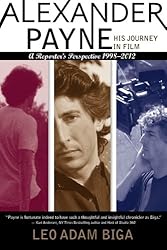
FINAL FRONT COVER 6-28-16


FROM YOUR ALEXANDER PAYNE EXPERT

Leo Adam Biga–

I am an Omaha-based author-journalist-blogger who often writes about film and in 2012 I turned my in-depth reporting about Oscar-winning writer-director Alexander Payne into a book entitled “Alexander Payne: His Journey in Film”. It is the most comprehensive study of his cinema career and work to be found anywhere. My collection of articles and essays is based on interviews I conducted with Payne and with many of his key collaborators. I have a new edition of the book releasing September 1 through a boutique press here called River Junction Press. This new edition features expanded and enhanced content, including a Discussion Guide with Index.

The book is updated and current through his “Nebraska” and “Downsizing” projects. I am quite proud of it. It’s received a wonderful endorsement from film scholar and author Thomas Schatz (see above).

“Alexander Payne: His Journey in Film” takes you deep inside the creative process of one of the world’s leading cinema artists and follows the arc of his filmmaking journey over a 20-year span, when he went from brash indie newcomer to mature, consummate veteran. Along the way, he’s made a handful of the best reviewed American films of the past two decades and his movies have garnered many top honors at festivals and at the Independent Spirit Awards, the Golden Globes and the Academy Awards.

The book has a staged release this fall, beginning September 1, 2016 through year’s end and well beyond, from River Junction Press in Omaha and sells for $25.95.

Available soon on Amazon, for Kindle and at select bookstores and gift shops. You can also order copies through my blogleoadambiga.com or via http://www.facebook.com/LeoAdamBiga or by emailing me at leo32158@cox.net.

More strong praise for”Alexander Payne: His Journey in Film”

“Alexander is a master. Many say the art of filmmaking comes from experience and grows with age and wisdom but, in truth, he was a master on day one of his first feature. Leo Biga has beautifully captured Alexander’s incredible journey in film for us all to savor.” – Laura Dern, actress, star of “Citizen Ruth”

“Last night I finished your wonderful new book and I enjoyed it so much! Alexander Payne is such a terrific director and I loved reading about his films in detail. Congratulations.” – Joan Micklin Silver, filmmaker (“Hester Street” and “Crossing Delancey”)

“Alexander Payne is one of American cinema’s leading lights. How fortunate we are that Leo Biga has chronicled his rise to success so thoroughly.” – Leonard Maltin, film critic and best-selling author

“I’d be an Alexander Payne fan even if we didn’t share a Nebraska upbringing: he is a masterly, menschy, singular storyteller whose movies are both serious and unpretentious, delightfully funny and deeply moving. And he’s fortunate indeed to have such a thoughtful and insightful chronicler as Leo Biga.” – Kurt Andersen, novelist (“True Believers”) and Studio 360 host

“Alexander Payne richly deserves this astute book about his work by Leo Biga. I say this as a fan of both of theirs; and would be one even if I weren’t from Nebraska.” – Dick Cavett, TV legend

“Leo Biga brings us a fascinating, comprehensive, insightful portrait of the work and artistry of Alexander Payne. Mr. Biga’s collection of essays document the evolution and growth of this significant American filmmaker and he includes relevant historical context of the old Hollywood and the new. His keen reporter’s eye gives the reader an exciting journey into the art of telling stories on film.” – Ron Hull, Nebraska Educational Television legend, University of Nebraska emeritus professor of broadcasting, author of “Backstage”

“Perhaps the most intriguing feature of the book is Biga’s success at getting Payne to speak candidly about every step in the filmmaking process. These detailed insights include the challenges of developing material from conception to script, finding financing, moderating the mayhem of shooting a movie, and undertaking the slow, monk-like work of editing.” – Brent Spencer, educator and author (“The Lost Son”)

“This book became a primer for me, and introduced me to filmmaking in a way that I had never experienced in my years at film school. The intimacy and honesty in Biga’s writing, reporting and interviewing– and Payne’s unparalleled knowledge of cinema introduced me to filmmaking and film history from someone I quickly came to respect: Mr. Payne.” – Bryan Reisberg, filmmaker (“Big Significant Things”)

Passion Project – My new “Alexander Payne: His Journey in Film” now available at KANEKO


FINAL FRONT COVER 6-28-16


My life’s work is writing stories about people, their passions and their magnificent obsessions. I do this as an author-journalist-blogger. The gallery of people and pursuits I write about is quite diverse.

See for yourself by reading and following my work at–
http://www.leaoadambiga.com and http://www.facebook.com/LeoAdamBiga.

Though I am a generalist who writes about anything and everything, there are a few subjects I keep returning to again and again. Some of these are societal and cultural in nature, others historical. But there is one particular individual who occupies special emphasis among all my writing and reporting: Alexander Payne. The Oscar-winning filmmaker, who has given us such works as Election, About Schmidt, Sideways, The Descendants and Nebraska, is actually part of a larger interest in film I have cultivated for decades. I got hooked on movies as a teen. I did film programming for a decade-and-a-half. Since the mid-1990s I have written hundreds of stories as a film journalist. Many of my film interviews and profiles focus on Nebraskans in film. I am developing the Nebraska Film Heritage Project as a print, online, lecture and curriculum vehicle for documenting and celebrating the achievements of Nebraskans in film, past and present, both in front of the camera and behind the camera.

Payne is the epitome of the passionate creatives I interview and profile. His magnificent obsession with film ranges from an encyclopedic knowledge of world cinema to support of film preservation and education efforts to pursuit of great film projects. From his very first feature, Citizen Ruth, on through his last completed film, Nebraska, he has satirically, thoughtfully explored a wide expanse of the human heart and soul. He’s paid particular attention to relationships, but he’s also touched on abortion, politics, mid-life crisis, loneliness, identity issues, addiction, depression, love, romance, infidelity, death, family, alienation, old age. The film he’s making now, Downsizing, which releases in late 2017, will offer up his most expansive take yet on the world with the satire this time revolving around themes of depleted world resources, sustainability, technology, geo-political tensions, terrorism, corruption, exploitation, discrimination and civilization. He and co-writer Jim Taylor are exploring the very nature of what it means to be human and how we create society. Where his previous films have been more intimate in scale, he is working on an epic canvas here, though the ideas are distilled into the closely observed personal story of one character, Paul (played by Matt Damon), whose life is the prism through which all these intersecting storylines and themes are played out. In terms of ideas, it may be the most ambitious American film since Apocalypse Now or The Deer Hunter or at least since Avatar.

My extensive coverage of the acclaimed writer-director has resulted in a deep body of work about him and his films that I have collected into a book first published in 2012. I have a new edition out this summer featuring expanded and enhanced content that brings you right up to date with his latest project.

Introducing the new “Alexander Payne: His Journey in Film” 

I am very pleased to announce the new edition Alexander Payne: His Journey in Film releases September 1. You have an early bird opportunity to buy the book at KANEKO, 1111 Jones Street, in Omaha’s Old Market. It will be available for purchase during the remainder of the Storytelling Series run (through August 27) at this venue that is “an open space for open minds…”

The book will be available at other venues, including bookstores and gift shops, during the course of the summer and fall. The book will also be available on Amazon and for Kindle.

Alexander Payne: His Journey in Film charts the filmmaker’s rise to the elite ranks of world cinema. Articles and essays take you deep inside the artist’s creative process. It is the most comprehensive look at Payne and his work to be found anywhere. This new edition features significant new content related to Nebraska and Downsizing. We have also added a Discussion Guide with Index for you film buffs and students. The book is also a great resource for more casual film fans who want a handy Payne primer and trivia goldmine. The book releases September 1 from River Junction Press and sales for $25.95.

For inquiries and pre-orders, contact: leo32158@cox.net.


FINAL BACK COVER 6-28-16


Strong praise for”Alexander Payne: His Journey in Film”–

“This is without question the single best study of Alexander Payne’s films, as well as the filmmaker himself and his filmmaking process. In charting the first two decades of Payne’s remarkable career, Leo Adam Biga pieces together an indelible portrait of an independent American artist, and one that’s conveyed largely in the filmmaker’s own words. This is an invaluable contribution to film history and criticism – and a sheer pleasure to read as well.” –Thomas Schatz, Film scholar and author (The Genius of the System)

“Alexander is a master. Many say the art of filmmaking comes from experience and grows with age and wisdom but, in truth, he was a master on day one of his first feature. Leo Biga has beautifully captured Alexander’s incredible journey in film for us all to savor.” – Laura Dern, actress, star of Citizen Ruth

“Last night I finished your wonderful new book and I enjoyed it so much! Alexander Payne is such a terrific director and I loved reading about his films in detail. Congratulations.” – Joan Micklin Silver, filmmaker (Hester StreetCrossing Delancey)

“Alexander Payne is one of American cinema’s leading lights. How fortunate we are that Leo Biga has chronicled his rise to success so thoroughly.” – Leonard Maltin, film critic and best-selling author

“I’d be an Alexander Payne fan even if we didn’t share a Nebraska upbringing: he is a masterly, menschy, singular storyteller whose movies are both serious and unpretentious, delightfully funny and deeply moving. And he’s fortunate indeed to have such a thoughtful and insightful chronicler as Leo Biga.” – Kurt Andersen, novelist (True Believers) and Studio 360 host

“Alexander Payne richly deserves this astute book about his work by Leo Biga. I say this as a fan of both of theirs; and would be one even if I weren’t from Nebraska.” – Dick Cavett, TV legend

“Leo Biga brings us a fascinating, comprehensive, insightful portrait of the work and artistry of Alexander Payne. Mr. Biga’s collection of essays document the evolution and growth of this significant American filmmaker and he includes relevant historical context of the old Hollywood and the new. His keen reporter’s eye gives the reader an exciting journey into the art of telling stories on film.” – Ron Hull, Nebraska Educational Television legend, University of Nebraska emeritus professor of broadcasting, author ofBackstage

“Perhaps the most intriguing feature of the book is Biga’s success at getting Payne to speak candidly about every step in the filmmaking process. These detailed insights include the challenges of developing material from conception to script, finding financing, moderating the mayhem of shooting a movie, and undertaking the slow, monk-like work of editing.” – Brent Spencer, educator and author (The Lost Son)

“This book became a primer for me, and introduced me to filmmaking in a way that I had never experienced in my years at film school. The intimacy and honesty in Biga’s writing, reporting and interviewing– and Payne’s unparalleled knowledge of cinema introduced me to filmmaking and film history from someone I quickly came to respect: Mr. Payne.” – Bryan Reisberg, filmmaker (Big Significant Things)

Watch for announcements about book signings and how you can get your copy for yourself, a friend, a loved one. Alexander Payne: His Journey in Film makes a perfect gift for the film lover in your life.

Paul Johnsgard: A birder’s road less traveled

June 24, 2016 3 comments

Paul Johnsgard is an unassuming Great Plains genius whose writing, lecturing, illustrating and photographing of birds and the natural world have earned him and his work high distinction. He is also renowned for his wood carvings of waterfowl. His impressive skill set has resulted in him being called a Renaissance Man by some and a rare bird or a bird of a different feather by others. The best way I found into his story was to frame his deep passion for nature as an extension of the imprinting process that goes on with birds. Everything about where he grew up and how he grew up immersed him in nature and reinforced his fascination with birds and wild things until it became embedded or imprinted in him. He is one of the latest in that ever growing gallery of my profile subjects whose life and work epitomize what I highlight in my writing – “stories about people, their passions and their magnificent obsessions.” Johnsgard’s regard for birds and the lengths he goes to observe, study, describe, illustrate, photograph than and to represent them in art are all about passion and magnificent obsession.

My profile of Johnsgard is the cover story in the July 2016 New Horizons that should be hitting stands and arrving in mailboxes by the end of June.

As an aside, whenever I do one of my new Horizons profiles I am reminded that the people of a certain age I profile in its pages are consistently the most complex, interesting subjects I write about. These people live rich, full lives marked by intellectual rigor, unbound curiosity, joyful work and play and a sense of adventure. They know themselves well enough by age 60 or 70 or 80 or 90 or whenever I get around to them to be comfortable in their own skin and to not much give a damn what anyone else thinks. They are well past pretense and posturing. They are al about living. They own every inch of their humanity, gifts and warts and all. It’s a refreshing and instructive lesson to live large and love hard.


2006 (Esquire image)

Paul Johnsgard in 2006 (Esquire image)


Paul Johnsgard: A birder’s road less traveled

©by Leo Adam Biga

Appeared in the July 2016 issue of New Horizons


A birder’s beginnings

World-renowned ornithologist Paul Johnsgard, 85, ascribes his passion for birds to something akin to the imprinting process that occurs with the winged creatures he’s made his life’s work.

For the University of Nebraska-Lincoln emeritus professor and author of 82 books, many illustrated with his own drawings and photos, this road-less-traveled life all began as a lad in North Dakota. His earliest memories are of birds and other natural things that captured his imagination while growing up on the edge of prairie country.

“The railroad track went through town and that was probably important because I could walk the railroad track and not get lost, and see birds and flowers,” he recalled. “I was unbelievably lucky I think.”

This Depression-era baby got exposed to the surrounding natural habitats of the Red River and of Lake Lida in Minnesota, where his family summered in a cottage. Those summer idylls gave him free range of unspoiled woods.

He loved the forests, grasslands, flowers, birds. But feather and fowl most fascinated him. Why?

“I don’t know,” he said, pausing a moment. “It’s their sense of freedom – they can fly anywhere and do anything. They have incredible grace. They’re wild. I’m not interested in domestic birds – turkeys and chickens and so on.”

Ah, the wild. From that Arcadian childhood through his adult field work, wild places and things have most captivated him. His appreciation for birds has ever deepened the more he’s observed them. Among other things, he admires their acuity.

Wonderful world of birds

Johnsgard wrote, “I’m absolutely convinced that there is a lot more to what they know and perceive than what humans observe. I honestly think that we are underestimating birds, and certainly other mammals, when we avoid anthropomorphism too rigorously.”

He told the New Horizons, “I even more believe that today. We’re learning things about bird intelligence that were not only unknown but unbelievable just a few years ago, such as their solving fairly complicated problems of putting things together to get at food and things like that that really require some kind of logic. The first person I think that really began to realize that was Irene Pepperberg (Brandeis University professor and Harvard University lecturer), who taught her parrot 300 or 400 words in English and the bird would put them together in not quite sentences but use them in that kind of a logical combination. I think that was one of the first major insights into how smart birds can be. They are remarkably aware of their environment and of any alterations in it, which is a measure of their intelligence.”

He has special admiration for one species – the crane – that has ancient roots and that mates for life. He’s so taken with the Sandhill Crane he’s devoted more words to its study than any other bird.  For decades he’s made a pilgrimage to see and record the annual Sandhill Crane migration in central Nebraska’s Platte River Valley,

“More than any bird I know,” he said, “they are amazingly aware of what’s going on. You don’t want to go anywhere near a crane nest because even if the female’s gone if she sees it has been disturbed she will abandon the nest. The only way you can do it safely is to wait until the nest is hatching – then she will stay there and protect it.”

His favorite bird has varied over time. “I think I was probably first enamored by Wood Ducks, which are so beautiful.  Then I became interested in swans, especially the Trumpeter Swan, and now, of course, cranes. Even though the Whooping Crane is bigger and more beautiful, I think I’m more attracted to the Sandhill Crane. I’ve spent so much time with them. I’ve probably not spent more than 10 hours looking at Whooping Cranes. They’re so rare. The chances of seeing them in Nebraska are remote at best.  But there’s a plethora of Sandhills.”


Thousands of greater sandhill cranes lift off from their island roosts at dawn along the North Platte River downstream from Oshkosh, Neb.

Thousands of greater sandhill cranes lift off from their island roosts at dawn along the North Platte River downstream from Oshkosh, Neb. (Courtesy/Stephen Jones


Sandhill Crane

Photo: usfws


The great migration

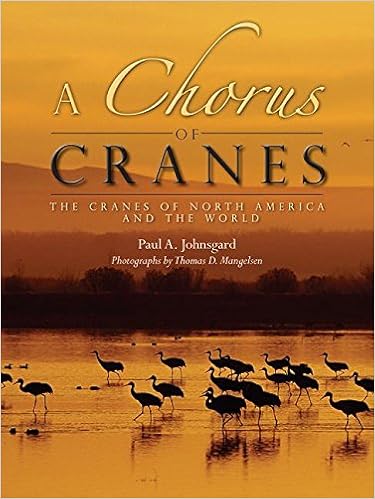
He has a special perch from which to watch the Sandhill Crane migration unfold courtesy of a cabin owned by internationally known wildlife photographer, Tom Mangelsen. The two men go way back. Mangelsen, a Grand Island native who did part of his growing up in Omaha, was a student and field assistant under Johnsgard, who mentored him in the 1970s. These friends and colleagues have collaborated on several projects, including a documentary Mangelsen shot and Johnsgard wrote about the Sandhill Cranes and for a new book A Chorus of Cranes.

Johnsgard is among the ranks who feel the spring migration is one of the greatest shows on Earth. It is a sensory experience to behold between the massive numbers on the ground and in the air and the swell of their trumpeting call.

“It’s a combination of place and sight and sound, all of which are unique,” he said. “To have 50,000 cranes overhead is quite something. Cranes are among the loudest birds in the world, so it just about blows your eardrums out when they’re all screaming. And to have a sunset or a sunrise, as the case may be, and to have this beautiful river flowing in front of you – it just all makes for a unique site in the world. It’s all those things coming together.”

Johnsgard’s prose is usually straightforward but there are times he uses a more literary style if it fits the subject, and he can’t think of anything more deserving than cranes,

“In my book Crane Music there’s a section on the cranes returning to the Platte in the spring that I wrote in the style of a kind of prayer: ‘There’s a season in the heart of Nebraska and there’s a bird in the heart of Nebraska and there’s a place in the heart of Nebraska…’ So those three paragraphs come together and then I wrote – ‘There’s a magical time when the bird and the season and the place all come together.'”

In a CBS Sunday Morning report on the migration Johnsgard described the amplified cacophony made by that many cranes  “as the sounds of a chorus of angels, none of whom could sing on key, but all trying as hard as they can.” The naturalist also described what these majestic birds remind him of. “It’s almost like watching ballet in slow motion, because the wing beats are slow and they move in such an elegant way.”

Johnsgard explained to the New Horizons why the area around Kearney, Nebraska is the epicenter for this mass gathering that goes back before recorded time. An ancestral imperative has  brought the birds yearly through millennia and the presence of humans has not yet disrupted this hard-wired pattern.

“Well, Kearney didn’t do anything to attract it, but the Platte River had become increasingly crowded with vegetation, both upstream and downstream, so all these wonderful sandbars were disappearing and the area around Kearney was one of the last places where the Platte was something like its original form. Lots of bars and islands and not too much disturbance. The birds from the whole upper Platte and even the North Platte were being crowded more and more together and so now you have over 500,000 in an area of no more than 50 miles.

“If it were normal conditions, then in those same 50 miles you might have 40,000 or 50,000.”

The cranes that arrive in March and April, he said, “are not getting as much food as they should be getting, so they’re having to leave the Platte due to food competition before they really have as much fat on them as they should.”

He said conservation measures help by controlling dam water releases and diversions for irrigation, recreation and other uses and therefore keeping steady water levels through the year. The shallow Platte and its surrounding vegetation is a fragile ecosystem that requires monitoring and intervention. The Platte has benefited from a river management agreement between Colorado, Wyoming and Nebraska to share the water and maintain enough flow for Whooping Cranes and other  endangered species. The Sandhill Cranes are not endangered.

He expects the compact to be renewed before it expires, but it will require the governors of all three states to re-up. He feels the measures are adequate to protect the cranes and other wildlife that make the migration a wonder of the world.

Even though he’s been going to catch that great display of plumage for years now, it never ceases to enthrall him.

“It just about gives me chills,” he said. “I call it nirvana. It pretty much is like a state of bliss.”

That feeling is shared by many. When Johnsgard took noted nature writer David Quammen out to the Platte for the migration he wasn’t sure what this much-traveled adventurer would make of it since “he’s been everywhere to see the natural world,” said Johnsgard. “I took him out to a blind one late afternoon at the Crane Trust and everything happened perfectly and he said, ‘You know, of all the places I’ve been and all the things I’ve seen this is probably the best time I’ve ever had watching birds.’ He did say there’s a bird sanctuary in India where storks come in in a somewhat similar way but that it’s the only thing that could possibly match what we saw.”

Acclaimed conservationist and chimp expert Jane Goodall has been joining Johnsgard and Mangelsen for crane watching expeditions since about 2000. Even though she’s seen so much of the natural world she told CBS’s Dean Reynolds, “I wasn’t quite prepared for the absolutely unbelievable, glorious spectacle of all these thousands of birds coming in. It’s just unbeatable, and it’s really peaceful.”


2007, Spring Creek

2007, Spring Creek


A confluence of interest

None of this would have happened for Johnsgard – from hanging out in blinds with celebs to his words reaching general audiences – if not for a string of things that transpired in his youth. His call to be a birder started just as he entered school.

“When I was 5 or 6 I asked Mother for the salt shaker so I could go out and put salt on a Robin’s tail. Do you know that story?” he asked a visitor at his UNL office. “Well, it goes that if you put salt on a bird’s tail it becomes tame, and I wanted to have a tame Robin. I spent a lot of time trying to do that. I wanted to touch them.”

He made his first drawings of birds then, too. But the real origin of his imprinting may be traced to an experience in first grade.

“My first-grade teacher, Hazel Bilstead, had a mounted male Red-winged Blackbird in a glass Victorian bell jar. She lifted the glass and let me touch it and that really captured my attention. I’d never seen anything that beautiful that close. I’ve never forgotten it. I remember it as well as I did that very day. I think that my need to see live birds in detail began at that time. I later dedicated one of my books to Miss Bilstead’s memory.”

His passion got further fed when a camera (Baby Brownie Special) first came into his life at 7 or 8. He’s not been without a camera since. He’s gone through the whole evolution of 35 millimeter models. He shoots digital images today. On one of his office computers alone he estimates he has more than 20,000 archived photographs.

He supports high tech image capture projects like one by the Crane Trust that has camouflaged game cameras programmed to take pictures every half hour or when motion is detected.

“These six weeks or so the birds spend in the Platte Valley are critically important for them to acquire the amount of fat — energy — they need for the rest of their spring and summer activities. So it really is important to get this kind of data,” he told a reporter.

Even though he grew up hunting – it was simply part of the culture he was raised in – he eventually gave up the gun for the camera. “It increasingly bothered me to kill things that I spent hours watching,” he wrote.

The sanctity of nature became more and more impressed upon him the more time he spent in it. Having the sanctuary of those woods near the family lake cottage nourished him.

“I’d wander around there with my dog and chase skunks and get chased by skunks, look for bears. I’d heard there were some. I developed a little wildflower garden from the flowers in the woods and tended it until we finally sold the cottage in 2005. It was still thriving then.”

Many people played a role in nurturing his Thoreau-like rapture.

“My mother’s cousin Bud Morgan was a game warden and by the time I was 12 he realized I really loved birds, so he’d take me along and we’d count ducks and just talk about birds. That really helped a lot actually in directing my studying waterfowl. He taught me how to identify waterfowl.”

Thirsty to know everything he could about birds, Johnsgard practically memorized what books on the subject his town library held. One he used to particularly “delight in” is T.S. Roberts’ two-volume The Birds of Minnesota.

“I thought it remarkable that a little town library carried it because it was an expensive book for the time. It was a wonderful book. Still is.”

As it was readily apparent that young Paul was crazy about birds, his parents and others happily indulged his curiosity by gifting him with books that any birder would be proud to own. As a result, he possess today several first editions of classics,  including Aldo Leopold’s A Sand County Almanac and  F.H. Kortright’s Ducks, Geese, and Swans of North America. He has a later edition of John James Audubon’s The Birds of America.

He got his first field guide in college.

Until recently brought to his attention, Johnsgard said he didn’t realize how so many early life elements reinforced his interest in nature and birds. That background set him off on his odyssey as naturalist, wildlife biologist, birder, author and more.


Johnsgard smiling


Renaissance man

Tom Mangelsen (Images of Nature), who knows Johnsgard as well as anyone, said of him, “He’s a wonderful man and really inspirational. Nobody’s done that many books on birds. He’s remarkably prolific and a major intellect. It’s been a long, wonderful journey for me. We are dear friends.”

Mangelsen said Johnsgard likes to tell people that while he was not his best student he is his most famous former pupil. The two also enjoy sharing the fact that Johnsgard accepted him as a graduate student not based on his grades, which were poor, but on the family cabin Mangelsen offered him access to.

As far as Mangelsen’s concerned, Johnsgard is a real “Renaissance Man.” Indeed, in addition to being a scientist, educator, author, illustrator and photographer, Johnsgard’s a highly regarded artist. Several of his drawings and wood bird sculptures are in private collections or museums. For his line drawings he works from photo composites and specimens.

“Having photographs makes it possible to draw them accurately. A photograph though won’t give you much more than just an outline so you really need to be able to look at the thing from the front, from the sides, from the top to get a sense for its shape. So I like to have a specimen if I can. Most of the time I’ve been here I’ve had access to a reasonably good collection of stuffed birds. If that doesn’t do it, I can go over to the state museum and look at things.”

This stickler for details notices when people take artistic license or just don’t get it right.

“When I was in London at the National Gallery there was a painting by Rembrandt of a dead black grouse upside down ready to be plucked. It had the wrong number of primary feathers on the wing, so he wasn’t a birder.”

Johnsgard’s waterfowl carvings are much admired. He is self-taught. “I’ve been at it since I was a Boy Scout,” he said. One of his carvings is in the permanent collection of the Sheldon Memorial Art Gallery in Lincoln. “It’s a full-sized Trumpeter Swan preening. Up until then it was by far the biggest carving I’d done. It weighed about 50 pounds.”  He based it on a photo he saw in National Geographic. He didn’t know what to do with the carving when he finished it.

“It was so big that the only place I could put it at home was on top of the damn refrigerator. It was gathering dust up there. Sheldon’s then-director, George Neubert, asked if I could loan him some of my decoys for a folk art show, so I put that thing down there and after it was over he asked me if I’d consider selling it. He told me later he thought it was one of the 10 best acquisitions he got during his time as director.

“Audrey Kauders, director of MONA (Museum of Nebraska Art), has been after me for years to give them a carving. Every time I see her, she says, ‘You promised me a carving.’ I’ve gotta do it.”

He is that rare scientist to have crossed over from academia to the mainstream. Some of that attention has come from the prolific number of nature books he’s written. A book he did with his daughter Karin Johnsgard, Dragons and Unicorns: A Natural History, is an allegorical-metaphorical work that’s never been out of print from St. Martin’s Press. Some of his straight nature books have been popular with the general public. His essays and articles in NebraskalandNebraska Life and Prairie Fire have enjoyed wide readership. Then there’s the public speaking he does and the media interviews he gives.

“Anyone who has made a trip west to see the Sandhill Cranes is familiar with Paul Johnsgard,” said Julie Masters of Omaha. “His books, lectures and interviews on the subject inspire. To experience the cranes through his eyes is a great gift.”

Masters recently developed a friendship with him that’s enriched her appreciation for nature.

“I happened to be on the UNL campus in January and saw him out walking. We struck up a conversation and have been meeting every few weeks to discuss cranes and all sorts of other birds. It is a great privilege to learn about bird behavior from this highly regarded ornithologist ”


Johnsgard and Mangelsen B & W

Paul Johnsgard and Tom Mangelsen, ©Sue Cedarholm


Reverence for nature

While Johnsgard appreciates having his work recognized and enjoyed, he could do without the fuss or fame, such as a recent Esquire magazine piece he was part of that featured “Men of Style” from different walks of life. He would much rather commune with wild things than reporters. He’s most at home sitting patiently in a blind watching birds or marveling at the array of wildlife drawn to a water hole on the Serengeti or contemplating the flora and fauna of the High Rockies. These are mystical spots and interludes for him.

“If I had a religion, it would be nature,” he said, “I think watching birds is the most spiritually rewarding thing I do.”

He realizes the notion runs counter to science but doesn’t much care, though he’s quick to point out, “I don’t believe in any god per se, but I have a reverence for what I see in nature, I don’t think those things were created by a god, but they’re god-like aspects of the world, Without wild things and wild places in the world it’d be a pretty dreary place, so I have that maybe Eisley (Loren)-like or Neihardt (John)-like idea of the world.”

Reading Neihardt’s Black Elk Speaks “mesmerized” Johnsgard, particularly the appearance of Snow Geese in several of Black Elk’s visions. Johnsgard, who was already considering a book on Snow Geese. felt compelled to respond in a new work that counterpointed what he knew about the biology of that bird with Native American views of it.

“I couldn’t sleep, so I started scribbling the outlines of what became Song of the North Wind. I went to the library and found all I could on the beliefs of the Plains Indians and also the Inuit.

I finally decided I had enough to write a book. I went up to the nesting grounds in Western Hudson Bay before I finished it.”

Rhapsodizing about the sacredness of nature is one thing, just don’t preach to Johnsgard about thou shalt dos and do-nots.

“I don’t go to church and I get pretty upset with people who are overly religious. I have been a member of the Unitarian Church. I went mostly for the good music and the important issues they talked about, but I haven’t been back in a long time. I prefer to spend my Sunday doing other things.”

The concept of a Higher Power, he said, is “something so amorphous it’s hard to put into objective words,” adding, “I think for everybody it’s a pretty personal thing.”

Questions big and small still consume Johnsgard, who juggles three book projects at any given time. In June he submitted the page proofs for his latest, The North American Grouse, Their Biology and Behavior. Now that the retired scholar is freed from teaching, he does whatever books come to mind these days but especially on subjects that he fills a void in.

Having reached the point where he doesn’t care about royalties anymore, he puts his work in the public domain via Digital Commons, where anyone can download his books for free.


Johnsgard at brick wall (for Leo)


As the bird flies 

Not surprising for an octogenarian of arts and letters, his two-room office on the Lincoln campus is crammed with books as well as art and artifacts from his many travels studying birds across North America, Europe, Africa, South America, Australia. His extensive collection extends to his home.

A prized birding site he’s never been to is in the Himalayas, where the Black Necked Crane resides. “It never comes below 8,000 feet. It’s the last crane in the world I haven’t seen. There’s very few in captivity. I did see a pair at the International Crane Foundation. But the ultimate in birding is to go to the Himalayas to see this incredibly rare bird. I don’t think I’ll make it because my heart isn’t up to those altitudes anymore.

“There’s still four species of waterfowl in the world I haven’t seen and I don’t think I ever will. They’re in places like Madagascar and the East Indies – hard to get to and probably not worth the time and expense and effort to try to do it. But it’s still fun to think about what might be special about them.”

Most of his birding adventures are uneventful but he’s had close calls. A harrowing incident occurred in the Andes. “A guide and I were coming down off an 11,000 foot volcano in a jeep I’d rented when it suddenly lost its brakes on a one-way narrow road looking down on a canyon probably 3,000 feet deep. The road was lined with bushes and I thought the only way I could possibly stop was if I drove into the bushes and used them to slow us down. They finally did and we got the jeep stopped. We looked at the brake connection and where there should have been a bolt there was a leather shoe lace somebody used as a temporary measure. We retied the leather and made it down.”

On other excursions, he said, “I’ve been in really life threatening situations where I should have never gone. The worst place was Oaxaca, Mexico.” Drug cartel-fueled killings and kidnappings happen there. “The biologist who was there before me was macheted to death. I was advised to carry a pistol, so I got one at a pawnshop in Lincoln and as soon as I got home I took it back.” Johnsgard never had reason to use it.

During that same trip he realized as his departure drew near he lacked permits for the birds he’d captured. They were supposed to be quarantined, but he didn’t have the time. “So I thought I’d take a chance,” he said. Wishing to avoid a customs snag, he waited till midnight to access a remote border crossing point. When an inquisitive guard asked what he was carrying in back of the van he was driving Johnsgard acknowledged the birds but left out the part about restrictions on import. The guard then asked “What else you got back there?” and Johnsgard replied, “Well, that’s about it and it’s fine if you check back there, but look out for the snake – he might have escaped,” whereupon the guard whisked him through with, “Go on, get out of here.”

Paul Johnsgard – born smuggler.

He delivered his birds back to Lincoln and got a paper out of it.

A splendid place for birding without any drama is the Waterfowl Trust in England, where Johnsgard studied two years in the 1960s. It holds special meaning because he was befriended by its founder, the late Sir Peter Scott, who became a key figure in his life. Scott was the son of legendary British explorer Robert Falcon Scott, whose second Antarctic expedition ended in tragedy when he and his men died on the return trek after reaching the South Pole.

“Peter was 2 years old at the time,” Johnsgard explains. “The last thing Robert Scott wrote to his wife read, ‘Make the boy interested in natural history” So, growing up, it was sort of incumbent on Peter to become a biologist.”

He did. He also became a renowned wildlife artist. “The art work is what made him famous,” Johnsgard said. “He was a wonderful artist.” Just like his father before him, Peter Scott became a national hero. “He was involved in the Dunkirk extraction of  British troops during World War II, Then he put together this great collection of birds. At the time I went to study at the Wildlife Trust it was the best in the world, Every species has its own unique aspects and that’s part of the fun of studying this. When I had 120 species of waterfowl in England it was like opening 120 gift boxes because they’re all a little different and its fun trying to describe how they are different.”

Scott helped start the World Wildlife Fund.

“He was a great symbol to me I guess of what you could do in art and conservation.”

Johnsgard said his time at the Wildfowl Trust “was incredibly important – it gave me the experience to write books and a world view. I met some of the most famous biologists of the day there.” The Nebraska transplant thought enough of his British counterpart that he and his wife named one of their sons after him. “I dedicated one of my books to him as well. He did a painting as a favor to me for one of my big books. I have all of his big books and he inscribed each one with a watercolor on the title page. He was a very kind and wonderful person. I had the highest possible regard for him.”

Scott pursued his interests up until his death at age 79 in 1989.


A cradle to the grave creative 

Though officially retired, Johnsgard shows no signs of slowing down at 85. He wakes up most days at 4 a.m. and he either reads or writes at home before going to the office. He’s as busy as ever researching and writing about birds and habitats. Before he ever gets around to writing a book he assembles references. Hundreds of them. Once he starts writing, he’s fast. He admits that his work is “a compulsion.”

He feels his rare triple threat skills to not only write but illustrate and photograph books makes his projects more palatable to publishers. He said mastering things comes with repetition. “I think talent is largely what you put into it in terms of practice.”

He’s been producing things since he was small and he fully expects to continue creating until he dies.

His new friend Julie Masters, professor and chair of the Department of Gerontology at the University of Nebraska at Omaha, views him as a model for health aging.

“As the population ages, we need people who show us that creativity can and does increase with age,” she said. “Paul Johnsgard is someone who serves as an ideal role model for us all. His passion and enthusiasm for life and the beauty of nature allow those of us who are less learned a glimpse into a world that is made even more awesome through his instruction.”

Johnsgard is just grateful he found his calling and stayed true to the road-less-traveled. “I don’t know anybody I’d trade my life with. I’ve been very lucky.”

Read more of Leo Adam Biga’s work at leoadambiga.com.

Father Ken Vavrina Signing ‘Crossing Bridges’ on Saturday, May 21 at The Bookworm


Father Ken Vavrina Signing ‘Crossing Bridges’ on Saturday, May 21 at The Bookworm


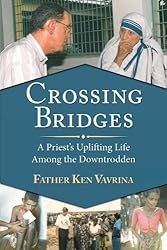
Father Ken Vavrina will sign copies of the book I did with him, Crossing Bridges: A Priest’s Uplifing Life Among the Downtrodden, on Saturday, May 21 from 1 to 4 pm at The Bookworm, 2501 South 90th Street. Father Ken will be among several authors signing their work at this Concierge Marketing Open House event.


“The very first bridge I crossed was choosing to study for the priesthood, a decision that took me and everyone who knew me by surprise. Then came a series of bridges that once crossed brought me into contact with diverse peoples and their incredibly different yet similar needs.”

Father Vavrina has served as a priest for many years, and has served several missions trips to help the needy. Father Ken worked with lepers in Yemen, and was ultimately arrested and thrown in jail under false suspicions of spying. After being forcibly removed from Yemen, he began his tenure with Catholic Relief Services. First in the extreme poverty and over-population of Calcutta in India. Then with warlords in Liberia to deliver food and supplies to refugees in need. Father Ken also spent several years working with Mother Teresa to heal the sick and comfort the dying.

Crossing Bridges: A Priest’s Uplifting Life Among the Downtrodden is the story of Father Ken Vavrina’s life and travels – simple acts that moved him, people that inspired him, and places that astonished him. Father Ken has spent his life selflessly serving the Lord and the neediest around him, while always striving to remain a simple, humble man of God.

“I pray this account of my life is not a personal spectacle but a recounting of a most wonderful journey serving God. May its discoveries and experiences inspire your own life story of service.”

About the Author
Father Ken Vavrina:

Father Kenneth Vavrina is a Roman Catholic priest, currently living and serving in Omaha, Nebraska. Vavrina was born in Bruno and raised in Clarkson, Nebraska. He was ordained in 1962. In the United States, he ministered to Native Americans, African-Americans, and Hispanics during the height of the civil rights movement.

Through his work with Catholic Relief Services and Mother Teresa, he has served people in five countries on four continents. He served nineteen years of missionary work overseas. He comforted lepers in the Arab nation of Yemen, oversaw relief efforts for victims of an earthquake in southern Italy, and supervised aid to and regenerated the agricultural sector for the poorest of the poor in India, Bangladesh, and Nepal. He also secured food and medicine for war refugees in the African nation of Liberia.

At 80 years of age, he officiates mass daily for the residents of his retirement center.

Book written with assistance from Leo Adam Biga:

Leo Adam Biga is an Omaha author and journalist. His previous books include Alexander Payne: His Journey in Film and Memories of the Jewish Midwest: Mom and Pop Grocery Stores. His award-winning cultural journalism appears in many publications. Assignments take him across America and overseas. He has traveled to California to cover Oscar-winning filmmaker Alexander Payne. He covered the 2009 Barack Obama presidential inauguration in Washington, D.C. He made a baseball tour of the Midwest. He recently went to Uganda and Rwanda, Africa as the Andy Award winner for international journalism from his alma mater, the University of Nebraska at Omaha.

He has a new nonfiction history book in the works. His Nebraska Film Heritage Project is in development.

AMAZON CUSTOMER RATINGS

5.0 out of 5 stars Five Stars, May 19, 2016
Verified Purchase(What’s this?)
This review is from: Crossing Bridges: A Priest’s Uplifting Life Among the Downtrodden (Paperback)
Great book!
5.0 out of 5 starsI come from the same town as Father Ken and …, February 4, 2016
Verified Purchase
This review is from: Crossing Bridges: A Priest’s Uplifting Life Among the Downtrodden (Paperback)
I come from the same town as Father Ken and knew his family, so I may be biased. But I do know that the book reflects his values. He is definitely real and is an inspiration to the rest of us.
5.0 out of 5 stars great book, September 1, 2015
This review is from: Crossing Bridges: A Priest’s Uplifting Life Among the Downtrodden (Paperback)
such an amazing life story


New edition of ‘Alexander Payne: His Journey in Film’ releases September 1 from River Junction Press


It is my pleasure to introduce you to my work as an Omaha-based author-journalist-blogger. If you are already familiar with my writing, then please allow me to re-introduce myself in advance of a major new release that I am thrilled to announce.

I have authored several self-published books but perhaps my best known ones to date are Alexander Payne: His Journey in Film and Crossing Bridges: A Priest’s Uplifting Life Among the Downtrodden. I am using this post to announce that a new edition of Alexander Payne: His Journey in Film releases September 1 from River Junction Press in Omaha. The book, originally published in 2012 through Concierge Marketing Publishing Services and My Inside Stories LLC, features the addition of significant new content related to Payne’s Nebraska and Downsizing films, as well as new photos, a Discussion Guide and Index and many updates. It is a must read for any fan of this filmmaker’s work, for film buffs, for film studies instructors and teachers and for filmmakers. Its author has been called the world’s leading expert on Payne. Indeed, I have covered him and his work for 20 years and the book is a compendium of many exclusive interviews and behind the scenes observations.

Soon taking advanced orders.


You can sample my work on my blog– https://leoadambiga.com/

Facebook page– https://www.facebook.com/LeoAdamBiga/#

Amazon author’s page– http://www.amazon.com/Leo-Adam-Biga/e/B00E6HE46E

GoodReads page– https://www.goodreads.com/author/show/5398063.Leo_Adam_Biga

And across a full spectrum of other social media platforms, including LinkedIn, Twitter, Google, Tumbler and About.Me.


Alexander Payne: His Journey in Film


River Junction Press LLC

Alexander Payne: His Journey in Film

Second Edition Leo Adam Biga Film/Biography Trade Paper $24.95

(320 pages 6 x 9 28 B/W photos ISBN: 978099726670228 September, 2016

IPG distributor: http://www.ipgbook.com


Journalist Leo Adam Biga chronicles twenty years of Alexander Payne’s filmmaking in a group of essays and published articles.


Praise for Alexander Payne: His Journey in Film

The Filmmaker —

“I have long admired Leo Biga’s journalism and prose portraiture for its honesty, thoughtful- ness, and accuracy. On a personal note, throughout many years of being interviewed, I find Mr. Biga’s articles about me to be the most complete and perceptive of any journalist’s anywhere. They ring true to me — even in critique — in a way that reveals the depth of his talent in obser- vation, understanding, and expression.” Alexander Payne

The Film Critic —

“Alexander Payne is one of America’s cinema’s leading lights. How fortunate we are that Leo Biga has chronicled his rise to success so thoroughly.” Leonard Maltin

The Film Student —

“You don’t know me but I am a young filmaker in NYC . . . Your articles and interviews became a critical (and previously absent) entry point to discover and dig deeper into learning more about directors, films, and film history. I came to not only respect and admire Payne as a filmmaker, but also as one of the best teachers I’ve ever had. And I can say that to date, starting with your book, what I’ve learned about the craft and history of cinema has been unparalleled and invaluable.” Brian Reisberg


Making American Movies about Americans

Downsizing (2017) starring Matt Damon, Kristen Wiig, Neil Patrick Harris, Alec Baldwin, Jason Sudeikis, Christoph Waltz

Nebraska (2013) starring Bruce Dern, Will Forte, June Squibb, Stacey Keach, Bob Odenkirk The Descendants (2011) starring George Clooney, Robert Forster, Beau Bridges, Shailene

Woodley (Oscar and Golden Globes winner) Sideways (2004) starring Paul Giamatti, Thomas Hayden Church, Sandra Oh, Virginia

Madsen (Oscar and Golden Globes winner) About Schmidt (2002) starring Jack Nicholson, Kathy Bates, Hope Davis, Dermot Mulroney Election (1999) starring Matthew Broderick, Reese Witherspoon, Chris Klein Citizen Ruth (1996) starring Laura Dern, Swoozie Kurtz, Mary Kay Place, Kelly Preston

Leo Adam Biga is available for interviews and speaking engagements. http://www.leoadambiga.com http://www.facebook.com/LeoAdamBiga leo32158@cox.net

Kira Gale, publisher

402-451-2878 phone 402 680-3884 cell

3314 North 49th St http://www.riverjunctionpress.com May 9, 2016 Omaha NE 68104 kiragale RJP@aol.com

Father Ken Vavrina Book Signing – Sunday, Jan. 3

December 28, 2015 Leave a comment


Sunday, January 3, 2016
at 10:30 AM – 12:00 PM
St Benedict The Moor, 2423 Grant Street, Omaha
Father Ken Vavrina will sign copies of his new book, “Crossing Bridges: A Priest’s Uplifting Life Among the Downtrodden,” from 10:30 a.m. to Noon on Sunday, Jan. 3 at St. Benedict the Moor Catholic Church, 2423 Grant Street, In North Omaha. The signing will take place in the social hall located in the church basement. The book chronicles Father’s inspiring life of service at home and abroad. As I helped Father Ken realize the book, I will be there as well. Come out and support Father Ken, a much beloved man of God and of the people whose ministry is both a testimony of faith and a call to action. This social justice champion has served parishes on reservtions and in Omaha’s inner city. He’s worked with lepers in Yemen and with the poorest of the poor in India. He’s aided war refugees in Liberia and earthquake surviors in Italy. He’s given all he has to give and now it’s time for the community to show its appreciation for this once close confidante and colleague of Mother Teresa.

Refreshments will be served. All are welcome. We hope to see you there.


Creative couple: Bob and Connie Spittler and their shared creative life 60 years in the making

December 23, 2015 3 comments

A lot of you know me as a frequent and longtime contributor with The Reader, for whom I’ve written more than a thousand stories since 1996, including hundreds of cover pieces. Beyond The Reader, I am fortunate to own extended relationships with several other publications.  I was a major contributor to the Jewish Press for well over a decade.  My tenures with Omaha Magazine and Metro Magazine are both more than a decade old now.  But perhaps my longest-lived contributor relationship has been with the New Horizons, a monthly newspaper published by the Eastern Nebraska Office on Aging.  Editor Jeff Reinhardt and I are committed to positive depictions of aging that illustrate in words and images the active, engaged lifestyles of people of a certain age.  Older adult living doesn’t need to follow any of the outdated prescriptions that once had folks at retirement age slowing down to a crawl and more or less retreating from life.  That’s not at all how the people we profile approach the second or third acts of their lives.  No, our subjects are out doing things, working, creating, traveling, making a difference.  My latest profile subjects for the Horizons, Bob and Connie Spittler, are perfect examples.  They are in their 80s and still living the active, creative lives that have always driven their personal and professional pursuits.  He makes still and moving images.  He pilots planes.  She writes essays, short stories and books.  They travel.  They enjoy nature.  Sometimes they combine their images and words together in book projects.  Bob and Connie are the cover subjects in the January 2016 issue.  They join a growing list of folks I’ve profiled for the Horizons who embody such precepts of health aging as keeping your mind occupied, doing what you enjoy, following youe passion, cultivating new interests and discovering new things.  The Spittlers are also in a long line of dynamic older couples I’ve profiled – Jose and Linda Garcia, Vic Gutman and Roberta Wilhelm, Josie Metal-Corbin and David Corbin, Ben and Freddie Gray.  You can find many of my Horizons stories on my blog, Leo Adam Biga’s My Inside Stories at leoadambiga.com.

NOTE: ©Photos by Jeff Reinhardt, New Horizons Editor, unless otherwise indicated.
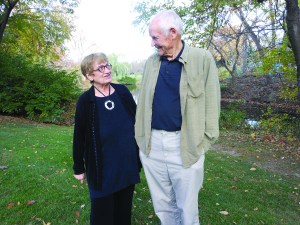


Spittlers looking at each other (Leo)

Bob and Connie Spittler outside their Brook Hollow home


Creative couple: Bob and Connie Spittler and their shared creative life 60 years in the making

©by Leo Adam Biga

Appeared in the January 2016 issue of the New Horizons

Once a creative, always a creative.

That’s how 80-something-year-olds Bob and Connie Spittler have rolled producing creative projects alone or together for six decades. Their work spans television commercials, industrial films, slideshows and books.

Bob, a photographer and filmmaker, these days experiments making art photos. Connie, a veteran scriptwriter, is now an accomplished essayist, short story writer and novelist. Her new novel, the tongue-in-cheek titled The Erotica Book Club for Nice Ladies, has found a receptive enough audience she’s writing a sequel. The book is published by Omaha author-publisher Kira Gale and her River Junction Press.

This past summer Bob and Connie hit the highway for a five-state book tour. Their stops included signings at the American Library Association Conference in San Francisco and the Tattered Cover in Denver. Following an intimate reading at a Berkeley, Calif. couple’s home she and Bob stayed the night. It harkened back to the RV road trips they made with their four kids.

On social media she termed the tour “an author’s dream.” It was especially gratifying given Bob endured a heart angioplasty and stent earlier in 2015.

Connie was also an invited panelist at an Austin, Texas literary event.

“All in all, an unforgettable year of healing, friendship, interesting places and great people,” she wrote in a card to family and friends.

Sharing a love for the outdoors, the Soittlers have applied their respective talents to splendid nature books. The Desert Eternal celebrates the ecosystem surrounding the home they shared in the foothills of the Catalina Mountains in Arizona, where they “retired” after years running their own Omaha film production biz

“When we want down to Tucson we weren’t going to be working together. We were just going to do our own thing,” she says. “We’ve always been able to kind of follow what we want to do. So I started writing literary things and he was out taking pictures. I had a lumpectomy and the day I came home I’m looking out at the Catalina Mountains and I thought, you know it’s strange Bob and I both think we’re doing our own thing when we’re doing the same thing, we’re just each doing it in our own way. We were both doing the desert.

“We lived between two washes the coyotes and other wildlife came through. I had seven weeks of radiation and I had the idea of putting our work together. I downloaded all my essays on the desert and every morning before radiation I’d go into his office and together we’d look through his photo archive for images he’d taken that matched the words I’d written. Well, by the time we got to the end we had 114 photos – enough for a book. Bob formatted it. It came back (from the printer) the day my radiation finished. It was just this cycle.”

Another of their books, The Legend of Sleepy Hollow, documents the wild-in-the-city sanctuary around the southwest Omaha home they’ve lived in since 2010, when they returned from their Arizona idyll. Their home in the gated Sleepy Hollow neighborhood abuts four interconnected ponds that serve as habitat for feathered and furry creatures. The inspiration the couple finds in that natural splendor gets expressed in her words and his images.

“Words and images are perfect for each other,” Connie says by way of explaining what makes her and Bob such an intuitive match.

The couple met at Creighton University in the early 1950s. They studied communications and worked on campus radio, television, theater productions together. He was from the big city. She was from a small town, But they hit it off and haven’t stopped collaborating since.
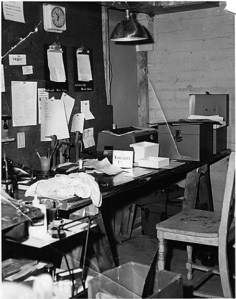


Spittlers' office (Leo)

The couple’s original office, ©Bob Spittler


Her writerly roots
The former Connie Kostel grew up in South Dakota. This avid reader practically devoured her entire hometown library.

Connie developed an affection for great women writers. “I love Emily Dickinson. Her poems are short and kind of pithy. She always has one thought in there that just kind of sticks with you.” Other favorites include Elizabeth Barrett Browning, Christina Rossetti, Jane Austen.

“I like a lot of classics.”

Terry Tempest Williams is a contemporary favorite.

Success in school got her thinking she might pursue writing.

“I think it was in the sixth grade I won an essay competition. It had to be on the topic of how we increased production on our family flax farm. Well, there were some farm kids in my grade but I don’t think anybody grew flax. My father was a funeral director. But I got the encyclopedia and I found out some facts about flax and I wrote an essay and I won. I think I got $25 or something. i mean it was like, Wow, I think I should be a writer. That sparked my interest.”

She attended the Benedictine liberal arts Mount Marty College in Yankton, S.D., a then-junior college for girls.

“I got a scholarship there. I was interested in writing and I was going to have to transfer anyway and I began to see radio and TV as one way maybe I could make a living writing rather than writing short stories and novels and so forth. So I decided to do that. My parents researched it out and found Creighton University for me, It had one of the few programs with television, radio and advertising,”

His Army detour
Meanwhile, Bob graduated from Omaha Creighton Prep before getting drafted into the U.S. Army. In between, he earned his private pilot’s license, the start of a lifelong affair with flying that’s seen him own and pilot several planes he’s utilized for both work and pleasure. Prior to the Army he began fooling around with a camera – a Brownie.

He recently put together a small book for his family about his wartime stint in Korea. He had no designs on doing anything with photography when he began documenting that experience.

“Everybody bought a camera over there and I bought an Argus C3. I just got interested in taking pictures for something to do. I learned how to use it and I just took a lot of pictures. I didn’t think it was going anywhere. It was just a hobby, you know.”

But those early photos show a keen eye for composition. He was, in short, a natural. The book he did years later, titled My Korea 1952 to 1953, gives a personal glimpse of life in the service amidst that unfamiliar culture and forbidding environment.

The Army assigned Spittler to intelligence work.

“My specialty was artillery but I was put in what they called G2 Air (part of Corps Intelligence). I went to a school in Japan. Back in Korea I coordinated the Air Force with the artillery in the CORPS front.”

Spittler relied on wall maps and tele-typed intel to schedule flights by Air Force photo-reconnaissance planes. “When I first arrived P-51 Mustangs were the planes used. Then after about six months they shifted to the F-80 Shooting Star,” he writes. “In winter a little pot-bellied kerosene stove warmed our tent. At night it had to be turned off and lighting it on a cold morning, below zero, was painful, It took 10 minutes before it even thought about giving heat.”

The closest he came to action was when a Greek mortar platoon on the other side of a river running past the American camp fired shells into a nearby hill, causing the GIs to scramble for cover.

Though he didn’t pilot any aircraft there he did find ways to feed his flying fix.

He writes, “Since my job was using radio contact with reconnaissance flights every day I became ‘talking friendly’ with some of the pilots. One of them agreed to give me a jet ride…”
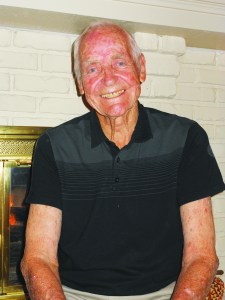


Bob at fireplace (Leo)

Bob Spittler


That ride was contingent on Spittler making his way some distance to where the sound-breaking aircraft were based. “Come hell or high water I wasn’t going to pass up that offer,” he writes. With no jeep available, he hitchhiked his way southwest of Seoul and got his coveted ride in a T-33. From 33,000 feet he sighted the “double bend’ of the Imjin River pilots used as a rendezvous landmark – something he’d heard them often reference in radio chatter.

At Spittler’s urging the pilot did some loops. Aware his guest was a flier himself the pilot let Spittler put the jet into a roll. But before he could complete the pull out the pilot took over when Spittler began losing control in the grip of extreme G-forces he’d never felt before. An adrenalin rush to remember.


Click to preview My Korea 1952 to 1953 photo book


Kindred spirits
After a year in-country Bob eagerly resumed the civilian life he’d put on hold. What he did to amuse himself in the Army. photography, became a passion. When he and Connie met at Creighton they soon realized they shared some interests and ambitions. They were friends first and dated off and on. She was entranced by the romance of this tall, strapping veteran who took her up in his Piper Cub. He was drawn to her petite beauty and unabashed intelligence and independence.

Besides their mutual attraction, they enjoyed working in theater productions. They even appeared in a few plays together. Connie’s passion for theater extended to teaching dramatic play at Joslyn Art Museum. She also enacted the female lead, Lizzie, in an Omaha Community Playhouse production of The Rainmaker.

The pair benefited from instructors at Creighton, including two Jesuit priests who were mass communications pioneers. Before commercial television went on the air in Omaha, Rev. Roswell Williams trained production employees of WOW-TV with equipment he set up at the school. He founded campus radio station KOCU to prepare students for broadcasting careers. He implemented an early closed circuit television systems used to teach classes.


Connie Spittler works the board as Rex Allen gets ready to shoot a scene in the 28-minute film on the story of Ak-Sar-Ben. Published Nov. 16, 1968. (Richard Janda/The World-Herald). Editor’s note: Turns out Connie Spittler, the woman in the photo, has a blog. You can find out more about the story behind this photo here. Also, how awesome is that cigarette behind her ear?

Connie Spittler works the board as Rex Allen gets ready to shoot a scene in the 28-minute film on the story of Ak-Sar-Ben. Published Nov. 16, 1968. (Richard Janda/The World-Herald).


“He was the person that brought television to Creighton University,” Connie says. “He was interested in it in students learning about it.”

Rev. Lee Lubbers was an art professor whose kinetic sculptures experimental, film offings and international satellite network, SCOLA, made him an “avant garde” figure.

“It was so unusual to have him be here and do what he did,” Connie says. “He stirred things up for sure.”

Right out of college she and Bob worked in local media. He directed commercials and shows at WOW-TV. She was a continuity director, advertising scriptwriter and director at fledgling KETV. She also worked in advertising at radio station KFAB.

Bob’s father was an attorney and there was an expectation he would follow suit but he had other plans.

“My father wanted me to be a lawyer and I just kept fighting that,” he recalls. “The gratifying thing about that is that after about 10 years of being in business he said, ‘I’m really kind of glad you didn’t go into it.'”

Bob calls those early days of live TV “fun.”

“I did little 10 second spots for Safeway. They’d just give me the copy and have me go shoot a banana or something. Well, one night I hung them up in the air and swung them and moved the camera and they were flying all over the place and Safeway just loved it.

“But it changed so much with (video )tape coming in. You can always look back and say, ‘Boy, what we could have done if we’d had that.'”
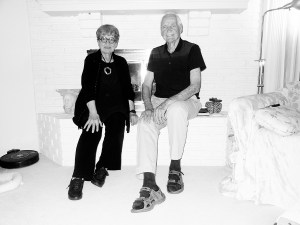


Spittlers at fireplace B & W (Leo)


Taking the plunge
Bob and Connie then threw caution aside to launch a film production company from their basement. Don Chapman joined them to form Chapman-Spittler Productions. While leaving the stability of a network affiliate to build a business from scratch might have been a scary proposition for some, it fit Bob to a tee.

“To be honest with you I’m not a team player and I’m not a leader. I’m kind of a loner,” he says. “I could see corporate-wise I wouldn’t get anywhere. I had ideas and things I wanted to do myself. When I did get something done it was always off by myself and I figured out that was the way I wanted it.”

The fact that Bob and Connie brought separate skill sets to the table helped make them work together.

“We didn’t do the same things, that was part of it, so we weren’t competing with each other,” she says. “One other very important thing she did – she kept the books,” Bob notes.

It was unusual for a married couple to work together in the communications field then. Connie was also a rarity as a woman in the male-dominated media-advertising worlds.

She’s long identified as a feminist.

“I was a working woman in the ’50. We were just women that wanted to be able to work, to be able to make a living wage, that wanted to have a family and kids if we chose to but not that we had to.”

There were a few occasions when her gender proved an issue.

“Northern Natural Gas was interviewing for a position and they said there’s no way we can accept a female for this because this job entails going to a lot of parties that get too rowdy, so we’re sorry. When I was at KETV we were doing a documentary about SAC (Strategic Air Command) in-air refueling missions. I wanted to go up so I could write about it, but base officials said we can’t send up a woman, so I couldn’t do that. The station did send up a male director and he came back and told me about it and I wrote the script

“Otherwise, I don’t think I did experience discrimination.”
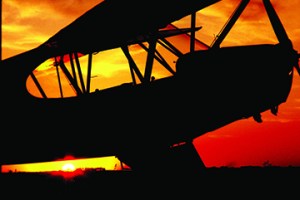


Cub silouette (Leo)

Bob’s beloved Piper Cub, ©Bob Spittler


She wasn’t taking any chances though when she broke into the field.

“I was one of the first people hired before KETV went on the air. My job was as an administrative assistant to work with New York (ABC). That was one place where I didn’t know if there’d be any problem with my being a woman so instead of signing letters Connie Kostel (this was before she was married), I signed them Con Kostel, so they wouldn’t know what sex I was. I didn’t have any problems.”

Connie will never forget the time she wrote a promo for a Hollywood actor on tour promoting his new ABC Western series.

“I directed him in the promo. When I got home Bob said, ‘How’d it go with the guy from Hollywood?’ I said, ‘He’s nice looking but he’s a loser, He had the personality of a peach pit. I just didn’t get anything from him at all.'”

She was referring to James Garner, whose Maverick became a hit.

In retrospect, she chalks up his lethargy to being exhausted after a long tour. “Thank heavens I didn’t want to be a talent scout.”


The salad days
She says when she and Bob had their own business she was put “in charge of some really big sales meetings” by clients who entrusted her with writing-producing multi-screen slide shows. These elaborate productions cost tens, even hundreds of thousands of dollars and often involved name narrators, such as Herschel Bernardi and Rex Allen.

She wrote-produced a 9-screen, 14-projector show for Leo A. Daly having never produced even a single-screen slide show.

“Inspired in the late ’60’s by our plane trips to the Montreal World Fair and the San Antonio HemisFair, Bob and I were both excited by multi-screen shows.”

Once, Connie was asked to produce show in three days to be shown in a tent in Saudi Arabia.

“I always wondered about the extension cord,” she quips.

Bob says Connie was accepted as an equal by the old boys network they operated in. “I never saw any signs of any rejection.” Besides, he adds, “she got along real well with people” and “she was good.”

For her part, Connie felt right at home doing projects for Eli Lilly, Mutual of Omaha, Union Pacific, ConAgra, Ak-Sar-Ben, the Greater Omaha Chamber of Commerce and many other clients.

“I loved it, I absolutely loved it. And the thing I loved about the writing I did was that each one was a different subject. I’d go visit a big company like Leo A. Daly and they’d introduce me to their top people to interview. I’d be given all these research books and reports to read. It was like a continuing education. Working on the Daly account I learned a lot about architecture.

“Almost anything turned out to be really interesting once I talked to the people who worked there who were excited about their work.”

Their projects played international film festivals and earned industry awards. Bob worked with Galen Lillethorup at Bozell and Jacobs to produce the ‘The Great Big Rollin’ Railroad’ commercials for Union Pacific, which won the prestigious Clio for B & J. Bob recalls the North Platte, Neb. shoot as “fun,” adding, “We got a lot of attention out of it and we did get other business from it.” A few years later, Spittler Productions received their own Clio recognition for an Omaha Chamber project. Assignments took them all over the U.S. Bob would often do the flying.

“Bob either shot, scouted or landed for business purposes and I traveled to locations to research, write and produce sales meetings in every state in the U.S. with the exception of Alaska, Hawaii, Maine and Rhode Island,” Connie says.

One time when Bob let someone else do the flying he and a Native American guide caught a helicopter that deposited them atop a Wyoming mesa so he could capture a train moving across the wilderness valley.

“I sat up there with my Arriflex and that old Indian and waited for that train to come and neither of us could understand the other,” he recalls.

Connie once wrote liner notes for a City of London Mozart Symphonia produced by Chip Davis and recorded in Henry Wood Hall, London. Davis recommended her to Decca Records in London to write liner notes for a Mormon Tabernacle Choir album.

At its peak Chapman-Spittler Productions did such high profile projects the partners opened a Hollywood office. Spittler worked with big names Gordon McCrae and John Cameron Swayze.

The Nebraskans made their office a Marina del Rey yacht, the Farida, supposedly once owned by King Farouk and named after his wife.

“On one occasion I flew a Moviola (editing machine) out there and we edited one of the Union Pacific commercials on the boat over in Catalina,” Bob remembers.

An InterNorth commercial was edited there as well.

Connie adds, “I used the yacht as a wonderful place to write scripts.”

“Ours was 40-foot. We were able to sleep on it. I took the boat out a lot. When we left, that’s where it stayed,” Bob says. “Our boat was right next to Frank Sinatra’s boat off the Marina del Rey Hotel. His was a converted PT-boat.”

Bob also did his share of flying up and down the Calif. coast. Connie wedded her words to his images to tell stories.

One of Bob and Connie’s favorite projects was working with Beech Aircraft. Using aerial photography Bob shot in several states, they produced a film on the pressurized Baron and later a film on the King Air for the Beechcraft National Conference in Dallas, Texas

The variety of the projects engaged her.

“Curiosity is my favorite thing,” she acknowledges.

A hungry mind is another attribute she shares with her mate, as Bob’s a tinkerer when it comes to mechanical and electronic things.

“Bob is curious, too,” she says. “He’s always trying to think of something to invent. Years ago he went out and brought home one of the first PCs – a TRS 80. He wanted to play around with it. Then he pushed me into playing around with it and then he made all the kids learn it so they could do their college applications on the computer. So he dragged the whole family into the computer generation.”

The way Bob remembers it, “When I brought that first computer home we had it for a week and I was still trying to figure out how to turn the damn thing on and my son was programming it. He taught me. But that was neat. I’m way behind now on technology,” though he has digital devices to share and store his work.
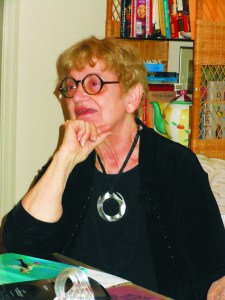


Connie Spittler at table (Leo)

Connie Spittler


Reinventing themselves
Bob and Connie’s collaborations continued all through the years they worked with Don Chapman. When that partnership dissolved the couple went right on working together.

“We were complementary I suppose in many ways,” she says. “When we had the business I wrote and produced, he shot and edited, so it just worked.”

By now, Connie’s written most everything there is to write. Being open to new writing avenues has brought rewarding opportunities.

“You have to be open to writing about other things just to keep your mind going. I received a phone call in Tucson one day and this person said, ‘We heard about you and we wondered if you’d come read your cowboy poetry at our trail ride?’ I’d never written any cowboy poetry but it sounded so much fun. I said, ‘Let me think about that.’ Well, I like cowboys and nature and all these things, so I agreed to do it. Bob and I ended up making this little book Cowboys & Wild, Wild Things.”

When she got around trying her hand at fiction writing, it fit like a glove.

“I was writing my first fiction piece and Bob said to me, ‘Do you know for the first time since we’ve come down here every time you come out of your office you’re smiling?’ Before, my projects were all kind of heavy, fact-laden subjects. I mean, there was creativity but it was mostly how do you take this subject and make it interesting. With the novel, I could make it anything I want.”

She hit her fiction stride with the books Powerball 33 and Lincoln & the Gettysburg Address.

A project that brought her much attention is the Wise Women Videos series she wrote about individuals who embody or advocate positive aging attributes. The videos have been widely screened. For a time they served as the basis for a cottage industry that found her teaching and speaking about mind, body, spirit matters.

For the series, she says, “I found interesting women I thought other people should listen to. None of them were famous. They were just women introduced to me or once people knew I was doing the series they would say, Oh, you should talk to this person or that person.”

As the series made its way into women’s festivals and organizations she got lots of feedback.

“When I would get letters from cancer groups or prisons or abused women groups I thought good grief, how wonderful that can happen, that they can ‘meet’ these women through these videos.”

The series is archived in Harvard University’s Library on the History of Women in America.

She’s given her share of writing presentations and talks – “I love to attend book clubs to discuss my books” – but a class on memoir she taught in Tucson took the cake.

“The class was inspired by one of my Wise Women Videos and began with each student telling a story about their first decade in life. Then each time we met the women chose one important memory to tell the group about the next decade. The assignment was to write that story for family, friends or themselves. An interesting thing happened: When the class sessions reached the end of their decades and the class was finished the women were so connected from the experience they continued to meet independently for years afterward.”
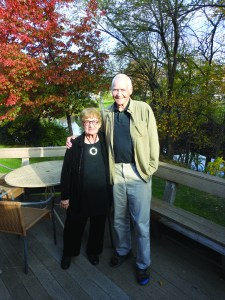
 

Spittlers on deck (Leo)

Bob and Connie on their deck


Legacy
Connie’s own essays and short stories are published in many anthologies. She achieved a mark of distinction when an essay of hers, “Lint and Light,” inspired by the work and concepts of the late Neb. artist and inventor Reinhold Marxhausen, was published in The Art of Living – A Practical Guide to Being Alive. The international anthology’s editor sent an email letting Connie know the names of the other authors featured in the book. She was stunned to find herself in the company of the Dalai Lama, Mikhail Gorbachev, Deepak Chopra, Desmond Tutu, Jean Boland, Sir Richard Branson and other luminaries.

“I almost fell off the chair. When that happened I was like, I wonder if I should quit writing because I don’t think I’ll ever top that.”

Bob says he always knew Connie was destined for big things. “It didn’t surprise me a bit.”

Much of her work lives on thanks to reissues and requests.

“It’s interesting how you do something and it isn’t necessarily gone,” she says. “Some of those things have a long life. I always say a book lasts as long as the paper lasts.”

Now with the Web her work has longer staying power than ever.

Meanwhile, one of Bob’s photographs just sold in excess of a thousand dollars at a gallery in Bisbee, Arizona.

Living in Tucson Connie says she was spoiled by the “absolutely wonderful writers community” there. She and some fellow women writers created their own salon to talk about art, music, theater and literature. “The one rule was you couldn’t gossip – it was just intellectual, interesting talk,” she says. “One night the subject of erotica came up. The next day I went to a bookstore and I said to this young female clerk, ‘Do you have a place for erotica here?’ And she said, ‘Oh erotica, yes, let me get my friend, she loves erotica, too!’ and they both took me off to the section and told me all their favorite books. I didn’t get any of their favorites, but I did get this one, Erotica: Women’s Writing from Sappho to Margaret Atwood.”

Connie found writers published in its pages she never expected.

“When I opened this book the first thing I saw was Emily Dickinson, then Jane Austen, Charlotte Bronte, all these well-known, respected authors. Their work is considered erotica for their time because it was romantic reading with sensual undertones. It’s in your mind, not graphic. I thought it so interesting that that could be erotica. It occurred to me a book club about erotica could be fun.”

Only Connie’s resulting book is not erotica at all but “a cozy mystery.”

“A librarian who gave it 5 stars said, ‘You would not be embarrassed to discuss this book with your mother.'” In the back Connie offers a list of erotica titles for those interested in checking out the real thing.

She’s delighted the book’s being published in the Czech Republic.

“My dad was a hundred percent Czech. I asked the publisher if I could add my maiden name and change the dedication to dedicate it to my dad and my grandmother and Czech ancestors and they said, ‘We’d love that.’ My dad’s been gone a long time and he didn’t have any sons and he always said to me, ‘That’s the end of my line,’ so now I thought it will live on – at least in the Czech Republic.”


Words to live by
Closer to home, Connie’s developed a following for the Christmas Card essays she pens. Her sage observations and sublime wordings are much anticipated. This year’s riffs on the fox that visits their property.

“Sometimes in the late evening he trots along the grasslands and pond. Bob, watching TV down in the family room, has spotted the scurrying fox several times – always unexpected and too quick for his camera lens. I haven’t seen this wild urban creature yet since I’m in bed during the usual prowling gorse. Still, imagining his billowing tail flying by int he dark adds a flurry of magic to the winter night…

“As our dancing, prancing fox moves in and out of focus and time, I think of the surprising people, pets, events and moments that visit our lives. They come and go with reminders to be grateful for unexpected things that happen along the way…fleeting or lingering…illusive…intriguing.

“This season our message comes from the fox, a wish for wisdom, longevity and beautiful surprises. Do keep a look out. You never know who you’ll meet or what you’ll see.”

Finally, as one half of a 57-year partnership, Connie proffers some advice about the benefits of passion-filled living.

“One beautiful thing about writing is that by picking up pencil and paper, or using computer, iPad, you can write anywhere. I’ve written on a beach, by a pool, a yacht and in an RV. I always encourage anyone interested in writing to sit down and go to it. It doesn’t cost any money to try and studies show the creativity of writing keeps the mind alert. And it’s a feeling of accomplishment, if you finish a piece or even if you finish a good day writing.”

The same holds true for filmmaking and photography. And for delighting in the wonders of wild foxes running free.

Follow the couple at http://www.conniespittler.com.

Leo Adam Biga: My Amazon Author’s Page

November 16, 2015 3 comments

Leo Adam Biga

My Amazon Author’s Page

Link to my page at http://www.amazon.com/Leo-Adam-Biga/e/B00E6HE46E

Leo Adam Biga
Follow


Leo Adam Biga is a freelance cultural journalist and nonfiction book author based in his hometown of Omaha, Neb. His feature and enterprise work as an arts and culture reporter appears in several Omaha and greater Nebraska publications. His articles occasionally appear in national magazines as well.

Assignments often find him interviewing celebrities and public figures from various fields.

Every so often Biga travels to get a story. He accompanied a group of Nebraskans who bused to the Barack Obama presidential inauguration in the nation’s capital. He spent several days and nights covering Lew Hunter’s screenwriting colony in Superior, Neb. He spent a week on the set of Alexander Payne’s film “Sideways” in the Santa Barbara, Calif., area. He made an eight-day Midwest baseball tour of Missouri, Iowa, Illinois, and Indiana. Most recently, he traveled to Uganda and Rwanda, Africa with world boxing champion Terence “Bud” Crawford and Pipeline Worldwide co-founder and executive director Jamie Nollette. That overseas reporting mission was made possible by the Andy Award for international journalism that Biga received in 2015 from his alma mater, the University of Nebraska at Omaha.

His work has been recognized by his peers at the local, state, and national levels.

In addition to the books featured on this Amazon Author’s Page, he has several book projects in development, among them: the history of Nebraska Methodist College; a celebration of Omaha’s black sports legends; and a look at Nebraska’s rich film heritage. He also wrote the script for the documentary, “The Brandeis Store.”

Read a broad sampling of the writer’s work on his popular blog, leoadambiga.com, a gallery of his “stories about people, their passions, and their magnificent obsessions.” You can follow his work there or via his Facebook page, My Inside Stories. https://www.facebook.com/LeoAdamBiga/.


Crossing Bridges: A Priest's Uplifting Life Among the DowntroddenOpen Wide: Dr. Mark Manhart's Journey in Dentistry, Theatre, Education, Family, and LifeAlexander Payne: His Journey in Film: A Reporter's Perspective, 1998 - 2012

Mom and Pop Grocery Stores

ABOUT THE BOOKS

Crossing Bridges

“The very first bridge I crossed was choosing to study for the priesthood, a decision that took me and everyone who knew me by surprise. Then came a series of bridges that once crossed brought me into contact with diverse peoples and their incredibly different yet similar needs.”

Father Vavrina has served as a priest for many years, and has served several missions trips to help the needy. Father Ken worked with lepers in Yemen, and was ultimately arrested and thrown in jail under false suspicions of spying. After being forcibly removed from Yemen, he began his tenure with Catholic Relief Services. First in the extreme poverty and over-population of Calcutta in India. Then with warlords in Liberia to deliver food and supplies to refugees in need. Father Ken also spent several years working with Mother Teresa to heal the sick and comfort the dying.

Crossing Bridges: A Priest’s Uplifting Life Among the Downtrodden is the story of Father Ken Vavrina’s life and travels – simple acts that moved him, people that inspired him, and places that astonished him. Father Ken has spent his life selflessly serving the Lord and the neediest around him, while always striving to remain a simple, humble man of God.

“I pray this account of my life is not a personal spectacle but a recounting of a most wonderful journey serving God. May its discoveries and experiences inspire your own life story of service.”

REVIEWS

A Humble Man with a Powerful Story
By Sandra Wendel on September 1, 2015
Format: Paperback

As a book editor, I find that these incredible heroes among us cross our paths rarely. I am indeed lucky to have worked with Father Ken in shaping his story, which he finally agreed to tell the world. You will enjoy his modesty and humility while serving the poorest of the poor. His story of his first days in the leper colony in Yemen is indeed compelling, as is his survival in prison in Yemen. Later, his work in Calcutta, Liberia, and Cuba made a difference.

Father Ken Vavrina
By Sandra L Vavrina on September 28, 2015
Format: Paperback Verified Purchase

Crossing Bridges. Father Ken’s life is amazing! He is my husband’s cousin and performed our wedding ceremony 51 yrs ago right after he was ordained.

great book
By ken tuttle on September 1, 2015
Format: Paperback
such an amazing life story


OPEN WIDE

Open Wide                                                                                                                                              

By M. Marill on May 10, 2014
Format: Kindle Edition Verified Purchase

In people or in art, according to Dr. Mark Manhart, “You may not like nor understand everything you see, but at least you will have a truer view of all that went into making the man or the artwork.” This biographical memoir takes the reader through all of his different lives – his “open life” and his “secret life”. Manhart’s professional side finds him a highly trained dentist who is actively engaged in developing new treatments and therapies. His inner passion, which keeps him charged, is his involvement in theatre as a playwright, director, and sometimes an actor.

REVIEWS

The story about the man who has changed dentistry for the better. He can and ha helped peoples everywhere how care and nourish their teeth. His calcium therapy is preventative just as much as it is curative for many dental issues. Like those in holistic medicine who have bucked the medical organizations he has done so with the dental organization forging the way for alternative prevention and care . Check out his website at http://www.calcium therapy.com and educate yourself and try his affordable products before you dismiss this. He deserves recognition for what he has accomplished and I hope it comes to him.

The story of an innovative thinker, inventor, and healer
By Best reads on August 3, 2015
Format: Kindle Edition Verified Purchase

If you read “Open Wide,” you will understand what philosophies have made Dr. Manhart ” a die hard preservationist when it comes to saving peoples teeth…” (167), and how his brilliant invention of materials for dentistry allows him to work miracles, save peoples’ teeth that other dentists are ready to pull, and spare the pain, suffering, and expense of treatments that mainstream dentistry usually pushes. He is also a preservationist with respect to architecture, a talented playwright, actor, director, and producer, is engaged in civic affairs, and has additional wide ranging interests. If you are seeking more humane and successful dental treatments, this book and his website at http://www.calciumtherapy.com are both invaluable. If you want to read about a brilliant and iconoclastic thinker in many realms, this is also a great book. Richard Feynman won the Nobel Prize for physics, Linus Pauling won two Nobel Prizes (for chemistry, and for peace); Dr. Manhart’s research, discoveries, and patented materials are certainly profound enough to merit similar recognition. Unfortunately, you will also read about why dentistry as practiced in the U.S. is often not open to innovation, or able (and willing) to recognize how it has thrived from overcharging for over-treatment that sometimes causes trauma, harm, hopelessness and yet more visits to the dentist.


Alexander Payne: His Journey in Film

I’d be an Alexander Payne fan even if we didn’t share a Nebraska upbringing: he is a masterly, menschy, singular storyteller whose movies are both serious and unpretentious, delightfully funny and deeply moving. And he’s fortunate indeed to have such a thoughtful and insightful chronicler as Leo Biga. –Kurt Andersen, Host of Studio 360.

Long before Alexander Payne arrived as a world-renowned filmmaker, Leo Adam Biga spotted his talent, even screening his thesis project, The Passion of Martin, at an art cinema. By the time Payne completed Citizen Ruth and prepped Election Biga made him a special focus of his journalism. Interviewing and profiling and Payne became a highlight of the writer’s work. Feeling a rapport and trust with Biga, Payne granted exclusive access to his creative process, including a week-long visit to one of his sets. Now that Payne has moved from emerging to established cinema force through a succession of critically acclaimed and popular projects—About Schmidt, Sideways, and The Descendants—Biga has compiled his years of reporting into this book. It is the first comprehensive look anywhere at one of cinema’s most important figures. Go behind-the-scenes with the author to glimpse privileged aspects of the filmmaker at work and in private moments. The book takes the measure of Payne through Biga’s analysis, the filmmaker’s own words, and insights from some of the writer-director’s key collaborators. This must read for any casual fan or serious student of Payne provides in one volume the arc of a remarkable filmmaking journey.

REVIEWS

Biga’s book may be the best answer to this question
By Brent Spencer on November 9, 2015
Format: Kindle Edition

Leo Adam Biga writes about the major American filmmaker Alexander Payne from the perspective of a fellow townsman. The local reporter began writing about Payne from the start of the filmmaker’s career. In fact, even earlier than that. Long before Citizen Ruth, Election, About Schmidt, Sideways, The Descendants, and Cannes award-winner Nebraska. Biga was instrumental in arranging a local showing of an early student film of Payne’s, The Passion of Martin. From that moment on, Payne’s filmmaking career took off, with the reporter in hot pursuit.

The resulting book collects the pieces Biga has written about Payne over the years. The approach, which might have proven to be patchwork, instead allows the reader to follow the growth of the artist over time. Young filmmakers often ask how successful filmmakers got there. Biga’s book may be the best answer to this question, at least as far as Payne is concerned. He’s presented from his earliest days as a hometown boy to his first days in Hollywood as a scuffling outsider to his heyday as an insider working with Hollywood’s brightest stars.

If there is a problem with Biga’s approach, it’s that it can, at times, lead to redundancy. The pieces were originally written separately, for different publications, and are presented as such. This means a piece will sometimes cover the same background we’ve read in a previous piece. And some pieces were clearly written as announcements of special showings of films. But the occasional drawback of this approach is counter-balanced by the feeling you get of seeing the growth of the artist, a life and career taking shape right before your eyes, from the showing of a student film in an Omaha storefront theater to a Hollywood premiere.

But perhaps the most intriguing feature of the book is Biga’s success at getting the filmmaker to speak candidly about every step in the filmmaking process. He talks about the challenges of developing material from conception to script, finding financing, moderating the mayhem of shooting a movie, undertaking the slow and often monk-like work of editing. Biga is clearly a fan (the book comes with an endorsement from Payne himself), but he’s a fan with his eyes wide open. Alexander Payne: His Journey In Film, A Reporter’s Perspective 1998-2012 provides a unique portrait of the artist and detailed insights into the filmmaking process.


Mom and Pop Grocery Stores

Jews have a proud history as entrepreneurs and merchants. When Jewish immigrants began coming to America in greater and greater numbers during the late 19th century and early 20th century, many gravitated to the food industry, some as peddlers and fresh produce market stall hawkers, others as wholesalers, and still others as grocers. Most Jews who settled in Nebraska came from Russia and Poland, with smaller segments from Hungary, Germany, and other central and Eastern European nations. They were variously escaping pogroms, revolution, war, and poverty. The prospect of freedom and opportunity motivated Jews, just as it did other peoples, to flock here. At a time when Jews were restricted from entering certain fields, the food business was relatively wide open and affordable to enter. There was a time when for a few hundred dollars, one could put a down payment on a small store. That was still a considerable amount of money before 1960, but it was not out of reach of most working men who scrimped and put away a little every week. And that was a good thing too because obtaining capital to launch a store was difficult. Most banks would not lend credit to Jews and other minorities until after World War II. The most likely route that Jews took to becoming grocers was first working as a peddler, selling feed, selling produce by horse and wagon or truck, or apprenticing in someone else’s store. Some came to the grocery business from other endeavors or industries. The goal was the same — to save enough to buy or open a store of their own. By whatever means Jews found to enter the grocery business, enough did that during the height of this self-made era. From roughly the 1920s through the 1950s, there may have been a hundred or more Jewish-owned and operated grocery stores in the metro area at any given time. Jewish grocers almost always started out modestly, owning and operating small Mom and Pop neighborhood stores that catered to residents in the immediate area. By custom and convenience, most Jewish grocer families lived above or behind the store, although the more prosperous were able to buy or build their own free-standing home. Since most customers in Nebraska and Iowa were non-Jewish, store inventories reflected that fact, thus featuring mostly mainstream food and nonfood items, with only limited Jewish items and even fewer kosher goods. The exception to that rule was during Passover and other Jewish high holidays, when traditional Jewish fare was highlighted. Business could never be taken for granted. In lean times it could be a real struggle. Because the margin between making it and not making was often quite slim many Jewish grocers stayed open from early morning to early evening, seven days a week, even during the Sabbath, although some stores were closed a half-day on the weekend. Jewish stores that did close for the Sabbath were open on Sunday.

Author Updates


Books by Leo Adam Biga

SOME MORE OF MY COVER STORIES THROUGH THE YEARS AND ONCE AGAIN YOU CAN SEE JUST HOW DIVERSE MY SUBJECTS ARE

November 9, 2015 2 comments

Alex Kava: Bestselling mystery author still going strong

November 3, 2015 3 comments

OK, so I’m getting old and I can’t remember so well all the stories I have in the pipeline from even a few months ago.  This feature on best-selling mystery author Alex Kava is one of those I forgot to mention when I posted about stories of mine to look for the last part of 2015.  It’s odd I forgot this one though because I had long wanted to interview and profile Kava and I found her a delightful subject.  Anyway, here is that short feature about her for Omaha Magazine (http://omahamagazine.com/).  She has a new book out titled Breaking Creed.

AlexKava1

Alex Kava: Bestselling mystery author still going strong

October 30, 2015 by 
Photography by Bill Sitzmann
Appeared in the Nov.-Dec. 2015 issue of Omaha Magazine (http://omahamagazine.com/)

Sure, Alex Kava is a best-selling mystery author, but as an aspiring writer she faced insecurities. Even now, with a six-figure contract from Putnam, there are uncertainties in this brave new world of publishing.

Growing up in rural Silver Creek, Nebraska, her working-class parents considered writing frivolous. Word-struck Alex secretly spun stories from her imagination and committed them to the back pages of used grain co-op calendars, squirreling away the scrawled tales in a shoe box under her bed.

Convinced writing fiction couldn’t support her, she followed an advertising-marketing-public relations career path that, while successful, left her unfulfilled and burned-out. It didn’t help when her first novel-length manuscript received 116 rejection letters.

Kava may never have become the author of the long-running Maggie O’Dell and new Ryder Creed series had she not left her PR job to commit herself to writing at 38.

“There was too many hours, too many meetings. I really was at a crossroads in my life and I decided that while I’m figuring out what it is I want to do with the rest of my life, I’ll try writing. I told myself if I wasn’t published by 40 I would give it up.”

While completing the book, expenses for home and car repairs mounted. She went through her savings. She took a paper route to make ends meet.

She just squeaked under the self-imposed deadline when, three days before her 40th birthday, she signed advance reader copies of her debut novel, A Perfect Evil. Her 2000 portrait of a community traumatized by a serial killer was extrapolated from the actual terror that befell Bellevue and Papillion in the early 1980s when John Joubert murdered two boys there. Kava worked for the Papillion Times at the time.

“What surprised me,” she says in revisiting those events years later, “was that I could remember those feelings of panic that had taken over that community.”

Her stand-alone One False Move was another instance of real-life crime influencing her work. When the 2002 Norfolk, Nebraska, bank robbery gone fatally bad eerily followed a plot she was developing, she used evidence from the actual crimes to inform her novel.

Forensics expert and profiler Maggie O’Dell was among multiple characters on the case in A Perfect Evil, but Kava’s publisher pushed to make O’Dell the subject of a series. Kava resisted. A dozen O’Dell books later, she and Maggie are fixtures in the mystery-thriller genre.

Kava admits she didn’t like O’Dell at first. “We’re both very stubborn and slow to trust.” On the advice of a go-to expert, former Douglas County prosecutor and now district judge Leigh Ann Retelsdorf, Kava gave O’Dell shared interests in dogs and college football.

“Those two little things actually made it easier for me to relate to her,” Kava says. “The series grew, and I grew, and Maggie O’Dell grew. I love that character. She and I have been through so much together.”

Her new protagonist, Ryder Creed, is a K-9 search and rescue dog handler. He teams with investigators like O’Dell to help crack cases.

“I love Ryder Creed because he has this passion for dogs and I can really connect to that.”

Kava says it’s a relief after “so many years writing about something I don’t know—murder,” to write about her four-legged friends. She’s dedicated books to her pets, Molly and Scout, the latter named after Kava’s favorite literary character, Scout Finch from To Kill a Mockingbird.

Kava’s steeped herself in the CSI-law enforcement milieu, even presiding over her own “crime scene dinner club” of attorneys, detectives, and techs who voluntarily plied her with case file details.

“I really do love the research. I’ve never had any problem with people opening up. I’m not sure why they do.”

She admires her expert sources.

“I’ve always looked at law enforcement officers in awe. I could never do what they do and stay sane.”

She’s toured the FBI’s Quantico facility in Virginia, interviewing behavioral science wonks there. She’s turned down opportunities to visit crime scenes and view autopsies. “Some of those things it’s best for me to leave to my imagination.”

Kava, who did a spring book tour for her latest work, Breaking Creed, is grateful for her success. But in this new age of ebooks, publishing mergers, and tenuous contracts, nothing’s guaranteed.

“There’s so much more for readers to choose from, and I think that added choice is great. At the same time it makes it more of a challenge for us as authors to figure out how to get those readers and stay in front of them. I’m now writing two books a year so I can stay in front and say, ‘Here’s the next one, and I’ve got another one coming out, and another one after that.’ You don’t want them to
forget you.”

AlexKava1