Archive
Where Hope Lives, Hope Center for Kids in North Omaha
My blog features a number of stories that deal with good works by faith-based organizations, and this is another one. Northeast Omaha’s largely African-American community suffers disproportionately in terms of poverty, low educational achievement, underemployment and unemployment, health problems, crime, et cetera. These challenges and disparities by no means characterize the entire community there, but the distress affects many and is persistent across generations in many households. All manner of social services operate in that community trying to address the issues, and the subject of the following story, Hope Center for Kids, is among those. I filed the story for Metro Magazine (www.spiritofomaha.com) and I came away impressed that the people behind this effort are genuinely knowledgable about the needs there and are committed to doing what they can to reach out to youth in the neighborhoods surrounding the center.
Where Hope Lives, Hope Center for Kids in North Omaha
©by Leo Adam Biga
Originally published in Metro Magazine (www.spiritofomaha.com)
Northeast Omaha’s largely poor, African-American community is a mosaic where despair coexists with hope. A stretch of North 20th Street is an example. Rows of nice, newly built homes line both sides of the one-way road — from Binney to Grace Streets. Working class families with upwardly mobile aspirations live there.
Yet, vacant lots and homes in disrepair are within view. God-fearing working stiffs may live next door to gang bangers. To be sure, the good citizens far outnumber the thugs but a few bad apples can spoil things for the rest.
Endemic inner city problems of poverty, teen pregnancy, drug abuse, gun violence, unemployment, school dropouts and broken homes put a drag on the district. Church, school and social service institutions do what they can to stabilize an unstable area. Meanwhile, the booming downtown cityscape to the south offers a vista of larger, brighter possibilities.
One anchor addressing the needs is the faith-based nonprofit Hope Center for Kids. Housed in the former Gene Eppley Boys Club at 2209 Binney, the center just celebrated its 10th anniversary. An $800,000 renovation replaced the roof and filled in the pool to create more programming space. Four years ago the organization opened Hope Skate, an attached multi-use roller rink/gymnasium that gives a community short on recreational amenities a fun, safe haven.
In the last year Hope’s received grants from the Kellogg Foundation, the Millard Foundation and Mutual of Omaha to expand its life skills and educational support services. Additional staff and more structured programs have “taken us to a whole new level,” said founder/executive director Rev. Ty Schenzel.
Clearly, the 50,000 square foot, $1.2 million-budgeted center is there for the long haul. Hope serves 400 members, ages 7 to 19. Most come from single parent homes. Eight in 10 qualify for free or reduced price lunch at school. Hope collaborates with such community partners as nearby Conestoga Magnet Center and Jesuit Middle Schools, whose ranks include Hope members. University of Nebraska at Omaha students are engaged in a service learning project to build an employability curriculum. Creighton med students conduct health screenings. Volunteers tutor and mentor. Bible studies and worship services are available.
Some Hope members work paid part-time jobs at the center. Members who keep up their grades earn points they can spend at an on-site store.
Per its name, Hope tries raising expectations amid limited horizons. It all began a decade ago when two Omaha businessmen bought the abandoned boys club and handed it over to Schenzel, a white Fremont, Neb. native and suburbanite called to do urban ministry. He was then-youth pastor at Trinity Interdenominational Church., a major supporter of Hope.

He first came down to The Hood doing outreach for Trinity in the mid-’90s. He and volunteers held vacation bible studies and other activities for children at an infamous apartment complex, Strehlow, nicknamed New Jack City for all its crime. He met gang members. One by the street name of Rock asked what would happen to the kids once the do-gooders left. That convinced Pastor Ty, as Schenzel’s called, to have a permanent presence there. In a sea of hopelessness he and his workers try to stem the tide.
“What we believe is at the root of the shootings, the gang activity, the 15-year-old moms, the generation after generation economic and educational despair is hopelessness,” he said. “If you don’t think anything is going to change and you don’t care about the consequences then you lose all motivation. You have nothing to lose because you’ve lost everything.
“Our vision is we want to bring tangible hope with the belief that when the kids experience hope they’ll be motivated to make right choices. They’ll start to believe.”
Schenzel said what “differentiates Hope is that the at-risk kids that come to us probably wouldn’t fit in other programs. The faith component makes us different. The economic development-jobs creation aspect. The roller rink.”
He said former Hope member Jimmie Ventry is a measure of the challenge kids present. Older brother Robert Ventry went on a drug-filled rampage that ended in him being shot and killed. Jimmie, who’s been in and out of trouble with the law, had a run in with cops and ended up doing jail time. Schenzel said, “One day I asked Jimmie, ‘How do I reach you? What do I do to break through?’ And the spirit of what Jimmie said was, Don’t give up on me. Don’t stop trying.” Hope hasn’t.
Schenzel said results take time. “I tell people we’re running a marathon, not a sprint, which I think is what Jimmie was saying. We’re now in our 10th year and in many ways it feels like we’re still starting.” Hope Youth Development Director Pastor Edward King said kids can only be pointed in the right direction. Where they go is their own decision.
“It’s one thing when they come here and we’re throwing them the love and it’s another thing when they go back to their environment and the drug dealers are telling them not to go to work,” he said. “We’re here telling them: You do have options; you can make honest money without the guilt and having to look over your shoulder; you don’t have to go to prison, you can graduate from school — you can go to college.
“We provide hope but the battle is theirs really. When you don’t believe you can, when everything around you is hopelessness, it takes a strong person to want to make the right choices.”
Chris Morris was given up as a lost cause by the public schools system. Hope rallied behind him. It meant long hours of counseling, prodding, praying. The efforts paid off when he graduated high school.
“The Hope Center helped me in a positive way. Just having them around gave me hope,” said Morris.
King said several kids who’ve thought of dropping out or been tagged as failures have gone on to get their diploma with the help of Hope’s intervention.
“It took a lot of hard work for people to stay on them and to push them through,” said King. “We’re so proud of them.”
The kids that make it invariably invite Hope teachers and administrators to attend their graduation. That’s affirmation enough for King. “It’s the thing that keeps me coming back,” he said. “When I hear a guy talk about how coming here keeps him out of trouble or makes him feel safe or that he enjoys hanging out with my family at our house, that lets me know we’re doing the right thing.”
For many kids the first time they see a traditional nuclear family is at a Hope staffer’s home. It’s a revelation. Staff become like Big Brothers-Big Sisters or surrogate parents. They go out of their way to provide support.
“Our staff go to kids’ games, they connect with them on the weekend, they’re involved in the lives of the kids. Pastor King’s house should probably be reclassified a dormitory,” Schenzel said.
King comes from the very hard streets he ministers to now. Like many of these kids he grew up fatherless. He relates to the anger and chaos they feel.
“It breaks my heart to see the killings going on. I couldn’t sit back on the sidelines and not do anything. I feel like it’s my responsibility to be here. I know what it’s like to have resentment for not having a dad around. A lot of the young men don’t have a positive male role model at home to be there for them, to discipline them.”
Hope educators work a lot on discipline with kids. Positive behavior is emphasized –from accepting criticism to following instructions. Hope slogans are printed on banners and posters throughout the center.

There, kids can channel their energies in art, education, recreation activities that, at least temporarily, remove them from bad influences. A Kids Cafe serves hot meals. King supervises Hope’s sports programs. “If we can get them involved in our rec leagues, then it’s less time they can be doing the negative things,” he said. “There’s nothing like the discipline of sports to keep a guy in line. We get a chance to teach life skills to the guys. “
Ken and Rachelle Johnson coordinate Hope’s early ed programs. An expression of the couple’s commitment is the home they bought and live in across the street.
“For me personally it’s not a job, it’s a ministry it’s a lifestyle, it’s our life.” Rachelle said. “We love being around the kids in the neighborhood. The kids deal with a lot of abandonment-neglect issues. They all have their own story. We wanted to say, Here, we’re committed, we’re not going anywhere, because it takes a long time to build relationships.”
Relationship building is key for Hope. Staff work with families and schools to try and keep kids on track academically. Programs help kids identify their strengths and dreams. To encourage big dreams teens meeting certain goals go on college tours.
“Increasingly we want to create this culture of connecting our kids to higher education,” Schenzel said.
Optional worship services are offered but all members get exposed to faith lessons through interactions with staff, who model and communicate scripture.
“Here’s our mantra,” Schenzel said: “You can only educate and recreate so long but unless there’s a heart change through a relationship with the Lord it’s putting a Band Aid on wet skin.”
Hope strives to have about 100 kids in the building at any given time. “Much more than that feels a little bit like a daycare. We don’t want to be a daycare. We want to do some transformation,” he said.
Schenzel sees “little buds of tangible hope going on” in what he terms Omaha’s Ninth Ward. He and residents wonder why “there’s seemingly an unholy bubble over north Omaha” preventing it from “getting in on the growth” happening downtown and midtown.” Those frustrations don’t stop him from dreaming.
“We would love to do mini-Hope satellites in the community, maybe in collaboration with churches, as well as Hope Centers in other cities. We envision an internship program for college students who want something to give their hearts to. We could then exponentially impact more kids. We want to create cottage industries that generate jobs and revenue streams. Some day we want to do Hope High School.”
Keep hope alive, Pastor Ty, keep hope alive.
Related articles
- Community and Coffee at Omaha’s Perk Avenue Cafe (leoadambiga.wordpress.com)
- Omaha’s St. Peter Catholic Church Revival Based on Restoring the Sacred (leoadambiga.wordpress.com)
- Hey, You, Get Off of My Cloud! Doug Paterson – Acolyte of Theatre of the Oppressed Founder Augusto Boal and Advocate of Art as Social Action (leoadambiga.wordpress.com)
- Omaha Theater as Insurrection, Social Commentary and Corporate Training Tool (leoadambiga.wordpress.com)
- An Omaha Legacy Ends, Wesley House Shutters after 139 Years – New Use for Site Unknown (leoadambiga.wordpress.com)
- The Joy of Giving Sets Omaha’s Child Saving Institute on Solid Ground for the Future (leoadambiga.wordpress.com)
- Back in the Day, Native Omaha Days is Reunion, Homecoming, Heritage Celebration and Party All in One (leoadambiga.wordpress.com)
- The Ties that Bind, One Family’s Celebration of Native Omaha Days (leoadambiga.wordpress.com)
- Native Omaha Days: A Black is Beautiful Celebration, Now, and All the Days Gone By (leoadambiga.wordpress.com)
- Native Omahans Take Stock of the African-American Experience in Their Hometown (leoadambiga.wordpress.com)
- Coming to America: The Immigrant-Refugee Mosaic Unfolds in New Ways and in Old Ways In Omaha (leoadambiga.wordpress.com)
- Overarching Plan for North Omaha Development Now in Place, Disinvested Community Hopeful Long Promised Change Follows (leoadambiga.wordpress.com)
- Soon Come: Neville Murray’s Passion for the Loves Jazz & Arts Center and its Role in Rebirthing North Omaha (leoadambiga.wordpress.com)
- A Decent House for Everyone, Jesuit Brother Mike Wilmot Builds Affordable Homes for the Working Poor Through Gesu Housing (leoadambiga.wordpress.com)
- Lifetime Friends, Native Sons, Entrepreneurs Michael Green and Dick Davis Lead Efforts to Revive North Omaha and to Empower its Black Citizenry (leoadambiga.wordpress.com)
- After a Steep Decline, the Wesley House Rises Under Paul Bryant to Become a Youth Academy of Excellence in the Inner City (leoadambiga.wordpress.com)
- A Synergy in North Omaha Harkens a New Arts-Culture District for the City (leoadambiga.wordpress.com)
- Outward Bound Omaha Uses Experiential Education to Challenge and Inspire Youth (leoadambiga.wordpress.com)
An Omaha legacy ends, Wesley House Community Center shutters after 139 years — New use for site unknown
Omaha Legacy Ends, Wesley House Community Center shutters after 139 years – New use for site unknown
©by Leo Adam Biga
As seen in The Reader (www.thereader.com)
Omaha’s oldest social service agency closed earlier this year with a whimper, not a bang. The Wesley House Community Center, a United Methodist Church mission since 1872, has ended 139 years of service, confirmed Rev. Stephanie Ahlschwede, interim executive director and head of United Methodist Ministries in Omaha.
The agency’s two-acre, twin-building campus at 2001 North 35th St. will be sold, she says. And it’s unclear who will purchase it.
Wesley served the African-American community for the last half century. At its peak, it offered youth and adult programs and spun off a black-run radio station, a community bank, a credit union and a pair of economic development organizations.
But Wesley lost traction in the 1990s. Later, when management came under fire, primary funding support was pulled. By the early 2000s, Wesley barely hung on as a youth center. In 2005, Paul Bryant came on as executive director to shore up the nonprofit’s reputation and finances. He largely succeeded through the youth leadership academy he launched.
In October, Bryant tendered his resignation with the understanding Wesley would continue.
“Last year was our absolute best year at the Wesley House. Things were hitting on all cylinders,” he says, adding that the agency’s annual fundraising dinner and golf tournament were successful.

Paul Bryant
However, financial pressures remained. He says the academy struggled competing with larger, better-funded programs with more facilities. It scrambled just to meet operating costs. Besides, he says, “it was time to go, my work there was done. I felt a calling to take this work and expand it outside the walls of Wesley House into the schools.” He’s doing that under his Purpose Leading brand.
Bryant says he offered to remain through 2010 to assist the transition once a new executive director was hired. On Nov. 12, Ahlschwede was appointed. Bryant says he was then asked to clear out and disband the academy by Nov. 19.
Ahlschwede says she and the board intended to keep the center open, but closer examination revealed it wasn’t financially sustainable.
“The type of program Paul envisioned was much more difficult to fund than we realized,” she says. “You’ve got program costs to have things be adequately staffed and nurtured and tended, but you also have overhead, and the property itself comes with a significant amount of overhead because they’re big, old buildings.”
She says the board considered converting the site into an urban farm and food-justice campus, “until we realized the significance of the financial shortfall.”

Rev. Stephanie Ahlschwede
With Bryant — the center’s chief programmer and fundraiser — leaving to form his own nonprofit, the board soon decided to close the agency.
“They probably got a first-hand look at what it took to keep that thing afloat — I raised close to $2.5 million in the time I was there,” Bryant says.
Ahlschwede says she and the board concluded it was time to break the decades-old cycle of underfunding and revolving programs.
“We’ve been on a roller coaster here and at some point you can’t ignore it anymore,” she says.
She’s aware a legacy’s come to an end.
“It’s hard to end things and to say no to things,” she says. “When you talk to United Methodists who’ve been around about Wesley House, everyone sighs and is really sad because there’s been all these dreams and a long, rich history with many visionary and charismatic leaders, including Paul.
“It was very difficult. the board really struggled, because the dream and the reality weren’t matching up, and that is heartbreaking.”
Bryant learned of Wesley’s demise from The Reader.
“This is quite shocking to me it’s closed and it’s going to be sold,” he says. “It was so much more than a gym and swim program. In Omaha, at one time, it was the point agency for change.”
While the center received donations from Methodist congregations, even in outstate Nebraska, he says, “It really didn’t feel like we had the whole weight and support of the United Methodist Church behind it.”
Omaha Economic Development Corporation president Michael Maroney shares a heavy heart over the news of Wesley’s closing.
“It had meant so much over the years, particularly in the ’60s and ’70s, when it actually was doing unprecedented things,” says Maroney, who worked there on three occasions.
In a twist of fate, OEDC, which began at Wesley, is weighing a purchase agreement for the site. If OEDC decides to buy, Maroney says, “we would do the best we could to ensure it continues to add value to the community going forward, and no one knows exactly what that means. But we didn’t want to see an abandoned property or an inappropriate use. We wanted to make sure that whatever goes in there is hopefully embraced and supported by the community.”
Bryant and Ahlschwede express confidence in Maroney’s stewardship should OEDC proceed. The OEDC board is expected to decide before June.
Related articles
- Who do we serve? (johnmeunier.wordpress.com)
- Campaign Seeks to Take a ‘Bite’ Out of Disease (nytimes.com)
- Once More With Feeling, Loves Jazz & Arts Center Back from Hiatus (leoadambiga.wordpress.com)
- All Trussed Up with Somewhere to Go, Metropolitan Community College’s Institute for Culinary Arts Takes Another Leap Forward with its New Building on the Fort Omaha Campus (leoadambiga.wordpress.com)
- Walking Behind to Freedom, A Musical Theater Examination of Race (leoadambiga.wordpress.com)
- A Change is Gonna Come, the GBT Academy in Omaha Undergoes Revival in the Wake of Fire (leoadambiga.wordpress.com)
- The Ties that Bind, One Family’s Celebration of Native Omaha Days (leoadambiga.wordpress.com)
- Rev. Everett Reynolds Gave Voice to the Voiceless (leoadambiga.wordpress.com)
- Native Omahans Take Stock of the African-American Experience in Their Hometown (leoadambiga.wordpress.com)
- Back in the Day, Native Omaha Days is Reunion, Homecoming, Heritage Celebration and Party All in One (leoadambiga.wordpress.com)
- Native Omaha Days: A Black is Beautiful Celebration, Now, and All the Days Gone By (leoadambiga.wordpress.com)
- A Family Thing, Bryant-Fisher Family Reunion (leoadambiga.wordpress.com)
- Overarching Plan for North Omaha Development Now in Place, Disinvested Community Hopeful Long Promised Change Follows (leoadambiga.wordpress.com)
- North Omaha Champion Frank Brown Fights the Good Fight (leoadambiga.wordpress.com)
- Soul on Ice – Man on Fire: The Charles Bryant Story (from my Omaha Black Sports Legends series, Out to Win: The Roots of Greatness) (leoadambiga.wordpress.com)
Once More With Feeling: Loves Jazz & Arts Center back from hiatus

Once More With Feeling, Loves Jazz & Arts Center back from hiatus
©by Leo Adam Biga
Appeared in The Reader (www.thereader.com)
Rumors about the impending demise of a north Omaha cultural institution began flying last fall when Loves Jazz & Arts Center, 2510 N. 24th St., took an extended break from normal operations.
Even the hint of trouble alarmed the African American community and city-county officials, who view LJAC as a linchpin for an envisioned 24th and Lake revival. The North Omaha Development Project, the Empowerment Network and others target the area as a potential cultural-tourism district.
The reports, while dead wrong, were not unreasonable given that during a nine-month hiatus LJAC made no announcement concerning why it ceased exhibitions and programs. Or why it was open only by appointment and for rental. It turns out the inactivity was not due to financial crisis as some feared; rather, the staff and board undertook a funder-prompted and strategic planning and building process.
LJAC also underwent an audit, which board chair Ernest White says “came out clean.” The result of it all, White said, is a restructured and refocused organization whose makeover is in progress. For the first time in months LJAC is regularly open to the public, presenting gallery displays and live music events.
White could have quelled negative speculation by offering an explanation through traditional or social media. The American National Bank vice president chose silence, he says, to distance LJAC from the rumor mill that dogged the nearby Great Plains Black History Museum.
While questions went unanswered about its dormancy, LJAC participated with other nonprofits in the Omaha Community Foundation’s capacity-building initiative. White says the monthly sessions, led by OCF consultant Pete Tulipana, critically examined staffing, administration, memberships and programs.
White says no funding was withheld as a stick for LJAC to undergo the review, though some funds are “pending” its compliance with recommended changes. (The LJAC would not identify any specifics in terms of pending funds.)
Understaffed and under-funded since its 2005 opening, LJAC hurt itself, White says, by doing a poor job marketing, not signing up members, keeping inconsistent hours and, on at least two occasions, losing approved grant money by failing to file required paperwork.
“There were some things not done, there were some inefficiencies,” he says. “We need to do a better job, we need to be open when we say we’re going to be open, we need to be accessible, and those are things I think we’re already a long ways to fixing.”
Despite “great” exhibits and programs, White says few people knew of them.
The review process, he says, is “brutally honest — here’s your strengths, here’s your weaknesses. They make you do a 10-year plan. They challenge you.” The need for a seasoned administrator led White to ask Neville Murray, executive director since LJAC’s inception, to relinquish that role and remain as curator. When Murray declined, White appointed Omaha entrepreneur Tim Clark as interim executive director.
“This place needs money,” says Clark, “and every single board member has to step up and do their part. You can’t ask anybody else to help you if your board is not helping.”
The LJAC board continues to be in flux.
Efforts going forward, says Clark, revolve around “trying to retool, build the infrastructure for capacity, for sustainability long term.” He says, “The strategy now will be more looking at how do we build partnerships with school systems, getting more youth involved. We’ve brought on Janet Ashley as program director to help look at our Loves Art School and partnering with targeted elementary schools this summer.”
White says funders want the center to do more educational programming and stay on mission as an art gallery that celebrates black culture and jazz music.
“When people give us money,” says Clark, “we’ve got to give them a return on their investment. They can hold us accountable — we’ve just got to live up to expectations.”
He says LJAC’s securing sponsors and strategic partners to help it realize its potential as a public attraction.
“I think we have a product and a story to tell. We just have to be better at telling that story. We have to be more proactive. I think we’re positioned now to move forward. I’m excited about its future possibilities. I think if we’re successful it stimulates everything around us.
“Have we made some mistakes? Yes, we have. We have some challenges before us. It’s not going to be a cakewalk, but we’re going to roll up our sleeves and tackle them.”
Acknowledging the center’s transitional mode, Clark says, “We’re open for business, but we’re not making a big splash of that until we know we can sustain that. We want to do the work within first. We want to be whole.”
“We want to be viable,” adds White.
LJAC’s new Jazz Fridays series launches May 6, from 5 to 8 p.m., with For the Occasion. Two new exhibits are in the works. For more information, call 402-502-5291.
Related articles
- Frederick Brown’s Journey Through Art is a Passage Across Form and a Passing On of Legacy (leoadambiga.wordpress.com)
- Arno Lucas, Serious Sidekick (leoadambiga.wordpress.com)
- Enchantress “LadyMac” Gets Down (leoadambiga.wordpress.com)
- Adventurer/Collector Kam-Ching Leung’s Indonesian Art Reveals Spirits of the Islands (leoadambiga.wordpress.com)
- Luigi’s Legacy, The Late Omaha Jazz Artist Luigi Waites Fondly Remembered (leoadambiga.wordpress.com)
- Lit Fest Brings Author Carleen Brice Back Home Flush with the Success of Her First Novel, ‘Orange Mint and Honey’ (leoadambiga.wordpress.com)
- Back in the Day, Native Omaha Days is Reunion, Homecoming, Heritage Celebration and Party All in One (leoadambiga.wordpress.com)
- Native Omahans Take Stock of the African-American Experience in Their Hometown (leoadambiga.wordpress.com)
- A Rich Music History Long Untold is Revealed and Celebrated at the Omaha Black Music Hall of Fame (leoadambiga.wordpress.com)
- Omowale Akintunde’s In-Your-Face Race Film for the New Millennium, ‘Wigger,’ Introduces America to a New Cinema Voice (leoadambiga.wordpress.com)
- Tired of Being Tired Leads to a New Start at the John Beasley Theater (leoadambiga.wordpress.com)
- Vincent Alston’s Indie Film Debut, ‘For Love of Amy,’ is Black and White and Love All Over (leoadambiga.wordpress.com)
- Art as Revolution: Brigitte McQueen’s Union for Contemporary Art Reimagines What’s Possible in North Omaha (leoadambiga.wordpress.com)
Omaha native Steve Marantz looks back at city’s ’68 racial divide through prism of hoops in new book, “The Rhythm Boys of Omaha Central”
Omaha native Steve Marantz looks back at city’s ’68 racial divide through prism of hoops in new book, “The Rhythm Boys of Omaha Central”
©by Leo Adam Biga
Originally appeared in The Reader (www.thereader.com)
America’s social fabric came asunder in 1968. Vietnam. Civil rights. Rock ‘n’ roll. Free love. Illegal drugs. Black power. Campus protests. Urban riots.
Omaha was a pressure cooker of racial tension. African-Americans demanded redress from poverty, discrimination, segregation, police misconduct.
Then, like now, Central High School was a cultural bridge by virtue of its downtown location — within a couple miles radius of ethnic enclaves: the Near Northside (black), Bagel (Jewish), Little Italy, Little Bohemia. A diverse student population has enriched the school’s high academic offerings.
Steve Marantz was a 16-year-old Central sophomore that pivotal year when a confluence of social-cultural-racial-political streams converged and a flood of emotions spilled out, forever changing those involved.
Marantz became a reporter for Kansas City and Boston papers. Busy with life and career, the ’68 events receded into memory. Then on a golf outing with classmates the conversation turned to that watershed and he knew he had to write about it.
“It just became so obvious there’s a story there and it needs to be told,” he says.
The result is his new book The Rhythm Boys of Omaha Central: High School Basketball and the ’68 Racial Divide (University of Nebraska Press).
Speaking by phone from his home near Boston, Marantz says, “It appealed to me because of the elements in it that I think make for a good story — it had a compact time frame, there was a climatic event, and it had strong characters.” Besides, he says sports is a prime “vehicle for examining social issues.”
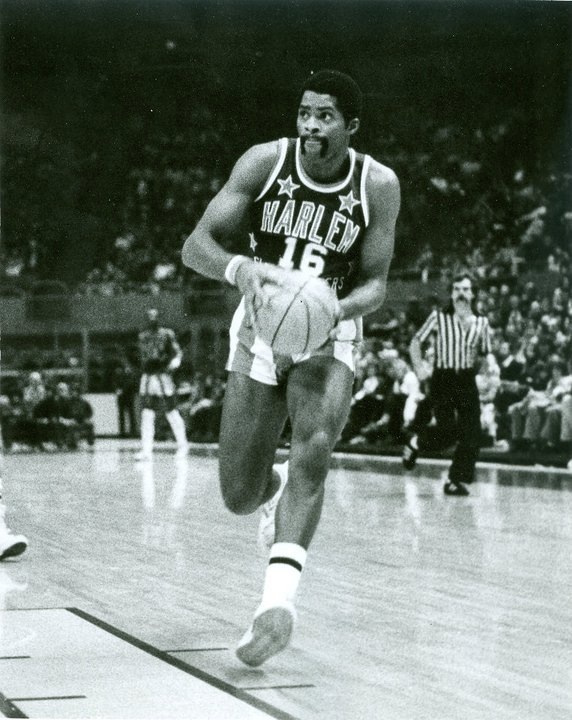
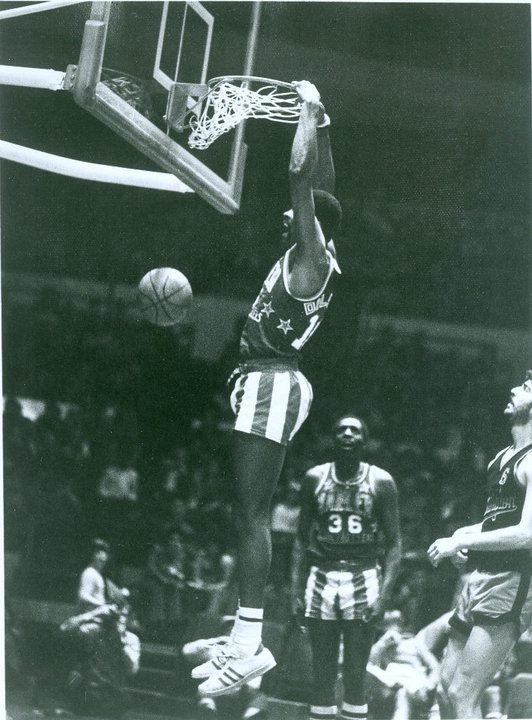
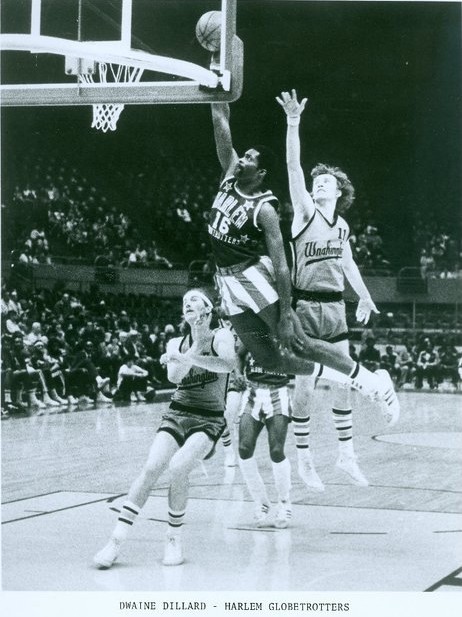
Conflict, baby. Caught up in the maelstrom was the fabulous ’68 Central basketball team, whose all-black starting five earned the sobriquet, The Rhythm Boys. Their enigmatic star, Dwaine Dillard, was a 6-7 big-time college hoops recruit. As if the stress of such expectations wasn’t enough, he lived on the edge.
At a time when it was taboo, he and some fellow blacks dated white girls at the school. Vikki Dollis was involved with Dillard’s teammate, Willie Frazier. In his book Marantz includes excerpts from a diary she kept. Marantz says her “genuine,” “honest,” angst-filled entries “opened a very personal window” that “changed the whole perspective” of events for him. “I just knew the vague outlines of it. The details didn’t really begin to emerge until I did the reporting.”
Functionally illiterate, Dillard barely got by in class. A product of a broken home, he had little adult supervision. Running the streets. he was an enigma easily swayed.
Things came to a head when the polarizing Alabama segregationist George Wallace came to speak at Omaha’s Civic Auditorium. Disturbances broke out, with fires set and windows broken along the Deuce Four (North 24th Street.) A young man caught looting was shot and killed by police.
Dillard became a lightning rod symbol for discontent when he was among a group of young men arrested for possession of rocks and incendiary materials. This was only days before the state tournament. Though quickly released and the charges dropped, he was branded a malcontent and worse.
White-black relations at Central grew strained, erupting into fights. Black students staged protests. Marantz says then-emerging community leader Ernie Chambers made his “loud…powerful…influential” voice heard.
The school’s aristocratic principal, J. Arthur Nelson, was befuddled by the generation gap that rejected authority. “I think change overtook him,” says Marantz. “He was of an earlier era, his moment had come and gone.”
Dillard was among the troublemakers and his coach, Warren Marquiss, suspended him for the first round tourney game. Security was extra tight in Lincoln, where predominantly black Omaha teams often got the shaft from white officials. In Marantz’s view the basketball court became a microcosm of what went on outside athletics, where “negative stereotypes” prevailed.
Central advanced to the semis without Dillard. With him back in the lineup the Eagles made it to the finals but lost to Lincoln Northeast. Another bitter disappointment. There was no violence, however.
The star-crossed Dillard went to play ball at Eastern Michigan but dropped out. He later made the Harlem Globetrotters and, briefly, the ABA. Marantz interviewed Dillard three weeks before his death. “I didn’t know he was that sick,” he says.
Marantz says he’s satisfied the book’s “touched a chord” with classmates by examining “one of those coming of age moments” that mark, even scar, lives.
An independent consultant for ESPN’s E: 60, he’s rhe author of the 2008 book Sorcery at Caesars about Sugar Ray Leonard‘s upset win over Marvin Hagler and is working on new a book about Fenway High School.
Marantz was recently back in Omaha to catch up with old Central classmates and to sign copies of Rhythm Boys at The Bookworm.
 |
 |
 |
Related articles
- Walking Behind to Freedom, A Musical Theater Examination of Race (leoadambiga.wordpress.com)
- Back in the Day, Native Omaha Days is Reunion, Homecoming, Heritage Celebration and Party All in One (leoadambiga.wordpress.com)
- Big Bad Buddy Miles (leoadambiga.wordpress.com)
- Arno Lucas, Serious Sidekick (leoadambiga.wordpress.com)
- Omowale Akintunde’s In-Your-Face Race Film for the New Millennium, ‘Wigger,’ Introduces America to a New Cinema Voice (leoadambiga.wordpress.com)
- Native Omaha Days: A Black is Beautiful Celebration, Now, and All the Days Gone By (leoadambiga.wordpress.com)
- Native Omahans Take Stock of the African-American Experience in Their Hometown (leoadambiga.wordpress.com)
Great Plains Black History Museum Asks for Public Input on its Latest Evolution

The Great Plains Black Museum at the Webster Telephone Exchange Building. (Photo credit: Wikipedia)
This February 2011 story for The Reader (www.thereader.com) is my latest about the Great Plains Black History Museum in Omaha. Referenced in the article are some of the many travails that have dogged this organization. You can find out more about the challenges the museum has faced in three earlier stories posted on this blog. For the longest time the only news coming out of the museum was bad news. But as my new piece suggests there are some positive things happening now having to do with new leadership in place that might finally provide the direction needed to move forward with long overdue change and much delayed progress. I will continue following this story and as new developments occur and as I report on them I will share the posts here.
Great Plains Black History Museum Asks for Public Input on its Latest Evolution
©by Leo Adam Biga
Published in The Reader (www.thereader.com)
The new Great Plains Black History Museum board is putting its stamp on the long troubled organization by holding the first in a planned series of community forums about its future direction.
On February 11, GPBHM chairman Jim Beatty will lead a 2-4 p.m. forum at the Lakeside (Family Housing Services Advisory) building, 24th and Lake, to, as a flyer describes, “discuss a variety of topics…on your mind.”
Beatty, president of Omaha-based consulting firm NCS International, is aware attempts to move forward necessarily entail addressing the dysfunction of the museum’s recent past. The City of Omaha has declared the museum building at 2213 Lake Street uninhabitable, resulting in the doors being closed. The mandated repairs have not been made due to lack of funds.
When he assumed his roles as board chair and museum executive director last fall he found the coffers virtually empty, with no members and no donors. The museum’s not been awarded a grant in years.
“There isn’t a lot of money there,” he says. “I think something like $29 in the checking account.”
Previous chair and director Jim Calloway tried maintaining the building and collection by paying for utility bills, spot roof-window fixes and storage sites out of his own pocket.
Calloway, the son of founder Bertha Calloway, was criticized for his management of funds and for storing the museum’s historical research materials in a non-climate controlled trailer.
“That by no means meets my criteria or any museum’s criteria for proper storage of documents and artifacts,” says Beatty. “That may have been done in the past out of some level of desperation, another indication the leadership of the museum was not operating with the best intentions of handling its business properly.”

Yet, Beatty praises Calloway’s passion. “I think the public needs to understand Jim was trying to keep his mother’s dream alive,” he says, “and that’s not to be taken lightly.” He also credits Calloway for reaching an agreement with the Nebraska State Historical Society to take temporary custodial care of the materials. The documents and photographs are housed at the NSHS in Lincoln, where cataloging’s been done.
Beatty says the materials will remain there until a suitable home is found. While the GPBHM seeks support to address issues at its Lake Street building and the possible addition of a new site, it seeks to make itself and the collection visible.
“The museum has a very valuable collection the public has not seen that it needs to see or at least needs to understand what does exist,” he says. “We have a challenge to save the building but we have to make certain people understand the building does not dictate the museum. The museum is a compilation of resources, artifacts, documents, and that work needs to go on. Once we have properly inventoried everything, then we can begin to identify opportunities to properly display that.”
He’s thinking outside the box.
“The museum can and will have to function without having that building as its base. We can have exhibits at schools, at corporations, at Crossroads, Westroads, at various events.”
He envisions a revamped, interactive website featuring the collection online.
“So, for a time it may well be a museum without walls, and that’s OK. I am in discussions with an entity to provide a facility. Until we get a space, I think we have to be creative — we have to truly demonstrate the museum is alive and well.”
He acknowledges the GPBHM has not communicated its story well. “It’s unfortunate the community just has not known what the museum is doing. I believe there’s a number of rumors out there that need to be corrected.” One he wants to dispel is that the Lake Street building is owned by the Calloways.
“A lawsuit ultimately decided in favor of the museum gave title to the building to the museum as opposed to the family,” he says.
He vows greater transparency.
“People want to know what the bottom-line is. They want to have an assurance the money is being used wisely, accounted for properly and in a timely fashion, and that the books are open. Folks want to know, and in my opinion they deserve to know.”
A capital campaign will eventually be launched.
“Omaha’s a very philanthropic community. I believe we’ll be able to raise money. I’m very confident in that. How much depends on how the funders view the credibility of the organization. That starts with the board of directors,” he says. “We have to have people that bring resources and credibility.”
Toward that end two stalwart Omaha business-community figures — Frank Hayes and Ken Lyons — recently joined the board.
“We need the involvement of the government too,” he says. “The city, county and state all are potential funders at some level.”
More than anything, he wants the museum lifted out of its dormancy.
“There is a sadness this is happened but at the same time there is a hope something can be done to revive the museum and put it on a proper track. My discussions in the community confirm people want to see a vibrant museum that is relevant, involved, proactive, well managed, respected.”
Beatty, who chaired the Durham Museum board, says, “It’s certainly a challenge but one I feel my previous involvement in the community has prepared me well for. I’m unafraid of it, I welcome it.”
Related Articles
- Long and Winding Saga of the Great Plains Black History Museum Takes a New Turn (leoadambiga.wordpress.com)
- Omaha Arts-Culture Scene All Grown Up and Looking Fabulous (leoadambiga.wordpress.com)
- Once More With Feeling, Loves Jazz & Arts Center Back from Hiatus (leoadambiga.wordpress.com)
- El Museo Latino in Omaha Opened as the First Latino Art and History Museum and Cultural Center in the Midwest (leoadambiga.wordpress.com)
- Negro Leagues Baseball Museum Exhibits on Display for the College World Series; In Bringing the Shows to Omaha the Great Plains Black History Museum Announces it’s Back (leoadambiga.wordpress.com)
- A Synergy in North Omaha Harkens a New Arts-Culture District for the City (leoadambiga.wordpress.com)
Academy Award-nominated documentary “A Time for Burning” captured church and community struggle with racism

Cover of A Time for Burning
Rarely has a film, fiction or nonfiction, captured a moment in time as tellingly as did A Time for Burning, the acclaimed 1967 documentary that exposed racism in Omaha, Neb. through the prism of a church and a community’s struggle with issues of integration at a juncture when the nation as a whole struggled with the race issue. The film really is a microcosm for the attitudes that made racial dialogue such a painful experience then. In truth, when it comes to race not as much has changed as we would like to think. It is still America’s great open wound and it will likely remain so for the foreseeable future. The following two articles appeared, as Part I and Part II, of a two-part series exploring the context for the film and the impact it had here and nationwide. The stories appeared in The Reader (www.thereader.com) around the time of the film’s 40th anniversary. If you’ve never seen the documentary, then by all means seek out a DVD copy or a screening. It’s a powerful piece of work that will provoke much thought and discussion. In fact, from the time the film was first released to this very day it is used by educators and activists and others as an authentic glimpse at what lies beneath the racial divide.
“A Time for Burning”
Part I
Academy Award-nominated documentary captured church and community struggle with racism
What Would Jesus Do Today?
©by Leo Adam Biga
Originally appeared in The Reader (www.thereader.com)
On the eve of the 1968 Oscars, a nominee for best documentary feature, filmed in Omaha, foretold the violence that was ripping America apart. Martin Luther King, Jr.’s assassination six days earlier in Memphis was the match that lit the fire. The riots that followed spread to more than 100 cities.
About once every generation a seminal film takes an unblinking look at race in America. Crash took the incendiary subject head-on in the 2000s. Spike Lee’s Do the Right Thing hit all the hot buttons in the 80s. Roots offered a hard history lesson in the 70s. A Time for Burning arguably made the most righteous contribution to the topic in the 60s.
The movie took a heavy toll locally, splitting Omaha’s largest and most established Lutheran congregation on the year of its 100th anniversary.
Produced at the height of the civil rights movement, Burning captures honest, in-the-moment exchanges about race. Shot here in 1965 and released in late ‘66, Burning’s candid, unadorned style was revolutionary then and remains cutting-edge today.
Turned down by the three major networks, it premiered on PBS to national acclaim. Burning earned an Oscar nomination and became a staple of school social studies curricula and workplace diversity programs. Selected for the National Film Registry in 2005 to be preserved by the Library of Congress, the picture may be viewed in a new DVD release.
Burning holds special significance for Omaha. The film that was a litmus test for racism then and is a prism for measuring progress today. Then the mood was rapidly turning acidic. The black frustration expressed in the film first erupted in violent protest mere months after production wrapped. The race riots of the late 60s tore apart the North Omaha community as the promise of a better future was dashed against new injustices piled on a century of oppression.
The film came at a crossroads moment in Omaha history. At a time when racism was on the table for discussion, the opportunity to address it was lost.
Burning follows self-described “liberal Lutheran” pastor Rev. Bill Youngdahl, on a quest for his all-white congregation at Augustana Lutheran Church to do some fellowship with black Christians living “less than three blocks away.” The son of a popular former Minnesota governor, Youngdahl had recently come from a Lutheran Church of America post in New York, where he led the national church body’s social justice ministry. He marched with the Rev. Martin Luther King Jr. in Washington, D.C. He traveled the country working for the passage of the 1964 Civil Rights Act and 1965 Voting Rights Act.
All of which led director Bill Jersey and producer Bob Lee to seek him out when he came to minister in that most typical American city — Omaha.
His “inclusive ministry” posed problems from the start of his arrival at Augustana. Church elders earlier made it clear he should steer clear of the homes of black families when evangelizing in the neighborhood. “I said, ‘I can’t do that. I won’t do that.’” The film project brought everything to a head.
“After filming began, some people began to question what was being documented. ‘Why aren’t they filming the smorgasbord and the choir?’ So, that became an issue,” Youngdahl said. “I had to call those two (Jersey and Lee) back from New York to appear before the council. We talked several hours and finally affirmed going ahead with the film as Bill wanted to do it.”
Members of the church council try to get this brash upstart to tone down calls for diversity. Caught in the fray is member Ray Christensen, who goes from the timid ranks of “we’re moving too fast” to vocal advocate of outreach.
Militant sage Ernie Chambers, pre-state senator days, dissects it all. Chambers held court then in Dan Goodwin’s Spencer Street Barbershop, where he cut heads and blew minds with his razor sharp activist ideology. A famous scene finds Chambers lecturing Youngdahl, who’s come to the shop to float his idea for interracial fellowship. The pastor sweats as Chambers, wary of this do-gooder’s intentions, critically analyzes him and foretells his fate.
As the film plays out, the black Christians stand ready to break bread and talk straight with whites, most of whom repeat the mantra “the time is not right.” Youngdahl asks his bishop, “If not now, when?”
Cinema Verite
Unseen but felt throughout is the guiding hand of Jersey — one of America’ most noted and honored documentarians. His projects range from the Renaissance to the Jim Crow era to a recent film on propaganda in modern society. He applied cinema verite techniques with his hand-held camera and available lighting. The approach registers an intimate naturalism. Point-of-view narration and jump cuts heighten the conflict. He was assisted on the shoot by the late Barbara Connell, who also cut the film.
“Nobody in that film appears because a filmmaker dragged them in,” said Jersey. “Everyone appears because they were in some way directly involved with what was going on in that community. I feel that is, in fact, its strength — it’s a story of individuals who faced one another and confronted one another. No one was ever set up to expose their prejudice.”
Jersey admits he influenced situations to further the story, suggesting a couples exchange to Youngdahl, sensing it would stir up trouble.
The climax comes when Youngdahl proposes the exchange with ten volunteer couples from Augustana meeting with ten couples at nearby black churches Calvin Memorial Presbyterian Church and Hope Lutheran Church. The mere idea of meeting for fellowship in each others’ homes polarized the Augustana congregation. The adult visits never come off, but a youth exchange does, setting off a firestorm.
Former Calvin member Wilda Stephenson helped escort the youths to Augustana. The retired Omaha educator recalled “the people in the congregation became very upset that they were there and participating, especially in their communion service. That bothered me. I wouldn’t have gone if I had thought we weren’t going to be received well that Sunday.”
The visit followed a warmly received visit by white Augustana youths to Calvin.
“We were really glad to see that happen and welcomed them,” Stephenson said. “And that was the situation whenever any white people attended our church. We just always made them feel welcome. For our youths to have been treated otherwise, I was really shocked about that.”
The Calvin youths who went to Augustana that Sunday included Central High students Johnice (Pierce) Orduna and Francine Redick. Orduna said they were not made to feel “unwelcome” by anything overtly said or done. Such is the “insidious face of racism.” They only learned of the upset their visit caused when Jersey, who always stirred the pot, told them what his cameras and mikes caught. He gathered the students for an on-camera forum in which they pour out their disappointment.
“There was a fair amount of anger, certainly some frustration, but I would say outrage and real surprise that Christians we thought had similar ideas about humanity and how to live lives would behave that way,” Redick said. “The visit seemed like such a small thing. I mean, it’s not like we wanted to marry their children. It was people worshiping together. At one point in the film I utter something like, ‘How can people who profess to be Christians and Christian ministers respond in this way?’ Even today that seems outrageous to me.”
“I’m sure whatever Bill preached was not that radical,” then-Calvin pastor Rev. James Hargleroad said. “The whole gist of the film is how such a minor thing could lead to such a momentous result when racism is rampant in a community. The civil rights movement was well under way then, but it was a little late getting to Omaha.”
Burning documents the fallout, including rounds of frank discussion that expose people’s naked fears and prompt serious soul searching, as the divisive climate increasingly makes Youngdahl’s position untenable.
Commissioned by Lutheran Film Associates to show a positive portrayal of the church engaged in racial ministry, Jersey made a film tacitly critical of its efforts.
“It didn’t spark conflict, it sparked dialogue,” Jersey said. “We didn’t do a film about Omaha. We didn’t really even do a film about a church. We did a film about individuals in a church structure struggling with the issue of race in a way that I think represented how America was dealing with race at the time,” he said. “Not the crazies in the South who were using fire hoses and attack dogs. Not the urbanites who were frustrated for many other reasons and setting fires to the banks. But average people being who they are authentically.
What Would Jesus Do Today?
The figure who most poignantly grapples onscreen with his own views is Christensen. His crisis of conscience marks some of Burning’s most human moments. At one point, he said, he wanted to quit the project. Everything was topsy-turvy. The placid church that once comforted him had turned battleground. Jersey convinced him the film was too important for him to abandon it.

“This was scary. I wanted to bail out. I was unsure. We were all unprepared,” Christensen said.
“The church was a retreat where you go to recharge your batteries and sing beautiful hymns — it’s not where you go to be disturbed and bothered. And then Bill (Youngdahl) wakes you up. Waking up is bothersome.”
But Christensen stayed the course, one that got even rougher when he and his late wife June were ostracized by old friends in the church. A moving scene depicts the couple in a state of emotional exhaustion. A tearful June says, “I just can’t do it anymore.” She appears opposed to going forward. The unseen back story is that she was sick with cancer. The rebuffs she and Ray endured took a further toll.
Far from disagreeing, he said, “We were totally together. As a matter of fact, we had agreed that whatever Bill said, we’d support. That’s how unified we were. It’s too bad the film implies otherwise. When she says she’s tired, she’s tired of the radiation treatments, the phone calls, the cold shoulders, the loss of her friends. She’d founded the altar guild and the acolyte guild and now she’s on the outside.”
“She’s crying for the people of the church,” he says in the DVD.
As Jersey explains in the DVD, “There’s a universal important lesson in the film — that change is hard. That change can be costly, but that resistance to change is a killer. It makes even the simplest efforts impossible.”
Youngdahl said the film is an accurate snapshot of where America and the church were then with regard to race. “Our country had not advanced very far.” Churches included. At its core, Jersey said Burning examines the human tendency for one group to distrust “the other.” “It’s fear that immobilizes people,” he said.
All along Jersey meant to “find a situation where there’s a potential conflict” but never intended showing the church turning its back on racial accord.
“I offered Lutheran Church officials the option to cancel the project and to take the footage, but I wasn’t going to change a thing. And to their ever lasting credit, they said, ‘No, this is the story. It’s an honest film — keep making it.’”
Still, “this isn’t what the church wanted to say about itself,” he said.
Reaction by local church officials was not as positive. Nebraska Lutheran leaders filed a protest with the national executive council, branding the film “a disgrace to the church.”
Soon after its original PBS airing, the film ignited national discourse in reviews and essays. Jersey, Lee, Youngdahl and Chambers were much quoted. The earnest pastor and militant barber even made a joint speaking appearance. Their association with the film made them public figures. But Youngdahl was too embroiled in healing the divided house of his church to care. In the end, he couldn’t square his beliefs with the rancor and resistance at Augustana.
For Johnice Orduna, Burning still has the power to illuminate racism. “The film is a gift in that it reminds us we’re not there yet. It’s not a short war. I’m not going to see it ended in my lifetime,” she said. Racism, she said, is “still there, just a little more hidden, a little better couched. But it’s still burning. We still need to put some heat under it.”
Orduna’s done mission development work for the Lutheran church to promote integration, including anti-racist training workshops. She said, “I find the movie itself is a wonderful microcosm of the time. Watching can be a real wonderful remembrance, but it’s also a real frustration. I’m still dealing with the same frustration of, Why don’t they get it?”
Some years ago she consulted Augustana on blended worship services and found resistance still alive. She said bruised feelings remain among old-liners.
“They’re angry over the film. They feel they got set up. That it showed them at their very worst,” she said. “But that would have been any (white) congregation in this city 40 years ago. The fact it was them is sad for them. I think at their core they’re good people.”
She said few Omaha churches are integrated today. New Life Presbyterian Church — a merger of Calvin and Fairview — is an exception. She said Burning reminds us how far we have to go. “I think it’s wonderful it’s still making people itch…because the things that make us uncomfortable force us to change.”
“A Time for Burning “
Part II
©by Leo Adam Biga
Originally appeared in The Reader (www.thereader.com)
Forty-two years have not cooled the incendiary 1966 documentary A Time for Burning. Its portrayal of a failed social experiment in interracial outreach at Omaha’s Augustana Lutheran Church, 3647 Lafayette Ave., still burns, still illuminates.
What members were led to believe was a paean to the all-white congregation’s attempts at fellowship with the surrounding African American community turned into a de facto critique.
As pastor William Youngdahl and others pushed “civil rights” at the church, things were stirred up at Augustana. When a group of black high school students worshiped there one Sunday in 1965 — returning a visit white youths made to Calvin Memorial Presbyterian Church — it caused a ripple. When white couples considered hosting black couples in their homes it made waves. Burning captured the wake. The fallout led to a rift within the church’s leadership that resulted in Youngdahl’s ouster. Hundreds of members eventually left.
Augustana faced its biggest crisis on the 100th anniversary of its founding.
The film, shot hand-held style, immediately became a sensation for the naked emotions and stark black-and-white imagery that framed the problem of racism against the backdrop of the church. The dark-suited, male-centric piece has a chic Mad Men look today that belies the angst of its real-life, as-it-happened drama.
Near the end of the film the late Reuben Swanson, the church’s former pastor, asks how people can be persuaded “to change their hearts? This is the burning question … ”
Augustana’s remaining members could have closed their hearts and minds to introspection, growth, renewal. Instead, they pursued the more difficult path of facing and overcoming their bias.
“It wasn’t all a political thing, it was a spiritual struggle for people, and a very deep one,” said Vic Schoonover, who helped heal and guide the church in Burning’s aftermath. “This was a struggle for one’s soul and what they really believed.”
Omaha and New York City
This Friday, Oct. 17, the UNL College of Journalism will screen Burning at 1 p.m. with a Q & A to follow with Director Bill Jersey. On Saturday, Oct. 18. Film Streams will again screen Burning, at 2 p.m., with a panel discussion to follow, moderated by current Augustana Pastor Susan Butler . Jersey will participate, along with two key figures in the film. Ray Christensen is the Augustana member who had a change of heart — moving from opponent to timid supporter, and then to outspoken witness for change. Johnice Orduna is one of the teenagers from Calvin Memorial Presbyterian, who speaks out strongly against the response her youth group’s visit evokes at Augustana. On Sunday, Augustana Lutheran will be hosting an interfaith service at 10:30 a.m.
Similar programs are happening the following Monday in New York, where the Academy of Motion Picture Arts and Sciences is sponsoring a screening of Burning and panel discussion. Longtime Nebraska state Sen. Ernie Chambers, who plays a prominent “role” in the film, is appearing with filmmaker Bill Jersey.
‘Stirred people to their bones’
Today, Augustana is a beacon for an inclusiveness, crossing racial/ethnic lines, to sexual preference/identity. Butler said that as the only Reconciling Church in Christ congregation in the Nebraska Synod of the Evangelical Lutheran Church in America, Augustana “is welcoming, affirming and supporting of gay, lesbian, bisexual and transgendered believers.”
What transpired at Augustana wasn’t unprecedented. Ministers often get people’s backs up for taking unpopular stances. Tensions rise, disputes erupt. Members of First United Methodist Church in Omaha have endured their own schism, only over same sex marriage, not race.
What set Augustana apart is that its wrestling with controversy and discord was caught on film and aired nationwide. One could argue the parish might never have come to brand itself “a progressive, thinking, Christian church,” as it does today, without Burning as a backdrop for discussion, examination, inspiration and transformation. Longtime member Janice Stiles said the film initially “created a lot of hard feelings” within the church.
“I felt and most of the people felt they only picked out the bad parts,” she said.
Her perspective changed because, wherever she traveled, she met people familiar with the film, and they wanted to discuss it.
“I was really astounded. It gave me another outlook you might say; that maybe it did something good. Much more than we thought. It really was a blessing that we did that,” she said. “It really brought up the feelings and the discussion out into the open, and it needed to be done very much.”
Since the film’s release, the parish has fielded inquiries from around the world. People ask:
“How’s Augustana doing?” It still sparks discussion wherever it’s played. That is what Lutheran Film Associates intended when Burning was commissioned.
“Some of these memories are going to be brought back up again, for better or worse,” Augustana member Mark Hoeger told a recent gathering of church members who watched the film as part of adult forums he led there. The forums were meant to generate discussion and they succeeded, Hoeger said. He also screened a 1967 CBS special on the impact of Burning.
Butler views the programs at Augustana and at Film Streams as educational opportunities.
“My intention is to use this reunion weekend as a time to revisit a particular part of Augustana’s history,” she said. “I think it is always productive to review one’s story from time to time in order to see where we have come from, where we are now and where we are going.”
Butler said reviewing church history can only be healthy.
“I don’t think there is any healing that needs to be done at Augustana. I think we have moved on quite healthily,” she said.
The CBS News special about the aftermath of Burning was entitled A Time for Building.
Moderator Charles Kuralt, Burning co-director Bill Jersey, executive producer Bob Lee and Lutheran pastor Philip A. Johnson discussed reaction to the film.
For the special, Jersey had traveled nationwide and captured audience reactions, including church congregations.
The program ended with members of all-white Our Redeemer Lutheran Church in Seaford, N.Y. deciding to proceed with an interracial exchange. Pastor Bob Benke’s benediction offered thanks “for the willingness of the Augustana congregation to let themselves be seen; for we are well aware of the fact that we have problems here, too.”
Forty years later, Benke is in Portland, Ore., a town Youngdahl also calls home, though the two have not met. Our Redeemer did follow through with interracial youth fellowship, but Benke confirmed the attempt was not well received within his church.
Willing or not, Augustana members found their weaknesses laid bare on screen. for all to see, becoming a mirror for others to do their own inventories and ministries. Introducing the program, Kuralt described the buzz Burning had generated: “It is a film that has stirred people to their bones … “
-
 Augustana Lutheran Church
‘A social tide’
The Hoeger-led forums at Augustana were attended by dozens of parishioners. Most had seen Burning. Few had seen Building. There were lots of questions. For newer members, the most obvious was “What happened next?” The answer is best informed by the context of the film’s troublesome times. The mid-’60s marked the height of the civil rights movement. A great social tide was moving forward and an old-line, inner-city Swedish-American congregation in the Midwest like Augustana felt threatened by change that might disrupt its homogeneous traditions.
More blacks were moving into the area. Cries for black power, equal rights and change by any means necessary (as the late Malcolm X famously put it) disturbed many. Black discontent is well expressed in the film by a young Ernie Chambers as well as Earl Person, Rev. R.F. Jenkins and students from Central High/Calvin Memorial Presbyterian Church.
The exclusion blacks felt was tangible. Omaha’s pronounced geographic and social segregation meant whites and blacks lived parallel lives, separate and unequal. The era of white flight saw scores of Augustana members move to The ‘Burbs, a pattern that played out in inner cities across America. The tinderbox of racial tension exploded in riots here and elsewhere during the late ’60s.
Schoonover said those who left Augustana in the decade following the film did so for many reasons, “but the rapidity and the intensity of it I directly attribute to A Time for Burning.” Now a retired minister, he’s an active member of Augustana.
White-black interaction was so thoroughly circumscribed that the mere suggestion of interracial exchange concerned enough Augustana members that the proposal was defeated and Youngdahl forced to resign.
Heated discussions ensued, prejudices surfaced, conflict escalated and resistance held fast. Filmmakers Jersey and Barbara Connell captured fears and doubts that usually remain hidden or silent. The film is a prism for viewing all people’s struggles with race.
Burning uncovered racism among otherwise decent, churchgoers. Unfortunately, Augustana took the fall for the bigotry, cowardice and hypocrisy of the larger white Christian church and society. Its members scarred with the celluloid scarlet letter, when virtually any white congregation would have looked that way under the same scrutiny.
“I think A Time for Burning was a slice of the American church wherever you would have cut it in those days,” Schoonover said. “There was racial tension all over the city and the country. White congregations were not really ready to face the whole racism issue. They wanted it to go away.”
He said the film resonated with audiences everywhere.
“If people across the country hadn’t identified with that on a personal level as well as a just oh-my-gosh level, it would never had had the popularity that it did. It hit chords in people,” Schoonover said.
Hoeger agreed, saying “ … this was not the story of a single congregation, it was the story of our society, our community in general. People could see in this bunch of white Lutherans themselves.”
But for Augustana members, a stigma was attached to their church that made it/them a symbol or scapegoat for prejudice.
“To a certain extent the congregation was sacrificed for a greater good and in that sense probably deserves some credit,” Hoeger said. “The pain and suffering they went through as an institution led to a larger, better good. And frankly, we think, it’s a better congregation than if it had not gone through that experience.”
Indeed, as Building brought out, people admired Augustana for initiating steps to deal with race. Hoeger and Schoonover said they elected to worship there because of the church’s role in the film, not in spite of it.
Hoeger first saw Burning in grad school, where it was held up as the pinnacle of American cinema verite. He recalls being struck this searing drama set in his native Nebraska. When he and his wife moved to Omaha in 1980 their “church shopping” brought them to Augustana without realizing its connection to the film. The day they went there, Schoonover led the congregation in confessing their sexism, typical of the radical liberal sermons he delivered.
It was only then, Hoeger said, “it clicked in my head this was THAT church” from the film.
He was hooked. He was also intrigued by how Augustana had so drastically changed in 15 years. Hoeger discovered it had been a process led by Schoonover, fellow pastors and a lay leadership willing to “embrace change.” The groundwork for that change can be traced to Burning.
In 1969 Schoonover accepted a call to lead Lutheran Metropolitan Ministries in his hometown of Omaha. His social justice mission tasked him with confronting racism in the Lutheran Church and wider community. Following Youngdahl’s exodus Augustana had a “quiet-things-down, not-rock-the-boat” pastor in Merton Lundquist who, to his and his lay leadership’s credit, began doing more minority outreach, Stiles said.
Schoonover joined Augustana and within a decade was asked to pastor there. He shepherded to completion a year-long self-study begun by Lundquist at the church on its future. Ironically, the church that drove off Youngdahl got a bigger troublemaker in Schoonover.

Vic Schoonover today
‘Hit square in the jaw’
When Schoonover began preaching he sounded-off on integration, police-community relations, poverty, prejudice — both from the pulpit and in his work with the activist group COUP — Concerned Organized for Urban Progress. He quoted Stokeley Carmichael. He once called America “a structured racist prison.”
COUP’s overtures to and advocacy for the black community made Schoonover a target. “I had to move my family into a motel because we had anonymous threats of doing harm to us and to our property,” he said.
His less militant stands led him to co-found a handful of social service programs still active today, including the Omaha Food Bank, Together Inc. and One World Health.
Schoonover was attracted by what he found at Augustana. “I thought, here was a congregation that at the very least was forced to begin to look at the issues and maybe had made some progress,” he said.
The people were, he said, “in any other circumstance some of the most generous people I’ve ever known.”
“They would do anything for you. Really good-hearted. But on that issue (race) it was a blind spot,” Schoonover said. “It’s a dichotomy. But that’s what they were taught. Because I don’t think it’s possible for any white person to be raised in our country without being raised a racist and a sexist. I just think it’s in the air you breathe and in the systems you get socialized in.
That’s the milieu in which you live and — that’s what you absorb.”
Janice Stiles acknowledged the blind spot she had in those days. She recalled her feelings when blacks moved in.
“All I could think of was the price of my house going down,” she said.
She recalls when her son Mark became friends with a black schoolmate. At first, she was bothered by it. She gradually changed.
“I started looking at people and seeing what’s on the inside instead of the outside. I’m glad I got to know black people as people.”
Schoonover was also the product of a myopic vision. He grew up on Omaha’s north side, where his family kept moving, in white flight mode, as neighborhoods were integrated. His own “baptism” or “awakening” came as a young minister in Kansas City, where he “took a class taught by black clergy called Black Power for White Churchmen,” he said. “It cleared my eyes open to some of the problems.”
After interacting with Augustana members, he said, he “really became aware of their anguish” over the film and how it held them back.
Some felt it unfairly made them an example. Some accused the filmmakers of betraying their trust. Others believed the film presented a gross distortion of them and their church. After all, much of the conflict in the film went on behind the scenes, in private, in the inner circle of the church council. That’s why most members who went to the Omaha premiere were shocked by the friction Burning depicted.
“They all traipsed to the world premiere at the Joslyn in their best bib-and-tucker and got hit square in the jaw,” Schoonover said.

As if being exposed in that way were not enough, the film became a phenomenon — the subject of untold screenings, reviews, essays, articles, public programs, debates.
Burning aired coast to coast, prompting the CBS special. The film earned an Oscar nomination. It’s been used in film/social studies programs and diversity training. In 2005 it was selected for the National Film Registry.
Thirty-odd years ago the wounds were still fresh enough that Schoonover discovered members didn’t want to relive the film. Understandably, they didn’t appreciate being a whipping post, as they saw it, for a national dialogue on race. When he became co-pastor there in 1976, he decided to bring it out of the closet.
“It wasn’t mentioned, it wasn’t something talked about, it was something avoided in the congregation,” he said. “They were traumatized. They felt totally betrayed, misled. I knew we could never get healthy without confronting it, so we bought a copy of the film and began showing it. The young people were especially interested.”
Thus, Burning became a conscience or barometer for the parish to measure itself. Older members may not have realized it, but outside its walls Burning wasn’t viewed as an indictment or condemnation of Augustana, but as a challenge for America to confront the nation’s racial divide. That’s why the film endures beyond being a mere artifact of ’60s racial tension. Instead, this document of a congregation struggling with its worse nature was the impetus for that same congregation, and presumably others, to realize their better angels.
‘You’re already dead’
At the end of Augustana’s year-long self-study, the congregation was faced with several options. Stay and expand the ministry, merge/relocate, close or continue as is. The parish council recommended remaining and expanding its inner-city ministry. Put to a vote of the general membership, a majority opted for the council’s recommendation.
“It was a test for the parish and to their credit they said, yes, and we did,” Schoonover said.
His sermons helped sway the congregation to stay its new course. He cautioned against being mired in old ways, old attitudes.
“The past cannot be brought back,” he told them, “and the way things were is irretrievable.”
Janice Stiles said his preaching exerted much influence.
“Oh, yes, he opened our eyes to so many things,” she said. Rather than criticism she said “it was more like a challenge.”
Despite empathy for his flock’s distress, Schoonover didn’t let them off the hook or allow them to rationalize or minimize their reluctance to accept diversity.
“I told them, ‘Look, I understand your pain, but what the black people have felt far surpasses any pain you have felt.’ I was extremely blunt about what they faced and what it meant and what it would require of them. I said, ‘If you don’t do this, you’re already dead. You’ve got to change. You don’t have any choice.’”
One of his sermons put it this way: “ … There is no place you and I can go to hide from change. We might wish things would leave us alone but this will not be … Organized religion has often been in the conservative role of resisting change. This has often been at the cost of truth and integrity. A congregation can lose touch if it is static and immovable. It’ll become irrelevant … ”
From that crucible, Augustana evolved into the progressive place it is today. The rupture that divided the church allowed Augustana to reinvent itself.
“By splitting the church and creating this schism,” Hoeger said, “those who were left were the core of folks who were more socially aware, concerned, interested in embracing change then the folks that were upset … There are still some people here who I would consider very conservative, but what differentiates them is they were willing to stick with it.”
The film that created this house divided also helped repair the breach.
“In the end run I think whether they realize it or not the film was worth it … It certainly changed the direction of that congregation, that’s for sure,” said Schoonover.
It’s meant Augustana engaging in urban, interfaith service-mission ministries.
For example, the church is active in the ecumenical social action group Omaha Together One Community, OTOC offices there. Augustana’s Cornerstone Foundation addresses the inner city’s shortage of affordable-livable housing by buying-fixing up homes for low-price resale, or refurbishing residences that owners don’t have the means to renovate.
In the late ’60s Augustana and nearby Lowe Avenue Presbyterian Church launched Project Embrace, a summer youth enrichment program for minority kids. At one time, Embrace included an after-school tutoring program serving thousands of kids at six churches. It has dwindled to a summer-only program at Augustana and two other churches. The integrated Danner day care operated for years at Augustana.
Schoonover carried those relationships over to the larger black community through Augustana, where he performed weddings, funerals and confirmations for blacks. Some blacks began attending the church. A few became members. As did Hispanics. Several Laotians, whose immigration the church sponsored, joined Augustana. He said those experiences “helped win the congregation over.” Stiles was among them.
“It was our occasion of getting to know a different race,” she said.
Even as barriers at Augustana have vanished, blacks still comprise only a small fraction of the parish rolls.
Vic Schoonover would say Janice Stiles is representative of the changed hearts that can move institutions forward. He acknowledged much work remains to be done.
“I go from hope to despair on the whole racial issue,” he said. “From thinking, ‘Yeah, we have made some progress, to thinking, Geez, we’re not any further along. We’ve just become more subtle, more guarded about it. Not much has changed.’”
As Bill Jersey said in Building: “Until the individual is willing to say what I can do, we’re going to continue with all this pious dialogue and get nowhere.”
The tragedy in that, everybody agrees, is that as the beat goes on, the flames still burn. Who will put out the fire? And what will heaven say if we had the chance but didn’t act?
Related Articles
- Faith in Memphis: Color-blind church an audacious experiment (commercialappeal.com)
- Sunday morning remains segregated (religion.blogs.cnn.com)
- Reverend: If Heaven is integrated, why not churches? (cnn.com)
- Get On the Bus, An Inauguration Diary: My Story is a Companion Piece to New Documentary Charting An Inaugural Ride to Freedom (leoadambiga.wordpress.com)
- Today’s Exploration: Omaha’s History of Racial Tension (theprideofnebraska.blogspot.com)
- Walking Behind to Freedom, A Musical Theater Examination of Race (leoadambiga.wordpress.com)
- The Ties that Bind, One Family’s Celebration of Native Omaha Days (leoadambiga.wordpress.com)
- Omowale Akintunde’s In-Your-Face Race Film for the New Millennium, ‘Wigger,’ Introduces America to a New Cinema Voice (leoadambiga.wordpress.com)
- Everyone’s Welcome at Table Talk, Where Food for Thought and Sustainable Race Relations Happen Over Breaking Bread Together (leoadambiga.wordpress.com)
- Overarching Plan for North Omaha Development Now in Place, Disinvested Community Hopeful Long Promised Change Follows (leoadambiga.wordpress.com)
- North Omaha Champion Frank Brown Fights the Good Fight (leoadambiga.wordpress.com)
Burden of Dreams: The trials of Omaha’s Black Museum
For more than a decade now I have been writing about the travails of the Great Plains Black History Museum in Omaha. The following story for The Reader (www.thereader.com) appeared in an abridged version in 2006. You will find two other major stories I’ve mine about the museum on this blog. One is from 1996 and it profiles the museum’s founder, Bertha Calloway. I called the piece, Bertha’s Battle. The other piece appeared in early 2010 and documented some of the past problems the organization has endured and broke news about some new, promising developments concerning the organization. I will soon be writing new stories about the museum based on even more recent developments and so look for new posts related to this subject in the coming weeks.
Burden of Dreams: The trials of Omaha’s Black Museum
©by Leo Adam Biga
This is the story about the rise and fall of a once proud institution.
It began in 1975 with great promise. The Great Plains Black History Museum in Omaha set itself apart as an African-American cultural institution devoted to revealing the rich past of black settlers and soldiers and sojourners in the Midwest. Through displays and lectures it taught a history long withheld from blacks and whites alike. One largely suppressed or omitted or ignored in schools. By making black history a cause for affirmation and revision, the museum staged its own semi-militant Black Power movement. With its insistent black heritage focus, the museum gave anyone who passed through its doors or saw its touring exhibitions and presentations, a history lesson unlike any other. It was a revelation.
There was always the hope the museum could serve as an anchor and destination stop in the historic North 24th Street district.
But over time the museum’s devolved into a troubled place beset by all manner of problems. Many revolve around embattled interim director Jim Calloway, whose strident ways make him persona non grata with potential funders. Ultimately, though, the museum’s suffered from the lack of a consistent revenue stream, a well-connected, well-heeled board and inadequate record keeping.
A solution to some problems may be in the works via a proposed new partnership between the museum and the University of Nebraska at Omaha.
Grand visions for the museum have surfaced before only never to be realized. It’s a familiar story to Calloway’s ailing mother, Omaha civil rights activist and black history buff Bertha Calloway, who forged the museum from her own imagination and and determination. She’s seen and heard it all. Plans. Promises. Proposals. Proclamations. Architectural renderings for a refurbished museum never got past the conceptual stage. What should have been a shining moment — a book co-authored by her and historian Alonzo Smith about Nebraska’s black history, featuring images and data drawn from the museum’s collection — turned debacle. There was a dispute with the publisher and with a pair of corporate sponsors. The museum did not accept the publication, which is full of errors. Most of the books went unsold and sit in the office of an Omaha attorney. Questions linger over how the museum spent the corporate dollars dedicated to the project.
She harbored a dream for an an archives and interpretive center on the city’s north side that chronicled the seldom told story of black pioneers. With help from her late husband James T. Calloway and fellow members of the Negro Historical Society she founded, the GPBHM was born in 1975 as an incorporated non-profit. The museum opened in 1976 at its present site, the three-story Webster Telephone Exchange building, at 2213 Lake Street. The once slated-for-condemnation structure was saved from the rubble heap when the couple purchased it for a song. The 1906 brick structure designed by famed architect Thomas Kimball was home to the Nebraska Telephone Company and, later, an Urban League community center, before being converted into apartments. After some revamping, it became, under Bertha Calloway’s watch, a storehouse and source of black pride.

Bertha Calloway
The Calloways got it listed on the National Register of Historic Places. Behind the building’s impressive facade, however, lies a dilapidated structure, its distressed condition a mirror of the turmoil that’s characterized the museum’s governance the past decade. Poor health long ago forced Bertha Calloway to give up the reins to her son. She now resides in a north Omaha nursing home, her mind in and out of the mental fog that 1993 brain surgery left her in. Chronic seizures grip her.
For a long time now the museum itself has existed in limbo, not formally dissolved but floundering, its business conducted in shadows, its affairs in disarray, its displays rarely seen and its board comprised of a few old family friends, but no one with real money or influence. Over the past decade the GPBHM’s been closed more than it’s been open. From about 1998 to 2005, access to the museum and its collection was “by appointment only.” In 2003 the holdings — artifacts, photos, books and documents — were mostly emptied out of the century-old building and put in storage to protect them from water damage and other environmental hazards.
Occasional selections from the collection could be viewed in temporary/touring displays at off-site locations. For a long time, the Blue Lion Center at 24th and Lake reserved space for museum exhibits. When Nebraska Workforce Development located its headquarters there a few years ago, the museum was left homeless. For the past two years the collection’s largely been invisible, even to students and scholars. Since June, when the GPBHM hosted its last exhibit in the Webster building, the museum’s doors have been shut to all visitors, the gas and water turned off and the phone disconnected. This in lieu of badly needed repairs and the result of a then-pending lawsuit over who should retain possession of the building.
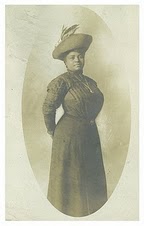
From GPBHM collection
For a time last summer a banner hung outside the front entrance read, Temporarily Closed for Renovation, although anyone with knowledge of the situation, then and now, understands the museum’s broke and no renovations are on the horizon.
To keep the museum viable and to care for his mother, Jim Calloway’s sacrificed his career as a business manager and exhausted his savings. He’s a nomad these days, working odd jobs to supplement his social security, staying in rental units, traveling by bus or bumming rides, scrounging for favors and loans.
“There were a couple years I paid myself a salary, but for the last couple years I haven’t got anything. On occasion, if we get a donation, I get a small portion of it to help me pay my bills. I’ve been evicted from two places. I just run around with my backpack and spend a lot of time down here,” he said sitting at a reference desk in the W. Dale Clark public library, where he’s a familiar figure. “I’ve basically gone broke trying to make sure everything’s stable. It’s just part of the deal.”
Today, the museum’s regarded as more symbol than reality. Rumors abound about not only the condition of the collection, but its disposition and whereabouts. There’s even talk holdings were sold on E-Bay or at auction. Calloway said nothing’s been sold online but some artifacts were sold at a Dino’s Storage auction held to recoup unpaid storage fees. He said he bought back most of the museum items on sale. The few he didn’t purchase, he added, “weren’t really of any great historical significance. They’re things that can be replaced.” He said the museum’s most prized possessions — photos, plus research documents prepared or compiled by his mother and others — remain untouched. He said there’s little monetary value to the photos and data, but much historical value.
“We have the most information of any museum on early blacks in this part of the country, including the homesteaders,” he said. “Every effort has been made to protect these important historical documents and photos.”
With the museum in crisis mode for so long now, the questions arising about it have undercut people’s faith in Calloway and in the institution. While he acknowledges mistakes, he said much of the doubt is unfounded speculation. “There’s so many misconceptions about what’s going on,” he said. “Maybe because we’re not open on a regular basis, that’s where those perceptions come from.” UNO Black Studies professor Larry Menyweather-Woods, a closer observer of the museum, said the public has “taken this so much without facts they don’t know what to believe.” Former Douglas County Board member Carole Woods-Harris said, “Very few people know what’s going on.”
Calloway tried laying to rest some of those concerns when, in early March, he showed a pair of visitors the holdings at two storage sites. One, situated on a patch of ground directly west of the museum building, is a 48-foot long metal storage trailer jammed with stuff. He owes thousands of dollars for the trailer’s use but he said the owner’s been “patient with me” thus far. Ironically, amid all the talk about the holdings — they’ve sat, albeit unseen and locked away, next to the museum “this whole time” The other site, a warehouse owned by a family supermarket chain, is a vast space leased to the museum for storing shelves, lights, signage, et cetera. The lease officially ended some time ago and the location’s continued use by the museum is on “a month by month basis,” although Calloway’s been told he may need to clear out the holdings by the end of May. He’s looking for a new spot.
Along nearly the entire length of one side of the trailer, stacked from floor to ceiling, are columns of cardboard conservation boxes containing documents on various topics of black culture and history. To illustrate the contents, Calloway removed two boxes, one labeled Black Cowboys and the other, Bob Gibson, each filled with articles, essays and notes on their subjects. The little known role of black cowboys is a major emphasis of the museum. Bertha Calloway’s own grandfather, George “Dotey Pa” Pigford was a cattle hand. The feats of black icons with local ties, like major league baseball hall of famer Bob Gibson, publisher Mildred Brown, black nationalist Malcolm X and civil rights activist John Markoe, are also museum staples.
If a proposed agreement with UNO to provide professional support is finalized, then Calloway said the museum’s holdings can, for the first time, be completely indexed or inventoried. “It’s mainly identifying what’s in these 200-plus boxes. It’s going to take a big effort by a lot of people and it’s going to take a lot of time,” he said.
Despite a recent court decision that found the GPBHM operates as a functional museum, public perception says something else. There’s a widespread assumption it is, in fact, a closed, failed institution with no clear future in sight. Calloway sees it differently. “The case we made before the judge” is that we’re an organization that’s struggling but that’s still trying to keep afloat. No, we’re not open right now, but we’re in the process of making a partnership” to stabilize and reopen it.
Perception can beget reality, however, as when funding approved for the beleaguered museum was pulled by the Omaha City Council and the Douglas County Board, when elected officials expressed concerns about its shaky financial house and its slow response or non-compliance in producing mandatory reports for review. Douglas County Board Chairman Mike Boyle said the museum failed to show how it spent past appropriations from that elected body. “When you’re getting funds from a government agency, you have to account for them. You have to show you spent it for the purposes for which it was given. That’s basic-101 stuff.” Boyle said. “If you don’t account for the funds, we’re certainly not going to give you any additional money, that’s for sure. That was his (Calloway’s) problem.”
Calloway concedes the museum’s record-keeping is inadequate. He said finding documents is complicated by the volume of items he must sift through in storage.
He said officials have tacitly given him the impression his leaving the museum is a condition of funding allocations. Officials contacted for this story deny any such stipulations. Calloway, though, fears he’s burned too many bridges along the way. He hopes his past isn’t held against the museum.
Little else but hope has kept the museum alive. That, and Calloway’s devotion to his mother’s dream, a devotion he’s perhaps carried to a fault by refusing to relinquish control, even during the 10 years when he cared for his mother in her home.
“I’ve always been very dedicated to her and, you know, I made a commitment to her that I’d keep her at home as long as possible,” he said. “But it did put the purpose of the museum behind 10 years. There may have been some times when I dropped the ball on things I should have been doing as far as progressing the museum forward. I probably should have allocated some authority to other individuals. I may have tried to take on too much at one time. But I didn’t know any other way. And I had a certain responsibility as a full-time caregiver. I wish I could have had that time to really dedicate to the museum because I think, to be honest with you, things wouldn’t be as bad off as they are now. But there wasn’t anyone else I had total confidence in that I could just give the key to and say, ‘Here…’
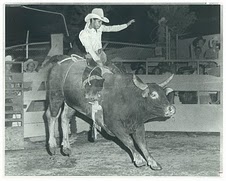
From GPBHM collection
If anything, Omaha photojournalist and longtime family friend Rudy Smith said, Calloway’s carried his devotion too far.
“He is not the bad guy. Jim’s being true to his mother’s wishes and desires. Everything Jim’s done has been to maintain the legacy his mother established. He’s not in it for the money. He’s not in it for glory or fame. The problem’s been with him giving it up. He would do anything and everything to keep it, and he has, from borrowing money from people knowing he couldn’t pay it back to pay bills, to going without eating to working part-time jobs, whatever it took. All because of his love for his mother and her dream. He came into this thing when the museum had no money, no followers, no members, no board of directors and virtually none of the records that Bert kept. Who knows where they are? He inherited a lot of things he had no control over. He’s been in this by himself.”
In recent years, Smith and others agree that Calloway’s miscalculations have left his own and the museum’s reputation tarnished to the point that all public funding for the GPBHM has been denied. Calloway admits making “a big mistake” when he twice turned down city Community Development Block Grant funding, once, in 2001, for $50,000 he rejected as too little to address infrastructure needs and again, in 2002, when he balked at an amended offer of $100,000 as also insufficient.
Calloway accused Omaha City Councilman Frank Brown of having museum funds diverted to the Love’s Jazz and Arts Center, a pet project of Brown’s. Brown denies it. Upon withdrawing the funds, the city offered Calloway this official explanation in a March 24, 2004 letter signed by James Thele, housing and community development manager: “As there will be further delays in the project, the City of Omaha will reallocate the FY 2001 Community Block Grant funds to other projects that have an immediate need.” The letter references “past due real estate taxes and special assessments” and “unpaid debts owed by” the museum and requests “a release allowing the City of Omaha to obtain a credit check” on it. “I encourage you to continue to resolve all financial and other issues.”
An April 13, 2004 letter gave the museum an extra 30 days to satisfy the city’s requests, only by then the city was asking for more extensive documentation. When Calloway didn’t respond, the funds went elsewhere.
“I gambled and lost. I take responsibility because I could have acted on it sooner,” Calloway said. “A hundred thousand dollars is a hundred thousand dollars. If I had it all to do over again I would probably have taken the money and got part of the work done and then lobbied for the rest. But at the time I felt they were throwing us carrots. They’ve got millions of dollars they’re spending on a lot of other projects and here we need at least $230,000 and they’re only throwing out $100,000. Just enough to get us in trouble.”
In a recent interview Thele said, “We had asked for information from the Great Plains Black Museum. They never provided it. That’s the problem. No matter who we work with we have certain documentation required by the federal government as well as by the City Law department in some cases. We have guidelines regarding how long we can keep letting that money sit. We’d certainly be glad to work with them again if they’d like to submit again.” He added the door’s not been closed on the museum. “Oh, no, not at all, it’s a wonderful building. We’d like to see the building preserved. It’s part of the history of north Omaha.”
Calloway feels whatever animosity he’s generated at City Hall stems from his fierce opposition to city-led redevelopment along North 24th Street. At the very time he held out for more money he led the Committee for the Preservation of Historic North Omaha Sites, which criticized, via letters, opinion pieces, fliers and demonstrations, city plans for North 24th Street as disrespectful of black heritage.
“I truly believe city politics are connected to the demise of the museum. Because of my continued opposition…we got the shaft. I pointed fingers. There’s no secret there’s no good blood between Frank Brown and I. Those kinds of issues, I’ve learned in a very hard way, you can’t put out there when asking people for money. My lesson is, in order to really play the game, you’ve got to kiss The Man’s butt every once in awhile. That politics is a nasty game and I’m not suited for it. I’m not a diplomat in that regard at all. I get pretty hard-headed sometimes. I find a lot of times that stubbornness about me gets me in trouble. I just don’t tolerate a bunch of bull. Even my mother continues to be defiant…She frequently tells me not to be ‘a sell-out to the bourgeois martini set.’”
UNO Black Studies professor Larry Menyweather-Woods said Calloway’s “made bad decisions” along the way. He’s said he’s even told Calloway straight up what others have said — “they don’t trust you and they tell me I’m a dang fool to trust you.”
One thing everybody agrees on is that if the museum is to have a future, Calloway must divorce himself from it — even though he’s invested more than a decade in it.
“With all the controversy that surrounds the museum and me, I know it’s in the best interests of the museum for me to step aside as soon as possible,” Calloway said. “My character has been assassinated to the point where, right now, it doesn’t do me any good to even think about continuing to try” and remain. “There’s so many questions swirling around that I’d be a detriment. I know that. It used to bother me quite a bit. It doesn’t bother me anymore because I know I’ve done the right thing by my mother and by other individuals who started this thing, and that’s to protect the holdings at all cost, and that’s what I’ve done. And so, I’m comfortable with it.”
A February 22 Douglas County Court ruling may clear the way for a working relationship between the museum and the UNO Department of Black Studies, which could give the GPBHM a whole new image. Calloway and UNO officials have been conferring for months now. Brokering the deal is Larry Menyweather-Woods, who approached Calloway about the university working with the museum. Terms of a formal agreement are under review. The partnership is contingent on Calloway cutting official ties to the museum, although he would act as a consultant.
UNO would provide professional and student services to help: catalog the collection; identify funding sources and apply for grant monies; and advise on the formation of a new board of advisors and board of directors and on staff hires.
Menyweather-Woods said partnerships between black studies departments and black museums exist across the country. He and UNO College of Arts and Sciences Dean Sheldon Hendricks say such an arrangement only makes sense here given the scholarship the university can apply to the research trove the museum possesses. “Those are natural collaborations,” Hendricks said. In no way, Menyweather-Woods said, will UNO take over the museum. It’s more about guiding it. “It’s about the black studies department being intrinsically involved in helping reestablish the museum as a viable research center,” he said.
Calloway said any new leadership is likely to “fit more easily and comfortably into that atmosphere” of public-private politics and hoop-jumping he loathes so much.
Historian Alonzo Smith, a former consultant with the museum, embraces any help the museum can get. “They have all this material, but they really need a different institution…a different organization…” to maintain it. “A lot of the collection’s never really been cataloged. I remember going through all these photographs that were in boxes and they had no names or labels on them. Things were not done in a professional manner. It’s time to take it out of their (the Calloways’) hands, so somebody else can pick up with it. It would be great if that could happen.”
Rudy Smith said whatever happens, the museum needs “a new direction, new leadership, an infusion of money and a five or ten year plan. It does need to be turned over to an organization or a group that can help revive it, restore its integrity and do something with it. It needs someone with a big vision…a big vision beyond Omaha. It has to have some linkage to the national black museums association. It’s going to take a lot of work, a lot of money.”
Just how much money depends on who you talk to. Building repairs and retrofitting estimates vary from a few hundred thousand dollars to address the most pressing needs to a few million dollars to completely overhaul the building. There’s also been talk of a new structure adjacent or connected to the existing museum.
While a UNO association would give the GPBHM more credibility, many issues remain, the most basic being a need for sizable resources, and UNO is adamant about not committing money to the project. Besides repairs-renovations, funds must be secured for an operating budget and to cover salaries for a professional staff that curates and preserves the collection and manages the museum.
A lack of dollars has always plagued the institution. The Calloways didn’t have much of their own and they’ve resisted, as Jim Calloway put it, aligning themselves with “the fat cats” who can do the most good, but want the most say.
Whatever happened to the Great Plains Black History Museum in Omaha is a question on many people’s minds in the black community. This once celebrated institution at 2213 Lake Street carved a niche for itself as a center for illuminating a history otherwise unseen or untold. Opened in 1976, the museum’s archives and displays highlighted the role blacks played in shaping and settling Nebraska and chronicled the many triumphs and tribulations they experienced here.
The museum is often referred to in the past tense these days because of a complex set of circumstances and series of events that have, in effect, locked away all that history from public view for much of the past decade. Even though a recent court ruling denied a title claim that asserted the museum corporation no longer operates as a museum in the building at 2213 Lake, the reality is that the building has been closed since last June. The official reason given for the closure was pending renovations, but unofficially the museum shut everything down, just as it earlier pulled everything out, in the midst of the lawsuit and assorted financial problems, including debts and liens.
The interior of the split-level building, which sits mostly empty, is in disrepair. Both roofs leak and one’s in danger of collapsing. When the museum was still open on a semi-regular or by-appointment-only basis, the back of the structure was closed-off out of liability concerns. Building engineers have decreed much of the building unsafe for public tours. Three years ago, the museum holdings were hurriedly put in storage, where they remain, to protect them from water damage.
It’s not what founder and director emeritus Bertha Calloway had in mind. She devoted herself to the museum and its mission with the same fervor she gave to the civil rights cause. She explained why in a 1996 Reader interview: “People must see black history in order for the images they have of black people to change. That’s what our museum is all about,” she said, “It’s about revealing a history that’s been withheld.” She was driven in part to start the museum so that she could correct the one-sided history taught in schools. “The history I was forced to learn and hated just consisted of white history. I knew there had to some other kind where black people fit in other than slavery. Even when my children were growing up there wasn’t anything in the public schools about African-Americans.” She vowed then “that my children, grandchildren and great-grandchildren know that African-Americans were involved in the settlement of this country and the settlement of the West in particular. That’s important because it makes you feel like you belong.”
Malcolm X Birthsite Foundation board member and former Omaha Public Library staffer Vicky Parks said the woman behind the museum did great things for her community.
“Mrs. Calloway gave me and people of my generation a sense of our history and a sense of our culture…Kwanza, Black History Month, Juneteenth, the black cowboys, the black homesteaders, the Tuskegee Airmen…She gave all that to me and more. Notice I say SHE gave all those gifts, not the Omaha Public Schools, not the university. I had a black studies minor in college, but that was just a refresher compared to what she gave me.”
The way Parks sees it, the museum could bridge “the disconnect between the younger and older people right now. When you see the dispersal and the fragmentation of the black community, I think African-American children need a sense of self more than ever, and the museum provided that. In our youth today there’s not the sense of black pride and black nationalism my generation had, and it shows in our voting patterns and in our living patterns and in what things we’re committed to. The community needs the museum more than ever now.”
What began with great fanfare as a cultural landmark in those early years has unraveled over time into a private and public battleground to secure support and fend off critics and creditors. No clear solution or resolution has emerged even though there’s great interest in seeing it return to glory.
“I just think it’s a valuable asset to the community and we need to do what we can to preserve it,” said attorney and former Omaha City Councilman Brenda Council.
From the very start, the GPBHM operated on a too-small budget for the scope of Bertha Calloway’s big dreams. She and others always felt the museum’s been slighted in the funding it receives compared to other area museums.
“She does not get the respect and the support she deserves. I’m truly saddened that we have not as a community chosen to provide the financial resources to institutionalize that museum,” said Parks. “I hope the museum does become an institution…in every sense of the word. Institutions are perpetual. They last from generation to generation. They don’t fold because of one person. Look at the results of the museum not being supported by the total community. I think it’s sad the whole community hasn’t seen the value in continuing her legacy. When black people come from other places they want to see what black people are accomplishing here. They want to see the contributions and the struggles and the sacrifices of our people. What is it that they get to see?”
For years the museum did at least enjoy the support of some major funding bodies, such as the now defunct United Arts Omaha, and received tourist revenue allocations from the city and county. Its 1976 start-up was facilitated by a $101,000 federal Bicentennial Commission grant. About the time the corporate giving climate tightened, leaving the museum without a steady source of monies for operating expenses, much less repairs, she suffered a setback when she underwent brain surgery for what turned out to be a benign tumor. Her memory impaired, she gave more and more responsibility to her son.
That’s when things began to get away from her and the small coterie of confidantes she trusted, most notably her son, who moved from Lincoln back to Omaha to assist his mother. As her faculties diminished, Jim Calloway assumed the museum’s day to day operations. Eventually, she was declared mentally incompetent to handle her own affairs and in 1997 a court-appointed attorney, Karen Tibbs, was installed as her guardian-conservator.
Perpetually short of funds, the museum’s typically put off overdue repairs or gerrymandered fixes in place of serious rehab. A second-story false floor and the L-shaped, split-level building’s two roofs — a flat tar roof in back and a gabled tile roof in front — have deteriorated to such an extent that they must be replaced. Additionally, new windows, tuck-pointing and other weatherproofing/climate-control improvements are needed. There are also plumbing, heating/cooling and electrical upgrades needed.
Then, when the museum was in line for Community Development Block Grant funding to pay for some of the outstanding repair work, Jim Calloway refused a 2001 city allocation of $50,000 as inadequate and even after the allocation was increased to $100,000 in 2003 he stalled, and in a fit of pride, held out for more. When stipulations, in the way of financial accountings, were placed on the museum getting the funds, Calloway did not comply and the money offer was rescinded. When, around the same time, he similarly did not satisfy Douglas County Board requests for financial records, county appropriations were withheld.
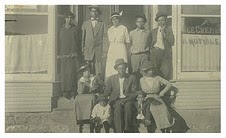
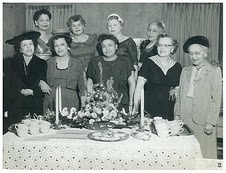
From GPBHM collection
Calloway’s exchanged harsh words with public officials, one of whom refers to him as “a negative person.” Those kinds of missteps by Calloway have cost he and the museum dearly. No public funds have been forthcoming since then. He is either unwilling or unable to provide the financial statements in question. There’s talk that some public officials and some private individual have made it known they will not fund/back the museum unless Calloway’s gone or until he satisfies demands for full, accurate accountings.
One financial crisis after another’s dogged the museum. There are some $10,000 in unpaid bills. There are outstanding tax liens. In recent years Calloway’s failed to file for the museum’s tax exempt status, which found him scrambling to scrape up the cash. He raised what was owed before, but he’s well behind on the most recent taxes due — $3,750 and counting in tax and interest.
“My fault. There’s no question about that,” he said, adding the building’s tax certificate is held by an investor who has no designs on the property itself except to collect interest on the taxes owed. Menyweather-Woods has negotiated a payment plan with the investor.
Squabbles, accusations and allegations, both inside and outside the family, have further eroded confidence in the museum. Calloway and his sister Bonita are at odds over who owns the museum holdings. She asserts they’re the property of the family. He maintains they belong to the museum corporation and the community.
Museum advocate Larry Menyweather-Woods, an ordained minister and a professor in the Department of Black Studies at the University of Nebraska at Omaha, summed up the contentiousness and controversy by saying, “There’s enough mess to go around. This is a vicious game being played, OK? I’m so tired of this conniving, back-stabbing when it ain’t necessary.”
It doesn’t stop there, Calloway’s embroiled in legal disputes with Tibbs, who had him evicted from one of his mother’s properties. A March 25 Probate Court hearing before Judge Samuel Caniglia considered his motion to remove her as his mother’s guardian-conservator. “Her performance as guardian-conservator has been subpar all the way,” Calloway said. “This whole business with the museum was not necessary. One of the problems with her is she shoots from the hip a lot. She doesn’t do her research.”
Tibbs challenged the deed to the museum building, contending a clause in the title Bertha and James Calloway signed over to the non-profit Great Plains Black Museum Archives and Interpretive Center, Inc. requires the structure revert back to Bertha Calloway’s ownership should it stop being used as a museum. In her brief, Tibbs asserted the building no longer filled that function. Jim Calloway contested her arguments in a brief filed by his attorney William Gallup. In a January 17 trial in Douglas County District Court, Judge Robert Burkhard heard testimony from witnesses on both sides. His decision found that while the institution “may have been somewhat loosely operated as a corporation…the building and the property…had always been used as a museum…possibly somewhat sporadically at times…but that does not mean that it ceased to be used as a museum.”
According to Tibbs, who said she represents the best interests of her client, “The decision is that the museum is an operational museum, so maybe it is, but nobody else in the community knows that. The building’s not been open. I can’t get in. Nobody can. You cannot go to that place, open the door and go inside to see an exhibit, and you haven’t been able to do that for some time. Ask anybody.” Tibbs said she’s not sure what her next move, if any, will be. “I do know it is unfortunate that it all came down to this. I think Jim (Calloway) is trying to do the best he can with what he has, but he just won’t let it go. Maybe I just won’t let it go.”
Even if Tibbs’ challenge had been upheld, Calloway said his mother’s Medicaid nursing home credit, which limits personal assets, may have forced the sale of the building. Whoever retains title to it, he said, would be stuck with huge liabilities. Meanwhile, Tibbs said she had investors lined up to purchase the building and/or pay for repairs in the event she gained control of it.
Calloway sees the decision as opening the door for the museum to have a fresh start in the building he and his mother fought so hard to save. “I’m happy with the way things turned out,” he said, noting its loss “would break my mother’s heart. She’s got a lot of sentimental attachment to the building. It does have a lot of historical significance.”
That fresh start may come in the form of a partnership with the UNO Department of Black Studies, where professor Larry Menyweather-Woods is brokering an association between the university and the museum for UNO to provide professional and student services. He feels “the uniqueness” of the museum and its emphasis on blacks in the Midwest affords scholars like himself and his colleagues a research boon and their expertise, in turn, can benefit the museum.
“We have a great deal of interest in being able to work with that museum,” said UNO College of Arts and Sciences Dean Sheldon Hendricks. “Many of the materials in their archives have not been cataloged or otherwise gone over for historical value. Our historians are particularly interested in getting a look at it. And we also see it as a great opportunity for our students to have both a service learning experience and an experience working directly with historically significant artifacts.”
Calloway, too, sees it as a win-win proposition. He welcomes the chance to put the collection in “responsible hands” and he embraces UNO’s “passion for history.”
“I hope the museum can get back on its feet and become something we can be proud of,” Vicky Parks said.
Tibbs said where “nobody’s” been willing to work with Calloway in light of the museum’s problems, “maybe they will now. I don’t know. UNO’s name would lend more credibility. Clearly, that would lead the community to feel comfortable.”
None of this changes the fact there’s still no money for repairs to the museum’s century-old building. UNO is adamant about not committing any funds to the museum. Menyweather-Woods said UNO’s involvement is not tied to the museum continuing to be housed in the building, adding there are plenty of “campuses that would be excited to have it.” Even Calloway suggests the structure is not a must for the museum’s future, saying it could just as easily “continue on” elsewhere and that “other locations might be more suitable” and “make better business sense.”
While Calloway said engineers’ reports confirm the structure “is salvageable and worth saving,” he also fears the city may condemn it if something isn’t done soon.
Others view the recent court decision as validation that Calloway’s remained, as Omaha photojournalist and museum supporter Rudy Smith put it, “true to his mother” by keeping the museum alive, if even on little more than a wish and a prayer. “It should be seen as a redeeming part of his integrity,” Menyweather-Woods said. “He’s always argued the same position. He’s always insisted it was operating as a museum. So, I think that says a lot right there.”
The saga of the museum’s plight, from lawsuits to funding woes to mismanaged assets, sends the wrong message to funders, who see an irresponsible institution that’s “out of control,” said Rudy Smith.
The Calloways have in some ways been their own worst enemies by publicly calling out Omaha for its stingy support and by rashly announcing makeovers, expansions, capital campaigns and board reorganizations without firm plans and follow through. Nothing’s ever come of these pronouncements except mistrust and acrimony.
The museum’s 30-year life has always been one of struggle. Part of the struggle stems from the Calloways’ wary, insular, defensive posture that’s valued protecting their independence above all else. They simply will not cow-tow to or play ball with the big shots. Admirable as that maverick streak may be, it’s also alienated the museum and cost it valuable allies. Taken together with its lack of a professional staff and its incomplete accountings, questions and suspicions are bound arise.
It’s no wonder then, as Jim Calloway noted, “There’s always been some sort of conflict with the city on funding.” His mother managed all aspects of the museum’s business, including the books, and since her illness there’s been no one to pick up the slack. Few outsiders have been brought into this inner circle.
“She’s always been very leery of having certain types of individuals involved in the operation. She’s never been one who goes out to cocktail parties or fancy dinners. That’s not who she is and that’s not who I am, either. She’s always been more interested in getting grassroots individuals involved. Unfortunately, the powers that be like to see some substantial, high profile figures on your board. They want you to change to their ways, so she’s steered clear of them,” Calloway said.
According to Rudy Smith, “She did not want the museum to fall into the hands of the corporate community. She was concerned if other people took it over the black community would lose treasures and no longer have access to their own history. It could be rewritten, retold, sold and maligned. Bert’s always felt that way. She told me she always wanted it in the hands of black people.” He added that the resources required for restoring the museum may necessitate bringing on board “people outside the black community that can do that.”
Bertha Calloway turned inward when she felt “betrayed” by a series of dealings with the suit-and-tie set who reneged on promises, said Rudy Smith. A fiasco with a book she co-authored on African-American history in Nebraska, along with other imbroglios, embittered her. “That’s why she became somewhat of a recluse and hermit and would not let anybody close to her. A lot of opportunities were lost because of betrayal and lack of trust and stubbornness.” Menyweather-Woods said she rejected proposals that not only could have financed a new facility, unburdening the museum of its albatross of a building, but strengthened the board, supplementing or replacing the current roster of cronies.
Alonzo Smith, a former consultant to the museum, said both the strength and weakness of the GPBHM is the grassroots mentality Bertha Calloway instilled and that Jim Calloway perpetuated.
“She’s not a museum professional. She’s not a curator. She’s not an archivist. She’s not an arts administrator. She’s not a historian. But she has a love on a subject and she has a love for people in the community,” said Alonzo Smith, who collaborated with her on the 1998 book An Illustrated History of African-Americans in Nebraska. “She really took it and made it into a community institution. It was a wonderful community institution. But she’s a strong-minded lady who found it difficult to work with other people. She would listen and say, ‘Thank you very much, but I’m going to go ahead and do what I’m going to do.’” I even put her in touch with a group called the African-American Museums Association. They do a needs assessment, which she really could have used to really get some big time grant money, but she didn’t want to relinquish financial and administrative control to a board.”

Alonzo Smith
He said a reluctance to form alliances or share governance “is not just an African-American thing. It happens with community-family museums all over the country.” While Smith admires Jim Calloway’s loyalty to “his mom in trying to take care of her and the museum,” he says, “it’s beyond his capacity. He can’t handle it. It’s a sad story. That museum was her life’s work and to see it decline the way it has…”
Rudy Smith doesn’t blame Jim Calloway for spoiling his mother’s dream. He faults a larger culprit, saying, “The community failed her.”
Despite all the headaches and bad feelings, Jim Calloway doesn’t regret his museum odyssey. “The experience of being with my mother during that 10 years is something I would never trade. I just wouldn’t. Because we got to know each other so well during that period of time, it was worth it to me,” he said.
He looks forward to the day when the museum is back on course. With UNO as a potential steward, he expects to oversee a transition that will ensure: the collection is cataloged; the research materials are accessible; the displays refurbished and open year-round for viewing; and the museum’s good name restored. “After everything gets in place with the university, we’re going to lobby real hard and it’s going to be for a lot more than $100,000. We’ve got a lot of time to make up for. With different people steering it, I’m sure they’re going to have some progress. The city knows how important that museum is to the community.”
One thing there’s consensus on about the museum is that its founder, Bertha Calloway, is a community pillar whose dream should be fulfilled.
“We have no intention of forgetting Bertha Calloway and the members of the Negro Historical Society who put that place like it was,” said Menyweather-Woods.
As the antagonist in all this, attorney Karen Tibbs said, “At the end of the day my responsibility is that her dream and her money be realized. Bertha Calloway’s. Not Bonita Calloway’s. Not Jim Calloway’s. I’m not going away.”
No one knows more than Jim Calloway what the burden of that dream has cost. “More than a dream, really, it’s a mandate from my mother.”
Related Articles
- Long and Winding Saga of the Great Plains Black History Museum Takes a New Turn (leoadambiga.wordpress.com)
- Gary Kastrick’s Project OMAHA Loses its Home Base (leoadambiga.wordpress.com)
- Finding Forefathers: Lincoln Motion Picture Company Film Festival Gives Nod to Past and Offers Glimpse of Future (leoadambiga.wordpress.com)
- Great Plains Black History Museum Asks for Public Input on its Latest Evolution (leoadambiga.wordpress.com)
- Omaha Arts-Culture Scene All Grown Up and Looking Fabulous (leoadambiga.wordpress.com)
- Once More With Feeling, Loves Jazz & Arts Center Back from Hiatus (leoadambiga.wordpress.com)
- Back in the Day, Native Omaha Days is Reunion, Homecoming, Heritage Celebration and Party All in One (leoadambiga.wordpress.com)
- Arno Lucas, Serious Sidekick (leoadambiga.wordpress.com)
- Big Bad Buddy Miles (leoadambiga.wordpress.com)
- Enchantress “LadyMac” Gets Down (leoadambiga.wordpress.com)
Long and winding saga of Great Plains Black History Museum takes new turn
In some ways, the Great Plains Black History Museum in Omaha,Neb. is a symbol for the African-American experience in this place. African-Americans have had a presence in Omaha for generations now and their accomplishments are legion. Unfortunately, a disproportionate number of African-Americans here, as in the America overall, live in poverty and are unemployed or underemployed and struggle with all manner of health issues. The museum owns a much shorter history but it too can point to a fine record of accomplishment that unfortunately is blemished by a long litany of issues that have kept if from fully reaching its potential. The following story appeared in an abridged version in The Reader (www.thereader.com) in early 2010, but I am posting here in its entirety. Four years before I wrote a similarly epic piece about the museum and its travails for the same newspaper. I will be posting that earlier story soon. In the coming months I will also be writing anew about the museum, whose story of struggles and aspirations continues.
NOTE: My blog also features a story I did in 1996 on the museum’s founder, Bertha Calloway. I called it, Bertha’s Battle.
Long and winding saga of Great Plains Black History Museum takes new turn
©by Leo Adam Biga
A version of this story appeared in The Reader (www.thereader.com)
In a tumultous decade for the Great Plains Black History Museum, its doors closed and its funding ceased. After years of turmoil, however, the organization may be taking tentative steps toward a sustainable future.
Its leaky, unsound, 103-year-old building at 2213 Lake St. has been off-limits to the public. Even before city code inspectors deemed it uninhabitable, executive director Jim Calloway moved the museum collections into storage to avoid damage. The Reader confirmed boxed archives have been in a rented metal storage container in back of the building, with artifacts and display items in remote warehouses.
The son of founder Bertha Calloway, he’s struggled keeping the family nonprofit afloat after illness forced his mother to step down some eight years ago. With few exceptions, the museum’s estimated 100,000 documents and hundreds of artifacts and educational materials have been unavailable to scholars and the public. The fallout of all this? The museum has lost face in the community and a building of architectural-historical significance has further deteriorated through inaction.
Bertha Calloway
This once proud organization has become the object of disappointment and skepticism, its National Register of Historic Places home reduced to a shell and its mission unrealized. The archival collection comprising it’s greatest glory — the seldom seen black history Bertha Calloway compiled — has languished under benign neglect.
Yet recent developments are providing new hope for the beleagured museum and its endangered holdings. The building’s and the archives’ ultimate fate remain clouded, but a clear vision may be coming into focus. The question is how to attain it.
On February 23, 180-plus archival boxes containing voluminous research documents, letters, photographs and other materials were removed from the storage bin and onto a truck for transport to the Nebraska State Historical Society in Lincoln. The transfer’s part of a one-year custodial agreement between the society and museum. The NSHS will provide a secure, environmentally-regulated space for inventorying and indexing the archives. Some minimal conservation work will be done as well.
There’s more. Representatives of Heritage Nebraska and the National Trust for Historic Preservation toured the Lake St. building March 5.
“We conducted a site visit of the property,” said Laurie Richards, Eastern Field Representative with Heritage Nebraska, an affiliate of the Trust. “The building is in immediate need of stabilization. We are interested in the historical significance of the Thomas Kimball building — a very significant building for the neighborhood and entire community of Omaha. There may be some funding through the Trust to assist with some of the organization’s needs, but we have to do further research. We will also help them explore other possible avenues of financial assistance.”
Earlier, a team of Omaha architects and engineers led by Michael Alley did an extensive analysis of the building’s most pressing needs. A master plan for renovation and new construction is on the drawing board.
Additionally, the museum has reorganized what’s widely been considered an ineffectual board to include new blood from the African-American and majority communities. “Some of the names are very influential people and they will do a great job. We also have a new board of advisers,” said Jim Calloway. “The next step to get things rolling,” he said, is a capital campaign.
“I feel better right now about things than I have in a long time,” he said. “The thing I’m most happy about is when senior officials from the State Historical Society pulled out a few of those archival boxes and were just blown away by what was in there. They were extremely impressed and pleased to see everything was still intact, because rumors of its disappearance had floated throughout the community. They were a bit surprised, too, at the condition of everything considering it wasn’t in a climate-controlled environment.”
For Calloway, it’s vindication of sorts. “I think it’s a good time to get straight with the public because rumors were floating that things were sold on eBay. It’s given me a little relief, too, because I’ve had to walk around for five or six years with this thing hanging over my head about me selling off the collection. It hasn’t been comfortable at all.”
With the building and collections inaccessible, speculation ran rampant about the state of the historical archives. One-of-kind memoirs and letters, for example, relate to black homesteading families. Historian Tekla Agbala “Ali” Johnson of Lincoln, Neb. is working with the collection in association with the NSHS. She said it is a prized cache.
“Strictly dealing with the history of African-Americans in the West, the collection is the largest dedicated to African-American people, period, I’ve worked with. Just in terms of size, it’s important,” said Johnson. “This is a fabulous and valuable collection and it has the potential to be a world-class archive.”
Johnson, an Omaha native who was an intern under Bertha Calloway, is impressed by how many families “came forward and deposited” personal remnants of history with Bertha. “Overwhelmingly she had their trust and people gave her things they wouldn’t give anybody else. She collected very,very private stories, oral histories, all the way to documenting the African-American cowboys in her own family. I cannot tell you how thrilled and honored I am to be able to process this collection.”
She said the “extremely well-documented” archives hold the potential for new insights into many aspects of African-American life in Omaha and greater Nebraska.
In terms of relevance, she said, “It has implications for a deeper understanding of the civil rights movement, the black music industry and black social clubs and organizations in the Midwest.” Johnson, who’s combed through but a fraction of the boxes, said she makes discoveries each work session. “In the very near future we’ll know exactly what we have. I’m making very good progress.” “I’m sure we’re going to come across a lot of really good information we didn’t have, so it’s very exciting from that standpoint,” said NSHS associate director of library archives, Andrea Faling.

Tekla Ali Johnson
Although Bertha was not a degreed historian, Johnson said she was nonetheless a “scholar and researcher. She truly put her life’s work in this. It is truly amazing.”
The archives were gotten to just in time. “They were beginning to erode,” said Johnson. More than 200 archival boxes, many overstuffed and broken, were stacked like cord wood in the container. Not everything was taken by the NSHS.
Calloway tried assuring the public of the collections’ integrity, but many questioned if they’d been compromised. Fueling the fires were assertions made by his sister and an attorney, who sought to wrest control of the building and collections from him.
With the archives now in the temporary care of a reputable organization, concerns about the materials may be alleviated. Faling said on a scale of 1 to 10 the mostly paper materials are in “slightly below average” condition — “maybe in the 4 to 5 range, but that’s just a subjective appraisal.” She said the lack of climate controls resulted in detrimental, not devastating temperature and humidity fluctuations and some mold. “I have definitely seen worse,” she said. “We’ve been in places where there were things that were not salvageable — I didn’t see anything like that, where we just have to get rid of stuff. That’s a good sign.”

Nebraska State Historical Society
Materials are variously being reboxed and treated for mold. She said the container housing the archives was free of other problems. “We didn’t really see evidence of animals, which is a good thing. We’ve run into conditions where we had to wear masks, so this wasn’t as bad as something like that.”
Calloway said “the collection is in absolutely the best of hands with the State Historical Society. I feel very comfortable with it being there. It’s in a safe environment with its own professional support staff and a historian on board.” Not everything’s quite sewn up with the NSHS and the archives. Faling said state law prohibits the agency from spending money on an outside collection. Thus, the museum, perhaps with the Society’s aid, must find dollars to underwrite the work and any needed archival-conservation supplies.
The archives ended up in Lincoln via a circutious route. Calloway spoke with several different entities to take them on. An agreement brokered with the University of Nebraska at Omaha’s College of Arts and Sciences and Department of Black Studies eventually fell through. More recently, he considered granting the Hastings, Neb.-based African-American Preservation Organization trusteeship over the collection. Independent scholar Rick Wallace, a longtime friend of the Calloways, heads the group. He’s also on the Heritage Nebraska board and a State Historical Society associate.
Word of the archives needing a safe home reached the Society. Its president, Michael Smith, said upon visiting the museum site and inspecting the archives in storage he and his staff determined there was a need they could fill.
“It’s simply a matter of being of service,” he said. “As a state archives we have people that are knowledgable in archival management and we have space to house the collection for Dr. Johnson to do an inventory of what’s there.”
“We’ve agree to provide custodial care so the materials would not get further damaged,” said Faling. “We want it to have the best home possible ultimately. We’re not making claim to this. We want to make clear we don’t own this collection. We’ve offered to house it for a year until the Great Plains board figures out what to do”
She said the archives in Lincoln will, at least for now, be accessible only by the Calloways, the museum board and persons so designated. “Were not trying to restrict this in anyway,” she said, “but we have work to do to it and to get it organized.”
An inventory alone would be major progress for the museum given its recent history. The low point may have been when City of Omaha code inspectors pronounced the Lake St. building uninhabitable in 2006, effectively making the museum homeless. The building’s been closed more than it’s been open during Jim Calloway’s tenure. Besides a temporary display at the Blue Lion Centre, the collections have been out of sight.
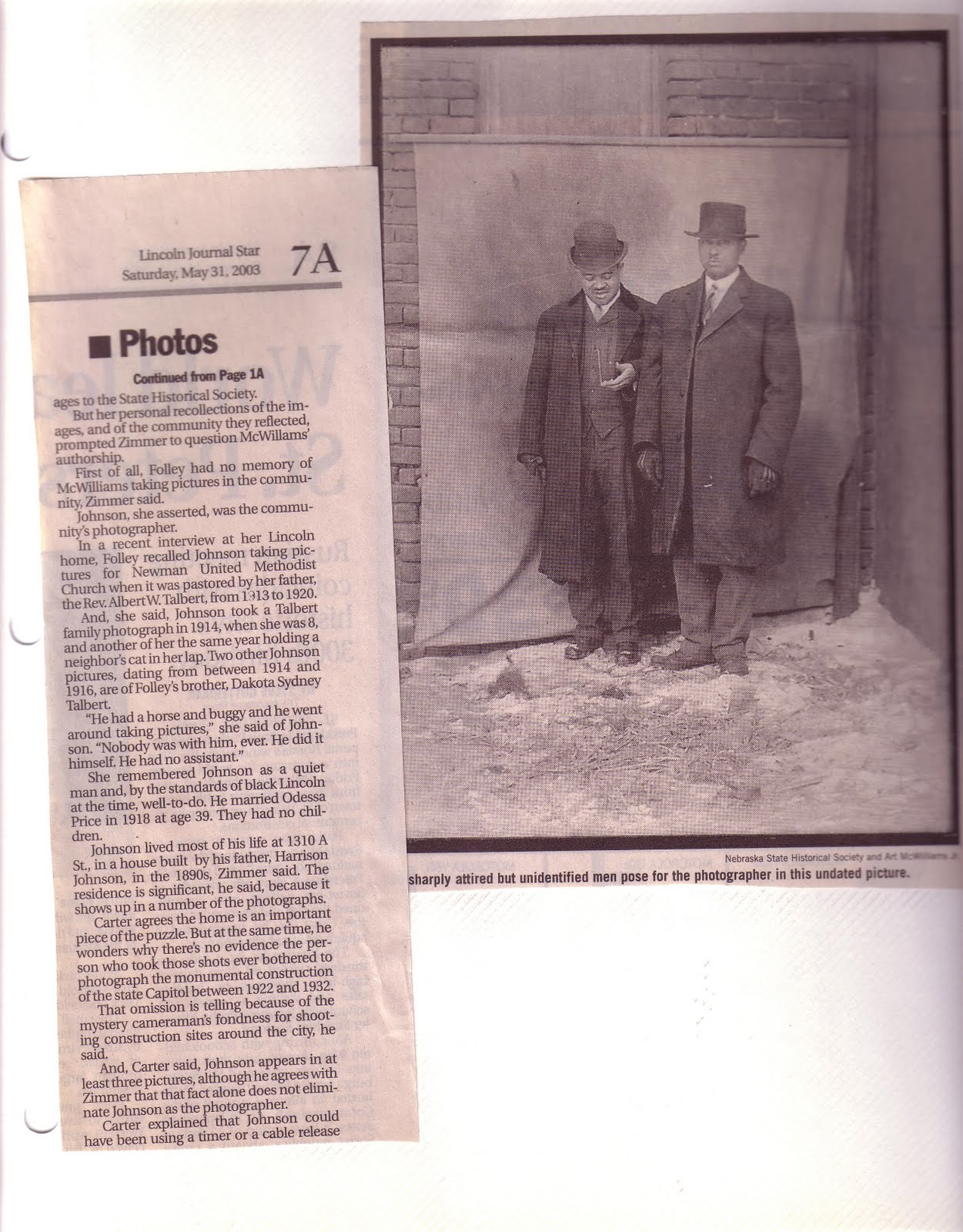
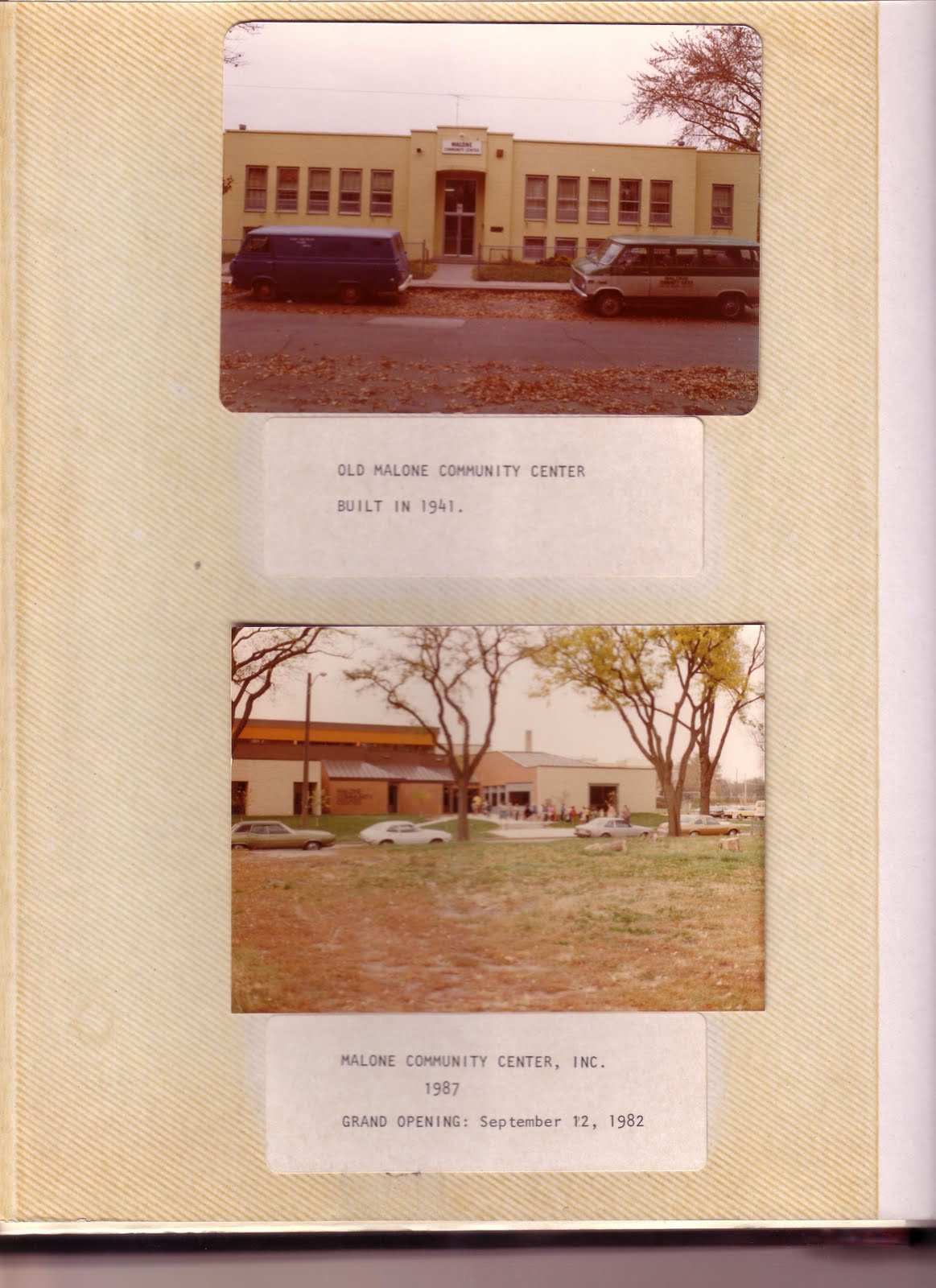
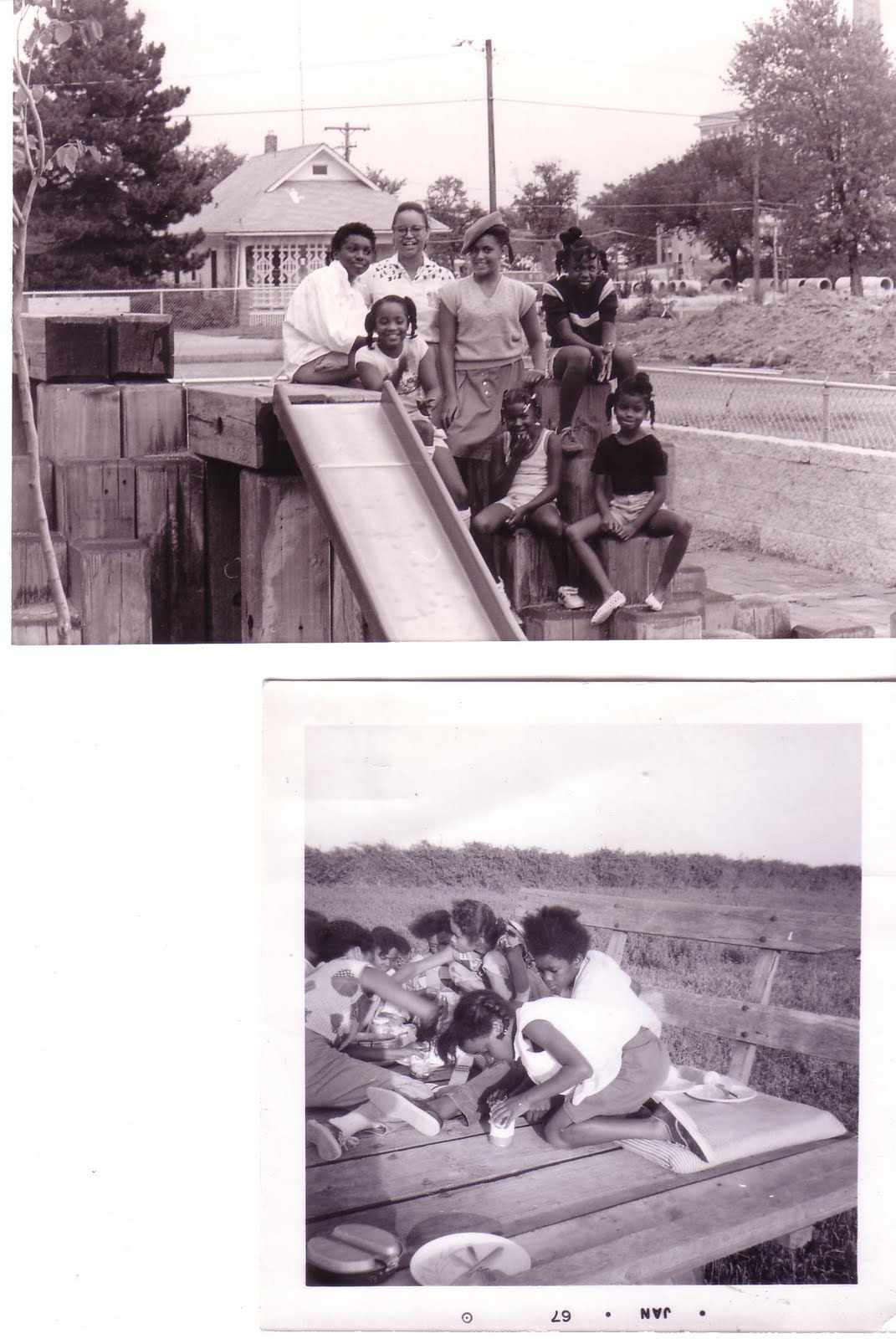
Calloway said the museum has debts of about $5,000 for outstanding storage fees, taxes and assorted other claims and liens. He said the Lake St. building’s utilities are turned off by choice. The museum has maintained its 501c3 status.
Board member Alice Station goes back to the 1950s with Bertha Calloway and the Negro Historical Society that preceded the museum. She collected photos and other materials related to the Buffalo Soldiers. She said it’s pained her to see the museum lay dormant and the archives unused. In a 2001 move that upset Station and brought criticism of Calloway, he rejected a $50,000 city allocation for roof repairs as inadequate. Even after the allocation was increased in 2003 to $100,000 he held out for more. When funding was made contingent on Calloway providing financial accountings he did not comply and the monies were withdrawn. The museum went from a guaranteed $50,000 to a probable $100,000 to nothing.
Similar noncompliance led Douglas County to withdraw allocations. The events may explain the GPBHM’s recent inability to obtain funds. “I admit I made a mistake,” said Calloway. “Work that needs doing now could have been fixed. Where I feel like I’ve accomplished my goal of saving the archives, I’ve failed to preserve the building.”
It didn’t help matters that Calloway and former Omaha City Councilman Frank Brown fueded. Bertha had her own run-ins with movers-and-shakers in the past. Intractability isolated the museum from funding sources. “It was always a survival mode really for them, and Mrs. Calloway was very, very protective of the collection,” said Loves Jazz & Arts Center executive director Neville Murray. “She thought it was important that as an African-American museum African-Americans should be running it. She was suspicious of folks from outside the community and their motives.”
Jim Calloway said neither he nor his mother have any use for “high falutin” folks.
Tekla Johnson offers another point of view. “People have complained in the past Ms. Calloway was a bit controlling, but she didn’t know who to trust and she tried to protect it.” Bottomline, said Andre Faling, “you have to say the Calloways did a great service to the community to have all this stuff. If they hadn’t been doing this, this history would not be there. They do deserve some thanks for sure.”
The museum seemed at an impasse until the recent turn of events. Now the archives are squared away, funding sources for the building’s renovation may be surfacing and a new board offers the potential for new ideas and energy. But what happens after the one-year custodial agreement concludes? Where do the archives go then? And what role, if any, will the Lake St. building play in the future?
Calloway said he’s exploring options to accomodate the archives beyond the one-year term. A refurbished Lake St. building is part of his vision. “The research documents have been the priority, but I don’t want to forget about the building,” he said. “That’s the next big venture.” He anticipates board members leading fund raising efforts for its rehab. Little more than bandaid fixes have been done. The result is that a Thomas Kimball-designed Jacobethan Revival Style edifice that survived the 1913 Easter tornado and housed the Webster Telephone Exchange and the Nebraska Urban League, sits vacant, vulnerable to the ravages of time and the elements.
Michael Alley of Alley Poyner Macchietto Architecture PC, echoes the sentiments of many in viewing the structure as an important piece of architecture and history.
“That’s such a significant building on so many different levels — because of Thomas Kimball and the tornado it survived. It was the nerve center for rescue-cleanup efforts in the wake of the deadly storm. When we lose buildings like this we really lose a sense of place. These physical markers reference points in our community’s history, so the loss isn’t just a building but it really is a loss of history. That’s why it’s so critical to protect these assets.
“All the work I’ve done has been pro bono, just purely out of a passion and a desire to see this thing protected and ultimately restored. Our firm has done many, many projects in north Omaha and we just care deeply about the community. It’s a building I drive by and it just grieves me to see it in that condition.”
He said in a district like north Omaha that’s seen much of its historic building and housing stock razed, the loss would be compounded. If the building were restored, he added, it could anchor North 24th revitalization. North Omaha Development Project plans for aHeritage District mention an African-American museum. African-American Empowerment Network leaders also have the museum on their radar as the network-led North Omaha Arts Alliance takes shape.
For now though, the building’s a worn symbol of what once was. Even when it housed a fully operational institution from 1976 through the late ‘90s, the structure was in various states of disrepair. Years removed from any real work being done beyond roof patch jobs and broken window mends, the building is in dire straits.
The 2008 Alley-led needs analysis underlined the need for swift action. Conditions are worse two years later. “With the heavy snows we’ve had it’s honestly hanging on a razor’s edge,” Alley said. “The way that roof is framed, particularly the low pitched roof, the trusses are embedded into the wall, so if the roof does cave in or give way it will probably pull the walls in with it. I’ve talked to structural engineers and a contractor about putting temporary shoring underneath the roof structure. You’d have to start in the basement and go up through the floors, and put in some posts that would at least keep it from a catastrophic roof collapse.
“The other particularly precarious thing is an old brick flue or chimney in desperate need of tuck pointing. It needs to be dissembled and saved because that’s an important historic element we’d need to rebuild. But if that falls over in a big windstorm or somebody sneezes wrong it could take the whole thing in, too.”
Sub-zero temperatures take their own toll. Minus any heat inside the building, he said, “the freeze-thaw cycle just destroys buildings.”
Stabilizing the “most desperate needs,” Alley said, would take $19,000 to cover: temporary shoring floors and roofs; applying plywood on windows; installing and maintaining temporary heat and cooling; removing the flue stack. In his 2008 report he estimated $44,300 to more comprehensively address “immediate needs.” Much more would be required to retrofit the entire building’s mechanical, electrical systems and bring the structure up to code.
Daunting as it may be, Alley said the building is far from a lost cause, though time is not on its side. “I have no anxiety about the ability to restore the building, protect it and renovate it into a wonderful facility that will outlast our lifetimes. So, it’s not too far gone.” He said his firm’s salvaged buildings “in this bad of shape or worse,” including Omaha’s old Hill Hotel, now the Kensington Tower, and Astro Theater, now The Rose. “We’ve had some real tough projects,” he said. “The difference with this one is that unless the failure that’s occurring right now is dealt with, it will pull the whole building in on itself and there won’t be anything left to save.”
While he said historic status does not protect the site from potential razing it does open opportunities for historic preservation tax credits to facilitate renovation.
He said as beloved as the building is in preservation-architectural circles, certain things must happen before folks pony-up. “I know a bunch of people who would love to jump in on this project if the situation was right. I do think there’s a lack of confidence in the leadership or ownership…a great deal of anxiety about uses of funds and things like that. That’s what I keep running into.”If such concerns could be overcome, he said, “many methods could be used to restore the building.”

Jim Calloway is aware of people’s caution. “I can understand certain individuals reluctance to get involved because of the past issues,” he said. “I can understand people not wanting to really jump in and get involved because of questions and rumors that have been raised in the past, and I think that’s been a stumbling block.”
Some suggest that as long as Calloway is involved the museum will find no backing because his track record makes him too much a lightning rod figure. As a small community organization the museum’s always been controlled by a Calloway and a nominal board whose members have typically been elderly peers of Bertha Calloway’s. Age, illness and death have winnowed their ranks. At various times Jim Calloway’s been unable or unwilling to provide a museum board roster. A formally constituted, working board did not appear to be in place until the reorganization. Recent budgets, financial records and board meeting minutes are unavailable.
City officials and others have expressed concerns about not having a full understanding of who is responsible for the museum. From 2006 through 2008 Calloway installed two interim executive directors, first Matthew Stelly and then Kennan Wright. Each conducted business and made announcements on behalf of the museum, whose governance has been called into question many times.
Neb. State Sen. Brenda Council has said, “People don’t know who’s in charge and who’s going to be accountable. It’s very problematic. Believe me, they have an awful long way to go.” Omaha City Councilman Ben Gray said until the museum has a fully functional board it stands little chance of getting stakeholders to buy in. Upon news of the museum installing a new board, Gray said, “It’s a positive move,” but he withheld further comment until seeing who it’s members are.
Gray, Council and Douglas County Board Commissioner Chris Rodgers form a committee allocating turnback tax dollars for North O cultural projects. Gray and Council say loosely structured organizations like the museum must follow best practices if they expect funding. The GPBHM was denied turnback dollars in 2009.
“We have to establish the necessary boards for some of these organizations to be viable,” Gray said. “Their boards have to adhere to certain rules and regulations that all other boards have to adhere to. In order to bring the museum back the way it needs to be brought back — and it’s not impossible to do — there has to be a credible board, there has to be a credible curator, there has to be a credible building that is in fact a museum. As a community we’ve got to do that and if we don’t do that then we’re just kind of whistling in the wind because you know nobody with means or resources is going to support an organization if those standards have not been met.”
Then there’s the impediment of Jim Calloway himself. Wright found objections in the community to his presence and feels the time has come for him to relinquish control.
“A lot of people have tried and failed to work with Mr. Calloway as far as restoring the building,” said Wright. “One of the first things to come out of people’s mouths is, ‘If Mr. Calloway is going to be involved with the museum then I’m not going to be involved with it.’ The museum building needs to be totally disconnected from the Calloway family. A lot of people support the project but it needs to be separated on its own and not be babysitted or controlled by anybody from the Calloway family.”
Calloway said it’s no surprise some condition their participation on “my being out of the way. I know I’m kind of an obstacle.” He insists he’s “stepped aside” before and is willing to do so again.
Just as the long list of building needs is nothing new, the lack of money to tackle them is an old story. In the museum’s heyday enough grants and donations came in to mount exhibits, hire part-time staff and operate five or six days a week. Still, as far back as the late ‘90s, Bertha Calloway fretted over creditors and outstanding repairs.
Ever since she and her late husband James acquired the building in 1974 little more than piecemeal fixes have been made. Her son Jim Calloway said his frustration with partial mends is what motivated him to reject city funding.
Repairs may ultimately be a moot point. In October 2006 the city filed a 32-page Notice of Violations document against the museum, detailing dozens of serious code infractions encompassing the entire structure. The museum was given two months to cure the problems under threat of demolition. A lack of funds and liability insurance stymied any remedies. Following the city’s next inspection, a ticket may be issued. The misdemeanor criminal citation is punishable by a judge-determined fine or jail time. The citation could be appealed. The next city action after a ticket could be a demolition order, although Chief City Inspector Kevin Denker said the building is low on his department’s priority list given the property’s “historical relevance.”
Calloway said the city is “being patient with us, they really are. They understand the significance and the importance of the building and how much it means to the community, but these code violations have to be addressed very soon. It is definitely not an open-ended situation.”
Another sticking point is possession. Wright said people he approached to serve on a reorganized board expressed concerns about the building’s and the archives’ ownership. “They’re confused about the ownership of the building — who owns the building, does it belong to the Calloway family or does it belong to the museum?”
Ownership came into question in a case decided in the Douglas Country District Court Jim Calloway defended the museum’s viability against claims it was defunct. He found himself embattled with his late sister, Bonita, over control of the museum’s assets. The late Karen Tibbs represented her. Tibbs also represented the interests of Bertha Calloway’s estate. Tibbs was named conservator after a court found Bertha Calloway incompetent. Tibbs contended the museum’s assets are family property while Jim Calloway argued the line he said his mother always maintained — that the building and contents belong to the 501c3 Great Plains Black Museum and Interpretive Center, Inc. the museum is chartered under and the building is deeded under.
Citing a clause in the deed that states the building reverts back to Bertha should the GPBHM cease operating as a museum, Tibbs claimed the museum was no longer a functioning museum. But in a 2006 ruling Judge Robert Burkhard declared the GPBHM never stopped operating as a museum. Tibbs appealed the ruling to no avail.
Wright said potential funders are afraid renovations could be made only to have the museum move elsewhere. Would a newly refurbished building then revert back to the Calloway family’s ownership? Would the archives and artifacts revert back as well? Wright said until the clause is removed the museum will face uneasy scrutiny. People who’d like to get involved, he said, await some definitive resolution.
The way Jim Calloway sees it the “dispute has been settled once and for all, and as far as I’m concerned,” he said, “that’s opened the door, paved the way for progress. That had always been a problem — it impeded a lot of what could have taken place during that time. Everything was on hold.” As for the clause, he said he understands people’s concerns but insists if the building did revert back to the family it’d go to the state to cover his destitute mother’s nursing home bills.
Wright said he found great interest within the African-American community and the larger community in reopening the museum, if not in its original Lake St. home than somewhere nearby. But restoring the building for any use would take upwards of $1.5 million according to figures put together by Alley. Restoring to stringent historic landmark specs and meeting strict museum-quality climate control standards would be costly. That’s why Alley, Calloway, Wright and others say it may be more practical to restore the building as the museum’s administrative headquarters and either renovate an existing structure or construct a new one to serve as the public museum site. A second building would mean another steep price tag. Then there would need to be funds for an operating budget to see the museum through its first few years.

English: Picture of Bertha Calloway (Photo credit: Wikipedia)
At Calloway’s behest Wright applied for 40-plus grants for the museum in 2008-2009. None were awarded.
“During this difficult economic time a lot of organizations were opting to donate funds to already running programs rather than capital projects,” said Wright, “which the museum project would be because the building is in such bad condition and needs a lot of work before we could even reopen.”
In an application for Community Block Grant monies Wright and Calloway asked for the improbable sum of $1.5 million, which was denied. City of Omaha community block grant administrator James Thele said among the things he and his staff weigh is “what other money can you bring to the table,” noting the program’s meant to fill funding gaps, not be a primary source. He said Calloway’s past refusal of city funding “would not prejudice” consideration of new grant requests by the museum. “However,” he said, “knowing an organization has had problems in the past, we’re going to ask certain questions and do some research of our own.”
Wright said the resistance he encountered had to do with the museum’s shadow board. “Without a strong board of directors no foundation is going to want to donate money with the financial problems the museum’s had. When you apply for grants one of the first things a funder does is vet your board of directors. If your board is weak then you might as well forget it, it’s not going to happen,” he said.
Regardless of past or current problems, there’s great interest in a reborn museum.
Said Council, “I don’t think you could talk to anyone in the community who doesn’t want to see that institution restored. But at what cost? And when I say at what cost I mean putting money someplace where you know it’s going to have a return in terms of providing the programs, i.e. the museum, on a regular, consistent basis and there’s measures and steps taken to preserve the collection and to build the collection.” As for the building, she said, “the consensus in the community is that it’s unquestionably a historic landmark we’d like to see restored, but it’s a long way from being at a point where people feel comfortable or confident that will occur.”
Nothing short of a public-private rescue seems likely to change things. In the community block grant application Wright outlined a detailed vision for what the resurrected museum might look like. It’s a beautiful vision complete with a restored building, a research center, a library/archives, meeting rooms, offices, educational programs, special events, outreach activities, guided tours, a professional staff.
Wright suggests it’s the city’s obligation to save the building and institutionalize the museum as community assets in service of education, preservation, history, culture and tourism. He believe once the city steps up, others will follow.
Ben Gray agrees the public-private sectors have an obligation, but he feels the African American community must first demonstrate commitment. “We have to put up something, too. We have to have some skin in the game, whether it be sweat equity, whether it be whatever meager resources we have to bring to the table, we’ve gotta bring that,” he said. “And then we’ve got to say to the broader community, This is the part we can do, these are the things we have done, these are the mechanisms we have put in place, these are the commitments we are willing to make, what are you all going to do now?’”
Doing the right thing aside, Gray said unless the museum has a solid infrastructure in place no one’s going to sink dollars “into a black hole” that lacks the leadership and the tools to succeed over the long haul.
As the politics play out, Calloway does what he can to protect the building, whose interior is covered in tarps to collect water let in by the leaky roof. He suctions out the water as best he can. He’s also exploring options to display portions of the collection somewhere. Ben Gray may have a line on a site.
Meanwhile, Tekla Johnson continues discovering gems in the treasure trove spread out before her. From tidbits about the Stone Soul Picnic to the history of the Eure family to the exploits of Buffalo Soldiers, she said the archives promise to shed a whole new light on the African-American experience in Nebraska.
Related Articles
- Black history catalogued at new Univ. of Chicago website (teleread.com)
- Gary Kastrick’s Project OMAHA Loses its Home Base (leoadambiga.wordpress.com)
- Great Plains Black History Museum Asks for Public Input on its Latest Evolution (leoadambiga.wordpress.com)
- Omaha Arts-Culture Scene All Grown Up and Looking Fabulous (leoadambiga.wordpress.com)
- Once More With Feeling, Loves Jazz & Arts Center Back from Hiatus (leoadambiga.wordpress.com)
- Back in the Day, Native Omaha Days is Reunion, Homecoming, Heritage Celebration and Party All in One (leoadambiga.wordpress.com)
- The Ties that Bind, One Family’s Celebration of Native Omaha Days (leoadambiga.wordpress.com)
- Arno Lucas, Serious Sidekick (leoadambiga.wordpress.com)
- A Stitch in Time Builds A World Class Quilt Collection and Center-Museum (leoadambiga.wordpress.com)
- Negro Leagues Baseball Museum Exhibits on Display for the College World Series; In Bringing the Shows to Omaha the Great Plains Black History Museum Announces it’s Back (leoadambiga.wordpress.com)
- A Brief History of Omaha’s Civil Rights Struggle Distilled in Black and White By Photographer Rudy Smith (leoadambiga.wordpress.com)
- A Synergy in North Omaha Harkens a New Arts-Culture District for the City (leoadambiga.wordpress.com)
Two blended houses of worship desegregate Sunday: Episcopal Church of the Resurrection and New Life Presbyterian are houses undivided
©by Leo Adam Biga
Originally published in The Reader (www.thereader.com)
Martin Luther King Jr. scornfully observed that 11 o’clock Sunday morning “is the most segregated hour in this nation.” His indictment rings as true today in worship places as 50 years ago.
Organized, affiliated Christian churches are historically houses divided regardless of location or denomination. Witness Omaha, where defacto segregation is reinforced by geographic racial lines. With rare exceptions whites and blacks exclusively attend their own churches. That’s true even when a white congregation and black congregation of the same religious organizationare within close proximity.
The difficulty of achieving a racially mixed congregation is evident by the story of Augustana Lutheran Church in Omaha. The documentary A Time for Burning portrayed the upset that even timid attempts at interracial outreach caused within white Augustana in the mid-1960s. The film and a CBS news special about it elicited national discussion. The congregation underwent a self-study to examine their hearts. Augustana responsed to its neighborhood’s increasing African-American presence through outreach programs. Despite all this, the church has had little or no success in attracting black members. Why that should be so there and at many other churches is hard to answer without looking at the past.
Given America’s racial history, whites could always attend black churches without repercussions. Few did. Blacks attending white churches were made to feel unwelcome. Manifestations of this exclusion were designated inner-city Catholic, Episcopal, Presbyterian, Methodist, Baptist churches set aside for blacks.
Anymore, it’s not about being banned, barred or shunned. There’s more inclusion today. Chalk it up to enlightenment or political correctness. Of course, anything smacking of racism may generate a lawsuit or a YouTube-Facebook-Twitter campaign. Independent, nondenominational churches are most likely to be mixed. Without a compelling reason to integrate, most churches remain segregated because it’s easier to remain in their comfort zone.
Circumstances can lead two racially-defined, old-line churches to unite as one. It happens when they fall on hard times. Rather than move or close, they merge. Often, these unions fail. Even when they work, it’s by no means a smooth ride. Two successful Omaha inner-city blendings are Episcopal Church of the Resurrection, 3004 Belvedere Blvd., and New Life Presbyterian Church, 4060 Pratt Street.
Each was a marriage of convenience. When all white St. John’s and all black St. Philip the Deacon faced declining rolls in the ‘70s, members reviewed options and elected merger. It took effect in 1986 with Resurrection, housed in the former St. John’s building. The same scenario happened with Fairview and Calvin Memorial, only nominally white Fairview was already integrated and predominantly black Calvin resulted from a previous merger between black Hillside and white Bethany churches. New Life opened in 1991 in the former Fairview building. Calvin was one of two black churches that tried fellowship with Augustana.
By all accounts, New Life and Resurrection make multicultural diversity work. Challenges remain: each has only about 100 active members whose average is 60-plus; few members live in their church neighborhoods; the neighborhoods are rife with poverty and violence; physical plant needs persist; short budgets are stretched thin. But the journey of each church is a lesson in how we can heal the racial divide.
Sisters Johnice Orduna and Nola Jeanpierre share a unique perspective on both churches. Orduna, a licensed minister, attended Resurrection in the ‘90s and now serves as “a supply preacher” at New Life until a permanent pastor’s found. Jeanpierre grew up at Calvin, she experienced the birth of New Life, where she’s a member, and she’s now Resurrection’s choir director.
“I think the folks at New Life and Resurrection have made the decision, ‘We’re going to be here and we’re going to be together doing this regardless, and we’ll work through whatever it takes.’ If more congregations would do that then we wouldn’t have these rifts,” said Orduna. “We’ve gotta get past this business of Sunday being the most segregated day of the week. I think we have been convinced by society we can’t do it any differently, and it’s just not true. But we have to be intentional and we have to learn to respect that culturally we’re going to want to do some things differently, and that’s OK. I mean, it’s wonderful.”

Church of the Resurrection
A merger doesn’t just happen. “It’s a process,” said Orduna. “You have to be intentional, you have to be diligent, you have to commit.”
Member Pat Tooles said New Life “overturns the myth African-Americans and whites can’t worship together because they have two different worship styles.” Presbyterians, white or black, favor a sedate service light on emotional displays and heavy on orderly structure, although there’s some call-and-response at New Life.
Whether at the pulpit, in the pews, working on the building and grounds or breaking bread together, the people at New Life and Resurrection say they see how they are more alike than different. They view their differences as gifts not threats. They embrace their diversity as enriching, even branding their faith communities that way. Resurrection describes itself “…a culturally diverse family united in God’s love.” New Life’s mission statement begins, “We believe we are called to be a congregation of diverse backgrounds, ages and races…”
“I just think we have so much every day all the time to learn from each other,” said Orduna. “Sure, there are tiffs, but they’re not gamebreakers.”
Lesley Dean grew up in St. Philip’s at 26th and Binney. Her parents were active members. She moved away and once returned was “heartbroken” her beloved home parish was no more. In her absence the merger happened, She liked what she found at Resurrection.
“I immediately felt comfortable there. I felt like this was the next step of St. Philip’s, especially because of the blending of the two congregations. It just seemed natural. I think one of the things that made me be able to accept it and to go with the flow is because I lived in San Francisco for 20 years, so I had already experienced different cultures coming together and getting along. That wasn’t anything thing new to me. I thought it was great actually.”
She wasn’t there for the merger but knows it wasn’t all roses.
“I don’t think it was anything instantaneous,” she said. “That blending did not come along easily. It took a lot of work from my parents and all the other elders that came before me. They just worked very hard to build a sense of trust amongst the rest of the congregation. And I just think they all learned from that — from the bickering and whatever else was going on. When I came back it was just like, What was all that for? — let’s just start anew, we’re all human beings, we all deserve to be treated with respect and dignity. They just kind of formed that alliance. Then the generations that came after, like me, have just taken it a step further.”
Deacon Juanita Johnson was there. Coming from St. Philip’s, she confirmed Resurrection’s first years saw conflict. Disputes arose over the racial composition of lay leadership roles. Any hint of favoritism took on a racial slant.
“At that time it was very important to keep everything racially balanced because there were people from St. Philip’s that weren’t completely on board with the merger,” she said, adding the same was true with some from St. John’s.

There was also resentment from St. Philip folks over sacrificing their building for the move to St. John’s.
A black splinter group alleged racism against Resurrection’s first rector, Rev. John Nelson, who was white, and against the local Episcopal diocese’s all-white administration. A national consultant was brought in to get people talking. Some folks left — black and white — but the core remained. New membersof both races joined.
“The people that stayed wanted it to work,” said Johnson, whose experience told her it could. As a University of Nebraska-Lincoln student in the late ‘40s she and fellow black students were denied admittance to campus dormitories. They resided instead at International House, where they lived harmoniously with students from Europe, Asia, et cetera. She also did interracial outreach while a Fisk University student in Nashville, Tenn. with students from nearby white colleges.
“I had that background, so I knew it could work.”
Resurrection’s long past how many blacks-whites serve on the vestry. Those things work themselves out. St. Philip’s took a sense of ownership by incorporating elements from their old church, such as stained glass windows and candles, into the Resurrection sanctuary. A more vital music liturgy of gospel, spirituals, even jazz, was introduced. A popular fish fry St. Philip’s held was adopted.
Tim and Cheri Oelke got married at St. John’s. They left long before the merger. Then they visited Resurrection and were hooked by the “inspirational” black hymns. The couple are the last St. John’s members left there. For Cheri, the spirit of the place is not an edifice, an icon or an event. “It’s not in the building as much as it is the people. I think the reason we want it to work now is that we all care about each other, and if we do it in this building or if we have to do it in another building we want to worship together. Bonds have been formed, friendships have been formed, and we feel like we’re all a family.”
Helping ease the transition were shared Lenten worship services and other events St John’s and St. Philip’s hosted prior to merging. Still, old habits die hard.
“For a long time it was just the two churches worshiping at the same time in the same building but still two identities,” said Resurrection’s new rector, Rev. Jason Emerson, who previously served as an intern and curate there. Tim Oelke said, “It’s the Church of the Resurrection now, it’s not St. John’s. St. John’s was certainly special but that’s in the past.”
New Life’s tribulations were similar. Former Fairview member Janet Decker recalls a meeting where Bernard Grice voiced Calvin’s concerns. “He got up and said he hoped we didn’t do the same thing the whites did at Bethany, which was disappear.” She said Fairview’s integrated ranks avoided that. “We had only one family who decided not to continue to come — absolutely everyone else stayed. We didn’t have this feeling of giving up a thing. We were gaining. We knew if we were going to survive we needed to merge. We’re very comfortable with each other.”
Change was more traumatic at Calvin, not due to race but turf. “There were a lot of hard feelings. It was like giving up our church,” said Nola Jeanpierre. Calvin members like she and Michael Maroney did abandon their beautiful building at 24th and Wirt. “It was not an easy or smooth transition inside Calvin. There was a lot of contention in terms of how Calvin was actually dissolved,” said Maroney. “In hindsight, it probably went the way it had to go.” Those wounds healed.
Just as Resurrection eased into things pre-merger, New Life did. Joint worship services and soup suppers were held at Calvin and other events at Fairview “so the two congregations could be together and people could kind of get to know each other,” said Rick Rudiger, who belonged to Fairview. “You kind of have that courtship time. If you try to force it, you’ll probably fail.”
Carolyn Grice, whose father Bernard was a leader at Calvin, served with Rudiger on the merger committee. “We met weekly to start ironing out stuff. It pretty much started from scratch — what is it we want to see and then how are we going to get there. We had lots of disagreements but we’re all friends now,” said Grice. Rudiger said people tended to draw lines along Fairview or Calvin. “You had to reinforce it all the time of who we are — we’re New Life now, so let’s move on. Change is hard for everybody. Some accept it. For some it’s very difficult. The way you have to deal with change is you do things a little at a time.”
Jeanpierre said it’s imperative to “come in open-minded and ready to work together and not to exclude anyone, not to remove anyone from a post or role. You’re talking about a marriage, about one family meeting the in-laws and basically trying to make everything work for both in-laws, so that the family as a whole and on both sides can come together and find a common ground.”
After a few interims New Life’s first full-time pastor helped solidify things. “We had a strong female minister who kind of got us turned around and really focused on becoming New Life,” said Rudiger. “I would say overall we really have grown strong. I don’t think there’s too much thought even of what Fairview used to do or what Calvin used to do — it’s what’s New Life’s doing.”
Decker said there’s appreciation for what each faith community contributed. “There’s a lot of things we do now because that’s what they brought with them (from Calvin).” That includes spirituals. On a more practical level, she said, “they brought the numbers (more members) and we had the place.”
Ruth York, who came over from Calvin, said “those of us that have seen it through have been through quite a bit, financially and so forth, but we’ve stayed strong and stuck together like a family, and we’re stronger for it.”
Just as New Life is on its second generation, Resurrection is, too. Lesley Dean feels a legacy calling.
“I have really worked hard to make sure some of the traditions of St. Philip’s continue on, like our Black History month celebration and the fish fry named after my dad. Myself and some others have tried to make sure our African-American culture was not lost in the merger. We still needed an identity and the St. John’s people were willing to embrace that.”
Dean said sensitivity makes all the difference.
“That’s how people get along. Ignorance is I believe why we have so much discrimination and racism in society because people don’t take the time to learn about each other. I just really feel Church of the Resurrection is a family. We are accepting and welcoming of every one and there’s a genuineness to that acceptance — it’s not just for show or not just for money.”
Richard Artison and his wife were St. Philip’s members and then moved away for his career. Once back, they went church shopping before settling on Resurrection.
“We’ve been to some churches that were very cold and impersonal and you feel like a number and we’ve gone to churches where nobody would speak to us. Just got ignored. This church has a lot of warmth and a lot of love. We like it,” he said.
Emerson’s proud his church is so inviting.
“The least worry I ever have at this congregation is that somebody new will walk through the door and not get spoken to. That just does not happen. They’re going to get spoken to. They’re going to get greeted, they’re going to get welcomed and I don’t have to do anything to make that happen. Other congregations, you have to work at that, it’s not as ingrained in their nature. It’s a problem in Episcopal churches churchwide, and that’s not the case here.”
He said Resurrection’s open mat, Sunday social hour/lunch and ministries targeting the underserved — including an after-school program, an emergency pantry, a transitional living site — reflect the church’s origins.
“I firmly believe this congregation’s history has led them uniquely to a high level of hospitality and I don’t know mean they just put on a good food spread, which they do. That attitude, that desire, that passion for outreach and justice comes from the two churches melding and the level of hospitality they had to practice to each other to come together and become one parish.”
He said Resurrection’s reputation for tolerance is why it’s a player in the Tri-Faith Initiative for a shared Episcopal-Jewish-Muslim campus.
Dean senses Resurrection’s come a long way in the eyes of a diocese that’s been slow to accept it. “For the longest time we felt they looked down on us, they didn’t want to participate in any activities we were doing, basically because we’re in north Omaha and the media portrays north Omaha as this horrible place. Our congregation has fought really hard to change that image, and it’s working. Some of the other diocesan churches are now participating in some of our ministries, so that’s a good feeling. We’ve got a lot further to go, but it’s a beginning.”
New Life’s at-risk kids mentoring program continues the legacy of the two socially conscious churches preceding it. Fairview ran Head Start and Project Embrace prpgrams. Calvin was active in youth job/leadership training and civil rights.
Orduna said the unity embodied by New Life and Resurrection “has the possibility to create a strong, trustworthy identity that could really be powerful force in bringing this whole neighborhood back to God.” Artison said, “I think church is the one place where we should come together. I think we’re an example for others.” Decker said churches that resist diversity “don’t know what they’re missing.”
Related Articles
- A ‘giving away’ congregation (theglobeandmail.com)
- Last Hymn For Harlem Churches? (harlemworldblog.wordpress.com)
- Two Cedar Rapids churches cross paths after the 2008 floods (gazetteonline.com)
- What Are the Barriers to Interracial Friendships? (race.change.org)
- Unified rainbow nation? Not yet, but World Cup displays SAfrica’s improving race relations (foxnews.com)
Quiana Smith’s Dream Time
My good acquaintances Rudy and Llana Smith have a daughter named Quiana who has inherited their talent and drive and gone them one further by pursuing and realizing her dream of a musical theater career in New York. This profile of Quiana for The Reader (www.thereader.com) expresses this dynamic young woman’s heart and passion. It’s been a few years since I’ve spoken with her, and I’m eager to find out what she’s been up to lately, and how she and her father are coming along on a book project about African-American stage divas. Quiana is to write it and Rudy, a professional photographer, is to shoot it. Her mother, Llana, is a theater person, too — writing and directing gospel plays. My story on Llana Smith is posted on this site and I will soon be adding a story I did on Rudy Smith. They are a remarkable family.
 |
| ©photo by David Wells |
Quiana Smith’s Dream Time
©by Leo Adam Biga
Originally published in The Reader (www.thereader.com)
Once the dream took hold, Quiana Smith never let go. Coming up on Omaha’s north side she discovered a flair for dramatics and a talent for singing she hoped would lead to a musical theater career. On Broadway. After a steady climb up the ladder her dream comes true tomorrow when a revival of Les Miserables open at the Broadhurst Theatre in New York. Q. Smith, as her stage name reads, is listed right there in the program, as a swing covering five parts, a testament to her versatility.
Before Les Miz is over Smith will no doubt get a chance to display her big, bold, brassy, bodacious self, complete with her shaved head, soaring voice, infectious laugh and broad smile. Her Broadway debut follows featured roles in the off-Broadway Fame On 42nd Street at NY‘s Little Shubert Theater in 2004 and Abyssinia at the North Shore Theater (Connecticut) in 2005. Those shows followed years on the road touring with musical theater companies or doing regional theater.
Fame’s story about young performers’ big dreams resonated for Smith and her own Broadway-bound aspirations. As Mabel, an oversized dancer seeking name-in-lights glory, she inhabited a part close to her ample self, projecting a passion akin to her own bright spirit and radiating a faith not unlike her deep spirituality. In an Act II scene she belted out a gospel-inspired tune, Mabel’s Prayer, that highlighted her multi-octave voice, impassioned vibrato and sweet, sassy, soulful personality. In the throes of a sacred song like this, Smith retreats to a place inside herself she calls “my secret little box,” where she sings only “to God and to myself. It’s very, very personal.” Whether or not she gets on stage this weekend in Les Miz you can be sure the 28-year-old will be offering praise and thanksgiving to her higher power.
It all began for her at Salem Baptist Church, where her grandmother and mother, have written and directed gospel plays for the dramatic ministry program. At her mother Llana’s urging, Smith and her brothers sang and acted as children. “My brothers got really tired of it, but I loved the attention, so I stuck with it,” said Smith, who began making a name for herself singing gospel hymns, performing skits and reciting poetry at Salem and other venues. She got attention at home, too, where she’d crack open the bathroom window and wail away so loud and finethat neighborhood kids would gather outside and proclaim, “You sure can sing, Quiana” “We were just a real creative house,” said Quiana’s mother.
Quiana further honed her craft in classes at the then-Emmy Gifford Children’s Theatre and, later, at North High School, where music/drama teacher Patrick Ribar recalls the impression Smith made on her. “The first thing I noticed about Quiana was her spark and flair for the stage. She was so creative…so diverse. She would do little things to make a part her own. I was amazed. She could hold an audience right away. She has such a warmth and she’s so fun that it’s hard not to like her.”
Still, performing was more a recreational activity than anything else. “Back then, I never knew I wanted to do this as a career,” Smith said. “I just liked doing it and I liked the great response I seemed to get from the audience. But as far as a career, I thought I was going to be an archaeologist.”
She was 15, and a junior at North, when her first brush with stardom came at the old Center Stage Theatre. She saw an audition notice and showed up, only to find no part for a black girl. She auditioned anyway, impressing executive director Linda Runice enough to be invited back to tryout for a production of Dreamgirls. The pony-tailed hopeful arrived, in jeans and sweatshirt, sans any prepared music, yet director Michael Runice (Linda’s husband) cast her as an ensemble member.
Then, in classic a-star-is-born fashion, the leading lady phoned-in just before rehearsal the night before opening night to say she was bowing out due to a death-in-the-family. That’s when Mike Runice followed his instinct and plucked Smith from the obscurity of the chorus into a lead role she had less than 24 hours to master.
“It was like in a movie,” Smith said. “The director turned around and said to me, ‘It’s up to you, kid.’ I don’t know why he gave it to me to this day. You should have seen the cast. It was full of talented women. I was the youngest.” And greenest. Linda Runice said Smith got it because “she was so talented. She had been strongly considered for the role anyway, but she was so young and it’s such a demanding role. But she was one of those rare packages who could do it all. You saw the potential when she hit the stage, and she just blew them out of the theater.”
What began as a lark and segued into a misadventure, turned into a pressure-packed, once-in-a-lifetime opportunity. Not only did an already excited and scared Smith have precious little time to steel herself for the rigorous part and for the burden of carrying a show on her young shoulders, there was still school to think about, including finals, not to mention her turning sweet 16.
“The director wrote me a note to let me out of school early and he came to pick me up and take me to the theater. From 12 to 8, I was getting fitted for all the costumes, I was learning all the choreography, I was going over all the line readings, I was singing all the songs, and it was just crazy. A crash course.”
Smith pushed so hard, so fast to nail the demanding music in time for the show that she, just as the Runices feared, strained her untrained voice, forcing her to speak many of the songs on stage. That opening night is one she both savors and abhors. “That was the best and the worst thing that ever happened to me,” she said. “It was the best thing because if it wasn’t for that experience I’d probably be digging up fossils somewhere, which isn’t bad, but I wouldn’t be fulfilled. And it was the worst because I was so embarrassed.”
In true trouper tradition, Smith and the show went on. “What a responsiblity she carried for someone so young, and she carried it off with all the dignity and aplomb anyone could ever want,” Linda Runice said. Smith even kept the role the entire run. The confidence she gained via this baptism-by-fire fueled her ambition. “I told myself, If I can do this, I can do anything,” Smith said. Runice remembers her “as this bubbly, fresh teenager who was going to set the world on fire, and she has.”
To make her Broadway debut in Les Miz is poetic justice, as that show first inspired Smith’s stage aspirations. She heard songs from it in a North High music class and was really bit after seeing a Broadway touring production of it at the Orpheum.
“It was my introduction to musical theater. I fell in love with it,” she said. “I already had a double cassette of the cast album and I would listen to this song called ‘I Dreamed a Dream’ over and over. It was sung by Patti Lapone. I tried to teach myself to sing like that. When I finally met her last year I told her the story. That song is still in my audition book.”
Smith dreamed of doing Lez Miz in New York. Ribar recalls her telling him soon after they met, “‘One day I’m going to be on Broadway…’ She was bound and determined. Nothing was going to stop her. So, she goes there, and the next thing you know…she’s on Broadway. With her determination and talent, you just knew she was right on the edge of really brilliant things in her life. I brag about her to the kids as someone who’s pursued her dream,” he said. Stardom, he’s sure, isn’t far off. “Once the right role shows up, it’s a done deal.”
A scholarship led her to UNO, where she studied drama two years. All the while, she applied to prestigious theater arts programs back east to be closer to New York. Her plans nearly took a major detour when, after an audition in Chicago, she was accepted, on the spot, by the Mountview Conservatory in London to study opera. Possessing a fine mezzo soprano voice, her rendition of an Italian aria knocked school officials out. She visited the staid old institution, fell in love with London, but ultimately decided against it. “The opera world, to me, isn’t as exciting and as free as the musical theater world is,” she said. “Besides, it was a two or three-year conservatory program, and I really wanted the whole college experience to make me a whole person.”
Her musical theater track resumed with a scholarship to Ithaca (NY) College, where she and a classmate became the first black female grads of the school’s small theater arts program. She also took private voice and speech training. At Ithaca, she ran into racial stereotyping. “When I first got there everybody expected you to sing gospel or things from black musicals,” she said. “Everything was black or white. And I was like, It doesn’t have to be like that. I can do more than gospel. I can do more than R&B. I can do legit. I really had to work hard to prove myself.”
Her experience inspired an idea for a book she and her father, Omaha World-Herald photographer Rudy Smith, are collaborating on. She interviews black female musical theater actresses to reveal how these women overturn biases, break down barriers and open doors. “We’re rare,” she said of this sisterhood. “These women are an inspiration to me. They don’t take anything from anybody. They’re divas, honey. Back in the day, you would take any part that came to you because it was a job, but this is a new age and we are allowed to say, No. In college, I would have loved to have been able to read about what contemporary black females are doing in musical theater.” Her father photographs the profile subjects.
She’s had few doubts about performing being her destiny. One time her certainty did falter was when she kept applying for and getting rejected by college theater arts programs. She sought her dad’s counsel. “I said, ‘Dad…how do I know this is for me?’ He was like, ‘Sweetheart, it’s what you breath, right?’ It’s what you go to bed and wake up in the morning thinking about, right?’ I was like, ‘Yeah…’ ‘OK, then, that’s what you should be doing.’ And, so, I never gave up. I kept on auditioning and I finally got accepted to Ithaca.”

Smith has worked steadily since moving to the Big Apple. Her credits include speaking-singing parts in productions of Hair at the Zachary Scott Theatre and The Who’s Tommy at the Greenwich St. Theatre and performing gigs in five touring road shows. Those road trips taught her a lot about her profession and about herself. On a months-long winter tour through Germany with the Black Gospel Singers, which often found her and her robed choir mates performing in magnificent but unheated cathedrals, she got in touch with her musical-cultural heritage. “Gospel is my roots and being part of the gospel singers just brought my roots back,” she said.
New York is clearly where Smith belongs. “I just feel like I’ve always known New York. I always dreamed about it. It was so easy and comfortable when I first came here,” she said. “Walking the streets alone at 1 a.m., I felt at home, like it was meant to be. It’s in my blood or something.”
Until Fame and now Les Miz, New York was where she lived between tours. Her first of two cross-country stints in Smokey Joe’s Cafe proved personally and professionally rewarding. She understudied roles that called for her to play up in age, not a stretch for “an old soul” like Smith. She also learned lessons from the show’s star, Gladys Knight. “She was definitely someone who gave it 100 percent every night, no matter if she was hoarse or sick, and she demanded that from us as well,” Smith said, “and I appreciated that. The nights I didn’t go on, I would go out into the audience and watch her numbers and she just blew the house down every single night. And I was like, I want to be just like that. I learned…about perseverance and about dedication to the gift God has given you.”
For a second Smokey stint, starring Rita Coolidge, Q. was a regular cast member. Then, she twice ventured to Central America with the revues Music of Andrew Lloyd Weber andBlues in the Night. “That’s an experience I’ll never forget,” she said. “We went to a lot of poor areas in Guatemala and El Salvador. People walk around barefoot. Cows are in the road. Guns are all around. We performed in ruins from the civil wars. And there we were, singing our hearts out for people who are hungry, and they just loved it. It was a life-changing experience.”
She loves travel but loves performing more in New York, where she thinks she’s on the cusp of something big. “It’s a dream come true and I truly believe this is just the beginning,” said Smith, who believes a higher power is at work. “I know it’s not me that’s doing all this stuff and opening all these doors so quickly, because it’s taken some people years and years to get to this point. It’s nothing but the Lord. I have so much faith. That’s what keeps me in New York pursuing this dream.”
While not a headliner with her name emblazoned on marquees just yet, she’s sure she has what it takes to be a leading lady, something she feels is intrinsic in her, just waiting for the chance to bust on out. “I’m a leading lady now. I’m a leading lady every day. Yes, I say that with confidence, and not because I’m so talented,” she said. “It’s not about having a great voice. It’s not about being a star. It’s about how you carry yourself and connect with people. It’s about having a great aura and spirit and outlook on life… and I think I’ve got that”
Her busy career gives Smith few chances to get back home, where she said she enjoys “chilling with my family and eating all the good food,” but she makes a point of it when she can. She was back in September, doing a workshop for aspiring young performers at the Hope Center, an inner city non-profit close to her heart. She also sang for a cousin’s wedding at Salem. On some breaks, she finds time to perform here, as when featured in her mother’s Easter passion play at Salem in 2004. She’d like one day to start a school for performing arts on the north side, giving children of color a chance to follow their own dreams.
Occasionally, a regional theater commitment will bring her close to home, as when she appeared in a summer 2005 production of Joseph and the Amazing Technicolor Dream Coatin Wichita. Despite lean times between acting-singing gigs, when she works with aspiring youth performers for the Camp Broadway company, Smith keeps auditioning and hoping for the break that lands her a lead or featured part on Broadway, in film or on television. She’s not shy about putting herself out there, either. She went up for a role opposite Beyonce in the film adaptation of Dreamgirls, the other show she dreams of doing on Broadway. She can see it now. “Q. Smith starring in…” She wants it all, a Tony, an Oscar, an Emmy. A career acting, singing, writing, directing, teaching and yes, even performing opera.
Smith’s contracted for the six-month run of Les Miz. Should it be extended, she may face a choice: stay with it or join the national touring company of The Color Purple, which she may be in line for after nearly being cast in the Broadway show.
That said, Smith is pursuing film/TV work in L.A. after the positive experience of her first screen work, a co-starring role in the Black Entertainment Network’s BETJ mini-series, A Royal Birthday. The Kim Fields-directed project, also being packaged as a film, has aired recently on BET and its Jazz off-shoot. A kind of romantic comedy infomercial for Royal Caribbean Cruise Lines, the project also features Gary Dourdan from CSI and gospel artist David Hollister.
The Royal Birthday shoot, unfolding on two separate Caribbean cruises, whet her appetite for more screen work and revealed she has much to learn. “It was absolutely beautiful. We went horseback riding, para-sailing, jet-skiing. I had never done any of those things,” she said. “I learned a lot about acting for the camera, too. I’m very theatrical, very animated in it. It doesn’t need to be that big.”
Should fame allude her on screen or on stage, she’s fine with that, too, she said, because “I’m doing something I truly love.” Besides, she can always find solace in that “little secret box” inside her, where it’s just her and God listening to the power of her voice lifted on high. Sing in exaltation.
Related Articles
- A reawakening for ‘Dreamgirls’ (sfgate.com)
- Phylicia Rashad, Anna Deavere Smith to Star in Washington Productions (artsbeat.blogs.nytimes.com)
- Great Plains Theatre Conference Ushers in New Era of Omaha Theater (leoadambiga.wordpress.com)
- Great Plains Theatre Conference Grows in New Directions (leoadambiga.wordpress.com)
- Kevyn Morrow’s Homecoming (leoadambiga.wordpress.com)
- Walking Behind to Freedom, A Musical Theater Examination of Race (leoadambiga.wordpress.com)


 Leo Adam Biga's My Inside Stories