Archive
Dick Boyd found role of his life, as Scrooge, in Omaha Community Playhouse production of Charles Dickens classic “A Christmas Carol”
As hometown traditions and staples go, the Omaha Community Playhouse musical production of the Charles Dickens classic A Christmas Carol is a must see for lots of folks, and not just here either because the original production designed by Charles Jones tours nationwide courtesy the Nebraska Theatre Caravan company. This has been going on for two generations and I have to admit I’ve never bothered to catch the show. The closest I came was watching part of a rehearsal for the following profile I wrote about Dick Boyd, the man who portrayed Scrooge in the production for decades. He was still very much the voice and face of Scrooge here when I did the piece, but it wasn’t long after the story appeared that he announced his retirement from this role of a lifetime. I hope my article didn’t in some way hasten his abandoning the part he’d become so strongly identified with. As the story reveals, Boyd enjoys a very full life outside the Scrooge persona, which is of course far removed from his real demeanor.

Dick Boyd found role of his life, as Scrooge, in Omaha Community Playhouse production of Charles Dickens classic “A Christmas Carol”
©by Leo Adam Biga
Originally appeared in the New Horizons
For generations of audiences Charles Dickens’ perennial classic tale A Christmas Carol has come to represent the transforming power of the Yuletide season. When the story begins, its lonely, tightfisted, bitter old protagonist, Ebenezer Scrooge, tyrannically administers to his cold, spare counting-house, running roughshod over cowed clerks, denying them the comfort of coal-fueled fires or even the courtesy of retiring early to be with their families on Christmas Eve. Only the plight of sweet Bob Cratchit’s crippled son, Tiny Tim, seems to move him. Otherwise, the craggy Scrooge dismisses the holiday and its celebrants with his trademark “Bah-humbug!”
But then, in a series of apparitions, ghostly visitors reveal to him the wayward, misspent path of his life. By the end, the stingy skinflint repents, expressing regret for hardening his heart and for coveting monetary gain over cultivating mortal kindness. Redeemed, Scrooge embraces life again, opening his coffers and rejoining the human race with renewed vigor. His being born again proves it’s never too late to change but also serves as a cautionary tale that the pursuit of material wealth can lead to ruinous end. So embedded is Scrooge in the popular culture that mentioning the name elicits an image of cold-hearted, penny-pinching avarice. The word long ago entered the lexicon as the embodiment of a “mean-spirited miser” — precisely how the American Heritage Dictionary defines it.
All of which brings us to Dick Boyd, the very unScrooge-like fellow who’s been portraying Ebenezer for 28 years now in the Omaha Community Playhouse’s candy-coated production of A Christmas Carol, a spectacular that’s become a holiday staple for generations of area families. The play runs now through December 21.
A veteran actor on area stages for many decades, Boyd, who along with his wife and sometime acting partner Miriam, are longtime Council Bluffs residents, has made the part his own. He’s played Scrooge in each of the nearly 700 main stage Carol productions performed since former Playhouse director Charles Jones first adapted the story and staged it in 1976. In all that time, covering all those shows, the trouper, a longtime educator in Nebraska and Iowa public schools, has never missed a single performance. When he launched the role he was a 53-year-old English instructor. Now a robust 81, he’s long retired from teaching and a grandpa many times over. In what is surely one of the longest-running theater engagements an actor’s ever had, anywhere, Boyd swears he never tires of the role.
“No, never, certainly not, or I wouldn’t be doing it 28 years,” he says in his basso profundo voice. “It’s a joy. There’s a lot of aspects that make it a joy. The people involved are probably some of the greatest people you’ll ever associate with and every year you get a few fresh new faces in there. Everybody brings something new to each part every year. There’s always different reactions, so it never gets stale.”
Back in 2000 rumors circulated he was wanting out of the role, but he says that was unfounded. “I don’t know who started that, but people seem to be surprised I’m still at it. People have been asking me about it. But as I told Carl,” he says, referring to Playhouse artistic director Carl Beck, “any time you get tired of me, let me know. I’ll go as long as I’m able.”
Besides being a richly-contoured part that allows Boyd to play a wide gamut of emotions before packed houses every night, there’s the side benefit of being rejuvenated by the character’s spiritual rebirth. “It’s the ultimate experience every night for me. Very few people get redeemed 20 or 30 times in a Christmas season,” he says, meaning the approximate number of times he plays the role each year. He feels it’s this quality of redemption that makes the Dickens story such an enduring classic and one retold over and over again in print and film and on radio, television and stage. “I just think people enjoy the spirit of the thing more than anything. They just really like the idea of somebody being renewed.”
Boyd’s association with the story goes back a long time, all the way to his childhood in Nebraska City, Neb. “As for the story itself, I’ve been involved with it ever since I can remember. I’ve always read the story…I always find something new in it. In the good old days of radio Lionel Barrymore did his annual interpretation (of Scrooge). We were always gathered around our old Majestic waiting for that to come on.” Reading the tale and playing the role as long as he has, Boyd’s developed a keen understanding of Scrooge, a symbolic figure he believes is too easily caricatured but one he finds all too human. “I, of course, have changed my opinion of Scrooge over these 70-80 years. Well, he’s a hard-nosed and flinty miser, but I’ve come to realize Scrooge is no different than the rest of us. He has his foibles and his protective devices he uses. His protective device is he simply withdraws from the people that have given him trouble and hurt him, to more of an extreme than most of us, but still, in all, he’s just a human being under all of it.”
In true Dickensian fashion, Scrooge’s coming of age reads tragic. “He’s taken back to his childhood, which shows he was kind of a cast-off,” Boyd says. “He apparently lost his mother at an early date and his little sister, whom he adored, died off in her early marriage. There’s a couple scenes where he’s left by himself in this boarding school, kind of a shabby one at that, and has to spend his Christmas alone and rely on himself. So, in his early youth a lot of things were taken away from him and not much was given to him. And, so, he got to the point where money and success were important things and relationships were kind of tentative. The money was something he could hold onto…the one thing he could grasp and keep without it fading away. His Scrooge behavior is all a defense mechanism to cover his hurt.”
After the spirits force him to confront everything he’s lost by virtue of his vindictiveness and to view the suffering his spendthrift ways might yet inflict on the Cratchits and their ailing son, Tim, Scrooge’s humanity surfaces, most poignantly in befriending the struggling family. “You see, his affinity to Tiny Tim is that they’re both cripples, really,” Boyd says. “I mean, he’s an emotional cripple and Tim is physically. They kind of mesh there.” It is the shock of recognition that turns Scrooge around. “As soon as he’s shown why he’s doing these mean things, he starts snapping out of it,” notes Boyd. “I guess the popular concept today is you go see a psychiatrist and he talks you through these past (traumatic) experiences, where Dickens uses the device of these ghosts.”

Still, the figure of Scrooge has become so identified with the image of an unfeeling tightwad that Boyd acknowledges “it’s kind of hard” to make him a real flesh-and-blood man rather than a stereotype. “After having done this role for so long I always ask Carl (Beck) to make sure that we’re not getting into any cardboard type of characterization. I know that we overblow the part a little bit. Of course, on the stage, you have to do that to get it across, but we try to steer clear of too much of that aspect. Hopefully, it’s a human portrayal.”
Touchingly human it is. When the part calls for it, Boyd dominates the proceedings with his early rendering of Scrooge as the mean, willful, narrow-minded old cuss. He groans, grouches, growls and grumbles with the best of them. But as Scrooge’s gaunt facade crumbles in the face of the cruelty he glimpses from his past, present and future, Boyd is appropriately nostalgic, afraid, exasperated and remorseful. At Scrooge’s most vulnerable, when viewing the wreckage of his life, Boyd essays a deeply wounded, apologetic soul.
The actor’s own bigger-than-life presence makes Scrooge’s fall and subsequent rise all the more telling. Boyd is a great lion of a man — from his mane of silver-gray hair to his impressive stature to his sonorous voice to his courtly manner, he carries himself with a certain majesty that only magnifies Scrooge’s callousness, making him seem smaller in the process, and that later elevates the character’s kindness, making it seem grander in comparison.
To his credit, Boyd avoids a cliched performance. Not by accident either. Rehearsals for A Christmas Carol began October 19 and ran through November 20 and during this stretch Boyd worked on both the broad strokes and fine nuances of his performance. In a mid-November rehearsal, he showed remarkable range in the scene where the Ghost of Christmas Past has him revisit his youth as an apprentice under dear old Fezziwig, who celebrated Christmas by treating all his friends, loved ones and employees to a big party. Face to face with the bright young Ebenezer, Boyd’s Scrooge acts overjoyed, as much by facial expression, gesture and carriage as by words, at the holiday merriment and warm human interaction he once indulged in. Forgetting he’s invisible, Scrooge joins the party, upset he cannot break through the bonds of time. When the ghost chides Fezziwig for his unrequited generosity, Scrooge defends his beloved old boss, practically sermonizing about how it’s better to give than to receive, before realizing he’s contradicting his own parsimonious ways.

When Scrooge looks at himself as the earnest young apprentice, he sees the promise for happiness he once held and that he foolishly squandered away in blind pursuit of wealth. He cannot bear it when young Ebenezer spurns the affections of a girl and the prospect of a happy life together for the toil of work and the tinkle of coin, desperately wishing he could reverse the lonely course his life took. Later, when it’s revealed what an object of derision he’s become to some and what a figure of melancholy he represents to others, Boyd expresses profound anguish in the contortions of his face, the collapse of his body and the caterwauling wail of his voice. Everything about him is heavy, slow, sad.
By the end, when a repentant Scrooge pledges in front of his own tombstone to reform — “I’ll be good from now on” — he’s a man reborn. His burden has been lifted. Everything about him seems lighter, brighter, bolder. This scene, along with the final one when he greets everybody with rousing wishes of “Merry Christmas,” are among the actor’s favorites.
Boyd, who makes a point of rereading Dickens’ original A Christmas Carol in preparation for the play, describes how his take on Scrooge has changed as his own experience has caught up with the character’s. “I like to think you get a little more understanding as you get older anyway,” he says. “You see some of the things underneath the outward appearances of people. I know more about Scrooge than I did 28 years ago. Quite a bit more about him.” For a long while, though, the actor didn’t suspect his characterization had altered from the start. “I thought I was pretty much the same as always until I looked at some tapes from past performances and saw there has been a little bit of growth over the years. I think I show more of a change from the earlier character to the redeemed character. I carry the last scene a little farther than I used to. I used to be within myself more and now I try to involve more of the other characters on stage…as many as I can get a hold of, and I think it shows a little more warmth than it used to.”
He credits Charles Jones, the man who originally adapted and staged the Dickens classic at the Playhouse, for emphasizing the warmth of the piece. “He saw all the joy that’s bound up in it and I think that’s really one of the reasons why this has become so successful around here,” Boyd says. “Nobody ever leaves that show feeling bad because he always gives them that lift.”
Something else Jones encouraged Boyd and his fellow actors in is developing back stories to anchor their characterizations in a context that provides motivation for their actions. Scrooge’s background is basically all there in the Dickens tale, but not so for supporting-peripheral characters, and it’s with these parts, Boyd says, that Jones made sure every actor, down to the last extra, developed a story that described, “Who are you, what are you doing, and why have you been doing it? It’s not just coming on the stage, it’s living the part,” is how Boyd explains it.
He says the production has not changed appreciably since Jones left the Playhouse in 1998. The approach still centers on making the drama as fresh and alive as any current event. That includes the authentic sets designed by set designer James Othuse. “One thing about James Othuse’s sets is that when you step on stage you feel like you’re in the place he’s trying to recreate. In other words, you feel like you’re on a street in Victorian London. James is probably a genius at this. Whenever you get the snow falling and the crowds moving and all the color with the shops in the background, it sets a mood.”

Like any performer, Boyd gets a charge from the high energy the cast and crew and audience give off during performance nights. “You can’t explain it. It’s kind of an electricity you feel.” He says working with a new cast practically every year keeps him on his toes. “A lot of if depends on who you’re working with on stage. If you get some dullards in there, it kind of drags things down, but that’s the nice thing about this one — we never get any of those. Of course, the kids have boundless energy. They’re ready to go every night. I guess we oldsters kind of feed off of that. I have a new Cratchit this year and a new Tiny Tim. Everybody has a little different approach to it and then of course you have to react to that.” As for audience reactions, he says, “It’s a horrible feeling if they’re not with you, I’ll guarantee you. You get feedback from them. It’s a give and take situation. If your audience is good, well, you may not be so good, but you act a little harder.”
Audiences anticipate his bellicose bellowing of that most signature Scrooge line, “Bah-humbug,” and Boyd knows it, so he plays to their expectations. “I listen to the audience.” he says. “It always gets kind of a snicker the first time it comes out. You can pretty much gauge if you’ve done it right.” He suspects that during hearing impaired performances the signer assigned to shadowing him on stage may “sign something other than bah-humbug,” perhaps an expletive “you wouldn’t exactly repeat in public, because the audience sure gets a snicker out of it.”
As closely identified as Boyd is with Scrooge, including being recognized on the street, the part hardly defines his performing life. His stage credits are impressive. He even has an award named after him at the Playhouse, whose most prestigious acting honor, the Fonda/McGuire Award, he’s won. Two of his favorite roles came as noble Atticus Finch in the Chanticleer Theater’s production of To Kill a Mockingbird and as curmudgeon Norman Thayer, opposite the legendary Mary Peckham, in On Golden Pond. He recently collaborated again with Charles Jones in a Grande Olde Players staging of The Three Penny Opera. Boyd and his wife of 53 years, Miriam, who appears with him in Carol, have been active members of the St. John Lutheran Church (Council Bluffs) choir and the Omaha Symphonic Chorus.
Although acting’s been an avocation, not a livelihood, it’s filled a large portion of his life. His performing days date back to high school in Nebraska City, where music became an early passion. After two years at Scottsbluff Junior College his university studies were interrupted by a three-and-half-year hitch in the Army signal corps that took him to the South Pacific during World War II. Upon returning stateside, he studied music and drama at Midland Lutheran College in Fremont, Neb. Already possessing a fine bass voice, he sang in the school’s touring a cappella choir, and it was on one tour that he fell for fellow choir member and future wife Miriam, whose father was the then-president of Midland. He eventually earned an education degree and spent the next few years teaching and serving as a school superintendent in Shelby and Ceresco, Neb. Miriam also became a teacher.
It was in Shelby, in the early ‘60s, where Boyd first got greasepaint fever. The late artist Terence Duren recruited him to play the lead, opposite Miriam, in the Shelby community theater production ofDirty Work at the Crossroads. “I was the hero and she was the heroine,” Boyd recalls. A few years later, after moving their growing family to Council Bluffs, the Boyds, at Miriam’s urging, landed chorus parts in a Playhouse staging of Kiss Me Kate. “We went on from there and did quite a number of shows,” he says, encouraged by Omaha’s then leading arts mavens, the Levines. Joe Levine was the Omaha Symphony director and his wife Mary, a musician and theater patron. The Boyds also performed with the Omaha opera company. When the couple’s four children were quite young, they often accompanied their parents to the theater and concert hall, playing backstage. “Oh, they had a ball,” Boyd says. Three of their adult offspring have worked in theater, one on the technical end, another as a music director and a third as an opera singer.
By the time he went up for the coveted role of Scrooge in 1976, he figured he had no shot at it. After all, his stiff competition included accomplished actor and former vaudevillian Bill Bailey. When, to his surprise, Boyd bagged the flamboyant part, he never imagined he’d still be at it. So, is there any downside to being Scrooge? Besides a danger of “letting a little Scrooge creep into my other acting, no, none. It’s a joy,” he says. Any worries about typecasting? “Bah-humbug!”
Related articles
- How Would Ebenezer Scrooge Use Social Media? (forbes.com)
- The Best Scrooge Movie (sjdriscoll.wordpress.com)
The enchanted life of Florence Taminosian Young, daughter of a whirling dervish

Seventy-five years ago a fetching Florence Emelia Young (then Taminosian), took the stage in the Omaha Community Playhouse’s first production, “The Enchanted Cottage.” For the romantic fantasy the trained dancer landed the minor, non-speaking role of a sprite-like figure, but with her shapely legs, graceful movements, dark bangs and cute dimples she no doubt caught the eye of male admirers in the audience that night in 1924.
The glowing high school student, all of 17, had been urged to try out for the fledgling theater’s inaugural play by her neighbor, Henry Fonda, a quiet young man two years her senior. Fonda, who practically “lived at the Playhouse,” would later leave Omaha to find stardom. The star-struck girl appeared in a few more plays there. She made her mark though not as a performer, but as a devoted theater volunteer and supporter these past 75 years. Today, she is the benevolent grand dame of the Playhouse.

“I always thought she was a treasure,” said the theater’s former executive director Charles Jones, “because she was really willing to put herself out for the Playhouse. She was proud of selling season memberships and helping us move forward. She has this bulldog tenacity, but the most wonderful heart. She’s a glorious, caring person.”
Another bedrock Omaha institution in Florence’s life has been Dundee Presbyterian Church. Founded in 1901, she attended Sunday School there beginning in 1910 and was confirmed in 1918. She has been an integral part of the church’s life and it of hers. Dundee is where she wed, where her children were baptized, confirmed and married, where her mate of 61 years, Kenny, was eulogized, where she served as choir member, deacon, elder and Sunday School teacher. In 1991 she was ordained a Stephen Minister. Young-endowed scholarships are granted each year.
Florence has seen a century of change unfold. She’s outlived many who have been dear to her. In 1979 she buried her only son, Bob, after he died of cancer. Yet, her bright, buoyant spirit remains undimmed. Whatever has come next, she “took it in stride,” forging a life of infinite variety and enviable richness, one based in family, church and community. Her passions range from travel to cooking to the arts. Then, there’s her entrepreneurial side. She had her own public stenographic business and real estate broker’s license at a time when career women were scarce. Also a noted restorer of Oriental rugs, she continues plying the craft today.
Even now, this vivacious lady of 92 still works, volunteers and travels. Additionally, she spends time with her six grandchildren and eight great-grandchildren. She is clearly centered on the here and now, not the past.
“I have such a fascinating life,” she says.
She’s still very much the same charming girl who moved with the greatest of ease that night so long ago. She was recently back at the Playhouse visiting the set of “The Little Foxes,” the current offering in the Fonda-McGuire Series. Looking radiant in a flowing black gown topped by an aqua blue sequined blouse, her white hair set-off like a pearl, she was every bit a teenager again, primping and preening for a captive audience — in this case a photographer. A graduate of the Misner School of the Spoken Word and Fine Arts, she glided effortlessly through the set, posing on a staircase and reclining on a chaise lounge. Ever the trouper, she responded to the photographer’s every request, obviously enjoying the attention, her energy and enthusiasm belying her years. A picture of health — she takes no medicine and drives a 1986 Cadillac kept “in perfect running shape” — she believes age is just a number anyway.
“It is. It really is. I think attitude makes a lot of difference, no matter what your age is,” she says in a ripened voice full of eager anticipation.
Ask her what’s the best thing about being 92, she unhesitatingly quips, “Everybody is so nice to you.” The worst part, she adds, is “knowing you maybe only have about ten more years left, if that many, and so much to do. Every year goes so fast.”
Her long life is filled by so many telling incidents that in recounting it the tendency is to telescope events, but that would not do her justice. Her story, like the intricate rugs she restores, is a tapestry of interwoven threads that form the pattern of a life lived well and fully. The only way to get a true picture of her is to go back to the beginning.

Born at home in Omaha in 1907, Florence was the first child of John Isaiah Taminosian and the former Ellen Maria Andersson. A sister and brother completed the family the next few years. Florence and her siblings grew up in a house (still standing) on Chicago Street in Dundee.
Florence’s parents each emigrated to America. He from the former Asia Minor Republic of Armenia. She from Sweden. By all accounts, her father was a charismatic fellow with a history straight out of Ripley’s Believe It or Not. “He has such a fantastic story,” Florence says.
Buoyed by a published interview he granted to a Mankato, Minn. newspaper in 1910, the dramatic circumstances of his coming over are known. As he told it then, he was ostracized by his family when he rejected Christianity (his father was a Congregational Church deacon) for Islam and became a dervish or kind of Muslim evangelist.
He escaped to Cairo, Egypt with the aid of a local prince. While living under the prince’s protection he was ordained an Islamic priest, but after time grew disillusioned with his new calling and yearned for his old life and faith. But, rebuking Islam invited certain death. Returning home was out since Armenians were a persecuted minority. So, he enlisted the aid of Western missionaries, who secreted him out of the region.

He arrived on U.S. shores in 1893, not knowing English or a single soul. After a year of struggle he landed the part of “the howling and whirling dervish” in the Barnum & Bailey Circus, traveling to 29 states in two years. His talent for proselytizing and performing, as well as his knowledge of Oriental rugs, would later be passed on to his daughter Florence. His circus days ended when, struck by a second religious conversion, he became a street corner preacher with the Volunteers of America, a Christian evangelical organization ala the Salvation Army. With his dark exotic good looks, wild gestures, musky voice and turban-topped uniform he cut quite a figure. So much so he was invited to appear at the 1898 Trans-Mississippi International Exposition in Omaha. Here he stayed, finding more mainstream work with Woodmen of the World Life Insurance Co. and meeting his future wife Ellen. Later, he began selling Oriental rugs.

The arrival of Florence’s mother is devoid of storybook intrigue but no less compelling. Purportedly descended from Swedish royalty, Ellen Maria grew up in privileged surroundings on a country estate, Borstad, near Vadsteima, Sweden. One of ten children, she attended finishing school and became expert in household maintenance, particularly sewing, a skill Florence would learn under her watch years later.
In 1903 Ellen Maria ventured alone to America, by ocean liner, and made her way to Mead, Neb., where an uncle lived. She learned English and moved to Deadwood, S.D., where she worked as a seamstress. Restless in the small town, Ellen Maria moved to Omaha and soon secured a position in the home of Herman Kountze, one of the city’s leading citizens.
“She was in charge of their upstairs maids and when the family entertained she helped with the serving,” Florence writes in a family history she’s compiling. “She was treated just like one of the family.”
It was at a Kountze soiree, Florence believes, her mother and father met. Although from vastly differing backgrounds, she guesses the attraction was mutual. “My father was a very handsome man. He spoke seven different languages. He was selling Oriental rugs and I imagine, even at that time, they were highly esteemed. And he was probably doing well by then. My mother was a very beautiful, talented lady. She was always very beautifully dressed. Everybody loved her.”
Even after becoming a family man and attending to business (he eventually acquired the Dundee Cleaning Co.), Florence’s father still preached on the side. She saw him speak once to some long forgotten congregation. By then he was no longer the flamboyant Great Dervish, but rather a sober, chastened man of God.
“He gave a very good sermon. I think he was a very good speaker. I was so proud of him as a preacher.”
In her mind, she can still see the occasion when her normally stoic father broke down after bitter news arrived from the Old Country. “The only time I saw my father cry is when he received notice his mother and father had been dragged to death by the Turks” in another round of atrocities.
The Taminosian home, a two-story wood-frame house, was always open to visitors and a melting of Armenian, Swedish and American culture.
“My mother had a regal quality, and yet our friends were always welcome in our house. There was always something to eat for them. On Sundays my mother would cook a big beautiful dinner and she and my father would invite their friends. I grew up with many different languages being spoken around me. The men would be in the living room after dinner and my mother and her friends would be in the kitchen.”
Leisure time then was less hurried, more social. Cheap too.
“It didn’t cost a lot of money to have fun in those days. As little girls we played jacks, hopscotch, hide and seek, things like that. When I was older a whole group of us might go dancing to Peony Park. I’ve always enjoyed dancing. It was just a lot of good wholesome fun. It was a lovely time.”
She loved silent pictures, especially romances. She enjoyed riding with her family in their horse-and-buggy en route to picnics at Carter Lake. Autos then were still few in number. The first car she rode in was a Model-T Ford. Of all the inventions and advances she saw, the most impressive were electrical power coming into her home and the advent of radio.
Summer nights meant sleeping on the second-story porch just outside her bedroom. Doors were never locked. She always felt safe.
She received her elementary education at Dundee School, which was not yet built when she started. Therefore, she attended kindergarten in Dundee Hall and first grade in the Dundee Fire Barn, where, in the middle of class, “the bell would go off and the firemen would slide down the pole.” She attended Central High School before heeding her mother’s advice (‘every girl ought to be able to earn her own living if she needed to’) and transferring to Technical High School, where she learned typing and shorthand, two skills she would put to good use.
But the familiar red brick Tech edifice on Cuming Street was still under construction, so Florence and her mates attended classes in converted storefronts along Leavenworth Street for one year before moving to the big new Tech High building. “It was wonderful. It was the only school in the city with a swimming pool.” She swam well too. Her other extracurricular activities included editing the school paper, dramatics, debate, chorus. A play she wrote, “The Stovepipe Hole,” was performed on the Tech stage.
Although long closed, Florence keeps her ties to the school alive as coordinator of the annual Tech High Reunion. She’s helped preserve and display school memorabilia and raise funds for a planned renovation of the building’s massive auditorium. Her 75th class reunion is next year.
As a young woman she helped out in her family’s cleaning business. Besides cleaning rugs, her family repaired them. Her father taught her mother all about Oriental rugs and it was under the tutelage of her mother, a master needleworker who did restoration work for individuals and museums, that Florence and her sister Eleanor became skilled.
“I apprenticed for over 30 years under my mother and I learned to be an Oriental rug expert,” Florence says. “She wouldn’t even let us touch a rug belonging to a customer. We had to practice on old ones.”
Along with her expertise, Florence gained a deep appreciation for the rugs, which are traditionally handwoven using the choicest materials.
“They’re the finest you can get. I have one rug that is 168 knots to a quare inch. All put in by hand. It has silk outlining in it. To me, rugs are like pictures on a wall, only they’re on the floor.”
She continues Oriental rug restoration today, refringing ends, reweaving holes and edging sides frayed from wear, pets or accidents.
“Even now, the Nebraska Furniture Mart sends customers to me who need a rug repair done. My sister has a big business doing it in Kansas City too. Neither of us ever advertise. Work just comes to us.”
Over the years Florence has had clients seek her services out from as far away as New York and California. She does most of the work at home, which these days is an apartment at Skyline Manor. For a large piece, she works at the owner’s home. One local couple had such an enormous rug, she says, “they built a room just for it and set-up a table for me to work on. Their cat had really injured this rug. I was there for weeks.”
According to Florence, the best Oriental rugs are made in Iran and before trading with that nation was restricted some years ago she laid in a supply of native yarn that she isn’t sure “anybody else has” in the U.S.
She says the quality of a fine Oriental rug is partly dependent on the area of the country it’s made. “The quality of the yarn produced is determined by the water the goats drink and the vegetation they eat.”

Her travels over the years took her to the Mideast, where she and Kenny bought many rugs. Native weavers working at their looms often remarked on how knowledgeable she was about their craft.
“When I was in Iran I put some stitches in a rug they were making and one of the men came way across the room and kissed me on the cheek, saying, ‘You’re an American, and you know how.’ He couldn’t believe it.”
Travel was one of her and Kenny’s greatest shared pleasures. Everyone who knew them say they were a perfect match.
“He was behind me in everything I did and I was behind him in everything he did. We admired each other so very much. He was a caring, intelligent man and it was just a privilege for us to live together.”
The two met in the late 1920s and married in a formal ceremony at her church. A civil engineer by trade, he had his own firm and worked for Metropolitan Utilities District. He was later properties manager for the Great Plains Girl Scouts. Knowing her abilities, he encouraged her to find work and, when the opportunity arose, they bought a public stenographic business for her to run. Under her leadership, it flourished during the Great Depression.
“I built that business up to where I had three offices with a manager in each one. I also did printing and mimeographing.”
She closed the company to raise her family. Once the children were grown she re-entered the business world as a real estate broker. She was a top seller. She and Kenny also built, sold and rented several homes. “We never lost a cent either.” She’s justifiably proud of her professional career.
“I liked business so much. I felt I had to be absolutely correct in everything I did because I was paving the way for other women.”

It pleases her her granddaughters have followed her path and become business professionals in their own right. Her daughter, Helen Margaret Bucher, is a school teacher in Iowa.
Motivated by a mutual curiosity about the world, the Youngs began their travels by seeing the U.S. They eventually made it to all 50 states. From the time they started going abroad in 1954 until his death 37 years later, they visited every continent but Antarctica and a total of 125 countries. She’s since added three Caribbean countries. About their travels, she says:
“Each one was so different, so precious. It’s been very interesting. We both enjoyed people so much. Other people’s customs, ways of living and treasures. You learn so many things. When we went to different countries we tried to learn a few of their words, and it made so much difference. The people knew we wanted to know them better. What was nice is Kenny and I traveled before everything became so Americanized.”
When their children were small the Youngs took them along. “It would be so exciting to see them excited about something and learning about something,” she says.
The highlights of her overseas journeys range from “the wonderful museums in Russia” to India’s Taj Mahal, which “was as perfect as advertised. We were allowed to go down in the tomb and see its exquisite workmanship.” Then there were the geysers Down Under, “the wonderful art and food” of Italy. In Sweden they stayed at the estate her mother grew up in. In the Mideast they visited a mosque her father sought refuge in.
“You kind of pinched yourself you were actually there sometimes. “
As an engineer, Kenny liked “climbing to the top of most everything — from the Leaning Tower of Pisa to the Great Wall of China.”
“It was a propeller plane and I think I stayed up all night long just to see that propeller kept going.”
Wanting mementos of her adventures, she began collecting rings and dolls from every country she visited. Her large collection of dolls, each outfitted with authentic native dress and made of indigenous materials, is proudly displayed in her apartment. The Youngs documented their tours via slides and presented public travelogues. She’s also lectured extensively on dolls and Oriental rugs, many of which she’s given to family members.
Sharing with others is something she’s always done. It’s why, even now, she counsels those in need as a Stephen Minister. “I really truly like people, and if I can help in any way to relieve their problems, I like to.”
Her ministerial work extends to her retirement community. She calls on a woman at Skyline every Sunday and often finds other residents opening up to her. “People often tell me their thoughts and problems.” Ask if she finds the work satisfying, she replies, “Well, you would get a great deal of satisfaction if you helped somebody, wouldn’t you?”
“Florence Young is a devoted, joyful servant of Jesus Christ. She’s an example to members of all ages of this congregation that one never retires from service to the Lord,” says Rev. William L. Blowers, pastor of Dundee Presbyterian Church. “She is a remarkable woman. An inspiration.”
Just as the church is the fabric of her faith, the Playhouse is the link to her love of make-believe. The continuity of her life will find her celebrating the church’s centennial in 2001 and the theater’s 75th anniversary in the 1999-2000 season. She’s been there for every step in the theater’s history.
“It’s a real part of my life. It’s wonderful to know I have been a part of something like this and to have done a few things to help it grow. It’s really almost a miracle the way it has grown.”
The Medallion Award for outstanding promotional service is named after her and Kenny. A top seller too for the symphony and opera, she still sells hundreds of Playhouse memberships yearly. She attends every play.
“I always feel I’m not so much selling, but offering a chance for a wonderful evening. Some plays produce messages. Others are just for amusement. Others bring back memories. It is a world of imagination, isn’t it? It’s such fun.”
Related articles
- Nancy Kirk: Arts Maven, Author, Communicator, Entrepreneur, Interfaith Champion (leoadambiga.wordpress.com)
- Being Jack Moskovitz, Grizzled Former Civil Servant and DJ, Now Actor and Fiction Author, Still Waiting to be Discovered (leoadambiga.wordpress.com)
- Jane Fonda on father Henry: “I feel him so present in my life all the time” (piersmorgan.blogs.cnn.com)
- Nancy Oberst, the Pied Piper of Liberty Elementary School (leoadambiga.wordpress.com)
John Beasley and sons make acting a family thing
John Beasley, the patriarch of Omaha’s First Family of Thespians, and his John Beasley Theater & Workshop, have been the subjects of many stories by me, all of which can be found on this blog. This particular story for The Reader (www.thereader.com) looks at how Beasley’s two sons, Tyrone and Michael, haven’t fallen far from their father’s solid acting tree. John is an acclaimed television, film, and theater actor. Tyrone is a respected actor and director. Michael is emerging as a character actor force in television and in studio and independent films.
John Beasley and sons make acting a family thing
©by Leo Adam Biga
Originally published in The Reader (www.thereader.com)
As time goes by, it’s clear acting is a birthright with the Beasleys, that talented clan of thespians fast-evolving into the first family of Omaha theater.
John Beasley long ago made his mark on the Omaha theater scene, scoring dramatic triumphs in the 1970s and ‘80s at the Center Stage, the Chanticleer, the University of Nebraska at Omaha, the Nebraska Repertory Theatre, the Firehouse Dinner Theatre and the Omaha Community Playhouse, among other venues. Now, having done the regional theater circuit and built a nice screen acting career, he’s returned to the local dramatic arts fraternity with his own John Beasley Theater & Workshop. Sharing space with the South Omaha YMCA in the La Fern Williams Center at 3010 Q Street, the theater’s become a showcase for African-American plays and emerging talent, including Beasley’s sons, Tyrone and Michael, who’ve shown serious acting chops themselves. Tyrone comes from a professional theater background and Michael is transitioning back to acting after a long layoff.
In a June production of August Wilson’s Jitney, the proud papa and his progeny led a rich ensemble cast on the theater’s small stage. John, as the hot-headed Turnbo, inhabited his part with his usual veracity and found all the music in Wilson’s jazz-tinged words. Tyrone, as the emotionally-scarred Booster, hit just the right notes as a man desperate to salvage his misspent life. Michael, as the decent Youngblood, brought an unaffected gravity to his character.
In a reunion of sorts, Beasley recruited Broadway actor Anthony Chisholm, with whom he’d done Jitney at the Alliance Theatre in Atlanta, for the JBT show. The Alliance is one of many regional black theaters Beasley honed his skills in and serves as a model for what he’s trying to create in Omaha.
Jitney broke all box-office records in the short history of Beasley’s theater and now he and his sons are poised to build on that success. They’re opening the 2004-2005 season with a production of Lorraine Hansberry’s acclaimed A Raisin in the Sun, whose revival on Broadway last season earned kudos. Raisin, which Tyrone will produce and play a small part in, runs September 17 through October 10.
A Shared Craft and Passion
Although Jitney was the first time all three Beasleys acted together, John and Tyrone collaborated as producer and director on the JBT’s rendering of Wilson’s Two Trains Running in 2003. Tyrone co-starred with Michael in Two Trains. Years earlier, Michael portrayed Biff opposite his father’s Willie Loman in a Center Stage mounting of Death of a Salesman. The trio’s eager to work together more, but it’s not easy making their busy schedules jive, much less finding pieces with the right parts. While taking vastly different paths to the craft they now share, each articulates a similar passion for acting and its sense of discovery.
For John, who comes from a family of storytellers, it’s all about expressing and exploring himself through drama. His working process is direct. “The first thing I try to do is commit the words to my memory so that I can make them mine,” he said. “I like to do that early on, especially in the rehearsal process. I prefer to jump right into the character and to find the energy, the emotional nuances and the relationships. As an actor, you have to be willing to give and receive with your fellow actors. That way, if we’re playing opposite each other, we have something to react to and build off of.” Character development, he said, never really stops. “Even by the end of the run, you’ll never really fully realize the potential of your character. You just continue to look for things and to look for ways to grow.”
For an extrovert like John, to “come in blasting away and still have a lot” left over is one method. Another, is the more studied method used by the more reserved Tyrone. “I have a slower process,” Tyrone said, “where I first have to work on the words until they’re really embedded. Then, once I know what’s happening in the scene, I start to explore. So, it takes me awhile to get the little nuances.” Once he’s up to speed, however, Tyrone likes to “play,” by which he means improvise.
“That’s when Tyrone gets up there and looks for something new every night,” John said of his son’s ability to riff, which is something Beasley prides himself in as well.
Tyrone loved the experience of working with professional actors in Jitney. “You feel a lot freer when you have people up there who really know what they’re doing and are really seasoned at it. People that you can play with and play off of, and not distract them. It’s fun to bring something new and different and exciting every night. It was a real enjoyable experience in that way,” he said.
Spontaneity in acting, John said, is sometimes misinterpreted by the uninitiated as discarding the script and just winging it. But that’s not the case. He said in early rehearsals for the JBT’s production ofFor Colored Girls Who Have Considered Suicide When the Rainbow’s Enuf, the mostly newcomer cast “came in with a lot of wild stuff. They were even making up lines and things, and I’m like, No, that’s not what I’m talking about. Within the words on the page you can find a new and exciting reason every night for your performance.”

Michael Beasley
Making It Your Own
For someone as accomplished as John, tweaking his craft is, as Tyrone puts it, “a lot more subtle, because he’s been doing it so long. When you get to a certain level, there’s only so much that you can do as far as the technique of acting. But with each character it’s different, and you have to approach each character differently and hopefully learn about yourself and see the world from someone else’s point of view. That’s what we, as actors, are basically trying to do — to show this character’s point of view, which may not be the same point of view you have. So, growth on a certain level comes from that, and he does that all the time.”
It’s dredging your inner self to find the right emotional pitch to fit the character and the dynamics of the scene. “We’re all trying to find the character within our own reality,” John said, “to make it an honest presentation as opposed to just acting.” “To make it our own,” Tyrone added.
“You have to think about it and feel it first before you can express the truth about it. You don’t just rattle lines off. Method actors call it being in the moment. And this is what we instill in our people,” John said, referring to the JBT workshops he and Tyrone lead that train its many first-time actors. “The first thing we tell them is, Get out of your head. Get away from — I did it this way last night and the audience really loved me, so I’m going to repeat the same thing tonight. Then, you never grow. If you want to do that head thing, you can go someplace else because we’re trying to set a certain standard here with believability.”
Tyrone said the goal is to achieve the kind of unadorned truth his father finds in everything from a classic soliloquy to a modern rant. “We’re trying to make it seem conversational, so that as the audience you’re like eavesdropping in on people just talking, not acting. That’s what we’re trying to get to.” John added, “It doesn’t matter what the script is. It can be Shakespeare or whatever, but you still bring that honesty to it. Another thing we teach is to try to find the music and the rhythm of a piece. It wasn’t until I learned the music of Shakespeare’s writing that it really flowed for me.” A key to August Wilson’s work, he said, is its jazz quality.
For Tyrone, the appeal of drama is “storytelling and trying to portray stories truthfully. Drama’s like holding a mirror up to life. I like paying attention to the details and colors of life. My job is to explore that and, using my imagination, to take it to the fullest.”
No two actors work the same. Even widely varying styles can mesh. John recalls working with the great Roscoe Lee Browne. “You know, he’s got this great voice and he uses the voice as opposed to finding an emotional base. The way I normally work is, I’ll come in and listen and then I’ll give my line as a reaction to what I hear that night. One night, Roscoe and I were working on Two Trains in Chicago. We had this thing where we’d almost compete. I had this great speech and then he had a great speech after it. And if I was OK, he’d step up his game, you know, and the voice would get deeper and the audience would be like, Wow. Well, one night we were both really great and Roscoe came off stage and said, ‘I know that was wonderful, but I know you’re going to fuck around and change it.’ And I said, ‘That’s what I do, man.’ So, we all do different things.”
An acting novice compared to his father and brother, Michael Beasley sounds as if he’s been paying attention to them, when he says of his own approach, “I’m still learning the process, but I try to get the words down as quick as possible, so that in the rehearsal process I can play with it and try to find the character. Each night, I’m still searching for my character and looking to grow my character.”
Tyrone saw Michael’s growth in Jitney. “Something I noticed with this performance is when he moved, he really seemed like he belonged in the space of the jitney stand. It felt like he wasn’t on stage as an actor, but there as that character.” John agreed, saying, “Oh, yeah, he’s come a long way since Two Trains. He’s learning. He does his homework. That’s the most important thing.”
Like Father, Like Sons
As the sons follow in the shadow of their father, they’re treading some of the very ground he once trod. Like his father before him, Tyrone’s performed at the Goodman Theatre in Chicago. And Michael’s been signed to his first film by the same producer and casting agent, Ruben Cannon, who inked John Beasley to his first national acting jobs — the ABC movie Amerika and the ABC-TV series Brewster Place. Michael has a speaking part in the indie project, Trust, now shooting in Atlanta, where he resides. In another Atlanta project, The Diary of a Mad Black Woman, he’s doubling gospel playwright, actor and director phenom Tyler Perry, who co-stars as Madea in this film adaptation of Perry’s smash stage show.
John, a veteran of the boards and the bright lights, is the mentor and role model whose strong, centered, accessible presence is something each of his sons, or for that matter, any actor, aspires to. Despite some formal training, he’s largely a self-taught actor. He draws on rich life experiences — he’s been everything from a jock and jitney driver to a radio-TV host to a longshoreman and janitor — to inform his real-as-rain portrayals. He is, as the saying goes, a natural.
It’s been 20 years since this family patriarch made the leap from acting on community and regional theater stages to character parts on television and in feature films. His film roles include small but telling turns in the feel-good Rudy and the intense The Apostle. Even with such successes, the realities of screen acting dictate being an itinerant artist — going wherever the next gig takes you. That is, until he landed the recurring role of Irv Turner on the WB series, Everwood. Now that he has “a regular job,” he’s devoting much of his time away from the Everwood set to the south Omaha theater that not only bears his name, but stirs fond memories and renews old ties. The theater is the site of the old Center Stage where Beasley first flexed his acting muscles. Just as it celebrated diversity in plays by and about minorities, the JBT is all about alternative voices and faces.
In addition to occasionally acting there, John serves as JBT executive director and artistic director, and has directed shows, most notably its inaugural production of August Wilson’s Fences (in which Beasley starred as Troy Maxson). He and Tyrone also teach the workshops that are part of the JBT’s mission of developing a pool of trained actors the theater can draw on for future shows. That pool is growing.
For Jitney, Beasley brought in ringers in the figures of professional actors Anthony Chisholm and Willis Burks, but the rest of the cast was local. An indication of the talent here, Beasley said, is something Chisholm told him. “He thought this was a better cast than we had in Atlanta, and in many instances he’s right. I thought with the people we put together, we could have played that show anywhere.”
According to John and Tyrone, an ever expanding base of minority talent is being identified and groomed through the JBT workshop program. “I see young people coming in who are going to do very well. When they come out of my theater, I want them to have that confidence they can work anywhere.” “That’s exactly why we have the workshop — to give them the confidence,” Tyrone said. One JBT “graduate,” Robinlyn Sayers, is pursuing regional theater opportunities in Houston.
An Omaha Benson High School grad, Tyrone earned an art degree from the University of Nebraska at Omaha. He did some modeling. Then, after getting hooked on acting at the Center Stage, he took private drama lessons in Chicago. Following in the footsteps of his father, Tyrone scored a coup when cast by the legendary theater director Peter Sellars in The Merchant of Venice at the Goodman Theatre. Blissfully ignorant of Sellars’ world-class reputation as an enfant terrible genius, Tyrone found himself acting with future heavyweight Philip Seymour Hoffman in a production that eventually toured Europe. “I don’t know how my audition would have went if I knew who he (Sellars) was. I might have been more nervous.” After Chicago, he attended California State University, Long Beach, where he acted with the California Repertory Company. “I also worked out of Los Angeles doing readings and worked behind the scenes as a film production assistant. That was a great experience.” After his father launched the JBT, he was enlisted in 2003 to help get the fledgling theater on “a solid foundation.”
Aside from that one time on stage with his dad in Death of a Salesman, Michael Beasley was hell-bent on a career in athletics, not dramatics. After making all-state his senior season at Omaha Central, he earned Juco hoops honors at McCook Community College before playing for the University of Texas-Arlington. He played more than 10 years of pro ball in the States and abroad, mostly in Latin America. Off-seasons, he lived in Atlanta, where he still makes his home with his wife and kids. Then, the acting bug bit again. His first post-hoops gig came as a last minute replacement — not unlike getting called off the bench in a crucial game situation.
“The way that went down is I was deciding to get back into acting when some people fell out of the Two Trains cast and Tyrone called and said, ‘Can you come up here and do this play tomorrow?’ So, I came up, and it was a great experience. It whet my appetite to pursue it further,” Michael said.
He admits to some trepidation acting with his father in Jitney, in which their antagonist characters wage a fist fight. “Everybody said, ‘You better bring your ‘A’ game.’ But it was great,” Michael said. “I try to absorb everything like a sponge and feed off the the stuff my father does to prepare. I’ve been able to draw on the experience I had in the play and bring it to the film projects I’m in now.”
John found it “real enjoyable” working with Mike. “He knew what I expected,” John said. “We had real good eye contact and we were able to play off each other really well, which became really important when we had to replace our Becker, Ben Gray, especially in the fight scene, which moves along pretty fast.”
So, was a life in acting inevitable for his sons? “I feel like I was definitely influenced because my father did it, but I feel like it’s chosen me more than anything. It’s a calling,” Tyrone said. “Of course, my father was an influence,” Michael said. “A lot of people think I’m in acting now because my father’s really successful at it, but our father never pushed us. It’s just something I chose. When I said I wanted to do it, he said, ‘Are you sure about that?’ It fills a void after basketball. I can’t play anymore at a high level, but with acting — the sky’s the limit. It’s something else to be passionate about. Besides, I’m not a nine-to-five guy. And I love the challenge.”
In John Beasley’s opinion, no one chooses acting. “It chooses you,” he said. And how much acting shop talk is there when the Beasleys get together? “We talk about it a lot. It’s part of our lives,” he said.
Looking to build on the momentum of Jitney, John Beasley’s commissioned noted UNO Theatre director Doug Paterson to direct Raisin. Paterson and company will workshop the play six weeks before it opens. Beasley’s also working with his agent to help round out the cast with name actors. “That’s a really good connection to have for putting some really nice ensembles together,” Beasley said. “We have a lot of talent in Omaha, but sometimes it helps to bring in some professionals. I think it’s good for the theater, good for the audiences and good for our actors here.”
Related articles
- Anthony Chisholm is in the House at the John Beasley Theater in Omaha (leoadambiga.wordpress.com)
- What Happens to a Dream Deferred? Beasley Theater Revisits Lorraine Hansberry’s ‘A Raisin in the Sun’ (leoadambiga.wordpress.com)
- Crowns: Black Women and Their Hats (leoadambiga.wordpress.com)
- Back in the Day, Native Omaha Days is Reunion, Homecoming, Heritage Celebration and Party All in One (leoadambiga.wordpress.com)
- Kevyn Morrow’s Homecoming (leoadambiga.wordpress.com)
- Yolonda Ross is a Talent to Watch (leoadambiga.wordpress.com)
- Shakespeare on the Green, A Summertime Staple in Omaha (leoadambiga.wordpress.com)
Camille Metoyer Moten: A singer for all seasons
I have had the distinct pleasure now of profiling a handful of Omaha’s chanteuses – those vexing songbirds of the nightclub or cabaret set who enchant as much with their attitude as with their voice. The magic they imbue a song with has everything to do with how they interpret the words and music, bending notes with tone, texture, posture, expression. One such songstress is Camille Metoyer Moten, who fairly oozes sophisticated style. This piece I did on her for The Reader (www.thereader.com) appeared a few years ago. More recently, I’ve written about two more sisters of the Great American Songbook in Karrin Allyson and Anne Marie Kenny. You can find my stories about these other artists on this same blog. I still hope to write about the most legendary of the cabaret singers from Omaha, namely Julie Wilson.

Camille Metoyer Moten: A singer for all seasons
©by Leo Adam Biga
Originally published in The Reader (www.thereader.com)
Excuse the shameless alliteration, but singer Camille Metoyer Moten often gets props for her versatile chops, a quality she amply displayed in concert at the Multi-Faith Music Festival last month. In short order the Omaha native effortlessly went from a jazzy cabaret interpretation of the Harold Arlen standard “Over the Rainbow” to a soaring duet with Seth Fox of “Make Our Garden Grow” from the Leonard Bernstein classic Candide to wailing solo and harmony turns on the Rent anthem “Seasons of Love.”
Her classically trained mezzo soprano hit all the requisite notes, leaving no doubt she could call on more if required. She confirmed this in a recent interview at the north Omaha home she and her husband Michael Moten, pastor of One Way Ministry church, share. If necessary she said she can still find the first soprano notes she once reached automatically as a Xavier University voice major in New Orleans in the early 1970s, where she sang with the school’s noted jazz band and in clubs around town. Ellis Marsalis often sat in with her and the Xavier crew.
As impressive as she was that night at All Saints Episcopal Church, where she shone the brightest on a talent-rich festival bill, it was just another example of how easily she swings from one thing to another. Last spring she sang opposite Broadway veteran Kevyn Morrow in the Omaha Community Playhouse’s mega production of Ragtime. She’s a musical theater legend there, with two Fonda/McGuire Awards to her credit. But she’s best known for her cabaret shows. Lately, she’s been laying down tracks for her first CD, Go Forward, a mix of contemporary religious music. Then there’s her work at One Way Ministry, where she leads the choir and sings solos. She’s also a regular in Opera Omaha and Soli Deo Gloria Cantorum concerts.
She can sing anything,” said Playhouse music director Jim Boggess. Pianist- producer-conductor Chuck Penington, a frequent accompanist of hers, said, “She has a very broad repertoire. She can go clear across the 20th century in music. She knows lots and lots of material and she sings it all really authentically.”
Metoyer Moten, who began singing at home imitating “the silky, velvety sound” of song stylists Nancy Wilson, Carmen McRae and Ella Fitzgerald she listened to on her mother’s records, finds satisfaction in having “a lot of versatility. That’s one of the reasons I stay so busy,” she said. “That was my goal when I first started out. I wanted to be able to do it all. I love it all so. I love the fact I can do that. I love when people say, ‘I didn’t know you could do that.’” Long fascinated by how those legends got just the right inflection or phrasing, she’s now the model of cool, the caress of her voice enveloping a lyric, pulling you into the embrace of its meaning.
As those who work with her are quick to point out, her artistry extends beyond technique. “She has an innate sense of musical style and makes the message in a lyric very personal,” said Opera Omaha artistic director Hal France. “You can talk about voice and her voice is warm and compelling, but you can’t separate voice from life experience, intelligence and soul. I suppose if one can bring all of that together in performance then you really have something, and Camille does.”

The 52-year-old mother of two draws on many things. Her grandpa Vic and dad Ray ran the family business, Metoyer’s Barbecue, on North 24th Street. She said in one of the late ‘60s riots her fair-skinned father went there to “protect” the place. “As he stood outside a group of teens advanced and he overheard one say, ‘Let’s get him,’ thinking he was white, before another one said, ‘No, man, that’s Metoyer” and moved on.” Her dad was president of the Nebraska Urban League. Her folks were “involved” in the 4CL civil rights group. As a child she marched on city hall with them demanding fair housing and she met Malcolm X and Jesse Jackson.
While a Burke High School senior her mother died from a brain tumor. She said her mom was “a great singer.” Family legend has it she even landed an audition with Duke Ellington, “but never did anything with it,” except harmonize with her children, choosing life as a homemaker over touring torch singer. The loss of her mom occurred the same year Burke’s then music director denied Metoyer Moten a part in a production of Guys and Dolls due to her race. Years later she helped overturn bias in local theater by winning nontraditional roles — Mary Magdalene, Fanny Brice and Eva Peron — which helped make it happen for other minorities. “I do feel like I kind of opened the door to that color blind casting,” she said.
At lily white Burke things weren’t so enlightened. “I had some issues there,” she said. A sympathetic drama teacher did come to her “with tears in her eyes and said, ‘I just want you to know it had nothing to do with your talent. That man said he’s not having no black girl kiss a white boy on his stage.’ It was messed up. I was crushed but I appreciated her honesty.” After graduating she fled Omaha, at 17, for a new start down south, in Louisiana, where her dad’s Creole family hailed from.
“It was a bad year,” she said. “So I went to New Orleans. It was kind of just an opportunity to get away from the whole thing.” To her “roots.”
The Crescent City proved a tonic. There, blond afro and all, she trained her voice, met her husband, underwent a born again conversion and discovered jazz. With “so much” to engage her, what most enamored her was “the heart and soul of the people. They live their culture. The music and the food, it’s so them, and I admire that,” she said, “because it’s just a passion you don’t see other places. It’s a very spiritual place.” It’s where jazz first truly spoke to her. “Growing up and listening to the jazz artists my mother had was one thing. Then to see and feel the passion of the jazz artists there was a totally different thing.” She came to see it as an inheritance. “I had all these peers that had come from generations of jazz players. So I was surrounded with all these incredibly gifted musicians from that city.”
Partying her way through college, she found an eager playmate in a local boy named Michael Moten. Raised a Catholic, she’d fallen away from organized religion. He was no churchgoer himself. But then he made a resolution to “get closer to God” and made good on it. She did, too. “It completely changed our life,” she said.
The couple married and in 1979 acted on the advice of her dad, a counselor at Boys Town, to apply as family teachers there. They flew in on a Friday and nailed the interview. They went back to New Orleans on a high after landing the jobs. The following Monday her father was shot and killed at the family’s eatery by a deranged woman he’d fired a year before. He was 52. The “drugged-out” woman had harassed him and the family by phone, spewing “profanities.” “Just a senseless death,” Metoyer Moten said. “My father was such a giving man. His funeral was massive. So many people turned out because he was a great guy.”
Upon her return to town in ‘79 she began gigging in theater and concert settings.
Having endured the pain of losing both parents prematurely, she has a well of emotions to summon in coloring her soulful cabaret work. For someone as shy as she, the intimacy of that performing “took some getting used to,” she said. As a girl she used to sneak downstairs to dress up in her mother’s red cape with leopard trim and mimic what she imagined an elegant jazz singer in a club must look and sound like. Her mother would creep down the stairs to listen, the creak of the steps giving her away, enough to make the self-conscious Camille clam up.
Metoyer Moten prefers the “nice distance” a theater’s stage and lights provide as a buffer from audiences, but she’s come to embrace the “freer style” of cabaret, even if it exposes her. “When you’re doing that cabaret thing they’re right there, you know. You might spit on them. which has happened,” she said, cracking her big easy laugh. “I just talk…about my panty hose… whatever, and people like that. People get involved and talk back. It’s fun. It’s helped me get over that shyness.”
Her laidback vibe wins over everyone. “She’s truly one of the funniest people I have ever met in my life,” Boggess said. “A wonderful sense of humor. She doesn’t take herself very seriously. She is so easy to work with because she’s always open to suggestions. But she’s usually right about what’s right for her. I just love working with that girl. I love her to death. And she breaks my heart when she sings.”
One of Camille Metoyer Moten’s many upcoming engagements is singing for the Omaha Holiday Lights Festival concert Thanksgiving night at the Gene Leahy Mall.
Related articles
- Kevyn Morrow’s Homecoming (leoadambiga.wordpress.com)
- Life is a Cabaret, the Anne Marie Kenny Story: From Omaha to Paris to Prague and Back to Omaha, with Love (leoadambiga.wordpress.com)
- Arno Lucas, Serious Sidekick (leoadambiga.wordpress.com)
- Enchantress “LadyMac” Gets Down (leoadambiga.wordpress.com)
- Big Bad Buddy Miles (leoadambiga.wordpress.com)
- Home Girl Karrin Allyson Gets Her Jazz Thing On (leoadambiga.wordpress.com)
- Song Girl Ann Ronell (leoadambiga.wordpress.com)
Kevyn Morrow’s homecoming
Up for best male actor in a musical at the 2011 Tony Awards was Omaha native Andrew Rannells in The Book of Mormon, the smash show from the creators of South Park that dominated the awards show. A few years before that another Omaha native, John Lloyd Young, was up for and won a Tony for his role in Jersey Boys. All of this reminded me of yet another stage thespian son of Omaha, Kevyn Morrow, who’s enjoyed his own share of theater success, albeit not starring on Broadway, though he’s appeared in several notable Broadway shows. He hasn’t landed a starring or featured role there yet, but that isn’t to say it still can’t happen. He has however made waves on The West End in London and in other theater strongholds. I wrote about Morrow when he was back in town to head the cast of the musical Ragtime for an Omaha Community Playhouse production. The show set records and Morrow and his fellow players received rave reviews. My story for The Reader (www.thereader.com) charts his journey as a workingman actor in musical theater just outside the heights of Broadway stardom.
More recently, Omaha native Q Smith (Quiana Smith) came back with the Broadway touring production of Mary Poppins to wow her hometown fans. You can find my story on her on this blog. These contemporary actors are following in the tradition of many others from here who’s found success on and off Broadway (Fred Astaire, Henry Fonda, Dorothy McGuire, Montgomery Clift, Marlon Brando, Sandy Dennis, Swoosie Kurtz). More will surface with time.
Kevyn Morrow’s homecoming
©by Leo Adam Biga
Originally published in The Reader (www.thereader.com)
Passion got actor Kevyn Morrow out of Omaha, onto Broadway and to London’s West End, and now it’s taken him home. His triumphant return this spring, by special engagement only, as Coalhouse Walker, Jr. in the smash Omaha Community Playhouse production of Ragtime has brought back a conquering hero from the world of theater. Nightly during the six-week run, ending this Sunday, he brings down the house to ovations. Every night is a coronation. In the greeting line afterwards, a reunion unfolds with handshakes and hugs from his childhood teachers, coaches, neighbors and friends as well as from total strangers. It’s a communal embrace that says, Bravo — for making it and sharing it with us.
The warm homecoming pricks his heart. “I treasure the response. I’ve had that kind of response before in my career, but it hasn’t affected me the same way that it does here. It’s kind of overwhelming. I really can’t explain it.”
Long before local wonder boy John Lloyd Young’s Tony Award-winning portrayal of Frankie Valli in Jersey Boys, Morrow paid his dues on Broadway. He was in the original companies of The Scarlett Pimpernel and Smokey Joe’s Cafe, a revival of Dreamgirls and the closing company of A Chorus Line. His big break came years earlier in the national touring company of Chorus Line. He’s fresh off London stage gigs in 125th Street and Ragtime, for which his Walker performance earned him an Olivier Award nod. He’s made films and recurring guest appearances on television. He’s performed with legends Phylicia Rashad, Audra McDonald, Ann-Margret and Cher. But he’s still hungry, still filled with dreams. He wants it all and now that he’s felt the love from his homies, he wants more of that, too.
“I’ve done so much in theater. I love it. It’s my first passion,” said the Northwest High grad. “I’m not where want to get to yet. I’m still on my way. I would like a little more notoriety in terms of my New York work, which seems like it’s coming. It’s just a longer process as a black actor. It’s been a long road — Lord. Anything I may achieve nobody will be able to take it away from me because I will have worked a long time to get there. I got there honestly and with a lot of work. I own it.”
As yet unrealized dreams are to star in his own TV series or land a fixed role in one. He’d like to do more films. Directing for theater — he’s helmed shows here (Chorus Line at the Center Stage) in L.A. and New York — is another ambition. “I would love to come back here and direct something. That’s another segment of my career I’d like to do more of, but I’m still working on performing.”
His Ragtime turn in Omaha, where he was born, raised and married, has whet his appetite for more homecomings. “I really need this more in my life,” he said. “The slower pace. The easier existence. I don’t know how I’m going to achieve that…”
Recognized as a precocious talent here in early adolescence by Claudette Valentine, his piano teacher and church’s music director, Morrow performed in Omaha Public Schools and community theater shows and Omaha Ballet productions. Retired OPS drama teacher Jim Eisenhardt cast him in white roles when that sort of thing raised the ire of bigots. His work with local dancing instructor Valerie Roche led to a Joffrey Ballet scholarship for a summer training program in New York. “I wanted to be the next Arthur Mitchell or the black Mikhail Baryshnikov.”

Seeing his first Broadway shows convinced him the theater was his destiny. His commitment to an actor’s life came when he called his folks to say he was quitting college to tour with Chorus Line. “They realized I wasn’t calling for their permission, I was calling for their blessing. It was my first adult decision. Were they amused? No. Were they supportive? Eventually. They were parents.” They’ve since embraced his career — seeing him perform in New York, Paris, London, etc.
That he’s made the role of Coalhouse Walker, Jr. his own speaks to the deep conviction he feels for what he felt fated to play. “When I first saw the movie Ragtime I remember going, ‘God, I would love to play a role like that — an articulate black man in a period piece who’s not chucking and jiving and carrying on. I can’t think of another leading black male musical role where he is your hero- protagonist. It’s a rarity. I knew I was going to play that role someday. I just knew. When it happened to come about for me it seemed serendipitous.”
His experience with it here reminds him good things follow good thoughts.
“I expected it to be really, really good because this is one of those shows people are dying to do. I figured the cream of what Omaha has to offer would be assembled and that’s the case. I didn’t expect it to be as really wonderful as it is. The thing that’s really getting me is these actors really wants to be here. The energy of them coming together…and seeming to enjoy me being with them — it’s like this give and take, back and forth. We’re having a blast. I know I am.”
It’s also confirmation dreams come true for those driven enough to see them through. “You have to believe. You have to have the passion and you have to see it, is what I’ve found,” he said. “And when I don’t see it is when it doesn’t transpire.” He thinks it “would be the bomb” if his appearance here inspires others to follow their star. Dream on Ragtime man, dream on.
Related articles
- Great Plains Theatre Conference Grows in New Directions (leoadambiga.wordpress.com)
- Great Plains Theatre Conference Ushers in New Era of Omaha Theater (leoadambiga.wordpress.com)
- Tony Awards: Book of Mormon Wins Big, Neil Patrick Harris Rocks, & Spider-Man Still Funny! (eonline.com)
- John Beasley and Sons Make Acting a Family Thing at the John Beasley Theater & Workshop and Beyond (leoadambiga.wordpress.com)
- From the Archives: Golden Boy Dick Mueller of Omaha Leads Firehouse Theatre Revival (leoadambiga.wordpress.com)
- Song Girl Ann Ronell (leoadambiga.wordpress.com)
Omaha arts-culture scene all grown up and looking fabulous

Omaha arts-culture scene all grown up and looking fabulous
©by Leo Adam Biga
Originally published in Metro Magazine (www.spiritofomaha.com)
Twenty years ago Omahans grumbled about there not being enough to do here. For a city searching for an image in a flyover state straining to retain its best and brightest and attract new talent, it sounded an alarm.
Seemingly, Omaha arts-culture plateaued. Major players retrenched while smaller, newer ones tried finding their way. It appeared Omaha collectively lacked the vision or confidence to enhance its horizons. The status quo went stale.
Then, whether by design or coincidence, Omaha enjoyed a renaissance in the space of a single generation. This flowering shows no signs of slowing down.
“Over the last 20 years Omaha has grown up a lot and the arts have grown up with it,” said Todd Simon, an Omaha Steaks International executive and a major arts funder. “There’s certainly a lot more variety and a lot more choices for our community. Any night of the week you can open up the newspaper or go on the Web and you can find something of interest to you. Whether it’s music, art, film, live theater, there is something for everyone every night of the week in Omaha now.
“If you’re bored here it’s because you’re not breathing. If you can’t find something to do in Omaha right now, shame on you.”
Saddle Creek Records executive Jason Kulbel was among those bemoaning the lack of options. No more.
“Simply put, there’s more to do now,” he said. “There’s so many different things to pick and choose from. Whatever interests you, whatever your thing is, it’s here now. It’s really cool.”
He champions the live indie music scene now having more venues and he embraces the festivals that have cropped up, from MAHA to Playing with Fire to the newly announced Red Sky Music Festival.
Kulbel and SCR colleague Robb Nansel have added to the mix with their block-long North Downtown complex. It includes their company headquarters, the Slowdown bar-live music showplace and the Film Streams art cinema. Together with the new TD Ameritrade ballpark, Qwest Center Omaha, the Hot Shops Art Center and the Mastercraft art studios, anchors are in place for a dynamic arts-culture magnet akin to the Old Market.
From the opening of the downtown riverfront as a scenic cultural public space to the addition of major new venues like the Qwest and the Holland Performing Arts Center to the launching of new music, film and lit feasts to the opening of new presenting organizations, Omaha’s experienced a boon. Major concerts, athletic events and exhibits that bypassed Omaha now come here.
Artists like world-renowned Jun Kaneko put Omaha on the map as never before. The indie music scene broke big thanks to artists recording on the Saddle Creek label. Alexander Payne immortalized his hometown by filming three critically acclaimed feature films here. The Great Plains Theatre Conference brought Broadway luminaries in force.
The Old Market solidified itself as a destination thanks to an array of restaurants, shops, galleries, theaters and creative spaces. The Bemis Center for Contemporary Arts, the Blue Barn Theatre and the Omaha Farmers Market became anchors there. Omaha Fashion Week and the Kaneko added new depth.

Omaha Performing Arts president Joan Squires said she’s seen “a huge change” since arriving eight-plus years ago from Phoenix to head the organization, which programs the Holland and the Orpheum Theater.
“The first time I drove in from the airport the Qwest Center didn’t exist, the Holland wasn’t here, a lot of the small groups weren’t around. If you were looking for things to do and it wasn’t the Orpheum or a few other places, it was limited. Now on any given night the breadth of what you can do is exciting. There’s a synergy about it that’s reaching all segments of the audience.”
Omaha native Rachel Jacobson left New York to launch Film Streams, one of several attractions that’s taken things to a new level.
Growing up here, she said, “there was a lot of good stuff to do but nothing really bringing people to town or being talked about in the national and international press, other than Chip Davis. Today, the Omaha arts community is strong, it’s alive, it’s visceral, it’s something we’re known for worldwide. Musicians continue to move here from other cities to make their home here because of Saddle Creek Records. Visual artists move here because of the Bemis and Jun and Ree Kaneko. New galleries are opening up all the time.
“It has really blown up in the best way.”

Established organizations have shown new life. Joslyn Art Museum built a huge addition designed by noted architect Sir Norman Foster. It’s since added a pair of sculpture gardens. The Durham Museum underwent a refurbishment and gained Smithsonian affiliation. The Omaha Children’s Museum found a new home and completed extensive renovations. The Omaha Community Playhouse redid its theater and lobby spaces. The Henry Doorly Zoo built the Lied Jungle, the Desert Dome, the Lozier IMAX Theater and other new attractions.
The Bemis expanded its gallery exhibition schedule and educational programming as well as added the Underground and the Okada. Now it’s poised for new growth.
Existing organizations found new digs.The Omaha Symphony made the Holland its home. The Emmy Gifford Children’s Theater moved into the old Astro (Paramount) movie house, renamed The Rose, and became the Omaha Theater Company.
Popular events drew ever larger crowds, such as Jazz on the Green, the Cathedral Flower Festival, the Summer Arts Festival and the CWS.

Photos Courtesy of Omaha Performing Arts
Even with all the new options, it didn’t appear as if Omaha reached a saturation point. Using the Holland and Orpheum as examples, Joan Squires said the presence of these two venues has only increased patronage.
“When you open a major facility and you bring in new arts offerings the community continues to lift up,” she said. “It broadens and really makes more things possible. In the last five years we’ve reached 1.7 million people. We’ve seen nights where both buildings sold out and there’s a lot of arts going on at other facilities all at the same time, and there’s an audience for everybody.
“We’ve got a growing and thriving arts community. I think it’s very encouraging.”
Funder Dick Holland describes the arts as “an economic engine” and “a big part of the community.”
Great Plains Theatre Conference artistic director Kevin Lawler, a Blue Barn founder, has seen a more adventurous scene develop.
“There are several new generations of artists making work in all genres and receiving support and interest from their peers and others,” he said. “This heralds the beginning of a new, vibrant era for arts and culture here. That small group of philanthropic leaders who have been supporting the arts in Omaha for years have enabled enough fertilization for this new blossoming to begin.
“When we began the Blue Barn there were almost no theaters willing to take on new, challenging work as a regular part of their seasons. Now, there are a number of groups that follow this path.”
Lawler notes there “is a new generation of artists staying in Omaha to make work because they feel there is enough energy in the community to support and respond to their work. I feel this trend reflected not only in theater, but all the arts.
“There are stages to the cultural life of a city. Omaha is in a blossoming stage. It is a rare and exciting time to be here.”
The linchpin behind this growth is private support. “Omaha has an exceptionally generous philanthropic community that understands the value of investing in its cultural institutions,” said Bemis director Mark Masuoka, adding that funders here appreciate the fact the arts “improve quality of life.”
He said the Bemis is close to reaching its $2.5 million capital building campaign goal “thanks to several generous gifts from local foundations and individuals.”
What losses there were sparked new opportunities. After years of struggle the Great Plains Black History Museum rebounded. When Ballet Omaha folded Omaha Performing Arts brought in top dance troupes and Ballet Nebraska soon formed. The Omaha Magic Theatre closed only to birth new ventures. The Indian Hills Theater was razed but Omaha movie houses multiplied. The Kent Bellows Studio and Center for Visual Arts arose after its namesake’s tragic death.
The recession impacted large and small organizations alike.
Todd Simon said, “Many not-for-profits have struggled and I think they’ll continue to struggle in these economic times, but I also think there is a dedicated group of supporters in our community who will step up to fill the gaps.” These lean times, he said, encouraged “many organizations to get smarter in how they use resources and how they collaborate with each other, where they leverage the talent and the resources they have. I think that trend will continue.”
Dick Holland said few cities can boast Omaha’s philanthropic might. He favors a public-private coalition to undergird and concentrate arts funding.
By any measure, it’s been an era of net growth for the creative community and leaders see more progress ahead thanks to a spirit of innovation and support.
“A strong legacy of investing in the arts here has been established and I believe it will continue to proliferate,” said Rachel Jacobson. “We’ll see new initiatives develop, especially arts in education and social-community development arts projects. There are a lot of high-energy, incredibly innovative people who have a huge heart for this city and will make a strong commitment.
“Just in the last month I’ve heard about wonderful projects in the works. I’m excited for the next 20 years.”
Related Articles
- Omaha Making Plans For Red Sky Music Festival (beatcrave.com)
- North Downtown Development, New Year Resolutions, 2011 YP Summit (theweeklygrindradio.com)
- Tyler Owen – Man of MAHA (leoadambiga.wordpress.com)
- A Magazine and a Mission Founded on a Spirit of Giving: Metro Magazine Publisher Andy Hoig Celebrates Philanthropy (leoadambiga.wordpress.com)
- Filmmaker Steven Soderbergh to Talk Shop at Film Streams Feature Event (leoadambiga.wordpress.com)
- Great Plains Theatre Conference Ushers in New Era of Omaha Theater (leoadambiga.wordpress.com)
- Great Plains Theatre Conference Grows in New Directions (leoadambiga.wordpress.com)
- The Indie-Rock Club Behind Omaha’s $100 Million Creative Boom (npr.org)
More than Buddy: Billy McGuigan expands on Buddy Holly shtick to collaborate with his brothers and band in Beatles tribute

Image via Wikipedia
Billy McGuigan is an example of someone who always had talent to burn but for the longest time had little to show for it as a minor community theater performer and as a struggling garage band front man. But when his big break presented itself, he was prepared to take the opportunity and run with it, and a decade later he’s running to ever greater heights. His niche has been to parlay the continuing fascination with and popularity of rock icons Buddy Holly and The Beatles into successful shows he produces and stars in. I have been reading about Billy and his shows for years now and I finally had the chance to meet and interview him for the following story, though I have yet to see him perform. I will make sure to do that this year, as I want to write about him again. There’s more to his story than I was able to fit into the space allotted me and I look forward to going deeper next time. But the story posted here, which I did for Omaha Magazine, will still give you a sense for this young man and his passion and for the concerted journey he’s on to pay forward the musical legacy his later father left he and his brothers.

More than Buddy: Billy McGuigan expands on Buddy Holly shtick to collaborate with his brothers and band in Beatles tribute
©by Leo Adam Biga
Originally published in Omaha Magazine (omahapublications.com/magazines/omaha-magazine)
After years of performing as Buddy Hollly, Billy McGuigan proves he’s no one-show wonder with his act paying tribute to the Beatles.
Undertaking a Beatles tribute show is no small order. Besides the task of replicating the sound of the most popular band of all time, there’s the matter of mastering the Beatles’ catalog – all 230 songs worth.
“It took us six months,” says Billy McGuigan, creator of Yesterday and Today, a Beatles tribute show he performs with two of his brothers. Yesterday and Today completed a triumphant third year at the Omaha Community Playhouse in January to prove the show’s staying power.
Yesterday and Today consists mainly of the band fielding requests from the audience and performing them. McGuigan and the band don’t wear wigs or attempt accents. He doesn’t want anything getting in the way of pure music immersion.
And thanks to their comprehensive preparation, the band is ready for any request that comes their way. Those who know McGuigan know he’d never settle for anything less.
“What I find remarkable about Billy is not only his talent and ability to sing and play just about anything,” says Playhouse music director Jim Boggess, “but his single-minded dedication to be true to whatever music he is playing. He will not rest until it is right.”
That same dedication, preparation and passion is what made Rave On, McGuigan’s renowned Buddy Holly act, the success it was, and Rave On paved the way for McGuigan’s Beatles’ tribute.
It’s no coincidence the Beatles were also favorites of McGuigan’s father, Bill, who passed on a musical legacy to his three sons.
Growing up a military brat, home was wherever his U.S. Air Force-indentured father got stationed, Having a dad who played guitar and dug the Beatles immersed Billy in all things Fab Four, especially Paul McCartney.
“All we did was sit and listen to music,” McGuigan said. “I remember McCartney’s ‘Tug of War’ came out and my dad going, ‘OK, you gotta listen to this. This is your first new McCartney album.’ He stuck headphones on me. I hear those songs now and l’m just like, ‘Ahhh, yeah.’ I mean, that was music for me. It was always there.”
The elder McGuigan died of leukemia in 1996.
“It was awful,” Billy said. “I was just starting out in life and we had that moment where we’d become friends. He was proud of what I was doing.”
Before the untimely death, the bonding forged through music continued in Omaha, where the family moved in 1990. McGuigan didn’t set out to pay forward his father’s music bequest, but he has. After dabbling in theater and fronting his own band, he found his niche with Rave On.
Replicating that success with Yesterday and Today meant getting his siblings to sign on, which took some doing. It meant leaving regular jobs for the uncertainty of show biz and being away from wives for weeks. Then there was McGuigan’s ambitious idea of learning the entire Beatles’ canon. Every time a new player joins the band it’s a crash course all over again, he says.
What distinguishes the show from similar acts is that McGuigan fields audience requests and asks folks to explain why the songs are special to them. Then his improv skills take over. McGuigan and his brothers also share their connection to the music and often reference their father on stage.
“Completely, because what we found out is it’s really a tribute to him,” says Billy. “This is the music he taught us. We would sit around and play these songs all the time. He created it. This is the inheritance we got.”
McGuigan’s road to becoming a rock star came after some less successful efforts at finding his voice. Colleen Quinn, general manager of Funny Bone, is McGuigan’s manager and business partner. She’s witnessed his progression from early days, which included attempts at improv comedy, bartending and fronting a cover band.
It was through Buddy Holly, Quinn says, that McGuigan finally found his niche.
“Billy connects with all people. That’s what makes him a charismatic presence,” she says. “He thoroughly loves performing Buddy and Beatles songs and it shows. He relishes hearing people’s requests and reasons for loving the music as he does.”
The Buddy role came after serendipity intervened for McGuigan while vacationing in London, where he and his wife caught a West End production of The Buddy Holly Story. He saw his future on stage.
“I thought, If I ever got the chance to do that I think that’s something I could do because he sings, he plays guitar and he gets to be a rock star. Thinking, never in a million years…”
Only a couple months later, he got a call from Boggess asking him to be their Buddy. He didn’t need to think twice.
But first there was the matter of an audition. McGuigan invited Boggess and artistic director Carl Beck to catch his band at a Benson biker bar. He recalled that night:
“So there we were, 10 people, all in leather, and then Carl and Jim and the band. We started playing ‘Ain’t No Sunshine’ and they (the Playhouse duo) left probably half way through, and I was like, This was my shot and I just lost this gig. I called Jim the next day and he said, ‘No, you got the job, you’re the right guy, we knew it right away.’”
Life hasn’t been the same since.
“Everything at that point changed,” said McGuigan, “and I don’t know why. It was like something clicked in me, and I’m going to take this role seriously — I’m not going to pull the typical Billy. I learned the script two days after I got it, learned all the music, went and got guitar lessons, which I’d never done before. I went to the gym before rehearsals even started. I lost 40 pounds. I was fit.”
He steeped himself in Buddy ephemera, reading books, studying films. Watching one documentary, The Real Buddy Holly Story, became a daily ritual.
“…that’s what I absorbed, that’s where my Buddy came from — that and whatever I could bring to it.”
He next appears in Rave On on Feb. 3-4, at Harrah’s casino. A summer amphitheater gig is in the works and the Beatles show returns to the Playhouse in December.
McGuigan is looking to hand-off Rave On to someone else so he can focus more on Yesterday and Today. He expects to direct The Buddy Holly Story sometime and to one day maybe take a leading role in a show like Jesus Christ Superstar.
Beyond that, it’s more touring. Quinn hints McGuigan may even be bound for Europe and Australia.
For now, McGuigan’s says the Beatles show has given him the time of his life.
“Every aspect of that show turns me on. When it works, there’s nothing like it. The music is great, it’s what I’ve always wanted to sing. Then you look over and there are your brothers, and then there’s your friends who have gone on this journey with you, and you have an audience getting (into it). How can it get better than that?”
Related Articles
- The Beatles: 50 years since that first time at the Cavern (gerryco23.wordpress.com)
- Buddy Holly Remembered On The Day The Music Died (beatcrave.com)
- Beatles Win Historic GRAMMY Award (wdok.radio.com)
- Rave On Buddy Holly: tribute album streaming now (boingboing.net)
- The Beatles First Gig At the Cavern (retrorambling.wordpress.com)
Radio DJ-actor-singer Dave Wingert, in the spotlight

Image by kjeik via Flickr
UPDATE I: I have been noticing a major uptick in views of this Dave Wingert profile and I think at one point I even Googled his name to see if he was in the news, but I didn’t find anything. But the views kept right on aggregating. I just happened to email him Oct. 17 about something totally unrelated to this and he informed me he has been summarily let go by KGOR. Obviously a lot of you out there who listened to him knew about the situation. Apparently the dust-up had to do with an FCC violation – a listener calling-in unloosed a forbidden expletive on air that seems pretty tame to me and my ears, “bullshit,” and Wingy let it through and tried covering his ass just as you or I might do — and after serving a suspension he got canned for his trouble. Please explain how the many obscenities (and I don’t just mean words) of reality TV and shock-jock radio are acceptable, even in prime time, and yet its producers, writers, and hosts only seem to get richer, but a stray “bullshit” said over the radio is grounds for termination? He tells me he was fired without severance, only a goodbye and good luck. He wants to stay put and continue doing his radio gigging in Omaha. He and his agent are busily testing the waters. I hope he gets his wish and perhaps a measure of revenge against the station that dismissed him by killing them in the ratings.
UPDATE II: The story finally made the news, though the reports have him uttering the expletive. Does it really matter? I find it interesting that I broke the story via my blog Monday morning and yet that there was no mention by the Omaha World-Herald or other media of getting a lead on this news from this source and/or from readers of this blog, but I assume that’s precisely what happened.
UPDATE III: After fielding dozens of comments and questions about Wingert’s firing, I am happy to report what some of you probably already know – he’s landed at a new radio home in Omaha, KOOO-FM, 101.9, where he will be the morning host beginning Monday, Jan. 30. The station plays hits from the 1970s through today and targets a 25-54 demographic. Does this mean his loyal listeners from KGOR, many of them upset by the way he was let go, will follow him to the new station and boost its ratings? I wonder how many listeners spurned KGOR in the aftermath of his firing? Oh, well, all water under the bridge now. He’s back in the saddle again and if his fans want to hear him they know where to find him.
In my 52 years in Omaha, Neb. I am aware of only a few entertainers and personalities who can compare with Dave Wingert, a multi-talented gentleman who makes whatever medium he’s working in, whether radio or television or theater or cabaret, appear effortless. Those of us who have been around the block a time or two know from experience that things only appear effortless from the outside looking in, and that that apparent ease is only arrived after tremendous study and work. After admiring Wingert from afar for so many years it was a delight to finally meet him and get to know him a bit. I trust you will like the man I portray in this article for The Reader (www.thereader.com) as much as I do.
Radio DJ-actor-singerDave Wingert, in the spotlight
©by Leo Adam Biga
Originally published in The Reader (www.thereader.com)
The words fearless and morning radio personality don’t usually jive but they do in the case of Clear Channel KGOR 99.9-FM wake-up man Dave Wingert. Far from the madding crowd of shock jocks the veteran broadcaster and stage actor is brave enough to simply be himself on air. Enervating, effusive, empathetic, effeminate.
He’s gallant enough to have accepted the fact his biological father no sooner saw him as a newborn infant than went home and killed himself. His mother laid that messed-up heritage on him when he was a teenager.
“What do you with that?” Wingert asked rhetorically in an interview. What he did was learn all he could about his father, a man who was the love of his mother’s life but who also suffered from manic depression. The revelation of how he died came just as Wingert began pursuing radio and theater at Ohio University. That’s when he discovered his father had worked in those same fields in New York. Weird.
Wingert’s resilient enough to have survived a bullet to the chest in Omaha’s most famous shooting spree until the Van Maur tragedy. In 1977 he and Larry Williams had just begun their cabaret act before a packed house at now defunct Club 89 when Ulysses Cribbs opened fire with a 12-gauge shotgun. In a few seconds rampage that seemed to last forever the gunman killed one and injured 26, including Wingert, who luckily had the round deflect off his chest.
Superman went on the air the next day helping a city heal. He did the same after the Van Maur shootings. The earlier experience was a lesson in how precious life is. “Since that day I try not to take that for granted,” he said. A recent stalking incident made him relive some of that chaos. “Mr. Crazy” made veiled threats before being arrested. Wingert never missed a show.
A triple-threat actor/singer/dancer, he’s daring enough to take on demanding roles requiring huge commitments of time and energy. “I’m drawn to material, content,” he said. Recent roles in Six Degrees of Separation, Urinetown and The Goat fit the bill. Blue Barn Theatre artistic director Susan Clement Toberer, who directed him in Six Degrees andGoat, said, “His work ethic is purely professional yet he is very willing to try anything at least once. I love working with actors like Dave who are fearless and willing to jump off a ledge and not worry if they look the fool.”

Dave Wingert
He’s courageous enough to be an openly gay announcer in Omaha. Not in a flaming, militant way but with a breezy, emotive patter and Jewish motherly demeanor. By addressing, on-air, overtly heterosexual newsman Rich Dennison with, “Oh, honey!,” or female callers with, “Dahling.” He doesn’t use the show as a coming out platform but rather as context for being true to who he is.
“I have come out — if you listen for it. But it comes out in conversation. I haven’t made it a banner,” he said.
Three years ago Wingert showed the courage of his convictions by abandoning his dream for large market radio fame, which had led him from Omaha to the west coast, to venture back here in search of a permanent home to call his own.
More recently, Wingert proved he has the guts to leave a prime gig as a protest. In a show of solidarity with Omaha Community Playhouse artists who’d earlier resigned he and two fellow cast members deserted a production of Moonlight and Magnolias days before its scheduled opening last month. He, Ben Burkholtz and Connie Lee refused to go on in response to a dispute at the theater that led to the temporary departures of Playhouse artistic director Carl Beck, who directed Moonlight, and associate Susan Baer Collins. When Wingert and Co. exited, the show was canceled and Billy McGuigan booked as a fill-in.
Beck appreciated the gesture.
“I was terribly surprised and terribly moved. It received a lot of varied reaction around the city. Some people very much horrified actors would do that. Others, understanding what motivated the actors. I know those actors were taking an uncomfortable positiion and so I admire them seeing it through the way they have.”
Some may view what Wingert did as a grandstanding ploy that undermined the theater. Others, as the loyal action of a man guided by integrity. Either way, Wingert didn’t sit idly by while Rome burned.
Prompting this soap opera was a blunt force effort by executive director Tim Schmad and board president Mark Laughlin to bridge a budget shortfall. The pair reportedly told Beck and Collins their duties and salaries would be reduced. Beck and Collins balked and submitted their resignations. Insiders say it was a classic case of bean counters versus artists.
Once the story broke angry theater supporters deluged the Playhouse with calls and emails. Schmad and Laughlin faced the music at an April 16 open forum that announced the restoration of Beck and Collins to their original posts.
Wingert attended the session, which saw people rant against OCP administrators for what many viewed as their insensitivity, but the actor remained silent. Aside from a comment to a television reporter about Schmad’s well-publicized and much-derided lack of arts experience, Wingert let his actions speak for him.
“What’s really behind this is I keep a list of what I want to be here and do here and one is to make a difference, and this made such a huge difference as it played out,” said Wingert. “I think of that. I guess you could call it a protest. It was saying, ‘You can’t treat my friends this way, this is wrong, you can’t do this.’ It was all about people for me,” said Wingert, who’d worked with Beck before.

Wingert at a script reading
What impact the Wingert-led walkout made in causing Playhouse leaders to rethink their decision no one knows. While Beck and Collins are back on the job Moonlight never made it to curtain, unless you count the fully-dressed and lit but empty set that served as backdrop for the rancorous public forum. A fitting symbol for a show that would not go on in a house divided. Wingert equates what happened to a dysfunctional family airing out some issues.
“I think it’s much like a family having a blowup.”
He said “going to the brink” may have been just the “cathartic” awakening the complacent theater, which has lost much of its membership, needed in order to get both the business and art sides on the same page.
“I see this as all really good for the Playhouse, I really do,” said Wingert. “If this is a situation that has been brewing for some time than the place deserves to implode, it needs to get its shit together. Only time will tell.”
He feels the events that led to Moonlight being canceled sent a message to the Playhouse administration.
“It was more important not to do this show for the reasons we didn’t do it than to get on stage,” said Wingert, who refused overtures from management he reconsider his walkout. “Maybe it wasn’t meant to live.”
Still, he rues losing Moonlight. The play looks at a frantic few days in the making of Gone with the Wind. Wingert went after the plum role of screenwriter Ben Hecht, whose biography’s telling of these true-to-life events inspired the stage comedy. There’s discussion of finding new play dates for Moonlight but that may be difficult given the theater’s tight schedule. Wingert can hope though.
“I would love to play that part,” he said. “It’s so rich and fun.” Wingert said he initially had trouble finding Hecht’s voice, the instrument the actor relies on for fixing in on his characters. Once he did, he said, he “nailed the part.” What he hit upon, he said, was a wry, Woody Allenish, New Yorker smarty pants whine. “That voice had never come out of my mouth before.”

He projects a vaugely Jewish vibe, too, as the friendly mensch who says, “let’s check the morning schlep,” or, “love to schmooze with you.”
Filling time between playing what KGOR tags “the super hits of the the ‘60s and ‘70s” he indulges in canned jokes provided by a syndicator of prefab material. Most commercial stations subscribe to such services. The bits, mostly satiric pot shots at headline grabbers like OctaMom, stand on their own but work best when a host can riff on them. If nothing else, Wingert’s an extemporaneous whiz whose decades of live radio and theater experience make improvisation second nature to him.
It’s why he does his show, not from a chair but standing up, moving around, much the way he works on stage.
“I do my show standing up because I think best on my feet. It gives me more more energy.
Related Articles
- Omaha Arts-Culture Scene All Grown Up and Looking Fabulous (leoadambiga.wordpress.com)
- Camille Metoyer Moten, A Singer for All Seasons (leoadambiga.wordpress.com)
- Kevyn Morrow’s Homecoming (leoadambiga.wordpress.com)
- Playwright John Guare Talks Shop on Omaha Visit Celebrating His Acclaimed ‘Six Degrees of Separation’ (leoadambiga.wordpress.com)
- Lit Fest Brings Author Carleen Brice Back Home Flush with the Success of Her First Novel, ‘Orange Mint and Honey’ (leoadambiga.wordpress.com)
- Nomad Lounge, An Oasis for Creative Class Nomads (leoadambiga.wordpress.com)
- Great Plains Theatre Conference Ushers in New Era of Omaha Theater (leoadambiga.wordpress.com)
- Radio Day, ‘Michael Feldman’s Whad’Ya Know?’ Live from Omaha (leoadambiga.wordpress.com)
- John Beasley and Sons Make Acting a Family Thing at the John Beasley Theater & Workshop and Beyond (leoadambiga.wordpress.com)
- Tired of Being Tired Leads to a New Start at the John Beasley Theater (leoadambiga.wordpress.com)
- Home Boy Nicholas D’Agosto Makes Good on the Start ‘Election’ Gave Him; Nails Small But Showy Part in New Indie Flick ‘Dirty Girl’ (leoadambiga.wordpress.com)
- Miss Leola Says Goodbye (leoadambiga.wordpress.com)

Theater-Fashion Maven Elaine Jabenis

©Photo by Bill Sitzmann
Cities the size of Omaha or smaller have their local theater legends. Omaha claims many, including at least two figures, in Henry Fonda and Dorothy McGuire, who became legends on a much larger stage. One of the local legends who stayed local but whose talent might have played well beyond these confines had she sought to try is the subject of this New Horizons story. As I was growing up, Elaine Jabenis epitomized glamour by the way she carried herself in theater, in fashion, in television, and at community events. She was a queen and a diva without the baggage. She seemed apart from yet wholly approachable. When I finally met her seven years ago I found she is still that charming mix of Grande Dame and down-to-earth hometown girl. She’s still full of vitality and curiosity. I must admit that I’ve never seen her perform in the theater, the domain where she perhaps made her biggest impact. But I saw enough of her on television to appreciate her expressive talents. And even interviewing her at her home I was captured by her magnetic charm. She gives off a positive energy that you can’t help but be energized by yourself.
As if I needed proof, not long after my story appeared Elaine appeared with Michal Simpson in the SNAP! Productions staging of Richard Alfieri’s Six Dance Lessons in Six Weeks, earning as usual rave reviews. She’s gone on to win a series of lifetime achievement awards. Look for a new story about Elaine and her unaging passion in a coming post.
Theater-Fashion Maven Elaine Jabenis
©by Leo Adam Biga
Originally published in the New Horizons

Elaine Jabenis
When considering her charmed life, Elaine Jabenis, that pert, pretty, petite bundle of energy Omahans have come to know as a well-versed radio-television personality, veteran stage actress, longtime fashion maven, seasoned author and perennial woman of style, has to admit it reads like “a storybook.”
Take the time she was waiting out a rain storm in the Times Building as a young newlywed in 1944 New York, where her husband Mace, a Kansas City native, was stationed as a flight crew member aboard Army Air Transport Command missions over the Atlantic, when she decided, on a whim, to put in an application at that bastion of American newspapering — the New York Times.
Mind you, she’d never worked on anything but the Omaha Central High School Register staff and had only taken a few courses at Northwestern University’s prestigious Medill School of Journalism before her money ran out. But, showing the penchant for imagination that would define her life, she bent the truth a little, well, a lot, by inventing from whole cloth a high-gloss work background, including a fictitious World-Herald reporting stint. What gave her the chutzpah to pull such a cheeky stunt?
“I was really doing it as a kind of lark,” she said. “I exaggerated, never in the world expecting to get a job. I was just playing this silly little game. This was the sense of drama in me” coming out, a vivacious Jabenis said in an interview from the home she shares with hubby Mace in Omaha’s exclusive Loveland neighborhood. The rich, tasteful decor of the home, featuring art objects from the couple’s wide travels to China and elsewhere, is a reflection of Jabenis, whose well-coiffured hair, stylish ensembles and trim figure, still make her every inch the fashionable lady.
After all, there wasn’t a chance in hell she’d get on at the venerable Times, right? Wrong. In a case of being at the right place at the right time, she was on her way out the building when a certain Mr. Tootle flagged her down and, much to her disbelief, offered her, on the spot, a temporary job filling-in for a secretary taken ill that day. She accepted and in typical Jabenis fashion she displayed such poise, industry and charm that at the end of her term she was kept on as an assistant in the high-octane city room. Thus, what began as a lark turned into a three-year whirlwind that provided invaluable experience and exposed her to the high-end creative world she would make her life’s work. “That application was probably the best piece of fiction I ever wrote,” is how she sums up the episode today.
Despite the frivolous attitude she adopted when applying at the Times and the fortuitous manner in which she got hired there, she really did have a hankering to write. Growing up one of three children of Sol and Ida Lagman, Russian immigrant grocers whose Laggie’s Market was a north Omaha fixture, she said, “I always had a pencil and pad under my pillow and I was always writing poems and stories.” At Central, she was encouraged to pursue writing by journalism department head Anne L. Savidge, who persuaded her to continue her studies at Northwestern.

At the Times Jabenis was first assigned to the Town Hall page and later as an aid to several experienced journalists under whose doting tutelage she learned a thing or two about writing, working under deadlines and trusting her muse. As a young reporter-in-training, she did a little of everything, from fielding phone calls to fixing copy, and sometimes accompanied beat writers on assignment, once to the first meeting of the United Nations security council.
One of her mentors was education editor Benjamin Fine, who advised Jabenis on her ambition to be a serious writer with this admonition: ‘Go home and write a million words and then tell me you’re a writer. The only way to be a writer is to write all the time.’” And, like a good pupil, she took his sage advice years later when, writing “every single day,” she authored a suspense novel, The Burning of Georgia, set amidst the fashion world, an arena she knows well from her years as fashion guru for J.L. Brandeis & Sons Department Stores. In the early 1970s she penned the first of her two long-in-print fashion merchandising college texts published by John Wiley & Sons. She’s also written the book for two musical plays. Her Generation to Generation, with music and songs by composer and producer Karen Sokolof Javitch, is “a celebration of life” about a dying Jewish woman passing on her legacy to the grandchild she won’t live to see. Generation won the best new script award from the Theater Arts Guild.
Two other Times staffers she worked for, drama critic Brooks Atkinson and film reviewer Bosley Crowther, were living legends whose printed words carried much weight, but none more so than those of Atkinson whom Jabenis describes as “the most feared theater critic of all time. I mean, if Brooks Atkinson put his thumb down on a show, it could close tomorrow. He didn’t pull any punches.”
Looking back on her Times experience, she said, “It was a wonderful training ground. I gained so much while I was there. I was like a sponge just soaking up all that knowledge.” Her association with Atkinson afforded privileged access, via her Times press pass, to stars, including rubbing shoulders with Rex Harrison at the swank Stork Club, and taking in scores of Broadway opening nights for such classics as Oklahoma and Moon for the Misbegotten. Her total Broadway immersion prompted her own passion for theater, until she knew her place was not in the audience anymore but on stage. “I began to think — I don’t want to be down here, I want to be up there. I just began to love it. It was always there, that desire to act or to perform. If that basic temperament is there, it only needs cultivation to bloom.”
With a hoped-for life in theater or journalism before her, Jabenis was in an envious position, but reality has a way of tempering dreams. It was, after all, wartime and she had more pressing concerns than what professional path she should take. She explains, “My husband was crossing the Atlantic on ATC missions and my mind was more on, Is he coming home safely this trip? than on what I would do” for a career.
A life in the theater did indeed come to fruition for Jabenis, only in her hometown of Omaha, where she and Mace moved a year after the war ended, not in New York, where she longed to study at the famed Actors Studio but never found the time and where she ached to trod the boards but never took the plunge. As she would soon discover, her destiny as an actress lay on the Omaha Community Playhouse stage, not on Broadway. But before launching her six-decade run of success with the Playhouse, which in July honored her with its Dick Boyd Award for lifetime achievement, she had an unexpected brush with Hollywood.
About the same time her thespian ambitions flowered in New York, she said, she was offered a screen test by a major Hollywood studio, she thinks Paramount, a heady thing to have happen to “a country girl” with stars in her eyes and greasepaint in her veins. Flattered and flummoxed by the offer, Jabenis sought the counsel of one of her Times mentors, Crowther, whose resulting bromide may have dramatically changed her life. “
He said, ‘Elaine, don’t do it.’ And I said, ‘Why, because you don’t think I have the talent or the warmth or something?’ He said, ‘No, you probably have both, but you don’t have a killer instinct and without a killer instinct they’ll destroy you. You don’t want to be a part of that world and those ruthless people.’” A deflated Jabenis heeded the warning, even though “it was very hard to hear,” at the time, she said. “He just decided I was a nice Midwestern girl” unsuited to the cruel vagaries of Hollywood or New York. “Later, I was so grateful because after I got back here (Omaha) I had the best of both worlds. Not only could I have theater as an avocation, I had New York through my fashion career and I was able to raise my children and have a decent life.”
In Omaha Jabenis wasted little time embarking on her entertainment career. “Almost immediately I got a job as a continuity writer at WOW Radio,” then aligned with WOW-TV. “I wrote commercials and copy for on-the-air people,” she said. Then, one day an unlikely chain of events propelled her into the performing spotlight.
As Jabenis recalls, “Shaver’s Food Mart wanted a commercial tailor-made for them” and she obliged with one, which the general manager had her put on tape. “I went in the announcer’s booth of a little studio and recorded it and they took it over for Mr. Shaver to hear and he liked the concept really well and bought the package.” Then, the story goes, when Shaver was told, “We’ll get you an announcer” to cut the spot, he balked, saying, “No, I want the voice I heard on that tape.” When pointed out to him the voice belonged to a writer, he persisted, “I don’t care, I like what she said and the way she said it.” Acceding to “the customer is always right” credo, WOW put Jabenis on the air and, she said, “before I knew it I had a show of my own” — Saturday’s Scrapbook — and a star was born.
Saturday’s Scrapbook, which Jabenis co-hosted with Ray Olson, was what she calls “a forerunner of the talk show.” She added, “We talked back and forth. We had music and special topics. We did it quite loosely, but I think that’s what made it work.”
The program was recognized by Billboard Magazine as one of the best of its kind. Soon, she joined the television side of WOW, serving as spokes-model for commercials on evening newscasts, as featured guest on local morning programs and as host of prime time special event broadcasts, such as the Ak-Sar-Ben ball. It was all live, too. “There was no such thing as teleprompters or idiot boards. You just got up there and talked. It was very stimulating,” she said of those halcyon days. “Back then, television was just coming in and none of us knew what we were doing. We just did it. It was, Let’s try this, let’s try that.”
Among the talents at WOW she worked with was a young fire brand named Johnny Carson. At the time he was hosting his Squirrel Cage TV show and one day she came on to read some prepared copy when Carson, already known for his free-spirited, anything-goes ad-libbing, forced her to improvise as she joined him on set.
“I came in scripted and he knew I was going to want to look at those notes and he just tore up the script and cleared off the desk, sending stuff flying across the studio, and he said, ‘OK, Lainie, what did you want to tell me?’ That taught me.” From then on, she said, she knew to be ready to just wing it. Lainie is what Carson always called her and the nickname, which no one else but her mother used, endeared him to her. “It was such fun. He was always doing silly things. We always had a good time together. We were good friends. I like him a lot.”
The rapport they enjoyed is evident in a 1966 interview he gave her during one of his rare Nebraska visits. On the tape, the two engage in the easy, intimate banter and horse play of old chums, as she playfully slaps him and they embrace like schoolkids. “It’s so funny to be in this position of interviewing you,” she tells him.
She and Carson stayed in touch over the years. Once, returning from the West Coast after having given himself a year to make it out there, he tried coaxing Jabenis to join him in L.A., where he predicted great things for her. But she declined. By then, she and Mace had started a family and well, just like the Hollywood opportunity before, who’s to say whether she really would have succeeded or not and whether it was right for her or not? “I wasn’t that adventurous to pack up and move my family and risk everything on that chance.” Mace was in business then with his brother Eli as owners of Travelware Luggage.
In her career Jabenis has had the privilege of working with major talents. There was Carson, who forever put his stamp on the late-night talk format as host of The Tonight Show, and, more recently, there was John Beasley, a top character actor in movies (The Apostle) and television (Everwood). “Absolutely. I have found that when you’re around very talented people it just brings your level up,” she said. “I know when I played opposite an actor of the caliber of John Beasley in Driving Miss Daisy at the Playhouse it was a thrill because John is such a perfectionist and a professional. He really brought me to places where I never knew I could go.”

Jabenis got so busy working as a freelance commercial talent with Bozell and Jacobs and its stable of clients that some nights found her hurrying from station to station to pitch products on the evening newscasts.
“I would be booked into a commercial at Channel 3 for Peter Pan Bread, which I’d have to commit to memory and do live, and then I’d get in the car with the script for another spot beside me and as I drove up to WOW I’d be reviewing the lines I had to do for MUD and its new gas ranges. And then I’d go over to host a late-night movie show on Channel 7 and do the live cut-ins.” The excitement was intoxicating. “You just had to really move. But, boy, that really taught you to think fast on your feet. I loved the action. I loved the electricity of all those personalities and how ideas bounced off of each other. You began to pick up the pace of that kind of life. It was really wonderful.”
While her TV career flourished, she pursued a parallel career in drama.
“There was that pull to go into the theater,” she said.
So strong was the pull that in 1952, six weeks after giving birth to her second child, she played the ingenue in Father of the Bride at the Playhouse, then at 39th and Davenport. Years of award-winning lead and character roles followed, the most recent a 2001 supporting turn in My Fair Lady. Like a true calling found, the theater became her second home. “Yeah, I really loved it. I could just hardly wait to get into the next play, but it was very hard at first because I was raising our two children. I kept watching to see what was coming up next that had a good part for me.” Her passion extended to all aspects of theater. “There were times I worked backstage…props, costumes…I would do just about anything because I wanted to be in the environment of the thing I loved.” She could only pull it all off, she said, with “the support of Mace.”
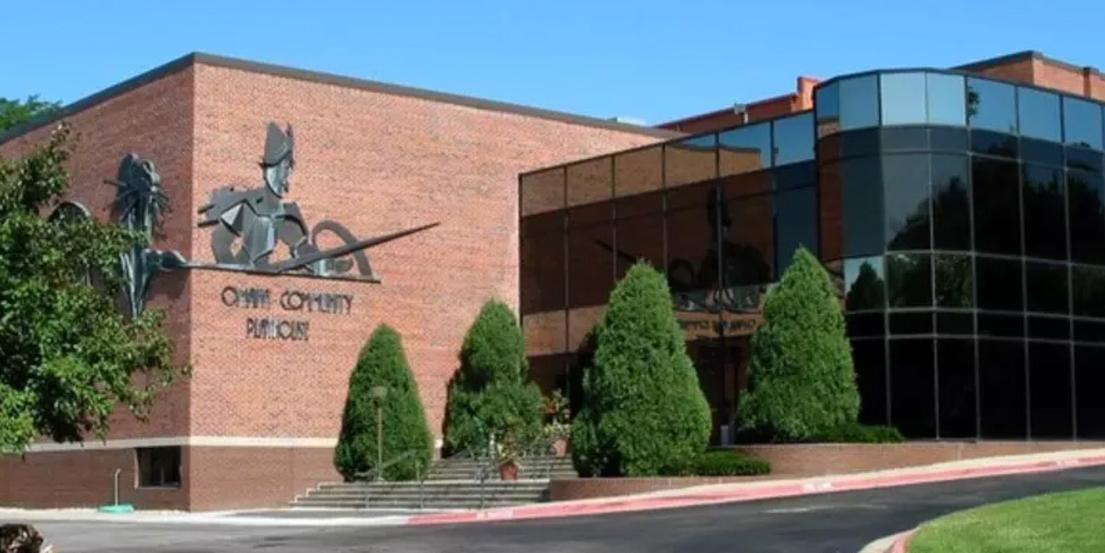
Whether as a radio-TV personality or theater actor, Jabenis proved a natural. Without any formal training, she simply took to it.
“I had an aptitude for it, I guess,” is how she explains it. “Nobody had to tell me. I just think it’s something you do and you know. I think it’s in here,” she said, patting her heart. Natural or not, Jabenis still battled stage fright. “I was terrified every time I went on camera, but the minute the light went on I was fine. That’s the same way it was with the theater. I’d stand back in the wings and feel like I was going to have a heart attack before the curtain went up, but once on the stage I forgot about Elaine and became whatever I had to become.”
Her absorption in her craft is complete. Take her approach to acting.
“What I think is important is to have a moment of truth with the audience…to give an honest interpretation of the author’s words. It’s exciting when it happens. It really is,” she said. Now, forget the glamour of the theater and consider the grind of working a full-time job, as she did 23 years at Brandeis, then coming home to shower and catch a bite to eat before spending hours in rehearsal or performance. “Once I got involved with the Playhouse it was totally consuming,” she said. “You have to be up every night.” Her devotion is such that one night during the run of Wingless Victory the trouper went on despite a high fever. “I was just going on sheer guts,” she recalls. “I just had to do it.” After her final exit she was delirious in the wings. “I didn’t know where I was. I was really sick. I was in bed the next two days.”
Broadcasting and acting success led Jabenis into another creative field — fashion. It happened this way. Having covered the Ak-Sar-Ben ball, Jabenis “got very well acquainted with the buyers and presidents of the stores furnishing gowns for the event. Brandeis invited me to be a guest commentator for fashion shows and this and that. Then, one day I got a call from Dick Einstein of Brandeis asking if I’d like to make it a permanent arrangement.”
As Brandeis fashion coordinator and, later, fashion merchandising director, she canvassed the designer market by reading the industry trades and by frequently visiting New York, Los Angeles and Europe to catch the biggest shows and identify the hottest trends. She met the top name designers — from de la Renta to Cardin — and worked with celebrities — from Irene Dunn to Vanna White. She recommended entire lines and styles of clothing for the store to purchase and pitched those fashions via all size and manner of shows.
“I was probably the first one to introduce theatrical pieces into fashion shows here when I started adding singers and dancers and that kind of thing,” she said, adding that she drew on her theatrical acumen in staging events. After Brandeis was sold she formed her own fashion production company and dished-out fashion advice as a TV and print commentator. Her biggest fashion forum has become the Woman of the Year Gala she created as a benefit for the Arthritis Foundation. As she said, “All stops are pulled,” for the extravaganzas. “That’s right up my alley.”
Reticent about revealing her age for professional reasons, it’s safe to say Jabenis is years removed from traditional retirement age, but she does not concede anything to mere numbers. “I haven’t retired from anything, honey,” she told a visitor to her home. “I don’t believe in that. I’m not going to let chronological years interrupt what I want to do.” What she wants to do is continue traveling, writing and acting. She’s already planning her next novel and she’s awaiting the next prime part to come her way.
“I’ve always felt there’s some kind of little angel sitting on my shoulder guiding me and taking care of me. I feel like I’ve led a charmed life.”
Related Articles
- Elaine Stritch and Other Matrons of ‘Night Music’ (nytimes.com)
- Theater Talkback: The Replacements’ Greatest Hits (artsbeat.blogs.nytimes.com)
- Omaha Arts-Culture Scene All Grown Up and Looking Fabulous (leoadambiga.wordpress.com)
- Canceled FX Boxing Show, ‘Lights Out,’ May Still Springboard Omahan Holt McCallany’s Career (leoadambiga.wordpress.com)
- Omaha Fashion Show: VIP Spring Runway Show (thebrunetteone.com)
- Quiana Smith’s Dream Time (leoadambiga.wordpress.com)
- Great Plains Theatre Conference Ushers in New Era of Omaha Theater (leoadambiga.wordpress.com)
- Kevyn Morrow’s Homecoming (leoadambiga.wordpress.com)
- Walking Behind to Freedom, A Musical Theater Examination of Race (leoadambiga.wordpress.com)
- A Q & A with Edward Albee: His Thoughts on the Great Plains Theatre Conference, Jo Ann McDowell, Omaha and Preparing a New Generation of Playwrights (leoadambiga.wordpress.com)
- Playwright/Director Glyn O’Malley, Measuring the Heartbeat of the American Theater (leoadambiga.wordpress.com)
Show goes on at Omaha Community Playhouse, where Henry Fonda and Dorothy McGuire got their start

Image via Wikipedia
I wrote this New Horizons story during the 75th anniversary season of the Omaha Community Playhouse, a not so ordinary community theater where stage and film legends Henry Fonda and Dorothy McGuire both got their start in acting. The Playhouse is a genuine institution in my hometown. It’s rich history is interesting enough, but the theater’s success over all these years is the passion of the people who make its productions possible. That love of theater is the same today as it was decades ago, only the names and faces, casts and crews, most all volunteers, have changed. After a rocky couple years, the Playhouse has regained its bearings and the tradition, just like the old theater credo about the show going on, continues.
Show goes an at Omaha Community Playhouse, where Henry Fonda and Dorothy McGuire got their start
©by Leo Adam Biga
Originally published in the New Horizons
For 75 years now, just about anyone with a bit of ham in them has been afforded the chance to trod the boards or rig the lights or erect the sets at the largest community theater in America — the Omaha Community Playhouse. Because it is first and foremost a volunteer theater, where no professionals need apply, countless people, from all walks of life, have left their 9-to-5 jobs behind at the door for its magical world of greasepaint. For a chance to go on with the show. And for the chance to launch a Broadway or Hollywood career, as some Playhouse alums have done, most notably Nebraska natives Henry Fonda and Dorothy McGuire.
On April 7, another opening night found an electric current running through the crowd, cast and crew for The Last Night of Ballyhoo, a bittersweet comedy. No matter what the show, it never gets old, this thrilling adventure in live performance. There is a palpable excitement among the playmakers, whose craft brings a make-believe world to life, and among audience members, who willingly surrender to the spell the players cast. Then there’s the unpredictability of live theater, where anything is liable to occur. Only the night before, a mechanical wagon smashed into wooden flats that did not fly out in time and, amid the sound of splintering wood, everything came to a screeching halt.
“No matter how many plays you’ve done, it’s absolutely a live experience and anything can happen. You never get too smug because you’re always perfectly capable of having your pants pulled down around your ankles. It’s truly putting yourself out on a limb,” Playhouse Artistic Director Carl Beck said. “And being a community theater we have varying degrees of experience. It runs the gamut from veteran actors and actresses to some doing their very first show.”
Adding to the charm is the fact just plain folks — friends, neighbors, relatives, co-workers — are the ones putting on the show as performers or technicians.
With the main stage auditorium still empty that April night, the crew trussed-up the Ballyhoo set while lead actor Jeffrey Taxman paced-off nervous energy with his character’s (Uncle Adolph) ever-present stogie in his mouth. Backstage, director Judy Hart encouraged her players to “break a leg.” The show, opening in mere minutes, was out of her hands by then. According to Beck, at that late stage the director, any director, is “the most useless person in the world. There’s absolutely nothing you can do by the time opening night rolls around, except stay out of the way and keep your fingers crossed.”
In a dressing room, four female cast members animatedly chattered while applying makeup, adjusting wigs and squeezing into costumes. A stagehand knocked at the door to ask, “Hey, how’s it going?” and the actresses replied, “Just fine, honey,” mimicking the southern Belles they portray. Even as an overhead voice announced, “Ten minutes to the top of Act One,” the girls of Ballyhoo continued nonchalantly getting ready for the curtain rising on this opening night, only their steady jabbering betraying their butterflies.
Out in the lobby, arriving theatergoers buzzed with anticipation. Among them was Omahan Lisa Jensen and her family. For Jensen, the appeal of live theater is “the excitement of seeing real people up there portraying a show, a story, a song. You get a different interaction than you feel watching a movie or a TV program. You’re clapping for people who are up there performing for you, and that’s exciting. And I think you get a little different excitement on opening night you don’t get as the play progresses. The actors are more breathless, the jitters more pronounced.”
As the near-capacity crowd filed in the auditorium and settled in their seats, the sound of eager voices rippled throughout. A darkened set, meant to represent a richly-appointed Southern parlor, only hinted at what lay ahead. Then, as the lights dimmed, a hush fell over the theater and the stage was illuminated by the glare of spots and warmed by the spark of actors breathing dramatic life into a space that only moments before was cold, static, dead. For the the next two-and-half hours 400 people suspended their sense of disbelief at the unfolding story before their eyes. As in all good theater, a visceral exchange occurred between stage and spectator, until only the play became the thing. Until the lines between fantasy and reality blurred. Another show begun. Another journey into imagination joined.
Whimsy alone is not enough to make a theater succeed. It also takes guts, vision, labor, love and money. With that kind of dogged spirit behind it, the Playhouse has enjoyed 75 uninterrupted performance seasons — weathering wars, a depression, a tornado and changing times along the way. This spirit of “the show must go on” has been translated into unparalleled support for the theater, which boasts a season membership base of 9,800, a volunteer corps of 2,000 to 4,000 and a large, plush physical plant including two theaters, many rehearsal halls and bustling costume and scenic shops (The theater is unique among community theaters in building its own own costumes and sets rather than renting them.).
What accounts for the community’s deep embrace of the theater? Longtime volunteer Florence Young, who appeared in the very first play there in 1925, said, “There’s a feeling that it is OUR theater, and that makes it seem very close to us and very special to us. That we’re really a part of it. We love it.” She said community support for it mirrors the support Omahans show the Henry Doorly Zoo and the College World Series. “We really get behind things in Omaha. We don’t do things half-way. People really pitch-in, and that’s been the story of the Playhouse…of so many people contributing to it. One person’s enthusiasm for it draws another person to it, and they become enthused too. It’s an inspiration.”
Perhaps Henry Fonda summed it up best when he said once, “The Omaha Community Playhouse isn’t a mere building. It’s the spirit that has been put into the Playhouse by thousands of volunteers over the past many years.”
And true to its grassroots community origins, the theater’s artistic staff work hand-in-hand with amateur casts and crews to achieve productions of professional caliber. “Prior to most people’s first visit to the Playhouse they have certain expectations of what a community theater will be — a group of amateurs getting together to do a show of not so high caliber quality — but after they see the work of the Playhouse their perceptions of community theater are generally completely altered. It is the mission of the Playhouse to bring the quality of performances and production values to their highest possible end,” Beck said. Over the years its work has shined outside Omaha as select casts have participated in regional, national and international (Bulgaria and the former Soviet Union) theater festivals and through annual touring shows of its A Christmas Carol production.
The Playhouse presents 10 to 12 diverse productions each season. There is no sure formula for finding the right mix of plays that will please young, old, conservative and adventurous theatergoers alike. Said Beck, “There are people who have been members of the Playhouse for 20 and 30 and 40 years. These same people will support you but will also let you know very quickly when artistically you’re falling short. You see it directly in box office and membership sales. As a staff we try to live up to the heritage and continuity of the Playhouse by finding a balance of plays that challenge both the audience and the performer and that live up to the mission of a community theater, which is a varied and diverse season.”
The Playhouse also has an educational component via theater arts classes and workshops for all ages. It also offers an accredited apprenticeship program in technical theater. As part of an educational outreach effort to make theater available to everyone in the state the Playhouse formed a professional touring wing, the Nebraska Theater Caravan, in 1976. Since then the Caravan has taken to the road each year performing plays in smaller communities across Nebraska, Iowa and the greater Midwest. The Caravan annually mounts three productions of A Christmas Carol for audiences coast to coast. The Caravan, which recruits performers and technicians at regional auditions, has become an internal talent pool for the Playhouse. Beck, a Caravan veteran himself, said, “We have at least a dozen persons on staff who began as Caravan personnel. Together, we bring a professional strength and continuity to this community theater that is exciting.”
From the first opening night in 1925, when The Enchanted Cottage premiered, to this 75th anniversary season’s finale production of My Fair Lady, closing June 18, thousands of volunteers have supported the theater through long rehearsal hours, generous contribution dollars and annual season memberships. The story of the Playhouse is the story of the arts in Omaha. Of visionary figures (including early Playhouse stalwart Dorothy Brando, the mother of Marlon) pursuing a dream. Of a community pitching-in to realize that dream. Of supporters not letting hurdles stand in the way of grand designs. With The Roaring Twenties in full swing, the idea of creating a playhouse in Omaha was a natural. The city was fast transitioning from a frontier outpost into an urban center where all the amenities of modern life could be enjoyed. Movie and vaudeville theaters flourished. Why not a playhouse then? A group of civic and arts-minded citizens took up the challenge. By the fall of 1924 a board of directors was elected and by the following spring the Playhouse, aided by proceeds from fundraising events, was incorporated — with $10 shares issued to hundreds of stockholders. Now, it only needed a performing space.
A temporary home was found in the Cooper Dance Studio at 40th and Farnam. It was there The Enchanted Cottage, with Dorothy Brando and Jayne Fonda (a sister of Henry’s) in the cast, was performed. Within months a shy, gangly young man named Henry Fonda made his stage debut there, and, well, the rest is history. The Cooper remained the Playhouse’s home for two and a half seasons but when it was unceremoniously converted into a chicken restaurant in 1928, the theater finished its third season at the Benson High School Auditorium. In need of new quarters, the board set their sights on five nearby lots purchased a few years earlier from Sarah Joslyn, the widow of printing-publishing magnate George Joslyn. The story goes the lots, on the corner of 40th and Davenport, served as pasture land for Dame Joslyn’s cow. The fertile ground proved a rich spot for the new Playhouse, erected in only 28 days, to grow. The theater, variously described as “an old barn” and “an ungainly thing,” was meant to be a temporary facility but instead saw service for 31 years. Casts and crews made do with the structure’s shortcomings, including backstage space so cramped actors exiting stage left had to dash outside, exposed to the elements, to enter stage right.

A defining moment for the theater came in May of 1975, when a killer tornado ripped the roof off the building, blew -out the windows and doors and scattered costumes and props to the winds. A Rebuild the Playhouse campaign fund drive promptly began and by that fall the structure was repaired and a lavish 50th anniversary production, The Golden Follies, dazzled audiences. According to Charles Jones, the disaster made the community realize how much they valued the Playhouse and how fragile its continued existence was without their support, and people’s quick and generous response to its plight was the springboard for a new era of dramatic growth — in terms of memberships, contributions and additions.
Major renovations and expansions in the mid-1980s saw the refurbishing of the plush lobby, the addition of a second, more intimate, performing space (the Howard Drew Theater) and the creation of a newer and bigger scene shop. Later improvements have included a state of the art computerized lighting console. But now, some 15 years later, the Playhouse has once again outgrown its digs and is pursuing a new, grander vision: namely, to become a regional theater on par with the fabled Guthrie.
To bring that ambitious vision to life the theater is embarking on an $11 million dollar fund drive to support a new renovation project and to supplement its endowment. To stage today’s large-scale musicals, plans call for enlarging the main stage proscenium to allow for soaring two-story sets. To update the physical plant, old heating and cooling systems are to be replaced. To house the growing staff, who share quarters now, more office space is on the drawing board. To meet the growing demand for acting, dancing, singing classes, additional classrooms are in the works.
Big dreams indeed. Then again, the world of theater is all about making dreams come true. Will the Playhouse meet these lofty goals? Only time will tell, but if longtime supporter Dee Owen’s recent donation of the former Chermot Ballroom building (to provide more storage space for the theater’s $3 million worth of costumes) to the Playhouse is any indication, than Omahans will once again heed the call.
Just ask season subscribers Steve and Cindy Hutchinson of Omaha. According to Cindy, she and her husband value the Playhouse for the “consistent high quality of its marvelous productions” and “the continuity” it offers from year to year. Steve said they feel they have “an investment” in the Playhouse: “Because it’s a community playhouse the community stars in it. It’s a real expression of how much people here appreciate the arts.” Season subscriber Lisa Jensen of Omaha added, “It’s a little piece of Omaha culture at its best, and something we should all take advantage of.”
Bravo, Omaha. Now, let’s go on with the show.
Related Articles
- La Jolla Playhouse Wins Big with Memphis at the Tony Awards; Opens 2010 Season (prweb.com)
- Why the show must go on — and off — for local theater groups (commercialappeal.com)
- Pasadena Playhouse Emerges From Bankruptcy (artsbeat.blogs.nytimes.com)
- Kevyn Morrow’s Homecoming (leoadambiga.wordpress.com)
- Camille Metoyer Moten, A Singer for All Seasons (leoadambiga.wordpress.com)
- Great Plains Theatre Conference Ushers in New Era of Omaha Theater (leoadambiga.wordpress.com)


 Leo Adam Biga's My Inside Stories