Archive

Archive for the ‘African-American Culture’ Category

A series commemorating Black History Month – North Omaha stories Part IV

February 22, 2018 Leave a comment

Commemorating Black History Month
Links to North Omaha stories from 1998 through 2018.
Articles on social justice, civil rights, race, history, faith, family, community, business, politics. education, art, music, theater, film, culture, et cetera
 
A weekly four-part series
Final week: Part IV –  Soul food and soul sports
 
 
https://leoadambiga.com/2012/04/10/onepeachof-a-pitcherpeaches…


A series commemorating Black History Month – North Omaha stories Part III

February 14, 2018 Leave a comment


Commemorating Black History Month
Links to North Omaha stories from 1998 through 2018.
Articles on social justice, civil rights, race, history, faith, family, community, business, politics. education, art, music, theater, film, culture, et cetera
 
A weekly four-part series
This week: Part III –  history, art, music, theater, film, culture, entertainment, society
 

A series commemorating Black History Month – North Omaha stories Part II

February 8, 2018 Leave a comment

 
Commemorating Black History Month
Links to North Omaha stories from 1998 through 2018.
Articles on social justice, civil rights, race, history, faith, family, community, business, politics. education, art, music, theater, film, culture, et cetera
 
A weekly four-part series
This week: Part II –  Faith, family, community, business, politics


https://leoadambiga.com/2016/11/16/interfaith-journ…rfaith-walk-work/

Good Shepherds of North Omaha: Ministers and Churches Making a …

https://leoadambiga.com/…/the-shepherds-of-northomahaministers-and- churches-making-a-difference-in-area-of-great-need/

https://leoadambiga.com/2010/08/30/two-blended-hous…houses-unidvided

https://leoadambiga.com/2016/11/14/small-but-mighty…idst-differences

https://leoadambiga.com/2011/09/16/everyones-welcom…g-bread-together/

https://leoadambiga.com/2014/02/02/upon-this-rock-h…trinity-lutheran/

https://leoadambiga.com/2010/05/31/gimme-shelter-sa…en-for-searchers

https://leoadambiga.com/2011/01/09/an-open-invitati…-catholic-church

https://leoadambiga.com/2012/07/15/everything-old-i…-church-in-omaha/

https://leoadambiga.com/2015/03/10/the-sweet-sounds…ts-freedom-choir/

Sacred Heart Freedom Choir | Leo Adam Biga’s My Inside Stories

https://leoadambiga.com/tag/sacred-heart-freedom-choir/‎

Salem’s Voices of Victory Gospel Choir Gets Justified with the Lord …

https://leoadambiga.com/…/salems-voices-of-victory-gospel-choir-gets- justified-with-the-lord/

https://leoadambiga.com/2010/07/11/the-myers-legacy…ng-and-community/

A Homecoming Like No Other – The Reader

http://thereader.com/news/a-homecoming-like-no-other/

Native Omaha Days: A Black is Beautiful Celebration, Now, and All …

https://leoadambiga.com/…/nativeomahadays-a-black-is-beautiful- celebration-now-and-all-the-days-gone-by/

https://leoadambiga.com/2011/06/11/back-in-the-day-…party-all-in-one

https://leoadambiga.com/2011/06/05/how-one-family-d…-during-the-days/

Bryant-Fisher | Omaha Magazine

http://omahamagazine.com/articles/tag/bryant-fisher/.

A Family Thing – The Reader | Omaha, Nebraska

http://thereader.com/news/a_family_thing/.

https://leoadambiga.com/2011/06/11/big-mama’s-keeps…ve-ins-and-dives/

Big Mama, Bigger Heart | Omaha Magazine

http://omahamagazine.com/articles/big-mama-bigger-heart/

Entrepreneur and craftsman John Hargiss invests in North Omaha …

http://thereader.com/visual-art/entrepreneur_and_craftsman_john_hargiss_invests_in_north_omaha/

https://leoadambiga.com/2016/06/30/creative-to-the-…s-handmade-world/

https://leoadambiga.com/2013/09/27/minne-lusa-house…on-and-community/

https://leoadambiga.com/2013/10/22/a-culinary-horti…ommunity-college/

https://leoadambiga.com/2012/08/28/revival-of-benso…estination-place

A Mentoring We Will Go | Leo Adam Biga’s My Inside Stories

A Mentoring We Will Go

https://leoadambiga.com/2018/01/08/tech-maven-lasho…past-stereotypes/

https://leoadambiga.com/2017/08/22/omaha-small-busi…rs-entrepreneurs

Omaha Northwest Radial Hwy | Leo Adam Biga’s My Inside Stories

https://leoadambiga.com/tag/omaha-northwest-radial-hwy/

Isabel Wilkerson | Leo Adam Biga’s My Inside Stories

https://leoadambiga.com/tag/isabel-wilkerson/

The Great Migration comes home – The Reader

http://thereader.com/visual-art/the_great_migration_comes_home/.

Goodwin’s Spencer Street Barber Shop – Leo Adam Biga’s My Inside …

https://leoadambiga.com/2010/04/29/goodwins-spencer-street-barbershop-we-cut-heads-and-broaden-minds-too/.

Free Radical Ernie ChambersThe Reader

http://www.thereader.com/post/free_radical_ernie_chambers

https://leoadambiga.com/2016/03/15/deadeye-marcus-m…t-shooter-at-100/

https://leoadambiga.com/2012/01/15/north-omaha-cham…s-the-good-fight

North’s Star: Gene Haynes builds legacy as education leader with …

https://leoadambiga.com/…/norths-star-gene-haynes-builds-legacy-as- education-leader-with-omaha-public-schools-and-north-high-school…

Brenda Council: A public servant’s life | Leo Adam Biga’s My Inside …

https://leoadambiga.com/…/brenda-council-a-public-servants-life/‎

https://leoadambiga.com/2012/04/17/carole-woods-har…ess-and-politics/

Radio One Queen Cathy Hughes Rules By Keeping It Real …

https://leoadambiga.com/2010/04/29/radio-one-queen-cathy-hughes…

Miss Leola Says Goodbye | Leo Adam Biga’s My Inside Stories

https://leoadambiga.com/2011/09/01/miss-leola-says-goodbye/.

https://leoadambiga.com/2011/09/02/leola-keeps-the-…-side-music-shop/

Aisha Okudi’s story of inspiration and transformation …

http://thereader.com/news/aisha_okudis_story_of_inspiration_and_transformation/

Alesia Lester: A Conversation in the Gossip Salon | Leo …

https://leoadambiga.com/2016/03/09/alesia-lester-a-conversation-in…

Viv Ewing | Omaha Magazine

http://omahamagazine.com/articles/tag/viv-ewing/

https://leoadambiga.com/2015/02/11/sex-talk-comes-w…rri-nared-brooks/

https://leoadambiga.com/2010/08/29/strong-smart-and…-girls-inc-story/

https://leoadambiga.com/2015/10/13/omaha-couple-exp…ica-in-many-ways

Parenting the Second Time Around Holds Challenges and …

https://leoadambiga.com/2012/11/25/parenting-the-second-time…

Pamela Jo Berry brings art fest to North Omaha – The Reader

http://thereader.com/visual-art/pamela_jo_berry_brings_art_fest_to_north_omaha/

https://leoadambiga.com/2010/06/06/its-a-hoops-cult…asketball-league/

Tunette Powell | Omaha Magazine

http://omahamagazine.com/articles/tag/tunette-powell/

Finding Her Voice: Tunette Powell Comes Out of the Dark …

https://leoadambiga.com/2013/01/24/finding-her-voice-tunette..

Shonna Dorsey | Omaha Magazine

http://omahamagazine.com/articles/tag/shonna-dorsey/

Finding Normal: Schalisha Walker’s journey finding normal …

https://leoadambiga.com/2014/07/18/finding-normal-schalisha-walker..

Patique Collins | Omaha Magazine

http://omahamagazine.com/articles/tag/patique-collins/

A series commemorating Black History Month: North Omaha stories

January 31, 2018 Leave a comment

Commemorating Black History Month
Links to North Omaha stories from 1998 through 2018.
Articles on social justice, civil rights, race, history, family, community, faith, education, art, music, theater, film, culture, et cetera
 
A weekly four-part series
This week: Part I
Redevelopment, vision, advocacy. protest and empowerment
 
https://leoadambiga.com/…/when-omahas-north-24th-street-brought-together -jews-and-blacks-in-a-melting-pot-marketplace-that-is-no-more/‎
https://leoadambiga.com/…/art-as-revolution-brigitte-mcqueens-union-for- contemporary-art-reimagines-whats-possible-in-north-omaha/
https://leoadambiga.com/…/brigitte-mcqueen-shews-union-of-art-and- community-uses-new-blue-lion-digs-to-expand-community-engage…
https://leoadambiga.com/…/carver-building-rebirthed-as-arts-culture-haven- theaster-gates-rebuild-and-bemis-reimagine-north-omaha/‎
https://leoadambiga.com/…/artists-running-with-opportunity-to-go-to-the- next-level-carver-bank-resident-artists-bring-new-life-to-area/‎
https://leoadambiga.com/tag/the-rhythmboys-of-omaha-central/


Native Omaha Days 2017: A Homecoming Like No Other

August 11, 2017 Leave a comment

Here is the Reader (www.thereader.com) story I did previewing Native Omaha Days 2017. From all reports, the celebration was a great success. Pam and I made it down to a few different Native Omaha Days events and we thoroughly enjoyed ourselves, too. If you’ve never been, you’ve got to sample this authentiic slice of Omaha.


Native Omaha Days 2017: A homecoming like no other

©by Leo Adam Biga

Originally appeared in The Reader (www.thereader.com)


The African-American diaspora migration from the South helped populate Omaha in the 20th century. Railroad and packing house jobs were the lure. From the late 1960s on, a reverse trend has seen African-Americans leave here en mass for more progressive climes. A variant to these patterns finds thousands returning each odd-numbered August for a biennial community reunion known as Native Omaha Days.

The 21st reunion happens July 31 through August 7.

If you’ve not heard of it or partaken in it, you’re probably not black or some of your best friends are not black, because this culture-fest is in Omaha’s Afrocentric DNA. But organizers and participants emphasize everyone’s welcome to join this week-long party.

Featured events range from gospel and jazz concerts to talks and displays to a parade to a ball.

Nobody’s quite sure how many native Omahans living outside the state head home for it to rekindle relationships and visit old haunts.

There are as many takes on it as people engaging in it.

Thomas Warren, president-CEO of the Urban League of Nebraska, which this year hosts its 90 anniversary gala during Omaha Days, may put it best:

“People make it a purpose to come back.”

Reshon Dixon left Omaha for Atlanta 24 years ago and she’s been coming back ever since, except when military commitments prevented it. She hopes to free up her schedule for this year’s fest.

“I’m trying to. I usually plan a year ahead to come back.”

She said she brought her children for it when they were young because “that’s pretty much where our roots are from.” She’s delighted her now grown kids are “planning to come back this year.”

Serial nonprofit executive Viv Ewing said Omaha Days touches deep currents.

“People look at this event very fondly. In the off-year it’s not being held, people ask when is it happening again and why isn’t it every year because it’s such a great time bringing the community together with family and old friends. People look forward to it.

“There are people who have moved away who plan their vacations so that they come back to Omaha during this particular time, and that says a lot about what this event means to many people across the country.”

Even Omaha residents keep their calendars open for it.

“I’ve cut business trips as well as vacations short in order to make sure I was at home during this biennial celebration,” Warren said.

Sheila Jackson, vice president of the nonprofit that organizes it, said, “It’s one big reunion, one big family all coming together.”

Juanita Johnson, an Omaha transplant from Chicago, is impressed by the intentionality with which “people come together to embrace their commonality and their love of North Omaha.” She added, “It instills pride. It has a lot of excitement, high spirits, energy and enthusiasm.”

As president of the Long School Neighborhood Association and 24th Street Corridor Alliance, Johnson feels Omaha Days could play a greater role in community activation and empowerment.

“I think there’s an opportunity for unity to develop from it if it’s nurtured beyond just every two years.”

Empowerment Network director of operations Vicki Quaites-Ferris hopes it can contribute to a more cohesive community. “We don’t want the unity to just be for seven days. We want that to overflow so that when people leave we still feel that sense of pride coming from a community that really is seeing a rebirth.”

Ewing said even though it only happens every two years, the celebration is by now an Omaha tradition.

“It’s been around for four decades. It’s a huge thing.”

No one imagined it would endure.

“I never would have dreamt it’d be this big,” co-founder Bettie McDonald said. “I feel good knowing it got started, it’s still going and people are still excited about it.”

She said it’s little wonder though so many return given how powerful the draw of home is.

“They get emotional when they come back and see their people. It’s fun to see them greet each other. They hug and kiss and go on, hollering and screaming. It’s just a joyous thing to see.”

Dixon said even though she’s lived nearly as long in Atlanta as she did in Omaha, “I’m a Cornhusker first and a Peach second.”

Likewise for Paul Bryant, who also left Omaha for Atlanta, there’s no doubt where his allegiance lies.

“Omaha will always be home. I’m fifth generation. I’m proud of my family, I’m proud of Omaha. Native Omaha Days gives people another reason to come back.”

A little extra enticement doesn’t hurt either.

“We really plan things for them to make them want to come back home,” said McDonald. She drew from the fabled reunion her large family – the Bryant-Fishers – has held since 1917 as the model for Omaha Days. Thus, when her family convenes its centennial reunion picnic on Sunday, August 13, it will cap a week’s worth of events, including a parade and gala dinner-dance, that Omaha Days mirrors.

Bryant, a nephew of McDonald, is coming back for the family’s centennial. He’s done Omaha Days plenty of times before. He feels both Omaha Days and reunions like his family’s are ways “we pass on the legacies to the next generation.” He laments “some of the younger generations don’t understand it” and therefore “don’t respect the celebratory nature of what goes on – the passing of the torch, the knowing who-you-are, where-you-come-from. They just haven’t been taught.”

Sheila Jackson said it takes maturity to get it. “You don’t really appreciate Omaha Days until you get to be like in your 40s. That’s when you really get the hang of it. When you’re younger, it’s not a big thing to you. But when you get older. it seems to mean more.”

Sometime during the week, most celebrants end up at 24th and Lake Streets – the historic hub for the black community. There’s even a stroll down memory lane and tours. The crowd swells after hours.

“It’s almost Omaha’s equivalent of Mardi Gras, where you’ll have thousands people just converge on the intersection of 24th and Lake, with no real plans or organized activities,” Warren said. “But you know you can go to that area and see old friends, many of whom you may not have seen for several years. It gives you that real sense of community.”

Fair Deal Village Marketplace manager Terri Sanders, who said she’s bound to run into old Central High classmates, called it “a multigenerational celebration.”

Touchstone places abound, but that intersection is what Warren termed “the epicenter.”

“I’m always on 24th and Lake when I’m home,” said homegrown media mogul Cathy Hughes, who will be the grand marshall for this year’s parade. “I love standing there seeing who’s coming by and people saying, ‘Cathy, is that you?’ I always park at the Omaha Star and walk down to 24th and Lake.”

“I do end up at 24th and Lake where everybody else is,” Dixon said. “You just bump into so many people. I mean, people you went to kindergarten with. It’s so hilarious. So, yes, 24th and Lake, 24th Street period, is definitely iconic for North Omahans.”

That emerging art–culture district will be hopping between the Elks Club, Love’s Jazz & Arts Center, the Union for Contemporary Art, Omaha Rockets Kanteen, Jesse’s Place, the Fair Deal Cafe and, a bit southwest of there, the Stage II Lounge.

Omaha Days’ multi-faceted celebration is organized by the Native Omahans Club, which “promotes social and general welfare, common good, scholarships, cultural, social and recreational activities for the inner city and North Omaha community.” Omaha Days is its every-other-year vehicle for welcoming back those who left and for igniting reunions.

The week includes several big gatherings. One of the biggest, the Homecoming Parade on Saturday, August 6, on North 30th Street, will feature drill teams, floats and star entrepreneur Cathy Hughes, the founder-owner of two major networks – Radio One and TV One. She recently produced her first film, the aptly titled, Media.

Hughes is the latest in a long line of native and guest celebrities who’ve served as parade grand marshall: Terence Crawford, Dick Gregory, Gabrielle Union.

During the Days, Hughes will be honored at a Thursday, August 3 ceremony renaming a section of Paxton Blvd., where she grew up, after her. She finds it a bit surreal that signs will read Cathy Hughes Boulevard.

“I grew up in a time when black folks had to live in North Omaha. Never would I have assumed that as conservative as Omaha, Neb. is they would ever consider naming a street after a black woman who happened to grow up there. And not just a black woman, but a woman, period. When I was young. Omaha was totally male-dominated. So I’m just truly honored.”

“Omaha Days does not forget people that are from Omaha,” Reshon Dixon said. “They acknowledge them, and I think that’s great.”

During the Urban League’s Friday, August 4 gala concert featuring national recording artist Brian McKnight at the Holland Performing Arts Center, two community recognition awards will be presented. The Whitney M. Young Jr. Legacy Award will go to Omaha Economic Development Corporation president Michael Maroney. The Charles B. Washington Community Service Award will go to Empowerment Network president Willie Barney.

Maroney and Barney are key players in North Omaha redevelopment-revitalization. Warren said it’s fitting they’re being honored during Omaha Days, when so many gathering in North O will have “the opportunity to see some of those improvements.”

Quaites-Ferris said Omaha Days is a great platform.

“It’s an opportunity to celebrate North Omaha and also the people who came out of North Omaha. There are people who were born in North Omaha, grew up in North Omaha and have gone on to do some wonderful things locally and on a national level. We want to celebrate those individuals and we want to celebrate individuals who are engaged in community.

“It’s a really good time to celebrate our culture.”

“I really admire the families who are so highly accomplished but have never left, who have shared their talents and expertise with Omaha,” said Hughes. She echoes many when she expresses how much it means returning for Omaha Days.

“Every time I come, I feel renewed,” she said. “I feel the love, the kindred spirit I shared with so many of my classmates, friends, neighbors. I always leave feeling recharged. I can’t wait.”

The celebration evokes strong feelings.

“What’s most important to me about Omaha Days is reuniting with old friends, getting to see their progression in life, and getting to see my city and how it’s rebuilt and changed since I left,” Dixon said. “You do get to share with people you went to school with your success.”

“It’s a chance to catch up on what’s going in everybody’s life,” Quaites-Ferris said.

Juanita Johnson considers it. among other things,
“a networking opportunity.”

Paul Bryant likes the positive, carefree vibe. “There we are talking about old times. laughing at each other, who got fat and how many kids we have. It’s 1:30-2 o’clock in the morning in a street crowded with people.”

“By being native, many of these individuals you know your entire life, and so there’s no pretense,” Warren said.

Outside 24th and Lake, natives flock to other places special to them.

“When I come back,” Dixon said, “my major goal is to go to Joe Tess, get down to the Old Market, the zoo, go through Carter Lake and visit Salem Baptist Church, where I was raised. My absolute favorite is going to church on Sunday and seeing my Salem family.”

Some pay respects at local cemeteries. Dixon will visit Forest Lawn, where the majority of her family’s buried.

Omaha Days is also an activator for family reunions that blend right into the larger event. Yards, porches and streets are filled with people barbecuing, chilling, dancing. It’s one contiguous party.

“It’s almost like how these beach communities function, where you can just go from house to house,” Hughes said.

The Afro-centric nature of Omaha Days is undeniable. But participants want it understood it’s not exclusive.

“It just happens to be embedded in the African-American community, where it started,” Dixon said. “Anyone can come, anyone can participate. It has become a little bit of a multicultural thing – still primarily African-American.”

Some believe it needs to be a citywide event.

“It’s not like it’s part of the city,” Bryant said. “It’s like something that’s going on in North Omaha. But it’s really not city-accepted. And why not?”

Douglas Country Treasurer John Ewing agrees. “Throughout its history it’s been viewed as an African-American event when it really could be something for the whole community to embrace.”

His wife, Viv Ewing, proposes a bigger vision.

“I would like to see it grow into a citywide attraction where people from all parts come and participate the way they do for Cinco de Mayo. I’d like to see this event grow to that level of involvement from the community.”

Terri Sanders and others want to see this heritage event marketed by the city, with banners and ads, the way it does River City Roundup or the Summer Arts Festival.

“It’s not as big as the College World Seriesm but it’s significant because people return home and people return that are notable,” Sanders said.

Her daughter Symone Sanders, who rose to fame as Bernie Sanders’ press secretary during his Democratic presidential bid, may return. So may Gabrielle Union.

Vicki Quaites-Ferris sees it as an opportunity “for people who don’t live in North Omaha to come down and see and experience North Omaha.” She said, “Sometimes you only get one peripheral view of North Omaha. For me, it’s an opportunity to showcase North Omaha. Eat great food, listen to some wonderful music, have great conversation and enjoy the arts, culture, business and great things that may be overlooked.”

John Ewing values the picture if offers to native returnees.

“It’s a great opportunity for people who live in other places to come back and see some of the progress happening in their hometown.”

Recently completed and in-progress North O redevelopment will present celebrants more tangible progress than at anytime since the event’s mid-1970s start. On 24th Street. there’s the new Fair Deal Village Marketplace, the renovated Blue Lion Center and the Omaha Rockets Kanteen. On 30th, three new buildings on the Metro Fort Omaha campus, the new mixed-use of the former Mister C’s site and the nearly finished Highlander Village development.

For some, like Paul Bryant, while the long awaited build-out is welcome, there are less tangible, yet no less concerning missing pieces.

“I think the development is good. But I truly wish in Omaha there was more opportunity for African-American people to be involved in the decision-making process and leadership process. But that takes a conscious decision,” Bryant said.

“What I’ve learned from Atlanta is that unlike other cites that wanted to start the integration process with children, where school kids were the guinea pigs, Atlanta started with the professions – they started integrating the jobs. Their slogan became “We’re a city too busy to hate.” So they started from the top down
and that just doesn’t happen in Omaha.”

He worked in Omaha’s for-profit and non-profit sectors.

“A lot of things happen in Omaha that are not inclusive. This isn’t new. Growing up, I can remember Charlie Washington, Mildred Brown, Al Goodwin, Bob Armstrong, Rodney S. Wead, talking about it. The story remains the same. We’re on the outside running nonprofits and we’ve got to do what we have to do to keep afloat. But leadership, ownership, equity opportunities to get involved with projects are few and far between. If you’re not able to share in the capital, if your piece of the equation is to be the person looking for a contribution, it’s hard to determine your own future.”

Perhaps Omaha Days could be a gateway for African-American self-determination. It’s indisputably a means by which natives stay connected or get reconnected.

“I think its’ critical,” said Cathy Hughes, who relies on the Omaha Star and her Omaha Days visits to stay abreast of happenings in her beloved North O.

She and John Ewing suggest the celebration could play other roles, too.

“I think it’s a good way to lure some natives back home,” Hughes said. “As they come back and see the progress, as they feel the hometown pride, it can help give them the thought of, ‘Maybe I should retire back home in Omaha.'”

“I think Omaha could do a better job of actually recruiting some of those people who left, who are talented and have a lot to offer, to come back to Omaha,” Ewing said, “and if they’re a business owner to expand or invest in Omaha. So there’s some economic opportunities we’ve missed by not embracing it more and making it bigger.”

Ewing, Sanders and others believe Omaha Days infuses major dollars in hotels, restaurants, bars and other venues. The Omaha Convention and Visitors Bureau does not track the celebration’s ripple effect, thus no hard data exists..

“I don’t think it’s accurately measured nor reflected in terms of the amount of revenue generated based on out-of-town visitors,” Warren said. “I suspect it has a huge impact on commerce and activity.”

Some speculate Omaha Days could activate or inspire homegrown businesses that plug into this migration,

“I think it can certainly be a spark or a catalyst,” Warren said. “You would like to see the momentum sustained.
You hope this series of events may stimulate an idea where a potential entrepreneur or small business owner sees an opportunity based on the activity that occurs during that time frame. Someone could launch a business venture. Certainly, I think there’s that potential.”

For Omaha Days history and event details, visit nativeomahacub.org.

Read more of Leo Adam Biga’s work at leoadambiga.com,

In a North Omaha state of mind …

July 26, 2017 1 comment

In a North Omaha state of mind …
As many of you know, North Omaha holds a special place in my heart. I grew up there and went to school there (Holy Name). Through age 47, my home address was 4129 Maple Street. I began writing about North Omaha while still a North O resident. Since moving to northwest Omaha, my interest in North O has remained strong and I continue making it a subject of my work. With Native Omaha Days here and the Bryant-Fisher 100th family reunion coming up, I felt nostalgic about the hundreds of thousands of words I’ve committed to that community.

So, without further adieu, enjoy this curated list of links to North O stories from my archive. Some go back a minute. Others are as recent as this month. Hopefully, the articles provide a fair and balanced view of that community: past, present and moving forward.

African-American Empowerment Network | Leo Adam Biga’s My …
https://leoadambiga.com/…/african-american-empowerment-network/‎

Overarching plan for North Omaha development now in place – The …
http://thereader.com/news/overarching_plan_for_north_omaha_development_now_in_place/.

North Omaha beckons investment, combats gentrification
https://www.morningsky.com/omaha/…/north-omaha-beckons-investment- combats-gentrification

Behind the Vision: Othello Meadows of 75 North Revitalization Corp.
https://morningsky.com/…/othello-meadows-lifting-up-a-community-called- home

North Omaha: Where for art thou? | Leo Adam Biga’s My Inside Stories
https://leoadambiga.com/2017/03/…/north-omaha-where-for-art-thou/

North Omaha: Voices and Visions for Change | Leo Adam Biga’s My …
https://leoadambiga.com/…/north-omaha-voices-and-visions-for-change/‎

Black Lives Matter – The Reader
http://thereader.com/news/From_Social_Media_to_the_Streets/

Malcolm X Memorial Foundation coming into its own – The Reade
http://www.thereader.com/post/malcolm_x_memorial_foundation_coming_into_its_own.

Two to One – The Reader
http://thereader.com/visual-art/two_to_one/

Returning To Society – The Reader
http://thereader.com/news/returning_to_society/

Girls, Inc. Expands & Renovates – The Reader
http://thereader.com/news/girls_inc-_expands_renovates/

North Star Foundation | Leo Adam Biga’s My Inside Stories
https://leoadambiga.com/tag/north-star-foundation/

Where Hope Lives, Hope Center for Kids in North Omaha | Leo …
https://leoadambiga.com/…/where-hope-lives-hope-center-for-kids-in-north- omaha/

The Nelson Mandela Way | Omaha Magazine
http://omahamagazine.com/articles/the-nelson-mandela-way

Play considers North Omaha history through the eyes … – The Reader
http://thereader.com/arts/play_considers_north_omaha_history_thorugh_the_eyes_of_mildred_bown/.

Change, it’s been a long time coming for northeast Omaha – The …
http://thereader.com/news/change_its_been_a_long_time_coming_for_northeast_omaha/

Next generation of North Omaha leaders eager for change – The …
http://thereader.com/news/next_generation_of_north_omaha_leaders_eager_for_change/.

Abide applies holistic approach to building community – The Reader
http://thereader.com/news/abide_applies_holistic_approach_to_building_community/

Making community – The Reader
http://thereader.com/news/making_community/.

Big Mama, Bigger Heart | Omaha Magazine
http://omahamagazine.com/articles/big-mama-bigger-heart/

Entrepreneur and craftsman John Hargiss invests in North Omaha …
http://thereader.com/visual-art/entrepreneur_and_craftsman_john_hargiss_invests_in_north_omaha/.

Revival of Benson Business District Gives Omaha a New …
https://leoadambiga.com/…/revival-of-benson-business-district-gives-omaha-a -new-destination-place/‎

Omaha Northwest Radial Hwy | Leo Adam Biga’s My Inside Stories
https://leoadambiga.com/tag/omaha-northwest-radial-hwy/

A Brief History of Omaha’s Civil Rights Struggle Distilled in Black …
https://leoadambiga.com/…/a-brief-history-of-omahas-civil-rights-struggle- distilled-in-black-and-white-by-photographer-rudy-smith/‎

A WASP’s racial tightrope resulted in enduring book – The Reader
http://thereader.com/news/a_wasps_racial_tightrope_resulted_in_enduring_book/

When New Horizons dawned for African Americans in Omaha – The …
http://thereader.com/news/when_new_horizons_dawned_for_african_americans_in_omaha/

De Porres Club | Leo Adam Biga’s My Inside Stories
https://leoadambiga.com/tag/de-porres-club/‎

UNO Wrestling Dynasty Built on a Tide of Social Change – OnToplist …
http://www.ontoplist.com/articles/uno-wrestling-dynasty-built-on-a-tide-of-social-change_4c46fa1dc6d11/

[PDF] civil rights: standing up for what’s right to make a difference
https://www.education.ne.gov/nebooks/ebooks/peony_park.pdf‎

Goodwin’s Spencer Street Barber Shop – Leo Adam Biga’s My Inside …

Goodwin’s Spencer Street Barber Shop: We Cut Heads and Broaden Minds, Too

Free Radical Ernie Chambers – The Reader
http://www.thereader.com/post/free_radical_ernie_chambers.

North’s Star: Gene Haynes builds legacy as education leader with …
https://leoadambiga.com/…/norths-star-gene-haynes-builds-legacy-as- education-leader-with-omaha-public-schools-and-north-high-school…

Preston Love, His Voice Will Not Be Stilled | Leo Adam Biga’s My …
https://leoadambiga.com/…/preston-love-his-voice-will-not-be-stilled/‎

Cool Cat Billy and the Sportin’ Life | Leo Adam Biga’s My Inside Stories
https://leoadambiga.com/2010/07/01/sportin-life/‎

Wesley House | Leo Adam Biga’s My Inside Stories
https://leoadambiga.com/tag/wesley-house/

Coloring History, A Long, Hard Road for UNO Black Studies | Leo …
https://leoadambiga.com/…/coloring-history-a-long-hard-road-for-uno-black- studies/

Burden of Dreams: The Trials of Omaha’s Black Museum | Leo Adam …
https://leoadambiga.com/…/burden-of-dreams-the-trials-of-omaha’s-black- museum/

Great Plains Black History Museum Asks for Public Input on its …
https://leoadambiga.com/…/great-plains-black-history-museum-asks-for- public-input-on-its-latest-evolution/‎

Long and Winding Saga of the Great Plains Black History Museum …
https://leoadambiga.com/…/long-and-winding-saga-of-the-great-plains-black- history-museum-takes-a-new-turn-2/

‎Charles Hall’s Fair Deal Cafe | Leo Adam Biga’s My Inside Stories

Charles Hall’s Fair Deal Cafe

Soul Food | Leo Adam Biga’s My Inside Stories
https://leoadambiga.com/tag/soul-food/

Chef Mike Does a Rebirth at the Community Cafe | Leo Adam Biga’s …
https://leoadambiga.com/…/chef-mike-does-a-rebirth-at-the-community-cafe/

Time Out Foods | Omaha Magazine
http://omahamagazine.com/articles/tag/time-out-foods/

Omaha Rockets Kanteen | Omaha Magazine
http://omahamagazine.com/articles/tag/omaha-rockets-kanteen

A synergy in North Omaha harkens a new arts-culture … – The Reader
http://thereader.com/news/a_synergy_in_north_omaha_harkens_a_new_arts-culture_district_for_the_city/

Art as Revolution: Brigitte McQueen’s Union for Contemporary Art …
https://leoadambiga.com/…/art-as-revolution-brigitte-mcqueens-union-for- contemporary-art-reimagines-whats-possible-in-north-omaha/

Brigitte McQueen Shew’s Union of art and community uses new Blue …
https://leoadambiga.com/…/brigitte-mcqueen-shews-union-of-art-and- community-uses-new-blue-lion-digs-to-expand-community-engage…

Loves Jazz & Arts Center | Leo Adam Biga’s My Inside Stories
https://leoadambiga.com/category/loves-jazz-arts-center/

Carver Building Rebirthed as Arts-culture Haven; Theaster Gates …
https://leoadambiga.com/…/carver-building-rebirthed-as-arts-culture-haven- theaster-gates-rebuild-and-bemis-reimagine-north-omaha/‎

Artists running with opportunity to go to the next level; Carver Bank …
https://leoadambiga.com/…/artists-running-with-opportunity-to-go-to-the- next-level-carver-bank-resident-artists-bring-new-life-to-area/‎

Omaha Black Music Hall of Fame | Leo Adam Biga’s My Inside Stories
https://leoadambiga.com/category/omaha-black-music-hall-of-fame/

Making the Case for a Nebraska Black Sports Hall of Fame | Leo …
https://leoadambiga.com/…/making-the-case-for-a-nebraska-black-sports-hall -of-fame/‎

The Artist in the Mill: Linda Meigs Brings Agriculture, History and Art …
https://leoadambiga.com/…/linda-meigs-brings-agriculture-history-and-art- together-at-florence-mill/‎

The Rhythm Boys of Omaha Central | Leo Adam Biga’s My Inside …
https://leoadambiga.com/tag/the-rhythm-boys-of-omaha-central/‎

A Homecoming Like No Other – The Reader
http://thereader.com/news/a-homecoming-like-no-other/

Native Omaha Days: A Black is Beautiful Celebration, Now, and All …
https://leoadambiga.com/…/native-omaha-days-a-black-is-beautiful- celebration-now-and-all-the-days-gone-by/

Bryant-Fisher | Omaha Magazine
http://omahamagazine.com/articles/tag/bryant-fisher/.

A Family Thing – The Reader
http://thereader.com/news/a_family_thing/

Good Shepherds of North Omaha: Ministers and Churches Making a …
https://leoadambiga.com/…/the-shepherds-of-north-omaha-ministers-and- churches-making-a-difference-in-area-of-great-need/

Heart Ministry Center | Leo Adam Biga’s My Inside Stories
https://leoadambiga.com/category/heart-ministry-center/‎

Sacred Heart Freedom Choir | Leo Adam Biga’s My Inside Stories
https://leoadambiga.com/tag/sacred-heart-freedom-choir/‎

Salem’s Voices of Victory Gospel Choir Gets Justified with the Lord …
https://leoadambiga.com/…/salems-voices-of-victory-gospel-choir-gets- justified-with-the-lord/

When Omaha’s North 24th Street Brought Together Jews and Blacks …
https://leoadambiga.com/…/when-omahas-north-24th-street-brought-together -jews-and-blacks-in-a-melting-pot-marketplace-that-is-no-more/‎

OUT TO WIN – THE ROOTS OF GREATNESS: OMAHA’S BLACK …
https://leoadambiga.com/out-to-win-the-r…k-sports-legends/

Opening Installment from My Series Out to Win: The Roots of …
https://leoadambiga.com/…/from-my-series-out-to-win-the-roots-of-greatness -an-exploration-of-omahas-black-sports-legends/‎

Closing Installment from My Series Out to Win: The Roots of …
https://leoadambiga.com/…/closing-installment-from-my-series-out-to-win- the-roots-of-greatness-an-exploration-of-omahas-black-sports-legen…

In Celebration of Black Women


IN CELEBRATION OF BLACK WOMEN
It has been my privilege to profile and interview many strong Black Women during my career. In celebration of these dynamic women of color from all walks of life, here is a curated list of links to my interviews with and stories about these women. These stories have inspired me and others, and I trust that you will find something here that inspires you, too. Please share and post as you wish.

Radio One Queen Cathy Hughes Rules By Keeping It Real …
https://leoadambiga.com/2010/04/29/radio-one-queen-cathy-hughes…

Bertha’s Battle, Bertha Calloway, the Grand Lady of Lake …

Bertha’s Battle: Bertha Calloway, the Grand Lady of Lake Street, struggles to keep the Great Plains Black History Museum afloat

Brenda Council: A public servant’s life | Leo Adam Biga’s My Inside …
https://leoadambiga.com/…/brenda-council-a-public-servants-life/‎

Making community
Apostle Vanessa Ward uses block party to raise up her North Omaha neighborhood and build community
http://thereader.com/news/making_community/

Isabel Wilkerson | Leo Adam Biga’s My Inside Stories
https://leoadambiga.com/tag/isabel-wilkerson/

The Great Migration comes home – The Reader
http://thereader.com/visual-art/the_great_migration_comes_home/.

Gabrielle Union: A force in front of and away from the camera
https://leoadambiga.com/2016/12/27/gabrielle-union-a-force-in…

Gabrielle Union having it all between her own series, new …
http://thereader.com/news/gabrielle_union_having_it_all_between_her_own_series_new_film_producing_mar/

Dope actress Yolonda Ross is nothing but versatile – from …
https://leoadambiga.com/2016/10/18/dope-actress-yolonda-ross-is…

Yolonda Ross adds writer-director to actress credits – The …
http://thereader.com/visual-art/yolonda_ross_adds_writer-director_to_actress_credits/

The Omaha Star Celebrates 75 Years of Black Woman Legacy …
https://leoadambiga.com/2013/04/11/the-omaha-star-celebrates-75…

Marguerita Washington: The Woman Behind the Star that …
https://leoadambiga.com/2010/08/02/marguerita-washington-the-woman…

Play considers North Omaha history through the eyes of …
http://thereader.com/arts/play_considers_north_omaha_history_thorugh_the_eyes_of_mildred_bown/

Tunette Powell | Omaha Magazine
http://omahamagazine.com/articles/tag/tunette-powell/

Finding Her Voice: Tunette Powell Comes Out of the Dark …
https://leoadambiga.com/2013/01/24/finding-her-voice-tunette..

Shonna Dorsey | Omaha Magazine
http://omahamagazine.com/articles/tag/shonna-dorsey/

soul sisters – The Reader
http://thereader.com/visual-art/soul_sisters/

Camille Metoyer Moten | Omaha Magazine
http://omahamagazine.com/articles/tag/camille-metoyer-moten/

Camille Metoyer Moten: With a song in her heart | Leo Adam …
https://leoadambiga.com/2016/12/26/camille-metoyer-moten-with-a…

Art imitates life as themes in play cut closely for its stars – The Reader
http://thereader.com/visual-art/art_imitates_life_as_themes_in_play_cut_closely_for_its_stars/

Life comes full circle for singer Carol Rogers | Leo Adam …
https://leoadambiga.com/2015/08/28/life-comes-full-circle-for…

Sisters of song: Kathy Tyree connects with Ella Fitzgerald …
http://thereader.com/visual-art/sisters_of_song_kathy_tyree_connects_with_ella_fitzgerald/

Black Women in Music | Leo Adam Biga’s My Inside Stories

Black Women in Music

Miss Leola Says Goodbye | Leo Adam Biga’s My Inside Stories

Miss Leola Says Goodbye

Leola Keeps the Faith at Her North Side Music Shop | Leo Adam …
https://leoadambiga.com/…/leola-keeps-the-faith-at-her-north-side-music- shop/

Aisha Okudi’s story of inspiration and transformation …
http://thereader.com/news/aisha_okudis_story_of_inspiration_and_transformation/

Viv Ewing | Omaha Magazine
http://omahamagazine.com/articles/tag/viv-ewing/

Parenting the Second Time Around Holds Challenges and …
https://leoadambiga.com/2012/11/25/parenting-the-second-time…

Pamela Jo Berry brings art fest to North Omaha – The Reader
http://thereader.com/visual-art/pamela_jo_berry_brings_art_fest_to_north_omaha/

Kia Corthron | Leo Adam Biga’s My Inside Stories
https://leoadambiga.com/category/kia-corthron

Finding Normal: Schalisha Walker’s journey finding normal …
https://leoadambiga.com/2014/07/18/finding-normal-schalisha-walker..

Patique Collins | Omaha Magazine
http://omahamagazine.com/articles/tag/patique-collins/

Jana Murrell: Working Towards a New Standard of Beauty …
https://leoadambiga.com/2012/07/04/jana-murrell-working-towards-a…

Gospel Playwright Llana Smith Enjoys Her Big Mama’s Time
https://leoadambiga.com/2010/06/07/gospel-playwright-llana-smith…

Quiana Smith’s Dream Time Takes Her to Regional, Off …

Quiana Smith’s dream time takes her to regional, off-Broadway and Great White Way theater success

Jill Scott Interview | Leo Adam Biga’s My Inside Stories

Jill Scott Interview

Crowns | Leo Adam Biga’s My Inside Stories
https://leoadambiga.com/tag/crowns/‎

Tiffany White-Welchen delivers memorable performance in …
https://leoadambiga.com/2015/10/14/tiffany-white-welchen-delivers…

Enchantress “LadyMac” Gets Down | Leo Adam Biga’s My …

Enchantress “LadyMac” Gets Down

A Mentoring We Will Go | Leo Adam Biga’s My Inside Stories

A Mentoring We Will Go

One Peach of a Pitcher: Peaches James Leaves Enduring …
https://leoadambiga.com/2012/04/10/one-peach-of-a-pitcher-peaches…

UNO resident folk hero Dana Elsasser’s softball run coming …
https://leoadambiga.com/2014/04/28/uno-resident-folk-hero-dana..

Big Mama, Bigger Heart | Omaha Magazine
http://omahamagazine.com/articles/big-mama-bigger-heart/

Bomb Girl Zedeka Poindexter Draws on Family, Food and …
https://leoadambiga.com/2015/03/11/zedeka-poindexter-draws-on..

Lit Fest Brings Author Carleen Brice Back Home Flush with …
https://leoadambiga.com/2011/07/02/lit-fest-brings-author-carleen…

Wanda Ewing Exhibit: Bougie is as Bougie Does | Leo Adam …
https://leoadambiga.com/2013/12/08/wanda-ewing-exhibit-bougie-is…

Civil rights veteran Tommie Wilson still fighting the good …
http://thereader.com/visual-art/civil_rights_veteran_tommie_wilson_still_fighting_the_good_fight/

Civil Rights and Social Justice Champion Lela Knox Shanks …
https://leoadambiga.com/2010/08/04/lela-knox-shanks-a-woman-of…

Nurturing One Lost Soul at a Time, Teela Mickles Returns …
https://leoadambiga.com/2012/06/29/nurturing-one-lost-soul-at-a…

Getting straight – The Reader
http://thereader.com/news/getting_straight/

Alesia Lester: A Conversation in the Gossip Salon | Leo …
https://leoadambiga.com/2016/03/09/alesia-lester-a-conversation-in…

A Change is Gonna Come, the GBT Academy in Omaha Undergoes …
https://leoadambiga.com/2011/06/14/a-change-is-gonna-come-the-gbt…

Gray Matters: Ben and Freddie Gray Fight the Good Fight …
https://leoadambiga.com/2012/07/13/gray-matters-ben-and-freddie..

Freddie Gray stands fast on her handling of Sebring scandal
http://thereader.com/news/freddie_gray_stands_fast_on_her_handling_of_sebring_scandal/

No More Empty Pots – The Reader
http://thereader.com/news/no_more_empty_pots/

Brenda Council: A public servant’s life

June 26, 2017 3 comments

Brenda Council: A Public Servant’s Life
Appearing in the July 2017 issue of the New Horizons
©by Leo Adam Biga

Community. Service. Family. Home.

All recurrent themes for Brenda (Warren) Council, a familiar civic figure with various firsts to her name.

•First African-American female senior counsel at Union Pacific
•First female football official in the state of Nebraska
•First four-time president of the Omaha School Board
•First black female Omaha City Council member

Along with Tanya Cook, she was the first black woman to serve in the Nebraska Legislature.

Featured multiple times in Ebony Magazine, the lifelong Democrat garnered broad support for two Omaha mayoral bids. The second, in 1997, came within 800 votes of victory. Had she won, she’d have been the city’s first female mayor. In 2008, she succeeded living legend Ernie Chambers in the state senate seat he held since 1970 until term-limited out.

Those who know Council call her “dynamic,” “high achieving,” “hard working,” “caring,” “committed” and “community focused.”

The fall
She had a thriving legal career (after U.P. she worked for Kutak Rock and had her own firm), a strong track record of public service, a sterling reputation.

Then, a casino gambling addiction caught up with her in 2012 as she sought re-election to the Nebraska Legislature. Unusual activity on her campaign account trigged an investigation that found she repeatedly borrowed funds. The law permits candidates to borrow and repay campaign account monies (she repaid them in part) as long as they report it, which she didn’t. Her actions made headlines and resulted in misdemeanor charges for misuse of funds. She plead guilty and paid a fine. Her opponent, Chambers, openly disparaged her. She lost the election and in 2014, she plead guilty to felony wire fraud charges. She received three years court-supervised probation. The Nebraska Supreme Court disbarred her.

She’s never denied what she did.

Council’s back serving her community again leading a Women’s Fund of Omaha project. She’s in a good place now, but things got tough.

“I watched what I had built through work, passion and commitment threatened by what I did,” she said. “I can’t think of anything more terrifying. There were times I was mad. I asked, ‘God, how did you let this happen to me?’ I’m really a good person, I’ve never hurt anybody in my life.’ Then I got into GA (Gamblers Anonymous). As a 12-stepper, you’ve got to connect to your Higher Power. I’ve always been a spiritual person. I’ve been a member of the same church for 52 years. But as a result of this, I realized although I had been attending church, I had disconnected from my Higher Power.”

She’s glad to have found support for her addiction.

“I’m a committed, devoted, servant of Gamblers Anonymous, and I’m so grateful.”

She does want to set the record straight about what she did and didn’t do that got her in trouble.

“I never went out and solicited money to feed my campaign account so that I could access it. I make no bones about it – what I did was to enable me to gamble, but what i did not do is I didn’t take anybody’s money.”

Council understands what she did was improper.

“I see where the question of trust is paramount and legitimate.”
Redemption
About two years after that “embarrassment,” she joined the Women’s Fund of Omaha as coordinator of its Adolescent Health Project aimed at reducing teen pregnancies and STDS. The project addresses issues of deep concern to Council, who’s long advocated for comprehensive sex ed.

As important as she considers the work to be for women and families, she regards it as her own lifesaver.

“It’s provided an opportunity for me to move forward with my life and to show I’m still the public servant. I’m still Brenda, and I’m going to be out there working hard for the community serving in whatever capacity I can.”

For her, the work’s more than a job, it’s affirmation.

“I really enjoy the folks I work with, and I’m just so pleased with the progress we’ve made. But I know I owe it all to the fact that people who know me know who I am and they know I’m not a deceitful or distrustful or dishonest person. As a gambler, was I? Yeah.

“I’m so blessed that through the work I’ve done and the relationships I’ve built, people are supportive.”

Addiction, she’s come to realize, compels people to act out-of-character.

“What I was doing was totally contrary to the way I was raised. My daddy valued a dollar. I was a tight wad. I saved. I (still) had some of the first money I ever made. It wasn’t until it was starkly put in front of me – the compulsive patterns of my behavior – I realized, ‘Damn, that’s what I’ve been doing.'”

Before that rude awakening, she said, she “rationalized” her binge gambling as “‘I’m not hurting anybody, it’s my money.’ I discovered that what I thought at the time was an outlet, an enjoyment, not harming anybody, was an insidious, compulsive addiction that I denied.”

She took heart that even after coming clean, the people that meant the most to her still had her back.

“They understood and appreciated gambling wasn’t who I was, it’s something that happened. I am so blessed with an incredible family and close friends who have stood there steadfast supporting, encouraging.”

Her husband Otha Kenneth Council stood by her through it all. They celebrate 32 years of marriage this fall.

Home is where the heart is
The ties that bind are so tight with Brenda that despite extensive travels and offers to take jobs elsewhere, she considers herself “a North Omaha kid.” Except for undergraduate studies at the University of Nebraska in Lincoln and working for the National Labor Relations Board in Kansas City, Omaha’s remained home. Even when in K.C., she made frequent visits home.

“Practically every weekend I was driving back to Omaha. I had I-29 like memorized. I never missed one of my brother Tommy’s football games.”

Since moving back in 1980, she’s lived within a few blocks of where she grew up at 24th and Pinkney.

She came up in a strict home where both parents, Evelyn and Willis Warren Sr., worked. Her mother retired after 25 years at the VA hospital. Her father caught the No. 7 Crosstown bus to work at Swift packing company in South Omaha for 40 years. Her father especially expected Brenda and her siblings to study hard and get good grades.

“In addition to education, service was also something my father in particular placed a heavy emphasis on. He was a firm believer that to whom much is given, much is expected. We were raised to respect and assist our elders.”

Her family lived in a two-story house in an era when redlining practices and restrictive housing covenants prevented African-Americans from living outside the area. She attended mostly black Lothrop elementary school and Horace Mann Junior High.

Her coming of age coincided with 1960s’ racial unrest, the civil rights movement, the Black Power movement, the Panthers, Malcolm, MLK, Vietnam, rock ‘n’ roll.

In North O she experienced a tight-knit, insular community where almost any service or product could be found. The live black music venues then prevalent on North 24th Street beckoned her. As an under-age fan, she snuck into Allen’s Showcase, McGill’s Blue Room, the Offbeat Lounge and the Carnation Ballroom to see her idols. She got to know the late Buddy Miles that way.

“Incredible entertainment came through. Those were the days.”

Music impresario Paul Allen appreciated her spunk in catching shows.

“He always called me ‘Little Girl.’ He often joked about the times he caught me sneaking into the Showcase. They had some great musicians.”

Years later she operated her own live music venue there – BJ’s Showcase. She now resides in the former home of Omaha nightclub impresario Shirley Jordan. The columned, cream stucco, hacienda-style abode was built as a party place and includes a sunken living room.

In addition to music, sports is another passion. Council was a fireplug point guard for Forrest Roper-coached Hawkettes AAU teams. She admired the late Roper.

“He had a tremendous impact on me and other young women. He, like my parents, stressed the importance of education and refraining from engaging in negative activity. For many of the members of the team, their first travel outside of Omaha was when Forrest took us to play in tournaments.”

Council didn’t get to play high school basketball in those pre-Title IX days. But she stayed close to the game as a recreational player and coach and later as an official. She and Otha refereed many high school hoops games together. Her contributions to athletics got her elected to the Nebraska Black Sports Hall of Fame.

She also bore witness to trying times for her community. She was at Horace Mann when students filed out in protest of a young black man shot to death by police. The peaceful protest turned heated before Ernie Chambers helped quell the agitated crowd. She saw the the looting and fires when North 24th burned in the 1969 riot following the police shooting death of Vivian Strong.

She was at the Bryant Center when the riot broke out.

“I actually drove through the rioting on 24th Street on my way to pick my mother up from work. I will never forget how I headed west on Hamilton Street to be met by a police barricade at 30th. The police approached my car, shined their flashlights in the faces of my friends who were riding with me. They were not going to let me past until I pleaded with them to allow me go pick up my mother.”‘

Council graduated from Omaha Central High School in 1971 during tense times at the racially diverse school.

She watched the once bustling North 24th business district left-in-shambles and struggle to recover. Railroad and packing house jobs vanished. The North Freeway severed the community. Generational poverty set in. Gangs brought unprecedented violence. Incarceration rates for black males soared along with black teen pregnancies and STDS. Single-parent households became the norm. Educational achievement lagged.

She dealt with many of these issues as an elected official. She sees progress in northeast Omaha but questions where it goes from here.

“I’m definitely encouraged by the development that has occurred. However, the overwhelming majority of the development, particularly along 24th Street, is the result of not-for-profit investment. If we are to revive the Near North Side we must have private, for-profit investment with a focus on African-American entrepreneurship.”

Wherever life’s taken her, North O’s been her sanctuary.

“She absolutely loves North Omaha,” her brother Thomas Warren said. “Her purpose has been service and she’s always put North Omaha first.”

Warren, former Omaha police chief and current president-CEO of the Urban League of Nebraska, said his sister’s path serving the community inspired his own.

Council’s husband, Otha, echoed many when he said, “She’s never forgotten about where she came from. She’s committed to serving North Omaha and making sure people here have a better place to live.”
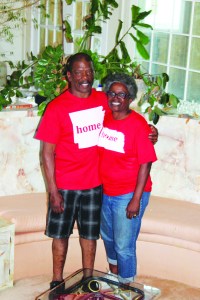
From education to law
Back at UNL she was thinking her career path would be an an educator, not an attorney or public officer holder.

“I made a career decision when I was in the third grade to be a school teacher. I had some genetic predisposition for that. My mother’s two oldest sisters and a younger brother were educators. My mother’s oldest sister, Geraldine Gilliam, was the first black teacher to integrate the staffs of the Topeka Public Schools after Brown vs, Board of Education. She was really a proponent of education and educators, and I really just wanted to be like her. So much so that when my younger siblings. Thomas and Debbie, and I would come home from school, I would make them play school with me before they could go outside. I’d use old teachers’ manuals and flash cards my aunts sent me.

“The game was they’d start at the top of the steps and if they answered correctly they moved down the steps and when they got to the bottom they could go outside. They used to hate me that I’d make them do that, but I always teased them as we got older at how prepared they were academically. Both of them did well.”

Thomas Warren was Omaha’s first black police chief. Debbie White is a retired medical professional. An older sibling, Willis Warren Jr., is deceased.

Brenda earned her teaching degree from UNL. She also got turned on to the prospect of studying the law and using it as a tool to improve conditions for blacks.

“My perspective was education, education, education. I firmly believed in it as the path upwards.”

She said she gained an appreciation for how “the law has an impact on everything you do in life and if you can affect changes in the law, you can create new opportunity and address problems.”

Council did her due diligence and applied to the Creighton law school. She got accepted. She applied for an affirmative action scholarship and received it.

“I graduated from Nebraska on August 17, 1974 and I started Creighton law school August 23. I really fell in love with the law. I went to law school with every intention of being a social justice lawyer, so that passion with constitutional law meshed. If you’re addressing the issues defined as social justice issues, constitutional questions are more than likely involved.”

She thought she’d change the world.

“You go in there with this idealistic perspective and then you start facing reality.”

One reality check involved two career choices straight out of law school. She applied for a national fellowship to work in a legal aid office. She wanted Omaha but only Dayton was open. Meanwhile, she was offered a job with the National Labor Relations Board in Kansas City. Then the fellowship came through for the Omaha Legal Aid office, but she’d already accepted the K.C. job.

“I’m a person of my word and my commitment, and so I went to Kansas City.”

With a little help from her friends
Helping her make tough calls were elders.

“I was blessed to come at a time that I had a tremendous number of mentors – people I could go to for advice and counsel. They’d talk you through these decisions. One of my major mentors was the late (activist-journalist) Charles B. Washington.”

Others were Mary Dean Harvey, Beverly Blackburn, Rowena Moore. Though she didn’t have much interaction with her, Council also admired Omaha Star publisher Mildred Brown.

But it was Washington, for whom a North Omaha library branch is named, who opened her horizons.

“This guy introduced me and so many other young people in North Omaha to some of the most influential African-Americans of our time. Through Charlie, I had sit-downs with the late Harold Washington, the late Barbara Jordan, the late Mary Frances Berry, Lerone Bennett Jr., Tony Brown. I mean, he made a point of exposing us to many critical minds and civil rights, social justice advocates. Because of the relationships and the introductions he made for me, I was featured the first time in Ebony Magazine.”

Council, and two of her girlfriends, Kathy J. Trotter and Terri Goodwin, were so often seen in the company of Washington they were called “Charlie’s Angels.”

Though Council reluctantly went to K.C., it was a good experience.

“It certainly aided in my maturation, my independence.”

Her return to Omaha to work at Union Pacific, she said, “was a Charles Washington-influenced opportunity.”

“In 1979 my dad died and then in 1980 my mother’s mother died. I was in Kansas City and my oldest brother returned from Vietnam not in a good place, so he couldn’t really provide our mother much support. I was waffling about staying in Kansas City. I called Charlie (Washington) and said, ‘I need to look at getting back to Omaha.’ By this time I had three years doing labor law. He knew the personnel director at U.P. He sent in my resume and I got an interview.”

U.P.’s then-general counsel, Valerie Scott, hired Council. The two women became close colleagues and friends.

Entry into public life
Confidantes prodded Council to seek public office for the first time when she made her initial bid for the Omaha School Board in 1982.

“Ruth Thomas, who had served on the board and knew of my passion for education, was among those who approached me about it. I didn’t know anything about running for public office, but I had the benefit of having met and become friends with one of the greatest political minds of his time, the late Sonny Foster. He was a political genius. He volunteered to help me with my school board campaign.”

Council wanted to redress the board’s decision to eliminate summer school as part of budget cuts.

“That disturbed me because it disproportionately hurt youth in my district who needed remedial studies and enhancement opportunities. Their parents couldn’t afford to send them to special science or math camps. So, I ran, and in the primary got thumped. Sonny (Foster) said, ‘Between now and November, you’ve got to go to every house in this district and let them know who you are and what you’ll do.'”

She said she pounded the pavement and knocked on doors and when the general election rolled around, she “closed an incredible gap” to win. She was 28.

Finding a soulmate
Otha, whom she was just friends with at the time, showed up unexpectedly at her place on election night. He was co-owner of an Arby’s franchise.

“Election night, my campaign manager Sonny Foster, my dear friend and law school classmate Fred Conley and a couple other folks were at my house awaiting the results. Out of nowhere, a knock on the door and there’s Otha with a six-foot Arby’s submarine sandwich. He said, ‘I thought you might need something to eat.’ He took a seat and just sat there for the rest of the evening.

“The results came in and were favorable. People trickled out. The only ones left were me, Sonny and Otha.”

The two men made quite a contrast: the gregarious Sonny and the quiet Otha.

“I discovered later Otha thought Sonny and I had a thing. That was the furthest thing from the truth.”

Otha’s persistent wooing finally won her over when he drove her to the airport in the dead of winter. He got the door, handled the bags and even had a cup of hot chocolate for her. “He was such a Boy Scout.” From then on, she said, “he became my ‘hot chocolate’ and we began to spend more time together.”

“Our officiating (sports) together definitely strengthened our bond. Otha encouraged me to become an official because I grasped the rules so quickly when he was taking the exams while we were dating. Believe me, officiating can really test your patience and understanding.”

The couple have two children from his first marriage and five grandchildren. He has a landscaping-snow removal business and he owns-manages rental properties. He was by her side for all her subsequent political runs.

They also share a passion for service, community and family. They met when she volunteered with the Boy Scouts while he was this areas’s district commissioner.

“Family has always been incredibly important,” Council said, and I was fortunate to marry into a family that equally values family. We just got back from my husband’s 41st annual family reunion in Marianna, Arkansas. He’s one of 13 children, so it’s a huge family.”

A family migration story
Her extensive family on her father’s side has branches extending into Canada. Council said her father’s people relocated from Alabama to northeast Texas before settling in the Oklahoma Territory as part of the Exodusters migration. They faced hazards both natural and manmade.

“My father’s father drowned during a flash flood while trying to get the cattle across the creek. The current washed him and his horse down stream and his body was never recovered. My grandmother remarried a man with the last name of Gordon.”

Racial tensions worsened. The Ku Klux Klan was on the rise. A 1919 race riot in Omaha resulted in William Brown being lynched and the courthouse being burned. The “Black Wall Street” district of Tulsa, Oklahoma was burned down in 1921. Malcolm X’s family fled Omaha in 1925 after the Klan threatened his preacher father.

Some years before, African-Americans looking to escape hate were presented with an intriguing opportunity and Council’s paternal family ran with it.

Canada recruited Americans to settle the prairie provinces by offering homesteads. Canada advertised in Kansas and Oklahoma, never expecting the huge migration of African-Americans that followed.

“My dad’s stepfather took advantage of this new opportunity and moved the family to Winnipeg, Alberta, but left my father to be raised by one of my grandmother’s sisters in Oklahoma.”

Generations later, she said, her people are “spread all over” Canada, including Vancouver. where a first cousin Council’s gotten to know lives.

Brenda attended a Pioneer Family Reunion of descendants of black families who fled Oklahoma for Canada. She visited a recreated Canadian black settlement and learned of tragedy and triumph. A great aunt named Love was murdered with her child at the hands of her husband.

An uncle, Robert Gordon, was among the few black lumberjacks. Only his Paul Bunyan-like strength helped him survive. “He caught hell initially until he pummeled a few guys and became infamous – you don’t mess with Robert Gordon,” said Council. She met the tall, broad-shouldered man and said he still cut an imposing figure in old age.

Unfortunately, black pioneers were made to feel unwelcome. Eventually, no more were allowed in.

“So many were coming across,” she said, “ordinances were enacted by the border communities. One such ordinance read, ‘From this day forward, no more Negroes will be allowed to enter Canada because they’re deemed undesirable for the climate and culture …’ Everybody tells me, ‘Brenda, you ought to write this story.’ I do know i’ve got to put it down at some point.”
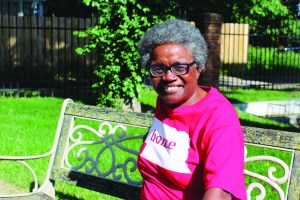
An uncommon political life
Her political life would make a good book, too. Her baptism-by-fire on the school board was just the start.

“I had some really up moments and I had some really down moments. A down moment was being the lone dissenting vote on closing Tech High. I presented diplomas to the last graduating class.”

A budget shortfall and concurrent need to consolidate district offices led to Tech’s closure and its reuse as district headquarters.

“One of the things I was most proud of was advocating for the adoption of a sex education curriculum in 1985. Thirty years later, here I am back pushing OPS to adopt an updated sex ed curriculum (through the Women’s Fund initiative). It’s kind of deja vu.”

Another thing she “took pride in, was the naming of Skinner elementary school after Eugene Skinner, both her grade school and junior high principal.” She said, “He had an incredible impact on me. Gene Skinner was a giant.” Yet another of the community stalwarts in her life. “I was impacted by so many of them,” she said.

Council displayed her own leadership abilities in office.
She not only became president of the Omaha School Board but president of the National Association of Black School Board Members.

“I got the knowledge of what was effective in other school districts and brought it back.”

She and former Omaha Public Schools assistant superintendent Don Benning got the district to begin its “nationally recognized Adopt-a-School program.

“We knew you improve educational outcomes when everybody’s got a stake in it and you have to involve business, parents, faith community. The program was a vehicle to get people who were otherwise not connected to schools involved in the schools. It’s still doing that.”

She agonized over running for the City Council in 1993.

“My passion is education and I believe I was making a difference. I was in my fourth term as school board president. We were moving on some things. I was torn. When Fred Conley announced he was not going to seek reelection, I honestly looked at who was going to be running and thought our district deserves better. That’s why I ran. I didn’t want a political career. I’ve never seen myself as a politician. I’m a public servant.

“Now, am I partisan? Yeah.”

A confluence of events led her to run for mayor only one year into her only City Council term. Then-mayor P.J. Morgan unexpectedly resigned with three years left. The city charter then allowed for the Council to choose someone among its ranks to finish the term but Brenda opposed this approach.

“I had to convince three other people we need to pursue a special election to change the charter because it’s not fair to the citizens that essentially an entire term is decided by seven people. I was able to convince the requisite number of City Council members to go for a special election and the results were what I predicted Omahans wanted. The charter was changed. I achieved my objective.”

She didn’t plan to run for mayor until Hal Daub announced his candidacy.

“I was like, ‘Whoa, there’s too much happening in this city to put it in the hands of someone who hadn’t lived in Omaha in years. The next mayor should be somebody who knows what’s been going on and been working on it.’ I just didn’t think it was fair and right and just for someone who in my opinion was a career politician to take an opportunity to come back. So I said, ‘I’m going to run, too.’ It was a special election in December of 1994. What made it problematic was there were mid-term elections a month before. I struggled to find campaign staff and team for my first citywide race.”

She got “soundly defeated” but “came a lot closer than people expected.” She was “perfectly content” to serve on the City Council with no future mayoral bid in mind until politicos shared data suggesting a near majority of Omahans would vote for her in a new election.

“I was pleasingly surprised.”

Confident she could muster enough support to unseat Daub, she took him on in the ’97 election only to suffer an historically narrow loss.

“That election night was one of the most painful nights of my life,” she said, “not for me personally but for all the people who invested so much of their being into supporting an individual they entrusted to address the issues that were critical to them.”

The thing she disliked the most about the process was having to make fundraising calls.

Mrs. Council goes to Lincoln
Eleven years elapsed before she sought public office again. During the hiatus she was a judge on the Nebraska Commission of Industrial Relations. In 2008 she entered the race for Nebraska legislative District 11.

“The same thing that motivated me to run for mayor is what motivated me to run for the legislature,” she said.
“It should be somebody representing this district who’s worked in this district, been in touch on a daily basis with the issues that affect residents and has the skills, knowledge and experience to make a difference. Again, no disrespect, I knew some of the people who were going to run and I was like, ‘That’s not going to get it.’ Call it arrogance or whatever, but I feel that passionate about the people in this district and what they deserve.”

She knew her expertise was a good match for the legislative process and “its interconnectedness with the law.” She also saw “an opportunity to address some things that may not have been on the front burner.”

Council won a seat at the table in the mostly white male Unicameral alongside fellow African-American Tanya Cook, who was communications manager for one of Council’s earlier elective office runs.

“I’m very proud of what we were able to accomplish in the one term I served in the legislature. I was focused and driven by what I could get done to move this community forward.”

She found satisfaction getting a New Markets Tax Credit program approved. She was frustrated when she got several pieces of legislation passed on the floor only to have then-Governor Heineman veto them. One would have required a lead poisoning test for children entering school. Another would have aided expansion of community gardens and incentivized healthy food stores to help address food desert issues.

“I was most proud of my Youth Conservation program legislation. Approximately 150 youth were employed in state parks across Nebraska during the summer of 2012, with a significant percentage of the youth being from North Omaha.”

Taking stock and moving on
Even after revelations of her addiction, she said, “there was still a tremendous amount of support for me to continue to serve in the legislature.”

Ending her political life was not nearly as hard as losing her license to practice law.

“Being disbarred,” she said, “it hurt, it really hurt.”

She does not plan to seek reinstatement of her license.

Today, she can acknowledge that when it all came out, “I wanted to stay in the shadows.” She said she wondered “is anybody going to give me a chance,” adding, “I know I come with some baggage.”

She’s found redemption at the Women’s Fund, whose Adolescent Health Project fits right in her wheelhouse.

“One of the first bills I introduced as a state senator was to mandate comprehensive sex education. One of the things I bring to the table is six years facilitating the Community Advisory Group for the Super Fund Site. We achieved some rather remarkable successes, including the formation of the Omaha Healthy Kids Alliance.”

She feels reducing unintended pregnancies is critical “if we’re ever going to have any meaningful, sustainable impact on reducing poverty,” in a community where single mother-headed households predominate.

Come what may, North Omaha is where her heart will always be.

One Hundred Years Strong: Bryant-Fisher Family Reunion

June 23, 2017 2 comments

One Hundred Years Strong: Bryant-Fisher Family Reunion

©Story by Leo Adam Biga

©Photos by Bill Sitzmann

Published in July-August 2017 issue of Omaha Magazine


The Bryant-Fisher family reunion celebrates an important milestone in 2017—its 100th anniversary. The three-day reunion event will conclude with a final day of festivities in Elmwood Park.

The “Dozens of Cousins,” named for the 12 branches of the prodigious African-American family, will gather in Omaha on Sunday, Aug. 13, to eat, converse, and renew bonds of kinship while reinvigorating ties to local neighborhood roots.

The first reunion was a picnic in 1917 held at Mandan Park in South Omaha, where family roots run deep. Mandan hosted the picnic for 74 years. Its trails, gardens, and river views offered scenic backdrops. The park is also near the family’s homestead at 15th Street and Berry Avenue, and Graceland Park Cemetery (where many relatives are buried).

The picnic, which goes on rain or shine, relocated to Carter Lake in the 1990s and has since gone to various locales. It is coming to Elmwood Park for the first time this year.

Hours before the picnic, a dawn fish fry kicks things off. With bellies full of fried food, the descendants of Emma Early head for a family worship service followed by the picnic.

Always present is a star-studded menu of from-scratch American comfort and soul food staples: ribs, fried chicken, lasagna, collard greens, black-eyed peas, mac and cheese, potato salad, and more.

The family’s different branches provide tents under which they set up their family feasts. Monique Henry belongs to the Gray tent and says everyone waits for her first cousin Danielle Nauden’s peach cobbler to arrive on the table.

The meals may be the highlight, but the day also includes games, foot races, a dance contest, and a pie/cake baking contest, which Henry says is mainly for the teenagers. The baking contest garners between 20 and 50 entries, depending on the size of the reunion.

Competitions are an intense part of the picnic gathering.

Film-television actress Gabrielle Union, the star of hit BET drama Being Mary Jane, is a descendant who grew up with the reunions. She understands what’s at stake.

“Having a chance to compete against your cousins in front of your family is huge,” Union says. “Some top athletes are in our family, so the races are like the Olympics. Each section of the family is like a country sending their best athletes. You trained for it.”

Union vividly recalls her most memorable race: “I wore my hair in braids but tucked under a cap. I won the race, and then somebody shouted, ‘That’s a boy,” thinking this fast little dynamo couldn’t possibly have been a girl, and I whipped off my cap like, ‘I’m a girl!’”

Although the large family has expanded and dispersed across Omaha and nationwide—and descendants of Emma Early Bryant-Fisher now number in the thousands—the picnic has remained in Omaha the second Sunday of August as a perennial ties-that-bind feast.

Union returns as her schedule allows. The actress grew up in northeast Omaha, attending St. Benedict the Moor. She often visited relatives in South O, where the home of matriarch Emma (a street is named after her) remained in the family.

Union introduced NBA superstar husband Dwyane Wade to the reunion last year. “It was important for me for Dwyane to come experience it,” she says. “No one I know has a family reunion of the scale, scope, and length we have. It’s pretty incredible. It says a lot about the endurance and strength of our family. It’s a testament to the importance of family, sticking together, and the strength that comes out of a family that recognizes its rich history and celebrates it.”

A tradition of this duration is rare for African-Americans given the historic struggles that disrupted many families. Bryant-Fisher descendant Susan Prater James says, “The reason for celebrating the 100th is that we’re still able to be together after everything our ancestors went through.”

“There’s nothing I can complain about [in terms of facing] adversity [that] someone in my family has not only experienced but fought through, and not just survived but thrived,” Union says. “I come from a long line of incredibly strong, powerful, and resilient strivers, and I pull from that daily.

We recognize our uniqueness and specialness, and we never take that for granted. I think with each passing year it just gets stronger and stronger.”

The family tree gets updated with a new history book every five years. “Dozens of Cousins” social media sites keep the grapevine buzzing. The family migrated from South Omaha to North Omaha many years ago, and also once had its own North O clubhouse at 21st and Wirt streets. The Dozens of Cousins, Inc. became a 501c3 in 2016.

A century of gatherings doesn’t just happen.

“We get together all the time, and anytime we get together it’s a celebration,” says Bryant-Fisher descendant Sherri Wright-Harris. “We love on one another. Family has always been instilled as the most important thing you have in this life. This is a part of the fabric that makes us who we are.”

“We don’t know anything different,” says Henry, another Bryant-
Fisher descendant.

“That’s ingrained from the time you’re born into the legacy,” family historian Arlett Brooks says. “My mother committed to her mother, and I committed to her to carry this tradition on. This is my love, my passion. I just think it’s important to share your history, and I want our youth to know the importance of this and to treasure what we have because this is not a common thing.”

The reunion has evolved from a one-day picnic to include: a river boat cruise, skate party, memorial ride (on a trolley or bus) to visit important family sites, banquet dinner-dance, and a talent showcase. Milestone years such as this one include a Saturday parade. Headquarters for the 2017 reunion will be situated at the Old Market Embassy Suites.

The reunion’s Friday night formal banquet means new outfits and hair-dos. But renewing blood bonds is what counts. “It’s a way for young and old to reconnect with their roots and find a sense of belonging,” Prater James says.

Representing the various branches of the Bryant-Fisher family takes on added meaning over time.

“No matter how old you are, no matter how down you get, on that day everything seems to be looking better,” Marc Nichols says.

Cheryl Bowles says she “felt sick” the one reunion she skipped.

Arlett Brooks says she has never missed a reunion, and she’s not about to miss the 100th. “You only get the centennial one time,” Brooks says.

New this year will be a family history cookbook complete with recipes, stories, and photos. Catfish, spaghetti, greens, and cornbread are faves. The history cookbook is expected to be printed and ready for sale at the reunion.

Union says fun and food aside, the real attraction is “hearing the stories—the important stories, the silly stories—and learning the history before people are gone.”

Visit bryantfisherreunion.com for more information.

Monique Henry

This article was printed in the July/August 2017 Edition ofOmaha Home.

Baseball and Soul Food at Omaha Rockets Kanteen

June 23, 2017 2 comments

Baseball and Soul Food at Omaha Rockets Kanteen

Story by Leo Adam Biga

Photography by Sarah Lemke

Originally published in Omaha Magazine (http://omahamagazine.com/articles/baseball-and-soul-food/_)


When baseball still ruled as the national pastime, Omaha showcased the game’s still prevalent but loosening black-white divide. In 1947, the year Jackie Robinson broke Major League Baseball’s color barrier, the barnstorming Omaha Rockets began to play. In an era when entire leagues and teams were drawn along racial lines, the all-black Rockets faced both segregated and integrated foes. A few Rockets went on to make history or gain fame. Most faded into obscurity.

Although the Rockets were not formally in the Negro National League, an association of teams made famous by Satchel Paige and Buck O’Neil, the Rockets were an independent semi-pro farm club of the league’s famous Kansas City Monarchs.

The Omaha team even trained with the Monarchs. Three former K.C. players— Horatius Saunders, Mack Massingale, and James “Cool Papa” Bell—variously managed the club.

Donald Curry pays homage to this black baseball history at his Omaha Rockets Kanteen. The soul food eatery inside the Lake Point Building (at 24th and Lake streets) is packed with memorabilia relating to black ballplayers and teams. Dedicated menu items include Octavius Cato’s Jerked Turkey Taco, the Willie Mays Soul Wrap, and Birmingham Black Baron Sweet Potato Pie.

Curry’s Southern Pitch soul food truck features the same concept.

The Omaha native operated similar-themed food businesses in Chicago, where he befriended ex-Negro Leaguers. One, Alvin Spearman, informed him of the Rockets. Curry knew Omaha was a stomping ground for the Monarchs. Learning that the city fielded a black team, which enjoyed close currency with the Monarchs, sweetened the pot and provided his current establishment’s name.

Curry says he’s created “a living memorial” to black owners, managers, and players in admiration of “their fortitude” pursuing professional baseball careers despite lacking the talent or opportunity to play higher-level organized ball. He likes the lessons imparted.

“They didn’t cry or complain about the situation,” he says. “Everyone goes through things, and everyone is denied certain things in life. But if you keep your head up and push forward, you can overcome those obstacles and succeed in what you set your mind to. They created their own leagues and styles of ball. Some of them became pretty well-off for that time.”

The vast majority of black ballplayers, just like their white counterparts, never played for a paycheck, but for love of the game. Whether competing for semi-pro, town or company baseball teams, or fast-pitch softball teams, they lived out their diamond dreams. 

Curry hopes to add Rockets’ materials to “the treasure trove” of signed photographs and other lore displayed at Kanteen. He may name some dishes after Rockets. Curry’s collection includes personal scrapbooks of Pittsburgh Crawfords legend Jimmie Crutchfield.

The team’s owner, Will Calhoun, launched the Rockets after he got the “baseball bug.” He rented out flats at 25th and Lake, which he generously called a hotel. Touring black athletes, denied by other establishments, stayed there. The Tyler, Texas, native and World War II veteran got into the game just as minor and major league strictures lifted and the Negro Leagues declined. Calhoun pressed on anyway, boasting, “I’ve got a little money. I know why so many of these teams failed. They tried to get by on a shoestring and didn’t have anything to offer the public.” He promised to “add a little more show to my Rockets.”

The Omaha World-Herald termed the Rockets his “noble experiment.”

The team made Legion Field in Council Bluffs its home park and barnstormed across Nebraska and into Iowa, South Dakota, Kansas, and Colorado via its own bus. The club even went into Canada and the Pacific Northwest. Its opponents included town teams and other touring teams, such as House of David.

At least one Rocket, Kenny Morris, claimed local ties. The former standout Boys Town athlete played outfield and third base for the Rockets. Mickey Stubblefield, William McCrary, and Eugene Collins all spent time with the Rockets between moves up and down organized baseball. Stubblefield, a journeyman pitcher, became the first black in the Kitty League and among the first blacks in the Nebraska Independent League. He ended his career in McCook, Nebraska, where he raised a family of 10. He later moved to Atlanta, Georgia. In 2011 he returned as Grand Marshal of McCook’s “Heritage Days” festivities.

Dick “Night Train” Lane was a multi-sport star in his native Austin, Texas. He then moved north to live with his mother in Council Bluffs, where a baseball scout signed him to play for the Rockets. He played one year of football at Scottsbluff Junior College in Nebraska. After entering the U.S. Army and excelling on military teams, he signed with the NFL’s Los Angeles Rams and went on to a Hall of Fame career.

Teams like the Rockets faded as baseball popularity waned and televised sports cut into attendance. Ever the promoter, Calhoun paired his Rockets with the Minneapolis Clowns in 1950 to try and boost crowds.

The Rockets soon disbanded but Curry celebrates them within larger black athletics history. His Kanteen is now home to Nebraska Black Sports Hall of Fame displays.

His food, culled from family recipes, celebrates African-American cuisine—collard greens, cornbread dressing, red beans and rice, mac and cheese, candied yams—only prepared healthier. Smoked turkey, for example, replaces ham hocks. Olive oil replaces butter.

Curry takes seriously the Kanteen creed: “Enjoy the food, digest the history.”

“We might as well be a museum serving food,” he says.

Visit omaharocketskanteen.com for more information.

This article appears in the July/August issue of Omaha Magazine.