This article was printed in the December 2018/January 2019 edition of B2B. To receive the magazine, click here to subscribe.

Omaha’s Amber Ruffin has so much to say and so much going on that I couldn’t fit it all into one story. That’s why in addition to the recent Omaha Star cover story I did on her, I wrote a Reader feature on this writer-actress best known for “Late Night With Seth Meyers.” While she came to national attention with her work on that show, she’s no overnight sensation. She put many years into an improvisational comedy career before network TV gave her a mass media platform for her talents. Her performing start goes clear back to Omaha Benson High School and local theaters.
But first, here are some thoughts about Amber and her being part of a long legacy of African-Americans with Nebraska ties making their marks in the entertainment industry.

Putting it on the Line
Omaha’s Amber Ruffin making a name for herself in late-night TV
©by Leo Adam Biga
Appearing in the December 2018 issue of The Reader (www.thereader.com)
Since joining NBC’s “Late Night with Seth Meyers” in 2014 as a writer-performer, Omaha native Amber Ruffin has made a name for herself. The gig made her the first black female writer in U.S. late-night network television.
Her strong Afro-centric takes on social issues are part of a disarming package. She can be sweet, silly, manic comedian or edgy commentator and provocateur.
In the recurring “Late Night” segments “Amber Says What” and “Amber’s One-Minute of Fury,” she skewers newsmakers and outs injustice. Her subversive bits play like funny truth sessions by a righteous sister reporting from the trenches of Being Black in America.
“That’s my goal,” Ruffin said. “You’ll never be wrong when you say police should stop murdering children in the street. That (racism) being a lot of my subject matter just gives me tremendous confidence because it’s never been more right and it’s never been more important.”
This fresh TV face and voice is steeped in a long, deep improv background that started here and took her to comedy capitals. Last month she came home to display her authentic, unvarnished self during an Inclusive Communities event at Slowdown. The audience got a taste of her formidable improv skills.
Replicating improv on TV is elusive.
“Oh, how I wish the feeling of improv translated to television. A lot of people have tried to get that feeling in a show, but it’s pretty difficult.”
Playing off a live audience is crucial.
“You’re constantly adjusting your tone, cadence because you have instant feedback and that allows you to give the best performance.”
Working in a corporate culture is still an adjustment.
“It is crazy for comedy to exist in an office. I’d never seen it before I was a part of it. I still find it shocking that it works.”
She’s learned to work within network TV boundaries.
“You can’t be crazy politically incorrect. When you’re on stage doing improv it only exists in that moment, so you can say whatever comes to mind, but on this show whatever you say exists forever. So you have to get it right so that 20 years from now when someone plays it you’ll still stand by it.”
Going out on a limb is a Ruffin trait.
“We are a little adventurous,” Ruffin said of her family. “My mom graduated high school at 16. Every summer she went to New York to find out what the world was about. My oldest sister lived in Panama. Another sister lived in Namibia. It’s just in our bones to see what’s out there.”
Her retired military parents are from the South. They met at Offutt Air Force Base. They later ran their own daycare business. Amber’s the youngest of their five children. Her sisters are also published writers.
Growing up, Ruffin used humor as escape.
“Humor WAS my way to survive. When kids make fun of you, it’s nice to give them something else to laugh at.”
That experience still informs her.
“My day-to-day humor stems from a need to make everyone feel welcome and comfortable and happy, which stems from getting made fun of so badly. It’s assumed people use comedy to put up walls, but I think in many cases the opposite is true. I can say exactly how I feel no matter how uncomfortable it makes you – if there’s a joke attached.”
Musically and dramatically inclined (she plays piano and sings), she developed an early passion for theater.
“I just love musicals.”
The movie The Wiz made a big impression for more than the music.
“It was rare to see a show with an all-black cast that has nothing to do with being black,” she said. “Often times, black people have to talk about their experience being black to be valued. But these people didn’t. It was just a story of joy. The movie, the live musical, every performance of it leaves so much room for you to express yourself. It reminds us the world wants us at our weirdest. When you pretend to fit in, you fade away.”
She contributed to the book of a new stage version of The Wiz that premiered in June at The Muny amphitheater in St. Louis. She hopes a national tour comes here on what could be a Broadway-bound path.
“What distinguishes our version is its timelessness. I wanted it to never have to be rewritten again.”
The stage bug bit while playing Princess Winnifred in an Omaha Benson High production of Once Upon a Mattress. The Benson grad honed her craft via Stages of Omaha at the Millennium Theatre. She did improv at the Shelterbelt and Blue Barn.
Encouraged to try it in Chi-Town, she caught on with Boom Chicago – working with Jordan Peele, Matt Jones and Jessica Lowe – and then Second City. In between, she did a stint with Boom’s company in Amsterdam, the Netherlands.
Within days of an unsuccessful “SNL” audition, she got hired by “SNL” and Boom alum Seth Meyers.
“I think it’s been a natural progression because I have always been writing my own black point of view. I haven’t found it (TV) to be too crazy because at Boom Chicago we would do short form, where the audience suggests the set-up and then you have to deliver punch lines. You have three or four seconds to come up with something. But on “Late Night” I have all day to come up with a punch line. It’s much more relaxed.”
She usually has a week to hone her “Late Night” routines.
“You write it up and you rewrite it a bunch and you show it to the audience and you get one last rewrite and then it has to go in the show.”
She believes she provides a good change-up.
“Because Seth is so grounded in his comedy there is room for an insane person like me.”
She doesn’t make a big deal about having been the first black female writer in the late-night lane.
“I am not sure if any of that matters. What matters is knowing that we exist and being able to see us. What matters is that everyone knows there’s room for them – because there is.”
She says she was long ready for the opportunity. “I could have done this job years ago, for sure.” But happening when it did kept her real. “Now that I’m in this environment, I’m still me. If I had got this job years ago, I would have bent to what the culture was, and it’s my not having done that has made my career what it is.”
Her go-to topic, racism. is informed by her travels.
“The racism in Omaha is different than anywhere else. We don’t have a huge history of lynchings, scary slavery and Confederate monuments, and so we feel we are above racism, which is what puts us so far beneath it. No one’s really angry because you’re a black woman. People don’t think of you as much as a threat. They just think you are kind of gross.
“Omaha’s pretty bad. It’s way less in Chicago. In Amsterdam, way less, but still there – just a different kind. In L.A., there’s less palpable racism. It’s all institutionalized instead of in your face. In New York, people say something the tiniest bit racist and everyone knows it and sees it. It has gone from me being gross to racism itself being the gross thing, which is a relief.
“Now racism is fixed and over, so we win. Just kidding.”
Coming of age here, she craved diversity.
“I remember being in Omaha and just wanting there to be more me and to have a place where you felt like you could belong, and there wasn’t. I still don’t have a lot of me. I just see how critically important it is, especially for young kids.”
Her diversity advocacy made her an apt choice as special guest for the Inclusive Communities FriendsGiving fundraiser.
Meanwhile, she has an NBC development deal for a show, “Village Gazette,” on which she has co-writing and executive producer credits. It’s set in fictional Benson, Nebraska. The name is inspired by her real-life alma mater, Benson High, and the neighborhood that school is in.
She’s also writing feature film scripts. And she can be seen on Comedy Central’s “The Detroiters” and “Drunk History.”
“I shouldn’t be doing this many things, but I figure you only have so much time. I want to give it a shot.”
Follow Amber on Facebook and Twitter.
Read more of Leo Adam Biga’s work at leoadambiga.com.




The man behind the Steamroller machine
©by Leo Adam Biga
Appearing in the December 2018 issue of New Horizons
Music is a birthright for Grammy Award-winning American Gramophone and Mannheim Steamroller founder Chip Davis.
The Omaha transplant has built an international following with his music, which has earned some half a billion dollars in retail sales over four decades. Millions more have come from performing multimedia concert dates across the U.S. and the world.
An acknowledged entrepreneurial and branding whiz, he’s leveraged his music’s appeal to partner with Walt Disney Company, NBC, Universal Studios, NASA and the National Parks System.
In terms of fame and riches, only one other Nebraska musician can rival Davis – singer-composer Paul Williams, a Grammy and Oscar-winner. But where Williams is a solo act, Davis fronts a multi-dimensional machine under the Mannheim Steamroller name.
Davis maintains a large production-recording-distribution complex in North Omaha. It covers five acres and four buildings, three of which are interconnected. He sponsors two national touring bands performing Steamroller’s popular Christmas catalogue. The tours nearly rival the Nebraska Theatre Caravan’s tours of A Christmas Carol.
Due to a bum arm from neck surgery, Davis no longer tours, though he still makes surprise appearances. His touring musicians travel via luxury buses, but the grueling every night schedule is too strenuous for him.
His private Hawker 900 XP jet gets him wherever he needs to go quickly and in comfort. He keeps a vacation home in Florida.
In December he’ll fly to Orlando to conduct a 60-piece orchestra at Universal Studios playing the music from The Grinch Who Stole Christmas. The concerts are held in an outdoor bandshell he calls “absolutely beautiful.”
He creates and oversees a branded line of non-music products, including food items that range from a spay-on meat baste to a cinnamon hot chocolate mix.

Breaking the mold
This third-generation musician from small town Ohio is credited with helping give birth to the New Age genre for his signature fusion of classical and rock. Before that though he was hard on the path of becoming a symphony orchestra player. But then a funny thing happened on the way to his dream. He went from the world of Bach, Beethoven and Mozart to the great American Songbook to a rock opera to advertising jingles to winning country music writer of the year to hitting upon his synthesized Steamroller sound of baroque meets easy listening.
It wasn’t the first time someone in his musical family made a detour. His parents made their own break from classical to commercial. His father Louis played saxophone in the Glenn Miller touring band. His mother Betty played trombone in the NBC Symphony and in Phil Spitalny’s All Girl Orchestra.
His family’s connections to American popular music run deep. His country doctor grandfather loved the (John Philip) Sousa marches and the lead trombonist in the Sousa band taught Chip’s mother in high school.
His folks. plus an aunt and uncle, studied at the University of Michigan’s prestigious music school. His father taught music, led choirs and built instruments. His mother also taught music. Davis intended following suit as a teacher and classical performer.
Influences
Reflecting on how much of his own musical predisposition is inherited and how much is a result of environment and exposure, he said, “I think there’s probably a combination of both. I grew up around it. Third generation both sides of my family. Music was flowing in my veins from the time I was born. In fact, my mother said when I was 6-months old I could hum the melody to ‘Silent Night,’ which is pretty crazy at that age. So I must be just full of music.”
The precocious only child started on piano at 4 with his grandmother as his first teacher. He conducted in front of the family console radio. At 6 he composed a four-part chorale ode to his pet dog, Stormy, who died.
“It broke my heart.”
In addition to being immersed in music and feeling compelled to create it, he said, “I had some of the best teachers you could ever have.” His accomplished father taught music theory-music history and was Chip’s main teacher through high school.
“I had all of that and then I went to the University of Michigan’s famous music school.”
For his primary instrument, Davis chose bassoon though he’s best known as a percussionist. It may surprise some this instrumental icon was a singer through his early 20s.
“I sang in a boys choir when I was about 10-years old in Oregon after our family moved there.”
He was invited to sing with the Vienna Boys Choir.
The family moved back to Ohio, where Davis was in his dad’s high school choir.
At Michigan Davis sang in the glee club and played drums in the marching band. He joined select students performing with the Toledo Symphony Orchestra.
His classical tradition focus was so intense he missed the en vogue music of the 1960s.
“I wasn’t sensitive to it at all. I mean, I certainly knew who Diana Ross and the Supremes were because they were right over in Detroit. I had roommates not in music that would go to concerts at the Fisher Theatre in Detroit. But it kind of slipped by me. I was so classically oriented that I didn’t really notice what was going on.”
While his friends listened to the latest hits from Motown and British Invasion rock bands, he stuck to classical.
“I listened to WJR Detroit – a big 100,000 watt AM station – primarily because Karl Haas (later an NPR fixture) had a classical music program on every day and I would listen to that. I actually learned quite a lot from his explanations of different things, of composers and pieces and the way they’re constructed.”
Music kept him so preoccupied he was oblivious to the Vietnam War and civil rights protests on the Michigan campus, which was a hotbed of student activism.
“I didn’t even notice that.”
He did not participate in the counter-culture revolution at Michigan, but the school gave him the foundation for his professional music career.
“I still have a close connection with them,” he said. “When I was first there as a student the university opened a new music building. Now they’ve added a new wing and I’m fortunate enough to have my name on the Chip Davis Technology Studio. It’s full of computers and things we use for composing today.”
He donated about a million dollars to create the tech suite, which serves as a project workshop, research laboratory and multimedia gallery for courses in Sound Recording and Production, Interactive Media Design, Immersive Media and Performance Systems.
Davis finds it ironic that Michigan became a legacy school – “a lot of family ended up there” – when his family’s from Ohio, not Michigan.
Little did he know a youthful fascination with electronics would be revisited when his music career took off.
“I had this ridiculous notion in high school I was going to go into electrical engineering – until I found how much math it took. Then I was like, Well, I’m pretty good at music, I guess maybe I’ll do that. I built electrical things, including an oscilloscope, from a Heath kit. For a senior science project I used it to analyze music notes. For example, flute is almost all sign waves.”
He could never have imagined how electronics would intersect with his music years later.
“Right, exactly,” he said in his state-of-the-art recording studio where everything’s digitally programmed.
The room’s on its third control board, though it too has grown nearly obsolete in the new digital age, he said.
“We don’t even use it anymore. Everything’s done on Pro Tools” (an Avid Technology digital audio workstation for Microsoft Windows and macOS). Everything’s in the computer as far as controlling levels and all that.”
Exploration
Ever the searcher, Davis loves the freedom technology affords to explore.
“Something astounding you can do today you couldn’t just a few years ago is sample different instruments. I have a new album coming out called ‘Exotic Spaces.’ I wrote pieces about exotic spaces like the Taj Mahal. I had access through Pro Tools to all these Indian instruments. I wrote with those instruments and I did it in the style of Indian music but with my Mannheim spin.
“I wrote another piece about Egyptian pyramids and I found Egyptian instruments, including one called the nay, which is a flute that almost sounds like a bagpipe.”
Perhaps his “farthest out” experiments have involved capturing natural sounds.
“I’m a scuba diver. I’m way into that,” he said. “I have Navy grade hydrophones because I’m interested in capturing sound under the surface of the ocean. On one dive we recorded a whale singing. On this new album ‘Exotic Spaces’ I use the whale song as the basis for a song I wrote the accompaniment around.
“I almost always write in the key of C because you don’t have sharps and flats and all that unless you want to add them. It’s an easy key signature to maneuver around in. Well, that darn whale was singing in the key of C. I had no idea beforehand. but when I put down the whale song track in the mix I discovered it was singing in the same key I write in.”
His Ambience series records terrestrial sounds.
“I’ve got microphones out in the woods back on my farm. They’re 200 feet apart in a square and record the sounds of nature out there. The sound engineers here come out and run the gear for me.
“I wanted to go further. I used to go to Canyon Ranch (Arizona) quite frequently as a chill-out place. Once, my crew and I home-based there and went out and recorded desert sounds, which are entirely different from Great Plains sounds. Then we went to the west coast and got the sounds of waves.”
On a Northern Minnesota excursion to record loons he and his crew arrived at Black Duck Lake. Listening devices were strategically placed before inclement weather set in. The team holed up in a cabin listening to what the remote devices picked up.
“Out of the blue, we heard a loon. I said, ‘Hey, hit the record button quick.’ We were getting this great loon sound. Then all of a sudden the door to the cabin opens and my son comes in, saying, ‘Did you get that?’ I said, ‘Yeah.’ He said, ‘That’s a loon whistle i got down at the Sinclair station.'”
Integrating music wit nature adds an ethereal depth of atmosphere and background listeners find soothing.
“I write the music over it. I write the music around the sounds. The sounds take precedence. The amount of music content is maybe only a third out of an hour. It’s not music heavy, it’s nature heavy. We’re hardwired to recognize those sounds.”
The Ambience series is available in four-channel DVDs. Davis sends film crews to capture images of nature that are then married with the nature sounds and music.
“People can play the DVDs in their home theater systems. Within three minutes, you are there. You close your eyes and you’re in the desert, you’re at the ocean. It seems to be real good chill out kind of stuff.”
He’s since applied this nature-music sonic approach to health and healing. His Ambience Medical company creates calming psychoacoustic tracks for use in medical settings. His Ambient Therapy combines specially-recorded sounds of nature with distinctive music content via a patented Ambient Therapy System.
The system is used in post-op treatment rooms at the Mayo Clinic, for example.
He also has a series on seasons.
Nature
This work combining nature with music has intersected with his abiding passion for wildlife conservation. His interest in the natural world, he said, goes back to his childhood, when he “played all the time in the woods.”
His “Yellowstone: The Music of Nature” project raised over $3 million for conservation efforts between the concert tour and album.
“I did ‘True Wilderness’ for Glacier National Park. The head ranger at the time was from my dad’s high school choir. She had grown up in my hometown. One of those quirky things. I did ‘Saving the Wildlife’ in conjunction with Lee Simmons as a fundraiser for the Omaha Henry Doorly Zoo’s Species Survival program.”
He recently gave $350,000 to fund an Eagle Mew for the Raptor Woodland Refuge at Fontenelle Forest.
At his 150-acre farm nestled in Ponca Hills north of Omaha, Davis keeps horses and wolves. A buddy built his rustic-chic 10,000 square foot Swiss Chalet-style home there.
From classical to country
The expansive breadth of his musical life may not have blossomed had he not diverged from the classical path. Soon after graduating college he got an opportunity that changed the course of his life and career when he signed to sing with the famed Norman Luboff Choir.
“I met Norman when he came to do a workshop in Toledo. He took new singers on every year. I asked if I could audition and at his invitation I went to his New York apartment to audition. He hired me on the spot.”
Singing tenor with Luboff freed Davis to be more diverse in his own music appreciation and experimentation
“Absolutely. It was the way Norman was. He wrote original compositions but he was a fabulous arranger.
He had songs of the West and songs of the South, and we did those different songs on tour. So I became very familiar with a lot of different styles that my classical upbringing kept a clamp on. It really opened a floodgate of, Hey, let’s try this.”
Thus, when Davis came to Omaha for an early ’70s workshop, he was ripe for branching off in new directions. While here he met the late noted choral conductor Mel Olson (Master Singers), who informed him Talk of the Town Dinner Theatre needed a music director for a regional production of Hair.
Davis had never seen the musical but was just curious enough about the opportunity to apply. He got the gig.
“They needed somebody to rewrite the arrangements from the Broadway size down to where it could be played by a handful of players. I wasn’t familiar with any of that type of music and I had to learn it and then figure out how to rearrange it. So I did.”
The show proved a smash.
“We did six shows a week. It was supposed to run six weeks and it ran 26.”
Singer-actress Karla DeVito was in that production and Davis became good friends with her. She later performed with national rock acts, on Broadway and in feature films. She’s married to actor Robby Benson.
Omaha began as a waystop for Davis but he found his creative home and career-making work here.
“It completely opened me up. During that time I met the guys at Sound Recorders. They asked me to write jingles for their ad agency clients, On my off days (he was teaching) I started writing jingles. I found out I could make a really good living doing that.”
He became music director at Sound Recorders, where he met Bozell & Jacobs creative director Bill Fries.
“Bill and I started on the C.W. McCall path and that just took precedence over everything.”

Some Steamroller fans are too young to remember, but Davis first made the big-time writing music to a series of Old Home Bread commercials penned by Fries. The folksy campaign was built around a fictional trucker named C.W. McCall, the Old Home Filler-Up an’ Keep-on-a-Truckin’ Café and a waitress named Mavis.
“Bill was writing these sagas of C.W. McCall and he was trying to find voice talent to do it the way he heard it in his head and the guys at the studio said, you sound great doing it, just do it yourself. I got involved writing the arrangements and songs .
“The C.W. McCall thing picked up and really took off.
People knew the commercials.”
The spots not only boosted the regional food company’s sales but caught the attention of media, advertising and music executives, especially when the campaign won the ad world’s highest honor – the Clio.
“Then we started writing a lot of original material,” said Davis. “I think we wrote 90 songs altogether.”
Realizing they were onto something big, Davis, Fries and Sound Recorders owner Don Sears formed American Gramophone to capitalize on these country and western musical tales, which they packaged and released as albums and singles.
“When we made the first 45 (record) we got it into all the jukeboxes. We had an ad campaign with a budget of $50. We turned it all into quarters. Everybody at the studio would grab a pocketful of quarters and go punch up the tune on jukeboxes at bars around town so that people could hear it and know that it existed.
“Later, we hired an independent promoter to go out and plug radio. In a very short period of time we sold 350,000 units.”
A subsequent single, “Wolf Creek Pass.'” was a crossover hit – even making Casey Kasem’s nationally syndicated “American Top 40” countdown show..
The second McCall album, “Black Bear Road,” contained a song called “Convoy” with an elaborate CB (Citizens Band) radio narrative. To everyone’s surprise, the single went viral.
“On the album we had ‘Convoy’ buried in the middle, as the seventh cut, because we thought it was too crazy. The DJs found it on their own. The DJs made that work. We didn’t push it at all.”
The success of “Convoy” led to commercial endorsement deals for CB radios, even lawnmowers.
Nashville came calling.
It even led to a 1978 major motion picture, Convoy, that took the song as its title. The legendary but troubled Sam Peckinpah directed the movie for EMI Films. It starred A-listers Kris Kristofferson, Ali McGraw, Burt Young and Ernest Borgnine.
The film shot in New Mexico. At that point in his life Peckinpah was an alcoholic and drug addict. He was nearly fired from the chaotic production and when he submitted a nearly four-hour long cut, the studio did ax him and editor Garth Craven. A new editor, Graeme Clifford, recut the film and drastically shortened it. Davis was then approached to score the film that his song inspired. The studio asked Davis to record a sample track before committing to him.
“They wanted me to record it in L.A. and I said, ‘No, I want to record it in Omaha.’ They were like, ‘All right, go try it.’ I recorded two or three cuts and synched it to film. We knew how to do all that stuff down at Sound Recorders. I took the sample out to L.A. and played it for the suits and they said, ‘You’ve got the job.’ I asked, ‘When do you need it?’ ‘Three weeks.'”
Doing a complete film score in that short of a window pushed Davis to the limit but he loved the challenge.
“It was frame-to-frame scoring. I had to synchronize all the music to the cuts.”
The movie did good box-office, due no doubt in part to its subject coinciding with the CB craze.
Finding his niche with Mannheim Steamroller
Davis was tempted to try his luck as a freelance film scorer in L.A. but thought better of it.
“It’s right when Mannheim Steamroller was about to start. I thought if I go out to L.A. I’m going to be up against these hot composers like James Horner and John Williams and I just decided that seems pretty competitive and out of my control. But I have a lot more control with my own record label and music back in Omaha, where I have a shot of maybe making something out of this.”
The money Davis made off McCall funded his 18th century classical rock endeavor. As Davis readied his first Steamroller album, ‘Fresh Aire I,’ he had no idea how it would be received by the masses.
The first inkling he was onto something came from music producer Jimmy Bowen and TV music composer Mike Post, whose engineer John Boyd went to work for Davis.
“I played a couple tracks off of ‘Fresh Aire I’ and they said, ‘That’s what you should be doing. This McCall thing is great, you’ll make a bunch of money on it, your ship’s coming in, but this unique blend of classical and rock is worth exploring.'”
The first market inroad came when Sound Recorders owner Don Sears “got placement for the first ‘Fresh Aire’ album in hi-fi stores,” said Davis. “Then we started going to the Consumer Electronics Show, renting a booth and passing out these albums as demo material.”
Davis and Fries found a formula in McCall that worked in the country category, “but this was a completely different animal,” since no one had ever heard anything quite like ‘Fresh Aire’ before.
“I wanted to call it eclectic because it’s eclectic music. The retailers all thought I said electric,” Davis recalled.
Even Davis wasn’t sure what he had.
“I was so classical that when writing the first ‘Fresh Aire’ album I thought I was writing rock ‘n’ roll. I had no idea it was still sounding like classical music to a lot of people. I didn’t realize what I was doing and that this hybrid mix was coming out as a combination. Just because I put bass and drums with it didn’t make it rock. I kind of forgot I still had harpsichord and string orchestras in it.”
Do it yourself
Being an independent music creator and record producer may have been his greatest stroke of genius.
“The really fortunate thing for me is that the RCAs and industry guys I pitched it too did not take it. If they had taken it and if it didn’t work right away, I would have been dead in the water and never would have recovered. By distributing it ourselves, showing up with a trunk-full of records at Homer’s and other places around town, we got a good jumpstart right here in Omaha. That taught me how to go on with it.”
Besides, “he said, “I had more passion for it I’m sure than they did in New York or Los Angeles because it was my creation. And I had more control.”
He suddenly found himself both a musician and a businessman.
“The music part, I certainly was prepared for, but I had no business training at all. I was really flying seat of the pants trying to figure out how to run a company and how to promote and how to advertise and sell and do distribution and all that.”
What explains the appeal of his music and it selling something like 50 million units to date?
“Honestly, I don’t know,” he said. “It’s different and it has a sound of its own.”
Mannheim Steamroller merchandising not only includes food lines but casual clothing, holiday books and personal comfort items like lotions and candles. Davis calls it “connect-the-dots marketing.”
For him, it’s all part of the same creative urge.
“it comes from the same place the music comes from. It’s just another way to do what I do and create. I mean, I love all of it. I wouldn’t trade it for anything.”
His family enjoyed the ride as Steamroller gained momentum and found unexpected mega success.
“When I first started touring with my own band my parents went went me. My dad was part of the crew as the piano tuner. Mom went along, too. They went all over the place with us. They were really proud.”
When Davis needed a harpsichord with a distinct sound, his father built him one.
Fringe benefits
Travels for his music have brought him to Great Britain to record with the London Symphony Orchestra, St. Petersburg, Russia to score the Goodwill Games, the Czech Republic to record with the Czech Philharmonic Orchestra and the namesake of his group’s name, Mannheim, as part of a nine-city tour in Germany.
“I’ve been all over the place/”
He’s recorded with notable guest artists such as popular pop singer Johnny Mathis and he produced an album with the late superstar John Denver. Denver went morel mushroom hunting on Davis’ farm.
Davis’ wide-ranging interests have given him access to NASA space subtle launches. He provided the technology to make hyper-accurate film-sound recordings of Discovery and Atlantis launches. He’s met several astronauts, including Buzz Aldrin.
Mannheim Steamroller has performed at the Lighting of the National Christmas Tree ceremony during the Clinton, George W. Bush and Trump administrations.
“I’m around a lot of cool people and get to see a lot of cool things.”
His celebrity isn’t something he dwells on.
“You don’t think about fame when you are concentrating on composing and producing music and building your own record label-company and planning for the future.”
Davis is grateful his music resonates with so many.
“I couldn’t do this without my fans obviously.”
He’s also wise enough to know he’s often been in the right place at the right time.
“I feel very fortunate I’ve had the retail breaks I’ve had. People gave me a shot with my 1984 Christmas album (the first of many Xmas recordings). With their help, we got it out there. I’m really fortunate to have run across these people and to be given those opportunities.”

Ties that bind
There there’s the artists he’s gathered around him for studio sessions and concerts. He credits concertmaster and violinist Arnie Roth with landing stellar classical musicians.
“We’re talking real big-deal players from the Chicago Symphony Orchestra I could never have gotten to myself. French Horn superstar Dale Clevenger played all my sessions. We had just monster players in the studio. I couldn’t have done it without Arnie.
“And my musicians are just intensely loyal.”
For the Steamroller tours, contract musicians are hired at each stop to join the touring players to create a great big sound machine on stage.
The first violin player Davis hired to play, Steve Shipps, is associate dean at UM’s School of Music and he sits in as lead violinist whenever Steamroller plays in that area.
“It’s like a gigantic family of musicians stationed in different places,” Davis said.
Some of Omaha’s best known musicians have collaborated with Steamroller: Jackson and Almeda Berkey, Joey Gulizia, Ron Cooley, Becky Kia, Chuck Penington.
The music connections are everywhere.
Omaha native Jonathan Swoboda plays keyboards in the Universal Studios orchestra Davis conducts. Swoboda’s father was the attorney who trademarked American Gramophone for Davis.
Davis has had the same business partner and the same agent for decades. He became-remains friends with the head buyer who got his work in Target.
“These relationships have lasted,” he said.
A gift shared
Most of all Davis is grateful for the gift of music and the ability to share it. He feels obligated to.
“This music comes into me from somewhere. I don’t know where. I feel like it comes from above or from God or the ultimate creator. I feel its pouring into me and it just kind of leaks out.
“Sometimes it comes to me in my sleep.”
He may awaken in the middle of the night with an idea and stay up all night to write it. He keeps a voice recorder handy to whistle or hum notes that appear.
The framework for his music is always classically based.
“There are very distinct forms like a Rondo form, a Saraband form. I follow those forms but I plug my own notes into them. It’s a super structure.”
Making a difference with his music is icing on the cake.
“Doing things for people like the Ambience project makes me feel I’m repurposing different things I have been given a shot at doing. To not take advantage of it would be a sin.”
He’s made sizable donations of CDs to U.S. troops, military hospitals, the VFW and military support groups.
For the Strategic Air Command & Aerospace Museum’s 20th anniversary gala on October 19 he conducted Mannheim Steamroller in concert and led the audience in singing the national anthem.
He’s far more comfortable in the studio than on the stage, where there are no do-overs.
“You’re only as good as your last performance. You can make mistakes out there in front of a bunch of people.”
The gregarious Davis is surprisingly shy.
“The thing that bothers me the most is talking to the audience.”
Doing press is another thing he’d rather not do, though he does a lot of it. He’s employed a high-priced interview coach to help him hone his message.
The family musical line hasn’t stopped with Davis. He said his two daughters are “really good singers.” He wrote an album for his youngest, Elyse. She’s yet to commit to music as a career. “I wish she’d pursue music,” he said. “Maybe she will later. It has to be on her own terms.”
Davis himself is still exploring new ground.
He and Mark Valenti co-wrote a boxed-set audio book, The Wolf and the Warlander, inspired by the friendship between a horse and a wolf who’ve grown up together on Chip’s farm.
The two men wrote the book in the Tiki-style hut Davis keeps in Florida.
“When we got done with the last chapter it was sad – we were having such a good time creating,” Davis said.
He could live and work anywhere but Omaha continues being his permanent home. Why leave where it all happened for him?
“The hand of God put me down here in this town and said, ‘You will create,” he said, laughing. Seriously, he added, “I wouldn’t want to be in any other place. There’s a lot of freedom here. A lot of memories.”
Chip Davis and Mannheim Steamroller will perform Christmas concerts at the Orpheum Theater on December 22 and 23.
Visit http://www.mannheimsteamroller.com.
Read more of Leo Adam Biga’s work at leoadambiga.com.
Cathy Hughes has forged media empire by disrupting the status quo
photo by Bill Sitzmann
story by Leo Adam Biga and Daisy Hutzell-Rodman
Originally published in B2B Omaha Magazine (omahamagazine.com/articles/cathy–hughes)
Disruptors don’t ask permission. They refuse accepting no for an answer. Neither do they cow to tradition for tradition’s sake, nor let barriers deny realizing their goal.
Make no mistake, Omaha native media mogul Cathy Hughes built the first leg of her Urban One empire by being a disruptor. Doing it in the nation’s capital gave her a national platform. After running radio station WHUR at Howard University, where her innovative programming made waves, she made her move in ownership at WOL, which became the flagship for her Radio One broadcast network.
She developed a reputation as a sharp entrepreneur and tough negotiator. Her intuitive grasp of what the public wanted and her ability to provide it as both a programmer and an on-air host built a brand and a following. In 1999 she became the first African-American woman to chair a publicly traded company. This media magnate added a television network to her holdings when her son Alfred Liggins III launched TV One. Though Alfred now runs things on a day by day basis for a diverse portfolio of companies, including online and gaming divisions, she’s still very much involved and remains Urban One’s public face.
Hughes recently added movie producer to her credits. She is second only to Oprah when it comes to individual black women wealth. None of it would have been possible, she says, without what she learned in her hometown of Omaha, where Alfred also grew up.
Mentors included civil rights champion priest John Markoe, Omaha Star publisher Mildred Brown and advocate journalist Charles B. Washington. Her activist parents resisted racial inequality as members of the social action group the De Porres Club, Her mother Helen Jones Woods was a professional musician turned licensed practical nurse and social worker. Her father William Woods was an accountant. Her maternal grandfather, Lawrence C. Jones, was founder of Piney Woods Country Life School in Mississippi.
“My mother, father and grandfather were very committed to trying to improve the plight of our people, and I inherited that,” says Hughes.
Another influence informing her own independent spirit was a group of prominent African-Americans who bought local radio station KOWH.
“Their example inspired me to become a broadcast owner of what ultimately became the largest black media company in the world.”
Her sense of self-determination and aspiration as a single mother in North Omaha, where she worked at both the Star and KOWH and participated in demonstrations, carried her far.
Instead of making her single mother status a negative or barrier, she embraced it and used it as motivation to achieve. Her son was there for her entire struggle and ascent. She sometimes brought him to classes and to work.
National journalist Tony Brown was so impressed upon meeting the vivacious Hughes when he appeared in Omaha that he invited her to be a lecturer at Howard despite the fact she was not a college graduate herself.
“He saw that I was so hungry for the opportunity and that this was a passion for me.”
Brown was one of a string of illustrious mentors who saw her potential. Others included Susan Thompson Buffett, Washington Post publisher Katharine Graham and Johnson Publishing founded John H. Johnson.
Hughes parlayed the Howard opportunity to become D.C.’s first female general manager of a radio station when asked to take the reins at WHUR in 1973. She grew ad revenues and helped WHUR go national after creating the urban format “Quiet Storm,” which hundreds of stations across the country adopted.
Realizing she still had a lot to learn, Hughes studied psychographic programming at Harvard and took a programming seminar at the University of Chicago.
In 1980, she and then-husband Dewey Hughes purchased struggling WOL. She reversed the station’s fortunes by transforming it from R&B to a 24-hour-a-day news-talk format she dubbed “Information is Power.” She hosted an on-air morning show for 11 years, thus becoming the voice and face of black urban radio.
Hughes took cues from her Omaha mentors in remaining connected to her community while finding commercial success.
Years before in Omaha, she said Mildred Brown and Charles Washington “understood that information is power.” She learned from them and the folks who ran KOWH that black media isn’t just about a business, it’s about a community service.” That realization has informed everything she’s done with Urban One.
“Our commitment to our community is what has built brand loyalty. Investors and bankers respect that. They’re interested in numbers and they understand the numbers will be there because the community responds positively to that loyalty.”
Building a radio network was her vision and ambition.
“I always wanted more than one station,” she says.
She sees opportunity where others don’t.
“We have been turnaround experts. That’s what our whole corporate strategy has been. We take under-performing stations and turn them around. Under-performing stations have practically called our name. That’s how we’ve approached broadcasting.
“We built Radio One with numerous formats, including some mainstream white formats.”
Hughes put together most of the funds for her initial purchase of WOL.
“I had $100,000 of my own personal money. That’s why when Dewey and I split there wasn’t a big hassle because it was his opportunity and my money.
“I raised an additional $100,000 from 10 investors – each putting in $10,000 a piece, and then I borrowed the rest. I needed a million dollars from a senior lender. I was turned down by 32 different banks. The 33rd presentation was to a Puerto Rican woman banker – and she said yes. She was the one that made the difference. I put together another $600,000 from black venture capitalists.”
Part of persevering and being resilient meant having to prove to skeptics that she could go it alone.
“The most perilous time in the history of my company was when I decided to divorce my husband. He was not making a contribution to the business. He was a drain. But that’s not how it was seen by my advertisers, by my lenders, by my creditors, by my listeners. They saw it from the perspective that I wouldn’t be able to survive with Dewey no longer in the picture.”
Survive and thrive she did by leaning into the example set by Omaha Star publisher Mildred Brown, whose “dogged determination” she admired.
“When somebody told Mildred no, she saw it as an opportunity to change their mind, she never saw it as a rejection. She didn’t take no seriously. No to her meant Oh, they must not have enough information to come to the right conclusion.”
Like that earlier media matriarch, the charismatic Hughes brings “activism with marketing and salesmanship” to her personal art of persuasion.
Early in her Radio One ownership, when loans were hard to come by, she openly expressed doubts. She credits a male investor-advisor with getting her to speak into action her successful acquisition of capital, stations, listeners and advertisers.
“He told me to change my terminology, which changed my thinking, because I was the first person to hear it.
And guess what, one day it was no longer a lie, it became my truth.”
Even after her multi-billion dollar company went public, the ever-driven Hughes was anything but complacent.
“I don’t see it as success yet, I still see it as a work in progress.”
Being a woman in a male-centric industry hasn’t fazed her, she said, because “I never put woman first. I am black first and a woman second. Plus, I had my eyes on a prize. I didn’t see it as proving something to the old boys network. I was not intimidated by the fact I was the only female. I really thought because I was the first woman general manager there would be a whole proliferation of black women owning and managing radio stations. But women have made more progress in sports than they have in media.”
Her business rise took some aback as it didn’t follow expectations. For instance, when she found herself a single mother again after putting together the WOL deal, she and her son Alfred slept at the station until things improved. A black single mom with a penchant for telling it like it is disrupted the prototypical corporate culture.
“It’s not a role white women have enjoyed for too long and so it’s definitely still brand new for African-American women, especially for someone outspoken like me.”
Along the way, she says, she’s had to educate some folks that it was she who actually built Radio One and made it a success, not her ex-husband or her business partner son. Perhaps a sign of progress is that she now gets credit for forming TV One and taking the parent company public when it was her son Alfred’s doing.
She’s grateful that her son, a Wharton School of Business graduate, came to not only embrace her media vision and passion but to expand it to across platforms.
Things came full circle for the pair last May when Hughes was honored in Omaha for her achievements and Liggins joined others in singing her praises.
“I could always recognize and appreciate her drive, tenacity and lessons,” he says. “First and foremost, I respect her as a human being and as my mother. In terms of our business partnership, we don’t let any of the mother-son-family potential squabbles disintegrate that partnership. I guess we’ve always been a team since the day I was born.”
Hughes now has a boulevard named after her in North Omaha and she is a Face on the Barroom Floor at the Omaha Press Club.
“It doesn’t get any better than that,” she says.
Visit https://urban1.com.
Read more of Leo Adam Biga’s work at leoadambiga.com.
This article was printed in the December 2018/January 2019 edition of B2B. To receive the magazine, click here to subscribe.
|
Logan settles into role as new OPS superintendent
©by Leo Adam Biga
Originally appeared in El Perico (el-perico.com)
New Omaha Public Schools Superintendent Cheryl Logan, 55, is the first woman to hold the position full-time and the first African-American filling it, period. That’s not what this East Coast native, mother of one and daughter of a career educator mother and law enforcement father wants the community focusing on.
“I hope when people in the district see me or visit with me they see themselves as being able to sit in this seat. I’m as ordinary as you can be. I did take advantage of some opportunities that allowed me to be in this chair,”
she said. “I think if you’re a person of color or a person raised by two middle-class parents or a woman or a parent, you can identify with me.
“I think any of those things are points of common ground. I always find when I meet people there’s a touch point. While my social identity can be very exciting to some folks, it is something probably less remarkable when we relate and just share our common humanity.”
More important to her then being the district’s first double-minority top leader is that her parents met at historically black Philander Smith College and made aspirational lives for themselves and their five children. Logan and her siblings have all achieved highly in their respective careers.
She’s part of a three-generational lineage of educators. Her daughter Cassie is a teacher just as Logan and her mother were before her.
“It is something that brings me great joy. It is very meaningful to me,” Logan said of this legacy.
Her 30-year journey from high school Spanish teacher to principal to assistant superintendent to chief academic officer – earning Washington Post Distinguished Educational Leader Award recognition – expresses her deep commitment to the education field.
“I just fundamentally believe in public education. It changes lives every day. There are children who come through our doors who will change the whole trajectory of their family based on the fact they became well educated. That’s what happened to me.”
In a recent tweet she referred to education as “the profession that makes all others possible.”
“Growing up in the Jim Crow South, my parents could have had a very different outcome,” she said.
Instead, education was a pathway to career success. They raised a family in a Maryland suburb outside Washington D.C., where they set high expectations for their children to do well in school.
“I know that that happened for me and it happens to children every day. Hopefully it happened to children I taught along the way. I know it’s happening every day in Omaha and in schools around the country.”
Logan vied for superintendencies across the country. Once this job came into view, she felt Omaha offered a desired slower pace and OPS mirrored the diverse urban district she came from in Philadelphia.
Being a superintendent appeals to her, she said, because “you have the opportunity to make impact across an entire community and be a role model.”
On visits here prior to starting her OPS post in July, she found a district and community brimming with humility, generosity, forward-thinking and caring.
“The district has very smart people working here,” she said. “All up and down the line I feel the staff’s committed. Arts are thriving, sports are thriving, academics are thriving, career-technical education is thriving. All of those things you think about wanting to lead are in place here.”
Budget and finance are priorities moving forward in a district that made cuts before her arrival.
“The fiscal challenges are part of the landscape of education no matter which district you go to,” she said.
A recently passed second bond issue secured OPS bricks and mortar needs for the next 15 years.
She likes Omahans’ buy-in with in the district.
“The community is deeply committed to OPS. Philanthropic, faith, community groups really believe OPS needs to thrive if Omaha’s going to thrive. I hear this from every person that I meet – OPS must do well.”
She’s grateful for the support she’s received.
“I think part of the support I’ve been given is that people want me to do well because they want OPS to do well. Part of it is having a well-educated community that understands schools are really an important barometer of the health of a city – and they support accordingly.”
A measure of people’s buy-in is the record 10,000-plus respondents to a district survey.
“It’s incredible that many people wanted to give me their feedback to a survey specifically designed to baseline where we are as a district. It was sent to students,
parents, staff, community stakeholders. They were overwhelmingly very positive about the district.”
Once the honeymoon of her hire ends, she’ll have a better gauge for how her “business-like, firm-and-fair, hard-on-the-problem-and-not-on-the-person, hands-on and distributive” leadership style’s going over.
“I think one of the things you have to do is delegate but not abdicate your responsibility. You have to have some sort of continuous or regular feedback group so that as people understand the vision or what needs to happen, you are mostly co-creating that and folks can see that their ideas are a part of it.
“I may go into a meeting with my head going in one way and be very convinced by a compelling argument or case that it should go in another direction. I think there’s a certain degree of openness that’s needed.”
Her job is keeping a big picture view while ensuring kids get the education they need.
“I do think having a bird’s eye view is helpful. You can be more objective, less defensive about things, and give critical feedback that will help us move forward. I’m always going to be super interested in anything curriculum or academics related. That’s the old chief academic officer in me.
“Because I was a principal for so long time I’m always real interested in all things about the principalship and building leadership. I know principals have a lot of influence and ability to make schools really special for kids. You see and feel when you walk in their schools their impact.”
An OPS value-add for her its many immigrant families.
“With deep appreciation I’ve enjoyed serving those communities knowing I was making a difference.”
She believes her Spanish fluency “removes a barrier and allows me to experience the world through eyes different from my own.”
“Resource deployment” can make delivering education “difficult” amid state budget constraints and teacher shortages, she said. “I really want to position the district well in all aspects of talent pool in ensuring we are going to have enough teachers and those teachers can meet the needs of our students. I hope that’s something I will have a long-term impact on. I’m deeply interested in it.”
“This job is really a lot about policy and what we’re going to do, but when it comes to implementation the devil is in the details. Implementation is typically going to be done by folks who don’t have regular contact with you. I stay connected in a lot of ways. First, by making myself accessible, open, listening to feedback and understanding from the perspective of others how they might be experiencing something.”
She likes the community’s-district’s sensible approach.
“There are places where people want to make policy and there are places where people want to make sense, and I think Omaha is a place where people want to make sense.””
Representing an entire district is new.
“This job is very different,” she said. “There’s a lot of public facing.”
She wants her constituencies to see her “urgency around the work” as well as her “commitment, compassion, strategic-thinking and longterm vision.”
“Those are the things I hope I convey.”
Perhaps the most vital relationship she get right is with the school board. Informed by the experience of recent district leaders coming under fire for opaque leadership and contentious relations, her 90-day entry plan emphasized transparency and communication.
“Our vision and mission have to be clear to everyone. Dealing with a board elected by the voting public is a careful balance, especially for a new superintendent. I think the board has been open. They want to understand my leadership style. I’m trying to get into that groove but it’s something that will take time. It is a work in progress.”
Making connections extends to students and parents. She held a town hall meeting with them in September.
She views public education as a compact with people who expect a return on investment.
“Just like any investment you’ve made, when people send their children to the school district, they’re making an investment. It’s property taxes, it’s time, it’s devotion and support for the school. At the end of the child’s K-12 experience they ought to be able to point to exactly the things they got as a result of that experience. If every one of them can fully articulate something that really prepared them for the next chapter or phase of their life, then we will have done a really good job.”
In another tweet, she revealed a philosophy for getting the most out of kids: “Positive relationships with students will yield amazing outcomes that intellect, technical skill and positional authority cannot.”
In addition to mentoring educators on the job, she’s taught graduate level courses to aspiring ed leaders.
The end of September marked the end of her first 90 days on the job.
“It’s actually been a smooth first 90 days. There’s been some bumps and hiccups and I’ve gotten a couple of surprises – and I do not like surprises.”
As she learns the nuances of leading a district in a new community and culture, she knows there will be missteps, and that’s hard for this perfectionist.
“I can be really hard on myself, I can internalize things. One of my friends used to say, ‘Okay, Cheryl, you’re in analysis paralysis.’ I also know I’m fallible. There are mistakes I’m going to make. I’m the first person who will admit if I’ve made a mistake and move on from there.”
As the face of the district, she said, “I am also somewhat hyper-aware I’m modeling behavior for others. Sometimes at board meetings I watch people looking at me because they see how I’m going to react in a stressful situation and it’s an opportunity for me to teach because I think a lot of this job is temperament.
“I do not like to go up and down. If I can be a steadying force, it helps my team. I’m like, we’re going to stay right here in the middle.”
For Logan, “the best days are when I know I made a difference.”
“My final school-based assignment was at Parkdale High School. It’s where I began and ended my career. I was a student teacher there and 23 years later I became its principal. It was so meaningful to start and end my career in that building in a community I grew up in. That was the most difficult job I have had, bar none, because the school needed to be turned around. But it was awesome serving those kids.”
At the end of the day, it’s all about the kids.
“Kids are delightful and delicious wherever you go, and they are here.”
Read more of Leo Adam Biga’s work at leoadambiga.com.
From Japanese-American Internment Camp to Boys Town
Christmas and Other Bittersweet Memories During World War II
Story by Leo Adam Biga
Photography provided by Boys Town
Originally appeared in the Nov-Dec 2018 issue of Omaha Magazine
(http://omahamagazine.com/articles/from-japanese-american–internment–camp)
Xenophobic fears ran wild after the Empire of Japan’s attack on Pearl Harbor. The U.S. promptly entered World War II, and nearly 120,000 Japanese-Americans were relocated or incarcerated in internment camps across the country.
The Rev. Edward Flanagan, the founder of Boys Town, strived to calm the hysteria in part—while alleviating the trauma falling upon his fellow Americans—by sponsoring approximately 200 Japanese-Americans from internment camps to stay at his rural Nebraska campus for wayward and abandoned youths.
Among them were James and Margaret Takahashi and their three children.
They joined the individuals and families escaping to Boys Town from prison-like internment camps. Flanagan offered dozens of families a place to live and work until the war’s conclusion. Some remained in Nebraska long after the war. Many used Boys Town as a stopover before World War II military service or moving to other American cities and towns, says Boys Town historian Tom Lynch.
Few outsiders knew Boys Town was a safe harbor for Nisei (the Japanese word for North Americans whose parents were immigrants from Japan) who lost their homes, livelihoods, and civil rights in the fear-driven, government-mandated evacuation of Japanese-Americans from the West Coast.
The oldest Takahashi child, Marilyn, was almost 6 when her family was uprooted from their Los Angeles home and way of life. Her gardener father lost his agricultural nursery.
“It was a very disruptive thing,” she recalls. “I was very upset by all of this. I can remember being confused and wondering what was going on and where are we going. I couldn’t understand all of it.”
She and her family joined hundreds of others in a makeshift holding camp at the Santa Anita Assembly Center, surrounded by barbed wire and armed guards. Stables at the converted race track doubled as spare barracks. Food riots erupted.
By contrast, at Boys Town, the Takahashis were treated humanely and fairly, as the full citizens they were, with all the comforts and privileges of home.
“We felt welcomed and did not have fears about our environment. The German farmers nearby were friendly and kind,” remembers Marilyn Takahashi Fordney.

The Takahashis were provided their own house and garden within the incorporated village of Boys Town’s boundaries. James, father of the family, worked as the grounds supervisor. The children attended school. The family celebrated major holidays—including unforgettable, bittersweet Christmases—in freedom, but still far from home.
None of it might have happened if Maryknoll priest Hugh Lavery, at a Japanese-American Catholic parish in L.A., hadn’t written Flanagan advocating on behalf of his congregation then being relocated in camps. Flanagan recognized the injustice. He also knew the internees included working-age men who could fill his war-depleted employee ranks. He had the heart, the need, the facilities, and the clout to broker their release from the Civil Exclusions Order signed into law by President Franklin
Delano Roosevelt.
Helping identify “good fits for Boys Town” was Patrick Okura, who ended up there himself, Lynch says. “It sort of started a pipeline to help bring people out,” and Flanagan “eventually took people of all different faiths,” not just internees from the Catholic parish that started the effort. “People from that parish went to the camps, and they met other Japanese-Americans, and they started communicating about this opportunity at Boys Town to get out of the camps.”
During her family’s four-month camp confinement, Marilyn’s parents heard that the famous Irish priest in Nebraska needed workers. James sent a letter making the case for himself and his family to come.
“People could leave if they had somewhere to go,” Marilyn says. “Permission didn’t come right away. It took writing back and forth for several months. Then, when we were all about to be moved to Amache [Granada War Relocation Center] in Colorado, the head of our camp sent a telegram to the War Relocation Authority. He received a telegram back with the necessary permission. We were released to Boys Town Sept. 5, 1942.”
Boys Town became legal sponsor for the new arrivals.
“It was very radical helping these people,” Lynch says. “Father thought it was his duty because they were good American citizens who should be treated well. But it wasn’t universally accepted. What made Boys Town unique is that we were way out in the country, so we were our own little bubble. Visitors really wouldn’t see the internees much. The men worked the farm or grounds. The women tended house. The kids were in school. But they were there all throughout the village.”
A similar effort unfolded at the University of Nebraska-Lincoln, where 100-plus Nisei students continued their college studies after the rude interruption caused by the “evacuation.”
During her Boys Town sojourn, Marilyn first attended a nearby one-room public school. She later attended a school on campus for workers’ children taught by a Polish Franciscan nun. Besides the standard subjects, the kids learned traditional Polish folk dances and crafts.
The Takahashis started their new life in an old farmhouse they later shared with other arrivals. Then Boys Town built a compound of brick houses for the workers and their families. “Single men lived in a dormitory on campus,” Lynch says. “Boys Town didn’t host many single women because Father would find jobs for them in Omaha, where they would stay with families they worked for as domestics.”
From Santa Anita, the Takahashi patriarch was allowed to go to L.A. to retrieve his truck and what stored family belongings he could transport. James drove to Nebraska to meet Margaret and the kids, who went ahead by train.
Marilyn’s initial impression of Flanagan was of Santa Claus with a cleric’s collar: “Father came to meet us at the station. He had this big brown bag of candy. I will always remember that candy. It was so thoughtful of him to give us that special treat.”
According to the Takahashi family’s file in the archives of the Boys Town Hall of History, Margaret said she was taken by Flanagan’s humanity, that she “could feel this warmth. I’ve never felt that from another human being. He was so full of love that it radiated out of him.”
According to Lynch, Flanagan considered the newcomers “part of the family of Boys Town.” They could access the entire campus or go into town freely.
Leaving altogether, though possible, was not a realistic option.
“They could leave at any time, if they really wanted to, but there was nowhere to go [without authorization]. They would have been detained and returned,” he says.
Marilyn’s experience of losing her home and living in a camp was dreadful. Going halfway across the country to live at Boys Town was an adventure. Her fondest memories there involve Christmas.
“Christmas and midnight Mass was very special at Boys Town,” she says. “It was something we looked forward to. I will always remember getting bundled up to face the blizzard-like winds. My father would carry each one of us to the truck. We would head off in the dead of night in that blasted cold to get to the church, which was dark except for the altar lights. The boys would be in a long line in their white and black cassocks, with red bows, each holding a big lit candle. They would begin to sing and come down the main aisle. It was an awesome sight and a special experience. The choir was exceptional. There was always one singer with a high-pitched voice who did a solo. It was amazing.”

Father Flanagan and children during Christmastime
Flanagan is part of her holiday memories, she says, as “he always made a point to come to our Christmas plays, and we would always take a photograph with him.” For the resident boy population, Flanagan “played” Santa by visiting their apartments and handing out gifts.
“We were happy at Christmas,” Marilyn says. “In the farmhouse, my father would cut a pine tree and bring it in, and the decorations were handmade and hand-painted cones with popcorn strung. He always did the final placement of things so that it looked perfect. We had wonderful Christmas days even though it was difficult to get toys because many things were not available due to the war.”
She continues: “We built an ice rink and would skate in front of the farmhouse or in front of the brick house. We even made an igloo one time. It got so tall the adults came out to help us close the top with the snow blocks because we were too little to reach it.”
Weather always factored in.
“The summers were extremely hot and the winters so severely cold,” she says. “We had never experienced snow. That was a tremendous adjustment for my parents. But, as children, we delighted in it. We’d run out and eat the snow with jam and build snowmen.”
Marilyn recalls visiting Santa at J.L. Brandeis & Sons department store in downtown Omaha with its fabulous Christmas window displays and North Pole Toy Land.
The Takahashis were content enough in their new life that they arranged for family and friends to join them there. Marilyn and family remained in Omaha for two years after the war (and anti-Japanese hysteria) ended.
“Eventually, my parents decided they couldn’t withstand that cold, and we headed back to California in 1947,” she says.
They endured tragedy at Boys Town when Marilyn’s younger brother contracted measles and encephalitis, falling into a coma that caused severe brain damage. His constant care was a burden for the poor family.
Another motivating factor for the family to leave was the father’s desire to work for himself again.
Leaving Boys Town just shy of age 12 was hard for Marilyn.
“I was heartbroken because I loved the snow and cold and all my friends there,” she says. “I did not want to go to California and live three families to a house and struggle. I knew what was coming. I also had a pet cat I was sad to leave. My pet dog Spunky that Boys Town gave me had passed on.”
Her parents had also bonded with some of the resident boys, and with some adult workers and their families.
“We went by Father Flanagan’s residence to say farewell, and he came out to bless us and to bless the truck we drove to the West Coast,” she says.
As an adult, Marilyn shared her story with archivists just as her parents did earlier.
“We considered ourselves fortunate,” Margaret told interviewer Evelyn Taylor with the California State University Japanese American Digitization Project in 2003. (This article for Omaha Magazine merged excerpts from that oral history with original interviews conducted over the telephone and
e-mail correspondence.)
There are occasions when Marilyn’s internment past comes up in casual conversation. “It is amazing how few people know about this,” she says. “It is now mentioned in history books in schools, but it wasn’t for a long time.”
When she brings up her Boys Town interlude, she says, “It is always a surprise and I am asked many questions.”
The retired medical assistant, educator, and author now runs family foundations supporting youth activities. She credits her many accomplishments to what the wartime years took away and bestowed.
“The internment made me an overachiever. Because I was the eldest and experienced so much, I have become actually the strongest of the siblings,” she says. “Nothing can stop me from reaching my goals.”
Her late parents also felt that the experience strengthened the family’s resilience. Margaret said, “I think from then on we were very strong. I don’t think anything could get us down.”
The kindness shown by Boys Town to relieve their plight made a deep impact.
“We are forever grateful Father Flanagan hired my father to take care of the grounds,” Marilyn says, “because it enabled us to get out of that internment situation.”
She came to view what Flanagan did for her family and others who had been interned as a humanitarian “rescue.”
Then there were the scholastic and life lessons learned.
“A Boys Town education gives you the tools needed to succeed in life,” she says.
Even though discrimination continued after the war, the lessons she learned during the internment and the Boys Town reprieve emboldened her.
“I am grateful that I went through the experience because it made me who I am today,” she adds.
Internees were granted reparations by the U.S. government under the Civil Liberties Act of 1988. Marilyn received $20,000, and she gave it all away.
She divided the reparations money into equal parts for four recipients: two younger siblings who also grew up in poverty (but did not experience the internment camps of World War II), to create the Fordney Foundation (for helping future generations of ballroom dancers), and Boys Town.
Forty-four years after the Takahashis left their safe haven in Nebraska, Marilyn returned to Boys Town in 1991. During the visit, she made her donation to the place that gave her family a temporary home and renewed faith in mankind.

Uchiyamada and Takahashi families with Father Flanagan in March 1944
James Takahashi’s Letter to Father Flanagan
Soon after arriving at Santa Anita Assembly Center, James Takahashi learned that Father Flanagan was hiring individuals with certain skills to work at Boys Town.
James hand-wrote an appeal to Flanagan asking to be considered. He provided references. The priest wrote Takahashi back requesting more information, including how many were in his family, and checked his references, all of whom spoke highly of “Jimmy,” as he was called, in letters they sent Flanagan.
Here is the text of the original letter James wrote (references excluded):
Dear Father Flanagan,
Today in camp I heard that you are asking for some Japanese gardeners. I am very interested as I have been a gardener and nurseryman in Los Angeles for the past five years.
Just before the evacuation, I was gardener at St. Mary’s Academy in Los Angeles. I re-landscaped the grounds and put in several lawns.
I am 30 years old of Japanese ancestry but was born and educated in this country. I was converted to the Catholic faith by my wife, who is half Irish and half Japanese.
I studied soil, plants, insect control, and landscape architecture at Los Angeles City College, and am confident that I would be able to handle any gardening problem.
I would be so grateful if you would consider me for this position.
Very sincerely,
James Takahashi
Visit csujad.com for more information about the California State University Japanese-American History Digitization Project.
Visit boystown.org for more information about Boys Town.
This article was printed in the November/December 2018 edition of 60Plus in Omaha Magazine. To receive the magazine, click here to subscribe.

Toshio “James” and Margaret Takahashi with their children at the Boys Town Farm, 1944

Soccer Brings Bob Warming Home
Once a Bluejay, Now a Maverick
Story by Leo Adam Biga
Photography by Bill Sitzmann
Originally appeared in the Nov-Dec 2018 issue of Omaha Magazine
(http://omahamagazine.com/articles/soccer-brings-bob-warming-home/)
Bob Warming’s unexpected return to Omaha in 2018—this time to head the men’s soccer program at the University of Nebraska-Omaha—is the latest turn in a lifelong love affair with coaching.
Warming, 64, twice helmed the Creighton University program in town. He’s known as the architect of a Bluejay program he took from nothing to national prominence. During his first CU run (1990-1994), Omaha became home to him, his wife Cindy, and their four children. During his second CU tenure (2001-2009), his kids finished school and came of age.
His passion for the game is such that even though he’s one of collegiate soccer’s all-time winningest coaches at an age when most folks retire, he’s still hungry to lead young people. After eight highly successful seasons at his last stop, Penn State, he did retire, albeit for less than two months, before taking the UNO post in April.
Love for family changed best-laid plans. It started when he and Cindy visited Omaha in November to meet their new granddaughter. Their intense desire to see her grow up caused Warming to step down at Penn State and move to Omaha.
When then-UNO soccer coach Jason Mims decided to pursue new horizons (Mims had played and coached for Warming at Saint Louis University, and traveled with him to Creighton and Penn State before kickstarting the UNO program in 2011), Warming couldn’t resist continuing to build what his former assistant had started.
“I have come back with even more energy. There’s a lot of younger guys I’m running into the ground,” Warming says.
He also brought knowledge gained from legendary peers and best friends at Penn State: women’s volleyball coach Russ Rose, wrestling coach Cael Sanderson, and women’s soccer coach Erica Dambach.
“I learned more coaching at Penn State than I had in all my previous years,” he says. “It’s not even close. I grew tremendously. I got a lot of new ideas about things. I derive tremendous energy from being a continual learner. Even in the 59 days I retired, I continued to research better ways to teach and train people.”
His son, Grant, played for him in Happy Valley and now assists at UNO. Grant’s twin sister, Audrey, died in a 2012 auto accident. The family honors her legacy with Audrey’s Shoes for Kids, an annual event that gives away soccer shoes, shin guards, jerseys, and balls to disadvantaged children in Omaha. About 300 youths received gear in this summer’s giveback.
Warming first fell in love with coaching at age 14 in his native Berea, Kentucky. The multi-sport athlete was a tennis prodigy on the United States Lawn Tennis Association’s junior circuit when his coach taught him a lesson in humility by having him coach 9-year-olds. In the process, Warming found his life’s calling.
“I had been very into myself only,” he admits. “I was a selfish little brat. Then all of a sudden I realized it’s about helping other people. It’s a great lesson my coach taught me. He knew if I was ever going to go any place with my life, I had to give something to others.”
Warming’s outlook on life gradually shifted. “I derive the most pleasure out of watching young people improve,” he says.
Soccer supplied his next life-changing experience. Berea College, a private college in his hometown, has a long history of inclusion. In the early 1970s, it recruited world-class footballers from Ghana and Nigeria. Warming was the squad’s goalkeeper (and also a varsity letter-winner on the tennis, swimming, and golf teams); he honed his knowledge of soccer from these foreign players and gleaned insights into diversity.
“I’m playing soccer and hanging out all the time with these black guys in the South—not the most popular thing to do in a town where on Sunday nights every summer the KKK burned a cross,” he recalls. “That was the dark ages in a lot of ways. But I was fascinated interacting with these guys from Africa and finding out how they live and what their culture is like.
“I was able to play with these incredible guys from a young age, and the game is the best teacher,” he says. “For me, it was a remarkable time in my life. I learned a lot about a lot of different things.”
Years later at Penn State, he brought more student-athletes of color into the soccer program than it had ever seen before. “That was a cool part of the whole deal,” he says.
He appreciates what a mentor did in giving him a progressive outlook. “The guy who eventually became my college coach was the leader of all this,” Warming says.
His own collegiate coach at Berea, Bob Pearson, succeeded his protégé a few years later when Warming left his coaching post at Berry College in Mount Berry, Georgia, for a coaching position at the University of North Carolina-Charlotte in the 1980s. Four decades later, the veteran Warming succeeded his own protégé, Mims, at UNO.
“I have all these crazy circles in coaching,” he says.
The kind of bond Warming has with Pearson, he has with Mims.
“Loyalty, trust, and respect are the basis for all relationships, and we have all three of those,” Warming says.
Pearson got Warming his first head coaching gigs in his 20s at Transylvania University in Lexington, Kentucky (where Warming spent one season before heading to Berry University); he also coached tennis at both schools.
Warming was still only in his mid-30s when Creighton hired him the first time in 1990, poaching him from his brief tenure as director of athletics at Furman University in Greenville, South Carolina. At Creighton, he revived a dormant program that began winning and drawing fans.
He enjoyed the challenge of “building something from its inception and doing missionary work for our sport.” In exchange for free coaching clinics, he got local soccer clubs to turn out in droves.
“Thus, Creighton soccer was born. It came out of giving back to the community and coaching education,” Warming says.
He left CU in 1994 for Old Dominion. From there he went to Saint Louis University. The Rev. John Schlegel, then-CU president, lured him back in 2001 with the promise he could design a state-of-the-art soccer facility.
“Father Schlegel said, ‘Build me a soccer stadium. We want an iconic building to define the new eastern borders of our campus. I’ll pick the facade because I want it to reflect how the rest of the campus will look,’” Warming recalls. “Think about that. Where else has a soccer stadium determined what the rest of the campus would look like?”
The result, Morrison Stadium, has become a jewel of north downtown.
Warming’s CU and Penn State teams contended for conference and national titles. Now that he’s back in Omaha, he looks to take fledgling UNO soccer to its first NCAA playoff berth and create a powerhouse like the one he did down the street.
Back in Omaha again, he organized “the largest free coaching clinic in the country” at UNO in August. Some 200 coaches from around the nation attended, including 150 from Nebraska. Tweets about the event surpassed two million impressions.
“The selfish reason I did it was I want to kick-start this program into something, and to take soccer in Nebraska to the next level,” he says. “We have to get better.”
His methods today are different than when he last coached in Omaha.
“If you really want to train people, you have to get them in the mood to train using all the different modalities—texting, tweeting, playlists, video—available to us now,” he says. “You cannot coach, you cannot lead, you cannot do anything the way people did it years ago. You won’t be successful. The why is so important in terms of explaining things and building consensus and getting people involved to where they say, yeah, we want to do this together.”
In the full circle way his life runs, he feels right at home at UNO, where hundreds of students, including international students, get a free education. “We are the school of the people,” he says.
Meanwhile, he’s busily stocking his roster with players from around the globe—including France, Spain, and Trinidad and Tobago—with many more players from Omaha and around the Midwest.
Wherever he’s landed as a coach, it’s the new challenge that motivates him. No different at UNO. “One hundred percent,” he says. “I love it.”
Visit omavs.com for more information.
This article was printed in the November/December 2018 edition of Omaha Magazine. To receive the magazine, click here to subscribe.
Nonprofits leverage community roots-bases in attempt to register voters and get them to the polls
©by Leo Adam Biga
Originally appeared in October 2018 issue of The Reader (www.thereader.com)

From left to right: Arlenne Rodriguez, Karina Hernandez, Angie Remington, Zack Burgin, Aracely Rodriguez, Brett Andres, and Kinzie Mabon
With American civil discourse and liberties under assail, nonprofits are doing civic engagement around voting to get people’s voices heard.
Heartland Workers Center runs a large Get Out the Vote (GOTV) machine. Center Executive Director Sergio Sosa senses great urgency from HWC’s Latino base for the Nov. 6 midterm general elections.
“The current political climate is causing fear among those most vulnerable,” he said. “This climate has also motivated many to be- come more engaged in the voting process as a way to combat that fear. Immigration has recently become more important for Latinos, especially after DACA being under threat and the termination of Temporary Protected Status.
“The recent separation of families at the border and raids in O’Neill, Nebraska, only made this issue more urgent.”
Perennial issues – healthcare, education and the economy – have voters’ attention, too, he added.
The same holds true in the African-Amer-ican community. It’s where Barry Thomas. an organizer with Omega Psi Phi fraternity’s Omaha chapter, Beta Upsilon, became a GOTV activist in response to proposed voter ID laws in Nebraska.
“Knowing the challenges and obstacles African-Americans faced to get the right to vote, when things start happening to take the franchise away it’s a red flag or warning call to say we’re going backward instead of for- ward,” said Thomas, social studies curriculum director for Omaha Public Schools. “That’s awakened a lot of people to get active to en- sure we don’t let things slip back.”
Collective outreach, advocacy and impact are by-words in this age of connectivity and networking as energized groups try turn- ing apathy into social action.
Longtime local players in the election arena use various means to reach voters.
Civic Nebraska educates folks about voting rights.
The similarly named Nebraska Civic Engagement Table (NCET) acts as facilitator, ex- pert and support for many nonprofits doing the grassroots work.
Heartland and League of Women Voters Nebraska helped form NCET to foster a civic collaborative.
“When we launched in 2016 there were only a few nonprofits here that had ever done civic engagement with nonpartisan voter registration–voter turnout,” said NCET Executive Director Zack Burgin.
The Table began with 16 founding members and now has 50-plus. It supports organizations serving historically underrepresented communities or, in voting par- lance, the Rising American Electorate:
Young adults.
Single women.
People of color.
Low-income earners.
Returning citizens.
Thomas’ fraternity partners with groups focused on activating more African-American voters.
“We align our efforts to have a wider net of individuals we can capture, so it’s not just an organization doing a separate, isolated event but all of us collaborating to have a broader outreach with multiple events.”
Fraternity brothers and other partners assist Black Votes Matter in getting voters to the polls on Election Day.
Last April’s North Omaha Political Convention showcased this collective strategy in the lead up to the May primary. Since then, the network’s been at schools, churches and events such as A Taste of North Omaha.
“We’re going to where people are at to try to make sure they are aware,” Thomas said. “More than anything, it’s being present in the same proximity as people to make sure they are presented with opportunities to learn and to be engaged.”
“Our entire theory of change is that non- profit messengers are the most effective voices for civic engagement,” said Burgin.
His organization provides capacity build- ing training, grant funding and how-to tool kits that include, he said, “language tested and effective at increasing voter participation, such as reminding folks to be a voter instead of telling them to vote.”
Resources also instruct how to stay compliant with state voter registration rules and laws. Members reach out to voters in myriad ways:
Door-to-door canvassing.
Manning information-registration tables at block parties, inside lobbies, outside stadiums or gyms.
Direct mail.
Peer-to-peer social influence via email, phone or text.
“We make it so organizations can adapt tools for their own work and message.” said Burgin.
The Table also provides members ac-cess to the Voter Activation Network (VAN), whose public data base allows organizations to strategically target by voting patterns and demographics.

Heartland’s staff of community organizers provides experience and expertise tor nonprofits interested in GOTV work. Its organizers have worked with One World Community Health Centers, Latino Center of the Midlands, Intercultural Senior Center, South High School, Bryan High School, small businesses, educators and community leaders.
Meanwhile, the Douglas County Election Commission (DCEC) serves as convener and clearinghouse for all things voting and election related. It works closely with The Table and its most active members.
Deputy Commissioner Chris Carithers welcomes all the help his office can get in sharing registration-election deadlines, dates and procedures.
He’s seeing increased engagement.
“This year I’ve seen more requests from people to become deputy registrars – the folks authorized to go out and represent our office to register voters – than in 2016, which was a presidential year.”
He said the number of early ballot re- quests is nearly four times that of the last gubernatorial race in 2014.
“Also, our voter registration has topped 350,000 for the first time ever. It tells me a lot of people are interested in voting.”
Barry Thomas reads the same signs. “I’m definitely encouraged by it,” he said. “I’m just hoping no matter what happens in November the people who’ve become engaged, excited, motivated will remain so and not leave this civic engagement on the table. We want to make sure people stay aligned and in tune, so that we can let our voices be heard moving forward.
“I would love to see more young people being a little more attentive and better represented.”
His fraternity partners with its local college-based chapters and with the Black Excellence program at the University of Nebraska at Omaha to reach Gen Z.
“We want to make sure more young people are aware
and active to bring about change for their future. What’s happening today is going to have a longer impact on them than it will on anybody else.”
In his role with Omaha Public Schools, Thomas facilitates a partnership between OPS and the League to register seniors in all American Government classes on Constitution Day.
“We provided American Government teachers voter registration packets resulting in pledges from students to vote and to encourage their friends and family to vote,” said the League’s Joanna Lindberg. “These students will receive postcard and text remind- ers to vote and utilize our nonpartisan voters guide.”
Krystal Fox, a millennial who does GOTV work through the League and her sorority, Delta Sigma Theta, also wants more young people participating.
“Trying to change that culture is going to be long-term. I think we’re at a good point to do it because a lot of young people are up- set with what happened in the last election.
I definitely feel that pain as well.”
Fox said she’s learned it’s best to keep things simple.
“As soon as I can get you to agree voting is important, then we can go deeper about how you make your decisions and where you can go to find
more information about candidates and is- sues.”
Chris Carithers supports diverse GOTV efforts, he said, “because you’re talking to people all across the spectrum about how their vote matters and counts.”
“Some of the groups are left leaning, some are right leaning and some straight down the middle,” he said.
“The more information groups can pro- vide their constituents, then the smoother the election’s going to go, and the more people are going to understand the safety and security of the election.”
Regardless of their leanings, nonprofits conduct very different GOTV efforts than do political parties.
“Nonprofits are doing it for their community,” said NCET’s Zack Burgin. “They’re saying vote for yourself, vote for your family, vote to empower your community – not vote for this agenda or for this specific candidate. These nonprofits are just saying what’s important is your voice regardless of who you vote for.”
Since 2012 Heartland Worker Center has conducted its I Vote for My Family campaign.
“It started in South Omaha and now it’s active in North Omaha, Bellevue, Nebraska City, Schuyler, Columbus Norfolk and Grand Island,” said HWC’s Sergio Sosa. “Our efforts are heavily focused on door to door. We also call people. We’re trying a new strategy called relational organizing that asks a person to list their network of relationships. We contact them several times to remind them to vote. We do also provide information via email and on Twitter, Facebook and Instagram. We’ve partnered with newspapers and radio stations to disseminate our message.
“But canvassing is the most effective strategy.”
Burgin said the strength of nonprofits do- ing GOTV is their “roots and relationships in the communities in which they are experts.”
“They’re there year-round and are going to continue engaging these communities,” he said. “Political campaigns come and go. Non- profits stay – and that’s central to our mission.”
Joanna Lind- berg, who heads the local League of Women Voters GOTV committee, said, “In 2018 we have registered 657 individuals at 84 events with our priority focus on low voter turnout areas of the city.”
The League is also focused on educating prisoners and ex-offenders about their voting rights.
“We try to hit communities less likely to be targeted by the campaigns,” said League member Krystal Fox.
The League publishes an annual voters guide and it conducts weekly candidate forums on KPAO-TV. It’s also produced videos and handouts in the languages of several Omaha refugee and immigrant communities.
Heartland also translates election materials.
Nonprofits provide captive audiences for the Douglas Country Commission to impart election information as well as pools of potential precinct poll workers.
When Chris Carithers talks to groups or neighborhood associations, he often corrects misinformation.
“There’s a perception we don’t count certain ballots. Actually, every ballot that’s cast does get counted if at all possible. There are legal issues that prevent some ballots from being counted but those are very small num- bers. We do everything we can to accept bal- lots. We don’t look for reasons to reject – we look for every reason possible to accept.
“If there are early ballots we can’t accept, Civic Nebraska is one of the groups that helps chase down those voters and explains to them why their ballot wasn’t accepted and what they can do to get it accepted so that we can count it for the election.”
Keeping GOTV players on the same page is part of his job.
“We have a monthly meeting with the stakeholder
groups to take care of any questions or foreseen problems and to help coordinate any election activities, so that people know the rules – what they can and can’t do. We also address how to get a hold of us in case they run into any problems so we can get anything remedied as quickly as possible.”
Visit votedouglascounty.com or call 402-444-VOTE (8683)
Read more of Leo Adam Biga’s work at leoadambiga.com.
by Leo Adam Biga
Life Itself XX:
The Terence Crawford Collection
Welcome to my stories and musings about the most important and high achieving athlete to come out of
Nebraska – world boxing champion Terence Crawford.
He has dominated in the amateur and professional ranks. He has fought for and won titles in America and abroad. He has single-handedly revived a dying sport in his hometown and, in the process, put Omaha on the national and international boxing map. He has remained true to his roots and his base. He has established a community gym in his old neighborhood.
He has broadened his horizons outside boxing by making humanitarian trips to Africa. I accompanied him on one of those trips in 2015. But my coverage of him began a few years before that when I did some reporting about the place where he got his start – the CW Boxing Club.
All my reporting and analysis about Crawford and the community that shaped him and the impact he’s made in return is included here for your perusal.
He has truly been one of the more unforgettable characters I have written about. He possesses, like a lot of people I report on. a passion and a magnificent obsession that will not be denied, only his drive has taken him to the heights of his craft and profession. As a Fighter of the Year honoree who has yet to lose a professional bout, he stands alongside the elite artists and entrepreneurs I have been privileged to profile.
Terence Crawford affirms his place as Nebraska’s unequivocal homegrown sports hero
https://leoadambiga.com/2018/10/15/terence-crawford…rown-sports-hero/
Terence Crawford, Alexander Payne and Warren Buffett: Unexpected troika of Nebraska genius makes us all proud
https://leoadambiga.com/2017/08/19/terence-crawford…kes-us-all-proud/
 Terence Crawford, right, lands a punch against Jose Benavidez Jr. on Saturday. “It feels so good to shut somebody up who’s been talking for so long. I’m at ease,” Crawford said after his victory. AP Photo/Nati Harnik
Omaha warrior Terence Crawford wins again but his greatest fight may be internal
https://leoadambiga.com/2017/05/21/omaha-warrior-te…-may-be-internal/
This is what greatness looks like. Terence Crawford: Forever the People’s Champ
https://leoadambiga.com/2016/07/24/terence-crawford…he-peoples-champ
.jpg)
©Photos by Mikey Williams/Top Rank
Some thoughts on the HBO documentary “My Fight” about Terence Crawford
https://leoadambiga.com/2016/07/12/some-thoughts-on…terence-crawford
TERENCE CRAWFORD STAMPS HIS PLACE AMONG OMAHA GREATS
https://leoadambiga.com/2016/02/24/terence-crawford…ong-omaha-greats

28:56HD
Terence Crawford – My Fight Full HBO Documentary
YouTubeÂ
HOMETOWN HERO TERENCE CRAWFORD ON VERGE OF GREATNESS AND BECOMING BOXING’S NEXT SUPERSTAR
https://leoadambiga.com/2015/10/23/hometown-hero-te…s-next-superstar/
The Champ looks to impact more youth at his B&B Boxing Academy; Building campaign for Terence Crawford’s gym has goal of $1.2 million for repairs, renovations, expansion
https://leoadambiga.com/2015/10/14/the-champ-looks-…ations-expansion/

My travels in Uganda and Rwanda, Africa with Pipeline Worldwide’s Jamie Fox Nollette, Terence Crawford and Co.
https://leoadambiga.com/2015/08/01/my-travels-in-ug…-crawford-and-co/
The Champ Goes to Africa: Terence Crawford Visits Uganda and Rwanda with his former teacher, this reporter and friends
https://leoadambiga.com/2015/06/26/the-champ-goes-t…rter-and-friends

Pad man Esau Dieguez gets world champ Terence Crawford ready
https://leoadambiga.com/2015/04/25/pad-man-esau-die…e-crawford-ready/
Omaha conquering hero Terence Crawford adds second boxing title to his legend; Going to Africa with The Champ; B & B Boxing Academy builds champions inside and outside the ring
https://leoadambiga.com/2015/04/21/omaha-conquering…outside-the-ring/
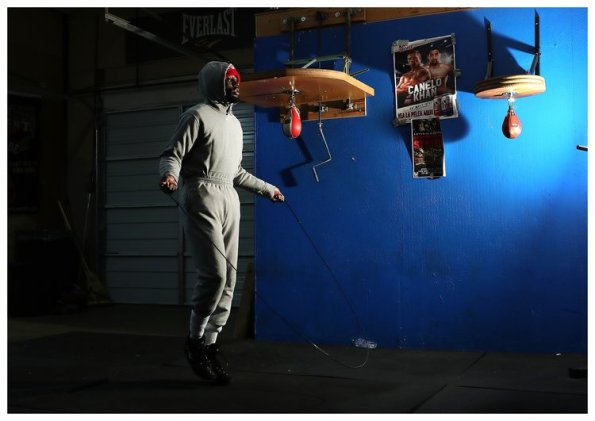
Sparring for Omaha: Boxer Terence Crawford Defends His Title in the City He Calls Home
https://leoadambiga.com/2015/01/08/sparring-for-oma…ty-he-calls-home/
Terence “Bud” Crawford is Nebraska’s most impactful athlete of all-time
https://leoadambiga.com/2016/12/09/terence-bud-craw…lete-of-all-time/
Flashback to June 2015: Visiting Africa with Terence “Bud” Crawford
https://leoadambiga.com/2016/06/14/flashback-to-jun…nce-bud-crawford
What do Oscar-winning filmmaker Alexander Payne and WBO world boxing champion Terence “Bud” Crawford have in common?
https://leoadambiga.com/2014/12/02/what-do-oscar-wi…d-have-in-common/

Bud Rising: Terence “Bud” Crawford’s tight family has his back as he defends title in his own backyard
https://leoadambiga.com/2014/06/25/bud-rising-bud-c…his-own-backyard
Terence “Bud” Crawford in the fight of his life for lightweight title: top contender from Omaha’s mean streets looks to make history
https://leoadambiga.com/2014/02/25/terence-bud-craw…-to-make-history/

In his corner: Midge Minor is trainer, friend, father figure to pro boxing contender Terence “Bud” Crawford
https://leoadambiga.com/2013/07/30/in-his-corner-mi…nce-bud-crawford/
Giving kids a fighting chance: Carl Washington and his CW Boxing Club and Youth Resource Center
https://leoadambiga.com/2013/12/03/giving-kids-a-fi…-resource-center/
Brotherhood of the Ring, Omaha’s CW Boxing Club
https://leoadambiga.com/2010/06/19/brotherhood-of-the-ring/
 This image and the one above are of a very young Bud at the CW Boxing Club, ©photos courtesy Jim Krantz
Terence Crawford affirms his place as Nebraska’s unequivocal homegrown sports hero
Terence Crawford, right, lands a punch against Jose Benavidez Jr. on Saturday. “It feels so good to shut somebody up who’s been talking for so long. I’m at ease,” Crawford said after his victory. AP Photo/Nati Harnik
It used to be that Husker football was the collective, unifying force in this state. Who would have ever thought Terence Crawford would be that force? He is though. Maybe not in the same way, of course, but his representing Nebraska is something we can all be proud of and get passionate about regardless of whether we’re urban or rural, black or white, blue or red, straight or gay or any other permutations that usually divide us. Crawford represents the very best of us in terms of hard work, perseverance, dedication, loyalty and guts. He is a picture of health and fitness, striving and ambition and the pursuit of excellence. When you are the very best at what you do as he is and you come from ordinary beginnings as he does, it is hard not to be inspired by his story. He is a testament to daring and dreaming. He may be the most powerful individual inspirational figure to come out of Nebraska in a very long time. Maybe ever.
Terence Crawford’s dismantling of Jose Benavidez Jr. last night before a record fight crowd at Omaha’s CHI Health Center to retain his welterweight boxing title only further cemented his pound-for-pound greatness status. He is doing his thing at a time when area sports fans are desperate for a positive local sports story of national significance but can find only frustration and disappointment wherever they cast their gaze with the exception of Husker and Creighton volleyball. His ring mastery and dominance is playing out during the worst run of Husker football in a half-century. Meanwhile. Nebraska men’s basketball is still an unknown, unreliable quantity until proven otherwise and Creighton men’s hoops is caught up in a scandal. The NU and CU baseball programs have not even come close to national relevance much less the College World Series in decades. UNO athletics is still riding the hockey bell cow in its transition to Division I, which is a move that may still prove unwise. The hockey program has yet to fully realize the lofty expectations set for it.
That is why Crawford’s brilliance has been a godsend to this state and to this city – giving the public a whole new sports obsession to follow and support, rejuvenating boxing to a level never before seen here and shining more attention on Omaha than any other individual Nebraska-born and bred athlete. At 31, the unbeaten Crawford could keep at it another five to ten years if he really wanted. Now that his fights from here on out will be pay-per-view and his promoter Bob Arum seems serious to match him with world-class opponents he’s yet to have faced, Crawford’s capital could climb even higher. He’s already established himself one of the best fighters of his era and with a couple big wins over marquee foes he will add his name to the all-time greats list.
Should he retire undefeated, which very few pro boxers have ever done, he will have to be considered one of the greatest professional fighters to ever compete in The Sweet Science. His defensive and overall boxing skills are so high that he’s already regarded as one of the best ring tacticians the sport has ever seen. True greatness is measured over the long haul and his excellence is now demonstrable over a several year span. The scary thing for future opponents is that he actuallly seems to be getting better with age and may be just peaking right now in his early 30s.
There are still some out there who question his size and power but with each successive ass whipping he applies, it’s clear, as he says, that he’s big and powerful for his division and always way more than his foes can handle once they’re standing toe to toe and trading blows with him inside the square circle. We are all privileged to be watching him perform at this elevated level and to be able to call him one of our own. His like around here will not be seen for a long time to come. Maybe never again.


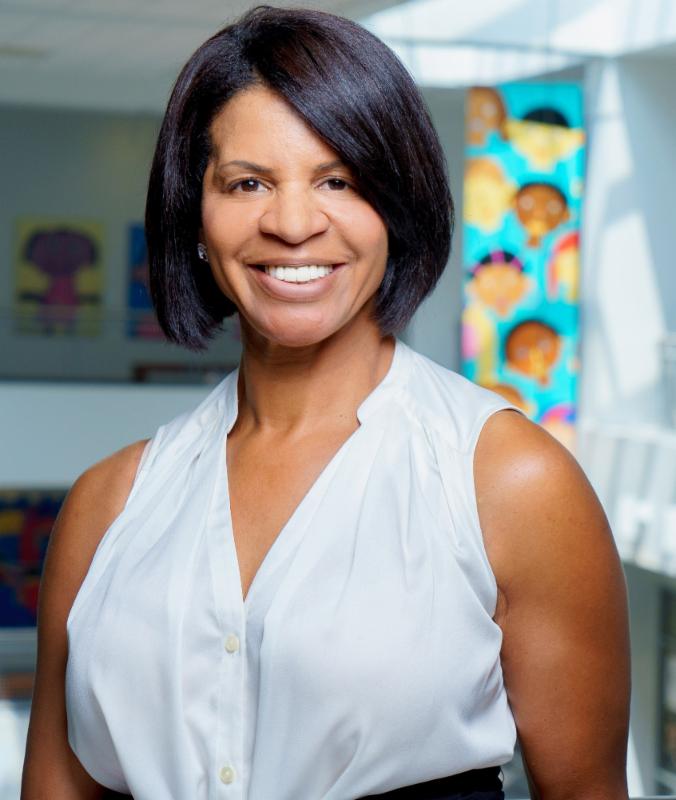

 Leo Adam Biga's My Inside Stories