Archive
A force of nature named Evie: Still a maverick social justice advocate at 100

Image via Wikipedia
Spend even a little while with Evie Zysman, as I did, and she will leave an impression on you with her intelligence and passion and commitment. I wrote this story for the New Horizons, a publication of the Eastern Nebraska Office on Aging. We profile dynamic seniors in its pages, and if there’s ever been anyone to overturn outmoded ideas of older individuals being out of touch or all used up, Evie is the one. She is more vital than most people half or a third her age. I believe you will be as struck by her and her story as I was, and as I continue to be.
A force of nature named Evie:
Still a maverick social justice advocate at 100
©by Leo Adam Biga
Originally published in the New Horizons
When 100-year-old maverick social activist, children’s advocate and force of nature Evelyn “Evie” Adler Zysman recalls her early years as a social worker back East, she remembers, “as if it were yesterday,” coming upon a foster care nightmare.
It was the 1930s, and the former Evie Adler was pursuing her graduate degree from Columbia University’s New York School of Social Work. As part of her training, Zysman, a Jew, handled Jewish family cases.
“I went to a very nice little home in Queens,” she said from her art-filled Dundee neighborhood residence. “A woman came to the door with a 6-year-old boy. She said, ‘Would you like to see his room?’ and I said, ‘I’d love to.’ We go in, and it’s a nice little room with no bed. Then the woman excuses herself for a minute, and the kid says to me, ‘Would you like to see where I sleep?’ I said, ‘Sure, honey.’ He took me to the head of the basement stairs. There was no light. We walked down in the dark and over in a corner was an old cot. He said, ‘This is where I sleep.’ Then he held out his hand and says, ‘A bee could sting me, and I wouldn’t cry.’
“I knew right then no child should be born into a living hell. We got him out of that house very fast and got her off the list of foster mothers. That was one of the experiences that said to me: Kids are important, their lives are important, they need our help.”

Evie Zysman
Imbued with an undying zeal to make a difference in people’s lives, especially children’s lives, Evie threw herself into her work. Even now, at an age when most of her contemporaries are dead or retired, she remains committed to doing good works and supporting good causes.
Consistent with her belief that children need protection, she spent much of her first 50 years as a licensed social worker, making the rounds among welfare, foster care and single-parent families. True to her conviction that all laborers deserve a decent wage and safe work spaces, she fought for workers’ rights as an organized union leader. Acting on her belief in early childhood education, she helped start a project that opened day care centers in low income areas long before Head Start got off the ground; and she co-founded, with her late husband, Jack Zysman, Playtime Equipment Co., which sold quality early childhood education supplies.
Evie developed her keen social consciousness during one of the greatest eras of need in this country — the Great Depression. The youngest of eight children born to Jacob and Lizzie Adler, she grew up in a caring family that encouraged her to heed her own mind and go her own way but to always have an open heart.
“Mama raised seven daughters as different as night and day and as close as you could possibly get,” she said. “Mama said to us, ‘Each of you is pretty good, but together you are much better. Remember girls: Shoulder to shoulder.’ That was our slogan. And then, to each one of us she would say, ‘Don’t look to your sister — be yourself.’ It was taken for granted each one of us would be ourselves and do something. We loved each other and accepted the fact each one of us had our own lives to live. That was great.”
Even though her European immigrant parents had limited formal education, they encouraged their offspring to appreciate the finer things, including music and reading.
“Papa was a scholar in the Talmud and the Torah. People would come and consult him. My mother couldn’t read or write English but she had a profound respect for education. She would put us girls on the streetcar to go to the library. How can you live without books? Our home was filled with music, too. My sister Bessie played the piano and played it very well. My sister Marie played the violin, something she did professionally at the Loyal Hotel. My sister Mamie sang. We would always be having these concerts in our house and my father would run around opening the windows so the neighbors could also enjoy.”
Then there was the example set by her parents. Jacob brought home crates filled with produce from the wholesale fruit and vegetable stand he ran in the Old Market and often shared the bounty with neighbors. One wintry day Lizzie was about to fetch Evie’s older siblings from school, lest they be lost in a mounting snowstorm, when, according to Evie, the family’s black maid intervened, saying, “You’re not going — you’re staying right here. I’ll bring the children.’ Mama said, ‘You can go, but my coat around you,’ and draped her coat over her. You see, we cared about things. We grew up in a home in which it was taken for granted you had a responsibility for the world around you. There was no question about it.”
Along with the avowed obligation she felt to make the world a better place, came a profound sense of citizenship. She proudly recalls the first time she was old enough to exercise her voting right.
“I will always remember walking into that booth and writing on the ballot and feeling like I am making a difference. If only kids today could have that feeling when it comes to voting,” said Evie, a lifelong Democrat who was an ardent supporter of FDR and his New Deal. When it comes to politics, she’s more than a bystander — she actively campaigns for candidates. She’ll be happy with either Obama or Clinton in the White House.
When it came time to choose a career path, young Evie simply assumed it would be in an arena helping people.
“I was supposed to, somehow,” is how she sums it up all these years later. “I believed, and I still believe, that to take responsibility as a citizen, you must give. You must be active.”
For her, it was inconceivable one would not be socially or politically active in an era filled with defining human events — from millions losing their savings and jobs in the wake of the stock market crash to World War I veterans marching in the streets for relief to unions agitating for workers’ rights to a resurgence of Ku Klux Klan terror to America’s growing isolationism to the stirrings of Fascism at home and abroad. All of this, she said, “got me interested in politics and in keeping my eyes open to what was going on around me. It was a very telling time.”
Unless you were there, it’s difficult to grasp just how devastating the Depression was to countless people’s pocketbooks and psyches.
“It’s so hard for you younger generations to understand” she told a young visitor to her house. “You have never lived in a time of need in this country.” Unfortunately, she added, the disparity “between rich and poor” in America only seems to widen as the years go by.
With her feisty I-want-to-change-the-world spirit, Evie, an Omaha Central High School graduate, would not be deterred from furthering her formal education and, despite meager finances, became the first member of her family to attend college. Because her family could not afford to send her there, she found other means of support via scholarships from the League of Women Voters and the University of Nebraska-Lincoln, where the Phi Betta Kappa earned her bachelor’s degree.
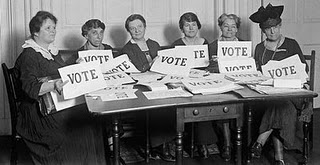
“I knew that for me to go to college, I had to find a way to go. I had to find work, I had to find scholarships. Nothing came easy economically.”
To help pay her own way, she held a job in the stocking department at Gold’s Department store in downtown Lincoln. An incident she overhead there brought into sharp relief for her the classism that divides America. “
One day, a woman with a little poodle under her arm came over to a water fountain in the back of the store and let her dog drink from it. Well, the floorwalker came running over and said, ‘Madam, that fountain is for people,’ and the woman said, ‘I’m so sorry, I thought it was for the employees.’ That’s an absolutely true story and it tells you where my politics come from and why I care about the world around me and I want to do something about it.”
Her undergraduate studies focused on economics. “I was concerned I should understand how to make a living,” she said. “That was important.” Her understanding of hard times was not just of the at-arms-length, ivory-tower variety. She got a taste of what it was like to struggle when, while still an undergrad, she was befriended by the Lincoln YWCA’s then-director who arranged for Evie to participate in internships that offered a glimpse into how “the other half lived.” Evie worked in blue collar jobs marked by hot, dark, close work spaces.
“She thought it was important for me to have these kind of experiences and so she got me to go do these projects. One, when I was a sophomore, took me in the summer to Chicago, where I worked as a folder in a laundry and lived in a working girls’ rooming house. There was no air conditioning in that factory. And then, between my junior and senior years, I went to New York City, where I worked in a garment factory. I was supposed to be the ‘do-it’ girl — get somebody coffee if they wanted it or give them thread if they needed it, and so forth.
“The workers in our factory were making some rich woman a beautiful dress. They asked me to get a certain thread. And being already socially conscious, I thought, ‘I’ll fix her,’ and I gave them the wrong thread,” a laughing Evie recalled, still delighted at the thought of tweaking the nose of that unknown social maven.
Upon graduating with honors from UNL she set her sights on a master’s degree. First, however, she confronted misogyny and bigotry in the figure of the economics department chairman.
“He said to me, ‘Well, Evelyn, you’re entitled to a graduate fellowship at Berkeley but, you know, you’re a woman and you are a Jew, so what would you possibly do with your graduate degree when you complete it?’ Well, today, you’d sue him if he ever dared say that.”
Instead of letting discrimination stop her, the indomitable Evie carried-on and searched for a fellowship from another source. She found it, too, from the Jewish School of Social Work in New York.
“It was a lot of money, so I took it,” she said. “I had my ethic courses with the Jewish School and my technical courses with Columbia,” where she completed her master’s in 1932.
As her thesis subject she chose the International Ladies Garment Workers Union, one of whose New York factories she worked in. There was a strike on at the time and she interviewed scores of unemployed union members who told her just how difficult it was feeding a family on the dole and how agonizing it was waking-up each morning only to wonder — How are we going to get by? and When am I ever going to work again?

As a social worker she saw many disturbing things — from bad working conditions to child endangerment cases to families struggling to survive on scarce resources. She witnessed enough misery, she said, “that I became free choice long before there was such a phrase.”
Her passion for the job was great but as she became “deeply involved” in the United Social Service Employees Union, she put her first career aside to assume the presidency of the New York chapter.
“I could do even more for people, like getting them decent wages, than I could in social work.” Among the union’s accomplishments during her tenure as president, she said, was helping “guarantee social workers were qualified and paid fairly. You had to pay enough in order to get qualified people. We felt if you, as social workers, were going to make decisions impacting people’s lives, you better be qualified to do it.”
Feeling she’d done all she could as union head, she returned to the social work field. While working for a Jewish Federation agency in New York, she was given the task of interviewing Jewish refugees who had escaped growing Nazi persecution in Germany and neighboring countries. Her job was to place new arrivals with the appropriate state social service departments that could best meet their needs. Her conversations with emigres revealed a sense of relief for having escaped but an even greater worry for their loved ones back home.
“They expressed deep, deep concern and deep, deep sadness and fear about what was going on over there,” she said, “and anxiety about what would happen to their family members that remained over there. They worried too about themselves — about how they would make it here in this country.”
A desire to help others was not the only passion stoked in Evie during those ”wonderful” New York years. She met her future husband there while still a grad student. Dashing Jack Zysman, an athletic New York native, had recently completed his master’s in American history from New York University. One day, Evie went to some office to retrieve data she needed on the International Ladies Garment Workers Union, when she met Jack, who was doing research in the very same office. Sharing similar interests and backgrounds, the two struck up a dialogue and before long they were chums.
The only hitch was that Evie was engaged to “a nice Jewish boy in Omaha.” During a break from her studies, she returned home to sort things out. One day, she was playing tennis at Miller Park when she looked across the green and there stood Jack. “He drove from New York to tell me I was definitely coming back and that I was not to marry anybody but him.” Swept off her feet, she broke off her engagement and promised Jack she would be his.
After their marriage, the couple worked and resided in New York, where she pursued union and social work activities and he taught and coached at a high school. Their only child, John, today a political science professor at Cal-Berkeley, was born in New York. Evie has two grandchildren by John and his wife.
Along the way, Evie became a New Yorker at heart. “I loved that city,” she said. Her small family “lived all over the place,” including the Village, Chelsea and Harlem. As painful as it was to leave, the Zysmans decided Omaha was better suited for raising John and, so, the family moved here shortly after World War II.
Soon the couple began Playtime Equipment, their early childhood education supply company. The genesis for Playtime grew out of Evie’s own curiosity and concern about the educational value of play materials she found at the day care John attended. When the day care’s staff asked her to “help us know what to do,” she rolled up her sleeves and went to work.
She called on experts in New York, including children’s authors, day care managers and educators. When she sought a play equipment manufacturer’s advice, she got a surprise when the rep said, “Why don’t you start a company and supply kids with the right stuff?” It was not what she planned, but she and Jack ran with the idea, forming and operating Playtime right from their home. The company distributed everything from books, games and puzzles to blocks and tinker toys to arts and crafts to playground apparatus to teaching aids. The Zysmans’ main customers were schools and day cares, but parents also sought them out.
“I helped raise half the kids in Omaha,” Evie said.


The Zysman residence became a magnet for state and public education officials, who came to rely on Evie as an early childhood education proponent and catalyst. She began forming coalitions among social service, education and legislative leaders to address the early childhood education gap. A major initiative in that effort was Project AID, a program she helped organize that set-up preschools at black churches in Omaha to boost impoverished children’s development. She said the success of the project helped convince state legislators to make kindergarten a legal requirement and played a role in Nebraska being selected as one of the first states to receive the federal government’s Head Start program.
Gay McTate, an Omaha social worker and close friend of Zysman’s, said, “Evie’s genius lay in her willingness to do something about problems and her capacity to bring together and inspire people who could make a difference.”
Evie immersed herself in many more efforts to improve the lives of children, including helping form the Council for Children’s Services and the Coordinated Childcare Project, clearinghouses geared to meeting at-risk children’s needs.
The welfare of children remains such a passion of hers that she still gets mad when she thinks about the “miserable salaries” early childhood educators make and how state budget cuts adversely impact kids’ programs.
“Everybody agrees today the future of our country depends on educating our children. So, what do we do about it? We cut the budgets. Don’t get me started…” she said, visibly upset at the idea.
Besides children, she has worked with such organizations as the United Way, the Urban League, the League of Women Voters, the Jewish Council of Women, Hadassah and the local social action group Omaha Together One Community.
In her nearly century of living, she’s seen America make “lots of progress” in the area of social justice, but feels “we have a long way to go. I worry about the future of this country.”
Calling herself “a good secular Jew,” she eschews attending services and instead trusts her conscience to “tell me what’s right and wrong. I don’t see how you can call yourself a good Jew and not be a social activist.” Even today, she continues working for a better community by participating in Benchmark, a National Council of Jewish Women initiative to raise awareness and discussion about court appointments and by organizing a Temple Israel Synagogue Mitzvah (Hebrew, for good deed) that staffs library summer reading programs with volunteers.
Her good deeds have won her numerous awards, most recently the D.J.’s Hero Award from the Salvation Army and Temple Israel’s Tikkun Olam (Hebrew, for repairing the world) Social Justice Award.
She’s outlived Jack and her siblings, yet her days remain rich in love and life. “I play bridge. I get my New York Times every day. I have my books (she is a regular at the Sorenson Library branch). I’ve got friends. I have my son and daughter-in-law. I have my grandchild. What else do you need? It’s been a very full life.”
As she nears a century of living Evie knows the fight for social justice is a never-ending struggle she can still shine a light on.
“How would I define social justice?” she said at an Omaha event honoring her. “You know, it’s silly to try to put a name to realizing that everybody should have the same rights as you. There is no name for it. It’s just being human…it’s being Jewish. There’s no name for it. Give a name to my mother who couldn’t read or write but thought that you should do for each other.”
Related Articles
- Alberta foster care system under scrutiny (calgaryherald.com)
- Leading article: The care system needs a drastic overhaul (independent.co.uk)
- Feds share blame for child welfare system ‘chaos’ (cbc.ca)
New school ringing in Liberty for students
The thought of a new downtown elementary school housed in a massive former bus barn situated smack dab in a neighborhood rife with social ills caught my attention. The barn site was only temporary, but that nontraditional location, plus the red light district around and about it, was enough for me to file a story. Plus, I liked the fact the school would be serving a diverse student body of Latinos, Africans, African-Americans, and whites. The space was every bit as interesting and the students every bit as diverse as I had hoped. Then when I met the dynamo principal, Nancy Oberst, mother of indie rock star Conor Oberst, I was officially hooked. My story, which originally appeared in The Reader (www.thereader.com), is as much about her and and her staff’s passion as it is about this incongruent site for a school. Liberty Elementary has since moved into its built-from-the-ground up school building just down the street.
New school ringing in Liberty for students
©by Leo Adam Biga
Originally published in The Reader (www.thereader.com)
Like a Pied Piper, Liberty Elementary School principal Nancy Oberst set a brisk pace one evening in the Columbus Park neighborhood. It was one of several nights when Oberst and staff went door-to-door in the blue-collar, racially-diverse area to symbolically blow the horn about Liberty, the new downtown K-6 public school. Liberty, which opened August 19 with some 360 students (and more matriculating each day) was conceived in part to relieve overcrowding at two other OPS sites — Jackson Academy and Field Club Elementary — which Liberty is drawing many students from. Consistent with the new OPS emphasis on neighborhood schools,
Liberty is serving a growing school-age populace on downtown’s southside. Temporarily housed in a renovated warehouse running from 22nd to 20th and Leavenworth Streets, Liberty is in a kind of incubator phase while awaiting construction of its own building, slated to open in March 2004.
In naming the school, Oberst wanted something that “embraced as many people as possible and spoke to a lot of things inherent in this society.” Above the main entrance is a phrase from Roman philosopher Epictetus that reads, “Only the educated are free.” Fittingly, Liberty is a beacon of hope to a largely Hispanic ward of recent emigres. An education for these children is more than a right of passage — it is a burden of dreams. “These kids come from working class families that need to invest in something for the future,” she said. “They’re really wanting for their kids that old dream of learning English and being upwardly mobile.” It is why Oberst insists her staff be fully committed. “When I interview applicants, I say, ‘I’m really looking for people that have the will and the desire to make something special for kids who need a leg up.’” The impetus to learn, she said, is made even greater by the fact children often act as interpreters for their Spanish-speaking parents.
Because everyone is welcome at Liberty, parents are not pressed for their legal status. To register a child, a parent need only provide a birth certificate, an address and some record of the child’s past schooling, if any. Serving a highly-mobile population, Liberty expects to see a high student turnover rate.
Oberst, principal at Jackson the past three years, has many former students assigned to Liberty. During that night canvassing the hood she scanned a roster looking for familiar names. She found one in Diana Ramirez. In a wood-frame house perfumed by the rustic aroma of tortillas and accented by the folksy lilt of Spanish, Diana shyly emerged from a bedroom, bedecked in a fine pink dress, and when her big brown eyes locked on Oberst’s, she warmly embraced her. “There’s a beauty and a richness about a very urban group of kids,” Oberst said. “They’re the nicest kids I’ve ever been in contact with. Just well-behaved, very, very respectful children. They look forward coming to school. It’s very important to their day. I’ve never had one swing at me or push me. Sure, there’s times when one gets mad and tips over a desk or kicks a door, but you’d be amazed at how lovely these kids are. And, you know, the school has to set the tone. Kids have to know this is not just hanging out — this is different. That’s why we call kids if they don’t come and go get them if they can’t get here. They know we love them.”
While children from Spanish-speaking homes predominate, Liberty is also a magnate for area African-American, Sudanese, Asian and Caucasian families. Combined with NuStyle Development’s ongoing renovation of the historic and once stately Drake Court apartments on the north side of Liberty, the school is seen by many as an anchor of stability and a catalyst for redevelopment. The circa 1916-1921 Drake Court, a 14-building complex featuring Georgian Revival and Prairie style design elements, was once the centerpiece of this mixed residential-commercial zoned district. But when the apartments fell into disrepair in the 1970s, occupancy declined and the designated blighted area became a thoroughfare for transients. NuStyle has worked closely with the Nebraska Investment Finance Authority (NIFA) to qualify for low income tax credits for the Drake Court project. In anticipation of Liberty moving out in 2004, NuStyle is weighing various reuses of the warehouse, including a day care center, artist studios, a multi-media technology center and condos. It is also eying more area residential and commercial projects.
“There’s been an undercurrent that this is too tough a neighborhood for a school,” Oberst said. “Some of the families are worried. But OPS is saying we believe in Omaha — we believe neighborhoods can be redeveloped. We know what a renovated North High did on 34th and Ames. That has become a very safe place for people to live. When we held meetings with residents in the spring we said, ‘This is how you do it — this is how you change your neighborhood. You put an anchor in with a school. You make the streets safer for mothers and children to come to and from school.’ I’m a big believer in the community the school is in knowing about the school and being involved in it.”
She said she will do whatever it takes to make Liberty safe, from asking street denizens to respect school property to telling those engaging in illicit behavior to move on. “You want to be a good neighbor. You don’t want people mad at you. You have to do some co-existing. But you also have to draw some lines.” She said when problems surfaced at Jackson, from the school getting tagged with graffiti to men harassing girls, she had students spread the word the school was off-limits and she told harassers their actions were unwelcome. The problems, she said, vanished.
Despite assurances from OPS, extra police patrols and neighborhood watch efforts, some parents still voice concern. “I’m not happy with the location,” said Lisa Arellano, whose son, Gage, is a 5th grader. “We have a lot of homeless people and trouble up on Leavenworth. I can’t tell you how many times I’ve seen the police tackling someone on the ground. Walking to and from school is too scary. It puts kids in jeopardy. There’s always reassurances, but there’s no guarantees.” Gatdet Tut, whose daughter Hynalem is in kindergarten, said, “I don’t want my child to walk on these streets.” Other parents, like Craig Hinson, hope OPS-OPD vows to keep a sharp eye out are more than “lip service.”
Commerce of all kinds unfolds around the school. Across 20th Street is the 24-Hour Package Liquor Store and the Motor West used car lot. Three blocks east is the Douglas County Correctional Center. On the south side is Precision Industries. A little farther west is a St. Vincent DePaul Super Thrift store.
The eastern front of the old bus barn housing the school has two ongoing businesses — Grunwald Mechanical Contractors and an auto detailing shop — that maintain active garages. Robert Wilczewski, owner of the property occupied by the firms, feels the volume of kids passing by to enter and exit the school, whose main entrance is off an adjacent alleyway, poses hazards and hinders operations.
“It’s starting to complicate life around here,” he said. “We just have some serious concerns about safety and about restrictions on what we do here. It’s become intolerable. We want business back as usual. They’re going to need to find a different route for children to enter the school.” Wilczewski, who owns part of the alley and a piece of Grunwald, said the company and OPS are signatories to a 1930 agreement prohibiting public alley use. The parties are trying to reach an accord.
Harold Wrehe, co-owner of Motor West, echoed other area businessmen in expressing surprise at the number of Liberty students. “I didn’t believe there’d be that many children going to an elementary school in this area. But I like it. It brings people in. Everything helps.” Mike Nath, branch manager of nearby Motion Industries, agreed the school “will, in the long run, probably be a good thing. It could help clean up the neighborhood.”
The consensus is that whatever undesirable-incongruous elements surround it, Liberty, along with the Drake Court, reopening for occupancy next year, is a keystone for an emerging 20th Street Corridor some envision as an Old Market West. Oberst, busily forging alliances between Liberty and the nearby Omaha Children’s Museum, the YMCA and the Omaha Theater Company for Young People, joins others in referring to 20th Street, from Leavenworth to Farnam, as Children’s Row. As Liberty’s provisional site does not have many school amenities, including a gym or theater, students are attending P.E. classes at the Y and performances at the children’s theater.
For Roberta Wilhelm, executive director of the children’s theater, the concept of “a downtown school is a great idea,” with Liberty adding another dimension to the burgeoning arts-educational scene emerging along the 20th Street strip. “I think between the school, the Children’s Museum, the Y, us, and the Joslyn Art Museum, which is not that far away, the synergy is just going to be wonderful. We’re excited to have the school as a neighbor.”
She envisions the theater and school having an intimate rapport. “We see ourselves developing a very close relationship with Liberty,” said Wilhelm, whose home base, The Rose, is only a stroll away. We will be doing our Every Single Child program in their school…which is where every child — in each grade — has a different experience with the children’s theater through drama residency workshops and dance activities. And that, in my opinion, is just the beginning. I think there’s much more we can do with them in after-school programming. We’d like to see the arts infused in their school.”
Oberst wants that infusion as well. “We’re really wanting to bring art into the school, including artists from the community, and to bring our students to the arts. We hope to build relationships with the Joslyn Art Museum and the Bemis Center for Contemporary Arts. We have to take advantage of where we are.”
The idea of placing a school smack dab in the middle of a bustling urban district is not new for Omaha. Central Grade School operated for decades across from Central High School and in the shadow of the Joslyn and other downtown landmarks. Although Liberty is the first school in the Drake Court-Park East-Columbus Park district since Mason School closed in the 1980s, it is repeating history in that, like Mason, which once served a largely Italian immigrant population, it is educating many new arrivals from Mexico.
What makes Liberty different is that the school is operating — at least the next 18 months — from a makeshift site that once served as a maintenance barn for Greyhound Bus Lines and more recently as a paper-printing supply storage facility for Redfield & Co. The top-to-bottom refurbishment of the old bus barn has revealed a 49,000 square foot space highlighted by the second-story’s free-span, cathedral-high, vaulted wood beam ceiling and elaborate iron truss network. A massive skylight and banks of tall windows bathe the upper level in natural light. Large ceiling fans maintain a constant air flow.
The rehab was funded by NuStyle, which bought the structure from Robert Wilczewski, and designed by Alley-Poyner Architects. OPS, which leases the building from NuStyle, is using large partitions to create classrooms and resource centers in a modular, flexible floor plan. By opening day, each partitioned space was outfitted with all the usual fixtures of a traditional school setting.

In the time in takes for the permanent school to be erected — construction starts this fall — Liberty plans being an established player in the neighborhood by building coalitions that Oberst hopes makes the school a vital contributor to and welcome beneficiary of the revitalization happening around it.
“The idea is to form this community now and for the kids to participate in the building of the new school and to have the neighborhood be involved with the whole redevelopment going on with us and the Drake Court,” she said.
Drawing on her experience forging community ties at Jackson, where she found an Adopt-a-School partner in Picotte Elementary, formed a food pantry with ConAgra Foods and sponsored clothing drives with First Lutheran Church in Omaha, she is already lining-up Liberty collaboratives. A food pantry, serving poor residents, is in the works along with clothing and furniture drives. “Our families sometimes don’t have beds and other basic things and, so, we’ll do a lot of give aways. It’s meant to bridge the gap. That networking with the community is part of my job and, besides, it opens more doors for opportunity for our kids and parents. I’m always looking for an angle,” she said.
Opening day at Liberty was marked by two words: diversity and vitality. Beaming brown, black, yellow and white faces mingled in the old-new environs. The sing-song sound of Spanish and hip-hop reverberated throughout the cavernous space.
Craig Hinson, whose daughter Jamillah is attending the 6th grade, said the diverse urban setting is just what he wants for his child. “I think it’s great. To me, it just adds a little flavor. I think being downtown, where you have blacks and whites and Hispanics and Sudanese, it just gives kids a real sense of the real world.”
As a show of faith in Liberty 3rd grade teacher Michelle Grau enrolled her own daughter Jordan there even though her family lives in Field Club. “I think the more kinds of people and the more kind of cultural experiences you can be exposed to, the better,” Grau said. “That’s why Jordan’s coming here. And to be in on the ground floor — I’m really excited about that. It’s going to be a fantastic thing once it’s finally completed…if you can just see the big picture.”
The promise of bigger things to come is what led Barb and Jim Farho to place their two children at Liberty. “We’re probably one of the few families choosing to go there even though we’re not forced to,” said Barb Farho. “My husband and I are interested in seeing downtown rejuvenated and we think this is one way to do that. A lot of people are afraid of downtown, but we think there’s a lot of cultural experiences awaiting. We also know the principal is very good at getting the community involved and we just think those partnerships are only going to get better. The surrounding area is going to improve for having a school there. Plus, our kids are excited about the fact the new school will be built before their very eyes. It just seems like a fun place to be in on at the very beginning.”
Assuming the school thrives, Oberst anticipates that once the new building opens and the word spreads more pilgrims will flock to Liberty from around the metro. “We are expecting that once the new school is up and once the real cultural-corporate connections are evident that parents from other parts of the city will want to send their kids here.” The new Liberty will accommodate 600-plus kids, yet another reflection of the confidence school officials have in the enterprising area.
Whatever happens, Oberst is sure to stir the melting pot. “What that woman does for and gets out of kids is incredible,” said Linda Daly, an ESL resource teacher and one of several educators who followed Oberst to Liberty from Jackson. “She makes things happen for the kids. She is absolutely a dynamo.”
Related Articles
- For students, ringing bells all mean liberty (philly.com)
- Schools Serve – Uniting Schools Against Hunger (prweb.com)
Heart and Soul, A Mutt and Jeff Boxing Story

This is another of my favorite boxing stories. I wrote it for the New Horizons. It profiles the same downtown Omaha boxing gym as featured in the House of Discipline story also recently posted here, only this time I concentrate more on the two old men who ran the gym, Kenny Wingo and Dutch Gladfelter, both of whom are now gone. I suppose my approach to this story and all the boxing stories I’ve done reveals influences of the boxing movies and documentaries and magazine articles I’ve been exposed to in a lifetime of being both thrilled and sickened by the sport. You’ll find on this blog site a handful of boxing articles I’ve written over the years, and there will be more to come.
Heart and Soul, A Mutt and Jeff Boxing Story
©by Leo Adam Biga
Originally published in the New Horizons
The heart and soul of Omaha amateur boxing can be found one flight above the dingy 308 Bar at 24th & Farnam. There, inside a cozy little joint of a gym, fighters snap punches at heavy bags, spar inside a makeshift ring, shadowbox and skip rope.
Welcome to the Downtown Boxing Club, a combination sweatshop and shrine dedicated to “the sweet science.” A melting pot for young Latino, African-American and Anglo pugilists of every conceivable size, shape and starry-eyed dream. They include die-hard competitors and fitness buffs. Genuine prospects and hapless pugs. Half-pint boys and burly men. They come to test their courage, sacrifice their bodies and impose their wills. For inspiration they need only glance at the walls covered with posters of boxing greats.

Whatever their age, ability or aspiration, the athletes all work out under the watchful eye of Kenny Wingo, 65, the club’s head coach, president and founder. The retired masonry contractor keeps tempers and egos in check with his Burl Ives-as-Big Daddy girth and grit. Longtime assistant Dutch Gladfelter, 76, is as ramrod lean as Wingo is barrel-wide. The ex-prizefighter’s iron fists can still deliver a KO in a pinch, as when he decked a ringside heckler at a tournament a few years back.
Together 17 years now, these two grizzled men share a passion for the sport that helps keep them active year-round. Wingo, who never fought a bout in his life, readily admits he’s learned the ropes from Gladfelter.
“He’s taught me more about this boxing business – about how to handle kids and how to run a gym – than anybody else I’ve been around,” Wingo said. “I’ve got a lot of confidence in his opinion. He’s a treasure.”
The lessons have paid dividends too, as the club’s produced scores of junior and adult amateur champions; it captured both the novice and open division team titles at the 1996 Omaha Golden Gloves tourney.
Ask Gladfelter what makes a good boxer and in his low, growling voice he’ll recite his school-of-hard-knocks philosophy: “Balance, poise, aggressiveness and a heart,” he said. “Knowing when, where and how to hit. Feinting with your eyes and body – that takes the opponent’s mind off what he’s doing and sometimes you can really crack ‘em. I try to teach different points to hit, like the solar plexus and the jaw, and to stay on balance and be aggressive counterpunching. You don’t go out there just throwin’ punches – you have to think a little bit too.”
Gladfelter’s own ring career included fighting on the pro bootleg boxing circuit during the Depression. The Overton, Neb., native rode freight train boxcars for points bound west, taking fights at such division stops as Cheyenne, Wyo., Idaho Falls, Idaho and Elko, Nev. (where the sheriff staged matches).
“I fought all over the Rocky Mountain District. You’d travel fifty miles on those boxcars for a fight. Then you’d travel fifty more to another town and you were liable to run into the same guy you just fought back down the line. They just changed their name a little,” recalls Gladfelter, who fought then as Sonny O’Dea.
He got to know the hobo camps along the way and usually avoided the railroad bulls who patrolled the freight yards. It was a rough life, but it made him a buck in what “were hard times. There wasn’t any work. Fightin’ was the only way I knew to get any money. I got my nose broke a couple times, but it was still better than workin’ at the WPA or PWA,” he said, referring to the New Deal’s Works Progress Administration and Public Works Administration.
After hanging up his gloves he began coaching amateur fighters in the early 1950s. He worked several years with Native American coach Big Fire. Gladfelter, who is part Lakota, hooked up with Wingo in the late ‘70s when he brought a son who was fighting at the time to train at the Downtown Boxing Club. Gladfelter and wife Violet have five children in all.
“After his boy quit, Dutch stayed on and started helping me with my kids,” said Wingo.With Gladfelter at his side Wingo not only refined his coaching skills but gained a new appreciation for his own Native American heritage (He is part Cherokee.).“He took me to several powwows,” said Wingo. “He taught me what a dream catcher is and the difference between a grass dancer and a traditional dancer. He’s given me maps where the Native Americans lived. I ask him questions. I do some reading. It’s interesting to me.”
A self-described frustrated athlete, Wingo grew up a rabid baseball (Cardinals) and boxing (Joe Louis, Sugar Ray Robinson) fan in Illinois. He saw combat in Korea with the U.S. Army’s 7th Regiment, 3rd Division. After the war he moved to Omaha, where a brother lived, and worked his way up from masonry blocklayer to contractor.
He got involved with boxing about 25 years ago when he took two young boys, whose mother he was dating, to the city Golden Gloves and they insisted they’d like to fight too. Acting on the boys’ interest, he found a willing coach in Kenny Jackson. Hanging around the gym to watch them train sparked a fire in Wingo for coaching boxers.
“And I’ve kind of been hooked on it ever since. It gets in your blood,” he said.
Before long Wingo became Jackson’s cornerman, handling the spit bucket, water bottle, towel, et cetera, during sparring sessions and bouts. He increased his knowledge by studying books and quizzing coaches.
When Wingo eventually broke with Jackson, several fighters followed him to the now defunct Foxhole Gym. Soon in need of his own space, Wingo found the site of the present club in 1978 and converted empty offices into a well-equipped gym. He underwrote much of the early venture himself, but has in recent years used proceeds from pickle card sales to fund its operation. No membership fees are charged fighters, whose gloves, headgear and other essentials are provided free. He annually racks up thousands of miles on the club van driving fighters to tournaments around the Midwest and other parts of the nation. Except for fishing trips, he’s at the gym every weeknight and most Saturday mornings.
What keeps Wingo at it?
“I like working with the kids, number one. And when a kid does well it just makes you feel like all this is worthwhile. That you did your job and you got the best from him,” Wingo explains.
He enjoys helping young men grow as boxers and persons.
“When kids first come into the gym, they want to fight but they’re scared to death – because it is physical contact. But if you’re intimidated, you’ve got no chance. You try to teach them to be confident. I tell them from day one, and I keep tellin’ ‘em, that there’s three things that make a good fighter – conditioning, brains and confidence.”
Wingo feels boxing’s gotten a bad rap in recent years due to the excesses of the pro fight game.
He maintains the amateur side of the sport, which is closely regulated, teaches positive values like sportsmanship and vital skills like self-discipline.
The lifelong bachelor has coached hundreds of athletes over the years – becoming a mentor to many.
“Growing up without a father figure, Kenny’s really kind of filled that role for me,” notes Tom McLeod of Omaha, a former boxer who under Wingo won four straight city and Midwest Golden Gloves titles at 156 pounds. “We developed a real good friendship and a mutual trust and respect. I think Kenny’s a great coach and a great tactician too. He always told me what I needed to do to win the fight. He gave me a lot of confidence in myself and in my abilities. He took me to a level I definitely couldn’t of reached by myself.”

McLeod, 27, is one of several Downtown Boxing Club veterans who remain loyal to Wingo and regularly spar with his stable of fighters. Another is Rafael Valdez, 33, who started training with Wingo at age 10 and later went on to fight some 150 amateur and 16 pro bouts. Valdez’s two small sons, Justin and Tony, now fight for Wingo and company as junior amateurs.
“When my kids were old enough to start fighting,” said Valdez, “Kenny was the first one I called. He treats the kids great. There aren’t many guys who are willing to put in the amount of time he does.”
This multi-generational boxing brotherhood is Wingo’s family.
“Winning isn’t everything with me. Fellowship is,” Wingo said. “It’s the fellowship you build up over the years with fighters and coaches and parents too. I’ve got friends from everywhere and I got ‘em through boxing.”
A 1980 tragedy reminded Wingo of the hazards of growing too attached to his fighters. He was coaching two rising young stars on the area boxing scene – brothers Art and Shawn Meehan of Omaha – when he got a call one morning that both had been killed in a car wreck.
“I really cared about them. Art was an outstanding kid and an outstanding fighter. He was 16 when he won the city and the Midwest Golden Gloves. And his little brother Shawn probably had more talent than him. I’d worked with them three-four years. I picked ‘em up and took ‘em to the gym and took ‘em home. I took the little one on a fishing trip to Canada.”
Wingo said the Meehans’ deaths marked “the lowest I’ve ever been. I was going to quit (coaching).” He’s stuck with it, but the pain remains. “I still think about those kids and I still go visit their graves. It taught me not to get too close to the kids, but it’s hard not to and I still do to a certain extent.”
Quitting isn’t his style anyway. Besides, kids keep arriving at the gym every day with dreams of boxing glory. So long as they keep coming, Wingo and Gladfelter are eager to share their experience with them.
“We’ve done it together for 17 years now and we’re gonna continue to do it together for another 17 years. We both love boxing. What would we do if we quit?”
Related Articles
- What can be done to revitalize boxing? (timesunion.com)
- Golden Gloves…& golden heart (nydailynews.com)
- Canceled FX Boxing Show, ‘Lights Out,’ May Still Springboard Omahan Holt McCallany’s Career (leoadambiga.wordpress.com)
- Gleason’s Gym: Next Amateur Shows are September 8 and 10, 2011 (unlimitedfightnews.com)
The Downtown Boxing Club’s House of Discipline
Most writers are drawn at one time or another to write about boxing. There’s just so much atmosphere around the sport and so many characters in it. I’ve done my share of stories on boxers over the years. Every now and then I get the hankering to do another. I’m overdue for one now. This was my first and still one of my favorites. I believe it was the very first assignment I did for an Omaha news weekly called The Reader (www.thereader.com). It was 1996 and I’ve been contributing articles to that paper ever since. The story concerns a classic urban boxing gym and its denizens. A sidebar or companion piece to this feature follows below.
The Downtown Boxing Club’s House of Discipline
©by Leo Adam Biga
Originally published in The Reader (www.thereader.com)
The Powers Building at 24th and Farnam holds a dingy little dive called the 308 Bar, whose sodden patrons belly up in pursuit of oblivion. Directly above the bar, yet a world apart, lies an athletic retreat where sturdy, modern-day spartans engage in a punishing physical regimen offering personal renewal and redemption. The first is a public house of pain. The second, a private house of discipline.
As dusk falls over downtown on a raw, windy day in February, a short but well-chiseled uniformed cop with dark, brooding good looks – Vince Perez – glides with cocksure grace towards the bar, which he bypasses to step inside a glass-fronted entrance next door. A shabby carpeted staircase – enclosed by water-stained and paint-peeled walls – takes him one flight up to a dim landing poised between empty offices. He follows a hallway to a bare, unvarnished pine door, behind which the rhythmic sounds of leather-lashed discipline reverberate.

Vince has once again arrived at 24th Street’s House of Discipline, otherwise known as the Downtown Boxing Club, where once inside he’s transformed from peace officer into fighting warrior. He says a warrior’s mentality is vital for entering a 20’ by 20’ ring to test yourself – one-on-one – against another man: “I think that’s the attitude you have to have to even get in the ring. Because that’s the way it is – you and him. The other guy wants to hurt you and it’s a challenge to see if your body is in good enough shape to try and withstand that.”
If your only boxing references are Hollywood-based, then the club will surprise you. The gym doesn’t ooze a moody “Raging Bull” atmosphere. The utilitarian brick-walled space is a non-profit center for amateur boxing – a closely regulated sport featuring many safeguards, such as mandatory headgear, that are worlds away from the anything-goes excesses of the pro fight game. Knockouts and serious injuries are rare here. No punch-drunk pugs hang around the gym. It doesn’t reek of stale sweat, urine and blood.
The gym lays out on one level, comprised of tidy work stations – the largest of which is a makeshift ring. Two medicine balls sit against a ring post. Outside the ropes four heavy bags hang in a row – like sides of beef – from chains fastened to the ceiling’s metal crossbeam. Speed bags stand at opposite ends of the room.
Banks of tall windows filter in natural light, which blends with the fluorescent tube lighting overhead to cast a vague yellowish tint over the place. Rusted radiators and exposed pipes run along one wall. Plastered to another wall are posters of famous pugilists and snapshots of club fighters – all silently bearing witness to the men at work there.
On any given night fighters train under the scrutiny of three men: Club founder, president, head coach and chief guru Ken Wingo, 64, wields a commanding authority befitting his Burl Ives-as-Big Daddy girth and grit; resident ring historian and assistant coach Dutch Gladfelter, who hopped freight trains to fight on the pro bootleg boxing circuit during the Depression, offers priceless pointers on feints, footwork and kill shots; and swarthy assistant coach John Glatgakos, a martial arts aficionado turned boxing buff, barks instructions in his thick Boston accent.
Wingo, who never fought a round in his life, describes himself as the ultimate frustrated athlete. He started coaching out of sheer love for the sport. He credits much of his boxing acumen to Dutch, a ramrod at 76 whose arms hang like thick lengths of lead pipe from his sloped shoulders.
Through mid-February the coaches paid special attention to Vince, Steve Ray, Andy Schrader and Craig Price, who were all preparing for the Midwest Golden Gloves Tournament (Feb. 16-17). Vince, who usually trains at Offutt Air Force Base under former world-class amateur boxer Kenny Friday, and the others fought gamely in the Midwest competition. But this story isn’t about wins or losses. It’s about how and why the men of the House of Discipline dedicate themselves to the rituals of the ring.

Wingo himself says, “Winning isn’t everything with me. Fellowship is.” Indeed, everyone at the club is treated the same. There’s a fraternal, democratic spirit that keeps many members coming back for years. A boxing brotherhood borne from grueling workouts and sparring sessions as well as long road trips to smokers and tourneys. For example, after sparring combatants touch gloves as a sign of sportsmanship, telling each other, “Good work.” There’s no animosity because it’s all about being pushed to your limits through clean hard work and competition. The sport breeds mutual respect because it takes courage to do what boxers do.
Club members can’t be pigeonholed. Most are men in their late teens or early 20s, although many boys compete in the junior ranks and an occasional woman works out there. There are family men like Vince, whose wife Heather is expecting the couple’s first child. A fireman named John. Blue-collar types like Steve and Craig. College students. Some members come purely for the exercise. All share a passion for boxing so intense they sacrifice long hours training for a chance at not so much winning a title or trophy as a measure of honor and comradeship not found anywhere else.
“I love coming down to the gym just for the camaraderie with the guys,” says Steve, who’s trained there since 1991. “We work out together and try to push each other and help each other out as much as we can.”
Rafael Valdez, 33, started training under Wingo as a 10-year-old junior amateur and a quarter-century later still spars with Wingo’s stable of fighters, who now include Rafael’s two small sons, Justin and Tony. He fondly recalls Wingo driving him and other youngsters to regional competitions, something Wingo still does today. After 150 amateur and 16 pro bouts, Rafael, an electrician, remains loyal to his friend and mentor.
The club is proving ground, training facility and sporting haven for boxers like Rafael. The physical and mental discipline learned there is all fighters have to fall back on when, as Craig says, you’re alone in the ring and wild with adrenalin and “somebody’s tryin’ to take your head off.”
Steve describes “the rush you get at the beginning, when you’re almost so scared you want to back out and you’ve got to push yourself to go on. It’s not fear of being hurt. It’s fear of losing and not doing well.” Of losing face among the brotherhood.
“Boxing’s the only sport in the world where the intent is to hurt the other guy, so there’s that little bit of trepidation there,” notes Wingo. “But if you’re intimidated, you’ve got no chance. You try to teach fighters to be confident. You say, “You can go with this guy, otherwise I wouldn’t have put you in there.’ You have to be a bit of a psychologist. You have to know when to build them up and when to settle them down.”
Rafael says “the nerves” usually fade after the first blows are struck, although doubts sometimes creep in, making you wonder, “‘What the hell am I doin’ in here?’” The answer is you’re trying to prove something. Not your manhood or prowess exactly, but more your heart, your skill, your determination – to meet the challenge and go the distance.
“For me, the sport of amateur boxing isn’t so much about who’s tougher, but more about how far I can take my body,” says Vince, who despite being 29 is a relative newcomer to the sport. “I’m more concerned about getting hurt on my job than in the ring. Boxing’s more a test of whether my style, my skills, my training are better than yours. For me, life is just a series of goals and this is just a goal I have.”
The eight-year Omaha Police Department veteran is a superb athlete who’s competed in baseball, basketball and bodybuilding. He started boxing in 1994 – drawn by the keen fitness it develops and the steep athletic challenges it poses: “It’s such a demanding sport. Unless you’ve tried it, you have no idea what it entails. You’re always on your feet, moving around. There’s a lot of hand-eye coordination. It truly is an art. And if you’re out of shape, two or three minutes can be an eternity.”
Wingo says, “It takes more hard work to go three two-minute rounds than it does for a football player to play a whole game because boxing’s non-stop action. Three things make a good boxer – conditioning, brains and confidence. You’ve got to pay the price to be a good boxer by training hard – getting up in the morning to go running when you’d much rather lay in bed. You’ve got to be smart and to be able to think on your feet.”
Although boxing’s macho ethic is what first appealed to Steve, a husband and father two, he’s grown to love the competition and the self-reliance required to compete. “You’ve got to do a lot of stuff, like running and dieting, when nobody’s around. If you’re not disciplined, you’ll never do it.” The 24-year-old drywall construction foreman says boxing’s’ given him a new resolve that’s carried over into other aspects of his life. “I’ve learned discipline from the gym. I didn’t do well in school. I was lazy. But how well I dedicated myself to boxing and how fast I learned boxing made me feel confident. Now I know if I set my mind to something I can accomplish it. It’s extended even to my work. I’ve excelled at work.”
Wingo admires the tenacity displayed by fighters like Steve and Vince – family men with demanding full-time jobs – who “have to pay a steep price” in order to box. “Anytime you love something like they love boxing, you’re going to be good at it,” he says.
Vince pays the price every day by juggling his patrolman’s schedule with classes at Bellevue University – where he pursues a dual major in sociology and psychology – with a workout that includes a 2-mile run, 40 minutes at the gym (usually on his lunch break) and 500 sit-ups. “It’s tough. I really have to prioritize my time.”
At the gym the fighters follow a routine that hardly varies from night to night. All arrive with a business-like attitude that’s relaxed enough for them to trade jibes with Wingo and company. Inside a cramped locker room they change from street clothes into assorted shorts, sweats, T-shirts and tank-tops. They wrap their hands with rolls of cloth. In the gym they stretch out on the scuffed wood floor and variously jump rope, work the Stairmaster or treadmill, ride the stationary bike and do push-ups or sit-ups.
They lace on gloves to hit the heavy bags – throwing furious combinations of straight lefts and rights, hooks, uppercuts and jabs – and drum away at the speed bags. When all the bags are going at once, the pounding, pulsing noise cascades around the room, pierced every few minutes by a ringing bell that calls time. The fighters climb in the ring to shadowbox – glancing at large mirrors propped against the windows – fighting their reflected images. And each takes turns punching bang pads (overstuffed mitts) worn by John, who exhorts them to “double up.”
Andy, a 132-pounder, is a sawed-off Andre Agassi-lookalike whose scrappiness covers limited boxing skills. Craig, a 6’4” 200-pounder, is an impulsive fighter and powerful puncher. His wicked shots rock the heavy bags and send shudders through John’s arms and shoulders. Steve, who has a model’s rakish body and classic face, and Vince, who always looks just right or as Wingo puts it – “slick” – even in sweats, are the smoothest, most stylish boxers. A blur of bobbing, weaving motion – shifting weight from hip to hip, blocking and throwing punches from different positions. What Steve (147 pounds) and Vince (125 pounds) lack in power, they make up for with quickness, precision, smarts.
On sparring nights, the guys grow tense – pacing the room, unable to keep still – just like before a fight. Wearing headgear and mouthpieces, they spar three two-minute rounds. The action’s fierce but lacks the no-holds bar fury of the real thing. Guys hold back just a little. This, after all, is “only” training. During each session a harsh rhythm and momentum builds as arms flail, gloves thump, heads butt, and feet shuffle in a muscular dance around the ring – the partners variously swinging, clinching and bounding at each other at the most unexpected angles.
Wingo, Dutch and John clamber onto the ring apron and, leaning against the frayed ropes, cajole and challenge them: “Go ahead, throw the jab…jab, jab, jab. There you go. Snap it off, that’s it. Stick with ‘em now. You need to relax – you’re stiff as a wedding cake. Think. Are you thinkin’?”
The object is to teach fighters basic boxing skills and refine these through repetition. If fighters learn their lessons well, they respond swiftly, instinctively in the ring to opponents’ tactics and coaches’ advice. It all gets back to the discipline that a taskmaster like Wingo imparts.
“Boxing teaches discipline,” Wingo explains. “A coach is like a sergeant in combat. When the sergeant hollers ‘Charge!’ everybody’s got to move. If someone hangs back, then that messes up the whole works. They’ve (fighters) got to do what you tell them without even thinking. They’ve got to have that respect for you. It takes a little more discipline than most kids have these days. When you find kids who want to do that, than you’ve got something special. If it helps the kids (outside boxing), that’s a bonus. If we win championships, that’s a bigger bonus.”
Sergeant Wingo drills his soldiers in the finer points of competition – both in and out of the ring – at his very own House of Discipline, where everyone marches to the same regimented beat. Call it the boxing rag.
Sidebar
The House of Discipline Boys at the Golden Gloves
©by Leo Adam Biga
You arrive opening night at the Midwest Golden Gloves and find the site is not some grimy, smoke-filled, boxing noir pit. Instead, the Mancuso Convention Center is a clean air-filtered, too-bright, flat, open expanse of institutional tile and plastic-chrome chairs.
A creaking wooden ring stands on risers near the back. Even when empty the severe, boundaried square seems an incongruous, slightly menacing presence in a space where trade shows and sales meetings normally unfold. And even though you know the tamer, safer brand of amateur boxing will be fought there, you can’t help but feel queasy thinking blood might splatter you at ringside.
The meager, subdued crowd is an insider’s, sportsman’s audience made up of coaches and fighters, die-hard fans and friends and relatives of competitors. The mood is expectant and convivial, with much handshaking and playful sparring. The small turnout is typical of local boxing events now, but a far cry from the days when the Gloves packed the Civic Auditorium.
Just behind the arena is a hall (complete with stage) turned assembly area, where fighters, coaches and officials mill before bouts with nervous, pent-up energy. Ken Wingo and his Downtown Boxing Club crew (save Vince Perez, who’s received a bye into the finals) hold down a corner of the stage to wait. Fighters deal differently with the waiting: Andy Schrader sits on a chair, pumping his legs to music on his Walkman’s headphones – getting “in the zone”; Steve Ray stays loose stretching; Craig Price sits and stands and paces with quiet intensity. All say they feel confident going in.
Wingo’s boys have a rough night of it. First,Schrader is retired (TKO’d) in round two after taking the second of two standing eight counts. Then the usually fluid Ray looks sloppy versus a rare left-handed foe and drops the decision. Wingo reminds both “there’s no disgrace in losing.” Finally, Price out-slugs a much shorter man to win a spirited bout that proves the crowd’s favorite. Later, Price’s red, puffy left eye is the only evidence he and the others have fought.
At ringside the fights flash by as bursts of pouncing torsos, thrashing arms and fast moving feet bouncing off the taut, worn tarp covering the floor. Many blows miss their mark, but with every solid impact a fighter’s face winces from the sting and his head whips back from the jolt – sending sweat, but thankfully not much blood, spraying over you. More than anything, each fighter tries imposing his will on his opponent inside that terribly small ring and is left spent from the effort. At the final bell – just like after sparring – men tap gloves, embrace and say “Good fight.”
Night two features the finals. The pre-fight rituals are the same. Perez and coach Kenny Friday arrive early since Perez’s 125-pound match tops the card. Even out of his policeman’s dress blues Perez carries himself with a certain aplomb. He looks every inch the fighting warrior with his grim face, swaggering walk and resplendent boxing garb – a black top and white trunks with blue trim showcasing his hard brown body.
He’s drawn the much younger, yet more experienced Rudy Mata. With Friday and Wingo in his corner and wife Heather in the crowd, Perez appears supremely confident despite this being only his fifth sanctioned fight. From the start Mata presses the action – boring in on Perez to pepper him with punches. Perez rebounds, using his mobility to escape serious trouble and his hand speed to bloody Mata’s nose, the crimson staining Perez’s white gloves. Entering the final two-minutes, it’s anybody’s fight.
Things turn quickly that last round when Mata comes out firing and traps Perez against the ropes. By the time Perez can counterattack, it’s too late. The bell sounds, ending the fight and the cop’s chance at victory. The two men fall into each other’s arms as the crowd sounds its approval. The decision, as expected, goes to Mata and the two warriors leave the ring proudly – knowing they’ve given a good effort.
Afterwards, Perez analyzes the fight: “After the first round I told Kenny (Friday), ‘I can beat this guy.’ Going into that last round I was real comfortable, but then I forgot my whole game plan. He stepped up the pressure and I stopped jabbing. I’m disappointed I lost, but I’m pretty happy I did this well.”
Later that evening Price loses the heavyweight championship to Emerson Chasing Bear who, true to his Native American name, nimbly pursues Price around the ring, slipping punches and assaulting him with jabs and crosses. It’s not even close. Afterwards, a dejected Price picks his performance apart: “My form wasn’t there. I wasn’t snapping my punches enough. I felt slow and clumsy. My head just wasn’t in it.”
Perez says his bout was probably his last, although he’ll still hit the bags and spar. He’s eying new athletic challenges now – like a triathlon (once he learns to swim). Schrader, Ray and Price plan on fighting a little while yet. Each echoes Price’s vow to get “back at the gym” and “work on what I did wrong.” None have ambitions of turning pro.
While boxing remains an avocation for these men, it’s also a way of life – just as the House of Discipline is not merely a gym, but a place for growth and self-discovery.
Related Articles
- Mike Harden commentary: Longtime love’s ring is kind boxers use (dispatch.com)
- Better boxing regulation needed: coroner (news.theage.com.au)
- Boxing: Good or Bad? (xtratime4.wordpress.com)
- When is an amateur an amateur and other such Olympic conundrums | Kevin Mitchell (guardian.co.uk)
- Canceled FX Boxing Show, ‘Lights Out,’ May Still Springboard Omahan Holt McCallany’s Career (leoadambiga.wordpress.com)
When Boys Town became the center of the film world

Image via Wikipedia
TCM (Turner Classic Movies) is asking viewers to write in and tell stories about when Hollywood came to their hometown. In that spirit, I am reminded of perhaps the biggest film event in the history of my hometown, Omaha, Neb., and for that matter in the history of this state.
In my opinion Omaha and Nebraska have never embraced or claimed their film heritage to the extent that they should. Many Hollywood greats have come from here. Some significant films have been made here. One of those pictures was Boys Town (1938), the MGM classic that while hardly a great film was a great success for its studio and for its subject, Boys Town, and for the home’s founder Father Edward Flanagan. Spencer Tracy won the Best Actor Oscar for his portrayal of Flangan and he donated the statuette to Boys Town, where it’s on display in the Hall of History. There can be no overstating what a big deal it was for Hollywood’s top studio, MGM, to come to Omaha to make a major motion picture starring two of its biggest stars, Tracy and Mickey Rooney. The picture has to be one of the most powerful marketing tools that’s ever been produced in terms of drawing attention to an organization, in this case a home for boys.
The following story, which originally appeared in the New Horizons in conjunction with the film’s 70th anniversary, details just what a phenomenon the film’s production was in Omaha and then what a spectacle its world premiere became here, too. I trust you’ll find the behind-the-scenes stories surrounding it all as fascinating as I did.
When Boys Town became the center of the film world
©by Leo Adam Biga
Originally appeared in the New Horizons
Hollywood rarely comes to Nebraska. On those infrequent occasions when Tinsel Town ventures far afield to shoot a movie here it naturally creates a stir. Alexander Payne’s first three features made in his hometown of Omaha caused a sensation, especially when Jack Nicholson came to star in About Schmidt. Sean Penn’s The Indian Runner had the same effect on Plattsmouth. Terms of Endearment earlier turned Lincoln upside down.
A handful of major Hollywood productions set up shop in state over the years. Some others, notably Cecil B. DeMille’s 1939 Union Pacific, premiered here.
But no picture became a phenomenon the way 1938’s Boys Town did. For a solid year the real life subject of the title — Father Edward Flanagan’s haven for homeless youths in Nebraska — became the center of the film world.
When the movie ended up a popular moneymaker, critical hit and Oscar-winner, Boys Town enjoyed a publicity boon and Flanagan turned icon. Always a savvy marketer, Flanagan had faith the film would pay off far beyond the small rights fee MGM paid the home. In a letter he wrote:
“The picture has given us wonderful publicity and while we receive no direct aid from the picture, other than the $5,000 paid us for the use of our name and the grounds, I feel that eventually we will benefit from it because of the many friends we will make.”
Before the movie Boys Town was little known outside the Midwest. The same was true of Flanagan. The movie’s success changed all that.
“The movie had the impact of making Father Flanagan the authority on child care in the world. His child care philosophy were soon very much in demand. He began to consult numerous private and government agencies,” said Boys Town archivist Tom Lynch. “Demands for him to speak across the country poured in and soon he would be gone several weeks at a time…
“The name Boys Town was soon known throughout the world as the movie was shown in various countries. It inspired people in these countries to start their own Boys Towns. Also, the number of boys wanting to live at Boys Town exploded. Every week hundreds of letters arrived from people wishing to place a boy at the home.”
So how did Hollywood get wind of Boys Town?
The studios aggressively searched for source material, scouring newspapers, magazines, reading galleys of new books, catching all the Broadway shows. The story goes that MGM producer John Considine Jr. happened upon a small item in an L.A. paper about the 1936 “city” election at Boys Town. Apparently he was intrigued by an incorporated village of 200 boys who elected a mayor and six commissioners from their own ranks.
The home already operated a well-oiled publicity machine courtesy Flanagan and three Omaha PR men, Byron Reed, Morris Jacobs and Frank Miller. In a letter to Considine prior to the movie being made Flanagan referred to how Boys Town “has developed important publicity contacts” covering practically every newspaper or magazine of consequence in the U.S. Boys Town also sent out its choir and band as ambassadors for the home, netting much press wherever they performed. Flanagan had already taken to inviting prominent figures to Boys Town. When celebrities like Will Rogers and Admiral Richard Byrd visited it made national news. Pathe News featured Boys Town in 1933.
That foundation paid dividends when the movie blew up. Story after story in print and on radio detailed the film and the real life village and priest it depicted. Lynch said the movie made Boys Town and Flanagan “household names.”
The enduring popularity of this classic has introduced Boys Town and Flanagan, who died in 1948, to succeeding generations of viewers. The film provides Boys Town exposure it could never afford to buy. With the passage of time the movie only further reinforces and embellishes the legacy of that place and the man who started it, making Boys Town the stuff of legend.
In its time Boys Town was the rare motion picture that not only chronicled an actual institution still in operation but the leader who still ran it. The timing of the movie was perfect. With America still reeling from the Great Depression inspirational stories of triumph over hard times were in vogue. The uplifting message of Flanagan — “There’s no such thing as a bad boy” — resonated with the New Deal’s optimism. The self-governing boys home appealed to the democratic ideals of a nation warily eying communism’s and fascism’s hold around the world.
Lynch said the movie also came at a crossroads moment in the village’s history: “When the movie project began the home had just barely survived the Great Depression and Dust Bowl years. The home had no money and the offer of a movie was a dream come true. Just a few years before the movie Boys Town was on the verge of closing and just a few years later it was an American institution.”
Everything about the project aligned to make it front page news in 1938.
For starters, the movie told the sentimental story of one of Nebraska’s own beloved institutions. Further heightening interest was the fact the movie was partially shot on location at Boys Town. The production used the campus buildings and green spaces, along with the rural backdrop and adjoining highway, as local color. Most authentically, the film utilized several resident boys as extras.
Adding luster were the principals behind the production. The company making Boys Town, Metro-Goldwyn-Mayer, ruled the Hollywood roost as the biggest studio with the most prestigious pictures and the greatest roster of stars under contract.
Two of MGM’s hottest actors, Spencer Tracy and Mickey Rooney, headlined the cast. Tracy was not only an A-list matinee idol and sure-fire box office draw but perhaps the most respected screen actor of his generation. He started Boys Town mere months after winning the Best Actor Oscar for his dramatic turn in Captains Courageous. One of Tracy’s co-stars in that picture was Rooney, a fast-rising juvenile star thanks to the popular Andy Hardy series he appeared in opposite Judy Garland. Boys Town director Norman Taurog brought solid credits behind him, especially helming children’s fare (Skippy, Tom Sawyer).

Spencer Tracy’s Best Actor Oscar at the Boys Town Hall of History
The company of actors and crew of technicians spent two weeks on location in Omaha. Tracy was a boozer then and Rooney a carouser but reportedly each stayed on his best behavior.
The presence of Hollywood royalty made the company’s base headquarters at the Fontenelle Hotel and the film’s location on the Boys Town campus popular destination stops for hordes of fans and the merely curious.
The hoopla started long before the cameras rolled or the movie premiered.
MGM script writers J.C. Dull, Eleanor Griffin, William Rankin, John Meehan and Dore Schary, who all contributed to various drafts of the screenplay, visited Boys Town on research trips. The director originally assigned the pic, J. Walter Ruben, also visited. The only way these artists could get a real feel for Flanagan and his boys was to spend time with them. The scenarists soaked up the atmosphere, took stills, interviewed residents, all of which helped give the film a sense of verisimilitude.
Flanagan was hardly a passive figure in the script process. He nixed several drafts before one finally suited him to his satisfaction. Even after giving his blessing to the final draft he received script updates right up to and through the film’s making.
Early drafts took an odd slant, even positing British child actor Freddie Bartholomew as the lead. The original emphasis on wayward boys and their misadventures transitioned into a story focusing on the priest and his methods.
Flanagan made clear he didn’t want a sentimental “Oliver Twist orphanage picture.” He pushed instead for a picture that showed in clear-eyed terms his way of handling boys, which was to treat each as “a definite individual”…He chafed at any representation of Boys Town as a reformatory:
“Boys Town is NOT an institution. It is a township where fine little men live and work, study and play, govern themselves and mold…the strength of character essential to a good life.”
MGM went out of its way to please him. Flanagan wrote a critic: “I was surprised at the great amount of pains exerted to get authentic facts, to be accurate…”
Norman Taurog replaced Ruben as director after Ruben was diagnosed with a heart ailment. Taurog had the disadvantage of having never been to Boys Town but he was able to draw on a mountain of research.
By the time production began Flanagan was convinced that Schary and Meehan, who shared the script credit and the Oscar for Best Original Screenplay, “captured the feel of the township, its spirit, ends and aims.”
Flanagan considered the movie “a real welfare picture” whose “results will be far-reaching in the amount of good it will do throughout the country for youth.”
Throughout the preproduction phase Boys Town’s founder kept up a steady correspondence with several MGM figures, particularly producer Considine, but also with studio chief Louis B. Mayer and fixer Eddie Mannix.
The monsignor visited Hollywood, where he was accorded special attention. His correspondence mentions meeting Clark Gable, Wallace Berry, Maureen O’Sullivan and other stars. He also met with Mayer himself.

Fr. Flanagan with Mickey Rooney
In an article Flanagan wrote entitled “I Meet Myself” he described an encounter with his screen alter-ego:
“I have just returned from Hollywood where I enjoyed a unique experience — that of meeting myself. It is a strange feeling to meet, face to face and for the first time, the man who is to play the part of one’s self…my alter ego, my screen personality…Spencer Tracy. Yes, I sat across the table from him on the Metro-Goldwyn-Mayer lot at Culver City the other day and did just that…”
Tracy apparently expressed qualms about playing the priest. To reassure Tracy Flanagan wrote him: “Your name is written in gold in the heart of every homeless boy in Boys Town…and every boy here and all of our alumni are talking about you, thinking about you and praying for you…You should feel happy that you have decided to be cast in a role of such a picture and Boys Town feels honored that it has such a noble representative.”
On that same trip the priest met Rooney, well-cast as Whitey Marsh, the hard-case who softens under Flanagan’s gentle but firm hand. Flanagan noted:
“Mickey, who incidentally reminded me strongly of one of our young city commissioners at Boys Town, gave me my most lasting impression of Hollywood, a town where — to borrow a journalistic phrase — a ‘man might bite a dog’ without creating a scene…Mickey astonished me by asking for, of all things, my autograph immediately after we were introduced.”
“I think everybody was impressed by this wonderful Irish gentleman,” Rooney said by phone from his Calif. home. “He was a gentle, kind Irishman.”
Attention and accolades followed Flanagan wherever he went after the movie.
Flanagan, as prone as anyone to being starstruck, found Hollywood “not the city of idleness and riotous living contained in so many reports but…a hard-working, sincere group of actors, actresses, directors and working men creating in a new but powerfully effective medium…” He referred to “my most interesting trip” in a letter to Considine thanking him for the hospitality the studio extended.
He was also pleased to find “much enthusiasm all over the Metro-Goldwyn lot about Boys Town.” He received frequent progress reports from MGM.
Before the main company arrived in Omaha MGM producer Frank Whitbeck came in the spring to film a March of Time newsreel-style short, The City of Little Men, as a promotional-educational teaser for the feature. The one-reeler was a key part in the studio’s exhaustive exploitation campaign.
Flanagan and Jacobs were themselves not above looking for angles. They lobbied MGM to test a pair of residents, brothers Jimmy and Andy Cain, for speaking parts in the feature. MGM did. Flanagan wanted the younger of the two, Andy, to play the part of Pee Wee that Bobs Watson eventually landed.
In letters to MGM brass Flanagan flatly pointed out “publicity possibilities” News of the film netted Boys Town a steady stream of positive press and goodwill. In a letter to Schary Flanagan noted “people here are very enthusiastic over it and every mail brings questions about it.”
The film began production in Hollywood June 6. Tracy and Rooney were hard at work. Then Rooney left for a couple weeks to complete a new Andy Hardy picture. He rejoined the Boys Town company in late June on the train caravan to Omaha.
Considine wrote Flanagan the company sent to Nebraska “believed the largest and most important motion picture group ever sent to Middle West for location work.”
Despite a telegram from MGM asking the lid be kept on the cast-crew’s arrival — “so as to keep crowds away” — word leaked out. Press accounts estimate some 7,000 people greeted the stars when they arrived at Omaha’s Union Station on June 23. Once filming commenced crowds daily made the pilgrimage to Boys Town, surrounded by farmland then, just for the chance to glimpse Tracy or Rooney. Smaller but no less excited crowds milled about the Fontenelle Hotel.
Fans not only trekked to the country but braved the harsh elements, as the shoot coincided with a hot spell. Making matters worse, the campus on the former Overbrook Farm was mostly barren of trees, leaving onlookers scant shade to take refuge in. Flanagan and Tracy wore straw hats to ward off the sun.
As filming proceeded on a tight schedule Flanagan took an active interest in events by serving as the defacto technical adviser. Much of the filming took place right outside his residence’s front yard, making his presence, even when not on set, keenly felt. Hollywood was on his turf now. He often had Tracy as his dinner guest.
Most days the crew began setting up the first shot at dawn. Owing to the heat the company usually wrapped by mid-afternoon, when cast and crew packed up and headed back downtown. Each day’s exposed film was air-expressed overnight to Hollywood. The rushes returned the next day for Taurog and Considine to view.
Boys Town alum Ed Novotny was a resident there when, he said, “the movie people came out with all their paraphernalia. It was just a new experience for us. It was quite an exciting time really.” He and buddy John Anthony were impressed by the crew’s efficiency and intrigued by the tricks they used. To simulate the evening in daytime they covered a large building in canvas to block out the sun for Whitey’s nighttime escape down a fire escape.
If boys were needed for a group shot they’d be let out of class. “Sometimes we’d stand there an hour-and-a-half before the sun was right” or until crew adjusted lights, laid down dolly tracks, reloaded film, adjusted lenses, Novotny said. Multiple takes might be made. Tracy and Rooney rarely needed more than a single take.
The boys were expected to make up whatever lessons they missed while on set.
They found the stars accessible. “They were always around and so you could visit with them.” Novotny said. “They were very companionable. Of course, Mickey Rooney as young as he was had quite a clientele following him around all the time. Afternoons Spencer Tracy would dish out ice cream at a stand the studio set up. Smoking his pipe. I can still him…” Cast and crew played catch on their down time.

Spencer Tracy as Fr. Flanagan and Mickey Rooney as Whitey Marsh
After 12 days in Nebraska the traveling circus that’s a film unit left to finish the picture on MGM sound stages and back lots. The first inkling Boys Town was something special came in a telegram from Considine to Flanagan in August:
“Happy to report first sneak preview most successful…Audience received picture enthusiastically…We all feel sure we have great entertainment in Boys Town…”
When the studio planned the world premiere for Washington, D.C. Nebraskans protested. Flanagan used his leverage to make Omaha the site. He wrote Frank Whitbeck about the “caustic” comments MGM’s plans were eliciting here: “For example, I have heard that a campaign might be established by the newspapers…in Nebraska denouncing the move…”
He suggested separating the movie from “the mother city of Boys Town” would be unfortunate. He laid on the guilt and the pressure by noting the Bishop of Omaha, Rev. James Ryan, disapproved of a D.C. premiere.
Flanagan added: “I had thought at one time Washington was the place because I was sold on the idea by certain people here but the more I think about it the less I think of the idea. I would favor Omaha than any other place. In reality Omaha gave us our first start and gave us our first building, and paid for it, and it is now our chance to pay back our debt to Omaha by having the premiere here.”
The priest sealed the deal in Calif., where he and Bishop Ryan were invited to attend a sneak preview of the film in Inglewood. It went over like gangbusters.
As soon as word reached town that Flanagan secured the premiere for the Omaha Theatre elaborate arrangements got under way. The preparations befitted what an official with Tri-States Theatre Corporation, operator of the theater, called “an important civic event.” The official assured Flanagan his office was “leaving no stone unturned to make this the outstanding occasion it so richly deserves.”
The crowd that flocked to greet the movie company back in June was dwarfed by the multitude gathered at Union Station on Sept. 6 to witness the arrival of the Los Angeles Limited. En route the train made whistle stops in burgs like Grand Island so that Tracy, Rooney and Flanagan could acknowledge the assembled fans. Once in Omaha the movie party saw a station and downtown festooned with streamers and banners declaring “Home of Boys Town” and Welcome Father Flanagan.”
An even larger turnout filled the streets and sidewalks for the Sept. 7 world premiere at the Omaha Theatre. Reports put the throng at 30,000.
“I never saw so many people in my life,” said Novotny, who had the privilege of being there as a member of Boys Town’s a cappella choir, which performed there. “It was a tremendous welcome. It was a big deal for Omaha.”
The Omaha World-Herald’s Irving Green wrote:
“There was not an inch of standing room on Douglas Street between 15th and 16th outside the theater. The huge crowd overflowed up 15th Street half way to Farnam…It covered another half block toward Dodge Street on 15th. Sidewalks on both sides of Douglas…all the way to 17th were swarming with people who could neither see nor hear, so far were they from the platform where Spencer Tracy, Maureen O’Sullivan and Mickey Rooney were introduced.
“Rabid movie fans lined the roofs of buildings across from the theater. They took advantage of every store window fronting on Douglas…While 110 policemen and 40 firemen worked strenuously but efficiently to keep the crowd in check, impatient persons who had stood in the middle of Douglas…for more than two hours to see the event strained steel wires holding them back to near the breaking point.”

Green described the gala, pull-out-all-the-stops scene, including a live national radio hookup that broadcast the festivities to listeners from coast to coast:
“A 10,000 candle power searchlight visible for 10 or 12 miles played across the sky in true Hollywood style in front of the theater. The light was shipped in by special freight from Hollywood. As they alighted from limousines, principals mounted a carpeted stairway to a raised platform where they said hello to the huge throng and to listeners over 107 radio stations in a nationwide chain arranged by the Mutual Broadcasting System.”
In his breathless style Green opined:
“It was something Omaha had never experienced before. What’s more, it was something the film stars themselves had never seen in Hollywood.’ He backed up his claim with quotes: “‘This thing makes a Hollywood premiere look like a dying hog, Tracy, who plays the role of Father Flanagan in the picture, said. ‘I’ve never seen anything like it,’ Miss O’Sullivan said.”
It’s hard to imagine a crowd that size for a movie premiere. But this was the Golden Age of Hollywood, a full decade before TV invaded people’s homes, and Americans flocked to theaters in far greater numbers then now. Besides, movie stars were the closest thing to American royalty and with three stars the magnitude of Tracy, Rooney and O’Sullivan on hand fans queued up the way loyal, adoring subjects do.
The Herald’s Green captured how far the adoration went:
“The crowd began collecting outside the theater before 6 p.m. although the first celebrities were not due to arrive until 7:45 p.m. All traffic was routed away from the theater except cars bearing those with tickets for the show. At 7:15 the doors of the theater were thrown open and a steady stream of ticket-holders continued until 8:30 p.m. Formal attire was rare among early arrivals but when the elite began coming in limousines just before 8 p.m. formal dress appeared the rule.
“In two cars came the mayor of Boys Town, Jack Farrald; his chief of police, Bobby Paradise, and Boys Town’s five commissioners, John Waskiewicz, Jesse Ruiz, Clinton Simmons, Tom McGuire and Sam Turner. ‘I want to thank the people of Omaha for this splendid welcome,’ the Mayor said. ‘It is a recognition of and a tribute to a great humanitarian, Father Flanagan.’”
Some overzealous fans caused a minor ruckus, Green noted:
“Candid camera enthusiasts gave police a few busy moments as they broke through the lines to photograph the three stars. Smiling broadly, Miss O’Sullivan, Mickey and Tracy waved greetings in return for the throng’s cheers.”
Nebraska dignitaries turned out en masse, led by the state’s governor, Ed Cochran. “All Nebraska is proud of Father Flanagan,” Cochran told the crowd. Bishop Ryan also addressed the gathering.
MGM officials spoke a few words, including producer John Considine.
Green wrote: “Then came the actors themselves. They were greeted with cheers which drowned out the words of Bishop Ryan who was speaking at the time. Mickey approached the microphone with the grin which has helped make him the fastest rising star in Hollywood. ‘This is the outstanding event of my young life,’ he said, emphasizing the ‘young’ and laughing heartily. ‘This crowd surpasses anything ever done in Hollywood. And, by the way –- if Hollywood is listening in -– hello Ma and Pa. It’s swell here in Nebraska.’”
The scene inside the theater was just as surreal.
“…Mickey’s profuse blushing when he entered with an Omaha girl brought him a hand, and the crowd rose as one in an ovation for Father Flanagan. From the stage, flanked on either side by tall vases of chrysanthemums, Eddie Forester, manager of the theater, welcomed the star-gazing crowd, and introduced J. Francis McDermott, master of ceremonies…McDermott summoned up a red-carpeted ramp to the stage for talks…” by Omaha’s mayor, Nebraska’s governor and Bishop Ryan.
Among the special guests was Henry Monsky, the Omaha attorney whose loan of $90 a quarter century earlier enabled Flanagan to open Boys Town. Monsky remained a loyal friend, board member and legal adviser until his death in 1947. The pawnbroker character of Dave Morris wa loosely based on Monsky, who asked MGM to keep his identity secret. Years later Walter Winchell broke the true story.
“After a brief stage appearance by Miss O’Sullivan, the Boys Town acapella choir sang ‘Vigil’ by Christians, and a new composition, ‘Boys Town,’ by Will J. Harris. A telegram was read from Norman Taurog, director…Then Father Flanagan spoke of the good he hopes the movie production will accomplish, and the film began.
“Applause was frequent during Boys Town, especially when Omaha buildings were recognized and references were made to Omaha…When the film ended Mr. McDermott asked Father Flanagan to escort Tracy and Rooney to the stage. It was their first official appearance to the crowd in the theater. Tracy stood with his arm around Mickey’s neck, a pose made familiar by his use of it in the film. ‘Words fail me for the first time,’ said young Mr. Rooney…He predicted another Academy award for Tracy, for his performance in Boys Town.”
Rooney’s prediction came true six months later.
Novotny gave the film a thumbs up then. He sums it up this way today: “It was a continuation of Father Flanagan’s dream. Boys Town came on the map with that.”
The Herald’s Green completed the opening night scene:
“The most dramatic incident of the entire program…was Tracy’s speech to the idolizing crowd. Despite a hush over the auditorium, his first words were inaudible. ‘You thanked us for coming here,’ exclaimed Hollywood’s outstanding male star. ‘We should get on our knees to you.’ After referring to Mickey as destined to ‘become one of the great actors of his day,’ he continued: ‘I do not like to stand here stripped clean of Father Flanagan,’ adding that if the picture is great, it is because ‘the great goodness and sweetness and beauty of the soul of this man shines even through me to you.’
“Father Flanagan sounded a benediction, ‘Good night, and God bless you,’ and…the crowd filed out into streets.”
The film went on to play equally well across America.
A legend persists that MGM boss Louis B. Mayer lacked confidence in the property. Some suggest he shelved the picture for a time, only releasing it at the urging of Tracy-Rooney. The record doesn’t support the claim. Boys Town fit the MGM program of good clean entertainment to a tee; besides, the film’s strong previews and extensive press build up boded well for its box office.
The studio expected a hit and it got one.
The capstone came when Tracy won the Oscar and dedicated it to Flanagan. MGM publicity head Howard Strickling cabled Flanagan, “You would have been very proud as we were to hear the address Spencer made before the Academy in which he told them that all credit for the award was due to you…”
Flanagan, who’d grown close to Tracy, sent along his congratulations and gratitude to the actor, “Everyone at Boys Town rejoices with you today in the great honor that has been conferred on you…I need hardly tell you how happy everyone here is and my only regret is that I am not there to shake your hand…but my heart and spirit is with you — and it will always remain so.”
Tracy added to the lore of the film and his/its association with Flanagan and the village when he gave his Oscar to Boys Town. It just arrived one day via air express in 1939. He inscribed on the statuette: “To Father Edward J. Flanagan, whose great human qualities, kindly simplicity and inspiring courage were strong enough to shine through my humble efforts, Spencer Tracy.”
Flanagan wrote Tracy, “How can I thank you for this beautiful expression of your consideration of me and Boys Town? From the bottom of my heart I thank you for that magnanimous spirit which you have shown in sending this award to me.”
During an assembly the boys lined up single file to gawk at and touch the Oscar, much like they might a holy relic, Novotny recalled. The Oscar sat in Flanagan’s office for a time. A tradition arose in which boys rubbed it for good luck.
For years now the Oscar’s occupied an honored spot in the Boys Town Hall of History, which features several displays on the film.
The movie’s success had an unintended effect at first. Donations dried up as the public assumed Boys Town made a killing on it, not realizing the home saw nothing of the proceeds. A desperate Flanagan asked MGM and Spencer Tracy, his alter ego, to get the word out that Boys Town needed help. Tracy signed a personal appeal letter sent donors. The money eventually flooded in.
MGM, perhaps feeling guilty for having short-changed Boys Town on the ledger sheet, gave $250,000 for the construction of a dormitory.
Boys Town further capitalized on the film when a nationally broadcast radio serial aired weekly dramatizations based on the lives of residents there. The Hollywood contacts Boys Town made led to the school’s football team playing the Black Foxe Military Institute of Los Angeles in a 1939 benefit game at L.A.’s Gilmore Stadium attended by 10,000. Numerous Hollywood stars turned out. Boys Town won 20-12. That began a tradition of Boys Town’s gridiron gang traveling the country.
The film’s success led to a sequel, MGM’s 1941 Men of Boys Town, with Tracy and Rooney reprising their roles and Considine producing. It was not as well received but it still carried the home’s message and name. Where Flanagan-Monsky erred in securing a small rights fee the first time, they negotiated $100,000 for the sequel.
When Considine broached the idea for a third pic, Flanagan shot it down, writing, “Men of Boys Town fell far below the standard of Boys Town.” Unless a strong script could be crafted Flanagan preferred another film not be made. It wasn’t.
Mickey Rooney returned to Boys Town in 1988 for the 1938 original’s 50th anniversary. He recently said of the film: “It’s real. Anything that’s real is worth doing. And I’m certainly happy that I was fortunate enough to be associated with a great company (MGM) and a great outlet for children (Boys Town). Boys Town’s very dear to my heart.” The actor is the home’s honorary mayor for life.
Inquiries about a new movie on the modern Boys Town sometimes surface. But as time’s shown, the original’s tough to beat. “The movie Boys Town had a major impact on the home. Still today many visitors comment on their memories of watching the movie,” said Tom Lynch. “On TCM the movie’s still shown each holiday season. Many people are still introduced to the home by watching the movie. All new residents of the home watch Boys Town as part of their orientation.”
For more on the film visit http://www.boystownmovie.org.
Related Articles
- Top Five Philip French (guardian.co.uk)
- Great dynasties of the world: The Selznicks/Mayers (guardian.co.uk)
- Ryan Kavanaugh: Hollywood’s Newest Studio Mogul (huffingtonpost.com)
- Sun Reflection, Revisiting the Omaha Sun’s Pulitzer-Prize Winning Expose on Boys Town (leoadambiga.wordpress.com)
- Omowale Akintunde’s In-Your-Face Race Film for the New Millennium, ‘Wigger,’ Introduces America to a New Cinema Voice (leoadambiga.wordpress.com)
- Yolonda Ross is a Talent to Watch (leoadambiga.wordpress.com)
A Good Deal: George Pfeifer and Tom Krehbiel are the Ties that Bind Boys Town Hoops
Here’s another Boys Town sports story. It’s about tradition and legacy and giving back, George Pfeifer played for legendary Boys Town coach Skip Palrang when the school‘s founder, Father Edward Flanagan, was still there. After Pfeifer graduated high school and served in World War II he came back to Boys Town to coach under Palrang. Later, he took over as head basketball coach, leading the hoops program to some of its greatest successes. Now, many years into retirement, he’s back again, this time as a kind of unofficial coach and mentor, at the invitation of current head basketball coach Tom Krehbiel. The old coach and the young coach have bonded like father and son and together they’ve helped Boys Town recapture some of the magic that made the school’s athletic teams juggernauts back in the day.
The story originally appeared in the New Horizons.
A Good Deal: George Pfeifer and Tom Krehbiel are the Ties that Bind Boys Town Hoops
©by Leo Adam Biga
Originally published in the New Horizons
When George Pfeifer coached the Boys Town varsity basketball team in the 1960s to great success, he used an adage with his players, “Get a good deal,” as a way of impressing upon them the advantage of working the ball to get an open shot.
The 81-year-old is long retired but a special tie he’s forged with current BT head basketball coach Tom Krehbiel finds Pfeifer offering kids young enough to be his grandchildren the same sage advice he gave players decades before. Krehbiel credits the recent turnaround in BT hoops — culminating in a Class C-1 state title last season — to the input of his unofficial assistant. “Coach Pfeifer is, in my mind, the school’s all-time greatest basketball coach. I wanted to get him involved in the program. I reached out to him and he’s been a big part of our program ever since. I don’t think it’s a coincidence we started winning” once he got involved, said Krehbiel, who previously coached at Omaha Skutt High School.
The association between the men peaked last season when the Cowboys’ won their first state championship in 40 years. Until beating Louisville in the finals, the school hadn’t won a state roundball title since 1966, when Pfeifer was head coach. That ‘66 crown was the second of back-to-back Class A titles won by Pfeifer’s teams, squads considered two of the best ever to play in Nebraska prep history. It was an era of athletic dominance by the Cowboys.
Since the summer before the 2003-2004 season, when he accepted Krehbiel’s invitation, Pfeifer’s worked with BT hoops. When his arthritis isn’t too bad, the tall man with the folksy manner makes his way on campus, over to the Skip Palrang Memorial Field House named after the legendary man he played and coached under and where he toiled away countless hours on drills.
He’ll keenly observe practice from the sideline, noting things he sees need correcting. This recent Nebraska High School Sports Hall of Fame inductee is still a master diagnostician at breaking down systems and plays. He does the same when he goes to see a Boys Town game or analyzes tape of one, as his sharp mind dissects the action with razor precision.
“He’ll notice little technical things that only someone who knows basketball can detect. He really sees and knows the game. It’s amazing,” Krehbiel said.
Pfeifer shares his insights with the players, kids not unlike the ones he coached years ago — boys full of attitude but hungry for love. Krehbiel said Pfeifer knows just how to prod people to improve. “He doesn’t criticize — he kind of suggests.”
Tremayne Hill, a starting guard from last year’s team whom Pfeifer got close to, said the old coach got the most out of him with his “encouraging” words. “He told us to stay positive and to work hard in trying to overcome adversity. He was a lot like a father figure,” said Hill, adding Pfeifer and Krehbiel are like a father-son team.
It doesn’t surprise Pfeifer he can get through to kids weaned on PlayStation and X-Box, not Fibber Magee and Molly. You see, he was a BT resident himself from 1939 to 1943, giving him a bond he feels makes him forever simpatico with kids there. It’s why his reconnection with the institution is more than a former coach returning to the fold. It’s a son or brother coming home to his family. It’s why the vast age difference doesn’t hamper him in talking to today’s kids.
“I talk their language,” Pfeifer said. “I grew up there, so I know. When I first went back out there I said, ‘Yeah, I’m an old fogy, but I used to be out here. I know all the tricks you guys know, so you can’t trick me on anything. You can’t tell me anything I haven’t heard. I was just like you guys. My heart’s with you guys. I know what you’re going through. I’m here to be a friend of yours.’”
Hill said Pfeifer’s BT roots make a difference as “he knows the type of stuff we go through. He knows how to relate to us. More than another coach would.”
Pfeifer said he and the team developed a strong bond. “When I’d come out there, some of the kids warming up before the game would come over and say, ‘God, we’re glad to see you coach. You feeling alright? We’re going to play hard for you.’ That last night when they accepted the trophy the one kid held it up and said, ‘This is for you coach Pfeifer…’ Those are the kind of kids….” Choked with emotion, Pfeifer’s voice trailed off.
When Pfeifer coached in the ‘60s he did something rare then — starting five African Americans. One morning after a game, a caller demanded, “Why you playing all them n______s?” “Because they’re my five best players,” Pfeifer replied. Ken Geddes, a member of those teams, said race “was never even an issue.” Lamont McCarty, a teammate, said, “If you didn’t perform, you didn’t play… plain and simple. He was a wonderful coach. Same thing with Skip Palrang.”
As is now a custom, Krehbiel had Pfeifer address the assembled 2006-2007 team at a mid-November practice. It was Pfeifer’s first contact with the team. He’d have been there before if not for tending to his terminally ill wife Jean. Gathered round him were about two dozen players, many of them new faces after the loss of so many off last year’s team to graduation. Pfeifer owned their rapt attention.
He told them he was 13 when his father died. Left unsaid was the Depression was on, and with his widowed mother unable to support the poor Kansas farm family she sent him and a brother to Boys Town. There young George blossomed under iconic founder Rev. Edward Flanagan and star coach Skip Palrang..
Pfeifer also didn’t mention he became BT’s mayor (as did his brother) and excelled in football and basketball. That he developed an itch to give back to youth what he’d received. After serving in the U.S, Navy during World War II he coached at Fort Hays State down in Kansas, before accepting an offer to join Palrang’s BT staff. Intending to stay five years, Pfeifer, by then married with children, made it a 30-year career. He was a coach, a teacher and principal of the elementary school.
“I knew I wanted to be there to help those type of kids,” Pfeifer said of BT students past and present. “You know, they come there with a hole in their heart. Nobody cares about them, nobody encourages them –- they just think there’s no way they can make it. We set up goals and objectives. We praise them when they succeed. When a kid comes up to you and says, ‘God, I wish you were my dad,’ well, those kind of grab you. Then you know you made a difference.”
The campus holds a dear place in Pfeifer’s heart. It’s home. The people there, his family. He stays in touch with players by phone, letter, e-mail. He’s a regular at school reunions. But until Krehbiel asked him to come back as a consultant, Pfeifer hadn’t really felt welcome by previous coaches.
“I think he had a desire to get back close to the program, to his home and to this community, and so the timing was right,” said Krehbiel, a Burlington, Iowa native with his own ties to the place. His father worked there and as a youngster Krehbiel spent many a summer day on campus, running about and canoeing in the pond. “So I always knew Boys Town,” he said. “I loved it.”
As Pfeifer spoke to the kids that late afternoon in November, he was every inch the coach again, instilling values and commanding respect.
“There’s nobody working here that doesn’t love you, I guarantee you,” he told them in measured tones.” “So listen to your family teachers, listen to your coaches, work hard, study in school. You have great coaches, good facilities. You’ve got everything you need, except you got to do your part. You gotta keep your nose clean. Don’t get in no trouble. Do what you’re told. Coach is going to tell you what he wants you to learn, how you’re going to do this and he’s going to tell you why. Those are three really important parts of your basketball training.
“It takes a lot of hard work. You have to be focused. No matter what happens outside, you come here and be ready for basketball.”
After Pfeifer wished them good luck and some players responded with, “Thanks, coach,” the huddled team charged back into practice.
“If they know that you care about them and that you’re there for them, they’ll work for you — they’ll work hard. They appreciate you,” Pfeifer said.
“It’s funny. Kids today are real hip-hop, you know, with this Snoop Dog slang and coach uses old school terminology that I cringe at sometimes, assuming the kids think its kind of corny, but the kids like it. I think too he provides a grandfatherly figure,” Krehbiel said. “These kids, more than any kids I’ve ever been around, they want somebody to take an interest.
“He wants to help…It really comes down to his true interest and love for the kids in the program. He’s trying to give them that last tidbit…to help them on the court and help them in life. I think when he looks at our team and he’s rooting for these kids it’s like rooting for his family, his own kids or his own brothers….He gets emotional when he talks about this place. It’s his home.”
It’s that been there-done that experience Pfeifer brings that Krehbiel wanted for his players. Then there’s the “link to success” Pfeifer represents.
“He laid the foundation 40 years ago for all the nice things that have been said about us the last two or three years,” Krehbiel said. “I think we’re all proud to carry on a rich tradition. It’s just an honor to be associated with him. I was always taught to appreciate the people that came before you…You gotta respect the people who built up the history and this place is just full of history.”
What Krehbiel got in the figure of Pfeifer was more than he could have imagined.
“Coach has been a great mentor to me and a great resource for us,” he said. “You know he’s having an impact on our kids when after the state championship one of our starting five interviewed on TV” — Dwaine Wright — “spent his whole time on camera referencing coach Pfeifer, saying, ‘He told me in practice to get the good shots.’ We didn’t prompt him to do that. It just came out of his heart. You realize, Wow, this is an 80-some-year-old man having an affect on an 18-19 year-old kid. I was proud of our kids for the respect they showed coach. I’m proud of coach.”
Pfeifer appreciates that Krehbiel sought his counsel, thus allowing him to be a teacher again. “He was so sincere and open about establishing a good relationship. He was willing to receive me and invest in some of my knowledge,” Pfeifer said. “A lot of guys that coach, they think they know it all. But he’s really receptive. And that’s great for me because I didn’t feel that with some of the other people that were out there. I said, ‘I’ll be happy to help you out anyway I can.’”
When Krehbiel first approached him, he had no clear expectation other than getting some advice on the special demands of being a BT coach.
“This is a unique position,” Krehbiel said, “maybe as unique a position as there is in the country in high school because you’re in a home for boys. There’s not only the athletics parts of it but there’s the home campus part of it, dealing with the troubled youth, the homeless youth, with all the things they present.
“There are very few people who’ve had this position. There’s just a few of us around. There’s even fewer that have had the kind of success coach had.”
Krehbiel did some research in the BT and Omaha World-Herald archives in compiling a school record book and came away duly impressed by just “how successful” Pfeifer was at producing winning teams. In 14 years as head coach — 1959 to 1973 — his teams won 205 games and lost only 82. He led nine teams to the state tourney and guided a pair to state titles. His track and field teams were also a formidable bunch, always a threat at the state meet.
For Krehbiel, welcoming back someone like Pfeifer who’d given the best years of his life to BT was a way of honoring the man.
“My initial intention was to just try to give back to him for all the years he gave to Boys Town. My initial thought was to get him up here to one practice at the beginning of the year, and it’s morphed into a great relationship and friendship,” said Krehbiel, whose wife and five daughters all know Pfeifer.
Still, it took some convincing for Pfeifer to meet with Krehbiel that first time.
“I called him up out of the blue and introduced myself. He was real reluctant but I finally got him to agree to go lunch with me at Big Fred’s. He told stories for hours.
That’s when I told him, ‘You are welcome anytime.’ That fall I asked him to come out to practice. I gave him a pad of paper and a pen and said, ‘Watch me coach practice. Watch our kids. Give me some feedback about our team.’ He did that and from that point on he’s been popping in at practices whenever he feels like it.”
It didn’t happen overnight. Pfeifer eased his way in, not wanting to impose himself, less he undermine Krehbiel’s authority.
“When it first started we’d talk maybe once every couple weeks,” Krehbiel said. “He wouldn’t come to practices much. As he and I became closer and he became closer with all the other coaches, there was a comfort level. Last year he was out here about two or three times a week prior to the season opener, and we’d be talking about offenses and defenses and philosophies back and forth.
“I was reaching out initially to find out, ‘How did you handle the job? How did you handle the kids? What are the issues beyond basketball I should know about?’ Then when he and I started talking I found just how solid his philosophies are in basketball and in life and I really wanted to get to know him more. You just can’t help but sense the way he approached things and did things is probably the best way as well as the right way to have a lot of success. I try to emulate him.”
It doesn’t hurt that the two are cut from the same cloth. “Our personalities are a lot alike, so there’s a bond person-to-person, coach-to-coach,” Krehbiel said. That’s not to say these two see eye to eye on everything.
“He believes in zone defense and I believe in man to man,” Krehbiel said. “But that’s the fun of it — debating the merits of each. But,” he added, “as far as what we demand of our players, how we treat our players,” they’re on the same page.
It wasn’t until Krehbiel watched Pfeifer interact with the players that he understood all that the venerable old coach could bring.
“Then when I saw him around the kids and I saw how he still has a lot of viable, valuable contributions…and I saw the kids take to him, it obviously was a great idea to have him around. It’s just kind of matured into what it is today. He’s around quite a bit. As much as he wants to be. The door is always open.”
Along the way, Pfeifer’s shared some coaching secrets, including a list of offensive- defensive Dos and Donts and his mantra for teaching “technique, technique, technique” he got from coaching great Skip Palrang. Pfeifer’s passed along full-court press and matchup-zone tactics that made his teams so hard to beat. Above all, he’s preached taking the high percentage shot and protecting “the hole.”
“He gave me a file folder of his coaching notes and a card with his pregame preparation notes,” Krehbiel said. “I read through it all and I copied it down in my own words and style. That’s the relationship he and I’ve built up. For him to give that to me, I mean, what do you say? That should tell anyone a lot about his willingness to give. I think he really, really wants this program to be successful and those are the lengths he’s willing to go.”
What Pfeifer does for BT hoops can’t truly be measured.
“He doesn’t come out and design plays and run drills. He’s in the background helping the coaches. He’s really helped me in my preparation for games. He talks to players one one one,” Krehbiel said. “The last couple years he’d take some of our better players aside, real fatherly like, and say, ‘Here’s what I see in your game. Take the good shots, not the bad shots.’”
Wishing to remain in the background, Pfeifer chooses not to sit on the bench, but in the stands during games. He’s always watching, however.
As last year’s team stormed through the season, losing only four times, including twice to Wahoo Neumann, Pfeifer noted a tendency for BT players to settle for three-point shots and to play soft in the middle. With his adjustments the Cowboys avenged Neumann in the first round of the state tourney.
When last year’s star player, starting center and then-BT Mayor Vince Marshall, felt good about a game in which he scored well but recorded few rebounds, Pfeifer had a heart to heart talk with him. “I said, ‘I was mayor when I was at Boys Town. You’re the mayor and you got only three rebounds last game. What the hell were you doing? You’re the mayor, you’re going to make me look bad. Get your ass on the boards.’ That’s the way we talked. We were brothers.”
Pfeifer’s known to intervene when emotions run over. Once, after a so-so practice on the eve of state, the admittedly “fiery” Krehbiel lost his cool when he noticed a couple players cutting up. “I lose it. I go up one kid and down another. I was furious they wouldn’t take this seriously,” Krehbiel said. “And here comes coach. He gets off his chair and gets right in the middle of us and says, ‘Wait a minute.’ I immediately shut up. He takes over and says something about not getting a big head and keeping yourself together and staying in the moment.
“He was just that calming influence and that’s what he’s been. I’ve really calmed my demeanor in regards to the sidelines and the game-time stuff in my conversations with him. He’s really helped me with the handling of the kids around here. He reminds me they’re always watching you and they’re going to play off your demeanor. He’s a sounding board. I can pick up the phone and say, ‘Coach, we’ve had this issue with a young man, how would you handle that?’ He gives me tidbits on how to handle certain situations as head coach.”
Pfeifer can still get fired up, as when he pulled his BT athletic jacket out of moth balls for a school pep rally to show how much he bleeds Big Blue. He told the crowd, “I’ve waited 40 years to wear this thing again.”
There’s the sense of a circle being closed. That what Pfeifer got from Palrang is being handed down to Krehbiel. Lessons from 65 years ago live on, no doubt to be carried on by the young men Krehbiel and Pfeifer work with today.
“The greatest thing for me, bar none, is to have my name linked with coach Pfeifer’s name and coach Palrang’s name in the same sentence. To be linked to that history is overwhelming,” Krehbiel said. When Pfeifer couldn’t get away to Lincoln to accept his Hall of Fame induction, he asked Krehbiel to accept in his place. For Pfeifer, Krehbiel was the natural choice. “I love him,” Pfeifer said of his coaching protege. “What an honor to accept for him. That just fortified our relationship. He’s a good old guy,” a tearful Krehbiel said.
Krehbiel met many athletes Pfeifer coached. They were disappointed he couldn’t make it. “They all love him. Guys came in from both coasts and from all over the country to honor him with this induction, which was long overdue,” Krehbiel said. One of Pfeifer’s favorites, Charles ”Deacon” Jones, a standout BT miler and football player who became a University of Iowa All American and two-time Olympic long distance runner, was inducted into the Hall the same night.
“I know it was killing coach not to be able to go and to be on the stage with Deacon,” Krehbiel said. But Deacon and the rest know Pfeifer was there with them in spirit. Like he always has been and will be. A brother under the skin.
Krehbiel never competed for Pfeifer, but considers it a privilege coaching with him and “seeing all he does around kids.” He said it seems he and the players benefit more from the relationship than Pfeifer does. However, he added, “I hope we’re helping keep him active.” It’s clear when Pfeifer talks hoops it takes his mind off, if only a little while, his wife. Krehbiel’s visited Pfeifer at his house during this hard time. Krehbiel’s daughters say prayers for Jean.
Perhaps the old coach’s greatest joy comes from watching his young protege catch the same passion he caught for Boys Town. Pfeifer said, “I’ve told him, ‘Tom, if you stay there long enough you’re going to get what I got.’ It’s a fever.” Krehbiel said the example of Pfeifer is one reason “why I stay here. It’s why I’ll always be here.”
Related Articles
- It took B.C. hoops stalwart Bill Disbrow a while to glean master’s secret (canada.com)
- Legendary Eathorne Touched Countless Lives (kitsapsun.com)
- Remembering John Wooden, the Wizard of Westwood (time.com)
- Legendary basketball coach Wooden dies (cnn.com)
Rich Boys Town sports legacy recalled
If you’re interested in another Boys Town sports story, then check out my story, “A Good Deal: George Pfeifer and Tom Krehbiel are the Ties that Bind Boys Town Hoops” on this blog. More o f my Boys Town stories on this site cover various topics, including the classic 1938 MGM film Boys Town, the friendship of Fr. Edward Flanagan and Jewish attorney Henry Monsky, and the 1972 Sun Newspapers Pulitzer Prize-winning investigation of Boys Town finances.
The following story originally appeared in Nebraska Life Magazine. Look for more Boys Town stories in future posts.
Rich Boys Town sports legacy recalled
©by Leo Adam Biga
Originally published in Nebraska Life Magazine
“I didn’t know a jock strap from a toothbrush,” said alumnus George Pfeifer of his arrival at Boys Town from a Kansas farm in 1939. Like some of the finest athletes at Rev. Edward Flanagan’s home for “lost” boys, the future coach had never played organized sports before coming there. Most of the boys were either poor inner city or rural kids who’d played only sandlot ball or street ball. They came from all parts of the country, boys with different racial, ethnic and religious backgrounds, and on their shoulders was built an athletic dynasty that became the envy of the nation.
From the Great Depression through the 1960s, the Boys Town football team played elite Catholic prep schools and military academies in Los Angeles, Chicago, Detroit, Pittsburgh, New York, Miami and other cites. The games attracted dignitaries and made headlines. Playing against the nation’s toughest competition in large stadiums before tens of thousands of fans, the Cowboys won more than twice as often as they lost.
During the same era, Boys Town won multiple state championships in football and basketball, and produced scores of all-state athletes and individual champions, even some high school All-Americans. Its great track-and-field athletes include two-time Olympian Charles “Deacon” Jones (1956 and 1960) and quarter-miler Jimmy Johnson, who won the Pan Am Games only a few years after graduating.
It began with the dream of Boys Town’s founder, Father Flanagan, who was a fair soccer and handball player in his day, and a vocal champion of sports. He made sports an integral, even compulsory part of residents’ experience at Boys Town. Intramural athletics became a big deal. In those days, the boys lived in dorms and staged competitions between their respective buildings to see who were kings of the field or the court. By the mid-1930s, Flanagan hired a coach and pushed for Boys Town to compete in sanctioned interscholastic events.
Born and raised in Ireland, Flanagan made his long-held dream for Boys Town a reality through conviction, blarney and bluff. With his silver-tongued brogue and big sad eyes, he elicited sympathy and loosened purse strings for the plight of America’s orphaned. With his politician’s ability to build consensus, he got people of all persuasions and faiths to contribute to the home.
It didn’t hurt that Flanagan harbored a bit of P.T. Barnum in his soul. Almost from the start of the home in 1917, he made use of the media to further the cause of children’s care and rights. In the 1920s he hosted a nationally syndicated Sunday radio program, “Links of Love,” broadcast from the old WOW studios in Omaha. On a larger scale, there was the 1938 MGM box office smash “Boys Town,” starring Spencer Tracy and Mickey Rooney. Tracy won the Best Actor Oscar for his portrayal of Flanagan.
The movie made Flanagan and BT household names. He used his and the home’s growing reputation to bring national figures, including sports stars, to “the city of little men.” The BT archives detail visits by such sports icons as Babe Ruth, Lou Gehrig, Jack Dempsey and Joe Louis. Hollywood celebrities were also frequent visitors. “Deacon” Jones, then learning the barber trade at BT, recalls being summoned with his clippers to the quarters of Flanagan’s successor, Rev. Nicholas Wegner, where he found Spencer Tracy in need of a haircut. Jones complied.

Coach Skip Palrang had a great influence on the start of Boys Town’s famous sports teams
Just as Flanagan earlier made the school band and choir ambassadors for BT, so he did with football. The same year the movie “Boys Town” was released, the football squad boarded the Challenger super liner at Omaha’s Union Station for a trip west, where they played a benefit game against Black Foxe Military Institute of Los Angeles. The film’s producer, John Considine, Jr., made it happen. Among the 10,000 or so in attendance at Gilmore Stadium were numerous Hollywood stars. Boys Town won, 20-12.
The good turnout seems to have convinced Flanagan to take his football team on the road as a gypsy, bring-on-all-comers sideshow featuring orphans from the world-famous Boys Town. The bigger the stage, the tougher the opponent, the more Flanagan liked it.
He would often wend his way to wherever the football team appeared, posing for photos, making pre-game or halftime on-the-field speeches, and generally getting the Boys Town name in the press. A big banquet, often in his honor, usually preceded or followed the game, giving Flanagan another chance to spread the gospel.
 BT alum Ed Novotny of Omaha, who played for Boys Town in the early 1940s, recalls the time Flanagan was on the field during pre-game festivities in New Jersey. Novotny says a press photographer asked to snap a few pictures of the famous priest doing a mock kickoff. Sensing a good photo op, Flanagan obliged. As he lined up for the kick, Novotny turned to an opposing player and said, “He’s in a bad spot” – meaning the photographer crouched in front of the ball, holding a Speed Graphic camera overhead.
“What do you mean?” the other player said.
“Father Flanagan can kick. He’ll blast that thing right over the goal post.”
“Really? A priest?”
Novotny will never forget what happened next. “No sooner did I say, ‘Yeah,’ than he kicked that ball and knocked that camera right out of the guy’s hands.”
Novotny recalls Flanagan as an enthusiastic presence on the sideline or in the locker room. The priest stood in the players’ circle to lead pre-game prayers. At basketball games he sat on the end of the bench with players and coaches. He greeted guys by name or with his favorite terms of endearment, “Dear” or “Laddie.”
To compete with the nation’s best, Flanagan hired Maurice “Skip” Palrang, who came to Boys Town after successful stints at Omaha Creighton Prep and Creighton University. Over his 29-year career at Boys Town, he led Cowboy teams to football, basketball and baseball titles. He won National Coach of the Year honors from the Pop Warner Foundation of Philadelphia, Pa., and Nebraska High School coaching plaudits from the Omaha World-Herald.
As athletic director, Palrang oversaw construction of a mammoth field house, modeled after those at Purdue and Michigan State. Its classic brick facade features sculpted panels of Greek-like figures in various athletic poses, stained glass windows and a vast arched metal roof that spans the length of a football field. Great facilities like these helped set BT apart.
Palrang hired coaches to carry BT’s dominance into other sports, but it was best known for football. “It wasn’t like Boys Town would play the weakest teams we could find – we’d play the baddest teams we could find,” said ’50s star halfback “Deacon” Jones. “We knew we played the best teams Skip could get to play. A lot of the players we played against went on to make All-American in college. Some went to the pros. We traveled to play Aquinas in Rochester, N.Y. That was like a Notre Dame prep school. And, whew, they had some tough players.”

Boys Town Bus Travels to Florida for exhibition game
Under Palrang, the Cowboys went 75-33-6 in these intersectional matchups. BT also participated in intersectional basketball and baseball contests, but on a far more limited basis.
Jones said players got “five dollars per trip for eating and fun money.” For some, like him, it was their first time on a train, a big deal for “kids that didn’t have anything,” he added. Seeing the sights was part of the experience – Chicago’s Field Museum, New York’s Rockefeller Center and Radio City Music Hall. But the road trips, which lasted up to three weeks, were not all fun and games. An instructor traveled with the team and made sure they kept up on their schoolwork.
Lessons of another kind came on the few road trips south of the Mason-Dixon Line. “We would go to some areas where they wouldn’t allow the black kids on our team to stay in the same hotel as the whites,” Pfeifer said. “A few times we had to arrange for those kids to stay with some people in the community. It was a terrible blow to Fr. Flanagan. That’s probably why we didn’t play that much in the South.”
Wilburn Hollis was among a black contingent denied access to a hotel. Although from the Jim Crow South, he’d been shielded from the worst of segregation – the same at color-blind Boys Town. “We were buddies, but even more than that we felt like we were brothers and we just lived like that,” said Hollis, a Possum Trot, Miss. native who became a high school All America quarterback at Boys Town and a signal caller for an Iowa University team that won a share of the Big 10 title. “I never heard anything racial.”
“At Boys Town I never thought about ethnicity or race,” said Ken Geddes, who grew up in Florida and went on to play for Nebraska and in the National Football League. “…We were all part of a family.”
Within that family of athletes, Palrang was the unchallenged head of household. “He was about six-four and probably 220 pounds and he was mean as a goat,” Hollis said. “But he was a wonderful coach. He loved the kids, he loved Boys Town….”
Hollis told of an incident involving Flanagan’s successor, Rev. Nicholas Wegner. (Flanagan died in 1948 on a goodwill mission in Berlin, Germany). Like his predecessor, Wegner was a sports booster, but apparently didn’t share Skip Palrang’s competitive philosophy. Once when BT was losing a football game, the priest tried to deliver a halftime pep talk. Wegner advised the team to do their best, Hollis recalls, “and honestly he used that old cliché, ‘It’s not if you win or lose, it’s how you play the game.’ Well, Skip was pretty hot and he said, ‘Bulls__t. We’re going to win this game.’ Monsignor was like, Oh-oh. And we went out and won the game.”
But Palrang’s success was based on more than force of will. Stern but fair, he was known for his precise preparation, a quality that fit his favorite hobby of watch repair. Ex-sportscaster Jack Payne of Omaha recalls Palrang in his field house office “hovered over a well-lighted table…wearing an eye shade, jeweler’s glasses, meticulously at work on a watch.”
An innovator, Palrang used his vast contacts to learn new offensive and defensive schemes from college and professional colleagues, often implementing packages years before anyone else at the prep level. He’d get reels of game or practice film with the latest sets to study. Sought out for his expertise, he often conducted clinics around the country. Pfeifer said that once, at the request of an old buddy, Palrang sent BT quarterback Jimmy Mitchell to Kansas State to help Wildcat signal callers learn the T-formation Skip helped initiate in high school.
The Cowboys often played far from home, so Palrang sent an assistant ahead to scout. Palrang’s protégé, George Pfeifer, inherited the thankless job. In order to see distant teams, he traveled by plane, train, automobile or any available mode of transport. He once flew into Chicago’s Midway Airport on his way to see an opponent that night in Wisconsin. In Chicago he was bumped from the last connecting flight north. With only a few hours until game time and hundreds of miles between him and the stadium, he was stuck. Desperate, he asked, “Is there any other way?” He was directed to a helicopter pad. For $15 and a slight case of nausea, he arrived “just about the time they were kicking off.”

Boys Town graduate Charles “Deacon” Jones competes in the 1956 Olympic Games in Melbourne, Australia, finishing ninth in the 3,000-meter steeplechase. Four years later, he would finish seventh in the same event in the Rome Olympics.
Skip Palrang’s physician son, Art, who played for his father one year at BT, said besides the advantage Palrang got by scouting opponents “the Boys Town kids in those days… were really tough, tough boys. They weren’t very big but they were tough… There weren’t a lot of distractions out there, like girls. He had kind of a captive audience.”
Palrang also had the advantage of working with kids who came out of BT pee-wee, freshman and junior varsity programs imbued with his coaching systems. By the time they made varsity, kids were well-schooled in the Palrang way. It led to potent team chemistry.
Despite offers to leave, Palrang remained loyal to Boys Town. Art Palrang believes this allegiance stemmed from Skip being an orphan himself. “His mother died when he was two and left his father with three boys and three girls,” he said. “He was always sympathetic to the Boys Town kids, although he was typical Irish in that he would not show his emotions.”
Today, Palrang’s accomplishments are commemorated in a big memorial just inside the field house dedicated in his honor. The memorial is next to a long row of display cases reserved for trophies and plaques won by Boys Town coaches, athletes and teams. There are hundreds of items. There’d be more, except Palrang made a habit of giving them away to kids.
By the time Palrang retired in 1972, he was only coaching his main passion, football. Years earlier, he’d entrusted the basketball program to Pfeifer, another coach often described as a “no-nonsense father figure.” Pfeifer’s basketball teams went 202-45 (two state titles), and his track teams (two titles) were always a threat. He recently joined his mentor in the Nebraska High School Sports Hall of Fame.
Like his predecessor, Pfeifer encountered racist attitudes toward his players, as when he started five black players on his state championship basketball teams of 1965 and 1966. One morning after a game, a caller demanded, “Why you playing all them n_____s?”
“Because they’re my five best players,” Pfeifer replied.
Boys Town’s barnstorming era was prompted by publicity and the guaranteed payoff for its football games. But BT was also compelled to travel for another reason. Once it became a winner, it could find only a handful of area schools willing to schedule games.
Despite many attempts, BT was long denied membership in the Omaha Inter-City League, comprised of large Omaha area schools. Pfeifer said Wegner reportedly had to threaten to withdraw funds from local banks to gain admittance. It finally happened when the Inter-City League was disbanded and the new Metropolitan High School Activities Association was created in 1964.
Everyone has a theory about the blacklisting. Speculation ranges from envy over BT’s athletic riches to rumors, denied by BT alums, that it practiced off-season, suited older student-athletes, or recruited prospects. An image of BT suiting up juvenile delinquents, true or not, may have also accounted for schools not wanting to schedule the Cowboys. BT athletic equipment manager and head baseball coach Jim Bayly said that when he was a player at Omaha South, “we were afraid of Boys Town.”
Shane Hankins, quarterback for BT this past season, senses that the “jail” or “criminal” perception still haunts BT. But far from intimidating foes, he said it makes them “want to fight us even harder to prove we’re not tougher.” He concedes BT has some rough players, but points out that the Cowboys win sportsmanship awards.
Even without conference membership, Boys Town had a metro rival. “In the middle ’40s, when Boys Town was really taking off,” Art Palrang said, “Creighton Prep was also in its heyday and they played bitter, bitter battles. Rumor has it the archbishop said, ‘Hey, you guys have got to stop this. We can’t have two Catholic teams fighting each other.’” Adding fuel to the fire was the fact Palrang once coached Prep. There was no one he enjoyed beating more.
Aside from Prep, Palrang said, “Boys Town was obviously cleaning up on everybody and Omaha didn’t want ’em in their league because… Boys Town would have won everything.” By contrast, Prep had long been a conference member. And once let in, BT proved as dominant as feared by soon piling up Metro titles.
Perhaps nothing explains the ostracism better than what one alum called BT being “an island unto itself.” A certain arrogance surely came with all that independence, winning and notoriety. Besides, there was the perception – if not reality – that BT didn’t really need to be in a local athletic league. In fact, cross-country travel was expensive and eventually became cost-prohibitive.

The 1985-1966 Cowboys basketball team wins the school’s second straight state basketball championship.
By the time Boys Town’s reign ended in the mid-1970s, BT had evolved from a place where boys lived in dormitories to a family housing model where residents – girls too – live with teacher parents. Changes in the way BT works with youth lowered the number of residents from a high of about a thousand (elementary and high school combined) to about half that today, and decreased the average stay from six or eight years to about 18 months. The smaller enrollment forced BT to drop from the big school to small school ranks, and the shorter stays gave coaches less time to develop athletes and mold teams. For years, BT athletic prowess declined.
Today’s BT coaches are again turning out winning teams and top athletes, their job complicated by kids who present complex behavioral disorders. BT teams again compete for titles, but in Class C1, not Class A. The football team has its rivals, but a road trip today is an hour by bus, not overnight by train.
Girls and Boys Town (as the institution has been known since 2000) still uses athletics to further its mission of helping at-risk youth develop life skills that prepare them for adulthood. Head football coach Kevin Kush sets a high bar for his players, and makes no exceptions in holding them accountable. By late September 2006, he’d already let a few of his best players go for violating team rules, which brought his varsity squad down to 26. He could have supplemented the varsity by promoting JV players, but he refused, saying, “They haven’t paid the price. I’m not going to change my philosophy. I’m not going to lower my standards. See, these kids have standards lowered for them for their whole lives. We don’t do that. We want our kids to be committed to something and a lot of them have never been committed to anything.”
This past season’s star quarterback, Shane Hankins, said he appreciates that coaches and others care enough to make football special again. “Our goal is to achieve, to shoot for something in our lives some people say is impossible for us to do since we’re here. But we prove them wrong. We want to bring more winning to this campus because before we came here, most of us weren’t recognized as winners.”
All last basketball season, head boys basketball coach Tom Krehbiel relied heavily on an unofficial assistant, the 81-year-old George Pfeifer who, despite health woes, came to practices weekly to distill some of his wisdom to players young enough to be his great-grandchildren. Pfeifer’s championship teams of 1965 and ’66 are still regarded as two of Nebraska’s best high school basketball teams ever.
“I wanted to get him involved in the program,” Krehbiel said of Pfeifer. “I reached out to him. We ate lunch, hit it off and he’s been a big part of our program ever since. I don’t think it’s a coincidence we started winning since then. Coach has been a great mentor to me and just a great resource for us. For our current players he’s a link to success.”
After last year’s team won Boys Town’s first state basketball championship in 40 years, guard Dwaine Wright dedicated the victory to Pfeifer live on Nebraska Educational Television.
Pfeifer said that after a period of adjustment, he and the team forged a strong bond. “When I’d come out there, some of the kids warming up before the game would come over and say, ‘God, we’re glad to see you coach. You feeling alright? We’re going to play hard for you.’ That last night when they accepted the trophy the one kid held it up and said, ‘This is for you, Coach Pfeifer…’ Those are the kind of kids….” Choked with emotion, Pfeifer’s voice trailed off.
The experience brought him full circle to how as a kid he was welcomed and encouraged by Father Flanagan, Skip Palrang and others, and how he did the same for kids as a BT coach, vocational education teacher and middle school principal. “I knew I wanted to be there to help those type of kids,” Pfeifer said of Boys Town students past and present. “You know, they come there with a hole in their heart. Nobody cares about them, nobody encourages them – they just think there’s no way they can make it. We set up goals and objectives. We praise them when they succeed. When a kid comes up to you and says, ‘God, I wish you were my dad’…then you know you made a difference.”
Note: The Boys Town Hall of History features displays and a film that relive some of BT’s glory years in football.
Related Articles
- Valor Christian’s athletic excellence has arrived quickly (denverpost.com)
- Many college football dynasties have roots in strength training (sports.espn.go.com)
- Top 15 Traditions in All of Sports: A Closer Look at the Best of the Best (bleacherreport.com)
- The George Steinbrenner of junior football (theglobeandmail.com)
- Sun Reflection, Revisiting the Omaha Sun’s Pulitzer-Prize Winning Expose on Boys Town (leoadambiga.wordpress.com)
Tender Mercies Minister to Omaha’s Poverty Stricken
Omaha, Neb. is a still rather nebulous place to most Americans. Say the name of this Midwestern city and most folks draw a blank or else associate it with the Great Plains and agriculture, and therefore as some featureless, white bread, flyover zone with little to recommend it. Or, if they do know Omaha, it’s likely for its high rankings among the best places to live and raise a family, its strong schools, its thriving arts and cultural scene, its relatively booming economy. Some may know it as the home and base of billionaire Warren Buffett and Berkshire Hathaway, a total of four Fortune 500 companies, the College World Series, and a popular zoo that attracts nearly two million visitors. Unless you live here or keep close tabs on the city, what you don’t think of with Omaha is a predominantly African American inner city with endemic problems of poverty, unemployment, and youth violence that, per capita, are among the worst in the nation.
The following story, which appeared in the City Weekly (www.omahacityweekly.com), profiles one of many social service agencies addressing the problem of poverty through a pantry program and resource/referral center. It reflects the harsh realities and tender mercies that many urban communities experience every day.
Tender Mercies Minister to Omaha’s Poverty Stricken
©by Leo Adam Biga
Originally published in the City Weekly (www.omahacityweekly.com)
Tender mercies come in all forms. For those folks living on the margin, the difference between getting by and going hungry may be the kindness of strangers.
Sara Hohnstein and her small staff with the Heart Ministry Center at 22nd and Binney in north Omaha are part of a nameless, faceless army of professionals and volunteers in the human-social services arena working the frontlines of poverty. They represent the safety net that thousands in Omaha depend on to squeeze by.
The center is a nonprofit community outreach arm of Sacred Heart Catholic Church, 2218 Binney St., which has been a neighborhood presence since 1902.
Where the church is an old stone Gothic Revival monolith, complete with a 124-foot spire, the center is a low-slung, nondescript building of brick, glass and steel erected in 2005. No matter, each targets the neighborhood’s needs with the same compassionate mission, one that also guides the parish’s Sacred Heart Grade School. Just as the students the school serves are predominantly African American and non-Catholic, so are the bulk of the center’s clients.
The Heart Ministry is a calling for executive director Hohnstein.
“I think ultimately what inspires me to do this is I have a real strong belief that everyone deserves to have their basic needs met,” she said. “They deserve to have food on the table, a roof over their head. It’s really the concepts of mercy and justice. I really feel like I was almost born to help relieve suffering in this world. I have a strong faith in that. I have a passion for it. I really enjoy it.”
The chronically poor most rely on helping agencies like hers for subsistence. Caught in a cycle of public welfare dependence, they are the first to seek help and the first to feel cutbacks in service.
Hohnstein said some center clients fall into a “very low income” category that finds them earning as little as $200 to $300 a month. Some are homeless.
But in this economic tailspin of downsizings, slowdowns, shortages and vanishing 401Ks even individuals and families who seemingly have it made are feeling the pinch. Desperate straits can be as near as a lost job or a missed mortgage payment. Those living paycheck-to-paycheck can ill afford any bumps. A few weeks of lost income here or a major medical crisis there, and savings can be wiped out.
More and more clients don’t fit the classic down-and-out profile. Hohnstein said her center’s “seeing a lot of new faces,” including middle class folks struggling to make it. Count Tamara and Preston King among them. Despite their dual incomes — she’s a nursing assistant and he’s a phlebotomist — the Omaha couple just can’t provide everything their 10 children need without some outside aid.
“It’s very helpful for me and my family,” Tamara said one spring morning as she waited for center volunteers to bag her family’s allotment o groceries. Clients qualify for different amounts of food items based on income and family size. Food pantries are available by referral from school counselors, social workers, case managers. Walk-in pantries are available select days. Proper ID is required.
Hohnstein said the center is seeing the same sharp spike in demand for services reported by food banks, pantries and shelters across America. In October she said the center had 2,991 services go out — encompassing everything from food to household items to toiletries to clothing to financial assistance — compared to 1,421 service outputs the previous October.
“It has been a significant increase. The need is greater. We’re trying to do more.”
 Another indicator of how tight things are for more people is the number of holiday food care packages the center’s providing. “We delivered 380 baskets this Thanksgiving. Last year we delivered 190,” she said. “The 380 baskets will feed 1,718 people.” The demand was so high this fall, she added, the center was unable to satisfy all the requests. She expects the adopt-a-family Christmas program will deliver baskets to about as many clients, 130 families, as last year. “However, this year we’re also a Toys-for-Tots distribution site, and that will add hundreds more children to the number we are serving.”
Thus far, she said, the economic downturn hasn’t slowed donations.
“At this point we haven’t seen our cash donations go down but they haven’t gone up either. As the need increases we need to increase our budget,” which she said is presently $250,000. “We have seen people being more generous with material donations of clothing and food as compared to last year.”
Service requests typically peak the end of any month, she said, as people get paid early and then scramble to make ends meet. “The end of the month they run out of food stamps and they just need something to kind of fill in the gap,” she said. Single moms comprise “our biggest users,” she said. “We also have a smaller but still significant elderly population. And then disabled folks that aren’t able to work for whatever reason.”
There’s a core of “regulars” who access the center’s services, which clients are restricted to using once every 90 days or four times a year.
The summer finds an uptick in pantry requests, she said, because kids don’t receive the free and reduced meals they get at school, putting more of a strain on poor households already stretched thin. The center won a grant from the Ronald McDonald House to hold a Back to School event in August that provided students free physicals and school supplies.
Food is the main service the center provides. In the last fiscal year she said 9,865 people were supplied with a week’s worth of groceries. Hohnstein said “a family of four usually walks out of here with between $70 and $90 worth of food” per visit.
With so many mouths to feed, the Kings went home with two bags full of assorted edibles. But not necessarily the groceries of their choice. Not that Tamara King’s complaining. She makes do with every last product.
“Everything we get, we eat,” she said. “You have to come up with creative meals sometimes, but it’s fun putting together the meals.”
Until recently the center, like most pantries, operated a bag system whereby clients received presorted groceries volunteers filled from the pantry’s shelves. Brand differences aside, every prepared bag contained the same mix of canned and packaged goods, including staples like macaroni, rice, cereal and peanut butter. The benefit to this approach was consistency and fairness. The drawback was some clients ended up with items they couldn’t or wouldn’t eat due to dietary restraints or personal preferences. The potential for unused food seemed a waste.
Hohnstein sought a self-select process to give people a voice in what they receive. She calls it “a more empowering way of getting food.” That’s why the center recently transitioned to a list system that allows clients to check off what groceries they want. USDA guidelines still put a cap on the amount but within limits pantry volunteers now fill customized orders. Tracking what people select may result in better inventory control. A next step may be a shelf system that enables clients to go back into the pantry with a volunteer to “shop” and fill their own bag.
As before, clients get a choice of frozen meats and as much frozen vegetables as they desire. Fresh dairy products are offered until supplies run out. Special items, like prepared tortilla and ravioli entrees, are available in limited quantities.
The list system wasn’t in use yet when the Kings got their groceries that late spring day. Told of the coming change, Tamara said, “That’ll be even nicer.”
Hohnstein said reception to the list system, which went in effect in June, has been “awesome. In addition to the tough economy I believe it is another reason that our pantry is being utilized more by clients. They love being able to pick their own food, and we have seen that they actually only take about 70 percent of what is offered to them because they don’t want to take food that their family is not going to eat. They prefer to let people who are going to eat it have it.”
As much as the help’s appreciated, King said, it’s disconcerting to her and her husband they must seek assistance at all. “Two grown parents working full-time jobs and it’s still not enough,” she said, shaking her head in disbelief. “Our oldest daughter’s going to college, so you know that’s more money for things we have to spend on.” Without the free groceries, she’s not sure how they’d make it. “It really helps us out a lot. It’s a blessing.”
Where the Kings are working homeowners living the American Dream and yet barely scraping by, Udale L. Barnes has more of a typical skid row story. The unemployed resident of a local homeless shelter is trying to pick up the pieces from a run of hard luck that’s left him high and dry. The center is one way-stop in his recovery.
“I’m down at the (Siena) Francis House, so I’m just looking for some help right now,” he said waiting for his food allotment. “I’m trying to get me an apartment and get back on my feet. I lost my home. So I’m trying to do the right thing now instead of being out in these streets. I’m trying to get back on that right track.”
America’s social compact with the needy is an imperfect one. For the better part of a century the nation’s turned to a hodgepodge of local, state, federal governmental programs as well as churches and social service agencies to meet people’s emergency needs for food, clothing, housing, rent, utility payments, employment and other essentials.
Omaha’s landscape for helping the at-risk population mirrors that of any community its size. A network of pantries, shelters, thrift stores and other basic human service providers operate year-round as stop-gaps people can access during tough times.
Pockets of need exist across the metro but widespread poverty among African Americans in northeast Omaha presents special challenges. Sacred Heart’s charity has always extended to the poor in its midst. As the neighborhood’s demographics changed in the post-Civil Rights era from a racially mixed working class core to a poor black majority the church has responded with new social ministry efforts. For example, its Human Needs Door Ministry opened in ‘82 to provide food and other items to families facing shortfalls or just hard times. Sr. Mary Ann Murphy headed up what was the precursor to the Heart Ministry.
In 1997 Murphy and parishioner Pattie Fidone launched the original Heart Ministry Center, located two miles northwest of the church. The center increasingly focused on families in crisis and began the holiday food basket tradition.
Sacred Heart pastor Rev. Tom Fangman led the move to relocate the center to the parish campus. By the time the new, larger facility opened just west of the church in ‘05 its expanded and formalized services included a full pantry and a large surplus clothes operation that’s since been named Iva’s Closet for its manager, Iva Williams.
Since Hohnstein came to the center in ‘07, the Heart Ministry’s continued growing to address the ever more acute poverty problem and the health issues facing the poor. She serves on a North 24th Street Providers board that focuses on better serving the area’s impoverished. The center partners with Creighton University, the University of Nebraska Medical Center and area physicians to offer on-site blood pressure and diabetes screenings and health workshops focusing on nutrition and pregnancy. The center also offers occasional life skills and employability classes.
A Grand Rapids, Mich. native, the thirtysomething Hohnstein is a social worker with a wealth of experience serving the poor. She credits much of her passion for the field to another Sr. Murphy — Sr. Mary Alice Murphy — she worked with in Fort Collins, Colo., where Hohnstein earned her master’s at Colorado State.
Hohnstein described Murphy as “a phenomenon,” adding, “She’s done some amazing work. She started several homeless shelters in northern Colorado and she started Care Housing, a 700-unit complex of affordable housing. She’s fabulous. She was my mentor and I was her protege for two years, and that really got me interested in more broad-based community work.”
The two remain connected.
“We still e-mail and talk on the phone at least once a month,” Hohnstein said. “Whenever I’ve got kind of a complicated issue here I’ll call up Sister and see what she has to say. She’s been there, done that, through and through.”
Hohnstein said the example of Sr. Murphy doing social work through the church became the model for how she, as a lay woman, could apply her professional expertise in “a faith-based” framework. When Hohnstein and her husband moved to Omaha in 2007 so he could continue medical school studies at UNMC, she took a temporary job as a hospice social worker. She liked the work but when the Heart Ministry post came up she leapt at it.
“When this job opened it was really like a perfect fit for the experience I had had in Fort Collins, and the type of work I wanted to do.”
The Heart Ministry can’t do it all though. It has finite resources to meet select needs. It doesn’t pretend to be a one-stop service center. She said “the parish community really supports us with volunteers and finances. It’s a wonderful community and it’s a great fit.”
Sometimes people show up or call seeking aid the center doesn’t have to give. Referrals are made to other helping agencies, but being turned away or redirected can be interpreted as rebuff, rejection, run-around. Yes, there’s satisfaction that comes with being a good Samaritan, but not being able to help everyone hurts.
“I think the toughest days here are the days when the phone is ringing off the hook with people that need things,” she said, “like financial assistance. Or they got evicted, and so they don’t have a roof over their head right now. Or they have kids in their home and their water and heat got shut off in the dead of winter. That kind of stuff — and we don’t have any resources to help them.
“You get one or two phone calls like that a day and you can kind of push them aside and do your job, but when you get 15-20-25 calls, and that happens very regularly in the winter, especially at the end of the month, than those types of things get a little bit emotionally wearing.”
Then there’s the reality of doing a largely thankless job that pays less than a teacher makes and that involves long hours.
“There’s just some days where everybody’s grateful, everybody’s happy and it’s fun to be working out in the pantry, and there’s other days where everybody collectively just seems to be in a bad mood,” she said. “Those are hard days to be here, especially when you sacrifice a little bit to work in a job like this and you don’t feel appreciated.”
Fortunately, she said, most “of the days here are good days.”
She also likes the fact her work entails engaging the community in many ways. She does everything from tend the pantry produce garden she began last summer to help unload and stock truckloads of food or clothes. She makes presentations before CEOs and civic groups, she attends board meetings, she leads strategic planning sessions, she fields phone calls asking for help.
All these duties are expressions of those tender mercies she feels called to give.
“We think of addressing poverty as acts of mercy and acts of justice.”
Related Articles
- ARAMARK Building Community Volunteers Revitalize Southwest Denver Community Center; Create New Food Pantry to Better Meet Needs of Residents (eon.businesswire.com)
- Food Pantries Offering Nutrition Classes, Fighting The Fast Food Diet (huffingtonpost.com)
- Giving Back: How You And The HuffPost Religion Community Can Help Struggling Families (huffingtonpost.com)
- Hospital shooting caps four days of Omaha violence, police say (reuters.com)
- Where Hope Lives, Hope Center for Kids in North Omaha (leoadambiga.wordpress.com)
- Dick Holland Responds to Far Reaching Needs in Omaha (leoadambiga.wordpress.com)
- Community and Coffee at Omaha’s Perk Avenue Cafe (leoadambiga.wordpress.com)
- Hey, You, Get Off of My Cloud! Doug Paterson – Acolyte of Theatre of the Oppressed Founder Augusto Boal and Advocate of Art as Social Action (leoadambiga.wordpress.com)
- Gray Matters: Ben and Freddie Gray Fight the Good Fight Helping Young Men and Women Find Pathways to Success (leoadambiga.wordpress.com)
Winners Circle: Couple’s journey of self-discovery ends up helping thousands of at-risk kids through early intervention educational program
I read somewhere about a wealthy white couple devoting their lives to help inner city schools. These schools are predominantly made up of African American students, many of whom under achieve. The couple, Jerry and Cookie Hoberman, started an academic support program in one school, where students’ test scores dramatically increased, and its success has been replicated in several more schools. What most intrigued me, however, was the couple’s own transformation from racially, socially insensitive to enlightened, and how their philanthropy to improve education among some of America‘s poorest children is not some idle exercise about assuaging white guilt but a genuine community response to a chronic problem they were awakened to and that they have awakened others to.
My story originally appeared in the Jewish Press, an Omaha weekly I contribute to.

Winners Circle: Couple’s journey of self-discovery ends up elping thousands of at-risk kids through early entervention educational program
©by Leo Adam Biga
Originally published in the Jewish Press
The awakening of Jerry and Cookie Hoberman began in the early 1990s. Until then the hard-driving Omaha entrepreneurs went after what they wanted without much regard for people’s feelings. As Jews they knew about anti-Semitism from both personal experience and history, yet in a recent interview at their home they acknowledged they were intolerant when it came to other minorities.
Soul-searching led the Hobermans to take a long hard look at themselves. Their journey of self-discovery has propelled them to help thousands of impoverished, mostly African-American public school children and their families in north Omaha.
Winners Circle, an academic and citizenship program the couple began in one inner city school 12 years ago, has grown to 10 schools, with two more slated to join within a year. WC is viewed as a model for motivating students to achieve and getting parents more involved in their children’s education.
The Hobermans, once viewed with skepticism, even hostility, as white exploiters, are now seen as sincere community leaders making a difference. None of it would have happened without them being willing to face some unpleasant truths.
Jerry built his own Tires Inc. business from scratch, applying lessons learned from his days as a wagon peddler, selling goods from the back of a ‘54 Ford, and as a partner in his father’s small family tire center downtown. Cookie worked for Holland-Dreves-Reilly Advertising before starting her own agency. Amid their own careers each sought advice from the other. Cookie gave Tires Inc. its name.
Tires Inc. grew to several locations before business faltered. Drawn by lower overhead, Jerry opted to move the headquarters from the 72nd Street strip to 60th and Ames, a poor, predominantly African-American area of northeast Omaha the Hobermans didn’t really know, except by reputation. “I ended up in the inner city against the cautions of all my friends,” Jerry said. “And family,” Cookie interjected.
White employees resisted the move. “I had some employees who said they wouldn’t go to north Omaha — that they would rather leave than stay with us,” he said.
Cookie said preconceived notions spelled trouble. “Well, we came to north Omaha with as much stereotypic bias and ignorance as most people that never go to the inner city,” she said. “I think we were naive.”
No sooner did Tires Inc. open its North O digs than tensions surfaced.
“We had a lot of racial issues, a lot of problems,” Jerry said. “We had arguments. Sometimes a small fight would break out between my associates and the African-American population. It was not a very smooth transition.”
Threats were made. Hoberman didn’t give an inch. Rather than reaching out to mend fences, he closed ranks, making his business a fortress.
“I bought special insurance — kidnap and ransom. I had special alarm systems put in that when you push a button it goes right to the police. We did a lot of these things and all we did was separate ourselves,” he said. “It’s amazing what fear does,” Cookie added.
Things came to a head when a member of a prominent local black family took issue with the unequal way her credit was handled compared to white customers.
“One of my employees referred to her in a very disparaging manner,” Jerry said. “He called her ‘Aunt Jemima.’ She was really irate. A lovely lady, she came in and visited with me and told me what had taken place and I told her I’d had all sorts of problems. I asked what I should do. She said, ‘I suggest you get some sensitivity training for yourself and your associates.’ I didn’t even know what that was.”
On her advice Hoberman contacted Frank Hayes, the black owner of his own accounting firm, Hayes and Associates.
“My immediate response was, ‘Man, I’m a CPA, I’m not a social worker.’” Hayes recalled saying when Hoberman called.
But after the two met Hayes saw Hoberman wanted to do the right thing. Hoberman assembled all his workers for diversity training at which Hayes spoke about “some of the experiences I had had and how they affected or impacted me,” including, Hayes said, “the sense of frustration and anger I had as a black man trying to establish a business.” He related incidents that any black person could identify with, like the time a food service worker ignored him even though it was his turn in line. He had to demand service before he got waited on. It’s the same as when blacks are unfairly profiled by clerks in stores or by police in traffic. He let Hoberman and Co. know such treatment was insensitive at best and racist at worst.
“I just wanted to impress upon them the idea that when you serve someone you have to respect them as individuals, because these are the people who are going to buy your product. If you’re in a service business you have to serve the customer regardless of where you’re coming from.”
What Hayes also impressed upon his audience is that a black person enters any transaction with whites carrying a history of insults and slights, making it imperative whites check their words and actions.
“You may not even realize what you’re saying may be interpreted differently by a minority,” Jerry said. “Because of their past experiences,” Cookie explained.
The sobering talk had its intended effect. “It was just really eye-opening,” Jerry said. “I mean, we didn’t have clues about this,” Cookie said.
The talk was the first in a series Hoberman required his employees attend. Others addressed issues on the elderly, women, the disabled and HIV/AIDS patients.
“I’ll tell you, sometimes we had tears in our eyes when you just realized what people go through,” Hoberman said.
Each talk was followed by discussion.
“We’d have meetings and just talk about relationships with people,” Hoberman said, “and it really built some sensitivity in us as we came face to face with some of our own biases. Prior to that, when we were having all these problems, I built a wall between our company and the community. After we awakened ourselves it was the other way around. We embraced, we understood the individuals that came through our door. We saw we could become a part of the community.”
“Awareness,” Cookie said, made all the difference.
Race relations dramatically improved.
“In the community itself we went from being interlopers and separate to becoming part of the fabric of the community. We never had any more problems,” he said.
Hayes became a close friend of the Hobermans. They’ve had him over for seder. They’ve vacationed together.
In line with this new awareness Hoberman realized the way he treated his own employees left much to be desired. Problems arose as the business grew and Hoberman grew more distant from his rank-and-file associates That’s when, Cookie said, her husband vowed, “‘I want to get to know my people again.’”
The personnel problems were articulated by a mechanic who “came up to me one day and said, ‘You know, all you treat me like is a tool…You don’t care about myself, my family. What I do is I turn a wrench for you and make you a living.’ Hoberman recalled. “I thought about that and he was right. He was just someone to make money for me and that’s not the way to think about individuals. When I recognized that I had a real desire to change and I did. I really did.”
Hoberman devised an incentive program at the struggling Tires Inc. to boost employee performance-morale. He called it the Winners Circle. At its core was goal-setting and recognition. When a division would meet its goals a celebration dinner or picnic would be held at which every team member was recognized “for a job well done.” The program turned things around at the business.
“I was looking to do something to bring us together because we were in disarray and the Winners Circle created a great deal of camaraderie and excitement within the company,” Hoberman said. “It was a team-building kind of thing where everybody worked for their goals. We formed personal relationships.”
“People felt valued,” said Cookie, who added the model for the program was as much the Jewish Passover seder as anything. The company came together as a family and everyone felt a part of the whole. “It broke a barrier,” she said. “They got to meet the president of the company and his wife. They called us by our first names. We knew their children’s names and what was going on in their families. It elevated the sense of value and respect they felt.”
Hoberman also made it company policy to hire more qualified blacks.
The next step in the couple’s evolution came when the late Cornelius Jackson, then-principal at the former Belvedere Elementary School, paid Hoberman a call and “said something that started us down this road” of helping public school children. “He said, ‘You know Mr. Hoberman, you take money from this community — what are you giving back to it? I have a lot of problems with my school. Will you help me?’ So I talked to Cookie about it and it was so true. We were making our living in the black community and we were giving absolutely nothing back to it.”
The couple visited the school at 3775 Curtis Avenue, where they were “appalled” by the conditions. A total of three Apple computers to serve hundreds of students. No usable playground equipment. A racial divide between teachers. Undisciplined students. Classroom disruptions. Little parental involvement. Academically, Belvedere ranked next to last among OPS elementary schools.
“They had all kinds of problems,” Hoberman said. “It was just a real challenge.”
Despite the daunting needs, Cookie said she and Jerry found “inspiring the dedication and commitment” of teachers and staff who “must fill a lot more roles” than their counterparts in suburbia. The rampant north Omaha poverty now making news is a reality the Hobermans began learning about years ago. How, for example, most inner city students qualify for free-and-reduced lunches, how many are from single-parent homes and how many lead highly mobile, unstable lives.
The couple agreed to make Tires Inc. an Adopt-A-School Partner of Belvedere.
A basic need was filling the resource gap. The Hobermans found donors to underwrite the cost of dozens of new computers. The couple organized, with help from Tires Inc. employees, a carnival held on the grounds of the company. Proceeds from the event raised money for more equipment and improvements.
“Everybody got on board,” Hoberman said.
The Hobermans also found in Carol Ellis, who replaced the retiring Jackson as principal, an administrator open to new approaches, such as Hoberman’s idea to adapt the successful Winners Circle program at Tires Inc. to Belvedere.
“Based on what I had in my business I felt the same idea would work within the schools,” he said.
Hoberman and Ellis worked out the details, setting goals in reading, math and citizenship. Other changes were made, with input from staff and parents, including changing the school’s name to Belvedere Academy and introducing uniforms with the school name on them.
“We wanted the children to feel they were special,” he said. “It was all part of building…” “Self-esteem,” said Cookie. That’s why then, and now, the program is based on affirmation. Public ceremonies award gold medals to children who meet goals. Goal busters are eligible for prizes, from bikes to boom boxes. Classrooms that make goals receive $50 checks that the class can use how they want.
“Really, all it is, is having a child have an individual goal and rewarding that child for meeting that goal,” he said. “That’s the essence — just giving recognition the same as we did in my business.”
“Celebrating their success,” Cookie said. “The prerequisite for that is to reinforce with the child that they are smart and they can achieve. The first time I walked into the classroom I asked the children, ‘If you think you’re smart, raise your hand,’ and maybe two or three kids did. Today, all the kids raise their hand.”
To add accountability and encouragement Cookie visited every classroom four times a year. She had each student proclaim his/her quarterly goals in front of the whole class. She was the original Goal Buddy. More than 200 Goal Buddies serve today.

Hoberman admires what his wife did and the connections she made.
“Cookie’s great with kids,” he said. “She’d visit with every one of those 550 kids, asking, ‘What is your goal? Are you going to make your goal?’ and saying, ‘I’m going to be back to check on you.’ She would encourage each child and build great rapport. The kids just loved her.”
She and Jerry discussed their Jewishness with children. Their three daughters got involved, too. Cookie even introduced her passion for bridge to kids.
“The Goal Buddy component became a much more important aspect then I ever thought it was going to be,” she said, “because of the personal contact with a real person outside the educational system taking interest in them. It had a lot influence. Kids perceived it as really important support.”
Tierre Tucker, 19, is a Creighton University student, but 12 years ago he was at Belvedere when Winners Circle began. He can attest to what “a great impact it makes just to know that somebody cares. With Winners Circle we actually had to work toward achieving goals. It gave us something to look forward to. It gave you a sense of accomplishment. That’s what I felt when I met my goals. It let me know I can do anything as long as I put forth great effort.” The Hobermans have mentored Tierre all these years. “They’re like another set of parents,” he said. He’s come far and aimed high under their guidance. “I owe that to the Hobermans,” he said. “I don’t think I would have known exactly how to get there. That’s what makes them such lovable people — their optimism for the future.”
Social skills are also part of the Winners Circle and thus kids are taught to make eye contact, shake hands firmly and speak up when meeting people.
“It’s teaching them about life,” Cookie said.
Goal Buddies, recruited from local corporations, now visit classrooms eight times a year. Captains, also recruited from the community, host quarterly celebrations recognizing individual and classroom achievements. Students and their families attend along with teachers, staff and special guests — from Omaha Public Schools Superintendent John Mackiel to Omaha Mayor Mike Fahey.
OPS fully endorses Winners Circle. Mackiel recommends what schools make a good fit for the program. The district provides office space for WC staff. District researchers also provide data that helps WC staff track school performance/trends.
The program uses mantras, repeated by teachers, aides, Goal Buddies and Captains, to motivate and inspire. “Do you know that you’re winners?” “Yes,” children respond. “We know that you are winners, too.” “Are you smart?” “Yes.” “I know you are.” In unison, kids and adults say, “Going for my goal, going for the gold.”
The concept, Cookie said, is that “if you think you’re smart, you’ll be smart.”
Mottoes or platitudes aside, Hoberman said,“I am a businessman and I measure things. I’m not going to put all this work and effort into something that doesn’t show results.” “This isn’t just a feel-good program,” Cookie said.
They’ve got the numbers to show Winners Circle works. Three years after its inception Belvedere’s academic ranking went from 56th to 15th out of 57 schools. That improvement has been maintained and replicated in other schools. In the process of changing a school’s culture students feel better about themselves and when that occurs greater cooperation, motivation and achievement follow.
“Can you imagine the kind of joy and excitement Cookie and I receive to know we’re making a difference in people’s lives?” Hoberman said. The couple see it and hear it all the time — from parents who “put their arms around us and say, ‘Thank you for what you’re doing.’” to Winners Circle grads “who tell us, ‘I want you to know I’m still making my goals.’ That’s the greatest reward. What’s that worth?”
Besides improved test scores at Winners Circle schools, staff spend less time disciplining students, school spirit and pride soar and parents turn out in force for school activities. Ten schools serving 5,000 students have been transformed in this way. Two south Omaha schools will soon join the program. Ellis said the Hobermans made it all possible.
Success at Belvedere both mirrored and fed the turnaround at Tires Inc.. As the business began treating people right, customers and employees felt valued and profits rose. As students and teachers felt empowered, attitudes changed and test scores shot up. The good neighbor policy reaped dividends all around.
“The 60th and Ames store started making more money than the other stores when it had been at the bottom,” Cookie said. “Not only was Jerry feeling good about himself, his people were feeling good about themselves. There’s no substitute for giving and that’s what was happening at Tires Inc.. Similarly at Belvedere problems started to dissolve because people were getting on board with something positive.”
That first school year the program was in effect, attendance at the quarterly Winners Circle celebrations surged from 100 the first quarter to more than 1,000 the last quarter. The celebrations still attract big crowds today. It’s not uncommon for a child’s immediate and extended family to be there. Ellis said it may be the first time someone in the family has been honored at school.
Hoberman said that surge of support gives lie to the perception that parents in the inner city don’t take an active interest in their children’s education.
“These parents do care about their kids,” he said.
During a celebration each child is called on stage to receive a gold medal as the crowd applauds. There are hand shakes. Parents form a victory tunnel to greet and take pictures as their honored sons or daughters come off stage, beaming.
Holding a mike, Hoberman, his booming bass voice in fine form and his trademark pony tail flying, emceed the event himself in dynamic fashion those early years, “yelling and screaming” as he exhorted the crowd to give it up for the kids.
“He was a rock star leading this parade,” said the now retired Carol Ellis.
“He was powerful, he was wonderful,” said Winners Circle director Beth Smith. She heads a staff of five that do what Jerry and Cookie once did all by themselves.
Now captains do the emceeing, following Hoberman’s cheerleading example.
Ellis said the Hobermans personally saw to every detail at the start. Now that there’s a professional staff in place, the couple take a less hands-on role, but still keep a close tab on things. The fact they took Winners Circle on together, first at Tires Inc. and then in the schools, is typical of the way they tackle things.
“Cookie and I have been married 41 years and we’ve always been a team,” Jerry said, “so when I had problems in my business I would go home and we would talk about it. Cookie was always an integral part of what I did.” “And vice versa,” Cookie said, adding, “We work well together separately. Jerry does his thing, I do my thing, then we have meetings and we report back.”
It’s how they ran the United Jewish Appeal campaign one year. They’ve assumed many local leadership positions in the Jewish community over the years.
The Hobermans long ago earned what a Captain, Paul Bryant, calls “street cred” by proving they were genuine about making good on their promises and staying in it for the long haul. But they had to earn that trust.
“When we first went to Belvedere there were a lot of families that wanted to know what were these white Jewish people doing in our school. What do they want with our kids? And rightfully so,” Cookie said. “A few years later we received a wonderful letter from one of the parents that said, ‘I really didn’t believe you. I didn’t trust you. I was wrong. Thank you for what you’ve done in our school.’ And we’ve heard that more and more now.”
“When we started this program,” Jerry said, “we were told by educators and by members of the African American community ‘Don’t start this if you’re not going to keep doing it, because we’ve seen too many people make promises they don’t keep.’” As Cookie said, “You don’t go into the inner city and give them a taste of honey and then take it away from them.”
Bryant said the Hobermans live their values: “That’s what makes them so special. It’s easy to throw some money at it. But they invested themselves into it. Their commitment — that’s what makes them different.”
Longevity for the program is what the Hobermans want. It’s why, Cookie said, “we had to make provisions for it to go on past us.” When Jerry sold Tires Inc. in ‘98, finding more support became paramount as Winners Circle operates entirely on private donations. He directs the fund raising apparatus himself, sending out thousands of appeal letters. It costs some $45,000 to maintain Winners Circle in a school on an annual basis. With there about to be 12 participating schools, it takes half-a-million dollars to cover expenses.
With the help of major funders such as Dick and Mary Holland and Wally Weitz, the program has thrived and expanded.
When the Hobermans recruit new donors they let the children sell Winners Circle.
“When you’re with the kids they capture your heart,” he said. “We picked Dick (Holland) up one night and took him down to the Winners Circle celebration and that was it. The kids touched his and Mary’s heart and the Hollands just embraced the program. Dick said, ‘What do you need to expand it?’”
Holland is struck by what the Hobermans have accomplished.
“They’re highly compassionate people and also what they’ve done is an exercise in wisdom,” Holland said. “A lot of times disadvantaged children don’t have any belief in the future and Winners Circle overcomes a lot of that despair.”
Holland’s late wife put in motion the latest chapter in Winners Circle, a merger with the All Our Kids mentoring program. For all its success, Winners Circle stopped at the 6th grade, leaving students without the support of the program from middle school on. To address that interruption, a pilot program called Bright Futures Partnership continues the Winners Circle from 7th grade through high school, with mentoring offered in a seamless stream.
“We’ve accomplished our dream,” Hoberman said.
Those who know the Hobermans, like Frank Hayes, say they “are genuinely good people.” Beth Smith left corporate America five years ago looking to make a difference and she said, “I feel blessed to have come upon them (the Hobermans). Their heart and their passion is for the children.”
Hayes said the couple “are an extremely good example of the good that can come when people take a risk and step out of their comfort zone. They made a significant shift in the way they saw things and as a result of that they’ve lived a better, richer life. The return on their investment has been significant. Teachers, students, parents have benefited by it from interacting with them and Jerry and Cookie have benefited from interacting with them.”
Jerry Hoberman said his motivation for Winners Circle is in part “payback for all those years I made judgments of other people and I was insensitive toward individuals and their needs.” His awakening revealed “the inequality and struggles these kids have. I’ve gotten to know them and their families. I understand the challenges they have. Education is the road for them to move up and anything we can do to try and even the playing field makes us feel really good.”
“It’s changed our lives,” he said. “We’ve built friends and relationships that are just…” “Invaluable,” added Cookie, who said moving “beyond our own circles” has promoted personal growth. “It’s enhanced our lives,” Jerry said. “I like myself a lot better now…there were times when I really didn’t.”
Related Articles
- Cary Clack: Community must help young men (mysanantonio.com)
- Rev. Romal J. Tune: Scapegoating Teachers Will Not Help Young Black Males Succeed (huffingtonpost.com)
- You: Progress slows in closing achievement gaps in D.C. schools (washingtonpost.com)
- Omaha Native Steve Marantz Looks Back at the City’s ’68 Racial Divide Through the Prism of Hoops in His New Book, ‘The Rhythm Boys of Omaha Central’ (leoadambiga.wordpress.com)
- Walking Behind to Freedom, A Musical Theater Examination of Race (leoadambiga.wordpress.com)
- Making the Case for a Nebraska Black Sports Hall of Fame (leoadambiga.wordpress.com)
- Blacks of Distinction II (leoadambiga.wordpress.com)
- The Great Migration Comes Home: Deep South Exiles Living in Omaha Participated in the Movement Author Isabel Wilkerson Writes About in Her Book, ‘The Warmth of Other Suns’ (leoadambiga.wordpress.com)
- North Omaha Champion Frank Brown Fights the Good Fight (leoadambiga.wordpress.com)
- From the series Out to Win: The Roots of Greatness – Black Women Make Their Mark in Athletics (leoadambiga.wordpress.com)
- Omaha Hoops Legend John C. Johnson: Fierce Determination Tested by Repeated Run-Ins with the Law (leoadambiga.wordpress.com)
Therman Statom works with children to create glass houses and more

When I read about world famous glass artist Therman Statom relocating to Omaha, I I knew I would one day pursue a story about him, and I finally did a year-and-a-half ago, and I’m glad I did. He has a soft spot for kids, and my article for the Omaha City Weekly explores his work through the prism of his working with children. In charting his interaction with kids in a variety of settinsg, I more and more came to see him as a kind of Peter Pan figure who’s never really grown up himself, and it’s this innocence and curiosity which may account in part for his imaginative works.

Therman Statom
Therman Statom works with children to create glass houses and more
©by Leo Adam Biga
A shorter version of this story appeared in the City Weekly (www.omahacitywekly.com)
When you picture internationally-renowned visual artists you don’t immediately associate them working with children. The image that likely comes to you is of an intensely-focused, hyper-kinetic figure slaving away in isolation or else imposing his will on a crew of assistants.
Acclaimed glass artist Therman Statom of Omaha fits that figure to a tee as he juggles a hectic, globe-hopping schedule of commissions, installations, openings and workshops. Yet he also loves sharing his skill and knowledge with youths. Amid all his demands he still heeds the Peter Pan in him by stealing away a few hours a week to take kids on journeys of discovery.
His 2006 move here began with him showing curious neighborhood kids around his immense downtown studio just southeast of 20th and Leavenworth Streets. This year he began formally working with kids from the Wesley House Academy of Leadership & Artistic Excellence in northeast Omaha. The at-risk African-American students at the academy, a United Methodist Community Centers Inc. program with a 136-year social service history, come from single-parent homes in many cases. They live in an area where drugs, gangs, poverty and violence persist, where positive adult male role models are scarce, where educational achievement lags and where hopelessness pervades neighborhoods.
Much as Wesley director Paul Bryant is dedicated to raising these children’s expectations, Statom tries exposing them to larger possibilities. He wants them to know his world can be theirs, too. He wants them to tap their rich imagination and full potential in pursuit of their own dreams, their own rainbow of desires.
It’s what happens when Statom hosts students at his 20,000 square-foot facility. There, in a white concrete block building that housed a window manufacturing company, an art and industrial wonderland awaits his young guests. They call him, “Mr. Therman.” Part studio, part factory, part gallery, the operation’s attended to by Statom and a team of assistants, including wood-metal craftsmen.
Fabricating machines, work tables, floor-to-ceiling storage bays, lockers, tools, forklifts, ladders, crates and sections of wood, metal and glass fill the space.
Ah, glass. It’s everywhere inside the cavernous environs. Assorted bins, boxes and buckets contain glass shards. A kaleidoscope of translucent shapes, colors, textures, friezes, panels, frames, shelves, boxes and mirrors greet you. Hanging on walls and strewn here and there are finished and unfinished glass pieces. More yet is shrink-wrapped in plastic bundles — for shipment/storage protection.
Carts variously hold tins with brushes, jars, cans and tubes of paint, glass beads and piles of old world atlases and art books, whose maps, illustrations and indexes he cannibalizes to add layers of narrative and symbol to his work.
He’s a glass virtuoso. He blows it, cuts it, molds it, paints over it, photo-etches on it, inserts objects in it, attaches things to it. He instructs children to do the same. “The kids can sort of absorb what I do at a moment’s glance,” he said.
On a recent visit the Wesley kids made to his glass works he announced, “Today, this is your studio. You can use the whole studio.” They did, too, as soon as he broke them into pairs for a drawing project. One kid would lay down on an over-sized sheet of paper while the other traced their outline, braids and all. Each team interpreted their life figure in paint — alternately dripping it on, smearing it on with their hands or brushing it on. The figures were then cut out and displayed.
“It had a good energy to it. They were really having at it,” he said. “One kid had this brush out. He was going at it. He mixed the colors up right here on the floor. It was very powerful. In many ways it was like a Jackson Pollock action painting.”
In July he led the kids on a tour of Joslyn Art Museum’s contemporary galleries, where they saw everything from Steven Joy’s abstract paintings to a George Segal sculpture to a techo piece by video artist Nam June Paik. When they got to the enormous glass sculpture in the atrium he informed them he’s a friend and former student of its creator — Dale Chihuly.
He’s always coaxing responses from the kids. Never talking down to them, he strikes an easy balance between serious and casual. “I just try to treat them the way I’d like to be talked to and treated,” he said. Refusing to dumb things down, he challenges kids to consider the intentions and themes artists investigate. “What do you suppose the artist is trying to say here?” “Does anyone know what a metaphor is?” “What do you think a museum is?” “What’s contemporary art?”
At one point on the Joslyn tour he sat the kids down in the tiled fountain court to say, “I have good news and bad news. The good news is that all of you can grow up and create work that can be in a museum. You’re capable. The bad news is you have to work really hard to be able to do it. I grew up in these kinds of spaces, and that’s where my education started — at a museum like this.”
Washington, D.C. museums became his playground after moving with his family near the nation’s capital around age 9. Some classmates at Georgetown Day School were the children of prominent artists. Cady Noland introduced Statom to her father, painter Kenneth Noland, whose work is part of Joslyn’s permanent collection.
“When I was 13 I knew him. He is the first person who introduced me to painting. I’ve been lucky enough that all these artists in this gallery, except for one guy, I knew,” Statom told the kids. “I met them when I was your age and I didn’t know what art was.”
The more he immersed himself in art the more he learned.
“I remember the first time I went to the Smithsonian was through a school tour to see the Mona Lisa and standing in a big old line to see this painting. When I got to it I didn’t think too much of it but I was amazed by the line to go see it. Once I discovered the museums were free I’d go on the weekends. Then I was able to meet people whose parents were artists and we would go for fun.”
He said Noland was “nice to me, and I respected that.” Visiting the home-studio of a working artist let him know a career in art was possible. “I thought, ‘Well, I can do that. Why don’t I pursue that field?’ It seemed like a pretty open field.”
He tells kids museums also became his hideaways. “When I didn’t go to school I would come to a place like here because it was free,” he confided. He doesn’t condone kids play hooky but if they do they could do worse than hanging out at the Joslyn. Whole worlds await exploration there.
“I love museums,” he said. Finding these sanctuaries — what he calls his “home turf” — was key for Statom because for a long while he didn’t know where he belonged. Art changed all that. “I wasn’t very great at math and sciences but I loved painting and sculpture.”
This affinity became transformational when he had trouble adjusting to diverse, urban D.C. after living in Winter Haven, Florida.
“Coming from the South,” he said, the move up North “was tough for all of us.” The cultural differences profound. He said he struggled with identity issues and “being in a new culture.” He attended several schools. “I remember once I told a class I was Jewish — just to fit in. I didn’t even know what it was. I was just scared.”
He and his family adapted. Statom said, “My father ended up being a really great physician in Washington, D.C. He really did a helluva lot for a lot of people. He was a general practitioner. He catered to a largely poor black community there. He took care of people. I think the average visit until his retirement was about $20. That’s if you paid cash. He had patients that paid with food or trade.”
Statom’s mother was an elementary school teacher. She was also a self-styled spiritualist who brought her old soul, country healing ways with her.
“She didn’t advertise. It wasn’t very formal,” he said, “but it was definitely an issue in our raising. It was a part of our scene. It definitely added a different kind of context to our sensibilities as we got older. She taught me a lot of things.”
He learned he didn’t need to connect with a Higher Power in “a structured orthodox religious setting.” His art’s an expression of intuitive-spiritual journeys.

PHOTO BY KAYLEE EVERLY/Lincoln Journal Star
Glass artist Therman Statom of Omaha talks about constructing his sculpture for the Doorways to Hope public art project during First Friday on Sept. 5 at Wells Fargo Bank. The sculpture will be auctioned Oct. 5 to benefit Habitat for Humanity and Hildegard Center for the Arts.
“The thing that’s great about me being able to do this,” he said, “is that the kids are exposed to world-class standards. There’s absolutely none of this, Oh, you’re from a bad neighborhood, so it’s OK if you have a mediocre art program. I’m establishing a precedent of the highest standard. I won’t accept anything less.”
That’s why he made sure Joslyn curator of contemporary art John Wilson met them. “I want the kids to have a sense that they met with someone that’s really responsible. I want them to have a sense of importance…” Both Statom and Bryant say it’s vital Wesley kids buy-in to the notion they belong, they matter and they deserve the same opportunities as anyone else.
Wesley went from no arts program last fall to “a world class arts program” in 2008, Bryant said, thanks to the participation of Statom and figures like Hal France, director of the Kaneko creativity center in the Old Market. “It’s a beautiful thing because it fulfills a dream I had for the Leadership Academy,” Bryant said. “Now our kids are attending the symphony, they’re making art, they’re meeting artists.”
About Statom, Bryant said, “We just connected immediately. He just has a passion for kids and he loves what we’re doing here.”
Statom, the father of an infant daughter, engages kids in various ways. He conducts workshops at the Wesley that involve students in hands-on projects. “A lot of times I don’t have specific guidelines. I like them to decide what we do in workshops,” he said. “They’re ready to go.” He often asks, “What do you all think of this idea?”
Sometimes he incorporates their creations into his own. He did that with his Nascita (Origin) installation earlier this year at the Bemis Center for Contemporary Arts. Under his supervision the kids made glass houses — forms he makes himself — which they then adorned with paint, images, words, objects. He integrated them into his sprawling, multi-gallery sculptures, devoting an entire section to them.
Statom also had the kids paint over portions of the installation.
“Some of these paintings they did on top of my paintings — I’m amazed at what they came up with,” he said. “They have so much natural ability. I let them know they actually gave me insight into my own work. It really brought out a lot of things. It really changed it a lot and it actually made it better.”
For similar shows he’s done in other cities he’s had kids clean mirrors and glass plates and apply silicon scales to the snake figures that recur in his work. He views his interaction with kids as a true collaboration.
“I don’t take this lightly. They really do teach me things all the time. They kill me.”
For another workshop at the Wesley he had the kids work in clay — making objects as Mother’s Day gifts that were later fired and painted.





Statom installation and exhibition at the Bemis Center for Contemporary Arts
The kids are hesitant at first before warming to the task. He said it’s all about “getting them to trust themselves.” The responsibility of working with them weighs heavy on him. He confessed to students, “Every time I come here to assist you all, I get really nervous. Sometimes I talk to maybe 5,000 people at one time but I get more nervous here than there.” A little girl asked why. “I don’t know,” he said, “maybe because I like you guys so much. Maybe that’s it.” The girl smiled.
Later, Statom amended that to say “it’s because this is so important to me.” Why? “I just know I found a sense of place and empowerment through art and whatever part of my brain it embellished or helped I see it as being possible for other kids.”
The way he indulges children — letting them go crazy with clay-paint-charcoal or showing them cool places — is akin to a favorite uncle spoiling nephews-nieces. Certain ones he dotes on, including two of the smallest, Leonna and Gordon.
At the Joslyn he gave students, sketchbooks in hand, an assignment — find a piece they like, draw it and describe what it means to them. Once set loose they rushed from one gallery to the next — sitting or sprawling on the floor to sketch. In these settings Statom’s always on the move, going from kid to kid, checking on their progress, offering suggestions or just as often asking what they want to do.
Kids being kids, questions and issues arise. He’s patient, encouraging, prodding. “How you doing?” “Excellent.” “You did a really good job.” “Don’t give up.” “Give it your best shot.” He chides as needed. “I want you to do another one.” “Now you all were pretty good but you can do better with the noise.” “Listen up.” “Don’t touch.” One of his favorite expressions is, “You know what I mean?”
Gregarious, attentive, sweet, fun, he’s an animated teddy bear energized by how much he wants to show them, tell them, teach them. He’s a big kid who never grew up. A Peter Pan in paint-splattered T-shirt and shorts — eager to “take these kids where they’ve never been before,” he said. That’s what it’s all about.
Sometimes he stops to snap a picture to record the moment.
For Statom, working with kids is a creative act itself. “Each class is almost like a painting to me,” he said. “Figuring out what happens and what we are going to do. I like teaching. I think I always wanted to be a teacher. Teachers are creative.”
When he’s with young students, he said, “I get outside of myself. It makes me feel better — just as a balance — to what is otherwise a pretty self-absorbed activity. I’m just thrilled to be able to affect someone’s life. I’ve always been intrigued by how art affects someone’s life.”
He said his work with kids has “evolved” over time as he’s seen “what the art could do as a tool for inspiration. The one thing I know is that art makes kids smarter. It actually facilitates their ability to do academics. And so one of my first intents with the Wesley House was to use art to supplement what they do in the academics.”
He’s not so much concerned with product as he is process.
“Purely from an empowerment point of view, product doesn’t matter,” he said. “I really care about what goes on within the group effort, what goes on from a sense of self and how they define themselves…The act of doing sometimes becomes so enriching. These kids are just beginning to do something with their lives and if you can help them realize they can do anything, that they can make something that has value — that’s what’s important.”
His busy schedule may prevent him from working closely with the Wesley kids this fall but he’s laying a foundation for others to pick up the slack.
“I’m hoping about seven artists in the Omaha area will supplement what I want to do. I’m really interested in being more of a facilitator.”
As a Bemis friend and Kaneko board member, Statom wants to involve those arts venues and others in ongoing partnerships with the Wesley. He’s looking at the kids making regular visits to artist studios, art galleries and the Joslyn and taking extended glass blowing workshops at the Hot Shops.
He’d like to expand his youth-centered work to kids in the juvenile justice system and to students at downtown area schools. Opportunities to impact kids abound.
“There’s no end to it,” he said. “I’m just getting started. Once I get really organized there’s a lot I want to do.”
For Statom, who’s lived on both coasts as well as Denmark, where his artist-wife is from, and Mexico, where he has a studio, working with kids “gave me a reason to be here. It really did. It’s an honor for me to be able to work with them. It’s like a dream for me, it really is. I must admit, I do love those kids.”
They love you, too, Mr. Therman. Just promise to never grow up.
For more information on the Wesley House Academy of Excellence & Artistic Leadership, call 402-451-2228. To find out more about Therman Statom or to see more of his work, visit his web site, www.thermanstatom.com.
Related Articles
- Knowsy Knoxville: An Exhibit at the Knoxville Museum of Art (knoxnews.com)
- Pastor, artist collaborate to realize unique image at East Memphis church (commercialappeal.com)
- Art of glass (theage.com.au)
- Art Review: Who’s the Voyeur Now, Picasso? (nytimes.com)
- Frederick Brown’s Journey Through Art is a Passage Across Form and a Passing On of Legacy (leoadambiga.wordpress.com)


 Leo Adam Biga's My Inside Stories