Archive

Posts Tagged ‘African-American’

North Omaha: Where for art thou?


North Omaha: Where for art thou?

©by Leo Adam Biga


Our fair city has a curious case of tunnel vision when it comes to North Omaha.

What constitutes North Omaha is different depending on who you talk to. Officially or technically speaking, it is one of four geographic quadrants. North O itself is made up of a diverse number of neighborhoods, many of which are not generally considered part of it. For example. most of us don’t include the Dundee business district and surrounding neighborhood around Underwood Avenue as North O when in fact it is. The same for Happy Hollow, Country Club, Benson, Cathedral, Gold Coast, Florence and many others well north of Dodge that have their own stand-alone names, designations, associations and identities. When North O is referenced by many individuals and organizations, what they’re really referring to is Northeast Omaha. For many, North O has come to mean one narrow set of characteristics and conditions when in reality it is much more diverse geographically, socio-economically, racially and every other way than any tunnel vision prism does justice to. Why does this happen so persistently to North O? Well, there are many agendas at work when defining or designating North O as one thing or another. When viewed in a racialized way, North O is suddenly a black-centric district. When viewed as prime development territory. North O’s either a distressed area or a great investment opportunit. When viewed in historical terms, North O’s variously a military outpost, a Mormon encampment, a bustling Street of Dreams or the site of riots and urban renewal disruption and the downward spiral that followed. When measured statistically and comparatively, North O often comes out as the epicenter of poverty, underemployment, educational disparity, STDs, gang violence and other disproportionately occuring ills when in fact in totality, taking into account all its neighborhoods, North O is doing well. When viewed in redevelopment terms, North O is s collection of revitalized commercial and residential areas and of pockets still in need of redos. How you see it doing and where you see it going, what you count as part it or not, the amount of monies that flow in or out and the types of projects, initatives and developments that happen and dont have to do with what people are predisposed to think about it and expect from it. When it comes to North O, your perception of it and engagement with it conforms to your own ideas, attitudes, beliefs, visions, plans, experiences. For some, it represents an avenue of opportunity and for others a plaee of stagnation. Some see it and treat it as a social services mission district, while others see it as a wellspring of commerce, entrepreneurship and possibility. People living there surely have very different takes on it as a community, even on what makes North O, North O. Certainly, people living outside the area have very different takes on it than the people residing there. If there is an essential North O identity it is one of diversity and aspiration, hard work, no frills and pride. North O never has been and never will be just one thing or another. You can reduce to it a tag or a headline and to a segment or a section if you want but that will never reflect the large, complex mosaic of cultures and influences, assets and resources that comprise it. North O ha for too long been stereotyped and compartmentalized, stigmatized and marginalized. It has too long been misunderstood. Instead of only seeing it in its parts, what if we began looking at it as a whole? Maybe if we started thinking in terms of how everything that happens in one neighborhood affects everything else, then perhaps future quality of life development can be more organic and inclusive.


St. Cecilia Cathedral - breath taking - 701 N. 40th St. - wonderful concerts held here including the annual Omaha Symphonic Chorus' Christmas in the Cathedral early to mid December.:


Image result for dundee omaha, ne
Image result for benson omaha
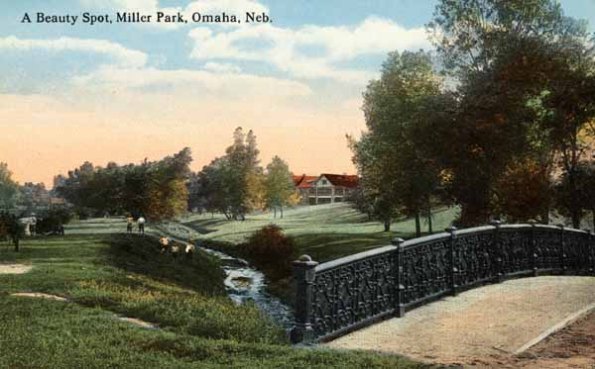
"A Beauty Spot, Miller Park, Omaha, Neb."


North Omaha contains some of the metro’s oldest, most compelling history. Long established neighborhoods, parks, boulevards, buildings and other public spaces have roots in diverse peoples and events that helped shape the city. Despite this rich heritage, mass media depictions tend to emphasize a narrow, negative view of North O as a problematic place of despair and neglect.

Problems exist, but North O has been a place of great aspirations and successes. One of its historic main drags, North 24th Street, has inspired many names. Jews called it the Miracle Mile. African-Americans dubbed it the Street of Dreams. More informally, it went by the Deuce or the Deuce Four. Other districts within North O, such as Florence, Benson and Dundee, each have their own vibrant histories. These neighborhoods, along with the North 24th and North 30th Street corridors, are undergoing major revivals.

North O’s history extends way back:

A  Great Plains army installation, Fort Omaha, was the site of an historic ruling about the nature of man was rendered in the Trial of Chief Standing Bear. The fort’s grounds are now the main campus for Omaha’s fastest growing higher education institution, Metropolitan Community College, and for the Great Plains Theatre Conference. An annual pow wow is held there.


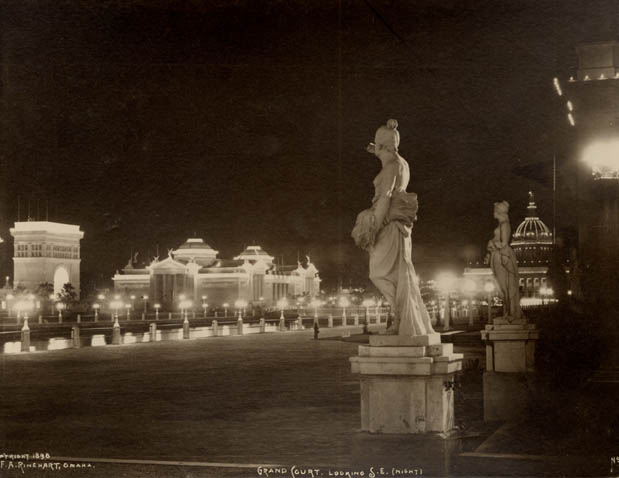
The Trans-Mississippi and International Exposition brought the nation and world to this once frontier outpost turned fledgling city. The Trans-Miss site is where Kountze Park and many stately homes stand.

Pioneering Mormon families trekked to and encamped in what is now North O. They later disembarked there for far western travels to the Great Salt Lake. Area Mormon artifacts and historic sites abound.

Diversity may not be the first thing you think of when it comes to North O, but it is a blend of many different peoples and places. A wide range of immigrants and migrants have settled there over time. Jews, Italians, Germans, Irish, Africa-Americans, Africans, Asians, Hispanics.


Its strong faith community includes a wide variety of Christian churches, Some of the churches have rich histories dating back to the early 20th century. Many older worship places have undergone restoration. Several buildings in North O own national historic preservation status, including the Webster Telephone Exchange that later saw use as a community center and the home of Greater Omaha Community Action until James and Bertha Calloway used grant money to convert it into the Great Plains Black History Museum.

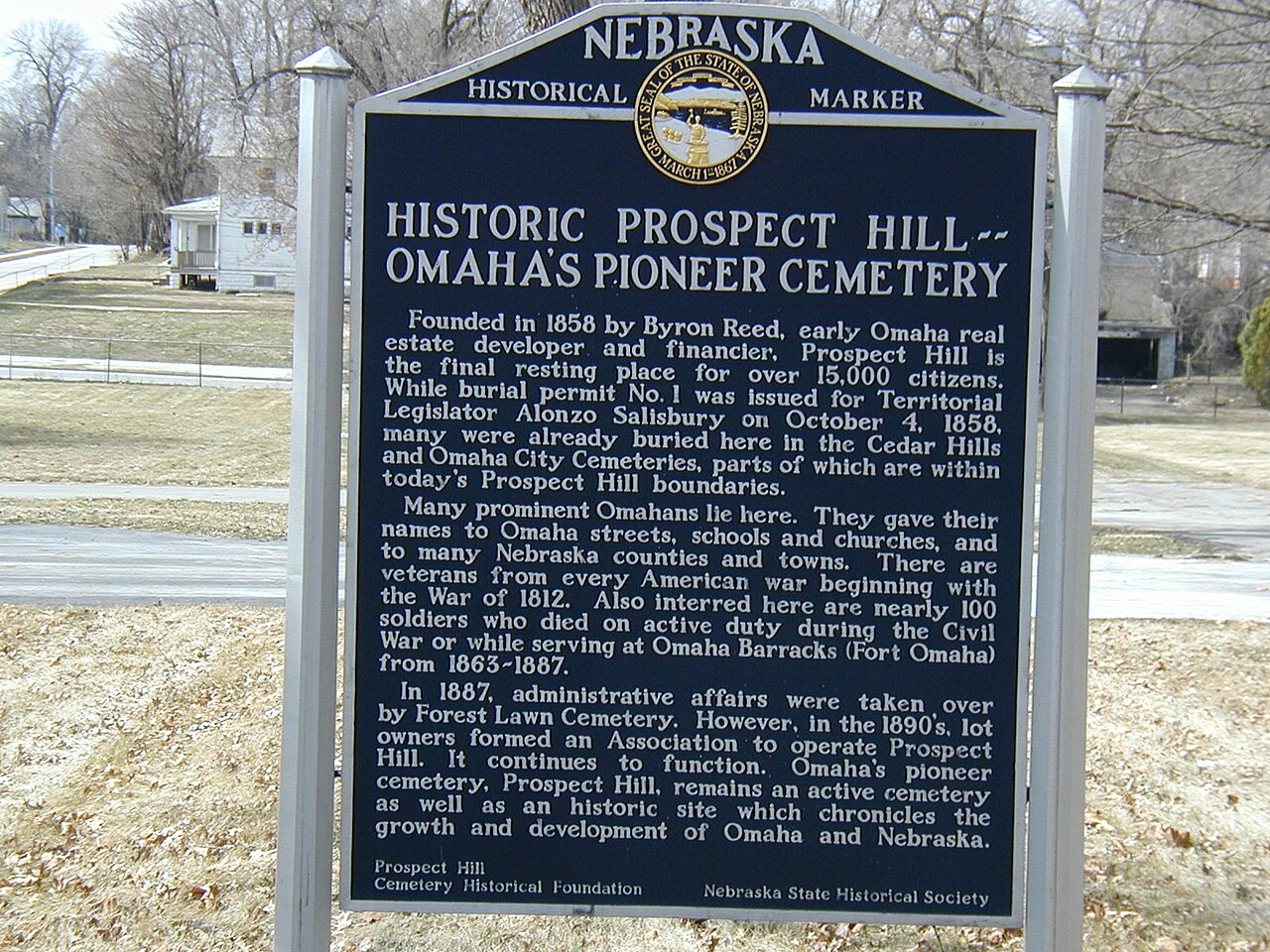
Among the historic spots to visit in North O are Prospect Hill Cemetery where many city founders are buried, and the Malcolm X Memorial Birthsite where slain social activist Malcolm X was born Malcolm Little.

African-Americans built a strong community through their toil as railroad porters and packinghouse workers and through their education in all black schools. North O encompassed a leading vocational school, Technical High. The district continues to support quality public and private elementary schools and public secondary schools. It is home to one of the Midwest’s top post-secondary institutions in Creighton University and to a thriving community college in Metro.


North O is also home to some of the city’s oldest, most distinguished neighborhoods, including Dundee, Benson, Bemis, Gold Coast, Cathedral, Walnut Hill, Kountze Place, Minne Lusa and Florence. Blacks were denied the opportunity to live in many of those neighborhoods until discriminatory housing practices ended.

Bounded by the Missouri River on the east. 72nd Street on the west, Cuming-Dodge Streets on the south and Interstate 680 on the north, North O is a varied landscape of attractive flatlands, hills, woods, parks and tree-lined boulevards. There are promontories and overlooks with stunning views of the bluffs across the river and of downtown.

The area’s fertile soil has produced notables in film (Monty Ross), television (Gabrielle Union), theater (John Beasley), music (Buddy Miles), literature (Wallace Thurman, Tillie Olsen), media (Cathy Hughes), sports (Bob Gibson), finance (Warren Buffett), politics (George Wells Parker) and social activism (Malcolm X). It is where the interracial social action organization the De Porres Club made equality stands a decade before the civil rights movement. Black plaintiffs later forced school integration in the public schools.

North O hosts long-lived and proud chapters of the NAACP and the Urban League as well as dynamic local affiliates of the Boys and Girls Club, YMCA, Campfire and Girl Inc.

The area does have high poverty pockets but it’s home to hard-working people, many with higher education and vocational training. It encompasses blue collar and white collar professionals, laborers, entrepreneurs and grassroots activists. It is a community of families, neighborhoods, small businesses and major manufacturers.


The ties that bind run deep there. For decades Native Omaha Days has brought together thousands from around the country for a week-long slate of events reuniting former and current residents who share North O as their birthplace and coming of age place.

The infrastructure of this inner city does have its challenges. There is still a disproportionate number of substandard houses, abandoned homes. vacant lots and food deserts. But an influx of projects is adding new residential units and commercial properties that are putting in place stable, sustainable improved quality of life features.

North O is the wellspring and nexus of strong community revitalization efforts such as those of the Empowerment Network, Omaha Economic Development Corporation, Family Housing Advisory Services and Omaha Small Business Network working to strengthen the community.

Redevelopment underway in northeast Omaha is in direct response to decades of economic inertia that set in after civil disturbances laid waste to the historic North 24th Street.hub. Urban renewal also severed the community, thus disrupting neighborhoods, creating isolated segments and diverting commercial development.


There was a time when North O possessed all the amenities it needed. Back in the day the dynamic entertainment scene acted as a launching pad for talented local musicians and a stopover for top touring artists. It was a destination place with its clubs, bars and restaurants featuring live music. Some of that same spirit and activity is being recaptured again. Harder to get back might be all the professional services that could be had within a few blocks but as more people move back to North O and set up shop, that could change, too.

Today’s revitalized North 24th mirrors similar community building endeavors on North 30th, North 16th, the Radial Highway, Ames Avenue, Hamilton Street, Lake Street, Maple Street and elsewhere. Business thoroughfares and residential blocks pockmarked by neglect are starting to sprout new roots and roofs.

An anchor through it all has been the Omaha Star. It continues a long legacy as a black woman owned and operated newspaper that gives African-Americans a platform for calling out wrongdoers in the face of injustice and celebrating positive events.

Decades before the Black Lives Matter movement, vital voices for self-determination were raised by North O leaders, including Mildred Brown, Whitney Young, Charlie Washington, Ray Metoyer, Dorothy Eure and Ernie Chambers. No one’s spoken out against injustice more than Chambers. He’s been a constant force in his role as a legislator and enduring watchdog for the underdog. His mantel is being taken up by dynamic new leaders such as Sharif Liwaru and Ean Mikale.


Fair Deal Village MarketPlace, N. 24th and Burdette Streets, North Omaha, Nebraska

Marlin Briscoe: The Magician Finally Gets His Due

December 27, 2016 1 comment

Marlin Briscoe has a story straight out of Hollywood and so it’s only right that a major motion picture about his life is in the works. The Omaha native made history on the field by becoming the first black starting quarterback in the National Football League but he achieved an even greater feat off the field by recovering from a serious drug addiction he developed after retiring from the game. The title of the soon to start production film “The Magician” comes from the nickname Briscoe was given during his legend-in-the-making collegiate career at then-University of Omaha when he’d improvise plays in the broken field with his arm, legs and head for big gainers and touchdowns. He played much the same way the one and only year he was given a chance to play quarterback in the NFL. Undeterred when teams denied him the opportunity to play signalcaller again, he made himself into a top-notch wide receiver who won All-Pro honors with the Buffalo Bills and back to back Super Bowls with the Miami Dolphins. All through his NFL caereer he encountered obstacles and he took them all on and won, including an anti-trust lawsuit. But the biggest fight of his life lay ahead and he licked that, too. At the time Briscoe made history and overcame his demons, little was made of it, but in the ensuing years more and more recognition and love have come his way, includng induction in the College Football Hall of Fame. The movie should help cement his case for eventual inclusion in the Pro Football Hall of Fame. My new Omaha Magazine (http://omahamagazine.com/) story about Marlin touches on these and other threads of his life.

Link to more Marlin Briscoe stories I’ve written at–
https://leoadambiga.com/?s=marlin+briscoe+

Link to my Omaha Black Sports Legends series at–


briscoe-cover

Marlin Briscoe

The Magician Finally Gets His Due

December 22, 2016
©Photography by Contributed
Appearing in the Jan/Feb 2017 issue of Omaha Magazine (http://omahamagazine.com/)

Omaha native Marlin Briscoe made history in 1968 as the NFL’s first black starting quarterback. His success as a signal-caller carried huge symbolic and practical weight by disproving the then-popular misconception that blacks lacked the intelligence and leadership to play the position.

The same racist thinking not only applied to quarterbacks but to other so-called thinking-man positions on the field (center, safety, middle linebacker) and on the sidelines (head coach, general manager).

briscoe4Even in those racially fraught times, Briscoe’s myth-busting feat went largely unnoticed. So did the rest of the story. After overcoming resistance from coaches and management to even get the chance to play QB, he performed well at the spot during his rookie professional season, never to be given the opportunity to play it again. That hurt. But just as he overcame obstacles his whole life, he set about winning on his own terms by learning an entirely new position—wide receiver—in the space of a month and going on to a long, accomplished pro career. He made history a second time by being part of a suit that found the NFL guilty of anti-trust violations. The resulting ruling, in favor of players, ushered in the free agency era.

After retiring, Briscoe faced his biggest personal hurdle when a serious crack-cocaine addiction took him to the bottom of a downward spiral before he beat that demon, too.

Now, nearly a half-century since making history and a quarter-century since regaining sobriety, Briscoe’s story is finally getting its due. His 2002 autobiography spurred interest in his tale. Major media outlets have featured his story. Modern-day black quarterbacks have credited his pioneering path, and several lauded him in video tributes played at an event titled “An Evening with the Magician,” held in his honor in September at Omaha’s Baxter Arena. A life-size statue of his likeness was dedicated at the tribute event. Also in the fall of 2016, he received the Tom Osborne Leadership Award. In December he was enshrined in the College Football Hall of Fame.

Now, he’s preparing to watch actor Lyriq Bent portray him in a major motion picture about his life, The Magician, set to film this spring.

If the movie, produced by his old Omaha University teammate-turned-actor John Beasley, is a hit, it will bring Briscoe’s role as a civil rights soldier to a much wider audience than ever before. Now in his early 70s, Briscoe fully appreciates all that has led up to this moment. He has no doubt he’s ready for whatever may come. Growing up in South Omaha’s melting pot, no-nonsense mentors and peers steeled him for life’s vagaries. Fierce competition toughened him.

“The training I grew up with was the best training any young man or woman could have,” Briscoe says.

On playing fields and courts, in streets and classrooms, he found an inner resolve that served him well through life’s ups and downs.

“That’s where I learned resilience—from my mom, my sister, and all my mentors, and neighbors. They all had this type of mentality and grit. It rubbed off on me and some of the kids I grew up with. It prepared me for anything. If I had not learned core values from growing up where I did, the things I did, the obstacles I overcame would never have happened.”

His cousin Bob Rose and Baseball Hall of Fame pitcher Bob Gibson’s oldest brother Josh Gibson were among a cadre of local coaches who inspired youngsters of Briscoe’s generation. 

briscoe1

“You had to go through them if you wanted to do something wrong, and you didn’t want to go through them,” Briscoe says. “Our mentors were down at the Northside Y, at Kellom School, Kountze Park, St. Benedict’s. They cared about where we were going in life.”

When Briscoe was bullied as boy, Rose gave him a “magic box” filled with the tools of various sports—a baseball, football, basketball, and boxing gloves—with the admonition that if he mastered these, he wouldn’t be bothered. He did and wasn’t. The magic box became the gateway for the Magician to do his thing.

Briscoe grew up respecting adults, all adults, even winos, hustlers, and prostitutes.

“They told you to do something, you did it, and went on about your business,” he says.

He conducted himself in a way that in turn earned him respect as a young leader. Virtually all the athletic teams he played on growing up consisted primarily of white players, which meant his entire athletic life he was advancing diversity. Long before he found immortality with the Broncos, he was the first black quarterback on youth teams, at South High, and then at Omaha University (now known as UNO).

Though he lived in South Omaha, Briscoe made a point of going to the proving grounds of North Omaha, where there were even more great athletes and a particular endurance test and rite of passage.

“Off Bedford [Avenue] by Adams Park, there used to be The Hills. It was like the barrier and motivational place where top ballplayers like Gale Sayers and myself would go and work out. Sometimes, I would be up there early in the morning by myself running those hills. I always tell young people today, ‘It is what you do when nobody sees you that defines and determines your work ethic and how you will turn out.’

briscoe3

“There were plenty of guys with more ability than myself—who were bigger, stronger, faster—and while they worked hard when eyes were on them, they slacked off when they were alone. A lot of guys who never made it regretted not putting out the effort to match their ability.”

Briscoe might never have made history if not for some good fortune. He started at quarterback for Omaha University his sophomore and junior years, putting up good numbers and earning the nickname “Magician” for an uncanny ability to escape trouble and extend plays with highlight reel throws and runs. Just before what was supposed to be his senior year, 1966, he got undercut in an all-star basketball game at Bryant Center and took a hard spill. He went numb and was rushed to the hospital, where doctors decreed he was injury-free. He started the ’66 season football opener versus Idaho State with no ill effects. He had a monster game. Then, late in the contest, he took a hit that caused his neck to swell. When rushed to the ER this time, X-rays revealed a fractured vertebra. He’d competed with a broken neck.

Doctors told him his days playing contact sports were over. He accepted the harsh news and dived into his studies, ready to move on with life sans football. Then during a medical checkup, tests confirmed his bones recalcified, and he was cleared to play again. He got a medical hardship waiver from the NAIA and went on to have a huge senior season in 1967, earning small college All-American honors and getting picked in the 14th round of the NFL draft.

He’s convinced he wouldn’t have taken snaps in Denver, which drafted him as a defensive back, if he hadn’t negotiated his own contract to include a clause he be given a three-day tryout at quarterback. He so dazzled the media and the public during the open practices that once the season began and Denver QBs went down due to injury or were benched for poor play, he got his shot and ran with it.

Briscoe’s larger-than-himself magic enabled him to make history in a crucible year for America—a year of riots, anti-war protests, assassinations, and civil rights struggles.

“For some reason, divine intervention maybe, it just seemed the stars were aligned in 1968 for a black man to break the barrier at that position,” he says. “It just seems 1968 was the pivotal year for all African-Americans, for all Americans period. For me to do it in ’68 is just eerie, the way that happened.”

So much of his NFL experience, he says, involved fighting “injustices.” Released by Denver and denied playing quarterback again, he excelled at a new position. Blackballed by the league for challenging its power, he won a hard-fought battle for himself and fellow players.

He insists he was not resentful for being shortchanged at quarterback.

“I wasn’t bitter, I was disappointed,” he says. “When you’re bitter, you give up, you take all this stuff personally, and you quit. I tell young people, ‘You’re going to have disappointments, and you’re going to be treated unfairly, but you can’t be bitter about it.’ Instead, you roll up your sleeves and fight whatever negative things come your way. Plan A doesn’t work? You go to Plan B. Life is just that way.”

Only after walking away from the game to be a broker in Los Angeles did he meet a foe—crack cocaine—that got the better of him. Before his recovery, he lost everything: his home, his fortune, his family. 

briscoe5“Here I was on a park bench trying to get some sleep in the heart of L.A. after owning homes and property,” he says.

What was so maddening about it is that he had done everything right. “It was not like I left the game with nothing,” he says. “I left the game correctly, sitting on easy street. I had wise investments. I prepared to leave the game by going to school and getting additional degrees. I was not hurt. I was in perfect physical condition.”

But in the vacuum of his post-athletic life, without the daily disciplines of workouts and team dynamics, he slipped into an unhealthy lifestyle.

“I let my guard down. I wasn’t really prepared for the L.A. scene because my whole life was always about precision, being responsible,” he says. “Then, when I didn’t have to meet all these different obligations and being single, I wasn’t rooted in one direction—I was just partying. You know, bring it on.”

No one who knew Briscoe before could believe he was in the grip of something that controlled him so completely, least of all himself.

“I had been a player rep. I was the one they always came to just as I was when I was a kid. I was the one people always came to for sage advice. And I never did drugs in the NFL,” Briscoe says.

But there he was, enslaved to a habit he couldn’t kick. Through it all, even losing his Super Bowl rings as collateral for a bank loan, he never forgot who he was inside and what he had done. Though homeless, penniless, and stuck in a jail cell when Doug Williams became the first black quarterback to lead a team to an NFL title, Briscoe felt he shared in that victory, too.

“I felt proud on one hand, and disappointed in myself on the other hand,” he says.

He sank lower than he ever thought possible, but he came back to whip that challenge, too: “The thing is, I always knew I would let go of that descent. I always knew and prayed I’d get back to that person all Omaha knew as this accomplished individual who conquered the NFL and enjoyed all these triumphs. The people that knew me are so elated now I’ve overcome my post-career meltdown because I had been a champion for them, fighting the NFL. I was always fighting for them and fighting for myself. I put myself in positions as a player where my voice could be heard.”

Even though it was decades ago, he believes defying and defeating the NFL’s monied interests left a blemish on his career that got further stained when he was traded several times as persona non grata.

“I’m not bragging or anything, but if I had been any other player, I guarantee you, I’d have been in the NFL Hall of Fame a long time ago. Nobody had ever done it—making history as the first black starting quarterback. People don’t realize I was also the first black holder on extra points. Counting cornerback and wide receiver, I played four different positions in the NFL, and I’m not sure anybody did that before. Then you add in the fact I made All-Pro as a receiver within two years of switching positions and went on to win two Super Bowls.”

Efforts are underway to rectify his absence as a Canton inductee via a write-in campaign to the Hall’s Veterans Committee.

Just as Briscoe wasn’t bitter about being shut out from playing quarterback after his rookie year, he wasn’t bitter that other blacks followed him into the league at that position.

“If I had not succeeded in 1968, James Harris would not have gotten drafted by the Bills as a quarterback out of Grambling in 1969. If I would have failed, they would have brought James in as a tight end. But the fact I was a litmus test and succeeded, they could take a chance on a black quarterback, and James was drafted.

“Ironically, he and I ended up being roommates in Buffalo. We knew each other’s plight. We would have conversations after practice. I would tell him different things that were going to happen to him and to be prepared for them.”

While Briscoe is known as the first black starting QB, another black man, Willie Thrower, briefly got into two games as a QB with the Bears 15 years before Briscoe’s experience with the Broncos. High off his rookie year success, Briscoe had a chance meeting with Thrower in Chicago. The two men hit it off.

briscoe6Briscoe, Harris, Doug Williams, and Warren Moon have formed an organization called The Field General that uses the still-exclusive legacy of the black quarterback to educate and inspire young people. Blacks still comprise but a fraction of the professional QB ranks. The same is true of head coaches, coordinators, and general managers. That fact, combined with the journey each man had to make to get to those rarified places, reveals just how far the nation and league still have to go.

Never in his wildest dreams did Briscoe imagine his story would get so much attention this many years after he played.

“It just goes to show that, if you never give up, a lot of these things will come your way. Sometimes things come late, like this movie project about my life,” he says.

Briscoe says he only agreed to let his story be told in a movie if it stayed true to who he is and to what happened.

“It’s not for self-gratification,” he says. “It’s hopefully as an inspiration for others that you can overcome any obstacle if you really want it. I look back on my life and see what it can do for others. It’s not just a football movie. If it were, I probably wouldn’t be a part of that interpretation of my life. My life is a lot more than just football.”

He’s sure the movie’s message of “if you never give up, you’ve got a chance” will resonate with diverse audiences. He’s proud to be living proof that anything can happen when you keep fighting.

Visit marlinbriscoemovie.com for more information.


Pot Liquor Love: Soul food eatery Omaha Rockets Kanteen conjures Negro Leagues past and pot liquor love menu

November 17, 2016 2 comments

Don Curry banks on his “healthy” version of soul food catching on at his niche Omaha Rockets Kanteen and Southern Pitch food truck. His niche concept is wed to a Negro Leagues baseball passion that permeates his brick and mortar and mobile eateries.  Follow my Pot Liquor Love food blogging at leoadambiga.com and on Facebook at My Inside Stories. And since food and movies are such a good pair, remember to follow my Hot Movie Takes on the same two social media platforms.

©by Leo Adam Biga

Appearing in November 2016 issue of The Reader

Pot Liquor Love:

Good Memories and Good Eats

Soul food eatery conjures Negro Leagues past and pot liquor love menu

IMG_9176.jpg

Small but mighty group proves harmony can be forged amidst differences

November 14, 2016 3 comments

Small but mighty group proves harmony can be forged amidst differences

This fall marks the 30th anniversary of an all black congregation and an all white congregation merging to form a new racially diverse house of worship in North Omaha called Church of the Resurrection, Omaha. That’s right, blacks and whites set aside their fears and differences for the greater good in one of the most segregated cities north of the old Mason Dixon Line in order to create just what its motto reads:

“We are a diverse family united in God’s love.”

Two episcopal churches on the North Side – all white St. John’s and all black St. Philip’s – found themselves struggling by the early 1980s. The writing was on the wall: find an infusion of new members or close. Neither church wanted to call it quits but going it alone offered little hope. Each had a dwindling membership dying off or moving away. That’s when the neighbor churches began exploring the possibility of combining congregations and founding a brand new Episcopal house of prayer that not only embraced diversity but that depended on it for survival.

This union didn’t happen overnight or without distrust and acrimony. To test the waters, the congregations shared some services and activities together. When those experiments in worshiping and doing fellowship together went over well, the two groups then proceeded to formalize the coupling under the new organization and name. As with any change in affiliation and leadership, there were some hurt feelings and defections. Traditions and practices from each former church had to be integrated into the new entity without favoring one or the other. Naturally, there were disagreements and compromises and not everybody who started with Church of the Resurrection remained there. But COR, as the church goes by for short, survived and even thrived through the transition. COR is still going strong three decades later. The small congregation is still mixed, though its black numbers have decreased due to attrition. But on any given Sunday should you visit you will see for yourself this, for Omaha, historic blending continues.

COR’s diversity is intentionally embedded and reinforced in its culture because the church’s very existence and ethos are predicated on folks of different persuasions doing praise and worship together and breaking bread together. In this time of division, fear and anger, much of it raclalized, Church of the Resurrection is a beacon of hope and light for the truth that differences can be overcome or surmounted where there is love, respect and willingness to meet your fellow man half-way. It takes a commitment to talk things through and to hear each other out. You may still not agree or see eye to eye on things, and you may not end up in the same pew on Sunday, but in making an authentic connection you will have humanized The Other and broken down another wall or barrier to understanding.

This has been happening at COR since 1986. Its tight church community is far from insular though and is in fact inclusive in the peace greeting that unfolds during service, in the fellowship that happens after service, in the Thanksgiving dinner, Soul Food Sunday, Annual Fish Fry, neighborhood block party, pantry, holiday meal and gift baskets and many other community outreach events, programs and services it provides. Everybody is always welcome.

I can speak from personal experience about COR because I have been semi-regularly attending there for about 15 years. My late life partner Joslen (Johnson) Shaw brought me to the church, She had grown up in St. Philips and she and her family stayed through the merger. Her mother Juanita Johnson is a deacon there today. My present life partner, Pamela Jo Berry, and I split our Sunday worship time between COR an her church, Trinity Lutheran. They are about two blocks apart on North 30th Street opposite Miller Park. Both churches are venues for the Arts Crawl that happens each August as part of Pam’s North Omaha Summer Arts.

Below is a link to a story I did several years ago about the formation of Church of the Resurrection and of another blended church in North Omaha, New Life Presbyterian, whose members include my dear friends Nola Jeanpierre and Carole Jeanpierre.

Both churches are filled with giving hearts and gentle spirits of people who are black and white, rich and poor, and where the only qualification for entrance is a desire to love and be loved.

LINK TO THE STORY HERE–

Two blended houses of worship desegregate Sunday: Episcopal Church of the Resurrection and New Life Presbyterian are houses undivided

OR READ IT RIGHT HERE–

This story is personal.  I occasionally attend an Episcopal church in north Omaha that was formed by a merger of two previous churches, one with an all-black congregation and one with an all-white congregation.  This blending had its ups and downs at first but the church has survived and a couple decades later it is a model of multicultural, interracial harmony. It’s called Church of the Resurrection.  A similar story resulted in the formation of New Life, a blending of two north Omaha Presbyterian congregations, one white and one black, and like Church of the Resurrection it remains an intact interracial house of worship.  The reason I attend Church of the Resurrection is that my girlfriend and her mother attend there.  The people are warm and welcoming to newcomers.  I am Catholic and I have never felt out of place there or pressured to be something I’m not.  When I discovered the history behind the church I knew I would one day want to write about how it came into being, and that’s what prompted the article here.  The piece originally appeared in The Reader (www.thereader.com).

Two Blended Houses of Worship Desegregate SundayEpiscopal Church of the Resurrection and New Life Presbyterian are Houses Undivided

©by Leo Adam Biga

Originally published in The Reader (www.thereader.com)


Martin Luther King Jr. scornfully observed that 11 o’clock Sunday morning “is the most segregated hour in this nation.” His indictment rings as true today in worship places as 50 years ago.

Organized, affiliated Christian churches are historically houses divided regardless of location or denomination. Witness Omaha, where defacto segregation is reinforced by geographic racial lines. With rare exceptions whites and blacks exclusively attend their own churches. That’s true even when a white congregation and black congregation of the same religious organizationare within close proximity.

The difficulty of achieving a racially mixed congregation is evident by the story of Augustana Lutheran Church in Omaha. The documentary A Time for Burning portrayed the upset that even timid attempts at interracial outreach caused within white Augustana in the mid-1960s. The film and a CBS news special about it elicited national discussion. The congregation underwent a self-study to examine their hearts. Augustana responsed to its neighborhood’s increasing African-American presence through outreach programs. Despite all this, the church has had little or no success in attracting black members. Why that should be so there and at many other churches is hard to answer without looking at the past.

Given America’s racial history, whites could always attend black churches without repercussions. Few did. Blacks attending white churches were made to feel unwelcome. Manifestations of this exclusion were designated inner-city Catholic, Episcopal, PresbyterianMethodistBaptist churches set aside for blacks.

Anymore, it’s not about being banned, barred or shunned. There’s more inclusion today. Chalk it up to enlightenment or political correctness. Of course, anything smacking of racism may generate a lawsuit or a YouTube-Facebook-Twitter campaign. Independent, nondenominational churches are most likely to be mixed. Without a compelling reason to integrate, most churches remain segregated because it’s easier to remain in their comfort zone.

Circumstances can lead two racially-defined, old-line churches to unite as one. It happens when they fall on hard times. Rather than move or close, they merge. Often, these unions fail. Even when they work, it’s by no means a smooth ride. Two successful Omaha inner-city blendings are Episcopal Church of the Resurrection, 3004 Belvedere Blvd., and New Life Presbyterian Church, 4060 Pratt Street.

Each was a marriage of convenience. When all white St. John’s and all black St. Philip the Deacon faced declining rolls in the ‘70s, members reviewed options and elected merger. It took effect in 1986 with Resurrection, housed in the former St. John’s building. The same scenario happened with Fairview and Calvin Memorial, only nominally white Fairview was already integrated and predominantly black Calvin resulted from a previous merger between black Hillside and white Bethany churches. New Life opened in 1991 in the former Fairview building. Calvin was one of two black churches that tried fellowship with Augustana.

By all accounts, New Life and Resurrection make multicultural diversity work. Challenges remain: each has only about 100 active members whose average is 60-plus; few members live in their church neighborhoods; the neighborhoods are rife with poverty and violence; physical plant needs persist; short budgets are stretched thin. But the journey of each church is a lesson in how we can heal the racial divide.

Sisters Johnice Orduna and Nola Jeanpierre share a unique perspective on both churches. Orduna, a licensed minister, attended Resurrection in the ‘90s and now serves as “a supply preacher” at New Life until a permanent pastor’s found. Jeanpierre grew up at Calvin, she experienced the birth of New Life, where she’s a member, and she’s now Resurrection’s choir director.

“I think the folks at New Life and Resurrection have made the decision, ‘We’re going to be here and we’re going to be together doing this regardless, and we’ll work through whatever it takes.’ If more congregations would do that then we wouldn’t have these rifts,” said Orduna. “We’ve gotta get past this business of Sunday being the most segregated day of the week. I think we have been convinced by society we can’t do it any differently, and it’s just not true. But we have to be intentional and we have to learn to respect that culturally we’re going to want to do some things differently, and that’s OK. I mean, it’s wonderful.”

Church of the Resurrection

A merger doesn’t just happen. “It’s a process,” said Orduna. “You have to be intentional, you have to be diligent, you have to commit.”

Member Pat Tooles said New Life “overturns the myth African-Americans and whites can’t worship together because they have two different worship styles.” Presbyterians, white or black, favor a sedate service light on emotional displays and heavy on orderly structure, although there’s some call-and-response at New Life.

Whether at the pulpit, in the pews, working on the building and grounds or breaking bread together, the people at New Life and Resurrection say they see how they are more alike than different. They view their differences as gifts not threats. They embrace their diversity as enriching, even branding their faith communities that way. Resurrection describes itself “…a culturally diverse family united in God’s love.” New Life’s mission statement begins, “We believe we are called to be a congregation of diverse backgrounds, ages and races…”

“I just think we have so much every day all the time to learn from each other,” said Orduna. “Sure, there are tiffs, but they’re not gamebreakers.”

Lesley Dean grew up in St. Philip’s at 26th and Binney. Her parents were active members. She moved away and once returned was “heartbroken” her beloved home parish was no more. In her absence the merger happened, She liked what she found at Resurrection.

“I immediately felt comfortable there. I felt like this was the next step of St. Philip’s, especially because of the blending of the two congregations. It just seemed natural. I think one of the things that made me be able to accept it and to go with the flow is because I lived in San Francisco for 20 years, so I had already experienced different cultures coming together and getting along. That wasn’t anything thing new to me. I thought it was great actually.”

She wasn’t there for the merger but knows it wasn’t all roses.

“I don’t think it was anything instantaneous,” she said. “That blending did not come along easily. It took a lot of work from my parents and all the other elders that came before me. They just worked very hard to build a sense of trust amongst the rest of the congregation. And I just think they all learned from that — from the bickering and whatever else was going on. When I came back it was just like, What was all that for? — let’s just start anew, we’re all human beings, we all deserve to be treated with respect and dignity. They just kind of formed that alliance. Then the generations that came after, like me, have just taken it a step further.”

Deacon Juanita Johnson was there. Coming from St. Philip’s, she confirmed Resurrection’s first years saw conflict. Disputes arose over the racial composition of lay leadership roles. Any hint of favoritism took on a racial slant.

“At that time it was very important to keep everything racially balanced because there were people from St. Philip’s that weren’t completely on board with the merger,” she said, adding the same was true with some from St. John’s.

There was also resentment from St. Philip folks over sacrificing their building for the move to St. John’s.

A black splinter group alleged racism against Resurrection’s first rector, Rev. John Nelson, who was white, and against the local Episcopal diocese’s all-white administration. A national consultant was brought in to get people talking. Some folks left — black and white — but the core remained. New membersof both races joined.

“The people that stayed wanted it to work,” said Johnson, whose experience told her it could. As a University of Nebraska-Lincoln student in the late ‘40s she and fellow black students were denied admittance to campus dormitories. They resided instead at International House, where they lived harmoniously with students from Europe, Asia, et cetera. She also did interracial outreach while a Fisk University student in Nashville, Tenn. with students from nearby white colleges.

“I had that background, so I knew it could work.”

Resurrection’s long past how many blacks-whites serve on the vestry. Those things work themselves out. St. Philip’s took a sense of ownership by incorporating elements from their old church, such as stained glass windows and candles, into the Resurrection sanctuary. A more vital music liturgy of gospel, spirituals, even jazz, was introduced. A popular fish fry St. Philip’s held was adopted.

Tim and Cheri Oelke got married at St. John’s. They left long before the merger.  Then they visited Resurrection and were hooked by the “inspirational” black hymns. The couple are the last St. John’s members left there. For Cheri, the spirit of the place is not an edifice, an icon or an event. “It’s not in the building as much as it is the people. I think the reason we want it to work now is that we all care about each other, and if we do it in this building or if we have to do it in another building we want to worship together. Bonds have been formed, friendships have been formed, and we feel like we’re all a family.”

Helping ease the transition were shared Lenten worship services and other events St John’s and St. Philip’s hosted prior to merging. Still, old habits die hard.

“For a long time it was just the two churches worshiping at the same time in the same building but still two identities,” said Resurrection’s new rector, Rev. Jason Emerson, who previously served as an intern and curate there. Tim Oelke said, “It’s the Church of the Resurrection now, it’s not St. John’s. St. John’s was certainly special but that’s in the past.”

New Life’s tribulations were similar. Former Fairview member Janet Decker recalls a meeting where Bernard Grice voiced Calvin’s concerns. “He got up and said he hoped we didn’t do the same thing the whites did at Bethany, which was disappear.” She said Fairview’s integrated ranks avoided that. “We had only one family who decided not to continue to come — absolutely everyone else stayed. We didn’t have this feeling of giving up a thing. We were gaining. We knew if we were going to survive we needed to merge. We’re very comfortable with each other.”

Change was more traumatic at Calvin, not due to race but turf. “There were a lot of hard feelings. It was like giving up our church,” said Nola Jeanpierre. Calvin members like she and Michael Maroney did abandon their beautiful building at 24th and Wirt. “It was not an easy or smooth transition inside Calvin. There was a lot of contention in terms of how Calvin was actually dissolved,” said Maroney. “In hindsight, it probably went the way it had to go.” Those wounds healed.

Just as Resurrection eased into things pre-merger, New Life did. Joint worship services and soup suppers were held at Calvin and other events at Fairview “so the two congregations could be together and people could kind of get to know each other,” said Rick Rudiger, who belonged to Fairview. “You kind of have that courtship time. If you try to force it, you’ll probably fail.”

Carolyn Grice, whose father Bernard was a leader at Calvin, served with Rudiger on the merger committee. “We met weekly to start ironing out stuff. It pretty much started from scratch — what is it we want to see and then how are we going to get there. We had lots of disagreements but we’re all friends now,” said Grice. Rudiger said people tended to draw lines along Fairview or Calvin. “You had to reinforce it all the time of who we are — we’re New Life now, so let’s move on. Change is hard for everybody. Some accept it. For some it’s very difficult. The way you have to deal with change is you do things a little at a time.”

Jeanpierre said it’s imperative to “come in open-minded and ready to work together and not to exclude anyone, not to remove anyone from a post or role. You’re talking about a marriage, about one family meeting the in-laws and basically trying to make everything work for both in-laws, so that the family as a whole and on both sides can come together and find a common ground.”

After a few interims New Life’s first full-time pastor helped solidify things. “We had a strong female minister who kind of got us turned around and really focused on becoming New Life,” said Rudiger. “I would say overall we really have grown strong. I don’t think there’s too much thought even of what Fairview used to do or what Calvin used to do — it’s what’s New Life’s doing.”

Decker said there’s appreciation for what each faith community contributed. “There’s a lot of things we do now because that’s what they brought with them (from Calvin).” That includes spirituals. On a more practical level, she said, “they brought the numbers (more members) and we had the place.”

Ruth York, who came over from Calvin, said “those of us that have seen it through have been through quite a bit, financially and so forth,  but we’ve stayed strong and stuck together like a family, and we’re stronger for it.”

Just as New Life is on its second generation, Resurrection is, too. Lesley Dean feels a legacy calling.

“I have really worked hard to make sure some of the traditions of St. Philip’s continue on, like our Black History month celebration and the fish fry named after my dad. Myself and some others have tried to make sure our African-American culture was not lost in the merger. We still needed an identity and the St. John’s people were willing to embrace that.”

Dean said sensitivity makes all the difference.

“That’s how people get along. Ignorance is I believe why we have so much discrimination and racism in society because people don’t take the time to learn about each other. I just really feel Church of the Resurrection is a family. We are accepting and welcoming of every one and there’s a genuineness to that acceptance — it’s not just for show or not just for money.”

Richard Artison and his wife were St. Philip’s members and then moved away for his career. Once back, they went church shopping before settling on Resurrection.

“We’ve been to some churches that were very cold and impersonal and you feel like a number and we’ve gone to churches where nobody would speak to us. Just got ignored. This church has a lot of warmth and a lot of love. We like it,” he said.

Emerson’s proud his church is so inviting.

“The least worry I ever have at this congregation is that somebody new will walk through the door and not get spoken to. That just does not happen. They’re going to get spoken to. They’re going to get greeted, they’re going to get welcomed and I don’t have to do anything to make that happen. Other congregations, you have to work at that, it’s not as ingrained in their nature. It’s a problem in Episcopal churches churchwide, and that’s not the case here.”

He said Resurrection’s open mat, Sunday social hour/lunch and ministries targeting the underserved — including an after-school program, an emergency pantry, a transitional living site — reflect the church’s origins.

“I firmly believe this congregation’s history has led them uniquely to a high level of hospitality and I don’t know mean they just put on a good food spread, which they do. That attitude, that desire, that passion for outreach and justice comes from the two churches melding and the level of hospitality they had to practice to each other to come together and become one parish.”

He said Resurrection’s reputation for tolerance is why it’s a player in the Tri-Faith Initiative for a shared Episcopal-Jewish-Muslim campus.

Dean senses Resurrection’s come a long way in the eyes of a diocese that’s been slow to accept it. “For the longest time we felt they looked down on us, they didn’t want to participate in any activities we were doing, basically because we’re in north Omaha and the media portrays north Omaha as this horrible place. Our congregation has fought really hard to change that image, and it’s working. Some of the other diocesan churches are now participating in some of our ministries, so that’s a good feeling. We’ve got a lot further to go, but it’s a beginning.”

New Life’s at-risk kids mentoring program continues the legacy of the two socially conscious churches preceding it. Fairview ran Head Start and Project Embrace prpgrams. Calvin was active in youth job/leadership training and civil rights.

Orduna said the unity embodied by New Life and Resurrection “has the possibility to create a strong, trustworthy identity that could really be powerful force in bringing this whole neighborhood back to God.” Artison said, “I think church is the one place where we should come together. I think we’re an example for others.” Decker said churches that resist diversity “don’t know what they’re missing.”


Diversity finally comes to the NU volleyball program

November 14, 2016 1 comment

Briana Holman
Photo Courtesy Stephanie Carpenter/Nebraska Communications


Diversity finally comes to the NU volleyball program

©by Leo Adam Biga
Kudos to the Nebraska volleyball program for finally joining the 21st century by building a diverse roster of student-athletes that includes African-Americans. Better late than never. For decades the Husker volleyball program has been elite but its rosters have been lily-white, with an occasional Asian-American player, but you would have to look long and hard to find a black girl on any of those teams going back to the early 2000s and even mid-to-late 1990s. That omission always seemed strange and awkward to me but became particulalry glaring the last decade or so as more and more of NU’s peer conference programs, going back to the Big 12 and now in the Big 10, as well as peer national programs featured rosters with one or two or three or more African-American players. I could never understand how a perennial NCAA title contending program that recruits nationally could find itself year after year devoid of even one black player. I mean, what are the odds of that? What if that happened in basketball or softball? Wouldn’t that be cause for concern or called out as something in need of redress or examination? But to my surprise I never heard or saw the situation broached by NU coaches, staff, players or by media covering the program or by fans supporting it. I am quite sure the situation would not have been tolerated or overlooked or pooh-poohed in a sport like basketball. So why was it different with the volleyball program? I expect because the program was so successful in continuing to vie for and win championships and to produce All-Americans and Olympians. Of course, there was a period of time where NU slipped competitively, not by much mind you, but fell behind its elite sister programs and experienced a title drought, clearly falling behind some programs that coincidentially or not did feature black players here and there. Then, out of the blue, LSU All American Briana Holman transferred to Nebraska, though she had to sit out a season, the very year NU returned to championship form. She was the first black player to my knowledge to play for the Huskers in at least 15 years. That same year a second African-American, Tiani Reeves, from Gothenburg, Neb. of all places, joined the team and sat out as a redshirt. As the Huskers look to defend their national title this year Holman has become, as expected, a key cog as a middle blocker and attacker. Reeves has seen only limited action but she possesses great promise for the future. Both players will take leadership spots next season as NU loses the dynamic and dominating Rolfzen twins. And now comes word that of NU’s 5 new signees for the 2017 recruitment class 2 are student-athletes of color and are in fact African-American: Jazz Sweet from Kansas and Chesney McClellan from Tennessee. (See the link below for info on these girls and the other signees).


Tiani Reeves 2243654

Tiani Reeves


Jazz Sweet
Jazz Sweet


This is a great if long overdue development for the program and for black girls playing volleyball in Nebraska and the greater Midwest. More and more African-Americans are playing the sport at a high level in club and high school programs and volleyball affords a great avenue and opportuity for college scholarships. The Omaha Starlings volleyball program has been a platform for several area girls, several black girls among them, to earn scholarships at mid-major colleges. Creighton has been ahead of this trend locally and has featured a number of black players the past few years, including a girl from Nebraska and another from Iowa. I can’t speak to why it took so long for black girls to find their way into the Husker program but I am glad it’s finally happened and has seemingly become a thing. I’m sure there wasn’t any intentional bias happening to not recruit black players but the perception from the outside looking in sort of made it seem that way when season after season the complexion of the team never changed to include a black face. That was a bad look for Nebraska. I’m just glad that the Huskers are now among the many teams embodying diversity and not just giving it lip service. You go, Briana and Tiani. You go girls. And can’t wait for Jazz and Cheesney to make a quartet where there used to be none.

Here’s the link to the story about the NU recruiting class that includes Jazz and Cheesney:
http://www.huskers.com/ViewArticle.dbml?DB_OEM_ID=100&ATCLID=211284120

Dope actress Yolonda Ross is nothing but versatile – from “The Get Down” to cinema cannibals to dog-eat-dog politics

October 18, 2016 2 comments

Dope actress Yolonda Ross from Omaha gave me some love for the new Reader (http://thereader.com)) article I wrote about her, her recurring role as a teacher in “The Get Down” and an inspirational teacher in her life–

“Hey Leo!! I saw The Reader. It looks great. Thanks for including the part about Mrs. Owens. She meant a lot to a lot of people. Thanks for the nice spread in The Reader.”

Just now featuring it on my blog, leoadambiga.com, where you can find several more pieces I’ve written about Yolonda as well as Gabrielle Union, John Beasley and dozens of other Omaha native screen and stage stars.

Love the photo of Yo going all glam. How about you? She’s that rare actress who can transform herself from role to role and go from high to low, serious to silly, hard to soft in a heartbeat.


Dope actress Yolonda Ross is nothing but versatile – from “The Get Down” to cinema cannibals to dog-eat-dog politics

©by Leo Adam Biga

Originally appeared in October 2016 issue of The Reader (http://thereader.com)

Thoughts on recent gathering of Omaha Black Sports Legends

September 29, 2016 1 comment


Thoughts on recent gathering of Omaha Black Sports Legends 

It is unlikely there will be another communion of Omaha Black Sports Legends like the one that happened on September 22 at Baxter Arena in Omaha. That’s because in a single room there were Omaha native greats of a certain age whose achievements in football, basketball and baseball saw them reach the pinnacles of their sports.

Just consider who was present:

Bob Gibson – Baseball Hall of Fame inductee, CY Young Award-winner, two-time World Series MVP and multiple All-Star with the St. Louis Cardinals

Roger Sayers – Elite sprinter and dynamic football player at the then-University of Omaha set school records in each sport

Marlin Briscoe – College Football Hall of Fame inductee, Small College All-American at Omaha University, NFL’s first black starting quarterback and member of two Super Bowl-winning teams

Ron Boone – Pro basketball “iron man” who led Utah to an ABA  title

Johnny Rodgers – College Football Hall of Fame inductee, Heisman Trophy Winner and member of two national championship teams at Nebraska

Who was not there:

Gale Sayers – College and Pro Football Hall of Fame inductee, All-American at Nebraska and All-Pro with the Chicago Bears

Mike McGee – All-American at Michigan and member of NBA title team with the Los Angeles Lakers

Don Benning – If not for illness that finds him living in a memory care facility, Benning,  the first African-American head coach at a predominantly white university, would have been there. Benning began the wrestling dynasty at UNO, where he was a mentor to many.

Bob Boozer – The late Boozer, who won both Olympic gold and an NBA title, would have fit right in with his fellow legends; as would have the late Marion Hudson, who not only integrated Dana College but set football and track and field records there that still stood six decades later.

And lest we forget, the late Fred Hare, the Omaha Technical High and University of Nebraska great, would have been right at home among his peers.


The fact that so many deserving figures were not there due to scheduling conflict, illness or death underscores the fact that these legends are leaving us and will continue leaving us as time marches on. Gibson, Sayers, Briscoe  Boone and Rodgers look great for their ages, but they are 80, 73, 70, 71 and 65, respectively. I mean, God grant them many more years but the fact is even these legends will eventually pass on to meet their eternal just reward. Yes, as unthinkable as it is, they will one day all be gone, too.

So, kudos to the committee that organized the An Evening with the Magician event for bringing all these gentlemen together for what could very well be the last time. Without this fitting tribute to one of their own, Marlin Briscoe, happening when it did it could have proved too late if left to some indeterminate time in the future.

That Omaha native film, TV, stage actor John Beasley served on the committee that made it happen was apt since he and Briscoe were teammates at then-Omaha U. and he is producing a major motion picture of Marlin’s life called The Magician.

What an experience it was to be in the presence of these guys who made history in their respective sports. All know and respect each other. Some grew up together. Some tested their abilities against each other. All learned lessons in the tight-knit  inner communities they grew up in that, as Briscoe said in his remarks that night, prepared them for the rigors of life. Their personal stories and life experiences have much to teach us. It was great that upwards of 200 Omaha Public Schools students were on hand to witness much of the evening. This is important local history they were exposed to.

More than a decade ago I had the distinct pleasure of interviewing these historic figures (minus McGee) and others for a series I wrote called Out to Win: The Roots of Greatness – Omaha’s Black Sports Legends. I personally look forward to catching up with the legends still living for a book I intend writing about their shared Omaha background and athletic success at the highest levels of their sports.

You can check out my series at–

OUT TO WIN – THE ROOTS OF GREATNESS: OMAHA’S BLACK SPORTS LEGENDS

Will the time come when more contemporary Omaha Black Sports Legends have the occasion to gather like their predecessors did Sept. 22? Will John C. Johnson, Larry Station, Randy Brooks, Kerry Trotter, Andre Woolridge, Ron Kellogg, Cedric Hunter, Keith Jones, Calvin Jones, Ahman Green, the Wrestling Olivers, Terence Crawford, Kenzo Cotton, and others find a reason to come together? Will they turn out to celebrate one of their own or to honor their shared roots? I don’t know. But here’s wishing they will – because they should. Not only for themselves, but for the community.

And what about the women? Maurtice Ivy, Mallery Ivy, Jessica Haynes, Angee Henry, Peaches James, Reshea Bristol, LaQue Moen-Davis, Brianna McGhee, Chloe Akin-Otiko and many more, have distinguished themselves through athletics. They deserve their due, too.

Thanks to Ernie Britt for being the driving force behind the Nebraska Black Sports Hall of Fame that does indeed recognize these figures and provide a forum for bringing them together.

Here’s hoping these celebrations continue happening. I would recommend that whenever possible sponsors be found to make these events free and open to the public so that more segments of the community can share in them. And wherever possible, students should be invited to these events. I also advocate that the stories of these and other high achieving African-Americans from Omaha and greater Nebraska be part of an ongoing curriculum in the Omaha Public Schools. Let’s not wait until these figures are gone, Tell these stories while these figures are still alive and cthey an visit classrooms and speak before school assemblies and be the suhject of programs like Making Invisible Histories Visible.