Archive
Omaha native Steve Marantz looks back at city’s ’68 racial divide through prism of hoops in new book, “The Rhythm Boys of Omaha Central”
Omaha native Steve Marantz looks back at city’s ’68 racial divide through prism of hoops in new book, “The Rhythm Boys of Omaha Central”
©by Leo Adam Biga
Originally appeared in The Reader (www.thereader.com)
America’s social fabric came asunder in 1968. Vietnam. Civil rights. Rock ‘n’ roll. Free love. Illegal drugs. Black power. Campus protests. Urban riots.
Omaha was a pressure cooker of racial tension. African-Americans demanded redress from poverty, discrimination, segregation, police misconduct.
Then, like now, Central High School was a cultural bridge by virtue of its downtown location — within a couple miles radius of ethnic enclaves: the Near Northside (black), Bagel (Jewish), Little Italy, Little Bohemia. A diverse student population has enriched the school’s high academic offerings.
Steve Marantz was a 16-year-old Central sophomore that pivotal year when a confluence of social-cultural-racial-political streams converged and a flood of emotions spilled out, forever changing those involved.
Marantz became a reporter for Kansas City and Boston papers. Busy with life and career, the ’68 events receded into memory. Then on a golf outing with classmates the conversation turned to that watershed and he knew he had to write about it.
“It just became so obvious there’s a story there and it needs to be told,” he says.
The result is his new book The Rhythm Boys of Omaha Central: High School Basketball and the ’68 Racial Divide (University of Nebraska Press).
Speaking by phone from his home near Boston, Marantz says, “It appealed to me because of the elements in it that I think make for a good story — it had a compact time frame, there was a climatic event, and it had strong characters.” Besides, he says sports is a prime “vehicle for examining social issues.”
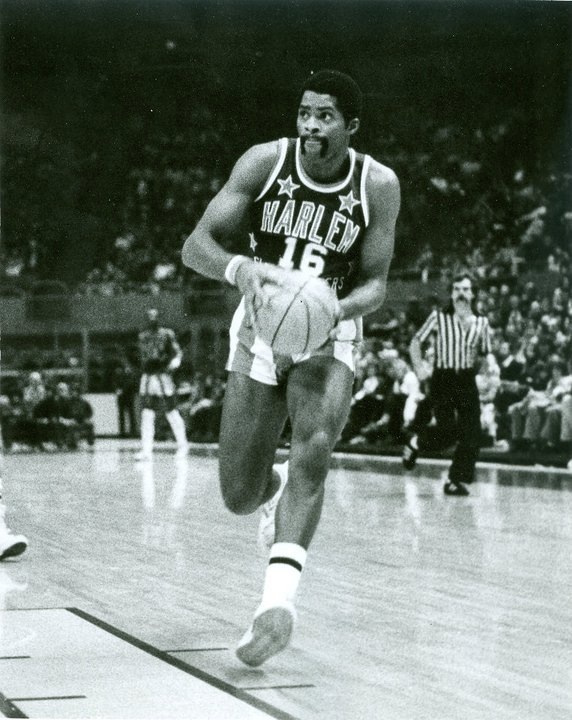
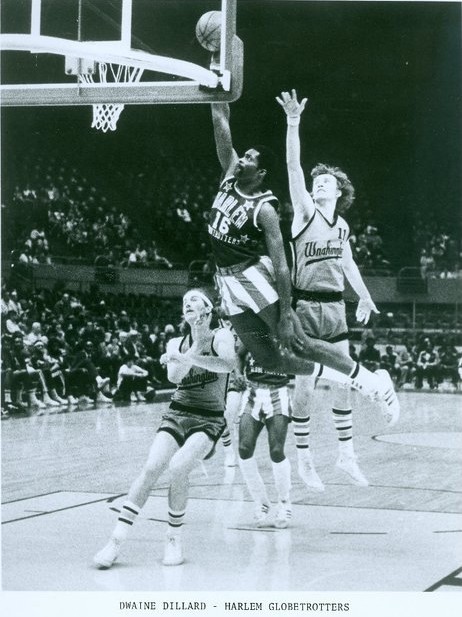
Conflict, baby. Caught up in the maelstrom was the fabulous ’68 Central basketball team, whose all-black starting five earned the sobriquet, The Rhythm Boys. Their enigmatic star, Dwaine Dillard, was a 6-7 big-time college hoops recruit. As if the stress of such expectations wasn’t enough, he lived on the edge.
At a time when it was taboo, he and some fellow blacks dated white girls at the school. Vikki Dollis was involved with Dillard’s teammate, Willie Frazier. In his book Marantz includes excerpts from a diary she kept. Marantz says her “genuine,” “honest,” angst-filled entries “opened a very personal window” that “changed the whole perspective” of events for him. “I just knew the vague outlines of it. The details didn’t really begin to emerge until I did the reporting.”
Functionally illiterate, Dillard barely got by in class. A product of a broken home, he had little adult supervision. Running the streets. he was an enigma easily swayed.
Things came to a head when the polarizing Alabama segregationist George Wallace came to speak at Omaha’s Civic Auditorium. Disturbances broke out, with fires set and windows broken along the Deuce Four (North 24th Street.) A young man caught looting was shot and killed by police.
Dillard became a lightning rod symbol for discontent when he was among a group of young men arrested for possession of rocks and incendiary materials. This was only days before the state tournament. Though quickly released and the charges dropped, he was branded a malcontent and worse.
White-black relations at Central grew strained, erupting into fights. Black students staged protests. Marantz says then-emerging community leader Ernie Chambers made his “loud…powerful…influential” voice heard.
The school’s aristocratic principal, J. Arthur Nelson, was befuddled by the generation gap that rejected authority. “I think change overtook him,” says Marantz. “He was of an earlier era, his moment had come and gone.”
Dillard was among the troublemakers and his coach, Warren Marquiss, suspended him for the first round tourney game. Security was extra tight in Lincoln, where predominantly black Omaha teams often got the shaft from white officials. In Marantz’s view the basketball court became a microcosm of what went on outside athletics, where “negative stereotypes” prevailed.
Central advanced to the semis without Dillard. With him back in the lineup the Eagles made it to the finals but lost to Lincoln Northeast. Another bitter disappointment. There was no violence, however.
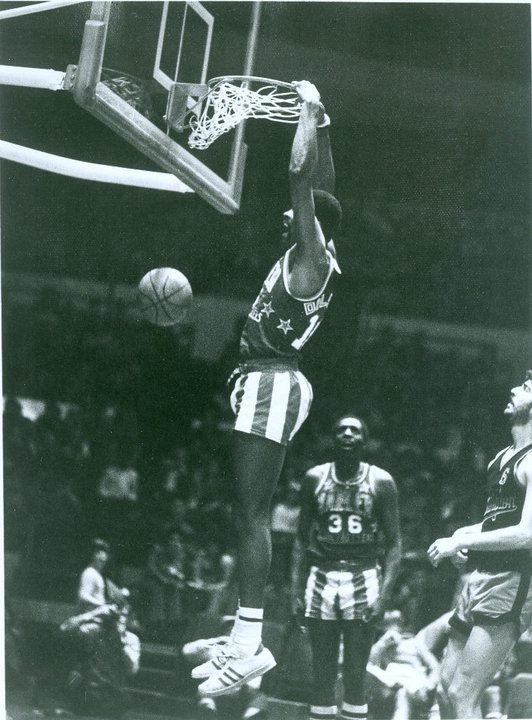
The star-crossed Dillard went to play ball at Eastern Michigan but dropped out. He later made the Harlem Globetrotters and, briefly, the ABA. Marantz interviewed Dillard three weeks before his death. “I didn’t know he was that sick,” he says.
Marantz says he’s satisfied the book’s “touched a chord” with classmates by examining “one of those coming of age moments” that mark, even scar, lives.
An independent consultant for ESPN’s E: 60, he’s rhe author of the 2008 book Sorcery at Caesars about Sugar Ray Leonard‘s upset win over Marvin Hagler and is working on new a book about Fenway High School.
Marantz was recently back in Omaha to catch up with old Central classmates and to sign copies of Rhythm Boys at The Bookworm.
 |
 |
 |
Related articles
- Walking Behind to Freedom, A Musical Theater Examination of Race (leoadambiga.wordpress.com)
- Back in the Day, Native Omaha Days is Reunion, Homecoming, Heritage Celebration and Party All in One (leoadambiga.wordpress.com)
- Big Bad Buddy Miles (leoadambiga.wordpress.com)
- Arno Lucas, Serious Sidekick (leoadambiga.wordpress.com)
- Omowale Akintunde’s In-Your-Face Race Film for the New Millennium, ‘Wigger,’ Introduces America to a New Cinema Voice (leoadambiga.wordpress.com)
- Native Omaha Days: A Black is Beautiful Celebration, Now, and All the Days Gone By (leoadambiga.wordpress.com)
- Native Omahans Take Stock of the African-American Experience in Their Hometown (leoadambiga.wordpress.com)
Charles Fairbanks, aka the One-Eyed Cat, makes Lucha Libre a way of life and a favorite film subject

Image via Wikipedia
When I read about filmmaker Charles Fairbanks for the first time last year I was immediately taken by his story: how a rural Nebraska student-athlete turned artist become enamored with and immersed in the world of Mexican professional wrestling known as Lucha Libre, which he’s made the subject of some of his short films. Then when I delved further into his story, by exploring his website and watching some of his work, I knew I had to write about him. We met last summer, when his disarmingly sweet personality and thoughtful responses made me immediately like him. The following story I wrote about Fairbanks and his work appeared just before this year’s Omaha Film Festival, where one of his Lucha Libre films, Irma, was shown. Fairbanks is a serious artist whose work may or may not ever find a wide audience but is certainly deserving of it. I plan to follow his career and to see much more of his work as time goes by.
©by Leo Adam Biga
Originally published in The Reader (www.thereader.com)
In the space of a few years Charles Fairbanks has gone from conventional prep and collegiate wrestler to one of the few gringo performers of Lucha Libre, Mexico’s equivalent of WWE (World Wrestling Entertainment).
Amid a world of masked figures with exotic alter egos, Fairbanks performs as the One-Eyed Cat. It’s not what you’d expect from this cerebral, soft-spoken, fair-skinned rural Nebraska native. Then again, Fairbanks is an adventurous artist and art educator, which explains why he’s devoted much of the last nine years to Lucha Libre’s high-flying acrobatics and soap opera melodramatics.
Fairbanks, whose pretty boy face and chiseled body are in stark contrast to Jack Black in Nacho Libre, is a photographer and short filmmaker who loves wrestling. Naturally, then, he combines his passions as self-expression. He’s gone so far as affixing a video camera to his mask to record the action.
“Oh, I look silly,” he says of his third eye. “Other wrestlers laugh out loud but they’re always very welcoming. I make sure to establish a relationship before I walk in with a camera on my head.”

His documentary short Irma, an Omaha Film Festival selection, lyrically profiles Irma Gonzalez, a hobbled but still strong, proud former wrestling superstar and singer-songwriter who befriended him at Bull’s Gym on the outskirts of Mexico City.
Last fall Irma won the Best Short prize at the Coopenhagen International Documentary Film Festival. It’s shown at festivals worldwide, as have other works by Fairbanks, some of which, like Pioneers, have nothing to do with wrestling.
Intense curiosity brought him to Mexico in the first place. Oddly, he’d just abandoned organized wrestling. He was a state champion grappler at Lexington (Neb.) High, where his artistic side also flourished. His mat talent and academic promise earned a scholarship to Stanford University, where he wrestled two years before quitting the team.
He was touring Mexico on a rite-of-passage mission of self-discovery and enlightenment when he saw his first Lucha Libre match. He soon started shooting and practicing. He made still images that first trip and has since used video to capture stories.
“I just fell in love with this spectacle,” he says.
Bull’s Gym, located on an upper floor of a hilltop building, is his main dojo, sanctuary and set. It overlooks a cinematic backdrop.
“There’s something powerful for me in looking out at the miles of humble cinderblock housing spread out and up the ridges around Mexico City,” he says. “That view is very beautiful. With all the pollution the sunsets are very colorful. The airport is nearby and so you see the airplanes taking off.
“For me all of this magnifies and modulates the gym’s energy, which is really pretty fervent. There’s often boxing and wrestling going on at the same time in the same room. With all the activity, the ambient noise is really a roar.”
Lucha Libre has a near mystical hold on him now but he admits he originally regarded it as a lovely though bastard version of the wrestling he grew up with.
“At the time, as most competitive wrestlers in the U.S., I denied the connection,” he says. “I said, This is totally different. Now I’ve gotten to the point where I can accept the real links between competitive wrestling and show wrestling.”
Fairbanks, a Stanford art grad with a master of fine arts degree from the University of Michigan, takes an analytical view of these kindred martial arts.
“There is a lot of overlap but at the same time I think they have very different philosophies embedded in them.”
Asking if Lucha Libre is fake misses the point. The visceral, in-the-moment experience is the only reality that matters.
“In my experience of Lucha Libre the matches themselves are not staged — you don’t know who’s going to win. You still maybe want to win, but it’s not just up to you,” he says. “You can’t just go for a pin. You really have to try to entertain. It’s very much like a dance. There’s a certain repertoire of moves my opponent and I know how to do together, and if I start to do one move you recognize this move and you actually respond in a certain way to help me do it more spectacularly.
“And then there are variations, where you’re doing something defensive that’s changing me, so it’s not my move anymore. As we go through this back and forth we establish these sort of rhythms.”
The unfolding dance, he says, is also “an improvised drama” marked by “waves of tension” and “a building of energies. One wrestler is dominating but then the tides turn and the other wrestler comes back. It’s not something scripted but you feel your way through.” The improvisation, he adds, extends to the referee, who “plays his part,” and to the crowd, “who play their part.”
Reared in the no-frills tradition of amateur wrestling, he says “it’s been really hard to learn this completely different way of thinking or feeling reality. I’m the first to say I haven’t mastered Lucha Libre. I’m not trying to make it big as a wrestler in Mexico. I’m trying to learn about wrestling.” He’s also a practitioner of Brazilian jiu-jitsu.
He’s learned about Lucha Libre’s “built-in codes of honor” and “certain ways people present themselves publicly or don’t.” The wrestlers aren’t supposed to reveal their identity outside the ring. He’s made himself an exception.
“I feel OK transgressing this because I’m already marked as Other.”

Irma Gonzalez
In his Flexing Muscles some native wrestlers half-kiddingly harangue this outsider. “It’s very important to me they’re calling me gringo and saying, ‘Go back to your damned country,” he says, as it makes overt his interloper status. As deep as he’s tasted Mexican culture he knows he remains a visitor and observer.
“I’m really conscious of my differences from most of the people there in terms of nationality and economics,” he says.
He’s acutely aware too of his privileged “ability to come in and do this and then leave and go back to the States and make art out of this experience,” adding, “With my movies in a certain sense I try to build in the story of my being there and my relationship to the subjects.” He’s struck by how generous his subjects are in opening their lives and homes to him even as they struggle getting by.
Stranger or not, he engages the culture head-on.
“I do try to immerse myself very much in that world I’m living in, but without losing who I am. I never try to pretend to be Mexican. I try to get as close as I can and I try to understand, but from my point of view.”
Despite the obvious differences between Fairbanks and his fellow performers, he feels a reciprocal kinship, adding, “there’s a certain kind of camaraderie I feel with wrestlers anywhere.” Wherever he’s traveled, including Europe and Asia, he’s wrestled.
Fairbanks has seen much of Mexico but is largely centered in Mexico City and Chiapas, where he teaches filmmaking. He says, “I love to stay with families, I love to have local people to learn from and to interact with.”
Moments of zen-like meditation and magic realism lend his work poetic sensibility and cultural sensitivity. Irma‘s tough title character sings a ranchero in the ring while her circus performer granddaughters romp. In Pioneers Fairbanks lays hands over his father’s ailing back in a shamanistic healing ceremony. Enigmatic stuff.
“I like to make movies that invite more questions,” says Fairbanks, who participated in Werner Herzog’s Rogue Film School and cut his chops working with veteran filmmakers in Brussels, Belgium. “I like to have the films be a process of discovery for the viewers — to not tell the viewers how to see this world — but also a sense of discovery for me as I’m making the films.”
Authenticity is his goal.
“For me it’s important I’m making movies in Mexico that convey a part of experience not covered by our news media.”
As for the future, he says, “I have very specific stories I want to tell in Mexico and in other countries, some related to wrestling, other types of wrestling, some not at all related to wrestling.”
Irma‘s Omaha Film Festival screening is 6 p.m. on March 3 at the Great Escape Theatre as part of the Striking a Chord block of Nebraska documentary shorts.
Related articles
- WWE News: Has Mexican Lucha Libre Star Averno Signed with the WWE? (bleacherreport.com)
- Lucha Future Mexican wrestlers storm The Roundhouse (vidalondon.net)
- Behind the mask – lucha libre wrestlers tap into Kitsap (pnwlocalnews.com)
- Offbeat Wrestlers Celebrate Cinco De Mayo ‘Lucha Libre’ Style (weirdnews.aol.com)

Dean Blais Has UNO Hockey Dreaming Big

Image via Wikipedia
My alma mater, the University of Nebraska at Omaha, is not known for making waves in college athletics. The school competes at the Division II level in all its athletic programs, except one — ice hockey. UNO’s D-I hockey program is about 15 years young now and while it’s enjoyed a smattering of success it’s been a long way from being a championship threat. Perception and reality changed in 2009 with the hiring of Dean Blais as head coach. He’s a living legend in the game and his team has already done enough a little more than half way through his second year on the job to have fans and alums like me thinking this could be the start of something big that puts UNO on the map. I recently interviewed Blais for the New Horizons story that follows. While UNO may still be a year or two or more away from competing for a WCHA or national title, UNO hockey is increasingly in the conversation as a tough draw and potential contender. If UNO can keep Blais through the run of his contract in 2014-15, then my old school might finally have the breakthrough success in a major team spectator sport that it’s always dreamed of having. Yes, UNO has a powerhouse wrestling program, but it’s a D-II program and decidedly off the general public’s and national media’s radar. Hockey doesn’t have the broad appeal of football, basketball, or baseball, but when UNO can beat the best of the best in college hockey, as it’s already done this season in defeating Minnesota, Michigan, North Dakota, then you’ve done something.
UPDATE: After a mid-season slump the UNO hockey team has rebounded with a late season surge that’s included a second series split with North Dakota, this time in Grand Forks, where Dean Blais coached all those years, and more recently a sweep of Top Ten power Wisconsin in Omaha. Along the way Blais earned his 300th career college victory and UNO, which had risen to a Top Ten ranking early in the year before sliding down the polls, saw its stock boosted back to No. 12 in one poll and No. 13 in another. More and more observers are feeling this UNO team has what it takes to be a significant factor in the postseason.

Dean Blais Has UNO Hockey Dreaming Big
©by Leo Adam Biga
Published in the New Horizons (http://www.enoa.org/)
When UNO Athletic Director Trev Alberts named Dean Blais the school’s new hockey coach in 2009, it marked a rededicated commitment to a still young program with big dreams.
It was the kind of marquee hire one doesn’t expect from the University of Nebraska at Omaha. What makes Blais marquee material? As a coach, he’s achieved success at every level of the sport — from high school to college to the junior national ranks to the Olympics — all the way to the National Hockey League.
His longest D-I stint was at the University of North Dakota, an elite hockey school where he was an assistant for nine years and head coach for 10, twice leading the Fighting Sioux to national titles and twice winning national coach of the year honors.
To put it in perspective, his coming to UNO would be akin to Roy Williams taking over an upstart basketball program or Bobby Bowden being tabbed to lead the South Florida football program.
The move suddenly made UNO, whose program only dates back to 1997, something more than a potential contender on the hockey landscape. UNO must now be taken seriously, if for no other reason than it went out and got a coach who’s proven he can deliver the goods by recruiting and developing talent that produces all-conference, all-American performers and championship trophies. Dozens of his players have gone on to play professionally.
Even though UNO’s yet to even sniff a conference title, it’s not like Blais walked into a shambles. After a rough couple years, UNO acquitted itself well from 2000 to 2005 before plateauing in 2007 and 2008. There was grumbling the program had run out of steam even though attendance remained steady and the team managed being competitive most nights.
Still, an impending change was in the wind. Hockey revenue was down and UNO long ago fixed its financial wagon to its lone D-I program. As hockey goes, so does Maverick athletics. Alberts put it succinctly:
“Success in hockey in non-negotiable. Creating and sustaining profitability in hockey is a mandate we will hold ourselves accountable to.”
Not long after Alberts arrived as AD Mike Kemp, who founded the program and served as its only head coach for 12 years, stepped aside to be associate athletic director. He recommended as his successor Blais, an old friend then coaching the Fargo Force, a United States Hockey League team. Kemp and Blais knew each other as assistant coaches with the University of Wisconsin and the University of North Dakota, respectively.

“His ability, background and history made him an incredible fit for our program,” Kemp said. “He brings championship experience, attitude and focus that will help propel and direct our program to the next level.”
Because they go back a ways, there’s been no feeling-out process necessary.
“We know each other, we respect each other, and we’ll do whatever it takes to help each other work toward the same common goal,” said Kemp. “It’s one thing to get a program up and going, it’s another to make the next step to national prominence. I think every year we inch closer. My job is to help give Dean the resources he needs in order to be successful.”
News of the Blais hire reenergized UNO hockey fans.
“I truly believe the hiring of Dean Blais signaled a dramatic shift in our approach to excellence,” said Alberts. “With Dean Blais on board, I believe we sent a very strong message about our commitment to hockey…”
Blais’ first year on the job was UNO’s last in the Central Collegiate Hockey Association. The team finished in the upper division of a league with perennial powers like Michigan. Under Blais UNO recorded only the third 20-win season in program history at 20-16-6, finishing an impressive 8-3-1 down the stretch.
In the off-season UNO joined the Western Collegiate Hockey Association, D-I’s premier league and one Blais both played and coached in. UNO’s baptism of fire in the WCHA this season saw its young squad, including a highly touted freshmen class, become the talk of college hockey by sweeping an early road series against heavyweight Minnesota and then taking one of two games at Michigan.
Getting that first WCHA victory at his alma mater, Minnesota, Blais said, was “pretty special,” adding, “It was huge to go in there and win.”
He liked that UNO made an impression on Gopher followers.
“They said our team plays like a bunch of piranhas, can you imagine that? Hungry, fast, tenacious, ferocious. We were proud of them.”
It’s his brand of hockey alright.
“We do everything at top speed, but to do the shooting and the passing and the stick handling at top speed takes a long time to get good at. That’s my thing. Anyone can play hockey at a slow down pace. To play at our level of speed takes a lot of work and a lot of time and a lot of conditioning.”
Then he said something that revealed how he expects, no, demands his team play the fast and furious style he coaches:
“When they don’t play that well then I can get a little nasty.”
He said the relentless, fluid approach is a reflection of how he played the game.
“My feeling is the less restrictions you have the more they improve. The best discipline is self discipline. But I want to give them freedom to improve, and the only way you can improve at times is with your decision making. Do I go in and forecheck or do I just play my position? You can have rules and say you can’t go beyond certain spots on the rink, and that’s coaching, but the more freedom you give the more accountable they are.
“It’s totally against some coaches’ philosophies. Some guys will tell you you’ve got to be this, this and this, like in football. We don’t have that much structure in hockey. We have it during practice. Once they play in games we (coaches) could be drinking coffee and eating popcorn on the bench at times because there’s not a lot we can do. Now, if a player isn’t playing you’ve got to recognize that and warn ’em or sit ’em.”
Don’t assume his practices are loose. He and his staff put in many hours preparing and organizing to ensure the team gets the most out of the high energy sessions. From the opening puck drop in November, the Mavs have flown around the ice. An 8-1-1 start this season landed UNO in the Top 5, its highest ranking ever.
‘The guys came in this summer, worked hard, they went to school and they got some of their classes out of the way. They bonded quicker than I thought,” he said.
While the team slowed after that torrid first month, going 4-7-1 in its next 12 games, UNO enters the last third of the season well up in the conference standings and positioned to qualify for the postseason.
The success has only confirmed Blais was no ordinary hire. Indeed, he’s a legend in amateur hockey circles. His pedigree, almost unmatched. From an early age he knew he was destined to play, teach and coach the game he loved.
He grew up with the proverbial stick in his hand in hockey crazy International Falls, Minn. He and his wife frequent a lake cabin there in the summer. He played for top youth coaches and for the iconic Herb Brooks at the University of Minnesota, where Blais was a standout. His seasoning continued in the professional ranks with the Chicago Blackhawks developmental team in Dallas, Texas.
Then came his assorted coaching stops and championships. His latest title actually came during his first year at UNO, when as U.S. Junior National coach he took a mid-season break from his Maverick duties to lead the American team to a gold medal-winning upset over host Team Canada in Saskatoon, Saskatchewan.
That victory was so monumental and Blais is so respected in those hockey-obsessed northern reaches that, he said, “every kid in Canada watched that game when we beat ’em for only the second gold medal in 35 years for the U.S., and when I walked through the Saskatoon airport at 7 in the morning there were a hundred Canadians there that shook my hand.”
That’s right, Blais is a rock star among hockey coaches, When announced as UNO’s coach some wondered why a man pushing 60 who’s been to the game’s pinnacle would want to try and get a mediocre program to that same mountaintop.
“I believe Dean is a man that enjoys challenges and is willing to invest the time and energy to bring our dream to fruition,” said Alberts. “Dean’s legacy in college hockey is secure, I’ve challenged him to create a new legacy of building a championship caliber program on the national level that is sustainable.”
“Trev (Alberts) was a big reason I came here,” Blais said from behind his desk in the UNO athletic offices. “I think he’s just done an outstanding job. He’s given us all the resources we need to be successful. He gives us a lot of support daily. He makes it fun to come to work every day.
“He’s a big time guy. I just hope they can hold him as long as I’m here.”

Even though UNO’s never come close to the Frozen Four (college hockey’s equivalent of basketball’s Final Four), Blais saw a program with essential pieces already in place: a charismatic and supportive boss in Alberts; strong university backing; a rabid fan base; and the presence of Mike Kemp, who provides institutional history and a rich hockey background in addition to having established a solid foundation for Blais to build on.
Blais said he’s benefiting from the hockey culture Kemp put in place.
“Everything was done the right way with Mike. I didn’t have to change the culture. It was a pretty well run machine when we got here. He’s got a good hockey mind and a good common sense mind.”
Having an athletic administrator in Kemp who’s a hockey guy makes Blais sleep better.
“He’s looking out for hockey. All the detail stuff at the Qwest, the politics of some of that, Mike deals with, all the behind the scenes stuff with scheduling that takes time and effort, Mike takes care of, so he’s meant a lot to me in the transition. I haven’t had to slug it out with all of that. This is the kind of stuff I hate right here,” Blais said, slapping his palm down on a desk full of paperwork.
In assistants Mike Guentzel and Mike Hastings he has experienced help with strong Omaha ties. Guentzel coached the Omaha Lancers to back to back Clark Cup titles and later worked as an assistant at Minnesota. Hastings succeeded Guentzel with the Lancers and became the winningest coach in USHL history.
UNO hockey seemingly has everything in place to be a force to be reckoned with. Except a decided home ice advantage. It’s no secret UNO, whose home matches are at Qwest Center Omaha, is beating the bushes to elicit support for construction of a South Campus arena designed specifically for hockey.
“That’s the only thing we need here — we need an arena on campus,” said Blais.
While he concedes UNO draws exceedingly well — “fourth in the country in attendance tells me we have the hockey fans in Omaha” — the Qwest is a multi-purpose facility shared with Creighton and other users. That means scheduling conflicts sometimes compel UNO to practice at the Civic Auditorium or the Motto McLean Ice Arena. UNO must also share revenues with the Metropolitan Entertainment & Convention Authority (MECA), which operates the Qwest.
“You talk about an arena on campus you own and all the marketing and concessions and everything else — people tell you it’s $3 or $4 million a year in revenue. Down at the Qwest we don’t get all that revenue, so it’s hard to treat hockey as number one.”
As nice as the Qwest is, it’s too large for the fan base. Even when the Mavs draw their average turnout of 7,500 or 8,000 the cavernous venue is only half full, thus negating the edge a jam-packed intimate space affords. The goal is to make UNO hockey a hard ticket to get.
Then there’s the fact it’s a 10-15 minute drive from UNO, which requires players travel back and forth.
Blais doesn’t want to come off like sour grapes. He actually appreciates having the Qwest — for the time being anyway.
“Now the Qwest is working, our recruiting is working,” he said.
It’s just that he’s been spoiled by the ultimate hockey palace — the Ralph Engelstad Ice Arena at North Dakota, a luxurious $100 million hockey-only facility. A modest version of it is his dream for UNO.
He feels UNO hockey deserves “its due.” He knows it will always play second or third fiddle to Nebraska football and Creighton hoops. He doesn’t begrudge them their support. But he also sees NU can find donors for a planned $50 million Memorial Stadium expansion without batting an eye. He hopes just as Husker boosters are committed to returning NU to elite football status Mav supporters are prepared to put their resources behind making UNO hockey an elite program.

“If we’re going to have the best hockey program in the country we need the best commitment out of this community of Omaha and the whole university. Now, we don’t have to be the king here. I know Lincoln’s football program is the king, but UNO has to be committed as other WCHA schools, and part of it is an arena.”
So how sure does Blais feel UNO will secure the dollars for its own arena?
“I think it’s going to be pretty much a done deal,” he said. “Timeline, I have no clue, and funding, no clue. When money seems to be no object out of the other bench, they’ve got to find a way, and Trev Alberts will deliver and (UNO chancellor) John Christensen will deliver. But it’s not this year. By the time I leave here hopefully there’s a new arena here on campus.”
Last year Blais signed a contract extension to coach UNO through 2014-15.
Some observers speculate Blais is not long for UNO — that it will be hard-pressed keeping him if a Minnesota or another big-time hockey school offers the moon.
“I certainly hope that Dean concludes his coaching career here in Omaha,” said Alberts. “It’s my job to live up to the promises that I made to him and create and maintain an environment that is comfortable.”
For his part Blais betrays no hint he’s itching to leave. Rather he sounds like a man wanting to take UNO to the summit and feeling he has the goods to get there.
“We’ve got I think the most outstanding recruiting class in NCAA hockey this year,” he said.
He’s confident UNO can compete with Michigan and Minnesota for the best talent.
“We’re getting our kids. Are we there yet? Not yet, but I would say the freshmen this year feel they have a better chance of getting into the NHL right here than anywhere else.”
He likes the character of his kids too, saying that flight attendants, bus drivers, waitresses and event staff remark how well his players conduct themselves.
“Everything is please and thank you. Their average grade point average is over 3.0. These student-athletes are going on to be big-time something. It’s about more than wins and losses. Now believe me, they’ll compete, and we’ll train ’em to win, but they’re being trained for the future.”
More than half his freshmen were captains last year on their high school teams.
“Leadership is huge. Leadership starts at the top. As coaches, we’ve got to conduct ourselves right. You wont hear us swearing.”
Speaking of leadership, there is a bit of every coach he’s worked under in him. He’s grateful to have been influenced by some of the game’s greats.
“Well, I’ve been blessed,” he said.
His first mentor was legendary International Falls High School coach Larry Ross. Then Blais came under the wing of Glenn Sonmor and Herb Brooks at Minnesota. He said Sonmor “taught me to have fun every day coming to the rink.”
Brooks, the enigmatic coach of the 1980 U.S. Olympic Miracle On Ice team was hard to know but he produced unquestioned results.
“He’d love you to death when you moved on, but to play for him he was tough. Herbie did not have any friends in hockey. But as far as a coach there’s none better.”
Blais played for college and pro coaching guru Bob Johnson on the U.S. national team and for the respected Bobby Kromm, a one-time NHL coach of the year.
Then there was UND’s Gino Gasparini, whom he said “taught me how to coach up at North Dakota,” where he was Gasparini’s assistant before succeeding him.
All these coaches are inducted in various halls of fame. Blais is right there with them. Only he’s still coaching. At 60, his players are young enough to be his grandchildren. Does he have trouble relating to this generation?
“They probably think I’m nuts anyway,” he quipped. “I don’t treat my players any different now than I did 20 years ago. The bottom line for them is they want to win. They’ll do anything within reason to win, just like kids 20 years ago. I don’t see a whole lot of difference.”
Blais appears satisfied. But things can change. They did at North Dakota. He seemed content there but when the program’s biggest booster, Ralph Engelstad, passed, “things weren’t the same there,” said Blais. Rather than be unhappy, he moved on.
He left to pursue a long-held dream — the NHL, serving as associate head coach and director of player development with the Columbus Blue Jackets. He’s glad he tried it, but it didn’t fulfill him the way working with high school and college kids does. It’s why he returned to the junior ranks before UNO came calling. It’s why he feels at home at UNO.
“Here practices are for preparing kids to get better and get to the next level. In these kids you can see dramatic improvement, you can see their skills develop. That’s what I like. I like going on the ice every day. They know they’re going to develop. It’s a given.”
When UNO broke out of the gate with its dynamic start this season fans and media wondered if this was the year the program would truly break out and claim its place among the juggernauts. Not so fast, said Blais, who better than anyone else knows just how steep a climb it is to college hockey nirvana. He’s been there and back, but with programs much older and steeped in tradition than UNO. It takes time to build a championship club and UNO is still in the growing pains stage.
Jumping to conclusions that this UNO team is Frozen Four worthy right now, he warns, is premature. He sounds every bit the wizened hockey sage when he lays out just how daunting the task is:
“Well, to say we’re competing for a national title, we’re absolutely not, get real.
Michigan Tech hasn’t won a WCHA or national title in 30 years. St. Cloud’s never won the WCHA. Duluth has never won a national title. Colorado College, it’s been 40-50 years. Alaska has never won a WCHA title. Mankato’s never won the WCHA.
“Right away there’s six teams that have never won a WCHA title. Could Omaha? Yep. Is it this year? We’ll see.”
As far as being an elite program, he said, “we’re not there yet. The other thing is, we’ve got to be patient — we’ve only had hockey for 14 years.”
Then again, he saw something in that great start that told him UNO’s ahead of schedule. He knows people are watching now to see if they’re just a one-month wonder or a team to be reckoned with.
Assistant Mike Guentzel echoes Blais by saying the program is moving in the right direction. They remind observers UNO is competing in the toughest conference in the country and more than holding its own.
Dean Blais won’t accept anything less.
Related Articles
- Former Husker All-American Trev Alberts Tries Making UNO Athletics’ Slogan, ‘Omaha’s Team,’ a Reality (leoadambiga.wordpress.com)
- DU hockey freshman Zucker more than lives up to billing (denverpost.com)
- Cox: Mediocre won’t cut it for Team Canada against U.S. (thestar.com)
- NU regents OK UNO’s move to NCAA Division I (seattletimes.nwsource.com)
- Big 10 ADs propose men’s hockey for 2013-14 season (sfgate.com)
- National Collegiate Hockey Conference is new home for DU, Colorado College (denverpost.com)
Former Husker All-American Trev Alberts Tries Making UNO Athletics’ Slogan, ‘Omaha’s Team,’ a Reality


Like most Nebraska football fans I watched Trev Alberts play on some very good Husker teams in the early 1990s without ever seeing him in person, by seeing him play on television. I’ve been a Big Red fan since just before the dawn of my teens but I’ve only attended a couple games at Memorial Stadium in Lincoln in all that time. So, my relationship with Alberts remained a virtual one until I interviewed him for the following story I did for The Reader (www.thereader,com). Alberts was a high draft choice of the Indianapolis Colts but repeated injuries cut short his NFL career before he could ever really establish himself. Then, the telegenic Alberts embarked on a successful career as an on-air college football analyst with ESPN. He left the network in a dispute that received a fair amount of attention. The, totally unexpected, he wound up as athletic director at Division II University of Nebraska at Omaha, where he’s in his second year on the job trying to right what had becomes a wayward department. Although some have speculated he took the post as a way to season and position himself for eventually replacing his old coach, Tom Osborne, as NU athletic director, an assertion by the way that both Alberts and Osborne deny, he seems genuinely satisfied to be doing a very unglamorous job at a very unglamorous institution. But as he reveals in my story, he is all about work ethic, seeing a job through, and teamwork, which I believe will keep him at UNO for the foreseeable future, not that I would rule out him one day moving over to NU.

Former Husker All-American Trev Alberts Tries Making UNO Athletics’ Slogan, ‘Omaha’s Team,’ a Reality
©by Leo Adam Biga
Originally published in The Reader (www.thereader.com)
UNO athletics has always been the overlooked step-child on the area sports scene.
The University of Nebraska at Omaha is still primarily a commuter school, making athletics a hard sell to students and alums. Most have a distant relationship with UNO, whose athletic success rarely translates into fans in the stands save for Maverick hockey, a few football games and a couple wrestling meets.
Things got tenuous four years ago amid revelations the school hushed up athletic budget shortfalls and secretly funneled general university funds to make up the difference. Then-chancellor Nancy Belck came under fire for loose department oversight. The cash cow UNO’s tied its wagon to, Division I hockey, sputtered.
UNO quickly went through three athletic directors. The budget and staff absorbed cuts. Some major boosters criticized school leaders and pulled support. Things stabilized when John Christensen became chancellor in 2007. His April 2009 hiring of Trev Alberts, the former University of Nebraska football All-American (1990-93), Indianapolis Colt and ESPN analyst, turned heads. Getting the chiseled, charismatic Alberts was a bold, outside-the-box move to pump life, credibility and pizazz into a floundering, faceless enterprise.
Some questioned Alberts’ lack of sports administration experience. Not Christensen.
“I wasn’t looking for an administrator, I was looking for a leader, and those are very different things,” said Christensen.
The two have big plans for UNO, including new campus facilities for baseball, softball, soccer and hockey. There’s talk of one day going D-I across the board. UNO is being touted as “Omaha’s Team.” By all accounts, confidence is restored in the department. Alberts’ hiring last year of iconic Dean Blais as hockey coach signaled a sea change in how UNO brands itself. The pretender’s now the contender.
Alberts set the tone at the press conference introducing him as AD, saying, “I believe the potential for UNO’s athletic programs is unlimited.” He hasn’t backed off on that. He sent a message with the Blais hire.
“We wanted to make a statement we weren’t going to mess around anymore, we were going to get into the arena competition and we were going to win and we were going to win the right way. I have never been a part of anything that didn’t attempt to do excellence.”
The rub is that while UNO’s located in a much larger metro than most D-II competitors, it must contend with many more divided loyalties and attractions than, say, a Northwest Missouri State, which is the only game in town in Maryville, Mo.
Husker mania looms large here. Creighton athletic programs are fan favorites. The College of St. Mary, Bellevue College and Iowa Western Community College have their followings. High school athletic contests regularly outdraw UNO’s. The Royals, the Beef, the Lancers, and now the Nighthawks, have committed fan bases, too.
Still, UNO is convinced it can capture more fans and revenue through upgrades, a must anyway if the school’s to ever seriously entertain going D-I, said Christensen.
“Right now, are we Omaha’s team? No, not the way we’re currently structured,” said Alberts. “No, not when you ask your baseball fans to drive to Boys Town to watch a game, you drive your softball fans to Westgate, you drive your hockey fans to the Qwest (Center). Think about it, we’ve been doing everything we could to make it extraordinarily difficult and inconvenient to support UNO athletics. You’re supposed to bring people to your campus.
“Imagine if we had facilities that were convenient, that met market expectations and were on or near the UNO campus.”

Alberts can sound like a pitchman, and that ability to spin things, to charm, to energize, to win hearts and minds, is why supporters like David Sokol are back in the fold. For Alberts, though, the heavy lifting’s just begun.
“We’re still a burden on campus until we’re able to realize that revenue from hockey. Do we have the kind of players, coaches, teams representative of what the market demands? We’re getting closer. I mean, it’s about winning. You gotta win, you gotta win consistently. The moniker ‘Omaha’s Team’ is really a reminder to our staff and coaches of what we aspire to become.”
Alberts said UNO must meet “market expectations of excellence of Lincoln and Creighton and the College World Series.” In some respects, he said, UNO’s done so by winning 11 national championships, adding that feedback from the community, however, indicates UNO’s fallen short in most ways.
Then there’s the awkwardness of dual NCAA membership. Yes, UNO has a D-I hockey program, but it’s a D-II, school, making for a tail-wagging-the-dog scenario.
“At strictly Division II schools, their (athletic) budgets are about three-and-a half to four million. Our budget’s approaching nine million with one Division I sport. When you have dual membership one of two things happens: you either treat all of your programs like their Division II, which is problematic to NCAA compliance. or you end up running your whole department like you’re Division I. That’s equally dangerous, because now in our budget we have all the support units of a Division I department and our Division II programs are benefitting from it.
“We’ve got strength and conditioning staff, compliance staff, three full time sports information staffers, a marketing department — you don’t need a marketing department when you’re Division II. We have a ticketing office. A five-person athletic medicine staff I’ll put up against anybody. The point is, we’re a Division I athletic department whether we like it or not, but we compete at the Division II level. It’s naturally divisive. That’s why the NCAA views dual memberships as problematic.
“That’s why Dean Blais was so important. His personality, his humility — he doesn’t walk around here like…He’s just a Midwestern guy, he’s one of us. Now, he has expectations, don’t get me wrong.”
If other UNO coaches are upset by hockey’s anointed status, Alberts said they haven’t said so. Regardless, there’s no turning back.
“We’ve tried hard to communicate from the day I took the job that that’s the way it’s going to be. You can be frustrated, but if hockey is not successful, we are not successful.”
For now, he said UNO must balance the trappings of its lone D-I sport with the low corporate sponsorships and game guarantees of a D-II school.
“We simply didn’t have the ability and maybe still don’t to deliver the product this market demands, and that’s why this job’s so hard,” he said.
Much of his job is creating a culture of integrity that’s about “making the right decision, not the convenient one.” It’s why he and Christensen talk regularly and why Alberts seeks counsel from his old coach/mentor, Nebraska athletic director Tom Osborne. He also keeps former UNO athletic director Don Leahy close by as advisor and watchdog.
“It’s transparency,” Alberts said. “You know, Nebraskans are a common sense group. Trying to fool people is simply not going to work. First of all you have to be honest with yourself, understand your limitations, your strengths, and show enough humility to welcome the input of others. The first thing we had to do was create a belief. A lot of our coaches have been promised things for years. I would never promise somebody something I couldn’t actually keep.”
He’s impressed by “the passion for this place” that’s kept several veteran coaches and staff members at UNO when they could have bolted for other opportunities. He feels UNO athletics is poised for growth despite a tough economy and NU system-wide cuts.
“We’ve never been in a more difficult position than we’re currently in. What’s encouraging to me is a lot of our problems are self-inflicted and they’re solvable, and we’re committed to finding solutions.”
Related Articles
- A Former Division II Doormat Has Taken Some Big Steps Up (nytimes.com)
- Penn State Starting A Division I Hockey Program (huffingtonpost.com)
- Howard, Morehouse may renew football rivalry (washingtonpost.com)
- UNO Wrestling Dynasty Built on a Tide of Social Change (leoadambiga.wordpress.com)
- Dean Blais Has UNO Hockey Dreaming Big (leoadambiga.wordpress.com)
- College Hockey’s Seismic Shift Begins Today in Colorado Springs (pikespeaklife.wordpress.com)
Houston Alexander, “The Assassin”
Fighters have always had a certain appeal, whether doing their fighting in the street or in the ring or, since the advent of mixed martial arts events, in the octagon. Houston Alexander of Omaha has pretty much done it all and he’s turned his talent for fisticuffs, combined with his good looks and charisma, into a bit of a run in the Ultimate Fighting Championship, although he ended up losing more than he won. He’s also a radio DJ, graffiti artist, self-styled hip-hop educator, and man-about-town, making him more than the sum of his parts. The following story I did on him for The Reader (www.thereader.com) hit just as he was on his way up, and even though his star has since dimmed, he’s a survivor who knows how to work his image. He and his family didn’t like some of the things in my story, but he also knows that comes with the territory.

DJ Doc Beat Box and Houston on a school Culture Shock Tour
Houston Alexander, “The Assassin“
©by Leo Adam Biga
Originally published in The Reader (www.thereader.com)
Ultimate fighter Houston “The Assassin” Alexander of Omaha is being a good soldier for the photo shoot. Stripping down to his trunks, he poses in the middle of a south downtown street one late summer afternoon. He’s asked to look menacing, hardly a stretch for the chiseled, tattooed, head-shaved graffiti artist-street thug turned Ultimate Fighting Championship contender. He remarks about “those guys looking out those windows” at his half-naked ass, meaning inmates at the Douglas County Correctional Center peering out the razor-wired windows of the facility just down the block. He once peered out those same windows upon this very street.
“I was inside the cage in ‘97. I just got through beating up a cop and they took me down,” he says matter-of-factly. “The cop tried to grab me and I swung back and hit the guy. It was illegal what he was trying to do to me in the first place. He was trying to beat me up. I didn’t get charged for hitting a cop. I got charged for something else. I did like six months.”
It’s not his only run-in with the law. He alludes to “a whole bunch of domestic,” referring to disturbances with a woman that police responded to.
The fact he has a record only seems to add to his street cred as one tough M.F.. His fans don’t seem to mind his indiscretions. Passersby shout out props. “What’s up, Houston Alexander?” a guy calls out from his sedan. Another, on foot, invites him to a suburban sports bar where, the homey says, “they all love you out there.”
Now that Alexander is a certified UFC warrior, he’s handling all the hoopla that goes with it like a man. He seems unfazed by the endorsement deals, sponsorships, personal appearance requests, interviews, blog appraisals and fan frenzy demands coming his way these days.
Increasingly recognized wherever he goes, he eagerly acknowledges the attention with his trademark greeting, “What’s up, brother?” and firm handshake, giving love to grown men and boys whose star-struck expressions gleam with admiration for his fighting prowess. The African-American community particularly embraces him as a home boy made good. A strong, hard-working single father of six who came up an urban legend for his scribbing and street fighting. He’s one of their own and it’s them he’ll most be representing come next fight night.
Barely three months have passed since his furious UFC debut on May 26, when the light heavyweight put an octagon whupping on contender Keith Jardine at UFC 71 in Las Vegas. After getting knocked down in the first 10 seconds, Alexander quickly regrouped. His relentless pressing style backed Jardine against the fence, where he unleashed a flurry of knees, elbows, uppercuts and hooks to score a technical knockout. Now Alexander’s primed for his next step up the sport’s elite ladder.
He and his local coaching-training team led by Mick Doyle and Curlee Alexander, the same men who got him ready for his dismantling of “The Dean of Mean“ Jardine, left for Great Britain on Monday to make final preparations for a September 8 clash with Italian Alessio Sakara on the UFC 75 card at London’s O2 Arena.
Doyle, a native of Ireland, is a former world champion martial arts fighter. His Mick Doyle Mixed Martial Arts Center at 108th and Blondo is the baddest gym around. He’s trained and worked the corner of several world champs. Curlee Alexander, a cousin of Houston’s, is a former NAIA All-America wrestler at UNO and the longtime head wrestling coach at North High School, where he’s produced numerous individual and team state champions.
Houston Alexander when to North, but other than brief forays in wrestling and football, he didn’t really compete in organized sports, unless you count weight lifting and body shaping. He was a two-time Mr. North. There was never enough money or time, he explains. By high school he was already a burgeoning entrepreneur with his art and music. Besides, he said, “I always had responsibilities at home.” But everyone knew he was gifted athletically.
The way Doyle puts it, Alexander’s “a freak” of nature for his rare combo of power and speed. The 205-pounder can bench press more than twice his body weight, yet he’s not muscle bound. He’s remarkably agile and flexible. Alexander came to him a “raw” specimen, but with abundant natural talent and instincts. Alexander knows he has a tendency to resort to street fighting, but Doyle recently reassured him by saying, “Everything we’re showing you sticks because it’s brand new. It’s not really replacing anything that anyone else taught you.” A blank slate.
“He wants to learn,” Doyle said. “He’s very confident, but he’s grounded. It’s a joy to coach someone like him.”
Curlee Alexander, a lifelong boxing devotee, has rarely seen the likes of his cousin, who’s made this old-school grappler a UFC convert. He, too, tells Houston not to change what’s worked, street fighting and all, but to harness it with technique. When Houston came to him eight months ago asking that he condition him, Curlee was dubious. Houston’s work ethic won him over. “He’s certainly determined.” His dismantling of Jardine convinced him he was in the corner of a special athlete.
“It was the most amazing night as far as being a coach I’ve ever had. All the things we had worked on were coming to fruition. He was doing it. He put all this stuff together at that moment. Incredible.”

For his part, The Assassin credits his coaches with getting him to the next level.
“Without Mick and Curlee, there’s no me. I had the raw skills, but they’re fine tuning what I have to turn me into this champ I need to be,” he said. “I love those guys. They’re the real deal. No joke. They know what they’re talking about. I do whatever they tell me to do. There’s no getting away with anything, brother, believe me. But I wouldn’t want to cheat myself anyway.”
With their help, he said, “I’m more technical and all the power and strength I have is programmed a whole different way. More controlled. But don’t get it twisted. If I need to turn it up and go hard in the paint, it can easily change.”
A win Saturday night should put the fighter in the Top 10 and that much closer to what some anticipate will be a world title challenge within a year. Doyle told Alexander as much after an August meeting to breakdown the tape of the Jardine fight. “I told you this would be a two-year process. We’re only three months into this deal and look how much better you’ve gotten. Just think in another year where you’re going to be. You’ll be able to get in the ring with Wanderlei Silva (the legendary Brazilian world champ, late of the PRIDE series, now a UFC star).”
“We understand the window of opportunity on this thing is short,” Doyle said. “We want to get it there.” Asked if Alexander’s age, 35, is part of the urgency, he said, “Maybe some of it. If he gets an injury he’s not going to heal like a 25-year-old. He’s got some years left, but let’s get him the money. He’s got six kids.”
The Sakara-Alexander tussle is key for both fighters. Doyle calls Sakara “a stepping stone” for his fighter, whom he said must “prove the Jardine thing wasn’t a fluke.” He describes it as “a make or break fight” for Sakara, who’s coming off two straight losses at 185 pounds. “He’s gotta win to stay in the UFC. Sakara’s in the way of bigger and better things, so he’s gotta go.”
Cool, suave, laidback, playful. Quick to crack on someone. Alexander’s extreme physicality manifests in the way he grabs your hand or brushes against you or delivers none too gentle love taps or engages in horse play. When he needs to, he can turn off the imp and attend to business. He’s all, ‘Yes, coach…‘Yes, sir,’ with his trainers, putting in hour after hour of roadwork, skipping rope, weight lifting, calisthenics, stretching, grappling, sparring and shadow boxing under their watch.
For months he’s trained three times a day, up to six to eight hours per day, six days a week, devoting full-time to what not long ago was just “a hobby.” He’s disciplined and motivated enough to have transformed his physique and refined his fight style. After years of itinerant club fighting, all without a manager or trainer, only himself to count on, he began formal, supervised training less than a year ago. He worked with Doyle a few weeks before the Jardine clash, which also marked the first time he prepped for a specific foe and followed a nutritional supplement regimen. By all accounts he followed the strategy laid out for him to a tee.
“I have no problem working,” he said. “I’ve been working all my life.”
Doing what needs to be done is how he’s handled himself as an artist, DJ, father, blue collar worker and pro fighter. Whatever’s come down, he’s been man enough to take it, from completing large mural projects to getting custody of his kids to donating a kidney to daughter Elan to breaking a hand in a bout yet toughing the injury out to win. “Most people don’t know I’m fighting with one kidney,” he said. He’s paid the price when he’s screwed up, too, serving time behind bars.
The UFC is all happening fast for Alexander, which is fine for this dynamo. But the thing is, he’s come to this breakthrough at an age when most folks settle into a comfortable rut. No playing it safe or easy for him though. The truth is this opportunity’s been a long time in the making for Alexander, who enjoyed local celebrity status way before the UFC entered his life.
The veteran Omaha hip hop culture scion, variously known as Scrib, FAS/ONE and The Strong Arm, has always rolled with the assurance of a self-made man and standup brother. All the way back to the day when he protected the honor of his siblings and cousins with his heavy fists, first on the mean streets of East St. Louis, Ill., then in north O, where his mother moved he and his two younger siblings after she left their father. Alexander was all of 8 when he became the man of the family.
“I’m the oldest, so I was always expected to be the leader of the whole bunch. See, I’ve fought all my life, and that’s no exaggeration. It was always a situation where I couldn’t walk away, like somebody putting their hands on my girl cousins. I got into a lot of fights because of my brother,” he said. “I don’t interfere with no one’s business, but if you put your hands on my family, then it becomes my business. A lot of people got beat up because of that.”
Respect is more than an Aretha Franklin anthem for him.
“I don’t go around disrespecting people unless they disrespect me. There’s always a line you can’t cross.”
Growing up in a single-parent home, he started hustling early on to help support the family. What began as childhood diversions — fighting and music — became careers. When he wasn’t busting heads on the street, he was rhyming, break dancing, producing and graffiti tagging as a local hip hop “pioneer.” His Midwest Alliance and B-Boys have opened for national acts. He had his own small record label for a time, His scrib work adorns buildings, bridges and railroad box cars in the area. He mostly does murals on commission these days but still goes out on occasion with his crew to scrib structures that just beg to be tagged.
It wasn’t until 2001 he began getting paid to fight, earning $500-$600 a bout. He estimates having more than 200 fights since then, of which he’s only been credited with seven by the UFC, sometimes getting in the ring multiple times per night, on small mixed martial arts cards in Omaha, Lincoln, Sioux City, Des Moines. These take-on-all-comers type of events, held at bars (Bourbon Street), concert venues (Royal Grove), outdoor volleyball courts, casinos, matched him against traditional boxers as well as kickboxers, wrestlers and practitioners of jujitsu and muay thai.
“I fought everybody, man. I fought every type of fighter there is,” he said. “Fat, short, tall. I fought a guy 400 pounds in Des Moines. Picked him up from behind and slammed him on his neck and beat him senseless. I’m a street fighter, man. When you street fight you don’t care what size and what style. It don’t matter.”
There were times he’d MC a rap concert and fight on the same venue. “Dude, it was funny, man, because first people would see me on stage saying, ‘Hey, get your hands in the air,’ and then five hours later I’m kicking somebody’s ass in the ring.”
MMA promoter Chad Mason, who promoted many of Alexander’s pre-UFC matches, confirmed the fighter saw an inordinate amount of action in a short time.
“Sometimes he was doing two-three fights in a night. He’d do ‘em in Des Moines and then turn around two days later and go to Sioux City and fight a couple more times there. So there were times he probably had six fights in a week,” Mason said. “Of course everybody he fought wasn’t top of the line competition, but he was beating Division I college wrestlers, pro boxers, pro kick boxers, guys that had years of experience. They could come out of the woodwork to just try against Houston, and he’d beat ‘em. I mean, he’d knock ‘em out.”
By Alexander’s own reckoning his personal record was fighting and winning five times in one night in Sioux City.
“I was feeling it that night. It was just crazy, man.”
He began fathering kids 15 years ago and now has custody of his three boys and three girls, by three different mothers. Four of the kids are from his ex-wife of 10 years. He, his kids and his hottie of a new girl friend, Elana, share a three-room northwest Omaha apartment until he finds the right house to buy. He has the perfect crib in mind — a three-bedroom brick house with wood floors.
As a single daddy he has a new appreciation for raising kids. He makes it work amid his training and other commitments with some old-fashioned parenting.

“My kids have structure. It’s all military style. We have to do everything together. We all have breakfast together. We all sit down at the table together for dinner. It can’t work any other way,” he said.
Between school and extracurricular activities, he said, “I try to keep them as active as I can.” He helps coach his boys club football team, the Gladiators. One girl’s in ballet, another in basketball. “I’m always moving, so they’re always moving.”
He vows his children, ranging in age from 15 to 4, are his prime motivation for making this fight thing pay off.
“I want to win to secure a financial future for my kids’ college education. Again it always goes back to the kids.”
To makes ends meet he worked on highway construction crews for nearly 10 years. Until the UFC discovered him, he was perhaps best known locally for his radio career, first at Hot 94.1 and now at Power 106.9, where he does everything from sales to promotions to engineering to hosting his own independent music show on Sunday nights.
He’s also an educator of sorts by virtue of his long-running School Culture Shock Tour that finds him presenting the history of hip hop to students.
Whatever it takes to put food on the table, he does. “I’m a hustler, man. This is true. That’s why I have Corn Hustler on my forearms,” he said, brandishing his massive, graffiti-inked limbs. “That’s a street term. I stay busy. I have always kept busy.”
He strives to be “well-rounded” and therefore “I’m always in that mode to where I’m doing something to better myself.”
Always looking for fresh angles, a pro sports career is right up his alley with its marketing possibilities and mix of athletics and entertainment. Besides catching on like wildfire, the sport is a crowd-pleasing showcase for men wishing to turn their cut bodies, mixed martial arts skills, macho facades, charismatic personalities and catchy names into national, even international, brands. Having built to this moment for years, he leaves little doubt he’s ready to take advantage of it, confident he will neither lose himself if he succeeds nor crash should he fail.
“I give myself five or six years, maybe more than that if I keep training and don’t get hurt. (Randy) Couture is 43 and he fought a younger guy and whupped his ass. If it doesn’t work out with the UFC, who cares? I was never a UFC fan anyway.”
Would he ever return to those $500 paydays in Sioux City? “Yeah, in a hearbeat. Why not? I love fighting, man. That’s the whole thing — I love fighting.”
What is it ultimately about fighting that’s such a turn on?
“I think it’s the rush,” he said. “I know have the ability to beat the guy, but it’s still the rush of not knowing. You’re out there to prove to this guy that you know how to whip his ass. You think Jardine had remotely in his mind he was going to get done like that? I don’t think so. But I knew. Because I know deep down in my heart what type of abilities I have.”
As he says, the UFC was never really his goal until promoter and friend Chad Mason hooked him up with fight manager Monty Cox. What little Alexander’s seen of the competition out there doesn’t impress him. No high octane attacks like his.
“I never really watched the UFC. When I started watching it all I saw was this assembly line of guys. I really haven’t seen anyone come with it or bring it. Maybe the guys they bring in are not as passionate about it as I am. I really love fighting. When I get in the ring I love doing it, so I’m going to bring it to the guy 110 percent. If a guy’s trying to slack off on me and he wants to me wear me down, nu-uh, we’re going to pick up the pace a little bit and we’re going to go at it.
“If you want to try to wrestle and do all that, OK, that’s fine, but you’re going to get kneed and you’re going to get elbowed and you’re going to get disrupted.”
Disruption could be his alter ego name inside the octagon. It’s a mantra for what he tries to do to opponents. “Always disrupt, man, always disrupt,” he said. “To where they can’t think, because if you can’t think, you can’t react. That’s been my concept through the years,”
He said a quick review of the Jardine fight will reveal “I had hands in his face all the time. I was so close to him to where he couldn’t use those long arms, and I kept applying the pressure. Like my coaches said, ‘Always apply the pressure,’ and that’s what I did with that guy. I kept him disrupted.”
Alexander puts much stock in his “explosiveness.” “Once a guy tries to attack me,” he said, “my counter moves are so swift and fast and powerful, that definitely we’ll take the guy out. They’re all in short bursts.”
Doyle doesn’t even want Alexander thinking about leaving his feet. He wants him to dispatch Sakara on Saturday night the same way he did Jardine — standing straight up, his trunk and feet forming a triangle base, throwing blunt force trauma blows with knees, elbows and fists. Back in July Doyle told his fighter, “Just like in the Jardine fight, you don’t need to go to the ground. We’re going to knock the guy out or make the referee stop it. That will get you a title quicker. He’s gotta go.”
“That’s our motto for 2007 — he’s gotta go. He’s in the way. The Italian guy has got to go. Chow, baby,” Alexander said of Sakara. “I really want to go in and knock this guy out or really do something bad to him. I want people to be scared when they look at the footage. I want to show them what I’ve got.”
In his soft Irish brogue Doyle explained to his fighter how keeping an element of mystery is a good thing.
“Dude, if you go out there and knock this guy out, people are still going to wonder, What else can Alexander do? You know what, let them try to find out. If we can finish this guy on our feet, let’s do it. You don’t need to show people any more of your game than what is necessary to get the job done — until you come up with an opponent who makes you show more,” he said. “Keep it simple.”
Doyle, a Dublin native who came to America in ‘86, has tried to prepare Alexander for any technical tricks opponents might try to spring on him. He’s had him go toe-to-toe with athletes skilled in boxing, wrestling, kicking, you name it, bringing in top sparring partners from places like Chicago and sending him to Minneapolis to work with world-class submission artists good enough to make him tap out.
The fighter will have seen everything that can be thrown at him by fight night.
“They’ll get that move on you one time, and that’ll be the last time,” Doyle told Alexander. “That way when you step in the ring, and a guy goes to make his moves, you’ll feel ‘em coming, you’ll see ‘em coming, you’ll know what to do.”
Doyle and his team have spent much time honing Alexander’s footwork and stance, making sure his weight is balanced. It’s all done to harness his natural power, which becomes “more dangerous” when leveraged from below. The uppercuts that devastated Jardine were practiced repeatedly. The force behind those vicious shots, Doyle reminded him, comes from “using your legs,” which is why he harps on Alexander to maintain the foundation of a solid base.
To improve his quickness, Alexander often spars with lighter, faster guys and wears heavy gloves, so that when fight time arrives his hands and feet move like lightning.
The gameplan with Sakara is to pepper him with double jabs, then push off or slide step in to follow up with an arsenal of kill shots. For all his bravado and bull-rush style, Alexander is all about “protecting myself,” which is why a point of emphasis for the Sakara fight has been to keep his hands up against this classical boxer.
“As long as you keep your hands up you’re not going to get hurt,” Doyle said after an August sparring session. “None of the guys out there are just like that much better than you. But if you give them a mistake, they are more experienced and more technical to capitalize on it than you are right now. In a year, it’s all going to be different. Just like this guy Sakara, we’re going to make him give us a mistake.”
Sakara’s habit of keeping his hands low is one Alexander expects to exploit.

One thing Alexander said he’ll never be is intimidated.
“It’s important to inject fear. Everyone gets scared of the way a guy looks. I truly believe that half these people get scared by looking at the guy in the ring. I think Jardine beat a lot of people by the way he looked,” he said. Not that it was ever a possibility in his own mind, but Alexander said Jardine lost whatever edge he might have had when he heard him give an interview and out came a voice that didn’t match the Mr. Mean persona. “There’s no way I’m going to get my butt kicked by a guy that sounds like Michael Jackson,” he said.
Jardine’s comments leading up to the fight led Alexander and his camp to believe the veteran UFC fighter took the newcomer lightly. Alexander warns future foes not to make the same mistake.
“If anybody approaches me the same way to where they’re not taking me serious, that’s what’s going to happen. Every time. I’m going to be passionate about it. I’m going to be right or die with it. That means I’ll die in the ring before I actually lose. That’s how I feel about winning. Winning is everything, I don’t care what nobody says. If I hadn’t of won…you wouldn’t be talking to me,” he told a reporter.
It’s not hard to imagine Alexander gets an edge, both by the ripped, powerful figure he projects, and the calm demeanor he exudes. His serenity is no act.
“I’m mentally prepared for this thing,” he said. “I’ve always been mentally strong…tough. Make no mistake about it, the mental game I have down. No one’s going to out-mental me. No one’s going to deter me left or right, forward or back, because I have it down. Guys ask me, ‘Are you going to be nervous going out in front of 50,000 people?’ No, because I’ve done it before. I’ve done it with concerts. I’ve hosted concerts with 10,000 people. I do the school thing every week with 700-800 kids. Kids are the worst critics ever. If you can’t get kids’ attention, you’re garbage, and every week I get those kids’ attention. My working in radio, having 30,000 people listening every time I crack that mike, that’s pressure. So for me being in front of a crowd is nothing.”
Like all supreme athletes, Alexander exudes a Zen-like tranquility. His senseis — Mick and Curlee and company — have brought out the samaurai in him. It’s why he’s such “a calm fighter” entering the octagon.
“What it comes down to, you just have to play it out all the way and see where the chips fall,” Alexander said. “Everything happens for a reason. It is what it is.”
Related Articles
- UFC cuts The Dean of Mean (theglobeandmail.com)
- The Ten Greatest Upsets in MMA History (bleacherreport.com)
- Five Fighters Who Failed to Live Up to the Hype (bleacherreport.com)
- Inside The Undercard! UFC on Versus Live – Jones vs. Matyushenko (fighters.com)
- Alexander-Irvin Rematch Ticketed for Shark Fights 14 (evilmasterreport.com)
Johnny Rodgers, Forever Young, Fast, and Running Free (from my Omaha Black Sports Legends series, Out to Win: The Roots of Greatness)

In the constellation of University of Nebraska football legends, Johnny Rodgers is probably still the brightest star, even though it’s been going on 40 years since he last played for the Huskers. So dazzling were his moves and so dominant was his play that this 1972 Heisman Trophy winner , who was the one big play threat on the 1970 and 1971 national championship teams, remains the gold standard for NU playmakers. The fact that he was such a prominent player when NU first reached modern day college football prominence, combined with his being an Omaha product who overcame a tough start in life, puts him in a different category from all the other Husker greats. The style and panache that he brought to the field and off it helps, too. He’s also remained one of the most visible and accessible Husker legends.

Johnny Rodgers, Forever Young, Fast, and Running Free (from my Omaha Black Sports Legends series, Out to Win: The Roots of Greatness)
©by Leo Adam Biga
Originally published in The Reader (www.thereader.com) as part of my Omaha Black Sports Legends series, Out to Win: The Roots of Greatness)
“Man, woman and child…the Jet has put ‘em in the aisles again.”
Viewing again on tape one of Johnny Rodgers’ brilliant juking, jiving broken field runs, one has the impression of a jazz artist going off on an improvisational riff and responding note by note, move by move, instant by instant to whatever he’s feeling on the field.
Indeed, that is how Rodgers, the quicksilver University of Nebraska All-American and Heisman Trophy winner known as The Jet, describes the way his instinctive playmaking skills expressed themselves in action. Original, spontaneous, unplanned, his dance-like punt returns and darting runs after catches unfolded, like riveting dramatic performances, in the moment. Poetry in motion. All of which makes his revelation that he did this in a kind of spellbound state fascinating.
“I remember times when I’d go into a crowd of players and I’d come out the other side and the first time I’d know anything about what really happened was when I watched it on film,” he said. “It was like I was in a trance or guided or something. It was not ever really at a conscious level. I could see it as it’s happening, but I didn’t remember any of it. In any of the runs, I could not sit back and say all the things I’d just done until I saw them on film. Never. Not even once.”
This sense of something larger and more mysterious at work is fitting given Rodgers unlikely life story. In going from ghetto despair and criminal mischief to football stardom and flamboyant high life to wheeler-dealer and ignominious failure to sober businessman and community leader, his life has played out in surreal fashion. For a long time Rodgers seemed to be making his legend up, for better or worse, as he went along.
Once viewed as an incorrigible delinquent, Rodgers grew up poor and fatherless in the Logan Fontenelle projects and, unable to get along with his mother, ran away from home at age 14 to Detroit. He was gone a year.
“You talk about a rude awakening. It was a trip,” he said.
He bears scars from bashings and bullets he took in violent clashes. He received probation in his late teens for his part in a Lincoln filling station robbery that nearly derailed his college football career. He served 30 days in jail for driving on a suspended license. Unimaginable — The Jet confined to a cell. His early run-ins with the law and assundry other troubles made him a romantic outlaw figure to some and a ne’er-do-well receiving special treatment to others.
“People were trying to make me out to be college football’s bad boy,” is how he sums up that tumultuous time.
Embracing his rebel image, the young Rodgers wore shades and black leather and drove fast. Affecting a playboy image, J.R. lived a Player’s lifestyle. By the time he signed a big contract with the Montreal Alouettes of the Canadian Football League, he was indulging in a rich young man’s life to the hilt — fur capes, silk dashikis, fancy cars, recreational drugs, expensive wines and fine babes. Hedonism, baby.
Controversy continued dogging him and generating embarrassing headlines, like the time in 1985 he allegedly pulled a gun on a cable television technician or the two times, once in 1987 and again in 1998, when his Heisman was confiscated in disputes over non-payment of bills. Then there were the crass schemes to cash in on his fame.
Rodgers, whose early life could have gone seriously astray if not for strong male figures around him, said, “I really wish I would have had mentors in mid-life like I had coming up so I could have been prepared for a lot of things I found myself getting into and out of, whether good or bad. I really don’t have any regrets as far as whatever has happened, one way or the other, because I’ve grown on both sides. I’ve learned probably more from my mistakes than from my successes.”
It is only in recent years he has settled down into the kind of calm, considered, conservative life of a reborn man who, in conversation, often refers to his Creator and to giving back.
As he was quoted in a 2001 Omaha World-Herald story, “I’m a little boring now. I make people nervous these days because they have to put their drugs away now.”
Not that this inveterate risk-taker and spotlight lover still isn’t capable of surprises, just that his escapades are less brazen. In the late 1990s he went back to school to finish his degree and added a second degree for good measure. In 1996 he started a sports apparel, bedding and accesories business, JetWear, located in the Business and Technology Center at 24th and Lake, that got him named entrepreneur of the year. He and his wife Jawana own and operate it today. Then, cementing his lofty status as a sports hero, he was inducted into the College Football Hall of Fame and named Husker Player of the Century.
These days, Rodgers, looking fit with his shirt-popping muscular physique and jaunty with the gold bling-bling draping his every appendage, seems comfortable in his role as venerable legend. The media seeks his opinions on the state of the Husker Nation in the aftermath of last season’s debacle.
However much he plays the role of wizened old football warrior, he is forever seen as the dangerous artful dodger whose unique combo of strength, quickness and intuitiveness let him do the unexpected on the gridiron — leaving people grasping thin air with magical now-you-see-him, now-you-don’t moves. In an interview from his office, adorned with images and clippings from his glory days, he spoke like a man still in touch with the electrifying, enigmatic athletic genius that left fans breathless and opponents befuddled. Still every inch the star, he’s finally come to terms with himself.
When viewed in the context of a rather rash fellow who follows his instincts, then his punt returns — the plays where he improvised the most, displayed the most creativity and took the greatest chances — make more sense just as some of his reckless off-the-field antics can be better understood if not excused. For better or worse, his let’s-wing-it, go-for-broke attitude explains his life inside and outside of athletics.
“When you’re a risk taker you do make mistakes because you’re going for it all the time,” he said. “You don’t always make the right move. You can fake yourself right into harm’s way or you can shake yourself right through it. But you have to be willing to take a chance. In a lot of ways I should have been more conservative about things but it’s just not my nature.”
Just like calling a fair catch or lining up behind a wall of blockers was not about to happen when fielding a punt.
“You don’t think, you just react. You don’t know, you just feel,” is how Rodgers describes what it’s like for an impulsive person like himself to feed off whatever is happening around him at any given time, including the chaos swirling about when running back a punt in a preternatural daze. “It’s not like being in what athletes call a zone. You get yourself ready in a zone so you can think about what you need to do and you can get it done. Being in a trance is a whole other level. It’s not a planned thing. You don’t know what’s going to happen. If you make a plan, you’re already wrong because it hasn’t happened yet. The plan is, there is no plan.”
Because of Rodgers’ unusual, innate gifts, then NU head coach Bob Devaney gave him great latitude.
“I had a green light returning punts. I just did whatever came natural,” Rodgers said. “I’d call a punt return right and I’d go left in a heartbeat. When I saw everybody going left, I’d change direction. I never would know. I was never ever told to fair catch the football, even in dangerous situations. There were never any rules for me. I was given that freedom. It got to the point where the only thing I could tell my guys is, ‘Get that first man and meet me down field’ because I didn’t know myself what I was going to do.”
Some of his most famous returns illustrate Rodgers at his extemporaneous best. Take the famous 72-yard touchdown versus Oklahoma in the 1971 Game of the Century.
“It was a right return and I started off right but the whole darn thing happened on the left. On that return my guys didn’t get the first man. I had to shake the first man, who was Greg Pruitt. Joe Blahak broke one way and I went the other way, but still he circled all the way back around the field to pick the last guy off my back and that was because we always agreed to meet down field.
“Where most players would be satisfied getting one block and be jogging the rest of the way my guys, like Blahak and (Rich) Glover, were still fighting until the whistle blew. They knew to meet me down field and that attitude really panned out.”
Call it a sixth sense or a second set of eyes, but Rodgers possessed an uncanny ability to elude defenders he couldn’t possibly see. “I watch myself returning punts on film and I see guys reaching at my head and I’m ducking and you can see clearly that I can’t see them, but I can feel them. At the exact right time I make the move. It’s an instinct. A spiritual thing. Unconscious.”
In a remarkable series of sideline returns against Colorado in 1972, Rodgers executed some fancy arabesques and tightrope maneuvers that defied logic and balance as he repeatedly made sharp cuts, spins and leaps to escape trouble.
On offense, he also enjoyed a degree of freedom. When the Huskers needed a play, he and quarterback Jerry Tagge would collaborate in the huddle. “When push came to shove we called plays ourselves. Tagge would ask, ‘What can you do? What can we get?’ because I was setting up the guy covering me for something. I’d be running down-and-outs all day long just so I could run the post-and-go or whatever we needed. ‘Is he ready yet? Tagge would ask. ‘He’s ready,’ I’d say. I always had the attitude if we were in trouble I want the ball because I could get it done.”
He got things done to the tune of setting numerous single season and career school marks for catches, yards receiving, punt returns and total offense. Amazingly, Rodgers isn’t sure he could be successful today in NU’s highly regimented schemes.
“I was fortunate enough to come along when I did. I don’t know if I could make it now,” he said. “Coaches don’t let you be who you are. They try to coach you to who they are. They’re not letting the great ones be great. You can’t teach this stuff. If you have to think, you’re already too slow. It’s reaction. You have to react. You have to be free and open to sense it and feel it.”
Precociously talented from an early age, Rodgers first made headlines at age 8 by diving over a human pyramid his Lothrop Grade School tumbling teammates formed with their interlaced bodies in tumbling shows. Despite being much younger and smaller than the youths playing at Kountze Park his athleticism gained him entry into sandlot football and baseball contests there that included such future greats as Gale Sayers, Marlin Briscoe and Ron Boone.
“I was ‘too small’ to play but they let me play ball with them because I was good enough.” He honed his repertoire of fakes playing flag football and, later, tackle with teams sponsored by the Boys Club and Roberts Dairy. By the time he starred at Tech High in football, baseball and basketball, Rodgers had a sense of his own destiny. “I noticed I seemed to be special. I saw these older guys go on and do something nationally and I felt if they could, I could, too. It was almost supposed to happen.”
Rodgers wasn’t always comfortable with his own prodigious talents. He said early on his gift, as he calls it, was “definitely a burden because I didn’t know why I was so good and whether I was chosen or something. I didn’t know if I even wanted to have that type of a burden. I was almost upset because I had it. I didn’t know what I was supposed to do. I really wasn’t spiritually grown enough to really appreciate this gift, which it really was.” Then there was the fact his prowess caused grief off the field. “My gift was getting me in fights every single weekend…and for no other reason than I was popular, I had notoriety and people were jealous. Girls were telling their guys we were together or whatever. I had people coming down where I lived trying to beat me up. I remember having to crawl out the gall darn window.”
Things got so bad during junior high school he took extra precautions walking to and from the home of his grandmother, who’d taken him in after his brash runaway stunt. “I’d walk in the middle of 25th Street so that if anybody came after me I could get away,” he said. “And it would never be one on one. It would always be several guys and they could never catch me.” If nothing else, being chased helped him develop his broken field moves. One day, Rodgers wasn’t so sure he’d make it past the gauntlet facing him. He and his pal Leroy had just left a friend’s house when they were surrounded by a gang of boys.
As Rodgers describes it, “I had a dog chain and he had a knife and I said, ‘Leroy, you ready?’ And he said, ‘Yeah, I’m ready.’ So, I’m looking around to check out the situation and when I turn back around Leroy is turning the corner up the street. He ran off and left me. So, I started swinging my chain until I got me a little opening and I broke. In those days, when I broke I was going to be alright because I had it covered. Well, those guys started chasing me, except they sent one guy out while the rest of them stayed back jogging.” That’s when he got a sinking feeling. Not long before the incident he’d watched a Western on television about a lone settler chased by Indians, who sent a series of runners out after the man until they wore him down and caught him.
“I remember thinking, They saw the same movie. I couldn’t believe it. They had me scared to death because I saw what happened to that cowboy. Luckily, I escaped down the street and ducked into an alley and dove in a car. I laid down on the floor in back and they went on by,” he said, laughing and flashing his best Johnny “The Jet” smile.

Growing up in The Hood then didn’t pose quite the same dangers as it does now, but there is no doubt Rodgers narrowly skirted the worst of its ills thanks to the influence of some black men who nurtured and guided him.
“I see how easily I could have went totally in the other direction and what it really took came from my athletic background.”
There was George Barber, his gym coach at Lothrop, who got him started in athletics. There was Josh Gibson, his baseball coach at the Boys Club. The older brother of Hall of Fame pitcher Bob Gibson, Josh was a legendary baseball coach and “a hard disciplinarian.”
Rodgers, a good enough baseball prospect to be drafted out of high school by the Los Angeles Dodgers, credits Gibson with teaching him to switch hit. His basketball coach at Horace Mann Junior High, Bob Rose, taught him to shoot layups with both hands. Perhaps the greatest lesson learned from Gibson and Rose, Rodgers said, was that “we weren’t there just to play the game, we were there to win. Of course, we lost some games but we learned you never quit. You went back and worked harder and got better.”
And at the YMCA there was Don Benning, still years away from coaching UNO to an NAIA wrestling title, a man whom Rodgers said “has been like a father to me.”
By the time Rodgers emerged as the star of NU’s 1970 and 1971 championship teams and as the 1972 Heisman front runner he was befriended by two more key men in his life — the late community activist Charles Washington and high living attorney Robert Fromkin. A friend to many athletes, Washington helped Rodgers out with expenses and other favors.
But, Rodgers said, what he really gleaned from Washington was “a responsibility to help others. I learned a lot from him about helping out the community.” According to Rodgers what he got from Fromkin, who represented him after one of his arrests, were free lessons in style.
“Bobby was responsible for me having maybe just a touch of class. He always had an elaborate place and a brand new El Dorado. He would invite me to the fights and to shows. We’d have the whole front row. Then we’d go out to the French Cafe and he’d pick up the whole tab. That was stuff I looked forward to at an early age. That showed me how to do it. How to live right. It added to my flamboyance. The thing he taught me is the only shame you have is to aim low. You’ve got to aim high. You’ve got to go for the gusto. It only takes a little bit more to go first class.”
When, on the advice of Fromkin, Rodgers surprised the football world by spurning the NFL for the CFL, he found a perfect fit for his garishness in cosmo Montreal and its abundant night life. “I loved Montreal. It was the city of love. There were some great times in Montreal. The French people and I got along great. We were flamboyant together.” The dash he exhibited off the field complemented his flash on the field, where Rodgers again dominated. After four banner years, it was time to meet his next challenge. “The only thing left to do was to go to the NFL and prove myself there.” He signed with the club that originally drafted him — the San Diego Chargers — and worked like he never had before.
“Because I had so much natural ability I never pushed myself as hard as I really could have. When I got to San Diego I was really determined to go to the next level. I wanted to see just how good I could be. I made sure I was in the best condition I could be in.”
He was coming off a monster preseason showing against Kansas City when his dream fell apart. A series of torn muscles and hamstrings severely curtailed his rookie NFL season. He came back ready the next year only to suffer an ugly, career-ending knee injury. “That was it,” said Rodgers, who after surgery spent much of the next year in a wheelchair and crutches. For him, the biggest disappointment was “never really getting a chance to showcase what I could do. It hurt me, but I’m not bitter about it. I mean, I could have gone crazy but instead I grew from it.”
A perpetual optimist and opportunist, Rodgers has bounced around some since his retirement. For several years he made San Diego his home, starting up a cable TV magazine there that had some success. He returned to Nebraska in the late ‘80s to help support his son Terry during an injury-shortened NU career. Over the years he’s announced several business-community projects that have not come to fruition and some that have. In addition to JetWear, which he hopes to expand, he owns a sports memorabilia business and a promotion arm organizing events like his Husker/Heisman Weekend and public speaking engagements.
Rather than slow down in his mid-50s, he’s poised to make a big move.
“I feel like I had a rejuvenation on life at 50 and so I feel I’m just getting started. I think the best is truly still ahead of me. I have only touched on a small part of the potential I have. Because of my history and my visibility I can create a better future for myself, for my family and for my community.”
Eying Omaha’s riverfront redevelopment, he looks forward to being part of a north Omaha rebirth to match his own. “I think north Omaha’s future is so bright you have to wear shades.” Burn, Jet, burn.
Related Articles
- You: Oklahoma-Nebraska: The End of a Historic Rivalry (bleacherreport.com)
- Stewart Mandel: Nebraska ready to make right move at right time (sportsillustrated.cnn.com)
- Stories That Don’t Suck: College Football’s Greatest Game And Its Greatest Story [Stories That Don’t Suck] (deadspin.com)
- Omaha Native Steve Marantz Looks Back at the City’s ’68 Racial Divide Through the Prism of Hoops in His New Book, ‘The Rhythm Boys of Omaha Central’ (leoadambiga.wordpress.com)
Omaha Black Sports Legends Featured in My Series Out to Win: The Roots of Greatness
Omaha Black Sports Legends Featured in My Series Out to Win: The Roots of Greatness
I am now posting installments from a series I wrote for The Reader (www.thereader.com) about Omaha Black Sports Legends entitled, Out to Win: The Roots of Greatness.
The 13-part, 45,000 word series profiles the remarkable gallery of athletes who came out of essentially the same inner city neighborhoods during a brief period in the 1940s, ’50s, and ’60s:
Bob Gibson
Bob Boozer
Gale Sayers
Roger Sayers
Ron Boone
Marlin Briscoe
Johnny Rodgers
In addition to these well-known names, there are many more figures, including Marion Hudson, whose stories and feats deserve more recognition, and my series, originally published in 2004-2005, is an attempt to put all these athletes’ accomplishments in proper perspective. Athletes of more recent vintage are also profiled. I will be adding a few stories that didn’t officially appear as part of the series but that fit thematically within it and help to provide more context.
Some series posts are currently featured on my home page. You can find the series in the categories Omaha Black Sports Legends or Out to Win: The Roots of Greatness. There’s half-a-dozen stories posted right now, but many more soon to come.
Related Articles
- Great Plains Black History Museum Asks for Public Input on its Latest Evolution (leoadambiga.wordpress.com)
- UNO Wrestling Dynasty Built on a Tide of Social Change (leoadambiga.wordpress.com)
The Brothers Sayers: Big legend Gale Sayers and little legend Roger Sayers (from my Omaha Black Sports Legends series, Out to Win: The Roots of Greatness)

Image via Wikipedia
Whether you’re visiting this blog for the first time or you’re returning for a repeat visit, then you should know that among the vast array of articles featured on this site is a series I penned for The Reader (www.thereader.com) in 2004-2005 that explored Omaha’s Black Sports Legends. We called the 13-part, 45,000 word series, Out to Win: The Roots of Greatness. The following story is one installment from that series. It features a pair of brothers, Gale Sayers and Roger Sayers, whose athletic brilliance made each of them famous in their own right, although the fame of Gale far outstripped that of Roger. Gale, of course, became a big-time football star at Kansas before achieving superstardom with the NFL‘s Chicago Bears. An unlikely set of circumstances saw his playing career end prematurely yet make him an even larger-than-life figure. A made-for-TV movie titled Brian’s Song (since remade) that detailed his friendship with cancer stricken teammate Brian Piccolo, cemented his immortal status, as did being elected to the Pro Football Hall of Fame at age 29. Roger’s feats in both football and track were impressive but little seen owing to the fact he competed for a small college (the then-University of Omaha) and never made it to the NFL or Olympics, where many thought he would have excelled, the one knock against him being his diminutive size.
The Sayers brothers are among a distinguished gallery of black sports legends that have come out of Omaha. Others include Bob Gibson, Bob Boozer, Ron Boone, Marlin Briscoe, and Johnny Rodgers. You will find all their stories on this site, along with the stories of other athletic greats whose names may not be familiar to you, but whose accomplishments speak for themselves.
The Brothers Sayers: Big legend Gale Sayers and little legend Roger Sayers (from my Omaha Black Sports Legends series, Out to Win: The Roots of Greatness)
©by Leo Adam Biga
Originally published in The Reader (www.theeader.com) as part of my Omaha Black Sports Legends series, Out the Win: The Roots of Greatness
This is the story of two athletically-gifted brothers named Sayers. The younger of the pair, Gale, became a sports figure for the ages with his zig-zagging runs to daylight on a football field. His name is synonymous with the Chicago Bears. His oft-played highlight-reel runs through enemy lines form the picture of quicksilver grace. His well-documented friendship with the late Brian Piccolo endear him to new generations of fans.
The elder brother, Roger, forged a distinguished athletic career of his own, one of blazing speed on cinder and grass, but one overshadowed by Gale’s success.
From their early impoverished youth on Omaha’s near north side in the 1950s the Brothers Sayers dominated whatever field of athletic competition they entered, shining most brightly on the track and gridiron. As teammates they ran wild for Roberts Dairy’s midget football squad and anchored Central High School’s powerful football-track teams. Back then, Roger, the oldest by a year, led the way and Gale followed. For a long time, little separated the pair, as the brothers took turns grabbing headlines. Each was small and could run like the wind, just like their ex-track man father. But, make no mistake about it, Roger was always the fastest.
Each played halfback, sharing time in the same Central backfield one season. Heading into Gale’s sophomore year nature took over and gave Gale an edge Roger could never match, as the younger brother grew a few inches and packed-on 50 pounds of muscle. He kept growing, too. Soon, Gale was a strapping 6’0, 200-pound prototype halfback with major-college-material written all over him. Roger remained a diminutive 5’9, 150-pound speedster whose own once hotly sought-after status dimmed when, bowing to his parents’ wishes, he skipped his senior year of football rather than risk injury. Ironically, he tore a tendon running track the next spring. His major college prospects gone, he settled for then Omaha University.
Roger went on to a storied career at UNO, where he developed into one of America’s top sprinters and one of the school’s all-time football greats. He won the 100-meters at the 1964 Drake Relays. He captured both the 100-yard and 100-meter dashes at the 1963 Texas Relays. He took the 100 and 200 at the 1963 national NAIA meet. He ran well against Polish and Soviet national teams in AAU meets. The Olympic hopeful even beat the legendary American sprinter Bob Hayes in a race, but it was Hayes, known as “The Human Bullet,” who ended up with Olympic and NFL glory, not Sayers.
As an undersized but explosive cog in UNO’s full backfield, Sayers, dubbed “The Rocket,” averaged nearly eight yards per carry and 19 yards per reception over his four-year career. But it was as a return specialist he really stood out. Using his straight-away burst, he took back to the house three punts and five kickoffs for touchdowns. He holds several school records, including highest rushing average for a season (10.2) and career (7.8) and highest punt return average for a season (29.5) and career (20.6). His 99-yard TD catch in a 1963 game versus Drake is the longest scoring play from scrimmage in UNO history.

Roger Sayers running track for then-Omaha University
In football, size matters. For most of his playing career, however, Roger said his acute lack of size “never was a factor. I didn’t pay much attention to it. I didn’t lack any confidence when I got on the field. I always thought I could do well.”
Even with his impressive track credentials, Sayers, coming off an injury, was unable to find a sponsor for a 1964 Olympic bid. Even though his small stature never held him back in high school or college, it posed a huge obstacle in pro football, which after graduation he did not pursue right away because the studious and ambitious Sayers already had opportunities lined-up outside athletics. Still, in 1966, he gave the NFL a try when, after prodding from “the guys” at the Spencer Street Barbershop and a little help from Gale, he signed a free agent contract with his brother’s team, the Chicago Bears. Roger lasted the entire training camp and exhibition season with the club before bowing to reality and taking an office job.
“That’s when I realized I was too small,” Roger said of his NFL try.
Gale, the family superstar, is inducted in the college and pro football Halls of Fame but his glory came outside Nebraska, where he felt unappreciated. Racism likely prevented him being named Nebraska High School Athlete of the Year after a senior year of jaw-dropping performances. In leading Central to a share of the state football title, he set the Class A single season scoring record and made prep All-American. In pacing Central to the track and field title, he won three gold medals at the state meet, shattering the Nebraska long jump record with a leap of 24 feet, 10 inches, a mark that still stands today. He got revenge in the annual Shrine all-star game, scoring four touchdowns en route to being named outstanding player.
Recruited by Nebraska, then coached by Bill Jennings, Sayers considered the Huskers but felt uncomfortable at the school, which had ridiculously few black students then — in or out of athletics. Spurning the then-moribound NU football program for the University of Kansas, he heard people say he’d never be able to cut it in school. Sayers admits academics were not his strong suit in high school, not for lack of intelligence, but for lack of applying himself.
It took his father, a-$55-a-week car polisher, who’d walked away from his own chance at college, to set him straight. “People said I would fail. They called me dumb. But my dad said to me one time, ‘Gale, you are good enough,’ and just those words gave me the incentive that somebody believed in me. That’s all I needed. And I proved that I could do it.”
Sayers was also motivated by his brother, Roger, the bookish one who preceded him to college. Each went on to get two degrees at their respective schools.
On the field, Gale showed the Huskers what they missed by earning All-Big 8 and All-America honors as a Jayhawk and, in a 1963 game at Memorial Stadium the “Kansas Comet” lived up to his nickname by breaking-off a 99 yard TD run that still stands as the longest scoring play by an NU opponent. He was also a hurdler and long-jumper for the elite KU track program.
Upon entering the NFL with the Bears in 1965, Sayers made the most dramatic debut in league history, setting season records for total offense, 2,272, and touchdowns, 22, and a single game scoring record with 6 TDs. Named Rookie of the Year and All-Pro, he continued his brilliant play the next four seasons before the second of two serious knee injuries cut short his career in 1970. A mark of the impact he made is that despite playing only five full seasons, he’s routinely listed among the best running backs to ever play in the NFL.

Gale Sayers with the Bears
His immortality was ensured by two things: in 1970, the story of his friendship with teammate Brian Piccolo, who died tragically of cancer, was dramatically told in a TV movie-of-the-week, Brian’s Song, (recently remade); and, in 1977, he was inducted into the pro football Hall of Fame at age 29, making him the youngest enshrine of that elite fraternity.
A quadruple threat as a rusher, receiver out of the backfield, kickoff return man and punt returner, Sayers’ unprecedented cuts saw him change directions — with the high-striding, gliding moves of a hurdler — in the blink of an eye while somehow retaining full-speed. In a blurring instant, he’d be in mid-air as he head-faked one way and swiveled his hips the other way before landing again to pivot his feet to race off against the grain. In the introduction to Gale’s autobiography, I Am Third, comic Bill Cosby may have come closest to describing the effect one of Sayers’ dramatic cuts left on him while observing from the sidelines and on the hapless defenders trying to corral him.
“I was standing there and Gale was coming around this left end. And there are about five or six defensive men ready, waiting for him…And I saw Gale Sayers split. I mean, like a paramecium. He just split in two. He threw the right side of his body on one side and the left side of his body kept going down the left side. And the defensive men didn’t know who to catch.”
The way Gale tells it, his talent for cutting resulted from his “peripheral vision,” a gift he had from the get-go. “When I was running I could see the whole field. I knew how fast the other person was running and the angle he was taking, and I knew all I had to do was make a certain move and I’m past him. I knew it — I didn’t have to think about it. I could see where people were and that gave me the ability to make up my mind what I would do before I got to a person,” he said. He reacted, on the fly, in tenths or hundreds of a second, to what he saw. “
All the so-called great moves in football are instinct,” he said. “It’s not planned. I don’t go down the football field saying, ‘Oh, this fella’s to my right, I better cut left,’ or whatever. You don’t plan it. You’re running with the football and you just do what comes natural…There were so many times in high school, college and pro ball when I was going around left end or right end and there was nothing there, and then I went the other way. You can’t teach that. That’s instinctive.”
He said his greatest asset was not speed, but quickness — combined with that innate ability to improvise on the run. “Every running back has speed, but a lot of running backs don’t have the quickness to hit a hole or to change directions, and I always could do that. A lot of times a hole is clogged and then you’ve got to do something else — either change directions or hit another hole or bounce it to the outside and go someplace else.”
Lightning fast moves may have sprung from an unlikely source — flag football, something Heisman Trophy winner Johnny Rodgers also credits with helping develop his dipsy-doodle elusiveness.
“The flags were pretty easy to grab and pull out,” Sayers said, “and so, yes, you had to develop some moves to keep people away from the flags.” The Sayers boys got their first exposure to organized competition playing in the Howard Kennedy Grade School flag football program coached by Bob Rose. An old-school disciplinarian who mentored many of north Omaha’s greatest athletes when they were youths, Rose embodied respect.
“He was a tough coach. I think he had a little attitude that said, in being black, you’ve got to be twice as good, and I think he tried to instill that in us at an early age. He’d say things like, ‘You have to be faster, you have to be tougher, you’ve got to hit harder.’ We all developed that attitude that, ‘Hey, we’ve got to do better because we’re black.’ And I think that stuck with me,” Gale said.
According to Roger, coaches like Rose and the late Josh Gibson (Hall of Fame pitcher Bob Gibson’s oldest brother), whom the brothers came in contact with playing summer softball, “made it possible for people to succeed. They were good coaches because they taught you the fundamentals, they taught you to be respectful of people and they taught you the ethics of the game. These were folks that…made sure you played in an organized, structured event, so you could get the most out of it. They also had an uncanny ability to identify athletes and to motivate athletes to want to play and to achieve. They were part of an environment we had growing up where we had strong support systems around us.”
From the mid-1950s through the late 1960s Omaha’s inner city produced a remarkable group of athletes who achieved greatness in a variety of sports. Many observers have speculated on the whys and hows of that phenomenal run of athletic brilliance. The consensus seems to be that athletes from the past didn’t have to contend with a lot of the pressures and distractions kids face today, thus allowing a greater concentration on and passion for sports.
“Growing up, we didn’t have access to cars or play stations or arcade games,” Roger said. “We didn’t have to deal with the intense peer pressure kids are influenced by today. Because we didn’t have these things, we were able to focus in on our sports.”
For black youths like the Sayers and their buddies, options were even more confining in the ‘50s, when racial minorities were denied access to recreational venues such as the Peony Park pool and were discouraged from so-called country-club activities such as golf, which left more time and energy to devote to traditional inner city sports. “
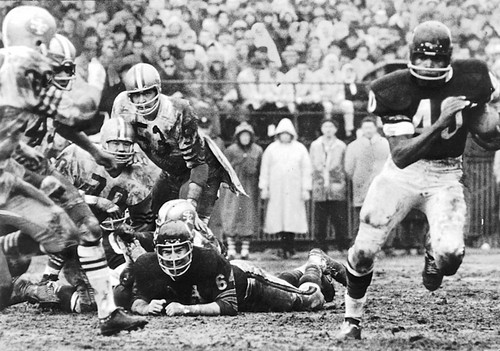
Every day after school we were in Kountze park or some place playing a sport — football, basketball, baseball, whatever it may be. There wasn’t a whole lot else we could do,” Gale said. “So, we were in the park playing sports. Our mamas and daddies had to call us to come eat dinner because we were out there playing.”
Gale said that as youths he and his friends had such a hunger for football that after completing flag football practice, they would then go to the park to knock heads “with the big kids” from local high schools in pick-up games. “It’s a wonder no one ever got seriously injured because we had no pads, no nothing, and we played tackle. It really made us tougher.”
Dennis Fountain, a friend and fellow athlete from The Hood, said the Sayers would often compete for opposing sides in those informal games. “You wouldn’t think those two guys were brothers,” he said. “They would mix it up good.”
Speaking of tough, the brothers tussled in a pair of now mythic neighborhood football games held around the holidays. There was the Turkey Bowl played on Thanksgiving and the Cold Bowl played on Christmas. “We had some knock-down, drag-out athletic contests out there,” said Gale, referring to the annual games that drew athletes of all ages from Omaha’s north and south inner city projects. “We were a little young, but the fellas’ saw the talent we had and let us play.”
Then, there was the rich proving ground he and Roger found themselves competing in — playing with or against such fine athletes as the Nared brothers (Rich and John), Vernon Breakfield, Charlie Gunn, Bruce Hunter, Ron Boone. “No doubt about it, we fed off one another. We saw other people doing well and we wanted to do just as well,” Gale said. As the Sayers began asserting themselves, they pushed each other to excel.
“When he achieved something, I wanted to achieve something, and vice versa,” Roger said. “I mean, you never wanted to be upstaged or outdone, but by the same token we were always proud and overjoyed by each other’s success. We were as competitive as brothers are.”
Roger and Gale had so much ability that the exploits of their baby brother, Ron, are obscured despite the fact he, too, possessed talent, enough in fact for the UNO grad to be a number two draft pick by the San Diego Chargers in 1968.
Each also knew his limitations in comparison with the other. Roger played some mean halfback himself, but he knew on a football field he was only a shadow of Gale, whom nature blessed with size, speed, vision and instinct. Where Gale was a fine hurdler, relay man and long-jumper, he knew he could not beat Roger in a sprint. “I wasn’t going to get into the 100 or 220-yard dash and run against him because he was much, much faster than I was,” Gale said. “He was great in track.”
As much as he downplays his own track ability, Gale held his own in one of the strongest collegiate track programs at Kansas. It was under KU track and field coach Bill Easton he discovered a work ethic and a mantra that have guided his life ever since.
“I thought I worked hard getting ready for football,” he said, “but when I joined his track team I couldn’t believe the amount of work he put me through and I couldn’t believe I could do it. But within months I could do everything he asked me to, and I was in excellent shape. He told me, ‘Gale, you cannot work hard enough in any sport, especially in track.’ The things I did for him on the track team carried on through my pro career in football.
“Every training camp I came in shape, and I mean I came in shape. I was ready to play and put the pads on the first day of camp, where many guys would go to camp to get in shape.”
On the eve of his pro career, Sayers was entertaining some doubts about how he would do when Easton reminded him what made him special. “You go for broke every time you go.” Sayers said it’s a lesson he’s always tried to follow.

A saying printed on a card atop the desk in Easton’s office intrigued Sayers. The enigmatic words said, I Am Third. When he asked his coach their meaning, he was told they came from a kind of proverb that goes, The Lord is First, My Friends are Second, I Am Third. The athlete was so taken with its meaning he went out and had it inscribed on a medallion he wore for years afterwards. His wife Linda now has it.
The saying became the title of his 1970 autobiography. The philosophy bound up in it helped him cope with the abrupt end of his playing days. “All the talent I had, the Lord gave me. And it was the Lord that decided to take it away from me,” Gale said. “That probably helped me accept the fact that, hey, I couldn’t do it anymore. I had a very short career, but a very good career. I was satisfied with that.”
Life after athletic competition has been relatively smooth for Gale and his brother. Roger embarked on a long executive corporate career, interrupted only by a stint as the City of Omaha’s Human Relations Director under Mayor Gene Leahy. He retired from Union Pacific a few years ago. Today, he’s a trustee with Salem Baptist Church. Gale served as athletic director at Southern Illinois University before starting his own sports marketing and public relations firm, Sayers and Sayers Enterprises. Next, he launched Sayers Computer Source, a provider of computer products and technology solutions to commercial customers. Today, SCS has brnaches nationwide and revenues in excess of $150 million. Besides running his companies, Sayers is in high demand as a motivational speaker.
Both men have tried distancing themselves from being defined by their athletic prowess alone.
“I want people to view me as an individual that brings something to the table other than the fact I could run track and play football. That stuff is behind me. There are other things I can do,” said Roger. For Gale, it was a matter of being ready to move on. “I’ve always said, As you prepare to play, you must prepare to quit, and I prepared to quit. I didn’t have to look back and say, What am I going to do now? I did other things.”
Getting on with their lives has been a constant with the brothers since growing up with feuding, alcoholic parents, sparse belongings and little money in “The Toe,” as Gale said residents referred to the north Omaha ghetto. His family moved to Omaha from bigoted small towns in Kansas, where the Sayers lived until Gale was 8, but instead of the fat times they envisioned here they only found despair.
Finding a way out of that cycle became an overriding goal for Gale and his brothers.
“Yes, we had tough times, but everybody in the black neighborhood had a tough time. Our dad always said, ‘Gale, Roger, Ronnie…sorry it didn’t work out for your mother and I, but you need to get your education and make something better for yourselves.’” The fact he and Roger went on to great heights taught Gale that “if you want to make it bad enough, no matter how bad it is, you can make it.”
Related Articles
- Gale Sayers’s Knee, and the Dark Ages of Medicine (fifthdown.blogs.nytimes.com)
- The 32 Greatest NFL Running Backs (sports-central.org)
- The Ties that Bind, One Family’s Celebration of Native Omaha Days (leoadambiga.wordpress.com)
- Sayers: Current players should help pioneers (sports.espn.go.com)
- John Mackey’s death has Gale Sayers ticked off at today’s NFL (profootballtalk.nbcsports.com)
Golf shots: Patrick Drickey lives dream photographing the world’s great golf courses
This successful art and commercial photographer has in recent years found his niche making panoramic images of the world’s great golf courses. The creative artist’s early work goes back to the founding, fledgling years of Omaha’s Old Market. He never really left the Market in his heart and when he could he bought property. He’s developed cool living-work-community spaces out of old buildings tastefully renovated to retain their charming urban historical character. Subsequent to this profile being published he’s opened a popular art gallery and event space, the 1516 Gallery, in one of his buildings. Those who know of Drickey or who know only one aspect of his life and work will likely be surprised by the breadth and depth of his experience and of his output. With any profile subject it’s best to get to know their passion because once you know that then you get to know the man or woman you’re writing or reading about. If nothing else, I hope this adequately expresses the extent of Drickey’s passion.

Golf shots: Patrick Drickey lives dream photographing the world’s great golf courses
©by Leo Adam Biga
As published in the current edition (August 2010) of the New Horizons
The same wanderlust that sent Patrick Drickey off to see the world at 17 in the U.S. Navy Reserve carries him today on photographic shoots around America and overseas.
After working as an art, architectural, food and agricultural photographer, Drickey hit upon an idea for photographing the world’s great golf courses. He saw a market for indelibly commemorating the signature golf holes that make these green meccas and Elysian Fields iconic symbols for everyone from professionals to weekend duffers.
He appreciates the irony of being one of the world’s most in-demand golf photographers yet not having grown up playing the game. Though he plays now, he’s hardly accomplished as a 25-handicapper. But this “history buff” is well-versed in the game’s heritage. He knows its hallowed grounds, having trod many of those very links himself. He is schooled in its legends, many of whom he’s met and photographed, including Jack Nicklaus and Arnold Palmer.
He also enjoys reviving his own family’s golf legacy. His late maternal grandmother Helen Burmester was a local amateur champion in the 1930s. His mother didn’t play the game, therefore he didn’t. The images he makes today would have surely pleased grandma. He displays her antique clubs at Stonehouse.
His is the ultimate niche business specializing in panoramic images of picturesque places like Pebble Beach and St. Andrews. Drickey and his staff employ a rigorous production process to create archival quality prints imbued with painterly attributes. Customers collect framed Stonehouse prints the way some folks collect fine art works.
None of that was on his mind 44 years ago. In 1966 he was a bored Omaha Burke High School junior, just marking time before going off on some undefined adventure. He got what he wanted when he joined the Navy — both to see the world and escape the military draft for the escalating Vietnam War.
He counted on being assigned a cushy, scenic port of call out of harm’s way. He got his wish in Guam. Then in January ’68 he was sent to a naval supply facility in Saigon, where as “a storekeeper” he was in charge of procuring most everything for delta patrol boat crews and construction battalions.
“It was like being given the keys to the kingdom as an enlisted man,” he said. The job gave him latitude as the point person who could lay his hands on whatever people wanted. “Pretty much anytime anything needed to be greased, they’d come to me.”
He would apply that keep-everybody-happy skill set to his professional photography career, where pitching and pleasing clients is paramount.
He knew Saigon was far from the front line action and so he had little cause for worry.
“I had no idea what to expect, except Saigon was considered a safe zone, so I wasn’t that concerned about anything. We were at a place called the Annapolis, like a temporary Navy billet right outside Tan Son Nhut Air Base (the near Saigon base accommodated military personnel from each branch). From there guys would get assignments and be sent everywhere in the country. Because we were on temporary assignment they had us staying there. We would drive to the main warehouse compound early in the morning.”
On his third morning there he and fellow supply personnel left for the drive into Saigon, unaware the area they left behind would come under attack by Viet Cong forces in the Tet Offensive, which took its name from the traditional Vietnamese holiday it coincided with.
The VC flooded into the south by the tens of thousands. Fire fights and full scale battles erupted over a wide battlefront. Except Drickey and his mates didn’t know it was happening until almost too late.
“The morning Tet started we all piled on a two-and-a-half ton flatbed stake truck. The streets were dead quiet and we didn’t really think anything of it. There was no machine gun fire going off or anything like that. The three days prior the streets were filled and fire works were going off in celebration of Tet. That’s a big event for those people. Kind of like the Fourth of July in America.”
He and his mates figured the quiet was the post-holiday lull, but they were then jolted into reality.
“We went past the U.S. embassy and we noticed damage to the facade, like big mortar or artillery rounds hit it. We got down to the compound and the gates were closed, which was unusual. Then guards popped up from over the top, outfitted in flak jackets, brandishing M-16s. They asked, ‘What are you guys doing — haven’t you heard?’ We hadn’t heard anything.”
Strategic parts of Saigon were, Drickey said, “under siege,” a situation in which “anything could happen.” He recalled,,” We got in the compound and spent the next seven days isolated there. We did come under sniper fire. We had guard duty on all the perimeters. No (regular) food, we had to break out sea rations.”
Though the offensive was repelled, it put everyone on edge.
“You didn’t go anyplace after that without firearms,” he said. “I had my own vehicle, and they issued anybody who was driving a truck a sawed-off shotgun because the blast pattern was so big that all you had to do was point and shoot and it would take out anything.”

Drickey was stationed in Saigon during the Tet Offensive
Even his “sweet sawed-off” was no gauranteed protection against tactics targeting U.S. military. In those tropical climes he said it was standard practice to drive with vehicle windows rolled down, making drivers and passengers susceptible to a grenade or other explosive being thrown inside or someone taking pot shots at them. Drickey luckily escaped injury.
Indeed, he settled into a familiar, comfortable routine. Along the way, he was exposed to an intrepid band of men who inspired a new vision for what he might do with his life. The backdrop for this revelation were great big R & R bashes the local commander of Naval supply operations threw.
“The old man was interested in camaraderie among the troops,” Drickey explained. “There were seven warehouses in Saigon and once a month you’d get together at one of them for an afternoon of barbecue, volleyball, poker, and shoot-the-shit. It was also a time to get grievances ironed out. The food during those events was always top rate, and that was attractive to the AP (Associated Press) and UPI (United Press International) photographers, who would spend time in our compound.”
These photojournalists covering the war were a breed apart. Their independence and their enthusiasm for their work made a distinct impression on Drickey.
“I was just a kid and they were the first people I met who never complained about their jobs. They couldn’t wait to get their next assignment, wherever it was going take them around the world, and that intrigued me,” he said. “It was their attitude. I said, Wow, that’s the kind of adventure I want my life to be.”
Before encountering the lensmen, he’d never considered photography a career choice. He’d only fiddled with a Brownie back home. Until ‘Nam, no photographer served as a model he might follow.
“My only experience with a photographer was posing for one at a wedding or for high school portraits. I had absolutely no interest in that. But the adventure of photojournalism hooked me.”
Back home in the States in ’69, he pursued his new found aspiration. He used the GI Bill of Rights to enroll at the University of Nebraska at Omaha but between meager funds and a requirement he take writing-reporting classes, he dropped out. At the time, he said there was no focused photojournalism program or track at any area school, and so he pieced together his own by taking a course here and a course there.
“I wound up auditing courses for photography at Bellevue College and Creighton University. I took a course over at Iowa State specializing in architectural photography. My dad was a carpenter and contractor, so for me getting involved with buildings seemed like a natural choice.”
Drickey never became a news hound like those romantic figures who sparked his imagination. But he learned the craft bit by bit, carving out a place for himself that, while hardly heroic, made him a nice living and ultimately provided the freedom to find his passion and travel the world.
Early on, he identified himself as an art photographer.
“I was doing black and white still-lifes then. I had a show with Judith Welk (Omaha acrylic and oil painter) called “Fresh Produce,” all based on still llfes and a visit to Seattle. I was somewhat successful with that but I soon realized it wasn’t a career move for me unless I decided to get a degree and become a teacher.”
In the early ’70s Drickey immersed himself in the emerging Old Market counterculture scene. “I was always drawn to it. Everybody down there was very independent thinking. I was one of the founding members of the Artists Cooperative Gallery, when it was above M’s Pub. It was a true coop . You were required to work one period a month, typically a Friday night opening. It taught me the discipline of pulling together a show and what that takes.”
Other pioneering Old Market artists whose paths he crossed then included the late Lee Lubbers, installation artist Catherine Ferguson and the former Ree Schonlau, now Ree Kaneko. Ree’s husband is celebrated ceramic artist Jun Kaneko. Ree founded the Bemis Center for Contemporary Arts, whose artist-in-residency program has brought hundreds of artists from around the world to live, work, and exhibit in Omaha.
“Ree’s my all time hero in the city. Her vision for what could be, can be, is still amazing to me. She is just one-of-a-kind and an absolute Omaha treasure. She was one of four women who had an operation called the Craftsmen’s Guild. Ree was the potter. I was a young photographer looking for space and they had an upper floor open I considered doing a studio in. For whatever reason the deal fell apart but I maintained a relationship with Ree. She always had me photograph the artists’ work for the invitations.”
That led to contacts with other local artists. He’s collected their work ever since. His artist friends include Larry Sasso and the Kanekos. He was close to the late Kent Bellows, whose hyper realistic drawings are the basis for a fall Joslyn Art Museum retrospective Drickey’s helped organize.
The Old Market remains his artistic home. He’s maintained property in the historic district for years, always making his studio and office there, though never residing there.
“I started in a basement at 12th and Harney. Back then I paid $175 a month rent. It was affordable, it was doable, I don’t know that anybody can do that (starting out) today. I bought my first building at 14th and Howard.”
The two-story red brick building his Stonehouse Publishing occupies at 1508 Leavenworth was originally St. Philomena school. As he tells the story, a fire led to the third floor being removed. At some point, he said, a tractor supply company bought the entire block and combined that building with two adjacent ones. A porch addition was made to the original structure.

In the ‘70s Omaha businessman and politico Leo Kraft bought the complex, converting it into a home and studio (his wife Frances Kraft was an artist) . Drickey and his wife Karen, a Bryan High School art teacher, led efforts to preserve Tomlinson Woods as a public arboretum and they found an ally in Kraft, the then-Omaha City Council president.
“We came there for a brunch one Sunday with kind of an eclectic mix of people and I never forgot the space. That was the first time I’d witnessed anything like this,” Drickey said, referring to the urban loft space with exposed original brick and wood work.
Drickey’s appreciation for well designed historic buildings was instilled in him by his father and honed by the photography he did for HDR and for Leo A. Daly. His work for Daly sent him all over the country, photographing their projects.
When the Krafts passed away Drickey approached their son Marc about the property but, he recalled, “it was so close to the family’s hearts I couldn’t ever see a chance when they’d part with it.” In 2000 he saw a for sale sign out front. He acted quickly to purchase the site. He’s put much sweat equity into renovating the studio-office space. He and his three brothers learned the construction trades from their father.
“Construction is in our blood,” he said. “We all know how to do stuff. I know how to dig a footing and put up a building. There’s nothing I can’t do.”
His blue collar sensibility is why his closest relationships in golf are with the course superintendents.
“Let’s just say in the world of golf I probably get along better with the golf course superintendents than anyone else,” he said. “I’m more drawn to those guys. They’re the unsung heroes to me because they are the ones out there providing what it takes to make that course a beautiful challenge. I’ve made so many friends on the superintendents side.”
When he finishes a golf project he generally gives a limited edition print to the course super as a thank you for the courtesy and access they provide on a shoot.
Drickey’s pathway to golf photography came via ag photography. His apprenticeship included a five-year stint with Walter and Nancy Griffith and their Photographers Associated. He said it was under Walter Griffith’s tutelage “where I learned how to be a studio photographer. He had an extraordinary studio.”
One of Griffith’s big accounts was Omaha Steaks, and Drickey went on to build his own food clientele, including Godfather’s Pizza.
Griffith also introduced Drickey to the panoramic format for shooting outdoor landscapes by way of a panoramic camera he built himself for the ag business. When Fuji came out with a panoramic camera Drickey was one of the first in this area to get one.
“Whenever you looked at those panoramic images on the light table and studied them with a loop it was like you were standing in the field,” said Drickey. “I knew the power of that image. That had great impact on me.”
Subsequently, Drickey said, “I chased the ag business.” He felt at ease with the farmers and ranchers he met on projects, saying, “They just have a different quality about them.” He came to appreciate the unexpected similarities of how light and shadow fall on the contours of a food and ag landscape.
“It’s funny because I aways heard that shooting food is like shooting landscapes, just on a different scale, and it’s true. A successful food shoot is a landscape, in how it’s lit, all of the elements are there.”
Reinventing himself as a golf photographer came about in a mother-of-invention way. A client, Cushman, a leading manufacturer of golf carts and lawn maintenance equipment, put out an annual calendar using “the tool girl” concept of a Playboy centerfold posing with products. “It worked for years,” he said. When a new, female marketing director asked him to take the calendar in a whole new direction, he hit upon the idea of picturing Cushman products against the backdrop of the world’s best golf courses.
The marketer loved the idea but then Cushman was sold and the new owners ditched the campaign. Fortunately for Drickey his idea was shared with Cushman’s advertising agency. They liked it so much they pitched the idea to another client, Rainbird Irrigation, which serviced many top courses, and they bought it.
“The next thing I knew I was on a worldwide, whirlwind tour of all the world’s best courses, starting with Pebble Beach,” Drickey said.
That very first assignment at Pebble Beach in 1995 proved pivotal. He was there to get a shot of its famed No. 7 hole, only the weather didn’t cooperate.
“I waited there in the rain for six days for it to stop raining, and on the seventh day the sun shone and I got a beautiful panoramic shot.”
The shot remains the best-selling print in the Stonehouse archive. When 600 prints of that image sold at the 1996 AT & T Pebble Beach National Pro-Am, he said, “that’s when I knew this could be a business. it’s been a fun ride, a bit of a roller coaster, but a fun ride ever since.” He sold his ag-food photography business to form Stonehouse, whose name comes from the field stone lake house he kept in Iowa.
The USGA (United States Golf Association) saw the image, and, he said, “they embraced it and put in their catalogue and it was like the top selling item for six consecutive issues.” That exposure, he said, “got the attention of some folks at The Open (the British Open), and I wound up doing all of the British open rotation courses, including some of the historic ones, like Royal Port Rush in Northern Ireland.”

This year Stonehouse was selected as one of the official images by St. Andrews Links, which runs the course on which the 2010 Open at St. Andrews was played. Contestants autographed the picture for permanent display in the St. Andrews clubhouse, a rare honor accorded a Yank photographer.
“It validates my career in the manner Kent Bellows was validated when the New York Metropolitan Museum acquired his work for their permanent collection,” said Drickey.
He’s also been privileged to do special projects for living legends Jack Nicklaus and Arnold Palmer. The Nicklaus project involved Drickey documenting Jack’s last round as a player at St. Andrews.
“That turned out to be great, but totally unnerving for me because it’s not something I specialize in. I was like, OK, what are you going to do to capture this icon within an icon in a panoramic format? You preview these things in your head, what you expect, where you’re going to be, where he’s going to be, and it’s not a matter of, Hey Jack, look over here. You don’t get that opportunity.
“I took my son on that and that was a great experience for him.”
It turned out one of Nicklaus’s sons caddied for Jack that day.
Drickey failed to get a hoped-for element in the shot but made up for it by nailing another: “Jack was playing with Tom Watson and Luke Donald. I wanted the leader standard in the shot to show where the players stood in the tournament, but when Jack lined up for his putt on No. 1, I was limited to where I could be, and I couldn’t control where those guys were.”
Thus, the leader standard ended up out of frame. But Drickey did get Jack in the sweater he wore when he won his last British Open. Picturing the golf god in it took on added importance when Jack then removed it, giving Drickey one of the only shots of the Golden Bear in that sentimental garb on the Old Course.
“It’s the shot I’m the most proud of,” said Drickey. “We did a big print of it and sent it down to Jack, and his people called me and said that Jack added the prints to his personal collection.”
At the storied Latrobe Country Club in Latrobe, Penn. the course that Palmer’s father designed and where Arnie learned to play, Drickey got to contribute to the Palmer lore by shooting an assignment there. He said the only instruction given by club officials was “to pay special attention to the back nine, where the covered bridges are — those are real special to Mr. Palmer.”
“I knew it was significant to the Palmers. I walked out on this course…I had misty early morning light. Then I got to No. 11, and the sun came out in such a way that it kind of highlighted the bridge, with the mist rolling back. That’s how Pennsylvania people see their countryside all the time in their mind’s eye. and I got the shot. I said, I don’t need to do anything else on this course, this is it.”

The framed print was sent to Palmer, who invited Drickey to a licensee event at Latrobe. It was there Drickey learned his print made quite an impact.
“I ate dinner with his brother Jerry, and I had brought these mini-prints I give out as examples of who we are, and he said, ‘Oh you’re this guy, I gotta tell you this story: When you sent that framed print Arnie’s assistant put it on an easel for him to see it and all of us were standing around just to see his reaction. Arnie looked at it, he had a tear in his eye, and he said, Boy did you ever think this place could look this good?'”
Drickey said he was told Palmer got so “emotional” that he purportedly declared, “When I’m dead and in a coffin one of those prints is going to be buried with me.” The photographer also learned some of his images hang in Palmer’s office. Having Palmer as a fan, he said, has “opened some doors for us like you can’t believe.” For example, the Golf Channel did a piece on Drickey and now carry Stonehouse prints online.
In addition to being endorsed by some of golf’s top names, Stonehouse is licensed by major courses, by the USGA and by the PGA, giving him access to virtually any fairway and green. From Pinehurst to Medinah to many other championship courses with rich histories, Stonehouse and Drickey are recognized names with carte blanche access.
“Which is a significant deal,” he said, ”because we are becoming that embedded in the lore of golf.”
Additionally, he said more than 600,000 Stonehouse prints are now in circulation.”We’ve branded the panoramic format for golf,” he said “That belongs to Stonehouse. One of the things I like about what I’ve been able to do is carve out a niche that goes beyond the confines of Omaha.”
Employing all-digital equipment in the field and in the studio, Drickey applies exacting standards to his imagemaking not possible with film. Digital enhancements bring clarity from shadows and achieve truer, more balanced colors, he said. Even a sand trap can be digitally raked.
“It’s just incredible what you can do — the control you have,” he said.
The refinements or touch-ups accomplished in the post-production process are why he calls what he does “more photo illustration than straight photography.”
He said Stonehouse has adopted the fine art Giclee process to its own printmaking methods, which entails using expensive pigmented archival inks on acid free watercolor paper to ensure prints of lustrous, enduring quality.
“I want to produce a product that’s going to be around for a long time. The color hits that paper and stays with it — it will not fade,” he said.
He feels another reason for Stonehouse’s success is its images portray the timeless characteristics that distinguish a scenic hole or course. He strives to fix each scene into a frieze that expresses the design, the physical beauty, the tradition. His eye for detail helps him bring out “the architecture” of it all.
The clubhouse is often featured in shots because club members expect to see it.
Getting the composition just how he wants it means “waiting for the right light,” he said, adding, “Even a tree shadow coming across the green will change the dynamics of that composition.” Waiting for magic time can mean hours or days.
Much care and research go into finding the one idyllic, golden-hued shot that will speak to avid golfers. That’s who Stonehouse prints are marketed to. He said a typical customer wants a print of the famous hole or course they challenged, much like a hunter wants the head of the game he bagged.
Building-updating Stonehouse’s image collection keeps Drickey on the road several days a month. He’s half-way to his goal of photographing the world’s top 100 courses. One he’s still waiting to shoot is Augusta, home to the Masters.
“That’s one of America’s crown jewels. We are present at the other majors and we’d like to have a presence there. It’s just a matter of time. Those introductions have been made,” he said.


Glimpses at the 1516 Gallery he’s opened and directs
Stonehouse prints grace books-periodicals-calendars and other publications. Some of its images are included in the coffee table book, Planet Golf.
Not all his assignments are outside Nebraska. He often shoots in-state courses, at least one of which — the Sand Hills Golf Club near Mullen — is regarded as world-class. Its managing partner, Dick Youngscap, said Drickey “does all of our work. He’s a premier photographer. He’s the best I’ve been around. Pat seems to have an empathy for not only the golf course but the physical environment — the scale and the scope of it. He’s just special, both as a human being and as a talented artist.”
Whether trudging across the Sand Hills or the Scottish Moors, Drickey always brings his clubs along in case the mood strikes to shoot a round or two. He said club officials “always offer” an invitation to play. “They assume I’m a golfer first and a photographer second, and that’s not true. I am a photographer first. I love the game, not that I have what I would call a game. I just like being out there. I don’t keep score. I stopped a long time ago. It makes it a much more enjoyable game. What’s the point? I guess to see if you’ve improved, but I know when I’ve hit a good shot, and that’s all I care about.”
Just like he knows when he’s composed a winning photograph.
He realizes how lucky he is to visit such oases for his job. “They’re beautiful places, absolutely stunning,” he said. It’s his dream job come true.
“I’m doing exactly what I want to do.”
Visit the Stonehouse website at http://www.stonehousegolf.com or call 1-800-949-7274.
Related Articles
- How to Photograph a Golf Course (brighthub.com)
- Masters 2011: Woods, Mickelson and McIlroy Remind Us of the Human Side of Golf (bleacherreport.com)
- Fairways Where Golf Becomes the City Game (travel.nytimes.com)
Harley Cooper, The Best Boxer You’ve Never Heard Of
Even if you consider yourself a real student of boxing and its history in America, chances are the name Harley Cooper isn’t familiar to you. Yet, pound-for-pound, he was as tough as they come in the ring and he just may have been the best boxer you’ve never heard of. The highlight of his amateur career — he never went pro — was winning two National Golden Gloves light heavyweight titles. He was in middle of a long U.S. Air Force Career at the time. My New Horizons story about Cooper sort of makes the case for him as this unsung warrior whose achievements have been largely forgotten today, but who came oh-so-close to joining the sport’s ranks of immortals before a bad break prevented him from fighting on the world stage in the Olympic Games. Then, when he opted not to turn pro, but rather continue his military career, his amateur feats soon faded into obscurity. No one can ever take those Golden Gloves titles away from him though. Cooper didn’t fight anymore but he remained in boxing as a coach and amateur boxing organizer, and continues to be active in the sport today. He’s also a devoted family man with 13 grown children and many grandchildren.

Harley Cooper, The Best Boxer You’ve Never Heard Of
©by Leo Adam Biga
Originally published in the New Horizons
Then Air Force tech sergeant Harley Cooper never saw the punch Joe Frazier knocked him down with during a Washington, D.C. sparring session in preparation for the 1964 Olympic Games in Tokyo. A tough Savannah, Georgia native, Cooper grew up fighting in The Hood, but got schooled in the Sweet Science in the military. Upon winning the second of two national Golden Gloves titles while boxing out of Offutt Air Force Base, he then won the right to be the U.S. Olympic light heavyweight entry by capturing the Olympic Trials. In peak fighting trim and riding an unbeaten streak, he was primed to bust some heads in Tokyo.
For his Olympic training, Cooper often worked out with team heavyweights Frazier and alternate Buster Mathis, the actual Trials champ who lost his Tokyo shot after suffering a broken hand. Fate then took a sad turn in Cooper’s own bid for Olympic glory when, on the eve of leaving for Japan, he was medically disqualified. During an earlier assignment in Germany, Cooper, born with a deformed kidney, developed problems with his other kidney after drinking water from a mountain stream, causing doctors to remove the damaged organ. Left with a single kidney, he boxed with no ill effects right up until officials nixed his Olympic trip. “They had an Air Force officer there who told me I could go, but I couldn’t fight. They felt it was a danger to me, even though I’d been fighting for about three-four years with one kidney. I told them if they wouldn’t let me fight to let me go home. Now, I wish I would have went,” says Cooper, his soft eyes filled with regret even now at the thought of missing all the Olympic pomp and pageantry.
This seemingly arbitrary decision denying him a chance for Olympic gold, especially when so close to pursuing it, hurt him to his core.
“That was really, really tough,” says the soft-spoken Cooper, an inscrutable man with the pensive demeanor of a scholar. “Honestly, I believe if I would have gone, I would have won. Well, I gotta believe this, because in boxing, if you don’t think you can win, you’re lost.”
Only a couple years before, he’d transfered to Omaha. His new training ground became Hawk’s Gym, where his sparring partners included pro heavyweight Lou Bailey. He shot up the amateur ranks by sweeping thw Golden Gloves. It was his first Gloves action, but he was no rookie, having already compiled hundreds of hours in the ring and dozens of bouts in the military, winning service titles wherever duty called, including Japan and Europe. Once here, he out-classed the field. “In all honesty, I had the advantage because of my experience,” he says. “I had the strength. I had the discipline. I had the knowledge. I had the ability.”
He’d dabbled in the sport earlier, when he trained for one bout and lost, but only got serious following a scene straight out of the movies. He was based in Japan when, one night, he and a buddy went to a service boxing exhibition. There was a call, just like in carnivals of old, for a volunteer to have a go at one of the fighters. He took the bait. “Being young and dumb,” he says,. “I put my hand up and I went in, and me and this guy started boxing. At this time, I didn’t know how to box, but I could fight, OK? I knocked this guy down and the coach came and asked me to join the team. I joined…and that’s how I got into boxing.”
Boxing gave him something other sports he tried, didn’t. “I was always involved in some kind of sport, but once I started boxing than I stopped doing all the rest. For some reason, it just fit me. In boxing, you’re the only one…you either rise to the occasion, alone, or you don’t. With my background, it was more the challenge…of the give-and-take. And when you survive and win…there’s no other feeling like it.”
The youngest of eight children in a poor, working class family, he quickly learned how to use his fists. “As the baby of the family, I know I got tough from the older kids picking on me. When you’re the small one, you get all the lashings. And I was born and raised in a family where you didn’t back down, especially if you got in a fight,” he says. “If I got beat up and I went home crying, than my brothers would smack me a couple times and take me back. You dried your tears before you got home. So, I was pretty tough. But I wasn’t a bully.”
Playing the usual team sports as a youth, he says “I could hold my own” but was no superstar. He left home at 17 to join the Army and after a year’s hitch he signed up with the Air Force, where he found a home.
By the time he got to Omaha, Cooper was a mature 27-year-old veteran of both the ring and the military and the father of eight. The arrival of such a man and fighter on the local pugilistic scene soon turned heads and started tongues wagging.
“Everybody wanted him to fight for them,” says Omaha boxing historian Tom Lovgren, a former prize fight matchmaker and a longtime observer of the local fight scene. “The first time anybody saw him in the gym they knew this guy was going to be a national champion. He could punch. He could box. He could do it all. He was the most complete fighter I ever saw from around here. I never saw Harley Cooper lose a round in amateur fights in Omaha. He was that dominant.”
Boxing is replete with back room dealings and personal jealousies. So, once local coaches got a gander at Cooper, they vied like mad to get him to train with them and fight for their teams. That’s when, Lovgren says, the late Omaha World-Herald sports columnist, Wally Provost, stepped in and told Cooper, “You’re fighting for me,” to squelch any in-fighting and bad feelings. A few local figures worked with Cooper during his amateur career here, including the late Jack Fickler, but Cooper says, “I was seasoned enough that I trained myself. I knew what I had to do.”
He was able to do this, he says, thanks to his strict military training, which complemented boxing. “It’s not only the mental toughness I learned, but the confidence and the discipline. I would get up around 6 to go run. I’d run until I was exhausted. Then I’d come home and shower and go to work by 8. I’d get off work around 4:30 or 5, and by 6:30 I’d be in the gym, working out for a couple hours. I had a large family, so to supplement my income I refereed sports on weekends, but I still worked out every day. That’s commitment, man.” In the ring, this single-minded dedication paid off, too. “In boxing, you have to be very, very disciplined. You go into the fight with a plan, but once it’s on, things change and, so, you have to adapt to it, and if you don’t have the discipline to control what you’re doing, well, you’re not going to survive. I guarantee you, what separates the guys who are successful from the other guys is focus. I was so focused I didn’t feel the pain of the punches that hit me. Not until the next day.”
A hard-hitting, smooth-moving boxing machine, Cooper twice won the Golden Gloves Trinity by taking the Omaha, Midwest and National tournaments in both ‘63 and ‘64. His first title run came, unexpectedly, at heavyweight, culminating in the ‘64 finals in Chicago. Cooper was a natural light heavyweight but after an overseas transfer to Nebraska he didn’t have time to cut weight in advance of the local Gloves. Over the light-heavy limit, his handlers convinced him, against his better judgment, to compete in the heavyweight division, where he felt woefully undersized at 183 pounds. Even after winning the local-regional heavyweight titles, he still campaigned to go back to light-heavy, where he was more comfortable, but “they wouldn’t let me move down,” he says, referring to his trainers. “They kept saying, ‘Well, let’s see how far you can go.’” He went all the way.
The underdog used his superior quickness to offset his opponents’ greater size and power in winning only the second national gloves title by a Nebraska boxer since the 1930s. For Cooper, boxing is all about being smart enough to discern a winning strategy, often on the fly, and then having the requisite skill and heart to carry out the plan. Brains over brawn. “It’s like, when I fought at heavyweight. I didn’t win because I was the strongest guy and the biggest guy,” he says. “I knew if we got to pushing arms on arms, man, I wouldn’t stand a chance. It was the traps I set for those guys, and I took advantage of them.” Ah, traps — among the key tenets of Cooper’s cerebral boxing philosophy.
“See, I don’t see boxing as two guys swinging at each other,” he says. “I see boxing as people setting traps for other people, OK? Like, I would come out and do some things and, honest to goodness, I could predict what that person was going to do by his reaction to what I did. Like, I could make a guy jab at me by feinting at him, and he would expose himself and then the next time I could slip under his jab and get into him. You don’t think about it. That’s just something you see, and it goes somewhere back in your head, and the next time you do it, you know it’s going to be there. You’ve already set the trap, and then you take advantage of it.”
Traps are a two-way street, however. “Now, remember, the other guy is setting traps for you also,” he says. “So, you have to maintain, like a poker face, that coolness and not get excited, and just continue what you’re doing. It’s knowing traps are being set for you and out-thinking the other guy.”
In ‘64, Cooper fought at his accustomed light-heavy spot, plowing through to the nationals in Nashville, where he won. In the proceeding 40 years, only one other Nebraska fighter has won a national Gloves title. That same weekend in Nashville, then-Cassius Clay met Sonny Liston for the heavyweight title. Cooper and his fellow Gloves boxers were guests at the fight. While the introspective Cooper would never use the braggadocio style of the man later known as Muhammad Ali, he says he did learn from him that “you have to think you are good, before you are good.”
Cooper’s win in Nashville put him in line for the Olympic Trials box-off in New York, which he won. Whatever bitterness he felt over his Olympic bid later being snatched away has long faded into the realm of rich anecdotes. And he has plenty of stories from his two-months long Olympic training experience that put him in the same ring with some then and future legends whose respect he earned.
Like the time he sparred then-light heavyweight champ Bob Foster, a fellow Air Force vet. The way Cooper tells it, after sparring a couple rounds, Foster said, “Man, where’ve you been? I’m sure glad we never fought,” which he took to mean he would have given Foster fits. “This guy’s a big-time pro and world’s champion and he’s saying it would have been a helluva fight. That made me feel good.”
Or the times he and Smokin’ Joe Frazier traded leather, Frazier boring in, looking to corner Cooper on the ropes or sucker him into slugging it out, and the dancing, probing Cooper staying clear of trouble, looking for openings to counterpunch. Cooper says he held his own, except for that one time he got caught by an uppercut that dropped him, although he’s quick to point out, “I got right back up.” Today, he can talk about getting tagged by Olympic and world heavyweight champ Joe Frazier like the badge of honor it is. Years later, during an Omaha appearance with Ron Stander, Frazier told then-Husker linebacker Ira Cooper, one of Harley’s 13 children by two marriages, that his old man “was the best amateur fighter I ever saw who never turned professional.” High praise, indeed.
Why Cooper never turned pro despite attractive offers, including an overture from boxing legend Henry Armstrong, reveals much about the man. “Well, you gotta remember, I had a big investment in the service at that point,” he says, adding that with a large family to support he chose the sure thing rather than chancing it. “I’m satisfied with my life. If I had to do it over again, I don’t know I would change anything. One part of my life I would not change is having kids.”
After his first marriage ended in divorce, Cooper retired from the Air Force in ‘73 and came back to Omaha, where he raised a new family with his present wife, Edie. Their kids are grown now and he’s a grandpa many times over. He post-military work life has centered, not surprisingly, around kids — at the North Omaha Boys Club, Glenwood State School and the Cornhusker Striders track program.
But the pull of boxing never left and, so, for 30 years he’s volunteered with the Great Plains Amateur Boxing Association, the organizing-sanctioning body for local-regional boxing cards such as the Golden Gloves. He’s even helped train some kids.
“I love boxing. I’m lucky I have a wife that understands it’s such a big part of me.”
Occasional what-might-have-beens creep in. “There’s still some times when I kind of wish I had of…” Turned pro, he means. “I was better than I realized I was at the time. I see these guys now and they just don’t look that good to me, man.” Lace ‘em up, Harley‘s in the House of Pain and he’s lookin’ to whup somebody.
Related Articles
- Golden Gloves…& golden heart (nydailynews.com)
- Gildardo Garcia finds redemption in ring and in life (denverpost.com)


 Leo Adam Biga's My Inside Stories