Archive

Posts Tagged ‘Writing’

Life Itself: Six years of Omaha Magazine stories about people. their passions and their magnificent obsessions

April 18, 2018 Leave a comment

Life Itself: Six years of Omaha Magazine stories about people. their passions and their magnificent obsessions

©by Leo Adam Biga

Author-Journalist-Blogger


Park Avenue Revitalization & Gentrification

February 16, 2018 · Posted In: MidtownOmaha HomePlaces
As revitalization has come to diverse and densely packed Park Avenue, a tale of two neighborhoods has emerged. The north end—near 30th and Leavenworth streets and Midtown Crossing—finds a millennial haven of developer-renovated historic properties […]

Alexander Payne’s Homecoming

February 13, 2018 · Posted In: FilmOmaha MagazinePeople
Alexander Payne’s new tragicomedy Downsizing imagines the fate of an overpopulated world hanging in the balance due to depleted natural resources. When scientists find a way to miniaturize humans, adventurous souls choose going small as an […]

The State of Volleyball

December 27, 2017 · Posted In: Omaha MagazineSports
For generations, football gave Nebraska a statewide identity. But with Husker gridiron fortunes flagging, volleyball is the new signature sport with booming participation and success. Here and nationally, more girls now play volleyball than basketball […]

Huskers’ Winning Tradition

December 18, 2017 · Posted In: Web Exclusive
The University of Nebraska-Lincoln volleyball team entered 2017 with tempered expectations after losing three All-Americans and two assistant coaches from the previous season. But what began as a rebuilding year became a 32-4 national championship […]

Downsizing Home Cameos

November 17, 2017 · Posted In: Omaha Home
When Oscar-winning filmmaker Alexander Payne prepares a film, he not only auditions actors but locations, too. The writer-director insists on actual locations whenever possible. When he films in his hometown of Omaha, he’s extra keen […]

A Fluid Life

November 10, 2017 · Posted In: ArtEncounterEntertainmentLifestyle
Fluid. That’s how digital graphic designer and fine art painter Dana Oltman describes her aesthetic. As art director for Identity Marketing Group (she was previously at Rebel Interactive) she fulfills client project wishes. She says […]

Francophile

October 9, 2017 · Posted In: 60 Plus in OmahaPeople
Half a century ago, while attending Mercy High School, Anne Marie Kenny cultivated a Francophile passion. At 21, she followed it to realize a dream of being a cabaret artist in France. She went from […]

An Omaha Hockey Legend in the Making

October 5, 2017 · Posted In: Omaha MagazineSports
Former UNO hockey star Jake Guentzel left school in 2016, after junior year, to pursue his dream of playing professionally. No one expected what happened next. The boyish newcomer with the impish smile went from […]

100 Years Strong

August 7, 2017 · Posted In: FamilyOmaha Home
The Bryant-Fisher family reunion celebrates an important milestone in 2017—its 100th anniversary. The three-day reunion event will conclude with a final day of festivities in Elmwood Park. The “Dozens of Cousins,” named for the 12 […]

Baseball and Soul Food

July 3, 2017 · Posted In: Food & DrinkOmaha MagazineRestaurants
When baseball still ruled as the national pastime, Omaha showcased the game’s still prevalent but loosening black-white divide. In 1947, the year Jackie Robinson broke Major League Baseball’s color barrier, the barnstorming Omaha Rockets began […]

Mural Man

June 2, 2017 · Posted In: ArtLifestyleOmaha MagazinePublications
Visual artist Mike Giron’s creative life spans studio practice, teaching, and working with A Midsummer’s Mural and South Omaha Mural Project teams. “In my studio work, I have no idea what’s going to happen—I just […]

In Their Own Words

May 25, 2017 · Posted In: 60 Plus in OmahaArt,Lifestyle
Members of the Greatest Generation tell their own stories in a locally produced documentary, 48 Stars. The in-progress film features personal testimonies from World War II veterans. War buff Shawn Schmidt conceived the project. His […]

The Tail-Gunner’s Grandson

May 1, 2017 · Posted In: 60 Plus in OmahaArt,History
Filmmaker Ben Drickey’s lifelong fascination with history turned personal in 2001. That’s when he documented his grandfather’s return to Germany, revisiting the sites where the U.S. Army Air Corps serviceman crashed and was captured during […]

Crazy Gringa Hot Sauce

April 26, 2017 · Posted In: B2B Magazine,BusinessOmaha Magazine
Mary Current and her son, Anderson Current, started making hot sauce three years ago. She never planned on being a commercial food producer despite working the front and back of the house at restaurants, studying […]

Kevin Simonson

April 25, 2017 · Posted In: Omaha Magazine,People
Kevin Simonson of Omaha realizes he occupies an unlikely position as a leading chronicler of that dark jester of American letters, the late Hunter S. Thompson. Thompson, a New Journalism exponent, gained a Grateful Dead-like […]

Austin Ortega

February 23, 2017 · Posted In: Omaha Magazine,PeopleSports
How did a smallish soccer-playing Hispanic kid from sun-drenched Escondido, California, end up an ice hockey star in Nebraska? Although his profile does not fit the stereotypical hockey player, UNO Mavericks forward Austin Ortega has […]

Omaha Small Business Network

February 7, 2017 · Posted In: B2B Magazine,BusinessBusiness ProfilesPublications
“What OSBN seeks to do is to initially bridge that gap between the bank and the consumer. But after receiving an OSBN loan, our desire is for you to become bankable. Each opportunity with OSBN […]

Marlin Briscoe

December 29, 2016 · Posted In: 60 Plus in Omaha,EntertainmentPublicationsSports
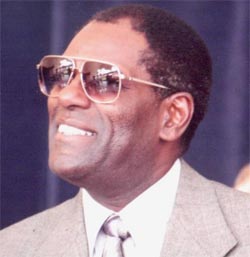
Omaha native Marlin Briscoe made history in 1968 as the NFL’s first black starting quarterback. His success as a signal-caller carried huge symbolic and practical weight by disproving the then-popular misconception that blacks lacked the […]

Gabrielle Union

December 21, 2016 · Posted In: Entertainment,Omaha MagazinePublicationsTheatre
Actress Gabrielle Union projects her natural intelligence and feistiness in whatever role she undertakes. The Omaha native is never at a loss for words or opinions. She decries Hollywood’s male-dominated, white-centric ways and lack of […]

Location Scout and Producer Jamie Vesay

October 11, 2016 · Posted In: ArtLifestyleOmaha MagazinePeoplePublications
When it comes to shooting video, Jamie Vesay of Omaha is a handler, facilitator, fixer, procurer, and—as his LinkedIn site puts it—“minutia wrangler” and “chaos killer.” He works on television commercials, music videos, and feature […]

Artist Erin Blayney

October 2, 2016 · Posted In: ArtDowntown,DowntownEncounterLifestyleNeighborhoods,Publications
For visual artist Erin Blayney, who grew up in the great outdoors, it’s all about light and space. She has plenty of both at her Old Market apartment that   doubles as her studio. Natural light […]

Coding & Community

February 2, 2016 · Posted In: B2B Magazine,BusinessLeadersPublications
Shonna Dorsey has merged an aptitude for technology with a desire to help others via Interface Web School, Omaha’s latest cyber-ed iteration. It’s not the first time she’s combined her entrepreneurial, networking, and community interests. […]

Talking It Out

January 25, 2016 · Posted In: LifestyleNonprofit,Omaha MagazinePublications
When Catholic Charities of Omaha looked for somebody to take over its open race and identity forum, Omaha Table Talk, it found the right host in Inclusive Communities. Formerly a chapter of the National Conference […]

The Nelson Mandela Way

January 20, 2016 · Posted In: EducationFamily,NeighborhoodsNorth OmahaOmaha Magazine,Publications
  North Omaha may be reversing five decades of capital resources leaving the community with little else but social services coming in. Emerging    business, housing, and community projects are spearheading a revitalization, and a new school[…]

Time Out

December 18, 2015 · Posted In: Food & Drink,Omaha MagazinePublicationsRestaurants
The official name of this long-lived north Omaha business is Time Out Foods. “But Time Out Chicken is what everybody tags us as,” says owner Steve Mercer. He’s even bought that Google domain. With a […]

His Little Corner of the Sky

December 9, 2015 · Posted In: LifestyleOmaha MagazinePeoplePublications
Omaha Police Department gang intervention specialist Alberto “Beto” Gonzales grew up in a South Omaha “monster barrio” as an outsider fresh from the Texas-Mexican border. Working out of the South Omaha Precinct and South Omaha […]

Year of the Startup

November 17, 2015 · Posted In: B2B Magazine,BusinessEntrepreneursPublications
The emerging startup accelerator scene supports creative-minded risk-takers looking for an edge to follow their passion and bring their ideas to fruition. Sebastian Hunt, 25, is passionate about giving entrepreneurs like himself a nurturing space […]

Touched by Tokyo

August 26, 2016 · Posted In: LifestyleOmaha MagazinePeoplePublications
If you don’t consider Omaha a beauty-style launching pad, think again. Homegrown talents Jaime King and Gabrielle Union tear it up on screen, in photo spreads, and for the red carpet. Designer Kate Walz has […]

The Silo Crusher

The story of athletics at the University of Nebraska at Omaha has fluctuated from wild success to heartbreak (and back). All-Americans, post-season runs, and national title traditions collided with mismanagement and sparse spectator attendance. Then […]

Stephanie Kurtzuba

August 8, 2016 · Posted In: ArtLifestyleOmaha MagazinePeoplePublications
Stage and screen actress Stephanie Kurtzuba has graced Hollywood red carpets and Broadway billboards, but she is most comfortable at her family’s West Lanes Bowling Center in her hometown of Omaha. The Central High School […]

Tim Christian

September 9, 2015 · Posted In: ArtLifestyleOmaha MagazinePublications
This article appears in the Sept./Oct. 2015 issue of Omaha Magazine. Nebraska lacks an infrastructure to support a film industry. Omaha Creighton Prep graduate Timothy Christian is trying to change that. After years away pursuing […]

Jocelyn and Deven Muhammad

August 26, 2015 · Posted In: LifestyleOmaha MagazinePeoplePublications
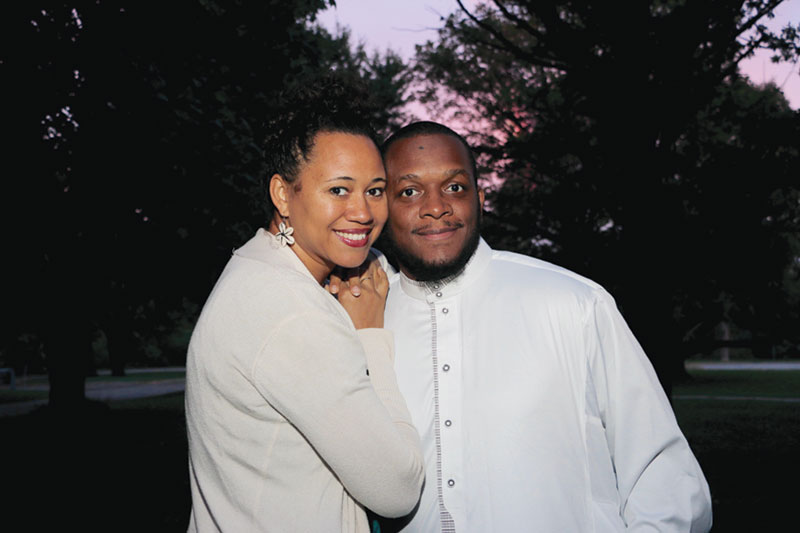
This article appears in July/August 2015 Omaha Magazine. Since coming out a few years ago, Jocelyn and Deven Muhammad have been known as “the gay siblings.” But as a LGBT Nebraskans profile put it: “That’s […]

When Hair, Makeup, and Style Become Art

June 10, 2015 · Posted In: LifestyleOmaha MagazinePeoplePublicationsStyleStylists
This article originally published in May/June 2015 edition of Omaha Magazine. In 2007, hair stylist and makeup artist Omar Rodriguez left his native Puerto Rico for love. He moved to Omaha to be with his then-partner, […]

Making the Cut

May 5, 2015 · Posted In: EntertainmentLifestyleMusicOmaha MagazinePeoplePublications
This article appears in May/June 2015 edition of Omaha Magazine. Film and video production is still a rather male-centric domain, but the realm of editing is much more gender-balanced. Omaha native Taylor Tracy, a music […]

Marc Longbrake

April 22, 2015 · Posted In: LifestyleOmaha MagazinePeoplePublications
Techie Marc Longbrake was in college when he lost it at the movies. Intrigued with doing something in cinema, he managed computer-aided drafting designers for his 9-to-5 but crewed on local independent film projects for […]

A Joyful Noise

April 21, 2015 · Posted In: 60 Plus in OmahaPublicationsReligion
Originally published in March/April 2015 edition of 60-Plus. Electric. Eclectic. Inspired. All of those descriptors apply to Sacred Heart Catholic Church’s Freedom Choir. Home for this contemporary gospel choir is a Late Gothic Revival-style house […]

Chef Jason Hughes

March 24, 2015 · Posted In: Central OmahaChefsFood & DrinkOmaha MagazinePublications
Since assuming the executive chef position at Happy Hollow Country Club in 2013 Jason Hughes has emerged as one of the city’s new culinary stars, introducing a strong farm-to-table regimen there. Not only has his […]

From the Heart

March 17, 2015 · Posted In: Omaha MagazinePeoplePublications
Upon moving to Omaha in 2010, little suggested Tunette Powell would take the city by storm. She was weighted down by a heavy past and an uncertain future in a new city. But then this […]

Matinee Marriage

March 16, 2015 · Posted In: EntertainmentOmaha MagazinePublications
The metro’s small but robust cinema community includes Film Streams and the Omaha Film Festival (see related story on page 42) along with several working industry professionals, among them Oscar-winning cinematographer Mauro Fiore (Avatar). He’s […]

Anne Thorne Weaver

February 18, 2015 · Posted In: LifestyleOmaha MagazinePeople
National Society of Colonial Dames diva Anne Thorne Weaver is at an age when she says and does what she wants. Fortunately for Omaha, this patron puts her money where her mouth is in supporting […]

Sparring For Omaha

January 9, 2015 · Posted In: EntertainmentOmaha MagazinePublicationsSports
Terence “Bud” Crawford grew up a multi-sport athlete in North Omaha, but street fighting most brought out his hyper-competitiveness, supreme confidence, fierce determination, and controlled fury. He long ago spoke of being a world champion. […]

Faith, Friends, and Facebook

January 7, 2015 · Posted In: 60 Plus in OmahaLifestyleOmaha HomePeoplePublications
Popular singer-actress Camille Metoyer Moten is a fun-loving, free-spirited soldier of faith. That faith got tested starting with an April 2012 breast cancer diagnosis. After treatments and surgeries over two years she gratefully proclaims, “I […]

Having it all

December 4, 2014 · Posted In: BusinessEntrepreneursLeadersLifestyleOmaha MagazinePeople
Even if Viv Ewing was not one half of a dynamic Omaha couple—she’s married to Douglas County Treasurer John Ewing Jr.—she’d still be among the metro’s more intriguing figures. Her “done it all” resume is […]

Bruce Crawford

December 2, 2014 · Posted In: EntertainmentLifestyleOmaha MagazinePeople
With the Nov. 7 screening of Alfred Hitchcock’s classic The Birds, featuring a guest appearance by star Tippi Hedren, impresario Bruce Crawford marks his 35th film event over 22 years. The screening is a Nebraska […]

Milton Kleinberg

November 5, 2014 · Posted In: 60 Plus in OmahaOmaha MagazinePeople
As a child in Poland, Milton Kleinberg got caught up in a little known chapter of the Holocaust when he and his family were among Jews exiled to Soviet labor camps. The forced journey took […]

Tanya Cook

October 20, 2014 · Posted In: LifestyleOmaha MagazinePeople
An abiding curiosity led Neb. State Sen. Tanya Cook to serve as an official observer during the presidential election in war-torn Ukraine earlier this year. Joining a Ukrainian Congress Committee of America delegation, she witnessed […]

Big Mama, Bigger Heart

Patricia Givens Barron, the woman behind Big Mama’s Kitchen in North Omaha, is known for her soul food. And for giving folks who’ve run afoul of the law a second chance. Her desire to give […]

Mary Carrick

July 12, 2014 · Posted In: EncounterLifestylePeople
If the late soul master James Brown was the hardest working man in show business, then singer Mary Carrick is Omaha’s hardest working woman in entertainment. When the Nebraska Arts Council touring artist isn’t performing […]

Omaha Code School

Entrepreneurial techie Sumeet Jain is poised to fill a gap in the metro’s dot-com scene through a for-profit startup he founded last fall with his cousin Rahul Gupta. The pair’s Omaha Code School aims to […]

Rabbi Azriel

May 14, 2014 · Posted In: LifestyleOmaha MagazinePeoplePublications
Rabbi Aryeh Azriel has led Omaha’s reform Jewish congregation, Temple Israel Synagogue, since 1988. Along the way he’s become known for his social justice advocacy and for his efforts building bridges to other faith communities. […]

Ariel Roblin

May 8, 2014 · Posted In: DowntownNeighborhoodsOmaha MagazinePublications
Almost as soon as Ariel Roblin became president and general manager of Omaha ratings leader KETV in 2011 she faced the momentous decision of finding a new site for the ABC network affiliate. This next […]

Drive-By Delight

April 1, 2014 · Posted In: At HomeDundeeHomeNeighborhoodsOmaha HomeOmaha MagazinePublications
Alexander Payne’s new Oscar-nominated film Nebraska is stirring the pot in his home state the way his last film made here, About Schmidt, did in 2002. That earlier project’s superstar lead, Jack Nicholson, naturally dominated […]

Patique Collins Finds the Right Fit

January 28, 2014 · Posted In: BusinessEntrepreneursFitnessOmaha MagazineSports
In 2011 Patique Collins left a two-decade corporate career to open a fitness business. Two-and-a-half years later her Right Fit gym on West Maple Road jumps with clients. This former model, who’s emceed events and […]

To Tanzania with Love

January 15, 2014 · Posted In: LifestyleOmaha MagazinePeople
Life-changing work by Alegent Creighton Health in Tanzania is the focus of a forthcoming documentary from a one-time Omaha television news personality. When former KMTV anchor-reporter Mary Williams and videographer Pete Soby travel to the […]

The Making of Nebraska

November 15, 2013 · Posted In: EntertainmentLifestyleOmaha MagazinePeople
When you watch Alexander Payne’s acclaimed new film Nebraska, keep in mind that each and every acting part was cast in a collaboration between the two-time Oscar-winning filmmaker and his casting director, John Jackson. Under […]

Potash Twins

October 26, 2013 · Posted In: EntertainmentMusicOmaha MagazinePeople
Omaha once reigned as a major live music hub where scores of legendary artists came to perform. Many resident musicians who got their chops here used Omaha as a springboard to forge fat careers on […]

Jim Flowers

August 27, 2013 · Posted In: EntertainmentLifestyleOmaha MagazinePeople
Dapper Jim Flowers, with his trademark moustache and buttonhole flower, is a fixture in people’s lives after 31 years as an Omaha television meteorologist. This husband and father of two has invested himself in the […]

MindMixer

August 26, 2013 · Posted In: B2B MagazineBusinessEntrepreneurs
Urban planners turned entrepreneurs Nick Bowden and Nathan Preheim never got used to the slim turnouts that town hall meetings drew for civic projects under review. It bothered them that so few people weighed in […]

Lessons in Transforming Lives

June 20, 2013 · Posted In: AutoGivingLifestyleNonprofitOmaha MagazinePeople
When a group of Omaha Home for Boys and Jacob’s Place residents helped put the finishing touches on a customized 1999 Harley Davidson motorcycle this May, they accomplished something bigger than themselves. As participants in […]

Iraq War Vet Jacob Hausman Battles PTSD and Finds Peace

Growing up in Beatrice, Neb., Jacob “Jake” Hausman harbored a childhood dream of serving in the U.S. military. Both his grandfathers and an uncle served. He volunteered for the Army in 2002 and upon completing […]

David Brown’s Omaha

May 25, 2013 · Posted In: B2B MagazineBusinessLeadersLifestylePeople
David Brown did his fair share of moving around before settling in Omaha in 2003 to become president of the Greater Omaha Chamber of Commerce. Before assuming that post, the Detroit native worked in his […]

Sam Mercer

April 25, 2013 · Posted In: BusinessDowntownEncounterLifestylePeople
Continental bon vivant Samuel Mercer, who passed away in early February, was not a typical Nebraskan. Though he grew up to become the Old Market’s undisputed godfather, he started life as the son of prominent […]

Gesu and Brother Mike

Jesuit brother Mike Wilmot prefers his actions to speak for him more than his words. Lately, those actions have helped put several first-time homebuyers in new houses. After years of coaching and teaching at Omaha […]

Great Plains Theatre Conference

Plays and playwrights remain the heart of the May 25-June 1 Great Plains Theatre Conference, which is now in its eighth year, says producing artistic director Kevin Lawler. But since assuming leadership over this Metropolitan […]

Mid-Century Modern

December 25, 2012 · Posted In: HomeOmaha HomePlaces
In post-World War II America, a contemporary design style borne of the modernist movement and emphasizing a balance of form and function came to the attention of visionary Omaha developers and architects. The resulting homes […]

Roger duRand

Omaha designer Roger duRand didn’t invent the Old Market, but he played a key role shaping the former wholesale produce and jobbing center into a lively arts-culture district. His imprint on this historic urban residential-commercial […]

The Troy Davis Story

Leading Omaha hairdresser Troy Davis long ago showed an educational and entrepreneurial knack for his craft and for building the Edgeworthy brand at Fringes Salon & Spa in the Old Market. Now that his mentor […]

Ervin & Smith

November 25, 2012 · Posted In: B2B MagazineBusinessWest Omaha
Executives at Omaha advertising-public relations firm Ervin & Smith say the company’s recent growth and recognition as a top place to work and prosper are by-products of its considered emphasis on staff development. 2012 has […]

The Budge Porter Story Comes Home

October 25, 2012 · Posted In: At HomeHomeHome ImprovementLifestyleOmaha Home
Budge Porter lost many physical capabilities when he broke his neck tackling a teammate in a 1976 Husker football practice. The catastrophic injury left him a quadriplegic confined to a wheelchair. What he’s never lost […]

Steve Gordon

August 20, 2012 · Posted In: DowntownEncounterEntrepreneursPeopleStyle
Designer Steve Gordon’s urbanized sense for what’s in-vogue permeates his lifestyle and RDQLUS Creative signature work. He indulges a love for hip hop, sneakers, and bikes. He provides brand development, identity design, and creative direction […]

In Memoriam: George Eisenberg

August 20, 2012 · Posted In: BusinessDowntownEncounterLifestylePeople
The late George Eisenberg, 88, appreciated the historic Old Market the way few people do because of his many relationships to it. His experience encompassed the Market’s life as a wholesale produce center and eventual […]

https://leoadambiga.com/2012/04/25/omahaspitchman-entrepreneur…

https://leoadambiga.com/2011/10/27/a-hospice-house-story-how-phil..


Rosales’ worldwide spiritual journey intersects with Nebraska


Rosales’ worldwide spiritual journey intersects with Nebraska

©by Leo Adam Biga, Origially appeared in El Perico (el-perico.com)

Victoria Rosales is a seeker.  At 27, the Houston, Texas native is well-traveled in search of self-improvement and greater meaning. She’s dedicating her life to sharing what she knows about healthy living practices. Her journey’s already taken her to Ireland, England, Kosovo, Vietnam, Alaska, Mexico and Costa Rica.

From her Salt Lake City home, she handles communications for Omaha-based Gravity Center for Contemplative Activism. Its husband-wife team, Chris and Phileena Heuretz, lead workshops and retreats and author books. Rosales met them at the 2012 Urbana student missions conference in St. Louis. She took their contemplative activism workshop and participated in retreats at the Benedictine Center in Schuyler, Nebraska. The experiences enhanced her spiritual quest.

“I remember writing in my journal, ‘I love their message and mission and I would really love to do the work these people do.’ And now – here I am,” Rosales said.

Meditation came into her life at a crucial juncture.

“I was in a season where the idea of resting in the presence of God was all that I longed for.”

A few years earlier she’d left her east Texas family to chart a new path.

“I am a first-generation high school and college graduate. I’m carving my own path, but for the better – by doing things a little bit differently. In that way, I definitely see myself as a trailblazer for family to come.”

She grew up an Evangelical Christian and attended a small private Christian college in Michigan, where she studied literature, rhetoric and storytelling.

“The idea of telling a story and telling it well and of being careful in the articulation of the story really began to come alive for me. I began to pursue avenues of self-expression in terms of word choice and dialect.”

As a child enamored with words, the tales told by her charismatic grandmother made an impression.

“I was heavily influenced by my grandmother. She captivated an audience with her storytelling. I was raised on stories of her childhood coming out of Mexico. It was very much instilled in me. I see it as a huge gift in my life.”

But Rosales didn’t always see it that way.

“Growing up, it was like, ‘Here goes grandma again in Spanish. Okay, grandma, we’re in America’ – shutting her down. When she passed away, reconciling those prejudices became a huge part of my journey. I moved to Mexico for that very purpose and spent time living with my distant relatives, mostly in Monterey, to truly embrace what it means to be this beautiful, powerful, sensual Latina and honor that part of who I am.

“Part of creating a safe place for others to show up as who they are is feeling safe in my own skin and appreciating the richness of my Hispanic heritage.”

Self-awareness led her to find a niche for her passion.

“It started with me being really honest about telling my story with all of the hurts and traumas. I could then invite in light and life, healing and redemption.”

Her work today involves assisting folks “sift through the overarching stories of their life and to reframe those narratives in ways more conducive to personal well-being.” She added, “It’s moving from victim mentalities into stances of empowerment through how different life experiences are articulated. I developed my own practice to help people journey through that.”

She calls her practice Holistic Narrative Therapy. It marries well with meditation and yoga. She’s learned the value of “silence, solitude and stillness” through meditation and centering prayer.

“In silence you take time to sit and listen to find the still small voice within, the rhyme and reason in all the chaos and loud noise. In stillness you learn to sit through discomfort. In solitude you learn to remove yourself from the influences of culture, society, family and expectation and to be comfortable with who you show up as when no one else is watching. Those are the roots and fruits of the contemplative life.”

Doing yoga, she believes, “is the embodied expression of dance with the divine.” After attending a yoga resort-health spa in Costa Rica, the owners hired her to conduct Holistic Narrative Therapy sessions. She said everything about the setting invited restoration – “the lush jungles, the pristine beaches, the blue waters, the food that grows there, the music, the vibe.”

After that idyll. she roughed it by working as a wilderness therapy guide in Utah with youth struggling with anxiety, depression, suicidal ideation.

“Being one with the elements provides a lot of space for growth. I was just naturally attracted to that. That was a great experience.”

En route to starting that job she was driving through Zion National Park when she took her eyes off the road and her SUV tumbled down a cliff. She escaped unharmed but chastened. This heady, strong, independent woman needed bringing down a notch.

“I was falling into a trap of playing God in my own life. You don’t want to take rolling over a cliff to learn a lesson, but I guess I needed to be knocked off my center to re-land on something fortified and true.”

She now works for a Salt Lake youth therapy program.

“My dream is to open a community center for people to come and experience restoration and what it means to be fully alive, fully human.”

She rarely makes it back to Neb., but she did come for Gravity’s March Deepening Retreat in Schuyler.

“I am a firm believer we can only extend the love to the world we have for ourselves. That’s truly what these retreats are for me – to fill my own tank so that I can go out and serve the world to the best of my abilities.”

Visit http://www.facebook.com/public/Victoria-Rosales.


In a North Omaha state of mind …

July 26, 2017 1 comment

In a North Omaha state of mind …
As many of you know, North Omaha holds a special place in my heart. I grew up there and went to school there (Holy Name). Through age 47, my home address was 4129 Maple Street. I began writing about North Omaha while still a North O resident. Since moving to northwest Omaha, my interest in North O has remained strong and I continue making it a subject of my work. With Native Omaha Days here and the Bryant-Fisher 100th family reunion coming up, I felt nostalgic about the hundreds of thousands of words I’ve committed to that community.

So, without further adieu, enjoy this curated list of links to North O stories from my archive. Some go back a minute. Others are as recent as this month. Hopefully, the articles provide a fair and balanced view of that community: past, present and moving forward.

African-American Empowerment Network | Leo Adam Biga’s My …
https://leoadambiga.com/…/african-american-empowerment-network/‎

Overarching plan for North Omaha development now in place – The …
http://thereader.com/news/overarching_plan_for_north_omaha_development_now_in_place/.

North Omaha beckons investment, combats gentrification
https://www.morningsky.com/omaha/…/north-omaha-beckons-investment- combats-gentrification

Behind the Vision: Othello Meadows of 75 North Revitalization Corp.
https://morningsky.com/…/othello-meadows-lifting-up-a-community-called- home

North Omaha: Where for art thou? | Leo Adam Biga’s My Inside Stories
https://leoadambiga.com/2017/03/…/north-omaha-where-for-art-thou/

North Omaha: Voices and Visions for Change | Leo Adam Biga’s My …
https://leoadambiga.com/…/north-omaha-voices-and-visions-for-change/‎

Black Lives Matter – The Reader
http://thereader.com/news/From_Social_Media_to_the_Streets/

Malcolm X Memorial Foundation coming into its own – The Reade
http://www.thereader.com/post/malcolm_x_memorial_foundation_coming_into_its_own.

Two to One – The Reader
http://thereader.com/visual-art/two_to_one/

Returning To Society – The Reader
http://thereader.com/news/returning_to_society/

Girls, Inc. Expands & Renovates – The Reader
http://thereader.com/news/girls_inc-_expands_renovates/

North Star Foundation | Leo Adam Biga’s My Inside Stories
https://leoadambiga.com/tag/north-star-foundation/

Where Hope Lives, Hope Center for Kids in North Omaha | Leo …
https://leoadambiga.com/…/where-hope-lives-hope-center-for-kids-in-north- omaha/

The Nelson Mandela Way | Omaha Magazine
http://omahamagazine.com/articles/the-nelson-mandela-way

Play considers North Omaha history through the eyes … – The Reader
http://thereader.com/arts/play_considers_north_omaha_history_thorugh_the_eyes_of_mildred_bown/.

Change, it’s been a long time coming for northeast Omaha – The …
http://thereader.com/news/change_its_been_a_long_time_coming_for_northeast_omaha/

Next generation of North Omaha leaders eager for change – The …
http://thereader.com/news/next_generation_of_north_omaha_leaders_eager_for_change/.

Abide applies holistic approach to building community – The Reader
http://thereader.com/news/abide_applies_holistic_approach_to_building_community/

Making community – The Reader
http://thereader.com/news/making_community/.

Big Mama, Bigger Heart | Omaha Magazine
http://omahamagazine.com/articles/big-mama-bigger-heart/

Entrepreneur and craftsman John Hargiss invests in North Omaha …
http://thereader.com/visual-art/entrepreneur_and_craftsman_john_hargiss_invests_in_north_omaha/.

Revival of Benson Business District Gives Omaha a New …
https://leoadambiga.com/…/revival-of-benson-business-district-gives-omaha-a -new-destination-place/‎

Omaha Northwest Radial Hwy | Leo Adam Biga’s My Inside Stories
https://leoadambiga.com/tag/omaha-northwest-radial-hwy/

A Brief History of Omaha’s Civil Rights Struggle Distilled in Black …
https://leoadambiga.com/…/a-brief-history-of-omahas-civil-rights-struggle- distilled-in-black-and-white-by-photographer-rudy-smith/‎

A WASP’s racial tightrope resulted in enduring book – The Reader
http://thereader.com/news/a_wasps_racial_tightrope_resulted_in_enduring_book/

When New Horizons dawned for African Americans in Omaha – The …
http://thereader.com/news/when_new_horizons_dawned_for_african_americans_in_omaha/

De Porres Club | Leo Adam Biga’s My Inside Stories
https://leoadambiga.com/tag/de-porres-club/‎

UNO Wrestling Dynasty Built on a Tide of Social Change – OnToplist …
http://www.ontoplist.com/articles/uno-wrestling-dynasty-built-on-a-tide-of-social-change_4c46fa1dc6d11/

[PDF] civil rights: standing up for what’s right to make a difference
https://www.education.ne.gov/nebooks/ebooks/peony_park.pdf‎

Goodwin’s Spencer Street Barber Shop – Leo Adam Biga’s My Inside …

Goodwin’s Spencer Street Barber Shop: We Cut Heads and Broaden Minds, Too

Free Radical Ernie Chambers – The Reader
http://www.thereader.com/post/free_radical_ernie_chambers.

North’s Star: Gene Haynes builds legacy as education leader with …
https://leoadambiga.com/…/norths-star-gene-haynes-builds-legacy-as- education-leader-with-omaha-public-schools-and-north-high-school…

Preston Love, His Voice Will Not Be Stilled | Leo Adam Biga’s My …
https://leoadambiga.com/…/preston-love-his-voice-will-not-be-stilled/‎

Cool Cat Billy and the Sportin’ Life | Leo Adam Biga’s My Inside Stories
https://leoadambiga.com/2010/07/01/sportin-life/‎

Wesley House | Leo Adam Biga’s My Inside Stories
https://leoadambiga.com/tag/wesley-house/

Coloring History, A Long, Hard Road for UNO Black Studies | Leo …
https://leoadambiga.com/…/coloring-history-a-long-hard-road-for-uno-black- studies/

Burden of Dreams: The Trials of Omaha’s Black Museum | Leo Adam …
https://leoadambiga.com/…/burden-of-dreams-the-trials-of-omaha’s-black- museum/

Great Plains Black History Museum Asks for Public Input on its …
https://leoadambiga.com/…/great-plains-black-history-museum-asks-for- public-input-on-its-latest-evolution/‎

Long and Winding Saga of the Great Plains Black History Museum …
https://leoadambiga.com/…/long-and-winding-saga-of-the-great-plains-black- history-museum-takes-a-new-turn-2/

‎Charles Hall’s Fair Deal Cafe | Leo Adam Biga’s My Inside Stories

Charles Hall’s Fair Deal Cafe

Soul Food | Leo Adam Biga’s My Inside Stories
https://leoadambiga.com/tag/soul-food/

Chef Mike Does a Rebirth at the Community Cafe | Leo Adam Biga’s …
https://leoadambiga.com/…/chef-mike-does-a-rebirth-at-the-community-cafe/

Time Out Foods | Omaha Magazine
http://omahamagazine.com/articles/tag/time-out-foods/

Omaha Rockets Kanteen | Omaha Magazine
http://omahamagazine.com/articles/tag/omaha-rockets-kanteen

A synergy in North Omaha harkens a new arts-culture … – The Reader
http://thereader.com/news/a_synergy_in_north_omaha_harkens_a_new_arts-culture_district_for_the_city/

Art as Revolution: Brigitte McQueen’s Union for Contemporary Art …
https://leoadambiga.com/…/art-as-revolution-brigitte-mcqueens-union-for- contemporary-art-reimagines-whats-possible-in-north-omaha/

Brigitte McQueen Shew’s Union of art and community uses new Blue …
https://leoadambiga.com/…/brigitte-mcqueen-shews-union-of-art-and- community-uses-new-blue-lion-digs-to-expand-community-engage…

Loves Jazz & Arts Center | Leo Adam Biga’s My Inside Stories
https://leoadambiga.com/category/loves-jazz-arts-center/

Carver Building Rebirthed as Arts-culture Haven; Theaster Gates …
https://leoadambiga.com/…/carver-building-rebirthed-as-arts-culture-haven- theaster-gates-rebuild-and-bemis-reimagine-north-omaha/‎

Artists running with opportunity to go to the next level; Carver Bank …
https://leoadambiga.com/…/artists-running-with-opportunity-to-go-to-the- next-level-carver-bank-resident-artists-bring-new-life-to-area/‎

Omaha Black Music Hall of Fame | Leo Adam Biga’s My Inside Stories
https://leoadambiga.com/category/omaha-black-music-hall-of-fame/

Making the Case for a Nebraska Black Sports Hall of Fame | Leo …
https://leoadambiga.com/…/making-the-case-for-a-nebraska-black-sports-hall -of-fame/‎

The Artist in the Mill: Linda Meigs Brings Agriculture, History and Art …
https://leoadambiga.com/…/linda-meigs-brings-agriculture-history-and-art- together-at-florence-mill/‎

The Rhythm Boys of Omaha Central | Leo Adam Biga’s My Inside …
https://leoadambiga.com/tag/the-rhythm-boys-of-omaha-central/‎

A Homecoming Like No Other – The Reader
http://thereader.com/news/a-homecoming-like-no-other/

Native Omaha Days: A Black is Beautiful Celebration, Now, and All …
https://leoadambiga.com/…/native-omaha-days-a-black-is-beautiful- celebration-now-and-all-the-days-gone-by/

Bryant-Fisher | Omaha Magazine
http://omahamagazine.com/articles/tag/bryant-fisher/.

A Family Thing – The Reader
http://thereader.com/news/a_family_thing/

Good Shepherds of North Omaha: Ministers and Churches Making a …
https://leoadambiga.com/…/the-shepherds-of-north-omaha-ministers-and- churches-making-a-difference-in-area-of-great-need/

Heart Ministry Center | Leo Adam Biga’s My Inside Stories
https://leoadambiga.com/category/heart-ministry-center/‎

Sacred Heart Freedom Choir | Leo Adam Biga’s My Inside Stories
https://leoadambiga.com/tag/sacred-heart-freedom-choir/‎

Salem’s Voices of Victory Gospel Choir Gets Justified with the Lord …
https://leoadambiga.com/…/salems-voices-of-victory-gospel-choir-gets- justified-with-the-lord/

When Omaha’s North 24th Street Brought Together Jews and Blacks …
https://leoadambiga.com/…/when-omahas-north-24th-street-brought-together -jews-and-blacks-in-a-melting-pot-marketplace-that-is-no-more/‎

OUT TO WIN – THE ROOTS OF GREATNESS: OMAHA’S BLACK …
https://leoadambiga.com/out-to-win-the-r…k-sports-legends/

Opening Installment from My Series Out to Win: The Roots of …
https://leoadambiga.com/…/from-my-series-out-to-win-the-roots-of-greatness -an-exploration-of-omahas-black-sports-legends/‎

Closing Installment from My Series Out to Win: The Roots of …
https://leoadambiga.com/…/closing-installment-from-my-series-out-to-win- the-roots-of-greatness-an-exploration-of-omahas-black-sports-legen…

2017 Nebraska Book Festival: Saturday, July 15 in Lincoln


Source: Announcing the Nebraska Book Festival

I am proud to be a part of the 2017 Nebraska Book Festival this weekend in Lincoln’s Union Plaza. The Saturday, July 15 event is an all-day (9 a.m. to 6 p.m.) celebration of the written word featuring presentations by several Nebraska authors, including yours truly. As the following description explains, I will share my writer’s life as an author-journalist-blogger. Since the figure and subject of Alexander Payne plays a prominent part in my career, I will discuss my book “Alexander Payne: His Journey in Film” and sign copies of it.

2:15-3:15 p.m.
Jane Snyder Trails Center
“My Adventures as a Nonfiction Book Author, Freelance Journalist and Compulsive Blogger” with Leo Adam Biga

Sponsored by Nebraska Writers Guild

Veteran Omaha writer Leo Adam Biga has done a little of everything in his career. He started in public relations in the arts and athletics fields, then became a freelance journalist for business and health publications. His work today as a contributing writer for newspapers, magazines and online sites ranges across many topics – from boxing to books and movies to food to social justice issues. His extensive work on Oscar-winning filmmaker Alexander Payne is the basis of his book Alexander Payne: His Journey in Film, one of a handful of books that Biga has written. He will share insights into what the life of a full-time writer entails, including its challenges, rewards and opportunities.

Click links for the complete schedule of author presentations and festival events and activities.

I hope to see some of my Lincoln friends there. And if any of you from Omaha can make it, so much the better.

Wish I could make it to the festival kick-off party the evening of Friday, July 14, but my schedule won’t allow it. Hope to see you there on Saturday.

NBF_Flyer_Final2

FREELANCE WRITING ACADEMY SEMINAR – Now Taking Bookings


FREELANCE WRITING ACADEMY SEMINAR – Now Taking Bookings
Presented by Leo Adam Biga

Author of “Alexander Payne: His Journey in Film,” “Crossing Bridges: A Priest’s Uplifting Life Among the Downtrodden,” “Nebraska Methodist College at 125: Scaling New Heights”

Contributing writer to The Reader, Omaha Magazine, Metro Magazine. New Horizons, Food & Spirits Magazine

Blogger at Leo Adam Biga’s My Inside Stories and My Inside Stories
“I write stories about people, their passions and their magnificent obsessions”

For all you emerging and aspiring writers out there, I offer a 3-hpur Freelance Writing Academy Seminar at a reasonable group rate.

Perhaps your rotary or sororiety or other community organization would like to have me present. Or perhaps your local public library branch, book store. school, church or book club would like to schedule me.

The seminar is based on what I have done and learned as a full-time author-journalist-blogger and how it might apply to your own writing goals.

Now taking bookings.

My presentation will cover:
•Preparing yourself to be a writer
•Finding your writer’s voice
•Cultivating story ideas
•Pitching and marketing your work
•Developing and maintaining a client base
•Getting published
•Supplementing your income and even making a living as a freelancer

I leave plenty of time for queations and discussion.

Together, let’s activate and maximize your writing life.

For details, price and bookings, Inbox me or email me at leo32158@cox.net or call me at 402-445-4666.

North Omaha Summer Arts – Women’s Writing 7


Our 7th summer of North Omaha Summer Arts (NOSA) is just around the corner and we cannot wait to serve you all.

Our first class is Women’s Writing 7 – “A further journey into Being Published”
Held weekly on Wednesdays, beginning June 7th and running through July 26th.

All events are free and open to the entire community.

See details by clicking the poster below.


Voyager Bud Shaw gives up scalpel for pen

April 20, 2017 2 comments

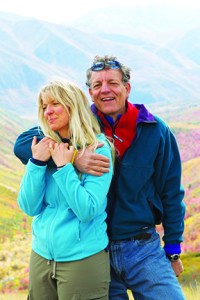
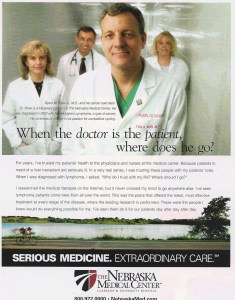
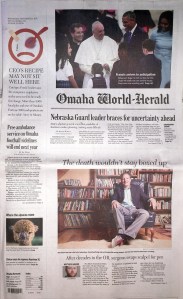
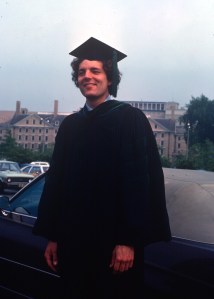
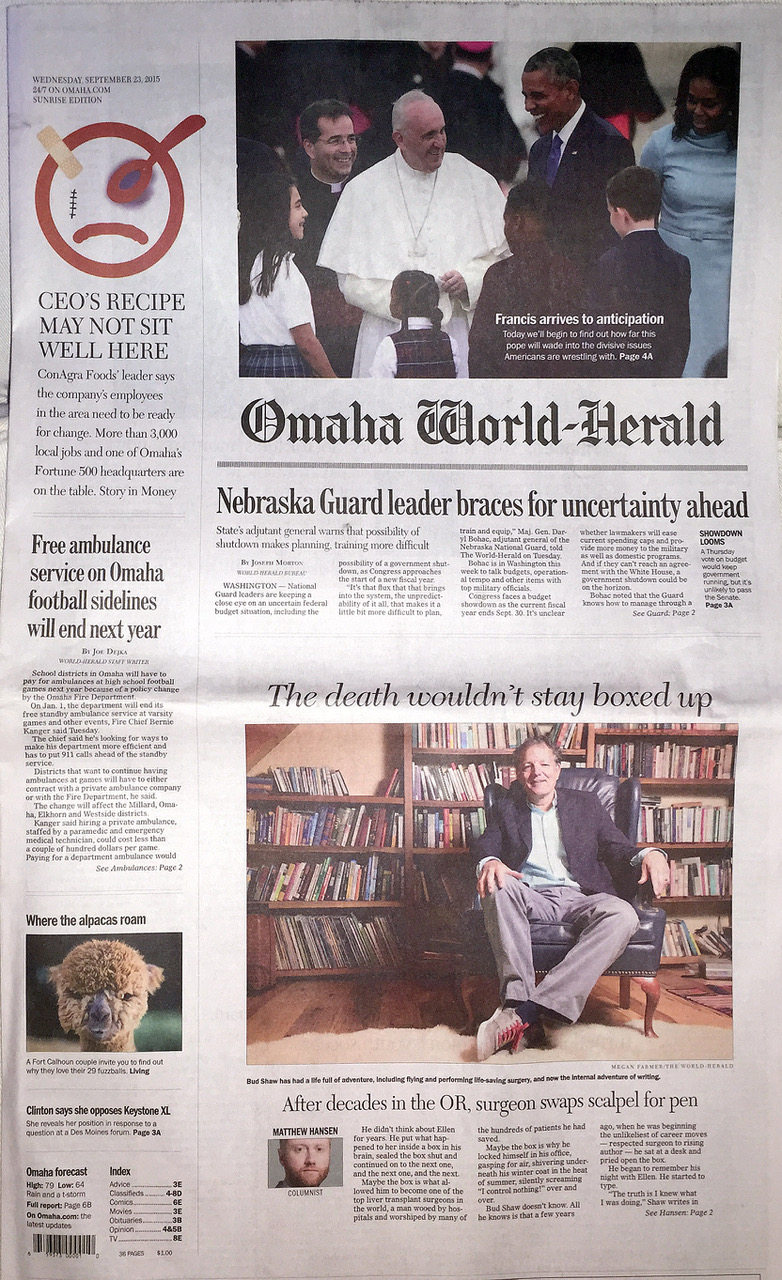
If you follow my work via my blog or Facebook page then you may have noticed I like writing about fellow writers. I mean, beyond the natural affinity I feel for anyone who takes up the pen and sticks with it, there are myriad things about the writing life that are universal and singular to each writer I profile. There’s no single path to becoming a writer and every writer’s life around the work and separate from it looks a little different, sometimes a lot different. And then there’s the very different kinds of writing people do and the unique voices they express. The subject of this New Horizons cover story, Bud Shaw, is a medical doctor and writer who’s gained a measure of fame for training his inner eye and ear on his former life as a transplant surgeon through essays, several of them collected in his well-received book, Last Night in the OR. Though it took him until about a decade ago to finally write about his own personal experiences, he’s been writing since he was a child. It can take the better part of a lifetime to find one’s voice, especially that voice residing deep within the inner recesses and nooks and crannies of our subconscious. When Shaw finally did find his, he revealed himself to be a strong, spare writer in the style of his literary heroes. My profile of Shaw will appear in the May 2017 issue of the New Horizons, a free montly newspaper from the Eastern Nebraska Office on Aging. Beginning April 28, look for the new issue at area newsstands or, if you’re a subscriber, in your mailbox,. Order your free subscription by calling 402-444-6654.


Voyager Bud Shaw gives up scalpel for pen

©by Leo Adam Biga

Appeared in the May 2017 issue of the New Horizons


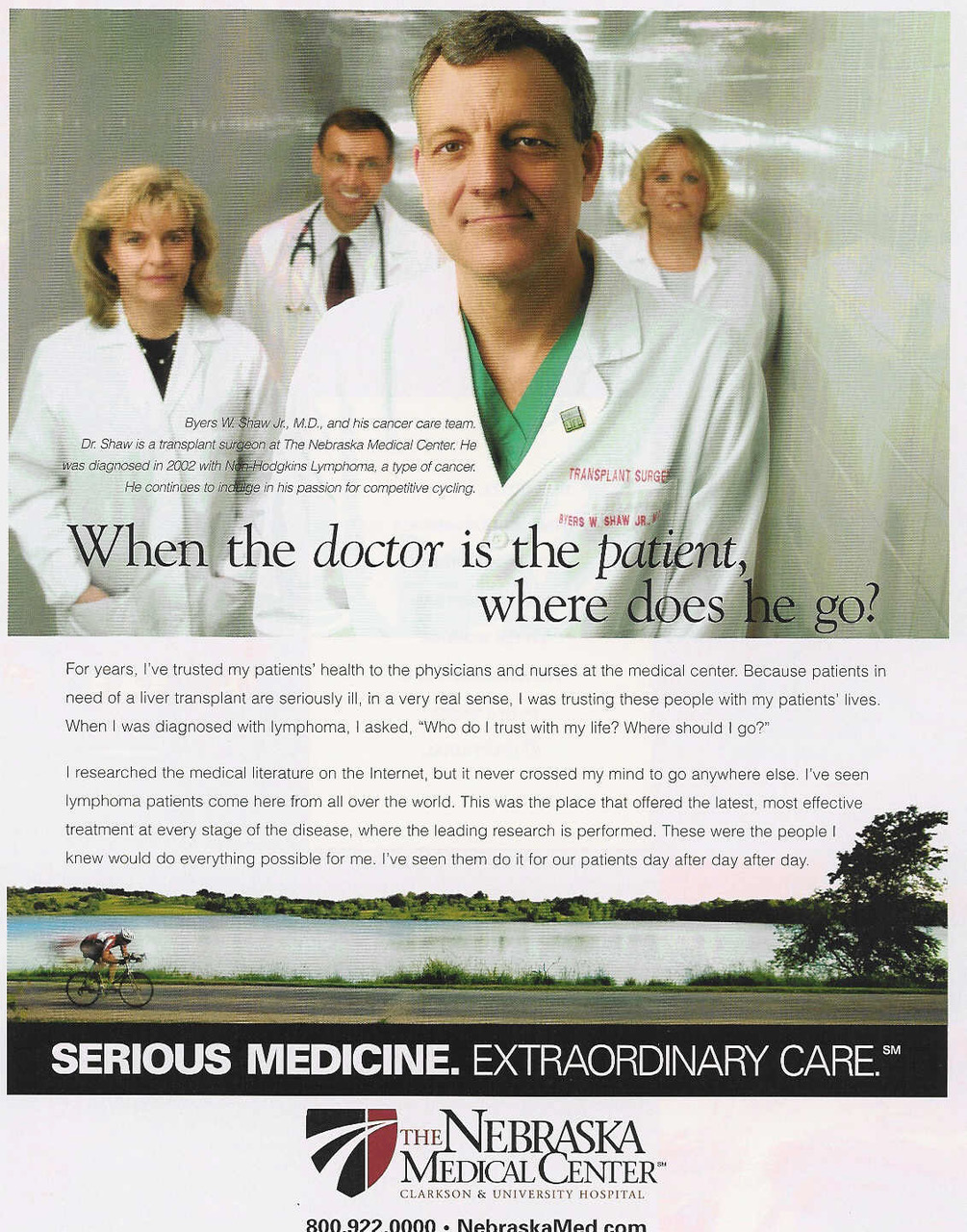
Before Dr. Bud Shaw gained fame as a liver transplant surgeon, first in Pittsburgh, then at the University of Nebraska Medical Center (UNMC), he was a writer. An adventurer, too. He’s a veteran small-engine pilot and hang gliding enthusiast and an avid bicycle trekker.

His wonderment with words goes back to childhood. It continued during his formal education – all the way through undergraduate and medical studies. Even during his surgical career he continued writing whenever he had down time. But since putting down the scalpel for the pen, his writing’s really taken off.

For decades he composed fiction but in recent years he’s turned to nonfiction. Some of his highly personal essays have won recognition. His 2015 book Last Night in the OR was a New York Times Bestseller.

His wife Rebecca Rotert is an award-winning poet, short story writer and essayist whose first novel Last Night at the Blue Angel was well-received.

Shaw leads writing clubs at the Med Center. He advocates students and professionals take writing courses to enrich their humanities education. He cites research showing the health benefits of writing.

“When you write something down as opposed to talking about it, it gets stored in long-term memory – with far fewer details but more indelibly – and it’s in an area where your brain keeps working on it. It’s like the thing where you write something and put it away and come back to it and you start editing it immediately when you couldn’t have done that the day before. But your brain’s been working on it.”

He said studies show that in “patients who wrote for three days in a row their brain did some processing that somehow also helped them deal with their illness.”

Reading and writing

Prose fed Shaw’s imaginative escapes as a youth.

“I read a lot. As a kid I got sick frequently and I’d end up having to stay home. We had bookshelves full of books. My mother bought a series of classics for kids: Black Beauty, Treasure Island, Bambi. I would pick them out and read them, and then I got into The Hardy Boys and when I read all that I even tried Nancy Drew.”

He became a familiar figure at the local library.

Family trips to Crystal River, Florida got him hooked on diving and his natural curiosity and affinity for reading found him hunting every book he could on the subject.

“My school projects were reports about the aqua lung and the difference between one and two stage regulators and how you could get the bends and prevent that. I knew the decompression tables when i was 12.”

Writing had already become an outlet.

“I began writing seriously in second grade, My mother helped me write a romantic adventure novel involving a boy and his pony. It filled 10 pages of Golden Rod tablet paper we bound with rubber cement and a cardboard cover. She died a few years later and I guess I’ve been looking for that kind of approval ever since.”

His passion for literature was stoked at Kenyon College a small liberal arts school near where he grew up in rural Ohio. There, he said, “reading and writing were paramount and literature became a limitless world for me – a world where anything could happen. I was a chemistry major, but I filled the other spaces with literature and creative writing courses. In the first two years of medical school, those intellectual pursuits were largely replaced with the drudgery of rote memorization. I found myself obsessively writing short stories and sending them off to Redbook, Playboy and Reader’s Digest. It was a useful diversion and the rejections hardly mattered.”

His literary favorites range from John Steibeck, Ernest Hemingway and William Faulkner to Kurt Vonnegut, Gunter Grass and Cormac McCarthy.


Image result for last night in the or bud shaw


Finding his niche as a transplant surgeon

Though his father was a surgeon, Bud at first resisted following in his footsteps. He said the fact he eventually did was “probably because he didn’t push it on me.” Shaw received his MD at Case Western Reserve University, did general surgery training in Utah and completed a transplant surgery fellowship in Pittsburgh,

There, he made a name for himself as a talented maverick working under the father of transplantation in America, the late Tom Strazl. The two men shared a complicated relationship.

“Most of the advances going on at that time in transplantation were happening in Pittsburgh. I was working with Starzl, who then was by far the most important pioneer in transplantation. I would have stayed there happily and worked with him but it just became more and more difficult.”

Shaw left because he disagreed with the way certain things were being done that he felt hampered surgeons’ learning and endangered patients’ lives.

“I wanted to change the way we did things and I realized I wasn’t going to be able to do that there as much as I wanted. I realized I didn’t want to be part of a program that was chaotic and dangerous for patients.”

Prestigious hospitals coveted having this hot shot young surgeon come start a transplant program in what was a sexy new medical horizon making headlines.

“It was a brand new field. I had probably done more liver transplants in the previous two years than anybody in the world .”

Coming to Omaha and building a world-class transplantation program

UNMC recruited him. It didn’t have the cachet of other courters but it proved the right fit. It helped that the man pursuing him. Layton “Bing” Rikkers, knew him when Shaw trained in general surgery at the University of Utah, where Rikkers had taught.

“Once I got trained in transplant I always intended to go back to the University of Utah but they just didn’t seem to want to do it (start a transplant program).”

When Rikkers took the UNMC job he asked Shaw to join him but Shaw wouldn’t be persuaded – at first.

“I told him I want to go someplace with a seacoast or mountains or preferably both.”

Rikkers wouldn’t take no for an answer. He strategically brought Shaw in as a consultant on the ABCs of starting a transplant program. Shaw met a Med Center contingent, including Mike Sorrell and Jim Armitage, who, he said, were “incredibly enthusiastic about doing liver transplants.” “There was a stark contrast between the attitude here, which was one of ‘We understand we don’t know anything about how to do this – we need you to be the expert,’ and what I found elsewhere.”

Shaw said. “I realized this was a rare opportunity because I’d interviewed at much more famous, high-powered places. I’d told them the same thing I told UNMC – I can’t come alone, I’m going to bring a junior surgeon with me and I need to have an anesthesia team go to Pittsburgh and learn how to do anesthesia and a pathologist go learn how to read the biopsies of the liver. And all these places said, ‘No, we have experts, we’re sure they can handle this, and we have very precious faculty positions to maintain.”

He said other centers didn’t appreciate just what a commitment they needed to make.

“They said, ‘We want you to come start this and we’ll see how it goes,’ and I said, ‘See how it goes? This is a high risk sort of thing.’ That’s when I realized they were mainly interested in doing this not because they were interested in treating liver disease but because it was a cool thing to start doing and they didn’t want to be left out. This place (UNMC) was clearly different. It was one of the only places in the country thinking about this as a long-term prospect they could succeed in, and that’s why I came here.”

One of Shaw’s biggest contentions with the way things were done in Pittsburgh that he changed in Omaha was transplant surgeons not having responsibility for post-op patient care. Some patients get profoundly sick after transplant surgery and lax care can exacerbate already dire situations.

“On a typical Sunday morning I’d find three transplant patients in the ICU and two of them would be bleeding still and I’d have to take them back and fix them in the operating room. I’d go talk to the family and they’d say, ‘Nobody’s talked to us.’ So I found myself cleaning up messes made by other surgeons who weren’t being supervised adequately and hadn’t had enough training.

“I talk about this in the book,” Shaw said. “Tom Starzl never wanted to have a routine, he wanted to change it every time, and you just can’t teach other people what works and what doesn’t work very well if you’re changing it constantly.”

After coming to Omaha in 1985 with his first wife and establishing a world-class solid organ (liver, kidney, pancreas, heart) transplant program here, the city became their home.

“I came here with the idea we’d spend five years and then move to one of those places with seacoast and mountains, but at the end of five years we had a really good program going. We were still growing, we were doing innovative things.

“I got recruited to go look at a couple of jobs right around that time. I just realized it was going to be like starting over and the politics would be worse. There’s no advantage of going to those places other than geography and I can buy a plane ticket.”

Diversions by ground and air

He’s bought plenty of tickets over the years to make bike tours with friends in scenic spots around the globe:

Cuba

Costa Rica

Panama

Argentina

Chile

Scotland

Nova Scotia

Newfoundland

Hungary

Slovakia

Poland

France

Italy

Crete

Australia

Vietnam

Cambodia

Then there’s his life as a pilot. He got his license at 19.

“I bought a 1939 J-3 Cub and flew it back to college. I had another airplane in Utah where I also took up hang gliding. I didn’t have any aircraft in 1981 when I arrived in Pittsburgh, but by 1984 I bought a used seaplane that I also took to Omaha in 1985. I eventually sold it and joined two other guys in a partnership in several airplanes.

“I plan on getting my glider rating this summer.”

Shaw’s logged enough hours behind the controls to have had some harrowing moments in the air.

“Every pilot with that many years experience has many stories to tell, as do I. I’ve been scared several times when weather closed in on me unexpectedly while flying cross-country. I flew aerobatics for half a dozen years in the ’90s. That was always exciting but I never had any close calls doing that. I had a couple of close calls hang gliding. I describe one in the book.”

More often than not, his time in the sky has afforded sublime glimpses of beauty. He recalled a Utah ridge that provided “wonderful soaring” and close encounters with Bald and Golden eagles living in the rocky cliffs.

“They often came out and flew along with us, sometimes showing off their aerobatic skills.”

Unexpected turbulence 

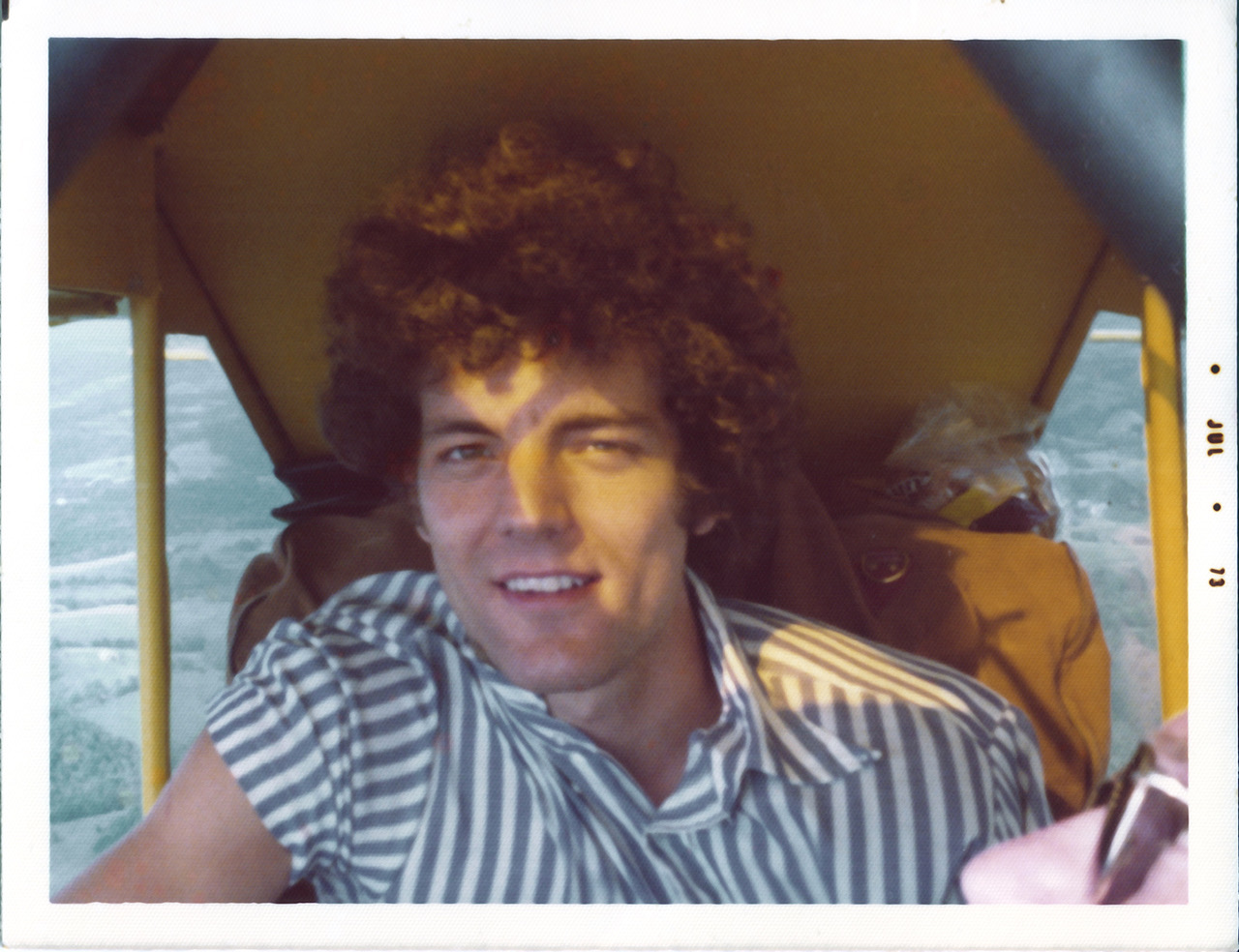
Then there was the 1973 coming-of-age flight he made in his little Cub with an acquaintance of his from Ohio, Scottie Wilson.

“The summer of ’73 was between my first and second year of medical school, which I hated. I’d restored an airplane I kept out at the local airport. Scottie had just gotten his wings for the Air Force. That summer we flew in my little Cub a lot together. Toward the end of the summer he had to get to Tuscon, Arizona for combat training. He was going to drive and I said maybe we should fly my Cub out there.

“There were multiple times during that trip where I was going to quit medical school and become a jet jockey.

When the whole thing was done I had to turn around and fly back by myself, and this was like two weeks before I was getting married. I had sort of abandoned ship and ran away.”

The event proved a crucible for Shaw.

“Right after I crossed the Continental Divide there was a storm up ahead I realized iI couldn’t fly around or above so I just landed on a road. As I was sitting there watching this storm go by I started crying. I had this deep sense of loss.”

Broke and out of fuel, he siphoned gas from every small plane on the line at the airport. Back home. he married. started a family and completed his studies. That summer interlude never left him but it’s only recently he

tried writing about it.

“I told Rebecca about it and she said, ‘There’s a romance there of a kind,’ and there really was. A closeness developed in a short period of time that was very different than any experience I’ve had with another guy.”

Intent on catching up with his old pal, Shaw happened to open a magazine to a story about Wilson restoring a 1938 Bugatti airplane presumed lost during World War II. The plane was rediscovered and Wilson, a retired Air Force officer, was building a replica.

“I tracked him down through Facebook and we ended up spending hours on the phone three or four different times over the space of a couple months. My plan was to go see him. He was in the process of starting to test fly this plane. I talked to him in May 2016 and in December I got an email from his brother that said, ‘I’m sure by now you’ve heard about Scottie dying…’ He’d taken the plane up again and was barely off the ground when it happened.

“He’d sent me some sample writing. He wanted me to help him write the story of this airplane.”

Wilson’s passing marked the latest of four recent deaths of important people in Shaw’s life. He feels compelled to write about what they meant to him.

“I have lots of starts in different directions in talking about the way your relationship with your mentors is more like a love affair than it is like a parenting             relationship. It’s like seeking their love and approval more-so than maybe with a parent.”

Merging his personal, medical and writing lives

When Shaw was still doing transplants he was barraged by life and death events but so cut-off from them emotionally he didn’t write about them.

“I was so busy and chronically sleep deprived I rarely had time or inclination to write. Except on vacation. Once I got away from work, I inevitably started writing. It was always fiction. By the mid-’90s I had the starts of five novels. I took a sabbatical in 1996 to write and came away with a 180,000-word novel that isn’t yet worthy of publication. Of course, family and friends all thought it was wonderful but nobody else did. I was afraid of getting it reviewed by anybody.

“None of my writing then had any direct relationship to my work. I think it was largely a way to escape the stress of that life.”

Shaw’s real growth as a writer began when he confronted his own life on the page at the 2007 Kenyon Review Workshop.

“It was very educational and inspirational to actually have to write something and then to have people critique it. It was the first time I had valuable critique of what I’d written. I began to understand what I needed to do to improve things was to keep writing, to keep having people critique and then keep changing and writing.”

His next evolution came as a participant in the Seven Doctors Project that puts doctors together with writers.

Shaw was in the project’s first group of doctors in 2008 and he participated in several other sessions the next few years. One session in particular proved fruitful.

“I did get some wonderful stuff from the review of what I wrote that year. The most telling thing was from another writer there, Rebecca Rotert” (whom he ended up marrying after he and his first wife split).

“When it was my turn to read, everybody complimented how they liked this or liked that and then all of a sudden Rebecca said, ‘Okay, here’s the deal: I don’t know what this person’s motivations are. We’re missing some of the basic things of a story and by now we should know this.’

I started to feel defensive and then I thought, ‘Oh my God, she’s absolutely right,’ and I can fix that because I know what the answers to those questions are.”

All of it spurred him to explore his own life in nonfiction writing. The more he drew from his personal experience, the more he liberated himself.

“I was finally able to think about some of the experiences I had and to step back from them far enough to actually write about them without having a strong emotional agenda that kept me from doing it before.”

With each story he takes from his own life, he’s puts himself on the line.

“I suppose writing highly personal nonfiction stories is risky for anyone. I felt I couldn’t do it unless I found a way to be more objective about the most difficult and emotional experiences. I had to resist the temptation to ‘set the record straight.’ I had to discover instead the other stories within those moments.”

His first published essay, My Night With Ellen Hutchinson, is about a devastating personal and professional episode early in his career.

“As I sat down to write about it, I discovered just how stubbornly I still held onto a version of that story that blamed others, that let me off the hook for the death of a patient during a liver transplant. I had to revisit that night over and over again for weeks to reconstruct a view that wasn’t about the cause of the failure so much as it was about the results of it. It wasn’t easy.

“That was a very straight forward operation. In my mind, I’d done everything right. I got the new liver sewn into place and blood flowing into it and everything was just great when her heart stopped. And yet, the technical details of why the woman’s heart stopped and how we should have handled it and how today, I know she would not have died because of what we later learned to prevent the problem, none of that was a story worth recounting. I needed a fresh and far more human perspective, and that required me to do a lot of processing I hadn’t done before.

“Now I don’t seem able to stop.”

For years Shaw erected shields warding off self-reflection when people’s lives were in his hands.

“The protective mechanisms were about dealing with failure, where failure could be somebody’s death. After failure I felt it absolutely necessary to approach the next case with supreme confidence that everything is going to go well. There’s a lot of ways of getting to that point. Maybe the quickest way is to simply say, ‘That last problem – that wasn’t my fault.’ But that’s not the only way. Another way, but it’s not the one I took, is to think about it more and to recognize we’re fallible and I did play a role in that, and what can I do next time to make sure that doesn’t happen again.

“It would have taken the ability of being more mindful as they call it now.”


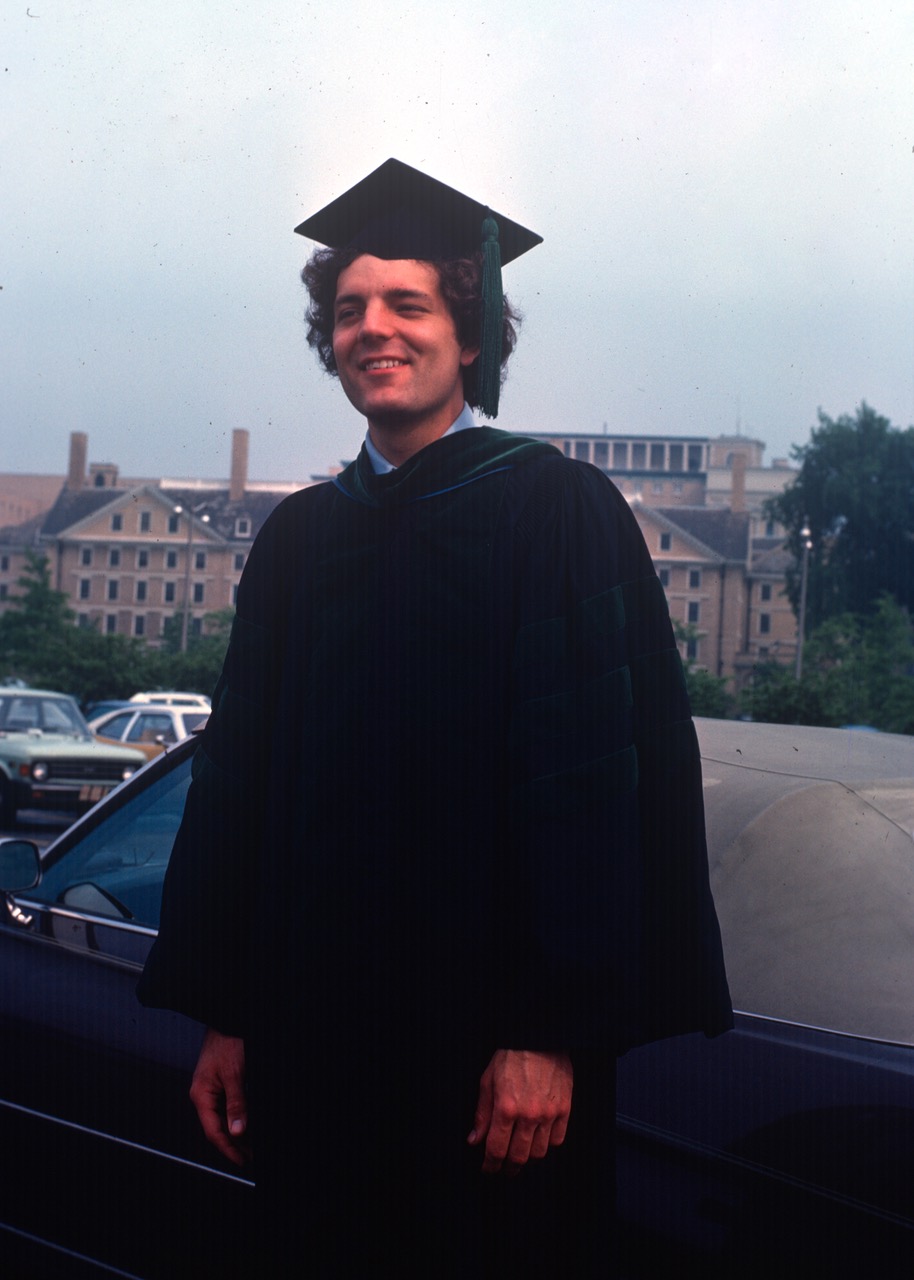
Frailties 

In his book Shaw reveals his own and others’ frailties as counterpoint to the God-like status medical professionals are held in or hold themselves in. His essays chronicle how he didn’t let things touch him, not the lives he saved or lost, not even his own bout with cancer, What opened the flood gates of introspection was the disabling anxiety that overcame him in 2006.

“I didn’t have any problems with social anxiety at all

until one day I was sitting in my living room and suddenly had a panic attack that eventually caused me to crawl into bed and cover up. I had no idea what was causing it. It just came out of the blue.”

Some days at work he couldn’t leave his office. He finally sought help. Drugs help regulate the condition. Writing about it has been freeing.

“What the writing has done is help me understand and accept the fact that I have this problem. It’s also helped me recognize I did have these protective things and the question in my mind is – what if I had been as self-aware and self-reflective when I was in the midst of this incredibly intense surgical career with all this risk?

Would I have been able to continue? I think the answer to that question is probably yes.

“The process of writing about my own experiences really did open up my writing in a way. That, and there were about three books I read around that time that made me become much more spare, to work harder on eliminating stuff. The big problem I had was my need to make sure you understood everything, explaining

everything. Being freed up from the idea that you have to explain everything was like a miracle. You can actually let people figure out stuff on their own.”

He said a UNMC colleague objected to how much medical imperfection he revealed in his book.

“She said, ‘This is a huge mistake. Nobody should pull back the curtain and expose these sorts of things.’ I said, ‘Why, do you think people are going to come after us with torches?’ She said, ‘Well, they might,’ and I said, ‘Well, if they do, maybe we deserve it.’ I certainly got lots of positive feedback from surgeons outside of here. In fact, I’m still getting it.”

A notable exception was his old mentor Tom Starzl, who reacted strongly against the book. It strained the two men’s already tenuous relationship. As a show of respect and peace offering, Shaw attended Starzl’s 90th birthday celebration.

“I gave him a big hug and he started crying. It was very emotional.”

Starzl died a year later.

Before Shaw could get his book published, UNMC made him jump through hoops to change details so as to avoid privacy issues.

“A lot of the essays had been written with the names of the real people involved before I knew these stories were going to be part of a book,” Shaw said. “I had to start looking at how I could contact these people (for their permission). I knew I wasn’t allowed to look in the medical records for that purpose and I knew I couldn’t ask anybody else to do it for that purpose.

“I couldn’t remember some of their names. I was in the process of trying to sort out how to contact them when the privacy officer at the hospital called and said you can’t write about any of your experiences here.”

The decree made Shaw bristle. He resisted the blanket refusal, pointing out there was nothing in his contract or in UNMC’s HIPPA policy preventing him from doing it.

“Eventually I could not get them to allow me to contact the people. So I went in and changed enough of the details that there’s just no way anybody could recognize the real people.”


Doing what he has to do

Some of his writing does name names. His essay A Doctor at His Daughter’s Hospital Bed recounts the time  he intervened in the care of his daughter Natalie, who was hospitalized with pneumonia and not getting the IV fluids he knew she needed.

“I know I shouldn’t be my daughter’s doctor. They taught us the problems with that during my first week in medical school. It’s a really bad idea, especially in high-risk situations. We doctors are also very superstitious that when dealing with family members … something is always going to go wrong. The more the Special Person hovers over the care of his or her loved one, the worse the complication will be. I’ve had conversations in which doctors feel they change their routine with V.I.P. patients, and it’s that disruption in routine that allows error to creep into their care.

“But right now, I don’t care about any of that. I’m the one with experience taking care of really sick patients, and if I know she needs more fluids, she’s going to get them.

I break into the crash cart … I pull out two liters of saline solution and run both into Natalie’s IV in less than 20 minutes. Natalie’s pulse slows and her blood pressure rises. An hour later, after the nursing supervisor and on-call resident finally arrive, I’ve finished infusing a third liter. Natalie finally looks better.

“This wasn’t the first time during Natalie’s illness … I broke my promise to just be her dad.”

It also wasn’t the first or last time he crossed the medical care barrier with a loved one.

My younger son, Joe, almost died … from septic shock. He became ill while I was out of town. I flew home and by the time I arrived at the hospital, he looked deathly ill to me. I told the nurse I thought he should be transferred to the intensive care unit, but she said the doctors thought he was improving. Joe stopped breathing during the night and I have blamed myself ever since for not insisting they move him.

“Over and over again during my dad’s last few years of life, I felt as if I should have just moved in with him so that I could prevent all the well-meaning doctors and nurses from killing him. Sometimes it was just because his doctors weren’t talking to one another and their conflicting prescriptions sent Dad to the hospital. In the end, he died about 10 minutes after receiving an injection I didn’t want him to receive.”

Shaw’s daughter did recover but, he writes. “I didn’t.” He explains in his essay:

“I stopped operating and taking care of really sick people two years later. I told myself I had become too distracted by my increasing administrative duties to be a safe doctor. I was glad to leave all that behind. Now I just want to sit on the sidelines and marvel as a new generation of doctors performs the miracles. I never again want to step in to rescue someone I love. But I will, if I have to.”

On a pedestal 

He had occasion to operate on public figures or loved ones of celebrities. Such was the case in 1993 when he performed liver transplants on Hollywood icon Robert Reford’s son, Jamie Redford, in Omaha.

As is often the case, patients with good outcomes form an attachment with their surgeons that is one-part gratitude and one-part adulation. It was no different with Jamie Redford, who on Instagram recently posted a photo of himself and his life-saver with this caption: “My hero and good friend, Dr. Bud Shaw.”

Redford regained his health and produced a documentary, The Kindness of Strangers, raising awareness of the need for organ donation. Redford and Shaw saw each other just last year.

“Jamie and I did something at the Sundance Authors Series. I did a reading of my book and then Jamie came up and we sat on a couple stools and we did a kind of give-and-take with each other and people asked questions. Bob (Robert Redford) was there and Jamie’s sister was there. It was standing-room-only.”

But in his essay Real Surgeons Can’t Cry Shaw divulges how he didn’t cope well with the hero worship showed him. For him, surgery was a job to be gotten through, a task to be completed. The human dimensions of it sometimes escaped him or made him uncomfortable, and so he avoided those implications and interactions that required emotional investment.

Taxing times in the crowded OR give way to one-on-one writing-editing critiques 

A transplant operation is always complex and requires a team of professionals/ But these were far riskier procedures in the 1980s and 1990s then they are today because there weren’t the techniques and drugs available then that there are now.

“The longest one in my experience was in Pittsburgh that was 27 hours,” Shaw recalled. “In that case it was a child. When we started out trying to open the abdomen it was like concrete. We had to go ahead and get the liver in there because its time out of the donor’s body was getting too high. We didn’t want it to die – the liver would be nonfunctional. So we put it in and then we had all this sorting out of stuff to do for hours and hours, trying to get the bleeding stopped.

“What would happen is the patient’s own body would start dissolving its clots. That was a pretty common feature of a liver transplant.”

The operating room is a collaborative, dynamic environment of high risk and high reward. Writing, by contrast, is a solitary experience whose rewards are more internal then external. Shaw values having a life partner in Rotert who is a fellow writer. They share everything they write with each other.

“We are our own best editors,” he said. “I think I take her criticism of what I write a lot better than she takes my criticism about what she writes, and I don’t know if that’s because her criticism is more gently delivered because she’s not very gentle with it. But for some reason whatever she tells me often rings so true.

“LIke with these initial essays I wrote, I wasn’t sure what they were really about and she helped me figure out what they were really about.”

He admires her craftsmanship.

“She really writes incredibly well. She writes some beautiful sentences. She also develops characters incredibly well, each with different voices. She’s really a master at that sort of thing.”

The couple live in a multi-story home on the edge of Neale Woods. Books, magazines, paintings (by her) and photographs (by him) adorn the rustic-chic living spaces whose large windows look out on the Missouri River basin and bluffs to the east and pristine forested land to the west.


Reinventing himself

Idyllic surroundings and professional accolades aren’t salves for the demons inside us as Shaw discovered. Even at the height of his career, politics and egos found him fighting external battles. He eventually became chairman of surgery at the Med Center and after 12 years in that post he headed-up a large point-of-care software development project that got canceled.

He’s felt a bit adrift since retiring from surgery and then having that software project killed.

“There’s almost nothing like having a really difficult job to do with a lot riding on it and you’re afraid going in about what might happen but you do it anyway and you succeed and everything’s okay. It just so happens that liver transplants is one of the best things like that. And so I lost that reward system. The other thing I lost was every day somebody telling me what to do. Even when i was chairman of the department. It’s not like I had to say what am i going to do today? There was always stuff to do and too much to do.

“Not having that and having so called free time to write and to do other stuff was initially fun and easy but the longer it’s lasted the more difficult it’s become

finding reward.”

While a practicing surgeon he once thought of leaving that career to write full-time but he wasn’t crazy or brave enough to try it. “Doing liver transplants is easier.”

Ever the voyager, Shaw has worlds yet to explore in his travels and in his new vocation as author, Having finally given himself permission to write about his past, he’s embracing new adventures as source material for future tales. With so much to draw on, his creative well should never run dry.

Hot Movie Takes: John Huston, an appreciation

March 31, 2017 Leave a comment

Hot Movie Takes 
John Huston, an apprciation 

By Leo Adam Biga, author of “Alexander Payne: His Journey in Film”


When I originally posted about the subject of this Hot Movie Take, the late John Huston, I forgot to note that his work, though very different in tone, shares a penchant for unvarnished truth with that of Alexander Payne. Huston was a writer-director just like Payne is and  he was extremely well-read and well-versed in many art forms, again just as Payne is. The screenplays for Huston’s films were mostly adaptations of novels, short stories and plays, including some famous ones by iconic writers, and the scripts for Payne’s films are mostly adaptations as well.  Huston also collaborated with a lot of famous writers on his films, including Truma Capote and Arthur Miller. The work of both filmmakers shares an affinity for ambiguous endings. I think at his best Huston was more of a classic storyteller than Payne and his films more literate. Where Huston mostly made straight dramas, he showed a real flair for comedy the few times he ventured that way (“The African Queen,” “Beat the Devil,” “The Life and Times of Judge Roy Bean” and “Prizzi’s Honor”). Payne insists that he makes comedies, though most would say he makes dramedies, a terrible descriptor that’s gained currency. More accurately, Payne’s comedy-dramas are satires. I think he’s more than capable of making a straight drama if he chose to, but so far he’s stayed true to himself and his strengths. If Payne is the ultimate cinema satirist of our tme, and I think he is, then Huston stands as the great film ironist of all time. With one using satire and the other using irony to great effect, their films get right to the bone and marrow of characters without a lot of facade. Just as it was for Huston, story and character is everything for Payne. And their allegiance to story and character is always in service to revealing truth.


Of all the great film directors to some out of the old studio system, only one, that craggy, gangly, hard angle of a man, John Huston, continued to thrive in the New Hollywood and well beyond.

It’s important to note Huston was a writer-director who asserted great independence even under contract. He began as a screenwriter at Universal and learned his craft there before going to work at Warner Brothers. But Huston was an accomplished writer long before he ever got to Hollywood. As a young man he found success as a journalist and short story writer, getting published in some of the leading magazines and newspapers of the day. Indeed, he did a lot things before he landed in Tinsel Town. He boxed, he painted, he became a horseman and cavalry officer in the Mexican uprisings, he hunted big gamma he acted and he caroused. His father Walter Huston was an actor in vaudeville before making it on the legitimate stage and then in films.

What he most loved though was reading. His respect for great writing formed early and it never left him. Having grown up the son of a formidable actor, he also respected the acting craft and the power and magic of translating words on a page into dramatic characters and incidents that engage and move us.

He admired his father’s talent and got to study his process up close. Before ever working in Hollywood, John Huston also made it his business to observe how movies were made.

But like most of the great filmmakers of that era, Huston lived a very full life before he ever embarked on a screen career. It’s one of the reasons why I think the movies made by filmmakers like Huston and his contemporaries seem more informed by life than even the best movies today. There’s a well lived-in weight to them that comes from having seen and done some things rather than rehashing things from books or film classes or television viewings.

Because of his diverse passions, Huston films are an interesting mix of the masculinity and fatalistic of, say. a Hemingway, and the ambiguity and darkness of, say, an F. Scott Fitzgerald or Eugene O’Neill. I use literature references because Huston’s work is so steeped in those traditions and influences. In film terms, I suppose the closest artists his work shares some kinship with are Wyler and John Ford, though Huston’s films are freer in form than Wyler’s and devoid of the sentimentality of Ford. As brilliantly composed as Wyler’s films are, they’re rather stiff compared to Huston’s. As poetic as Ford’s films are, they are rather intellectually light compared to Huston’s.

At Warners Huston developed into one of the industry’s top screenwriters with an expressed interest in one day directing his own scripts. Of all the Hollywood writers that transitioned to directing, he arguably emerged as the most complete filmmaker. While he never developed a signature visual style, he brought a keen intelligence to his work that emphasized character development and relationship between character and place. He made his directing invisible so as to better serve the story. When I think of Huston, I think of lean and spare. He perfected the art of cutting in the camera. He was precise in what he wanted in the frame and he got as close to what he had on the page and in his head as perhaps anyone who’s made feature-length narrative films. He did it all very efficiently and professionally but aesthetic choices came before any commercial considerations. He was known to be open to actors and their needs and opinions, but he was not easily persuaded to change course because he was a strong-willed artist who knew exactly what he wanted, which is to say he knew exactly what the script demanded.

His films are among the most literate of their or any era, yet they rarely feel stagy or artificial. From the start, Huston revealed a gift for getting nitty gritty reality on screen. He was also very big on location shooting when that was still more a rarity than not and he sometimes went to extreme lengths to capture the real thing, such as encamping in the Congo for “The African Queen.” Look at his “The Man Who Would Be King” and you’ll find it’s one of the last great epic adventure stories and Huston and Co.really did go to harsh, remote places to get its settings right.

The realism of his work is often balanced by a lyrical romanticism. But there are some notable exceptions to this in films like “Fat City.”

He sometimes pushed technical conventions with color experiments in “Moulin Rouge,” “Moby Dick” and “Reflections in a Golden Eye.”

As a young man learning the ropes, he reportedly was influenced by William Wyler and other masters and clearly Huston was a good student because right out of the gate with his first film as director, “The Maltese Falcon,” his work was fully formed.

In his first two decades as a writer-director, Huston made at least a half dozen classics. His best work from this period includes:

The Maltese Falcon
The Treasure of the Sierra Madre
The Asphalt Jungle
Key Largo
The Red Badge of Courage
Heaven Knows Mr. Allison
Beat the Devil
Moby Dick
The Unforgiven

Huston remained a relevant director through the 1960s with such films as:

The Misfits
Freud
The List of Adrian Messenger
The Night of the Iguana
Reflections in a Golden Eye

But his greatest work was still ahead of him in the 1970s and 1980s when all but a handful of the old studio filmmakers were long since retired or dead or well past their prime. Huston’s later works are his most complex and refined:

Fat City
The Man Who Would Be King
Wiseblood
Under the Volcano
Prizzi’s Honor
The Dead

I have seen all these films, some of them numerous times, so I can personally vouch for them. There are a few others I’ve seen that might belong on his best efforts list, including “The Roots of Heaven.” Even a near miss like “The Life and Times of Judge Roy Bean” is worth your time. And there are a handful of ’70s era Huston films with good to excellent reputations I’ve never gotten around to seeing, notably “The Kremlin Letter” and “The Mackintosh Man,” that I endeavor to see and judge for myself one day.


Arthur Miller and John Huston pose with the cast of "The Misfits"

Three star-crossed iconic actors with Huston, Arthur Miller, Eli Wallach and Co. on the set of “The Misfits”


It would be easy for me to discuss any number of his films but I elect to explore his final and, to my tastes anyway, his very best film, “The Dead” (1987). For me, it is a masterpiece that distills everything Huston learned about literature, film, art, music, life, you name it, into an extraordinary mood piece that is profound in its subtleties and observations. For much of his career, Huston portrayed outward adventures of characters in search of some ill-fated quest. These adventures often played out against distinct, harsh urban or natural landscapes. By the end of his career, he turned more and more to exploring inward adventures. “The Dead” is an intimate examination of grief, love, longing and nostalgia. Based on a James Joyce short story, it takes place almost entirely within a private home during a Christmas gathering that on the surface is filled with merriment but lurking just below is bittersweet melancholia, particularly for a married couple stuck in the loss of their child. It is a tender tone poem whose powerful evocation of time, place and emotion is made all the more potent because it is so closely, carefully observed. Much of the inherent drama and feeling resides in the subtext behind the context. Discovering these hidden meaning sin measured parts is one of the many pleasures of this subdued film that has more feeling in one frame than any blockbuster does in its entirety. “The Dead” is as moving a meditation on the end of things, including human life, that I have ever seen.

Huston made the film while a very sick and physically feeble old man. He was in fact dying. But it might as well be the work of a young stallon because it’s that vital and rigorous. The fact that he was near death though gives his interpretation and expression of the story added depth and poignancy. He knew well the autumnal notes it was playing. The film starts his daughter Angelica Huston. It was their third and final collaboraton.

If you don’t know Huston the writer-director I urge you to seek out his work and even if you do you may discover he made films you didn’t associate with him. Just like we often don’t pay attention to the bylines of writers who author pieces we read and even enjoy, some of us don’t pay strict attention to who the directors of films are, even if we enjoy them. Some of you may even be more familiar with Huston’s acting than his directing. His turn in “Chinatown” is a superb example of character acting. My point is, whatever Huston means or doesn’t meant to you, seek out his work and put the pieces together of the many classics he made that you’ve seen and will make a point to see.

Lisa Haselton’s interview with writer Leo Adam Biga

January 27, 2017 Leave a comment

Thanks to author Lisa Haselton for featuring this interview with me on her popular blog Lisa Haselton’s Reviews and Interviews. Be sure to visit her site and support it. She has a wealth of rich content related to authors, books and other writing things.

Lisa Haselton’s Reviews and Interviews

Award-winning blog for book reviews, author interviews, and anything writing-related.

Interview with writer Leo Adam Biga

Writer Leo Adam Biga joins me to chat about his film book–

Alexander Payne: His Journey in Film”:


Bio:

Author-journalist-blogger Leo Adam Biga resides in his hometown of Omaha, Nebraska. His articles appear in various newspapers and magazines as well as on his popular blog, leoadambiga.com, and Facebook page, My Inside Stories. His work has been recognized by his peers at the local, regional and national levels. He was the 2015 recipient of the Andy Award for international journalism from his alma mater, the University of Nebraska at Omaha. That grant supported his reporting mission to Uganda and Rwanda, Africa in the company of professional world boxing Terence Crawford of Omaha and Pipeline Worldwide director Jamie Nollette.

Biga is the author of several books, including “Alexander Payne: His Journey in Film” and “Crossing Bridges: A Priest’s Uplifting Life Among the Downtrodden”. Biga’s reporting and writing about Payne has made him a recognized expert on the Oscar-winning filmmaker (“Sideways“, “Nebraska”) from Omaha. His latest book is “Nebraska Methodist College at 125: Scaling New Heights” – a history of the Omaha-base college of nursing and allied health celebrating 125 years.

The writer is developing the Nebraska Screen Heritage Project as a multimedia celebration of native Nebraskans in the film and television industry. He is also developing a book about Omaha’s Black Sports Legends.

Welcome, Leo. Please tell us about your current release.

Articles and essays take you deep inside Alexander Payne’s creative process. This second edition includes significant new material related to his last film “Nebraska” and his highly anticipated new film “Downsizing,” It also features the addition of a Discussion Guide with Index.

Payne fans will appreciate the extensive interviews-stories that follow the arc of the writer-director’s career from brash upstart to consummate filmmaker at the head of the Indiewood movement.

Film historian Thomas Schatz (“The Genius of the System”):

“This is without question the single best study of Alexander Payne’s films, as well as the filmmaker himself and his filmmaking process. In charting the first two decades of Payne’s remarkable career, Leo Adam Biga pieces together an indelible portrait of an independent American artist, and one that’s conveyed largely in the filmmaker’s own words.”

Leonard Maltin:

“Alexander Payne is one of American cinema’s leading lights. How fortunate we are that Leo Biga has chronicled his rise to success so thoroughly.”

Alexander Payne:

“Throughout many years of being interviewed, I find Mr. Biga’s articles about me to be the most complete and perceptive of any journalist’s anywhere. They ring true to me, even in critique, in a way that reveals the depth of his talent in observation, understanding and expression.”

What inspired you to write this book?

In covering Alexander Payne more than a decade and a half I accumulated a large body of work about someone I saw go from a promising newcomer few heard of and whose first two films were not much seen to an accomplished filmmaker recognized around the world. The book collects my journalism about Payne and his journey in film, thereby preserving my work about him in an enduring, hard-bound fashion and thereby contributing my take on this important film artist.

Excerpt from “Alexander Payne: His Journey in Film”:

Even though Alexander Payne demonstrates time and again that commercial considerations mean very little to him, following the breakaway success of The Descendants (2011) there was every reasonable expectation he might lean a bit more again in the direction of mainstream with his next film. I say again because I count The Descendants as a conventional, even mainstream work even though its protagonist rails against his comatose wife and sets out to wreck the life of the man she was cheating with, all the while trying not to lose it with his two grieving daughters in tow.

Payne soon quashed any notion of playing it safe when he announced the small, insular back roads comedy-drama Nebraska (2013) as his new feature project. It did not help its bottom line chances that the film is set in rural Nebraska, which for most filmgoers may as well be the dark side of the moon for its unfamiliarity, remoteness, and perceived barrenness. Indeed, if Nebraska conjures any image at all it is of endless cornfields, cows, and monotonously flat, uninspired scenery. When the story laid over such a setting features a confused, depressed old cuss alienated from family and friends and wandering around in a bleak wasteland made even bleaker by black and white photography and desolate late fall, post-harvest locations, it does not exactly engender excitement. The prospect of a dour, feel-bad experience devoid of life and color does not get tongues a-wagging to generate the all important buzz that sells tickets.

Of course, anyone who has seen Nebraska knows the film is not the downer it may appear to be from glimpsing a thirty second trailer or hearing a thirty second sound bite, but that it is ultimately a sweet, deeply affecting film filled with familiar truths amid its very Nebraskaesque yet also quite universal archetypes.

Payne’s insistence on shooting in black and white was a completely legitimate aesthetic choice given the storyline and tone of this stark, autumnal mood piece about an old man having his last hurrah. But it also meant a definite disadvantage in appealing to average or general movie fans, many of whom automatically pass on any non-color film.

Compounding the aversion that many moviegoers have with black and white is the fact that most studio executives, distributors, and theater bookers share this aversion, not on aesthetic grounds, but based on the long-held, much repeated argument that black and white films fare poorly at the box office. Of course, there is a self- fulfilling prophecy at work here that starts with studio resistance and reluctance to greenlight black and white features and even when a studio does approve the rare black and white entry executives seem to half-heartedly market and release these pics. It is almost as if the bean counters are out to perversely prove a point, even at the risk of injuring the chances of one of their own pictures at finding a sizable audience. Then when the picture lags, it gives the powerbrokers the platform to say, I told you so. No wonder then – and this is assuming the argument is true – most black and white flicks don’t perform well compared with their color counterparts. Except, how does one arrive at anything like a fair comparison of films based on color versus black and white? Even if the films under review are of the same genre and released in the same period, each is individually, intrinsically its own experience and any comparison inevitably ends up being a futile apples and oranges debate. Besides, there are exceptions to the supposed rule that all black and white films struggle. From the 1970s on The Last Picture Show, Paper Moon, Young Frankenstein, Manhattan, Raging Bull, Schindler’s List, Ed Wood, and The Artist are among the black and white films to have found wide success. It is admittedly a short list but it does prove black and white need not be a death sentence.

To no one’s surprise Paramount did what practically any studio would have done in the same situation, which was to fight Payne on the black and white decision. In no uncertain terms Payne wanted to make Nebraska in black and white and just as adamantly the studio wanted no part of it. He pushed and they pushed back. He would not compromise his vision because from the moment he first read Bob Nelson’s screenplay he clearly saw in his mind’s eye the world of this story play out in in shades of black and white. It just fit. It fit the characters and the settings and the emotions and as far as he was concerned that was that. No questions asked. No concessions made.

What exciting story are you working on next?

At any given time there are interesting journalism and other narrative-based projects that arise. Much of my work as a journalist entails writing about various arts-culture subjects. I also write a fair amount on social justice issues. On occasion I travel for my work. I once went to North Dakota to research a set of stories about a campus serving developmentally disabled individuals. I participated in a baseball tour of the Midwest that resulted in a first-person story I wrote about the tour group’s visits to various baseball shrines and stadiums in a five-state region. I spent a week on the set of Alexander Payne’s Sideways in the Santa Barbara region and wrote a series of stories from that experience. I traveled with a group of folks from Omaha to the first Obama inauguration in D.C. and filed a story about that. I have been out to Los Angeles a number of times related to my reporting on Payne and his films. In 2015 I received a grant for international journalism that funded my reporting mission to Uganda and Rwanda, Africa with world boxing champion Terence Crawford. This past summer I made my first visits to the American South and I wrote a number of posts about the experiences on my blog and Facebook page.  In 2017 I hope to travel to New York or Toronto for the North American premiere of Payne’s new film Downsizing starring Matt Damon.

When did you first consider yourself a writer?

I suppose I began thinking that way in college, though I didn’t do all that much writing then. it really wasn’t until some years after college, having worked in public relations and then beginning to freelance as a journalist, that I identified as a writer. But it still took me a few years to say the words “I am a writer” without stumbling over them.

Do you write full-time? If so, what’s your work day like? If not, what do you do other than write and how do you find time to write?

Yes, I do write full-time. Like most writers, much of my time is not taken up with writing per  se, but rather with the different things that prepare me to write (interviews, research) and sustain my writing (pitching, marketing). There’s a fair amount of correspondence and phone conversation that takes place between myself and editors.

My writing schedule depends on what else I have going on in terms of interviews and such. It also depends on what kind of writing I’m doing . If it’s a book, I try to plan writing on certain days and even during certain times of the day when I know I’ll be able to devote some undivided attention to the project. If it’s an article, then it’s a bit more haphazard and directed in part by deadlines. If it’s a blog or Facebook post, then it’s much more in the moment and as the spirit moves me. With any of these forms of writing though, I might be at the keyboard in the morning, afternoon or evening.

What would you say is your interesting writing quirk?

As a nonfiction writer I depend on primary interviews for my source material and I am a stickler for recording all my interviews and transcribing them myself.

As a child, what did you want to be when you grew up?

I don’t recall ever really thinking in those terms as a child. I am also sure I would never have considered being a writer if not for some teachers in elementary and high school who encouraged me. There were a couple professors in college who also influenced me to follow this path.

Anything additional you want to share with the readers?

Most of my original writing these days is actually done for my blog and Facebook page. But those sites also serve as an archive and new platform for my previously published work. If your readers want a real sense for who I am as a person and as a writer, I encourage them to visit those sites.

Links:

Blog | Facebook | Amazon
Thank you for being here today, Leo.

Posted by Lisa Haselton at 12:02 AM

Email ThisBlogThis!Share to TwitterShare to FacebookShare to Pinterest

Labels: Alexander Payne: His Journey in FilmArtsauthor interview,EntertainmentFilmLeo Adam Biga

About Lisa

Lisa Haselton
I’m a NH native and love New England. I love writing about the region, exploring it on foot, on my bicycle, and in my car. There are so many small communities and fun and interesting people in this area, that I could be here a lifetime and not do all it is I want to do. 🙂

I’m a writer because I have a passion for words. I write YA and adult fiction, favoring all flavors of mysteries and I enjoy dark fiction. I belong to Sisters in Crime and Sisters in Crime – New England (SinCNE) and I’m a regular contributor to the SinCNE blog. My favorite mystery writing conference is the annual New England Crime Bakeheld each November in Boston.

I interview authors at Lisa Haselton’s Reviews and Interviews. All reviews are my own opinion. For interviews, you can contact me at ReviewsAndInterviews (at) gmail (dot) com.

I’m a moderator at The Writer’s Chatroom that hosts live chats with guest authors on Sunday nights 7-9PM EST. Join the e-mail list to get notifications of upcoming guests, then stop in and join the conversation!

View my complete profile

Links to check out

Tribute to educator who fired my passions for writing and film

December 7, 2016 1 comment

Tribute to educator who fired my passions for writing and film

©by Leo Adam Biga

Author of Alexander Payne: His Journey in Film


Most of us, I suspect, end up doing what we do and loving what we love in large part because someone showed us the way or encouraged us to step out on a certain path that ended up being our calling or passion. In my case, the same person is responsible for nurturing  the two deep heart streams that run hard and fast in my life: my love for writing and for film. His name is Michael Krainak. The retired high school teacher now serves as the art editor for The Reader. If you follow my work, then you know that I have a long, strong relationship with The Reader as a contributing writer. Thus, Mike and I are colleagues today.

As most of you know by now, I make my living as an author-journalist-blogger. As a lifelong film buff I have never felt compelled to make a movie, though I would like to try my hand at a documentary one day. Instead, my cinema fix comes via watching movies and reading and writing about movies and the people who make them. While I am not a full-time film journalist, I write enough about the subject to qualify. My book “Alexander Payne: His Journey in Film” is now in its second edition. Before I ever began writing on film for pay, I was a film exhibitor-programmer-publicist at three nonprofits: the University of Nebraska at Omaha, where I received my journalism degree; the Joslyn Art Museum; and the New Cinema Cooperative. The latter, which also went by New Cinema Coop, was sort of the precursor to Film Streams in Omaha.

I took English, journalism and film from Mike at Holy Name High School in North Omaha. The high school closed years ago but the elementary school, which I also attended, is going strong after some struggles. Some years after I graduated Hold Name, Mike went on to teach at North High and just as Holy Name’s journalism program and student newspaper fared well in statewide competitions under him so did the program and paper at North.

Mike taught my two older brothers before me at Holy Name. Greg and Dan had him strictly for English. I was the only writer in the family and it wasn’t until I came under Mike’s influence that I gave any thought to the idea of pursuing writing as a field of study, much less a career. While my brothers and I all enjoyed movies growing up, I pushed that interest in some unexpected ways as a result of Mike opening a world of cinema possibilities to me I never knew existed.

Mike came into my life at a critical juncture. As a kid I rarely went to see movies at theaters. Virtually all my cinephile stirrings happened at home watching whatever was available on the three commercial networks, the three local network affiliates as well as on PBS and NET. Even with those seemingly limited options, I availed myself of a pretty wide sample of old Hollywood and foreign films in addition to more contemporary pictures from the 1960s and 1970s.

I remember the strong feelings and awakenings that particular films evoked in me.

“On the Waterfront”

“It’s a Wonderful Life”

“The Manchurian Candidate”

“The Red Shoes”

“Spartacus”

“Odd Man Out”

“To Kill a Mockingbird”

“A Thousand Clowns”

“The Producers”

“Bonnie and Clyde”

“The French Connection”

“The Man Who Shot Liberty Valance”

“The Quiet Man”

“Lonely are the Brave”

“Cape Fear” (the original)

And hundreds more.

At home, spellbound by the reverie of film’s magic, the intensity with which I felt movies often overwhelmed me. I didn’t yet possess the emotional maturity and the necessary vocabulary to articulate or even identify what I was feeling and thinking. I just sensed that these were important works of art that were somehow affecting and changing me. They were a huge part of my education about the world and about the human condition, though as I would come to find out no adequate replacement for actual lived human experience and interaction. I couldn’t really express to my parents, try as I might, the revelations and inspirations that films were feeding me. My brothers were both out of the house by the time I came of age through film and so I really couldn’t share these things with them either. Mike’s teaching affirmed for me that the very films I was reacting so strongly to were indeed essentials and that confirmation opened new horizons to my intellectual curiosity. He also challenged some of my assumptions and that process alone made me a more rigorous thinker and writer.

Mike’s film class was remarkable for any high school in America but especially for an inner city parochial school in Omaha, Nebraska. For starters, he screened an amazingly diverse mix of films that included pictures with very adult themes and R-rated content such as “Point Blank” and “Walkabout” and groundbreaking older Hollywood films only just being rediscovered then:

“Paths of Glory”

“Touch of Evil”

“Night of the Hunter”

It was important that I got exposed to these work when I did. It was equally important that Mike first introduced me to the vocabulary of film language in a focused way. I was so caught up in the whirl of cinema that within a couple years of starting at the University of Nebraska at Omaha I did something radical for someone as insular and insecure as I was by applying to be the chairperson of the Student Programming Organization film series. I ended up chairing or co-chairing that series for four years as a student and then continuing on as an unpaid graduate consultant for another eight or nine years. It meant programming, booking and publicizing the films as well as supervising their exhibition. In my 20s and despite my shyness I was appearing on radio and TV and giving print interviews to promote the series. It was a big program by the way. At its peak, we screened something like 75 to 100 films a year, showing a wide range of content from American and foreign classics to more contemporary pics. The reason I felt confident in doing it was the foundation that Mike laid for me in high school, which I made stronger by seeking out film books and magazines at the UNO Library and at the Omaha Public Library in order to advance my education about the art form. I once subscribed to three film magazines. I accumulated a fairly large private collection of film books. I also began paying close attention whenever a filmmaker or film actor was interviewed or profiled on television. All of it was an education for me, greatly informing my appreciation and understanding of cinema, past and present.

Mike ended up teaching film studies coursse at UNO. I took one of the courses and it was again a seminal experience, though not quite the revelatory rite of passage that his high school class had been. A fellow film buff friend and I would also sometimes attend private screenings Mike would hold at his home of some film he was passionate about us seeing. In that formative time in my young adulthood from ages 20 through 35 I more and more identified as a film buff and my circle of friends and I shared similar interests. In the 1980s, 1990s and early 2000s I saw a whole lot of movies in theaters and on television – far more than I see today, though with Netflix I’m beginning to get back in the groove again.

I eventually evolved the SPO film series into a very different program that exclusively screened newer American and foreign films. many of them independent productions. We actually brought several films into town for their Omaha premiere screenings.

My efforts with the film series complemented and eventually supplanted my journalism studies at UNO. The assignments I wrote for class and for the UNO Gateway were not nearly as helpful to my development as a writer as were the many press releases and public service announcements I wrote and the brochure copy and film notes I wrote in support of the series.

Mike’s influence on me as a writer wasn’t as profound because that development came long after high school and even college. But thanks to Mike, I overcame my doubts and did follow his advice to study journalism. And if it wasn’t for that push, I would never have embreked on a career as a writer. My first real writing job was as head of public relations at the Joslyn Art Museum ,where fate reunited us because Mike ran a film series for the museum that I helped publicize. I also did some special film programming at the museum, including a Western film series in conjunction with River City Roundup. As my career transitioned into freelance writing, Mike continued to be an influence because I would attend some of the museum film screenings he presented and he attended some of the screenings I put on at the New Cinema Cooperative.

It was in the last year of the New Cinema Coop’s existence that we screened, on my recommendation, a student thesis film by a the unknown Omaha native and recent UCLA grad named Alexander Payne. His “The Passion of Martin” was showing at festivals around the nation and the world and getting high praise, not to mention getting him a deal with a major Hollywood studio. It was the first time I heard of him. We booked and exhibited his student film and five years later I did my first interview with him. Dozens of interviews have followed. 2017 will mark 21 years that I’ve written and reported about Payne and his work. During that time I’ve interviewed many other film artists from Nebraska and from well beyond Nebraska, including several legends and Oscar-winners.

Thanks to Mike, my cinephile leanings merged with my journalistic skills and I have since created a huge body of work that I have already turned into the book “Alexander Payne: His Journey in Film” and that I intend to turn into another book about Nebraska’s Screen Heritage.

It took me a long time but I came to a point of ever more identifying as a writer and associating myself with fellow writers. I enjoy interviewing and profiling writers. Just as an exercise, I recently culled through my mental and digital files to chart the number of writers of all types I have interviewed and written about over the years. Though the list I came up was surely incomplete I was rather startled to find thatIi have made something like 75 or 80 writers the subjects of stories. Some of these writers I consider colleagues and friends and they include leading literary lights.

The blessing and curse that has been my life as a lover of films and words is something I attribute to Mike. I told him that myself just the other night at a book event I was a part of and he reminded me that we ultimately all choose our own path. Yes, but it does take someone to nudge or guide us onto or along the path. Thanks, Mike, for seeing something in me and giving me a direction to follow. I don’t know where I would be without these two constant passions coursing through my life. You helped me find dual magnificent obsessions that have enriched me and given me my livelihood.