Archive

Archive for the ‘Musician’ Category

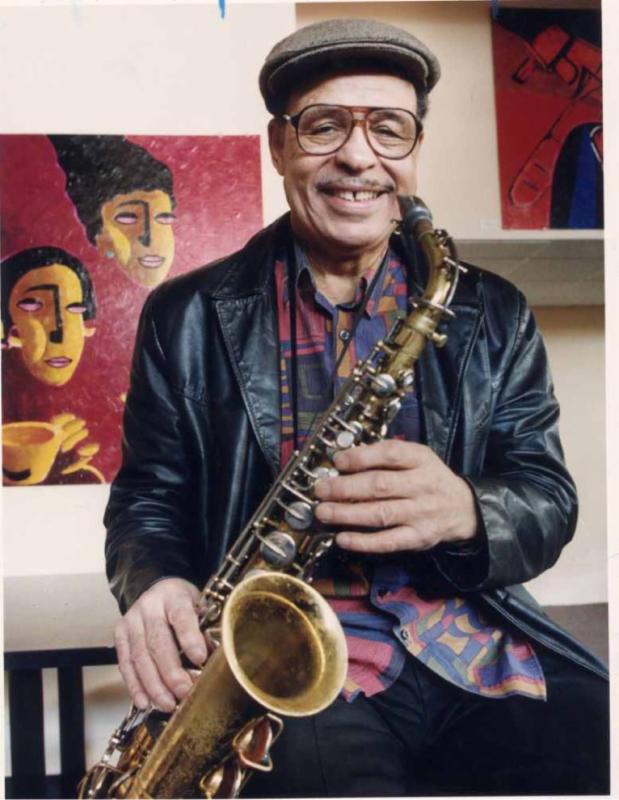
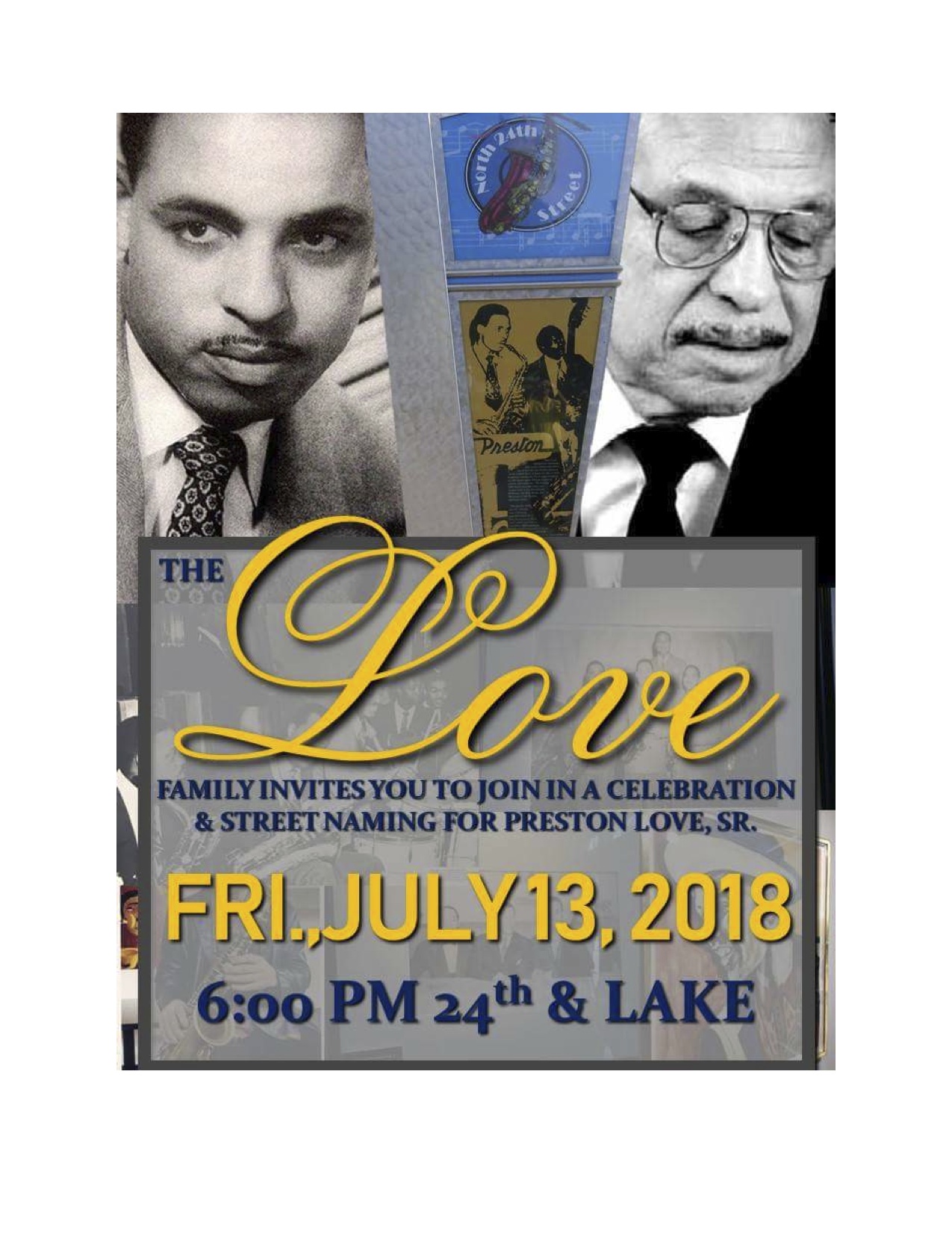
Omaha’s Love Family hosts celebration and street naming for Preston Love Sr.


Omaha’s Love Family hosts celebration and street naming for Preston Love Sr.

Friday, July 13

6 p.m.

24th and Lake

Preston Love Sr. Street

Speakers to include John Beasley and Curly Martin sharing stories about the late jazz musician, composer, arranger, band leader, educator, commentator and author. Preston Love Sr. was a charter member of the Omaha Black Music Hall of Fame, the namesake of Loves Jazz & Arts Center and the author of the critically acclaimed memoir “A Thousand Honey Creeks Later.”

Musical tribute concert immediately following at Loves Jazz & Arts Center by some of Omaha’s finest artists. Featuring songs performed and loved by Preston Love.

$7 donation

ON A PERSONAL NOTE:

When I began writing about North Omaha’s African-American community 20 years ago or so, Preston Love Sr. was one of the first persons I reached out to. He became a source for the and the subject of many of those early stories. He was a wise and loquacious sage with a real sense of history about his music, his people and his community.

The first article I got published in a national magazine was about Preston.

A good share of my work about him appeared around the time of the release of his long-in-the-making and highly regarded memoir, “A Thousand Honey Creeks Later.”

Upon his death, I was asked to write an in memoriam piece for The Reader.

A few years ago, I wrote a new piece compiled from my many stories about him, and read it at Loves Jazz before a packed house.

I have also written some about his son Preston Love Jr. and his daughters Portia Love and Laura Love.

Whether you knew the man and his legacy or not, here is a list of articles I featured him in that hopefully provide a fair representation of the man and the artist:

https://leoadambiga.com/2016/05/05/preston-love-a-t…late-hepcat-king/

https://leoadambiga.com/2010/06/03/preston-love-192…ed-at-everything

https://leoadambiga.com/2010/06/03/omaha-blues-and-…end-preston-love

https://leoadambiga.com/2010/06/03/preston-love-his…l-not-be-stilled

https://leoadambiga.com/2010/06/03/mr-saturday-night

There are several more stories in which I quoted him about everything from Native Omaha Days to soul food or referenced him in relationship to North Omaha’s live music scene and the area’s attempted revitalization.


Paul Serrato finds balance as musician and educator​

June 1, 2018 1 comment

Paul Serrato finds balance as musician and educator

©by Leo Adam Biga

Originally appeared in El Perico (el-perico.com)

Grain elevators, not skyscrapers, fill the view outside Paul Serrato’s home now that the jazz pianist-composer is back in Omaha after decades in New York City.

Serrato was a New York sideman, soloist and band leader. When not performing, he haunted clubs to see countless legends play. An avid collector, he helped himself to rare posters of great jazz lineups at iconic spots like the Village Gate in East Harlem.

He also spent untold hours composing and trying out original tunes and arrangements. He’s released nine albums on his Graffiti Productions label. He cut his tenth in February with his regular Big Apple crew. The new CD will have a fall national release.

Serrato also wrote for and accompanied underground cabaret and off-Broadway performers.

Education is a parallel passion for Serrato, who has degrees in music (Harbor Conservatory for the Performing Arts) and urban education (Adelphi University). Since the 1980s he’s taught adult ESL. He taught in various New York boroughs. Since resettling in Omaha five years ago he’s been an adjunct instructor at Metropolitan Community College’s south campus.

“I love teaching ESL. I love working with international students,” he said. “It’s taught me to respect other people, especially immigrants. I’ve always been interested in other cultures, other languages. It was a natural fit for me to migrate to teaching ESL and to pursue it to the end that I have.

“I’m a great believer in bilingual education.”

He’s distressed state funding cutbacks threaten something so impactful for students.

“There’s a tremendous amount of satisfaction in knowing we’re helping them to acculturate-integrate into the larger scene.”

He’s outraged by draconian Trump administration measures against illegal immigrants and by Trump’s own hateful rhetoric on immigration.

Serrato has immigrant students compose essays about their new lives in America. He’s moved by their stories.

“It inspires me that I can guide them and give them an opportunity to release their emotions and feelings. It’s like nobody’s ever asked them before. Some of the papers are so remarkable. They spill it all out – eloquently, too – their feelings about being immigrants, living here, the difficulties, the good things.”

Last year he organized a program at Gallery 72 in which his Omaha students read personal accounts that his New York students wrote in the aftermath of the 9/11 terrorist attacks that brought down the Twin Towers. Serrato and his NYC students were only a few blocks from ground zero that fateful day. They watched the tragedy unfold before their eyes.

“I had my international adult students write about their impressions of that day. They were from all these different countries. They wrote eloquently about what they witnessed. I saved their essays and decided to turn it into EYEWITNESS: New York Testimonies. Though they all experienced the same event, we hear it filtered through the sensibilities of their diverse cultures.”

Serrato’s “Broadway Electronic” and “Blues Elegy” compositions provided ambient music for the readings.

“I was very proud of how that event turned out. My Metro students did a great job.”

He said the international student mix he teaches “makes me feel like I’m back in New York.”

His cozy southeast Omaha home is a tightly packed trove. Framed posters and album covers adorn walls. Photos of students, family, friends and jam cats are pinned to boards. Stacks of books occupy tables.

His music life began in Omaha, where he showed early muscial aptitude and formally studied piano.

“I began doing talent contests around town. Schmoller & Mueller piano store had a Saturday morning talent show on the radio. I won first prize a couple times.”

The Creighton Prep grad was brought up the son of a single mother who divorced when he was three.

“She was a pretty remarkable woman considering what she had to go through. There were no resources in those days for single moms.”


The Chicano artist has indulged his Latino roots via study and travel. He made pilgrimages to Rio de Janeiro, Brazil to steep himself in boss and samba. His tune “Blues in Rio” originated there. A YouTube video produced by musician friend Donald Mohr features that tune matched with photos from Serrato’s Brazilian sojourns.

Bumming around Europe, he made it to Spain and grew “smitten with bullfighting’s art and pageantry.” “I began returning to Spain annually for the long taurine season as an aficionado. I’d lock up my New York apartment and fly off. My life as an artist’s model and bookstore manager in Greenwich Village made it easily possible. Such was the Boho (bohemian) life.”

His Latino roots music and world jazz immersion influences following a classical music track. He gave recitals in Omaha. Then he heard intoxicating sounds on his family’s short wave radio that changed his life.

“I thought I wanted to be a concert pianist until I started hearing recordings by Art Tatum and Oscar Peterson,
whose records were being spun out of Chicago. I was very like blown away by these great jazz pianists.

“Hearing that stuff opened up a big door and window into other possibilities.”

Harbor Conservatory in Spanish Harlem became his mecca. He earned a bachelor’s degree in music composition with a concentration on Latin music styles.

“It’s like the repository of the jazz and Latin music in New York after the World War II diaspora. It’s an incredible place. You walk into that school and you walk into another world, of Latin jazz music, which I love.”

His intensive study of Spanish has extended to Latin literature and art.

He cites congo player Candido Camero as “a great inspiration.” “He could play anything. Candido made a record, Mambo Moves, with Erroll Garner, one of my favorite pianists. They play such great duets. I’ve always loved that record. I’ve tried to incorporate some of those ideas into my own music.

“I compose pieces in the bossa style, though filtered through a New York jazz lens.”

Just as Serrato’s never done learning, he’s never done teaching,

“I love education. It’s absolutely vital to me. I’m teaching all the time, as many jazz musicians do. We’re all educators.”

Visit www.paulserrato.com.

Read more of Leo Adam Biga’s work at leoadambiga.com.

Leo Adam Biga


Identical twin horn players set to lead Omaha jazz revival

March 27, 2018 1 comment

20130928_bs_4919


Potash Twins

Identical twin horn players set to lead Omaha jazz revival

©Story by 
©Photography by Bill Sitzmann
Originally appeared in Omaha Magazine


Omaha once reigned as a major live music hub where scores of legendary artists came to perform. Many resident musicians who got their chops here used Omaha as a springboard to forge fat careers on 
the coasts.

The local African-American music scene was particularly lively from the 1930s into the 1970s, with jumping venues and jam sessions galore.

Then, that halcyon time faded away.

Now, identical twins Ezra and Adeev Potash of Omaha, two fast-rising horn players with crazy close ties to such living-legend jazz greats as Wynton Marsalis and Jon Faddis, are intent on reviving that long dormant scene. Nominated for Best Jazz for the 2014 Omaha Entertainment and Arts Awards, they recently became co-artistic directors at the Love’s Jazz & Arts Center in Omaha. The twins, who turned 20 this fall, booked an all-star lineup of local artists at LJAC through 2013, headlining some dates themselves.

But it’s all a prelude for something grander. In collaboration with LJAC executive director Tim Clark the brothers are busy raising funds to underwrite a 2014-2015 lineup of jazz superstars. Many prospective guest artists are personal friends and colleagues of the twins in New York City, where the Westside High School graduates study music.

The brothers and Clark want nothing less than to create a world-class jazz club at the center, whose jazzman namesake, Omaha’s own Preston Love Sr., played with Count Basie and came of age in local nightspots like the Dreamland Ballroom. All the jazz giants played there or at Allen’s Showcase and other
long-gone venues.

Clark says, “What’s so exciting about the twins is their enthusiasm and their sincere desire to preserve one of America’s original art forms, jazz, and to put Omaha back on the map as a national jazz hub. They’re very serious about their craft and making jazz a priority in Omaha. They bring a breath of fresh air.”

“We’re going to try to raise the money to do the season right,” says Ezra, who plays trombone, tuba, and sousaphone.“We’re meeting with donors to prove to them our passion and our vision to get what we need to become a sustainable jazz club. The thing we want people in Omaha to know is that we have the connections to bring in the biggest names in jazz. The only way we can make it happen is if Omaha gives us the resources to make it happen. We’re really close to getting it.

“Now is the time. Omaha’s really thriving as a city and becoming known for its arts. Jazz is a historical music with strong Midwest roots. North Omaha was a center of jazz, and it can be that again.”

Adeev, who plays trumpet, says, “We want to make Love’s Jazz an attraction for not only the Midwest but around the country. You won’t have to go to 18th and Vine in Kansas City or to the Dakota Club in Minneapolis to listen to great jazz.”

There are plans to upgrade the acoustics at LJAC to “make it a state-of-the-art performance space,” says Ezra.

As unlikely as it sounds that two suburban Jewish-Americans barely out of their teens should lead a jazz revival in the heart of Omaha’s black community, it’s just par for the course for the twins. At 15, their chutzpah translated into a private lesson with trumpet master Marsalis after sneaking backstage at the Lied Performing Arts Center in Lincoln following a gig by his Lincoln 
Center Jazz Orchestra.

They appreciate what they have with Marsalis, who’s introduced them to other jazz icons, some of whom they’ve played with.

“Because of our relationship with Wynton we’re able to meet, hang out with, and learn from the best musicians in the world,” says Ezra. “We have a lot of awesome opportunities. We’re always eager to learn. And we like sharing with Omaha what we’re exposed to.”

Faddis confirms the brothers are “not shy” in approaching accomplished players like himself, Marsalis, and Jonathan Batiste for “pointers.” That networking has the brothers getting schooled by the best in the field.

“We’re living jazz history,” says Adeev, who studies under Faddis. “Wynton is the modern Coltrane. Jon Faddis is the disciple of Dizzy Gillespie. I feel honored to be part of the legacy they’ll leave me.”

Clark describes the twins as ambassadors, but the brothers also enjoy the limelight. In March, they performed at South by Southwest in Austin, Texas, where they led an impromptu New Orleans-style “second line” parade down Sixth Street that National Public Radio featured. A film crew following them for a proposed reality TV series was there and at the May Berkshire Hathaway Shareholders Meeting, where the brothers performed. They also did a recent talk at October’s TEDx Omaha event on the Creighton University campus.

Their talk and performance there focused on the intuitive communication and bond twins enjoy, an asset that is magnified on stage. “Twins in general like to finish each other’s sentences,” says Adeev, “and that kind of works the same in jazz.”
Glen Campbell’s sweet goodbye

February 6, 2017 1 comment

Glen Campbell’s sweet goodbye

©by Leo Adam Biga


When pop-country crossover music legend Glen Campbell announced that he has Alzheimer’s disease a few years ago, he could have retreated into the shadows but instead he made some courageous decisions that put him and the disease quarely in the public eye. First, he went public about his diagnosis. Then he went on an extensive national tour to give himself, his family, his friends and his fans one last chance to savor his talents before the ravages to his mind and body made it too late. This was a farewell tour unlike any other. Start with the fact that audiences knew up front that this Glen Campbell was already damaged goods and so any idea of flawless performances went out the window. This was all about him expressing love to his fans and the fans in turn giving their love right back. Making it all the more poignant was that Campbell’s back up band consisted of some of his adult children and longtime cronies. His wife Kim Wollen was along for the entire 100-plus cities tour.

Campbell also allowed a documentary film crew to accompany him on and off tour as his disease progressed and his faculties diminished. I recently saw that film, “I’ll Be Me,” directed by James Keach on Netflix. It is as intimate and vulnerable a portrait of an artist as I’ve ever seen. The challenges of the disease to the aflicted and to those around him are seen up close and personal but it never seems intrusive or exploitive. It’s all done out of love and public service.

The tributes to Campbell and his artisty in that film put in perspective just how respected he is by his peers, past and present, who recognize his greatness.

The film led me to search online for more things featuring Campbell and through all of it I’ve come away with a much deeper appreciation for the gifts he gave us as a singer, songwriter, guitarist and performer. He’s a consummate entertainer whose like is rarely seen. He conquered every medium open to pop-country musicians and erased boundaries between styles, genres and categories.

He’s recorded many tunes that became and remain standards in the Great American  Songbook. But there’s a particular song, “Gentle On My Mind,” whose lyrics have poignant resonance with his affliction. I have copied and pasted the lyrics below. That song, of course, originated during the peak of Campbell’s career and it’s only now, in light of his condition, that it has this other, deeper meaning.

Not long before Campbell’s mind and motor skills left him, he and producer Julian Raymond co-wrote an original song, “I’m Not Gonna Miss You,” for the documentary and this much acclaimed song, which I only now became aware of, is one of the simplest yet most profound meditations on memory loss to be found anywhere. It is a beautiful heartbreaking ballad that stacks up with the best work this artist ever did. That he had the presence of mind to make this his final message to the world is an act of radical grace. I don’t know of another example of a recording artist who spoke so directly to the very thing that was stealing his mind andvery being even while writing and recording the piece and giving it as a gift to the world. He recorded the tune with some of his old session musician mates from The Wrecking Crew.

The words and music remind me, and I’m sure many others, of some tracks on “Pet Sounds,” the brilliant Beach Boys album he played on during his session or studio musician days.

Just as “I’m Not Gonna Miss You” fearlessly and frankly addresses his disease, his final album,”Ghost on the Canvas” does the same in exploring the ups and downs of a life that’s straight out of a Hollywood move. He went from rural poverty in Arkansas to smallt-time band work and recordings to becoming a session king to breaking big as a solo artist who won Grammys, co-starred in movies, headlined his own prime time TV show, went through four marriages, battled alcohol and drug addiction and then, when he finally got it all together, found his memory going.

The video to “I’m Not Gonna Miss You” is breathtakingly moving. Enjoy it here–

Here are the lyrics to “I’m Not Gonna Miss You”:

I’m still here, but yet I’m gone

I don’t play guitar or sing my songs

They never defined who I am

The man that loves you ’til the end

You’re the last person I will love

You’re the last face I will recall

And best of all, I’m not gonna miss you

Not gonna miss you

I’m never gonna hold you like I did

Or say I love you to the kids

You’re never gonna see it in my eyes

It’s not gonna hurt me when you cry

I’m never gonna know what you go through

All the things I say or do

All the hurt and all the pain

One thing selfishly remains

Songwriters
GLEN CAMPBELL, JULIAN RAYMOND

Published by
Lyrics © Warner/Chappell Music, Inc.

Song Discussions is protected by U.S. Patent 9401941. Other patents pending.


And here are the lyrics to “Gentle On My Mind”:

It’s knowin’ that your door is always open
And your path is free to walk
That makes me tend to leave my sleepin’ bag
Rolled up and stashed behind your couch
And it’s knowin’ I’m not shackled
By forgotten words and bonds
And the ink stains that have dried upon some line
That keeps you in the back roads
By the rivers of my memory
That keeps you ever gentle on my mind

It’s not clingin’ to the rocks and ivy
Planted on their columns now that bind me
Or something that somebody said because
They thought we fit together walkin’
It’s just knowing that the world
Will not be cursing or forgiving
When I walk along some railroad track and find
That you’re movin’ on the back roads
By the rivers of my memory
And for hours you’re just gentle on my mind

Though the wheat fields and the clothes lines
And the junkyards and the highways come between us
And some other woman’s cryin’ to her mother
‘Cause she turned and I was gone
I still might run in silence
Tears of joy might stain my face
And the summer sun might burn me till I’m blind
But not to where I cannot see
You walkin’ on the back roads
By the rivers flowin’ gentle on my mind

I dip my cup of soup back from a gurglin’ cracklin’ cauldron
In some train yard
My beard a rustlin’ coal pile
And a dirty hat pulled low across my face
Through cupped hands ’round a tin can
I pretend to hold you to my breast and find
That you’re waitin’ from the back roads
By the rivers of my memory
Ever smilin’, ever gentle on my mind

Written by John Hartford • Copyright © Sony/ATV Music Publishing LLC

And here is Glen performing it–


Creative to the core: John Hargiss and his handmade world

June 30, 2016 3 comments

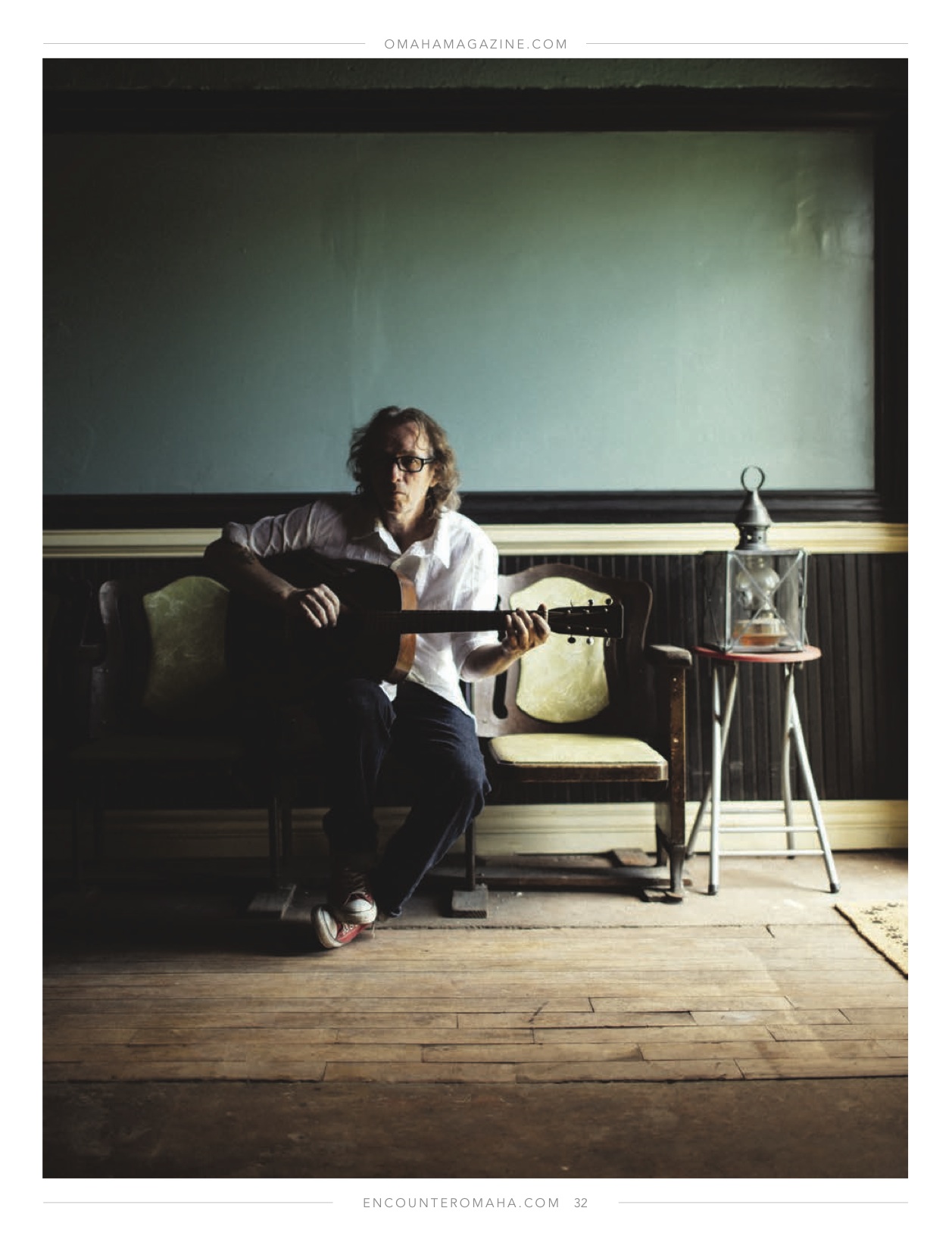
John Hargiss comes from a long line of Southern Missouri craftsmen who would never have thought to call themselves creatives, but that’s precisely what they were for the things they made with their hands and for the music they played with those same rough-hewn mitts. The owner of Hargiss Stringed Instruments is a chip off the old block who handmakes custom guitars, violins and mandolins with Old World care and craftsmanship. With those same hands, he makes and does a lot of other things, too, including repairing instruments. He took things to a whole new level recently by restoring an early 20th century vaudeville turned movie theater he discovered laying frozen in time in the complex of adjoining buildings he owns in North Omaha, one of which houses his business. The meticulously restored theater is now hosting live theater, music and assorted other events. Hargiss feels a deep connection to the people and the life rhythms from whence he came. He has found a home for himself and his work in North Omaha. This is my new Omaha Encounter Magazine profile about John and his creative life.His passion for making community in that neighborhood he moved lock, stock and barrel to from Benson is one of the angles I took in an earlier profile I wrote about Hargiss, for The Reader. Link to that earlier story at–

Entrepreneur and craftsman John Hargiss invests in North Omaha: Stringed instrument maker envisions ambitious plans for his new Hargissville digs


TE0816_125


Creative to the core: John Hargiss and his handmade world

©by Leo Adam Biga

©Photos by Bill Sitzmann

Appearing in the July-Auguat 2016 issue of Omaha Encounter Magazine (http://omahamagazine.com/category/publications/the-encounter/)

Master craftsman and stringed instrument maker John Hargiss learned the luthier skills he plies at his North Omaha shop from his late father Verl. In the hardscrabble DIY culture of their Southern Missouri hill and river bottom roots, people made things by hand.

“I think the lower on the food chain you are, the more creative you become. I think you have to,” Hargiss says.

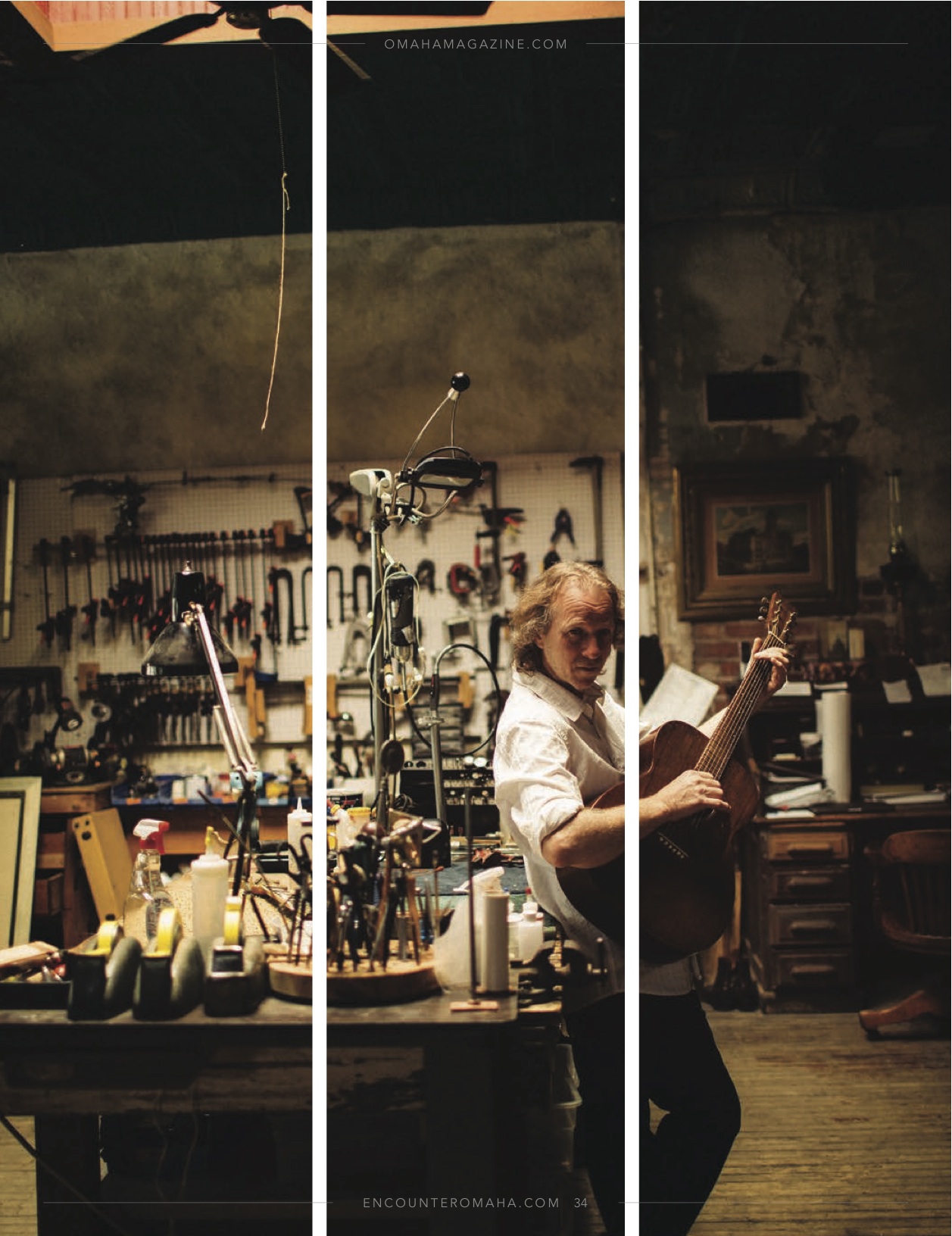
He observed his late father fashion tables and ax handles with ancestral tools and convert station wagons into El Camino’s with nothing more than a lawnmower blade and glue pot. Father and son once forged a guitar from a tree they felled, cut and shaped together. The son’s hands are sure and nimble enough to earn him a tidy living at his own Hargiss Stringed Instruments at 4002 Hamilton Street. His shop’s filled with precision tools (jigs, clamps_, many of vintage variety.

Some specialized tools are similar to what dentists use. “I do almost the same thing – polish, grind, fill, recreate, redesign, restructure.”

Assorted wood, metal and found objects are destined for repurposing.

“I have an incredible way of looking at something and going, ‘I can use that.’ Everything you see will be sold or used one way or the other.”

In addition to instrument-making, he’s a silversmith, leather-maker and welder.A travel guitar he designed, the Minstrel, has sold to renowned artists, yet he still views himself an apprentice indebted to his father.

“He just made all kinds of things and taught me how to use and sharpen tools. Being around that most of my life it wasn’t very difficult for me to be like, ‘Oh, that’s how that works,’ For some reason my father and I had a connection. I couldn’t get enough of that old man. He was a mill worker, a mechanic, a woodsman. When he wasn’t doing that he was creating things. He was a craftsman. Everything I know how to create probably came from him. Everything I watched him do, I thought, ‘My hands were designed to do exactly what he’s doing.’ On his tombstone I had put, ‘A man who lived life through his hands.'”

Hargiss also absorbed rich musical influences.

“You were constantly around what we don’t see in the Midwest – banjo players, violin players, ukulele players, dulcimer players. There are a lot of musicians in that part of the world down there. Bluegrass. Rockabilly. Folkabilly, That would be our entertainment in the evenings – music, family, friends. Neighbors would show up with instruments and start playing. Growing up, that was our recreation.”

He feels a deep kinship to that music.

.”The roots of country music and the blues come out of being suppressed and poor,” he says. “All those incredible sad songs come from the bottom of the barrel.”

His father had a hand in his musical development

“My daddy was a good musician and he taught me to play music when I was about 9. By 11 I was already playing in little country and bluegrass bands. I can play a mandolin, a guitar, a banjo, a ukulele, but I’m pretty much a guitar player. And I sing and write music.”

Hargiss once made his livelihood performing. “I like playing music so much. It’s dangerous business because it will completely overpower you. I knew I needed to make a living, raise my children and have a life. so playing music became my hobby. I worked corporate jobs, but I kept being pulled back. It didn’t matter how hard I tried. I’d no more get the tie and suit off then I’d be out in the garage making something else. The day I quit that job I went to my boss and said, ‘I can’t do this anymore, my heart’s not in it. I’m going to start building things.”

It turned into his business.

Hargiss directly traces what he does to his father.

“I watched him repair a guitar he bought me at a yard sale. The strings were probably three inches off the finger board. I remember my daddy taking a cup of hot coffee and pouring it in the joint of that neck and him wobbling that neck off, and the next I knew he’d restrung that guitar. I think that’s when I knew that’s what I’m going to do.”

The memory of them making a guitar is still clear.

“The first guitar I built me and my daddy cut a walnut tree, chopped it up and we carved us a dreadnaught – a traditional Martin-style guitar. I gave that to him and he played that up to the day he died.”


Hargiss Encounter III


Aesthetics hold great appeal for Hargiss.

“I’m fascinated by architectural design in what I create and in what I make. I study it.”

He called on every ounce of his heritage to lovingly restore a vaudeville house turned movie theater he didn’t know came with the attached North O buildings he purchased five years ago. The theater lay dormant and unseen 65 years, like a time capsule, obscured by walls and ceilings added by property owners, before he and his girlfriend, Mary Thorsteinson, rediscovered it largely intact. The pair, who share an apartment behind the auditorium, did the restoration themselves.

The original Winn Theatre opened in 1905 as a live stage venue, became a movie theater and remained one (operating as the Hamilton and later the 40th Street Theatre), until closing in 1951. Preservation is nothing new to Hargiss, who reclaimed historic buildings in Benson, where his business was previously located. At the Hamilton site he was delighted to find the theater but knew it meant major work.

“I’ve always had this passion for old things. When we found the theater I remember saying, This is going to be a big one.”

Motivating the by-hand, labor-of-love project was the space’s “potential to be anything you want it to be.” He’s reopened the 40th Street Theatre as a live performance spot.

Hargiss is perpetually busy between instrument repairs and builds – he has a new commission to make a harp guitar – and keeping up his properties. Someone’s always coming in wanting to know how to do something and he’s eager to pay forward what was passed on to him.

The thought of working for someone else is unthinkable.

“I get one hundred percent control of my creativity. I’m not stuck, I’m not governed by, Well, you can’t do it this way. Of course I can because the sound this is going to produce is mine. When you get to control it, then you’re the CEO, the boss, the luthier, the repairman, the refinisher, the construction, the engineer, the architect. You’re all of these things at one time.”

Besides, he can’t help making things. “There’s a drive down in me someplace. Whatever I’m working on, I first of all have to see myself doing it. Then I go through this whole crazy second-guessing. And then the next thing I know it’s been created. Days later I’ll see it and go, ‘When did I do that?’ because it takes over me and it completely consumes every thought I have. I just let everything else go.”

Creating is so tied to his identity, he says, “It’s not that I can’t find peace or can’t be content” without it, “but by lands I like it.”

Visit http://www.hargissstrings.com.

Preston Love: A Tribute to Omaha’s Late Hepcat King

May 5, 2016 2 comments

Here is a tribute to the late Preston Love Sr. I culled together from various stories I wrote about him over the last decadeof his life. I actually read this as part of an event at the Loves Jazz & Arts Center named after him in his hometown of Omaha, with whom he had a complicated relationship.


Preston Love: A Tribute to Omaha’s Late Hepcat king

©by Leo Adam Biga


An early January evening at the Bistro finds diners luxuriating in the richly textured tone and sweetly bended notes of flutist-saxophonist Preston Love Sr., the eternal Omaha hipster…

By eleven, the crowd’s thinned, but the 75-year-old jams on, holding the night owls with his masterful playing and magnetic personality. His tight four-piece ensemble expertly interprets classic jazz, swing and blues tunes he helped immortalize as a Golden Era lead alto sax player, band leader and arranger.

Love lives for moments like these, when his band really grooves and the crowd really digs it:

“There’s no fulfillment…like playing in a great musical environment. It’s spiritual. It’s everything. Anything less than that is unacceptable. If you strike that responsive chord in an audience, they’ll get it too – with that beat and that feeling and that rhythm. Those vibes are in turn transmitted to the band, and inspire the band.”

For him, music never gets tired, never grows old. More than a livelihood, it’s his means self-expression, his life, his calling.

Music’s sustained during a varied career. Whether rapping with the audience in his slightly barbed, anecdotal way or soaring on a fluid solo, this vibrant man and consummate musician is totally at home on stage.

Love’s let-it-all-hang-out persona is matched by his tell-it-like-it-is style as a music columnist, classroom lecturer and public radio host. He fiercely champions jazz and blues as significant, distinctly African-American art forms and cultural inheritances. This direct inheritor and accomplished interpreter feels bound to protect its faithful presentation and to rail against its misrepresentation.

His autobiography, “A Thousand Honey Creeks Later,” gave him his largest forum and career capstone.

“It’s my story and it’s my legacy to my progeny.”

He’s long criticized others appropriating the music from its black roots and reinventing it as something it’s not.

“It’s written in protest. I’m an angry man. I started my autobiography…in dissatisfaction with whats transpired in America in the music business and, of course, with the racial thing that’s still very prevalent. Blacks have almost been eliminated from their own art. That’s unreal. False. Fraudulent.

“They’re passing it off as something it isn’t. It’s spurious jazz. Synthetic. Third-rate. Others are going to play our music, and in many cases play it very well. We don’t own any exclusivity on it. But it’s still black music, and all the great styles, all the great developments, have been black, whether they want to admit it or not. So why shouldn’t we protect our art?

“When you muddy the water or disturb the trend or tell the truth even, you make people angry, because they’d rather leave the status quo as it is. But I’m not afraid of the repercussions. I will fight for my people’s music and its preservation.”

When he gets on a roll like this, his intense speaking style belongs both to the bandstand and the pulpit. His dulcet voice carries the inflection and intonation of an improvisational riff and the bravura of an evangelical sermon, rising in a brimstone rant before falling to a confessional whisper.

Love feels his far-flung experience uniquely qualifies him to address the American black music scene of his generation.

“The fact that mine’s been a different, unlikely and multifaceted career is why publishers became interested in my book.”

From a young age, he heard the period’s great black performers on the family radio and phonograph and hung-out on then teeming North 24th Street to catch a glimpse and an autograph of visiting artists playing the fabled Dreamland Ballroom and staying at nearby rooming houses and hotels.

“Twenty-fourth street was the total hub of the black neighborhood here. This street abounded with great players of this art form.”

By his teens, he was old enough to see his idols perform at the Orpheum and Dreamland.

“All of the great black geniuses of my time played that ballroom. Jazz was all black then…and here were people you admired and worshiped, and now you were standing two feet from them and could talk to them and hear their artistry. To hear the harmony of those black musicians, with that sorrowful, plaintive thing that only blacks have, and a lot of blacks don’t get it. That pain in their playing. That indefinable, elusive blue note. That’s what jazz is.

“The Benny Goodmans and those guys never got it.”

The music once heard from every street corner, bar, restaurant, club has been silenced or replaced by discordant new sounds.

That loss hurts Love because he remembers well when Omaha was a major music center, supporting many big bands and clubs and drawing musicians from around the region. It was a launching ground for him and many others.

“This was like the Triple A of baseball for black music. The next stop was the big leagues.”

He regrets many young blacks are uninformed about this vital part of their heritage.

“If I were to be remembered for some contribution, it would be to remind people what’s going on today with the black youth and their rap…has nothing to do with their history. It’s a renunciation of their true music — blues, rhythm and blues and jazz.”

He taught himself to play, picking up pointers from veteran musicians and from masters whose recordings he listened to “over and over again.” Late night jam sessions at the Blue Room and other venues were his proving ground, He began seeing music as a way out.

“There was no escape for blacks from poverty and obscurity except through show business. I’d listen to the radio’s late night coast-to-coast broadcasts of those great bands and go to sleep and just dream of going to New York to play the Cotton Club and dream of playing the Grand Terrace in Chicago. I dreamed of someday making it – and I did make it. Everything else in my life would be anticlimactic, because I realized my dream.”

He made himself an accomplished enough player that Count Basie hired him to play with his band.

“I had the natural gift for sound – a good tone – which is important. Some people never have it. I was self-motivated. No one had to make me practice…And being good at mathematics, I was able to read music with the very least instruction.”

Music keeps him youthful. He’s no “moldy fig,” the term boppers coined to describe musicians out-of-step with the times.

He burns with stage presence with his insouciant smile and his patter between sets that combines jive, scat and stand-up. Then there’s his serious side. He coaxes a smooth, bittersweet tone from the sax and flute developed over a lifetime.

If nothing else, he’s endured, surviving fads and changing musical tastes, adapting from the big band swing era to Motown to funk. He’s risen above the neglect he felt in his own hometown to keep right on playing and speaking his mind.

“I refuse to be an ancient fossil or an anachronism, I am eternally vital. I am energetic, indefatigable. It’s just my credo and the way I am as a person.”

A Soul Man to the end.

“I think the term ‘soul’ was first applied to us as a people to describe the feeling of our expressions and attitudes and language. It means a lot of heart and a depth of feeling. It refers to the pathos in our expression, musically and colloquially.”

He says a genius for spontaneity is a hallmark of blacks in creative endeavors — from music and dancing to cooking.

“The limitations we lived under gave birth to these embellishments and improvisations. That’s what we did. We were masters of embellishment.”

He left his hometown many times, but always came back. Back to where his dream first took flight and came true. Back to the mistress – music – that still holds him enthralled. To be our conscience, guide, inspiration.

That January night at the Bistro, a beaming Love, gold horn slung over one shoulder, tells his audience, “I love this. I look forward coming to work. Preston Love’s an alto player, and you want to hear him play alto, right? Listen to this.” Supplying the downbeat, he fills the room with the golden strain of “Mr. Saturday Night.” Play on, Mr. Saturday Night, play on.