Archive
Archive for the ‘Omaha’ Category
George Haecker’s Design for Living: “Trying to understand what a building wants to be.”
May 5, 2019
Leave a comment

George Haecker’s Design for Living
“Trying to understand what a building wants to be.”
photos by Bill Sitzmann and provided
story by Leo Adam Biga
Originally appeared in the May 2019 edition of Omaha Home Magazine (https://omahamagazine.com/articles/george-haeckers-design-for-living)
Don’t look for ostentatious displays in the work of award-winning Omaha architect George Haecker. He’s a form-follows-function man, whether designing residential, commercial, or civic projects. Above all, his organic approach tries “to avoid cliches,” he says.
“The architectural world is just inundated with cliches,” he says. “I think architecture is way too important as a physical presence in our world, city, and neighborhoods to be trendy. I think the manifestation of it needs to be mature and careful and, hopefully, timeless. It’s public sculpture, whether you like it or not.”
Haecker strives for subdued, not showy, answers to whatever a project’s needs are.
“The thing I bring is, ultimately, an originality to the solution but not an artificial imposition of a style or a big statement,” he says. “I don’t look for the finished product to show off in any way. It might subtly, but you kind of have to look at it twice to say, ‘Well, that’s something different.’ I don’t like to shout and yell and just grab your attention. I want it to be more comfortable and, of course, livable.”
Haecker communes with the unborn structure by “trying to understand what a building wants to be.”
“Every project has a context, a location, an owner, a program, and a need, and the architect’s thought is to try to meld, digest, and mix that all together,” he says. “All kinds of factors influence the result, including budget.”

Brandzel Cottage in Fremont, Nebraska
The University of Nebraska-Lincoln graduate, whose brother Foster Woods Haecker and son Alex Haecker are also architects, broadened his own vision working for firms in Hawaii, Puerto Rico, St. Thomas Virgin Islands, and New York.
“I didn’t leave Nebraska to leave Nebraska,” he says. “I like it here very much for many reasons. But, in your youth, you have an itch to look at different things, and that variety of geography and mentors was extremely valuable.”
A job offer from Dana Larson Roubal & Associates (DLR) lured him back to Nebraska in 1968. By the early 1970s, he became a founder of the Omaha office of BVH Architecture. During his nearly half-century run as a principal and part-owner, leading architectural periodicals published his work, he earned numerous awards from the American Institute of Architects, and he received The Harry F. Cunningham Gold Medal from AIA Nebraska in 2006 (the highest honor that AIA Nebraska bestows upon an individual).
He took a hand in such signature public projects as the Gene Leahy Mall and the Bob Kerrey Pedestrian Bridge.
Historic renovation work is a big segment of BVH’s portfolio, and he was part of teams that repurposed Omaha’s Union Station and Union Pacific’s Harriman building.
An activist in the preservation community for many years, he successfully campaigned to save the Omaha Building downtown. He also wrote the preface for the 1977 book Omaha City Architecture.
His enduring residential works include private homes in and out of Nebraska. Perhaps his personal favorite is the Woods Cottage in Madeline Island, Wisconsin.

Interior of Woods Cottage in Madeline Island, Wisconsin

Front of Woods Cottage in Madeline Island, Wisconsin
“It’s a traditional lake-shore cottage with low-pitched shingle roofs, big overhangs, a big screened-in porch,” Haecker says. “All the siding and windows are real wood with real mullions. There’s no drywall in it. It’s all natural materials inside and out, so it has a real warmth to it. It fits into its environment.”
Another out-of-state favorite is the Keene residence in Crested Butte, Colorado.
“That was a very special challenge,” he says. “That historic town has strict design guidelines for roof pitches, proportions, and windows. My objective was to design a house that fit into that historic environment with the articulation of the floor plan, the pitches of the roofs and the selection of materials. The Keene house is, really, pretty contemporary when you stand back and look at it, but you don’t see it as an intrusion when you drive down the street or you’re inside it.”

Keene Residence

Keene residence in Crested Butte, Colorado
Back home in the Omaha metro, the Matthews residence in Elkhorn’s Skyline Ranches presented the challenge of a new house in a new development.
“It’s a bigger house—pretty grand really in scale and square footage with a big dining room, great room, and game room,” he says. “The topography there was very much a part of it. It’s on a very steep site, so the house steps down the hill with the living levels. It’s somewhat dramatic but not glaring in its forms and colors and materials.”
Then there’s the Liakos residence in southwest Omaha. He didn’t touch the street facade of this house inspired by Frank Lloyd Wright’s Prairie School. But in the back living quarters, he designed a new family kitchen, a new dining room, and a new master bedroom.

Liakos residence in southwest Omaha
“The way the old morphs into the new is what’s kind of fun with that house,” he says. “It’s got big clerestory windows with a lot of light shining in. I like a lot of light, so I use clerestory windows to reach up into the sky and bring light inside.”
He also designed a screened-in porch and deck for the property.
Whatever the project, it’s the architect’s intuitive, interpretive expression of the client’s program.
“Sometimes all the pieces come together with the owner and the site and the budget, and it’s just a joyful passage, and sometimes it doesn’t work at all,” Haecker says. “They’re hiring you, in the end, to bring your perspective and talent and aesthetic into a compatible solution that they’re comfortable with. If you just blindly do what the client wants, you’re just going to end up with, probably, a mediocre solution.”
It’s a delicate dance. “Without being overt about it, the architect needs to gently influence the client to do this or that,” he says.

Matthews residence, Elkhorn Nebraska
After working most of his career in his own firm, he’s now in independent practice.
Like a lot of architecture shops, he says, BVH “started out loosely organized with unspoken philosophies. Then, as we got bigger, more structure crept in and it morphed from a spiritual camaraderie to a business with a board, policy manuals, schedules, payrolls, insurance. That happens to every firm. I just didn’t fit anymore with the structure of the thing. It was just time to step away from that.”
Today, he enjoys his well-earned autonomy working from a home studio in the 1929 Memorial Park Tudor he shares with wife, Judy. It’s the only home the couple has ever owned. The studio, which he added on, is filled with overhead windows that stream in light. A large drafting table is its centerpiece.
“I still draw by hand,” Haecker says. “A few of us do, but it’s a dying breed.”
He also writes and paints in his sanctuary of a studio space that’s filled with books, maquettes, and artwork.
The three-story home has undergone several other tweaks by his design, including adding bay windows in the living room and a study and sunroom in the back.
Haecker is a collaborating architect with The Architectural Offices in Omaha. He works up conceptual designs for the practice. He also partners on projects with his son, Alex.
In a career spanning six decades, Haecker’s pretty much done it all in terms of architectural types.
“It’s happened that way, and happily so,” he says. “I do like the variety—everything from a bridge to a lake cottage—that I’ve done and been involved with.”
Visit georgehaecker.com for more information.
This article was printed in the May 2019 edition of OmahaHome. To receive the magazine, click here to subscribe.

Spellman dacha, Niobrara, Nebraska
The greening of the OPPD board bodes for a more clean energy focused utility
April 8, 2019
2 comments
The greening of the OPPD board bodes for a more clean energy focused utility
©by Leo Adam Biga
Appearing in the April 2019 edition of The Reader (www.thereader.com)
Polls show most Americans are now sold on climate change as real and requiring action. Thus, green’s no longer the new red bait.
Consistent with the public’s reset on greater environmental stewardship, the Omaha Public Power District’s board of directors has a new green majority after this last election cycle. Newly elected directors Eric Williams, Janece Mollhoff and Amanda Bogner have joined holdovers Rick Yoder and Craig Moody as ardent clean energy advocates. It’s not as if this potential voting bloc is so far apart from the other three directors, led by chair Anne McGuire. Indeed, there’s consensus to continue OPPD’s already impressive gains on the renewables front. Differences come down on how far, how fast the utility goes from here.
Regardless of where OPPD lands in its push toward renewables, it’s clear this billion dollar company reflects its customers micro energy concerns. Now that environmental engagement is cool, more folks are doing their part to reduce emissions by driving electric cars. More homes and businesses are going solar or using programmable timers to conserve usage,
Green-minded measures like these are one answer. But until entire communities and industries switch from fossil fuels reliance to clean energy sources pollutants and waste will leak out. The big frontier for sweeping impact is as close as the local electric utility. OPPD serves hundreds of thousands of customers in 13 counties with an energy profile mix that, while on an ever more renewable trajectory, is still largely dependent on coal-fired generating plants that release carbon.
“Utilities are clearly at the forefront of figuring out how we can have a reliable and affordable electricity energy system while mitigating and adapting to climate change,” Craig Moody said. “It’s difficult but probably the most important work I will do in my lifetime.”
OPPD’s made clean energy a top priority through strategic directives set by its publicly elected board.
Moody, managing principal at sustainability consulting firm Verdis Group, feels he represents a broad cross-section of ratepayers in Subdistrict 5..
“Nobody wants pollution. But people also want a measured, deliberate, socially just transition to clean energy,” he said. “The reality in this state is that our economy is driven by agriculture, which can only happen with fertile soil, clean water and clean air.”
He sees rural constituents perhaps even more climate change-attuned than their urban counterparts.
“They get it. They see the risks. I mean, look at the flooding. It’s here now.”
Anne McGuire, representing Subdivision 2, has served on the board since 1996 and she said the utility’s made renewables a focus for 20 years. OPPD set its first hard renewable energy goal in 2010.
“Our goal was 10 percent renewable by 2020,” she said. “Everybody thought that was crazy. But we surpassed that last year at about 33 percent. At the end of 2019 we’re going to be about 40 percent renewable energy. It’s gotten less expensive to put up wind towers. They’re more efficient now, so it became far more viable and cost effective. We’ve always said we will adopt at the pace we can afford.”
“It’s gone much faster than most anyone really anticipated,” Moody said.
With carbon emission controls, LED street lights and a new community solar program,” Moody said, “we’re ahead of many other utilities when it comes to the pace at which we’ve continued to adopt renewables.” “I’m proud of how quickly it’s happened. Part of what we are trying to figure out as a utility is what’s next.”
McGuire and Janece Mollhoff, who both have nursing backgrounds, echo health concerns over pollutants. Health and safety concerns extend to decommissioning the Fort Calhoun Station nuclear plant and the frequent flood threat posed to the Nebraska City Station.
McGuire feels the new board members will help move OPPD forward.
“They’re very engaged, very educated, very socially public-minded, and they know a lot about climate change,” she said. “So this will help us even more in bringing on more sustainable things.”
Moody sees things the board as a whole must address.
“Most electric utilities are seeing pretty flat if not declining growth as measured by demand from customers’ need for kilowatt hours. Ours is growing primarily due to data center activity in Papillion. So how we manage and meet that new demand while continuing to reduce carbon emissions is one of our bigger challenges in the coming years.”
He senses “alignment” by the board on the longterm vision for renewables. “The nuances are about pace and what that transition looks like from where we are today to what that vision is. We need to ensure a good amount of study and analysis goes into making decisions about how we will achieve that vision.”
Even seemingly small items like emissions measures – carbon intensity versus carbon ratio – are up for debate.
Agreeing on the particulars must happen within the board’s mandate of keeping energy affordable and reliable while maintaining environmental sensitivity. Easier said than done in a field dependent on both old and still developing new technologies and wide fluctuations in energy demands on the grid.
“It is a really difficult balancing act,” Moody said. “We often describe it as pulling levers. By focusing more on one issue, it’s going to create pressure on maintaining other aspects.”
Said McGuire, “You have to balance the scales. This is where we work on reaching compromises. It’s recognizing the fact you have to look at the entire company when you make changes.”
Balancing scales means tempering expectations.
Mollhoff (Subdivision 7) wants OPPD “to move away as quickly as possible from fossil fuels” but concedes that goal is subject to “fiscal responsibilities and making sure we’re not jeopardizing rates and our bottom-line.” She said the board must deliberately review and revise the 15 strategic directives previous boards put into place. “It’s too important we maintain stability to turn those all upside down and make it hard for staff and management to comply.”
Moody agrees, saying. “With an industry like this you don’t want to constantly be sending management new directions and be zig-zagging all over the place. That’s unhealthy, inefficient and not productive.”
Eric Williams (Subdivision 6), a natural resource planner at the Papio-Missouri River Natural Resources District, also believes due diligence serves the utility well.
“It’s not as if there could be an agenda item next month to vote on one hundred percent renewable energy. That is not how a utility operates, nor should it. There are a number of different times when different pieces will be up for public discussion. Those 15 strategic directives work together. All are very critical to the discussion about what is the total percentage of energy generated from renewable sources and how we’re going to continue increasing that.”
Williams views the board’s job as “working to understand this really complicated and complex set of parameters that guide how the utility operates, ways where we can make improvement and strategies we can use to work toward more clean energy. There’s a balancing between the different directives. For example, you could immediately jump to 100 percent clean energy, but that might be in conflict with cost effectiveness goals we currently have based on the price of technology available today.”
‘It’s easy to say we want to have a hundred percent clean energy and there are utilities – Mid-American and Xcel – who have said that. But if you ask them specifically how they’re going to get there I don’t think they have specific answers yet because transitioning to a hundred percent clean energy economy is a very long process. A lot of the technology we will need has not yet been developed.”
Amanda Bogner (Subdivision 1), an engineer by trade, knows this territory well.
“I would like to see OPPD’s renewable capacity increase to meet 100 percent of electric demand with renewables. This will become feasible as utility-scale energy storage becomes economically viable,” said Bogner, whose business Energy Studio makes buildings more energy efficient.
Bogner is concerned that two bills introduced in the Nebraska Legislature, LB 155 and LB 700, “will undermine our state’s potential to generate wind energy.” “Wind energy is a huge economic opportunity for our state. We need legislative action to encourage more wind energy development, not create roadblocks.”
While “wind and solar technologies are available in abundance in Nebraska,” Williams said, “they are intermittent, which is used as a criticism often of clean energy.” Williams regards such criticism as “a short-sighted view of how utilities function in general,” adding, “A utility is made of a number of generation assets all operating at different times, with different capacities, from different original energy sources and providing different benefits to the grid.”
Whatever the issue, the directives drive the change.
“In my view the most important job of our board is to get those strategic directives right,” Moody said. “Everything else the organization does flows into those strategic directives. Management is without question getting good guidance from those directives and often refers back to them as they think about what they’re doing.”
Anne McGuire describes the directives as “a living, breathing document we’ll alway revisit.” Added McGuire, “It’s important to have that broad policy because things are always changing. There’s going to be new technologies. These broad policies allow us as a company to be flexible when dealing with change.”
OPPD has an innovation team tasked with future solutions. Whether present or future-directed, Williams said “the board is responsible for understanding all of the different values of the district to provide affordable and reliable and environmentally sensitive energy and to make decisions guiding the district towards getting to those outcomes over time.” That means “understanding the technologies available.”
Williams said those technologies include clean energy generation at the utility-scale. It also mean distributed energy production, such as solar or wind, vent-metered at a house or business with excess sent back to the grid. There’s also energy storage with batteries, demand management programs and smart business maps.
“All of those work together to get a picture of the total generation and demand at the utility,” he said. “I am particularly interested in seeing us move toward more clean energy and more efficiency and becoming a part of and a leader in the new energy economy. But we do need to keep in mind we have come a long way and there are things that take awhile to transition.”
As more clean energy comes online, there’s bound to be displacement.
“We need to make sure as we transition we’re creating growth in other parts of the economy that fill the gap for skills and jobs lost in that transition,” said Janece Mollhoff. “I think it’s an important part of our work.”
Subdivision 4 director Rick Yoder a Nebraska Business Development Center consultant, champions Nebraska taking more advantage of the new energy economy.
“This is a wonderful opportunity to distribute the benefits of business to landowners around rural areas of Nebraska,” Yoder said. “I represent seven of the 13 counties OPPD has from Sarpy County all the way to the Kansas line. There are plenty of acres there. We are losing out in terms of job growth, business impact by not being more aggressive in pursuing the clean energy economy. The opportunity is there to invest in energy efficiency, housing and the construction jobs that would make that happen.”
Eric Williams advocates a big picture view as well.
“I think the board is generally in agreement that we should continue to develop clean resources in our state that have benefit to the locations where they’re constructed as well as the ratepayers in the utility.”
Mollhoff regards wind farms good investments, whether OPPD builds them or enters purchase power agreements with third parties, as long as it’s “wind sited in places that meet demand without having to invest too much more in infrastructure, transmission and distribution lines.” For example, she said, “bringing wind energy here from the Sandhills doesn’t make sense.”
The volatile nature of agriculture and climate, Yoder said, makes the case for urgency.
“We’ve seen prices go up and down and major floods. There’s land that does not always offer a strong income for the landowners. This is a great opportunity to diversify and to make our system more reliable and more resilient than it already is. OPPD and other utilities along the Missouri River should by now recognize the risk associated with recurring flood waters. A central hub and spoke system is not as resilient, reliable or risk-less as distributed energy generation.”
How OPPD’s adapting to the new energy economy depends on what lens you look through.
“If you use a Nebraska-only lens,” Yoder said, “I think OPPD is on the leading edge. It’s exciting the energy sector is transforming with the greatest wealth creation opportunity in my lifetime. The new technologies will enable us to extract resources rich to Nebraska that don’t run out – wind and solar. They have to be managed appropriately and we still have some technical issues we have to watch out for.
“But OPPD has certainly installed a ton of wind or partnered with companies installing wind here, I don’t just mean power purchase agreements with companies that install wind towers. There’s also the new Sarpy County resident (Facebook) building wind to offset the coal it purchases from OPPD. So wind expansion is happening because of OPPD above and beyond everybody else in the state, and that’s a good thing.
“OPPD is slower on solar, but I think now that it’s got its toe in the water it’s going to see the advantages there.”
Williams describes the community solar program coming online in April as “an opportunity for people to participate in local community clean energy even if they can’t install it directly on their home.”
Compared to nearby states and the country. Yoder believes Nebraska is “lagging” in new tech adoption.
“I think we’re losing economically because of it. Some people don’t use that as a measure. They use environmental measures. In either case, there’s a real urgency to make some change.”
Yoder calls for reducing “the amount of bureaucracy it takes to install solar for households and small businesses.” “The cost of when someone puts in solar is argued unfairly as a disadvantage to other users in the system. We’re working on what is the right rate for that user to pay to stay connected to the grid.”
Whatever the technology, Williams said, “we need to make sure we’re looking long-term while providing stability and certainty in the short-term.” He cautioned, “You want to be careful about saying something about a long-term vision without having fully understood the steps necessary to get there.”
Mollhoff describes a push-pull at work. “Management’s being pushed by entities like Facebook that want renewables,” she said, “and it’s important to recognize that management will respond to external forces probably as much as they’ll respond to the board. I want to make sure that whatever we do as a board we don’t tip that balance and put us on a path that isn’t sustainable or reliable. W
“e’re not trying to micromanage and yet we want them to move in a certain direction. It’s really the most we can do. We set rates and these strategic directives, but we don’t run the organization. We have to let management and staff do their jobs in a way that meets those strategic directives.”
So how well poised is OPPD to make bigger strides in clean energy?
“That’s where we have the greatest need for discussion between board and management,” Yoder said. “They’re much closer to the actual changes and smarter about the time and resources needed to make the change than the board.”
Yoder said unless or until the board sets more specific clean energy directives, “we don’t have those policies pushing management right now.” He added, “That’s really where the board has an opportunity to more deeply engage and I think we all recognize that’s what we need to do. The change we’re talking about is seen as disruptive, but I think there is an organizational culture change happening.”
Underpinning any change, Yoder said, “we have to have the right data to make decisions.” He feels comprehensive data “hasn’t always been” available. “So we’re asking for larger time spans for the reporting and better measures of what’s being reported. That will allow us to make better policy decisions.”
Another area he’d like OPPD to explore is “shaping the load by working with customers to reduce when they choose to use electricity, so that demand that requires generation is spread out more evenly.” Doing that, he said, will take “a more modernized distribution system, which will require an investment.”
“The real tension for the board and management is where does the money come from, how do we do this, what is the return on investment if we choose to encourage more people to manage their load. Not everybody’s going to want to do that, so how do we find technologies that put in a default option for users.”
A more pro-active approach would be a start.
“As a utility we have not demonstrated an interest in helping people save their energy costs,” Yoder said. “The Austin, Texas electric utility raised its rate but worked with ratepayers to reduce the amount of energy they use, so monthly bills ended up the same. We could do that here if we chose to compete on efficiency rather than on price. When you compete on efficiency you compete on technologies, know-how, building practices. You’re no longer just a utility – you partner with the sectors of the economy for community betterment.”
Then there are meeting restrictions imposed by state Sunshine laws and differing agendas..
“We work the best we can through the meetings we set up,” Yoder said. “It is a struggle. But there’s a good amount of collegiality. I think we all have the same vision of where we’re going. The struggle we have is some of us are more focused on the outcome and others on the process to get there. Some understand it takes several steps to get to where we want to go and others, like myself, want to see it happen now.
“It’s a tough tension.”
Moody cites the fluidity of new tech and impinging climate change as making everything move faster. “The utility industry historically has been pretty slow to change,” he said, “because it takes a lot of time, study, energy, resources, money to put in new transmission- distribution, to build new generating plants. That meant it went very slow. It’s not slow any longer.”
Something McGuire doesn’t want lost in all this is the “valued” work done by OPPD employees who operate the coal fired units that still energize the district. “They’re the ones that really keep the lights on 24/7 and we have to respect them and their important role in this,” she said “If we didn’t have that we wouldn’t have the reliable resilient energy we have right now.”
As the utility prepares for a greener future, McGuire said, “There’s discussion and compromise, but in the end we’re all after the same goal, and we all respect each other. This is not Congress.”
Moving forward, Moody said, “it will be a collaborative effort by those some describe as the green majority and the other members of the board and management.”
Read more of Leo Adam Biga’s work at leoadambiga.com.
Omaha Area Sanctuary Network: Caring cohort goes the distance for undocumented residents caught in the immigraton vice grip
April 4, 2019
Leave a comment
Part I
Going the distance
Omaha sanctuary network gives refuge to family separated at the border
©by Leo Adam Biga
Originally appeared in El Perico (el-perico.com)
Editor’s Note:
Welcome to Part I of a two-part story about the Omaha Area Sanctuary Network, which supports undocumented individuals embroiled in the immigration justice system. Part I focuses on a family separated at the border that’s found reunification and ongoing aid from the network. The parent’s names have been changed. The interview was conducted with the assistance of a translator.
In January 2018 Carlos and Sofia fled gang-ridden Acapulco, Mexico with their four young children. They risked everything in a run for the border. At the San Ysidro port of entry they sought asylum only to be forcibly separated and detained. They’ve since been reunited with support from the Omaha Area Sanctuary Network (OASN). The nonprofit aids undocumented individuals whose immigration status is in question.
Rampant violence in the family’s homeland created an environment of fear. The children witnessed shootings. Family friends went missing. The last straw was Carlos getting beaten and stabbed.
“Our family felt threatened,” said Sophia, adding that leaving seemed the only option. “Sometimes one doesn’t act for one’s self. We do it for the kids.”
Their odyssey’s ultimate destination was Omaha, where Sofia’s sister already lived, Even though the U.S. immigration crackdown was not yet in effect, this intact family seeking refuge from a credible threat still found themselves separated. Sofia and the kids did not get to say goodbye to Carlos before their release.
“I tried to get his attention to tell him we were leaving, but he didn’t understand. They wouldn’t let you speak with anyone. They wouldn’t let us get close to him.”
A desperate Carlos was transferred to detention centers in Arizona and Georgia. He pestered officials until the Southern Poverty Law Center took his case via its Southeast Immigrant Freedom Initiative (SIFI).
An attorney arranged for his parole to Omaha pending a local sponsor coming forward. Calls to local immigration organizations led to then-sanctuary network president Lawrence Jensen. Meanwhile, Carlos and his family anxiously awaited a resolution to a separation that lasted four months.
“To go from every day interacting with your family and in one moment they’re taken away, there are no words to describe it. One feels, I don’t know, incomplete,” Carlos said. “While incarcerated you feel that urge to see them, to hold them, but you’re not able to do anything. When I would talk with her (Sofia) on the phone, I would feel good but at the same time bad because it wasn’t the same thing, I would tell her that sometimes i wouldn’t even eat because I could not stop thinking about them.”
As bad as it was being separated at the border,”being so far away from them was much worse,” he said.
It was no easier on Sofia and the children.
“It’s was very difficult,” she said. “The kids would cry a lot for their dad and that makes you feel bad. Every day they would ask, ‘Is my dad going to be home yet?’ I would say, ‘I don’t when he’s going to be here, but he’ll be here.’ I would talk to him (Carlos) and he would cry. It would make me feel bad.”
Separation trauma made the oldest children ill.
As Spanish-speakers, the family faced hurdles trying to explain their plight to English speakers.
OASN, which does education and advocacy work around immigration, stepped up to help the family only months after making accompaniment its first priority. The group was frustrated in efforts to find a church offering physical sanctuary. Now, volunteers attend immigration court hearings, provide food and personal items in emergencies and make detention center visits.
“The focus on accompaniment seemed to revitalize the group. Participants find it rewarding,” Jensen said. “Thus, the ground was prepared when we connected with Carlos. Here was a need we could help. Sponsorship would be accompaniment at a deeper level. We agreed we would legally sponsor him but also fully support his wife and children.”
OASN secured resources and volunteers to satisfy federal sponsorship requirements of a supervised place to live, financial support for a year and ensuring Carlos attended all court hearings and Immigration Customs Enforcement (ICE) check-ins.
With $20,000 in pledges raised and commitments for more as needed, OASN got approved as sponsors in April. Due to red tape another month passed without his release. The one direct conversation Jensen had with Carlos was a brief phone call. Jensen only had time to share an OASN contact. More weeks passed, until, without advance notice, Carlos was released.
“The officer was like, ‘Hurry up, grab your stuff,’ because it was my time to go,” Carlos said. “I couldn’t believe it.”
He was taken to a Greyhound Bus station and left to fend for himself. Angela only found out about his release once he was on the road.
A sanctuary supporter got him much needed food and money at a stop en route. He didn’t know what to expect upon arriving in Omaha.
“Then I heard the kids screaming, ‘There’s my daddy.'”
The emotional reunion was a huge relief after months apart and uncertanity.
Jensen and Carlos finally met. “Despite the language difficulty, we were instant friends. He was good-humored, outgoing and amazingly composed considering the ordeal he had been through,” Jensen said.
The network went all out for the family.
“When Carlos got here they gave him a welcome party,” Sofia said. “We met a lot of people. They brought us bikes. Everything that we have here – furniture, food, clothes, they have given to us.”
Jensen became a frequent visitor to the apartment the family shares and OASN pays rent on.
“They’ve become good friends and an important part of my life,” Jensen said. “They are good, responsible people. The children are delightful.”
Though Jensen’s since moved outside Nebraska, he still stays in touch. Local sanctuary members make sure the family has what it needs.
“They have helped us a lot,” Sofia said. “We don’t know how to thank them.”
The family’s school-age children are thriving since their father’s return. Staff at Field Club Elementary, Sofia said, are sensitive to their emotional needs.
Through it all, not knowing has been the hardest part for this family that left everything they knew to find safety. The couple’s asylum cases are still pending.
“I have my hearing in July and Carlos has his hearing in April,” she said. “Our attorney (paid for by the network) is working on getting the cases joined. It’s been a journey. We don’t know what’s going to happen.”
Meanwhile, the network’s close to finally confirming a church to provide a dedicated physical sanctuary space. It’s also working to create an immigration crisis hotline.
What to look for in Part II:
Evolution of the Omaha Area Sanctuary Network
Read more of Leo Adam Biga’s work at leoadambiga.com.
______________________________________________
Part II
A caring cohort supports the undocumented through uncertain times
©by Leo Adam Biga
Editor’s Note:
Welcome to Part II of a two-part story about the Omaha Area Sanctuary Network, which supports undocumented individuals embroiled in the immigration justice system. Part II focuses on how the network has evolved to respond to needs and crises that arise around individuals facing detention, separation, adjudication and deportation.
In 2017, some concerned area citizens formed the Omaha Area Sanctuary Network (OASN) in response to draconian immigration enforcement raids, detentions and deportations.
The U.S. government’s crackdown on the undocumented affects not only new arrivals but people long living and working in the country. With the specter of arrest and separation a more tangible fear for many, the local network offers refuge and support.
OASN is part of a loosely affiliated nationwide sanctuary movement. Many group members belong to progressive churches.
Sanctuary can mean different things in different situations. Thus far in Nebraska, said OASN president Yvonne Sosa, “it is just being there and bearing witness to what the immigrant is going through,” including shows of support by attending court hearings and providing financial assistance.
“To me, personally, sanctuary means being part of a community that is safe and accepting of all people, regardless of where they are born, the color of their skin, their religion, sexual orientation, their personal beliefs. Sanctuary is the act of honoring the dignity of others,” said OASN vice-president Jeri Thurber. “Our organization is defining sanctuary as creating a safe community for all people, but we’re specifically focusing on immigration issues right now. In the immigration arena this can mean advocacy or resistance or bearing witness. It is an active way of protecting others from injustice and hate.
“Specifically, we provide accompaniment to hearings and to checkins if requested by people. We’ve had as few as three and as many as 20 members at a hearing.”
The women believe the group’s actions make an impact.
“When judges see that the defendant has community support there, it can lead to lowering or not issuing a high bond,” Thurber said. “The compassion we’re showing the judge in the courtroom is showing that we all see this detainee as a human being.
“I am very vocal about the fact I attend hearings in support of people in our community. I think it’s important others know these hearings are happening and I think they should be there, too.”
Since early last year, OASNs aided a family that fled gang violence in Acapulco, Mexico and sought asylum in America. The family was detained and separated. The father, Carlos. ended up in a Georgia detention center. The mother, Sofia, and her children were released to join her sister in Omaha. The family was reunited on humanitarian grounds in May after OASN pledged to support Carlos, Sofia and the kids. Network members will be at the couple’s hearings later this year.
Thurber is sure OASN assurances of support convinced officials to release Carlos to rejoin his family. Otherwise, said Yvonne Sosa, Carlos’s confinement “could have been longer.” She added, “I feel like because of the organization’s efforts and commitment to provide housing and financial support we were able to get them reunited. But for those commitments, he may still have been in detention.”
The network found an apartment for the family and pays rent on it. OASN also provides food, clothes, incidentals and pays for the couple’s legal defense.
In the event other undocumented individuals need shelter to avoid deportation, the network wants a church to make a dedicated physical sanctuary space available.
“We have not been successful in that yet, but we’re still working on it.” said Thurber, adding that an area church has recently expressed interest in accommodating the need. “I truly think if someone needed physical sanctuary somebody would provide it. I think for a lot of congregations right now an immediate need would be more attractive than merely a plan.”
Sosa surmises the reason no local church has been willing to put itself on the line yet is due to the politics and threats opponents attach to sanctuary. In such a rancorous climate, she said, “there’s a hesitancy to commit” the resources and to run the risks. “But I want to believe, too, if there were an immediate need there would be sanctuary for that person.”
Network volunteers learn the ins and out of sanctuary in all its various forms through educational forums.
“We have had representatives from the Austin (Texas) Sanctuary Network and Grassroots Leadership flown here to provide training on Sanctuary in the Streets and ways to resist ICE (Immigration and Customs Enforcement) that are nonviolent as well as on accompaniment as a formal process,” said Thurber.
OASN’s local community partners include Latino Center of the Midlands, Immigrant Legal Center, United Women of Nebraska, Omaha Together One Community and several churches. The group holds workshops on sanctuary strategies and on immigrant rights.
Much of the network’s focus is on information and mobilization.
“We send out alerts via email whenever someone requests accompaniment at a court hearing or checkin,” Thurber said. “We have had training about how to be present and resist at raids. However, ICE has gotten more sneaky about how they pick people up or raid businesses and so t is very hard to get notice that these things will happen. For example, instead of going to someone’s home where they can call for assistance, ICE will follow them and pick them up somewhere else, such as when they’re dropping a child off at school. “
“We feel like the immigration system is making it difficult even for us to advocate in a companioning way,” Sosa said. “On several occasions ICE has sent notices for hearings that ended up moved or changed or false. We’ve sent out requests for people to come and several have shown up only to find out it’s a fake date. There have even been instances where the individual detainee is there for a hearing that was never scheduled.
“They’re trying to discourage us. It’s just unfortunate. We try to verify dates before we send out the request.”
OASN is also working, Thurber said, “to get a hotline up and running where we could take phone calls from members of the community that need support.”
Thurber and Sosa hope to increase awareness of the network and to attract more supporters.
“There’s certainly enough work to go around,” Thurber said.
The surge in immigration rights events, she said, often finds OASN members onsite making the organization’s presence known.
Most of all, OASN wants the undocumented to know they are prepared to render support.
“We want people to know that if they reach out to us for help, we’re here,” Thurber said. “If we cannot provide help, we will do what we can to find somebody who can.”
Read more of Leo Adam Biga’s work at leoadambiga.com.
Venerable jazzman Paul Serrato has his say
March 25, 2019
Leave a comment
Venerable jazzman Paul Serrato has his say
©by Leo Adam Biga
Appearing in the April 2019 New Horizons
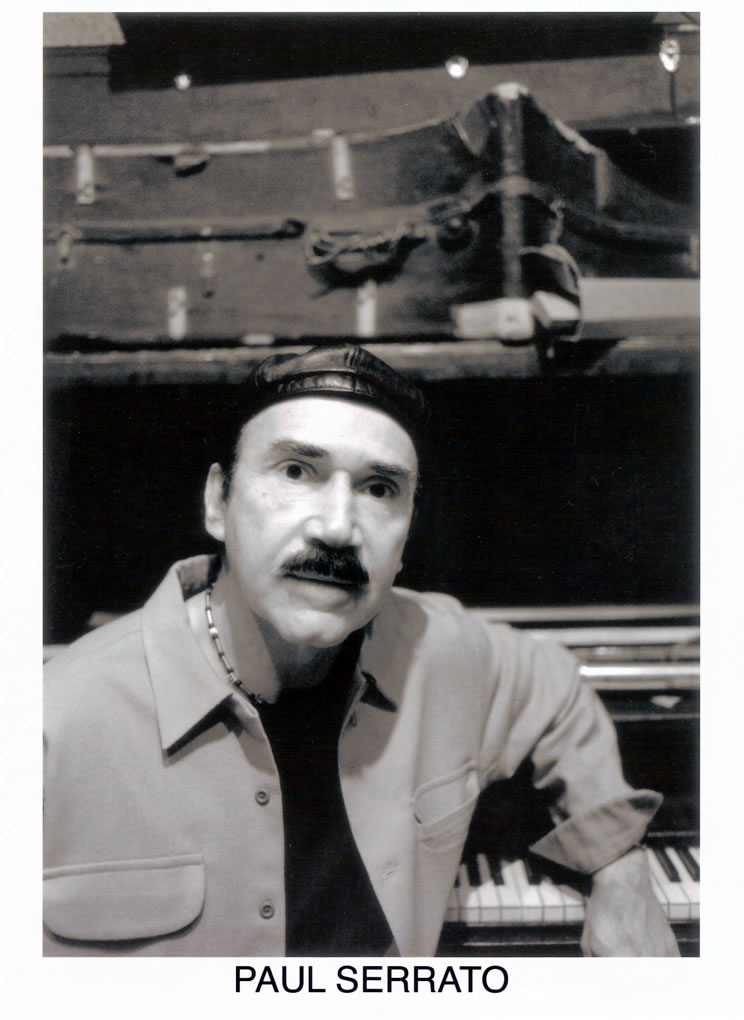
Journeyman jazz pianist, composer, arranger and recording artist Paul Serrato has packed much living into 83 years. The accouterments of that long, well-lived life fill to overbrimming the textured South Omaha house he resides in.
The humble dwelling is in the shadow of Vinton Street’s mural-adorned grain silos. They are distant echoes of the skyscrapers of New York, where for decades he plied his trade gigging in clubs and cabarets and writing-performing musical theater shows.
After all that time in Manhattan, plus spending bohemian summers in Europe, he returned to Omaha eight years ago upon the death of his mother. He inherited her snug bungalow and it’s there he displays his lifetime passion for arts and culture. Books, magazines, albums, DVDs, VHS tapes and CDs fill shelves and tables. Photos, prints, posters and artworks occupy walls.
Each nook and cranny is crammed with expressions of his eclectic interests, There’s just enough space to beat a measured path through the house and yet everything is neat and tidy under the fastidious eye of Serrato.
“This is how we live in New York in our cluttered, small apartments,” he said.
In a music room is the Yamaha keyboard he composes on and gigs with as well as manuscripts of completed and in-progress instrumental works. Though he’s recorded many CDs released on his own record labels, many of his tunes have never been made public.
“I couldn’t bring it all out. That’s how it is for any artist.”
His latest release “Gotham Nights” on his Graffiti Productions label has charted nationally since January.
Some of his catalogue is licensed for television. He finds it “exciting” to hear his music on TV or radio. Tracks from “Gotham Nights” have aired on the nationally syndicated “Latin Perspective” public radio program.
Serrato has made provisions for his archives to go to his alma mater, Adelphi University, when he dies.
“They’ve been very supportive, very receptive about accepting my archives,” he said.
His home contains reminders of his second career teaching English as a Second Language to international students, including photos and letters from former students with whom he corresponds. All these years teaching immigrants and refugees, combined with his many travels, gives Serrato friends in faraway places.
“It’s really wonderful,” he said. “I’m very fortunate. We keep in touch. We send each other gifts . I have more close friends around the world than I do in Omaha.”
A friendship with a former student from Japan led to Serrato making two concert tours of the Asian nation.
He began working as an ESL instructor long ago in New York. He earned a master’s degree in Urban Education from Adelphi. He now teaches ESL for Metropolitan Community College in Omaha.
Coming of age
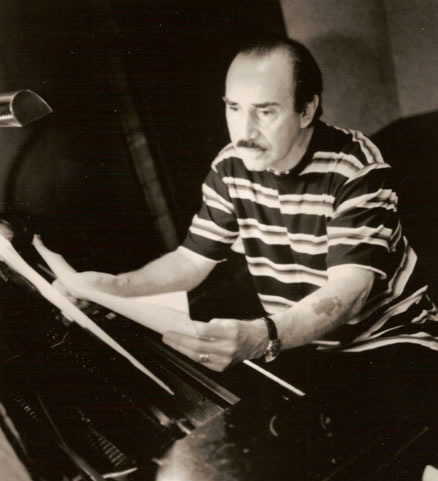
Serrato’s always shown an aptitude for learning. Growing up, he was drawn to the big upright piano his aunt played in church. It wasn’t long before he gained proficiency on it.
“I can remember myself so distinctly fascinated by the piano, wanting to play it, going over and pounding on the keys. That’s how I got to playing the piano as a toddler. From an educational point of view, it’s interesting how children can gravitate to an environment or a stimulus when they see adults doing things.”
Not being good at sports and not having advantages more well-off kids enjoyed, he said, “Music gave me the confidence I could do something. My early childhood was rather deprived. We moved around a lot. It wasn’t until I was 9 we got settled. My mother bought a piano and paid for classical lessons. She was a pretty remarkable woman considering what she had to go through raising a kid on her own.”
Music gave him his identity at Omaha Creighton Prep.
“I could start to come out as a musician and I found people liked what I did. They applauded. I was like, Hey, man, I’m good, I can do this. That’s how I got started on the track.”
All it took for him to shine was affirmation.
“That’s how it is, that’s how it always is.”
iHe was starved for encouragement, too, coming from a broken family of meager meansHe performed classical recitals and competed in talent shows at school and community centers, even on radio. “I won a couple of first prizes on KOIL” He played on a WOW show hosted by Lyle DeMoss. All of it made him hungry for more.
His classical training then took a backseat to captivating new sounds he heard on jazz programs out of Chicago on the family’s old Philco radio set.
“That was an eye-opener, definitely because at that point I had only studied classical piano – Chopin, Debussy. I hadn’t been exposed to hearing guys like Oscar Peterson or Art Tatum and Erroll Garner. Hearing that stuff opened up a big door and window into other possibilities.”
He began composing riffs on popular song forms, mostly big band and Broadway show tunes.
“That’s what jazz players did and still do – take standard songs and interpret them. That’s the classic jazz repertoire. I still love Cole Porter. I still play his stuff. I have a whole Cole Porter portfolio.”
New York, New York
After high school Serarto’s awakening as an aspiring jazz artist pulled him east. After a stint at Boston University he went to New York. It became home.
Said Serrato, “There’s three kinds of New Yorkers: the native New Yorker who’s born there; the commuter who comes in from Long Island to work or play; then there are those like myself who go there for a purpose – to achieve a goal – and for personal fulfillment. New York draws in all these dynamic young people who go to feed themselves creatively/.”
The sheer diversity of people and abundance of opportunity is staggering.
“You meet people of all different persuasions, professions, everything.
Finding one’s kindred spirit circle or group, he said, “is so easy in New York.” “You don’t find it, it finds you. I made lots of friends. I’d meet somebody in a coffee shop and it would turn out they were producing a play and needed somebody to write music. I’d say, ‘I write music’. ‘Oh, why don’t you do it?’ they’d say.
“For example, I ended up collaborating on many projects with Jackie Curtis, who later became an Andy Warhol superstar. We met at a Greenwich Village bookstore I managed. Totally serendipitous. He was very young. We struck up a conversation. I said, ‘I write songs.’ He said, ‘Oh we could do a musical together.’ We did the first one, O Lucky Wonderful, as an off-off-Broadway production, on an absolute shoestring.”
Serrato worked with other Warhol personalities, including Candy Darling and Holly Woodlawn.
“Some of that material for these crazy talented trans performers and underground figures was rather risque.”
He also teamed with comedian Craig Vandernberg, “who did a great spoof on Las Vegas crooners.”
Whatever work he could find, Serrato did.
“I had different kinds of jobs. I was a bartender, a bouncer, a waiter, an artist’s model. That’s how I supported myself. You have to hustle and do whatever it takes. That’s the driving force. That’s why you’re in New York. That’s why it’s competitive and there’s that energy because you look around and you see what’s possible.
“You’re in the epicenter of the arts. All that stuff was my world – visual arts, performance arts. There’s all this collision of cultural forces and people all interested in those things.”
Serrato believes everyone needs to find their passion the way he found his in music.
“That just happens to be my domain. I tell my students, ‘Hopefully, you’ll find your domain – something you can feel passionate about or connected to that will drive you and give you the energy to pursue that.’ I love to guide young people.”
Everything he experienced in NYC fed him creatively.
“As an artist’s model I met all these wonderful artists and art teachers. That’s when my passion for visual art and painters really got implanted.
When it comes to artistic vocations, he said, “many are called, few are chosen.”
“If you are truly engaged as an artist, you have confidence – you know you’re connecting.”
He eventually did well enough that he “would take off for months in the summer and go to Europe to follow bullfights and go to Paris.” “Then I’d come back and just pick up where I left off.”
“In those days living in New York was not as prohibitive as it is now economically. The rents have since priced a lot of people out.”
On his summer idyls abroad he followed a guide book by author Arthur Frommer on how to see Europe on five dollars a day and, he found, “you could just about do it.”
“His book had all the cheap places you could stay and eat. It worked, man. It was fabulous.”
Always the adventurer, he smuggled back copies of banned books.
 |
|---|
All that jazz
Jazz eventually became his main metier. He earned his bachelor’s degree in Jazz Studies and Latin American Music from Harbor Conservatory for the Performing Arts in East Harlem.
Jazz is a truly American art form. Though its following is shrinking, he said the music retains “plenty of vitality.”
“The fact that it’s not mainstream music is probably to its benefit because that means you can be individual, you don’t have a lot of hierarchy breathing down your neck saying do it this way, do it that way. So a jazz artist can sort of be what he or she wants to be.
“It’s a personal expression. It’s not a commodity the way corporately sanctioned music can be.”
A few jazz artists have managed to gain broad crossover appeal.
“But for every artist like that,” he said, “there’s a legion of others like myself that don’t have that kind of profile.
“There’s been such a tectonic shift in the jazz culture. Mid-20th century jazz artists – (Thelonious) Monk, (Dave) Brubeck – used to make the covers of national magazines. Who would put a jazz musician on the cover of a national magazine today? Do you ever see jazz musicians on the late night TV shows? You see rock, pop or hip-hop artists. In a lot of people’s minds, jazz is not that important because it doesn’t make much money and doesn’t get much media attention, so we work however we can. But it’s always been a struggle, even in the golden era.”
The Life can take a toll.
“I remember at the Village Gate in the ’60s. I was house manager and performed there sometimes. You’d have a 2 a.m. show. You had to make it through these gigs. It’s a tough life. No wonder there was alcohol and drugs and everything. It’s always been a tough life.”

Playing by his own rules
Making quality music, not fame, remains Serrato’s ambition. In New York he got tight with similarly-inclined musicians, particularly “master Latin percussionist” Julio Feliciano.
“He was Yorkirican – a New Yorker of Puerto Rican descent. Just full of energy and vitality and ideas. He contributed his deep musicianship to my many recording sessions and New York gigs. We enjoyed that vibe that enables the most successful collaborations. That also includes Jack ‘Kako’ Sanchez. They were a percussion team. It’s evident on my record ‘More Than Red,’ which spent many weeks on the national jazz charts.
“I’ll never find another like Julio. It was like (Duke) Ellington with (Billy) Strahorn – the two of us together. We had a tremendous collaboration. He was a Vietnam vet who OD’d on prescription pain killers. It was tragic. So young, so talented, so brilliant. We were like brothers musically and spiritually.”
What Serrato misses most about New York is “the cultural network” he had there that he lacks here.
“Like I have an idea for a musical project right now. In New York I could just pick up the phone and tell these guys, ‘Come over.’ and they’d come over and we’d start working on it. I can’t do that here. I don’t have that kind of musical infrastructure here.
“My studio in New York was a place where we would try out things. It was wonderful for me as a composer. It taught me a lot of discipline in terms of being accurate and clear about what I write.”
Just as musician Preston Love Sr. found when he returned to Omaha after years away, Serrato’s found his hometown less than inviting when it comes to jazz and to the idea of him performing his music.
“I hear people say things like. ‘We love your music, but it’s very sophisticated. We never hear music like this around here. What do you call it?’ I scratch my head when they say those things. I never get this in New York.”
He turns down some offers because, in true New Yorker fashion, he doesn’t drive and public transportation here can’t easily get him to out-of-town gigs.
“I’m not the first New York creative who left the city and had to make an adjustment somewhere else.”
Some discerning listeners have supported his music, including KIOS-FM.
“They’ve been very good to me.”
He’s cultivated a local cadre of fellow arts nuts. He sees shows when he can at the Joslyn, Kaneko, Bemis, Holland and Orpheum. His best buddy in town is another New York transplant, David Johnson. Their shared sensibilities find them kvetching about things.
What Serrato won’t do is compromise his music. His website says it all: Urban Jazz – Not by the Rules. He’s put out CDs on his own terms since returning to Omaha.
“I’m a music producer – of jazz music in particular. So when I have enough music that I think I’m ready to record, I figure out a way to record it. I don’t really have the network here to feel confident enough to do a project like ‘Gotham Nights’ in Omaha. So I rely on my band members in New York. We’ve played together for years. I want to record with them.”
For “Gotham Nights” he booked two four-hour recording sessions in Manhattan.
“It was so successful because I had everything clearly written. I gave it to my guys and the caliber they are, they saw it, and they played it. I knew these guys so well that we didn’t have to rehearse. I gave them the charts and turned them loose and let them go. We all spoke the same musical language – that’s the most important thing. I had eight instrumental tunes. We went through it once, twice at most.”
“Gotham Nights” marks a change for Serrato in moving from artsy to mainstream.
“In the past I’ve had good success, but sometimes I’ve heard, ‘Oh, your music is too avant garde,’ which is like poison. ‘Gotham Nights’ is not avant garde. It reflects my Brazilian influences. It’s Latin jazz filtered through my own musical personality. Very melodic. It’s why it’s so accessible.”
The album is the latest of many projects he’s done that celebrate his muse, New York, and its many notes.
He was there teaching only blocks from ground zero when the twin towers came down on 9/11.
“We had to vacate our building. After we were allowed back in a few weeks later I had my international adult students write about their impressions of that day. They were from Taiwan, Japan, Turkey, Korea, Chile, all these different countries. They wrote eloquently about that and I saved their essays. Fast forward 15 years later and I asked some of my ESL students in Omaha to read these testimonials set to music I composed at a Gallery 72 event commemorating that tragic day. I was very proud of how that event turned out.”
He’s teaching a new ESL class this spring. As usual, he said, he’s trying “to make it comfortable” for recent arrivals “to adapt to a new culture and a new land.”
“Cultural transference or acculturation – that’s an ESL teacher’s job.”
But his class assignments always encourage students to celebrate their own culture, too.
The ever searching Serrato said, “I love other cultures and I love education. I’m a big believer in bilingual education. Teaching’s been a natural evolution for me. All musicians are educators at heart.”
Fellow hin at http://www.paulserrato.com.
Read more of Leo Adam Biga’s work at leoadambiga.com.
A Man for All Reasons: Legacy Omaha Investor John Webster Was a Go-To Guy for The Reader
March 10, 2019
Leave a comment
The Reader newspaper is celebrating 25 years with a special anniversary March 2019 issue. This is one of two articles I have in that milestone edition. In commemorating the paper’s quarter century serving the community, we’re noting some behind the scenes figures and events that helped get the paper this far. This piece profiles legacy Omaha investor John Webster, whose capital allowed publisher John Heaston to reacquire the paper and whose money and advice helped Heaston stabilize the operation through the economic downturn and the changing landscape for print media. Another Omaha investor who stepped up at the same time as Webster to aid The Reader was John Blazek, a social entrepreneur I profile in the second article. It takes a lot of talents and resources to put out a paper and it’s good to recognize some of the untold stories and unsung heroes who have a hand in making it reality. I didn’t know of Webster until I got the assignment to interview him. His role was eye-opening to me and I personally appreciate the way he assisted Heaston and bailed out the paper because I have been a Reader contributing writer for 23 of its 25 years. The bulk of my wide-ranging work as a journalist has been with the publication, where I have had something like a thousand or so pieces appear in its pages, including hundreds of cover stories. It’s been an eventful marriage filled with highs, lows, opportunities, adventures and all the usual stuff that attends a relationship that long-standing. I am glad to have some presence in this landmark edition and I look forward to being part of The Reader reaching new milestones over time.
A Man for All Reasons
Legacy Omaha Investor John Webster Was a Go-To Guy for The Reader
by Leo Adam Biga
Originally appeared in The Reader (www.thereaer.com)

Being from a legacy family carries expectations. Retired broadcaster John Webster, 70, grew up knowing he was part of a historical line. Even though making his own mark as a Webster was expected, it wasn’t a given.
“I’m a fifth generation in Omaha on my dad’s side and sixth generation on my mother’s, so we’ve been around for a while. I come from a great family. It’s one thing to come out of a good family, but if you don’t have the desire to do something with yourself, it’s just not going to happen,” said Webster, whose family was successful in investments and transportation.
Blessed with creative and enterprising genes, he made his biggest imprint as owner of Omaha radio station KEFM. He was also a director of Ash Grove Cement Company, a cement and cement kiln dust provider to the construction industry. Additionally, he’s served on numerous community boards and committees.
“I was heavily involved in the masonic organizations in Omaha. I got to meet people from all walks of life. That was a big part of how I formed myself.”
When Reader publisher John Heaston needed capital to buy back the paper and stabilize it in this disruptive media space, Webster became an investor. He kept a low profile doing it, which is the Webster way.
“My grandfather and father were big influences on me. As a family we’ve always been pretty private and quiet as to what we do with investments or philanthropy. I’ve followed suit.”
Webster attended Shattuck, a private boarding school in Faribault, Minnesota, when it was a military academy. He earned a business administration degree from Menlo College in Menlo Park, California. His interest in the radio business was stoked visiting a West Coast station.
“I became fascinated with the broadcast side of things. I thought it was terribly creative.”
Back in Omaha, the licenses of radio stations KEFM and KOIL were suspended after owner Don Burden ran afoul of the FCC in 1976.
“When the properties came up I thought this would be a thing I would enjoy doing for a living and I might be pretty good at,” Webster said. “My father and I and Joe Baker formed a small company to go after the licenses.
We thought nobody would want to file against us but
11 other groups did. We went through a seven-year comparative hearing process I wouldn’t wish on anybody. We thought we could serve the community as well as anyone else given our strong Omaha history.
“After seven years the FCC finally decided the same thing. We went on the air officially in 1983. We started from scratch and we built it. Joe Baker left and my father and I continued on and I basically ran the thing.”
He said a lesson he learned is that “you can’t be a broadcaster and be thin-skinned.”
After a nearly two-decade run as a local independent, Webster saw the competitive landscape change when the FCC opened ownership to unlimited stations and markets.
“I could see the writing on the wall that I wasn’t going to be able to compete with somebody that had many more stations and resources. I called a friend of mine who was a license station broker and said, ‘It’s time for me to get out.’ And I got out at the right time.”
Webster made a cool $10 million selling his profitable stations to Clear Channel.
“I think if I had waited six months it would have been a totally different game.”
He added, “If the FCC hadn’t changed things, I’d probably still be in broadcasting.”
He misses it, especially the people.
“When it’s all gone, there’s a vacuum.”
Other business opportunities have popped up, he said,
“but broadcasting was my bread and butter,” adding, “Being in the business and being able to grow the business through creativity and drive meant a lot to me.”
He served as president of the Nebraska Broadcasters Association and was instrumental in creating its charitable foundation. In 2001, he was inducted into the association’s Hall of Fame.
Besides owning his own specialty advertising company, his only other media foray was The Reader.
“I met John Heaston and I liked him, and I liked what he was doing. John Blazek and I got involved as investors.
It was interesting.”
Webster appreciates the publisher’s entrepreneurial zeal. “I think a lot of John Heaston. He’s creative. He has worthwhile ideas. He pursues stories that maybe mainstream publishers wouldn’t lay a hand on. I think there’s something to be said for an alternative newspaper. It adds a different viewpoint.
“The Reader may not be the biggest operation, but I think it serves a very vital part in providing information to the Omaha community.”
Webster and Blazek’s infusion of cash helped The Reader through some tough times.
“It hasn’t been an easy road. It’s been a real struggle. It’s a real compliment to John Heaston that he stuck with it.”
Webster’s been there himself.
“When you own your own business the buck always stops at your desk,” he said. “You can’t blame it on anybody else.”
Satisfaction, he said, comes in direct proportion “to the degree that you can work things out and solve problems and continue to grow.”
Webster, who’s married with three adult children (a fourth died in 2015), keeps a wintertime residence in South Carolina, but Omaha remains home.
“I’ve always loved Omaha. I don’t think I could ever really cut my ties with the city or Nebraska.”
Read more of Leo Adam Biga’s work at leoadambiga.com.
Categories: Business, Entrepreneurial, Entrepreneurs, John Blazek, John Heaston, John Webster, Journalism, Media, Omaha, Radio, The Reader, Writing
Business, Entrepreneur, Investor, John Blazek, John Heaston, John Webster, Journalism, Media, Newspaper, Omaha, Radio, The Reader
More Bang for His Buck: Social Entrepreneur John Blazek Helped Reset The Reader’s Course
March 10, 2019
Leave a comment
The Reader newspaper is celebrating 25 years with a special anniversary March 2019 issue. This is one of two articles I have in that milestone edition. In commemorating the paper’s quarter century serving the community, we’re noting some behind the scenes figures and events that helped get the paper this far. This piece profiles social entrepreneur John Blazek, an Omaha investor whose capital allowed publisher John Heaston to reacquire the paper and whose money and advice helped Heaston stabilize the operation through the economic downturn and the changing landscape for print media. Another Omaha investor who stepped up at the same time as Blazek to aid The Reader was John Webster, a former broadcast radio owner I profile in the second article. It takes a lot of talents and resources to put out a paper and it’s good to recognize some of the untold stories and unsung heroes who have a hand in making it reality. I didn’t know of Blazek until I got the assignment to interview him. His role was eye-opening to me and I personally appreciate the way he assisted Heaston and bailed out the paper because I have been a Reader contributing writer for 23 of its 25 years. The bulk of my wide-ranging work as a journalist has been with the publication, where I have had something like a thousand or so pieces appear in its pages, including hundreds of cover stories. It’s been an eventful marriage filled with highs, lows, opportunities, adventures and all the usual stuff that attends a relationship that long-standing. I am glad to have some presence in this landmark edition and I look forward to being part of The Reader reaching new milestones over time.
More Bang for His Buck
Social Entrepreneur John Blazek Helped Reset The Reader’s Course
©by Leo Adam Biga
Originally appeared in The Reader (www.thereader.com)
Omaha investor John Blazek likes getting “a two-fer” when putting his money to work.
“I always figured why do something for just one reason when you can do things for more than one reason. It’s what I really enjoy. That’s why I’ve done everything I have in my career,” he said.
“I’m a really big believer that to whom much is given, much is required. You’ve got an obligation to try to help the other guy. That’s what makes life enriching.”
As a social entrepreneur, he’s started, acquired and sold businesses with this two-for-one goal in play. At some critical junctures in its history, even The Reader benefited from his strategy, as Blazek infused capital that allowed the paper to remain a viable alternative voice while netting him a return on investment.
“I like to leverage the things I do so it’s not just about me but also provides service to others.”
The Creighton University graduate is Entrepreneur in Residence at his alma mater, where he teaches entrepreneurship and real estate.
His multi-faceted career has encompassed being a pharmacist, executive, educator, real estate developer, philanthropist and mayoral cabinet member.
He served patients as a Kohll’s and Clarkson Hospital pharmacist. He created jobs as a home (Total HomeCare) and workplace healthcare provider (Wellcom). His Old Market and downtown real estate projects have reactivated old buildings, He, Mark Keffeler and Mike Moylan redeveloped the historic Paxton Hotel. Blazek’s an investor in The Jewell jazz club in Moylan’s Capitol District and a partner in the Prairie Hills residential-commercial real estate development.
Reared in a midtown Omaha working-class family, he learned early about leveraging resources. His World War II veteran father was a Union Pacific machinist. His homemaker mother worked part time as a Walgreens cashier. His immigrant grandparents laid a foundation anchored in high aspirations and strong values.
“I think every generation wants the next generation to better themselves,” he said, “but maintain the same values. I think lots of times as people better themselves, they lose some of those core values, which are what got them there.
“Probably the biggest thing I took from my growing upwas a really good work ethic. There’s plenty of people way smarter than me, but I will outwork anyone.”
This practicing Catholic’s faith is central to his life.
“I served as board president of Skutt Catholic High School and Catholic Charities. My wife and I sent our three daughters to Catholic grade schools, high schools and colleges.”
Blazek champions Omaha and its many opportunities.
“It’s all here. You’ve just got to roll up your sleeves and go after it.”
In the late 1990s, then-Omaha Mayor Hal Daub appointed Blazek to the city planning board. Later, as director of economic development, Blazek led the city’s charge to demolish the old Asarco lead refinery plant, whose decades of contamination resulted in East Omaha being declared a Superfund site. A public bond issue paved the way for construction of the convention center-arena and the creation of the Metropolitan Entertainment & Convention Authority (MECA), which he served on the first board of directors.
“That was a great experience,” Blazek said. “The convention center-arena has been a game-changer for the city in the entertainment and development it’s generated.”
An encounter with Reader publisher John Heaston, who was investigating the Asarco site, forged a bond.
“I thought he did a good job and was a fair journalist,” Blazek said of Heaston. “I gained a lot of respect for him and I enjoyed our relationship.”
By the early 2000s, Heaston, who had been bought out, was looking to buy The Reader back from then-owner Alan Baer. Heaston approached Blazek and another local investor, John Webster, to assist him.
“We put up the capital in order for John to do that,” Blazek said.
The investors also helped Heaston acquire El Perico newspaper.
In The Reader, Blazek saw an opportunity to make a profit and stabilize a struggling media entity.
“I thought the survival of the paper was important to the community. Certain things would not be covered if not for The Reader. It often brings up a social-justice voice that I think is healthy. If it were gone, I do think there would be a void.”
His estimation of Heaston has only grown.
“We all know the pressures on print media but John’s a survivor. He works his tail off. He’s a trencher who hung in there through the tough times. He added a digital imprint. He downsized the paper to a monthly. He changed as the times changed. Yet he’s kept the same journalistic principles in place.”
Blazek’s ownership interest was “more from a board-seat standpoint” offering “business advice and mentorship.” Despite the paper not always reflecting his views, he kept involved.
“John and I certainly didn’t agree on everything. I disagreed with a lot of the positions the paper took. But I never interfered with any editorial content.”
All along, the idea was to let Heaston eventually have the paper again all to himself.
“We negotiated an exit strategy where John acquired our interests back. We sold it back to him on an installment basis. John’s done a great job and we wanted to see him continue to do that. It’s kept the paper going and allowed him to stay on as publisher.”
The paper fully became Heaston’s again in 2017.
“I think John had a good year last year,” Blazek said, “so mission accomplished as far as I’m concerned.”
As for Blazek, he intends to finish a self-help book he’s writing and to pursue a doctorate in education.
“I’m open to other ventures as long as they support my direction of moving from ambition to meaning.”
Read more of Leo Adam Biga’s work at leoadambiga.com.

Categories: Business, Entrepreneurial, John Blazek, John Heaston, John Webster, Journalism, Media, Newspaper, Omaha, The Reader, Writing
Business, Entrepreneur, Investor, John Blazek, John Heaston, John Webster, Media, Newspaper, Omaha, The Reader
Commemorating Black History Month – Links to North Omaha stories (Part IV of four-part series)
March 4, 2019
Leave a comment
Commemorating Black History Month
Links to North Omaha stories from 1998 through 2018
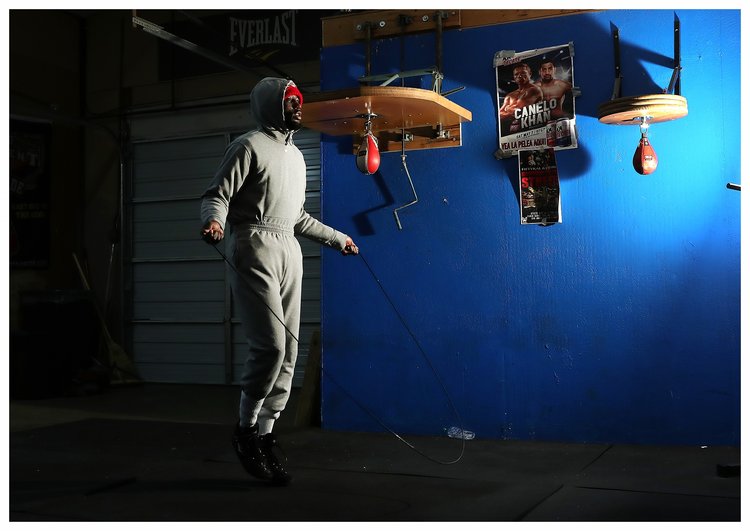
Articles on social justice, civil rights, race, history, faith, family, community, business, politics. education, art, music, theater, film, culture, et cetera
A weekly four-part series
Final week: Part IV – Soul food and soul sports
https://leoadambiga.com/2019/01/16/the-long-road-to…ear-as-a-bluejay
Charles Hall’s Fair Deal Cafe | Leo Adam Biga’s My Inside Stories
https://leoadambiga.com/2012/04/10/one–peach–of-a-pitcher–peaches…
Categories: African-American, African-American Culture, African-American Empowerment Network, Journalism, North Omaha, Omaha, Omaha Black Sports Legends, Writing
African Ameican Culture, African American, African-American Empowerment Network, Black Lives Matter, North Omaha, North Omaha Stories, Omaha, Omaha Black History
Local Black Filmmakers Showcase: Next up – short films by Jason Fischer on Tuesday, March 5 at 6 p.m.
March 4, 2019
Leave a comment
Local Black Filmmakers Showcase
A February-March 2019 film festival @ College of Saint Mary, 7000 Mercy Road
6 p.m. | Gross Auditorium in Hill Macaluso Hall
Featuring screen gems by Omaha’s own Omowale Akintunde and Jason Fischer
Support the work of these African-American community-based cinema artists
Next up – three short films by Jason Fischer
Screening on Tuesday, March 5:
•The art film “I Do Not Use” pairs searing, symbolic images to poet Frank O’Neal’s incendiary words.
•The documentary “Whitney Young: To Become Great” uses the civil rights leader’s life as a model for kids and adults to investigate what it takes to be great.
•And the award-winning “Out of Framed: Unseen Poverty in the Heartland” documents people living on the margins in Omaha.

Screenings start at 6 p.m.
Followed by Q & A with the filmmaker moderated by Leo Adam Biga.
Tickets and parking are free and all films are open to the public.
For more information, call 402-399-2365.
Still to come – a screening of Omowale Akintunde’s award-winning documentary “An Inaugural Ride to Freedom” about a group of Omahans who traveled by bus to the first Obama inauguration. Plus a bonus documentary on the second Obama inauguration. Followed by Q&A with the filmmaker moderated by Leo Adam Biga. Date and time to be determined. Watch for posts announcing this wrap-up program in the Local Black Filmmakers Showcase.
Local Black Filmmakers Showcase continues tonight with “Wigger”
February 28, 2019
Leave a comment
Local Black Filmmakers Showcase featuring screen gems by Omaha’s own Omowale Akintunde and Jason Fischer
Support the work of these African-American community-based cinema artists
February-March 2019
College of Saint Mary
6 p.m. | Gross Auditorium in Hill Macaluso Hall
The work of award-winning Omaha filmmakers Omowale Akintunde and Jason Fischer highlight this four-day festival at College of Saint Mary.
Next up:
“Wigger” (2010)
From writer-director-producer:
Omowale Akintunde
Screening tonight – Thursday, February 28 @ 6 p.m.
Followed by a Q&A with flmmaker Omowale Akintunde.
Moderated by Omaha fllm author-journalist-blogger Leo Adam Biga.
Shot entirely in North Omaha, “Wigger” explores racism through the prism of a white dude whose strong identification with black culture ensnares and empowers him amidst betrayal and tragedy.”Wigger” is a spellbinding urban drama, which chronicles the life of a young, White, male (Brandon) who totally emulates and immerses himself in African American life and culture. Brandon is an aspiring R&B singer struggling to overcome the confines of a White racist, impoverished family headed by a neo-Nazi father who is absolutely appalled by his son’s total identification with Black culture. Additionally, he is oft times reminded of his position of privilege by virtue of being White in a White, racist society despite his adamant efforts to transcend “Whiteness”, institutionalized racism, and find a place for himself in a world in which he rejects Whiteness but is not always fully embraced by African American culture. Ultimately, this is the story of a young White, inner-city, male caught up in an emotional, psychological, experiential, and racial “Catch 22” determined to be granted acceptance in the life and culture with which he chooses to identify.


The Festival continues on Tuesday, March 5 with three short films by Jason Fischer taking center stage. The art film “I Do Not Use” pairs searing, symbolic images to poet Frank O’Neal’s incendiary words. The documentary “Whitney Young: To Become Great” uses the civil rights leader’s life as a model for kids and adults to investigate what it takes to be great. “Out of Framed: Unseen Poverty in the Heartland”documents people living on the margins in Omaha.
NOTE: The March 5 Jason Fischer program was originally scheduled for February 25 but was postponed due to inclement weather.
The February 26 program featuring Omowale Akintunde’s Emmy-award winning documentary “An Inaugural Ride to Freedom” was also postponed due to weather and will be rescheduled at a date to be determined later.
All films begin at 6 p.m. and will be screened in Gross Auditorium in Hill Macaluso Hall at College of Saint Mary, 7000 Mercy Road.
A Q & A with the filmmaker follows each screening.
Tickets and parking are free and all films are open to the public.
For more information, call 402-399-2365.
Local Black Filmmakers Showcase featuring screen gems by Omaha’s own Omowale Akintunde and Jason Fischer
February 26, 2019
Leave a comment
Local Black Filmmakers Showcase featuring screen gems by Omaha’s own Omowale Akintunde and Jason Fischer
Support the work of these African-American community-based artists
February-March 2019
College of Saint Mary
6 p.m. | Gross Auditorium in Hill Macaluso Hall
The work of award-winning Omaha filmmakers Omowale Akintunde and Jason Fischer highlight this four-day festival at College of Saint Mary.
On Tuesday February 26, Akitnunde’s “An Inaugural Ride to Freedom” charts a trip Nebraskans made to D.C. for Obama’s historic first inauguration. On Wednesday, February 27, it’s the world premiere of Akintunde’s television pilot “It Takes a Village,” which turns black situation comedy on its head. On Thursday, February 28, his impressive dramatic feature debut “Wigger,”shot entirely in North Omaha, explores racism through the prism of a white dude whose strong identification with black culture ensnares and empowers him amidst betrayal and tragedy.
On Tuesday, March 5 three short films by Fischer take center stage. The art film “I Do Not Use” pairs searing, symbolic images to poet Frank O’Neal’s incendiary words. The documentary “Whitney Young: To Become Great” uses the civil rights leader’s life as a model for kids and adults to investigate what it takes to be great. “Out of Framed: Unseen Poverty in the Heartland”documents people living on the margins in Omaha.
Screenings start at 6 p.m. Q &As follow the February 27. February 28 and March 5 showings.
All films begin at 6 p.m. and will be screened in Gross Auditorium at College of Saint Mary, 7000 Mercy Road 68106.
Tickets and parking are free and all films are open to the public.
For more information, call 402-399-2365.
Local Black Filmmakers Showcase
Tuesday, February 26th
“An Inaugural Ride to Freedom”
Wednesday, February 27th
Premier screening:
“It Takes a Village”
Director Q&A with Omowale Akintunde
February 28th
“Wigger”
Director Q&A with Omowale Akintunde
Tuesday, March 5
Short Films (originally scheduled for Feb. 25)
“I Do Not Use”
“Whitney Young To Become Great”
“Out of Frame: Unseen Poverty in the Heartland”
Director Q&A with Jason R. Fischer
Categories: African-American, African-American Culture, Arts-Entertainment-Culture, Cinema, Film, Jason Fischer, Movies, North Omaha, Omaha, Omowale Akintunde
African Ameican Culture, African American, An Inaugural Ride to Freedom, Black Cinema, I Do Not Use, Jason Fischer, Local Black Filmmakers Showcase, North Omaha, Omaha, Omowale Akintunde, Wigger


 Leo Adam Biga's My Inside Stories