Archive
Lourdes Gouveia: Leaving a legacy but keeping a presence
One of the smartest and kindest people I know, Lourdes Gouveia, has stepped down from directing the Office of Latino/Latin American Studies of the Great Plains or OLLAS, a program she helped found at the University of Nebraska at Omaha. A sociologist by training and practice, she and her program have helped the university, policymakers and other stakeholders in the state better understand the dynamics of the ever growing and more fluid Latino immigrant and Latin American population. OLLAS has become a go-to resource for those wanting a handle on what’s happening with that population. She is very passionate about what she’s built, the strong foundation laid down for its continued success and the continuing research she’s doing. Though no longer the director, she’s still very much engaged in the work of OLLAS and related fields of interests. She’s still very much a part of the UNO scene.

Lourdes Gouveia: Leaving a legacy but keeping a presence
©by Leo Adam Biga
Appearing in El Perico
When sociology professor and researcher Lourdes Gouveia joined the University of Nebraska at Omaha faculty in 1989 it coincided with the giant Latino immigration wave then impacting rural and urban communities.
Little did she know then she would found the Office of Latino/Latin American Studies of the Great Plains or OLLAS in 2003. She recently stepped down as director of that prestigious center she’s closely identified with.
The idea for OLLAS emerged after her field work in Lexington, Neb. documenting challenges and opportunities posed by the influx of new arrivals on communities that hadn’t received immigrants in a century. She focused on the labor trend of Latinos recruited into meatpacking. While doing a post-doctorate fellowship at Michigan State University she came to see the global implications of mobile populations.
“It really did become a transformative experience,” recalls the Venezuela native and University of Kansas graduate. “It gave me a whole new level of understanding of issues I had been working on. It opened opportunities I had no idea we’re going to be so influential and consequential in my life. These were colleagues as motivated as I was to try to understand this tectonic and dramatic shift going on of increased immigration from Latin America accompanied with an economic recession in the United States.
“I learned a tremendous amount. It just opened a lens that gave me confidence to understand this shift in a larger context.”
When Gouveia returned from her post doc she accepted an invitation to head what was just a minor in Latino Studies at UNO.
“I said yes but with a condition we explore something larger. Many of us were beginning to realize the minor was just not enough of a space to understand, to educate our students, to work with the community on issues of this magnitude.”
She led a committee that conceived and launched OLLAS and along with it a major in Latin American Studies.
“OLLAS was built upon a very clear vision that Neb. and Omaha in particular was seeing profound changes in the makeup of the Latino immigrant and Latino American population. Neither the university nor the community, let alone policymakers. were sufficiently prepared to understand the significance of those changes and their long-term consequences or respond in any informed, data-driven, rationale way. That message resonated with people on the ground and at the top.”

Lourdes Gouveia (far right) is the Director of OLLAS at UNO. (Photo Courtesy UNO)
Significant seed money for making OLLAS a reality came from a $1 million U.S. Department of Education grant that then-Sen. Chuck Hagel helped secure.
From the start, Gouveia says OLLAS has existed as a hybrid, interdisciplinary center that not only teaches but conducts research and generates content-rich reports.
“Community agencies, policymakers, students and others tell us they find enormous value in those research reports and fact sheets we produce. That is a mainstay of what we do. It’s done with a lot of difficulty because they require enormous work, expert talent and rigor and we don’t always have the resources at hand. Yet we have maintained that and hope to expand that.”
She says OLLAS is unlike anything else at UNO.
“We’re an academic program but we’re also a community project. So we’re constantly engaging, partnering, discussing, conversing with community organizations, even government representatives from Mexico and Central America, in projects we think enhance that understanding of these demographic changes. We’re also looking at the social-economic conditions of the Latino population and what it has to do with U.S. immigration or U.S. involvement in Latin America.”
OLLAS also plays an advocacy role.
“We use our voices in public, whether writing op-ed pieces or holding meetings and conferences with political leaders or elected officials. We use our research to make our voices heard and to inform whatever issues policymakers may be debating, such as the refugee crisis.”
Gouveia says the way OLLAS is structured “allows us to be very malleable, more like a think tank.” adding, “We define ourselves as perennial pioneers always trying to anticipate the questions that need answers or the interests emerging we can fulfill. It’s extremely exhausting because we’re constantly inventing and innovating but it’s extremely rewarding. We’re about to put out a report, for example, on the changes of the Latino population across the city. Why? Because we are observing Latinos are not just living in South Omaha but are spread across the city. As we detect trends like this on the ground we try to anticipate and answer questions to give people the tools to use the information in their work. That guarantees we’re always going to be relevant to all these constituencies.”

OLLAS faculty and staff
OLLAS has grown in facilities and staff, including a project coordinator, a community engagement coordinator and research associates, and in currency. Gouveia says, “I’m very satisfied we did it right. We thoughtfully arrived correctly at the decision we just couldn’t be a regular department offering courses and graduating students but we also had to produce knowledge. Our reports are a good vehicle for putting out information in a timely manner about a very dynamic population and set of population changes.”
She says OLLAS could only have happened with the help of many colleagues, including Jonathan Benjamin-Alvarado and Theresa Barron-McKeagney, “who shared enthusiastically in the mission we were forging.” She say OLLAS has also received broad university support and community philanthropic support.
“There was resistance, too,” she adds. “It’s a very creative space that breaks with all conventions. Like immigrants we create fear that somehow we’re shaking the conventional wisdom. But I think our success has converted many who were initially skeptical. I think we’ve pioneered models that others have come to observe and learn from.”
One concern she has is that as Latino students in the program have increased UNO’s not kept apace its hiring of Latino faculty.
A national search is underway for her successor.
“I feel very good about stepping out at this time. It surprised a lot of people. As a founding director you cannot stay there forever. Once you have helped institutionalize the organization then it’s time to bring in the next generation of leaders with fresh visions and ideas.”
Besides, there’s research she’s dying to get to. And it’s not like this professor emeritus is going away. She confirms she’ll remain “involved with OLLAS, but in a different way.”
Visit http://www.unomaha.edu/ollas/.
Beto’s way: Gang intervention specialist tries a little tenderness
Alberto “Beto” Gonzales could have easily stayed in The Life of drugging, fighting, abusing, and manipulating that used to be his M.O. as a gangbanger, but he found the courage to change and that transformation has led him to help countless others stop the madness, get clean, and go straight. For years now he’s worked as a gang intervention specialist, a position he holds today as a civilian employee with the Omaha Police Department. He’s much respected for his work in the South Omaha community, whose barrios he grew up in. There were many harsh experiences he initiated. He did things he regrets and has made amends for. But he’s done all he can to move on and to be a productive citizen and he’s been exceedingly successful at that. This profile for Omaha Magazine ((http://omahamagazine.com/) is my second opportunity to tell his story and I’m glad to have had the chance to share his life and work with readers.

Beto’s way: Gang intervention specialist tries a little tenderness
©by Leo Adam Biga
Appeared in the Nov.-Dec. 2015 issue of Omaha Magazine (http://omahamagazine.com/)
Omaha Police Department gang intervention specialist Alberto “Beto” Gonzales grew up in a South Omaha “monster barrio” as an outsider fresh from the Texas-Mexican border.
Working out of the South Omaha Precinct and South Omaha Boys & Girls Club, he knows first-hand the suffering that propels at-risk kids to join gangs. He grew up in a dysfunctional home with an alcoholic father. By 13 he was a substance abusing, drug dealing, gang-banging illiterate and runaway. For a decade he conned and intimidated people. “The beast” inside ran roughshod over anyone, even family. He ruined relationships with his rage and alcohol-drug use.
“A lot of people got hurt behind me being that hurt kid that felt hopeless,” he says.
Charged with assault and battery with intent to commit murder, he faced 30 years in prison. Shown leniency, he used that second chance to heal and transform. He got sober, learned to read and found the power of forgiveness and love, dedicating himself to helping others.
He credits the late Sister Joyce Englert at the Chicano Awareness Center (now Latino Center of the Midlands) with setting him straight.
“She took me literally by the hand and coached me. There were days where I just didn’t feel like I could do it and I tossed up a storm with her. But she never gave up on me. Sister Joyce was no joke. She was incredible.”
At her urging he became a counselor.
Beto, who’s spoken about gangs to high-ranking U.S. lawmakers and law enforcement officials. is the subject of a book by Theresa Barron-McKeagney, University of Nebraska at Omaha associate dean in the College of Public Affairs and Community Service, His message to those dealing with people in crisis is “patience – you can’t give up on them, you have to have that energy, that willingness to sacrifice to work with them.” He says he’s living proof “no matter what challenges you have you can make it – all you gotta do is find what your purpose is in life and go for it.”
This former menace to society “never ever could have imagined” working for OPD. “They took a risk in hiring me because of all the baggage I carried. They’re watching me. I’m under the microscope. But all the officers make me feel welcome. It’s a good fit.”

His street cred enables him to go where OPD can’t.
“If they do walk into some of the places I walk in it’s a shut down – nobody’s talking.”
He has people’s trust, including prisoners and ex-cons.
“They feel safe opening up to me, they know I’m there for them, I’m not going to give up on them. Whatever it is, we try to work it out. You can’t measure this, all you do is continue your relationship with someone and if you build that trust that relationship will be there forever. I’ve been in a lot of these men’s and women’s lives for years.
“Sometimes I don’t see them for four or five years but they know they can always come back.”
Not everyone’s cut out for this work.
“The burn-out is real/.”
Not everyone wants recovery. Relapse and recidivism is high.
But Beto’s a firm believer in second-chances.
“Somebody gave me a chance.”
Intervention and prevention is “my passion,” says Beto, who can spot a troubled child or adult in an instant.
“If we don’t get to a kid in time, if he doesn’t find a mentor, if he doesn’t get in to some kind of sport activity, if his mom and dad don’t do some kind of healing, that’s a lost child.”
He often tells his own story at assemblies. It’s still cathartic at age 57.
“I share it all the time with hundreds of kids and believe me every time I share it I can feel that pain in my heart. It’s still there. There’s no getting ready of it. It’s a part of who you are, the fabric of your soul.”
He can only do so much. “There’s a lot of kids out there hurting I can’t get to. The other frustrating part is when we lose kids to murder or prison. I’m just so focused on trying to save one life at a time, one family at a time.” As a society he feels, “we better wake up and invest in more counselors – we’ve got to educate, educate, educate.”
Happily married with kids, he has serenity he never had before.
“I wish everybody had that.”
He’s made peace with the fact his job never really ends.
“Even when I retire, people are going to be knocking on my door. I already know that.”
The challenge is as near as a neighboring three-generation gang family he’s counseled. They all respect him except for a teen boy.
“I asked him, ‘Why do you hate me, man?’ He just shrugged his shoulders. ‘How many times did you feel like killing me?’ He finally looked me in the eye and said, ‘Every time I see you, I want to kill you.’
‘What keeps you from killing me?’ ‘Because my nephews love you, my auntie loves you, my uncle loves you, so I’m just going to leave you alone.’ Fourteen years old. He’s just another Beto.”
He holds out hope. “Anybody can change, anybody, I don’t care what condition you’re in, as long as you want to find that peace in yourself.”
South Omaha stories on tap for free PlayFest show; Great Plains Theatre Conference’s Neighborhood Tapestries returns to south side
Omaha’s various geographic segments feature distinct charecteristics all their own. South Omaha has a stockyards-packing plant heritage that lives on to this day and it continues its legacy as home to new arrivals, whether immigrants or refugees. The free May 27 Great Plains Theatre Conference PlayFest show South Omaha Stories at the Livestock Exchange Building is a collaboration between playwrights and residents that shares stories reflective of that district and the people who comprise it. What follows are two articles I did about the event. The first and most recent article is for The Reader (www.thereader.com) and it looks at South O through the prism of two young people interviewed by playwrights for the project. The second article looks at South O through the lens of three older people interviewed by playwrights for the same project. Together, my articles and participants’ stores provide a fair approximation of what makes South O, well, South O. Or in the vernacular (think South Side Chicago), Sou’d O.
South Omaha stories on tap for free PlayFest show
Great Plains Theatre Conference’s Neighborhood Tapestries returns to south side
©by Leo Adam Biga
Appearing in the May 2015 issue of The Reader (www.thereader.com)
Perhaps more than any geographic quadrant of the city, South Omaha owns the richest legacy as a livestock-meatpacking industry hub and historic home to new arrivals fixated on the American Dream.
Everyone with South O ties has a story. When some playwrights sat down to interview four such folks, tales flowed. Using the subjects’ own words and drawing from research, the playwrights, together with New York director Josh Hecht, have crafted a night of theater for this year’s Great Plains Theatre Conference’s Neighborhood Tapestries.
Omaha’s M. Michele Phillips directs this collaborative patchwork of South Omaha Stories. The 7:30 p.m. show May 27 at the Livestock Exchange Building ballroom is part of GPTC’s free PlayFest slate celebrating different facets of Neb. history and culture. In the case of South O, each generation has distinct experiences but recurring themes of diversity and aspiration appear across eras.
Lucy Aguilar and Batula Hilowle are part of recent migration waves to bring immigrants and refugees here. Aguilar came as a child from Mexico with her undocumented mother and siblings in pursuit of a better life. Hilowle and her siblings were born and raised in a Kenya refugee camp. They relocated here with their Somali mother via humanitarian sponsors. In America, Batula and her family enjoy new found safety and stability.
Aguilar, 20, is a South High graduate attending the University of Nebraska at Omaha. GPTC associate artistic director and veteran Omaha playwright Scott Working interviewed her. Hilowle, 19, is a senior at South weighing her college options. Harlem playwright Kia Corthron interviewed her.
A Deferred Action for Childhood Arrivals (DACA) work permit recipient, Aguilar is tired of living with a conditional status hanging over head. She feels she and fellow Dreamers should be treated as full citizens. State law has made it illegal for Dreamers to obtain drivers licenses.
“I’m here just like everybody else trying to make something out of my life, trying to accomplish goals, in my case trying to open a business,” and be successful in that,” Aguilar says.
She’s active in Young Nebraskans for Action that advocates restrictions be lifted for Dreamers. She follows her heart in social justice matters.
“Community service is something I’m really passionate about.”
She embraces South O as a landing spot for many peoples.
“There’s so much diversity and nobody has a problem with it.”
Hilowle appreciates the diversity, too.
“You see Africans like me, you see African Americans,, Asians, Latinos, whites all together. It’s something you don’t see when you go west.”
Both young women find it a friendly environment.
“It’s a very open, helpful community,” Aguilar says. “There are so many organizations that advocate to help people. If I’m having difficulties at home or school or work, I know I’ll have backup. I like that.”
“It’s definitely warm and welcoming,” Hilowle says. “It feels like we’re family. There’s no room for hate.”
Hilowle says playwright Kia Corthon was particularly curious about the transition from living in a refuge camp to living in America.
“She wanted to know what was different and what was familiar. I can tell you there was plenty of differences.”
Hilowle has found most people receptive to her story of struggle in Africa and somewhat surprised by her gratitude for the experience.
“Rather than try to make fun of me I think they want to get to know me. I’m not ashamed to say I grew up in a refugee camp or that we didn’t have our own place. It made me better, it made me who I am today. Being in America won’t change who I am. My kids are going to be just like me because I am just like my mom.”
She says the same fierce determination that drove her mother to save the family from war in Somalia is in her.
About the vast differences between life there and here, she says, “Sometimes different isn’t so bad.” She welcomes opportunities “to share something about where I come from or about my religion (Muslim) and why I cover my body with so many clothes.”
Aguilar, a business major seeking to open a South O juice shop, likes that her and Hilowle’s stories will be featured in the same program.
“We have very different backgrounds but I’m pretty sure our future goals are the same. We’re very motivated about what we want to do.”
Similar to Lucy, Batula likes helping people. She’s planning a pre-med track in college.
The young women think it’s important their stories will be presented alongside those of much older residents with a longer perspective.
Virgil Armendariz, 68, who wrote his own story, can attest South O has long been a melting pot. He recalls as a youth the international flavors and aromas coming from homes of different ethnicities he delivered papers to and his learning to say “collect” in several languages.
“You could travel the world by walking down 36th street on Sunday afternoon. From Q Street to just past Harrison you could smell those dinners cooking. The Irish lived up around Q Street, Czechs, Poles, and Lithuanians were mixed along the way. Then Bohemians’ with a scattering of Mexicans.”
He remembers the stockyards and Big Four packing plants and all the ancillary businesses that dominated a square mile right in the heart of the community. The stink of animal refuse permeating the Magic City was called the Smell of Money. Rough trade bars and whorehouses served a sea of men. The sheer volume of livestock meant cows and pigs occasionally broke loose to cause havoc. He recalls unionized packers striking for better wages and safer conditions.
Joseph Ramirez, 89, worked at Armour and Co. 15 years. He became a local union leader there and that work led him into a human services career. New York playwright Michael Garces interviewed Ramirez.
Ramirez and Armendariz both faced discrimination. They dealt with bias by either confronting it or shrugging it off. Both men found pathways to better themselves – Ramirez as a company man and Armendariz as an entrepreneur.
While their parents came from Mexico, South Omaha Stories participant, Dorothy Patach, 91, traces her ancestry to the former Czechoslovakia region. Like her contemporaries of a certain age, she recalls South O as a once booming place, then declining with the closure of the Big Four plants, before its redevelopment and immigrant-led business revival the last few decades.
Patach says people of varied backgrounds generally found ways to co-exist though she acknowledges illegal aliens were not always welcome.
New York playwright Ruth Margraff interviewed her.
She and the men agree what united people was a shared desire to get ahead. How families and individuals went about it differed, but hard work was the common denominator.
Scott Working says the details in the South O stories are where universal truths lay.
“It is in the specifics we recognize ourselves, our parents, our grandparents,” he says, “and we see they have similar dreams that we share. It’s a great experience.”
He says the district’s tradition of diversity “has kept it such a vibrant place.” He suspects the show will be “a reaffirmation for the people that live there and maybe an introduction to people from West Omaha or North Omaha.” He adds, “My hope is it will make people curious about where they’re from, too. It’s kind of what theater does – it gives us a connection to humanity and tells us stories we find value in and maybe we learn something and feel something.”
The Livestock Exchange Building is at 4920 South 30th Street.
Next year’s Neighborhood Tapestries event returns to North Omaha.
For PlayFest and conference details, visit http://www.mccneb.edu/gptc.

South Omaha stories to be basis for new theater piece at Great Plains Theatre Conference
©by Leo Adam Biga
Originally appeared in El Perico
Historically, South Omaha is a melting pot where newcomers settle to claim a stake of the American Dream.
This hurly burly area’s blue-collar labor force was once largely Eastern European. The rich commerce of packing plants and stockyards filled brothels, bars and boardinghouses. The local economy flourished until the plants closed and the yards dwindled. Old-line residents and businesses moved out or died off. New arrivals from Mexico, Central America, South America and Africa have spurred a new boon. Repurposed industrial sites serve today’s community needs.
As a microcosm of the urban American experience it’s a ready-made tableaux for dramatists to explore. That’s what a stage director and playwrights will do in a Metropolitan Community College-Great Plains Theatre Conference project. The artists will interview residents to cultivate anecdotes. That material will inform short plays the artists develop for performance at the GPTC PlayFest’s community-based South Omaha Neighborhood Tapestries event in May.
Director Josh Hecht and two playwrights, Kia Corthron and Ruth Margraff, will discuss their process and preview what audiences can expect at a free Writing Workshop on Saturday, January 24 at 3 p.m. in MCC’s South Campus (24th and Q) Connector Building.
Participants Virgil Armendariz and Joseph Ramirez hail from Mexican immigrant clans that settled here when Hispanics were so few Armendariz says practically everybody knew each other. Their presence grew thanks to a few large families. Similarly, the Emma Early Bryant family grew a small but strong African-American enclave.
Each ethnic group “built their own little communities,” says Armendariz, who left school to join the Navy before working construction. “There were communities of Polish, Mexicans, Bohemians, Lithuanians, Italians, Irish. Those neighborhoods were like family and became kind of territorial. But it was interesting to see how they blended together because they all shared one thing – how hard they worked to make life better for themselves and their families. I still see that even now. A lot of people in South Omaha have inherited that entrepreneurial energy and inner strength. I feel like the blood, sweat and tears of generations of immigrants is in the soil of South Omaha.”
Armendariz, whose grandmother escaped the Mexican revolution and opened a popular pool hall here, became an entrepreneur himself. He says biases toward minorities and newcomers can’t be denied “but again there’s a common denominator everybody understands and that is people come here to build a future for their families, and that we can’t escape, no matter how invasive it might seem.”

Dancers from Xiotal Omaha’s Día de Muertos perform at Metro Community College’s Fort Omaha Campus on Nov. 1.
![Mexican pride making strides [JUMP]“I’m not just teaching them dance, I’m teaching them how rich our culture is.” Hector Marino, founder of Omaha’s Xiotal Ballet Folklorico Mexican dance company](https://i0.wp.com/bloximages.newyork1.vip.townnews.com/omaha.com/content/tncms/assets/v3/editorial/4/96/4967bd2a-2be2-5fb9-8104-d897d4a9ce8f/5474eef0a80d4.image.jpg)
Hector Marino talks with the performers of Xiotal Omaha before their Día de Muertos performance at Metro Community College’s Fort Omaha Campus on Saturday, Nov. 1.
He says recent immigrants and refugees practice more cultural traditions than he knew growing up. He and his wife, long active in the South Omaha Business Association, enjoy connecting to their own heritage through the Xiotal Ballet Folklorico troupe they support.
“These talented people present beautiful, colorful dance and music. When you put that face on the immigrant you see they are a rich part of our American past and a big contributor to our American future.”
Ramirez, whose parents fled the Cristero Revolt in Mexico, says he and his wife faced discrimination as a young working-class couple integrating an all-white neighborhood. But overall they found much opportunity. He became a bilingual notary public and union official while working at Armour and Co. He later served roles with the Urban League of Nebraska and the City of Omaha and directed the Chicano Awareness Center (now Latino Center of the Midlands). His activist-advocacy work included getting more construction contracts for minorities and summer jobs for youths. The devout Catholic lobbied the Omaha Archdiocese to offer its first Spanish-speaking Mass.
He’s still bullish about South Omaha, saying, “It’s a good place to live.”
Dorothy Patach came up in a white-collar middle-class Bohemian family, graduated South High, then college, and went on to a long career as a nursing care professional and educator. Later, she became Spring Lake Neighborhood Association president and activist, helping raise funds for Omaha’s first graffiti abatement wagon and filling in ravines used as dumping grounds. She says the South O neighborhood she lived in for seven decades was a mix of ethnicities and religions that found ways to coexist.
“Basically we lived by the Golden Rule – do unto others as you want them to do unto you – and we had no problems.”
She, too, is proud of her South O legacy and eager to share its rich history with artists and audiences.
MCC Theatre Program Coordinator Scott Working says, “The specifics of people’s lives can be universal and resonate with a wide audience. The South Omaha stories I’ve heard so far have been wonderful, and I can’t wait to help share them.”
Josh Hecht finds it fascinating South O’s “weathered the rise and fall of various industries” and absorbed “waves of different demographic populations.” “In both of these ways” he says, “the neighborhood seems archetypally American.” Hecht and Co. are working with local historian Gary Kastrick to mine more tidbits.
Hecht conceived the project when local residents put on “a kind of variety show ” for he and other visiting artists at South High in 2013.
“They performed everything from spoken word to dance to storytelling. They told stories about their lives and it was very clear how important it was for the community to share these stories with us.”
Hecht says he began “thinking of an interactive way where they share their lives and stories with us and we transform them into pieces of theater that we then reflect back to them.”
Working says, “This project will be a deeper exploration and more intimate exchange between members of the community and dramatic artists” than previous Tapestries.
The production is aptly slated for the Stockyards Exchange Building, the last existing remnant of South O’s vast packing-livestock empire.
Masterful: Joe Maass leads Omaha South High soccer evolution
Soccer is still no where near as popular in America as football, basketball and baseball but it’s undeniably growing year by year in having a hold on people’s interest and imagination. The emergence of soccer as a prime sport at Omaha South High School gives insight into the demographics at work that will likely one day see the sport challenge the big three team sports and perhaps even overtake them, not just in Omaha or greater Neb., but around the nation. South High is a microcosm for how South Omaha has changed from its largely Eastern European population base from the late 19th century through the 1970s to a largely Hispanic, African and Asian base in recent years. Then and now many of the immigrant and refugee families drawn there have found work in the meatpacking industry, and thus the school’s nickname, Packers. This demographic transformation has had many effects, including a student population that is increasingly soccer-centric. Boys soccer head coach Joe Maass has been there since 2000, when the change was near full flower. Since then he’s taken a moribound program that couldn’t win and nobody wanted to coach and turned it into a budding dynasty. He’s done it with players of Mexican and Latin American heritage and more recently of African heritage who have played soccer practically from the time they could walk and run. These experienced, skilled and passionate players, wave after wave and class after class of them, have made South a perennial contender for metro, district and state titles. Just a few years ago it would have been unthinkable for a a high school soccer game to outdraw a football or basektball game, but that’s often what South high soccer manages to do. When the program first emerged as a force to be reckoned with a few years ago and the team made it to their first state finals, record crowds turned out and most of the fans were rooting for South. The majority of fans were Hispanic. It was a hugh love fest for the team, the school and the South Omaha community. Maass is the mastermind who’s embraced this flood of talent and passion and let it flourish. My El Perico story about Maass and the evolution of South High Soccer was published just as this year’s team has found itself and climbed to No. 1 in the rankings. With the way the Packers are playing, they will be the odds-on favorite to win their second state title in three years.
As this story mentions, South soccer has earned national attention in recent years as one of the country’s best high school squads. It’s also been singled out on the national stage for being part of a turnaround in South Omaha that is Hispanic-led. Somehow I missed until just now that the program got featured in Sports Illustrated in 2015. The feature is part of a larger series on the changing face of sports in America, as demographic shifts compel changes on and off the field at every level of sport. Titled “American Dreamers,” the article highlights the Packers’ journey from an after thought to a perennial power. It also looks at the ongoing transformation of South Omaha and South High and how this immigrant community takes great pride in their soccer team and the impact it’s had across the state. After South cemented its elite status by beating arch rival Omaha Creighton Prep for the 2013 championship players wrote to then-Nebraska Governor Dave Heineman asking him to work to help improve the lives of those in their community. The story also highlights “new life” at Omaha South, including an energized community and recent academic achievements.
Joe Maass
Masterful: Joe Maass leads Omaha South High soccer evolution
©by Leo Adam Biga
Originally appeared in El Perico
Omaha South High soccer coach Joe Maass enjoys being part of a transformation that’s seen his soccer program blossom from awful to brilliant and his school rise from woebegone to thriving.
He was 26 when he got the job in 2000. That’s unusually young for a big school head coach but it wasn’t like candidates were busting down the doors. Slowly but surely though Maass turned that no-win situation around. He now has South soccer a perennial contender and a point of pride for the school and community it represents.
South has built a near dynasty on the strength of mostly Latino players who’ve become the new face of the more than century-old school. Michael Jaime became the first Gatorade Nebraska Boys Soccer Player of the Year (2013-2014) from South, one of several all-state players with Spanish surnames the school’s produced. In 2010 Manny Lira was the captain of the all-state team. Those players and several others went on to earn college scholarships.
For the ninth consecutive season South’s regarded as a major threat. The No. 1-ranked Packers opened the season with 10 straight wins. Since their first and only defeat of the year, 1-0 to Papiliion LaVista-South on April 13 in the Metro Conference championship game, they’ve beaten traditional rivals Omaha Westside and Omaha Creighton Prep, and on April 20 they avenged their lone loss to Papio LaVista-South. They’ve come together as a team despite injury and suspension.
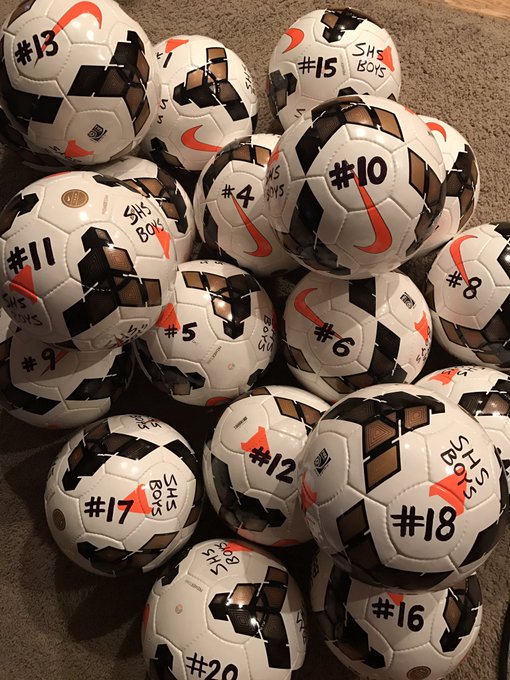
Maass says the prospects for his 2015 team are promising.
“As a unit we’re really good. I have a lot of pretty good players but there’s not like one or two players miles ahead of everybody else in the state, so this is definitely going to be a team year where a lot of different kids contribute. I think making state would be a fair goal and then maybe when we get there…”
Anything can happen. Only a few years after being a losing team, South made its first state final in 2010, the game infamous for the “green card” incident when opposing fans threw mock green cards on the field to insinuate South players were illegal immigrants. It was the most public in a long line of racial insults directed at South.
Maass says he was proud of “the way his team handled it,” adding, “The kids didn’t retaliate – they stood up for the team and school and for what was right and wrong.”
South then put together arguably the greatest season ever by a Neb. Class A boys soccer team in 2013, going 23-0 en route to the state title, setting many records in the process. Elite Soccer Report named South the top team among states where soccer’s a spring sport.
“We won the whole thing and we did it the right way,” Maass says.
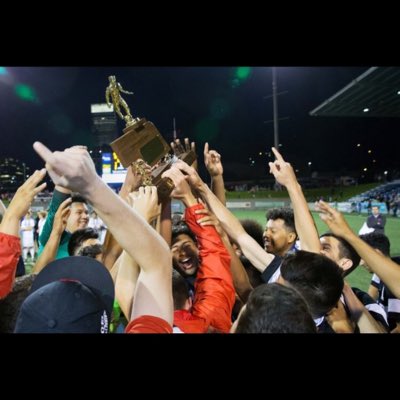
None of it seemed possible 16 years ago.
“Everything that’s been accomplished I would never have imagined. I have a huge sense of pride in that and in knowing that if I stopped coaching tomorrow South High soccer’s still going to be pretty good because we’ve built a strong program.”
Not bad considering what Maass started with.
“The guy who was the head coach before me saw I had some energy and passion, so he stepped down and recommended me to replace him. The truth is nobody else applied, so they just gave it to me because essentially nobody wanted that job. There was nothing desirable about it. It was not very forgiving.
“The program was pretty bad back then. The school really didn’t fund the program. The uniforms were really old. The sport of soccer didn’t get much attention or respect, especially down here.”
Besides low interest and expectations – South won eight games his first four years – it was hard getting kids to play and fans to follow.
“I had somewhere around 11 or 12 players. The first practice there were 15 kids on the field and four of them were off the streets, they weren’t even students. I only had one senior. The next year it was maybe 13 to 15 players. Then 18. Each year it just grew a little bit.”
He scoured South O parks and fields for promising talent and before long gifted players, even some elite club players, filled his rosters.
The facilities were subpar until Collin Stadium opened in 2009, giving the by-then vastly improved program a distinct home advantage with its full-sized soccer field.
The one constant, Maass says, is that “the kids were great kids.” “But,”
he adds, “I don’t think anybody saw South going from being the worst team in the state to what it is now. We’re pretty much a projected top 10 team every year and that’s where we want to be – a top 10 team that everybody has to kind of somewhat fear.”
These days the program gets 100-plus students trying out and carries 80 to 90 players across its varsity, junior varsity and freshman squads. Grads are getting scholarships to play at the University of Nebraska at Omaha, Bellevue University and other schools. Several are coaching for South, including Leo Enriquez and Cesar Lira, and several others are coaching for club teams or competing schools.
Where South soccer used to be an after-thought, it’s now a conversation starter. Cara Riggs was South’s principal when Maass engineered the turnaround. More than all the wins, she appreciated the way Maass cared.
“Joe sometimes comes off as tough, maybe even gruff. Underneath that exterior is a very soft-hearted, compassionate man who cares very deeply about the kids he works with. He has high expectations of your hard work and he’s willing to go above and beyond for you and your success. His loyalty to South High, its students and South Omaha is as strong as a Mack truck.”
Tobias Maertzke, a German exchange student who played at South a few years ago, lived with Maass and his wife while going to school there. “He’s like a family member almost,” Maass says.
Maass acknowledges he’s softened and matured since becoming a father. He and his wife have two children.
“I’ve mellowed quite a bit. I’m still fiery but not overly fiery like I used to be. The first couple years i was probably a little bit rough actually. I had a great understanding for the game but maybe not an understanding for all the kids, whereas now I feel I understand the kids, the game, how the referees work. I feel the refs respect me, so they’re not as quick to give me a yellow card if I step out of line.”
Riggs says South soccer made a positive impact far beyond the field.
“The success of Joe’s soccer program has been a definite booster for school pride and community respect. The success helped put South back on the map and recognized again in the Omaha community.”

Maass, whose roots are in that neighborhood, says, “The sense of community that came back to South Omaha is just amazing to me.”
Having built South to be an elite program and kept it there, Maass is not sure which feat is more difficult.
“It was really hard to get there but it’s hard to stay on top though because more kids are playing the sport now and other schools are starting to mirror the things we’ve done.”
Of all the achievements South’s attained, including district and metro crowns and records for most goals scored and most shutouts recorded in a single season, the 2013 state title stands out.
“Winning a championship at South after they hadn’t won one in years was big. It felt great to feel our program was on top of the world.”
Championships and records are nice, he says, “but at the end of the day” it’s the relationships he forges with “the kids” and following their life pursuits that matter most to him.
“I see them out in the community. It’s interesting to see where they end up. I hope in some way I’ve impacted these kids. That by far outweighs everything else.”
Just like the team’s Twitter page tag line reads, “We are a family, friends and a team with one big heart.. Packers.”
Art and community meet-up in artist’s public projects; Watie White mines urban tales

Art and community meet-up in artist’s public projects; Watie White mines urban tales
©by Leo Adam Biga
Originally appeared in The Reader (http://www.thereader.com/)
Omaha artist Watie White’s humanist public art projects reveal the narratives of transitional urban neighborhoods. The dynamics of locations and the people living there shape his site-specific works.
Three 2014 projects, one completed and the others in-progress, all connect to community organizations whose social justice missions “align” with his own.
“The kind of organizations I am most attracted to are the ones who make a splash with a handful of incredibly passionate people that affect the lives of many families,” he says.
His new All That Ever Was, Always Is exhibition at two abandoned homes slated for demolition in northeast Omaha continues his work with Habitat for Humanity. In 2013 he repurposed an empty home in the same area with original paintings symbolizing the family that lived there and the neighborhood it was part of. He installed prints in the window frames. After the exhibit came down, the condemned house was razed. A vacant lot sits in its place awaiting a new build.
Habitat executive director Amanda Brewer says White’s projects add depth to the agency’s blight remediation work: “They celebrate the rich history that comes with older homes and neighborhoods. The time and respectfulness he puts into getting to know the neighbors, the history of the neighborhood and involving neighbors in his project strengthens Habitat’s efforts to involve the entire neighborhood in our work.”
The house(s) Habitat loans him – for his new project he tackled side by side houses at 1468 and 1470 Grant St. – become cultural excavation sites and art canvasses. He insinuates and immerses himself by doing interviews with neighbors and, where possible, with folks who lived in the dwellings, combing through contents for artifacts and narrative clues, taking photos, using subjects as models.
All of it inspired 51 original paintings he made for the two current structures. Acrylic vinyl prints were installed since July 19 and remain up through year’s end. The houses will then be razed for new homes to go up in their place. His assistant Peter Cales salvaged materials to make benches and tables as communal gathering spots. White’s planning public dinners and conversations at the site.
Dialogue’s a hoped-for by-product of the The Wheels Keep Turning murals Justice for Our Neighbors-Nebraska commissioned him to create. The agency provides legal, education, advocacy services for immigrants. The murals will go in immigrant-rich areas in South Omaha, North Omaha, Benson and Little Italy. White describes the subjects as “inspirational people every day making a positive influence in their neighborhood.”

Elisha Novak. JFON program director and mural project coordinator, says the murals are intended to shine a positive light on immigrant contributions and to empower more immigrants to share their stories.
“We will also host a series of public meetings, discussions and lectures around the unveiling of the murals to engage the public in a constructive dialogue about immigration-related issues. Additionally, we hope to increase awareness of immigrants and their needs, while incorporating a path to services through JFON.”
Among the models are 78-year-old Mexican immigrant Ramona Silva Gonzales and South Sudan refugee Mary Aketa George, a program officer with the Southern Sudan Community Association. White’s drawing on Ramona’s recollections of her and her cousins picking flowers in the fields of the farm she grew up on and singing ranchera songs. He’s incorporating Mary’s memories of the harsh refugee camp life she endured and how the experience motivated her to help people.
White hopes his murals, including one up at JFON, 2414 E St., “shifts the perception of what the immigrant and new Nebraskan face is.”
He’s placing the murals near where the subjects’ live. Ramona’s will be at the Intercultural Senior Center she’s found a second home at.
White’s inCOMMON Community Development project, You Are Here, will feature Park Avenue district murals and prints along that mid-town drag, plus a 100-foot tall banner mural on the Park North public housing tower, 1601 Park Ave., all reflecting diverse residents’ lives. Jay’s an itinerant musician with dreams of his own nightclub. Anthony’s a street activist-poet spitting do-the-right-thing rants.
inCOMMON director Christian Gray says the art’s meant to reduce the “disconnection and marginalization” public housing residents often feel,” adding, “This goal connects closely with InCommon’s mission of uniting and strengthening vulnerable neighborhoods in its effort of including-incorporating public tower residents within the life of the surrounding community.”
White knows the banner mural will draw much attention.
“It’s a resident community and people walk that neighborhood and this thing is just going to be gigantic. It’s going to loom over that neighborhood. It will inevitably be what everyone takes out of that community. It’s going to be so much louder than anything else. It will be the largest thing I’ve done. It feels like a lot of responsibility.”
His challenge is finding the right aesthetic-content balance. He wants the banner to feel of the community, not imposed on it. Neither too rosy, nor too negative but a “powerful” evocation of “personal, lived experiences – I want it to have that feeling their voice is in it.”
Park Avenue’s similar to the North Omaha section he’s worked in. Both feature compromised, underserved neighborhoods. He came to do houses in North O when he couldn’t find suitable mural spaces there.
“I was wanting to work in that community but there aren’t traditional walls to work on.”
When Habitat offered him condemned homes, he says, “I was like, ‘Yes, that gets me there, I can do something with that.'”
Paintings in the studio become something different installed behind broken glass in the distressed neighborhoods they reflect and inhabit.
“There is no way to see them in the same way when you drive through the neighborhood to get there. You park, you maybe say hi to the people sitting across the street, maybe people come over. All that changes those paintings a lot.”
Once in place the images generate questions and conversations, For him, it’s about connecting to the neighborhood and adding benefit to it.
“There’s a distinct shift in the community that starts with the people that had something to do with it. They then kind of own that space and that neighborhood in a way they didn’t before. For the models there’s a certain self-esteem boost from having their head be five feet tall in some capital A art that ends up in the paper. Part of this process is getting people to tell me their stories they don’t think are important and then have me treat them as important.”
The resulting media coverage gives subjects, their stories and neighborhoods a new currency, he says.
“All those things I feel like make this project better.”
As a white affluent artist dropping in on black poverty, he relies on partner organizations with deep stakes there to open doors for him.
“It gives me legitimacy in a community that is not mine. it allows me to have conversations with these people.”

Still, it takes time to build trust and rapport.
“It took the people on that 1400 block of Emmett a little while to kind of warm up to me and tell me those more true and awkward stories. It was several interviews in before I heard about the Hell’s Angels on the block and the role they played. They provided a safe space, they threw these parties and events that built community. The people really liked them. There was never a problem or racial issue with them.”
A neighbor, Miss Maybel, was inspired enough to start her own motorcycle club.
White traced the 1468 house to the family that last lived there, the Tribbles, whose matriarch, Jessie Tribble, was a single mother with aspirational dreams for her children.
Not everything White uncovers is positive.
“In doing these I feel like as an artist I have an obligation to express as much of the truth as I can find. Inevitably that leads me having to figure out what to do with unpleasant things.”
A daughter, Oretha Walker, confided a brother’s in jail for murder. White expressed in images positive and negative things about him. InCOMMON’s Gray says White’s careful handling of personal narratives like this dovetails with its own community listening approach.
“We believe under-resourced neighborhoods are rich with people who have dreams, talents and stories that can be leveraged toward community change and transformation. Watie has a highly unique talent for calling out these dreams and stories from within the communities he works.”
White also put in images discoveries from the 1470 house. An absentee owner rented it out as a daycare, then it was abandoned, then gutted by fire. A 1918 playbill from the long defunct corner Grand Theatre shows up as cinema bathing beauties. A piece of wall paper with John White penciled-in – the artist’s father’s name – gave Watie White permission to integrate his father and son in images.
Follow the artist’s projects at watiewhite.com.
Omaha’s Vinton Street Creativity Festival celebrates a diagonal cultural scene
Street festivals are as emblematic of America as anything and my hometown of Omaha has it’s share of them. A newer one, the Vinton Street Creativity Festival, is an urban pastiche that’s part carnival, part fair, part block party that takes its name and cue from the funky diagonal street where an eclectic assemblage of venues comprise Vinton’s historical business district. This story appeared in advance of the recently held 2013 fest.
Omaha’s Vinton Street Creativity Festival celebrates a diagonal cultural scene
©by Leo Adam Biga
Originally appeared in El Perico
The resurgence of both the Vinton Street Commercial Historical District and the greater Deer Park Neighborhood it resides in is impetus for the second annual Vinton Street Creativity Festival.
The 11 a.m. to 6 p.m. May 18 event is a free celebration of youth and community organized by the Deer Park Neighborhood Association, Habitat for Humanity and the City of Omaha. Vinton Street merchants are helping sponsor it.
The festival, whose hub is 18th and Vinton, will include live music, a street art throwdown, extreme skateboarding, breakdance performances, children’s activities, arts and crafts displays, walking tours and a Victory Boxing Club demonstration. Food can be purchased from the district’s many eateries.
The Hector Anchondo Blues Band will headline the on-stage band lineup, which also includes Pancho & the Contraband and Midwest Dilemma. Mariachi Zapata and Ballet Folklorico Xiotal will perform traditional music and dance, respectively.
The Omaha Creative Institute will present Elmo Diaz in a blacksmithing demo, Tom Kerr drawing caricatures and a watercolor station for kids to paint.
Linda Garcia will teach the Mexican paper cutting craft, appeal picado banderas, in creating miniature decorative flags.
Among a few dozen commercial historical districts in the nation, the Vinton strip is singular for its diagonal layout. The narrow, meandering road, with low-slung, century-old buildings set close to the street, follows a ridge line that may have been a trail or country road before the area’s late 19th century development.
Noted photographer Larry Ferguson, who’s long maintained a studio and living space in the Daniel J. Jourdan Building at 1701 Vinton, says as a result of the street’s serpentine shape “you have a lot of different vistas as you move along and through those curves – it’s like a piece of sculpture that way.”
Festivalgoers will come upon a commercially thriving district whose 14 historically significant buildings have been largely untampered with and house a diverse mix of service-based businesses. Many small business owners there are Hispanic. Their enterprises include bakeries, restaurants, a meat market and clothing stores.
The area is far livelier then when Ferguson moved there in 1987. “It was a derelict part of town. It was really bad,” he recalls. “Nothing but vacant storefronts and six bars. Very little street and pedestrian traffic.” He says as the South 24th business district filled “it was a natural progression for the Latino community to move up into this area to rebuild. That led to a big influx of property changes and people changes. To the point now we have constant traffic on the street during the day. A lot of new businesses have come on board that are making Vinton happen. The new businesses are just hopping.”

One of the biggest changes is the influx of families with young children. Deer Park Neighborhood Association president Oscar Duran says, “There are hundreds of young kids in our neighborhood.” In his work as a Neighborhood Revitalization Specialist with Habitat for Humanity Duran’s enlisted youth as volunteers and as participants in urban art competitions and mural projects.
“I saw we had a local asset of urban artists within the neighborhood, That started us asking ourselves what other ways could we outreach to our youth in the South Omaha area. How can we bring together a mash of different counter cultures and communities that celebrate youth being active, involved and a part of something?
“So we invited some of the urban artists and break-dancers we’re familiar with as well as the nonprofits that do outreach-mentorship to cross pollinate with each other and celebrate what each of them is good at.”
Duran says the resulting youth and community-centered event is an attempt “to separate us from other neighborhood festivals because Deer Park itself is a very unique neighborhood. It’s a collection of smaller neighborhoods. It’s a melting pot. You go down Vinton Street and you have an internationally known photographer (Ferguson) who’s been there since the ’80s right next to a carniceria (meat market) who’s been there for ten and right across the street you have a pasterleria (bakery). Then there’s all the restaurants, the boutiques, the Capitol Bindery, Gallery 72.
“I think it’s really cool. It’s something that’s very organic to our area.”
New additions to the melting pot are The Apollon, a multi-genre arts event-dining space having its grand opening during the fest, and The Pearly Owl curio shop.
Apollon co-founder Ryan Tewell says the district is becoming known as a “friendly up-and-coming arts and dining destination without all the traffic and congestion and higher prices that come with it.”
Grants are assisting some owners with sprucing up the facades of their buildings. Duran says improvements to the surrounding area include the recent razing of condemned homes, the rehab of others and the construction of new residences.
“That revitalization brings new people, higher property values,” Ferguson says. “I’ve got 26 years here of watching this neighborhood transform, which has always been my dream. I’ve been trying to champion this street for a long time. It’s very exciting to see it happen.”
Ferguson and Duran view the festival as a showcase for what the area offers.
“There’s a really good core of people here,” Duran says. “A very strong sense of work ethic and community was already here and it’s not going to go away. There’s really an environment fostered here that people want to help each other.”
“Vinton’s becoming more unified,” says Ferguson. “It’s a real celebration of it. We’re totally jazzed and excited.”
Related articles
- Tapestries to celebrate Omaha neighborhoods; Theater by any other name (leoadambiga.wordpress.com)
Tapestries to celebrate Omaha neighborhoods; Theater by any other name
The Great Plains Theatre Conference in Omaha is always looking for new ways to connect with audiences and in the following story for The Reader (www.thereader.com) I share the latest attempt to bring theater to where people live. The conference’s PlayFest is presenting Neighborhood Tapestries in two well-defined inner city communities that don’t always have the kind of access to theater that other communities do. The idea of these tapestries is for people of these communities to share various aspects of their neighborhood’s art, music, culture, and history.
Tapestries to celebrate Omaha neighborhoods; Theater by any other name
©by Leo Adam Biga
Soon to appear in The Reader (www.thereader.com)
The play’s still the thing with the Great Plains Theatre Conference but organizers are making a concerted effort to expand theater’s definition in order to connect more people to it.
The May 26-29 PlayFest is the Metropolitan Community College conference’s answer to making theater more accessible. That means staging works at nontraditional sites, including one along the riverfront, and, new this year, holding Neighborhood Tapestries in the inner city.
The inaugural tapestries, a cross-between a chautauqua, a street arts event, a storytelling festival, a salon and a variety show, will happen outdoor on separate dates in North and South Omaha. Each neighborhood’s art, culture and history will be celebrated through a loose program of music, poetry, stories, dance and other creative expressions. The performers will include professionals and amateurs.
On May 27 the North Omaha tapestry, directed by Denise Chapman, will interpret the area’s African American experience at the Union for Contemporary Art at 2417 Burdette Street.
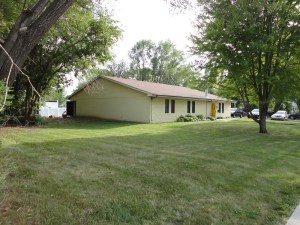
Union for Contemporary Art
Chapman, an actress and stage director, is the Omaha Community Playhouse education director and a Metropolitan Community College theater instructor. She’s worked with a team to produce the event.
“We’re creating a thread,” she says. “We are thinking of our show as a block. So who are these people on the block? Borrowing from Sesame Street. who are the people in your neighborhood? We want to have this musical and movement throughline with these transitional words and the sharing of these stories as people get up and talk about community and food, growing up on the North Side, memories of their mothers and just all these different people you might encounter on a street in North Omaha.
“That thread allows us to plug in people as we get them, as they see fit. Who knows what could happen with the evening. We’ve got that flexibility. It’s not a rigid the-curtain-opens and this-series-of-events needs to happen for the show to make sense and come to some conclusion. Instead it’s this nice woven piece that says here are some things that happened, here are some reflections, here is some music , here’s a body in space moving. Hopefully at the end you’re like, Oh, let’s get around this circle and have a conversation.”

Denise Chapman, ©photo by Brigitte McQueen Shew
She says GPTC producing artistic director Kevin Lawler gave her a “very open” script to take the event wherever she wanted.
“I’m excited about this project because it allows us to explore the concept that we’re all performers with this urge to tell a story or to share this happening or to recount this thing that happened to us. But where’s the platform for that? When do we get together and do it? What we’re doing is throwing some artists and musicians and actors in the mix. It’s engaging us as theater practitioners to not be so static in our art form and it engages the community to understand that theater isn’t this other thing that happens on the other side of the city.”
Featured storytellers include Nancy Williams, Felicia Webster, Peggy Jones and Dominque Morgan, all of whom will riff and reflect on indelible characters and places from North O’s past and present.
Jazz-blues guitarist George Walker will lay down some smooth licks.
Member youth from the North Omaha Boys and Girls Club will present an art project they created. Works by Union for Contemporary Art fellows will be displayed.
Chapman sees possibilities for future North O programs like Tapestries that celebrate its essence. She says such programs are invitations for the public to experience art and own it through their own stories.
“Then you start having those conversations and then you realize the world is a lot smaller than you think it is,” she says. “It just starts to close the gap. So yeah I think there’s a real possibility for it to grow and create these little pockets of reminders that we’re all performers and we all need our platforms for creation.”

The May 29 South Omaha tapestry will take a similar approach in fleshing out the character and personalities of that part of town. The site is Omaha South High’s Collins Stadium, 22nd Ave. and M Street. Director Scott Working, the theater program coordinator at MCC, says he’s put together an event with “a little music, a little storytelling, a little poetry to let people know some of the stories and some of the history of the neighborhood.”
He says he got a big assist from Marina Rosado in finding Latino participants. Rosado, a graphic designer, community television host and leader of her own theater troupe, La Puerta, will also emcee the program. She led Working to retired corporate executive David Catalan, now a published poet. Catalan’s slated to read from three poems written as a homage to his parents.
Rosado also referred Working to artist and storyteller Linda Garcia.
“I will be doing a storytelling segment based on my Abuelita (Grandmother) Stories,” says Garcia. “The story I am telling is an actual story of my abuelita, Refugio ‘Cuca’ Hembertt, and my exposure to her insatiable reading habits. That led to my discovery and connection with languages and the power of words.*
Even Louie M’s Burger Lust owner Louie Marcuzzo has been marshaled to tell South O tales.
Also on tap are performances by the South High School Louder Than a Bomb slam poetry team, Ballet Folklorico Xitol, the Dave Salmons polka duo and a youth mariachi band. Working also plans to bring alive an El Museo Latino exhibit of Latinos in Omaha. Individuals will read aloud in English the subects’ bios as a video of the subjects reading their own stories in Spanish plays. He says his inspiration for the evening’s revolving format is the Encyclopedia Shows that local artists and poets put on.
“It’s a combination of like standup and poetry and music and theater,” Working says. “It’s relaxed, it’s fun. Plus, I don’t think I could get David Catalan and Louie Marcuzzo to come to six rehearsals to get it right. I trust them.”

Scott Working
Rosado embraces the format.
“I believe in the power of art. Music, dance, literature, theater and all cultural expressions can change a person’s life. That’s why I am so excited about the event. Scott has a genuine interest in showcasing the best of our community. Tapices is the word in Spanish for tapestries and I can hardly wait to see the unique piece of art that will be made at the end of this month.”
Catalan feels much the same, saying, “Stories told as a performing art leave lasting impressions on audiences and motivate many to learn more about heritage and ancestry.” He applauds Metro for its outreach to inner city Omaha’s “rich cultural history in the transitional ethnic populations.”
Lawler says Tapestries enables the conference “to be more rooted in the community,” particularly underserved communities. “I wanted to go further into involving the community and being something relevant for the community. That’s why I want to generate these stories from the community. It’s kind of a lifelong quest I have to keep looking at the art form and saying, ‘What are we doing that’s working but what are we doing that’s not working very well’ That’s part of the reason the whole PlayFest is free. Theater is just priced out of society’s ability to go. That doesn’t work.”
Just as Chapman feels Tapestries can continue to mine North O’s rich subject matter, Working feels the same about South O. He adds that other neighborhoods, from Benson to Bellevue, could be mined as well.
Both the North O and South O events kick off with food, art displays and music at 6:30 p.m. Storytelling begins at 7:30.
For the complete PlayFest schedule, visit http://www.mccneb,edu/theatreconference.
Related articles
- Artists running with opportunity to go to the next level; Carver Bank resident artists bring new life to area (leoadambiga.wordpress.com)
- Kevin Lawler Guides Ever Evolving Theater Conference to Put More Focus on Fewer Plays and Playwrights and to Connect Deeper with Community (leoadambiga.wordpress.com)
Salvation Army Kroc Center and Omaha Conservatory of Music partner to give kids new opportunities
Nonprofit organizations that share similar missions can find greater efficiencies and impact more people when they partner, sometimes even reaching new audiences and delivering new services in the process. That’s what’s happened with the partnership between the Omaha Conservatory of Music and the Salvation Army Kroc Center that’s expanding music education and performance opportunities for youth thanks to agency one lending its expert instructors to students at agency two. My Metro Magazine story about this collaboration follows.
Salvation Army Kroc Center and Omaha Conservatory of Music partner to give kids new opportunities
©by Leo Adam Biga
Originally appeared in Metro Magazine
A perfect fit
Last fall a meant-to-be match became reality when the Omaha Conservatory of Music began offering music classes at the Salvation Army Kroc Center in South Omaha. OCM provides top-notch instructors and instruments and the Kroc eager students and first-rate facilities.
OCM’s been looking to do more outreach with underserved populations and the Kroc Center’s been seeking to expand its music offerings. So why not bring the Conservatory’s resources to the Kroc?
“It was kind of a perfect fit because the Salvation Army needed a music piece to offer the community and the Omaha Conservatory of Music had expertise in that.
It made sense,” says Mike Cassling, a Kroc advisory board member who brokered this marriage with OCM board member Betiana Simon. The pair got the two organizations talking and before long a full-fledged program was designed and launched for youth ages 3 to 18. Cassling, CEO of Cequence Health Group, helped fund the program.
“We didn’t have the instructors in house for the music, and music is something the Army loves, so it seemed like it would be a good fit if they could provide instructors and we could provide students,” says Major Catherine Thielke, the Kroc’s officer for program development.
The classes are free to Kroc Center members and $10 for nonmembers.
“Parents are loving the fact this is available to their children and that it’s not breaking their pocket,” says Kroc Center arts and education manager Gina Ponce, who adds that music is a vital part of Hispanic culture and having affordable classes right in heart of the community is a welcome addition.
OCM executive director Ruth Meints says there’s good congruence between the center’s community focus and the conservatory’s mission of building artistic community through education and performance.
Thielke agrees, saying, “The Salvation Army’s mission and purpose here at the Kroc Center is to inspire people to discover their God-given talents and to develop those talents. We saw that the Conservatory was helping kids start very young in finding their giftedness in music.”
Music adds enrichment
“I’m a huge proponent that the arts, which music is a part of, are a wonderful way to increase self-esteem, well-being and self-worth,” says Kroc arts and education coordinator Felicia Webster. “The classes are just perfect to introduce young people to music and to help them feel good about themselves.”
Where the Salvation Army has a long tradition of brass band music, it’s lacked much in the way of woods and strings.
“We’re about finding out what children’s spark is, and that expands much broader than a brass band and into the strings and other types of instruments,” says Thielke. “We’re just very excited to be partnering with the Conservatory and we’re really glad Mike and Betiana saw what benefit this would have to both groups.”
“They’re very visionary people who helped it become a reality,” adds OCM’s Meints.
Classes strike a chord and fill gap in music education
The classes have proven more popular than anyone imagined. Ever since the first round began in early September sessions have filled, new spots have been created and waiting lists have formed.
Meints says there’s been “overwhelming response” and she adds “it’s great to see so many people get involved right away.” She expects enrollment for the next round of classes in January to increase.
In January a new guitar class will complement the brass, cello/bass, percussion, violin/viola, woodwinds and voice beat-boxing classes.
“In the Hispanic community the instruments that are very prominent for mariachi are violin, trumpet and guitar and so that will be a very neat addition,” says Meints.
More classes may be in the offing.
At the conclusion of each six-week class a concert’s held featuring student performers from both organizations. The first concert, on Oct. 27, was packed.
Meints says the individualized instruction offered youth helps them grow faster musically. Some Kroc students are already showing great potential and may be eligible for OCM scholarships, according the Meints, who’s excited about nurturing this previously untapped talent.
Officials with both organizations say the classes for very young children fill a vital need because music education doesn’t start until middle school. Studies show getting kids started early in music can improve cognitive development and academic performance, says Meints. She and Thielke emphasize that the Sprouts class promotes family interaction by requiring parental-guardian participation.
For details and to register, visit http://www.omahakroc.org or call 402-905-3579.
Related articles
- The Kroc Center rises, with help (hamptonroads.com)
- Salvation Army’s New Ray And Joan Kroc Community Center Helps Chicago Woman (chicago.cbslocal.com)
- Salvation Army Provides Space For Teens At Kroc Center (chicago.cbslocal.com)
Saving one kid at a time is Beto’s life work
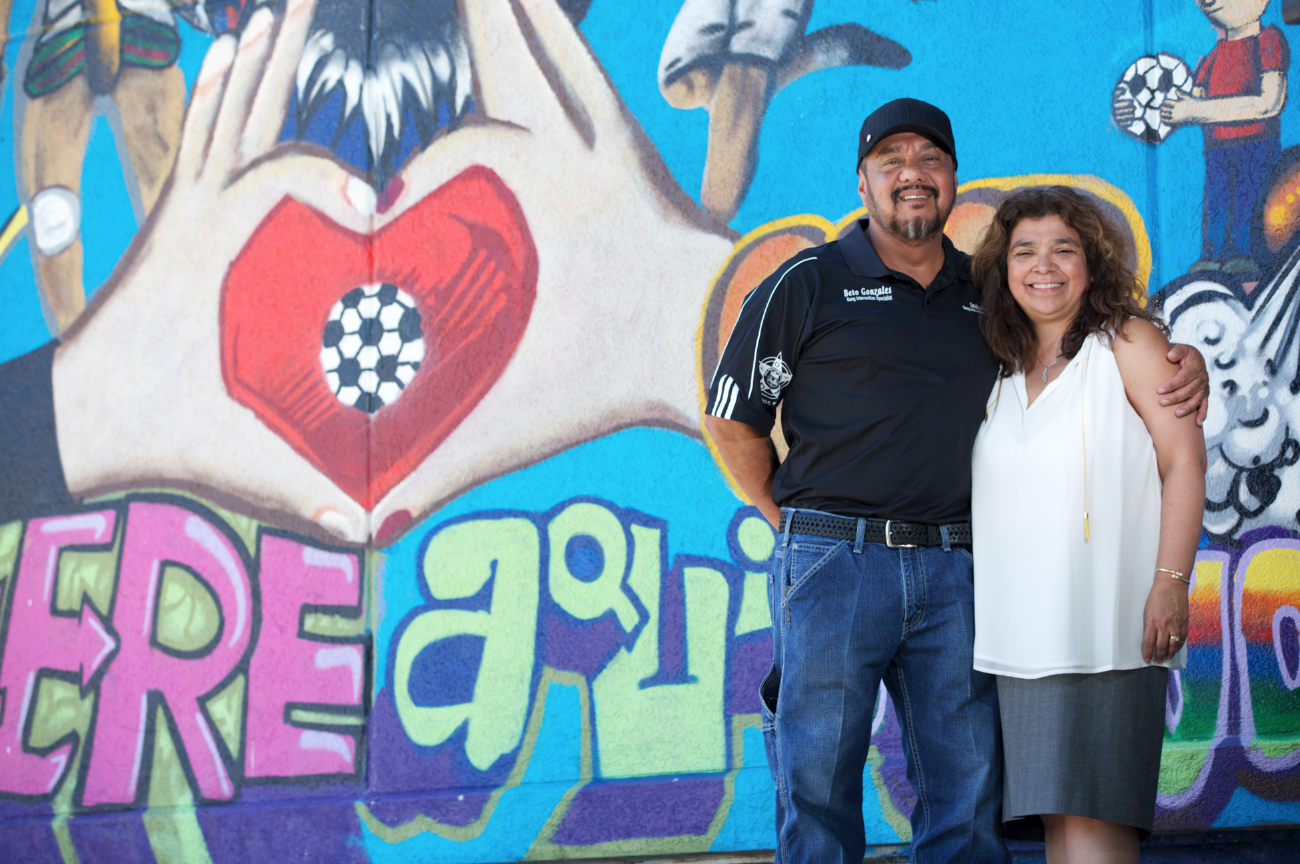
He goes by Beto. Though middle-aged now Alberto “Beto” Gonzales can relate to the hard circumstances youths face at home and in the barrio because he faced difficulties at home and on the streets when he was their age. He knows what’s behind kids skipping school or getting in trouble at school because he did the same thing to cover his pain when he was a teen. He can talk straight to gang members because he ran with gangs back in the day. He knows what addiction looks and feels like because he’s a recovering addict himself. His work for the Chicano Awareness Center, the Boys and Girls Clubs of the Midlands, and other organizations has netted him many honors, including a recent Martin Luther King Jr. Legacy Award from Creighton University. Beto is a South Omaha legend for the dedication he shows to saving one kid at a time. My profile of him for El Perico tells something about the personal journey of transformation he followed to turn his life around to become a guiding light for others.
Here is a link to a more recent story I did about Beto-https://leoadambiga.com/category/alberto-beto-gonzales/
Saving one kid at a time is Beto’s life work
©by Leo Adam Biga
Appeared in El Perico
Alberto “Beto” Gonzales believes working one-on-one with youths is the best way to reach them. His work as a mentor and gang prevention-intervention specialist has earned him much recognition, most recently the Martin Luther King Jr. Legacy Award from Creighton University.
Gonzales grew up in the South Omaha barrio he serves today as a Boys and Girls Clubs of the Midlands counselor. He does outreach with truants, many of whom come from dysfunctional homes. He knows their stories well. He grew up in a troubled home himself and acted out through gangs, alcohol and drugs. He skipped school. He only turned things around through faith and caring individuals.
“I was just an angry kid,” says Gonzales, who witnessed his father verbally abuse his mother. Betro’s internalized turmoil sometimes exploded.
“At 17 I almost went to prison for 30 years for assault and battery with the intent to commit murder. Then I got hooked on some real heavy drugs.”
“My mother prayed over me all the time and I think it’s her prayers that really helped me get out of this. I just decided to give my life to the Lord. ”
When he’d finally had enough he completed his education at South High at 20.
The Chicano Awareness Center changed his life’s course. A social worker there saw potential in him he didn’t see in himself. Then he was introduced to a nun, Sister Joyce Englert, who worked as a chemical dependency counselor.
“She heard me out,” he says. “I talked to her about my drug addiction, how I couldn’t keep a relationship and all kinds of crap going on. What’s cool about that is she asked me if I would go talk to kids about the dangers of drugs and alcohol even though she knew I was an abuser. She said, ‘I think it’s important kids hear your story.’ I found myself crying right along with the kids as I shared it.
“She told me I had a passion for this and asked what I thought about becoming a counselor. Well, I’ve done a lot crazy, dangerous things in my life but the most frightening and hardest thing was to tell the truth that I couldn’t read or write that well.”
Sister Joyce didn’t let him make excuses.
“With her help I got a chemical dependency associates degree from Metropolitan Community College, which led me into working in the schools with adolescents dealing with addiction issues, and I loved it, I just loved it.”
He also got sober. He has 33 years in recovery now.

Then he responded to a new challenge.
“When the gangs started surfacing I changed my career to working with gang kids,” he says. “That’s been my passion.”
He worked for the center until 2003, when he joined the Boys and Girls Clubs.
Having walked in the shoes of his clients, he commands respect. He uses his story of transformation to inspire.
“I had a faith my mother blessed me with, then I met a woman of faith in Sister Joyce who gave me my direction, and my job now is to give kids faith, to give them hope.”
He says it comes down to being there, whether attending court hearings, visiting probation officers, providing rides, helping out with money or just listening.
“It really takes a lot of consistency in staying on top of them. All that small stuff really means a lot to a kid who’s not getting it from the people that are supposed to be doing it for them, like mom and dad.
“Gangs ain’t never going to go away. The only thing we can do as a society is to find the monies to hire the people that can do the job of saving one life at a time. That’s what Jesus did. He then trained his disciples to go out and share his word, his knowledge, and they saved one life at a time. That’s all I’ve been doing, and I’ve lost some and I’ve won some.”
His job today doesn’t allow him to work the streets the way he used to with the hardcore kids.
“I’m not out there like I used to be.”
However, kids in his Noble Youth group are court-referred hard cases he gets to open up about the trauma, often abuse, they’ve endured. Talking about it is where change begins.
In a high burn-out field Gonzales is still at it, he says, because “I love what I do.” It hasn’t been easy. His first marriage ended over his job. Then tragedy struck home.
“There was a time in South Omaha when we were losing kids right and left and one of the kids killed was my cousin Rodolfo. It’s painful to see other people suffer but when it’s in your own family it’s a different story. Rodolfo was a good kid, I loved him, but he was deep in some stuff. When he got killed I lost it. That was a struggle. I told my employer, ‘I can’t do this anymore.’ I took a sabbatical, I just had to get away. I did a lot of meditation and praying and it only made me stronger.”
He’s not wavered since.
“I’ve got my faith and I’ve learned you’ve got to hand everything over to God, Don’t try to handle it yourself because you will crumble.”
Related articles
- Drugs, gangs blamed for Okla. City homicide spike (sfgate.com)
- Child grows into woman before abuser is sentenced (omaha.com)
- Alleged gang leader arrested at Garfield High School (q13fox.com)
- Finding Her Voice: Tunette Powell Comes Out of the Dark and into the Spotlight (leoadambiga.wordpress.com)
Community-builders Jose and Linda Garcia devote themselves to a life promoting Latino art, culture, history
Jose and Linda Garcia live and breathe Latino art, culture, and history, devoting much of their lives to researching, collecting, exhibiting, and preserving it. This Omaha couple embody a passion and magnificent obsession in what they do. The following cover story for the New Horizons keys off their most ambitious program to date, a month-long celebration of the Day of the Dead or Dia de los Muertos that they’re calling Music to My Bones.
Community-builders Jose and Linda Garcia devote themselves to a life promoting Latino art, culture, history
©by Leo Adam Biga
Origibally appeared in the New Horizons
Jose Francisco Garcia and Linda Garcia are one of those meant-to-be couples you rarely meet in real life. They’ve very different people in some ways and clealry alike in others but what they have at their core is an abiding respect and appreciation for each other.
Call them simpatico.
These retirees are two of the busiest people you’ll ever know. They immerse themselves in community activities that seek to enrich, educate and entertain.
Both bring diverse experiences and gifts to their relationship and to their community-centered work. Jose, 67, has business and organizational acumen from his years as an activist, program developer and corporate officer. He also brings a certain discipline from his stint in the U.S. Army. Linda, 66, is a artist, storyteller, teacher and former children’s librarian, with a fine aesthetic sensibility and keen intuition.
He’s the fly-in-the-ointment agitator. She’s the smooth-everything-over nurturer.
Though he says he’s a loner by nature, he doesn’t mind public displays and isn’t shy about promoting himself or Linda or their work. That’s not the case with her. You won’t find the many awards she’s been honored with displayed in their home.
“I’m not a commodity. I don’t want to be. I have a real hard time tooting my own horn,” she says. “To get people to pull stuff from me is real hard. I don’t like to be in the limelight that much. There for a while I couldn’t even sign my artwork because it’s not really just me, it’s a gift that comes through me. I really feel that.”
The multimedia artist works with lots of recycled materials, including cardboard and paper, to create sculptures, cutouts, toys and dolls.
She says she gets so lost in her work that “time is distorted,” adding, “I could be working on a project thinking it’s only been an hour and it’s been six hours.”
“The real world means nothing to her” in those creative reveries, says Jose, who credits whatever aesthetic awareness he’s gained to her.
Each is knowledgable and passionate about the art, culture and history of their shared Chicano roots. They’ve spent countless hours studying Mexican art, traveling to exhibitions, workshops, conferences. For decades they’ve collected Mexican art objects and materials and shared them with the public.
“We’re Chicanos. What we do is we share art history and culture – that’s what Chicanos do and we’ve lived by that credo,” says Jose.
Their largest scale event to date is Music to My Bones, an exhibition and celebration of Dia de los Muertos or The Day of the Dead that runs October 6 through November 12 at the Bancroft Street Market in South Omaha.
In addition to displaying original artwork by contemporary artists from the metro and Mexico the multimedia event features art presentations, art classes and live music and dance performances.
“We’re showing all those aspects of the Day of the Dead, from the traditional to the modern, and how people in the United States and in other regions, especially artists, have embraced the Day of the Dead,” says Linda. “It’s crossed cultures, it’s crossed religions, it’s crossed ages, it’s crossed regions as an expression of death, of talking about death in a positive way.”
The exhibit is dedicated to the memories of Isabel “Chavela” Gonzales Hernandez and the Barrientos brothers – Vidal, Juan and Panfilo – and their musical contributions to the community. Linda’s designed a large music ofrenda installation in honor of those two families and other Latino artists.
“We want it to be multidimensional for people who honestly want to know the tradition and culture of Dia de los Muertos.” says Jose. “We’ll have everything from ofrendas to presentations to kiosks to musical groups. We want to blanket it as best we can. And we have so much material we can put into action. It’s going to be relevant and traditional and not made up. The art’s going to be primo.
“We have a collection of metal works – candelabras – from Mexico. We have a huge collection of calaveras sugar skulls. Dioramas. So it’s a chance for us to utilize our collection.”
Jose will also be drawing on his huge Spanish music archive “to give body to the work.”
The dozens of artists and musicians participating in the show were “hand-picked” by Linda. “I want to highlight these artists and musicians. I feel like a mom to them,” she says.D
Among the featured artists she’s adopted is Bart Vargas, who’s come to appreciate what she and Jose contribute to artists like himself.
“Personally, I am very pleased to be working with Jose and Linda,” he says. “As a mixed blood artist I have often struggled with having a metaphorical foot in two worlds, never quite feeling a sense of belonging to either. As a child I had very little exposure to half of my origins, often feeling like an immigrant to my own Mexican heritage. I am excited to work with Jose and Linda because the upcoming exhibit is the first time that I get to work within the context of my own cultural heritage. Both Jose and Linda are very generous, knowledgeable and approachable. I have already learned much from them and look forward to working with them again.”
Much as the Garcias collect art, they collect artists, whom they work with over and over again. The exhibits the couple curate flow from their collection, which they began accumulating shortly after marrying in 1977.
“She didn’t become a material collector until I come around,” Jose says of Linda. “She was a spiritual collector. Everything was here,” he says, indicating her head.
Many of their acquisitions come from trips they’ve made to their ancestral homeland. They’ve now amassed private holdings that would be the envy of any museum. Their multi-story Bemis Park neighborhood home, whose oak-finished interior is in the Craftsman style, is filled with art and artifacts from basement to attic.
“We surround ourselves with our collection,” Linda says. “You’ll see we don’t take care of some household things because we spend all our money on art and books.”
Off-site storage units contain the rest.
At one point they did operate the Las Artes Cultural Center in South Omaha as a venue for showing some of their vast Mexican wares. More recently they formed the Mexican American Historical Society of the Midlands as a kind of extension of their collection. They now serve on the board of the organization, for whom they curate exhibitions and programs.
They often dip into their collection for presentations and workshops. Linda is an artist for the Nebraska Arts Council Artist in Schools and Communities residency program. She just finished a three-month summer residency at the Omaha South Branch Library, where she taught Mexican folk arts. She covered repujado (metal embossing), pinturas de amate (bark painting), nichos (Mexican decorative boxes), papel picado (Mexican paper cutting art), pinata making, printmaking and yarn painting of the indigenous Huichols and wood carving and painting of the indigenous Oaxaca people.
Maria Teresa Gaston, emeritus director of the Center for Service and Justice at Creighton University, has had the pleasure of being taught by Linda.
“One of my favorite experiences with Linda was attending an art workshop she led when she and Jose had Las Artes. She taught us how to make Mexican-styled cut metal ornaments from soda cans. I loved being in her presence and being led to connect with ancient traditions and release my own creative spirit. I have often thought of that Saturday morning and longed for more of that mentoring.
“She has a way of teaching that calls out beauty and belief in all who are with her.”
Gaston’s also enjoyed Garcia’s storytelling talent.
“This past summer I had the opportunity to hear Linda present stories and lead 50 young Latinas in hands-on artwork and personal exploration as a part of the Latina Summer Academy. Linda had the girls in the palm of her hand. They listened so attentively as she presented folk stories of love and beauty.”
Linda also teaches at Granville Villa Retirement Center, the South Omaha Boys and Girls Club, the Joslyn Art Museum and other sites.
Whatever the program or subject or theme, the Garcias likely have a ready archive or reference or example at hand to give the project depth or perspective. If they don’t have what they need themselves, they get it.
“We’ve used our material to design exhibits and as teaching materials. I use it a lot to teach,” says Linda. “Anything we do, whether an exhibit or a talk, we do a lot of research. That’s the reason we have a collection, because we use it.”
Jose says the sizable library they’ve cultivated invariably contains books that “bubble up whenever we have a project.”
Their teaching and research often lead to new collecting interests.
For example, as soon as the couple began teaching about Oaxacan wood carvings, Jose says they had to have them, and so they collected them. “Now we own about 15 Oaxacan wood carving objects. Thats’ the story of our lives.” Thus, the collection ever expands as they add new elements. Their hard cover book collection alone numbers in the thousands.
Linda’s not alone in presenting the material. Jose, a trustee with the Nebraska State Historical Society and a former Douglas County Historical Society board member, also does his share of presenting and teaching. Gaston can attest to his ability to hold an audience.
“I fondly remember a presentation Jose gave on the life of Frida Kahlo (the Mexican painter and wife of Diego Rivera). Jose is a great teacher and his words were accompanied by the power of the images he presented and the beautiful papel picado hanging behind him – works of Linda’s hands.”
Jose has also taken it upon himself to document Omaha Latino life through photographs. He makes a point of showing up and snapping pics, these days mostly with a digital camera, at countless community events. He posts the images to his Picasa web albums on Google-Plus. Sometimes his photos are published in El Perico and other local publications.
Gaston says, “I love seeing Jose around the community at events of all kinds.”
“You can call him a community photographer,” says Linda.
He also searches out documents and photos that illustrate the long, rich history and culture of Latino Omaha. Just one of his discoveries is an original framed poster printed in Spanish promoting a 1935 Cinco de Mayo celebration in Omaha. The event was sponsored by the Sociedad Mutualista Mexicana or Mexican Mutual Aid Society, founded in 1928. He says the society operated a school called Lazaro de Cardenas, where English was taught to Mexican immigrants, and took a census.
What’s important to know, he says, is that “we had neighborhoods that had experiences with our ancestral artistic and historic culture that was relevant to American history but we weren’t being taught it, we never learned it in public school. We learned from our own community. There was a Mexican community.”
He says most of the local Mexican population then was based in South Omaha. The railroads and packinghouses were their main employers.
“The history and contributions of Mexican-Americans to Omaha is such an important part of our story,” says Gaston, “and Jose so reverently, professionally and passionately keeps this history alive for Latinos and non-Latinos. He presents the courage and beauty and also the luchas (battles) and sufferings of La Raza (Spanish-speaking peoples). His leadership and advocacy on behalf of the Latino community have inspired young and old.”
She says the Garcias are nothing less than “community builders,” adding, “Jose and Linda’s incredible dedication to the well-being of the Latino community and the Omaha community deserves great thanks.”
Both Garcias are on the Speakers Bureau for the Nebraska Humanities Council. She’s a storyteller with NHC’s Prime Time Family Reading program at the South Branch Library.
Because of the amount of material in the Garcias’ possession, ranging from sculpture to fabric to paper objects to books, only a fraction can be displayed at any given time. So they bring out small selections to present with their talks and programs, et cetera.
“We don’t have a gallery, so our gallery is the community,” says Jose, and for Music to My Bones their gallery is the Bancroft Street Market.
The fall exhibition, which has been made possible by grant funding, “is a Jose and Linda Garcia production,” he says. “We’ll receive no compensation for our activities. It is all in benefit of the Mexican American Historical Society and to keep this historical objective going.”


These life partners enjoy collaborating on projects.
“Some people say relationships are like rivers and you’re within the same bank but with us it’s more than that. We’re a symbiotic relationship,” he says. “She’s kind of like my Jiminy Cricket. I’m very aggressive, I’m in your face, I’m an attack dog, that’s what I do. And she reels me in.”
Linda admires his tell-it-like-it-is style.
“You may not like what he says but he speaks up and says it in front of you. One thing I really learned from Jose is to speak out and not be this timid girl. I saw the respect people would give him because he would ask for what he wanted.
I’ve learned to ask for what I want.”
She believes they make an effective team. “I think to an extent we balance with each other. I think we do blend well.” And they genuinely enjoy each other’s company.”We like to spend time with each other. We share a lot of things. We have stacks of stuff we’ve written together. Some of it’s real personal.”
Jose, who grew up in Kansas City, Mo. and lost his mother at age 6, lived a kind of vagabond life until he wound up in Omaha and met Linda. He was going through a divorce at the time and he and Linda were just friends at first before becoming serious. He appreciates what he found in her.
“Linda is a very natural creature of her element,. She’s like an angel without being blessed. Everything is full of life and energy and she just can’t wait to tap into it, to share it. Linda has never brought a negative or bad influence into our relationship or into our domestic life or into the way that we raised our family.”
The couple have two grown sons, Che and Carlos Garcia, and two granddaughters, London and Elliette.
“The Chicano movement was about identity,” Jose explains. “Yes, we were American and yes we knew English and yes we were third generation and yes we had college degrees but there was a certain disconnect between our life experience as Mexican Americans and George Washington. And then when the Chicano movement started welling up…Rev. Robert Navarro was the seminal guy, the match that lit the Chicano movement here in Omaha. Then all of a sudden nothing made sense, especially when you started hearing about all of this art and culture that had a thousand years of equity – the Mayans, the Aztecs – that was never even approached in our educational experiences. It drove Linda to find out what was going on.”
It drove Jose to find himself.
“I suppose part of the motivation to seek out an identity began way back on the 31st of January, 1966. At my Army induction-swearing in ceremony, I had a copy of my birth certificate I had never seen. On it my name was listed as Jose Francisco Garcia. This was an identity taken away from me by my kindergarten teacher Miss Margaret, when she changed my name to Joe Frank. So I enlisted in the US Army as Jose Francisco Garcia. To this day everyone in K.C. that is family knows me by Joe Frank.”
He served one tour in Vietnam with an engineer battalion operating in and around a support base, Dong Tam, near the city of My Tho. He was apolitical entering the service but he came out highly politicized.
“Emotionally, I changed and became obsessed with ending the war when I returned stateside. To this day I see every environment I am in as a possible threat and am under constant alert for intruders, danger, checking for escape routes, just in case. The Vietnam experience literally buried the joy of being alive and changed it into the anxiety of living.”
Back home he not only joined the antiwar effort he intersected with the burgeoning Chicano Movement. Much of his activism centered around the two colleges he attended in his native Kansas City.
At Penn Valley Metropolitan Community College, he says, “I connected with every radical group on the face of the planet, including the Weathermen, SNCC (Student Nonviolent Coordinating Committee), the Brown Berets, the Black Panthers. Always a loner, I gathered my causes in a singular manner and marched as they say to my own drums. After a stint on the student council, I organized Libra, an alternate bookstore.
“My first action as a student activist was taking over our chancellors’ office because he refused to install a ramp for a veteran that had been wounded in action and for other handicapped people.”
He says at the University of Missouri Kansas City he organized a group called United Mexican American Students and “became involved in West Side actions, blow-outs, marches, demonstrations.”
After getting his bachelor’s degree from UMKC he worked as a program developer with the Kansas Council of Low Income Peoples and Migrant Workers in Garden City, Kansas. He made several trips to D.C. to negotiate proposals for housing and health services.
Before coming to Omaha in 1976 he married and worked a series of jobs. He was employed at Xerox, twice, he became a hypnotist helping people lose weight and reduce stress,, he sold cemetery lots, he sold Kirby vacuum cleaners door to door, he even picked apples one harvest season in Kansas.
“I couldn’t keep a job. Then I came to Omaha and I started the whole thing all over again. I did various things here.”
He eventually got on with the Chicago Northwestern Railroad as a clerk and worked his way up to training personnel. The railroad was purchased by Union Pacific and years later he took his buy out from them.
Among his early Omaha gigs was serving as director of the Chicano Awareness Center. It’s where he met Linda, who was already active in the organization.
Omaha Latino activist Abelardo Hernandez says then as now Jose and Linda were a force to be reckoned with.
“She helped us with our art classes and later joined us in our folkloric dance troupe. She sacrificed a lot of her time to help the young kids understand the arts and traditions of our people. Linda has never let up in our struggle for knowledge.
Jose was able to identify with what we as Chicanos were trying to attain. He has managed to find some great archives that people have entrusted unto him.He has also given a lot of his time towards communicating with city and state officials. He seems to know what buttons to push when working in our behalf.”
When it came to relationships, Linda says she was dead set against marriage and had a whole rationale worked out to justify her attitude.
“I knew clear back as a girl that nobody was going to make me happy. I wasn’t going to give that responsibility to a person, no matter who it was,. Happiness does not come from outside, and I knew that when I was in the third grade. I don’t know what it was. I tell people I was born with old lady eyes. I was an old soul.”
Jose was immediately taken by her beauty and spirit. Linda, on the other hand, says, “I didn’t want a thing to do with him. I was involved with somebody else at the time anyway. Besides, I just didn’t think it was in the cards for me. I was older, kind of set in my ways being single. I wanted to do my own thing.”
She began warming however to this newcomer. He intrigued her.
“It was more curiosity about each other. We found out we could talk. Love and all that didn’t come until much much, much later, and I don’t even think we spoke it then. We just both knew we’d be together. He was one of the few people I could talk to and he really listened and he really looked at you and he had opinions.” We were compatible.”
Just as Jose did, underwent her own identity catharsis.
“When I went to Mexico my senior year at College of St. Mary I came back very disappointed knowing I had taken four years of art history and the only time anything Mexican was mentioned was one period, and it was just four muralists, and they were all male,” she recalls.
Mexico opened a whole new world to her she was eager to explore.
“In the marketplace I’d watch the women grab a piece of material and roll it and before your eyes came out a doll. It was amazing.”
She was enthralled by the handmade art, some of the techniques going back centuries, she came upon. Then there was all the history she discovered.
“It hit me really hard when I came back. First, it was a cultural shock. It was like, ‘Why didn’t anybody ever tell me this?’ And the answer was because it wasn’t up to them to tell you in any way, it’s up to you. But how do you know to look?
“I just became really hungry for getting my hands on this and the Chicano movement. It was like an awakening. That happened to a lot of people. What was awakened was the art, literature, of becoming who you are as a Chicano. I’m not really Mexican, I’m an American, but the combination made me a Chicana, which means I seek knowledge, but it’s not enough to stop there, you must transmit it to other people and share it. In other words, be a teacher.
“It’s not enough to collect and learn and keep it all to ourselves. Thats’ the reason for this place,” she says, referreing the Mexican American Historical Society.
It’s the reason for Music to My Bones.
“It is stuff to people, it’s more than that to us. It’s more than leaving things to people, it’s leaving the story. Without the story it’s absolutely meaningless.
“I made the commitment to show the kids I was teaching that there’s so much more. I just started digging. In the process of learning you have to do the research, you have to go out there and dig.”
There’s also the matter of leaving and passing on a legacy.
“I think everybody wants to do that in a way – to say, ‘I was here, I want to leave a mark.’ Like with the Day of the Dead they say there’s three deaths: the first death is the physical and then when you’re buried and nobody can see you, but the worst death is to be forgotten.
“We want to leave a legacy, OK, but it’s more than that, it’s trying to teach the community. They also have a legacy and they also have a responsibility to carry their family traditions and to know how to take care of photographs and keepsakes.”
About their role as historians, curators and culturalists, they say, “Somebody’s gotta do it.”
Their work is far from done in their estimation. They’d like to form a free research and public library containing their catalogued and digitized collection. They’d like to have a permanent exhibition space.
“We don’t have a million dollars but were Chicanos, we’re going to do what we have to do to get it done.,” says Jose.
And these two will do it together as long as they can.
“We’ve become two old souls together,” he says.
For Music to My Bones details call 402-651-9918 or visit http://www.bancroftstreetmarket.com.
Related articles
- SOULS OF THE CITY / Dia De Los Muertos (freesolarts.wordpress.com)
- A Conversation on Chicano Art: Artist Jose Lozano and Collector Armando Duron (kcet.org)
- 6 Stunning Day of the Dead Makeup Looks (bellasugar.com)
- Latino Writers Collective supports aspiring KC authors and artists (kansascity.com)
- The Garcia Girls (leoadambiga.wordpress.com)
- When a Building isn’t Just a Building (leoadambiga.wordpress.com)


 Leo Adam Biga's My Inside Stories