Archive
RIP Preston Love Sr., 1921-2004, He Played at Everything
This is one of the last stories I wrote about Omaha jazz and blues legend Preston Love. It’s a tribute piece written in the days following his 2004 death. Trying to sum up someone as complex and multi-talented as Preston was no easy task. But I think after reading this you will have a fair appreciation for him and what was important to him. The piece originally appeared in The Reader (www.thereader.com). I actually ended up writing about him two more times, once on the occasion of the opening of the Loves Jazz & Arts Center, which is named in his honor and located in the hub of North Omaha‘s old jazz scene, and then again when profiling his daughter Laura Love, a singer–musician he fathered out of wedlock. You can find my other Preston Love stories along with my Laura Love story on this blog site.
©by Leo Adam Biga
Originally published in The Reader (www.thereader,com)
Lead alto sax player with Basie in the 1940s. Territory band leader in the ‘50s. Arranger, sideman, band leader for Motown headliners in the ‘60s. Studio session player. Recording artist. Music columnist. Radio host. Teacher, lecturer, author.
Until his passing from cancer at age 82, the voluble, playful, irrepressible, ingenious Preston Love wore all these hats and more during a long, versatile career. Around here, he may be best remembered for the easy way he performed at countless venues or the nostalgic, by-turns cantankerous tone of his Love Notes column or the adoring tributes and scalding rebukes he issued as host of his own jazz radio programs. Others might recall the crusading zeal he brought to his roles as college instructor, lecturer and artist-in-residence in spreading the gospel of jazz.
His curt dismissal of some local jazz musicians made him an egoist in some corners. In Europe, he was accorded the respect and adulation he never got at home. Yet, despite feeling unappeciated here, he often championed Omaha. It took the publication of his 1997 autobiography to make his resident jazz legend status resonate beyond mere courtesy to genuine recognition of his talents and credits.
For his well-received book, A Thousand Honey Creeks Later, My Life in Music from Basie to Motown (Wesleyan Press), Love drew on an uncanny memory to look back on a life and career spanning an enormous swath of American history and culture. It was a project he labored on for some 25 years and even though he still had a lot of living left in him, it served then, as it does now, as an apt summing-up and capstone for an uncommon man and his unusual path. It’s a bold, funny, smart, brutally frank work filled with the rich anecdotes of a born storyteller.
“You know how most people who write their life story have ghost writers? Well, he wrote his book. Every word,” says his son, Richie Love, with pride and awe.
-

Artist: Preston Love
Label: KENT
Orig. Released: 1969
Catalog No.: LPKENT540
Condition: Sealed-Reissue
Format: LPRetail Price: $ 8.99 (1 available)
The ability, with no formal training, to master writing, music and other pursuits was what Billy Melton calls his late friend’s “God-given talents. Preston just picked up everything. He had a photographic memory. He was remarkable.” Richie Love says his father’s huge curiosity and appetite for life was part of “a drive to excel” that came from being the youngest of nine in a poor, single-parent house so run down it was jokingly called the” Love Mansion.” Young Preston taught himself to play the sax, abandoning a promising career in the boxing ring for the bandstand, where the prodigy’s gift for sight reading became his forte. “Any kind of music you put in front of him, he played it,” says former Love pianist Roy Givens.
Whether indulging in food and drink, friends and family, leisure or work, Richie Love says his father lived large. “Everything he did was larger than life. He did everything with a passion. Music. Fishing. Cooking. He was just so interesting. He was an all-around person. People loved him. People flocked to him.”
“He was just a big man all the way around,” says Juanita Morrow, a lifelong friend and fishing companion who experienced his generosity when she and her late husband, Edward, fell ill and Love made frequent visits to their home, bringing them groceries. “I’ll remember him as a very dear friend. He never let my husband and I down. No matter where he went on tour…he always sent letters and pictures.”
Frank McCants, another old chum from back in the day, says even after making it big with Basie that Love “never got the big head. He stayed regular.” Melton says Love would return from the road looking for a good time. “Preston made the big bucks and when he came to town he’d look us up…and that’s when the partying would begin. We let our hair down.” On those rare occasions when the blues overtook Love, Melton says, “music was the antidote. He really loved it.”
Although he hated being apart from his wife Betty, who survives him, Love savored “the itinerant life.” Givens recalls how he made life on tour a little more enjoyable: “He was a very serious musician, but he was a joker. He kept you laughing a lot because of the things he would say and do.” Traveling by bus, the spontaneous Love often heeded the sportsman’s call en route to a gig. “He loved to hunt and he loved to fish,” Givens says, “and on the bus we had he carried his shot gun and his fishing rod. If we went across any water, he’d stop the bus and say, ‘I’m just going to see what I can catch in 15 or 20 minutes.’ He’d throw in a line. When passing by a field, if he’d see a pheasant or a rabbit, he’d stop and shoot at it out the windows. If he hit anything, he’d skin it. If he caught anything, he’d put it on ice in a cooler. A lot of times we were almost late getting to the job because he would be catching fish and he didn’t want to leave. The guys would just laugh.”
A consummate showman, Love burned with stage presence between his insouciant smile and his patter between sets that combined jive, scat and stand up. Richetta Wilson, who sang with various Love bands, recalls his ebullience. “He would talk more than he would play sometimes. He was so funny and talented. The best person you could ever want to work with.” Billy Melton recalls Love teasing audience members from the bandstand. “Almost everybody that came in the door he’d know by name and he’d call them out. He was always joking, but he could take it, too. He didn’t care what you said about him.”
Then there was his serious side. Love coaxed a smooth, sweet, plaintive tone from the sax developed over a lifetime of listening and jamming in joints like McGill’s Blue Room on north 24th Street. As a student of music, he voiced learned, militant diatribes against “the corruption of our music.” As he saw the once serious Omaha jazz scene abandon its indigenous roots, he used his newspaper columns, radio shows and college classrooms as forums for haranguing local purveyors and performers of what he considered pale imitations of the real thing.
Calling much of the white bread jazz presented here “spurious” and “synthetic,” he decried the music’s most authentic interpreters being passed over in favor of less talented, often times white, players. “My people gave this great art form for posterity and I’m not going to watch my people and our music sold down the road,” he said once. “I will fight for my people’s music and its presentation.”
He delivered his eloquent, evangelical musings in free-flowing rants that were equal parts improvisational riff, poetry slam and pulpit preaching, his mellifluous voice rising and falling, quickening and slowing in rhythmic concert with his emotions.
Love’s guardianship for the music may live on if the planned Love Jazz-Cultural Arts Center dedicated to him on 24th Street ever opens, which organizers say could happen by the end of 2004. The center’s driving force, Omaha City Councilman Frank Brown, hopes the facility can showcase the Love legacy, including his many well-reviewed recordings. “I want visitors to know here is a person who was great and touched greatness and was part of that rich jazz history,” Brown says. “People like that just don’t come along every day. And I want kids to walk away with the feeling they too can achieve like he did.” Richie Love says he wants people to know his dad was “a great man.”
Center board members plan displaying items from the mass of memorabilia the late artist collected in his collaborations with what one reviewer of a reissued Love album called a “Who’s Who of American Musicians.” The star-studded roster of artists he worked with ranged from Count Basie, Lucky Millinder and Earl Hines to Wynonie Harris, Billie Holiday and Jimmy Rushing to Aretha Franklin, The Four Tops, The Temptations, The Supremes, Smokey Robinson and the Miracles, Ray Charles, Marvin Gaye, Issac Hayes and Stevie Wonder.
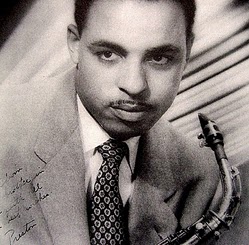
Richie Love is sorting through the materials, including hundreds of photos, in an effort to decide what the family will donate to the center. Many photos picture Love with the Motown artists he worked with during his decade (1962 to 1972) in California. He moved his family there at the urging of friend Johnny Otis, the blues great with whom he often collaborated. Love worked as an L.A. session player and sideman and, later, as the leader of Motown’s west coast backup band, an ensemble that backed many of the label’s artists performing there.
For Richie, and siblings Norman and Portia, the L.A. years were golden. Richie recalls the high times that ensued whenever his father parked the Motown tour bus outside their rented house on West 29th Place. “The kids from the neighborhood would see that bus and we’d all get on it. I’d sit in the driver’s seat and act like I was driving and they’d be in the back singing like they were Motown. It was just the greatest.” Other times, stars arrived in style at the Love home. “We’d look out the window and see a limo coming and say, ‘Oh-oh, who’s it going to be this time?’ I think Dad liked to surprise us. It was always somebody different.” Some visitors, like Gladys Knight or Jimmy Rushing, became live-in guests, passing the time swapping stories and playing Tonk, a popular card game among blacks. “My brother, sister and I would sit in the front room and watch and listen while they were having a ball, laughing and talking all night. We’d get up in the morning, and they’d still be there.” Then there were the times when the boys accompanied their father to television tapings or live concerts and got to hang backstage with the show’s stars, including Stevie Wonder. “Oh, it was the coolest,” Richie says.
|
Having a dad who’s a kid at heart meant impulsive trips to the beach, swimming pools, fishing holes, music gigs. Sitting up with him all hours of the night as he made “elaborate dinners” – from gourmet to barbecue – and “told these great stories,” Richie says. “He was a great father…he turned us on to so many things in life.”
By all accounts, Love was a good teacher as well. Whether holding court at the Omaha Star, where he was advertising director, or from the bandstand, he shared his expertise. “He helped musicians reach their potential,” says Roy Givens. “After listening to you play, he could tell you what your weaknesses were…He would pull you aside and tell you to work on them. I know he made me a better musician.”
Melton says Love often spoke of a desire “to pass his knowledge on.” To see the results of that teaching, Givens says, one has only to look at Love’s children. “They are all exceptional musicians, and that right there’s an accomplishment.” Richie is an instrumentalist, composer and studio whiz. Norman, who resides in Denver, is widely regarded as an improvisational giant. Portia is a jazz vocalist. All performed with their father on live and recorded gigs.
If nothing else, Preston Love endured. He survived fads and changing musical tastes. He adapted from the big band swing era to the pop, soul, rhythm and blues refrains of Motown. He rose above the neglect and disdain he felt in his own hometown and kept right on playing and speaking his mind. Always, he kept his youthful enthusiasm. The eternal hipster. “I refuse to be an ancient fossil or an anachronism,” Love told an interviewer in 1997. “I am eternally vital. I am energetic, indefatigable. It’s just my credo and the way I am as a person.”
Even into his early 80s, Love could still swing. Omaha percussionist Gary Foster, who played alongside him and produced CDs featuring him, marveled at his skill and vitality. “He had a very pure, soulful sound that just isn’t heard anymore. It’s that Midwestern, Kansas City thing. He was part of that past when it was real — when the music was first coming and new. He had that still.” He says Love was not about “coasting on what he’d done in the past,” adding: “To him, that just wasn’t good enough. He still wanted to produce. He was still hungry. In the studio, he was like, ‘What are we doing today? Where are going to take the music today?’”
Love’s musical chops were such that, at only 22, he earned an audition with Basie during an appearance of the Count’s fabled band at Omaha’s Dreamland Ballroom. In the same room he grew up worshiping at the feet of his musical idol, Basie sax great Earle Warren, Love won a seat in the band as a replacement for none other than the departing Warren. “Preston Love was part of this lineage of great lead alto saxophone players. With Basie, he took over for one of the great lead alto saxophone players…and he performed that role with distinction,” Foster says.
Love once said, “Everything in my life would be an anticlimax because I realized my dream.” That dream was making it to the top with Basie. Luckily for us, he didn’t stop there. Now, he leaves behind a legacy rich in music and in Love.
Related Articles
- Leon Breeden, Jazz Educator, Dies at 88 (nytimes.com)
- International Jazz Day (beliefnet.com)
- Enchantress “LadyMac” Gets Down (leoadambiga.wordpress.com)
- Big Bad Buddy Miles (leoadambiga.wordpress.com)
- Once More With Feeling, Loves Jazz & Arts Center Back from Hiatus (leoadambiga.wordpress.com)
- Back in the Day, Native Omaha Days is Reunion, Homecoming, Heritage Celebration and Party All in One (leoadambiga.wordpress.com)
- A Rich Music History Long Untold is Revealed and Celebrated at the Omaha Black Music Hall of Fame (leoadambiga.wordpress.com)
- Arno Lucas, Serious Sidekick (leoadambiga.wordpress.com)
- The Ties that Bind, One Family’s Celebration of Native Omaha Days (leoadambiga.wordpress.com)
“Omaha Blues” and “Preston Love’s Omaha Bar-B-Q”: Two scorching instrumental blues journeys by Omaha music Llgend Preston Love

Image by Affendaddy via Flickr
This next story is actually adapted from a press release that the late Omaha jazzman and blues artist, Preston Love Sr., commissioned me to write to help promote a new CD he was releasing. I include it here as another element of putting the arc of his life and career in proper perspective.
“Omaha Blues” and “Preston Love’s Omaha Bar-B-Q’” Two scorching instrumental blues journeys by Omaha music legend Preston Love
©by Leo Adam Biga
Adapted from a press release I wrote for Preston promoting a new CD
At age 80, legendary Omaha jazz and blues musician Preston Love is enjoying the kind of renaissance few artists survive to see. It began with the 1997 publication of his autobiography, A Thousand Honey Creeks Later (Wesleyan University Press), which earned rave reviews in such prestigious pages as the New York Times Book Review. Next, came a steady stream of re-released albums on CD featuring a much younger Love playing in such distinguished company as the Count Basie and Lucky Millinder bands, just two of the classic groups he played with during this indigenous American music’s Heyday.
Now, there is the unlikely release of two albums, produced 30 years apart, each with the name Omaha in them – Omaha Blues and Preston Love’s Omaha Bar-B-Q – and each showcasing Love at his silky smooth lead alto saxophone playing best. Love has always been faithful to his hometown of Omaha where, as a kid, he first got hooked on jazz and blues by hanging on every note performed by his idols at the near northside clubs he later played too. He still makes his home in Omaha, where he lives with his wife Betty.
“What a unique thing to have two albums out with the name Omaha in them and to have them selling like hotcakes all over the country,” Love said. “What a thrill.”
Beyond the rare confluence of Omaha in their titles, the two releases cast an equally rare spotlight on an artist at two different periods in his career as a jazz-blues interpreter. A brand new release, the Omaha Blues CD presents the ever vibrant Love performing the music of his life, including a mix of standards by the likes of Duke Ellington and Count Basie and a selection of original Love tunes, including the soulful title track.
Produced by Gary Foster at Omaha’s Ware House Productions studio and distributed by North Country Distributors, Omaha Blues has received high praise from what is commonly referred to as The Bible of jazz and blues magazines for the way Love and his band perform everything from slow ballads to hot swinging numbers. Special praise is reserved for Love’s music-making.

Gregg Ottinger, a reviewer with Jazz Ambassador Magazine in Kansas City, writes that the ensemble heard on the record “is particularly good and provides an excellent surrounding for Mr. Love’s strong sound. But the highlight of the CD is Mr. Love’s playing. This is a man who is full of music – eight decades of it – and it’s still strong and fresh. It’s a joy to hear it released on this recording.” Jack Sohmer in Jazz Times describes Love as “still a masterly saxophonist,” adding, “The proof is here that Love has not lost a beat…” And Robert Spencer in Cadence writes, “Preston Love has a slippery, slithery tone that slides through the blues real easy and rings all the changes on a dime with a fine exuberance. Preston Love plays this music with superlative commitment and yes, love. Great fun.”
Producer Gary Foster, the drummer on this recording and a regular percussionist with Love’s working band, said he was drawn to the project because it provided an opportunity to bring the man he considers his mentor to the forefront, a position unfamiliar to this venerable artist who for decades toiled in relative obscurity as a highly respected if not starring sideman, session musician, contractor and band leader.
Also a flutist, Love was a fixture in the reed section of many bands and made a name for himself with his ability to sight read. In addition to playing with Basie and Millinder, he headed-up his own territory bands and led Motown’s west coast band.
“I’m really happy I was able to present Preston Love just doing what he does best and doing it as well as he can. I think in the past Preston deferred to what producers wanted and a lot of times he ended up in the background,” said Foster, who refers to Love’s many studio and live collaborations with legendary artists — ranging from Ray Charles and Aretha Franklin to longtime friend and rhythm and blues great Johnny Otis. During these gigs, Love almost always played a supporting role. But, as Foster and others see it, Love is more than deserving of his own limelight because he is a consummate artist in his own right and the genuine article to boot.
“Preston Love is part of this lineage of great lead alto saxophone players. With Basie, he took over for one of the great lead alto saxophone players — Earl Warren — and he performed that role with distinction. He did a great job,” Foster said.
The way Foster sees it, Love is still making sweet sounds some half-a-century later. “He’s got a very pure, soulful sound that just isn’t heard anymore. It’s that Midwestern, Kansas City thing. He’s part of that past when it was real — when the music was first coming and new. He’s got that still.” Despite the fact Foster has played alongside Love for years he is still amazed that a man of his age remains as sharp and vital and curious as he is. “I’m half his age and I watch this guy night after night constantly trying to improve himself. He’s 80 years old and he’s still worried about being good enough. He’s never satisfied. It’s an inspiration. That’s what I aspire to be as an artist — just constantly trying to be better.”
Foster said Love is not about “coasting on what he’s done in the past,” adding: “To him, that’s just not good enough. He still wants to produce. He’s still hungry. In the studio, he’s like, ‘What are we doing today? Where are going to take the music today?’”
The idea of resting on his laurels is anathema to Love, who dismisses the notion he is some “moldy fig” or stick in the mud. Indeed, Love feels his playing has never been better. “I reached my peak on my instruments later in life,” he said. “I wasn’t interested that much in a career as a soloist early on, but as I became more interested in that I was able to accomplish more at a time in life when most guys deteriorate. I refuse to be an ancient fossil or an anachronism. I am eternally vital. I am energetic, indefatigable. It’s just my credo and the way I am. I play my instruments as modern as anybody alive and better than I’ve ever played them. It’s helped that my health has been good too.”
For Love, Omaha Blues was a blast to make because he was working with his longtime band members Orville Johnson (piano), Nate Mickels (bass) and Foster (drums), along with his daughter Portia Love, an assured vocalist and frequent collaborator. Also heard on the disc are guitarist Jon Hudenstein, pianist Bill Erickson, bassist John Kotchain and vocalist Ansar Muhammad. Of his fellow musicians, Love said, “The guys are just miraculous on this. We didn’t get technical or anything. We just banged it out and I think we did a good job.” Love also lends his smoky voice to a few tunes.
Originally produced on Kent Records and now being re-released by Ace Records of Great Britain, Preston Love’s Omaha Bar-B-Q represents Love at a time and place in his career when he was working with some of the music industry’s strongest talents. “These were top players and all dear friends of mine. I hired them a lot for the Motown band,” Love said. “We had James Brown’s drummer and Ike and Tina Turner’s sax player. We had my dear friend Johnny Otis, who produced the album. Johnny also brought in his son, Shuggie, then a 15 year-old prodigy on the guitar.”

The recording features several different artists, but most notably Shuggie, now enjoying a revival of his own. “He played the greatest blues solos on guitar on that album that will ever be done,” Love said. “He’s a genius.” In keeping with the album’s Omaha and eating themes, the tracks feature a number of Love-penned tunes named after favorite soul food staples, including Chitlin Blues. Released in 1970, the album fared well in Europe, where, Love said, “it made me a pretty big name.” The musician has performed in Europe several times and he is preparing to play France later this year.
Not only a performing and recording artist, Love is also a noted jazz-blues columnist and historian. For years, he hosted a popular jazz program on local public radio, a forum he used as a combination stage, classroom and pulpit in presenting classic jazz in its proper aesthetic-cultural-historical context. He is clearly not done making his passionate, sometimes prickly voice heard either. From his brand new CD to classic reissues of old LPs to area gigs his band plays, his music-making continues enthralling and enchanting old and new listeners alike. With his first book, A Thousand Honey Creeks Later, now going into its second printing, Love is already planning to write another book on his eventful life inside and outside music.
NOTES: After a highly successful run at L & N Seafood in One Pacific Place, Preston Love and his band now jam Friday and Saturday nights at Tamam, 1009 Farnam-on-the-Mall, an Old Market restaurant specializing in Middle Eastern cuisine;
Love was recently a featured performer at the August 3 Blues, Jazz and Gospel Festival on the Metropolitan Community College Fort Omaha campus; Omaha Blues can be found at area record and music stores, including Homer’s. Preston Love’s Omaha Bar-B-Q will soon be available.
Related Articles
- Harlem Jazz Museum Acquires Trove By Greats (harlemworldblog.wordpress.com)
- National Jazz Museum Acquires Savory Collection (nytimes.com)
- He Keeps Discovering Who He Is (online.wsj.com)
- Gene Conners obituary (guardian.co.uk)
- Omaha Arts-Culture Scene All Grown Up and Looking Fabulous (leoadambiga.wordpress.com)
- Tyler Owen – Man of MAHA (leoadambiga.wordpress.com)
- Once More With Feeling, Loves Jazz & Arts Center Back from Hiatus (leoadambiga.wordpress.com)
- Big Bad Buddy Miles (leoadambiga.wordpress.com)
- Enchantress “LadyMac” Gets Down (leoadambiga.wordpress.com)
- Back in the Day, Native Omaha Days is Reunion, Homecoming, Heritage Celebration and Party All in One (leoadambiga.wordpress.com)
- Luigi’s Legacy, The Late Omaha Jazz Artist Luigi Waites Fondly Remembered (leoadambiga.wordpress.com)
- A Rich Music History Long Untold is Revealed and Celebrated at the Omaha Black Music Hall of Fame (leoadambiga.wordpress.com)
- Arno Lucas, Serious Sidekick (leoadambiga.wordpress.com)
Preston Love: His voice will not be stilled
This is one of those foundational stories I did on Omaha jazz and blues legend Preston Love. Together with my other stories on him I give you a good sense for who this passionate man was and what he was about. The piece originally appeared in The Reader (www.thereader.com). I should mention that Love’s autobiography, which is referenced in the story, was well-reviewed by the New York Times and other major national publications. Preston always wanted to leave a legacy behind, and his book, “A Thousand Honey Creeks Later,” is a fine one. The very cool Loves Jazz & Arts Center in the heart of North Omaha’s historic jazz district is named in honor of him. More stories by me about Preston Love can be found on this blog site. I also feature a profile I did on his daughter, singer-songwriter-guitarist Laura Love.

Preston Love: His voice will not be stilled
©by Leo Adam Biga
Originally published in The Reader
One name in Omaha is synonymous with traditional jazz and blues — Preston Love Sr., the native son musician most famous for playing lead alto saxophone with the legendary Count Basie in the 1940s.
The ebullient Love, still a mean sax player at 75, fiercely champions jazz and blues as rich, expressive, singularly African-American art forms and cultural inheritances. This direct inheritor and accomplished interpreter of the music feels bound to preserve it, to protect its faithful presentation and to rail against its misrepresentation.
He has long been an outspoken critic of others appropriating the music from its black roots and reinventing it as something it’s not. Over the years he’s voiced his opinion on this and many other topics as a performer, columnist, radio host, lecturer and oft-quoted music authority. Since 1972 his Omaha World-Herald “Love Notes” column has offered candid insights into the art and business sides of music.
From 1971 until early 1996 he hosted radio programs devoted to jazz. The most recent aired on KIOS-FM, whose general manager, Will Perry, describes Love’s on-air persona: “He was fearless. He was not afraid to give his opinion, especially about what he felt was the inequality black musicians have endured in Omaha, and how black music has been taken over by white promoters and artists. Some listeners got really angry.”
With the scheduled fall publication of his autobiography “A Thousand Honey Creeks Later,” by Wesleyan University Press in Middletown, Conn., he will finally have a forum large enough to contain his fervor.
“It’s written in protest,” Love said during a recent interview at the Omaha Star, where he’s advertising manager. “I’m an angry man. I started my autobiography to a large degree in dissatisfaction with what has transpired in America in the music business and, of course, with the racial thing that’s still very prevalent. Blacks have almost been eliminated from their own art because the people presenting it know nothing about it. We’ve seen our jazz become nonexistent. Suddenly, the image no longer is black. Nearly all the people playing rhythm and blues, blues and jazz in Omaha are white. That’s unreal. False. Fraudulent.
“They’re passing it off as something it isn’t. It’s spurious jazz. Synthetic. Third-rate. Others are going to play our music, and in many cases play it very well. We don’t own any exclusivity on it. But it’s still black music, and all the great styles, all the great developments, have been black, whether they want to admit it or not. So why shouldn’t we protect our art?”
When Love gets on a roll like this, his intense speaking style belongs both to the bandstand and the pulpit. His dulcet voice carries the rhythmic inflection and intonation of an improvisational riff and the bravura of an evangelical sermon, rising in a brimstone tirade one moment and falling to a confessional whisper the next. Suzanna Tamminen, acting director of Wesleyan University Press, says, “One of the wonderful things about Preston’s book is that it’s really like listening to him talk. A lot of other publishers had asked him to cut parts out, but he felt he had things to say and didn’t want to have to change a lot of that. So we’ve tried to have his voice come through, and I think it does.”
Love pours out his discontent over what’s happened to the music in the second half of the book. Love, who’s taught courses at the University of Nebraska at Omaha on the history of jazz and the social implications of black music, says he “most certainly” sees himself as a teacher and his book as an educational document.
In his introduction to the book, George Lipsitz, an ethnic historian at the University of California-San Diego and a Wesleyan contributing editor, compares Love to the elders of the Yoruba people in West Africa” “According to tradition, elders among the Yoruba…teach younger generations how to make music, to dance, and create visual art, because they believe that artistic activity teaches us how to recognize ‘significant’ communications. Preston Love…is a man who has used the tools open to him to make great dreams come true, to experience things that others might have considered beyond his grasp.
“He is a writer who comes to us in the style of the Yoruba elders, as someone who has learned to discern the significance in things that have happened to him, and who is willing to pass along his gift, and his vision to the rest of us. His dramatic, humorous and compelling story is significant because it uses the lessons of the past to prepare is for the struggle of the future. It is up to us to pay attention and learn from his wisdom.”
Some may disagree with Love’s views, but as KIOS Perry points out, “All they can do is argue from books. None of them were there. None of them have gone through what’s he gone through. They have nothing to compare it with.” Perry says Love brings a first-hand “historical perspective” to the subject that cannot be easily dismissed.
Those who share Love’s experience and knowledge, including rhythm and blues great and longtime friend, Johnny Otis, agree with him. “Those of us who came though an earlier era are dismayed,” Otis said by phone from his home in Sebastopol, Calif., “because things have regressed artistically in our field. Preston is constantly trying to make young people understand, so they’ll do a little investigation and get more artistry in their entertainment. He’s dedicated to getting that message out.”
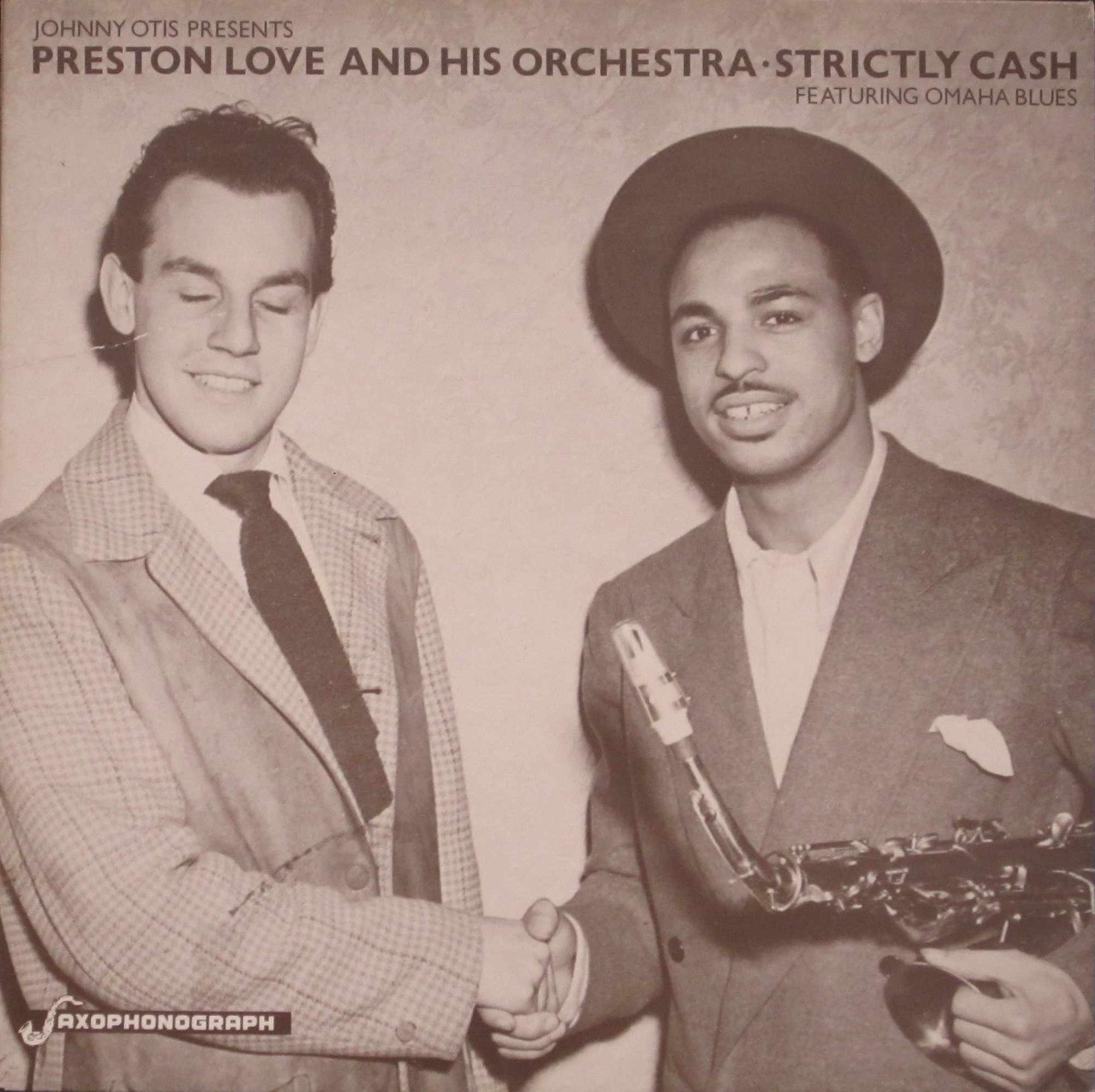
But Love’s book is far more than a polemic. It’s a remarkable life story whose sheer dramatic arc is daunting. It traces his deep kinship with jazz all the way back to his childhood, when his self-described “fanaticism” developed, when he haunted then flourishing North 24th Street’s popular jazz joints to glimpse the music legends who played there.
He grew up the youngest of nine in a ramshackle house in North Omaha. Love’s mother, Mexie, was widowed when he was an infant. Music was always part of his growing up. He listened to his music idols, especially Count Basie and Basie’s lead alto sax man, Earle Warren on the family radio and phonograph. He taught himself to play the sax brought home by his brother “Dude.” He learned, verbatim, Warren’s solos by listening to recordings over and over again. By his med-teens he was touring with pre-war territory bands, playing his first professional gig in 1936 at the Aeroplane Inn in Honey Creek, Iowa (hence the title of his book).
At Omaha’s Dreamland Ballroom he saw his idols in person, imagining himself on the bandstand too — hair coiffured and suit pressed — the very embodiment of black success. “We’d go to see the glamour of Duke Ellington and Louis Armstrong. We aspired to escape the drabness and anonymity of our own town by going into show business,” Love recalls. “I dreamed of someday making it…of going to New York to play the Cotton Club and of playing the Grand Terrace in Chicago.”
He encountered both racism and kindness touring America. The road suited him and his wife Betty, whom he married in 1941.
The couple’s first child, Preston Jr., was born 54 years ago and the family grew to include three more off-spring: Norman and Richie, who are musicians, and Portia, who sings with her father’s band.
Life was good and Love, who eventually formed his own band, enjoyed great success in the ’50s. Then things went sour. Faced with financial setbacks, he moved his family to Los Angeles in 1962, where he worked a series of jobs outside music. His career rebounded when he found work as a studio musician and later as Motown’s west coast band leader in the late ’60s, collaborating with such icons as Aretha Franklin, Ray Charles and Stevie Wonder. He returned to Omaha in 1972, only to find his music largely forgotten and his community in decline. While often feeling unappreciated in his hometown, he basked in the glow of triumphant overseas tours, prestigious jazz festival performances and, more recently, reissues of classic recordings. Today, he’s an elder statesman, historian and watchdog.

To grasp just how much the music means to him, and how much it saddens him to see it lost or mutilated, you have to know that the once booming North 24th Street he so loved is now a wasteland. That the music once heard from every street corner, bar, restaurant, and club has been silenced altogether or replaced by discordant new sounds.
The hurt is especially acute for Love because he remembers well when Omaha was a major jazz center, supporting many big bands and clubs and drawing premier musicians from around the region. It was a launching ground for him and many others.
“This was like the Triple A of baseball for black music,” he says. “The next stop was the big leagues.”
He vividly recalls jazz giants playing the Dreamland and the pride they instilled: “All of the great black geniuses of my time played that ballroom — Duke Ellington, Count Basie, Earl “Father” Hines, Louis Armstrong, Dizzy Gillespie, Charlie Parker. Jazz was all black then, number one, and here were people you read about in magazines and heard on radio coast-to-coast, and admired and worshipped, and now you were standing two feet from them and could talk to them and hear their artistry.”
Love regrets many young blacks are uninformed about this vital part of their heritage. “If I were to be remembered for some contribution,” he says, “it would be to remind people that what’s going on today with the black youth and their rap and all that bull has nothing to do with their history. It’s a renunciation of their true music — blues, rhythm and blues and jazz. You couldn’t get the average young black person today to listen to a record by anyone but one of the new funk or rap players. It’s getting to be where black people in their 20s and 30s feel that way, too.”
He says “the power structure” running the music business in cities like Omaha plays on this malaise, marketing pale reproductions of jazz and blues more palatable to today’s less discriminating audiences:
“Everything’s controlled from out west and downtown in our music. It’s based on personalities, politics and cronyism. Even though it’s often a very poor imitation of the original, it passes well enough not only for whites, but for black too. The power structure has the ability to change the meaning of everything and compromise truth. It’s a disservice to this art and to this city. Every old jazz friend of mine who comes here says the same thing” ‘What happened to your hometown, Preston?'”
Love says his son Norman, a saxophonist living in Denver, largely left Omaha out of frustration — unable to find steady gigs despite overwhelming talent. Love says black musicians have been essentially shut out certain gigs because of their race.

He believes several local musicians and presenters inappropriately use the jazz label. “The implication is that these guys might be fine jazz players. It’s an arrogance on the part of people who really don’t have the gift to perform it and don’t have the credibility to present it. What I’m saying is not an ego trip. It’s irrefutable. It is, at least, a professional opinion.”
It’s on points like these Love elicits the most ire because they are, arguably, matters of taste. For example, Love complains the city’s main jazz presenters don’t book enough black performers and the people booking the events are unqualified. When it’s pointed out to him that half the acts featured in a major jazz series the past two years have been black and the series’ booker is Juilliard-trained, he dismisses these facts because, in his view, the performers “haven’t been much” and the booking agent’s classical credentials carry little weight in jazz circles.
He acknowledges limited opportunities extend even to North Omaha. “We have no place to play in our own neighborhood,” he says. “The club owners here, in most cases, really can’t afford it, but even if they could they don’t know anything about it. So we’ve been thrown to the wolves by our own people.”
Bill Ritchie, an Omaha Symphony bass player and leader of his own mainstream jazz quartet, agrees that many local jazz players don’t measure up and rues the fact there are too few jazz venues. The classically-trained Ritchie, 43, who is white, says the boundaries of jazz, rightly or wrongly, have been blurred: “There’s so much crossover, so much fusion of jazz and rock and pop today, that it’s hard to say where to draw the line. Preston obviously feels he’s one to draw the line. I might go a little further on that line than someone like Preston, because he comes from a different era than I do, and somebody younger than me might even stretch that line a little bit further.”
For Love and like-minded musicians, however, you either have the gift for jazz or you don’t.
Orville Johnson, 67, a keyboardist with Love’s band, says jazz and the blues flow from a deep, intrinsic experience common to most African-Americans. “It’s a cultural thing,” Johnson says. “Jazz is sort of the sum total of life experiences. It’s the same with the blues. There’s a thread that runs clear through it, and it’s a matter of life experience that’s particular to black people in America.
“If a person hasn’t lived that life, it’s unlikely they’ll be able to express themselves musically that way. It’s a sum total of what musicians frequently describe as ‘the dues that we’ve paid.’ It doesn’t have much anything to do with technique. It’s a matter of being able to express in musical terms your experience. A university-educated white student who’s been raised perhaps in a middle-class white neighborhood and never known hunger or the frustration of living in a racial society, usually isn’t able to play and get the same feeling. And that includes a young black person who hasn’t known nearly the hardship that people of my generation or Preston’s generation has known.”
It’s the same message Love delivers in lectures. Like Johnson, Love feels jazz is an expression of the black soul: “To hear the harmony of those black musicians, with that sorrowful, plaintive thing that only blacks have. That pain in their playing. That blue note. That’s what jazz is,” he says. “The Benny Goodmans and those guys never got it. They were tremendous instrumentalists in their own way. But that indefinable, elusive blue note — that’s black, and a lot of blacks don’t get it.”
The two men doubt if many of the younger persons billing themselves as jazz and blues musicians today have more than a superficial knowledge of these art forms. “Take the plantation songs that were the forerunners of the blues,” Johnson says. “Many of the things they said were not literal. When they sung about an ‘evil woman.’ frequently that was a reference to a slave master…not to a woman at all. There’s pretty much a code involved there. When you study it as I’ve done and Preston’s done, that’s what you discover.”
He and Love feel their music is diluted and distorted by university music departments, where jazz is taught in sterile isolation from its rich street and club origins.
Love bristles at the notion he’s a “moldy fig,” the term Boppers coined to describe older musicians mired in the past and resistant to change.
“As far as being a moldy fig, that’s bullshit. I’m as alert and aware of what’s going on in music now as I was 60 years ago,” he says. “I hear quite a few young guys today who I admire. I’m still capable of great idol worship. I am eternally vital. I play my instruments as modern as anybody alive…and better than I’ve ever played them.”
And like the Yoruba elders, he looks to the past to inform and invigorate the present:
“When you muddy the water or disturb the trend or tell the truth even, you make people angry, because they’d rather leave the status quo as it is. A lot of musicians around her will say privately to me the same things, but they’re afraid to say them publicly. But I’m not afraid of the repercussions. I will fight for my people’s music and its preservation.”
Related Articles
- Harlem Jazz Museum Acquires Trove By Greats (harlemworldblog.wordpress.com)
- National Jazz Museum Acquires Savory Collection (nytimes.com)
- Gene Conners obituary (guardian.co.uk)
- Cicily Janus: Moments Captured, A Moment Passed: Jazz Photographer Herman Leonard (1923 – 8/14/2010) (huffingtonpost.com)
- Omaha Native Steve Marantz Looks Back at the City’s ’68 Racial Divide Through the Prism of Hoops in His New Book, ‘The Rhythm Boys of Omaha Central’ (leoadambiga.wordpress.com)
- Omaha Arts-Culture Scene All Grown Up and Looking Fabulous (leoadambiga.wordpress.com)
- Canceled FX Boxing Show, ‘Lights Out,’ May Still Springboard Omahan Holt McCallany’s Career (leoadambiga.wordpress.com)
Preston Love’s Voice Will Not Be Stilled (short version)
The following story about fabled Omaha jazz man Preston Love Sr., who died in 2004, originally appeared in American Visions magazine. The piece was culled together from a couple earlier stories I had written about Love, both of which can be found on this site: “Mr. Saturday Night “and a much longer version of “Preston Love’s Voice Will Not Be Stilled.” There are yet more Love stories on the blog. He was forever fascinating.
|

Preston Love’s Voice Will Not Be Stilled (short version)
©By Leo Adam Biga
Originally published in American Visions
While Kansas City and Chicago were the undisputed centers for the Midwest’s burgeoning jazz scene in the 1920s and ’30s, Omaha, Neb., was a key launching pad for musicians of the time. “It was like the Triple A of baseball for black music,” recalls Omaha native and Count Basie alumnus Preston Love. “The next stop was the big leagues.”
The flutist-saxophonist grew up the youngest of nine children in a ramshackle house, jokingly called “the mansion,” in a predominantly black North Omaha neighborhood. He listened to his idols (especially Earle Warren) on the family radio and phonograph, taught himself to play the sax his brother “Dude” had brought home, and learned Warren’s solos note for note, laying recordings over and over again.

At Omaha’s fabled but now defunct Dreamland Ballroom, he saw his idols in person, imagining himself on the bandstand, too–the very embodiment of black success. “All of the great black geniuses of my time played that ballroom–Count Basic, Earl Fatha Hines, Dizzy Gillespie, Charlie Parker,” he recalls. “We’d get to see the glamour of Duke Ellington and Louis Armstrong‘ Jazz was all-black then, and here were people you read about in magazines and heard on radio coast to coast and admired and worshipped, and now you were standing 2 feet from them and could talk to them and hear their artistry. I dreamed of someday making it …, of going to New York to play the Cotton Club and of playing the Grand Terrace in Chicago.”
With Warren as his inspiration, Love made himself an acccomplished player. “I had the natural gift for sound–a good tone, which is important. Some people never have it. I was self-motivated. No one had to make me practice. And being good at mathematics, I was able to read music with the very least instruction.” His first paying gig came in 1936, at age 15, as a last-minute fill-in on drums with Warren Webb and His Spiders at the Aeroplane Inn in Honey Creek, Iowa. Soon, he was touring with prewar territory bands.
His breakthrough came in 1943, when Warren recommended Love as his replacement in the Basie band. Love auditioned at the Dreamland and won the job. It was his entry into the big time. “I was ready,” he says. “I knew I belonged.” It was the first of two tours of duty with Basie. In storybook fashion, Love played the very sites where his dreams were first inspired: the Dreamland and the famous, glittering big city clubs he’d envisioned.
Love enjoyed the spotlight, playing with Basie and the bands of Lucky Millinder, Lloyd Hunter, Nat Towles and Johnny Otis. “Touring was fun,” he says. “You played the top ballrooms, you dressed beautifully, you stayed in fine hotels. Big crowds. Autographs. It was glamorous.” The road suited him and his wife, Betty, whom he had married in 1941. And it still does. “The itinerant thing is what I love. The checking in the hotels and motels. The newness of each town. The geography of this country. The South, with those black restaurants with that flavorful, wonderful food and those colorful hotels. It’s my culture, my people,” he rhapsodizes.
Life was good, and Love, who formed his own band, enjoyed fat times in the ’50s. Then things went sour. Faced with financial setbacks, he moved his family to Los Angeles in 1962, where he worked a series of jobs outside of music. His career rebounded when he found work as a studio musician and as Motown Record Corporation‘s West Coast backup band leader.
He returned to Omaha in 1972, only to find the once booming North 24th Street he so loved a wasteland and the music once heard from every street corner, bar, restaurant and club silenced altogether or replaced by discordant new sounds.

Today, the 76-year-old who earned rave reviews playing prestigious jazz festivals (Monterey Montreaux, Berlin); toured Europe to acclaim; cut thousands of recordings; worked with everyone from Basie and Billie Holiday to Aretha Franklin, Ray Charles and Stevie Wonder; and taught university courses on the history of jazz and the social implications of black music–and who still earns applause at the trendy Bistro supper club in Omaha with his richly textured tone and sweetly bended notes–has written his autobiography. While A Thousand Honey Creeks Later (Wesleyan University Press, 1997) recounts a lifetime of itinerant musicianship, it also serves as a passionate defense of jazz and the blues as rich, expressive, singularly African-American art forms and cultural inheritances.
“It’s written in protest,” Love explains. “I’m an angry man. I started my autobiography to a large degree in dissatisfaction with what has transpired in America in the music business and, of course, with the racial thing that’s still very prevalent. Blacks have almost been eliminated from their own art because the people presenting it know nothing about it. We’ve seen our jazz become nonexistent. Suddenly, the image is no longer black. Nearly all the people playing rhythm and blues, blues and jazz … are white. That’s unreal. False. Fraudulent.”
When Love gets on a roll like this, his intense speaking style belongs both to the bandstand and to the pulpit. His dulcet voice carries the rhythmic inflection and intonation of an improvisational riff and the bravura of an evangelical sermon, rising in a brimstone tirade one moment and falling to a confessional whisper the next.
While Love concedes the music is free for anyone to assimilate, he demands that reverence be paid to its origins. In his mind, jazz is separate from fusion and other hybrid musical styles that incorporate jazz elements. For Love, either you have the gift for jazz or you don’t. All the studying, technique and best intentions in the world won’t cut it, without the gift. And while he doesn’t assert that only blacks can excel at jazz, he always returns to the fact that it is, at its core, indigenous black music, an expression of soul: “To hear the harmony of those black musicians, with that sorrowful, plaintive thing that only blacks have. That pain in their playing. That blue note. That’s what jazz is. The Benny Goodmans and those guys never got it. They were tremendous instrumentalists in their own way, but that indefinable, elusive blue note–that’s black.”
Love feels that the music is diluted and distorted by university music departments, where jazz is taught in sterile isolation from its rich street and club origins, and he bristles at the notion that he’s a “moldy fig,” the term boppers coined to describe older musicians mired in the past and resistant to change.
“As far as being a moldy fig, that’s bull—-,” he says. “I’m as alert and aware of what’s going on in music now as I was 60 years ago. I hear quite a few young guys today who I admire. I’m still capable of great idol worship. I am eternally vital. I play my instruments as modern as anybody alive … and better than I’ve ever played them.”
Related Articles
- No one captured the passion and spontaneity of jazz like photographer Herman Leonard. (slate.com)
- A Jazz Colossus Steps Out (online.wsj.com)
- Minton’s closes, Great Night in Harlem (harlemworldblog.wordpress.com)
The Smooth Jazz Stylings of Mr. Saturday Night, Preston Love Sr.
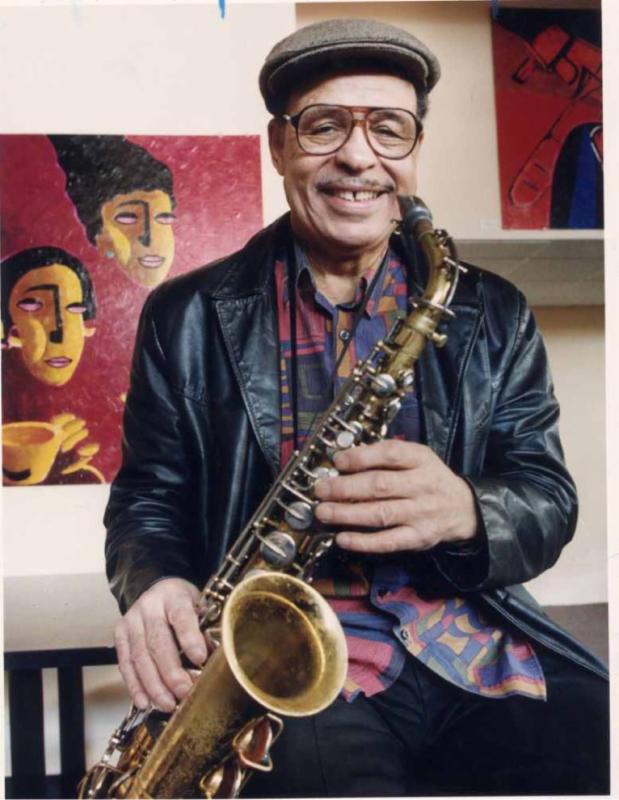
An unforgettable person came into my life in the late 1990s in the form of the late Preston Love Sr. He was an old-line jazz and blues player and band leader who was the self-appointed historian and protector of a musical legacy, his own and that of other African American musicians, that he felt did not receive its full due. Love was a live-life-to-its-fullest, larger-than-life figure whose way with words almost matched his musicianship. As I began reporting on aspects of Omaha’s African American community, he became a valuable source for me. He led me to some fascinating individuals and stories, including his good friend Billy Melton, who in turn became my good friend. But there was no one else who could compare to Preston and his irrepressible spirit.
I ended up writing five stories about Preston. The one that follows is probably my favorite of the bunch, at least in terms of it capturing the essence of the man as I came to know him. The piece originally appeared in the New Horizons. Aspects of this piece and another that I wrote for The Reader, which you can also find on this site, ended up informing a profile on Preston I did for a now defunct national magazine, American Visions. Links to that American Visions story can still be found on The Web. I fondly remember how touched I was listening to the rhapsodic praise Preston had for my writing in messages he left on my answering machine after the first few stories were published. After basking in his praise I would call him back to thank him, and he would go off again on a riff of adulation that boosted my ego to no end.
I believe he responded so strongly to my work because I really did get him and his story. Also, I really captured his voice and pesonality. And this man who craved validation and recognition appreciated my giving him his due.
Near the end of his life Preston hired me to write some PR copy for a new CD release, and I approached the job as I would writing an article. I’ve posted that, too.
The last story I wrote about Preston was bittersweet because it was an in memoriam piece written shortly after his death. It was a chance to put this complex man and his singular career in perspective one more time as a kind of tribute to him. A few years after his death I got to interview and write about a daughter of his he had out of wedlock, Laura Love, who is a fine musician herself. Her story can also be found on this site.
The Smooth Jazz Stylings of Mr. Saturday Night, Preston Love Sr.,
©by Leo Adam Biga
Originally published in the New Horizons
An early January evening at the Bistro finds diners luxuriating in the richly textured tone and sweetly bended notes of flutist-saxophonist Preston Love, Sr., the eternal Omaha hipster who headlines with his band at the Old Market supper club Friday and Saturday nights.
By eleven, the crowd’s thinned out, but the 75-year-old Love jams on, holding the night owls there with his masterful playing and magnetic personality. His tight four-piece ensemble expertly interprets classic jazz, swing and blues tunes Love helped immortalize as a Golden Era lead alto sax player and band leader.
Love lives for moments like these, when his band really grooves and the crowd really digs it: “There’s no fulfillment…like playing in a great musical environment,” he said. “It’s spiritual. It’s everything. Anything less than that is unacceptable. If you strike that responsive chord in an audience, they’ll get it too – with that beat and that feeling and that rhythm. Those vibes are in turn transmitted to the band, and inspire the band.”
His passion for music is shared by his wife Betty, 73, the couple’s daughter, Portia, who sings with her father’s band Saturdays at the Bistro and sons, Norman and Richie, who are musicians, and Preston Jr.
While the Bistro’s another of the countless gigs Love’s had since 1936 and the repertoire includes standards he’s played time and again, he brings a spontaneity to performing that’s pure magic. For him, music never gets tired, never grows old. More than a livelihood, it’s his means of self-expression. His life. His calling.
Music has sustained him, if not always financially, than creatively during an amazingly varied career that’s seen him: Play as a sideman for top territory bands in the late ‘30s and early ‘40s; star as a lead alto saxophonist with the great Count Basie Orchestra and other name acts of the ‘40s; lead his own highly successful Omaha touring troupe in the ‘50s; and head the celebrated west coast Motown band in the ‘60s and early ‘70s.
He’s earned rave reviews playing prestigious jazz festivals (Monterey, Montreux, Berlin). Toured Europe to great acclaim. Cut thousands of recordings, including classics re-released today as part of anthology series. Worked with a who’s-who list of stars as a studio musician and band leader, from Billie Holiday to Aretha Franklin and Ray Charles to Stevie Wonder. Performed on network television and radio. Played such legendary live music haunts as the Savoy and Apollo Theater.
After 61 years in the business, Love knows how to work a room, any room, with aplomb. Whether rapping with the audience in his slightly barbed, anecdotal way or soaring on one of his fluid sax solos, this vibrant man and consummate musician is totally at home on stage. Music keeps him youthful. Truly, he’s no “moldy fig,” the term boppers coined to describe musicians out-of-step with the times.
“As far as being a ‘moldy fig’…that’ll never happen. And if it does, then I’ll quit. I refuse to be an ancient fossil or an anachronism,” said Love. “I am eternally vital. I am energetic, indefatigable, It’s just my credo and the way I am as a person. I play my instruments as modern as anybody alive and…better than I’ve ever played them.”
Acclaimed rhythm and blues artist and longtime friend, Johnny Otis, concurs, saying of Love: “He has impeccable musicianship. He has a beautiful tone, especially on solo ballads, which is rare today, if it exists at all. He’s one of the leading lead alto sax players of our era.”
Otis, who lives in Sebastopol, Calif., is white. Love is black. The fact they’ve been close friends since 1941 shouldn’t take people aback, they say, but it does. “Racism is woven so deeply into the fabric of our country that people are surprised that a black and a white can be brothers,” Otis said. “That’s life in these United States.”

Love’s let-it-all-hang-out performing persona is matched by the tell-it-like-it-is style he employs as a recognized music authority who demands jazz and the blues be viewed as significant, distinctly African-American art forms. He feels much of the live jazz and blues presented locally is “spurious” and “synthetic” because its most authentic interpreters – blacks – are largely excluded in favor of whites.
“My people gave this great art form for posterity and I’m not going to watch my people and our music sold down the road,” he said. “I will fight for my people’s music and its presentation.”
Otis admires Love’s outspokenness. “He’s dedicated to getting that message out. He’s persistent. He’s sure he’s right, and I know he’s right.”
Love’s candor can ruffle feathers, but he presses on anyway. “No man’s a prophet in his hometown,” Love said. “Sometimes you have to be abrasive and caustic to get your point over.”
Orville Johnson, Love’s keyboardist, values Love’s tenacity in setting the record straight. “He’s a man that I admire quite a bit because of his ethics and honesty.”
Love has championed black music as a columnist with the Omaha World-Herald, host of his own radio programs and guest lecturer, teacher and artist-in-residence at colleges and universities.
With the scheduled fall publication of his autobiography, “A Thousand Honey Creeks Later,” by Wesleyan University Press, Love will have his largest forum yet. Love began the book in 1965 while living in Los Angeles (where he moved his family in 1962 during a lean period), and revised it through a succession of editors and publishers. He sees it as a career capstone.
“It’s my story and it’s my legacy to my progeny,” he said. “They’ll know what I’m like and about by the way I said things, if nothing more.”

He started the book at the urging of a friend, who typed the manuscript from his handwritten scrawl. After Love and his family returned to Omaha in 1972, he “totally rewrote” it, adding chapters on his Motown years (1966-1972) and on Omaha. “I did a lot of it at that desk in there,” he said, indicating his cubbyhole office at the Omaha Star, where he is advertising manager. Helping him shape the book over the years has been noted jazz authority Stanley Dance and, more recently, Wesleyan contributing editor George Lipsitz, who wrote its glowing introduction.
Love long ago rejected the idea of a ghost writer. “It’s no longer you then,” he said. “Even if I wasn’t articulate enough or didn’t have the literary background to write it, I wanted to reflect Preston. And it sure and the hell does, for better or worse.” As a veteran writer and avid reader, he does feel on solid ground as an author. He said ideas for the book consumed him. “All the time, ideas raged in my brain. And now I’ve said ‘em, and according to Wesleyan, I’ve said them very well.”
An outside reviewer commissioned by Wesleyan described Love’s book as more “than an account of a musician’s career,” but also an important document on “African-American social history, the history of the music business and institutional racism in American popular culture.”
Love is flattered by the praise. “I’m very proud of it,” he said. “Before the editorial staff acts on your book, they always bring in an outside reader, and what that person has to say has a big bearing on what’s going to happen. It had a big bearing on the contract I signed several weeks ago.”
Love feels his far-flung experience has uniquely qualified him to tell his story against the backdrop of the black music scene in America. “The fact that mine’s been a different, unlikely and multifaceted career is why publishers became interested in my book.”
To appreciate just how full a life he’s led and how far he’s come, one must look back to his start. He grew up the youngest of Mexie and Thomas Love’s nine children in a “dilapidated” house, jokingly called “the mansion,” at 1610 North 28th Street. His auto mechanic father died in Love’s infancy. Although poor in possessions, the family was rich in love.
“My mother did the best she could,” he recalls. “There was no welfare in those days. No ADC. This brave little woman went out and did day work for 40 cents an hour, and we survived. There were no luxuries. “But it was a loving, wonderful atmosphere. Our house was the center of that area. Naturally, guys courted my sweet, beautiful sisters and girls pursued my gorgeous brothers.”
He was steeped in music from a young age. He heard the period’s great black performers on the family radio and phonograph and hung-out on then teeming North 24th Street to catch a glimpse, and an autograph or two, of visiting artists playing the fabled Dreamland Ballroom and staying at nearby rooming houses and hotels.
“Twenty-fourth street was the total hub of the black neighborhood here. This street abounded with great players of this art form.”
By his teens, he was old enough to see his idols perform at the Orpheum and Dreamland. He recalls the Dreamland with great affection:
“All of the great black geniuses of my time played that ballroom. Jazz was all black then, number one, and here were people you admired and worshiped, and now you were standing two feet from them and could talk to them and hear their artistry. To hear the harmony of those black musicians, with that sorrowful, plaintive thing that only blacks have. That pain in their playing. That indefinable, elusive blue note. That’s what jazz is.”

He’d rush home after a night there to play the sax his brother “Dude” had saved up for and bought. “Dude” eventually joined a touring band and passed the sax onto his brothers. Love taught himself to play, picking up pointers from veteran musicians and from the masters whose recordings he listened to “over and over again.”
He began seeing music as a way out. “There was no escape for blacks from poverty and obscurity except through show business,” Love said. “I’d listen to the radio’s late night coast-to-coast broadcasts of those great bands and I’d go to sleep and just dream of going to New York to play the Cotton Club and dream of playing the Grand Terrace in Chicago. I dreamed of someday making it – and I did make it. Everything else in my life would be anticlimactic, because I realized my dream.”
He traces the spark for his dream and its fulfillment to an August night in 1938 at the Dreamland, when, at 17, he met his main idol – Earle Warren – Basie’s lead alto sax man. Warren later became Love’s mentor.
“That was the beginning of my total dedication and my fanaticism for this thing called jazz. He was the whole inspiration for my life.”
With Warren as his inspiration, Love made himself an accomplished musician. “I had the natural gift for sound – a good tone – which is important. Some people never have it. I was self-motivated. No one had to make me practice. I did it all on my own. And being good at mathematics, I was able to read music with the very least instruction.”
His ability to sight read was rare among blacks then and became his “forte.” His first paying gig came in 1936, at 15, as a last-minute fill-in on drums with Warren Webb and His Spiders at the Aeroplane Inn in Honey Creek, Iowa. The North High graduate eventually played scores of other small towns just like Honey Creek, hence the title of his book.
His breakthrough came in 1943, when Warren recommended Love as his replacement in the Basie band. Love auditioned at the Dreamland and won the job. It was his entry into the big time. “I was ready,” he said. “I knew I belonged.” It was the first of two tours of duty with Basie. In storybook fashion, Love returned to play the very sites where his dreams were first fired – the Dreamland and Orpheum. He went on to play many of the famous, glittering big city clubs he’d envisioned.
Love enjoyed the spotlight playing with Basie and the bands of Lucky Millinder, Lloyd Hunter, Nat Towles and Johnny Otis. “Touring was fun,” he said. “You played the top ballrooms, you dressed beautifully, you stayed in finer hotels. Big crowds. Autographs. It was glamorous.” Life on the road agreed with he and Betty, whom he married in 1941. “The itinerant thing is what I love. The checking in the hotels and motels. The newness of each town. The geography of this country. The South, with those black restaurants with that flavorful, wonderful food and those colorful hotels. It was my culture, my people.”
His book vividly describes it all. Including the difficulties of being black in America and the reversals of fortune he’s experienced. He has some harsh things to say about Omaha, where he’s witnessed the Dreamland’s, demise, North 24th Street’s decline and the black music scene dry up.
He’s left his hometown many times, but has always come back. Back to where his dream first took flight and came true. Back to the mistress – music – that still holds him enthralled. To be our conscience, guide, our inspiration.
That January night at the Bistro, a beaming Love, gold horn slung over one shoulder, tells his audience, “I love this. I look forward coming to work. Preston Love’s an alto player, and you want to hear him play alto, right? Listen to this.” Supplying the downbeat, he fills the room with the golden strain of “Mr. Saturday Night.” Play on, Mr. Saturday Night, play on.
Related Articles
- Swinging the Paddle With a Jazz Beat (cityroom.blogs.nytimes.com)
- Popcast: Seattle Jazz and Ade Blackburn of the British Band Clinic (artsbeat.blogs.nytimes.com)
- Ralph A. Miriello: Wynton Marsalis and Eric Clapton Play the Blues (huffingtonpost.com)
- Music Review: Jazz Evangelists Borrow Some of Stevie Wonder’s Cool (nytimes.com)
Now Wasn’t That a Time? Helen Jones Woods and the International Sweethearts of Rhythm
I believe it was one of two dear departed friends, either Billy Melton or Preston Love Sr., who first told me about the International Sweethearts Rhythm and Helen Jones Woods. It’s a story about race, culture, gender, music, and history coming full circle. I was taken with the story as soon as I heard it, and I’ve never lost my affection or fascination for it. This story was published in a monthly Omaha newspaper called the New Horizons that caters to the so-called senior population. I’ve long tried to get it published elsewhere in my hometown but to no avail. This is where the Web, courtesy this blog spot, allows me to share the story with a new audience.

Now Wasn’t That a Time? Helen Jones Woods and The International Sweethearts of Rhythm
©by Leo Adam Biga Originally published in the New Horizons (2005)Revised and updated for this blog
Back in the day, when big bands blew wild and made swing America’s most popular music and dance craze, touring orchestras tore it up at juke joints and dance halls across the land. At the height of swing, in the 1930s and ‘40s, the number and range of bands was astounding. There were the name bands of Benny Goodman, Glenn Miller, Louis Armstrong, Duke Ellington, Count Basie, Cab Calloway, Harry James, Artie Shaw, Tommy Dorsey and many others. There were novelty bands, like the one led by Spike Jones, that played for laughs. There were the Latin-flavored bands of Xavier Cugat and Desi Arnaz. And then there were female bands that ran the gamut from Ina Ray Hutton and Her Melodears to Phil Spitalny’s All-Girl Band.
Female performers have generally played second fiddle to their male counterparts. The one time they got a fair shake was World War II. The stock of women musicians and bands rose then as military service depleted the ranks of male artists. Girl bands flourished, but none compared to the International Sweethearts of Rhythm, a popular period band with strong Omaha connections. Taking the “international” of their name from the blend of ethnicities among their members, this jiving outfit laid down their hot licks on stage, record, radio and film.
The Sweethearts played gigs at jumping live music spots from coast to coast, touring every big city and little town in between. They shined at the Apollo Theater in New York and shared the stage with everyone from Basie to Billie Holiday and Ella Fitzgerald to Earl “Father” Hines. On their Midwest tours, the band jammed at Omaha’s Dreamland Ballroom.
Omaha claims many ties to the Sweethearts, whose brief but event-filled run lasted from 1937 to 1947. It’s where their glamorous leader and vocalist, Anna Mae Winburn, once lived and fronted for the Lloyd Hunter band. It was the hometown of manager/chaperone Rae Lee Jones. And, it’s where Sweethearts lead trombonist Helen Jones Woods (no relation to Rae Lee) lived from the early 1950s until a couple years ago. Images of the Sweethearts are included in a photo exhibition at the Loves Jazz & Arts Center at 2510 North 24th Street in Omaha.
The Sweethearts achieved fame in their short life — small wonder, given their unusual composition and origins. For openers, there’s the story of how this interracial band got its humble start in the heart of Jim Crow before bolting for the bright lights and big cities. The man who formed the band, the late educator Laurence C. Jones, was founder and head master of the strict vocational institution Piney Woods Country Life School in Mississippi. He dedicated his life to Piney Woods, a still active foster home for poor black children from broken homes.
Helen was given up as a baby by her mixed parents and brought to the school, the only home she ever knew. She was later adopted by Jones and his wife. Never feeling fully accepted, she found solace in the band, which became her surrogate family. Made up exclusively at first of young urchins and orphans from the school, band members had few prospects outside Piney Woods other than the domestic-service jobs they toiled in.
As Helen said, “We were just glad to get away from the school.” The band was formed as a social experiment by Laurence Jones, who felt the group gave the girls another outlet, showcased minorities in a positive light and proved that racial harmony was achievable. His idea for the band was inspired by seeing Ina Ray Hutton’s Melodears play in Chicago and by hearing Phil Spitalny’s All-Girl Band on the radio. He also used the band as a public relations/fund raising tool for the school. The monies collected from their early paid performances supported the fledgling facility as much as they covered the girls’ tuition and room and board.
To create the group, Jones picked promising members of the school’s all-girl marching band and turned them over to a veteran musician to learn syncopation.
The band began by playing at school gymnasiums and small dance halls. “We traveled around just in Mississippi for quite a little while,” said Helen, an original member who was just 14 at the start. “As the band got better, we traveled more and more and we ventured out and played better places.” Soon, black newspapers like the Chicago Defender championed them.
The Sweethearts made a big impression wherever they went. And why not? They were an attractive troupe of nicely-coiffered, well-mannered young “colored” girls who not only looked great but could flat out play. The majority of original band members were untrained, but over the years their ranks grew to include well-schooled musicians from outside Piney Woods. In their heyday, they featured some top-flight players and some of the music industry’s finest arrangers.
Then there’s the fact the Sweethearts were integrated at a time when segregation ruled. Comprised mainly of African-Americans, their members also included Latinas, a Chinese, an Indian and Caucasians, all of which gave the Sweethearts an exotic charm that was played up in publicity stills and posters. Diversity also made traveling, especially in the South, difficult and dangerous in an era when few lodging-eating places were integrated. Down South, white members wore black face as a hedge against harassment. To avoid further hassles, the band usually stayed overnight aboard their sleeper bus, Big Bertha, or in black hotels.
As the band added older musicians, playing for peanuts at small venues became less palatable, particularly when the school raked in all the fruits of their labor. Exposed to new places and better lifestyles, members felt exploited. The band also attracted sponsors who saw the potential to cash in on their discontent. Convinced to strike out on their own and take a stab at the big time, the band’s 17 original members “ran away” en masse to Arlington, Va., to become a full-time professional orchestra independent of the school. It was 1941. Helen was 17.

Aided by their backers, the Sweethearts took up residence at a brick home in Arlington dubbed “Sweetheart House.” Meanwhile, school officials outraged by the rebellion, which made headlines, tried securing the return of their wards. Helen stood fast. “My father was very much upset, but he didn’t say anything about me coming back. He sent his sister Nellie to bring us to Piney Woods, and she just said, ‘It would be wise if you came home, Helen.’ And I said, ‘No, I want to stay with the band.’ I was glad to stay with the group because I felt more comfortable with them than I did being at Piney Woods. I didn’t know what future I would have there.”
Helen said a strong camaraderie existed among members. “We all got along. You must remember, most of us were out in the world and had nobody but each other in the band. We began to bond like a bunch of sisters. We all needed each other. So, therefore, we had to get along.” Going back home wasn’t an option anyway. Some had no home but for the school. Those that did had little to return to.
“In those days, going back to a home in Mississippi didn’t amount to much once you’d gotten out and seen better things,” she said. “And we were blessed to have seen better things. Where we all came from we didn’t have electricity and indoor plumbing and all those things.” Besides, she said, the band “was the way we made our living. It kept us from having to be a cook or a dish washer. It showed us an exciting time beyond the same old dull life. So, it was a pleasant change. Plus, we got a chance to see the world. That was our reward. It wasn’t money, because we certainly didn’t see any.”
Despite the Piney Woods rift, success came fast for the Sweethearts, who proved they were more than a curio act or shill for the school. “They were a heckuva band. Some of those cats could blow. Enough to make the guys take notice,” said the late Paul Allen, a longtime Omaha club owner. As word spread of their ability, the Sweethearts became a hot booking on the night club and after hours circuit.
Actually, the band enjoyed a national reputation before ever cutting strings with Piney Woods. These darlings of the black press set box office records at an impressive roster of venues. By 1940, they’d already appeared at the Howard Theatre in Washington, D.C. and competed in a school band contest at the New York World’s Fair. Seeing the sights in the big cities was a thrill. “I think the thing that really excited us was the first time we went to Washington, D.C. and to New York,” Helen said, “because we were just a bunch of country girls and these things, you know, you only read about in history books.”
After severing ties with the school, they worked hard preparing for their major coming out party at the Apollo Theatre, the mecca for black artists. “When we first left Piney Woods we spent two or three months just rehearsing so that when we got ready to be presented, the band sounded really good,” said Helen.
Their engagement at the Apollo, where lousy acts got hooted off stage, was a hit. “The first time we played the Apollo Theatre there were lines all the way around the block. We were amazed to think we’d come that far,” she said. Their “show stopper” was a rendition of W. C. Handy’s St. Louis Blues. Handy himself came to hear them and met them back stage. For their debut, the Sweethearts worked with comedienne Jackie “Moms” Mabley and tap dancer Peg Leg Bates. From that auspicious start, the band played the Apollo twice a year.
The Piney Woods girls were used to hard work and close supervision and that discipline was used by arrangers like Eddie Durham to sharpen their precise arrangements. The Sweethearts also developed a sense of style and showmanship — from Winburn’s elegant manners and gowns to members’ high spirits and beguiling smiles. Always well-turned out, their smart ensembles epitomized class.

Unusual for a women’s band then, the Sweethearts cut recordings for RCA Victor and Guild Records. They also appeared in short films — called soundies — that were that pre-TV era’s music videos. Soundies were viewed on Panorams, a jukebox-with a screen popular at bars, diners and drug stores. The band also took part in gimmicks pitting them in staged “Battle of the Sexes” with male groups. “At that time, money was scarce and the more you offered people the more you got them to come,” Helen said.
Just as the band’s success made it easy to attract new blood into the group, it led other bands to steal away talent. There were bigger problems. When still a school band, the girls spent far more time playing and traveling than studying, which hurt their formal education. Even after breaking away from Piney Woods and adding non-students, players were expected to follow rigid rules. Some balked at the early curfews and the ban on fraternizing with the opposite sex. “The ones that did not adhere to following the orders would leave” — voluntarily or not, said Helen.

Then, as many Sweethearts have described, the band’s crooked sponsors made empty promises and pilfered their already meager earnings. “They promised us everything, but we never got anything. In fact, they stole everything from us. Most of us were left with nothing,” said Helen, whose $3,000 in savings were spent by manager Rae Lee Jones. Despite the betrayal, Helen later moved to Omaha to help care for the ailing Jones. After she died, Helen stayed on here.
During the war the band became a favorite with servicemen via broadcasts on Armed Forces Radio’s Jubilee Programs. The group was requested, by popular demand, to join an overseas USO tour. In their crisp dress WAC uniforms, the Sweethearts played for appreciative, mostly black troops in France and Germany. Everywhere they went in bombed-out Germany, Helen said, the band drew stares from natives fascinated by these women of color. For their camp shows, the girls played on makeshift stages before troops sprawled out on open fields. Helen recalls one show being interrupted by an officer. “He walked up and said, ‘Stop the music. I have an announcement to make. Japan has surrendered.’ That was the end of our concert, because everybody started hollering” and celebrating.
The Sweethearts “came apart” shortly after returning from their rousing USO tour. The girls had matured into women. They wanted to get on with their lives. Some left to marry and have kids. Others to reunite with families they’d been long separated from. And still others to continue making music, including a few — like Mary Lou Williams, Vi Burnside and Carline Ray — who went on to individual fame.
Helen met and married her late husband, William Alfred Woods, in his native Tennessee and made a life with him in Omaha, where they raised four children. She played a while with Cliff Dudley’s Band before becoming a nurse and social worker. Her husband became Creighton University’s first black accounting grad. The couple were active in the De Porres Club, an Omaha civil rights group, and in St. Benedict’s Church. Their daughter Catherine Liggins Hughes went on to found the Radio One network, which she heads today with her son Alfred Liggins Hughes.

Helen Jones Woods
Attempts to re-form the band fizzled and the Sweethearts faded away like their contemporaries. They were destined to be a lost chapter in jazz history until 1980, when the Women’s Jazz Festival in Kansas City, Mo. recognized them. The event, which Helen attended and called “wonderful,” brought many Sweethearts back for a reunion celebration that sparked interest from authors, journalists, musicians and filmmakers. Since then, their story’s been retold and their music revived.
Recently, the New York-based all-women Kit McClure Band has released a tribute CD, The Sweethearts Project, that faithfully performs the Sweethearts’ music. To ensure authenticity, the Sweethearts’ original charts were transcribed from recordings and band leader McClure recruited Sweetheart Carline Ray to sing and play guitar on a couple of the tracks. A new McClure Band CD, The Sweethearts Revisited, reharmonizes the earlier group’s musical themes.
It’s a homage of the highest order and an ironic one, too, since women musicians were seldom taken seriously. As Helen said, “Some thought we did very good — for being women. Others thought we were just cute. They wanted to date us.” Articles often discussed the band’s looks more than their music. Now, 60 years later, major jazz figures respect what the Sweethearts did. Their achievements are documented in books by D. Antoinette Handy, Marian McPartland and Sherrie Tucker. The McClure Band’s tributes acknowledge the debt that today’s women musicians owe the Sweethearts for paving the way.
McClure said of all the women bands, “it was the Sweethearts’ music that caught my imagination the most. It’s dazzling. And in trying to play it, we found it’s very, very challenging. Their tempos were really, really fast. Their precision is incredible. They must of had a lot of rehearsal time. And they had a lot of talent and so much energy. When we sat down to try and play it, we all said, ‘Oooh, these women really had it going on.’ We had to step up to the plate to try to fill their shoes.”
For McClure, the Sweethearts are both “pioneers and an inspiration. The band really gave women a chance to have a voice in the music. I feel it is so important we have some women role models that went before us who had great bands and who were great musicians,” she said. “That’s the difference I hope our CDs make. That maybe finally we can get into the school systems with this music and the kids can learn the Sweethearts’ music like they learn Ellington’s and Basie’s. And maybe young girls will come up believing they can go into jazz. Things haven’t changed much since the ‘40s. It’s very difficult for even wonderfully talented women to be accepted in the major bands. Unless these women are recognized in jazz history, it’s going to take longer to change the face and gender of jazz.”
This renaissance is sweet for Omaha’s own Sweetheart, Helen Jones Woods. She’s been interviewed by jazz pianist/author Marian McPartland and award-winning film documentarian Ken Burns, whose segment on the Sweethearts didn’t make the final cut of his jazz opus. She said it was “a proud thing” when a framed portrait of the group was displayed at the Loves Jazz & Cultural Arts Center in north Omaha — a stone’s throw away from the group’s old 24th Street haunt, the Dreamland.
While appreciating their rediscovery, her homespun humility downplays any notion they were “all that.” McClure insists it was the music that had crowds queuing up to see them. Helen isn’t so sure. “I didn’t know whether it was to see the girls or to hear the music,” she said. “I have a serious feeling the music was secondary. People wanted to see a bunch of good looking black girls together who were clean and neat. A lot of the women entertainers were shake dancers and partiers and all that, where we weren’t allowed to. That wholesome image was really our selling point, because I don’t think people said we were the greatest thing since snuff.”
McClure “respectfully disagrees,” saying Helen and her mates had some serious chops as musicians. “I know she does downplay her ability, but I’m sorry, that trombone section was slammin’,” she said. “My hat is totally off to Helen Jones, because she was just a wonderful, funky musician. The whole band was funky, but that trombone section stood out.”
For Helen, her time with the Sweethearts wasn’t so much about the music or the history they made, as it was the experience it afforded. “I am one of the most blessed people in the world to have come up out of those conditions in the South and to be with the band, which gave me a chance to see every state and different countries and the privilege to meet some of the great old musicians. I’m just grateful for the opportunity.”
One of only a few surviving Sweethearts, Helen filled her days working with kids at Skinner Magnet Center in Omaha, until moving in with her daughter Cathy back East. Helen long thought about writing a book on her life, but never quite got started. If a book ever were to be written about her poignant Sweethearts journey, it would be a page-turner filled with sweet nostalgia for that chapter in her life.
Now wasn’t that a time?
Related Articles
- Harlem Jazz Museum Acquires Trove By Greats (harlemworldblog.wordpress.com)
- No one captured the passion and spontaneity of jazz like photographer Herman Leonard. (slate.com)
- National Jazz Museum Acquires Savory Collection (nytimes.com)
- Behind every jazz great is a great backup band (mysanantonio.com)
- First integrated, female big band highlighted at Smithsonian (cnn.com)
- Women & Jazz (afeminineblackwoman.com)
- The Root Recommends: The International Sweethearts of Rhythm (theroot.com)
- Back in the Day, Native Omaha Days is Reunion, Homecoming, Heritage Celebration and Party All in One (leoadambiga.wordpress.com)
- Enchantress “LadyMac” Gets Down (leoadambiga.wordpress.com)
- Arno Lucas, Serious Sidekick (leoadambiga.wordpress.com)
- Get Crackin’ (leoadambiga.wordpress.com)
- Luigi’s Legacy, The Late Omaha Jazz Artist Luigi Waites Fondly Remembered (leoadambiga.wordpress.com)


 Leo Adam Biga's My Inside Stories