Archive
Ben Nachman: At work in the fields of the righteous
A dear friend of mine passed away recently, and as a way of paying homage to him and his legacy I am posting some stories I wrote about him and his mission. Â My late friend, Ben Nachman, dedicated a good part of his adult life to researching aspects of the Holocaust, which claimed most of his extended family in Europe. Â Ben became a self-taught historian who focused on collecting the testimonies of survivors and rescuers. It became such a big part of his life that he accumulate a vast library of materials and a large network of contacts from around the world. Â Ben’s mission was to help develop and disseminate Holocaust history for the purpose of educating the general public, especially youth, and he did this through a variety of means, including videotaped interviews he conducted, sponsoring the development of curriculum for schools, and hosting visiting scholars. Â He also led this journalist to many stories about Holocaust survivors, rescuers, and educational efforts. Because of Ben I have been privileged to tell something like two dozen Holocaust stories, some of which ended up winning recognition from my peers. Â I have met some remarkable individuals thanks to Ben. Several of the stories he led me to and that I ended up writing are posted on this blog site under the Holocaust and History categories.
His interests ranged far beyond the Holocaust and therefore his work to preserve history extended to many oral histories he collected from Jewish individuals from all walks of life and speaking to different aspects of Jewish culture. He got me involved in some of these non-Holocaust projects as well through the Nebraska Jewish Historical Society, including a documentary on the Brandeis family of Nebraska and their J.L. Brandeis & Sons department store empire (see my Brandeis story on this blog site) and an in-progress book on Jewish grocers. Ben’s passion for history and his generous spirit for sharing it will be missed. Rest in peace my friend, you were truly one of the righteous.
NOTE: The following story is not about Ben, per se, but about one of the educational events he arranged to promote greater understanding and knowledge about the Holocaust. The story reports on a gathering that Ben and his wife hosted at their place for a discussion about the trauma of the hidden child.
Ben Nachman: At work in the fields of the righteous
©by Leo Adam Biga
Originally published in the Jewish Press
A gathering unlike any other took place the evening of September 24 at the home of Omaha Holocaust researcher Ben Nachman. Over the course of several hours a diverse group of guests heard three men discuss a shared legacy of survival — one that saw them persevere through the Shoah as hidden children in their native Belgium. Two of the men, Fred Kader and Tom Jaeger, are well known Omaha physicians. The third, Marcel Frydman, is professor emeritus at the University of Mons in Mons, Belgium, where he is a psychologist and the author of a book exploring the long-term traumatic effects of the hidden child experience.
Kader and Jaeger, who already knew each other, were eager to meet Frydman and hear his findings since they shared a common past and homeland. According to Kader, a pediatric neurologist, the hidden experience is one that unites men and women, even of different ages and nationalities, in a special fraternity. “Because of the nature of our experiences, whether in Holland or France or Belgium, you do form this kind of a bond with another hidden child. It’s a thing where we both survived, we both were hidden. The feelings we have just resonate back and forth. It’s a common understanding. It’s communication at a different level.”
Until recently, hidden children rarely spoke about their wartime experiences. For many, the events were simply too painful or too suppressed to tackle. But since a 1991 international hidden children’s conference attended by all three men, more and more long silent survivors have been seeking each other out to talk about their shared heritage in hiding.
Frydman, who came to Omaha at the invitation of Nachman and through the auspices of the Hidden Heroes of the Holocaust Foundation, hopes to have his French-language book published in English. Jaeger, a pediatric psychiatrist, has read the book and feels it offers valuable insights into the whole host of circumstances that determines how individuals cope with the emotional baggage of childhood trauma well into adulthood. He said the book provides a therapeutic framework for treating not only former hidden children but anyone suffering from post traumatic stress, which he added is a timely addition to research on the subject in light of the emotional toll the events of September 11 and after have taken on the damaged American psyche.
On hand that evening at Nachman’s were educators, lawyers and journalists, all of whom came to learn something about the ordeal the three men underwent. As the night unwound, it became clear from what was said that the hidden experience is one marked by profound separation anxiety, where youths taken from homes and families go into hiding among total strangers and try to conceal their Jewish identity in order to save their lives. As each survivor described the story of his survival, he revealed something of the psychological scars borne from these searing events so far outside the normal stream of human conduct. They explained how, even after escaping extermination and building successful adult lives now a half-century removed from their ordeal, they remain haunted by the specter of their hidden odyssey, an odyssey that has both driven them and frustrated them.

Ben Nachman Credit:
Nebraska Jewish Historical Society
There was something nearly sacred in this solemn exchange between the survivors and their rapt audience. The men and women huddled around the Nachman living room listened intently to every word uttered and asked questions that begged for more detail. The evening was also meaningful for the survivors. For Kader and Jaeger, meeting Frydman and learning of his work helped further validate their own hidden histories, which remained shrouded and inarticulated until they began piecing together their own backgrounds at that 1991 conference in New York.
Kader said a book like Frydman’s “gives more credence to the feelings that survivors have. When hidden children get together they end up talking about the same kinds of things and what they talk about has often been well-repressed.” Kader said the more hidden children he gets to know, the more he realizes “all of us, in our own way, have the same sort of common thread of experiences and we all go through the same kind of process of finding a way out of it (the trauma) to make something of ourselves.” He said Frydman’s work helps demonstrate survivors “can cope and manage. Even though you may have these recollections of traumatic experiences in the back of your mind you can get past that point and go on with your life. His research shows all sorts of common denominators. You realize what you’re going through is a natural evolution other survivors go through. It’s reassuring to know we’re all not crazy.”
For Frydman, whose work in this area was sparked by a group of survivors at the who asked him to lead their counseling sessions, the evening was a chance to share his findings with fellow countrymen who endured a similar fate during and after the war. In writing his 1999 book, The Trauma of the Hidden Child: Short and Long Term Repercussions, Frydman found an outlet for his own survivor issues and a forum for examining the consequences of the hidden experience, many of which he found overlap from one survivor to another.
For his book he returned to the very site where he was sheltered after the war — a home for hidden and abandoned children of both Jewish and non-Jewish descent — and to the same group of individuals with whom he shared his early adolescence. To his astonishment he discovered that in spite of their war deprivation many of these individuals have achieved great professional success, with an unusually high percentage ending up in the healing arts, as evidenced by himself, Kader and Jaeger. As he studied this population he identified elements and conditions that explained the apparent anomaly of survivors reaching such heights from such depths.
“In my opinion, two factors were important,” Frydman said. “First, the quality of family life before the war. These children knew there was a possibility of recovering the family unit. They felt forsaken but they knew their parents didn’t abandon them. This was very important when they were confronted with the conditions of an institution where the affective life was very low. The second factor was the quality of the environment in which the child was placed during and after the war. If this environment was good and supportive, he could find again a normal life, mobilize his potentialities and perform very high. It’s no accident that hidden children have chosen social or therapeutic professions. If you have experienced something as hard as we did you may be more skilled to help others.”
Frydman finds survivors exhibit a remarkable resilience as a result of having endured what they did. Jaeger believes he and his peers managed compensating for the trials and deficits of their interrupted childhood because attaining success, coming as it did against all odds, became an act of defiance. “Resiliency is an act of defiance in some ways,” Jaeger said. “It’s a way of saying, ‘You were wrong,’ to those people who said, You can’t do this, or, You won’t ever reach a certain point. As Marcel (Frydman) points out, the thing that contributed to this resilience was the love and nurturance we were inculcated with despite everything going on around us.”
Recently, Jaeger found poignant evidence of the love he was endowed with via two formal family photographs his mother, who escaped the Shoah, commissioned at the time of the roundups and deportations. “I was struck by the fact that she felt it was important to have a memory to sustain our family even in the midst of what was going on. It reinforced what Marcel said about how important the home environment was. It probably provided a buffer that sustained us when we left home and went via this underground railroad into hiding.”
Another impetus for survivors to strive so hard, Jaeger said, was their strong desire “to get on with things and to accomplish anything and everything we could. Most of us wanted to find acceptance — to be included in the mainstream.”
Frydman, Kader and Jaeger were hidden at several sites but their protective custody mainly came in institutions run by various good Samaritans, including Catholic nuns. They are glad to have ended up in such good, caring hands. Frydman said there long was an assumption children placed with foster families were more fortunate than those placed in institutions, “but now I can say that wasn’t true because the child placed in a family was alone in his stress — the family sheltered him but couldn’t share his loneliness and sense of forsakeness — whereas the child in an institution eventually discovered he was not alone and any stress experience is made more bearable when the stress is shared.”
In addition to drawing on his own experiences for the book, Frydman drew on his past work counseling “forsaken children” — orphaned or otherwise abandoned youths — which provided a field of reference from which to extrapolate. What Frydman found in comparing and contrasting hidden children with abandoned children is that “the trauma of the hidden group is more complex and is provoked not by one factor but by a succession of factors,” he said. For example, he points to the roundups of Jews that Nazi authorities began staging in the early part of the war that invariably sent detainees to death camps. The fear engendered by these roundups signaled to children that they, their families, their friends and their neighbors were in peril. He said, “Even if you were not deported you heard about what was happening from other Jews who witnessed these events and the anxiety of the adults was communicated to the children.”

As it became evident the only way to save children was to hide them, an underground network formed to shield them. Because it was easier and less conspicuous to hide a child alone as opposed to a family, children were usually separated from their parents.
“Little children couldn’t understand why they had to be hidden and without their parents,” Frydman said. “It was a safe thing to separate them, but for the children it wasn’t a healthy thing. They were lacking the presence of their parents. They were missing all the affective, emotional ties. And children understood there was a danger of being denounced. We were told not to reveal our real name and not to reveal our Jewish identity. The child understood this, but it increased his anxiety. He understood too that the parents were also in danger. Sometimes he knew one or both of the parents had been arrested and deported, and sometimes he hadn’t any news of there whereabouts. You don’t find these conditions when you study forsaken children.”
Prolonged exposure to such danger and distress left many former hidden children with deep-seated feelings of apprehension and insecurity, said Frydman. “Because they lived for years in an environment perceived as menacing they have some problems associated with anxiety. This has been fixed, at least on the unconscious level, and so they develop some defenses in order to adapt themselves. There’s often a lack of trust and a sense of guardedness toward others. Some of them think they must control every aspect of a relationship because during the war they had no control. For example, some of my subjects told me they resist forming new relationships because it means risking being forsaken another time.”
Even when in the same institution Frydman said hidden children demonstrated fewer issues of desertion than abandoned children because prior to being harbored hidden children presumably enjoyed a stable home life. “They had the chance to be in a normal family before,” he said, “so they were better prepared to confront the separation. They knew there might be a family to try and find after the war whereas the forsaken children knew there was no family to be found.” A striking difference he found in abandoned children versus hidden children is the slowed mental development of the former group compared with the latter group.
The author conducted his research for the book with the aid of one of his students. Interviews were completed with more than 50 adults who found sanctuary in Belgium or surrounding countries during the war. Frydman and his assistant used a non-invasive technique to draw subjects out, some of whom had never before verbalized their hidden past. “The interview was a non-directive one,” he said. “We didn’t ask questions. We just gave the subject the opportunity to evoke his experience and helped him to express what he had to say. For some of the subjects, recalling the past was an ordeal. Some cried. They couldn’t stop. The trauma came back. And, yes, for some it was the first time they’d spoken about it.”

The fact that so many hidden children remained resolutely silent about their past for so long is a phenomenon that Frydman has tried to explain in his book. He said it was a case of hidden children growing up in an atmosphere where the subject was viewed as too painful to revisit or misunderstood as something that could be easily dismissed.
“Just after the war hidden children didn’t feel they had the right to speak because speaking about the trauma implied reliving it,” he said. “They would have spoken if they could have found some help, but in post-war Europe we hadn’t any psychologists. And adults didn’t understand what to say, so if they spoke about the war at all, they said, ‘You were lucky.’ Of course, it’s true, we were lucky not to be deported, but we suffered. If every adult says to you, ‘You were lucky,’ you haven’t even the possibility to express your suffering.” Or, as Jaeger explains, “People were getting on with their lives and moving away from that ordeal and, in effect, really nobody was there who psychologically gave you permission to speak. That listening ear and that permission just weren’t there.”
As the trauma is denied or ignored, Jaeger said, it festers like an untreated wound, only buried out of view, yet never too far away to be reopened. “In psychology there’s a phenomenon where you either dissociate or you compartmentalize things that have been extremely bad. Children exposed to bad events can lose memory of those things. That’s a protective mechanism to enable you to go on, but those feelings are always there at the surface. Certain sounds can evoke fear and anxiety in former hidden children. The sound of a truck is one of the most feared sounds because trucks were used in the roundups. It was the sound of your future. Of being rounded up, deported to camps and confronting almost certain death. Vulnerability is always just below the surface for some of us.”
Jaeger said it was only recently, upon reading Frydman’s book, he recalled suffering panic attacks as a boy after the war. He remembers the episodes occured while riding in cars and presumes his anxiety was triggered by dim memories of deportations. Because Kader and Jaeger were quite young when they went into hiding, their memories are somewhat tenuous. Those who were older when hidden, like Frydman, retain clearer memories of the events and the trauma.
Symbols can also summon the horror of a perilous childhood. For example, Jaeger said some survivors have “a problem trusting authority or trusting the system” because they associate those things with the uniformed soldiers or officials who menaced them and their families.
Jaeger admires Frydman’s book for its clear, thorough assessment of the hidden experience. “It is an exquisite explanation of the dynamics of the experience and of its long term effects. It really has a kind of global description that applies to you no matter what your own hidden experiences were. He helps us understand how we arrived at where we are. Also, it’s really one of the best explanations of Post Traumatic Stress Disorder and its long term ramifications. There’s been lots written about PTSD, but this sampling of a population from a psychological point of view is somewhat unique in that here we have a group of people still living 50-plus years after the fact. It often takes that long for hidden children or camp survivors or other trauma victims to share their experiences because they evoke an emotional vulnerability that is not that easy to deal with. Everybody has to do it in their own way. There are people who to this day still don’t say anything. They haven’t reached that point. This is so applicable to what happened at the World Trade Center because that trauma will be imprinted over generations in some cases.”
Ultimately, only fellow survivors can truly understand what their brothers or sisters of the Holocaust have gone through. Still, every time they share their story with others it gives added meaning to their witness bearing — allowing their testimony to live on in others. The need to testify grows more urgent as the number of survivors dwindles. “Time is of the essence in that we’re the last generation of witnesses left,” Jaeger said, referring to hidden children like himself, Kader and Frydman. In an era when the nation’s moral fortitude is being tested by the threat of terrorism at home, he said, it is more vital than ever to stand up and speak out against evil.
Related Articles
- Terezín: music from a Nazi ghetto (guardian.co.uk)
- Anne Frank: the Book, the Life, the Afterlife by Francine Prose: Review (telegraph.co.uk)
- Holocaust-era deportation archives to be opened (thejc.com)
- Leo Adam Biga’s Survivor-Rescuer Stories Featured on Institute for Holocaust Education Website (leoadambiga.wordpress.com)
Bringing to light hidden heroes of the Holocaust
A dear friend of mine passed away recently, and as a way of paying homage to him and his legacy I am posting some stories I wrote about him and his mission. My late friend, Ben Nachman, dedicated a good part of his adult life to researching aspects of the Holocaust, which claimed most of his extended family in Europe. Ben became a self-taught historian who focused on collecting the testimonies of survivors and rescuers. It became such a big part of his life that he accumulate a vast library of materials and a large network of contacts from around the world. Ben’s mission was to help develop and disseminate Holocaust history for the purpose of educating the general public, especially youth, and he did this through a variety of means, including videotaped interviews he conducted, sponsoring the development of curriculum for schools, and hosting visiting scholars. He also led this journalist to many stories about Holocaust survivors, rescuers, and educational efforts. Because of Ben I have been privileged to tell something like two dozen Holocaust stories, some of which ended up winning recognition from my peers. I have met some remarkable individuals thanks to Ben. Several of the stories he led me to and that I ended up writing are posted on this blog site under the Holocaust and History categories.
The Hidden Heroes of the Holocaust Foundation that the following article discusses and that Ben founded was eventually absorbed into the Institute for Holocaust Education in Omaha.
Ben’s interests ranged far beyond the Holocaust and therefore his work to preserve history extended to many oral histories he collected from Jewish individuals from all walks of life and speaking to different aspects of Jewish culture. He got me involved in some of these non-Holocaust projects as well through the Nebraska Jewish Historical Society, including a documentary on the Brandeis family of Nebraska and their J.L. Brandeis & Sons department store empire (see my Brandeis story on this blog site) and an in-progress book on Jewish grocers. Ben’s passion for history and his generous spirit for sharing it will be missed. Rest in peace my friend, you were truly one of the righteous.

Bringing to light hidden heroes of the Holocaust
©by Leo Adam Biga
Originally published in The Reader (www.thereader.com)
A new Omaha foundation is looking to build awareness about an often overlooked chapter of the Holocaust — the rescuers, that small, disparate and courageous band of deliverers whose compassionate actions saved thousands of Jews from genocide. A school-age curriculum crafted by the aptly named Hidden Heroes of the Holocaust Foundation, focusing on the rescue efforts of Swiss diplomat Carl Lutz, is receiving a trial run at Westside High School this spring.
The rescuers came from every station in life. They included civil servants, farmers, shop keepers, nurses, clergy. They hid refugees and exiles wherever they could, often moving their charges from place to place as sanctuaries became unsafe. The mostly Christian rescuers hid Jews in their homes or placed them in convents, monasteries, schools, hospitals or other institutions. As a means of protecting those in their safekeeping, custodians provided new, non-Jewish identities.
While not everyone in hiding survived, many did and behind each story of survival is an accompanying story of rescue. And while not every rescuer acted selflessly — some exacted payment in return for their silence — the heroes that did — and there are more than commonly thought — offer proof that even lone individuals can make a difference against overwhelming odds. These individuals’ noble actions, whether done unilaterally or in concert with organized elements, helped preserve one of Europe’s richest cultural legacies.
Hidden Heroes is the brainchild of Ben Nachman, a retired Omaha dentist who decades ago began an in-depth quest to try and understand the madness that killed 23 members of his Jewish family in the former Ukraine. While his despairing search turned up no satisfactory answers, it did introduce him to Holocaust scholars around the world and to scores of survivors, whose personal stories of survival and rescue he found inspiring.
He said he formed the non-profit foundation “to promote specific Holocaust education efforts and to promote the good deeds of hidden heroes. Most people are aware of only a handful of individuals, like Oscar Schindler or Raoul Wallenberg, who rescued Jews but there were many more who risked their lives to save others. Our mission is to bring to light the stories of these dynamic people and organizations and their little known activities. We hear enough about the bad things that went on. We want to tell the story of the good things and so our focus is on life rather than on death.”
Before he came to celebrate rescuers, Nachman spent years documenting the heroic and defiant stories of survivors. Among the accounts that stirred him most were those of former hidden children residing in Nebraska. Belgian native Dr. Fred Kader avoided deportation through the ultimate sacrifice of his mother, the brave efforts of lay and clergy Christian rescuers and a confluence of fortunate circumstances. Belgian native Dr. Tom Jaeger found refuge through the foresight of his mother and an elaborate network of civilian rescuers, all of whom risked their lives to aid him. Lou Leviticus, a native of Holland, eluded arrest on several occasions through a combination of his own wiles, an active Dutch underground movement and the assistance of Christian families. Nachman interviewed each man for the Survivors of the Shoah Visual History Project (now known as the USC Shoah Foundation Institute for Visual History and Education), a worldwide endeavor filmmaker Steven Spielberg started after completing Schindler’s List.
Nachman’s work introduced him to individuals who, despite immeasurable loss, continued embracing life. “I built-up a tremendous love affair with the survivors,” he said. “They’re a wonderful bunch of people. They’ve endured a great deal. They live with what happened every day of their lives, yet hatred is not there — and they’ve got every reason in the world to hate. They’re the most morally correct people I’ve ever found. They’re my heroes.”
As he heard story after story of how survivors owed their lives to the actions of total strangers, the more curious he became about the men and women who defied the Nazi death machine by harboring and transporting Jews, falsifying documents, bribing officials and doing whatever else was necessary to keep the wolves at bay. “I got very interested in the rescuers of Jews,” he said. “I was interested in knowing what made them do what they did. I think most of them did it because of their own personal convictions rather than out of some government mandate. For them, it was the only thing to do. They were very, very special people.”
One rescuer in particular captured his imagination — the late Carl Lutz, a Swiss diplomat credited with saving 62,000 Jews in Hungary while posted to Budapest as vice consul during the Second World War. At the center of an elaborate conspiracy of hearts, Lutz defied all the odds in devising, implementing and maintaining a mammoth rescue operation in cooperation with members of the Jewish underground, the Chalutzim, and select Swiss and Hungarian officials. He established protective papers and safe houses that helped thousands avoid deportation and almost certain death in the camps.
 |
It is a story of how one seemingly insignificant statesman acted with uncommon courage in the face of enormous evil and personal risk and to do all this despite extreme pressure from Hungarian-German authorities and even his own superiors in Berne to stop. The more he has studied him, the more Nachman has come to admire Lutz, who died in 1975 — long before international acclaim caught up to him, including being named by Israel’s Yad Vashem as a Righteous Among the Nations.
What does he admire most about him? “Probably the fact he acted as a man of conviction rather than as a diplomat. He used the office of Swiss consul to shield a lot of what he was doing, but he did things he didn’t have to do. He was just an obstinate, stubborn man who felt right was the only way to go. Lutz was a very devout man and he felt he wanted to be on the side of God, not man.”
Nachman began searching for a way to make known to a wider audience little known acts of heroism like Lutz’s. In 2000 he and some friends, including former hidden child Lou Leviticus of Lincoln, formed Hidden Heroes. With Nachman as its president and guiding spirit, the foundation is a vehicle for researching, producing and distributing historically-based educational materials that reveal rarely told stories of rescue and resistance. It is the hope of Nachman and his fellow board members that the stories the foundation surfaces cast some light and hope on what is one of the darkest and bleakest chapters in human history.
One of the foundation’s first education projects, a curriculum program focusing on Lutz’s rescue efforts, is being piloted at Westside this spring. The curriculum, entitled Carl Lutz: Dangerous Diplomacy, includes a teacher’s guide, grade appropriate lesson plans, reading assignments, discussion activities and classroom resources, including extensive links to selected Holocaust web sites.
The curriculum was written by Christina Micek, a Holocaust studies graduate student and a third grade teacher at Springlake Elementary School in Omaha. With programs designed for the sixth and eighth grades and another for high school, Micek based the materials on the definitive book about Lutz and his heroic work in Hungary, Dangerous Diplomacy: The Story of Carl Lutz, Rescuer of 62,000 Hungarian Jews (2000, Eerdmans Publishing Co.) by noted Swiss historian Theo Tschuy, a consultant with the foundation. Micek developed the curriculum with the input of Tschuy, who made a foundation-sponsored speaking tour across Nebraska last winter.
Foundation secretary/treasurer Ellen Wright said, “The Holocaust was obviously one of the biggest travesties in history and we feel it is valuable to tell the stories of individuals like Carl Lutz who rose to the occasion and acted righteously.” Wright, who away from the foundation is deputy director of the Watanabe Charitable Trust, said the foundation wants the story of Lutz and other rescuers to serve as models for youths about how individuals can stand up to injustice and intolerance.
“Our youths’ heroes today are athletes and entertainers, which is an interesting commentary on our times. What we want to do is add to that plate of heroes by taking a look at an individual like Carl Lutz and seeing that while his actions were extraordinary he was just like you and I. The difference is, he saw a need and became not only impassioned but obsessed by it. When you consider the 62,000 lives he saved you realize he made it possible for generation after generation of descendants to live and do wonderful things around the world. It’s a remarkable feat and that’s what we want to impart.”
Wright added the foundation seeks to eventually make the Lutz curriculum available, at no cost, to schools in Nebraska, across the nation and around the world. In addition to the current curriculum package, she said, plans call for making an interactive CD-ROM as well as Tschuy’s book available to schools.
The idea of Hidden Heroes’ education mission, members say, is to go beyond facts and figures and to instead spark dialogue about what lies at the heart of bigotry and discrimination and to identify what people can do to combat hate. Curriculum author Christina Micek said she wants students using the materials “to get a personal connection to history” and has therefore created lesson plans that allow for discussion and inquiry. She said when dealing with the Holocaust, students should be encouraged to ask questions, search out answers and apply the lessons of the past to their own lives.
“I don’t see teaching history and social studies as something where a teacher is lecturing and the kids are writing down dates,” she said. “I really want students to feel they’re historians and to feel like they know Carl Lutz by the end of it. I want them to take a personal interest in the subject and to analyze the events and to be able to identify some of the moral issues of the Holocaust and to discuss them in an educated manner.”
The sense of discovery and empathy Micek wants the curriculum to inspire in youths is something quite personal for her. Recently, Micek, a Catholic since birth, discovered she is actually part Jewish. Her mother’s German emigre family, the Feldmans, were practicing Catholics as far back as anyone recalled. But the maternal branches of Micek’s family tree were shaken when relatives searching for records of descendants near Frankfurt, Germany came up empty and were instead directed to a local synagogue, where, to their surprise, they found marriage records of Josef Feldman, her maternal great-great-great grandfather.
Like many Jews in Europe hounded by pogroms, the Feldman family hid their Jewish identity and adopted Catholic traditions around the time they emigrated to America in the late 19th century. Some family members remained behind and perished in the Holocaust. This revelation of a lost heritage has been a life-transforming experience for Micek and one that informs her work with the foundation.
“I felt a great personal loss. My family was kind of cheated out of their culture and their religion,” she said. “And so, for me as educator, I feel it’s important that people realize what hate and not understanding other peoples can do to families and cultures. I was attracted to the Hidden Heroes mission because it shows children that, yes, the Holocaust was a terrible tragedy but that were good people who tried to help. It shows something more than the negative side.”
Micek field tested a revised version of the curriculum with her third grade class and found the compelling subject matter had a profound effect on her students.
“My classroom is 80 percent English-As-A-Second-Language children. Most are new immigrants from Mexico, and so they have a first-hand experience of what it is like to be discriminated against. They could relate to the prejudice Jews endured. It provided my class with a wonderful discussion forum to get into the issues raised by the Holocaust. I thought the kinds of questions my kids came up with were very adult: Why do people hate? How can we keep people from hating other people? It turned out to be really in-depth.
“And my kids have kind of become activists around the school based on this lesson. They’re more caring and they try to help other students when they hear negative messages in the hall. It’s gone a lot further than I ever thought it would.”
She anticipates older students using the lesson plan will also be spurred to look beyond the story of Lutz to examine what they can do when confronted with hate. “I hope that, like my third graders did, they take it beyond the classroom and incorporate it into their own lives To understand what prejudice and hate can do and maybe in their own little corner of the world try and make sure that doesn’t happen again.”
According to Tom Carman, head of the department of social studies in the Westside Community Schools, the Lutz curriculum is, for many reasons, an attractive addition to the district’s standard Holocaust studies.
“The material allows us to look beyond Oscar Schindler and Raoul Wallenberg, whose rescue efforts some people view as an aberration, in showing there were a number of people, granted not enough, who did some positive things at that time. It does take that rather depressing topic and give it some ray of hope. I was always looking for something that added some degree of positive humanity to it.
“And while I thought I was fairly familiar with the subject of the Holocaust, I had never heard of Carl Lutz, which surprised me. That was probably the main draw in our incorporating this curriculum. That and the fact it provides a framework for looking at the moral dilemmas posed by the Holocaust.
“Everybody asks, How could that happen? In the final analysis it happened because people allowed it to happen. It prods us to ask whether the pat answers given by perpetrators and witnesses — ‘I was only following orders’ or ‘I didn’t know’ — are acceptable answers because in figures like Carl Lutz we find there were people who behaved differently. Lutz and others said, This is wrong, and did something about it, unlike most people who took a much safer route and either feigned ignorance or looked the other way. It gives examples of people who acted correctly and that teaches there are options out there.”
Bill Hayes, a Westside social studies instructor applying the curriculum in his class, said, “I think it gives a message to kids that you don’t have to just stand by — there is something you can do. There may be some risk, but there is something you can do.”
Carman said the material provided by the Hidden Heroes Foundation is “done very well” and is “really complete.” He added it is written in such a way as to make it readily “adaptable” and “usable” within existing curriculum. District 66 superintendent Ken Bird said it’s rare for a non-profit to offer “a value-added” educational program that “so nicely augments our curriculum as this one does.”
Lutz became the subject of Hidden Heroes’ first major education project due to Nachman’s own extensive research and contacts.
“In my reading I ran across Lutz,” Nachman said, “and in writing, searching and chasing around the world I found his step-daughter, Agnes Hirschi, a writer in Bern, Switzerland. We started corresponding regularly. She introduced me to the man who is the biographer of Lutz — the Rev. Theo Tschuy — a Methodist minister living outside Geneva. He has done tremendous research into the rescuers and he particularly knows the story of Lutz. He and I have become about as close as two people can be.”

Nachman was instrumental in finding an American publisher (Eerdmans) for Tschuy’s book on Lutz. In addition to his work with the foundation, Nachman is a contributor and catalyst for other Holocaust projects. In conjunction with New Destiny Films, a production company with offices in Omaha and Sarasota, Fla., Nachman did research for two documentaries in development.
One film, which Nebraska Public Television may co-produce, profiles survivors who resettled in Nebraska and forged successful lives here, including Drs. Kader and Jaeger, a pediatric neurologist and psychiatrist, respectively, and Lou Leviticus, a retired UNL agricultural engineering professor. The other film, which American Public Television is to distribute, focuses on the rescue that Lutz engineered. The latter film, Carl Lutz: Dangerous Diplomacy, is intended as the first in a series (Hidden Heroes of the Holocaust) on rescuers.
Nachman and New Destiny’s Mike Moehring of Omaha have traveled to Europe to conduct interviews and pore over archives. The Swiss Consulate in Chicago has taken an interest in the Lutz film, providing financial (defraying airfare expenses) and logistical (cutting red-tape) support for research abroad. Swiss Consul General Eduard Jaun, who is excited about the project, said, “This will be the first comprehensive film about Lutz.”
Hidden Heroes is now working on creating new education programs featuring other rescuers. Micek is gathering data for a curriculum focusing on the late Portuguese diplomat Aristides de Sousa Mendes, who while stationed in France signed thousands of visas that spared the lives of their recipients, including many Jews.
Nachman serves on an international committee working to bring worldwide recognition to the humanitarian work of Mendes. Other subjects the foundation is researching are: Father Bruno Reynders, a Benedictine monk who found refuge for more than 200 Jewish children in Belgium; the individuals and organizations behind Belgium’s extensive rescue network, which successfully hid 4,500 children; and the rescue of children on the French and Swiss borders.
Wright said when she approaches potential donors about supporting the foundation she sometimes encounters cynical attitudes along the lines of — “I don’t want to hear anymore about the Holocaust” — which she views as an opportunity to explain what sets Hidden Heroes apart from other Holocaust education initiatives.
“While it’s true there’s a tremendous amount of information out there about the Holocaust,” she said, “what we’re trying to do is take a different approach. Through the stories of survivors and rescuers we want to talk about life. About how survivors did more than just survive — they went on to thrive, raise families and accomplish remarkable things. About how rescuers risked everything to save lives. We want to tell these stories in order to educate young people around the world. It is our hope that behaviors and attitudes can be changed, if even one person at a time, so that something like this never happens again.”
Among others, the foundation’s message of hope is being bought into by funding sources. The foundation recently gained the support of the National Anti-Defamation League, which has promised a major grant to fund its work. Hidden Heroes is close to securing a matching grant from a local donor. The foundation anticipates working cooperatively with the National Hidden Children’s Foundation, which is housed within the National ADL headquarters in New York. More funding is being sought to underwrite foundation research jaunts in Europe.
Because stories of rescue have as their counterpart stories of survival, Hidden Heroes is also involved in raising awareness about the survival experience. In a series of events ranging from receptions to lectures, the foundation presents occasional forums at which former hidden children speak about survival in terms of the trauma it exacts, the defiance it represents and the ultimate triumph over evil it achieves.
For example, the foundation sponsored a November visit by Belgian psychologist and author Marcel Frydman, a former hidden child who spoke about the lifelong ramifications of the hidden child experience, which he describes in his 1999 French-language book, The Trauma of the Hidden Child: Short and Long Term Repercussions. Nachman, who enjoys the role of facilitator, brought Frydman together with Drs. Kader and Jaeger, two countrymen who share his hidden child legacy, for an emotional meeting last fall.
Foundation members say each is participating in the work of the Hidden Heroes organization for his or her own reasons. For Ellen Wright, “it is the right thing to do.” For Nachman, it is a source of fulfillment unlike any other. “There’s nothing I’ve ever done that’s had more meaning and made more of an impact on me,” he said. He noted that as the aging population of survivors and rescuers dwindles each year, there is real urgency to recording the stories of survivors and rescuers before the participants in these stories are all gone.
With reports of anti-Semitism on the rise in Europe and elsewhere in the wake of the ongoing Israeli-Palestinian crisis, foundation members say there is even added urgency to telling stories of resilience, resolve and rescue during the Holocaust because these accounts demonstrate how, even in the midst of overwhelming evil, good can prevail.
Related Articles
- ‘American Schindler’ helped 4,000 Jews escape the Nazis (telegraph.co.uk)
- Righteous Gentiles honored in Warsaw (jta.org)
- Leo Adam Biga’s Survivor-Rescuer Stories Featured on Institute for Holocaust Education Website (leoadambiga.wordpress.com)
Ben Nachman remembered heroes of the Holocaust

Image via Wikipedia
A dear friend of mine passed away recently, and as a way of paying homage to him and his legacy I am posting some stories I wrote about him and his mission. My late friend, Ben Nachman, dedicated a good part of his adult life to researching aspects of the Holocaust, which claimed most of his extended family in Europe. Ben became a self-taught historian who focused on collecting the testimonies of survivors and rescuers. It became such a big part of his life that he accumulate a vast library of materials and a large network of contacts from around the world. Ben’s mission was to help develop and disseminate Holocaust history for the purpose of educating the general public, especially youth, and he did this through a variety of means, including videotaped interviews he conducted, sponsoring the development of curriculum for schools, and hosting visiting scholars. He also led this journalist to many stories about Holocaust survivors, rescuers, and educational efforts. Because of Ben I have been privileged to tell something like two dozen Holocaust stories, some of which ended up winning recognition from my peers. I have met some remarkable individuals thanks to Ben. Several of the stories he led me to and that I ended up writing are posted on this blog site under the Holocaust and History categories.
His interests ranged far beyond the Holocaust and therefore his work to preserve history extended to many oral histories he collected from Jewish individuals from all walks of life and speaking to different aspects of Jewish culture. He got me involved in some of these non-Holocaust projects as well through the Nebraska Jewish Historical Society, including a documentary on the Brandeis family of Nebraska and their J.L. Brandeis & Sons department store empire (see my Brandeis story on this blog site) and an in-progress book on Jewish grocers. Ben’s passion for history and his generous spirit for sharing it will be missed. Rest in peace my friend, you were truly one of the righteous.
Ben Nachman remembered heroes of the Holocaust
©by Leo Adam Biga
Originally appeared in New Horizons
What began as a hobby for retired Omaha dentist Ben Nachman has become his life’s work. For 30-plus years now Nachman, 70, has dedicated himself to researching the Holocaust. It is a subject this second generation Jewish American has personal ties to, as 23 members of his extended family perished at the hands of the Nazis in the former Ukraine.
For the past seven years this Creighton University graduate has documented the never-before-told stories of Holocaust survivors, including several transplanted Nebraskans, as well as the heroic efforts of European diplomats in rescuing Jews. As he has dug deeper into the Shoah, his work has brought him on close terms with survivors, rescuers and scholars and made him an authority on the subject, one he began probing in a quest to understand how his grandparents, uncles, aunts and cousins became victims of genocide.
His inquiries in this area have led him to establish an international network of contacts in Holocaust research circles and to participate in and serve as a catalyst for various projects seeking to shed light on the subject.
“It really is a tremendous network and it just came about over the years through exchanging letters, e-mails and faxes and visiting people and it just kind of opened up the floodgates,” he said.
He reads voraciously on the Holocaust, having accumulated a home library of thousands of books, and corresponds with some of the authors of those books. Only last September he and his wife Elaine hosted Belgian psychologist Marcel Frydman, the author of a book on the lifelong trauma faced by hidden children.
The first large-scale research undertaking he took part in was in conjunction with the Survivors of the Shoah Visual History Foundation (now called the USC Shoah Foundation Institute for Visual History and Education) and its five-year endeavor videotaping survivor testimonies. From 1995 to 1998 he was an official interviewer for the Los Angeles-based Foundation, which filmmaker Steven Spielberg started after completing Schindler’s List, the Oscar-winning film credited with sparking a revival of interest in the Holocaust.

For the Shoah project Nachman conducted exhaustive interviews with 70 survivors residing in the Midwest. Videographers captured the sessions on tape. His work introduced him to individuals who, despite immeasurable loss, have continued embracing life. He feels privileged to have been in the presence of men and women who have borne the burden of a lost generation with such grace.
“I built-up a tremendous love affair with the survivors,” Nachman said. “They’re a wonderful bunch of people. They’ve endured a great deal. They live with what happened every day of their lives, yet hatred is not there — and they’ve got every reason in the world to hate. They’re the most morally correct people I’ve ever found. They’re my heroes.”
Among the survivors Nachman interviewed is Lou Leviticus, a Lincoln, Neb. resident who as a hidden child in The Netherlands escaped the Nazis but lost virtually his entire family. Before the interview Leviticus, a former agricultural engineering professor at the University of Nebraska-Lincoln, had never before spoken of his ordeal.
Remaining silent about one’s own Holocaust history is a common refrain among survivors, especially hidden children, because the events are too painful to relive and the opportunity to speak too rarely afforded. Nachman also interviewed Omaha pediatric physicians Fred Kader and Tom Jaeger, whose survival as hidden children in their native Belgium was only made possible by the remarkable sacrifices and hazards undergone by their own families and by total strangers. Leviticus, Kader and Jaeger were among 50,000 or so people worldwide interviewed for the Shoah project, whose data is available to educators, historians and authors. In getting survivors to recount their stories in intimate detail, Nachman was unprepared for the impact the experience would have on him or his subjects.
“It was a very exacting interview we did with each survivor. We went into every little detail of exactly what happened to them during the war — whether they were in a concentration camp or a ghetto or in hiding. All the interviews lasted in excess of two hours. Many survivors were reluctant to talk about their lives, but we managed to get them to really open up. We had times when some startling things were said.
“A lady in Chicago told me about being raped. That’s a really shattering thing to sit and listen to. The trauma was still fresh in her mind. At times like that the survivor would break down. When we finished an interview the survivor and I were spent. It was an emotionally draining experience.”
A new project that has arisen from Nachman’s extensive contacts is the Hidden Heroes of the Holocaust Foundation, an Omaha-based organization whose aims are “to promote specific Holocaust education efforts and to promote the good deeds of hidden heroes,” Nachman said. “
Most people are aware of only a handful of individuals, like Oscar Schindler or Raoul Wallenburg, who rescued Jews but there were many more rescuers who risked their lives to save others. Our mission is to bring to light the stories of these dynamic people and organizations and their little known activities. We hear enough about the bad things that went on. We want to tell the story of the good things and so our focus is on life rather than on death.”
As an example of its educational mission, the foundation sponsored Marcel Frydman’s recent visit to Nebraska, where the author discussed what it means to have been separated from family as a hidden child, where survival depended on the good graces of ordinary citizens doing extraordinary things, and to deal with the lasting repercussions of that experience.
For his book, Frydman interviewed and studied dozens of former hidden children. Nachman said Frydman’s work is “the first to reveal that hidden children face trauma throughout their lives. It is an experience they are traumatized by forever. Their whole life is kind of governed by what happened to them.” In his role as a facilitator, Nachman arranged a meeting between Frydman, a former hidden child in Belgium, and Drs. Kader and Jaeger — who like Frydman were also hidden during the war in Belgium. The ensuing discussion at Nachman’s home proved emotional. “I knew if any of them opened up it was really going to be quite a dramatic evening and it did become that.”

Meanwhile, the foundation is underwriting research into rescue campaigns that went on in several European nations, with Nachman investigating Belgium and Hungary and collaborators examining Holland, France and Switzerland. Their results will inform articles, books, exhibits, films and other educational projects sponsored by the foundation.
Among these projects is an international committee Nachman serves on working to bring worldwide recognition to the humanitarian work of the late Portuguese diplomat, Aristides de Souza Mendes, and two documentary films — one profiling survivors who resettled in Nebraska to forge successful lives here and the other charting Swiss diplomat Carl Lutz’s defiant rescue of Hungarian Jews.
It is ironic Nachman has come to know the stories of hundreds of Holocaust heroes because his initial search was purely personal, as he followed what few leads there were of his ill-fated family in Europe.
His parents, who came to the U.S. in the early part of the last century, were from the former Ukrainian town of Kolomyja, which prior to the German invasion was part of Poland. Except for two uncles who survived in camps, all his relatives abroad perished. According to Nachman, Kolomyja was once home to 40,000 citizens, including 20,000 Jews. At the time of the Nazi occupation Jews from outlying areas were rounded-up and forced to live in two overcrowded ghettos within the town. He said some 55,000 Jews were interred there and “as best we can find there are only 200 survivors” today.
Nachman has ascertained few details about what happened. The skimpy facts he does know came from an uncle who survived a Siberian labor camp. “
I know only my grandfather was murdered in a forest outside of that town (Kolomyja) and my grandmother was murdered in her bed. I spent about a year trying to find some of the 200 survivors and I finally did. I phoned them. I wrote them letters. I did everything I could to try and piece together a story. But I’ve never really pieced together much of one. In all my contacts I’ve only had one occasion when someone remembered a member of my family. It was a man in Chicago, and when I showed him a picture of my grandfather he said, ‘Joseph Nachman, The Parquetnik,’ which referred to the fact my grandfather laid parquet floors” in the Old Country.
Determined to visit Kolomyja in the hope of unearthing more clues, Nachman pestered the Cultural Attache at the then-Soviet Embassy in Washington, D.C. to seek entry into what was a Soviet-controlled and, therefore, restricted region. In 1988 he and his wife were granted permission to visit, but only allowed a few hours on-site.
“We got to the Jewish cemetery there. It was in the most disastrous condition. Some graves were open clear down to the caskets. Some caskets were decayed to the point you could see bones within them. There was a huge mound in the middle of this cemetery, and that’s where several hundred people had been killed on the spot and put into a mass grave. I looked up, and there was a lady with a few goats feeding in the cemetery. She put her hand on the side of her face and shook her head as if she realized how terrible this must have been to me,” he said.
Dissatisfied by the brief visit he was accorded, he vowed to return one day. After the Soviet Union fell, he did return in 1992, accompanied by his daughter, and enjoyed freer access.

“We found the cemetery had been totally dug up. Any Jewish records in this town had been destroyed. At our escort’s suggestion we went to the local Catholic church, where she thought there might be duplicate records. We were able to find the birth certificate of a cousin born in November 1940 and murdered late in ‘41 or early in ‘42. I got a copy of the certificate and had it translated. That’s the only remnant I’ve ever been able to find of my family.”
His attempts at tracing the tragedy brought him face to face with the bleak reality of a terrible past now largely buried or forgotten. “My daughter and I walked into the forest where my grandfather was forced to dig his own grave and we saw several mounds of earth that I’m sure represented thousands of people. There were no markers. The survivors and their families were finally given permission to put up a memorial in 1993. I was asked to go back, but I didn’t. I didn’t want to.
“An uncle once told me, ‘You should never go back. There is nothing to see.’ And after having been back twice, I agree. The memorial erected there was originally inscribed with the words: ‘Here in this spot, several thousand Jews were murdered by the Nazis.’ After several months the Ukrainians took that inscription down and changed it to read: ‘Several thousand Ukrainians were killed here.’ So, you see, they really managed to erase any traces of what happened.”
His trip did yield one bonus when he and Sen. Jim Exon (D-Neb.) aided 10 Russian-Jews in obtaining long-refused exit visas that let them emigrate to America.
More recently, Nachman has turned his attention to a segment of survivors whose lives were spared only by the intervention of individuals who, at great risk, helped them evade capture, deportation and almost certain death in the camps.
“I got very interested in the rescuers of Jews. I was interested in knowing what made these rescuers do what they did,” he noted. “I think most of them did it because of their own personal convictions rather than out of some government mandate. For them, it was the only thing to do. They were very, very special people.”
One rescuer in particular captured his imagination — the late Carl Lutz. “In my reading I ran across Lutz. And in writing, searching and chasing around the world I found his step-daughter, Agnes Hirschi, a writer in Bern, Switzerland. We started corresponding regularly. She introduced me to the man who is the biographer of Lutz — the Rev. Theo Tschuy — a Methodist minister living outside Geneva. He has done tremendous research into the rescuers and he particularly knows the story of Lutz. He and I have become about as close as two people can be.”
Nachman has completed interviews with Hirschi and Tschuy for a documentary film now in development focusing on the massive rescue of Jews Lutz accomplished amid the Nazi regime in Budapest. The film, Carl Lutz: Dangerous Diplomacy, is intended as the first in a series on rescuers. The film, which the Hidden Heroes of the Holocaust Foundation is helping fund, is being made by New Destiny Films, a production company with offices in Omaha and Sarasota, Fla.

Carl Lutz
Nachman and New Destiny’s Mike Moehring have traveled to Europe to conduct interviews and pore over archives. The Swiss Consulate in Chicago has taken an interest in the film, providing financial (defraying airfare expenses) and logistical (cutting red-tape) support. Upon the film’s completion, American Public Television is set to distribute it. In her filmed interview, Hirschi describes her step-father as “almost obsessed by the idea of having to save these people.”
A full accounting of what Lutz did has been largely ignored. By the late spring of 1944, the Nazi occupation of Hungary was complete, the borders closed, emigration halted and the mass deportation of Jews under way. The situation was desperate. That is when a man of rare courage and insight — Lutz — then Swiss vice consul to Hungary, began a campaign to thwart the Final Solution.
By all accounts, Lutz embodied the fiercely independent nature of his homeland — specifically, the Appenzell region of Switzerland. A fervent Methodist, Lutz was American-educated. An early diplomatic tour in Palestine well-acquainted him with the Jews’ displaced status. In Hungary, he had already assisted the Budapest-based Jewish Agency of Palestine (JAP) in finding safe passage for 10,000 orphaned children. By April 1944 there were still 8,000 children under his protection waiting to leave for Palestine, but their passage was blocked.
Lutz negotiated with German and Hungarian officials to keep the group under his protection. When refused more exit permits, he took matters into his own hands. Overceding his authority and defying the wishes of his timid government, he made Swiss neutrality and the power of diplomatic immunity his weapons in taking assertive steps to safeguard Jews.
First, he granted hundreds of asylum seekers sanctuary in the American legation building. Next, he transformed the Budapest JAP into the Emigration Department of the Swiss Legation, thus securing a measure of protection for its workers and its aims. Then he began issuing Swiss Schutzbriefe or safety passes (which declared their holders to be under the protection of the Swiss) to thousands of Jews (men, women and children) beyond the original quota of 8,000. Thousands more Schutzbriefe were forged and distributed by Zionists.
Next, he established 76 Schutzhauser or safe houses where thousands of Jews took refuge. And, finally, he worked closely with the Hechalutz/Chalutzim (Jewish pioneers) to provide security for the safe houses and communication with the Jewish populace and he cultivated sympathetic members of the Hungarian police and parliament to alert him to any Nazi movements directed at the people in his charge.
Nachman said the protective measures Lutz instituted became models for other diplomatic rescuers, including Wallenburg, who came to Budapest months after these measures were implemented. He said scholars estimate Lutz’s actions saved as many as 62,000 Jews, a number far outstripping that attributed to higher-profile rescuers. Nachman and filmmaker Mike Moehring have interviewed recipients of the Schutzbriefe and visited safe houses, many of which survive.

According to Nachman, Lutz persisted in his rescue efforts in spite of repeated orders by authorities to stop, constant threats to his life and continued resistance from his superiors in Switzerland. His defiance even extended to Adolf Eichmann, whom he confronted on many occasions.
At one point, as a way of pressuring Lutz, the Nazis made him identify authentic Schutzbriefe from forgeries held by a group of Jews — thus forcing him to condemn some of the safe passage holders to death. Despite such pressure, he persevered. “He was just an obstinate, stubborn man who felt right was the only way to go. Lutz was a very devout man and he felt he wanted to be on the side of God, not man,” Nachman said.
The more he has studied him, the more Nachman has come to admire Lutz, who died in 1975 — long before international acclaim caught up to him. What does he admire most about him? “Probably the fact he acted as a man of conviction rather than as a diplomat. He used the office of Swiss consul to shield a lot of what he was doing, but he did things he didn’t have to do. This is one of the most wonderful men I’ve ever known of.”
Before his death, Lutz was honored by Yad Vashem in Israel as “a righteous among the nations.” He was posthumously nominated for the Nobel Peace Prize. Switzerland issued a stamp with his likeness on it. A touring exhibition, Visas for Life: The Righteous and Honorable Diplomats, includes a Lutz display.
Last year, Nachman was an invited guest at a United Nations program honoring the diplomatic rescuers and their families. An English language edition of Theo Tschuy’s biography on Lutz (Dangerous Diplomacy: The Story of Carl Lutz) came out last fall from Eerdmans Publishing Co. in Grand Rapids, Michigan. Early next year, Nachman will host a visit by Tschuy and will appear at public speaking engagements with him.
For Nachman, a modest man who dislikes publicity about his work, the investigation into the past goes on. There are more interviews, more archives, more stories to cultivate. “It has been the most exciting time of my life,” he said. “There’s nothing I’ve ever done that’s had more meaning and made more of an impact on me.”
Related Articles
- Steven Spielberg’s USC Shoah Foundation Institute trains teachers (hollywoodnews.com)
- Holocaust-era deportation archives to be opened (thejc.com)
- Nazi-hunter worked for Mossad, biography says (msnbc.msn.com)
- French railway faces criticism in US for WWII role (seattletimes.nwsource.com)
- Leo Adam Biga’s Survivor-Rescuer Stories Featured on Institute for Holocaust Education Website (leoadambiga.wordpress.com)
Ben Nachman’s mission
A dear friend of mine passed away recently, and as a way of paying homage to him and his legacy I am posting some stories I wrote about him and his mission. My late friend, Ben Nachman, dedicated a good part of his adult life to researching aspects of the Holocaust, which claimed most of his extended family in Europe. Ben became a self-taught historian who focused on collecting the testimonies of survivors and rescuers. It became such a big part of his life that he accumulate a vast library of materials and a large network of contacts from around the world. Ben’s mission was to help develop and disseminate Holocaust history for the purpose of educating the general public, especially youth, and he did this through a variety of means, including videotaped interviews he conducted, sponsoring the development of curriculum for schools, and hosting visiting scholars. He also led this journalist to many stories about Holocaust survivors, rescuers, and educational efforts. Because of Ben I have been privileged to tell something like two dozen Holocaust stories, some of which ended up winning recognition from my peers. I have met some remarkable individuals thanks to Ben. Several of the stories he led me to and that I ended up writing are posted on this blog site under the Holocaust and History categories.
His interests ranged far beyond the Holocaust and therefore his work to preserve history extended to many oral histories he collected from Jewish individuals from all walks of life and speaking to different aspects of Jewish culture. He got me involved in some of these non-Holocaust projects as well through the Nebraska Jewish Historical Society, including a documentary on the Brandeis family of Nebraska and their J.L. Brandeis & Sons department store empire (see my Brandeis story on this blog site) and an in-progress book on Jewish grocers. Ben’s passion for history and his generous spirit for sharing it will be missed. Rest in peace my friend, you were truly one of the righteous.
Ben Nachman’s mission
©by Leo Adam Biga
Originally published in the Jewish Press
Ben Nachman is on a mission.
For the past six years the Omaha native has documented the never-before-told stories of Holocaust survivors, including several Nebraska residents, as well as the heroic efforts of European diplomats in rescuing thousands of Jews during World War II. To date, he has applied his self-taught historical research skills to a pair of international projects — the Survivors of the Shoah Visual History Foundation (now known as the USC Shoah Foundation Institute for Visual History and Education) and an international committee working to bring worldwide recognition to the humanitarian work of the late Portuguese diplomat, Aristides de Souza Mendes.
More recently, New Destiny Films, a production company with offices in Omaha and Sarasota, Fla., has engaged Nachman to research survivors and rescuers for two documentaries now in development.
One film, which Nebraska Public Television may co-produce, profiles survivors who resettled in Nebraska and forged successful lives here. The other, which American Public Television is to distribute, focuses on the massive rescue of Jews that the late Swiss diplomat to Hungary, Carl Lutz, accomplished amid the Nazi regime in Budapest. The latter film, called Carl Lutz: Dangerous Diplomacy, is intended as the first in a series (Hidden Heroes of the Holocaust) on rescuers.
Nachman and New Destiny’s Mike Moehring of Omaha have traveled to Europe to conduct interviews and pore over archives. The Swiss Consulate in Chicago has taken an interest in the film, providing financial (defraying airfare expenses) and logistical (cutting red-tape) support for Nachman’s and Moehring’s work abroad. Swiss Consul General Eduard Jaun, who is excited about the project, said, “This will be the first comprehensive film about Lutz.”
As Nachman, 69, has dug deeper and deeper into the Holocaust, his work has brought him on close terms with survivors and scholars and made him an authority on the subject. While not a survivor himself, Nachman shares a common Jewish heritage and legacy of loss.
A retired Omaha dentist, the Creighton University graduate began probing the Holocaust 30-plus years ago in a quest to understand what led 23 members of his family (grandparents, uncles, aunts, cousins) to become victims of Nazi genocide. He read voraciously, eventually amassing a personal library of thousands of books. He began corresponding with some of the authors of those books. The more he found out about those dark events of the Second World War, the more drawn he was to the personal stories of survivors and rescuers.
His initial search was personal, following what few leads there were of his ill-fated family in Europe. His parents, who immigrated here in the early part of the last century, were from the former Ukrainian town of Kolomyja, which prior to the German invasion was part of Poland. Except for two uncles who survived in camps, all his relatives abroad perished.
According to Nachman, Kolomyja was once home to 40,000 citizens, including 20,000 Jews. At the time of the Nazi occupation Jews from outlying areas were rounded-up and forced to live in two overcrowded ghettos within the town. He said some 55,000 Jews were interred there and “as best we can find there are only 200 survivors” today.
Nachman has unearthed few details about what happened. The skimpy facts he does know came from an uncle who survived a Siberian labor camp.
“I know only my grandfather was murdered in a forest outside of that town (Kolomyja) and my grandmother was murdered in her bed. I spent about a year trying to find some of the 200 survivors and I finally did. I phoned them. I wrote them letters. I did everything I could to try and piece together a story. But I’ve never really pieced together much of one.
“In all my contacts I’ve only had one occasion when someone remembered a member of my family. It was a man in Chicago, and when I showed him a picture of my grandfather he said, ‘Joseph Nachman, The Parquetnik,’ which referred to the fact my grandfather laid parquet floors” in the Old Country.
Determined to visit Kolomyja in the hope of uncovering more clues, Nachman pestered the Cultural Attache at the then-Soviet Embassy in Washington, D.C. to seek entry into what was a Soviet-controlled and, therefore, restricted region. In 1988 he and his wife were granted permission to visit, but only allowed a few hours on-site.
“We got to the Jewish cemetery there. It was in the most disastrous condition. Some graves were open clear down to the caskets. Some caskets were decayed to the point you could see bones within them. There was a huge mound in the middle of this cemetery, and that’s where several hundred people had been killed on the spot and put into a mass grave. I looked up, and there was a lady with a few goats feeding in the cemetery. She put her hand on the side of her face and shook her head as if she realized how terrible this must have been to me,” he said.
Dissatisfied by the brief visit he was accorded, he vowed to return one day. After the Soviet Union fell, he did return in 1992, accompanied by his daughter, and enjoyed freer access. “We found the cemetery had been totally dug up. Any Jewish records in this town had been destroyed. At our escort’s suggestion we went to the local Catholic church, where she thought there might be duplicate records. We were able to find the birth certificate of a cousin born in November 1940 and murdered late in ‘41 or early in ‘42. I got a copy of the certificate and had it translated. That’s the only remnant I’ve ever been able to find of my family.”
His attempts at tracing the tragedy brought him face to face with the bleak reality of a terrible past now largely buried or forgotten.
“My daughter and I walked into the forest where my grandfather was forced to dig his own grave and we saw several mounds of earth that I’m sure represented thousands of people. There were no markers. The survivors and their families were finally given permission to put up a memorial in 1993. I was asked to go back, but I didn’t. I didn’t want to.
“An uncle once told me, ‘You should never go back. There is nothing to see.’ And after having been back twice, I agree. The memorial erected there was originally inscribed with the words: ‘Here in this spot, several thousand Jews were murdered by the Nazis.’ After several months the Ukrainians took that inscription down and changed it to read: ‘Several thousand Ukrainians were killed here.’ So, you see, they really managed to erase any traces of what happened.”
His trip did yield one bonus when he and Sen. Jim Exon (D-Nebr.) aided 10 Russians in obtaining long-refused exit visas. The Russians immigrated to the United States.
The opportunity of helping collect a permanent record of Holocaust stories convinced Nachman to participate in the Shoah Foundation’s five-year project videotaping survivor testimonies. From 1995 to 1998 he was an official interviewer for the Los Angeles-based Foundation, which filmmaker Steven Spielberg started shortly after completing Schindler’s List, the Oscar-winning film credited with sparking a revival of interest in the Holocaust.
For the Shoah project Nachman conducted exhaustive interviews with 70 survivors in the Midwest. Videographers captured the sessions on tape. His work introduced him to individuals who, despite immeasurable losses, have continued embracing life. He feels privileged to have been in the presence of men and women who have borne the burden of a lost generation with such grace.
“I built-up a tremendous love affair with the survivors,” Nachman said. “They’re a wonderful bunch of people. They’ve endured a great deal. They live with what happened every day of their lives, yet hatred is not there — and they’ve got every reason in the world to hate. They’re the most morally correct people I’ve ever found. They’re my heroes.”
Filmmaker Mike Moehring, who taped many of Nachman’s Shoah interviews, has also been affected by his work with survivors: “The thing I come away with from these people is their tremendous resiliency. I feel very fortunate and honored they share part of their experience with me. I know I’m a different person for it,” he said.
Among the survivors Nachman interviewed is Lou Leviticus of Lincoln, who as a hidden child in The Netherlands escaped the Nazis. He lost virtually his entire family. After the war Leviticus lived in Israel, working as an engineer, and later immigrated to America, where he was an agricultural engineering professor at the University of Nebraska-Lincoln. Before his Shoah interview, he had never spoken of his ordeal. He was one of 50,000 survivors worldwide interviewed for the Shoah project, whose data is available to educators, historians and authors.
Until his involvement, Nachman had rarely sat across from survivors to hear, first-hand, their personal trials of lives interrupted, of innocence stolen, of everything held dear ripped asunder. In getting them to recount their stories in intimate detail, he was not prepared for the impact the experience would have on him or his subjects.
“It was a very exacting interview we did with each survivor. We went into every little detail of exactly what happened to them during the war — whether they were in a concentration camp or a ghetto or in hiding. All the interviews lasted in excess of two hours. Many survivors were reluctant to talk about their lives, but we managed to get them to really open up. We had times when some startling things were said.
“A lady in Chicago told me about being raped. That’s a really shattering thing to sit and listen to. The trauma was still fresh in her mind. At times like that the survivor would break down. When we finished an interview the survivor and I were spent. It was an emotionally draining experience.”
More recently, Nachman has turned his attention to a segment of survivors whose lives were spared only by the intervention of individuals who, at great risk, helped them evade capture, deportation and almost certain death in the camps.
“I got very interested in the rescuers of Jews. I was interested in knowing what made these rescuers do what they did,” he noted. “I think most of them did it because of their own personal convictions rather than out of some government mandate. For them, it was the only thing to do. They were very, very special people.”

One rescuer in particular captured his imagination — Carl Lutz. “In my reading I ran across Lutz. And in writing, searching and chasing around the world I found his step-daughter, Agnes Hirschi, a writer in Bern, Switzerland. We started corresponding regularly. She introduced me to the man who is the biographer of Lutz — the Rev. Theo Tschuy — a Methodist minister living outside Geneva. He has done tremendous research into the rescuers and he particularly knows the story of Lutz. He and I have become about as close as two people can be.”
Nachman has completed interviews with Hirschi and Tschuy for the Lutz film. In her filmed interview, Hirschi describes her step-father as “almost obsessed by the idea of having to save these people. It was really like an obsession.”
While the deeds of some rescuers, like Oscar Schindler and Raoul Wallenberg, have been widely told, a full accounting of what Lutz did has been largely ignored. By the late spring of 1944, the Nazi occupation of Hungary was complete, the borders closed, emigration halted and the mass deportation of Jews under way. The situation was desperate. That is when a man of rare courage and insight — Lutz — then Swiss vice consul to Hungary, began a campaign to thwart the Final Solution.
By all accounts, Lutz embodied the fiercely independent nature of his homeland — specifically, the Appenzell region of Switzerland. A fervent Methodist, Lutz was American-educated. An early diplomatic tour in Palestine well-acquainted him with the Jews’ displaced status. In Hungary, he had already assisted the Budapest-based Jewish Agency of Palestine (JAP) in finding safe passage for 10,000 orphaned children. By April 1944 there were still 8,000 children under his protection waiting to leave for Palestine, but their passage was blocked.

One of the safe houses Carl Lutz kept
Lutz negotiated with German and Hungarian officials to keep the group under his protection. When refused more exit permits, he took matters into his own hands. Overceding his authority and defying the wishes of his timid government, he made Swiss neutrality and the power of diplomatic immunity his weapons in taking assertive steps to safeguard Jews.
First, he granted hundreds of asylum seekers sanctuary in the American legation building. Next, he transformed the Budapest JAP into the Emigration Department of the Swiss Legation, thus securing a measure of protection for its workers and its aims. Then he began issuing Swiss Schutzbriefe or safety passes (which declared their holders to be under the protection of the Swiss) to thousands of Jews (men, women and children) beyond the original quota of 8,000.
Thousands more Schutzbriefe were forged and distributed by Zionists. Next, he established 76 Schutzhauser or safe houses where thousands of Jews took refuge. And, finally, he worked closely with the Hechalutz/Chalutzim (Jewish pioneers) to provide security for the safe houses and communication with the Jewish populace and he cultivated sympathetic members of the Hungarian police and parliament to alert him to any Nazi movements directed at the people in his charge.
Nachman said the Schutzbriefe and Schutzhauser Lutz instituted became models for other diplomatic rescuers, including Wallenberg, who came to Budapest months after these measures were implemented. He said scholars estimate Lutz’s actions saved as many as 62,000 Jews, a number far outstripping that attributed to higher-profile rescuers. Nachman and filmmaker Mike Moehring have interviewed recipients of the Schutzbriefe and visited safe houses, many of which survive.
According to Nachman, Lutz persisted in his rescue efforts in spite of repeated orders by authorities to stop, constant threats to his life and continued resistance from his superiors in Switzerland. His defiance even extended to Adolf Eichmann, whom he confronted on many occasions.
At one point, as a way of pressuring Lutz, the Nazis made him identify authentic Schutzbriefe from forgeries held by a group of Jews — thus forcing him to condemn some of the safe passage holders to death. Despite such pressure, he persevered.
“He was just an obstinate, stubborn man who felt right was the only way to go. Lutz was a very devout man and he felt he wanted to be on the side of God, not man,” Nachman said.
The more he has studied him, the more Nachman has come to admire Lutz, who died in 1975 — long before international acclaim caught up to him. What does he admire most about him? “Probably the fact he acted as a man of conviction rather than as a diplomat. He used the office of Swiss consul to shield a lot of what he was doing, but he did things he didn’t have to do. This is one of the most wonderful men I’ve ever known of.”
Before his death, Lutz was honored by Yad Vashem in Israel as “a righteous among the nations.” He was posthumously nominated for the Nobel Peace Prize. Switzerland issued a stamp with his likeness on it. A touring exhibition, Visas for Life: The Righteous and Honorable Diplomats, includes a Lutz display.
In April, Nachman was an invited guest at a United Nations program honoring the diplomatic rescuers and their families. An English language edition of Theo Tschuy’s biography on Lutz (Dangerous Diplomacy: The Story of Carl Lutz) is due out this fall from Eerdmans Publishing Co. in Grand Rapids, Michigan.
For Nachman, who has begun speaking publicly about his work, the investigation into the past goes on. There are more interviews, more archives, more stories to cultivate. “It has been the most exciting time of my life,” he said. “There’s nothing I’ve ever done that’s had more meaning and made more of an impact on me.”
Related Articles
- French railway faces criticism in US for WWII role (seattletimes.nwsource.com)
- Steven Spielberg’s USC Shoah Foundation Institute trains teachers (hollywoodnews.com)
- Holocaust-era deportation archives to be opened (thejc.com)
- Leo Adam Biga’s Survivor-Rescuer Stories Featured on Institute for Holocaust Education Website (leoadambiga.wordpress.com)
- Sisters of the Shoah: Three Survivor Tales, Three Golden Fates, Three Iron Wills (leoadambiga.wordpress.com)
- Memories of the Jewish Midwest: Mom and Pop Grocery Stores, Omaha, Lincoln, Greater Nebraska and Southwest Iowa (leoadambiga.wordpress.com)
- A Not-so-average Joe Tells His Holocaust Story of Survival (leoadambiga.wordpress.com)
Related Articles
- Leo Adam Biga’s Survivor-Rescuer Stories Featured on Institute for Holocaust Education Website (leoadambiga.wordpress.com)
- Sisters of the Shoah: Three Survivor Tales, Three Golden Fates, Three Iron Wills (leoadambiga.wordpress.com)
- Memories of the Jewish Midwest: Mom and Pop Grocery Stores, Omaha, Lincoln, Greater Nebraska and Southwest Iowa (leoadambiga.wordpress.com)
- A Not-so-average Joe Tells His Holocaust Story of Survival (leoadambiga.wordpress.com)
The Pawnshop Beat

Image via Wikipedia
The first and last time I walked into a pawnshop was when I did this story. On second thought, I may have been in a pawnshop or two when I was a kid, accompanying my dad on trips to find some bargain items, maybe a guitar for my older brother Greg or something like that. But otherwise my only take on pawnshops is derived from the movies and from books and articles. My research for this story didn’t necessarily overturn any assumptions I had about these places, other than the fact that they can be extremely large and profitable operations with vast warehouses full of merchandise that rival that of discount department stores. This story for the Omaha Weekly may not dispel any of your ideas about pawnshops either, but after doing the piece I did have a better appreciation for why they are so ubiquitous — simply put, they fill a need or demand that all the banks and loan offices cannot. I try in the piece to present the good, the bad, and the gray about these marketplace and moneychanging emporiums, where commerce of all kinds is transacted.
The Pawnshop Beat
©by Leo Adam Biga
Originally appeared in the Omaha Weekly
In what is a combination bazaar, everything-under-one-roof discount store and cash-on-the-barrelhead lending operation, the neighborhood pawnshop offers something for everyone. This marketplace for buying, trading and borrowing is a center of commerce where the down-and-out rub shoulders with the upwardly mobile in a common search for a good deal. From cars and boats to lawn mowers and weed whackers to guns and games to stereos and VCRs to rings and necklaces, pawnshops, which have been called the world’s greatest garage sale, deal in it all.
Because they are also historically dumping grounds for stolen goods, every single transaction is reviewed by law enforcement authorities, who, based on hunches and crime reports, look for red flags in the merchandise moved there and in the profiles of customers doing business there.
You generally don’t seek a loan at a pawnshop unless some life event — usually a bad one — has brought you to one. Maybe you’re out of work or in between pay checks. Maybe your credit cards and checking accounts are tapped out. Maybe your car’s on the blink. Maybe medical bills are due. Perhaps you’ve lost more than you can afford at Harvey’s.
Whatever your story, and there’s a million of them, you find yourself strapped for cash and unwilling or unable to borrow from family, friends, traditional lending institutions and more non-traditional sources like loan sharks. So, you grab whatever possessions you can lay your hands on and hock them for some greenbacks to help you get out of a bind. Often described as the bank of last resort, pawnshops are, for some, a stop-gap money source for when true crises arise and for others simply a way of life whose no-questions-asked ready-cash supply helps folks get by when other avenues are closed.
Jack Belmont, who’s been in the trade since growing up in the Great Depression, explained the basic appeal for people of doing business at a pawnshop as opposed, for example, to a bank. “It’s a quick deal,” he said from behind the main counter at Mid-City Jewelry & Loan, where he is a partner with owner Don Hoberman. “You walk in when you feel you’ve got something to pawn and you make the loan. You can be in and out of here inside of five minutes. You can come back anytime you want. Nobody knows your business. You don’t have to fill out a balance sheet or anything else like that. It’s very convenient, very quick.”
For those engaged in that left-handed form of human endeavor known as crime, pawnshops are convenient places to unload hot property and turn a fast buck, although the chances of avoiding detection are slim. Indeed, if it wasn’t for pawnshops, police officials say, many stolen goods would not be recovered. When stolen property in a pawnshop is detected and its rightful owner contacted to identify and retrieve it, the owner is invariably upset to find out he or she must pay to get the stuff back. This redemption charge, which is usually a fraction of the item’s cost, may seem somewhat heartless but is completely legal.
Clerking at a pawnshop is a little like being a bartender or a barber. Just about everyone who sidles up to the counter has a hard luck story to tell. Saul Kaiman, the introspective bearded owner of Sol’s Jewelry & Loan, which has four locations in the Omaha metro area, said, “When I first started working in pawnshops in the ‘50s I heard so many tales of people needing $50 to get to a funeral that I didn’t think there was anybody left alive in the United States. I was naive. I believed everything they said at first. After awhile, you know some of them are just stories and you just try to keep a straight face,” he said.

Christy, a pretty clerk in Sol’s downtown store at 514 N. 16th Street, said she has heard it all. “We get a lot of people who need help with their bills or need to get their car fixed or need to get their house repaired. Once in a while we get pawners who’ve never pawned before. They have some family emergency and they actually cry they’re so desperate.”
For a gun lover, getting a loan on a prized weapon can be as torturous as giving up a first-born son. At least that’s how painful it appeared for a man wearing a jacket and hat emblazoned with NRA slogans who came to Sol’s to pawn his Mossbach 810 rifle: “My car broke down and I needed to get it working again and this is all I had to get me what I need to get by,” he said, referring to the gun. “It’s a very fine gun. I just want to get it back.” He said it’s the first time he’s had to give up his gun. As with any pawn transaction in Nebraska, he has four months to redeem his weapon, with interest accruing from the date of the loan.
According to Tedi, a pert and petite clerk at Sol’s downtown store, “There’s a lot of people that come in here that feel bad about the circumstances they’re in. I tell them that it’s happened to everybody. That bad stuff happens and we all need money to get out of jams, and that’s what we’re here for. I try not to make them feel embarrassed about. I try to make them feel like it’s OK.”
Don Hoberman, the sardonic owner of Mid-City Jewelry and Loan at 515 So. 15th Street, explained there is an implied Don’t Ask-Don’t Tell pact in place at pawnshops to protect people’s privacy. “You don’t ask them why” they need the cash, he said. “It’s immaterial anyway. It’s their money. They don’t have to tell me why. Some people just walk in, borrow money and walk out. But some people feel they have to, so you listen,” he said.
A pretty but sad-eyed wife and mother of two recently entered Sol’s looking distraught as she used one hand to push an electric snowblower ahead of her and the other hand to cart a camera case. “I missed a payday at work and I needed a little help to pay some bills today. That way I won’t get behind and I know I still have time to come back down and get my stuff out. I’ve been dealing with Sol’s for 10 years and they don’t ask any questions — they just help if they can.” With her $275 loan in hand, she left with a smile.
Customers don’t always leave happy, however. In assessing the fair market value of a pawned item, for example, there is bound to be some difference of opinion. Christy at Sol’s said, “We get quite a few irate customers. They get mad because we don’t give them what they want or they think we’re gypping them. We’re not. We’re being fair with the game. When they sign the contract they know what they’re signing.” Tedi at Sol’s added, “No matter how hard we try to explain the loan process, you get some people that…don’t seem to understand that the item they pawned a year ago and never paid on is no longer here, because if you don’t come back for it or pay on it after four months we can sell it. A lot of times it was a sentimental thing, and they’re angry about it. Like it’s all our fault.”
Then there are the regulars. Take Judy Johnson, for example. She often pawns jewelry at Mid-City to help tide her over when things are tight. “Right now I’m painting my house, and I need extra money” for supplies, she said one morning at the shop. She still has several jewelry pieces in hock.
“I miss them a lot,” she said. She is one of several loyal customers to follow Belmont to Mid-City from the shop he and his late brother ran, and that their late father started, Crosstown Loan, which was located on N. 24th Street until it burned down in the 1969 riot, and which later moved to 16th Street. At Sol’s, the regulars include a mother-daughter combo who say they’re such frequent customers that “they should put a revolving door in for us.” Kaiman said many elderly customers, including a man who pawned his Colt. 38 revolver over and over again, make a habit of pawning as much for the social interaction as for the money.
Hoberman and partner Jack Belmont own a combined 90-plus years in the business. For them, the pawnshop is a kind of social laboratory and money changer in one where the disparate mix of human kind meet to haggle and strike a deal.

So, what’s the oddest thing someone has tried pawning? Hoberman recalled the man who came in once and asked, ‘Do you take anything?’ I said, ‘Yeah.’ He goes, ‘How about an eyeball?’ I said, ‘C’mon quit kidding.’ So, he popped it out and put in on the counter. And I said, ‘Make it wink.’ He couldn’t do it, so I had him put it back.” Then there was the World War II veteran who made a habit of pawning his prosthetic leg, which he never picked up — Veterans Administration Hospital workers did. Hoberman draws the line at living creatures. “We always figure if you gotta feed it or clean it, you don’t want it, so we don’t take it.”
You never know who will show up at a pawnshop, either. Back in the early 1980s then-Governor Bob Kerrey, who became a good friend of the store’s through his predecessor, former governor and senator Jim Exon, whom Hoberman knew from Exon’s days in the furniture business, stopped by to ask, “What do you give somebody who’s a movie star?” Kerrey was referring to his then girl-friend, screen actress Debra Winger. “I told him one of the fashionable things was pearls, and so we acquired 30-inch strand of pearls and he gave them to her for a present. Two day afterwards her picture was taken at some event and she had them on. He sent me the picture. He doesn’t have the girl anymore, but she still has the pearls.”
If all his years in the trade have taught him anything, Hoberman said, it is that people “from all walks of life” — from high rollers to penniless tramps — frequent pawnshops and the thing is you can’t always tell who’s who.
“You can’t qualify who comes through the front door and decide what they’re going to pawn or what they might be able to buy. It’s a lesson I learned a long time ago. I once had somebody pawn a $5 watch and then he wanted to look at a $1,000 ring. And I thought, Well, why should I show him this ring when he’s having trouble getting $5 together?
“But I soon learned you don’t look at it that way. The guy came back and he said, ‘Thank you for loaning me on the watch,” and he walked over to the jewelry case and plunked down cash to buy the ring. You see, you just don’t decide what they can and can’t do by what they look like.” In other words, assuming someone is broke just because he or she needs fast cash is a no-no. “It isn’t always because you’re broke,” Hoberman said, “it’s because you’re short.”
Or, as a distinguished looking black man said one morning at Sol’s, where he was redeeming a bracelet he originally bought there, “I get paid every two weeks and with utilities the way they are and everything in general going up, I get little shortfalls between paychecks, and so pawning’s a matter of just being able to make it and keep everything current with bills, groceries, bus fare and things like that.” He added, “You know, sometimes you don’t want to do it, but it just comes in handy as a safety net. It’s just another tool in helping you make it through.”
Besides, the kind of fast turnover loans made by pawnshops just aren’t available elsewhere. “Say you have a ring you bought at a retail store for $1,000, and now you need $200 for something. You can’t take it (the ring) to the bank because they don’t loan on products like that,” Hoberman said. “Even if the ring was worth $40,000, the bank still won’t loan on it. I have people come in with $10,000 in their pocket. They need another $4,000 to buy something and they’ve got to do it NOW. They come with something we can loan them $4,000 on and they’re out the door and they’re back.”

Hoberman believes most people find themselves financially short due to their own actions or decisions. He points to the casinos across the river as a major reason why some people end up on the margins or fringes. He said where items were once being redeemed at a nearly 80 percent rate, they are now redeemed at only 62 percent.
“The redemption percentage has dropped because I think people never recover from their gambling losses,” he said. “I have one gentleman who pawns his car here. He stops in on his way to the casino. We loan him money on the car, then we drive him over and drop him off at the boat, and we put his car into storage. On occasion…he hits and he’s back to get his car the same day.” Other times, the car sits in storage for days or weeks before he can afford to retrieve it.
Kaiman, of Sol’s, agrees that gambling addiction, along with drugs, accounts for the lower redemption rates being seen in pawnshops.
“My personal opinion is that a lot of people get financially hurt over at the casinos. You know they pawn their diamond ring or something with hopes of winning over there. They don’t win and they don’t have enough to get it back. The casinos have probably changed the way we operate more than anything than I can remember. It used to be a cyclical thing. From October to February more people were buying things and picking up things, and the rest of the months were more input — with people bringing things in more than picking up. But because the casinos are 12-months a year, 24-hours a day, that’s changed a lot. We get less pickups and just more coming in.”
It’s meant an ever expanding inventory at Sol’s, which must increasingly try to resell unredeemed items, often at close to cost just to reduce backlogs.
Detective Mike Salzbrenner of the Omaha Police Department’s Burglary/Pawn Unit works the local pawnshop beat. He, and his colleagues, follow a daily routine that finds them making the rounds at the local shops, where they scour through identification cards completed on every transaction. Each pawn card includes the customer’s name, address, telephone number, height weight and fingerprint as well as a summary of the transaction and a description of the items dealt. Rifling through the cards, the well-tanned and blue-suited Salzbrenner looks for anything that appears fishy.
“See, this one bothers me,” he tells a visitor one morning at Sol’s. “Here’s a young lady who just turned 18, which is the legal minimum age to pawn, and she brought in a $250-$300 tennis bracelet. Because of her age, that makes me think the bracelet’s her mother’s or somebody’s. That’s one I’ll call and speak with the mother about. I swear, half the time the mother will come back and say, ‘It’s not in my jewelry box.’ And I’ll tell her, ‘I’m sorry ma’am, but she just pawned it and you better find out why.” Often, Salzbrenner said, it’s to support a drug habit or to cover debts.

Although he has no hard evidence to prove it, Salzbrenner is sure that pawning — of stolen goods or not — has increased since the arrival of the casinos. Gambling debts, he said, force otherwise law-abiding citizens to take desperate measures. “A typical case I’m working on is somebody with a gambling problem. They get addicted to gambling and, of course, they run out of money. They turn around and start stealing from their employer. Well, a lot of these people are not common thieves. They wouldn’t know a fence out on the street. But they do know pawnshops, where they go and claim items as their own and get $20 for a watch or whatever. They go across the river, lose their money and they want to gamble again.” So, they steal again. And the cycle goes on.
The job, Salzbrenner acknowledges, calls for much interpretation. “We’re the judgment call beat. We’re looking for anything suspicious. Suspicious to us,” he said, includes youths bringing in merchandise not appropriate to their age or anyone selling things, especially new items, for a fraction of their value or customers not knowing much about the goods they represent as their own.
He said in following up on questionable deals, citizens often grow defensive about what they consider a hassle and an intrusion into their private lives. “We get a lot of accusations thrown at us. A lot of times they say, ‘If there’s no victim, then why are you bothering me?’ Well, I tell them, we’re trying to find out if there is one.”
When his nose tells him something stinks, he said, he’ll track the customer’s pawn and criminal records on the police computer, he’ll place phone calls and he’ll make other inquiries until he’s exhausted all lines of investigation. “Somebody’s going to have to satisfy me someplace,” he said. Until he has an answer, he can put a hold on any item, and it cannot be touched again until he releases it.
Salzbrenner’s superior, Sgt. Mary Bruner, said smart thieves either avoid pawnshops altogether — preferring to exchange their ill-gotten goods on the street — or else enlist accomplices, including residents of shelters, to pawn the booty, which makes suspect identification and apprehension more difficult. While only a fraction of all stolen goods is ever recovered, Bruner said the OPD’s Burglary/Pawn Unit cleared a record $752,000 in recovered stolen property last year. Contributing to that total, she said, was the unit cracking a couple large jewelry theft rings.
According to Hoberman, the way business is conducted at pawnshops these days — with paperwork filled out in triplicate and unredeemed items stockpiled in warehouses brimming with goods from floor to ceiling — some of the joy has gone out of the work. He said there isn’t quite the trust and conviviality there once was.
“People have changed. It used to be word was bond. Way back, a guy would come in with a two-cent lead pencil and you’d loan him $10 on it. Now, that may sound strange, but his word was bond. That’s all he had was his word. He would come back and get that lead pencil. Now, he knew he could go out and buy another pencil for two cents. He didn’t have to come back and pay that $10, but he would. It used to be a little more casual and a lot more fun. It’s still fun, but it’s more business. Back in the old days you could kind of fly by the seat of your pants. I used to keep a whistle under the counter and when it would get really crazy in here, I’d blow the whistle and say, ‘Wait a minute, let’s start this whole day over.’”
Related Articles
- Pawnshops finding unlikely customers (seattletimes.nwsource.com)
- Pawnshop oddities reflect Gulf struggles (cnn.com)
- Before the Wall Street Crisis, There Was “Poverty, Inc.” (politics.usnews.com)
- Pawning the family heirlooms (money.cnn.com)
- Pawnshops Becoming More Respectable (volokh.com)
- Groupon Founders Reinvent The Pawnshop (fastcompany.com)
- Pawnshops Flourish in Hard Times, Drawing Scrutiny (time.com)
A force of nature named Evie: Still a maverick social justice advocate at 100

Image via Wikipedia
Spend even a little while with Evie Zysman, as I did, and she will leave an impression on you with her intelligence and passion and commitment. I wrote this story for the New Horizons, a publication of the Eastern Nebraska Office on Aging. We profile dynamic seniors in its pages, and if there’s ever been anyone to overturn outmoded ideas of older individuals being out of touch or all used up, Evie is the one. She is more vital than most people half or a third her age. I believe you will be as struck by her and her story as I was, and as I continue to be.
A force of nature named Evie:
Still a maverick social justice advocate at 100
©by Leo Adam Biga
Originally published in the New Horizons
When 100-year-old maverick social activist, children’s advocate and force of nature Evelyn “Evie” Adler Zysman recalls her early years as a social worker back East, she remembers, “as if it were yesterday,” coming upon a foster care nightmare.
It was the 1930s, and the former Evie Adler was pursuing her graduate degree from Columbia University’s New York School of Social Work. As part of her training, Zysman, a Jew, handled Jewish family cases.
“I went to a very nice little home in Queens,” she said from her art-filled Dundee neighborhood residence. “A woman came to the door with a 6-year-old boy. She said, ‘Would you like to see his room?’ and I said, ‘I’d love to.’ We go in, and it’s a nice little room with no bed. Then the woman excuses herself for a minute, and the kid says to me, ‘Would you like to see where I sleep?’ I said, ‘Sure, honey.’ He took me to the head of the basement stairs. There was no light. We walked down in the dark and over in a corner was an old cot. He said, ‘This is where I sleep.’ Then he held out his hand and says, ‘A bee could sting me, and I wouldn’t cry.’
“I knew right then no child should be born into a living hell. We got him out of that house very fast and got her off the list of foster mothers. That was one of the experiences that said to me: Kids are important, their lives are important, they need our help.”
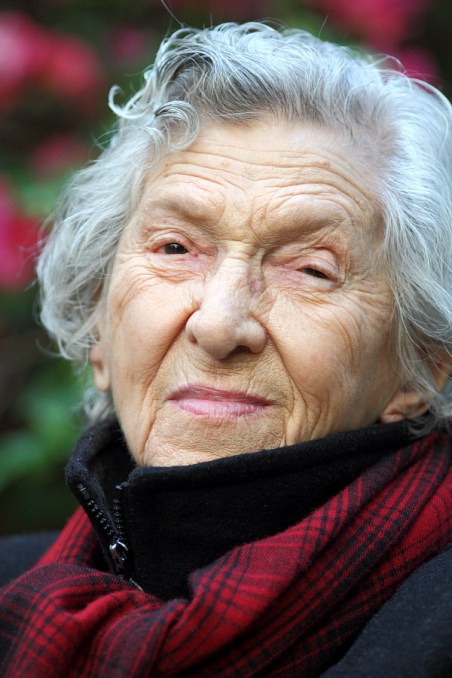
Evie Zysman
Imbued with an undying zeal to make a difference in people’s lives, especially children’s lives, Evie threw herself into her work. Even now, at an age when most of her contemporaries are dead or retired, she remains committed to doing good works and supporting good causes.
Consistent with her belief that children need protection, she spent much of her first 50 years as a licensed social worker, making the rounds among welfare, foster care and single-parent families. True to her conviction that all laborers deserve a decent wage and safe work spaces, she fought for workers’ rights as an organized union leader. Acting on her belief in early childhood education, she helped start a project that opened day care centers in low income areas long before Head Start got off the ground; and she co-founded, with her late husband, Jack Zysman, Playtime Equipment Co., which sold quality early childhood education supplies.
Evie developed her keen social consciousness during one of the greatest eras of need in this country — the Great Depression. The youngest of eight children born to Jacob and Lizzie Adler, she grew up in a caring family that encouraged her to heed her own mind and go her own way but to always have an open heart.
“Mama raised seven daughters as different as night and day and as close as you could possibly get,” she said. “Mama said to us, ‘Each of you is pretty good, but together you are much better. Remember girls: Shoulder to shoulder.’ That was our slogan. And then, to each one of us she would say, ‘Don’t look to your sister — be yourself.’ It was taken for granted each one of us would be ourselves and do something. We loved each other and accepted the fact each one of us had our own lives to live. That was great.”
Even though her European immigrant parents had limited formal education, they encouraged their offspring to appreciate the finer things, including music and reading.
“Papa was a scholar in the Talmud and the Torah. People would come and consult him. My mother couldn’t read or write English but she had a profound respect for education. She would put us girls on the streetcar to go to the library. How can you live without books? Our home was filled with music, too. My sister Bessie played the piano and played it very well. My sister Marie played the violin, something she did professionally at the Loyal Hotel. My sister Mamie sang. We would always be having these concerts in our house and my father would run around opening the windows so the neighbors could also enjoy.”
Then there was the example set by her parents. Jacob brought home crates filled with produce from the wholesale fruit and vegetable stand he ran in the Old Market and often shared the bounty with neighbors. One wintry day Lizzie was about to fetch Evie’s older siblings from school, lest they be lost in a mounting snowstorm, when, according to Evie, the family’s black maid intervened, saying, “You’re not going — you’re staying right here. I’ll bring the children.’ Mama said, ‘You can go, but my coat around you,’ and draped her coat over her. You see, we cared about things. We grew up in a home in which it was taken for granted you had a responsibility for the world around you. There was no question about it.”
Along with the avowed obligation she felt to make the world a better place, came a profound sense of citizenship. She proudly recalls the first time she was old enough to exercise her voting right.
“I will always remember walking into that booth and writing on the ballot and feeling like I am making a difference. If only kids today could have that feeling when it comes to voting,” said Evie, a lifelong Democrat who was an ardent supporter of FDR and his New Deal. When it comes to politics, she’s more than a bystander — she actively campaigns for candidates. She’ll be happy with either Obama or Clinton in the White House.
When it came time to choose a career path, young Evie simply assumed it would be in an arena helping people.
“I was supposed to, somehow,” is how she sums it up all these years later. “I believed, and I still believe, that to take responsibility as a citizen, you must give. You must be active.”
For her, it was inconceivable one would not be socially or politically active in an era filled with defining human events — from millions losing their savings and jobs in the wake of the stock market crash to World War I veterans marching in the streets for relief to unions agitating for workers’ rights to a resurgence of Ku Klux Klan terror to America’s growing isolationism to the stirrings of Fascism at home and abroad. All of this, she said, “got me interested in politics and in keeping my eyes open to what was going on around me. It was a very telling time.”
Unless you were there, it’s difficult to grasp just how devastating the Depression was to countless people’s pocketbooks and psyches.
“It’s so hard for you younger generations to understand” she told a young visitor to her house. “You have never lived in a time of need in this country.” Unfortunately, she added, the disparity “between rich and poor” in America only seems to widen as the years go by.
With her feisty I-want-to-change-the-world spirit, Evie, an Omaha Central High School graduate, would not be deterred from furthering her formal education and, despite meager finances, became the first member of her family to attend college. Because her family could not afford to send her there, she found other means of support via scholarships from the League of Women Voters and the University of Nebraska-Lincoln, where the Phi Betta Kappa earned her bachelor’s degree.
“I knew that for me to go to college, I had to find a way to go. I had to find work, I had to find scholarships. Nothing came easy economically.”
To help pay her own way, she held a job in the stocking department at Gold’s Department store in downtown Lincoln. An incident she overhead there brought into sharp relief for her the classism that divides America. “
One day, a woman with a little poodle under her arm came over to a water fountain in the back of the store and let her dog drink from it. Well, the floorwalker came running over and said, ‘Madam, that fountain is for people,’ and the woman said, ‘I’m so sorry, I thought it was for the employees.’ That’s an absolutely true story and it tells you where my politics come from and why I care about the world around me and I want to do something about it.”
Her undergraduate studies focused on economics. “I was concerned I should understand how to make a living,” she said. “That was important.” Her understanding of hard times was not just of the at-arms-length, ivory-tower variety. She got a taste of what it was like to struggle when, while still an undergrad, she was befriended by the Lincoln YWCA’s then-director who arranged for Evie to participate in internships that offered a glimpse into how “the other half lived.” Evie worked in blue collar jobs marked by hot, dark, close work spaces.
“She thought it was important for me to have these kind of experiences and so she got me to go do these projects. One, when I was a sophomore, took me in the summer to Chicago, where I worked as a folder in a laundry and lived in a working girls’ rooming house. There was no air conditioning in that factory. And then, between my junior and senior years, I went to New York City, where I worked in a garment factory. I was supposed to be the ‘do-it’ girl — get somebody coffee if they wanted it or give them thread if they needed it, and so forth.
“The workers in our factory were making some rich woman a beautiful dress. They asked me to get a certain thread. And being already socially conscious, I thought, ‘I’ll fix her,’ and I gave them the wrong thread,” a laughing Evie recalled, still delighted at the thought of tweaking the nose of that unknown social maven.
Upon graduating with honors from UNL she set her sights on a master’s degree. First, however, she confronted misogyny and bigotry in the figure of the economics department chairman.
“He said to me, ‘Well, Evelyn, you’re entitled to a graduate fellowship at Berkeley but, you know, you’re a woman and you are a Jew, so what would you possibly do with your graduate degree when you complete it?’ Well, today, you’d sue him if he ever dared say that.”
Instead of letting discrimination stop her, the indomitable Evie carried-on and searched for a fellowship from another source. She found it, too, from the Jewish School of Social Work in New York.
“It was a lot of money, so I took it,” she said. “I had my ethic courses with the Jewish School and my technical courses with Columbia,” where she completed her master’s in 1932.
As her thesis subject she chose the International Ladies Garment Workers Union, one of whose New York factories she worked in. There was a strike on at the time and she interviewed scores of unemployed union members who told her just how difficult it was feeding a family on the dole and how agonizing it was waking-up each morning only to wonder — How are we going to get by? and When am I ever going to work again?

As a social worker she saw many disturbing things — from bad working conditions to child endangerment cases to families struggling to survive on scarce resources. She witnessed enough misery, she said, “that I became free choice long before there was such a phrase.”
Her passion for the job was great but as she became “deeply involved” in the United Social Service Employees Union, she put her first career aside to assume the presidency of the New York chapter.
“I could do even more for people, like getting them decent wages, than I could in social work.” Among the union’s accomplishments during her tenure as president, she said, was helping “guarantee social workers were qualified and paid fairly. You had to pay enough in order to get qualified people. We felt if you, as social workers, were going to make decisions impacting people’s lives, you better be qualified to do it.”
Feeling she’d done all she could as union head, she returned to the social work field. While working for a Jewish Federation agency in New York, she was given the task of interviewing Jewish refugees who had escaped growing Nazi persecution in Germany and neighboring countries. Her job was to place new arrivals with the appropriate state social service departments that could best meet their needs. Her conversations with emigres revealed a sense of relief for having escaped but an even greater worry for their loved ones back home.
“They expressed deep, deep concern and deep, deep sadness and fear about what was going on over there,” she said, “and anxiety about what would happen to their family members that remained over there. They worried too about themselves — about how they would make it here in this country.”
A desire to help others was not the only passion stoked in Evie during those ”wonderful” New York years. She met her future husband there while still a grad student. Dashing Jack Zysman, an athletic New York native, had recently completed his master’s in American history from New York University. One day, Evie went to some office to retrieve data she needed on the International Ladies Garment Workers Union, when she met Jack, who was doing research in the very same office. Sharing similar interests and backgrounds, the two struck up a dialogue and before long they were chums.
The only hitch was that Evie was engaged to “a nice Jewish boy in Omaha.” During a break from her studies, she returned home to sort things out. One day, she was playing tennis at Miller Park when she looked across the green and there stood Jack. “He drove from New York to tell me I was definitely coming back and that I was not to marry anybody but him.” Swept off her feet, she broke off her engagement and promised Jack she would be his.
After their marriage, the couple worked and resided in New York, where she pursued union and social work activities and he taught and coached at a high school. Their only child, John, today a political science professor at Cal-Berkeley, was born in New York. Evie has two grandchildren by John and his wife.
Along the way, Evie became a New Yorker at heart. “I loved that city,” she said. Her small family “lived all over the place,” including the Village, Chelsea and Harlem. As painful as it was to leave, the Zysmans decided Omaha was better suited for raising John and, so, the family moved here shortly after World War II.
Soon the couple began Playtime Equipment, their early childhood education supply company. The genesis for Playtime grew out of Evie’s own curiosity and concern about the educational value of play materials she found at the day care John attended. When the day care’s staff asked her to “help us know what to do,” she rolled up her sleeves and went to work.
She called on experts in New York, including children’s authors, day care managers and educators. When she sought a play equipment manufacturer’s advice, she got a surprise when the rep said, “Why don’t you start a company and supply kids with the right stuff?” It was not what she planned, but she and Jack ran with the idea, forming and operating Playtime right from their home. The company distributed everything from books, games and puzzles to blocks and tinker toys to arts and crafts to playground apparatus to teaching aids. The Zysmans’ main customers were schools and day cares, but parents also sought them out.
“I helped raise half the kids in Omaha,” Evie said.

The Zysman residence became a magnet for state and public education officials, who came to rely on Evie as an early childhood education proponent and catalyst. She began forming coalitions among social service, education and legislative leaders to address the early childhood education gap. A major initiative in that effort was Project AID, a program she helped organize that set-up preschools at black churches in Omaha to boost impoverished children’s development. She said the success of the project helped convince state legislators to make kindergarten a legal requirement and played a role in Nebraska being selected as one of the first states to receive the federal government’s Head Start program.
Gay McTate, an Omaha social worker and close friend of Zysman’s, said, “Evie’s genius lay in her willingness to do something about problems and her capacity to bring together and inspire people who could make a difference.”
Evie immersed herself in many more efforts to improve the lives of children, including helping form the Council for Children’s Services and the Coordinated Childcare Project, clearinghouses geared to meeting at-risk children’s needs.
The welfare of children remains such a passion of hers that she still gets mad when she thinks about the “miserable salaries” early childhood educators make and how state budget cuts adversely impact kids’ programs.
“Everybody agrees today the future of our country depends on educating our children. So, what do we do about it? We cut the budgets. Don’t get me started…” she said, visibly upset at the idea.
Besides children, she has worked with such organizations as the United Way, the Urban League, the League of Women Voters, the Jewish Council of Women, Hadassah and the local social action group Omaha Together One Community.
In her nearly century of living, she’s seen America make “lots of progress” in the area of social justice, but feels “we have a long way to go. I worry about the future of this country.”
Calling herself “a good secular Jew,” she eschews attending services and instead trusts her conscience to “tell me what’s right and wrong. I don’t see how you can call yourself a good Jew and not be a social activist.” Even today, she continues working for a better community by participating in Benchmark, a National Council of Jewish Women initiative to raise awareness and discussion about court appointments and by organizing a Temple Israel Synagogue Mitzvah (Hebrew, for good deed) that staffs library summer reading programs with volunteers.
Her good deeds have won her numerous awards, most recently the D.J.’s Hero Award from the Salvation Army and Temple Israel’s Tikkun Olam (Hebrew, for repairing the world) Social Justice Award.
She’s outlived Jack and her siblings, yet her days remain rich in love and life. “I play bridge. I get my New York Times every day. I have my books (she is a regular at the Sorenson Library branch). I’ve got friends. I have my son and daughter-in-law. I have my grandchild. What else do you need? It’s been a very full life.”
As she nears a century of living Evie knows the fight for social justice is a never-ending struggle she can still shine a light on.
“How would I define social justice?” she said at an Omaha event honoring her. “You know, it’s silly to try to put a name to realizing that everybody should have the same rights as you. There is no name for it. It’s just being human…it’s being Jewish. There’s no name for it. Give a name to my mother who couldn’t read or write but thought that you should do for each other.”
Related Articles
- Alberta foster care system under scrutiny (calgaryherald.com)
- Leading article: The care system needs a drastic overhaul (independent.co.uk)
- Feds share blame for child welfare system ‘chaos’ (cbc.ca)
This version of Simon Says positions Omaha Steaks as food service juggernaut

Image by jasonlam via Flickr
Nebraska doesn’t have mountains or oceanfront beaches. What few iconic things it does have speak to the work ethic of its people. Omaha Steaks is a national brand, like Mutual of Omaha insurance or Berkshire Hathaway and Warren Buffett, that people know and trust. It’s dependable, just like Nebraskans and the Nebraska family that founded the company and still run it today. This story, which originally appeared in the Jewish Press, is an appreciation for the history and growth of this food industry titan.
This version of Simon Says positions Omaha Steaks as food service juggernaut
©by Leo Adam Biga
Originally published in the Jewish Press
First cousins Bruce and Todd Simon engage in the back and forth banter of media talk-jocks, except theirs isn’t idle chat but the dialogue of two men at the top of a food service industry company giant whose annual sales fast approach a half-billion dollars. In an interview at the headquarters of their family-owned Omaha Steaks empire, 11030 “O” Street, they revealed themselves as wry sophisticates with a knack for brokering deals, managing people and anticipating the next big thing.
After working together 20 years, their close familiarity finds each interrupting the other to complete a sentence or to make a point or to poke fun. They seem to enjoy the give and take. It’s all part of being the next generation, the fifth to be exact, to lead the corporate giant. Each apprenticed under his dad. Each holds fast to cherished lessons passed down from above.
For 89 years the company’s found innovative ways to market fine meat and other foods to residential and commercial customers around the nation and the world. Along the way the Omaha Steaks name has become such an icon synonymous with quality beef that its hometown enjoys crossover brand recognition.
Bruce is president/COO and Todd is senior vice president, but their bond supersedes titles or labels. They’re family. Two in a long line to lead the business.
“You know what we have? What we have here, we have an entire company of people who we trust — that we feel like we’re family with. That’s what we have here,” Bruce said. “That blood bond is really a family bond and it traverses not only the Simon family, it includes our executive committee, all the way down. There are guys I know in the plant that were there the day I started and I feel the same bond with them as I do to my cousin Todd. We all feel a responsibility to each other to make this place successful.”
As is their habit, Bruce turned to Todd, asking, “Don’t you think?” Whereupon Todd opined, “Well, I think it starts with the fact we’re a family business that allows us to really take those kind of family values into the whole business.”
“Not in a Bush sort of way,” Bruce joked. A nonplused Todd continued, “And it shows in the benefits we provide for our team in terms of family leave benefits or vacation benefits or day care. Scholarships.” “All that stuff,” Bruce interjected.
Legacy is never far removed from the Simons’ thoughts, as their fathers still take an active part in the company, always looking over their sons’ shoulders to ensure the family jewel is well-preserved. Bruce’s father, Alan Simon, is chairman of the board/CEO. Todd’s dad, Fred Simon, is executive vice president. The cousins’ late uncle, Steve Simon, died recently after years serving as senior VP and GM.
“My dad was and is pretty much the operational guy. He’s the guy who ran the meatpacking plant and who was the bean counter,” Bruce said. “Bought the meat,” Todd offered. “Yeah, bought the meat,” Bruce confirmed. “And Todd’s dad was the real marketing guy and Steve (Simon) was the sales guy.”
The three brothers — Alan, Fred and Steve — learned the business from their father Lester Simon, who in turn learned it from his father B.A. Simon. It all began when B.A. and his father J.J. Simon, both butchers, left Latvia for America in 1898 to escape religious persecution. With the meat business in their blood, J.J. and B.A. settled in Omaha, a meatpacking center, and worked in several area markets. In 1917 father and son opened their own meat shop, Table Supply Meat Company, downtown. Their niche was to process and sell beef to restaurants and grocers.
As the decades progressed Table Supply responded to the growing food service sector by supplying meat to Union Pacific Railroad in support of its large dining car services as well as to more and more restaurants here and in other parts of the country. Cruise lines, airlines, hotels and resorts became major customers. Lester Simon first took Table Supply to the public via mail order ads that enabled households to receive packaged shipments of cut beef. In 1963 the company published its first mail order catalog, whose product offerings soon extended far beyond beef steaks. Shipping-packaging advances improved efficiency, helping widen the company’s increasingly national and international reach.
By 1966 all this growth warranted an expansion in the form of a new plant and headquarters on South 96th Street. With the new facilities came a new name, Omaha Steaks International.
The 1970s saw Omaha Steaks take new steps in customer convenience by adding inbound and outbound call centers and a mail order industry-first toll-free customer service line. An automated order entry system was installed in 1987. The first of its retail stores opened in 1976. There are now 75 and counting in 19 states. Visioning the online explosion to follow, Omaha Steaks helped pioneer electronic marketing as far back as 1990. Omahasteaks.com became the banner web site for what is the company’s fastest growing business segment. A new web site, alazing.com. promotes the company’s convenience meals brand, A La Zing, which offers a line of complete frozen prepared meals.
Omaha Steaks underwent another expansion phase in the ‘80 and ‘90s, consolidating administration and marketing in two new multi-story glass and steel buildings whose sleek interiors abound with examples from the Simons’ extensive art collections and displays that tell the history of the family business.
In a family of arts supporters, Todd’s an elected member of the Board of United States Artists and board president of the Bemis Center for Contemporary Arts.
If Bruce and Todd feel burdened carrying the legacy of a company that boasts two million-plus customers and employs some 2,000 folks, they don’t show it. Guiding their interaction in family and business dealings are the principles they picked up from their elders. By living those principles they fulfill their obligation.
“Our parents taught us to do the right thing. That’s really the only responsibility we have — just do the right thing. Do it all the time. Try to produce every single box of product perfectly. Try to satisfy every single customer perfectly. Do it right every time,” Bruce said. “It’s all about being honest. Everybody in our family has been impeccably honest. We don’t take advantage of people. We sleep good.”
“Right,” Todd said, “and I think it also extends to the environment we create. We could sit around and stress out about the fact we have 2,000 employees and their livelihoods in a lot of ways depend on the decisions we make. And I think we always have that in mind. I also think one of the things that makes it so we don’t stress out is that so many of those 2,000 people think the same we do and they take responsibility for what they need to take responsibility for. And because they do that the stress we carry is minimized.”
“But the whole thing is doing the right thing,” Bruce said. “I mean, if you’ve got building blocks and you set them up properly you’re going to have a very strong building. And that’s what we have and it’s because of every single block. Look, if spacemen came and took either one of us away there’s no question in my mind…this place would continue on because of the values that J.J., B.A., Lester, Alan, Fred, Steve and now Todd and I hold dear. It’s our whole corporate culture.”
The confidence they exude may be attributed in part to the up-through-the-family-ranks training the pair got and to the well-balanced team they form.
“It’s interesting,” Todd said, “because I think in a lot of ways we’ve both sort of followed in our fathers’ footsteps. You know, Bruce is very strong operationally, purchasing, finance…All the sort of back-office stuff is his forte. And mine is the out-front stuff — the marketing, sales. Managing the customer service aspect of that, motivating the front-line people to be people-people.”
“And somebody has to manage him, too,” kidded Bruce, before turning serious again. “Yeah, I think that when you’re a leader sometimes you’ve got to fake it. My dad used to say to me, ‘When in command, command.’ And that’s what I think we do. I mean, our dads built a helluva business and, you know, you always want to top it. I mean, George W. (Bush) just had to get Saddam and we’ve just got to sale a steak to every Chinaman,” Bruce said, smiling.
Unfazed, Todd said, “I think Bruce and I really complement each other well. I would say I’m an optimist and Bruce isn’t as much an optimist…in the sense that when we both come up with ideas I’ll see one side of the picture and he’ll see the other side of the picture. And since we’re both open too each other’s perspective on it, it really helps us balance it out.”
The way Bruce puts it, “I think our management styles complement each other as well. He is really detail-oriented sometimes and I am really detail-oriented when he’s not. And about different things. There’s some stuff that Todd goes, ‘Well, so, get it shipped.’ And I just look at him and I go, ‘OK…well, just sell it.’ He looks at me and says, ‘OK.’” Whatever the situation, they make it work. “Yeah, we do,” Bruce said, “and we get along, which is great, too.”
With two father-son teams comprising the ownership-executive ranks, the potential exists for family disputes that upset the company’s inner workings. The Simons diffuse those bombs with open dialogue and transparent dealings.
“For as long as I can remember the way we operate as a family is we get our ideas out,” Todd said. “We don’t bulldoze over each other. We’re all forceful about our ideas and our opinions, and we’ll raise our voices and we’ll do whatever we need to do to get our point across. But we basically come to consensus and we don’t leave the room unless everyone’s comfortable with the direction we’re moving in.”
“Right,” Bruce said. “We don’t fight about things. If there’s a reason to do something we discuss it and we figure it out. Because, hell, we’re all on the same page. What’s good for one is good for all. We’re never very formal, either. Usually we’ll discuss things over lunch.”
Talking business within the family doesn’t follow a 9 to 5 schedule. “Business doesn’t stop and start at the office for us,” Todd said. “I mean, Bruce could be on vacation and just decide to call me about something that’s on his mind.” “Well, technically, what will happen,” Bruce said, “is when you’re away from the place and the day-to-day that’s when you really get some good ideas and then we’ll call each other. I remember before cell phone were prolific I was in Italy and Todd was in Japan and we had this fax dialogue going on.”
Vision is important in any organization and each year Omaha Steaks holds an off-site brainstorm session with its top managers. Ideas and initiatives fly. “A lot of times those come not from me or Bruce but from the people out there in the trenches dealing with our customers every day,” Todd said. In the end, “Todd and I decide with our fathers where we’re going” as a company, Bruce said.
Two affiliate companies sprung from this visioning — the A La Zing line of convenience meals and OS SalesCo., an incentive division. Fred Simon entered the publishing world with The Steak Lover’s Companion, a cookbook co-authored with Mark Kiffen. Simon adapted classic dishes from recipes developed by James Beard, an Omaha Steaks consultant for many years. More cookbooks followed. Simon’s developed Omaha Steaks-affiliated restaurants. Many more restaurants exclusively serve the Omaha Steaks brand on their menus. The company’s also approaching 100 of its own retail stores nationwide.
Trust in themselves and in the team they’ve assembled explains why the Simons are open to new marketing avenues and new technologies that enhance the ability of the company to serve customers. A toll-free customer service line. Online ordering. In-store purchases. New product lines. Seasonings, sides, desserts. Whatever passes muster with the Simons or in the Omaha Steaks test kitchens gets rolled out.
“While we have innovated a lot here and we’ve developed a lot of proprietary tools and analysis and internal stuff, I wouldn’t say we’ve been on the bleeding edge of technology,” Todd said. “Because I think what we want to do is to use technology that’s going to help us to help our customers. We were one of the first companies to put in an 800 number because it made sense to help our customers communicate with us. When we implemented a centralized computer system one of the first applications was order taking.”
“We’ve had to do these things. The Internet was just very logical — Sure, we should have that. And the fact the entire world put a PC in their living room helped,” Bruce said. “But it was easy for us because when you think about it we were just bypassing the guy on the phone.”
As “easy” as he makes it sound, Bruce added Omaha Steaks has taken great pains to enhance its order-processing systems via the Web and the phone. “I’ve seen a lot of them and I’m proud of ours — I think it’s the best one I’ve ever seen. Our development team has done such an outstanding job with those products.”
“I still think what it gets back to is that we say to ourselves, How do we solve a problem for our customers? Whether that problem is placing an order quickly and efficiently or being able to log onto the web site and access their gift list or whatever it is. And then asking, Can technology help us with that? As opposed to implementing technology in search of a problem” to solve,” Todd said.
Online sales account for an increasing chunk of the company’s profits and Omaha Steaks will accommodate the dot com craze as the demand dictates.
“Our philosophy is be wherever your customers want you to be,” Todd said. “A lot of people love to shop online. I’m one of those people. But we’ve got a lot of customers today that don’t. People still fax orders in. People still mail orders in. People like to come into our stores. So, whatever works.”
The retail segment has “grown as fast as we’ve been willing to add resources internally to support it,” Todd said. Plans call for 15 more stores this year alone. That may seem an odd way to go with cyber commerce on the rise, but he said even a cursory look around town reveals a boon in retail development. “So the economy is alive and well for a number of different sales channels to prosper.”
Success may make some tycoons complacent but not the Simons.
“I feel like with this business I can be an entrepreneur. There’s always new challenges, new products to be developed or whatever. That gives me a lot of satisfaction,” Todd said. “What gives me a charge is just seeing the business grow, being successful in business, messing around with our dads in the business. And just the sheer volume of product we go through — it’s just staggering sometimes,” said Bruce, who figures Omaha Steaks processes up to 250,000 pounds of just top sirloin each week and close to 50,000 pounds of tenderloin a week. That’s tens of millions of pounds of beef a year.
They’ve been at Omaha Steaks a combined 46 years now — Bruce since 1980 and
Todd since 1986 — and there’s no reason to think they won’t be there 46 more. But it was never a lock they’d be there in the first place. University of Pennsylvania grads, like their fathers, each weighed other paths before falling in line. Bruce came aboard first. Right out of college. But not before he looked at “a couple other opportunities.” Neither his first nor only option, Omaha Steaks was a sure thing. He worked there as a kid. “I wanted to do it. I liked the business. I understood the business. When I was at school I thought about the business.” What finally swayed him, was the offer of $1,000 signing bonus his dad put on the table.
When it was time for Todd to graduate a few years later he faced a similar dilemma. “My dad was encouraging me. I think he wanted to work with me. I was a little bit hesitant,” Todd said. Like Bruce, Todd too worked at Omaha Steaks as a kid. But he and some college friends had started a sound production company (they later sold). He had other career choices. He turned to his cousin for advice, asking, Is this a good thing? Bruce assured him it was. The pull of family won out. “I kind of at the end of the day felt like I owed it to my family,” Todd said. “This family has provided so much for me.”
Neither is sorry he made the leap into the family pond. “Yeah, it’s turned out OK,” Todd said in a classic understatement. Working with their fathers has meant learning from the best. Their dads, along with their late uncle Steve, were recently inducted into the Omaha Business Hall of Fame. Todd’s dad Fred is an inductee in the national Direct Marketing Association Hall of Fame. The company’s won awards and praise for its marketing and technology applications.
As for the cousins’ fathers retiring anytime soon, Bruce said, “We don’t say that word. They will never retire. They will never semi-retire. And the minute anyone would suggest such a ludicrous thing they would start coming into the office every day raising hell about every item on the balance sheet. They’ll never retire. They might go on vacation…” And that vacation may last for some time. But retire? No.
A sixth generation of Simons entering the business may be on the horizon. Todd
doesn’t have children and Bruce’s are still quite young. However, Bruce can see one of his daughters already thinking like a future mogul. On a visit to the zoo they waited in a long line at a concession stand, noting how the supervisor let the workers fall way behind, whereupon Bruce’s little girl said, “You know, Daddy, I don’t think that person is doing a very good job of managing that stand. That’s not a very good operation is it, Daddy?” He had to agree, his chest puffed with pride.
Related Articles
- The Meat Lessons: The secret to beef striploin (life.nationalpost.com)
- $9 footlong? Subway teaches you how to raise your price. (thoughtgadgets.com)
- Omaha Arts-Culture Scene All Grown Up and Looking Fabulous (leoadambiga.wordpress.com)
- *Knock* *Knock* Omaha Steaks! (localnourishment.com)
- Omaha Steaks Steak Time makes for a delicious iPad 2 experience (intomobile.com)
- Omaha Steaks App Comes to Android (appscout.com)
- Dick Holland Responds to Far Reaching Needs in Omaha (leoadambiga.wordpress.com)
- Chef Mike Does a Rebirth at the Community Cafe (leoadambiga.wordpress.com)

The Brandeis Story: Great Plains family-owned department store empire
For anyone of a certain age, shopping at the downtown J.L. Brandeis & Sons Department Store in Omaha was a pinnacle experience for the sheer size, opulence, and wonder of it all. Any city of size had its equivalent, but I didn’t grow up in any city, I grew up in Omaha, and Brandeis was all I knew when it came to mega department stores. It was my Macy’s or Gimbels or Marshall Fields. This two-part story is my attempt at taking stock of the Brandeis legacy, which eventually grew to include many stores in many locations, although the downtown flagship store was always the one people remembered. I certainly did. I used to go there as a kid with my mom. It was always an occasion. The family that owned the downtown store and ultimately a whole chain of stores and other business enterprises lived liked royalty, and my story is as much about them as anything. Whether or not you grew up with Brandeis as I did, I hope you will find this interesting if for no other reason than the larger-than-life qualities of that store and that family. My story originally appeared in the Jewish Press and served as the basis for a script I wrote on the same subject for a documentary film.

Omaha, NE Brandeis & Sons Department Store entrance in 1938 (Photo credit: army.arch)
Although most remnants of the Brandeis department store empire are long gone, the jewel in the crown, namely, the downtown store building, remains intact, though retrofitted as a condominium tower. I know a man who lives atop that building in the fabled penthouse, but that’s a story for another day perhaps, another forum, not on this blog.
The Brandeis Story: Great Plains family-owned department store empire
Part I: On Becoming an Institution and Tradition
©by Leo Adam Biga
Originally published in the Jewish Press
There was a time when every great downtown featured an immense department store. New York had its Macy’s and Gimbels. Chicago had its Marshall Field’s. Further west, smack dab in the middle of the Great Plains, Omaha had Brandeis. As local family dynasties go, few evoke the nostalgia the Brandeis name conjures. That’s because for a century J.L. Brandeis & Sons ruled the department store market in Omaha, serving hundreds of thousands of customers each year.
In its heyday, the symbol of the company’s and the family’s success was the downtown store. Period advertisements billed it as “the greatest store in the West.” Modeled after Marshall Field’s, nothing quite as elaborate as Brandeis could be found from the Windy City to the Rockies.


Another exterior shot


“Any city of any pretension, any city of any caliber developed a huge department store,” said Omaha historian Dennis Mihelich. “When Brandeis built that store…Omaha was the 20th most populace city in the United States. That meant a city had arrived. It’s kind of like saying you’re a major league city today…If we go back to the turn of the century, what gave a city cachet…one thing would be that symbol. ‘Look where we get to shop.’ They were architectural symbols in the city.”
Designed by John Latenser Sr. in the Second Renaissance Revival style, the half-million square foot, brownstone edifice included ornate ceilings, Corinthian columns and marble floors. Its vast, sweeping spaces contained every imaginable good and service. So distinct was the store, it became a destination stop for anyone visiting Omaha. Its sheer size, fabulous amenities, everything under-one-roof selection and first-rate customer service set it apart from the competition.
“Brandeis was really the source of most of the things you wanted. It was where you bought your first suit. It was where you went to have dinner with your friends…it was 10 floors of just a wonderful array of things,” Omaha historian Barry Combs said.
All things have their seasons and as downtowns lost their competitive edge to suburban malls in the 1950s and 1960s department stores began to feel the pinch. Many closed in the ensuing years. Omaha and Brandeis were no exception. As the suburbs beckoned, Brandeis followed — building a mall, opening outlets.
At its peak in the early 1970s, the family-owned retail chain grew to 15 stores, 3,000 employees and $100 million in sales. As fewer folks shopped downtown the flagship store became a drag. When, in 1980, Brandeis closed the downtown store as part of a general downsizing, it marked the end of an era. A leaner Brandeis became profitable again by the time Younkers bought it in 1987. More than 100 years of Brandeis retailing was no more.
The dynasty dates back to company founder Jonas Leopold Brandeis. This family patriarch set The Great Man precedent. Born in 1837, the Austrian-Jewish immigrant was a tanner by trade in his native Prague. J.L. came to the U. S. in his late teens, part of a flood of immigrants helping settle the frontier. His self-made success story in America began as a merchant in the wilds of Wisconsin, where he traded with Indians. He married Fanny Teweles of Milwaukee and the couple made a life for themselves and their family in Manitowoc.
A sportsman tradition that runs through the Brandeis family began with J.L., whose prowess with a gun became legendary.
He next set his sights south on Omaha, a booming transportation, mercantile and livestock hub with excellent rail and river access. He, Fannie and their four children, Sara, Arthur, Emil and Hugo, moved to Omaha in the early 1880s. J.L. built the first of what would be several downtown Brandeis merchandising enterprises. The first retail venture, The Fair, opened at 506 South 13th Street. By 1888 J.L. and his boys were full partners when they rented a new site at 114 South 16th Street, calling it The Boston Store, a then-popular name for retail outlets. The J.L. Brandeis & Sons name first appeared over the door there and would appear, on building plates, on all future Brandeis stores.
Business soon outgrew that location and in 1891 the family built a second Boston store on the northwest corner of 16th and Douglas, near what would become the anchor spot for the burgeoning Brandeis empire. J.L. was determined to succeed and not even the total loss of the building in an 1894 fire could deter him. He built a new, larger, better store on the same site.
It didn’t take long for the mutton-chopped J.L. to make his mark, drawing much attention with lighted store windows at night and illustrations in newspaper ads. Every Saturday he released a dozen balloons containing coupons redeemable for a free suit of clothes. Thus, from the very start, Brandeis was known as a pacesetter and innovator. These qualities would distinguish the company and the family members who ran it throughout the 20th century.
“It seemed like Brandeis was always very progressive with the things they did,” said Omahan Ted Baer, whose father, the late Alan Baer, was a great-grandson of J.L and the company’s last owner/president.
As a savvy merchant, J.L. knew a prospering city and Jewish community meant more good will and business for Brandeis and so he and his wife immersed themselves in civic pursuits. He was involved in helping establish one of Nebraska’s first synagogues. He, along with Carl Brandeis, a relative he brought to Omaha, actively worked to create a chapter of the Independent Order of B’nai B’rith. An Omaha chapter was founded by Carl, who remained active in Jewish activities.
Fannie organized a sewing class for Russian Jewish immigrants and led efforts to establish the area’s first Jewish hospital — Wise Memorial — as a sanctuary from bias. When Fannie died the hospital board paid tribute to her with a resolution:
“With patience and perseverance, undaunted by discouragement, she courageously carried forward her plan of founding a permanent institution…open and free to the afflicted without distinction as to creed or race.”
Fannie and J.L. were also on the committee that promoted the largest event in Omaha history — the 1898 Trans-Mississippi & International Exposition, a five month-long fair of more than 4,000 exhibits on 108 city blocks that drew 2.5 million visitors. The Brandeis’ also served on the city parks commission that extended the system of parks and boulevards.
By the early 1900s the Brandeis name owned currency with customers and vendors. His sons were already running things and they embarked on the family’s biggest expansion to date, construction of the giant Brandeis store, between 16th and 17th and Douglas Streets. Work began in 1906 and the $1 million building opened to much fanfare in 1907, displaying the latest goods from the post London and Paris trade centers. Eleven-year-old E.John Brandeis — Arthur’s son — was accorded the honor of laying the cornerstone.
Originally 8-stories, the building qualified as a skyscraper by that era’s standards. Later additions brought the structure to its present height, complete with an Art Deco-style penthouse bungalow atop the 10th floor.
Ads ballyhooed the new store as “absolutely fireproof,” a reference to the fire that destroyed The Boston Store a dozen years earlier.
Brandeis pulled out all the stops to assure the public this store was unlike any before it. Elaborate window displays drew lines of spectators. Mihelich said, “Those window displays were virtual museum exhibits. They would change regularly and would reflect the seasons and the holidays. They were used to entice people in. People literally did window shop.”
Former Brandeis VP Gene Griffin of Omaha said it was a showplace: “People came from near and far to see what was going on…”
Gleaming glass counters and mirrors, polished marble floors and overbrimming bins filled the cavernous interior. “The display was key,” Mihelich said. “Christmas, of course, would be the most important of all.” At Christmas the 10th floor was transformed into Toy Land, a Santa’s workshop-inspired seasonal display that thousands of children and parents visited. Lines of kids waited to sit on Santa’s lap and to have their picture taken with Old Saint Nick. Ex-Brandeis VP Vic Mason of Omaha said, “People looked forward to going downtown and shopping at the store, especially at Christmas time, when they had those fabulous displays on the 16th and Douglas corner and the big Toy Land up on the 10th floor.”
Any time of year the main floor mezzanine was a take-your-breath-away sight with its gilded columns, hanging chandeliers, copper-plated ceiling and brass-fixtured elevators hand-operated by white gloved attendants. A large clock near the 17th Street entrance was a popular meeting spot. A mosaic-tiled balcony offered secluded shopping and custom services. The bargain basement floor attracted teeming crowds. An arcade included an array of eateries — the Pompeian Room, the Tea Room, Hamburger Heaven and a cafeteria.
“…there was a certain elegance to the department store. You had a shopping experience that you certainly wouldn’t have in a big box store today,” Omaha historian Harl Dalstrom said. “…just the surroundings, the showcases, the decor inside the building, the majestic construction of the buildings themselves, the high ceilings, the display of merchandise and, of course, the windows…”

The Brandeis brand stood for something special, representing an ultimate shopping experience unequaled in these parts. A one-time Brandeis VP, the late Sam Marchese, may have put it best when a newspaper quoted him saying:
“When my grandfather came to this country he could speak only three words of English: ‘Hello,’ ‘goodbye,’ and ‘Brandeis.’ From Omaha there are only four real institutions in the state: the University of Nebraska, the Omaha World-Herald, Creighton and Brandeis.”
More than a flagship, the downtown store was THE center for commerce. It’s where people shopped and dined and caught up with friends or associates. It’s where you went to be seen. Where big wigs did business, sealed deals, made plans. Brandeis hosted fashion shows, parties, receptions, graduations and meetings.
Dalstrom said, “You would find going to the big department stores such as Brandeis part of an overall urban experience. When you look at the Brandeis experience you need to consider it too as part of an overall orientation toward during important things downtown..,and so downtown shopping was very much the thing.”
Not to be overlooked, Brandeis was viewed as one of Omaha’s own.
“Locally-owned. Local ties. That was different than all the other department stores. It was kind of funny growing up because everybody I knew either had somebody in their family who did work or had worked at Brandeis,” Ted Baer said.
Every city has its movers and shakers. Big wheels turned early Omaha from a prairie town outfitting Western Plains settlers into a modern metropolis of railroad, meatpacking, livestock, banking and mercantile interests. The names of those who made it happen — Kountze, Storz, Joslyn, Dodge, Reed, Hitchcock, Clarkson, Millard, Doorly — adorn streets and public places. The Brandeis name lives on, too.
The executives guiding the company were more than merchants. They were part of the elite inner circle that called the shots. Through the years Brandeis family members filled the top executive slots in the company, but with its growth Brandeis increasingly looked outside the family. Family or not, the Brandeis name opened doors. When Brandeis spoke, people listened.
“At one time, Brandeis ran this town,” said former VP Helmuth Dahlke. “… in the heyday Brandeis pretty much controlled every corner of downtown Omaha, strategically, so that no one could move in. They controlled the real estate…owned the buildings, the properties. When we wanted something we called and one minute later they called you back. We had muscle.”
“Yes, the Brandeis family and other major corporate executives of Brandeis provided substantial leadership in the business community, in civic affairs, in philanthropy,” Mihelich said. “They did it individually, serving on things like the board of governors of Ak-Sar-Ben…In all of these numerous kinds of activities the Brandeis family and the Brandeis company certainly for the better part of a century were as influential as any of the other major Omaha players.”
Befitting their means, the Brandeis family lived like Midwestern rajahs with their mansions, stables of horses, recreational activities, parties, appointments, titles, world travels and charitable work. Newspapers detailed their comings and goings. Cousins George and E. John Brandeis cut dashing figures with their good looks and active pursuits. Fellow sportsmen, their exploits made much news: George with his prized horses and hunting of fowl in western Nebraska; and E. John riding, yachting, hunting on one of his big-game safaris or squiring eligible young women.
“The Brandeis family were like rock stars,” Ted Baer said. “One of them was on the Titanic. E. John lived like the young Howard Hughes, playing polo, flying all over the place and doing pretty much anything he wanted to do.”
There would be many stars in the Brandeis firmament, but none quite as bright as J.L. By his death in 1903, the company was already viewed as a linchpin in the local economy. An Omaha Bee article proclaimed:
“…its prosperity has been a part of the growth of the city and its faith in the city has been shown by its constant endeavor to grow within the city.”
Even in death, J.L. continued giving, as his will directed generous gifts to several charities, including the Creche, the Omaha Benevolent Society and Temple Israel, beginning a long tradition of charity by Brandeis heirs and descendants.
Following in his footsteps, J.L.’s sons continued as community stewards. Arthur, Hugo and George each served on the Ak-Sar-Ben board of governors. The family’s association with the civic-philanthropic organization would last generations.

After J.L.’s passing, his three sons found their niches. Arthur, the visionary, assumed the presidency. Emil, the builder, handled supervised construction and maintenance of the company’s early building projects. Hugo, the retailer, sent buyers to foreign markets and managed the store’s sales policies.
Cousin George Brandeis joined them at the department store, first at J.L.’s urging and later at Arthur’s. George’s presence proved invaluable when a series of tragedies struck down J.L.’s boys, leaving George to take over.
The first of these tragedies befell Emil. The lifelong bachelor had concluded his annual overseas trip in the spring of 1912, touring the European continent and Egypt with his niece and her husband. For his return trip, he boarded the Titanic as a first-class passenger and died in its sinking. He was 45. His body was recovered on an ice floe by the MacKay Bennett. He was wearing a dark suit, brown shirt with blue stripes, black shoes and silk socks. Among his effects were diamond cuff links, a gold knife, a platinum and diamond watch chain, a gold pencil case, a gold ring, a gold cigarette case and match box, a pearl tie-pin and a 500 francs note.
Personal accounts of the disaster to reach the Brandeis family placed Emil at a card table when the “unsinkable” luxury liner struck the iceberg that spelled its doom.
An old friend who survived the sinking, Mrs. Henry B. Harris, wired the family her own account of her and her husband dining with Emil on the ill-fated maiden voyage and how he proudly boasted to them of his recent travels. Once the ship was damaged and the evacuation begun, Mrs. Harris was put safely out to sea on a jampacked lifeboat and watched Emil and Mr. Harris remain among the throng of men on deck, stoically awaiting their fate, she reported, “without fear.”
Emil was remembered as a solid citizen in a statement issued by the Knights of Ak-Sar-Ben published in the Omaha World-Herald:
“In the consideration of his distinguished services in the upbuilding of Omaha and in appreciation in the loss of his loyal devotion to her interests that his home city has sustained in his tragic death, we…have called a public meeting in memory of our late fellow citizen, Emil Brandeis…”
Upon his death, Emil’s will directed funds to the Visiting Nurses Association, an organization the family continues supporting today.
Only months following Emil’s death, brother Hugo died, after an operation, leaving Arthur as the only Brandeis at the helm. Soon, Arthur cast his eye to diversify Brandeis interests with development of the Brandeis Theater, which opened up next door in 1910, joining the spate of motion picture houses downtown.

Meanwhile, Arthur’s son, E. John, began learning the business as a boy, occasionally accompanying his father on buying trips overseas.
With the loss of his two brothers, Arthur turned to cousin George, then manager of the Boston Store in Chicago, to join the family empire. By 1914 a restless Arthur left the store’s leadership to George in order to attend to his extensive realty holdings and to become vice president of Stern Brothers dry goods store in New York, where he took up residence. When Arthur died in 1916, his will left in excess of $1 million in personal property and real estate, in a trust, to his son, E. John.
As a boy E. John had laid the cornerstone of the Brandeis department store. E. John had worked under his father at Stern Brothers, but at 21 was not yet deemed ready to take over the reins at Brandeis, where George remained in charge as general manager. E. John would have to learn the business from the ground up. George mentored the heir apparent.
George’s tenure at the top lasted longer than anyone’s in Brandeis history. He grew up in Lieben, Austria. His uncle, old J.L., was already a success in America when he visited Lieben in the early 1890s. Impressed by his uncle’s tales of riches, young George returned to America with J.L., who put him to work at the family’s Boston Store in Omaha. George began humbly enough — checking parcels for customers.
Upon returning to Omaha to help manage Brandeis he told a reporter:
“It was one of the surprises of my life to find…Omaha has grown to such a thriving city. And I was also greatly surprised at the enormous amount of business my cousin is doing. Why, they are selling higher class goods here…than in Chicago.”
On his watch George is credited with growing the store’s market share. The growth continued despite the Great Depression and two world wars. Just as Arthur Brandeis brought George on board to guide the company, George brought in a key lieutenant of his own, only this time someone from outside the family, Karl Louis, a German immigrant. Brandeis and Louis met at Chicago’s Boston Store, where the two men forged a professional and personal relationship that lasted 36 years.
Louis got the nickname “Cyclone Kid,” as his arrival coincided with the horrific Easter Sunday tornado that laid waste to miles of Omaha on March 23rd, 1913.
Louis was George’s top aide and eventually made vice president and general merchandise manager. Helmuth Dahlke has fond memories of Louis. “He was a great merchant. He was a great guy. He ran the company all those years — under George — but he ran it. Longer than anyone else. I was in total awe of him.”
With Louis looking after the store, George Brandeis turned his attention to developing Omaha’s downtown business district. Always looking to consolidate the store’s position and spur growth around it, George directed the Brandeis Investment Company in providing the land and the impetus for construction of the Fontenelle Hotel, the Omaha Athletic Club, the Elks Club and the Medical Arts Building. All became fixtures on the vital downtown scene.
As Ak-Sar-Ben president George swelled the organization’s membership and led the drive to give Omaha toll-free bridges across the Missouri River. He was crowned King of Ak-Sar-Ben in 1931. Ak-Sar-Ben bestowed on him the honorary office of chairman of the board. Active in the Omaha Chamber of Commerce, George’s leadership extended to serving as a director of Omaha’s Union Stock Yards Company, operator of the world’s largest livestock market, and head of the Central Land and Cattle Company.
Mihelich said, “George Brandeis…was a mover and shaker…with a vision and a passion for his city…His name was associated with virtually everything going on.”
George raised and trained show horses on his farm west of Omaha. Many of his saddle and harness horses won ribbons on the show circuit. He also owned a prized thoroughbred gelding, Hal Mahone, once valued at $20,000. Long before media titan Ted Turner invested in Nebraska’s rich ranch lands, Brandeis purchased a 30,000-acre Sand Hills spread, the T-O, south of Valentine, where he raised cattle.
When Brandeis died in 1948 he was memorialized by newspapers as “a merchant and civic leader” and more:
“Mr. Brandeis’ civic-mindedness reached into all corners of Omaha life. The story of George Brandeis…is the oft-told tale of the immigrant who achieved great business success. It is the story of a man who worked to build his community while building businesses.”
With George gone, cousin E. John installed himself as president. His early immersion in the family business was interrupted by military service during World War I. E. John was assigned a machine-gun unit at Camp Funston, Kansas and later made inspections of aircraft production. After the war he returned to the fold, opening Brandeis’s New York office, from where he networked with big Eastern jobbers and traveled to European markets. He remained in the Army Reserves, retaining a captain’s commission. On many of his store buying trips — to acquire textiles, chinaware and leather goods — his companion was the “Cyclone Kid,” Karl Louis.
In 1924 E. John came into possession of the Brandeis store and investment company held in trust for him since his father’s death. Confident in cousin George’s management ability, he leftwell enough alone and remained a background figure. E. John bided his time, waiting for his chance at the top. t came in the late 1940s. He would guide Brandeis through the early 1970s.
A dynamic man with a penchant for high living and the outdoors, he spent most of his time at his ranch in California, where he moved in elite social circles. While on the coast or off on one of his many jaunts around the world, he received regular briefings on Brandeis affairs. On monthly visits to Omaha he attended to business. So it was this largely absentee owner oversaw the company at its time of greatest growth.
Change was in the wind, however, and Brandeis would meet new opportunities and challenges that forever changed the company and hinted at its fate.
The Brandeis Story: Great Plains family-owned department store empire
Part II: The Dynasty Has It’s Last Hurrah
©by Leo Adam Biga
Originally published in the Jewish Press
By 1948 Omaha department store J.L. Brandeis & Sons ruled the roost with its grand downtown emporium. Founder Jonas Leopold Brandeis built an empire that his three sons, Hugo, Emil and Arthur, and a nephew, George, grew. Arthur’s boy, E. John Brandeis, took over as president/owner following George’s death in ‘48.
When E. John assumed control Brandeis was still the only game in town. Its 10-story store was bigger, more impressive and offered more goods and services than any competitor around. Downtown was still the center of everything and Brandeis dominated that retail market. Things pretty well remained that way for the next decade. But the winds of change were blowing. By the late ‘50s-early ‘60s Brandeis faced an altered landscape. The new playing field changed the company’s status and forced a whole new way of doing business. Navigating Brandeis through this transition was E. John and his successor, nephew Alan Baer.
Each Brandeis titan exerted his own style and influence. Without a doubt, E. John proved the most flamboyant. Start with his California retreat, the Open Bar Diamond ranch, whose house was a replica of his favorite big game hunting lodge in Kenya, Africa. A man who indulged his passion for the outdoors, he worked the spread himself. He lived most of the year at the ranch, but stayed in his Omaha penthouse atop the 10th floor of the Brandeis building on monthly Omaha visits. He held court there, playing bridge and hosting parties. The penthouse, appointed in Native American art and big game head trophies he collected, was featured in an Architectural Digest spread. Its interior was inspired by his ranch’s rustic decor.
Despite spending much time away from Omaha and leaving daily operations to others, E. John professed a love affair for his hometown:
“I’m a million percent loyal to Omaha. This is my life. I’ve traveled everywhere, hunted everything, but I still love to come back to Omaha and the store. I was born and raised here and I’ve got a confidence in the Midwest.”
In an address he once made to store employees he spelled out just how closely Brandeis’ and Omaha’s fortunes were aligned. What set Brandeis apart from its competitors, he said, was its local-ownership and community-mindedness. He articulated how Brandeis ties to the area reaped loyal customers:
“This is the only Omaha store owned by Omaha, owned by Brandeis. Nobody can even touch us because we are Omaha and Omaha is Brandeis. All the other stores take it out of Omaha, but we put it back into Omaha and Nebraska. That’s why this is the best store. We are the only store that has EVERYTHING.”
The store that has everything became a mantra. For much of the store’s history it carried full hard and soft lines, from furniture to clothes, including all accessories and assundries. If Brandeis didn’t have something a customer wanted, it got it. No excuses. No questions asked. E. John made the policy crystal clear:
“…if I find we haven’t got EVERYTHING, we must have it…”
“We were very, very keen on making sure we had what the customer wanted,” former Brandeis vice president Helmuth Dahlke said. “Anytime a customer would come to the store and something wasn’t available our clerks had to write it down on a slip and it came through a system to central. It was typed up and then brought back to the buyer with the order, Buy this. The other thing is, we shopped our competition all the time for comparison.”

E. John’s disciplined habits found him riding and playing tennis most days. He was a regular at the Los Angeles Tennis Club, then the center for tennis in the U.S., and at Omaha’s Dewey Park courts. On the coast his playing partners included top pros and movie stars. When he wasn’t recreating, he was off on one of his hunting jaunts to Africa, India, Alaska or some other exotic locale. He bagged lions, tigers, rhinos, bears. He was on safari in Africa when word reached him the U.S. had entered World War II. At his request he went back on Army active duty, serving in the Transportation Corps at bases on the west coast. By war’s end he’d made the rank of lieutenant colonel. He remained on reserve status for years afterwards.
When at his California ranch, he called daily to get sales reports. A top-line man, he always insisted on 10 percent increases across the board, regardless of conditions. E. John declared:
“…I want the store to be running 10 percent ahead because if you don’t run 10 percent ahead you’re running behind…”
The bottom line and details didn’t interest him. He spent an average of one week a month in Omaha, where he conducted inspections, chaired meetings, presided over special functions and hosted guests. No big changes in the company happened without his approval. Said Dahlke, “There wasn’t anything major that would happen when E. John wasn’t around, without E. John giving his blessing. He would call every morning from wherever he was and want to know how business is. He knew exactly what was going on.”
Punctual to a fault, he expected the same from others, especially for the noon executive meeting or the two o’clock tennis game.
“If you were delayed, if it was even 12:01, you would not dare to enter the executive dining room,” Dahlke said. “If you got to the court at 2:01, you wouldn’t play. I mean, he was fiendish about it.”
E. John’s military-style inspections of the downtown store were legendary. With operations manager Ray Powers and other execs in tow, Brandeis would begin his tour on the 10th floor and work his way down to the basement, setting a brisk pace, alert to any speck of dirt or anything askew.
“He marched. He literally marched,” former VP Gene Griffin said. “And the executives that were with him — just making sure to keep up. If they saw something out of place they’d try to hide it before he got to it.”
“He was totally fanatical about cleanliness. I mean, if he saw anything amiss, he’d let you have it,” Dahlke noted.
Always immaculately attired and groomed, he expected the same from his employees, who could expect a stern dressing-down if they didn’t look just right. Knowing he despised long hair on men, managers scrambled to hide, out of sight, personnel with offending locks. Even worse was if he overheard an employee say the store didn’t carry a certain item.
And one never balked at an E. John order or request. “My predecessor made a big mistake one time,” Ray Powers recalled. “Mr. Brandeis was talking to him about something and this guy said, ‘Well, that’s not my job.’ I thought, ‘Oh, he’s dead,’ and he was dead,” Fired. On the spot.
“He was quite a formidable man, and you didn’t walk up to him just to say hello,” said Marcia Baer, whose late husband Alan Baer was E. John’s nephew and the man who succeeded him as president.
Dahlke saw another side of E. John. “He was a very direct, very strong, very firm leader. He was a dominant person but a good person and the most loyal person,” he said. “In those days we had some people that needed to be let go…and he would not allow it. He was very loyal to his people.”
As in any kingdom, Brandeis also had department heads who ruled over their territories like lords. Maury Aresty had the Bargain Basement. Meyer Reuben, “The Famous Fifth,” where high-trafficked hard-lines were sold. Lester Marcus, the main floor. Turf wars were common on the sales floor. It’s what came with high-pressure jobs, strong personalities and rivalries to see who sold more.
“These were the merchandise managers. They were tough guys. Brandeis was a rough-and-tumble environment. We had people working there that were big shots. I mean, they were kings,” Dahlke said.
Away from the fray of the sales floor, things were more serene — usually.
Much as George Brandeis immersed himself in shaping Omaha, E. John made it a point to convene meetings with fellow movers and shakers. These confabs, held in a private executive dining room at the downtown store, would bring Brandeis together with titans of commerce and industry. Their discussions put in motion projects to revive a restructured downtown amidst rapid westward expansion.
Dahlke recalled, “At Brandeis you made it when you became a member of the private dining room and I worked very hard to get there…You would have E. John Brandeis, Alan Baer, Peter Kiewit, Leo Daly, the head of At & T, the head of the World-Herald, and these people ran this town, period. It was a working lunch. Basically, they discussed the city. They discussed projects.”
In line with post-war trends that made Americans more dependent on creature-comforts, E. John, with Karl Louis and Ed Pettis now as his right-hand men, began a modernization program that saw the installation of escalators and air-conditioning. Responding to Americans’ love affair with their cars and a tight parking situation downtown, E. John ordered construction of the 18th Street parking garage.
Affordable vehicles and gas meant greater mobility, a vital economy meant more disposable income, prompting the Great American migration to the suburbs. All of which led Brandeis to look at expanding beyond downtown. Omaha’s mid-town Center Mall was a harbinger of the future. Brandeis kept a close eye on it. When VPs Karl Louis and Ed Pettis broached the idea of leasing land on the outskirts of Omaha, at 72nd and Dodge, for a future outlet, E. John approved the acquisition. Louis and Pettis drafted plans for a dramatic new chapter in Brandeis history.

“They had that property, which was pretty much the end of Omaha. That’s where the streetcars and the buses stopped. It was nothing but cornfields. And they were very nervous about it,” Dahlke said.
Ted Baer, a son of Alan and Marcia Baer, said, “That was pretty progressive thinking…Stores didn’t have outlets like that back in that time. There weren’t malls yet really. They probably took a lot of heat for it, too.” Marcia confirmed the skepticism, saying, “Yeah, it was, How crazy can they get to think this would work?” But it did work.
Brandeis took the plunge in 1959 qirh construction of the $10 million Crossroads Mall, anchored by the first new Brandeis store in half-a-century. Crossroads opened in 1960 to a lukewarm response before the mall caught on with the public.
“We were very disappointed with the grand opening and the initial performance of Crossroads,” Dahlke said. “It was so new, so different. But then gradually it took off and it became a $36-$40 million anchor store for us and a very, very successful shopping center for us.”
The project set in motion an era of unprecedented expansion, including the purchase of Gold’s department store in Lincoln, Neb. and construction of a massive distribution center in west Omaha.
“…the Brandeis family saw that expansion was necessary, that anchoring the entire business on the one store downtown was not likely to continue,” Omaha historian Dennis Mihelich said. Fellow Omaha historian Harl Dalstrom said it showed “Brandeis could and did adapt to the changing times.”
Guiding much of the later expansion was Alan Baer, the next generation to rise to prominence in the Brandeis dynasty. A nephew of E. John and a great-grandson of J.L., Baer was an Army veteran. He grew up in the San Francisco area. On summer visits to Omaha he got a taste of the retail trade. After the war E. John invited Alan to take a greater role in the store’s operations. Alan moved to Omaha and learned the ropes under Karl Louis, his mentor. With Louis’ death in 1959, Baer’s influence in the company grew. More and more, E. John deferred to Baer.
“They had a tremendous relationship,” Dahlke said.
Considered a visionary, Baer became the chief architect of Brandeis expansion with the addition of new stores in north, south and west Omaha, and for the first time — in out state Nebraska and in Iowa. Dahlke recalled, “Alan would have more ideas in an hour than most people have in a lifetime. He was an amazingly mentally agile person.” When E. John was still in charge, Baer would pitch him ideas, pushing for new stores, new ways of doing things. Not everything Baer proposed made the grade but enough did to keep Brandeis ahead of the curve.
“Basically the guy that would sell it to him was Alan Baer. He would sell it to him and he know how to sell it to him and many times he had to…” Dahlke said.
E. John put into words and Alan Baer put into action the Brandeis motto:
“We have to keep rolling. If you don’t go ahead, you fall behind.”
In his last few years, E. John’s active involvement waned except for pronouncements, groundbreakings, ribbon cuttings. He was more ceremonial figurehead than CEO. He continued making inspection tours. He also gave generously: $60,000 for construction of the Hanscom-Brandeis Indoor Tennis Center; and animals and big game trophies to the Henry Doorly Zoo.
Where E. John had little input in day-to-day business, VP Ed Pettis did. “He was a crusty old guy. Very strong,” Dahlke said of Pettis.
Pettis carried on the tradition of Brandeis executives involved in civic affairs. Dubbed “Mr. Omaha,” Pettis chaired the Golden Spike Days celebration in 1939 and directed Omaha Industrial Development Council activities. He lent his expertise to 4-H, United Community Services and Creighton University. He’s best remembered as general chairman of the College World Series when the popular event was still in its infancy. Pettis, along with advertising giant Maury Jacobs and Omaha mayor Johnny Rosenblatt, made the early CWS a success.
“Ed Pettis was the one who really got the College World Series going. Without him and Maury Jacobs, it wouldn’t have happened,” said former VP Vic Mason.
When Pettis died in 1963, Brandeis executive Jack Diesing Sr. assumed many of his duties, among them chairing the series. Diesing is credited with building the CWS into a national phenomenon and keeping it in Omaha. Today, his son, Jack Diesing Jr., heads College World Series, Inc.
“…I think Brandeis had a lot to do with the College World Series being here. There’s a lot of things Brandeis did as a community service,” Ted Baer said.
More than anyone except E. John, Jack Diesing Sr. became the face of Brandeis. From the early ‘60s through the early ‘70s, the executive team of E. John, Alan Baer, Diesing, Vic Mason, Lester Marcus and Ray Powers charted the course. Where E. John and Diesing were public ambassadors, the others were classic behind-the-scenes men.
Much as George Brandeis did with Karl Louis, E. John found in another German emigre, Helmuth Dahlke, an ambitious young man brought into the Brandeis sphere. As the trusted assistant to Alan Baer, Dahlke became an important cog in the Brandeis machine. He would remain with Baer long after the stores were sold.
E. John’s 1974 passing brought an end to an era of bigger-than-life leadership. A newspaper described him as “a fascinating and colorful figure.” In his eulogy, Rev. Carl Reinert said:
“Brandeis believed the God-given pleasures of this world are to be enjoyed with zest….He showed a fatherly concern for the large family of Brandeis employees.”
He was also a major supporter of the Pratt Institute for Individual Instruction. He left an estate valued at $12.7 million, half of which went to the E. John Brandeis Foundation, now the Alan and Marcia Baer Foundation. He also left $1.5 million to nephew Alan Baer, who took full control of Brandeis upon his death.
Where E. John was a fashionplate who lived large, Baer was an introspective eccentric whose austere, frugal, bargain basement tastes fit his simple lifestyle. In his unconventional way, Baer might plop himself down on the floor during a business meeting. “But that’s the way he operated. A little eccentric. But a brilliant mind,” former VP Gene Griffin said. “Totally disarming. He was what I call an ice-breaker,” Dahlke said.Where E. John made a show of inspections, Baer made himself inconspicuous, passing himself off as a shopper. His door was always open but he wasn’t always in his office. He might be out on the floor or playing tennis — he loved the game almost as much as his uncle — or traveling to some exotic spot.

By the late ‘70s Baer saw the changing retail landscape and realized it posed a threat. The emergence of national discounters like Target and the inroads made by departments store chains like Dillards and Younkers squeezed the market, cutting into Brandeis’ share and putting the Omaha company at a competitive disadvantage. A great booster of downtown — just as J.L., George and E. John were — Baer adored the flagship store but realized consumers preferred shopping at suburban malls. The times were making the giant downtown facility a white elephant.
“He was very interested and he was way ahead of the crew because he felt department stores as they existed in the ‘60s were dinosaurs,” Mason said, “and he was kind of right.”
“Brandeis was a big deal locally, but when you looked at it in the big picture, Dillards was ten, probably, a hundred times bigger,” Ted Baer said. “Brandeis could compete with a Dillards or with a Younkers, but we really couldn’t compete with both of them at the same time.”
“It was very apparent that going forward a private company like ours would have a tough, tough time staying in business with the big boys — the national companies,” Dahlke said.
In a move to streamline operations and maximize profits, Alan brought in new management teams from outside Omaha, the first led by Jim Gibson and the second by Sid Pearlman. Departments were scaled back. Hard line, big ticket items dropped. Brandeis could no longer afford to be “everything to everybody.”
The resulting staff downsizings were tough. Tougher decisions followed, none more so than the 1980 closing of the downtown store — the monument of the whole Brandeis empire — along with closing three other stores. The announcement made headlines. The downtown store’s last close-out days drew huge crowds. Generations of customers and employees expressed their nostalgia. It was like losing a beloved family member or dear friend.
The building remained as a mixed retail and office center but with Brandeis gone the tradition was lost.
The Brandeis store at the Crossroads became the chain’s new flagship. Renovations were made. But try as company officials might, it just wasn’t the same anymore. The oomph and awe were gone. Baer’s decision to close downtown was not made lightly. It meant letting go people who in some cases worked there decades. In larger terms, it meant abandoning the very core of what Brandeis represented. But as much as he wanted to keep the downtown store alive, he couldn’t.
Ted Baer recalled, “It definitely was not a popular decision, either in the Brandeis community or within the larger community, because Brandeis was really one of the last stores to hang on and keep downtown, downtown. I know it was a very, very tough decision for him. Gut-wrenching. It was a tradition, Brandeis.”
Still, Brandeis moved on and rebuilt its financial health. A fifth generation family member, Ted Baer, was being groomed to take over one day. Just as Alan and Marcia did, Ted and wife Kathy met working at Brandeis.
When Dillards and Younkers tendered attractive offers to buy the company, Alan Baer ran the numbers and decided to sell the family business to Younkers in 1987. The sale price: $33.9 million. It was a classic case of head over heart. He wanted to keep the stores that were his family’s legacy but Brandeis neither generated the profits nor owned the capital to stay competitive.
Once the deal was struck he didn’t look back, except to offer a hint of regret that Brandeis hadn’t parlayed its success to become a regional giant like Younkers.
He told a reporter: “My goal had been to hang in there until I died. If we had the bucks behind us…if we’d had the finances and the courage, we could have done what Younkers is doing.”
Alan kept ownership of Brandeis Food Service and began Alan Baer & Associates, an umbrella company for wide-ranging business interests — from coffee and nuts to travel services to publishing to sports teams to butterflies. Ted and his father’s longtime assistant, Helmuth Dahlke, joined Alan in the new venture, which gained a reputation for turning around small companies..
Dahlke remains a bit in awe of Alan Baer: “He was a man of incredible curiosity and quick wit. His energy was endless. Alan would ask lots of questions and, to be sure, he knew all of the answers…Alan was a networker. He always worked. He was always on the phone, always talking to someone. He was always exploring something. He went after everything. An uncommon common man.”
Father and son continued the family’s sportsmen tradition: Alan as an avid tennis player and Ted as a championship-level amateur bowler. They bought an amateur hockey team, the Omaha Lancers, that became a phenomenal success under Ted’s guidance. After his father’s death Ted went on to own a second amateur hockey franchise, the Tri-City Storm. He’s since divested himself of his hockey interests to concentrate his sports holdings in bowling with the Thunder Alley and Thunderbowl centers.
Another Brandeis tradition, philanthropy, has continued. “Alan and Marcia were very generous. A lot of their generosity got no publicity,” Dahlke said” Countless examples abound, he said, of them quietly paying the rent or medical/dental bills of Brandeis employees in need. As it has for decades, the Alan and Marcia Baer Foundation grants monies to local cultural, educational and health initiatives.
To the end Alan Baer searched for new endeavors to engage him, always on the look out for businesses to invest in, new challenges to overcome. It’s why Baer & Associates had a piece of so many different things.
“You know what I always thought it was? It was like Brandeis, but not under one roof, because we had everything. We did everything,” Ted Baer said.
Baer, who died in 2002, lived the credo that was the Brandeis slogan under his uncle. E. John Brandeis:
“To build a business that will never know completion, to create an enviable reputation and be worthy of it, to satisfy every customer individually, through quality merchandise and friendly service.”
Marcia Baer admits she doesn’t know much about early members of this fabulous family she married into. “I don’t know anything about them, except they obviously built a place called Brandeis,” she said.
The solid foundation J.L. laid down, and that successive generations added onto, stood Brandeis alone, at the top of the heap among retailers and the city’s leadership. All things have their season, and after a century of success, Brandeis left the scene. Except it will never quite be gone. The downtown building where so much of its history was made still stands. It still goes by the Brandeis name. A dynamic new use for it is under way. Then there are the memories, which never quite seem to fade.
Ted Baer said, “When we run into an old Brandeis employee it’s like we’re seeing an old family member we haven’t seen in awhile. It’s like old home week.” “Yeah, it’s like suddenly a step back in time, but it’s a good step back,” Marcia said.
“Yeah, it’s a very nice warm feeling,” added Ted.
Related Articles
- Target buys space for retail store downtown (seattletimes.nwsource.com)
- Epstein’s Retail Real Estate Prophecy Proven Right-On (prweb.com)
- My Seattle recession (seattletimes.nwsource.com)
- Native Omaha Days: A Black is Beautiful Celebration, Now, and All the Days Gone By (leoadambiga.wordpress.com)
- Native Omahans Take Stock of the African-American Experience in Their Hometown (leoadambiga.wordpress.com)
- Finding the Essence of Omaha in All the Right Places Leads You to Obvious and Obscure Sites (leoadambiga.wordpress.com)
Buffett’s newspaper man, Stanford Lipsey
Another native Omahan who has achieved great things is Stanford Lipsey. This publishing scion has enjoyed a full career in journalism. A good deal of his newspapering life has been associated with billionaire investor Warren Buffett. The two men are good friends. Lipsey retains strong ties to Omaha, where Buffett and Berkshire Hathaway are based. This story appeared in The Reader (www.thereader.com) on the eve of the annual Berkshire shareholders meeting, which draws tens of thousands to Omaha for what’s been described as a Wooodstock for capitalists. Lispey and Buffett made journalistic history back in the early 1970s with the Omaha Sun Newspapers, when an investigative report into Boys Town’s vast financial holdings and wealth ended up winning the paper and its publishing team a Pulitzer Prize. Buffett later hired Lipsey as publisher of the Buffalo News, a position he continues in today.
NOTE: See my new story on this blog about the Omaha Sun’s Pulitzer winning report on Boys Town during Lipsey’s reign as publisher. The story is titled “Sun Reflection.” Lipsey is back in Omaha for the 2011 Berkshire Hathaway confab and for an exhibition of his photography at KANEKO. He’s also participating in a panel discussion at KANEKO about a life of creativity in business. For more on KANEKO, see my story titled “Open Minds.”
Of course, Warren Buffett and Berkshire are much in the news these days because of the scandal involving David Sokol, the once heir apparent to Buffett as head of Berkshire.

Stanford Lipsey at The Buffalo News in 2012. Its owner, Warren E. Buffett, hired him.
Buffett’s newspaper man, Stanford Lipsey
©by Leo Adam Biga
Originally published in The Reader (www.thereader.com)
Omaha native and veteran newspaper publisher Stanford Lipsey has seen and done it all in a six-decade journalism career that’s closely allied him to Berkshire Hathaway CEO Warren Buffett.
Lipsey climbed the ranks at the now defunct Sun Newspapers in Omaha to become owner-publisher. In 1969 he sold the Sun to Buffett, but remained as publisher. In 1972 Lipsey was at the helm when the Sun, acting on a lead from Buffett, poked into the finances of Boys Town. The Sun’s probing led to sweeping changes at the charitable organization and earned the paper a Pulitzer Prize.
Buffett later appointed Lipsey publisher of the Buffalo (N.Y.) News. Lipsey is still its publisher today. In 1988 he was named a Berkshire vice president. The old friends, inducted in the Omaha Press Club Hall of Fame in 2008, may or may not get together this weekend at Berkshire’s annual shareholders’ meeting in Omaha.
Lipsey, who got his start as a photojournalist, came out with a photography book, Affinity of Form (2009, powerHouse Books), that can be purchased at the Qwest Center exhibition hall during the May 1 meeting or at the Bookworm. He still shoots, only with digital equipment, not the Brownie or Speed Graphic he began with. Instead of snapping news pics, he makes fine art images for galleries and books.
His life as a news hound has spanned hot type, clattering typewriters, digital off-set presses, computerized newsrooms and newspaper web sites. His training began at Omaha Central High and the University of Michigan. While in the U.S. Air Force he served as editor of the Offutt Air Force Base publication Air Pulse.
He began working at the Sun in 1952, learning the business inside and out. Lipsey said the Sun “was small enough so I could do it all.” He considers a well-rounded newspapering experience an “invaluable” education most publishers “don’t have” today. “In the large daily business hardly anybody has it. They come from one field. They were either an editor or an advertising manager or a business manager, but they don’t have the crossover background between news and advertising,” he said.
Buffett said, “He’s a real journalist but he understands every aspect of the business, and that was one of the considerations why we wanted him up in Buffalo.”
Under Lipsey’s watch, managing editor Paul Williams guided the Sun expose of Boys Town when the still single-campus, dormitory-style, boys-only home used weepy mass mail appeals to portray itself as destitute. The Sun revealed Boys Town sat on a $162 million endowment dwarfing that of many national institutions. Property and building assets created a total net value in excess of $200 million.
“We knew there was a story there, but we didn’t know how to get it,” said Buffett. “I was sitting at home doing the tax return for my own tiny little foundation and there was something in the instructions that said my tax return would be public. All of a sudden it dawned on me if a tax-free institution such as this foundation of mine had to make the return public, Boys Town probably did.”
The story goes Buffett called on a well-placed source who sat on the Boys Town board to verify Sun suspicions the nonprofit had accumulated a fortune. Public records confirmed the rest. Public indignation was strong.
“It’s a helluva story,” Lipsey said by phone. “It was so well done.”
He said breaking the exclusive, which major news outlets picked up, was what the Sun needed to do to stay relevant opposite the Omaha World-Herald.
In Buffett, the paper had deep pockets and considerable clout. In Williams, who went on to help found Investigative Reporters and Editors, Inc., a solid newsman. In Lipsey, a crusading publisher.
“See, we didn’t have the advantage of being a daily, so when we came out we had to have something fresh, so we did investigative reports, enterprise reports,” said Lipsey. “Warren, Paul Williams and I would sit down and brainstorm — what’s the story, what should we go after, and then this thing came along — it actually came along on a tip from Warren. It made for a great story.”
Like Lipsey, Buffett still feels a sense of pride about what they did.
“That was a watershed. It didn’t do us any good commercially as a paper, but that was probably as interesting a month or two of my life as has ever occurred,” said Buffett.
The report upset the Catholic community. Defensive Boys Town officials attacked the Sun as “a yellow rag.” The gutsy coverage earned the Sun the first Pulitzer given to a weekly for Local Investigative Specialized Reporting. It’s the last Pulitzer, period, won by any Nebraska newspaper. The award also recognized the reforms the story instigated. A chastened, more transparent Boys Town embarked on a course serving at-risk youth in new, home-like environs across the nation. Boys Town also built the first of its major research facilities.
When Buffett acquired the Buffalo News in 1977 he asked Lipsey for help. “When I was in trouble up in Buffalo with the paper I called him,” said Buffett. At first Lipsey served as a consultant, commuting between Omaha and Buffalo, before accepting the role of publisher in 1983. The two men share an abiding mutual respect. “I admire Warren. I would say he’s someone who has taught me a lot. He’s a steady hand. He makes decisions that are totally moral, totally wise, and for the right reasons, and they’re not always necessarily for profit,” said Lipsey. “He won’t buy a company where the management isn’t in place. The only exception to that is me.”

Warren Buffett
The book The Warren Buffett CEO, Secrets from the Berkshire Hathaway Managers, devotes a chapter to “the turnaround” Lipsey engineered in Buffalo.
“You see a newspaper doesn’t really match what Warren buys in companies because this paper was losing money when he bought it but he always had enormous respect and love for newspapers. But then he was short — we had a very good editor but we didn’t have a good publisher here. He had to get one to come in, and he tapped me,” said Lipsey. “There was a daily newspaper here in competition called the Courier Express. It became one of these fights to the death type thing. I got very interested in that. That was an enormous challenge, and I wanted to make sure we survived.”
Buffett said Lipsey was well qualified coming from a small paper to oversee a big paper because he knew all phases of newspaper operations: “Stan knew the press room, he knew circulation, he knew ad sales, he knew the newsroom. Stan’’s been a terrific friend and business associate. He’s over 80 now and he goes to work every day with the same zest as always. There’s no one I trust more.”
With the dynamic pair behind it, the Buffalo News won out. Lipsey’s still in charge, but the shrinking place of printed newspapers in this digital age concerns him
“Certainly right now the newspaper business is challenging. We’re doing better than most papers, but we’re not doing well. All our numbers are way down. Circulation, advertising, profit, volume, everything, and I think you’ve seen the same thing with the World-Herald, and they were enormously profitable. The trouble with newspapers is they’re extraordinarily costly, so when you have a sharp fall off in revenue it’s hard to cut as much as you’re losing, because you have to so many people in the newsroom, so many people running the presses, so many people driving the delivery trucks. That’s the problem.”
Related Articles
- New Book on Berkshire Hathaway by Ronald Chan; Behind the Berkshire Hathaway Curtain: Lessons from Warren Buffett’s Top Business Leaders (eon.businesswire.com)
- The 15 Best Things Warren Buffett Has Ever Said About Investing (businessinsider.com)
- Sun Reflection, Revisiting the Omaha Sun’s Pulitzer-Prize Winning Expose on Boys Town (leoadambiga.wordpress.com)
- Berkshire Hathaway Board Responds to David Sokol Controversy (blogs.wsj.com)
- How Warren Buffett Protégé David Sokol Lost His Way (businessweek.com)
Howard Rosenberg’s much-traveled news career

Image via Wikipedia
I am a sucker for stories about fellow Omahans who have left this place and made successes of themselves on a national scale. One such subject is Howard Rosenberg, a much-honored newsman whose career in investigative journalism has seen him break major stories over the past three decades or more. I did this profile on him for the Jewish Press in Omaha and I share it here because Rosenberg’s life and career add up to a good yarn that I think a general readership will find interesting. You be the judge.
Howard Rosenberg’s much-traveled news career
©by Leo Adam Biga
Originally published in the Jewish Press
The pursuit of a hot story brought ABC news producer Howard Rosenberg from the network’s Washington, D.C. bureau to his hometown of Omaha in mid-September. He was on the trail of Supreme Court Justice Clarence Thomas, an avid Husker football fan who attended the September 15 Nebraska-Southern Cal football game.
Thomas’ wife, Ginni, is a native Nebraska and a University of Nebraska-Lincoln grad.
While in state Thomas was interviewed by ABC News legal correspondent Jan Crawford Greenburg. Rosenberg produced that segment as well as other recent interviews Greenburg conducted with Thomas, who’s plugging his autobiography, My Grandfather’s Son. The Thomas segments produced by Rosenberg ran October 1 on Good Morning America, World News Tonight with Charles Gibson and Nightline.
Growing up in Omaha, Rosenberg and his family attended Beth Israel Synagogue. His late parents were Monroe and Pearl Rosenberg. His two siblings, Marilyn Tripp and Maynard Rosenberg, reside in Omaha.
A veteran print and television journalist, Rosenberg’s been on the hunt for news since entering the U.S. Navy in 1972. He went in on the promise his nascent journalism skills, first developed at Omaha Central High School, would find good use in the service. They did. He edited a service magazine and freelanced.
For much of his news career he’s done investigative reporting, perhaps the highest calling for a journalist. It’s a mission he takes quite seriously. He said while “there’s a solitary aspect” to the research “there’s also an excitement to it; that you’re on the chase and you’re really searching for something and you’re looking for that moment, for that document, for that bit of information that’s going to make a difference. It’s very satisfying in that regard.”
He’s uncovered some major wrongdoings in his time, from top secret documents revealing illegal U.S. government-sponsored human experiments to tapes implicating key players in the Iran-Contra arms-for-hostages operation.
After more than 30 years in the business, including a long stint at CBS, he remains remarkably unjaded, especially given he’s spent much of that time in Washington, D.C. He possesses the healthy skepticism necessary to do his job, but not the cynicism you might expect. At 55, he retains the same faith in his profession — and the difference it can make in people’s lives — that he did when he first got into it.
“The end result and the objective is to help people understand something or learn something they didn’t know before,” he said. “There’s a concept in Judaism, that sort of underpins the ethos of the faith, of tikkun olam, which means repair the world. And anytime you meet a young journalist they generally all have the same sort of idealism — that they’re going to go out and change the world.
“I think of it very much as a calling and something that is a useful career for people like us to do because I think in some small measure you accomplish a minor repair by stitching up a hole of knowledge on something that’s important.”
His repairs have come for many prestigious news groups. He’s written pieces for Mother Jones, The New Republic, The Progressive, Parade, The Washington Post and The New York Times. He’s produced in-depth segments for the CBS Evening News, 60 Minutes, ABC World News Tonight, Primetime Live and Nightline. None of it might have happened, though, without his hitch in the Navy. He was 21 and unsure what to do with his life. All he had going for him was an ability to write. The Navy gave him a focus to perfect his craft.
“Navy recruiters were so anxious to get someone who could write a declarative sentence, which I could, they guaranteed me I could be a Navy journalist,” Rosenberg said from the Regency Marriott he stayed in during his recent visit. “They also gave me the rank of E3 out of boot camp, which meant I made more than my fellow recruits, which was fine with me.”
His reason for joining the Navy, rather than another branch of service, was quirky.
“Truth? I don’t like to wear ties and with a Navy uniform you don’t have to wear a tie. It’s as simple as that,” he said, smiling broadly.
He had enlisted in the service after “a very undistinguished academic career” at UNL, where he piled up lots of credits in creative writing and journalism, but came away with little else to show for his time there.
The Navy “was a fantastic turn of events for me,” he said, “because it gave me time to mature and I worked in a very interesting job.” The experience gave him a training ground to “hone” his skills for his subsequent news career.
After his honorable discharge he studied journalism at George Washington University, an elite private college in the nation’s capitol. “I could never have afforded to go,” he said, “without my Uncle Sugar paying the tab.”
The 1976 honors grad soon landed his first big break — as an associate editor of the late muckraker, Jack Anderson, in Washington, D.C., where Rosenberg’s been based his entire career. He, his wife and their two sons live in Chevy Place, Md.
Before Rosenberg ever went to work for Anderson, he’d been told he was cut from the same prickly mold as the crusading news hound.
“There was a lieutenant — one of the last commanders I worked for in the particular (Navy) division I was in — who saw me as somewhat of an iconoclast. I was a bit of a troublemaker, And one day this lieutenant said to me, ‘You know, Rosenberg, you’re kind of a (epithet) and you ought to go work for that other (epithet) — Jack Anderson.’ And I said, ‘Oh, that’s not a bad idea,’ and so I did.”
Rosenberg joined a group of idealistic journalists flush with power-of-the-press ambitions in the wake of Woodward-Bernstein’s expose of the Watergate cover up.
Jack Anderson
“Jack had at that point won a Pulitzer Prize and he had a staff of young turks who were all in their 20s, many of whom went onto careers in journalism,” he said. Besides Rosenberg and the lofty credits he’s since accrued, there were: Howard Kurtz, now a Washington Post reporter; Brit Hume, an ABC correspondent; Gary Cohen, a Pulitzer-winner with the Baltimore Sun and now an L.A. Times reporter; and Hal Burton, part of the Pulitzer-team at the Seattle Times.
“A lot of good journalists came out of there,” Rosenberg said. “It was a great place to work. I was 25 years old and I had a press credential that got me into press conferences at the White House, where I would go and ask questions of the President of the United States. It was very exciting.”
In Anderson, Rosenberg found “very much a mentor.”
“He was a Mormon, so he was very paternal. You know, ‘We’re all a big family.’ We played together, we worked together. I learned a lot,” Rosenberg said.
Looking back, the Omahan was fated to be a writer and a storyteller, which is how he ultimately thinks of himself.
“I had an interest not just in journalism but in writing, much of which was encouraged both by my late mother and by a teacher I had at Omaha Central High School named John Joseph Francis Keenan. He was just an inspirational teacher.”
The late Keenan preceded Rosenberg in the school’s hall of fame, whose distinguished ranks include many notables in the fields of arts and sciences. Rosenberg was accepted to the hall in 2005.
Rosenberg’s mother, the former Pearl Schneider, was a Central grad herself. Her inclinations sparked his own passions. “She was a great fan of moviedom and I loved to go to movies. She took me to movies when I was a child,” he recalled. What fascinated him most weren’t the actors but the stories. Somebody had to write the scenarios, after all, and thus began a lifelong interest in screen writing. “I always liked that aspect of the medium and thought a lot about it,” he said.
Rosenberg wrote a book, Atomic Soldiers (1980), “hoping it would become a movie.” It did. The book details how American servicemen were recklessly exposed to harmful levels of radiation during Cold War atomic weapons tests. It relied in part on classified documents he obtained through the Freedom of Information Act. It took a lot of digging, a lot of persistence. With docs in hand he felt emboldened, as his old boss Jack Anderson used to say, that “now the story can be told…”
“I was very interested in what happened to these soldiers,” he said. “The story of the atomic tests on soldiers had never really been told in the mass media since the time it happened…and then it was cast in a very controlled way by the federal government because it was all part of a Cold War propaganda strategy.”
Atomic Soldiers began as a magazine article but the more research he did the more he realized it was a subject that demanded a more thorough telling. The process of going from page to screen took longer than he imagined. Nine years to be exact. He said it took so long because the ultra-conservative political climate then was not receptive to learning that American servicemen were used as human guinea pigs by their own country in tests that compromised their health. The soldiers were not told of the risks they faced. His book’s subtitle says it all: American Victims of Nuclear Experiments. “A lot of political ground had to be covered. There was not a lot of interest in taking on that subject anywhere,” he said. “It was a very difficult movie to get made.”
Screenwriter Tom Cook (China Syndrome) eventually adapted the book for a 19889 TNT cable movie called Nightbreakers starring Martin Sheen and Emilio Estevez. The film version pleased Rosenberg.
“I thought it was wonderful,” he said. “You know how authors always say, ‘Ah, they butchered my book.’ I didn’t feel that way at all. I mean, Tom (Cook) wrote a fictionalized teleplay and it was its own work of art…his own artistic vision of the story and the best way to tell the story. It was like a dream come true in the sense that here was a story I had written that was made into a movie. My only regret was that my mother didn’t live to see it.”
As often happened in his career, one project led to another. His book research got him onto another story he then developed into a cover expose for Mother Jones, which in turn first brought him to the attention of network TV news.
“The article in Mother Jones grew out of a minor, sort of sidebar I learned about in writing my book,” he said. “It was about these children who were taken to a chamber” at a federal cancer care center in Oak Ridge, Tenn. “and (unwittingly) exposed to total body irradiation in an effort to cure them of various forms of blood malignancies — leukemia and so forth. These human experiments were conducted on behalf of NASA and the old Atomic Energy Commission” from 1957 to 1974 and “used nuclear sources on children.” The article suggested some of the children were denied conventional therapy in favor of the radical radiation treatment. “Every one of them died,” Rosenberg said of the young patients.
He can still hardly believe what horrors the children suffered in the name of science. The more he dug, the more it resembled Frankenstein or, more chilling yet, the Nazi medical experiments of World War II.
“It was almost like science fiction,” he said. “The more I Iearned about it it seemed like something out of someone’s imagination. Not to disparage him, but one of the physicians who ran this clinic had a deformity…a hunch back.”
Rosenberg was so struck by the story he revisited it 12 years later — this time as producer of a 60 Minutes segment. “I was able, through a source I had, to get into the chamber” where the experiments were done. The space was now a storage room. “I took back a woman who had lived in that chamber with her child while he was being irradiated, so she was irradiated, too.” The woman he brought to the site of so much grief was the mother of Dwayne Sexton, who died at age 6.
The Mother Jones story “got a lot attention. All three networks did stories on their nightly news broadcasts about this story I had written,” he said. New opportunities soon presented themselves. One came from the Center for Investigative Reporting, which approached Rosenberg and colleague Howard Kohn to open a Washington bureau. The two journalists, collaborators on Rolling Stone and Outside Magazine pieces, directed a year-long project on nuclear arms policy. By this time Rosenberg had become identified as an expert on the topic.
“I learned a lot about nuclear weapons — how they’re made, what effects they have, who the people are designing them, what the national security plans and implications of having a nuclear arsenal are. It was all part of my research.”
Thus, he said, he got “pigeonholed…every time somebody wanted to know something about nuclear weapons or nuclear weapons policy or testing, they’d say, ‘Well, let’s go to the guy that wrote that book.’”
His specialization paid dividends when the networks came calling.
“A certain light went on and I started asking myself, Well, why not cut out out the middle man? And that was really kind of one of those seminal moments where you sort of figure things out and say, This could be a really stimulating way to go — to combine my limited skills as a writer with my interest in visual media,” he said.
For his first forays into TV he still kept one foot in the print world, filing stories for both magazines and the networks.
“In those days the networks were interested in expanding their reach into investigative reporting,” he said. “But there weren’t a lot of people in television who were familiar with the kind of rigorous and mind-numbing work you have to do in investigative reporting. There was a fellow who worked at the time for the CBS Evening News who had an idea to go to people who were doing investigative reporting and form partnerships with them.”

The way it worked was a publication like Mother Jones and a network like CBS would work cooperatively on select projects, combining resources to break stories at the same time. The idea appealed to Rosenberg as it introduced him to the way television news is done, got his foot in the door at the networks, netted his stories bigger audiences and compensated him better than before.
“It was fine with me because investigative reporting is not just tedious and labor intensive, it’s time intensive,” he said, “and so you spend an awful lot of time for a relatively modest return in terms of financial renumeration.”
He began at CBS, then the most respected name in TV news. Icons abounded. Walter Cronkite, Dan Rather, Don Hewitt, Morley Safer, Mike Wallace.
“It was really a very heady place with just a storied history,” he said. “There were just a lot of wonderful reporters there. George Herman, Robert Shackney. All these legendary names. People with great pipes, great voices.”
He began by working directly for Rather, who’d just taken over the anchor slot, from Cronkite, on the CBS Evening News. Rosenberg was one of the producers of the taped segment that preceded Rather’s famously contentious 1988 interview with then-candidate George Bush. He eventually moved over to 60 Minutes. He found working for the original news magazine, “a very, very rewarding experience.” His mentor was its creator and executive producer, Don Hewitt.
“I learned a lot from Don Hewitt, whose mandate was, ‘Tell me a story.’ Some people describe 60 Minutes as formulaic and mean it as a disparagement, but at the same time it is a formula that works in terms of storytelling. It has its limitations, as all of us as storytellers do. It is in some ways very black and white. You’re got your good guy and your bad guy and there’s not a lot of gray.
“There’s a certain pattern of the process that’s in some ways quite predictable. But at the same time it’s very comfortable.”
He worked on too many stories he liked, including several included among Classic 60 Minutes, to easily name his favorites. “The truth is usually the story I’m working on is the one that I like the best,” he said.
Pressed, he cited the story about the human experimentation at Oak Ridge. “That’s one of the most fascinating stories I’ve ever worked on,” he said. “I was very proud of that. The first story I ever did for 60 Minutes, called ‘The World’s Biggest Shopping Spree,’ was sort of a tour of these giant warehouses that covered hundreds of acres of Defense Department supplies in storage since the Korean War.
That’s one of my favorites.”
Then there was Olliegate.
“It was only a minute and 30 seconds, but it had quite an impact,” he said, referring “to the story of the security system outside of then-Colonel Oliver North’s house that ended up getting him indicted and sort of unraveled the entire criminal enterprise. All of the people involved in that (Iran-Contra operation run by North) were indicted under federal conspiracy charges.”
All the convictions were overturned on appeal, he added.
Other Rosenberg segments for 60 Minutes range from the controversial “Confessions of a Tobacco Lobbyist” to “The Letter,” a two-part probe of jury-tampering during the O.J. Simpson murder trial.
In’ 97 he left CBS for “a better offer” from ABC. The new post allowed him more time at home with his family. Not long into his ABC tenure he found himself in the awkward position of investigating former friends and colleagues at CBS. Rather had come under fire over a 60 Minutes report that offered documents purportedly showing President George W. Bush shucked a portion of his National Guard service.
Rosenberg said, “It was actually quite ironic in the sense that I ended up not just reporting on it but discovering the information that ended up unraveling the entire cover up by CBS” — hence known as Memogate. “I found two document examiners who had been consulted by 60 Minutes and by Dan Rather’s producer. They warned CBS the documents could not be authenticated. I also visited with the nation’s finest expert on typewriters. He said very explicitly it was impossible for any typewriter of that particular vintage to have created a superscript ‘th’ in the way it appeared in the documents. That was only possible in the computer age.”
“It was a joyless scoop,” said Rosenberg, as the fallout from the ABC report “ultimately led I think to Rather’s fall. I have a lot of personal affection and admiration for him. He is a person of great personal courage and great integrity.”
The two men have since met and spoken about the affair “and to his credit,” Rosenberg said, Rather “did not hold it against me because he understood himself as a journalist that the ultimate arbiter of what we do is the truth.”
Nightline assignments keep Rosenberg on the move. In the past year alone he’s been to: Guantanamo Bay, Cuba; Afghanistan; Lebanon and China. He’s produced segments featuring the first network TV interviews with the Chief Justice of the Supreme Court and coverage of the recent Minneapolis bridge collapse.
His ABC credits also include: writing/producing the hour-long specials, “Rumsfeld’s Rules of War” and “9/11: Moment of Crisis;” co-writing/co-producing the hour-long reports, “The Hunt for Osama bin Laden,” “Attack on the USS Cole,” “American Terrorist: In His Own Words” and a special Nightline edition, “The Lost Convoy” — the story of the Army’s 507th Maintenance Company ambushed in Iraq.
He’s often asked, what does a producer do? His answer: “Whatever you have to do to put the light in the box.” Any news segment, he said, is a team effort and “I can’t say enough about how important each part of the team is to the process, from the editors and audio engineers to the graphic artists to the producer to the correspondent. To the guy you hire to stand there at the entrance to the hotel with a flak jacket on and a semi-automatic rifle to make sure nobody comes in.”
“The collaborative nature of television is what I find most exciting and satisfying because unlike the solitary tedium of investigative reporting, you’re part of a team and there’s a real team spirit, especially in a show like Nightline. And especially when news is breaking or when you’re in a war zone, it’s just such an enveloping feeling. People bring different strengths and skills to the process.”
Ultimately Rosenberg is a journalist because of his undying “curiosity,” the same quality, he said, “that makes for any good journalist and makes this a great career for people who are interested in learning. When I talk to young people and they ask me about journalism I say…it’s a great career for people with short attention spans and…for people who like to go to school. What you do is you learn everything you can possibly learn about something and then you have a final exam, which in this case is you write your story or produce your segment. And then you forget about it and go on to the next thing. It’s like you’re a student all the time.”
It all sometimes seems too good to be true.
“I just feel so fortunate I want to pinch myself and say how lucky I am. Wow. And I’m getting paid to do this,” he said.
Related Articles
- How Journalists Can Incorporate Computational Thinking into Their Work (poynter.org)
- A Look Back At the Last 5 Years in Blogging (mashable.com)
- Carl Bernstein: The “Golden Age” of Investigative Journalism Never Existed (bigthink.com)
- Julian Assange: The “60 Minutes” Interview (cbsnews.com)


 Leo Adam Biga's My Inside Stories