Archive
The fringe of it all: Omaha Fringe Festival fulfills founder Tamar Neumann’s dream
The fringe of it all:
Omaha Fringe Festival fulfills founder Tamar Neumann’s dream
©by Leo Adam Biga
Originally appeared in the July 2019 edition of The Reader (thereader.com)
If fringe occupies the outer edge of things, then expect a grab-bag of eclectic stage work during the first Omaha Fringe Festival, July 24-27, at UNO.
Omaha Fringe founder Tamar Neumann’s inspiration for her open-access, unbound event is the Minnesota Fringe Festival. She got hooked on it working in Minneapolis as a theater critic and Chameleon Theatre Circle administrator.
She developed the event as part of her thesis work for her UNO Master of Arts in Theatre degree,
Neumann, who teaches writing, is a former playwright. She’s recently transitioned into being a dramaturge. Upon moving to Omaha in 2016 she was bummed to discover no fringe fest here and determined to start one.
“I really like fringe festivals,” she said. “I think they’re exciting and fun. They have a way of bringing all these people together that other theater festivals don’t. I think it’s because you don’t have that adjudication piece, so kind of anything goes. It’s kind of wild.”
Her fledgling Omaha fest netted 25 applications from area individuals and ensembles. Ten productions were chosen by lottery. The work ranges from performance art shows to narrative stage productions. There are no costs to the artists, who receive 75 percent of box office receipts. Neumann sees the event as a platform for encouraging and monetizing new work.
“I noticed there were a lot of works being created here by a lot of really great playwrights, but there wasn’t always a lot of room for people to get paid for their work.
It’s a community with a lot of volunteers and not a lot of professionals.”
Naturally, her start-up is a fraction of the large, years-in-the-making Minnesota Fringe she’s modeled hers on.
“Theirs is smashing. It’s two weeks long with over 200 productions. It takes over the city (Minneapolis). It’s crazy, it’s huge, it’s super fun.”
The nearest fringe to Omaha is Kansas City.
it turns out, fringe is a real thing around the U.S. and the world that started in Edinburgh, Scotland after World War Ii and spread. Creighton University professor of theater Amy Lane has made a study of the scene and gives a run-down of what to expect.
“Fringe is like a choose-your-own-adventure experience for the audience with several shows playing at the same time – and the options are always adventurous,” Lane said. “Fringe artists embrace the new, the experimental, the weird, the avant garde, the cutting edge. It’s like a cultural sampler platter. And it’s fun. Theatre can have a reputation of being elitist, stodgy, inaccessible, but fringe is the opposite. Fringe is a carnival where you get to decide which rides you’d like to try.”
It’s these qualities Neumann’s strived to present here.
“The thing I love about fringe festivals is how diverse they can be,” Neumann said. “You have a wide range of theater and performance styles and I feel like we really got that. We’ve got full plays, short plays, a standup comic, dancers, one-man shows. I feel like we’ve got a really good mix of artists and themes.”
Each Omaha Fringe work will be performed multiple times over the four-day fest, with shows running from morning through evening.
An established outside-the-box arts organization, Omaha Under the Radar, has taken Fringe under its wing, sharing marketing and other resources with its young partner in edginess. Radar’s own fest runs concurrent with Omaha Fringe, only at different sites.
Neumann enlisted Radar’s Amanda DeBoer Bartlett and stalwart metro theater figures Amy Lane, Cindy Melby Phaneuf and Lara Marsh to learn the festival ropes.
When Neumann broached the idea with Phaneuf, who teaches at UNO, she was encouraged “to go for it.”
Bartlett saw it as an opportunity to pay forward the support her own organization’s received. “It’s so scary and exhausting to go out on a limb and build an event from scratch, and I admire Tamar for taking this on with such tireless sincerity. Her heart and mind are in the right place. She wants to make something beautiful and positive for Omaha – so really I couldn’t say no to helping her out.”
Besides, Bartlett said, her group and Fringe share the same “zeitgeist” and “crossover appeal”as showcases for “creative risks” and “independent thought:” and in “uplifting the voices of local artists.”
“UNO Theatre sees it as part of its mission to connect with the community,” Phaneuf said.
In addition to mentoring from arts veterans and support by the host University of Nebraska at Omaha Theatre Program, Neumann credits operations manager Aaron David Wrigley for making it a reality.
“He joined me in the middle of our Kickstarter campaign and I literally would not be running this festival without him. He does all the technical and logistics stuff. We’re a team of two in the trenches.”
The process of organizing the event, Nuemann said, has rekindled a passion for theater that had waned.
“In high school I discovered in theater a group of people who welcomed me and understood me. I enjoyed the community theater created and the freedom inhabiting another role created. As I grew older and became more of an audience member than a creator, I found joy in theater because of its immediacy.
“Fringe has reinvigorated me. When I first moved down here I didn’t go to much theater, but in this past year I’ve seen so much and I’ve been able to embrace it again. I feel like I’ve reinvented myself by finding something I’m truly passionate about. I’ve always loved theater, but it kind of disappeared for a time, and creating this festival has helped me find that passion again.”
Along the way, she said, “I’ve learned so much about the Omaha theater community. I connected with so many people. It’s really empowering to know that I created this – that this is happening.”
She fully intends making Fringe “an annual thing.” That depends, she acknowledged, on “the community supporting and embracing it.” After this first fest wraps, she said, “I’ll take a step back and evaluate what worked and what didn’t work and how I want to move forward.”
The Lineup:
Improv Art by Big Canvas
Artists will create original pieces of art inspired by the antics of Big Canvas improv comedians and audience members’ own creativity. This in-the-moment. interactive art experience will culminate in an unveiling.
Celebration: A Belly Dance Show
Della Bynum and the ladies from her Chrysalis Studio will perform this ancient midriff dance that celebrates the feminine and the cycles of life. Onlookers may be invited to join in as the rhythm moves them.
Hummingbird – A Theatrical Tribute to Robin Williams
Playwright Jason Levering directs his own script in this love letter to Robin Williams that imagines the comic’s last hours of existential angst. This Crook Factor Productions show has a free form befitting its subject.
Secondhand Love
Standup comic Andrew Morton riffs on some of his life journeys – of the physical, hiking variety and of the mental health what-is-fantasy-versus-reality variety.
MOABIRTHC
Playwright and actress Colleen O’Doherty is joined by other performers in her celebration of physicality in theater, comedic and otherwise. Bodies in motion through space and time lead to interesting possibilities.
TBA: Tired, Barren and Alone
Jean-Paul Zuhur performs this one-man show he’s also written that is a contemporary take on Dante’s Inferno.
20 Questions
Doug Hayko pushes the limits of discourse and vulnerability in this exploration of the moments right before and after his HIV-positive diagnosis and coming out. The conceptual piece lives in the intense emotions between theater and reality. For mature audiences only.
Carnival
Tim Barr’s one-man show from his own Jungle Productions 2 revolves around deep research he’s done into the life of carneys and the subculture of carnivals. It’s Carousel meets Nightmare Alley.
Darkness Like a Dream
Anna Jordan and her new Found Ensemble present this full production retelling of A Midsummer Night’s Dream set in In the forest of ancient Athens. Lovers run from persecution and tyranny. The gods rage. Tragedians rehearse an ill-fated play. Monsters are born and mortals are magicked. A sinister thread weaves everyone’s stories together – revealing a darkness in the forest and in themselves.
Little Wars
The festival’s star entry may be this UNO Studio Theatre production from Jeremy Stoll and fellow grad students that addresses homo sapiens’ hard-wired desire to “make war. From armed warfare to schoolyard beefs, this work of devised physical theatre explores the nature of human conflict by imagining it as ritual.
The play’s toured Nebraska. Its cast and production team will next bring Little Wars to the mother of all fringe festivals – Edinburgh Festival Fringe in August.
Fringe unfurls at UNO’s Weber Fine Arts Building (Dodge Street campus).
For Fringe schedule and tickets, visit www.facebook.com/omahafringefest.
Read more of Leo Adam Biga’s work at leoadambiga.com.
Life Itself VII: 25-plus years of Omaha theater stories
New plays are discovered at Omaha’s own Great Plains Theatre Conference
https://leoadambiga.com/2018/06/06/new-plays-are-di…eatre-conference/

Kevin Lawler, ©photo by Debra S. Kaplan
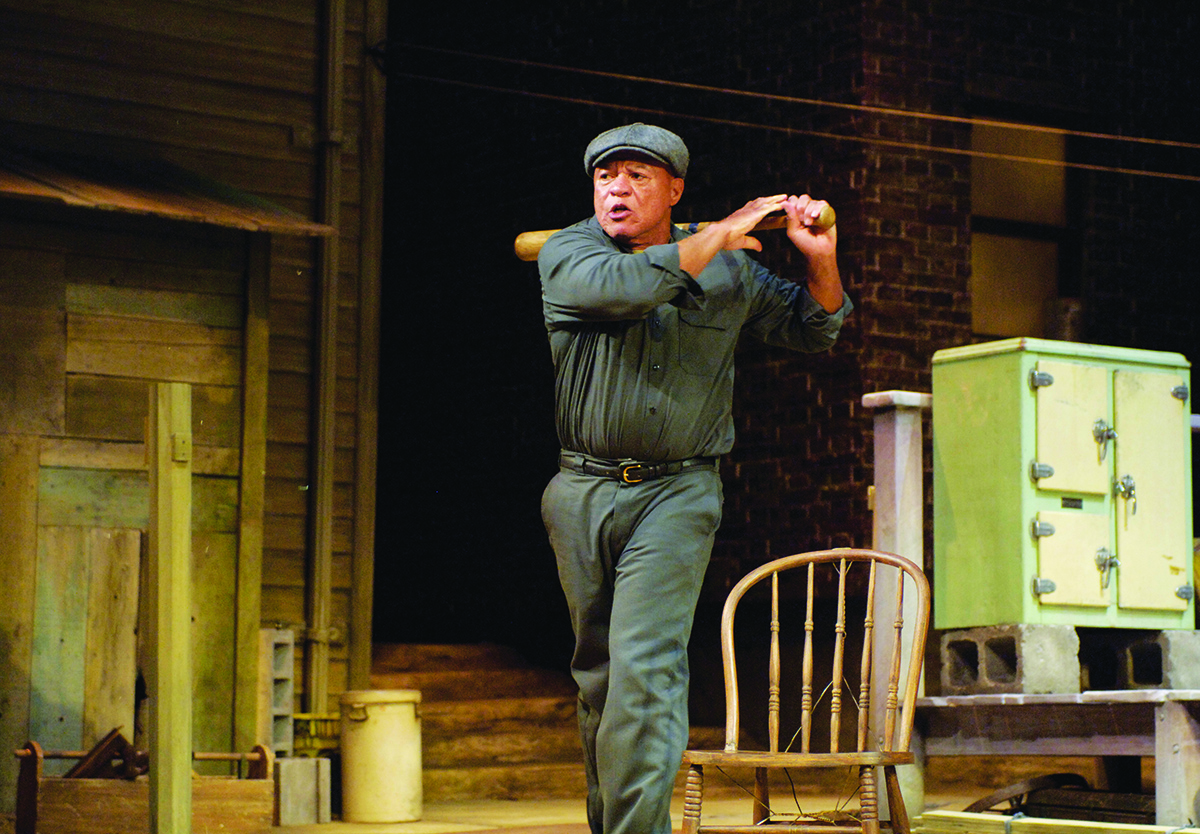


Kevyn Morrow

John Guare


Brian O’Bryne and Swoosie Kurtz in Frozen
Niche theater for classics still going strong in 25th year
Niche theater for classics still going strong in 25th year
Cathy Kurz and her Brigit Saint Brigit Theatre Company
©by Leo Adam Biga
Originally appeared in April 2018 issue of The Reader (www.thereader.com)

A quarter century since Cathy Kurz was told, “No one wants to see this stuff,”‘ her Brigit Saint Brigit (BSB) Theatre company still draws paying audiences to productions of the classical canon.
Works by Shakespeare, Shaw, Chekov, Ibsen, Miller, O’Neill, Williams, Albee, Stoppard and other playwright legends grace its stage. Since leaving College of Saint Mary eight years ago, the theater’s moved around and now alternates its site-specific work between Joslyn Castle, First Central Congregational Church and other venues.
This 25th anniversary season concludes with Uncle Vanya, April 5-20, at the Castle and The Shakespeare Revue, May 3-24, at First Central, on select dates. All shows are 7:30 p.m.
Low overhead helps keep expenses down, but what’s truly made BSB sustainable without a fixed home is an unwavering commitment to mission.
“Going to rehearsals and working with actors and reading all these plays and thinking about them – that work is everything. That produces the endorphins that make everything else happen,” said Kurz, BSB artistic director and co-founder. “I know the medium, I know the story, and when I read it, I can imagine the story in the medium, and that makes all the difference.”
It helps she’s yoked to a fellow believer in her husband, Scott Kurz, BSB managing director and frequent actor.
Her own fascination began in her hometown of Wichita, Kansas. First, watching television productions, then film adaptations and, finally, live theater.
“I just remember being gob-smacked. I would still be sitting there when they were sweeping up. I was entranced by the smell of the greasepaint, the whole thing, I knew nothing about how it worked. I just knew I liked being there.”
The theater became her home through studies at Friends University (Wichita) and the University of Nebraska at Omaha.
“Trying to translate these plays to the stage and working with actors to find the extra dimension that occurs in the theater has been the greatest love of my life. I’ve had so many incredible learning experiences.”
She feels classic theater can touch all of us deeply.
“Story is the oldest form in the world. Humans love to be told stories, The reason why these scripts have lasted is they’re so good. People don’t get an opportunity to see them. When they do, they realize today’s dramas pale in comparison, and then you combine that with the fact it’s live, it’s right there, and it’s really spellbinding. “There is no spectacle that even remotely can do what theater does. It’s that visceral encounter with talented live actors working right in front of you in a play that’s well-paced and interpreted. There’s just nothing like it. It’s spectacle. You can’t pause it, you can’t start eating and drinking or get distracted. It’s right there and it amazes people.”
When she moved to Omaha in 1980, the Norton Theatre was the city’s only regular classics showcase, Kurz directed several seasons there. When it closed, she felt adrift. Stage manager Cathy Murphy-Barron and actor John Jackson agreed they should stop simply lamenting its loss and, thus, they formed the nonprofit BSB.
“I didn’t know if people would come. I was discouraged from doing it by others,” Kurz said.
She persisted anyway, buoyed by her fellow travelers.
“If, as a director, you have talented, disciplined, dedicated actors and you can match them, then you’re going to do it. I’ve never believed you have to have a fancy backdrop or electronics or big screens. That’s not how we are. If you believe in the power of theater and this material, you’re going to do it wherever you can.”
BSB found an instant following and developed a company of players.
But, she acknowledged, if the Norton hadn’t closed, “i don’t know if I would have started the theater.”
BSB produced its earliest shows at Joslyn Art Museum, then Bellevue University, before taking residence at College of Saint Mary in 1997. BSB stayed 11 years.
“College of Saint Mary was just pivotal. They were so supportive of us. We had storage space, dressing rooms, offices. We rehearsed and constructed sets there. People liked the location. We really did build a lot of audience over that time.”
But when CSM experienced an enrollment boom, it reclaimed the space.
“We were really sorry to leave.”
That was 2008. Then came a twinning experiment with the Blue Barn, followed by a stint in the Capitol District before settling at the Castle and First Central. One-offs happened at Mastercraft and 40th Street Theatre.
The Castle’s 19th century architectural splendor lends itself to period pieces without having to build sets and First Central’s flex space allows great freedom.
Kurz wasn’t sure audiences would follow BSB from venue to venue, but they have. Now she wants the uninitiated to know that instead of treating Chekov’s Uncle Vanya as some dry academic-historical exercise to sit reverently through, it’s okay to laugh.
“It’s not dour. There’s a lot of humor. It’s just life.”
The greatest affirmation she receives is seeing patrons after a show “affected” the same way she was when first captivated by theater.
“There isn’t a greater gift.”
She’s grateful a new generation of theater lovers is being cultivated by BSB public after-school programs conducted by actress-educator Patty Driscoll.
By Kurz remaining true to her vision, BSB remains vital.
“This 25 years has has a lot of ups and downs, tension, drama and worry. The thing that’s kept it going is the belief in it and the love for it.”
Visit http://www.bsbtheatre.com. Read more of Leo Adam Biga’s work at leoadambiga.com.
MUST-SEE THEATER “Starkweather” by Doug Marr, March 8-11, Florence City Hall
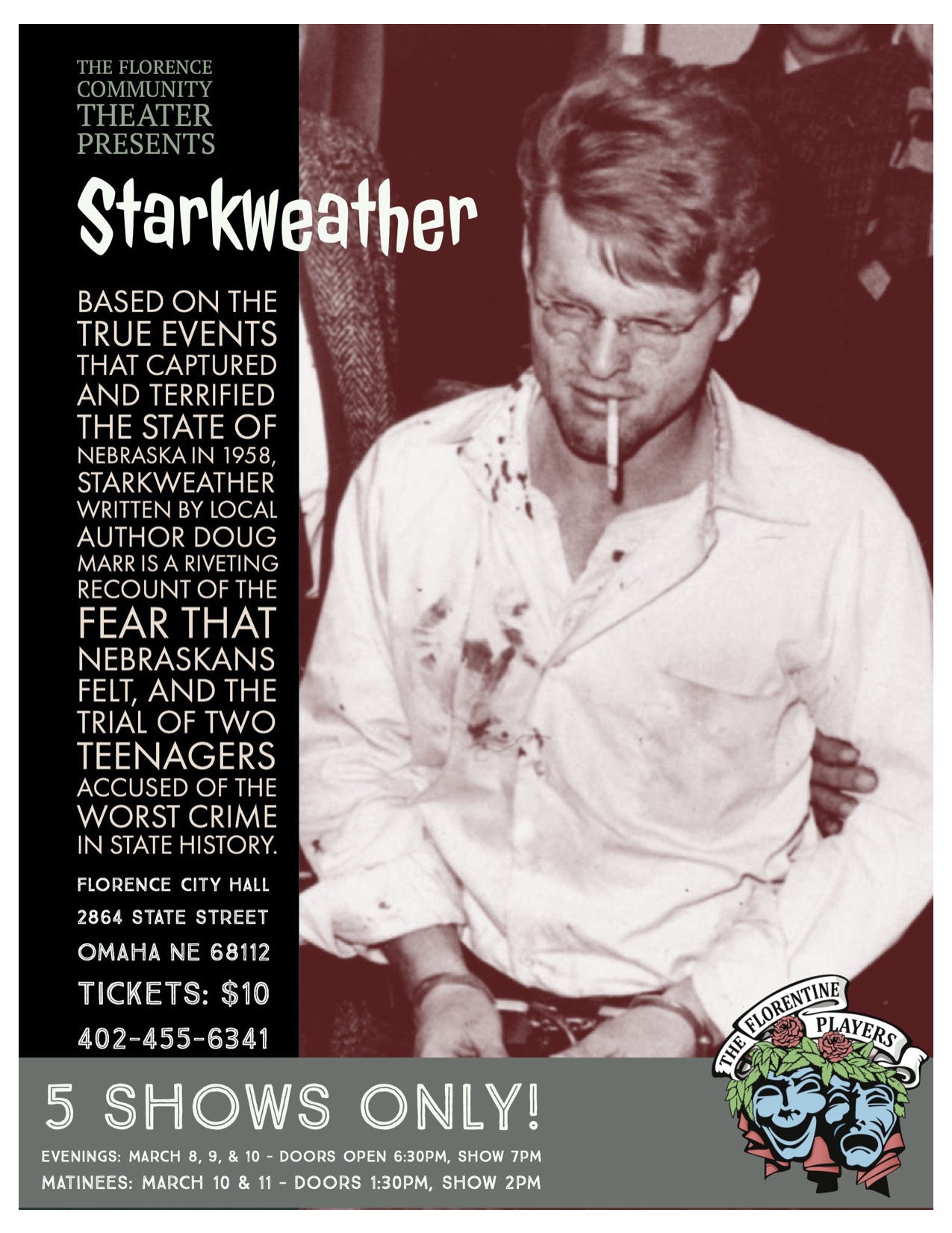
MUST-SEE THEATER
“Starkweather” by Doug Marr, March 8-11, Florence City Hall
The Florence Community Theater proudly presents: The FCT Studio Series production of “Starkweather”
“Starkweather” is based on the shoclomg real-life events of December 1957 thrpugh early January 1958 when 19-year-old Charles Raymond Starkweather and his 14-year-old girlfriend, Caril Ann Fugate, engaged in a killing spree which ended with 11 people murdered in Nebraska and Wyoming. This was the first serial massacre to capture the nation’s attention. It happened some years before the Boston Strangler, Richard “Dick” Hickock-Perry Smith, Richard Benjamin Speck and Charles Manson murder sprees. After the initial killings. a massive manhunt ensued in pursuit of the suspects, neither of whom had shown any obvious signs of such depravity. Until Starkweather and Fugate were apprehended by authorities, much of the American Midwest and West was on high alert because of the seeming randomness of the killings and the fact that they happened over a several hundred mile span. The fear was intensified by the pack media coverage of the killings and the sheer size of the manhunt. There was also the uneasy feeling that something unhinged had been released in the placid late 1950s. No one could understand how two teenagers could seemingly just snap and act with such unadulterated evil. Residents of rural communities armed themselves to the teeth. Written by Omaha playwright Doug Marr (of Diner Theater fame), “Starkweather” is a riveting dramatic evocation of the fear Heartland residents felt and of the surreal and sensational trial that followed of the two teenagers accused and found guilty of these heinous crimes. Orignally staged at the Omaha Community Playhouse to great acclaim, this work has rarely been mounted in recent decades and is now being revived in the 60th anniversay year of Starkweather’s capture.
Disclaimer: This show contains adult language or situations. Children under 17 will not be admitted.
Show Dates and times: March 8 – 11, 2018; Thursday – Saturday 7 p.m. and Saturday and Sunday 2 p.m.
Tickets: Reservations can be made by calling (402) 455-6341 or online at http://florencetheater.org/tickets/. Single General Admission tickets are $10; TAG Members $8; Patrons Aged 60+ $8; Or Groups of 8 or more $8.
Roni Shelley Perez staking her claim as Nebraska’s next “Broadway baby”

Roni Shelley Perez staking her claim as Nebraska’s next “Broadway baby”
©by Leo Adam Biga
Soon appearing in El Perico
Nebraska is far from the theater capital of the world, yet many natives have trod the Broadway boards – from Henry Fonda to Sandy Dennis to Andrew Rannells. Actress-singer Roni Shelley Perez, 21, hopes to join their ranks. The Omaha Marian and University of Nebraska at Omaha graduate has graced several area stages and is now pursuing her dream in New York City during winter audition season.
This daughter of native Filipino parents has prepared for this all her life.
“I’ve been singing since I was very young. I sang-along to Barney songs ay 3. I started playing guitar at 8,” said Perez.
She also plays the ukelele.
She began performing for family functions and Filipino community gatherings at 11.
“I used to play guitar and sing Filipino covers.”
It earned her spending money.
But performing is, first and foremost, “a healing art” for Perez. “Stories told in songs can be relatable. People going through that same situation need to hear these stories. It’s hard for people to be vulnerable, so to see someone else vulnerable helps them to know it’s okay to feel.,” she said. “Performing arts can be very impactful. It’s a shareable, very much a collective experience.”
In SNAP Productions’ mounting of In the Heights at Omaha South High last spring, Perez’s character Nina mirrored her own life as the eldest child of aspirational immigrant parents in a tight ethnic community.
“Like Nina, there was all this pressure on me growing up to ‘Go, you can do this.’ That role answered a lot of questions for myself.”
She found support as a UNO Goodrich Scholarship Program recipient.
“Goodrich was like a family and definitely one of the best things I took from my undergrad. They believed in me and took a chance on me.”
Her parents were initially dubious when she majored in vocal performance and musical theater.
“Every immigrant parent is hoping for the American dream and I’m going into a field where financial stability is not really a thing. They were scared for me to go into music. But then as soon as opportunities started happening (scholarships, prizes, accolades), they realized, ‘Hey, you can do this.’ I feel like I’ve been doing it for so long and it’s been such a huge part of my life that I can make it into a career.”
The mainstream success Filipina performers enjoy, ala singer-actress Lea Salonga, gives added hope.
“She’s a big influence. She represents the Filipino community in musical theater.”
Filipino actresses have made waves in Hamilton in New York and London. “All these people are just very inspiring.” Then there’s singer-actress Sarah Geronimo. “Growing up, my mom would always play her music and I always looked up to her. She has a beautiful voice. I wanted to sing like her. I wanted to be like her.”
Perez dreams of Broadway but for now her goal is to “just perform professionally” as a working artist. “If it;s there, then I want to turn it into something bigger. I don’t even know what I’m capable of yet.”
It’s doubtful any performer from Neb. has been more prepared at such a young age. She boasts years of high-level training and performing. At 18, she won the part of Mary Magdalene in an Omaha Community Playhouse production of Jesus Christ Superstar. She’s worked with New York stage professionals at the Open Jar Institute, NYU Steinhardt’s Summer Study in Musical Theatre and Shetler Studios’ workshop of Zanna Redux.
“I’ve been going to New York every year now to see where I am ability-wise. I’ve been making connections.”
In Omaha, she got scholarships to Broadway Dreams Foundation Summer Intensive Workshops in 2013 and 2014, studying under and performing with Tony Award nominees and winners. It grew her confidence.
“It showed me what I need to continue working on but also it was like, ‘Hey, if I’m able to perform with them right now, I’ll be able to stand my ground and eventually get to their level too.’ It’s been very encouraging and definitely humbling. Like, I’m clearly not the best, but I can work at it and come to that level.”
She’s participated in master classes through Omaha Performing Arts. The 2016 National Student Auditions competition winner has been recognized by the Playhouse, Theatre Arts Guild and Omaha Entertainment and Arts Awards. Last year, she and a classmate won first place in the Musical Theatre Division of the National Opera Association’s Collegiate Opera Scenes Competition.
She attributes her drive to her hard-working parents, who own their own business.
“I want to give back and work just as hard. I can’t even fathom coming from a third-world country to the United States with poor English and trying to start a family and career. It’s very inspiring and always on my mind as I take on new roles and shows.”
At 20, Perez earned the lead in Heathers at Omaha’s Blue Barn Theatre. Her character sings the entire show, so she trained to build vocal stability and stamina. It was both her first lead and first paid acting gig.
“That role came very close to my heart,” she said. “I’m grateful the Blue Barn took a chance on me.”
She returned there this past summer as the title character in Priscilla.
Her most “demanding and rewarding role” came last fall in UNO’s production of Spring Awakening.
“This one really tested my vulnerability and sacrifice. I had to let everything go. That was very hard to do.
Everything I’m doing is giving me a better version of myself or helping me be my best. There’s always something to learn – always. I love a good challenge.”
Blue Barn artistic director Susan Clement-Toberer, who’s twice directed Perez. is convinced she has what it takes to make it.
“I expect it and I’m exhilarated for the moment when that happens,” Clement-Toberer said. “She was born to do this. She’s got the vision of what she wants to do, and if there are nos along the way, it’s not going to stop her.”
Perez herself said she’s going after it now “because I think I do have what it takes to succeed.”
Follow her at www/ronishelleyperez.com.
Noah Diaz: Metro theater’s man for all seasons and stages
Theater prodigies of the kind portryaed in the Wes Anderson film “Rushmore” have their antecedents in real life and just like in that story, they spring up in the most unexpected places. Omaha’s Noah Diaz is the latest Omaha theater prodigy and he finds himself in some very good company historically speaking. Perhaps the best known American theater prodigy, the late Orson Welles, first emerged as a stage presence to be watched at the Todd School for Boys in Woodstock, Illinois before he brazenly announced himself to the world in Dublin and then New York City. Across the pond, Kenneth Branagh, born in Belfast, first asserted his thespian bent in elementary school in Reading, Berkshire after his family’s move to England, and then he displayed his precicious talents at London’s Royal School of Dramatic Art. Back home, Omaha has had its own share of youth-must-be-served stage lights. The most famous of them all, Henry Fonda, was encouraged to try his hand at theater by Dottie Brando, mother of future stage-film icon Marlon Bramdo, at the Omaha Community Playhouse. A young Henry found his calling three and threw himself into all aspects of the craft – from building, painting and taking down sets to acting on stage. Dorothy McGuire soon followed him in the fold. They appeared together in a 1930 production at the Playhouse. Older than her, he left first to pursue a life in theater. Her family moved from Omaha and she soon left home to pursue her own career in theater. They both made it, of course, and two and a half decades after they shared the stage in Omaha in that 1930 show, they returned, this time as Broadway-Hollywood stars, to perform together in “The Country Girl” as a fundraiser for the new Playhouse. Now comes Noah Diaz, who by his early 20s has racked up more theater credits than most players twice or three times his age. He’s also been nominated for and won a slew of local theater awards for his acting. But he’s also a director and his work behind the stage has received raves as well. But it turns out his real calling in theater may be as a playwright. An original piece he’s written, The Motherhood Almanac, is being workshopped around the country and makes its world premiere here in January at the Shelterbelt, which is his theater home. Not to put pressure on him, but he may just be the latest in a recent line of Omaha-bred theater talent – Andrew Rannells, John Lloyd Young, Stephanie Kurtzuba, Quiana Smith, Kevyn Morrow – to make it to Broadway one day. Remember his name.
Noah Diaz: Metro theater’s man for all seasons and stages
©by Leo Adam Biga
Appeared in El Perico
Noah Diaz has been a force of nature in metro area theater since age eight. Still just 23, he owns 90-plus credits and multiple Omaha Theatre Arts Guild and Omaha Entertainment and Arts Awards nominations and wins.
He’s also a feted writer-director. He’s in good company as a local theater prodigy. A young Henry Fonda and Dorothy McGuire blazed early trails at the Omaha Community Playhouse before Broadway and Hollywood stardom. More recent stage-screen stars Andrew Rannells and John Lloyd Young got their performing starts as kids in Omaha theater.
Diaz, a University of Nebraska at Omaha student, is set on making theater his life but he only recently concluded that writing, not acting, may be his calling. A play he’s written, The Motherhood Almanac, is creating buzz. He served a residency with it at the Seven Devils Playwrights Conference in Idaho. Two New York City theater companies will workshop it in 2017. It premieres at Omaha’s Shelterbelt Theatre on January 27.
He said it was in Idaho he discovered his true “theatrical path,” adding, “I’ve been directing a number of things recently and I’m enjoying directing very much. But I think I might be a playwright. I think that might be what I want to do. That was like a very crystal moment of clarity for me.”
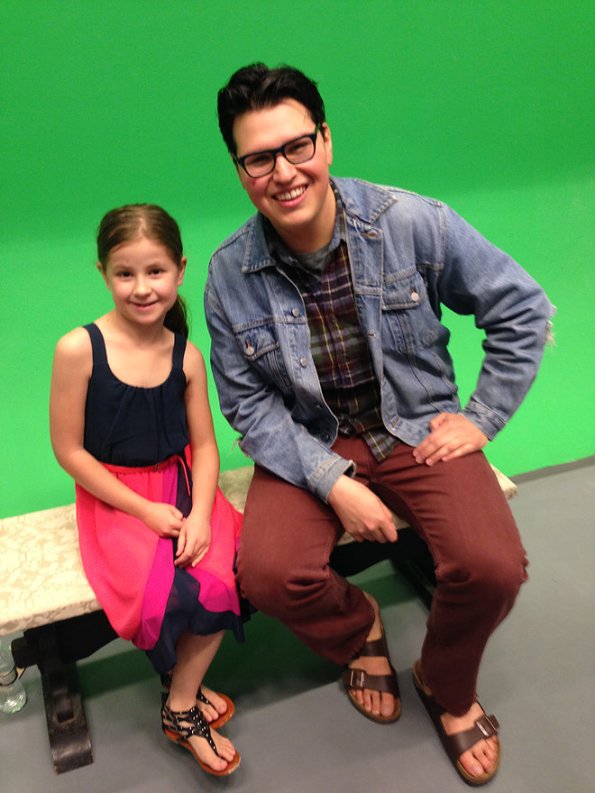
As a kid, Diaz and his cousins put on shows for their parents, but he’s been been writing since childhood, too. Almanac began as a poem he wrote as a youth.
“Over the years it expanded and kept unfolding. That poem turned into a handful of different poems that turned into scenes that turned into stories. It was two years ago I sat down and pieced it all together and understood what I had written. It’s a fragmented, nonlinear story with seven actresses about mothers across time and space. It’s my answer to the question – what does it meant to love somebody other than yourself.
“I’m constantly working on it, developing and workshopping it.
That’s why I’m opening myself up to these opportunities to work with different companies and actresses.”
He’s always had the internal drive and discipline writing requires, just as he’s long known he was meant to do theater.
“It’s always been a thing I’ve just understood about myself since I was young.” His parents encouraged his theater interests. “They recognized where my passions lay and they were about fostering my achieving that.”
His pursuit has landed him on virtually every metro area stage, including the Omaha Community Playhouse and The Rose. “By sheer tenacity I’ve wracked up a number of credits and a lot of experience.” No matter where he does theater, he’s younger than his fellow creatives, “I’ve been very fortunate to have had zero run-ins where age is an issue.. I’ve worked with actors who are so open with their process that they’ve allowed themselves over to me. It’s a profoundly high compliment in my book.”
He added, “The only thing I find tricky to maneuver is simply getting the work – being given opportunities. Directing work is hard to come by. It’s scary for people to put a full production in a 23 year-old’s hands. Luckily, I’ve made an artistic home at the Shelterbelt. They’ve been great to me. They’ve given me a number of opportunities.”
He counts theater veterans as teachers.
“I’ve worked with a staggeringly high number of talented people on stage and off. I’ve learned from them, I’m still learning from them. I have mentors, big and small, everywhere. I think in many ways I was raised by my mentors. I received theatrical and life lessons working in shows.”
He admires writers who sacrifice to get their stories told. “I’m so inspired by local playwrights like Ellen Struve, Beau Berry, Kaitlyn McClincy, Laura Leininger-Campbell, Nick Zadina, Joe Basque.” He’s collaborated with some.
He sees a vibrant local stage scene with “a big surge of people wanting to make theater.” He also sees gaps that need addressing. “I’m a very big advocate for accessible theater,” said Diaz, a special education and communication disorder major. He played a deaf character on stage in SNAP Productions mounting of Tribes. “Opening possibilities and opportunities for inclusivity in theater is important to me. Theaters can do better in terms of offering interpretive performances. I taught a deaf integrated acting class at the Rose (Theater) and I will be training to be an audio describer for the blind.”
Since he’s done so much so early, Diaz often gets asked – why haven’t you moved away yet to try Broadway or Hollywood?
“It’s simply about going when I’m ready. I’m still in school. I’ll be applying to a number of MFA programs this fall for playwriting.
Hopefully I’ll be be accepted to one to begin in the fall of 2017.
“I will move away eventually and work.”
Chicago’s vital theater community is a likely landing spot. He’s well aware of those who’ve left here to find stardom.
“If great success comes my way, that’s cool, but I’m more interested in doing the actual work itself.”
Meanwhile, he’s not giving up acting quite yet. “I will still continue to do it because I enjoy it.”
For details and dates on Almanac’s run at the Shelterbelt, visit http://www.shelterbelt.org/.

FINDING HOME: With its own home, the Blue Barn completes a long road to creating edgy theater
Omaha has institutional-type theaters and grassroots-type theaters. For most of its life the Blue Barn Theatre has been of the grassroots variety but now that a major capital campaign has allowed it to build its first permanent home, the Blue Barn is suddenly in a far more secure position than ever before. Of course, that “suddenly” only came after decades of passion, struggle, invention and equity in building community capital. And once the theater called in its chips and started rasing funds for the project, great pains were taken to retain its edgy, independent, homemade spirit in the beautiful new digs. On a personal note, fate decreed that I write three stories about the Blue Barn’s momentous move into this new space, and for three separate publications no less, and all this after years of not writing about Blue Barn. This is the second of those pieces and it appears in the September 2015 issue of The Reader (www.thereader.com).


FINDING HOME: With its own home, the Blue Barn completes a long road to creating edgy theater
Past, present, future converge in new space
Appearing in the September 2015 issue of The Reader (www.thereader.com)
Until now the Blue Barn Theatre has been like Omaha’s many other small stage companies by operating on a shoestring in makeshift spaces. This grassroots passion project was born of a band of New York drama school transplants afire with the idea of starting their own troupe. Relying more on creativity, charity, thriftiness and ingenuity than real budgets, they mounted plays in rented and borrowed spaces.
Suddenly, Blue Barn’s done the unthinkable for such a by-the-seat-of-your-pants endeavor by parlaying years of scommunity equity and creative capital to build its own space. It’s Omaha’s first purpose-build independent theater to go up in decades. The arresting new digs at 10th and Pacific are the result of Blue Barn staying the course, remaining true to itself and letting philanthropists catch up to the edgy aesthetic that’s gained it a loyal following.
The theater occupied several improvised spaces from its start in 1988, never really securing a place to call its own. It did find stability at the 11th and Jackson Old Market warehouse site where it was housed the last several years. Though hamstrung by cramped quarters not really suited for theater and lacking amenities, Blue Barn made the intimate environment – exposed vents and all – work. Blue Barn personalized it with help from artists designing original posters and custom fixtures.
The new theater – part of a mixed used site with residential units, a restaurant and a public garden – features enlarged, upgraded facilities and a flex indoor-outdoor space opening onto the garden. As an ode to its name, the exterior evokes a hand-raised barn via weathered steel walls framed by rebar poles and the roof’s pitched gables. The interior captures the old Blue Barn in hand-crafted floor and wall elements. The theater seats are from the former site. The way the audience enters the auditorium follows the flow of the old space. Splashes of blue recur throughout.
The new theater is the culmination of a vision shared by original Blue Barners’ Kevin Lawler, Hughston Walkinshaw, Nils Haaland and Mary Theresa Green. Some took turns at the helm. Each moved on, though never breaking ties. All but Green attended the SUNY-Purchase theater school. Her then-marriage to Lawler brought her into the fold. As the legend goes, Lawler was visiting Omaha when Old Market denizens embraced his theater dream and offered space to realize it in. He got Walkinshaw and Haaland to come join him. Clement-Toberer arrived a year later. She’s now led Blue Barn longer than anyone.

Kevin Lawler
The group’s deep, familiar kinship was evident one August morning at the new space. Emotions ran high during a tour and roundtable discussion. All agree the site fulfills what they once only dared imagine.
“Yes, it is the embodiment of a dream,” Lawler said.. “It’s just glorious to see. When we were in school in New York we’d go to these small off-Broadway places and see incredible theater and I grew up in Minneapolis where there are a lot of small incredible theaters just like this. So that was always a dream and to see Susan be able to make that happen for the Blue Barn in Omaha is amazing.”
“Every dream we’ve had in our entire existence is embodied in this building and we can keep dreaming,” Walkinshaw said.
Realizing that dream has been replete with challenges, including one space that burned down and people who burned-out.
“It’s been a road,” Clement-Toberer said.
Keeping it going meant digging into personal finances.
“A lot of sacrifices, big life sacrifices,” Lawler said. “There’s blood, sweat and tears in here. Nobody at this table has a retirement account. Nobody at this table probably has a savings account. We’ve all given our adult lives into making this art. The rewards have been with each other and the people we’ve been able to share stories with, and you couldn’t ask for more than that. So, yeah, there’s a lot invested.”

Susan Clement-Toberer
They say it’s all been worth it, given how far Blue Barn’s come.
“There were times we were homeless and there were times where there was a real chance the theater wasn’t even going to survive.,” Walkinshaw said. “Now it has, and I’ll tell you what, I breathe a lot easier, I don’t have to worry about the Blue Barn sustaining. I feel relieved now – like the Blue Barn way will continue now permanentlyand all the sacrifices we made and the passion we gave now will live.
“We survived long enough that the town made this happen. It made Film Streams happen, it made Saddle Creek (Records) happen. It found those art forms a little bit earlier. Now it’s made this happen.”
For Clement-Toberer it means, “now we know we have a home that we can create in where we can dream big, we can dream in ways and forms of storytelling we were never able to do before.”
Walkinshaw said the new building is “the final stage” of Blue Barn’s evolution “in terms of having a permanent place to live, but this permanent place to live also has endless possibilities for what the Blue Barn can do in terms of storytelling and play production.”
“To have your own space is pretty phenomenal,” said Haaland, who acts there. “There’s a long list of people that have definitely helped us out. I can’t help but have tremendous respect for all those who have sort of paved the way. Mary and Kevin saved it a number of times out of their own pocket. Hughston stood up and was the leader for a long time. Kevin led for a very long time. And then I’m truly just humbled by what Susan has done. It does take one person to lead and she has done just an exemplary job. I mean, we are very fortunate to have her.”

Hughston Walkinshaw
Green said, “I’m very moved just by the generosity of everybody coming together to put this together. It’s breathtaking, really, the scope of how beautiful it is. It’s gorgeous. It’s a testament to the community’s support for the theater all of these years.”
The Blue Barn’s long been a darling of Omaha tastemakers, with the likes of Alexander Payne among its fan-support base. But it only recently got corporate sponsors such as Omaha Steaks and donors such as developer-philanthropist Nancy Mammel to buy in.
Despite many lean years the theater gained enough credibility to launch a capital campaign to fund construction of the new site as well as raise funds for an operating budget and endowment.
Clement-Toberer said that in the process of Blue Barn gaining its first permanent home her main concern was maintaining the theater’s funky, grassroots identity and intimate relationship with patrons.
“The biggest struggle for this building in creating our home has been to keep the Blue Barn voice clear and pure to who we are and to how we create theater. Everybody thinks they know what a theater should be and how we should produce theater. Even with this major transition of moving into our own space there have been times where people say, ‘But that’s not how you do that in theater, you need to do it this way.’ Well, we don’t have to do it that way.
“If we want to change something after we’ve opened, we change it because it’s not instinctually, organically right for the story.”

Mary Theresa Green said the Blue Barn way is a process born of freedom, exploration and seizing inspiration where you find it, whether repurposing materials or calling in favors for props and set pieces.
“To me, it means producing something very organically and from a place of love and hope,” Green said. “Like the found objects and somebody who just happens to know somebody who has free things we can use and put together. Because everyone is so creative and imaginative and free and almost very childlike in creating the pieces, they become these deeply beautiful shows that really affect and touch people, way beyond just basic entertainment.
“I mean, a Blue Barn show to me is something where each audience member will take their own personal journey inside of themselves and connect with it on a really deep level personally.”
“A lot of times we are still scrapping, getting what we can to put up last minute stuff,” Haaland said. “But I think it’s really evolved now in that it’s much more methodical. With age there’s so much more experience, wisdom and maturity.”

Lawler, now Great Plains Theatre Conference producing artistic director, described Blue Barn’s guiding ethos.
“There’s a certain type of show I think we all just loved when we saw it and if I had to put it into words, it’s like what any great work of art will do when you see it or partake in it, you walk away from it being cracked open as a person and looking at and feeling the world differently. Even if it’s an incremental amount of growth, it happens, and it’s very distinct. You can ask all of us and we all knew then this is what we wanted to facilitate with every show we put up.
“It’s like, we don’t have any money, all we have is ourselves, but somehow we’re going to get to the heart of this story so deeply it will facilitate this experience of opening up a compassion, and the people who come and share in the story will have that experience. That to me has been the seed of the whole thing from the beginning.
“And then all this has happened around it,” Lawler said.
Clement-Toberer, who with managing director Shannon Walenta built the theater’s business side to balance the artistic side, believes she knows why the community’s repeatedly come through with support.
“I think it’s pretty simple – it’s our mission. What we do on stage has not changed over the years. Matured a little bit, which I think is good. But I think it’s the stories we tell and the way we produce theater. And the way we built this theater is the way we also produce theater – the Blue Barn way, which is found objects that become magnificent and sets we build at cost but create a great vessel to tell a story. Our budget’s a little higher but I’m still digging through dumpsters.
“I think this building is a great manifestation of the history all of our work over the ears and of our training at Purchase. It’s been the common thread and people have connected to that. We know how to tell a great story and how to produce a show without forgetting the heart of the piece.”
She found the right interpreters to articulate these things in the building in Joshua Dachs from New York-based international theater space planning and consulting firm Fisher Dachs and in architect Jeff Day of the Omaha and San Francisco-based architectural firm MinDay.

Jeff Day
“I think she sensed I would understand where she was coming from, which I did,” Dachs said. “When I visited the Blue Barn it was clear it’s a kind of artisanal handmade theater company. The old space had amazing show posters designed by artist friends – beautiful woodcuts and lino-prints – as well as handmade ceramics by Susan’s husband (Dan Toberer) and a hand-carved wood counter by an artist friend.
“The whole place had this wonderful, very specific spirit. And the biggest fear she had and that I wanted to help her avoid is that in moving to a new building it would somehow get sterilized and become generic and no longer reflect the spirit of the company and the character of the place it’s built up over many years.”
The very things bound up in Blue Barn drew Dachs to the project.
“What captured my imagination was the special quality and character of the Blue Barn,” he said. “It’s incredibly unique. The sort of mythology of how it was born and all of the artists that have played a role in making it what it is. The idea that this kind of artisanal theater company was going to make itself a home and fight the urge to become grand and formal and all of the things that happen a lot.”

Dachs admires the uncompromising stand Clement-Toberer’s taken to stay true to Blue Barn and not go for the slick or the inflated, like the 300-seat theater some pressured her to pursue. The new theater accommodates about the same number of patrons, 96, as before.
“It takes a really strong leader to fight that inclination and to stay within your means and to build something that’s right-sized, so that it can endure and sustain itself into the future. That’s really hard to do. But she’s really smart.”
Architect Jeff Day said, “There was a very strict sense of budget, so we knew from the very beginning how much they could spend on the building, and Susan was really on top of things to make sure this was achievable. We had to cut things out here and there. She was willing to make sacrifices on things they don’t really need.
“It’s not a showy building in the sense of being super-refined. It’s really a place for improvisation. We’re trying to leave a certain amount of open-endedness to it. The intention is that the building will allow them to grow into it and modify it over time. It’s really an evolving space. We thought of it as a framework for them.”

Mary Theresa Green
Just as Dachs did, Day found the project appealing because of how the theater does things.
“Blue Barn likes to think of itself as experimental and challenging,” Day said. “They’re not afraid of doing edgier things that might shock people or cause people to think. Obviously for an architect that’s exciting because it sort of gives us justification to do things that are unfamiliar as well, which we love to do.
“From a planning standpoint probably the most unique feature is that the back of the stage can open up to the covered outdoor space – we call it a porch yard. Then that opens up to the garden, so you really get continuity from theater to city. They can close the doors and have an acoustically-sealed space that will work like a black box or studio theater or they can open it up and have these events with really unique stagings.”
Many ways were found to give the new site the handmade qualities that distinguished the previous venue.
“There’s a lot of character in that theater which draws directly from the Blue Barn’s old space,” Day said. “It was really an attempt to break away from the neutrality of the black box theater type. For example, the old Blue Barn had this warehouse column structure and without replicating we brought some large timbers into the space to help create a framed area around the seating.”
Clement-Toberer calls it “the nest.”

The lobby of the new Blue Barn Theatre features thousands of pieces of recycled wood and its floor was reclaimed from a demolished building.
MEGAN FARMER/THE WORLD-HERALD
“It brings the scale down to just slightly bigger than the old Blue Barn,” Day said. “It gives the sense of intimacy they’ve had while creating a sense of texture and character.”
Since collaboration is a hallmark of the company, the theater commissioned artists in different media to contribute their talents. The heavy timbers used in the new theater’s eight columns were salvaged and milled by Dan Toberer, a ceramist who collects felled trees and sawmill scraps he variously repurposes or uses in his wood-fired kiln.
“We identified different elements that could be turned over to artists and they weren’t working necessarily under our direction,” Day said.
Toberer also created original ceramic pieces and built the sinks in the bathrooms. He also sourced scrap wood that contractors used to clad the theater box in.
Omaha artist Michael Morgan did a piece of the lobby and vestibule in dark grey bricks with blue glazing.
Kris Kemp from the Hot Shops fabricated the enormous rear door that opens onto the green space.
Jim Woodhill of Kansas City, Mo. did lighting elements and furniture.
For Day, everything works together to create a mystique.
“I think of it as it almost being a character in a play. You can’t escape the fact this is the Blue Barn Theatre when you’re in there.”

Joshua Dachs
He said the theater’s been designed with the eclectic character of its delightfully messy residential-commercial surroundings in mind.
“It does replicate sort of in a way some of the forms you might find in this neighborhood, which is really mixed up. So the idea was to make this complex of buildings feel like it’s part of that.”
Much thought was put into the theater’s setting since it’s now part of a robust South 10th Corridor with the Old Market, the Durham Museum, the House of Loom, KETV, Little Italy, Cascio’s. No More Empty Cups and the Bancroft Street Market. Vic Gutman’s coming Omaha Market will be just to the south of the Blue Barn-Boxcar complex.
“It’s a site in the city that’s very prominent,” Day said. “It could be a demonstration for other ways Omaha could think about development. The fact that we essentially have three projects on one site all working together is quite unique. We’re thinking of this as a microcosm of the city that has public space, nonprofit cultural space and private space. We sought to design this as kind of an urban arts hub.”
Even with the new theater, Clement-Toberer’s wish list is not quite complete where the Blue Barn’s concerned. She said the family-like dynamic she and the founders used to fire their work together is something she’d like to recapture there.
“It makes me wish for an underwriter to underwrite something here like the Humana Festival in Louisville, Ky, where we all could be under this roof daily, creating. I’m waiting for the corporation in Omaha progressive enough to realize their connection with art will make whatever it is they do grow as well. I’m waiting – they’re out there.”
Blue Barn opens its 27th season on Sept. 24 with The Grown-Up. For details and tickets, visit http://www.bluebarn.org.
NEW BLUE: Blue Barn Theatre putting down new roots
I do not write about theater a lot, but often enough to keep me in the game and I’m always eager to do it because there is nothing else like good live theater, and Omaha has more than its share of solid stage offerings. The Blue Barn Theater is one I’ve written about only from time to time. It is especially fulfilling to write about this well regarded institution again on the occasion of its soon to open new facility. Here is my new piece about the Blue Barn for Metro Magazine (http://www.spiritofomaha.com/Metro-Magazine/The-Magazine/). It looks backwards and forwards. As fate has it, I will soon be writing more on the Blue Barn.
Ironically, I recently did another theater piece for the same magazine a few months ago, only that time on the Omaha Community Playhouse and its 90th anniversary. My opus on the Omaha Community Playhouse is at:
Celebrating 90 years, the Omaha Community Playhouse takes seriously its community theater mission
NEW BLUE: Blue Barn Theatre putting down new roots
©by Leo Adam Biga
In the August-September-October issue of Metro Magazine (http://www.spiritofomaha.com/Metro-Magazine/The-Magazine/)
Edgy material and intimate work have always defined “the Blue Barn way” and now this once nomadic theater finally gets a home of its own but remains committed to staying true to its rebel image.
When the Blue Barn Theatre celebrated 25 years in 2014, it joined the select ranks of Omaha’s longest-lived playmaking companies.
Now BB is putting down serious roots by moving into a new home at 10th and Pacific. A $7 million capital campaign is underwriting the newly constructed building ($5 million) with the imprint of a renowned theater consultant on it. Unusual for a theater this size, funding is to cover a $1 million operating endowment and a $1 million endowment.
Upon opening the 2015-2016 season there, BB will have in place what’s needed for another enduring run.
Stronger through the struggle
The cutting-edge theater’s founders never imagined this. They were fresh out of college diehards from New York City when they launched BB with little more than enthusiasm. Its first two decades saw consistently high quality theater tinged by crisis. The low points included a fire gutting one space, losing the lease on another, a homeless period, serious debt issues and a revolving door of leaders.
Kevin Lawler, now Great Plains Theatre Conference director, began the migration from the State University of New York in Purchase. He recalls building BB’s former Old Market space “on personal credit cards…then watching from across the street as it was destroyed by a giant fire before the first season there was completed.”
BB artistic director Susan Clement-Toberer, who’s led the theater longer than anyone else, feels it’s stronger for the struggles.
“These times when we were in financial stress and maybe made not such smart business decisions really I think strengthened the drive to create Blue Barn-style theater in this town and became a catalyst for needed growth within us. We wouldn’t be where we are now if we hadn’t gone through those tough times.”
Shared approach and consistent mission
BB’s found a niche doing provocative work. Its small but loyal following has stayed true through all the reversals of fortune.
A theater doesn’t survive on passion alone. Clement-Toberer says the BB’s made it by sticking to principles and finally growing up.
“Our mission statement from the beginning has been to produce theater that provokes thought, emotion, action and change. I think the reason we’re in the position we are now of putting down permanent roots is because we have always stayed true to our mission.”
From the start, BB set itself apart as a tight-knit cohort sharing the same ethos. Soon after Lawler’s arrival, SUNY-Purchase classmates Hughston Walkinshaw and Nils Haaland came. Mary Therese Green of Neb. joined this merry band of founders. Clement-Toberer followed.
“The voice of the Blue Barn was born through our training, individual talents, perspectives and passion for our art form,” Clement-Toberer says. “Our coming to Omaha really couldn’t be stopped whether we had one audience member or a hundred. We were kids and we were fired up, and still are, to tell stories.
“I think the play choices in the beginning were very unique and those voices were not being heard in Omaha at the time.”
“The whole endeavor was born of our deep longing to share exceptionally vibrant and surprising stories and to explore life together that way,” Lawler recalls. “When we began we had nothing more than that dream. That passion, free from any other agendas, is a big part of what makes the work at the Blue Barn so special.”
Omaha theater stalwart Jill Anderson is among several local stage artists who found something new there worth following, first as a fan, then as an actress and jill-of-all-trades. She describes how the “singular magic” of the work and “the unfettered, unconventional creativity” transfixed her and still does. “The things that set the Blue Barn apart are the consistent interest in pushing limits, exploring challenging subject matter, aiming really high in terms of talent and production values but keeping things at an intimate level so the audience feels they are a part of the story.”
For most of its history BB thrived aesthetically but lagged when it came to management.
“Artistically we’ve always been strong and we finally built our business side to kind of keep up with our artistic side,” Clement-Toberer says. “We’ve always run the Blue Barn on a shoestring budget. We’ve gone through a lot of different challenges. We’ve been through the ringer.
“But we’ve built from the very beginning the mentality of you don’t have to spend more to do great art and that’s still how the business is run.”
Resources or not, she says, BB’s always been “artistically driven.”
“It’s very unusual in its structure where the board does have say but the artistic director and the work we do is what drives our growth. It’s a very big gift that we’ve been able to retain the core values we began with 26 years ago.”
Along the way, she says, “our voice has matured in a wonderful way,” adding, “It’s still speaking the same language and feeling, just a little more fluently. Sometimes now we do a show more ‘commercially’-based, like 33 Variations. But our process remains intimate and story-driven.” The same with BB’s Our Town production to close last season.
Seeing things through
Relatively few local theater companies have enjoyed its longevity. There were periods when it wasn’t assured of making it another season, much less reaching the quarter-century mark.
“Hughston (Walkinshaw) and I took it over in 2001. Some programming choices that were big and bold ended up not getting underwritten. Then Hughston ended up leaving. I took over leadership fully.”
Looming debt threatened to dim the lights for good.
“I thought, what the hell, the worst thing I can do is close the doors. But I didn’t want the Blue Barn to close on my watch. I was like, ‘Uh-uh, not going to happen.’ It was a grow or go mentality,” Clement-Toberer says. “I think it was my time to run it. I surrounded myself with people i trusted and knew, like Shannon Walenta, my managing director. From 2008 on we started to build it. A fundraiser got us out of debt. From that point on with Shannon as my right-hand woman and the business aesthetic I learned from my father we have steered the Blue Barn to a great artistic and business balance that is fairly equal for the first time.
“I’ve learned to trust my instincts over what anybody else says. Not that I don’t take input but I’ve learned having my own voice is crucial to succeeding and growing. The same with hiring the right people.”
Production manager Amy Reiner and associate artistic director Randall Stevens are other members of her team.
Philanthropist Nancy Mammel says long before joining the BB board “I saw tremendous potential and ongoing growth for the company.” She champions its “dynamic vision” and “track record of excellence” and she feels its repaid “the generous community” support shown it.
Jill Anderson speaks for many in saluting Clement-Toberer.
“Susan has been a great steward of the theater. I think the power of her positive thinking has brought about great things for the Blue Barn. She keeps a strong and steadfast ‘can do’ attitude about the very difficult task of helming the theater. Her persistence is inspiring to me.”
Right place at the right time
There’s wide agreement, too, the theater should prosper at its new site, where it will neighbor with the Durham Museum, House of Loom, the restored Burlington Station, the booming Little Italy district and the coming Omaha Market.
“It’ll be a destination place. I love the area. It’s the perfect place for our home. I couldn’t see it anywhere else,” Clement-Toberer says.
Board member Ariel Roblin, president-general manager of KETV, which occupies the Burlington catty-corner from the new theater, says, “The Blue Barn is the perfect addition to the revitalization of South 10th Street.” She admires BB for “filling the space with great art born from a process that starts and ends with integrity and heart. This wonderful building is just a reflection of the art you will find going on inside the building.”
With the theater’s west wall opening onto green space, BB has an alfresco presence it’s never had before.
“Our indoor-outdoor convertible space is just outrageous and rife for great parties and great theater,” Clement-Toberer says. “It’s a unique set up that I believe will be limitless for opportunities to create our art.”
She says the expanded new digs and deeper resources will help BB to “stretch our wings and go to Chicago and and New York to bring in professional actors,” adding, “Our goal from the beginning has been to make the Blue Barn a regional theater.” BB also has a residence to house out-of-town actors and other artists.
She says the new theater space will retain the BB mystique.
“We’ve realized we are Blue Barn no matter where we are. Many people thought we should build a 250-seat black box and I said, ‘That’s not who we are, that’s not who we’ve ever been.’ We knew we wanted to keep the intimate quality between our audience and the stage.”
Noted project consultant Joshua Dachas suggested the new auditorium repeat the pillars that wrap around the old site’s seating area to create that same “nest-like feeling.” The pillars at the new site are fashioned from fallen trees. Area artists used reclaimed materials to fabricate various architectural features in the theater.
“All these are handmade and very Blue Barn in that nature,” Clement-Toberer says.
Reflections and appreciations
Kevin Lawler, who admires the “beautiful” new space, says, “I feel immense gratitude for having been able to be a part of the Blue Barn.”
“When we started the Blue Barn we just wanted to do theater that thrilled us. No knowledge of how to attract an audience. Just hoped they would show up,” Walkinshaw recalls. “In one of the early years we did a performance for one person. Now Blue Barn is part of Omaha’s cultural landscape and the new building totally seals that deal. To start a theater with only a dream and know it is set up now to thrive for years to come, well, being part of that legacy is profoundly gratifying.”
Clement-Toberer, too, is grateful to be there for its blooming.
“It’s an amazing adventure and opportunity for us to actually be putting down permanent roots in our own space and to do it really the Blue Barn way. It still sometimes doesn’t feel like it’s really real. But I do see an incredible stage light at the end of the tunnel as we create something that will be here long after we’re gone.”
For season details. visit http://www.bluebarn.org.
Celebrating 90 years, the Omaha Community Playhouse takes seriously its community theater mission
When it comes to the arts in Omaha there are maybe a dozen artists and arts organizations with national reputations (Jun Kaneko, Thomas Wilkins, Therman Statom, Alexander Payne, Mauro Fiore, John Beasley, Timothy Schaffert, Opera Omaha, Omaha Theater Company, Film Streams, et cetera) and the Omaha Community Playhouse is the longest lived of these. Its celebration of 90 years concludes in 2015 and what a nine decade ride its been for this theater from the community, for the community. Two of the biggest acting names to ever come out of the city, Henry Fonda and Dorothy McGuire, both got their start there. But the theater’s legacy is far richer and expansive than these two. Read my Omaha Metro Magazine (http://www.spiritofomaha.com/) retrospective about this pillar of community theater still going strong today and find out what makes it one of the city’s cultural gems whose reputation extends far beyond the confines of Nebraska.

Omaha Community Playhouse takes seriously its community theater mission
Theater from the community, for the community celebrates 90 years
©by Leo Adam Biga
Appearing in the May-June-July issue of Omaha Metro Magazine (http://www.spiritofomaha.com/)
Omaha’s love affair with its Playhouse nears a century
During its 2014-2015 season the Omaha Community Playhouse has celebrated nine decades of stage productions and theater arts education. On June 27 the venerable theater is throwing itself a grand Birthday Bash on its east lawn. The free 11 a.m. to 3 p.m. event, organized by the theater’s support group, Act II, will feature live entertainment, headlined by Playhouse favorite Billy McGuigan, a convoy of food trucks and Broadway bingo. All of Omaha is invited to party like it’s 1925.
When the Playhouse put on its first season 90 years ago the theater brought some much needed culture to a wild and woolly city still shaking the dust off its frontier origins. From a humble start motivated by a desire to just put on plays, it became an Omaha institution. Along the way it changed locations, survived a natural disaster, added a professional touring company, expanded facilities and welcomed many unforgettable characters. Hundreds of productions have been performed before millions of patrons.
Bound up in the Playhouse story is an aspiration to bring people together for a common goal of producing entertainment that engages and fosters community. Civic pride has made it Omaha’s theater. Ambition, determination and generosity has taken it to undreamed of heights as America’s largest community theater.
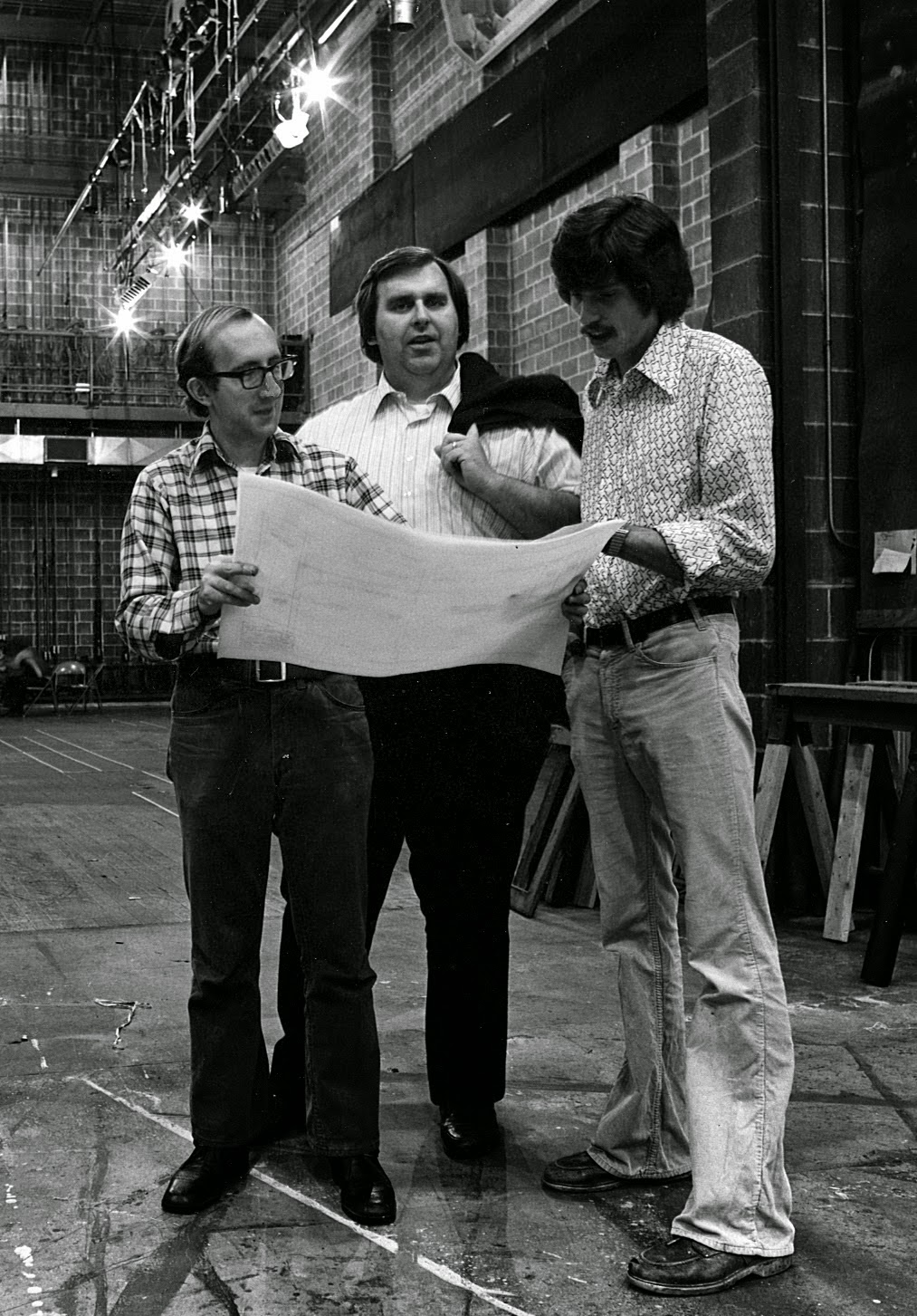
“The key figure in the rise of the Playhouse to the top, Charles Jones, arrived in 1974,” says Warren Francke, author of the new book, The Omaha Community Playhouse Story: A Theatre’s Historic Triumph. “The simplest reasons the Playhouse became number one were the things Charles Jones accomplished.” Jones penned a wildly popular adaptation of A Christmas Carol and created the professional touring wing, the Nebraska Theatre Caravan. Under his leadership the Playhouse’s audience, budget and staff eventually exceeded any community theater in the nation. “His adaptation of A Christmas Carol became, pardon the expression, the cash cow for decades.” That show’s a tradition 39 years and counting now.
Francke says the Caravan brought talent to the Playhouse and carried the theater’s brand nationwide. Several standouts came to Omaha via the troupe. Jerry Longe succeeded Dick Boyd as Scrooge in Carol. Bill Hutson headed the Creighton University drama department and won multiple Fonda-McGuire acting awards.
Jones was also adept at getting donors on board. “Everyone describes him as the most charming Southern gentleman they ever met and he charmed people, not just performers, but the business community and Knights of Ak-Sar-Ben leaders,” says Francke. He says Jones’ ability to get people like Marge Durham, Barbara Ford, Ed Owen and Howard Drew to see philanthropy as crucial to the future of the Playhouse was critical for the ascendancy that took place from 1975 through the mid-1990s.
He says the Playhouse’s stable of memorable personalities is led by the charismatic Jones and the flamboyant director, Bernard Szold, “an ex-football All-American opera cape-wearing character.” Dodie Brando, actor Marlon Brando’s mother, was a passionate if troubled enthusiast.

-
 Henry Fonda and Jane Fonda in rehearsal for “The Country Girl”

“A Kiss for Cinderella.” That’s Henry Fonda with Dorothy McGuire in 1930.
 Dorothy McGuire, Henry Fonda and Jane Fonda rehearsing for “The Country Girl” in 1955.
Early players and echoes of the past
Long woven into the community fabric, the Playhouse developed as the city did. Omaha was a wide open cow town when the Playhouse gave it its only legitimate theater. As Omaha grew, so did the arts. The Playhouse mirrored that evolution. In the span of a decade that saw the Jazz Age give way to the Great Depression, the Playhouse joined two other significant arts organizations in maturing the cultural landscape: the Omaha Symphony Orchestra and the Joslyn Art Museum. All made their mark and remain strong presences today. Of the three, the Playhouse has perhaps been the least stuffy.
Founded as part of a movement to democratize the arts, the Playhouse formed from the community for the community. Even with a professional staff, its grassroots volunteers have always filled out the casts and crews and supported the theater in myriad other ways. Among those figuring prominently in its early success were two families who, against all odds, produced stage and screen icons. Dodie Brando played the lead in the first play, The Enchanted Cottage. Her husband, Marlon Brando Sr., was theater manager. Their son Marlon, who changed the face of acting in New York and Hollywood, was 5 when he and his family moved away, otherwise he would likely have been pulled into the Playhouse orbit the way another future star was, Henry Fonda. Dodie recruited young Hank into the Playhouse fold. He served as a jack-of-all-trades assistant director and as an actor. His sisters Jayne and Harriet were regular players on the fledging theater’s stage.
Not long after Henry went East to pursue an acting career he returned to star opposite a promising ingenue, Dorothy McGuire, in A Kiss for Cinderella (1930). McGuire herself went onto stage and screen stardom. In 1955 she and Fonda, long established names above the title by then, came back to play opposite each other in a benefit production of The Country Girl. Henry’s then 17-year-old daughter, Jane, the future two-time Oscar-winner, made her stage debut. Jane’s brother, Peter, who also became a screen star, continued the Fonda family’s Playhouse legacy – acting there while a University of Omaha student. A cousin, Matt Fonda, later acted there.
The Fondas and McGuire are not the only Playhouse “graduates” who moved onto Broadway, film, television success. Current Playhouse president Tim Schmad’s uncle Howard Fischer used the venue as a stepping-stone to a career as a Broadway stage manager and actor.
The Fonda-McGuire heritage lives on at the Playhouse. Artistic director Hilary Adams says, “Having a pedigree is very beneficial for us. I think anything founded and initiated by people of that caliber and passion – it really is the passion in their work – has a continuing legacy here.”
Adams heard of the Playhouse while working in New York City as a much-in-demand freelance director, but she only learned about its distinguished past once she started researching it. She appreciates being part of an organization so intertwined with its community and one that boasts such a long, colorful history. “Ninety years, I mean, that’s astonishing for a theater. That’s huge. Theaters fight for their survival and the fact it could survive for that long not only speaks volumes about the work the theater is doing but also about the community support and engagement of the community in the arts . That immediately stood out for me – its history and the way it was founded as part of a desire for a community-based organization to bring culture to Omaha as part of the Little Theater Movement.”
“Ninety years, I mean, that’s astonishing for a theater…Theaters fight for their survival and the fact it could survive for that long not only speaks volumes about the work the theater is doing but also about the community support and engagement of the community in the arts… –Hilary Adams

-
 Elaine Jabenis, center, hosting live TV special atopening of the new Playhouse
The only show in town
Ex-associate artistic director Susie Baer Collins says the Playhouse parlayed that pedigree into a reputation as “the premiere place for local theatrical entertainment.” She says it’s remained a considerable force even as other theatre companies have put down roots and professional touring productions now regularly come to town. “It was a little scary for all of us the first time The Lion King came to the Orpheum Theater and stayed for more than a month. I wasn’t sure if the Playhouse could survive that kind of stellar competition and still find its audience, but somehow we did. We tried to remain relevant.”
She says the theater’s knack for putting on stellar shows, particularly musicals. grew “in the heyday of Charles Jones,” adding, “He was extremely committed to strong production values and the Playhouse gained a reputation for wonderful scenery, lighting and costumes that enhanced every production.”
Doing a Playhouse show meant you’d arrived. “It was like if you got on at the Playhouse then that meant you were doing something theatrically in the city,” says Playhouse veteran Camille Metoyer Moten. “I mean, even now it’s still a big deal.” “It’s definitely a big deal,” says fellow stage veteran Elaine Jabenis. “It opened up a whole new world for me. I met people I ordinarily would not have met,” including Henry Fonda, Jane Fonda and Dorothy McGuire when Jabenis worked backstage for The Country Girl. “There’s a lot of people I met and worked with who helped pull me up because of their talent.”
Jabenis says it’s no accident the Playhouse has held the community enthralled for going on a century. “Audiences just keep coming back for that magic, for that moment to escape their own life and to see what happens in other lives. It is absolutely magic.” The Playhouse annually nets more local Theatre Arts Guild awards than all its competition combined.
-
 Hilary Adams
-
 Warren Francke
All for one, one for all
Year after year, generation after generation, the Playhouse, no matter the need or challenge, has always found the necessary community backing because it’s a vital, touchstone place for people. “You know, it’s a funny thing about feeling vital,” says Jabenis, whose first Playhouse role in a 1952 production of Father of the Bride was in the old 40th and Davenport site. “When they announced plans to build the present theater I was on the committee to help raise money. I went house to house. I was never that bold a person. I was really pretty shy. But I believed in it, I really did. I was so anxious for it to happen.”
Jabenis says her eagerness to pitch-in reflects a communal desire “to make Omaha the best in everything we do,” adding, “It’s kind of a hunger and it’s something we’ve pushed for.” She also starred in the first production, Say Darling, at the current site in 1959, taking the stage mere minutes after hosting a live remote for local television.
“It’s like the perfect storm or something,” says Metoyer Moten, whose first role there was as the title character in Evita (1986). “You had the people who started it off that had this dream and these high expectations. Somehow they were able to impart that to the next generation, who had that same passion. I don’t know how that happens. Maybe it’s because we’re in the middle of nowhere and people are hungry for culture. We don’t have mountains or the ocean, so we turn to ourselves to give that thing we can bring, which is artistic. “It’s a good common cause.”
This sense of getting behind something is not so different than Omaha’s embrace of the College World Series. It’s what happens when something springs from the community and is nurtured by it. The community theater model, dependent as it is on amateurs or volunteers, leads to misconceptions the Playhouse fights against.
“There’s been times over the years where there’s been debate whether community should be in our name,” says president Tim Schmad. “We hear that newcomers to town see community in our name and they immediately think of a renovated 70-seat church space with productions not the quality we think ours are.”
But Schamd points out community is part of the theater’s DNA and its volunteers work side by side with professionals to create work that he and artistic director Hilary Adams, a veteran of New York City theater, say compares favorably with Broadway. “We feel community definitely needs to be in our name because of the status we have in Omaha and the fact we rely on Omahans to put on our product for the most part,” Schmad says. “Our job then is to get those newcomers here just once. If we can’t get them back that’s our fault but we think if we expose them to our product they’ll understand why community definitely is a part of who we are.”
“As a community theatre, education is at the core of everything we do.”–Hilary Adams
Community engagement
Before Adams ever started working at the Playhouse she was impressed by what she found on visits there during the search process to replace longtime artistic director Carl Beck.
“It was really about community engagement – that’s what I immediately saw. And then I discovered not only do they support the Playhouse in Omaha but they support the arts in Omaha.”
Since joining the staff in mid-2014 Adams, a Drama Desk nominee for Outstanding Director of a Play, has been bowled over by the Playhouse’s singular approach to community theater.
“The quality of work is astonishing. I think it’s a real hybrid situation that’s unique to community theaters in that we have a paid staff and everything we do supports our volunteer actors, with the exception of the Caravan. What we do have here is really high quality and high support for volunteer actors, and the staff here is incredibly talented and experienced. We treat the people who walk in our doors the same or better as Equity actors or people who do this for a living get treated.
“Volunteers are at the heart of the Playhouse. We have more than 1,000 in a season. They’re involved onstage, backstage, in the box office, as ushers, answering phones, on the board, in Act II. The public is everywhere in this building.”
Her first exposure to the Playhouse in action was at a performance of Les Miserables. The seamless blending of community she witnessed that night is what she’s come to expect. “I saw all that in operation backstage, And in the front of the house at intermission for Les Mis the entire audience stood up and cheered and I still get like goose bumps thinking about this because almost the entire cast was fellow community members.” The outpouring of love happened again at curtain call and once again at the meet-and-greet in the lobby, as community members in the audience, the cast and crew expressed appreciation for each other. This mutual admiration happens nearly every show.
Schmad grew up with this sense of community. His aunt Margaret Fischer saw every production from the theater’s start until her death. Many of her friends acted on stage there and she and the rest of the family were always in the audience to encourage them. Schmad says many Omaha families claim similar Playhouse legacies. Whether attending shows and classes or volunteering onstage or backstage, the Playhouse becomes a multi-generational tradition. He says it’s not uncommon for someone to start there as a child and to either continue or resume ties in adulthood, often getting their own children involved. “That’s really symbolic of what the Playhouse is,” he says. It goes back to community being the basis for everything there.
“That is very unique. It’s all part of this cycle of “bringing theater with and for communities,” says Adams. It jives with her own theater interests, which is why she left New York for here. “I was looking for a place where I could combine the professional theater experience I had with the skills and focus of my master’s program, which is in applied theater – using theater for social change, transformation and education. I really wanted to merge those two parts of theater. I also came from a community theater background as a young person. From the time I was really small I was also going to New York and seeing shows. So I’ve always sort of been in that hybrid.”
“We learned that this place is bigger than all of us.” –Tim Schmad

Training ground and professional environment
Baer Collins says “The performers may be volunteers, but they’re surrounded by professionalism. A great number of the designers and directors, along with the music director, choreographer, technicians, carpenters, costumers, et cetera. are employees of the Playhouse and all are committed to making each show the very best it can be.” That expertise and care shows up on stage.”The Playhouse’s professionalism continues to have a reputation among the theatre community,” she says.
“Actors who may have significant experience or training are often interested in performing at the Playhouse as a volunteer because it strives for such high-quality and its shows have such a professional look. “It was always a thrill when an audience member would say they thought the actors were professional.”
Metoyer Moten, who starred in last spring’s production of the musical Little Women, says it’s a regular occurrence, “You hear it all the time at the (post-show) meet-and-greets where people say, ‘I saw the same show on Broadway and this is way better.’ Ot they ask, ‘Where are you people from?’ It’s such a professional performance they don’t think it could be local. They think it’s a cast that’s been brought in from someplace else, when the truth is I may live around the corner from them.”
Metoyer Moten says the professionals employed in key positions at the Playhouse “guide mentor” volunteers to do professional-level work. “They have high expectations. It’s all about expectations. I’ve worked in quite a few theaters and I still feel like when I’m there I have the most professional treatment.”
“You feel more secure because you know they’re really pulling out the very best in you and you’re making it the very best you can,” Jabenis says.
Amid the bright lights and standing ovations, its easy to forget the Playhouse is a training ground for people of any age and experience level to get a top-notch theater immersion and education.
“As a community theatre, education is at the core of everything we do,” Adams says. “We have a very strong education and outreach program that includes adult and youth classes, youth summer camp intensives, in-school workshops and residencies, after-school programs, a Theatre Technology Apprenticeship Program, an alternative programming series and go-beyond the show programming.”
She’s proud of the two-year apprenticeship program in partnership with Metropolitan Community College and registered with the U.S. Department of Labor. “Our apprentices run a lot of the shows backstage. They are supervised, supported and mentored by our paid staff every step of the way. So here you have a professional house that looks like what you’d have on Broadway or high off-Broadway or high regional theater, with all the accoutrements, bells and whistles, and the people working that are this really unique combination, from teens on up, of people really new at it and people really experienced. “It’s an incredible program. It’s the only one like it in the country.”
Apprentice grads have gone on to work for big-time theatrical troupes, theater festivals and network television. The Playhouse is also where young talent gets its start.
Baer Collins says, “We worked very hard to bring young people into our shows, in particular A Christmas Carol. That yearly production became an amazing training ground for children to learn about the discipline and art of performing onstage. I worked with some amazing young people who grew into outstanding performers. They start with learning to smile onstage and to hang up their costumes and end up playing amazing roles like Annie in Annie or Wendy in Peter Pan.” John Lloyd Young made it all the way to Broadway, where he headlined the cast of Jersey Boys, winning a Tony for his efforts. Others who’ve gone onto stardom include Terry Kiser and two-time Tony winner Norbert Leo Butz.
Two Caravan alums who found fame returned in triumphant roles: Kevyn Morrow, a veteran of the Broadway and London stage, headlined the cast of Ragtime in 2006; and opera star Greg Ryerson anchored South Pacific in 2008. Some Omaha natives who made it big before acting at the Playhouse have returned to play there, including Equity performer John Beasley, who starred opposite Elaine Jabenis in 1996’s Driving Miss Daisy. Former Omaha mayor and congressman Glenn Cunningham and film-TV producer William Dozier are among the notables who acted there.

The show must go on
Hilary Adams is impressed the Playhouse has consistently dared to do provocative work. “They really came out of the gate very strong with innovative productions even in the ’20s. They were doing wonderful work here.”
Historian Warren Francke says, “Almost from the start the Playhouse was willing to tackle Eugene O’Neill’s Anna Christie about a prostitute. When they did controversial plays then they were defended by two board members who were clergymen, one a rabbi and the other a Unitarian minister.” Francke discovered a “wonderful story nearly lost to history” that illustrates the pressure the Playhouse sometimes felt. “A man wrote a play about Brigham Young and Bernard Szold, the then-Playhouse director, knew him and together they conspired to pick up the play. Szold went to his artist friend Grant Wood, who’d just done “American Gothic,” to do the scenic design. That’s overshadowed by the fact the night before opening the Mormon Church got the president of Union Pacific Railroad and their general counsel to convince the Playhouse board to drop 14 of Young’s 17 wives in the cast.”
Adams says community theater serves so many tastes that devising a slate of plays “is about finding the right balance and challenging people but not so far that they get upset with us. For 2015-2016 we’ve created a diverse season of offerings from new American playwrights rising in prominence as well as better known pieces. The season mixes genres and styles and includes two experimentations in form.”
Controversy over content still happens. In the 2003-2004 season profane language in the main stage production of The Tale of the Allergist’s Wife elicited such negative feedback that Schmad says “it showed us how we shouldn’t mess with their Playhouse.” “We learned a lesson from that,” he says, namely that the main stage Hawks Theatre is better suited to tamer shows. “We did lose a lot of memberships because of it. Hopefully. we got some back. They sent a message. It was kind of ironic that our first show in the Hawks the next year was Hair,” the nudie musical about free love. “It did fine.”
Playhouse leadership has come under fire, too. ‘When we had some public issues in the past I learned just how important the Playhouse is to the community,” Schmad says. In 2009 friction between the administrative and artistic sides made news. “It was something at that time that needed to be discussed and it was and we came out much better because of that. We learned that this place is bigger than all of us. We all came to that conclusion.” Schmad says the upshot of that has been better communication and a clearer division of responsibilities. “The way we’ve structured it now, which is different than a lot of community theaters, is that I’m here to do the administrative things. though I do also oversee the artistic side. But I leave the management of the artistic up to them. I have confidence and trust in what they do.”
“When it comes to the Playhouse, a lot of people have worked here and given a lot of their life to this place.” –Tim Schmad
Tim Schmad
Omaha’s theater
Schmad views himself as the steward of a valued community resource. “When I first came here I said i want to be the caretaker of this place but I also want to move it forward. I feel responsible for this place. I know how important it is to people. In my decision-making I certainly have to take care of my staff and the people who come to the shows, the donors, the board members. There are many nights where I’m awake at three in the morning, but that comes with the territory.”
As for what’s next, he says, “We’re looking at the future, we’re looking at strategic planning, and that’s very important to us. It’s a combination of what we need to do administratively and artistically. There’s no question that selling tickets, donor support and remaining relevant to the community is extremely important. “Right now I think we’re in good hands. Our board is good, our foundation is strong. I’m really proud of our staff. We’ve got some real go-getters that know what they’re doing and are very talented and that love theater and love the Playhouse. “It’s not all roses but I’m kind of proud of where we are.”
A clear indication of the theater’s continued popularity is that some hit shows in the last decade broke all box-office records. Through all the Playhouse’s needs – realizing a new home in 1959, repairing structural damage from a 1975 tornado, supporting a major addition in 1986, building the endowment – Omaha’s responded. “We’ve been very fortunate the community’s come forward to support any special needs,” he says. “We are always trying to improve ourselves. Our facility looks nice but we’ve got 50-some years in this building and so we definitely have some improvements that need to be made, especially in staging and equipment that’s pretty old. So we’re in that mode right now in trying to really improve what we have.”
He expects, not takes for granted, the community will respond again. “They’ve always been there.” Everyone from philanthropists like Howard and Rhonda Hawks to season subscribers and casual theatergoers. “That’s what makes Omaha what it is. The community is proud of the arts and culture in Omaha. When it comes to the Playhouse, a lot of people have worked here and given a lot of their life to this place.” They’ve given their time, talent and treasure, too. “There’s a real sense of ownership that comes with that.” That’s why it’s called the Omaha Community Playhouse.
Visit http://www.omahaplayhouse.com.
Omaha theater gypsy Gordon Cantiello back with new show
Omaha theater has its stalwart, perennial, deeply rooted figures who do their thing here year in and year out. Theyre just always part of the scene and therefore you can always count on them for a certain number of shows, often at the same venues. Then there’s someone like Gordon Cantiello, who was once a constant presence himself on stages in town before taking a job to teach theater on the west coast. He’s an actor, director, producer. But he never really left Omaha. He’s come back intermittently since his move and with increasing frequency the last few years to put on cabaret revues such as the popular Beehive. He’s had great success with theatpiece in Omaha on four different occassions, including last year. Now this theater gypsy is back with a production of Always…Patsy Cline, another show he’s had success with. The limited engaement run begins Aug. 10. The diminutive, quiet-spoken Cantiello is known for getting the best out of his actors and staging rousing, audience-pleasing productions. He’s never had a real theater home here but he considers Omaha home and has even purchased a place here as his second residence. He’s thinking of opening his own theater venue here once he retires from teaching. Then this theater gypsy might finally settle down again.

Omaha theater gypsy Gordon Cantiello back with new show
©by Leo Adam Biga
Originally appeared in The Reader (www.thereader.com)
Theater gypsy Gordon Cantiello is back in town again.
The stage veteran and former full-time Omaha resident teaches speech and theater at a private school in San Diego, Calif. When he lived here he put on dozens of plays from the early 1970s through the mid-’80s but made his biggest splash in 1992 when he produced and directed Beehive, an all-female rock ‘n’ roll musical revue that played 10 months at the Howard Street Tavern in the Old Market.
He revived the piece in 1996 and 2002 and again last year at The Waiting Room in Benson, when he gathered four original cast members in local divas Kathy Tyree, Tiffany White-Welchen, Ginny Sheehan Hermann and Sue Gillespie Booton.
“I’ve done a lot of different things in Omaha but without a doubt Beehive had the longest run,” he says.
Now he’s returned with another cabaret production he’s visited before, Always…Patsy Cline, which begins a limited engagement at The Waiting Room on August 10 through his own Performing Artists Repertory Theatre. Erika Hall , who essayed the title part in an Omaha Community Playhouse production, portrays the country singer and Cantiello favorite Gillespie Booton plays fan-turned-friend Louise Seger.
Cantiello’s been a player on the local theater scene since the East Coast native first came here in 1972 to head the theater department and teach part-time at Dominican High School. Prior to that he made the rounds in summer stock and Broadway auditions trying to make it as an actor. Though he got work going on all those cattle calls was difficult. He didn’t like the “insecurity” of never knowing where his next job was coming from.
Fortunately, he listened to his parents and theater coaches and pursued his education. He earned an undergraduate degree in speech and theater from Ricker College (Maine), teacher certifications in Neb, and Calif. and a master’s from Schiller International University in West Germany.
“I think I always knew I was a teacher and a director,” he says.
When his gig at Dominican High ended he supported himself waiting tables while acting at Omaha’s three dinner theaters – the Westroads, the Upstairs and the Firehouse. The old insecurity bug bit again and he wound up teaching speech and theater at Duchesne Academy from 1981 to 1986. With some prodding from Cantiello his brightest student, Tiffany White-Welchen, became a star performer at the Firehouse and later one of the stalwarts in his Beehive.
He left in ’86 for San Diego, where he’s lived and worked since, but he’s never stopped reengaging with Omaha theater. He bought a home here eight years ago and plans making this his main residence and staging ground once he retires.
“I knew I liked Omaha when I landed here. There’s just something about the city, the people that’s friendly. It is my home, I love it here, I feel comfortable here, I feel accepted here. I feel the warmth of the people.”

He’s also found devoted followers for his brand of theater.
“My niche is cabaret. People miss the dinner theater experience, where the theater’s sort of all around you and people can relax, have a cocktail, watch a show and have something to eat.”
If his name is not readily familiar it’s because Cantiello’s never been affiliated with a single venue or two, Instead, he’s freelanced from place to place. There may not be anyone who’s put on such a variety of shows in such diverse locations in the metro.
He’s did Side by Side by Sondheim and Celebration at M’s Pub, The World Goes ‘Round at the Jewish Community Center, Smokey Joe’s Cafe at Harrah’s Casino, Kathy Tyree and Friends at The Max, Oliver at the Omaha Music Hall, A Funny Thing Happened on the Way to the Forum at the Chanticleer Theater and the Lincoln Community Playhouse. He also did shows at funky spots no longer around, including Smokey Joe’s at The Ranch Bowl and Forever Plaid at Frankie Pane’s.
In addition to Beehive at the Howard Street, he did Always…Patsy Cline, Reunion, Studs and Kathy Tyree and Friends there. His most prolific spot was the French Underground below the French Cafe, where he staged Jacques Brel, Ain’t Misbehavin’, The Belle of Amherst, Some Enchanted Evening, Dames at Sea and Side by Side by Sondheim.
Over the years he’s worked with some of Omaha’s top female stage artists and he admires them all: Phyllis Doughman (“a remarkable actress”), Kathy Tyree (“a wonderful cabaret performer with an incredible voice and personality people love”), Tiffany White-Welchen (“a great talent”) and Sue Gillespie Booton (“I love her work ethic – she just jumps in”). There’s also been Nola and Carole Jeanpierre, Patty Driscoll and now Erika Hall.
“All those women are really talented.”
He’s counted many of them as friends. They appreciate what he’s done for them.
Tyree says Cantiello helped her “go to my next level as a professional entertainer,” adding “He has very high expectations of us as performers. I love him as a friend and a producer and a director.” She says she can always expect him to get intense when something’s wrong. “That’s the perfectionist in him. He wants it right.”
None of his Omaha ties would have likely happened if he hadn’t done summer stock at the Priscilla Beach Theater in Plymouth, Mass. An Omaha woman was the music director there but taught at Dominican back here during the school year. She let him know the school was looking for a theater director. After doing the New York thing again a real job sounded good and he applied and got hired at the school.
Another reason he’s not a household name despite his many credits is that he’s been mostly on the West Coast the last quarter century, only returning for those cabaret originals and revivals. He’s reinvented himself several times but in the last act of his life he’s content doing theater his way.

“It’s a tough road but if you’re passionate about it and do it there’s nothing that can stop you, and I’ve done it and I’m proud of that.”
That philosophy goes back to some career advice he got from theater legend Mary Martin, whom he was infatuated with from network television broadcasts of her iconic title role in the satge hit, Peter Pan.
“I wrote to her and she wrote back (with a signed 8 by 10 glossy of herself). She said, ‘Billy Rose (famous impresario) once told me to go back to Texas and run a dance school and be a housewife. Had I listened to him I would never have had the pleasure of entertaining you and countless others. So go with your passion, go with your heart, and nothing can stop you.’ It was very liberating and encouraging and to this day I have her picture hanging in my office, though I have to explain to my students who she was and all she did.”
From the start, he could never get enough theater. As a young man he helped start a children’s theater and at one point found himself doing four productions at once.
“I had all this energy. I loved it so much.”
Today’s Omaha theater community is different than the one he came to all those years ago. He likes the mix of viable companies and venues that’s evolved.
“It surprises me that in Omaha there’s so much and all the theaters seem to do well.
Theater breeds theater. The more you have that, the better the community. I think Omaha may be ready to take that step of having a professional equity theater. It very well will happen I think.”
He’s even eying his own venue to host the kind of productions he’s become best identified with. He’d like to offer classes, too.
For Always…Patsy Cline dates, times and tickets call 402-706-0778 or visit performingartistsrepertorytheatre.org.
Related articles
- Pamela Jo Berry Brings Art Fest to North Omaha, Artist and Friends Engage Community in Diverse Work (leoadambiga.wordpress.com)
- “Always…Patsy Cline” show returns to Gardendale July 12 and 13 (al.com)


 Leo Adam Biga's My Inside Stories