Archive
Puttin’ On the Ritz, Billy Melton and the crew Rrcall the Ritz Cab Co.
This is another of the many stories I’ve filed on aspects of Omaha‘s African-American culture, in this case a retrospective piece on a long defunct black owned and operated taxi company, Ritz Cab. An old of age but young in spirit gentleman by the name of Billy Melton, who’s now gone, drove for Ritz, and one evening I interviewed Billy and some of his old Ritz cronies for the story. I enjoyed the way they swapped tales in a mood of sweet nostalgia. The story originally appeared in the New Horizons. Look for a related post in which I write about an Omaha theater company‘s production of August Wilson‘s play Jitney, which refers to the gypsy or illegal cabs that were and still are a presence in many inner cities.
Puttin’ On the Ritz, Billy Melton and the crew recall the Ritz Cab Co.
©by Leo Adam Biga
Originally appeared in the New Horizons
With his snappy uniform cap, neatly pressed shirt, swank leather jacket and polished silver badge, Ritz Cab Company driver Billy O. Melton cut a jaunty figure behind the steering wheel of his gleaming new Chevrolet Bel Air sedan in the 1950s. Gliding down North 24th Street, he either raced to his next call or else coasted along knowing he could have his pick of fares from the throng of people shopping, strolling or spilling out of the district’s many night spots in search of a good time.
In an area teeming with activity, Ritz cabs always seemed to be where the action was and customers could always hail one with a wave, a whistle, a shout or a knock on the cab’s side window. Or, you could always call to order one. In what were heady times then, the North 24th strip jumped from dusk to dawn and Ritz Cab did a hopping business as the largest black owned and operated taxi line in Omaha.
Dedicated to providing speedy, polite service, Ritz cabbies carried themselves with a certain swagger. It had to do with their pride in being part of a brotherhood of black men (although some women and non-blacks were included among their ranks) banding together to forge a successful business on their own terms.
When Ritz Cab shut down in 1969 after 30 years of running hacks, it marked the end of an important but little known African-American enterprise in Nebraska. At the company’s peak in the 1950s, it was reputedly the largest black employer in north Omaha, boasting a crew of several dozen full and part-time drivers for a fleet of 30-plus taxis. Additionally, it employed a full-time mechanic and several operators and dispatchers. At a time when segregation still ruled, the company covered not only the north side but all parts of Omaha and the surrounding metro area as well.
Recently, some Ritz veterans, led by the irrepressible Melton, reunited to recall their days tearing up the streets around town as taxi men. Each spoke of a fierce devotion to his fellow drivers, to the job, to the company and to the brothers who started it all, the late Reuben and Chesley Pierce.
The Pierces, including a third brother named Claude, hailed from Jonesville, Texas. Facing hard times, they followed the great black migration up north around the time the Great Depression began. Reuben and Claude came first, followed by Chesley. It was Chesley who founded the family cab company in 1940 and, after serving in the U.S. Navy during the war, he continued as owner-operator of the business, which was located at 24th and Patrick, with his brothers. In Ritz’s final years, ownership passed to Chesley’s son, the late Chesley Pierce, Jr., under whose aegis it finally closed.
During Ritz’s heyday, Reuben and Chesley managed the business on a day to day basis and, like true entrepeneurs, “they put everything they had into it,” said Elgie Woods, one of Chesley’s daughters. “They were very dedicated to it. When they put their mind to something, they did it,” added Kathleen Pierce Greer, whose father was Reuben.
Those who knew them say the brothers were country folks with a penchant for wearing overalls and for abiding by down home principles. They possessed strong but opposite demeanors, with Reuben the loud, formidable enforcer and Chesley the quiet, mild-mannered appeaser. “Daddy had a rumbling, deep voice. It was a commanding voice,” said Pierce Greer. Freddie Judson, who began driving for Ritz in 1954, said, “Reuben would slap you down with a harsh word and Chesley would pick you up with a soft word.” Or, as longtime Ritz cabby John Butler put it, “Reuben would set you straight and then Chesley would make peace. There was a certain atmosphere set by those two that kept us all in line. Those two personalities made the system.”
Men being men, Ritz drivers needed some disciplining too. Judson tells of the time the cabbies disobeyed orders by breakfasting en mass at a local eatery where the coffee was hot, the food filling and the jukebox played all day long. While the men unwound inside, their cabs were parked around the joint — out of service, costing the Pierce brothers money. When Reuben found out where the men were holed-up, he taught the guys a lesson by going to the diner and driving, one-by-one, each cab back to the Ritz garage, forcing the embarrassed drivers to walk back to the garage to fetch their vehicles. The ringleaders behind the breakfast brigade were suspended for three days. Then, Judson said, there were those occasions when a cabby had celebrated too much the night before and was in no condition to drive, leaving Reuben to lay down the law with a simple but effective edict — “park it” — meaning you were off the streets until you sobered up.
The brothers were also known for being fair.
“They’d give anybody a job,” said Billy Melton, who drove for Ritz from 1948 until its demise. Melton said where Chesley was willing to tolerate the men dipping into the day’s take or collecting fares off the meter– as long as they eventually made good — Reuben was not so inclined. The way it was supposed to work was drivers got 40 cents out of every dollar, with the rest going to the brothers, but cabbies often helped themselves to more. “It was his (Chesley’s) money, but it was yours too because you had first count. Invariably, we’d check in short, but we tried to make it up before payday,” Melton said. But, when it came to Reuben, he added, “You didn’t mess with his money. He was looking for his money every morning. None of the guys would drive for him because they knew they had to turn in all their cash. But those brothers never fired anybody. They just took it out of your salary. A lot of times payday would come and a lot of drivers didn’t have anything coming.”
That’s because “they’d already got theirs,” said Stanley Pierce, whose father was Claude.

The lure of fast and easy bucks is why many of the men kept coming back year after year. “Fresh money every night. That was the bottom line. You came to work broke and you knew you’re going to make some money. On the first drive you’re going to make some money,” Melton said. Because most runs were short, fares usually ranged from as little as 35 to 55 cents. Therefore, men depended on tips to get by. Getting a dollar bill for a 35 cent fare and hearing the words “Keep the change” was music to their ears. “It all added up,” Melton said. “If you ran $20 (in tips) you had a spectacular day.” He and his cabby cohorts said the best tippers included packinghouse workers and railroaders. But there was a downside to handling all that loose change. As fast as it came in, it went out just as fast too. “It’s hard to save money when you’re making money every night,” Melton said.
For many years Ritz enjoyed a steady cash flow by nearly cornering the north Omaha taxi market. The big cab concerns — Yellow, Checker, Safeway — catered primarily to a white clientele. Ritz’s main competition on its home turf was United Cab Co., another black owned and operated firm, and the large number of unlicensed jitney or gypsy cab services then operating. According to Pierce family members and former Ritz drivers, it was the illegal jitneys, which operated off the books and outside state insurance, transportation and tax regulations, that eroded Ritz’s market share and eventually forced it out of business.
When it was still a thriving district, just the North 24th Street corridor alone provided Ritz with all the traffic it needed. “On Friday-Saturday nights we couldn’t handle the business right here in north Omaha. We had to run and hide from people. We were that busy,” Melton said. “Ninety-nine percent of our business was black.” Even Sundays brought a steady flow of customers. “On Sunday mornings, when we took people to church, we were booming,” said Butler, whose wife Juanita is one of Chesley Pierce’s daughters. “We were zip, zap, zip…I mean, we never stopped until church was over. You might carry 50 people.”
But it was Friday-Saturday nights when things really exploded. The district’s sidewalks and streets overflowed with patrons of its many theaters, clubs, bars, restaurants, pool halls, gambling dens, rooming houses and more unmentionable hangouts. The traffic continued all through the night and, unlike today, pedestrians and drivers felt safe. “We’d sit and park with the window down — with a pocketful of money — and go to sleep, and nobody would bother us,” Melton said.
Half the battle for any cabby, he said, is being well-acquainted with the city and its various virtues and vices. “To be a cab driver, you have to know the city. When a guy got in your cab and said, ‘I’m new in town, where can I get a good meal? or Where can I get a drink? or Where can I have some fun?’ — you had to know. As cab drivers you got around. You saw the whole town.” As Butler said, “We knew every place. There was nothing we didn’t know about. If you were a cab driver and they wanted to know where something was going on, we could tell you.”
Evenings brought out a special breed of merrymakers. “Some people just don’t want to go to bed. Those are night people. All they want to do is drink, eat, hang out and have fun. There were a lot of temptations out there,” Melton said. Whether it was wine or women or barbecue these night owls sought, Ritz cabs transported people back and forth to venues that stayed open all night long.
Then there were those occasional lusty passengers who could not resist giving into passion while the meter was still running. “A lot of cab drivers didn’t want that, but those people paid well. Sometimes you were in a position where you didn’t know it was happening. And then, when you did, what were you going to do? You couldn’t put ‘em out. They hadn’t paid yet. So, you pulled into an alley or somewhere to be discreet,” Melton said.
Sometimes, cabbies were put in the indelicate position of ferrying mates who, unbeknownst to the other, were stepping out for a night on the town with someone else.
“You’d be surprised how many times I took a man to a spot and his wife to the same spot, but with someone different. I’d have to rig it so I took one back and picked the other one up without them running into each other,” Freddie Judson recalled. Melton recalled that “the worst scenario you got into was when a good friend of yours would ask, ‘Hey Billy, I notice my wife called a cab — where did you take her?’ Right away I would say, ‘Look, you’re a friend of mine. Now, suppose your wife called me and said, ‘Where did you take my husband?’ You know, what’s good for the gander, is good for the goose.”
Like bartenders and barbers, cabbies are privy to people’s private intrigues. The Ritz drivers heard a litany of heartache tales from folks fighting the blues.
“They told you all their problems,” Judson said. “Sometimes, you’d pick up a man and he wouldn’t be goin’ no particular place. He just wanted to ride and somebody to talk to about his woman troubles. Nine times out of ten he had a bottle back there. ‘C’mon, take a drink with me,” he’d say. And I might take a little sip, just to satisfy him. He just wanted somebody to listen to him.” Melton said he sometimes had no choice but to imbibe if he wanted his money. “I had guys who wouldn’t pay me unless I drank with them. Hey, that was all right.”

Because a cabby is a kind of amateur counselor whom people let their hair down around and pour their souls out to, they are entrusted with secrets they are wise not to reveal.
“A cab driver has got to keep his mouth shut. He knows too much,” Melton said.
Butler credits Melton with taking “me under his wing” and showing “me the ropes” when it came to maintaining confidentiality.
“One of the important things Billy said was, ‘Now, if you want to make money in this business you’ve got to learn how to take care of your customers, and whatever they tell you — don’t repeat it to anyone else.’ I got more customers that way, too, because I would never repeat what I heard. I got customers personally calling for me because I kept my mouth shut. I never forgot that.”
In a business where service was and still is the name of the game, virtually every Ritz driver cultivated their own stable of customers who, when needing a cab ride, specifically requested them. The better service you provided, the more personal calls you got. “I had so much business that when I came to work in the morning I would have 10 personal calls I had to make before I even took a call from the dispatcher,” Butler said. “We’d have customers call back for us every time,” Stanley Pierce added.
Melton said enough trust developed between cabbies and their frequent fares that payment was often deferred until they scraped up enough cash. “We had regular fares we took to work every morning, and sometimes they’d be short of cash until the weekend. They paid us when they got paid,” he said.
Ritz drivers prided themselves on going the extra mile. “We gave good service. We knew how to treat the public,” said Butler. “It was just known we were going to get out of the cab and carry your groceries or your luggage for you. People would tip you when you did that.” Stanley Pierce said, “We’d even carry your groceries in the house and put ‘em on the counter too.”
In what Melton said was an often “thankless job” devoid of health insurance benefits and looked down on as a kind of last resort for undesirables, the men of the Ritz Cab Company never forgot they were, in fact, “public servants.” The dignity they felt for themselves and the job they performed was reflected in the slick appearance they came to be known for.
“The image you projected helped a lot,” Melton said, “and we were always clean and well-dressed. We had uniforms, but not all of us could afford them. You could wear your own clothes, as long as they were neat and clean, but we all wore the cap and our badge. One of our drivers, Bill Smith, would come to work every day with a white shirt and black tie. And I don’t care how many orders were waiting, he would take a rag and wipe his cab off and sweep it out.”
Besides their spiffy appearance and super service, Ritz cabbies were known for one more thing — their fast driving. This was particularly true before two-way radios were installed when, after completing each run, a cabby had to return to Ritz headquarters to get his next order, meaning he was racing the clock and his mates. “We had to drive fast to get back and get another order. We drove fast to make some bucks,” Butler said. Between their careening through town, overturning an occasional cab and causing some accidents, Ritz cabs came to be jokingly called “death wagons,” Butler said. “People got out of the way when we were coming.”

Outside their lead feet and their various high jinks, drivers were expected to follow a rigid code of conduct, which the more experienced hands imparted to newcomers. It was all part of the esprit de corps the men say they felt and this tight bond saw them through many rough spots.
“The cab drivers were together with one another, they helped one another, they taught one another and they looked after one another,” Butler said. “That was the bottom line — the unity we had together.”
For Melton, “it was a family thing…a brotherhood.” Judson described it this way: “If something happened to one of us, it happened to all of us. If one Ritz cab got in a problem, you would have every other Ritz cab there in 10 minutes.”
Butler can attest to that: “I remember one time in about 1956 I ran into a car at 24th and Clark and the other driver…a big guy…jumped on me,” he said. “I’ll bet we weren’t there 10 minutes fighting and fussing before half the cab stand was there. I don’t know how they knew it, because we didn’t have radios then, but they stopped the fight.”
Melton recalls how once two-way radios were installed many altercations were averted by drivers radioing their comrades for aid. “A lot of times people had been drinking and they gave you a bad time. They didn’t want to pay or they wanted to fight. And we’d just get on the horn and say, ‘Hey, we’ve got a problem,’ and they’d all come. We were protective of each other. It was a family affair.”
The predominately black Ritz drivers say they were subjected to name calling and other slights because of the color of their skin. Although by law Ritz was constrained to operate on the north side, the company routinely ignored those boundaries to taxi fares all around town. It was a common practice and usually the authorities looked the other way. But sometimes drivers found themselves unwelcome outside some of Omaha’s posher hotels or restaurants, and police might show up “to bother us,” Butler said.
The Ritz men were also persona non grata with the major cab lines, which for a long time were segregated outfits. Where the Yellow, Checker and Safeway lines had reserved spaces in cab stands outside the train and bus stations and airport terminal, Ritz did not, but the enterprising Ritz men still found a way to snare their share of fares, which upset the competition. Ritz veterans say that as time wore on and attitudes changed, they finally got their due.
“Finally, the other cab companies gained respect for us,” Melton said, “because so many people gave us their business. They didn’t bother us anymore.” For Butler, it meant “the barriers started breaking down.”
Perhaps the biggest drawback to driving for Ritz was the long hours, as the men generally worked 12 hour shifts. “I think the worst part about driving a cab is you’re away from your family a lot,” Melton said. According to Butler, many relationships suffered under the strain, adding that he and Melton and Judson were lucky enough to have understanding wives. “The only reason any of us stayed married is we had a good woman who tolerated us.”
If there is one thing the men miss about their days behind the wheel it is the interaction they had with all kinds of people. As Melton said, “You never knew who was going to get in your cab.” Once, Butler said he found himself carting around Fats Domino. Judson said he gave Dean Martin a tour of Omaha during a stopover the crooner-actor had here. Celebrities aside, Butler said, “I liked the chance it gave me to meet new people all the time.” He used the contacts he made driving hacks to forge a career as an insurance agent. “I enjoyed meeting different people,” echoed Stanley Pierce. “We had fun.” Amen, the others chimed in.
Finally, the men feel it is important their story and the story of the Ritz Cab Co. be remembered. Why?
“Because it’s history,” Billy Melton said. “We laid the groundwork for young people today. We did a good job too. It’s a shame, but a lot of young people don’t even know what came before them.”
To put it in perspective, John Butler recalled a Pierce family reunion three years ago at which family members dressed-up a car to look like a Ritz cab and drove it in the Native Omaha Days parade along the very North 24th Street strip the taxi line served. “You should have seen the response that got. When people learned about there having been a black cab company here, they were amazed.”
Related Articles
- Omaha Native Steve Marantz Looks Back at the City’s ’68 Racial Divide Through the Prism of Hoops in His New Book, ‘The Rhythm Boys of Omaha Central’ (leoadambiga.wordpress.com)
- Once More With Feeling, Loves Jazz & Arts Center Back from Hiatus (leoadambiga.wordpress.com)
- Back in the Day, Native Omaha Days is Reunion, Homecoming, Heritage Celebration and Party All in One (leoadambiga.wordpress.com)
- Leola Keeps the Faith at Her North Side Music Shop (leoadambiga.wordpress.com)
A Mentoring We Will Go

Image by rogercarr via Flickr
Mentoring programs, whether community or school-based , along with mentoring done more informally, on one’s own, offer effective ways for reaching at-risk youth. The following story I did for The Reader (www.thereader.com) about 10 or 12 years ago profiles some mentoring efforts in my hometown of Omaha. I cannot recall much about the assignment other than the passion and commitment of the people involved as mentors to make a difference in young people‘s lives.
A Mentoring We Will Go
©by Leo Adam Biga
Originally published in The Reader (www.thereader.com)
A sweltering June night in the inner city finds a rag-tag basketball game under way in the Adams Park Community Center gymnasium. Here, in this hot house of testosterone, a lone female watches from the sidelines, itching, like the men around her, for a chance to play.
Maurtice Ivy is a tall, poised woman of 31. She mingles easily with the crowd. A righteous sister perfectly accepted as one of the guys. And why not? She grew up a tomboy among them and is a bona fide player to boot. The former Central High School all-state performer was a collegiate basketball star with the Lady Huskers and played professionally long before TV discovered the women’s game.
This night, like so many before, she’s brought along a young man she regards as a son, Rickey Loftin. The lean, hard-bodied 16-year-old harbors big-time hoop dreams of his own. The junior-to-be at South High School is anxious to strut his stuff. When the pair finally do take the court, she feeds him the rock again and again, highlighted by a slick one-handed bounce pass from the top of the key to a driving Rickey in the lane. Count it. These two anticipate each other’s moves and moods more than mere teammates do. More like soulmates.
It’s that way off the court, too, where Ivy mentors Rickey. In that capacity she serves as friend, counsel, guide, nag and personal coach.
After the gym clears out she “fusses at” him about his showboating and points out a flaw in his shooting technique. He listens good-naturedly and adjusts his shot. “That’s it,” she says approvingly.

Maurtice Ivy
The pair first met when she coached an Omaha Housing Authority team he played on. They hit it right off, and three years later they’re nearly inseparable. She attends all his athletic and school events. She helped pay for a black college tour he attended in May and is looking to enroll him in summer basketball camps where he’ll be exposed to better coaching and competition. She’s been there for him at every turn, including a tragedy.
“A couple years ago Rickey called me up one morning and asked me to come get him,” Ivy recalls. “I was wondering why he wasn’t in school and he said, ‘My dad was shot and killed last night. The only person I want to be around right now is you.’ I was speechless. It took everything in me not to break down and cry. At that point, I hadn’t realized how I had impacted him as a coach. And I just felt like that God was placing him in my life for a reason, and I needed to pick up the ball and be as positive as I could be.
“Rickey was hurting and he really didn’t know how to deal with that. Since then, I’ve really played a role in his life. I just try to be a strong support system for him. Our relationship has truly grown over the years.”
Ivy is among thousands of adults in the Omaha metropolitan area who maintain a one-to-one mentoring relationship with an at-risk youth. What follows is an exploration of different mentoring relationships and how these relationships follow certain familiar patterns, yet retain their own individual dynamic. Of how mentoring brings adults, kids and resources together in often surprising ways. Of how good mentoring isn’t a magic elixer or quick fix, but an investment of time that pays off slowly but surely.
Who are mentors? They’re individuals lending the benefit of their experience to a younger person struggling to reach his/her potential. They can be parents, teachers, coaches, professionals, laborers or anyone with a commitment to making a difference in the life of a child.
Some, like Ivy, mentor on their own — as an extension of their life and work. Others do it through the growing number of formal mentoring programs offered by schools, community service agencies and corporations. For example, adults from all walks of life mentor students in Tom Osborne’s school-based Teammates program, currently serving the Lincoln Public Schools and now gearing to go statewide.
This surge in mentoring is part of a larger movement in which clearinghouse organizations like the National Mentoring Partnership provide training materials and funding referrals in support of local efforts. Several Omahans involved in mentoring, including Hanson, were delegates at a 1997 Presidential summit that examined the most effective ways adults can serve America’s youth. The summit launched the Colin Powell-led volunteer initiative, America’s Promise, a catalyst for linking adults with kids in positive, community-building ways like mentoring.
A Method to Mentoring
The needs of a specific community often dictate the shape mentoring takes. The Chicano Awareness Center’s Family Mentoring Project serves first-generation Hispanic-American families in south Omaha, meaning mentors like Maria Chavez must be a “big sister” to Diana Gonzalez, 12, as well as a bilingual liaison to the girl’s parents, Aman and Maria, as they deal with language, immigration, job, education and social service issues. Joe Edmonson’s Youth Outreach Program, housed in north Omaha’s Fontenelle Park Pavillion, gives kids the safety, discipline and nurturing the area’s gang-ridden streets do not. Edmonson builds kids’ minds and bodies via athletic, multi-media and recreation activities.
Programs generally try striking a balance between structure and spontaneity. The US West-sponsored Monarch Connection, matching employees with McMillan Magnet School students, awards achievement badges to kids completing community service projects with their mentors, and encourages participants to spend other leisure time together.
Some programs strive to be part of youths’ lives from elementary school through college, others target a shorter time frame. Scholarship and other financial aid is sometimes provided as an incentive for children to excel. To qualify for aid, kids must usually honor a signed agreement detailing certain standards of personal behavior and school performance.
Whatever its face, however, mentoring is seen by practitioners as one proven, prevention-based approach to the widespread problems facing America’s youth, although supporters agree it’s no panacea, much less substitute for quality parenting or professional counseling.
“I think in today’s society parents aren’t always there, and not necessarily because they don’t care or they’re bad. Economically, a lot of parents are put in positions where they have to work two or three jobs or opposite shifts. Part of the fabric of the family is missing. A lot of kids nowadays don’t learn at home about manners and etiquette, and about consequences and encouragement and those kinds of things,” says AOK’s
Michael Hanson. “Often we hear from teachers or case workers that a kid’s parents are gone all day. The key is we need to do a better job of linking kids to the adult world in a way that makes sense to them.
“I think mentoring is being recognized as something that’s happened for a long time, but it just wasn’t called that, and now we’re formalizing it and trying to add some structure to it. That’s why I think its powerful. It’s the basis for everything we do as social animals. We form relationships, and a mentor is a special kind of relationship. If we look back in our own lives we all had someone who helped us see something in ourselves we couldn’t see or helped us make a decision we might not have made.”
Hanson says today’s mentoring efforts attempt “to artificially recreate something that happens naturally” for most youths, but that doesn’t for others. Without mentoring, he feels, kids fall through the cracks. That’s why programs like AOK work with school counselors and social service experts to identify youths who could most benefit from a mentor. Typically, it’s a bright student underachieving due to personal/family difficulties.
Doing the Right Thing
Mentoring is also a form of community activism. Of citizen helping citizen. Of giving back. Although Maurtice Ivy works in west Omaha (at Career Design), she still resides and takes an active role in the near north side community she grew up in, coaching youth athletic teams, sponsoring a 3-on-3 basketball tournament and mentoring kids like Rickey. “As a young community leader it’s my obligation to try and make a pathway to make things better,” she says. “It’s all about trying to do the right thing. And it’s just remarkable how receptive kids are when they know you’re sincere and doing everything you can do to try and help them.”
She has seen the difference mentoring’s made for Rickey. Thanks in part to her tutelage, he’s harnessed his mental and physical gifts and become a top scholar-athlete with lofty dreams for the future. He can’t imagine life without her.
“We have like a bond between each other,” he says. “She’s helped me not only with my physical skills on the basketball court, but mentally too by helping me keep my focus in the game and on school. She inspires me to keep getting good grades. She’s made me see how I can get a scholarship to college. I’d like maybe to be an engineer or an accountant. She’s like my second mom. I feel comfortable calling her my step-mom.”
Ivy, single and childless, doesn’t pretend to be Rickey’s mother. Mentors sometimes tread a fine line between being a friend and usurping the parental role. When Ivy started working with Rickey, she sensed his mother, a single working parent of three, viewed her as a threat. “I can understand that,” Ivy says, “and I didn’t want it to be that way, so I would back off, but then I’d be there for him when he needed me. I told her basically, ‘View me as an extension of you.’ She’s done a wonderful job with him. His mom is now a lot more supportive of what I’m doing in his life. I just try to give him direction. I try to place him around individuals and resources that can give him the assistance he needs. I see the impact I’ve made in his life and that is truly the most rewarding thing. When I see him excelling, I feel joy. ‘There’s my boy!’”
In return, Rickey looks up to Ivy. “She’s a black independent woman. No one can force her to do anything she doesn’t want to. She’s athletic. She’s working on graduate school now. She gives me advice on anything I need to talk about. I feel like I can always depend on her,” he says.
Reaching Out and Giving In
Trust must be present before a mentoring bond can be cemented. Getting there involves a feeling-out process. It can be a daunting task reaching sullen kids who are already wary of adults. According to Hanson, “A lot times mentors are more scared of the relationship than kids are because it’s a big responsibility. And if they feel they’re not doing a good enough job or don’t know what to expect in terms of working with a young person, they’ll give up.”
Jeff Russell had two AOK mentors give up on him in junior high before being paired with a third, David Vana. Already burned twice, Jeff held back. “I was really hesitant about getting involved with another because I figured he wasn’t going to stick around for very long anyway,” Jeff, now 20, says.
Vana, an Inacom business analyst, felt the young man’s reluctance. “He didn’t have a whole lot of faith in the program based on his experiences with his first two mentors, so I think he was a little cautious before he warmed up to me. I think the previous mentors tried to push him, and with Jeff it just didn’t work because he had a tendency to rebel. Before I started giving him advice and stuff, I wanted him to trust me and accept me. I didn’t want to come down too hard on him, so we started doing things together like going to hockey games and we got comfortable with each other.”

Before Vana came into his life, Jeff was a juvenile delinquent in the making. After the death of his mother upon entering 5th grade, Jeff, who never knew his father, was raised by an aunt and uncle. Things were fine at home, but he was failing high school and hanging with a bad crowd, so counselors recommended him for mentoring. “The friends I had were not exactly…going anywhere. In fact, they’re still not anywhere,” he says. “One of them is in jail for murder. Another one has many drug convictions. Another one can’t hold a job. I was very fortunate to get out of it when I did.”
Upon first meeting Jeff, Vana was struck by his fatalistic attitude. “When I asked about college, he said, and I’ll never forget it, ‘People like me don’t go to college.’ That’s when I focused on building his self-esteem and confidence. He made a lot of progress. Jeff definitely is a success story.”
Jeff credits Vana and Vana’s wife Noreen for helping him turn things around. “They’ve been very influential in my life. Whenever I’d have a question — school-related, work-related, anything — I’d call and we’d talk. They’ve been there for me a lot. They really took time out for me.” With their help he applied himself, raising his GPA from 0.32 to 3.20 and graduating on time. Currently taking a break from his studies at Metro Community College, where he’s working toward an associate’s degree in horticulture, Jeff oversees a gardening crew at a private estate and hopes to one day have his own landscaping business/nursery. AOK is paying his college tuition.
When he looks back to where he was headed — a likely drop-out — he sees how far he’s come and where he yet aspires to go. “I could have very easily followed that path. I still could revert back to that path, but I just have to remind myself of my goals. This program showed me that if I do what I should do, I can actually get someplace in my life.”
Trial and Error
Even when mentoring works, there are still power struggles, communication gaps, unrealistic expectations and bumpy spots along the way. “You can’t just pull two people’s names out of a hat — a mentor and a mentee — and expect their personalities to mesh perfectly,” says Vana. “It’s important to remember every kid is different. You can’t apply some mentoring template to every relationship. If it isn’t working, recognize that and make a new match.”
Bad matches do occur. They’re bound to, since aside from a screening/interview process, pairings are based on instinct and educated guesses. “With some, there’s no chemistry there. Others walk a fine line, with neither side willing to get real close or comfortable. But there’s been some extremely good matches too,” says Roz Moyer, US West manager of Community Affairs/ Employee Relations and Monarch Connection director. She says when things don’t click or mentors quit, affected youth are reassigned until a solid match takes hold. The challenge then becomes regaining the child’s trust. It can take time.
Moyer says mentors often have a sense of failure even when the match succeeds and the child thrives. “I think part of that is the kids don’t run up and say, ‘Thank you, you did such a good job.’ I tell the mentors not to expect them to do that. You’ll see it in other ways — in the success they have in school or by a good word every once in a while. You just have to know you’re doing a good job.”
Monarch mentor Linda Verner, a US West Finance executive, has at times doubted the job she’s done with former McMillan and current North High student Carrie Laney, 15, whom she’s mentored since 1996. Verner says, “I really wasn’t sure how much I had to contribute.”
Carrie, though, is certain of Verner’s impact. “I went through a lot of family and school problems the last couple years and Linda gave me a lot of good advice. I can talk about a lot more things with her than I can with my parents. She’s always told me she’s proud of me. She boosted my self-esteem so I would believe in myself and strive to get good grades, and I did.” Carrie plans attending college, with a goal of becoming a pediatrician.
Verner says if mentors just stick with it, good things happen. “I did not understand how much I would get out of it. Part of it is the enjoyment of setting goals with a young person and then getting them accomplished and feeling like you’ve contributed a little bit something.”
Because mentoring doesn’t follow a formula, sponsors offer support when things come a cropper. “Mentors can get discouraged,” Hanson says. “The challenge is tempering their expectations, but at the same time maintaining a level of enthusiasm that will help keep them there for the long haul. We can help prepare them for the fact kids are not going to fall down on their knees and thank you for saving them. They may not even acknowledge you at all. I mean, some of the kids we work with really need a lot of social skills. We have to teach kids how to look a person in the eye, shake their hand and greet them.”
Since mentoring only works if both parties are active participants,sponsors stress why each person shares responsibility for the relationship.
“Both the mentor and the mentee have to have a willingness to forge ahead. Neither one can give up on making that connection and forming that relationship. As a mentor you have got to be dedicated enough to overcome obstacles and focus on that kid. As a kid you’ve got to be as committed as the mentor in attending all the functions and doing all the things needed to make this thing go,” says Moyer. “We tell the kids right off, ‘We cannot change your life. You have to change your life. We can help you. We can guide you. We can open some doors. But you have to be the one who makes the changes.”
“We do group activities so that we can see kids and mentors interact,” Hanson says. “The kid may only say five words to his mentor, and you can see the adult is getting frustrated. The mentor may come to me and say, ‘Gee, I’m just not making any progress. This kid doesn’t like me. I don’t know what to do.’ Yet, if the mentor quits coming to the meetings, the first thing the kid will do is say, ‘Where’s my mentor?’ They’ll know when you’re gone.”
New Beginnings
Karnell Perkins felt betrayed after his first three mentors gave up on him. His family was in disarray. School was a bust. Things looked bleak for the black north Omaha native before he finally connected with AOK mentors Mike and Judy Thesing, a white suburban Omaha couple who practically adopted him. It all started when Thesing, president of America First Financial Advisors, was recruited by America First Cos. head, Michael Yanney, to mentor kids at McMillan Junior High (now McMillan Magnet School) in Yanney’s Kids (the forerunner of AOK). Eventually, Thesing was assigned Karnell, by then a struggling Burke High student reeling from an increasingly chaotic home life and three unsuccessful matches.

Michael Yanney
“Before I met them I was bounced around from mentor to mentor,” Karnell says. “When I finally got Mike and Judy, they were different than the average mentor who sees their kids every once in a while for lunch or a movie or helping with their homework. But Mike and Judy, for sure, go above and beyond. They’ve meant a lot to me.”
But as the problems in Karnell’s family deepened, he was in danger of flunking out of school. “His unwed mother was on the fringe of being in trouble with the law for numerous reasons. There was never any role modeling or anybody who really cared what he was doing or how he was doing. There was never any money or transportation. He was the oldest of three boys and he felt responsible for his brothers. He worked after school, so school was the last thing he focused on,” Thesing explains.
That’s when Karnell’s mentors dramatically intervened in his life. “My wife and I took him by the ears and made him live with us the latter part of his senior year. We put together a program he was to abide by in order to get through school. We made sure he had transportation and that his academic requirements were fulfilled before he could go do anything else. It was a disciplinary and structural change for him, but I think he realized at that point that we really cared and were willing to do whatever it took to make sure he had every opportunity to be successful.”
The change in environment was profound, and so were the changes in Karnell. “I went from one culture in north Omaha to a totally different culture in west Omaha, but race was never an issue. Mike and Judy let me know there’s a better way of life than what I had. They gave me stability. They kind of became like mom and dad.”
There was a period of adjustment, however. “At first things were a little chilly, but as time went on and we did stuff together and he got to know us, things just evolved,” Thesing says. There’ve been road bumps since, like the time Karnell, now a University of Nebraska-Lincoln student, sloughed off in his studies and was placed on academic probation. He soon felt the wrath of the intense, goal-oriented Thesing. Karnell, who describes himself as “laidback,” says Thesing’s constant “do-it-now” prodding got old. “Sometimes I was like, ‘Hey dude, chill out.’ But I do know he’s trying to help me accomplish good things. If I didn’t have him I think I’d be a slacker.”
Thesing says working through such differences is worth the end result. “It can be pretty frustrating, but if you can get past those barriers and develop a real solid relationship, the reward is you’ll be making a difference in someone’s life.” He’s seen the change: “I’ve always been proud of Karnell, but I’ve seen him mature quite a lot. Now he realizes the value of an education, the value of hard work and the value of discipline. By most measures, especially given his background, he’s doing outstanding.”
Karnell, 21, pulled his grades up enough to not only graduate high school, but earn a full college scholarship — courtesy of AOK. The finance major is on pace to graduate from UNL next year, which will mark a family milestone. “No one in my family has ever graduated college,” he notes. “Now, it’s like I’ve set a standard for my brothers. William and Langston are planning to go too. That makes me feel really good.”
Having seen the ups and downs of mentoring, he feels an adult must first earn a child’s confidence before being called a friend: “You need a person who’s sincere. You can’t be fake. You have to sincerely care about kids and want to help out, even if you don’t have all the answers. You have to seriously lead by example. And you have to want to do it from the heart.”
Thesing agrees, adding: “These kids just need someone that cares about them. A lot of them have gone through their whole life without anyone really caring. Throwing money at these things is not really the answer. It’s got to be a genuine commitment of time. Kids need your time more than anything else, and the earlier you get involved the better.”
He expects to remain a part of Karnell’s life for as long as he’s around. “I see it as a lifetime commitment. I look at him as a son almost.” The Thesings have, in fact, gained partial custody of Karnell’s youngest brother, Langston, 10, who now lives with them.
“He really likes being there,” Karnell says. “Every night I go to sleep I thank God for Mike and Judy…and all the people who’ve helped us out. Their hearts are so big.”
Related Articles
- Youth Mentors Needed in Greater S.E. DC! (socialactions.net)
- Mentors discover the power (seattletimes.nwsource.com)
- Programs in Detroit, beyond seek minority mentors (thegrio.com)
- First lady urges more people in US to mentor youth (seattletimes.nwsource.com)
- Been mentored? Pass it forward! (studenttransitionissues.wordpress.com)
- Women Mentoring Women (rejoicingrebecca.com)
- Even Mentors Need Mentoring (togetheragainstviolence.wordpress.com)
Bob Gibson, A Stranger No More (from my Omaha Black Sports Legends series, Out to Win: The Roots of Greatness)
Omaha‘s produced many black sports legends, and I’ve had the privilege of meeting, interviewing, and profiling most of them. Arguably, the biggest name of this group is Bob Gibson, the Major League Baseball Hall of Fame pitcher. The following story for The Reader (www.thereader.com) introduced me to Gibson, who had agreed to an hour or so interview and thereupon shocked and delighted me when he ended up giving me almost five hours. The occasion for the interview and story was a charitable golf tournament he was starting up. He had no idea who I was and by rights I had no business getting that much of his time, but I believe he indulged me because, one, he was motivated to get the word out about his new event, and two, I had done my homework, which I assume he respected. Also, not long before the interview his second autobiography had come out, and so he was probably also interested in promoting that. He also had me and a photographer over his home for another couple hours. Whatever the reasons, I’m glad he did share himself with me so generously, as it led to this quite extensive piece and a few others. Look for more Gibson posts. There is a second Gibson story already on the site, entitled “My Brother’s Keeper,” which details the story of how his older brother Josh schooled him to become the great competitor he became. Another, titled “Master of the Mound,” goes into the dominance Bob Gibson displayed out on the field.

Bob Gibson, A Stranger No More
From my Omaha Black Sports Legends series, Out to Win: The Roots of Greatness
©by Leo Adam BIga
Originally published in The Reader (www.thereader.com)
Homegrown baseball icon Bob Gibson normally shuns the media spotlight. Even during a Hall of Fame pitching career with the St. Louis Cardinals (1959-1975), this sober, wary, intensely private man barely tolerated reporters’ intrusions.
But the Omaha native is letting his guard down now to promote the Bob Gibson All-Star Classic, a June 14 charitable golf tournament at the Quarry Oaks course near Mahoney State Park. The event will benefit two groups he’s long been involved with – the American Lung Association of Nebraska and the Baseball Assistance Team, an organization helping indigent ex-baseball personnel. He serves on BAT’s board of directors.
He will host an impressive array of sports figures and celebrities at Quarry Oaks, including fellow baseball Hall of Famers Willie Mays, Lou Brock, Sandy Koufax and Stan Musial, basketball Hall of Famer Oscar Robertson, actor Bill Murray and former NBC sportscaster and Today Show host Bryant Gumbel. He’ll also welcome some high-profile Omaha natives, including former NBA players Bob Boozer and Ron Boone, football Hall of Famer Gale Sayers and world-class investor Warren Buffett.
Gibson’s return to the public arena is apropos given this is the 50th anniversary of the late Jackie Robinson’s breaking of major league baseball’s color barrier. Growing up in Omaha’s Logan Fontenelle Housing Projects, Gibson idolized Robinson. “Oh man, he was a hero,” he told The Reader. “When Jackie broke in, I was just a kid. He means even more nowthan he did then, because I understand more about what he did” and endured. When Gibson was at the peak of his career, he met Robinson at a Washington, D.C. fund-raiser, and recalls feeling a deep sense of “respect.”
A baseball-basketball standout at Tech High and Creighton University, Gibson became, in 1957, a two sport pro athlete – playing hardball with the Cardinals’ Triple AAA club in Omaha and hoops with the famed Harlem Globetrotters. After making the St. Louis roster in ’59, he concentrated solely on baseball and within a few years became a premier pitcher.
Gibson was in the forefront of black athletes who, following Robinon’s lead, helped secure African-Americans’ foothold in professional sports. Like Robinson, he’s distinguished himself as a fiercely proud, highly principled man with, as author David Halberstam put it, a “samurai” sense of honor and duty.
“He has certain beliefs and he sticks with those. He doesn’t waver one way or another in his decision-making. I admired him as a young man and teammate, and I admire him as an individual to this day,” said Jerry Parks, a teammate of Gibson’s at Tech, who today is Omaha’s Parks, Recreation and Public Property Director.
“Not only as a baseball player, but as a man, he’s got a lot of dignity,” said Preston Love, Sr., an Omaha musician who’s known Gibson for years. “He’s really an exquisite man. An elegant man. A class act. is private life, during and after his years in baseball, has been just exemplary.”
Friends appreciate the fact that Gibson has never left the area or abandoned his roots. He and his wife, Wendy, and their 12-year-old son, Christopher, live in a spacious home in Bellevue’s Fontenelle Hills.
“He didn’t get big-headed and go away and hide somewhere,” said Parks. “He continues to stay in communication with all of his teammates.”
“What I admire about him most is that he’s very loyal to people he likes, and that’s priceless for me,” said Rodney Wead, a close friend. Wead, who grew up with Gibson and became a noted social services director, is president and CEO of Grace Hill Neighborhood Services in St. Louis.
In a recent interview at a mid-town Omaha eatery, Gibson spoke about Robinson’s legacy, about racism in and out of baseball and about his own pitching prowess. A trim, handsome man of 61, he arrived promptly, sans entourage, dressed in a sweater and slacks. At times he displayed the same no-nonsense, I don’t suffer fools gladly, bluntness of his 1994 autobiography, “Stranger to the Game,” and at other times revealed an engaging, shy congeniality that suits him well.
To Gibson’s dismay, media coverage of the Robinson anniversary has focused on the paucity of blacks filling managerial roles in baseball and not on the larger issue –- that 50 years later blacks continue facing widespread discrimination. He feels it’s hypocritical to make baseball a scapegoat for what’s a systemic problem.
“This is a perfect opportunity for anybody to cleanse their soul through baseball,” he said. “But the problem with racial prejudice goes far beyond baseball. And as soon as this Jackie Robinson thing wears off, everybody’s going right back to where they were before. That’s why when people talk about the lack of black managers and coaches, I just laugh, because we’re talking about a sport where we’re supposedly accepted. But you get into the business world, and we’re not accepted. We’re only able to go so high and then we’re limited to making some lateral movements.”

Gibson’s playing career coincided with the nation’s civil rights struggle, when change in baseball, as everywhere else, came slowly. When he joined the Cardinals the franchise adhered to custom at its spring training complex in St. Petersburg, Fla. by having black and white players stay in separate quarters. By the time Gibson firmly established himself in the early ‘60s, he and his black teammates had begun confronting even the hint of racism head-on, fostering a progressive, tolerant attitude throughout the organization that led the Cardinals to flaunt existing Jim Crow laws.
In his book Gibson describes the camaraderie on the club as “practically revolutionary in the way it cut across racial lines.” Perhaps the best testament to it is his friendship with former Cardinal catcher and present FOX network sportscaster Tim McCarver, a Southern-born and bred white, who credits Gibson with helping him move beyond his bigotry.
Gibson said the brotherhood the Cardinals forged then could be a model for America today, if we only let it: “Just like it happens in sports, it can happen in other aspects of our lives, but people won’t allow it to. They just won’t allow it. A couple of my best friends just happen to be white. Now, I don’t know if I hadn’t been playing baseball if that would be possible. It could be…I don’t know.” He adds the special feeling between him, McCarver and their old teammates “will always be there.”
His St. Louis experience wasn’t always blissful, however. He and his first wife, Charline (with whom he has two grown daughters), were discouraged from moving into predominately white areas during the ‘60s. They met similar resistance in Omaha.
He confronted blatant racism during a brief ‘57 stay with the Cardinal farm team in Columbus, Ga. “I was there for three weeks, but that was a lifetime,” he said. “I’ve tried to erase that, but I remember it like it was yesterday. It opened my eyes a little bit, yeah. You can see movies, you can hear things, but there’s nothing like experiencing it yourself.”
He acknowledges the progress made in and out of baseball, but sees room for improvement: “Some of the problems we faced when Jackie Robinson broke in and when I broke in 10 years later don’t exist, but then a lot of them still do. I think people are a little bit more sophisticated now in their bigotry, but they’re still bigots.”
He cautiously welcomes the recent pledge by acting baseball commissioner Bud Selig to hire more blacks in administrative roles. “I’m always encouraged by some statements like that, yeah. I’d just like to wait and see what happens. Saying it and doing is two different things.”
He’s encouraged too by golfer Tiger Woods’ recent Masters’ triumph. “What’s really great about him being black,” he said, “is that it seems to me white America is always looking for something that black Americans can’t do, and that’s one other thing they can scratch off their list.” Gibson’s All-Star Classic will be breaking down barriers too by bringing a racially mixed field into the exclusive circle of power and influence golf represents.
When the very private Gibson announced he was holding the very public event, it took many people aback. Gibson himself said at a press conference: “I have never done anything like this before.” “I was as surprised as anyone,” said Wead, “but so pleased. He has so much to offer.” Why then is he returning to the limelight? “The golf tournament is not to get back in the public eye,” Gibson elaborated for The Reader. “That’s not what it’s for.” The purpose is “to raise money” for two causes very close to him and do it via an event “unlike any Omaha’s ever seen before.” Efforts to treat and cure lung disease have personal meaning for Gibson, who’s a lifelong asthma sufferer. A past Lung Association board member, he often speaks before groups of young asthma patients.
“I’ve been going around talking to kids with asthma and trying to convince them that you can participate in sports even though you have asthma, as long as you have a doctor who’s on top of everything. The kids listen. They ask questions. They’re interested. A lot of them are frightened when they’re out running around and they get a little short of breath and don’t quite understand what it’s all about…when, a lot of times, all they need is a little TLC. I think it’s helpful to have somebody there that went through the same thing, and being an ex-baseball player, you get their attention.”
His involvement with BAT dates to its 1986 inception. The organization assists former big league and minor league players, mangers, front office professionals, and even umpires, who are in financial distress. “Unfortunately, most people think all ex-players are multimillionaires,” Gibson said. “Most are not. Through BAT we try to do what we can to help people of the baseball family.”
Gibson hopes the All-Star Classic raises half-a-million dollars. The event will feature, arguably, the greatest gathering of sports idols in Nebraska, something Gibson takes obvious pride in, but characteristically doesn’t dwell on. An indication of his standing in the sports world is that no one he contacted to participate turned him down, although some have since bowed out due to scheduling conflicts. It promises to be an event befitting a living legend like Gibson, even if he winces at being called one.
But living legend he is. His career marks support it: 251 wins, including 56 shutouts; 3,117 strikeouts; and a lifetime 2.91 ERA. The two-time Cy Young Award winner and perennial All-Star was also a superb fielding and hitting pitcher. His record-setting feats in three World Series earned the admiration, even the awe, of hard-bitten fans, sportswriters and players. He was named Series MVP in ‘64 and ‘67, each time leading the Cardinals to the title.

Then there’s Gibson’s legend-making 1968 season, when he won the Cy Young and MVP awards, threw 13 shutouts and posted the lowest ERA (1.12) in modern baseball history. Many observers consider it the greatest season ever by a pitcher and rank his performance alongside Joe DiMaggio’s 56-game hitting streak and Roger Maris’ swatting of 61 homers as an all-time standard. In that Year of the Pitcher, no one was more dominant than Gibson, and baseball’s rulesmakers responded by lowering the mound and shrinking the strike zone to level the playing field.
But statistics alone can’t capture his brilliance. What set him apart, beyond great stuff and superb control, was a fearsome burning intensity. He exuded a commanding presence on the field unlike anyone else’s. He simply gave no quarter. His competitiveness was reflected in an inscrutable game-face whose icy glare bore in on batters as ruthlessly as his searing fastballs. He pitched with an attitude. He messed with opponents’ minds.
His book is full of testimonials about the daunting figure he cut on the mound, including this one by Richie Ashburn, the Tilden, Neb.- native and former Philadelphia Phillies great: “…Gibson dominated…with a vengeance that savaged the batters….His fastball was equal to Koufax’s and Ryan’s, and his slider had no equal. And more’s the pity, Gibson was mean on the mound. He had a menacing, glowering intensity that more than occasionally deepened into a sneer. His intimidating demeanor, his lack of concern for the welfare of the hitter, combined with his almost-unhittable pitches, put Gibson in a class by himself.”
Gibson swears his bad-ass persona was not a facade he developed. “No, I didn’t cultivate that. That’s the way people perceived me. It was strictly business with me, and that’s the way it was. They (opponents) saw it some other way, which was fine, and I didn’t do anything to try and defuse it, but just leave it be. If I had known they felt that way, I would have been a lot worse than that. I would have really played the part,” he said, smiling.
His equally sharp, direct manner off the mound, especially with the press, got him saddled with a reputation for being “difficult.” Looking back, he feels he was “respected” by the press, “but not liked,” adding, “I wasn’t concerned whether they liked me or didn’t like me.”
He resents the public’s and media’s expectation that he explain or expose more of himself. It’s why he’s never been interested in managing.
“Well, I don’t think I need to be understood, and that’s the whole thing. Yes, they misunderstood what they saw, not that I was concerned about it. When you’re in the public eye people want to know all about you,…and I’m not so sure it’s their business. But that’s the only time they want to understand you. If you’re not in the public eye, they could care less.”
Wead said Gibson’s occasional aloofness and curtness stems, in part, from an innate reserve: “He’s shy. And therefore he protects himself by being sometimes abrupt…but’s it’s only that he’s always so focused.”
Gibson suspects he’s paid a price for being a black man who’s dared to speak his mind and go his own way. It’s why he chose “Stranger to the Game” as his book’s title. “I’ve found out that people don’t want you to be truthful about most things. People don’t like honesty. It hurts their feelings. But I don’t know any other way. I’ve been basically like that all my life – blunt. Definitely.”
It’s an apt description of the way he pitched too. He epitomized the hard-nosed style of his era, a style dictating whenever a batter cheated –- by leaning too far out over the plate – the pitcher felt obligated to throw inside. In classic brushback tradition, Gibson hummed a 95-plus mile per hour dart toward the batter’s ribs, sending the guy bailing out for cover. The idea then or now wasn’t to hit somebody, although a wild pitch occasionally did, but instead make him feel insecure up there. To plant a seed of doubt for the next swing, the next at-bat, the next game. To gain “an edge” in the confrontation with the batter.
“What you want him to think about is the ball inside,” Gibson said. “He can’t look for a ball inside and away at the same time. That’s why you throw in there…to make him think about it. You can actually see guys thinking. They give it away with their body language and everything.”

Gibson, who admits to having strong opinions “about everything,” dislikes the “kinder-gentler” version of baseball played today, when the brushback is frowned on. e said rulesmakers have essentially taken the purpose pitch away from today’s hurlers. To the point that when pitches sail too far inside, fights often ensue and umpires eject offending pitchers and their managers. He said the reason pitchers get lit up for more runs these days isn’t due to lack of talent, but to changes which penalize pitchers and favor hitters (the near ban on brushbacks, the lowered mound, the reduced strike zone, more tightly wound balls, the Designated Hitter, smaller parks).
“They’ve screwed with the game enough where it’s taken away a lot of the effectiveness of pitchers,” he said.
If it was up to him, he’d raise the mound and do away with the DH. Despite its changes, he still savors the game. He even dreams baseball: “Oh, I dream all the time about it,” he said. “It drives me crazy. I guess I’m going to do that the rest of my life.” After a certain restlessness, he said, he’s grown more “mellow” in retirement –- devoting his energy to hobbies and home improvement projects. He enjoys working with his hands.
Although he’s kept a hand in the game, he’s never found a permanent niche within the baseball establishment. In the ‘80s he served as pitching coach for the New York Mets and Atlanta Braves (each time under current Yankee skipper Joe Torre, a close friend and former teammate) and as an expert commentator for ABC and ESPN. He was a full-time coach with the Cardinals in ‘95, and the past two spring training camps has worked as a special instructor with the club’s pitching staff. During the season he performs PR duties at special club functions –- “schmoozing” with officials and VIP guests at Busch Stadium.
He also conducts baseball clinics, including one last fall at the Strike Zone, an indoor baseball academy in Omaha. Strike Zone general manager Joe Siwa said Gibson was a hit with participants: “He did a fabulous job working with the pitchers. The kids really enjoyed being around a Hall of Famer. He did a big autograph session afterwards.”
Whether working with Little Leaguers or professionals, Gibson stresses fundamentals. What made him such a successful pitcher? His velocity? Control? Intensity? “All of those things,” he said. “Ability doesn’t hurt. But I think it’s concentration, as much as anything. eing able to focus and block out everything else going on around you. I think you’re probably born with it. There’s a lot of guys with great ability –- with more ability than I had –- but they don’t master it because they can’t focus.“

It’s a quality others have noted in him off the field. Countryside Village owner Larry Myers, a partner of Gibson’s in a now closed bar-restaurant, said he often marveled at his “ability to focus on the task at hand and devote all his energy to that task. Mentally, he’s so disciplined.”
Parks recalls even as a youth Gibson demonstrated the qualities he later displayed as a pro. “Bob was very dedicated and conscientious. As far as that drive, he always did have that,” he said. “I know his brother Josh worked him real hard too.”
Gibson credits his late brother Josh, who was 15 years his senior, with instilling in him an indomitable will to win and a strong work ethic. Josh, a beloved YMCA coach in North Omaha, was father figure to his younger brother (their father died months before Bob was born). Josh coached and Bob starred on the Y Monarchs, a youth baseball squad that traveled to all-white Iowa burgs for games. Gibson recalls how whenever Josh felt the team was getting homered, his big brother would “walk out to the middle of the field and challenge to fight everybody there. He was very competitive. And we’d all be sittin’ there thinkin’ we’re going to get killed…You see enough of that, and that gets in back of your mind. You think, ‘Is this the way it’s supposed to be? Maybe you’re supposed to fight like that.’ Well, I had no problem fighting.”
Gibson’s fought “the racist thing” during his remarkable life‘s journey -– from the projects’ poverty to college privilege to minor league limbo to major league stardom. He’s never backed down, never given up. His tenaciousness has seen him through tough times, like his divorce from Charline, and the loss of his mother Victoria, brother Josh and close friend and former Cardinal teammate Curt Flood. It’s helped him endure various slights, like being denied a promised Anheuser-Busch beer distributorship by former Cardinals’ owner, the late August Busch. Or waiting 20 years before being brought back as a coach. Or finding employment-investment opportunities closed to him in his hometown and then seeing various business interests go sour. His book’s dedication sums it up: “To my son… May your life be as rewarding as mine, and, I hope, a little easier.”
If Gibson is sometimes standoffish, Wead said, it’s understandable: “He’s been hurt so many times, man. We’ve had some real, almost teary moments together when he’s reflected on some of the stuff he wished could of happened in Omaha and St. Louis.”
Publicly, Gibson’s borne the snubs and disappointments with characteristic stoicism. Through it all, he’s remained faithful to his hometown. “He’s helped a lot of charitable causes very quietly and without a lot of fanfare,” said Myers. “He likes helping people. He’s certainly given back to Omaha over the years. He’s very sincere.”
Some question Omaha’s commitment to him. The city threw a parade and day in his honor years ago, but there’s no lasting monument. “Omaha has never recognized him the way it should,” said Wead. “For instance, there’s no question the North Expressway should be the Bob Gibson Expressway.“ Efforts by Wead and others to name a park, street or facility after him have come up empty. If it happened, Gibson would undoubtedly be annoyed by all the fuss, but probably secretly cherish the sentiment.
Until then, the June 14 golf classic is Omaha’s chance to embrace one of its best and brightest. To let him know he’s a stranger no more.
Related Articles
- Gibson (joeposnanski.si.com)
- It’s finally the Year of the Pitcher again (denverpost.com)
- National League Treasures: The Best Players in Each Franchise’s History (bleacherreport.com)
- Book Review: Sixty Feet, Six Inches by Bob Gibson & Reggie Jackson (othemts.wordpress.com)
- Back in the Day, Native Omaha Days is Reunion, Homecoming, Heritage Celebration and Party All in One (leoadambiga.wordpress.com)
- The Ties that Bind, One Family’s Celebration of Native Omaha Days (leoadambiga.wordpress.com)
- Long Live Roberto Clemente, A New Exhibit Looks at this Late King of the Latin Ball Players and Human Rights Hero (leoadambiga.wordpress.com)
- Lifetime Friends, Native Sons, Entrepreneurs Michael Green and Dick Davis Lead Efforts to Revive North Omaha and to Empower its Black Citizenry (leoadambiga.wordpress.com)
A force of nature named Evie: Still a maverick social justice advocate at 100

Image via Wikipedia
Spend even a little while with Evie Zysman, as I did, and she will leave an impression on you with her intelligence and passion and commitment. I wrote this story for the New Horizons, a publication of the Eastern Nebraska Office on Aging. We profile dynamic seniors in its pages, and if there’s ever been anyone to overturn outmoded ideas of older individuals being out of touch or all used up, Evie is the one. She is more vital than most people half or a third her age. I believe you will be as struck by her and her story as I was, and as I continue to be.
A force of nature named Evie:
Still a maverick social justice advocate at 100
©by Leo Adam Biga
Originally published in the New Horizons
When 100-year-old maverick social activist, children’s advocate and force of nature Evelyn “Evie” Adler Zysman recalls her early years as a social worker back East, she remembers, “as if it were yesterday,” coming upon a foster care nightmare.
It was the 1930s, and the former Evie Adler was pursuing her graduate degree from Columbia University’s New York School of Social Work. As part of her training, Zysman, a Jew, handled Jewish family cases.
“I went to a very nice little home in Queens,” she said from her art-filled Dundee neighborhood residence. “A woman came to the door with a 6-year-old boy. She said, ‘Would you like to see his room?’ and I said, ‘I’d love to.’ We go in, and it’s a nice little room with no bed. Then the woman excuses herself for a minute, and the kid says to me, ‘Would you like to see where I sleep?’ I said, ‘Sure, honey.’ He took me to the head of the basement stairs. There was no light. We walked down in the dark and over in a corner was an old cot. He said, ‘This is where I sleep.’ Then he held out his hand and says, ‘A bee could sting me, and I wouldn’t cry.’
“I knew right then no child should be born into a living hell. We got him out of that house very fast and got her off the list of foster mothers. That was one of the experiences that said to me: Kids are important, their lives are important, they need our help.”
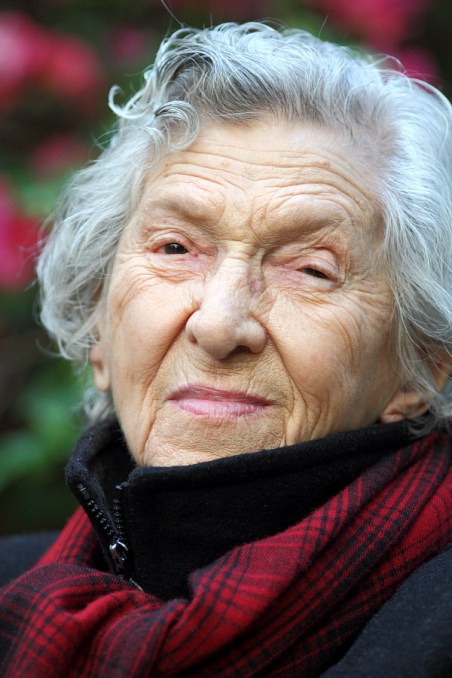
Evie Zysman
Imbued with an undying zeal to make a difference in people’s lives, especially children’s lives, Evie threw herself into her work. Even now, at an age when most of her contemporaries are dead or retired, she remains committed to doing good works and supporting good causes.
Consistent with her belief that children need protection, she spent much of her first 50 years as a licensed social worker, making the rounds among welfare, foster care and single-parent families. True to her conviction that all laborers deserve a decent wage and safe work spaces, she fought for workers’ rights as an organized union leader. Acting on her belief in early childhood education, she helped start a project that opened day care centers in low income areas long before Head Start got off the ground; and she co-founded, with her late husband, Jack Zysman, Playtime Equipment Co., which sold quality early childhood education supplies.
Evie developed her keen social consciousness during one of the greatest eras of need in this country — the Great Depression. The youngest of eight children born to Jacob and Lizzie Adler, she grew up in a caring family that encouraged her to heed her own mind and go her own way but to always have an open heart.
“Mama raised seven daughters as different as night and day and as close as you could possibly get,” she said. “Mama said to us, ‘Each of you is pretty good, but together you are much better. Remember girls: Shoulder to shoulder.’ That was our slogan. And then, to each one of us she would say, ‘Don’t look to your sister — be yourself.’ It was taken for granted each one of us would be ourselves and do something. We loved each other and accepted the fact each one of us had our own lives to live. That was great.”
Even though her European immigrant parents had limited formal education, they encouraged their offspring to appreciate the finer things, including music and reading.
“Papa was a scholar in the Talmud and the Torah. People would come and consult him. My mother couldn’t read or write English but she had a profound respect for education. She would put us girls on the streetcar to go to the library. How can you live without books? Our home was filled with music, too. My sister Bessie played the piano and played it very well. My sister Marie played the violin, something she did professionally at the Loyal Hotel. My sister Mamie sang. We would always be having these concerts in our house and my father would run around opening the windows so the neighbors could also enjoy.”
Then there was the example set by her parents. Jacob brought home crates filled with produce from the wholesale fruit and vegetable stand he ran in the Old Market and often shared the bounty with neighbors. One wintry day Lizzie was about to fetch Evie’s older siblings from school, lest they be lost in a mounting snowstorm, when, according to Evie, the family’s black maid intervened, saying, “You’re not going — you’re staying right here. I’ll bring the children.’ Mama said, ‘You can go, but my coat around you,’ and draped her coat over her. You see, we cared about things. We grew up in a home in which it was taken for granted you had a responsibility for the world around you. There was no question about it.”
Along with the avowed obligation she felt to make the world a better place, came a profound sense of citizenship. She proudly recalls the first time she was old enough to exercise her voting right.
“I will always remember walking into that booth and writing on the ballot and feeling like I am making a difference. If only kids today could have that feeling when it comes to voting,” said Evie, a lifelong Democrat who was an ardent supporter of FDR and his New Deal. When it comes to politics, she’s more than a bystander — she actively campaigns for candidates. She’ll be happy with either Obama or Clinton in the White House.
When it came time to choose a career path, young Evie simply assumed it would be in an arena helping people.
“I was supposed to, somehow,” is how she sums it up all these years later. “I believed, and I still believe, that to take responsibility as a citizen, you must give. You must be active.”
For her, it was inconceivable one would not be socially or politically active in an era filled with defining human events — from millions losing their savings and jobs in the wake of the stock market crash to World War I veterans marching in the streets for relief to unions agitating for workers’ rights to a resurgence of Ku Klux Klan terror to America’s growing isolationism to the stirrings of Fascism at home and abroad. All of this, she said, “got me interested in politics and in keeping my eyes open to what was going on around me. It was a very telling time.”
Unless you were there, it’s difficult to grasp just how devastating the Depression was to countless people’s pocketbooks and psyches.
“It’s so hard for you younger generations to understand” she told a young visitor to her house. “You have never lived in a time of need in this country.” Unfortunately, she added, the disparity “between rich and poor” in America only seems to widen as the years go by.
With her feisty I-want-to-change-the-world spirit, Evie, an Omaha Central High School graduate, would not be deterred from furthering her formal education and, despite meager finances, became the first member of her family to attend college. Because her family could not afford to send her there, she found other means of support via scholarships from the League of Women Voters and the University of Nebraska-Lincoln, where the Phi Betta Kappa earned her bachelor’s degree.
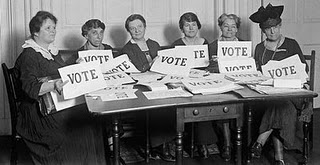
“I knew that for me to go to college, I had to find a way to go. I had to find work, I had to find scholarships. Nothing came easy economically.”
To help pay her own way, she held a job in the stocking department at Gold’s Department store in downtown Lincoln. An incident she overhead there brought into sharp relief for her the classism that divides America. “
One day, a woman with a little poodle under her arm came over to a water fountain in the back of the store and let her dog drink from it. Well, the floorwalker came running over and said, ‘Madam, that fountain is for people,’ and the woman said, ‘I’m so sorry, I thought it was for the employees.’ That’s an absolutely true story and it tells you where my politics come from and why I care about the world around me and I want to do something about it.”
Her undergraduate studies focused on economics. “I was concerned I should understand how to make a living,” she said. “That was important.” Her understanding of hard times was not just of the at-arms-length, ivory-tower variety. She got a taste of what it was like to struggle when, while still an undergrad, she was befriended by the Lincoln YWCA’s then-director who arranged for Evie to participate in internships that offered a glimpse into how “the other half lived.” Evie worked in blue collar jobs marked by hot, dark, close work spaces.
“She thought it was important for me to have these kind of experiences and so she got me to go do these projects. One, when I was a sophomore, took me in the summer to Chicago, where I worked as a folder in a laundry and lived in a working girls’ rooming house. There was no air conditioning in that factory. And then, between my junior and senior years, I went to New York City, where I worked in a garment factory. I was supposed to be the ‘do-it’ girl — get somebody coffee if they wanted it or give them thread if they needed it, and so forth.
“The workers in our factory were making some rich woman a beautiful dress. They asked me to get a certain thread. And being already socially conscious, I thought, ‘I’ll fix her,’ and I gave them the wrong thread,” a laughing Evie recalled, still delighted at the thought of tweaking the nose of that unknown social maven.
Upon graduating with honors from UNL she set her sights on a master’s degree. First, however, she confronted misogyny and bigotry in the figure of the economics department chairman.
“He said to me, ‘Well, Evelyn, you’re entitled to a graduate fellowship at Berkeley but, you know, you’re a woman and you are a Jew, so what would you possibly do with your graduate degree when you complete it?’ Well, today, you’d sue him if he ever dared say that.”
Instead of letting discrimination stop her, the indomitable Evie carried-on and searched for a fellowship from another source. She found it, too, from the Jewish School of Social Work in New York.
“It was a lot of money, so I took it,” she said. “I had my ethic courses with the Jewish School and my technical courses with Columbia,” where she completed her master’s in 1932.
As her thesis subject she chose the International Ladies Garment Workers Union, one of whose New York factories she worked in. There was a strike on at the time and she interviewed scores of unemployed union members who told her just how difficult it was feeding a family on the dole and how agonizing it was waking-up each morning only to wonder — How are we going to get by? and When am I ever going to work again?

As a social worker she saw many disturbing things — from bad working conditions to child endangerment cases to families struggling to survive on scarce resources. She witnessed enough misery, she said, “that I became free choice long before there was such a phrase.”
Her passion for the job was great but as she became “deeply involved” in the United Social Service Employees Union, she put her first career aside to assume the presidency of the New York chapter.
“I could do even more for people, like getting them decent wages, than I could in social work.” Among the union’s accomplishments during her tenure as president, she said, was helping “guarantee social workers were qualified and paid fairly. You had to pay enough in order to get qualified people. We felt if you, as social workers, were going to make decisions impacting people’s lives, you better be qualified to do it.”
Feeling she’d done all she could as union head, she returned to the social work field. While working for a Jewish Federation agency in New York, she was given the task of interviewing Jewish refugees who had escaped growing Nazi persecution in Germany and neighboring countries. Her job was to place new arrivals with the appropriate state social service departments that could best meet their needs. Her conversations with emigres revealed a sense of relief for having escaped but an even greater worry for their loved ones back home.
“They expressed deep, deep concern and deep, deep sadness and fear about what was going on over there,” she said, “and anxiety about what would happen to their family members that remained over there. They worried too about themselves — about how they would make it here in this country.”
A desire to help others was not the only passion stoked in Evie during those ”wonderful” New York years. She met her future husband there while still a grad student. Dashing Jack Zysman, an athletic New York native, had recently completed his master’s in American history from New York University. One day, Evie went to some office to retrieve data she needed on the International Ladies Garment Workers Union, when she met Jack, who was doing research in the very same office. Sharing similar interests and backgrounds, the two struck up a dialogue and before long they were chums.
The only hitch was that Evie was engaged to “a nice Jewish boy in Omaha.” During a break from her studies, she returned home to sort things out. One day, she was playing tennis at Miller Park when she looked across the green and there stood Jack. “He drove from New York to tell me I was definitely coming back and that I was not to marry anybody but him.” Swept off her feet, she broke off her engagement and promised Jack she would be his.
After their marriage, the couple worked and resided in New York, where she pursued union and social work activities and he taught and coached at a high school. Their only child, John, today a political science professor at Cal-Berkeley, was born in New York. Evie has two grandchildren by John and his wife.
Along the way, Evie became a New Yorker at heart. “I loved that city,” she said. Her small family “lived all over the place,” including the Village, Chelsea and Harlem. As painful as it was to leave, the Zysmans decided Omaha was better suited for raising John and, so, the family moved here shortly after World War II.
Soon the couple began Playtime Equipment, their early childhood education supply company. The genesis for Playtime grew out of Evie’s own curiosity and concern about the educational value of play materials she found at the day care John attended. When the day care’s staff asked her to “help us know what to do,” she rolled up her sleeves and went to work.
She called on experts in New York, including children’s authors, day care managers and educators. When she sought a play equipment manufacturer’s advice, she got a surprise when the rep said, “Why don’t you start a company and supply kids with the right stuff?” It was not what she planned, but she and Jack ran with the idea, forming and operating Playtime right from their home. The company distributed everything from books, games and puzzles to blocks and tinker toys to arts and crafts to playground apparatus to teaching aids. The Zysmans’ main customers were schools and day cares, but parents also sought them out.
“I helped raise half the kids in Omaha,” Evie said.


The Zysman residence became a magnet for state and public education officials, who came to rely on Evie as an early childhood education proponent and catalyst. She began forming coalitions among social service, education and legislative leaders to address the early childhood education gap. A major initiative in that effort was Project AID, a program she helped organize that set-up preschools at black churches in Omaha to boost impoverished children’s development. She said the success of the project helped convince state legislators to make kindergarten a legal requirement and played a role in Nebraska being selected as one of the first states to receive the federal government’s Head Start program.
Gay McTate, an Omaha social worker and close friend of Zysman’s, said, “Evie’s genius lay in her willingness to do something about problems and her capacity to bring together and inspire people who could make a difference.”
Evie immersed herself in many more efforts to improve the lives of children, including helping form the Council for Children’s Services and the Coordinated Childcare Project, clearinghouses geared to meeting at-risk children’s needs.
The welfare of children remains such a passion of hers that she still gets mad when she thinks about the “miserable salaries” early childhood educators make and how state budget cuts adversely impact kids’ programs.
“Everybody agrees today the future of our country depends on educating our children. So, what do we do about it? We cut the budgets. Don’t get me started…” she said, visibly upset at the idea.
Besides children, she has worked with such organizations as the United Way, the Urban League, the League of Women Voters, the Jewish Council of Women, Hadassah and the local social action group Omaha Together One Community.
In her nearly century of living, she’s seen America make “lots of progress” in the area of social justice, but feels “we have a long way to go. I worry about the future of this country.”
Calling herself “a good secular Jew,” she eschews attending services and instead trusts her conscience to “tell me what’s right and wrong. I don’t see how you can call yourself a good Jew and not be a social activist.” Even today, she continues working for a better community by participating in Benchmark, a National Council of Jewish Women initiative to raise awareness and discussion about court appointments and by organizing a Temple Israel Synagogue Mitzvah (Hebrew, for good deed) that staffs library summer reading programs with volunteers.
Her good deeds have won her numerous awards, most recently the D.J.’s Hero Award from the Salvation Army and Temple Israel’s Tikkun Olam (Hebrew, for repairing the world) Social Justice Award.
She’s outlived Jack and her siblings, yet her days remain rich in love and life. “I play bridge. I get my New York Times every day. I have my books (she is a regular at the Sorenson Library branch). I’ve got friends. I have my son and daughter-in-law. I have my grandchild. What else do you need? It’s been a very full life.”
As she nears a century of living Evie knows the fight for social justice is a never-ending struggle she can still shine a light on.
“How would I define social justice?” she said at an Omaha event honoring her. “You know, it’s silly to try to put a name to realizing that everybody should have the same rights as you. There is no name for it. It’s just being human…it’s being Jewish. There’s no name for it. Give a name to my mother who couldn’t read or write but thought that you should do for each other.”
Related Articles
- Alberta foster care system under scrutiny (calgaryherald.com)
- Leading article: The care system needs a drastic overhaul (independent.co.uk)
- Feds share blame for child welfare system ‘chaos’ (cbc.ca)
ER, An Emergency Room Journal
To be honest, I was hoping for something dramatic to happen in the ER that agreed to accommodate for a few nights my hanging around, asking medical staff and paramedics and patients questions and taking voluminous notes. Nothing much did. That is to say, a stream of patients came through presenting all manner of problems, but nothing over the top sensational occurred. I think I still managed a good story out of the assignment. You be the judge. The article appeared in The Reader (www.thereader.com) as a kind of companion piece to another story I did based on ride alongs with paramedics. You can find the paramedics story on this blog as well. It’s titled “Merciful Armies of the Night.”
ER, An Emergency Room Journal
©by Leo Adam Biga
Originally published in The Reader (www.thereader.com)
Hours of Boredom and Minutes of Terror
Hollywood portrayals of hospital emergency rooms depict white hot action zones where medical drama and staff intrigue continue nonstop. What’s a real ER like? Recent visits to the NHS University Hospital ER found a medical treatment center, social laboratory, educational classroom and last refuge all in one. An intersection where the gallery of humanity meets and various trends surface. A mission, a haven, a hell. Or, as one ER nurse put it, “We deal with the heart of Omaha here.”
Like many staff, nurse Susie Needham feels the ER is THE place to be on the frontlines of medical care due to its fluid nature, one she summed up as “hours of boredom and minutes of terror.” Unlike television’s ER, long tedious stretches can grind by before a single trauma arrives. Then again, a run of critical or extreme cases can suddenly pile-up, kicking a slow shift into high gear. As Needham put it, “From moment to moment, it can change.
Most people that work here are attracted to the fast changing pace and the variety of different patients we see. It’s never the same. You have to know a lot about a lot of different things, and that’s what keeps you on your toes. It makes it interesting.” On a Friday night in April Needham, a pretty freckled blonde with an impish smile, tended a diverse mix, including a bronchial pediatric patient with difficulty breathing, an adult drug abuser suffering withdrawal pangs and a drunk woman ostensibly there for stomach pain but whose battered body and frayed psyche told a more sinister story.
For the most part, ERs treat a procession of fevers, coughs, sprains, aches, cuts, bruises, breaks. Purely routine stuff. Unless it’s happening to you, of course. Since one person’s trivial complaint may be another’s dire crisis, everyone is treated the same. No condition is refused. Nothing is taken for granted. Trained to assess and treat serious problems, medical staff try first ruling out any life-threatening cause before looking at non-critical or non-medical issuses. Most ER medical staff possess extensive critical care backgrounds, but it seems all ERs (the step-child of acute medical care) are not equal.
 On busy nights (Sundays are worst) patients stack up and long waits ensue. Triage nurses sort cases on an as-needed basis, with the severest seen promptly and the mildest set aside for a kind of walk-up window service, Fast Track. But again, unlike TV, where patients sweep through the ER unchecked, the real world entails staff documentation-communication for all patient admissions, treatments, releases. In terms of volume, University Hospital recorded 27,018 ER visits last year, a slight rise from 1998. Traumas typically account for about 3.25 percent of all cases.
Not long past dusk on St. Patrick’s Day things were unwinding surprisingly slowly in the ER considering this was a designated trauma night (meaning area rescue services were to feed trauma patients there) on a Friday holiday known for alcohol-related injuries. Earlier in the day, staff treated a 43-year-old Omaha man knocked unconscious in a bar fight. Michael Kimball was brought in comatose. Massive swelling in his brain forced doctors to remove his skull to relieve the pressure. (Editor’s Note: Kimball never regained consciousness and, two weeks later, was pronounced dead. Police cited insufficient evidence to file charges in the case.).
Hours later, during a protracted lull, staff lingered about “the hub,” the ER nerve center, bantering in the irreverent MASH humor used for stress relief. Attending physician Dr. Paul Tran made a colleague, Dr. Rick Walker, envious by describing his sound sleep the night before, a rarity after the rush of a nine-hour trauma shift. When not hanging at the hub or crashing in the staff lounge, docs, nurses, techs and residents use computers and charts to monitor the condition of patients in surrounding non-critical care rooms and trauma bays (a total of 16 beds), to track the progress of lab workups, x-rays or other procedures and to file paperwork. A large grease board hanging high on the wall is smudged with running patient status reports. This checks and balances system aims to avoid patient-bed-meds. mixups
The staff perked up that night at the static-filled emergency band radio (always droning on in the background) report of a CODE 3 (critical medical) case en route, with an ETA of five minutes. Staff are uncanny at hearing the calls headed their way and ignoring the others. The paramedic’s sketchy details described an elderly man who fell and hit his head outside a Bag ‘N’ Save. The man, whom paramedics found minus vital signs, had been shocked back to life. With the clock ticking, Dr. Tran, a slight Vietnamese native with a gentle bedside manner, conferred with colleagues on whether to summon the trauma team, a kind of in-house medical SWAT squad on call to treat the most severe critical care cases, or to handle things themselves.

It Never Gets Better
Dr. Walker, a beefy man whose pockets are invariably overstuffed with paperback novels and stethoscopes, has spent his entire medical career in emergency medicine. He said part of the appeal for him and others is the extreme nature of the work. “I think it’s very challenging, and that’s a large aspect of it. It’s also a big adrenalin rush, and as I’ve assessed my life and career I’ve come to the conclusion I’m an adrenalin junkie, and I think that’s probably what did it for me.”
He said being exposed to the tragedy that accompanies trauma extracts a certain toll:
“You see bad stuff happening here, and it’s stuff that, you know, can make you cry, like kids dying. It’s tough and it can really get to you emotionally, and so what you have to do is build up a wall because otherwise you’d be breaking down every time you saw something like that and you could not function. That wall tends to stay up most of the time and the last few years it’s become an issue in my personal life.” Nurse Jackie Engdahl said it takes a special breed to work there, “Oh, definitely, Type A personalities make good ER nurses. You have to be very aggressive…very assertive because of what you deal with. You deal with not only ill and injured people, but intoxicated people and drug-induced and psychotic people. You gotta love a good challenge and you gotta be strong enough to whip into shape when the going gets tough.”
For trauma nurse coordinator Kathy Warren, it’s a matter of staying focused no matter how horrendous the reality before her. “Some of these cases are just horrible looking when they come in. You just have to totally ignore that and focus in on the task, so whether you’re starting the IV or helping the docs with procedures, you detach yourself and just click into gear. You can’t get nervous. You have a job to do,” she said. Warren, whose job entails her dealing with family members, said staying composed is hard when working with parents who’ve just lost a child. “Sometimes I have to step back for a few minutes and take a deep breath. When I get home after a case like that, everybody knows its been a bad day as soon as I walk in.”
Added Susie Needham, “People think you get callous or something, but you don’t. Some of the things we see are heart-wrenching and no matter how many times you’ve seen them it still really bothers you. It never gets better.”
Things finally began heating up again on St. Patty’s Day once the Code 3 patient was wheeled in on a gurney by paramedics and lifted onto a bed in the T2 trauma bay. The heavy-set man of about 65 lay there in a coma, a breathing tube inserted in his throat and an IV snaked into one arm, his big hairy belly billowing up and down as a bevy of ER medical staff hovered over him to keep him alive. “I need, STAT, six units of platelets…” a nurse called out. “Tell respiratory to bring a vent, please,” called another.
Then, when someone barked, “I need another set of hands up here,” a tangle of arms belonging to eight nurses, techs and docs converged to perform, seemingly at once, multiple tasks, from hooking up a ventilator to running a blood pressure line to starting a new IV to drawing blood to attaching EKG electrodes. “Sir, there’s going to be a tube going down the back of your throat,” one of them said more out of habit than out of any expectation of a response. Lying there, totally exposed and vulnerable, his life completely in the hands of these angels of mercy, the man, referred to then only as John Doe due to a lack of ID, was an anonymous soul brought back from the very brink.
Time is of the Essence
Time is critical in trauma or near trauma scenarios like these. That night’s charge nurse, Scott Miller, said it involves quick, precise coordination and communication. “Everybody swarms in to get the job done as fast as possible. In a case like this you have Dr. Tran coordinating and everybody trying to feed information to him as to what they’re finding at the same time as they carry out his orders.”
When the whole trauma team is activated, a whole slew of specialists — from surgeons to anesthesiologists to radiologists to lab techs — converge on the spot, making teamwork even more essential. According to Kathy Warren, “You have a lot of people and everyone has a different role and, hopefully, they know their role so they’re not getting in your way and you’re not having to tell them everything. It usually works pretty well, and it’s amazing the amount of things that can be done for a patient in a short amount of time when you absolutely have to. But that’s what a trauma center is supposed to be able to do.”
Emergency care often starts with the rapid response of rescue squads on the scene. Paramedic Tom Quinlan was among those responding to the 911 call that found Doe lying unconscious. “He was not breathing. He didn’t have a pulse. So we started our CODE 99 (for clinically dead cases) protocol, which is intubate him, start an IV and do CPR. We ended up shocking him a couple of times. We finally got a pulse back and he continued to breathe for us on the way to the hospital,” he said.
Added Dr. Tran, “Time is of the essence here. After so many minutes, it doesn’t do any good, so it’s all speed and skill. The man probably experienced sudden death when his heart went into fibrillation, meaning it didn’t pump any blood and, so, the brain promptly became unconscious and he fell down and hit his head and only by actions of the paramedics did he come back. He was extremely lucky to have had everything done in that time, otherwise he would be dead by now.”
Dr. Tran said the fall resulted in “about a five-centimeter hematoma on the back of the head.” Since Doe was found unresponsive and bore a scar on his chest indicating a history of heart surgery, the question on Dr. Tran’s mind was whether the patient’s vegetative state was due to the fall or to some new cardiac event. Not wanting to overlook a potential cerebral cause, he called in part of the trauma team after all. As Scott Miller, explained, “We’re assuming now he had some sort of heart event that caused him to fall and hit his head. We will be doing a CAT Scan to make sure there’s not something else going on, like a big bleed in his head. We don’t think that’s the case, but you can’t always tell for sure.” Later, it was confirmed a cardiac event did trigger the trauma.
As for the long-term prognosis, Dr. Tran said, “I’m not sure of the condition of his brain function later on.” By then, Doe was identified and his family contacted by nursing resource coordinator Regina Christensen, who met with family members. Part of hers dutie entails fielding inquiries from news hounds looking for material. She noted with incredulity some sound disappointed when a case is upgraded from critical to stable condition.
When treating a trauma, there is no room for bruised feelings. The required care must be delivered NOW. Hashing out differences can come later. One of the reasons nurse Jackie Engdahl likes working in the ER is the maturity of the people working there. “When I worked in other hospital areas there were very clashing personalities and people always bickering back and forth. But here, it’s not that way. You say whatever you want to say to someone and then it’s over and done with. There’s never hard feelings.” And, she said, where some physicians resent or reject nurse input this ER’s docs welcome it. “The doctors here work really well with the nurses. The doctors trust our judgment and they really listen to us. They allow us to do a lot of things, which is nice.” What about departmental romances? “There used to be between the nurses and paramedics,” nurse Janie Vipond said. “It just depends on the group you have at any given time. But, yeah, it happens.”
I Felt I Was in Good Hands
Amid the controlled chaos of an unfolding ER trauma, staff attend to myriad details, not to mention other patients. For the trauma patient whose life hangs in the balance, it can be a surreal experience of wailing sirens, flashing lights, antiseptic smells, probing instruments, strange faces and endless questions. There is fear, confusion, agony. There is even a strange sense of peace. Beverly Harter, a 62 year-old wife, mother and grandmother, has been there. How she got there is a story in itself.
On May 16, 1999 the Logan, Iowa resident was attending a graduation party at the nearby trailer home of a daughter. Various family members and friends were present. The weather was threatening that afternoon. When the sky turned ominous and a tornado warning sounded, the 12 partiers fled the trailer for their cars in an effort to outrun the storm. But it was too late. With a twister bearing down, they left their vehicles to take refuge in a roadside ditch. Huddled on the ground, exposed to the savage winds, the group was deluged by parts of farm machinery ripped asunder in the cyclone and propelled like shrapnel. The metal shards rained down on them, tearing skin, cracking bone, crushing organs.
When it was over, Beverly’s daughter was dead and two grandkids, both injured, left motherless. Her son endured a broken clavicle. A family friend died. As for Beverly, she suffered a punctured diaphragm, a perforated bowel and two crushed vertebra. Her house was leveled. Ironically, the trailer escaped unscathed. Transported by a local rescue unit to Missouri Valley, Beverly was then taken by ambulance to the nearest trauma center, the University Hospital ER.
Beverly, who remained conscious during much of her ordeal, did not have to be told she was badly hurt. “I knew I’d suffered spinal cord damage because my legs were on fire, and they stayed on fire.” she said. She also knew her daughter “was gone” and other loved ones injured. As for her Omaha ER odyssey, she recalls “bright lights,” a sense of “time standing still” and “a lot of people doing a lot of things and asking a lot of questions. I was really hurting and kind of fading in and out from the sedation, but I was able to answer a lot of questions. They explained to me what they were doing at all times, and that was reassuring.”
Indeed, despite her pain and grief, she recalls feeling calm. “You just have a sense that everybody’s taking care of you and that they’re all working together doing their jobs. I felt I was in good hands.” She also felt the staff’s compassion. “They were extremely sensitive and caring and protective about what happened to me and my family. They knew the devastation and loss we had. I was just overcome by their concern for our well-being,” said Harter, who today is confined to a wheelchair.
Kathy Warren said she used to doubt whether the time she spent with families who suffered a loss made a difference until her own father died in the hospital and she found comfort in the support her colleagues gave her. “I realized how important it is to have somebody treat you with kindness and to let you grieve however you want to and to explain things to you. Ever since then I’ve really pushed staff here to sit down with families and to talk to them. It’s not an easy thing to do as a medical person. Some people are better than others. But people don’t expect us to be super men and women. To save everybody. They just need us to be there.”
Not all exchanges are so pleasant. Patient complaints over long waits get expressed along the sarcastic lines of, “I’m sure glad I wasn’t dying.” Before things get nasty, staff try defusing the matter. “The basic strategy is to make them see you as being on their side,” said Dr. Bob Muelleman. “On the other hand, you want to be very much in control of the situation. If it’s just a matter of them yelling and cussing at you, well, that pretty much comes with the territory. Once in a while there’s kind of a thrashing or flailing out. If you think there’s the potential of them really getting violent you can call in security or police, but normally you can handle it on your own.”
When care complaints cannot be appeased, they are passed-on, in writing, or addressed on-site by managers like Regina Christensen. “It can be anything from somebody upset that their mother’s IV is out to something as complicated as a gang-related situation where the patient himself or his family is threatening staff. It’s just an array of things,” she said.
The Truth is Stranger Than Fiction
Meanwhile, back on St. Patrick’s, a drunk middle-aged woman involved in a domestic dispute came in with an aching gut. However, the night’s triage nurse, Susie Needham, recognized bruises and marks as signs of physical violence and sexual assault. After questioning the woman, a horrific tale of prolonged torture and bondage emerged that prompted ER staff to follow procedure and report their suspicions to police. Acting on the medical staff’s input two officers, who earlier arrested the woman’s boyfriend on misdemeanor assault charges, returned to open a rape investigation.
According to Needham, “If people come in here with traumatic injuries that don’t really fit their stories, we call the police.” Often, she said, such patients prove to be victims or perpetrators of a crime. Surrounded by staff and police in a room concealed by drawn curtains, the woman cried out, “I can’t take it anymore. I don’t want to take it anymore.”
After examining the woman a visibly shaken Dr. Tran said, “It’s one of the most remarkable cases of domestic violence I’ve ever seen. She has multiple problems. Number one is domestic violence and sexual assault. Number two is chronic alcoholism. Number three is a low platelet count. Number four is what appears to be an upper GI bleed.” As part of hospital policy in such cases, staff called in a domestic violence-sexual assault counselor to apprise the woman of her rights and refer her to appropriate community resources. But, as ER staffers say they’ve seen far too many other victims do, the woman rejected police-medical entreaties to undergo a forensic exam, something required for a criminal inquiry, and declined pressing rape charges. She was admitted and treated for medical problems.
“What do you do?” a frustrated Needham asked. “That’s tough,” Dr. Tran said, “because once enough time passes, the evidence is lost. We can’t do anything. You have to respect the patient’s wishes. Patient autonomy is everything. Why did she refuse? Oh, fear, love rejection, sensitivity. Who knows? Unfortunately, it’s common.”
Bizarre, believe-it-or-not episodes are also common in the ER. Take the time an obnoxious drunk showed up with a fierce but inexplicable pain in his belly. After sleeping it off, he staggered up from his cot and only then did the ER doc notice a speck of blood, on the sheets, which upon closer inspection turned out to be from a tiny hole, splayed by burn marks, in the man’s back. Apparently, he had been shot but was too drunk to recall it. Sure enough, an x-ray revealed a bullet lodged in the abdomen.
Or, take the time a stabbing victim arrived cut entirely from stem to stern, his entire rib cage exposed, yet conscious enough to describe the whole bloody fillet job some whore performed on him. Or, the time a man fell at home on a fireplace iron and walked in the ER with a small wound on his neck which, upon further exam, proved to be a deep puncture penetrating his cervical spine. For Dr. Muelleman, who treated all these cases while working in a Kansas City, Mo. ER, such incidents fall under the heading of “the truth is stranger than fiction.”

PLEASE CLICK HERE FOR TO SEE RESIDENCY PAGE FOR TRAINING INFORMATION.

Perhaps the most frustrating cases are those involving entirely preventable injuries, especially those incurred while victims engaged in some high-risk, reckless behavior, like a young man Dr. Muelleman treated in Omaha who crashed his car while out joy riding and ended up paralyzed from the neck down. “I don’t call them accidents anymore,” he said, “because an accident suggests an act of God. I call them injuries because when people put themselves in these circumstances something is going to happen that didn’t have to happen.”
Anybody-Anytime-Anything
As ERs are traditionally the 24-7 stop-gap or catch-all of American medical care, the entire spectrum of need shows up there. In most public hospitals, no one is turned away, regardless of insurance status or ability to pay. “The emergency department is the safety net for many people seeking care who really have no other place to go, said Dr. Paul Tran. “Admittedly, there’s going to be abuse of the resources because this is reserved for emergency cases, but who’s definition of emergency is it? A toothache at 2 a.m. may be an emergency to you, but it may not be to someone else. We are here to take care of people from all walks of life and with conditions as minor as a toothache or as serious as a heart attack. And from that standpoint, it is very satisfying to provide people the last resort they need and to get the instantaneous gratification of turning them around.”
Given its open door policy, “the ER is where you really see the cross-section of humanity and so, if there are social ills, you seem them in the ER,” Dr. Muelleman said. “Some of the ills we deal with are domestic violence, drug and alcohol issues, child abuse, lack of immunization and lack of access to health insurance. Another segment the ER picks up on are the acute psychiatric and homeless populations.” He said in an era of managed care, ERs play an increasingly large social service and public health role. “
So, if we’re dealing with intoxicated people we try to get them in a shelter or detox center. If it’s an abuse case we bring in social workers, police and protective agency professionals. If we’re dealing with domestic violence, we make sure patients understand the resources available to them.” Nurse Scott Miller is “troubled” by how many kids he treats who “are not well cared for” at home and “very frustrated by the large number of people with legitimate psychiatric problems who can’t get seen” due to a lack of psychiatric beds locally. He said, “I’ve spent many hours fighting on the phone, calling medical staff at home, to get people admitted in the hospital when they don’t really have a medical problem. But when no psychiatric place will take them, we can’t just send them home.”
Dr. Muelleman said where ERs have always tried educating patients about prevention safeguards and optional resources, “Some have gone to the extent of smoking cessation and substance abuse counseling. I’m just reviewing a grant for a hospital to screen Type II Diabetes, which is not something you’d traditionally think of as an ER doing. There is a real move toward ERs getting involved with public health, even things like bike helmet giveaways. Some have even gone as far as to give pneumonia and flu shots. Even here, during seat belt awareness week, we do educational stuff to let people know about the importance of seat belts.”
As a survey of ER web sites will attest, there is debate in the medical community over the all-encompassing role of the ER. On this subject, Dr. Muelleman takes a pragmatic position. “You can’t select why people use the ER. Once they’re here, you can’t ask, Why are you here again?, although you may be tempted to. I mean, I support the notion public health policy in America should be changed to help take care of people’s health needs in a more comprehensive fashion than just having them go to the emergency room, but given that’s not the case, the mantra in the ER continues to be — anybody, anytime, anything. That’s exactly what it is. Should we change medicine so that doesn’t happen? Well, yes, we should, but in the meantime we’ve got to do what we can to help people.”
Related Articles
- Some ERs post wait times by text, billboard (msnbc.msn.com)
- Newly Insured are Likely to Congregate in Emergency Rooms (prweb.com)
- Timesunion.com: If it’s an emergency, they’re on the clock (timesunion.com)
- Text Your Way To a Short Emergency Room Wait [Medicine] (gizmodo.com)
- Lengthy waits in local ERs (windsorstar.com)
Merciful Armies of the Night, A Ride-Along with Paramedics
To date, the only ride along I’ve done as a journalist was for this story following paramedics. I enjoyed the challenge of reporting and scene description the assignment presented. It’s the type of project I do from time to time in order to push myself out of the comfort zone I sometimes get stuck in. The story, which originally appeared in The Reader (www.thereader.com), was meant to mimic and ultimately transcend the television and film depictions of first responders. Perhaps I’ll do a ride along with police officers or detectives sometime. A companion piece of sorts to this one is also posted on the site — a report I filed based on a few nights observing things at an ER.

Merciful Armies of the Night, A Ride-Along with Paramedics
©by Leo Adam Biga
Originally published in The Reader (www.thereader.com)
The Paramedics Corps
Cutting through the humid summer night, Medic 21 is a rattling five-ton metal box of thunder-on-wheels. The Omaha Fire Department (OFD) rescue squad rushes to another emergency on the near north side. Flashing red, yellow and blue lights pulsate with the same urgency as the wailing siren’s cry that help is on the way.
Two licensed paramedics are assigned Medic 21 on the C shift: Capt. John Keyser, 38, a fair-haired, well-chiseled 12-year veteran of the OFD and Kathy Bossman, 28, a pretty brunette in her third year on the force after a short stint with the Lincoln Fire Department. Partners since last October, the pair work out of a firehouse at 3454 Ames Avenue, one of nine stations in the city housing rescue squads alongside fire engine companies. Anymore, every Omaha firefighter is trained in at least basic Emergency Medical Technician (EMT) skills. Some own intermediate or EMTI ratings. Others, like Keyser and Bossman, are full-fledged paramedics with the most rigorous Advanced Life Support (ALS) training on the force. Paramedics are usually attached to rescue squads, although some serve on fire rigs.
The OFD paramedics corps numbers 147, nearly triple the total from five years ago. Omaha Fire Department Emergency Medical Services (EMS) Battalion Chief Jim Love said this planned jump in personnel came in response to an increasing workload caused by an ever-expanding city: “Last year our medic units responded to 23,558 calls for medical assistance and transported 16,400 of those people. The year before, we responded to 21,272 calls. Our calls are growing at a rate of 4 to 6 percent a year. The population is not only getting larger but it’s getting older, so we’re seeing an increase in the elderly and their associated medical problems.”
Paramedic training is intensive, entailing some 1,000 hours of classroom and field experience, including interning in clinic (hospital) settings and on ride-alongs. A more rigorous curriculum is being implemented in 2001. Omaha EMS Chief Medical Director Dr. Joseph Stothert, head trauma surgeon at NHS University Hospital, said today’s paramedics are more skilled than in the past: “They have better education and better quality assurance in place and I think generally the care in the streets is much better than it was 10-20 years ago. Not only are they able to do more, but they are able to understand more and sort out what’s going on with the patient and to begin treatment before they reach the hospital.” He said things have progressed to the point that medics follow protocols or standing orders to guide their assessment and care in the field where before they called hospitals and awaited orders via radio phone. “Through the years I think the level of confidence has increased in the paramedics because of their training,” he added.
Here I Come to Save the Day
As the gleaming ambulance barrels through traffic (most of which parts to let it past) to the scene of an emergency the vibe inside the squad is part thrilling and part somber as the laconic medics steel themselves for whatever crisis awaits them. With their hearts racing, they are like soldiers driving into a battlefield. Their reactions must be swift. Their minds sharp. As they run through routes and protocols in their head, they keep an eye out for rogue motorists and cock an ear to the radio for updates. They take seriously their role as rescuers. Theirs is a single-minded mission of mercy — responding to a frantic plea for help. It can be anything. A diabetic reaction. An asthma attack. A cardiac event. A gun-shot wound. A personal injury accident. Poisoning. Heat exhaustion. Childbirth. It can be anybody. A child. An adult. Someone hurt in a car, on the street or in their own house. It can be a cop or fellow firefighter, victim or assailant, average citizen or public figure. You name it — these professionals have seen it in the line of duty.
Medics pull 24 hour shifts and no matter when the 911 call comes in — the middle of the night or the fat of the day — and regardless of what it is — a routine health problem or a genuine medical crisis — they show up ready to lend aid. Even when driving conditions stink or the medics are starving sleep, they respond the same. There is a temptation to view them as heroic Calvary riding-in to save the day. That is not how they see themselves, however. “I certainly don’t feel like any knight in shining armor. We’ve just doing our job,” Keyser said. “I really do enjoy helping people. That’s probably the biggest reason why I chose this profession.” His partner, Bossman, added, “It’s nice to be able to help people and to be able to change their life or improve their life in some way. Every time they call us it’s an emergency to them. They appreciate us being there, and that’s a good feeling.”
The anytime-anything-anybody drama of the job is one of its major draws. Even though most runs are routine, no two are ever quite the same. “One of the most appealing things is the excitement,” Bossman said. “It’s a big adrenalin rush. When you get the blood and guts, it makes it more exciting and interesting. You know you’ve got to step it up. You’ve got to move faster. You’ve got to get more things done. You’ve got to use all your skills and training.” Said Keyser, “One of the reasons I went into this is because it’s very challenging. The sleep deprivation is hard to deal with and the stress level is very high.” That stress — of being on call all hours of the day and night to make emergency medical interventions — has a flip side too. “You can get too wrapped up in this job. If you let the pressure and stress mount, all it does is kill you a little bit at a time. That’s why I’ve always thought one aspect of being a good paramedic is recognizing when you need to get away from it,” Battalion Chief Love said. Field medics like Keyser know the demands can overtake them if not careful. “I’ve got at least another 12 years on the job, but I don’t want to be on the rescue squad that long because I don’t want to get burned-out. After a 5-day rotation, I’m exhausted. I have a wife and three kids I want to enjoy,” he said.
On the Run
Medic 21 is among the two busiest EMS units in Omaha. It annually vies with Medic 40, at 45th and Military Avenue, for the title of most runs. The unit is responsible for a wide swath of Omaha — from Bedford Avenue north and from the Missouri River to 72nd Street west. Given that Medic 21 serves a low income area, some residents rely on the EMS system as a mobile clinic and taxi service. “In our territory we seem to have a lot of patients who don’t have transportation to the hospital, so they call 911 even if they have the flu. You treat them the same even though you’re frustrated because it’s 3 in the morning and you’ve seen this patient before and you know there’s nothing seriously wrong with them,” Bossman said. “We tend to see a lot of really young mothers who don’t know much about caring for their kids. We try to educate them a little.” Then there are the repeat customers. “We’ve got quite a few regulars. Most have legitimate medical conditions, but some don’t necessarily take care of themselves very well. They don’t take their medicines like they should and that can worsen their condition.”
Jim Love was a firefighter-paramedic on the streets before taking a desk job. He worked out of Station 21 and said his field experiences there opened his eyes to some things. “I didn’t realize the abject poverty that exists in certain parts of our city until I actively went there, walked into these places, took care of these people and transported them to the hospital,” he said. “I mean, I’d seen poverty on TV and read about it in the newspaper, but until you actually touch it and work with it, you really can’t imagine. For lots of people, we’re their source of medical care. They don’t go to doctors.”
With 3,113 runs made last year by its three crews, Medic 21 is the reigning champ among Omaha EMS units. Through August Keyser and Bossman are averaging 9 runs per 24-hour shift and are 50 ahead of last year’s pace, but on this day (August 10) they are still awaiting their first more than half-way through their shift. “This is highly unusual,” Bossman said. “That’s the thing about this job. A lot of times you’re waiting for something to happen and other times you leave the station and then don’t get back for six hours,” said Keyser. No sooner do the words leave his mouth than an alarm sounds on the overhead speaker alerting personnel to a rescue call. Keyser and Bossman clamber aboard the squad, fire up its engine, roll out of the garage and tear onto rush hour-choked Ames Avenue. With Keyser manning the wheel and Bossman the radio, a 911 dispatcher relays the nature of the call. “Medic Unit 21, there’s a 90 year-female with difficulty breathing…a neighbor became concerned when she didn’t her from her…called police…the female was found on the floor…apparently fallen…police are on the scene.”
Lady in Distress
Less than 10 minutes elapse from the time the call is received to the medics’ arrival on the scene. It is a red brick apartment house at 52nd and Northwest Street. Police cruisers and a fire engine are already there. Curious neighbors and onlookers gather on the small porch or watch from the street corner as Keyser and Bossman stride into the residence carrying an arsenal of emergency medical supplies, including a portable heart monitor/defibrillator and a case filled with meds, IVs, airway supports, bandages, slings, etc.
Police deny access to a reporter along for the ride, citing the tight quarters. The officer guarding the front door, Juan Fortier, describes the situation while Keyser and Bossman treat the elderly patient inside. “A friend hadn’t heard from the resident since Tuesday night at 8. She came by, hollered for her and got no response. She tried entering, but the inside chain was locked. So she called us. We came, we assessed the situation, notified our supervisors what we had and we decided to go ahead and force the lock open. We got inside and the 90 year-old resident was lying on her back on the floor next to her bed with one leg kind of folded up under her. She was still conscious but somewhat discombobulated. She had obviously been there awhile. We just tried to comfort her with our voice and let her know help was here,” he said. Police and rescue squads respond to several such calls each week. Most turn out fine.
Minutes later, firefighters hustle to fetch a backboard and gurney and soon are carrying the patient out on the stretcher, a bag valve mask applied to her mouth, and secure her in place on the squad. With the patient, Olive, designated a CODE 3 (critical condition) Keyser and Bossman tend to her in back while a firefighter takes the wheel. It turns out Olive lives alone and has no family in state. The only prescribed medication found is for some unknown cardiac condition. In cases like this, when a patient cannot provide answers and there is no family member to consult, medics lack basic information to complete a patient history.
Teamwork
“A big part of our job is information gathering,” Keyser said. “Our first job is to assess the patient and determine if there’s a life threatening situation. Then, the most important thing is to find out the history of what brought this person to require our care. We try to get as much of the history as we can for the doctors.”

Firefighters often reach a scene first and provide care up to their level of training. Once medics arrive to take over, firefighters remain to assist — providing extra sets of hands and eyes. This team concept is at the heart of EMS. “Most of us have worked together for a long time and everybody knows what needs to be done,” Keyser said. “Firefighters will get a stretcher or set-up an IV or get oxygen going. If we don’t see it being done, we’ll ask for it.” Bossman added, “The firefighters we work with are real good about helping out. They’ll jump in and do whatever needs to be done.” Love said having EMT-qualified firefighters on-site is essential to the continuum of care that extends from pre-hospital settings to the ER. “The important thing about having EMTs on the fire trucks is that not only do they get there quickly, but they take base-line vitals which give the paramedics something to compare with when they take their vitals. It gives us another indication as to whether the patient is getting better, getting worse or staying the same.”
In critical or trauma scenarios, time is everything. “We’re always racing the clock,” Love said. “Our goal is to get somebody to the patient’s side with at least basic level training within 5 minutes and to get someone there with advanced training within 8 to 11 minutes. We try to reach those goals at least 90 percent of the time.” According to Keyser, “Depending on how critically injured that patient is, their best survivability is if they can be treated in the ER within an hour of their injury. It’s called the Golden Hour. We try to get everything done we can in 10 minutes before the patient is loaded on the squad and we’re on the road to the nearest trauma center. We’ll do everything else en route.”
In Dr. Joseph Stothert’s view, “For about 90 percent of the patients paramedics see, their care is absolutely vital and life-saving, including persons in or near cardiac arrest and persons involved in (serious) motor vehicle accidents. Now that there is a defibrillator on every fire and rescue apparatus, there’s been a steady increase of patients we’ve been able to resuscitate earlier.”
With Olive in tow, Medic 21 speeds to the nearest hospital, Immanuel Medical Center, as Keyser radios her condition: “We’ve got a 90-year-old female who has been down apparently since…” During the bump-and-grind ride Olive is dimly conscious. She cannot speak, responding to questions with only her tired eyes or feeble nods of her head. “Can you point for me where it hurts?” Keyser asks. “Olive? Olive, we’re going to give you some nitro on your tongue. Your lungs are full of water. I want you to lift your tongue up for me. There you go. Good girl. Here it comes. Open wide.” Olive weakly responds. Her mottled face is splayed by vomit and pinched in pain. Her eyes close. She is barefoot. Totally vulnerable. Her vital signs are continually taken and any abrupt changes noted. All the while, Bossman comforts Olive by holding her hand and applying pressure to a bag valve mask over her mouth, timing her squeezes in concert with the patient’s inhalation.
“For the short amount of time you’re with patients you just want to try to do something positive. Sometimes, that’s nothing more than holding their hand and talking to them while you’re riding to the hospital,” Love said.
Keyser tries getting Olive to respond again (“Olive, we’re going to help breathe for you, okay? Olive, can you open your eyes again?”), but she has fallen unconscious. The medics scramble to intubate her with a breathing tube and suction out excess fluid clogging her airway. Amid the cramped space the medics handle equipment and perform procedures in a kind of choreographed dance. They anticipate each other’s moves well. Few words need to be spoken. They work with calm precision and dispatch, forming what Love likes to call “a fine-tuned patient care machine.”
Later, after delivering Olive to the ER, Bossman recaps the run. “She had fallen out of her bed and was on the floor since Tuesday night. She was already dehydrated. She’d been vomiting and had it in her mouth and in her lungs. That caused her to choke and quit breathing. It could have been real bad. If her neighbor hadn’t checked on her and called the police she could have choked to death. She got a little bit worse en route. She quit responding, although her vital signs stayed pretty good. We intubated her to clear her airway. She’s actually pretty stable now. Her airway’s secure. She’s getting plenty of oxygen. They’re going to x-ray her to make sure she didn’t injure her back when she fell.”
Breathing difficulty is a call medics often respond to and make a life-saving difference in. “Outside of critical emergencies, the assessment and treatment of airway problems is where they tend to help people the most, such as people with asthma or people with chronic airway diseases,” Dr. Stothert said. Medics also routinely help diabetic reactive patients make dramatic turnarounds.
Heeding the Call Again
After its crew restocks supplies and completes paperwork in the ER, Medic 21 no sooner pulls out of Immanuel when a new call presses them back into service. It is a new mother seized by severe back pain. The squad heads east and in no time at all reaches the wood frame residence near 46th and Bedford, where a fire engine crew is present. The petite patient, Sandy Dace, sits in a kitchen chair doubled-over in a spasm of pain. Her tall bearded husband Dennis stands over her, holding their red and wrinkled 5-day old baby boy in his arms. At the bottom of a staircase a boy of perhaps 8 peers with wide-eyed wonder and fear at the rescuers tramping in and out. It turns out Sandy underwent a prolonged labor marked by acute contractions, before a Caesarean section was performed. It is thought her pain is related to the childbirth.
“I got up to go to the bathroom when I heard Sandy crying. I found her just like that. She couldn’t get up. And with him (the baby) here, I had to call somebody. It was maybe 40 seconds before I heard the sirens. It was great when you showed up. You guys are excellent,” Dennis tells the medics. As he follows his wife to the door, he says, “I’ll be up at St. Joe’s as soon as your mom gets here. Okay, dear?” “Okay,” she replies through clenched teeth.
En route to St. Joseph Hospital Sandy grimaces with each jolt during the shake-rattle-and-roll run. She tightly clutches the handles at the side of the gurney to brace herself. “It’s kind of a bumpy ride, so we’ll take it easy on the way there,” Bossman tells her, but while the ride proceeds at a slower than normal pace it is just as jarring as ever. Dace remains stoic, only uttering a sound when answering Bossman, who tries taking her mind off her discomfort with easy chatter.
Built on an unforgiving truck frame, rescue squads are notoriously noisy clatter-traps that ride like bucking broncos. Many have been in service for a decade or more. It is not unusual for odometers to read 100,000 plus-miles. And those are hard, stop-and-go miles. Units often break down with a wide array of mechanical problems, forcing even older, less reliable reserve units into service. “Our rescue squads are on their last legs,” is how one paramedic put it. With so much wear-and-tear, it is no surprise then that perhaps the number one complaint by customers is that “the ride is terrible,” said Love. Squads are nicknamed “puke boxes.” Three brand new units were purchased recently (for $117,000 each) and their increased size and smoother ride makes medics stuck with older models rather envious.

The squad transports Sandy Dace to the ER just before 7 p.m. and by the time Keyser brings the empty gurney back out, a LifeNet helicopter lands to stretcher-in a middle-aged patient critically injured in an industrial accident. As for Dace, she is logged in as a CODE 1, which signifies no real medical emergency and no treatment performed in the field. She simply gets a check-up in the ER.
Stories from the Frontlines
On the way back to the station, the medics make a fuel stop at a City of Omaha depot where broken-down cruisers, squads, rigs and plows are warehoused for repairs and spare parts in what is known as “the boneyards.” Life at “21s” or any firehouse is a communal thing. Except for captains, who rate their own rooms, everyone, men and women, share spartan dormitory-style sleeping quarters. It is a high testosterone environment. We’re talking big men wielding axes and saws and handling mammoth rigs.
As the lone female (one of 20 among 600-plus fire division field personnel) Bossman is still something of a curiosity. While a Clint Eastwood pic plays on a big screen TV in the rec room, she explains how it takes a certain kind of woman to thrive there. “If you’re the type who gets real upset at a crude joke, you’re not going to last very long. You can’t be overly sensitive to those things. You just have to go with the flow.” She said when she started she was subject to a “feeling out” process that closely scrutinized her ability to handle the job and to be, “one of the boys,” in effect. “Once they saw I was okay with their cracks and I could pull my own weight, then there was no problem.”
Down time is variously spent doing paperwork (a detailed record of every run must be logged in a book and on the computer), washing down or cleaning out rigs, rapping with the guys, grabbing a bite to eat, zoning out in front of the TV or catching some Zs. When a visitor asks Keyser, Bossman and Love to share some stories from the frontlines, they gladly oblige. Like other EMS professionals, they say the toughest cases usually involve children.
“I remember the first SIDS (Sudden Infant Death Syndrome) case I ever went on. At the time I was an EMTI with a little baby of my own, so it really kind of hit me hard,” Keyser said. Bossman recalls a CODE 99 (CPR in progress) case. “What was thought to have been a SIDS baby was revived but it never regained consciousness. It later turned out to be a shaken baby. That had an impact on me because in the ER I was comforting the mother and father and, later, when I found out it was (allegedly) the parents that had done this to the baby, it really bothered me,” she said.
Suicide runs are hard to forget. “You go there and, of course, there’s nothing you can do. You call the police and while you’re waiting you see pictures on the wall of family and friends. It hits home that this was a human being that had a life. It gets you thinking, What got them to the point they felt they had to do what they did? Those are the ones that really stick with me.” Love said.
Bossman said a disturbing run she and Keyser made was to the residence of a man with critical pulmonary edema. “It appeared to be treatable when we first got there,” she said. “At his house he was talking to us, but then he went downhill real fast in the squad. And at the hospital, despite everyone’s best efforts, he died. Sometimes, despite a perfect treatment, the patient may still not make it. It can change at any time. That affects you because you see this person getting worse and worse, and you want to help them, but you can’t…Over time, I guess you just learn that regardless of what you do the outcome is sometimes out of your control. It’s kind of hard.”
“Bad runs” of this sort often prompt a Critical Incident Stress Debriefing or CISD, an informal talk therapy session for every EMS staffer at the scene. The fire division’s chaplain, Rev.. Chuck Swanson, leads the sessions. Select cases are also chosen for run reviews, where crews and supervisors analyze what went right and wrong.
Ready for Anything
At 8:50 that August night, the crew’s brief R & R respite is interrupted by another call. A young woman has dislocated a shoulder fending off an assailant near 24th and Camden Avenue. She screams in agony, “Oh my God. It hurts. Oh my God.” The police are there sorting out the incident. “They’re are always a welcome sight to us,” Keyser said. The patient, tears streaking her face, screams all the way to Immanuel. This is the first in a series of four straight runs Keyser and Bossman make that evening. Next, it is a young asthmatic, Reggie, with difficulty breathing. He’s tried his inhaler, but it’s brought no relief.
The medics arrive at his house and find a scared little boy struggling for breath. They administer Albuterol with oxygen. He breathes easier but a trip to the ER is advisable. Aboard the squad an IV is started. The medics calm the boy down, assuring him how brave he is. Calming kids is “half the battle,” say the medics. When Keyser asks “Have you ever ridden in an ambulance before?” Reggie replies, “Yeah,” and reminds them they treated him once before — for bruised ribs. On the way to Immanuel a much-improved Reggie points out the rear squad window, shouting, “There’s my mom,” waving to her following closely behind in the family van. Upon arrival at the ER a relieved Reggie announces, “I can actually talk now.”
The last two runs are routine. A woman complains of a host of problems, including difficulty breathing. She is quickly stabilized with oxygen, yet continues acting distressed. Her husband explains, “She gets like this when she’s upset.” It seems the couple had been arguing. The patient declines a trip to the ER. Later, Keyser attributes her symptoms to anxiety, which he said can mimic many medical conditions. Then it’s off to an assault call only two blocks from the Medic 21 home base. Police surround the victim lying in the middle of Ames Avenue. The intoxicated man has been beaten about the face by two or three assailants and has suffered cuts and bruises. Keyser and Bossman dress his wounds and take him to University Hospital. He smells of alcohol, sweat and blood.
By the end of the run it is around midnight and the medics are ready for a break. “When you’re super busy or you’re up many times over the course of the night you’re sleep deprived,” Bossman said, “and that just makes your reaction time slower. You have to think longer and harder about decisions that during the day might come real quick. That’s when it’s helpful to have a good partner. You work together and figure things out.” When a call awakens crews from a sound night’s sleep it is not uncommon, Keyser said, for hazy mates to slam into doors or each other amid the darkness and the mad dash that ensues to reach a rig or squad.
The wee hours find medics intersecting a surreal scene of crowds hanging out in parking lots or cruising the jammed streets. “It’s a different world down here at night,” Keyser said. “Once, we saw a family pushing a baby in a stroller at 2:30 in the morning.” Added Bossman, “It’s odd. There’s bumper-to-bumper traffic. We somewhat gauge how busy our night is going to be by how many people are out.” At time like these the intrepid medics are urban explorers in search of their next adventure. “It’s always something different,” she said. “Part of being a professional is being ready for anything.”
Related Articles
- Paramedic Saves Baby’s Life by Improvising Incubator with a Plastic Bag (neatorama.com)
- Many EMTs’ papers faked (boston.com)
- Paramedics frustrated by restrictions (cbc.ca)
- What sort of first aid do paramedics have (wiki.answers.com)
This version of Simon Says positions Omaha Steaks as food service juggernaut

Image by jasonlam via Flickr
Nebraska doesn’t have mountains or oceanfront beaches. What few iconic things it does have speak to the work ethic of its people. Omaha Steaks is a national brand, like Mutual of Omaha insurance or Berkshire Hathaway and Warren Buffett, that people know and trust. It’s dependable, just like Nebraskans and the Nebraska family that founded the company and still run it today. This story, which originally appeared in the Jewish Press, is an appreciation for the history and growth of this food industry titan.
This version of Simon Says positions Omaha Steaks as food service juggernaut
©by Leo Adam Biga
Originally published in the Jewish Press
First cousins Bruce and Todd Simon engage in the back and forth banter of media talk-jocks, except theirs isn’t idle chat but the dialogue of two men at the top of a food service industry company giant whose annual sales fast approach a half-billion dollars. In an interview at the headquarters of their family-owned Omaha Steaks empire, 11030 “O” Street, they revealed themselves as wry sophisticates with a knack for brokering deals, managing people and anticipating the next big thing.
After working together 20 years, their close familiarity finds each interrupting the other to complete a sentence or to make a point or to poke fun. They seem to enjoy the give and take. It’s all part of being the next generation, the fifth to be exact, to lead the corporate giant. Each apprenticed under his dad. Each holds fast to cherished lessons passed down from above.
For 89 years the company’s found innovative ways to market fine meat and other foods to residential and commercial customers around the nation and the world. Along the way the Omaha Steaks name has become such an icon synonymous with quality beef that its hometown enjoys crossover brand recognition.
Bruce is president/COO and Todd is senior vice president, but their bond supersedes titles or labels. They’re family. Two in a long line to lead the business.
“You know what we have? What we have here, we have an entire company of people who we trust — that we feel like we’re family with. That’s what we have here,” Bruce said. “That blood bond is really a family bond and it traverses not only the Simon family, it includes our executive committee, all the way down. There are guys I know in the plant that were there the day I started and I feel the same bond with them as I do to my cousin Todd. We all feel a responsibility to each other to make this place successful.”
As is their habit, Bruce turned to Todd, asking, “Don’t you think?” Whereupon Todd opined, “Well, I think it starts with the fact we’re a family business that allows us to really take those kind of family values into the whole business.”
“Not in a Bush sort of way,” Bruce joked. A nonplused Todd continued, “And it shows in the benefits we provide for our team in terms of family leave benefits or vacation benefits or day care. Scholarships.” “All that stuff,” Bruce interjected.
Legacy is never far removed from the Simons’ thoughts, as their fathers still take an active part in the company, always looking over their sons’ shoulders to ensure the family jewel is well-preserved. Bruce’s father, Alan Simon, is chairman of the board/CEO. Todd’s dad, Fred Simon, is executive vice president. The cousins’ late uncle, Steve Simon, died recently after years serving as senior VP and GM.
“My dad was and is pretty much the operational guy. He’s the guy who ran the meatpacking plant and who was the bean counter,” Bruce said. “Bought the meat,” Todd offered. “Yeah, bought the meat,” Bruce confirmed. “And Todd’s dad was the real marketing guy and Steve (Simon) was the sales guy.”
The three brothers — Alan, Fred and Steve — learned the business from their father Lester Simon, who in turn learned it from his father B.A. Simon. It all began when B.A. and his father J.J. Simon, both butchers, left Latvia for America in 1898 to escape religious persecution. With the meat business in their blood, J.J. and B.A. settled in Omaha, a meatpacking center, and worked in several area markets. In 1917 father and son opened their own meat shop, Table Supply Meat Company, downtown. Their niche was to process and sell beef to restaurants and grocers.
As the decades progressed Table Supply responded to the growing food service sector by supplying meat to Union Pacific Railroad in support of its large dining car services as well as to more and more restaurants here and in other parts of the country. Cruise lines, airlines, hotels and resorts became major customers. Lester Simon first took Table Supply to the public via mail order ads that enabled households to receive packaged shipments of cut beef. In 1963 the company published its first mail order catalog, whose product offerings soon extended far beyond beef steaks. Shipping-packaging advances improved efficiency, helping widen the company’s increasingly national and international reach.
By 1966 all this growth warranted an expansion in the form of a new plant and headquarters on South 96th Street. With the new facilities came a new name, Omaha Steaks International.
The 1970s saw Omaha Steaks take new steps in customer convenience by adding inbound and outbound call centers and a mail order industry-first toll-free customer service line. An automated order entry system was installed in 1987. The first of its retail stores opened in 1976. There are now 75 and counting in 19 states. Visioning the online explosion to follow, Omaha Steaks helped pioneer electronic marketing as far back as 1990. Omahasteaks.com became the banner web site for what is the company’s fastest growing business segment. A new web site, alazing.com. promotes the company’s convenience meals brand, A La Zing, which offers a line of complete frozen prepared meals.
Omaha Steaks underwent another expansion phase in the ‘80 and ‘90s, consolidating administration and marketing in two new multi-story glass and steel buildings whose sleek interiors abound with examples from the Simons’ extensive art collections and displays that tell the history of the family business.
In a family of arts supporters, Todd’s an elected member of the Board of United States Artists and board president of the Bemis Center for Contemporary Arts.
If Bruce and Todd feel burdened carrying the legacy of a company that boasts two million-plus customers and employs some 2,000 folks, they don’t show it. Guiding their interaction in family and business dealings are the principles they picked up from their elders. By living those principles they fulfill their obligation.
“Our parents taught us to do the right thing. That’s really the only responsibility we have — just do the right thing. Do it all the time. Try to produce every single box of product perfectly. Try to satisfy every single customer perfectly. Do it right every time,” Bruce said. “It’s all about being honest. Everybody in our family has been impeccably honest. We don’t take advantage of people. We sleep good.”
“Right,” Todd said, “and I think it also extends to the environment we create. We could sit around and stress out about the fact we have 2,000 employees and their livelihoods in a lot of ways depend on the decisions we make. And I think we always have that in mind. I also think one of the things that makes it so we don’t stress out is that so many of those 2,000 people think the same we do and they take responsibility for what they need to take responsibility for. And because they do that the stress we carry is minimized.”
“But the whole thing is doing the right thing,” Bruce said. “I mean, if you’ve got building blocks and you set them up properly you’re going to have a very strong building. And that’s what we have and it’s because of every single block. Look, if spacemen came and took either one of us away there’s no question in my mind…this place would continue on because of the values that J.J., B.A., Lester, Alan, Fred, Steve and now Todd and I hold dear. It’s our whole corporate culture.”
The confidence they exude may be attributed in part to the up-through-the-family-ranks training the pair got and to the well-balanced team they form.
“It’s interesting,” Todd said, “because I think in a lot of ways we’ve both sort of followed in our fathers’ footsteps. You know, Bruce is very strong operationally, purchasing, finance…All the sort of back-office stuff is his forte. And mine is the out-front stuff — the marketing, sales. Managing the customer service aspect of that, motivating the front-line people to be people-people.”
“And somebody has to manage him, too,” kidded Bruce, before turning serious again. “Yeah, I think that when you’re a leader sometimes you’ve got to fake it. My dad used to say to me, ‘When in command, command.’ And that’s what I think we do. I mean, our dads built a helluva business and, you know, you always want to top it. I mean, George W. (Bush) just had to get Saddam and we’ve just got to sale a steak to every Chinaman,” Bruce said, smiling.
Unfazed, Todd said, “I think Bruce and I really complement each other well. I would say I’m an optimist and Bruce isn’t as much an optimist…in the sense that when we both come up with ideas I’ll see one side of the picture and he’ll see the other side of the picture. And since we’re both open too each other’s perspective on it, it really helps us balance it out.”
The way Bruce puts it, “I think our management styles complement each other as well. He is really detail-oriented sometimes and I am really detail-oriented when he’s not. And about different things. There’s some stuff that Todd goes, ‘Well, so, get it shipped.’ And I just look at him and I go, ‘OK…well, just sell it.’ He looks at me and says, ‘OK.’” Whatever the situation, they make it work. “Yeah, we do,” Bruce said, “and we get along, which is great, too.”
With two father-son teams comprising the ownership-executive ranks, the potential exists for family disputes that upset the company’s inner workings. The Simons diffuse those bombs with open dialogue and transparent dealings.
“For as long as I can remember the way we operate as a family is we get our ideas out,” Todd said. “We don’t bulldoze over each other. We’re all forceful about our ideas and our opinions, and we’ll raise our voices and we’ll do whatever we need to do to get our point across. But we basically come to consensus and we don’t leave the room unless everyone’s comfortable with the direction we’re moving in.”
“Right,” Bruce said. “We don’t fight about things. If there’s a reason to do something we discuss it and we figure it out. Because, hell, we’re all on the same page. What’s good for one is good for all. We’re never very formal, either. Usually we’ll discuss things over lunch.”
Talking business within the family doesn’t follow a 9 to 5 schedule. “Business doesn’t stop and start at the office for us,” Todd said. “I mean, Bruce could be on vacation and just decide to call me about something that’s on his mind.” “Well, technically, what will happen,” Bruce said, “is when you’re away from the place and the day-to-day that’s when you really get some good ideas and then we’ll call each other. I remember before cell phone were prolific I was in Italy and Todd was in Japan and we had this fax dialogue going on.”
Vision is important in any organization and each year Omaha Steaks holds an off-site brainstorm session with its top managers. Ideas and initiatives fly. “A lot of times those come not from me or Bruce but from the people out there in the trenches dealing with our customers every day,” Todd said. In the end, “Todd and I decide with our fathers where we’re going” as a company, Bruce said.
Two affiliate companies sprung from this visioning — the A La Zing line of convenience meals and OS SalesCo., an incentive division. Fred Simon entered the publishing world with The Steak Lover’s Companion, a cookbook co-authored with Mark Kiffen. Simon adapted classic dishes from recipes developed by James Beard, an Omaha Steaks consultant for many years. More cookbooks followed. Simon’s developed Omaha Steaks-affiliated restaurants. Many more restaurants exclusively serve the Omaha Steaks brand on their menus. The company’s also approaching 100 of its own retail stores nationwide.
Trust in themselves and in the team they’ve assembled explains why the Simons are open to new marketing avenues and new technologies that enhance the ability of the company to serve customers. A toll-free customer service line. Online ordering. In-store purchases. New product lines. Seasonings, sides, desserts. Whatever passes muster with the Simons or in the Omaha Steaks test kitchens gets rolled out.
“While we have innovated a lot here and we’ve developed a lot of proprietary tools and analysis and internal stuff, I wouldn’t say we’ve been on the bleeding edge of technology,” Todd said. “Because I think what we want to do is to use technology that’s going to help us to help our customers. We were one of the first companies to put in an 800 number because it made sense to help our customers communicate with us. When we implemented a centralized computer system one of the first applications was order taking.”
“We’ve had to do these things. The Internet was just very logical — Sure, we should have that. And the fact the entire world put a PC in their living room helped,” Bruce said. “But it was easy for us because when you think about it we were just bypassing the guy on the phone.”
As “easy” as he makes it sound, Bruce added Omaha Steaks has taken great pains to enhance its order-processing systems via the Web and the phone. “I’ve seen a lot of them and I’m proud of ours — I think it’s the best one I’ve ever seen. Our development team has done such an outstanding job with those products.”
“I still think what it gets back to is that we say to ourselves, How do we solve a problem for our customers? Whether that problem is placing an order quickly and efficiently or being able to log onto the web site and access their gift list or whatever it is. And then asking, Can technology help us with that? As opposed to implementing technology in search of a problem” to solve,” Todd said.
Online sales account for an increasing chunk of the company’s profits and Omaha Steaks will accommodate the dot com craze as the demand dictates.
“Our philosophy is be wherever your customers want you to be,” Todd said. “A lot of people love to shop online. I’m one of those people. But we’ve got a lot of customers today that don’t. People still fax orders in. People still mail orders in. People like to come into our stores. So, whatever works.”
The retail segment has “grown as fast as we’ve been willing to add resources internally to support it,” Todd said. Plans call for 15 more stores this year alone. That may seem an odd way to go with cyber commerce on the rise, but he said even a cursory look around town reveals a boon in retail development. “So the economy is alive and well for a number of different sales channels to prosper.”
Success may make some tycoons complacent but not the Simons.
“I feel like with this business I can be an entrepreneur. There’s always new challenges, new products to be developed or whatever. That gives me a lot of satisfaction,” Todd said. “What gives me a charge is just seeing the business grow, being successful in business, messing around with our dads in the business. And just the sheer volume of product we go through — it’s just staggering sometimes,” said Bruce, who figures Omaha Steaks processes up to 250,000 pounds of just top sirloin each week and close to 50,000 pounds of tenderloin a week. That’s tens of millions of pounds of beef a year.
They’ve been at Omaha Steaks a combined 46 years now — Bruce since 1980 and
Todd since 1986 — and there’s no reason to think they won’t be there 46 more. But it was never a lock they’d be there in the first place. University of Pennsylvania grads, like their fathers, each weighed other paths before falling in line. Bruce came aboard first. Right out of college. But not before he looked at “a couple other opportunities.” Neither his first nor only option, Omaha Steaks was a sure thing. He worked there as a kid. “I wanted to do it. I liked the business. I understood the business. When I was at school I thought about the business.” What finally swayed him, was the offer of $1,000 signing bonus his dad put on the table.
When it was time for Todd to graduate a few years later he faced a similar dilemma. “My dad was encouraging me. I think he wanted to work with me. I was a little bit hesitant,” Todd said. Like Bruce, Todd too worked at Omaha Steaks as a kid. But he and some college friends had started a sound production company (they later sold). He had other career choices. He turned to his cousin for advice, asking, Is this a good thing? Bruce assured him it was. The pull of family won out. “I kind of at the end of the day felt like I owed it to my family,” Todd said. “This family has provided so much for me.”
Neither is sorry he made the leap into the family pond. “Yeah, it’s turned out OK,” Todd said in a classic understatement. Working with their fathers has meant learning from the best. Their dads, along with their late uncle Steve, were recently inducted into the Omaha Business Hall of Fame. Todd’s dad Fred is an inductee in the national Direct Marketing Association Hall of Fame. The company’s won awards and praise for its marketing and technology applications.
As for the cousins’ fathers retiring anytime soon, Bruce said, “We don’t say that word. They will never retire. They will never semi-retire. And the minute anyone would suggest such a ludicrous thing they would start coming into the office every day raising hell about every item on the balance sheet. They’ll never retire. They might go on vacation…” And that vacation may last for some time. But retire? No.
A sixth generation of Simons entering the business may be on the horizon. Todd
doesn’t have children and Bruce’s are still quite young. However, Bruce can see one of his daughters already thinking like a future mogul. On a visit to the zoo they waited in a long line at a concession stand, noting how the supervisor let the workers fall way behind, whereupon Bruce’s little girl said, “You know, Daddy, I don’t think that person is doing a very good job of managing that stand. That’s not a very good operation is it, Daddy?” He had to agree, his chest puffed with pride.
Related Articles
- The Meat Lessons: The secret to beef striploin (life.nationalpost.com)
- $9 footlong? Subway teaches you how to raise your price. (thoughtgadgets.com)
- Omaha Arts-Culture Scene All Grown Up and Looking Fabulous (leoadambiga.wordpress.com)
- *Knock* *Knock* Omaha Steaks! (localnourishment.com)
- Omaha Steaks Steak Time makes for a delicious iPad 2 experience (intomobile.com)
- Omaha Steaks App Comes to Android (appscout.com)
- Dick Holland Responds to Far Reaching Needs in Omaha (leoadambiga.wordpress.com)
- Chef Mike Does a Rebirth at the Community Cafe (leoadambiga.wordpress.com)

Devotees hold fast to Latin rite

Image via Wikipedia
I was raised Catholic. Long after I became a lapsed Catholic, my mother and an aunt attended a church on the south side of Omaha that offered a Mass said in Latin. I am barely old enough to remember that Masses said in Latin, with the priest’s back to the congregation, were once the standard Mass of the church. Then Vatican II came in and the Latin Mass was quickly abandoned, as the church, to its credit, began opening the service up, through language and music and engagement, to make it a more accessible, welcoming, inclusive experience. The Latin Mass was relegated to fringe or alternative status, but its proponents, though small in number, were fierce in their devotion to it. When a priest friend of mine became pastor at the very church my mom and aunt attended, and he told me about the schism in his own church between the Latin adherents and the mainstream Mass followers, I felt called to do a story. The following story, originally published in The Reader (www.thereader.com), is the result.
Devotees hold fast to Latin rite
©by Leo Adam Biga
Originally published in The Reader (www.thereader.com)
There is a small band of tradition-minded Roman Catholics whose affection for the largely disbanded Latin Mass is so strong they endure a certain scorn to attend this austere, orthodox ceremony that, as local Latin rite worshiper Steve Mahowald puts it, “more effectively expresses the mysteries of the faith I believe in.”
The fervor that Mahowald and his fellow worshipers — who can be regarded as the fundamentalists of the Catholic church — have for the Latin Mass is what has kept this old sacramental rite alive amid these liberal times and made its followers a thorn in the side of church hierarchy, who view dissent as a threat to unity. While the Latin Mass is not officially disapproved of by the church, which effectively abandoned it in favor of the modern, vernacular rite — the Novus Ordo — in 1969, it has been suppressed in recent decades and its adherents have been made to feel like they stand uneasily on the fringes of mainstream Catholicism.
Starting in 1969, when decrees from the Second Vatican Council held earlier that decade replaced the heavy, somber Tridentine Mass said in Latin with the lighter, more upbeat Novus Ordo said in the vernacular tongue, the traditional Mass not only fell out of disfavor with the church but its celebration became an act of defiance against religious leadership.
Defenders of the Latin Mass and the traditions bound up in it openly questioned church leaders. Splinter groups within the church evolved, notably among followers of renegade French Bishop Marcel Lefebvre and his Society of St. Pius X, who openly rejected the Novus Ordo, along with the modern trappings accompanying it, and instead continued embracing the Latin Mass and all other things traditionally Catholic. Lefebvre, who defied the Pope by consecrating four bishops to aid him in his crusade, was excommunicated.
Later, the Society of St. Pius X reached an accord with the Vatican that allowed the nearly schismatic group to provide the Latin Mass for those faithful still attached to it. For decades, Society priests have crisscrossed the country on an informal circuit to celebrate the Mass for devotees of the old ways. Often, these Masses are held secretly, in settings other than churches, because many bishops have been slow to recognize indults by the church granting permission for the Latin rite.
Local “Latins” or “Trads,” as they have come to be derisively called, petitioned then-Archbishop Daniel Sheehan during the 1970s and early ‘80s for permission to have the Mass at a local church, but their entreaties were denied. Frustrated by what they considered aberrations or abuses in the new Mass, including altar alterations and displacements, the introduction of non-sacred music and the use of laity as liturgists and extraordinary ministers, Trads solicited the Society of St. Pius X for priests to come and offer the Mass they knew and revered.
In Omaha, the Latins organized under the name St. Michael Chapel. The group furtively attended their outlaw Mass, not unlike the huddled few apostles in the Bible, at various locations around town — ranging from the Sapp Brothers chapel to Lil Willy’s restaurant to a series of motels before finally settling on the Ramada Inn Airport.
The group made regular pilgrimages there, where a large 5th floor party room was turned into a makeshift place of worship. An altar was cobbled together from tables draped in linens. The faithful, whose numbers ranged from 50 to 100, variously sat in folding chairs arranged in front of the altar and knelt on the floor. A closet was used as a confessional and a bar in the back for storing vestments. A member outfitted a suitcase to carry nearly everything visiting priests needed for saying Mass — the ciborium, the chalice, the cruets, et cetera.
Members of St. Michael Chapel faced the odd dilemma of worshiping at what once was and what they still believed to be the one true Mass but having to attend that rite outside the confines of a church and without the permission of their own bishop. Timothy Fangman, a coordinator with the group, said at the time, “It’s very embarrassing and it’s very humiliating to attend Mass in a hotel room. Some officials regard us as renegade dissidents, but when in reality we have been more faithful to our religion than many of them.” A worshiper from that group who requested anonymity because she “doesn’t want to get into trouble” said, “I can’t say I felt embarrassed. We did feel persecuted in some ways. But, to me, it was such a relief to find this Mass and to find the faith still lives. Most of us were ready to put up with anything. Going through what we did made us appreciate it more, too.”
All during the time the local Latin community struggled to be taken seriously by the archdiocese, they had an ally in the Rev. Lucian Astuto, the then-pastor of St. Patrick Catholic Church in south Omaha. Sympathetic to the group and their convictions, he made his church a forum for the Latins and worked behind-the-scenes to validate their position and their passion. Finally, in 1984, Sheehan allowed the Latin Mass to be said, one day only, at St. Pat’s following a decision by the Vatican’s Congregation for Divine Worship, which left the rite’s celebration up to the discretion of local bishops. In 1988, the Ecclesia Dei promulgated by Pope John Paul II further legitimatized the Mass and established an order of priests, the Fraternity of St. Peter, with a mission of ministering to the traditional faithful and celebrating sacraments in Latin.
According to Archdiocese of Omaha Chancellor Rev. Michael Gutgsell, the Pope’s action wasn’t done merely to placate “a certain group or devotion of people, it was a public and universal recognition of the legitimacy of the 1962 Roman missal and a matter of the unity of the church. The schism of Lefebvre is, of course, the backdrop for this particular permission of the 1962 missal. Rome devised a means to safeguard the unity of the church by providing this special fraternity with an authorized missal and other sacramental rites to allow priests to exercise their priesthood in union with the Pope.”

An “unauthorized” Latin Mass is offered in Omaha at Mary Immaculate Catholic Church, 7745 Military Ave. Gutgsell said the group sponsoring the rite, the Congregation of Mary Immaculate Queen, “is not in union with Rome. They have sort of created their own community. They do not recognize the Pope. They do not recognize Archbishop (Elden) Curtiss.” Officials with Mary Immaculate Church, however, assert they do heed Papal authority, just not its infallibility.
By the late ‘80s the Latin Mass was a fully-condoned fixture at St. Pat’s, where Astuto, now retired, celebrated the rite. In recent years St. Pat’s has hosted a Fraternity of St. Peter priest to serve the traditional faithful there. Although the Latin Mass is secure for now, Trads still feel marginalized in their own church and fear they may not have their beloved celebration much longer. They point to the fact their Mass is confined to only one church, that services are relegated to inconvenient times and that vigorous promotion of the rite is at least implicitly discouraged by the church’s ruling class. “It is though they’re keeping us in check where we can’t do a lot of damage,” said one worshiper who preferred to remain anonymous. Another worshiper who also requested anonymity, said, “You get the feeling, even if you’re not paranoid, that they don’t like you.”
As confirmation of that, Rev. Eric Flood, the Fraternity of St. Peter priest stationed at St. Pat’s, said, “I’d say at best we’re tolerated. I think we’d fit any sociological analysis done on a minority group. We’re often scared, thinking that we can’t speak our own mind or proffer our own opinion because what we say may take away the good things that have been handed us. I, myself, have been ridiculed when I’ve given talks about the Fraternity. I’ve been scolded by people who say, ‘You’re not with the church — get out of here. You’re the one causing the problems.’ In some churches Latin rite priests hide their missals from the pastor. I do know of some places where we’re not even allowed to advertise in the diocesan newspaper or even put out a sign saying, ‘Latin Mass here.’”
He said such reactions stem from a widely held misconception the Mass is forbidden, “I think it’s fair to say maybe half of all Catholics don’t even know there’s such a thing as a Latin Mass or they think it’s not allowed. There are others who think the Latin Mass is just here temporarily. That in another 10 or 15 years it’ll die out. But, in fact, we see the trend is that won’t occur.” He estimates 100,000 Catholics attend the Mass in the U.S., where more than half of all dioceses have it, and the Fraternity’s seminaries, including a new one just outside Lincoln, Neb., are filled to capacity.

St. Patrick’s, 1404 Castelar Street, continues as home to Omaha’s lone sanctioned Latin Mass. The faithful attending the rite there — 7 a.m. Monday through Saturday and 8:30 a.m. on Sunday — are drawn by a common set of beliefs and an overriding desire to keep this core sacrament of Catholicism free of what they regard as not only cosmetic changes but fundamental deviations in the way the mainstream Mass is said today. Here, in this tiny brick church, both the profound presence of silence found in long stretches of the Latin Mass and the strange but sublime sounds of Gregorian chant sung during many intervals of the rite set the other-worldly tone for the sacred proceedings.
The priest, garbed in full vestments, is a figure of reverence in the restrained way he moves, in the fact he keeps his back to the congregation and in the quiet way he recites the long litany of prayers that are the foundation of the Mass. The faithful, ranging from silver-haired seniors to a surprising number of families with young children, display a reserved, pious countenance, with much bowing and genuflecting, and little talking. As was customary before Vatican II, women are veiled in head coverings and wear loose-fitting clothes revealing little more than their submission.
Latin rite followers flock to the traditional service because, for them, it retains a sense of sanctity and wonder they find missing from the new Mass. “I guess it comes down to the reverence — the fact that I feel God is here,” Marcia Hardman said after a recent Sunday service. “You go to the others (English Masses) and you get a lot of music, you get a lot of entertainment, you get a lot of whoopdedo, but you don’t get much else. You’re looking for God all the time and you’re just wondering where He is. I think we’re mainstreaming people right out of the church.”
Maurcicio Abascal, a native of Mexico City who moved with his wife and five young children from Texas to Omaha two years ago, said, “I find with this Mass (the Latin) we can worship with more reverence, with more dignity, with more devotion. It is respectful and it leads people to really understand they are present on Mount Calvary.”
For the faithful few that attend, the Mass is a sanctuary from the unending changes they feel have been made to this most solemn expression of their faith. As Hardman said, “I watched the changes come and I didn’t like the changes. I think it was change for change’s sake. That’s not a good idea.” Sharon Cooney, who regularly attends with her husband Tom, said that before the Novus Ordo, the Latin Mass provided a constant source of identification for her faith. “Wherever you would go, all over the world, there used to be a Catholic Mass you could go to and it would always be the same.”
Then, when the new Mass arrived with much of the old rite’s rituals stripped away, she felt the underpinnings of the sacrament undone. “I felt crushed. Church was not a worship place anymore. It was more of a meeting place. The Mass lost its sacredness. I call it a production now. Our church is built on tradition. The tradition started with Abraham when God spoke to him and he built an altar to worship God. Our Mass has developed from Abraham to Jesus at the Last Supper to all down through the line. Well, every church now has their different service. The priest doesn’t even follow the same words. You’re not sure what you’re supposed to say in responses.”
In the aftermath of the reform movement that swept through the Catholic church in the 1960s, heralded by the Second Vatican Council’s call for full active conscious participation by the faithful, the traditional Latin Mass was revamped all around the world. In America, this meant it was no longer said in Latin but in English or Spanish or whatever language predominated each parish. The priest, who out of reverence mainly faced the altar, began facing the congregation.

The altar itself, traditionally an ornate tabernacle at the head of the church, often got scaled-back and moved from its place of awesome prominence to more pedestrian settings in order to be closer to the people. The Gregorian chant sung by the choir was replaced with more contemporary hymns. Many of the prayers said by the priest in the old rite were eliminated and responses only uttered before by the altar servers became the new province of the faithful. Kneelers in some churches were removed. Instead of receiving the Holy Eucharist by kneeling at the altar railing, the congregation began received it while standing. The consecrated host, historically placed on the tongue, was now presented in open hands.
The decorum of the Mass dramatically changed too with the addition of the sign of peace before communion. Where before, no overt interaction occurred between worshipers, handshakes, hugs, kisses and words of peace are exchanged. In later years, the laity have played an ever bigger role in the liturgy — from reading scriptures to distributing communion.
As traditionalists rejected the new order of things, rifts developed — even in families. “When the new Mass was introduced it brought about a lot of confusion and hard feelings…Families were torn apart by it,” Mahowald said. “I‘m the youngest of nine children and my family now thinks I’m crazy for going to the Latin Mass. Some of my own children go to the Novus Ordo. Free choice. But they’re all going to Mass — I’m happy about that.”
Cooney added, “People sort of look down on you” when they hear “you’re a Latin riter.” As change upon change piled up, traditionalists were left feeling out in the cold — that their church was betrayed by “progressivists” and “modernists” in what amounted to “the Second Reformation.” In describing what it’s like to remain rooted, perhaps stubbornly, in tradition while the whole church around them is swept up in change, one believer said, “How did I get so wrong just by standing still?” Allied by their shared rebel status, believers have formed a close community. Many know each other by name and subscribe to publications like The Remnant that champion traditional Catholic practices.
Flood said many faithful feel uneasy with the laxness in the sacraments today, especially when priests go well beyond the intentions of the Novus Ordo to create something altogether new again. “The Mass has changed so dramatically and for reasons that are unexplained to the faithful that people are lost and question how they should worship God. Worshipers here are tired of changes in the English Mass. So many go from church to church and find so many differences that they wonder when it’s going to stop. So often with the new Mass it becomes what the priest wants to do. You don’t see that so much in the Latin Mass, outside the homily, because the priest is really structured. I am told where I have to keep my hands and where I am supposed to stand, and to not sway from that requires humility on my part. It requires an act of obedience to follow all the rubrics. For the faithful, there is a solidity in the Latin Mass in that it doesn’t change.”
According to Rev. “Roc” O’Conner, an instructor in the theology department at Creighton University, “the original idea” of Vatican II reformers was “that only sections of the liturgy would be done in the vernacular and then, what happened was, that goal was just kind of overrun because there was such an initial delight in having the Mass” in the native tongue.
He said those decrying changes made to the Mass ignore the fact this rite has seen many revisions before, albeit not on so encompassing a level as those imposed by Vatican II. “There was great variety probably through the time of Charlemagne in the 9th century. Charlemagne was the first person to mandate a certain way of doing things for the sake of the unity of the empire. Then, with the Council of Trent in 1570, the missal of Pius X came to predominate.”
He said when it comes to the question of which Mass most truly reflects the faith, one must consider the Mass is a reflection of that “living-breathing organism” — the church — that has been in a process of formation for two millennium. “
There’s a battle of history in this whole thing. Is the Latin Mass used today something that’s been celebrated for thousands of years or does it really mainly go back to 1570? Which tradition do you want? It depends on your definition of tradition. Even things like “the Last Gospel” and the prayers to St. Michael the Archangel are accretions that got put in and became traditional. So, do you want to go back to the 4th century or the 9th century or the 16th century? It depends on where you want to land.” As he sees it, the church’s strength lies in the worshipful rituals that have evolved among ethnic groups over time to become standard. The church, he said, is “not just a museum piece. At the local parish level remarkable things come out of the people. It’ll be interesting to see what effect the growing Hispanic community has on mainstream practices.”
Steve Mahowald, whose personal faith journey has ranged from a traditional Catholic upbringing to spiritual estrangement to a reawakening while serving time in prison, said the new Mass has “lost its focus” amid all the change. He echoes the view of other traditionalists who feel the bright, shiny, noisy new Mass impedes reflection. “It’s forced the people into a position where they can no longer contemplate. They can no longer sit back and meditate on the mystery of their redemption, which is their role in the Mass.”
The role of prayer at Mass, O’Conner said, is not just an individual matter but a communal one, too. “Something the Council (Vatican) looked at is some movement towards a corporate sense of worship. We’re still far from that, I think. It seems to me people are still pretty passive in church.” He said the notion of how the church prays can be looked at from different vantage points. “Is it a lot of individual separated units each contemplating and therefore implicitly in community? Or is it people growing in a sense of themselves more explicitly as a community and then offering worship as part of that body? People go to where they’re being touched.”
O’Conner believes people today “are looking for more of an integration” of old and new. He said the problem in discussing the relative merits of the Latin Mass and the Novus Ordo is that “you get an ideological battle. It’s either one or the other. And, to my mind, it’s more of an integration of the sense of the sacred and the community, instead of one or the other. I know a lot of parishes today are employing chant, either in translation or in Latin, at various celebrations. There’s also been a growing use of incense. I think we’ve learned something in the last 33 years, but not everything. It’s part of a development.”
Meanwhile, the Latins intend to remain true to their traditional beliefs. “I’m going to stay right here where I am,” said Sharon Cooney. “There’ll always be a remnant left.”
Related Articles
- Music and the new missal: a joyful noise? (beliefnet.com)
- Five False Myths About the So-Called Vatican II Mass (First in a Series) (catholicanalysis.blogspot.com)
- Pope Benedict XVI celebrates the Tridentine Mass privately, says head of SSPX (blogs.telegraph.co.uk)
- N.J. Catholic churches to begin using new translation of Roman Missal for Holy Mass (nj.com)
- Roman Catholic Church changes Mass to a more formal version (pennlive.com)
- The Story of My Dissent (opentabernacle.wordpress.com)
- Omaha’s St. Peter Catholic Church Revival Based on Restoring the Sacred (leoadambiga.wordpress.com)
- Vatican Says Latin Mass Shouldn’t Divide Catholics (huffingtonpost.com)
- New guidelines for Tridentine Mass – 10 key facts (catholicnewsagency.com)
The Storz Saga: A Family Dynasty – Their Mansion, the Brewery that Built It, the Man Who Loved It, a Legacy of Giving, the Loss of a Dream
The story that follows is a kind of sequel to the first story I did on Art Storz Jr., the beloved Omaha eccentric who had a magnificent obsession with his family dynasty and the mansion they built and that he tried to preserve as a lasting tribute. That initial story is also posted on this site. This follow up story was published in The Reader (www.thereader.com). Art fought the good fight to retain the mansion but in the end he had to give it up. The historic home was donated to Creighton University, which has since sold it to an Omaha couple who now reside in it and are restoring it. That would have made Art happy.
The Storz Saga: A Family Dynasty – Their Mansion, the Brewery that Built It, the Man Who Loved It, a Legacy of Giving, the Loss of a Dream
©by Leo Adam Biga
Originally published in The Reader (www.thereader.com)
Once the centerpiece of an Omaha German-American family’s brewing empire, the brawny Storz mansion at 3708 Farnam Street is the brewmeister house that beer built. Much like the Storz brewery ranked as a dominant family-run business for 90 years until sold by the clan in 1966 and shutting down five years later, the big gabled house was a high society icon during the 20th century but now, for the first time, it’s fallen out of the family’s hands.
This is a story about a house that defined an era in Omaha affluence and connoted the influence a family wielded in shaping the city. It is the tale of a magnificent obsession by one Art Storz, Jr., a third-generation heir and self-described black sheep of the family, who, with the aid of a gambling tycoon, warded off creditors in trying to make the house a brick-and-mortar tribute to the Storz heritage. It is a story of industry, intrigue, money, love, fear, desire, loss and legacy played out in public and private arenas.
A fitting symbol for a family enriched by their conspicuous manufacturing success and openhanded with their generous community support, the 27-room residence was built from 1904 to 1907 to the scale and opulence of the area’s affluent Gold Coast standards by Storz Brewing Co. founder Gottlieb Storz. The German emigre, an honored citizen in his native Benningenam, worked as a brewmaster before starting the company that bore his name at age 24. Boasting a third-floor ballroom serviced by an elevator, a sun room patterned after the solarium aboard the Bremen oceanliner, a music room, servants quarters, a grand foyer and a richly appointed decor featuring mosaic-tiled fireplaces, quarter sawn oak woodwork and stained glass windows, the mansion was designed by architects George Fisher and Harry Lawrie in the Jacobethan Revival style. The exterior includes relief panels displaying key ingredients in the brewer’s art: barley, hops, grain. A carriage house adjoins the mansion.

Guests were, by definition, members of the social elite and therefore feted in the Victorian era’s rich style. Family lore has it that as children Fred and Adele Astaire, son and daughter of Fritz Austerlitz, Storz Brewing Co. employee, often whirled around the ballroom at parties and recitals. Holidays were marked by extravagant celebrations and decorations. The house, which outside the Joslyn Castle has few local counterparts in its old-style grandiosity, is on the National Register of Historic Places. Preservation Magazine once featured it in a spread. “They’re not going to be building houses like that anymore,” said Art Storz, Jr., 82, the last member of the family to occupy it.
After the family patriarch, Gottlieb, died in 1939, the mansion was home to one of four sons, Arthur C. Storz, Sr., and his family. During his reign as master of the manor, Arthur, Sr., a brewery VP and president, made the home into what Art Storz, Jr., the eldest of Arthur’s two sons, called “a showplace.” A combination bon vivant and man’s man, Arthur C. Storz was a race car driver and World War I aviator, a rugged outdoorsman, an amateur gourmand, an astute business executive and a classic hail fellow-well met chap. He hosted lavish black-tie bashes, trimmed with elegant place-settings and floral arrangements, for an eclectic and gilded circle of friends.
For special occasions, the house was transformed into giant set pieces, once as a replica of a showboat and another time as an airplane. “They were just fantastic parties,” Art recalled. His father imported finely-trained German chefs and butlers to head the domestic staff. Art likes painting his folks as common people, saying, “My mother and dad were not ostentatious. If any of us kids would of showed any inkling of that, I think they would have kicked our butts.” Still, their privileged lifestyle set them apart. Art and his brother Bob actually grew up in a Field Club area home with an indoor boxing ring, rifle range and pool room.

THE WORLD-HERALD
A meticulous person who demanded order in everything he did, the old man ruled with an iron hand at home and at work. One who never suffered fools gladly, he could reduce anyone to putty with his withering stare and sharp tongue. “My dad scared a lot of people. He was a tough guy. He’d rip ya, but once it was all over, it was done. He’d never hold a grudge,” Art said. Expressions of affection were rare. “My dad knew the word love but he didn’t use it.”
With his charisma and connections the senior Storz became a powerful civilian advocate for the U.S. Air Force and the airline industry, using his abode and his storied hunting sanctuary, Ducklore Lodge, near Lisco, Neb., to court military brass, industry titans, politicos, celebrities and assorted movers-and-shakers. Among the who’s-who attending Storz sprees were cinema star Jimmy Stewart, a former flyer himself, broadcasting personality Arthur Godfrey, SAC commander Gen. Curtis LeMay, wartime hero Jimmy Doolittle, WWI ace and race car legend Eddie Rickenbacker, whom Arthur Sr. flew with and raced against, and various big-wigs, including Omaha moguls Peter Kiewit, W. Dale Clark and Leo A. Daly.
In son Art’s opinion, the mansion may be without peer locally as a historic residence: “I doubt if any home in Omaha can even come close to it as far as history and the significant people that have been in and out of there over the years.”
Arthur C. Storz Jr. or as I knew him, Art Storz Jr.
The same was true at the handsomely outfitted Ducklore refuge, where Arthur Sr. hosted everyone from Hollywood legends Wallace Beery and Robert Taylor to Air Force top dogs to the heads of General Motors and Union Pacific. But the place was not just reserved for blue bloods. Enlisted men were welcome there along with Storz employees. An annual Storz-led Armistice Day celebration in nearby Lisco fed and entertained thousands.
Also a strong advocate for the city and state, Arthur Sr. is credited with influencing the placement of the Strategic Air Command at Offutt Air Force Base as a player in the Air Force Association and steering the early growth of Eppley Airfield as Omaha Airport Authority chairman. His staunch support of air power netted him the Exceptional Service Award, the highest civilian citation the Air Force bestows. With Arthur Sr.’s death in 1978, his son Art said Omaha “lost a real champion for this area.”
Two of Arthur Sr.’s brothers and Art’s uncles made names for themselves, too. Adolph, who headed the United States Brewers Foundation, was a noted breeder and exhibitor of show horses. Through his two marriages he merged the Storz’ with two other preeminent American families, the Haydens, owners of the former Hayden Brothers Department Store, and the Anheusers, of the St. Louis brewing company fame.
Robert Herman Storz’s many interests included raising prized cattle, serving on such community boards as the Chamber of Commerce and Ak-Sar-Ben, spearheading the building of Clarkson Hospital and the development of Memorial Park, whose dedication President Harry S. Truman attended, and donating millions to the Joslyn Art Museum and Omaha Community Playhouse. Also a media baron, in 1949 he joined his son Todd in purchasing Omaha radio station KOWH, which anchored Storz Broadcasting Co., a chain of radio stations Robert Herman Storz became president of after the tragic 1964 death of his son, at age 39, of a cerebral hemorrhage.
As a long-standing family brewing dynasty, the Storz’ moved easily in the high society echelons of the brew world, where many German emigres made their fortunes. While the families socialized together, their empires engaged in fierce fights for consumer preference. “My folks were very close with the Coors’, the Metz’s, the Millers, the Strohs and others,” said Art, “but they were awful competitive, too.” At its peak, he said, Storz didn’t take a back seat to anyone. “We were an old-line company. We’d been successful, like the other companies, in selling the family name and been a leader for year after year after year.”
Art Storz, Jr. assumed his role in the brewery in the 1950s, directing its marketing and advertising. After its sale and the death of his parents, he dedicated his life to preserving the mansion. His late brother, Robert Hart Storz, was also a brewery executive. When World War II erupted each brother, like their father before them, became a flyer in the service of their country. But where Bob served with distinction, leading the famed 1943 raid on the Romanian Ploesti oil fields, Art got dressed-down for a stupid stunt. It would always be that way — with Bob, the dashing chip-off-the-old-block, seemingly doing no wrong and Art, the insecure one, never measuring up to their father’s “stringent yardstick.”
Besides making the house his residence, Art rented it out for receptions, gave tours and led an effort to turn the residence into a museum. His life there was a contradiction. Amid all the opulence, he lived austerely after renouncing his inheritance in a dispute with family members over the disposition of the home. He handled much of the house’s and property’s upkeep himself. He had no car. He dressed like a handyman, preferring corduroys, jeans or shorts, a t-shirt and a cap. Despite acute shyness, he often opened the home to guests and visitors.
Despite his near pauper status the Storz name gained him entry into powerbroker circles. While unable to raise sufficient funds for the house’s restoration or rebirth, he did make it a kind of living-working museum by keeping its possessions largely intact and displaying memorabilia relating to his father’s exploits. Eventually, he ran into financial difficulty, owing some $70,000 in back taxes, and came close to losing it all in the late ‘80s, but was bailed out by a family friend, Michael Gaughan, the son of Art’s former Creighton Prep-Creighton University classmate, Jackie Gaughan, who made millions as a Nevada casino-hotel owner. The younger Gaughan, also a well-monied Las Vegas casino-hotel magnate, paid the back taxes, bought the property and subsidized its upkeep. In an oft-quoted assessment of why he intervened Gaughan, who once worked at the brewery, said it wasn’t so much historic preservation as it was “to preserve Art” (Storz).
When, last June, Art took a bad fall at home, breaking a hip, his nieces convinced him it was no longer safe for him to be cooped-up all alone in such a massive place — there had been break-ins and items stolen — and moved him into the Westgate assisted living facility, where he remains today. He resisted the move. He wanted to return home. But since he was a tenant, not a title-holder, he had little say.


Meanwhile, the house he made into a shrine was donated to Creighton by its owner and his benefactor — CU alumnus Michael Gaughan. The university has not announced plans for the house, although it will likely host tony alumni affairs. Family members offered up a variety of objects and furnishings from the house in an estate sale last December at Collectors Choice. Storz, who hates being separated from the place he fought very public battles over, is upset with himself for not securing it as a permanent memorial to his family and their deeds.
“I saw this coming,” he said. “I get pretty down on myself over the home because I feel I didn’t do the job I should have done. I was in over my head with this thing, but I couldn’t walk away. I was in love with the whole damn place. And, well, now I guess Creighton’s paying the bills.” His mind often rehashes his fight to hang-on to the home. “I think it was kind of crazy, you know, trying to do what I was doing because I didn’t have this,” he said, rubbing his fingers together to indicate money. “I let my love get involved with it. It hurt me, too, boy. I feel bad because a lot of people helped financially, none more than the Gaughans, and I failed.”
Hardly a failure. After all, it still stands as a proud symbol. Since moving he’s received an outpouring of notes and cards from people expressing cherished memories of the home and admiration for his fight to save it.
As for the home itself, he hopes something of the Storz legacy is “retained” in whatever new life Creighton decides for it and that, under no circumstances, it be converted into a frat house, the fate of another vintage Storz mansion, at 40th and Dewey, also owned by Creighton. A third old Storz dwelling, at 39th and Harney, has found new life as the Renaissance Mansion. Two other Storz homes were long ago razed by the University of Nebraska at Omaha to accommodate parking and new construction on campus.
During his travails to retain the house Storz was dogged by the irony that he, of all his polished relations, should be carrying the Storz banner given youthful indiscretions that brought unwanted attention to the family.
There was the “buzz job” he pulled during World War II when, as an Air Force pilot he flew his Flying Fortress low over a wide swath of Omaha, just for the thrill of “showing off.” At one point he maneuvered the four-engine B-17 bomber close to the old Blackstone Hotel, right across from the mansion, swooped by the spires of St. Cecilia Cathedral and roared over the homes of an uncle and aunt. A general panic ensued and, once his superiors got wind of it, he was court-martialed, never rising above the rank of captain.

There was also his penchant for speeding in cars. “I was a rebel,” Art said of his heller days. “I took some tremendous chances.” Then, in the early ‘50s, a breech-of-promise suit surfaced weeks after his only marriage, which ended in divorce. His wife, a member of a Nebraska ranching family, got custody of their two kids. He’s had little contact with them over the years, especially after fighting-off his adult children’s attempts to claim the house in the ‘80s.
Being a Storz has often been a burden.
“I felt terribly intimidated by it all,” he said. It didn’t help that his milquetoast personality was no match for his father’s and uncles’ domineering presence and the looming shadows they cast. “I’ve always been very insecure because I’ve known there’s no way I was ever going to walk in any of my family’s footprints,” he said from the one-room apartment he’s turned into a mini-Storz hall of fame at the Westgate care center he resides in. “I just wasn’t cut out to be what they were. My family left some big footprints, you know.” They were, he said sheepishly, “a hard act to follow.”
Still, his devotion to his family never wavered. Perhaps it was his desire to still measure up in his father’s eyes, but he wanted the Storz’ many contributions to the community remembered. In a sense, they are. The Storz Expressway is named after his father and everything from a hospital wing to a museum gallery is named in honor of his uncle, Robert Herman Storz, and his wife Mildred, whose $1 million gift renovated the Joslyn fountain court.
“Our family played such a prominent role,” Storz said. “When you think of the economic contributions Storz Brewing alone meant and then how my family always got involved in so many civic things, I think we’re an awful important part of this area. It makes me proud.” The family keeps giving, too. The Robert Herman Storz Foundation, with assets of more than $7 million, supports a wide range of community organizations.
The thriving business that provided the capital to pay for the Farnam Street Storz mansion along with the other palatial Storz estates, and that made possible the family’s well-known civic philanthropy is largely unknown today except by oldsters. Only the red brick smokestack and a scattering of buildings, now in disrepair, still stand as reminders of this industrial juggernaut. Spread-out over a multi-acre site along North 16th Street, the Storz Brewing Co., which operated from 1876 to 1966 under family ownership, employed anywhere from 300 to 500 workers and produced more than 350,000 barrels of beer a year. A strong regional and select national brand in Nebraska, the Midwest and on Air Force bases (courtesy the family’s Air Force ties) Storz was the most prominent player in what was once a booming local brewing scene and a name that prompted strong loyalty among consumers.
Its state-of-the-art production and packaging operation, occupying more than 15 buildings, featured spotless red tiled floors and walls, burnished stainless steel and copper fixtures, millions of dollars worth of gleaming equipment, ranging from mashers and brew tubs to bottling and labeling machines, along with massive cellars for storing beer and huge garages for sheltering and maintaining the company’s large fleet of delivery trucks.
Railroad tracks ran right up to the back of one building to allow for direct box car access — with imported hops, barley and grain off-loaded and cases of beer on-loaded. A hospitality room, patterned after a brewhause and hunting lodge and adorned with the stuffed heads of big game bagged by Arthur C. Storz, treated employees and customers alike to food and beverages. A Storz-owned tavern, one of many the brewery had, was adjacent to the plant.
The whole works ran with the Prussian-like precision and efficiency demanded by the Storz’, who oversaw every step. To assure quality, early brewmasters were brought over from Germany, where Gottlieb himself learned the brewing arts, and later brewmasters trained under their fathers. It was, as Art likes to put it, “a class deal. Everything was immaculate. All I can say is is that everything was of the finest quality. We had a top-level operation.”
That quality extended to Storz marketing-advertising campaigns, which spared no expense in using the finest materials and devising the most discriminating images for positioning its beer as the purest brew around. Outdoors themes became a Storz trademark. A classic ad pictured snow-capped mountain peaks and green Douglas firs in the background as cowboys on horseback ford an icy-cold river and make their way to a big frothy mug of Storz beer in the foreground with the pitch — “Refreshing as the whole outdoors…take some home for your weekend pleasure” — scripted below the idyllic scene.

A cursory web search finds Storz memorabilia bringing prices comparable to bigger brand names. “It says to me we did things very well,” Art said. “Our material never looked ma-and-pa. It held its own against anybody.” He has the awards to prove it. Storz also got in on the ground floor of tying their product to sports, as the company hired gridiron legend Red Grange and diamond legend Leo Durocher as spokesmen for early network telecasts of NFL football and major league baseball, respectively, that Storz helped sponsor.
Almost from the start, the brewery enjoyed fat times. Then, when Prohibition went into effect in 1920, lean times hit. The company laid off much of its work force but unlike other breweries continued operating, making near beer, ginger ale, soft drinks and ice. When Prohibition was repealed in 1933, Storz picked up where it had left off. Over the years the Omaha-brew won medals in Paris and Brussels and gained increased market shares.
By the early 1960s Storz controlled 51 percent of the Nebraska market, outselling all its competitors combined. It finally met its match when national brewers began selectively underpricing their beer in Storz home markets.
“The national brewers never could make any inroads in our markets, but then they started playing dirty,” Art said. “It was pretty obvious they were trying to get us. That always burned me up, too. I will always wonder how they got away with that. That had to be a bitter pill for my dad. My father had great love for the business and he wouldn’t have sold unless” declining profits and rising expenses forced his hand.
In 1966 Arthur Sr. and one of his brothers, who together owned all the stock, sold the brewery to Iowa Business Investment Corp., a consortium of Iowa investors that then leased the operation to Grain Belt Breweries of Minneapolis, under whose management the brewery lasted a few more years before finally closing for good in 1972. The former brewery buildings have found some reuse in the years since.
Art rues that he and his brother Bob “never had the opportunity to carry-on the family business.” Art tried getting his father to meet the nationals “head-on, but he wouldn’t go for that,” opting instead to sell rather than fight.Art used to visit the old brewery site, but it’s too painful for him to see the ruins left behind.
“I could cry when I look at it now. It’s all torn to hell. My family worked very hard to make the Storz name whatever people think of it today. My family was one of Omaha’s very few industrialists. We made our own product and we marketed it successfully against the biggest names in the land.” As for the imposing family mansion that sits empty and that no he longer has a key to, he said, “I would have gone to hell for this house. I know it sounds crazy, but I would have died for this house. It was a love affair.”
Related Articles
- A. Marino Grocery Closes: An Omaha Italian Landmark Calls It Quits (leoadambiga.wordpress.com)
- The Ties that Bind, One Family’s Celebration of Native Omaha Days (leoadambiga.wordpress.com)
- Clever use of an old mansion to promote “new” thinking by students (thegrantcoaches.com)
- Knowsy Knoxville: Craighead-Jackson House at Blount Mansion (knoxnews.com)
- Consumerism: The Graceland Mansion Tour (popdose.com)
The Magnificent Obsession of Art Storz Jr., the Old Man and the Mansion
The late Art Storz Jr. was a strange, lovely man whose fierce devotion to his family and to their legacy as successful beer brewers, as civic leaders, as philanthropists, knew no end. He was a mass of contradictions. Generous to a fault. Shy, unassuming, and eccentric to the end. Getting him to give me an interview the first time was like pulling teeth, and then when he did what should have taken an hour or two became a marathon session of three or four hours, followed by another, before he finally got comfortable with me. The following story, which appeared in the New Horizons, was the first I wrote about him. I did a subsequent piece, which I have also posted. The mansion in the headline or title of the story offered here really was Art’s magnificent obsession. He finally did have to leave there for a nursing home, where I visited Art a few years ago. He was as sweet and squirrelly as ever. A little broken-hearted, too. He’s gone now but hardly forgotten. He will always remain one of the most unforgettable characters in my life.
Arthur C. Storz Jr. or as I knew him, Art Storz Jr.
The Magnificent Obsession of Art Storz Jr., the Old Man and the Mansion
©by Leo Adam Biga
Originally published in the New Horizons
First-time visitors to the historic Storz mansion are unsure what to make of the shy, self-effacing old man greeting them at the front door. In his ball cap, T-shirt, baggy trousers and sneakers, he might be mistaken for hired help or an overripe guest when actually he’s a reluctant heir to the Storz Brewing Co. fortune.
The 77-year-old eccentric is Art Storz. He lives austerely in the brawny, brick Farnam Street mansion that his beer baron grandfather, Gottlieb, had built in 1907. While the sole occupant of the imposing, gabled, gargoyle-adorned home on Omaha’s fabled Gold Coast, he’s never quite alone there. Not with a well of precious memories to tap. Memories of a golden bygone era that, for him, is never far away or forgotten.
Anyone familiar with his oft-troubled past must find it ironic that this one-time “heller” ended up master of the mansion after committing some highly publicized indiscretions. The most infamous episode came in 1943 when, as a U.S. Army Air Forces pilot, he guided his four-engine Flying Fortress dangerously low over a wide swath of Omaha for the thrill of “buzzing” his hometown.
During the brazen stunt, which he describes today with both sheepish regret and cockeyed pride, he used St. Cecilia Cathedral’s spires as pylons to angle the massive B-17 bomber right past the Blackstone Hotel and over the mansion. Then he repeated the maneuver. The sight and roar of a low flying bomber caused a minor panic, including a stampede of pedestrians and rash of auto pile-ups.
“Thank God nobody got hurt,” he said in a recent interview at the opulent mansion. “If I would of ever hit anything, I’d of wiped out things for blocks. I could have killed a lot of people. I think I was a good enough pilot that I didn’t have to worry about that, but it’s easy to say that now.”
Amazingly, after causing all that commotion mid-town he headed west to “buzz” the homes of an uncle and aunt. “My uncle was shaving with a straight-edge razor when I went through his backyard. He damn near became Robert “Van Gogh” Storz because he nearly clipped off his ear,” the nephew recalls impishly, adding that his aunt, who liked imbibing, was so shaken that she “was fishin’ bottles out of the chandeliers.”
The stunt got him in hot water with civilian and military officials and he was ultimately given a general court-martial. He remained in the service, but never went overseas and never rose beyond the rank of captain during a 29-year Air Force reserve career. His punishment might have been more severe if not for his late father, Arthur C. Storz, a former flier and well-connected aviation supporter.
It was a scandal the family found hard living down. There were to be others, including a divorce. Always, Storz most acutely felt the disapproval of his father, a stern family brewing chief and taskmaster. “My dad used to like to put me down because I was kind of the Peck’s Bad Boy of the family,” he said. “But I deserved to be put down. I was an embarrassment to the family – and he didn’t like it. And he didn’t let me forget it. He really was a good guy, but boy, was he tough. He’d really take it out on you if you got out of line. He had a stringent yardstick.”
Storz also lived in the shadow of his younger brother, Robert Hart Storz, an Abel to his Cain and the apple of their father’s eye. Art suffered by comparison. Where he was a self-described “rebel,” Bob was a model citizen. Where he disgraced his uniform, Bob was a decorated hero. Where he was barely tolerated at the brewery, Bob was made a top executive.
Controversy followed Art in later years too, most notably in the battle he waged in the 1980s to hold onto the mansion in the wake of foreclosure proceedings. Despite his black sheep image, he has a genuine personal stake in the Storz success story. He was, after all, the brewery’s advertising director during some of its fattest years – designing multi-media campaigns that won numerous awards, even if his father discounted them.

Inside the 27-room home today, he’s surrounded by mementos that recall an era when his family’s empire still reigned – before national brewers’ predatory pricing strategies forced the sale of the company in 1966. “It was like cutting my heart out when Storz Brewing Co. was sold,” he said, “because I’d always hoped my brother and I would get a chance to run it. I loved the brewing business.”
For three-quarters of a century Storz beer dominated the Nebraska market, flowing from taps like pure gold. At peak capacity, the firm’s north
Omaha plant employed hundreds of workers, ferrying its own fleet of refrigerated box cars and trucks. The Storz name carried enough clout to open doors and get things done.
Storz likes nothing better than immersing himself in such sweet remembrances of things past. Of rich old times at the mansion – when the family entertained on a grand scale with lavish parties, fancy balls and sumptuous feasts. When prominent industrialists, politicians, military officials and screen idols were feted there and well-trained servants manned each of its three floors. When it wasn’t just a home, but a showplace. If its walls could only talk, oh, the stories they might tell. Of back room business deals and garden romances. Of juicy gossip and heated debate. Of late nights filled with music, laughter and lively conversation.
Fortunately, Storz is around to serve as storyteller and guide, even if it comes hard for someone so shy. He’s never been comfortable being the son of industrial titans and society mavens.
“I was terribly intimidated by it all. My family left some big footprints and I’ve always been very insecure because I’ve known I was never going to walk in any of their footsteps. I just wasn’t cut out to be what they were.”
To avoid meeting people he’d make himself scarce at social functions. “It was so painful for me that I would take a powder. My brother and sister were just the opposite. They were polished and self-assured. I never had that. I just always felt very inadequate. And I still deal with that to this day.”
Yet for all his insecurity, he loves showing off the home. It’s held special meaning for him as long as he can remember. After his grandparents’ deaths, he moved there with his siblings and parents in 1939. He’s lived there continuously since the mid-’50s. His father died at home in 1978, and his mother, Margaret, lived there until shortly before her death in 1981. He helped care for his parents in their final years. Near the end, his father finally uttered the words he’d always craved: “He said, ‘Art, I love you,’ and he kissed me on the side of the face. I always knew he loved me, I’d just never heard him say it,” he emotionally recalls.

| Arthur C. Storz Sr., a World War I Airman and influential Omaha civic leader, helped developed Strategic Air Command (SAC) at Offutt Air Force Base. Storz was a charter member of the SAC Consultation Committee, serving as chair from 1963 to 1971 and Chair Emeritas from 1971 until his death in 1978.
Storz was a respected spokesperson for civil aviation and exercised leadership in expanding the Omaha Municipal Airport into the Jet Age. He helped motivate the Omaha City Council to establish the Omaha Airport Authority, serving as its first chair from 1959 to 1969 and Chair Emeritasfrom 1969 to 1978. In recognition of his dedicated efforts and accomplishments, the expressway between Eppley Airfield and the Interstate is named in his honor.
|
A promise he made to himself in 1981– to stay in the home and care for it – still drives him today. His fondness for it runs so deep that he’s risked everything to save it. He nearly lost it several times in the face of legal challenges and financial crises. His fight to retain the home even pitted him against family members. What made him persevere and pay such a steep personal price?
“It’s been a love affair,” he said. “It really is a deep feeling of love for the place and for the history of the Storz family. I doubt if any home in Omaha can even come close to it as far as its history and as far as the significant people that have been in and out of here. There’s too much history here for me to walk away…I’d go to hell for this house today. I would give up anything for it – anything. I’d even give up my life.”
Some say it is his life. When people arrive for tours, his dour demeanor visibly changes. His eyes brighten, voice lightens, posture straightens and step quickens as he swells with pride at the prospect of telling the Storz saga again. And what a saga it is. A dynasty marked by entrepreneurial spirit, philanthropic generosity, civic boosterism, visionary deeds and fabulous bashes.
Gilded memories are among the few luxuries Storz has allowed himself since renouncing his inheritance during a 1981estate dispute with his siblings. Aside from straining his relationship with his brother and sister, he said, “That wasn’t hard, because money’s never been important to me. What hurt really bad was when my kids got control of the money and tried selling me down the river.” He alludes to when his two adult children, from whom he’s now estranged, tried ousting him from the home.
Since the early ‘80s he’s subsisted almost entirely on his monthly Social Security check, a small pension and the largess of friends. He has no car and can often be found pounding the pavement many blocks from home. Except for a part-time helper, he maintains the extensive, well-manicured grounds himself. While recent hernia surgery has slowed him, his passion for the home and its vibrant history remains unabated.
Only with the help of friends has he nourished his dream for the mansion. A dream for this Omaha landmark and National Register of Historic Places designee to be preserved as a museum and lasting monument to the Storz legacy.
He has indeed made the home a kind of shrine to his family’s storied past. Throughout are displayed photos, paintings, letters, awards and assorted other memorabilia that document far-ranging activities and accomplishments.
He’s turned a basement room into “The Eagle’s Nest.” There, framed photos and newspaper clippings salute his father’s prominent role in aviation, which had its beginnings in World War I flying alongside ace Eddie Rickenbacker. Over the years, the elder Storz kept in touch with the flying fraternity and keenly followed aviation advances. As WWII dawned, he counted among his close friends such Air Force luminaries as Gen. James “Jimmy” Doolittle, Gen. Curtis LeMay and Brig. Gen. James Stewart, the late beloved actor. During the Cold War, he played a key role in selling top military brass on the idea of locating the Strategic Air Command here and he spearheaded the development of Eppley Airfield. He was awarded the military’s highest civilian honors.
Another passion of Papa Storz’s was the great outdoors, and his son has converted a basement room into a mini-“Ducklore Lodge” – the family’s beloved hunting resort near Lisco, Neb. – whose walls practically sag from the weight of so many trophy fish and fowl the old man hooked and bagged. Family brewing patriarch Gottlieb Storz built the home and two equally impressive family palaces nearby as conspicuous symbols of Storz success. Edifices to the American Dream made good. While all three homes survive, only the Farnam mansion remains in the family. Nothing was spared in its design or construction, which took three years. Much of it appears as it did in its heyday. A glaring exception is the interior’s painted-over walls and ceilings, which obscure their original quarter-sawn oak finish. Storz one day hopes to have the paint stripped and the wood restored, but that project – like others on hold – awaits needed funding.
The mansion’s Old World craftsmanship survives in leaded-glass doors, stained-glass windows, Tiffany lamps, ornately carved woodwork, mosaic tile fireplaces, exquisite murals and countless other fine details. The pale brick facade includes limestone panel carvings depicting the stuff of the brewmaster’s art – barley, hops, corn.
The third-floor ballroom, where the legendary Fred and Adele Astaire began dancing, is off-limits while awaiting renovation. The main-floor solarium is a sublime replica of the sun room aboard the famed Bremen oceanliner his grandparents sailed on. The study, music room, parlor and dining room are arranged and decorated in period detail.
Storz can offer insights about every room, antique and feature and recall anecdotes of stars (Wallace Beery, Robert Taylor, Arthur Godfrey) and dignitaries (Doolittle, LeMay) who dined there.
Those close to him agree his near obsession with the home is a Prodigal Son’s symbolic attempt to win his father’s approval. Storz himself said hopefully: “I think my father would probably say, ‘Art, you did a helluva job.’ I think he really would be proud of me.”
The demands of maintaining an elaborate old home have strained his own meager finances and those of the Storz Preservation Foundation he created in 1982. Things have gotten so tight at times that the utilities have been shut off. “I was in some terrible messes,” he recalls. “I was totally broke once, and I was petrified.” When he first took on the project, friends and family members considered it Art’s latest folly. “I felt that way, yes,” said his brother. “I felt it was too much. There was too much involved to preserve it.”
Art said he was tempted to sell the home – “to take the money and run” – rather than keep it. “The reason I wanted to run is because I was afraid I would embarrass the family name. I really couldn’t visualize managing this operation. It’s a helluva big job. I knew it was going to cost a lot of money. And I thought, ‘Where the hell is it going to come from?’”

But he stubbornly stayed on. “I never did run because the love’s too great,” he said. He takes satisfaction in the fact he eventually kept the mansion despite the many hurdles, long odds and nagging doubts. “I gave it everything I had – my heart and soul – because I love the place. I think I’ve really been tested. There were times when it felt like I’d been in the ring with Muhammad Ali. I hung in even when I was whipped.”His brother, with whom he’s grown close again, has come to respect his devotion: “I give him credit. I don’t know how he did it. I have admiration for him. He loves that house. It’s a love affair – it really is.”
Others still marvel he pulled it off: “I was afraid he was going to lose the whole shootin’ match and end up on his rear out in the cold,” said Omahan Dick Deaver, a fellow flier and lifelong friend. “I give him credit for seeing it through.”
The constant struggle did take its toll. As Art explains, “The pressure was just tremendous. That kind of stress had a disastrous effect on me. I got really depressed. I was just browbeat so bad that I didn’t even want to be around anybody. I let the place go. And I hate to even admit this, but I got suicidal.” He purchased a gun for the deed. “I was really going to knock myself off, but I never could pull the trigger,” he said. Storz, who still suffers from depression, adds, “I’d rather take a good whippin’ physically then take one that emotionally tears you into little pieces.” In the end, he couldn’t bear disgracing his family that way. Besides, he still had his mission – the home.
Retired Omaha World-Herald reporter Howard Silber, who’s known Storz for years, said, “I don’t think he’d be alive today if it weren’t for that mission and that zeal. He lives for that.”
Storz survived his darkest days with the aid of friends. “When I look back and think about the people who helped me, I just thank God I had friends like that. I’ll never forget what they did for me. And don’t think it wasn’t hard for me to accept. I feel a great debt.”
His lowest point came in 1988 when, due to delinquent property tax payments totaling more than $73,000, the home was auctioned off at a forced sheriff’s sale. It was purchased by a bidder who planned turning it into a restaurant. A judge gave Storz two years to redeem the taxes and allowed him to remain in the home. When an effort to raise the needed money failed, things looked bleak. With the deadline only weeks off, a father-son tandem of Las Vegas gambling magnates came to the rescue. The father, Jackie Gaughan, was a classmate of Storz’s at Creighton University, and when he heard his old chum was in trouble he enlisted his son Michael’s support. Once the taxes were paid and the home reclaimed, Michael Gaughan became its legal owner and Storz its chief trustee. A trust fund helps defray the property’s operating costs and taxes.
“If the Gaughans hadn’t bailed me out, I would have gone down,” said Storz. “They were my biggest benefactors.” He’s also grateful to the local media for its sympathetic coverage of his plight. “The media made me sort of like David and the people trying to knock me out like Goliath,” he said. That depiction suits him fine. “I’m a staunch competitor. I would never quit.”
Even with the home’s immediate future secured, he frets what will happen after he dies. “I’ve got 16 years here of fighting for my life and I don’t want to lose it now. Everything I’ve done has come from my heart. When I’m gone I hope somebody says, ‘Well, he’s carried it far enough – it should be kept intact.’”
Related Articles
- Great dynasties of the world: The Bushes (guardian.co.uk)
- Time-warp mansion opens after century in dark (cnn.com)
- Gothic Mansion in London Reopens (intransit.blogs.nytimes.com)
- Is tony montana’s mansion a real mansion (wiki.answers.com)


 Leo Adam Biga's My Inside Stories