Archive
Tiempo Libre kicks off Jazz on the Green at Midtown Crossing in Omaha
One of the neat things about being a journalist covering arts and cultural happenings is the opportunity it provides to intersect with emerging or rising talents. In the case of this article for El Perico I got to speak with Jorge Gomez, the leader of the breakout Latin band Tiempo Libre, who kick off this season’s Jazz on the Green at Midtown Crossing series in Omaha. The timba-jazz infused, Miami-based group performs July 7, and the series featuring regional and national jazz acts runs through August 11. If you haven’t heard of Tiempo Libre, as I hadn’t, you’ll soon learn why you should take notice in the space of my short article. First of all, the group has only been together 10 years and yet they’ve already earned three Grammy nominations. They’e opened for and collaborated with some world class artists. Their music draws from many different sources and influences. These musicians are highly skilled and steeped in a classical foundation. They are also inventive enough to blend their native Cuban rhythms with all manner of musical styles. And they have a great story of what fired their imaginations in Cuba and of living out their dream now as a headline act around the world.
Tiempo Libre kicks off Jazz on the Green at Midtown Crossing in Omaha
by Leo Adam Biga
As soon to be published in El Perico
Growing up in Cuba members of the hot Miami-based Latin band, Tiempo Libre, studied classical music at Havana conservatories. Popular music, especially American, but even their native timba, was deemed subversive and thus forbidden. Hungry for what they were denied, the players clambered atop roofs at night with homemade antennas to pick up faint Miami radio broadcasts.
The staticky sounds of Michael Jackson, Chaka Chan, Stevie Wonder, Gloria Estefan, Manhattan Transfer and Earth Wind and Fire filled the tropical air. “It was fuel for our dreams. It opened a new door for us,” says Jorge Gomez, Tiempo Libre lead vocalist, keyboardist and musical director. “We listened, we recorded and during the day we put the music on and everybody in the neighborhood came to my house. We danced and sang and played dominos, everything. It was a new hope for us.”
Today, Gomez and his Grammy-nominated bandmates are touting their new Afro-Cuban fusion album, My Secret Radio, and its celebration of those clandestine raves. Fresh from performing at an Italian music festival, Tiempo Libre opens the Jazz on the Green at Midtown Crossing season Thursday. Their pulsating rhythms begin at 7 p.m. at Turner Park (31st and Dodge Streets).
The band describes their gigs as parties rather than concerts, says Gomez, “because by the end of the show everybody’s going to be singing and dancing with us. It happens all the time, and that’s the whole idea — to have fun. It’s all about the energy people are going to feel. That’s the best reason to play music .”
The free performance kicks off the weekly series that runs through August 11.
This is Tiempo Libre’s first Omaha show but the group’s well known for breakout recordings on Sony Masterworks and high profile appearances on Dancing with the Stars and the Tonight Show and at Jazz at Lincoln Center. Their genre busting work includes collaborations with classical artists Sir James Galway and Joshua Bell and Venezuelan composer Ricardo Lorenz.

The band first made a splash in 2002 opening for Cuban music legend Celia Cruz.
Formed a year before, Tiempo Libre only came together after its seven members separately fled Cuba. Their individual journeys included long stays in other countries before their paths merged again in 2000 in Miami. They were all working with different artists then “and in our free time we came together to make the band, ” says Gomez, hence the name Tiempo Libre or “free time.”
He’s proud the band has disproved predictions timba cannot thrive outside Cuban-centric Miami. “It’s fantastic the way people respond to it,” he says. Playing before enthusiastic audiences around the world, he says, “it’s incredible how beautiful the music can be between people who don’t even speak the same language.” By mixing timba with other styles, Tiempo Libre breaks down artificial barriers, as in the live orchestra work Rumba Sinfonica and the album Bach in Havana.
“Timba style is a mix between jazz and Cuban music. For example, if you put Buena Vista Social Club with Chic Corea, that’s timba style,” he says. “The harmony’s going to be deeper in the jazz roots but the rhythm is going to be, of course, Cuban rhythms, like rumba, ch-cha-cha, bolero. We play a mix of everything — timba, jazz, classical.”
Gomez says as the band’s exposed to ever more diverse musical influences, the more there is to blend with Cuban rhythms, including a new Placido Domingo Jr. album they’re collaborating on.
“We are living our dream playing all the music, all the mix that’s in there, adding a lot of Cuban flavor.”
Noted for their rigorous musicianship, yet free-spirited manner, Gomez says, “the way we’re playing now is so different from the beginning. We feel so secure. Now it’s all about how to enjoy yourself and transmit that energy to everybody around you. It’s unbelievable, the sensation. It’s a beautiful life.”
Now that Cuba’s more free, Gomez expects Tiempo Libre will perform back home.
“That’s part of our dream, too,” he says. “We want to play there in our neighborhood, for our friends.”
And perhaps inspire others to live their dreams. “Exactly, that’s the idea,” he says.
Jazz on the Green features other Latin-style bands this summer, including Incendio on July 14.
Visit jazzonthegreenomaha.com.
Related articles
- Tiempo Libre’s “My Secret Radio” (theworld.org)
- Cuban Music Icon, Grammy Award Winner Pablo Milanés to Perform in Miami at the American Airlines Arena (thecubanartproject.com)
- The Bay Citizen: A Havana Connection Infuses the Music Scene (nytimes.com)
- Omaha Address by Cuban Archbishop Jaime Ortega Sounds Hopeful Message that Repression in Cuba is Lifting (leoadambiga.wordpress.com)
- A Rich Music History Long Untold is Revealed and Celebrated at the Omaha Black Music Hall of Fame (leoadambiga.wordpress.com)
- Home Girl Karrin Allyson Gets Her Jazz Thing On (leoadambiga.wordpress.com)
- Enchantress “LadyMac” Gets Down (leoadambiga.wordpress.com)
- Camille Metoyer Moten, A Singer for All Seasons (leoadambiga.wordpress.com)
- Luigi’s Legacy, The Late Omaha Jazz Artist Luigi Waites Fondly Remembered (leoadambiga.wordpress.com)
Native Omahans Take Stock of the African-American Experience in Their Hometown
With the 2011 Native Omaha Days, July 27-August 1, just around the corner I am posting stories I’ve written about this every two years African American heritage and homecoming event and how it serves a kind of litmus test for the black community here to take stock of itself in terms of where it’s been, where it is today, and where it’s heading. The following story appeared just as the 2009 Native Omaha Days concluded. I spoke to a number of individuals for their take on the state of Black Omaha at a time when there is both much despair and much promise for the predominantly African American northeast Omaha community. I interviewed folks who grew up here and stayed here and those who left here but who retain deep ties here and come back for events like the Days in order to get a cross-section of perspectives on what the past, present, and future holds for North Omaha. This much discussed community, where generational problems of poverty and underachievement are rampant but where many success stories have also been launched, is finally getting the kind of attention it’s long required. Initiatives like the African American Empowerment Network are helping drive a planned revitalization that seems much closer to reality today than it did even two years ago. The role of Native Omaha Days shouldn’t be overlooked because it does bring together thousands of current and former Omaha residents whose individual and collective vision and energy are helping fuel what is about to be a major North Omaha revival. That doesn’t mean all the challenges that face that community will be eradicated overnight. It took decades for those problems and wounds to become embedded and it will take decades to heal them, and events like Native Omaha Days help give a purpose and focus to affecting change.
Native Omahans Take Stock of the African-American Experience in Their Hometown
©by Leo Adam Biga
Originally published in The Reader (www.thereader.com)
The 2009 African-American heritage celebration Native Omaha Days concluded Monday. Natives came from across America to indulge memories of this touchstone place. The biennial, week-long Days lends itself to gauging the African-American experience here — past, present, future.
Taking stock has added import with North Omaha at a tipping point. Ambitious new housing and commercial developments, job training programs, educational reform efforts and gang intervention initiatives are in the works. All in response to endemic problems of poverty and unemployment, low job readiness, poor academic performance, high dropout rates, epidemic-level STDs and ongoing drug traficking-gang violence. North O has a strong sense of identity and purpose yet struggles with scarce opportunities. The persistent challenges of segregation and inequality have led many natives over time to leave for better prospects elsewhere, but a sense of home and family keeps their ties to Omaha strong.
The Days brings thousands of natives back to meet up with friends and relatives for homecomings, large and small. Last week’s public events included: a mixer at the Native Omahans Club; a parade along North 30th Street; a dance at the Mid-America Center; appearances by NBA star Dwayne Wade and actress Gabrielle Union at North High School; and a picnic at Levi Carter Park.
Visitors helped swell the numbers at Jazz on the Green, at clubs and bars on the north side and at black church services. Celebrants were out in force too at school reunions. Then there were untold family reunions and block parties that unfolded in people’s homes and yards, in the streets, and in parks all over the city.
Northeast Omaha was jumping as visitors mixed with residents to sight-see or just kick it. Kountze Park, the Native Omahans Club, the Love’s Jazz & Arts Center, the Bryant Center, Skeets Barbecue and other haunts were popular gathering spots. Joe Tess on the south side was a popular stop. Streams of cars toured the black community’s historical corridors. Many made the rounds at post-card amenities like the riverfront, the Old Market, Lauritzen Gardend and Henry Doorly Zoo.
Nobody seems to know how many expatriates arrive for The Days. That’s a shame, as these visitors represent resources for a strapped city and state hurting from a brain drain and a small tax base. Many natives who come back are the same upwardly mobile blacks Omaha has trouble retaining, a costly decades-long trend. The city’s black population is small to begin with, so every talented native lost is felt acutely by a community with a paucity of black entrepreneurs and professionals for a city this size.
Hometown girl Felicia Webster has twice left for the East Coast but has since returned to live here with her young son. She wonders what would happen if residents collaborated with visitors on visioning new initiatives, ventures, projects, even start-up businesses aimed at reviving North Omaha.
“I feel Native Omaha Days right now is a good opportunity and a wonderful manifestation of African-American people coming together of one accord and building and talking and socializing. It would be nice to just have a really huge collective on what could actually happen with development here,” said Webster, a spoken word artist, “because, you know, people come from everywhere that are doing all kinds of things. They can bring their knowledge and tools with them to share something fresh, new and vital here. I personally would like to see that.”
Felecia Webster
What about The Days serving as a catalyst for brainstorming-networking forums that capitalize on the skill sets and entrepreneurial ideas and investment dollars of natives near and far? All geared toward building the kind of self-sufficiency that black leaders point to as the most sustainable path for black prosperity.
Nate Goldston III left Omaha as a young man and went on to found Gourmet Services in Atlanta, Ga., one of the nation’s largest food service companies. He’s doing just what Webster advocates by working with locals on stimulating new development. The self-made millionaire has been advising the Omaha Chamber of Commerce and the North Omaha Development Project on the landscape for new North O investment. He’s bullish on the prospects for that long depressed district.
“I think it’s going to grow, but you’ve got to plant the seeds first and that’s what were interested in helping do with some business development there in the food service area,” Goldston said by phone from Atlanta.
He’s close to finalizing plans for a brick-and-mortar Gourmet Services backed project here to provide entrepreneurial opportunities for local African Americans.
“If we can bring this business opportunity there and put some young people in place and let them have a little piece of the action and begin to develop a franchise type operation, and then allow them to go on and grow it themselves, manage and own at the same time, that’ll bring that missing link and fill that gap in the economic development portion. At least a small portion of it,” he said.
He said it’s the kind of grassroots development that’s required. “It’s not the Chamber’s job to develop North Omaha. North Omaha needs to be developed by people from or attached to North Omaha, and the kinds of things that need to go in need to be done from within as opposed to from without.” Goldston’s impressed with the “pro-business, pro-development, pro-North Omaha” focus of the Chamber and city. “They just need the right teammates, they need the right partners to help them do it, and that’s the first time I’ve ever noticed that collaborative attitude in Omaha. I think there’s a real chance there.”
New Omaha City Planning Director Rick Cunningham, who most recently lived on the East Coast, is a native who hopes to implement Mayor Jim Suttle’s vision for a revitalized north side. “His agenda includes a strong commitment to North Omaha,” Cunningham said of Suttle. “He has a goal for 24th and Lake Street to become a new Dundee for Omaha.”
Cunningham knows first-hand Northeast Omaha’s prolonged decline. He also knows “there have been pockets of success,” including the Blue Lion Center at 24th and Lake he served as project manager for under Omaha architect and mentor Ambrose Jackson. He said most North O redevelopment has come from “investments in new rooftops, in new housing,” and while that needs to continue he said there must be a focus on creating more employable residents and attracting businesses and services that generate new jobs and commerce. “To bring Omaha into a very livable community with an environment that all residents and visitors can enjoy we’ve got to make sure we’ve got a diverse economy.”
He looks forward to being part of solutions that “return North 24 to the vibrancy it had, when 24th and Lake was the heart and soul. We will be engaged in that effort.” He looks forward to meeting with community partners from the public and private sectors to “build synergy in accomplishing those goals.” He said the city cannot afford to let North Omaha wallow. “If there is an area that suffers in Omaha than the entire city suffers,” he said. “It’s important we revitalize the core area. Those communities that are alive and thriving have inner cities that are alive.”

Nate Goldston III
Goldston vividly recalls when North O had a greater concentration of black-owned businesses than it does today, but he said even in its heyday Omaha’s black community had few major black entrepreneurs.
“Omaha’s African-American community has always been job-oriented as opposed to entrepreneurial-oriented,” he said. “I see great opportunity and I see opportunity that’s been missed only because I don’t know that we’ve been blessed with a lot of entrepreneurs that have had the path or the ability to develop businesses in the area. We had the model of the bars, the nightclubs, the pool halls.”
He could have added restaurants, barbershops, beauty salons, clothing stores and filling stations. There were also black professionals in private practice — doctors, dentists, attorneys, accountants, pharmacists, architects.
Their example “gave me inspiration and hope,” said attorney Vaughn Chatman, a native Omahan who made it back for The Days from Calif. North 24th Street was once a thriving hub of black and white-owned businesses. Few, however, survived the ‘60s riots and their aftermath. Urban renewal did in more. Once the packing house and railroad jobs that employed many blacks vanished, few good-paying employment options surfaced. “My friends and I had no desire to leave Omaha until opportunities for us began to disappear,” said Chatman . “Most, if not all my friends, faced with lack of opportunity have left Omaha. My friends and relatives (still) there tell me the quality of life for them and their generation has not gotten any better despite the best efforts of a number of individuals and organizations.”
Several new businesses have popped up but many have come and gone over time. Despite some redevelopment North 24th is largely barren today.
“That positive feeling of inspiration and hope is what I miss the most about the North Omaha I grew up in,” said Chatman.
An old-line exception is the Omaha Star, a black weekly now 70-plus years strong. Founder Mildred Brown was one of America’s few black women publishers. She earned a national reputation for her crusading work during the civil rights movement. Goldston learned valuable lessons working for the Star as a kid.
“The Omaha Star was my entree to entrepreneurship,” he said. “That’s what taught me to create a marketing sense, the ability to be able to develop a customer base and customer service and the whole nine yards.”
Cathy Hughes is another Star veteran who credits her experience there and at Omaha black-owned radio station KOWH with helping give her the impetus to be a broadcast owner and eventually build her Radio One empire.
“It encouraged me to go ahead and to try to own my own radio station because I saw some folks in Omaha do it,” she said by phone from her Maryland home. “You lead by example. When you do something, you never know who you’re touching. you never know who you’re having an impact on. I saw Bob Gibson and Rodney Wead and Bob Boozer and Gale Sayers come together and buy a radio station, so I knew it was possible, and now I’m the largest black-owned broadcast corporation in America and the only African-American woman to head a publicly traded corporation. None of that would have been possible if I hadn’t seen the examples I saw in Omaha, if I hadn’t seen Mildred Brown keeping her newspaper not only afloat but providing her with a very comfortable existence for that day and time.”
Hughes, like Goldston, is pleased by gains that have been made via new housing developments, streetscape improvements and the Love’s Center, but is dismayed there aren’t more Mildred Brown figures in Omaha by now. In Hughes’ estimation Omaha should be much further along than it is in black entrepreneurship.
“It has a long ways to go,” she said.
Hughes is also concerned that strong community leaders like North O developer Al Goodwin, educator Katherine Fletcher and job training director Bernice Dodd are no longer on the scene. She’s warily watching the new generation of local black leadership to assess their commitment to redevelopment.
Goldston said black businesses in Omaha are not as visible as they once were.
“Those things have all gone away,” he said, adding that Omaha “is miles apart” from the dynamic black business culture found in Atlanta. “I think other opportunities were just not there (in Omaha) at that time to start and build a business.”
All these years later, he said, few if any Omaha businesses have made the Black Enterprise 100 list of the largest African-American owned businesses.
Most black-owned Omaha businesses of any size are not located on the north side today. Out of sight, out of mind. Hard to emulate what you don’t see. “I think we flourish when we see reflections of ourselves in the community where we live,” said Webster. “And when you don’t see that, what do you have to strive for?”
Introducing students to Omaha black achievers via school curricula is something Vaughn Chatman, founder of the Omaha Black Music Hall of Fame, advocates.
Webster presents programs in schools that attempt to expand kids’ vision. “I want them to see a bigger picture, a bigger view of the world than what they normally see, and I hope that by my being African-American young boys and girls are seeing reflections of themselves in me of what they possibly could attain,” she said.
Hughes and Goldston are concerned about the education gap that finds black students on average lagging behind whites. The truancy and drop-out rates for blacks are higher. The two are alarmed by how far Omaha’s inner city schools trail their suburban counterparts. “We’re going to have to really cure that before anybody can make any progress,” said Goldston, who’s challenged a national organization he once led, 100 Black Men, with making a difference in schools.
Webster said she was fortunate to have parents who stressed education and showed her “the world was bigger than Omaha.” Omaha’s segregation meant she would often frequent places and be the only black person there. Cathy Hughes had the same experience coming of age here. “That’s challenging,” said Webster. The first time Webster left, for Philadelphia, in the early ‘90s, Omaha was viewed as a dull place by many young people — black and white.
“A lot of my close friends did end up leaving and going to more heavily populated cities, and I think a lot of that had to do with not only wanting to explore the world but what opportunities they saw. For some, it was a larger African-American presence. For others, it was bigger metropolitan areas where you felt like you were getting paid what you were worth and could fulfill what you desired.
“Coming back this time I can see Omaha is really growing but I think Omaha is still a work in progress. I have friends with degrees who are still making $12 an hour, and I think that’s a challenge. They can’t find jobs with livable wages. And I find I’m still the only person that looks like me when I go certain places.”
Webster likes that Omaha has far more going on now than even five years ago, but she said she misses Philly’s constant slate of cultural activities and larger base of African-Americans to share them with. The big city scene “reignites” her.
Author Carleen Brice (Orange Mint and Honey, Children of the Waters) is a native living in Denver, Colo. with mixed feelings about Omaha.
“It’s always complex being from a small city and having big dreams,” said Brice. “I can’t speak for others, but I felt I needed to leave Omaha to achieve what I wanted to achieve. Part of that had to do with my specific family background. When my parents divorced, we went through some bad times and so I associate Omaha with those negative memories as well as with the positive ones.
Carleen Brice
“What I sense the most in Omaha is a kind of small thinking, small dreaming. Strange since Omaha does have a lot going for it. But I also think every city is what you make of it. I live in Denver and think it’s great, but I have friends who grew up here and feel very much like it’s a tiny, backwards city. I’ve begun to think that if I moved back to Omaha I could experience it differently, without feeling so blinded by my past.”
Still, Brice said she senses North Omaha’s quality of life is worse today. “I know my grandmother is saddened by the decline of that part of the city. My friends don’t see much improvement in how people actually interact or how they are treated, which makes them feel depressed. Back to that word depressed again. It’s sad, but true, I think Omaha is depressed.”
Beaufield Berry is a playwright and actress who’s come and gone from her hometown several times. She’s here again. She feels a big part of what holds Omaha back is its “small town ideas” that don’t readily embrace diversity. She believes North Omaha will not reach its potential until the cycle of inequity and despair is broken.
“For Omaha’s black population to really thrive I think you’ve got to start at the poverty line. You have to start at where the people may not have the role models that other kids do. You have to make it so they can see a father figure or an older brother making the right decisions.”

But Berry sees much to be hopeful about, too. “On the flip side of that I see so many amazingly talented young people of all different races who are really working towards something, who can really make a difference, not only with their work but with their words, with their presence, and I want to see more of that. I think that’s how Omaha, black or white, will start to thrive citywide.”
Webster sees Omaha progressing but like many blacks she’d like to see more done.
“I think with a collective idea and voice from all kinds people that it could kind of put a faster spark into it happening. It could manifest into something where everybody that lives here really enjoys it. I think it would be amazing.”
Related articles
- Back in the Day, Native Omaha Days is Reunion, Homecoming, Heritage Celebration and Party All in One (leoadambiga.wordpress.com)
- The Ties that Bind, One Family’s Celebration of Native Omaha Days (leoadambiga.wordpress.com)
- A Rich Music History Long Untold is Revealed and Celebrated at the Omaha Black Music Hall of Fame (leoadambiga.wordpress.com)
- Walking Behind to Freedom, A Musical Theater Examination of Race (leoadambiga.wordpress.com)
- Enchantress “LadyMac” Gets Down (leoadambiga.wordpress.com)
- Native Omaha Days: A Black is Beautiful Celebration, Now, and All the Days Gone By (leoadambiga.wordpress.com)
- Omowale Akintunde’s In-Your-Face Race Film for the New Millennium, ‘Wigger,’ Introduces America to a New Cinema Voice (leoadambiga.wordpress.com)
- Luigi’s Legacy, The Late Omaha Jazz Artist Luigi Waites Fondly Remembered (leoadambiga.wordpress.com)
- Big Bad Buddy Miles (leoadambiga.wordpress.com)
- An Inner City Exhibition Tells a Wide Range of Stories (leoadambiga.wordpress.com)
- Lifetime Friends, Native Sons, Entrepreneurs Michael Green and Dick Davis Lead Efforts to Revive North Omaha and to Empower its Black Citizenry (leoadambiga.wordpress.com)
- Soon Come: Neville Murray’s Passion for the Loves Jazz & Arts Center and its Role in Rebirthing North Omaha (leoadambiga.wordpress.com)
- After a Steep Decline, the Wesley House Rises Under Paul Bryant to Become a Youth Academy of Excellence in the Inner City (leoadambiga.wordpress.com)
- Soul on Ice – Man on Fire: The Charles Bryant Story (from my Omaha Black Sports Legends series, Out to Win: The Roots of Greatness) (leoadambiga.wordpress.com)
- Tired of Being Tired Leads to a New Start at the John Beasley Theater (leoadambiga.wordpress.com)
Native Omaha Days: A Black is Beautiful celebration, now, and all the days gone by
As the July 27-August 1 Native Omaha Days festival draws near I am posting articles I’ve written about this African-Ameican heritage and homecoming event and about closely related topics. The following story for The Reader (www.thereader.com) appeared some years ago, at at time when predominantly African American North Omaha was experiencing a large increase in gun violence and media reports laid out the widespread poverty and achievement gaps affecting that community. In response to dire needs, the African Amerrican Empowerment Network was formed and a concerted process begun to to bring about a revitalized North Omaha. Native Omaha leaders and others expressed hope that events like Native Omaha Days and the Omaha Black Music and Community Hall of Fame might serve to unify, heal, and instill pride to help stem the tide of hopelessness and disrespect behind the violence. Things have improved recently and North O really does seen the verge of coming back, thanks in large part to efforts by the Empowerment Network, but the stabilizing role of events like Native Omaha Days shouldn’t be forgotten or dismissed.

Native Omaha Club photo by lachance (Andrew Lachance)
Native Omaha Days: A Black is Beautiful celebration, now and all the days gone by
©by Leo Adam Biga
Originally published in The Reader
Organizers of the 16th biennial Native Omaha Days call it the largest gathering of African-Americans in Nebraska. That in itself makes it a significant event. Thousands fill Salem Baptist Church for the gospel fest, spill into North 24th Street for the social mixer/registration and the homecoming parade, boogie at the Qwest Center dance and chow down on soul food at a Levi Carter Lake Park picnic.
This heritage celebration held every other summer is a great big reunion with many family-class reunions around it. Parties abound. Hotels, casinos, eateries, bars fill. Jam sessions unwind. Bus tours roll. North 24th cruising commences. Stories and lies get told. It’s people of a shared roots experience coming together as one.
Unity is on the minds of natives as their community is poised at a historic juncture. Will North 24th’s heyday be recaptured through new economic-education-empowerment plans? Or will generational patterns of poverty, underemployment, single parent homes, crime and lack of opportunity continue to hold back many? What happens if the cycle of despair that grips some young lives is not broken?
“The Native Omaha homecoming is very important, but a lot of young people don’t know what it’s all about, and that really bothers me,” said Hazel Kellogg, 74, president of the sponsoring nonprofit Native Omahans Club, Inc.. “They’re the future and what we’re trying to do is make them realize how important it is to hang in with your community and to keep your community pulling together for the betterment of our people. OUR people, you know?
“We have a big problem on the north side with violence and crime and all that, and I want to reach out to young people to let them know this homecoming is all about family and friends coming home to be together and enjoy a weekend of good clean fun. Eventually the young people are going to be heading up Native Omaha Days and they need to know what it’s all about.”
She said she hopes the event is a catalyst for ongoing efforts to build up the community again. After much neglect she’s encouraged by signs of revitalization. “I’ve been through it all. I’ve been through the riots. For a long time it moved in a negative direction. Now, I’m very hopeful. We need the whole community to come together with this. Together we stand.”
Vaughn Chatman, 58, shares the same concerns. He left Omaha years ago and the problems he saw on visits from Fair Oaks, Calif., where he now lives, motivated him to found the Omaha Black Music Hall of Fame. The Hall seeks to restore the sense of community pride he knew. An induction ceremony held during the Days honors area black artists, athletes, activists, entrepreneurs and leaders. He feels young blacks can only feel invested in the future if exposed to successful folks who look like they do. He works with the Omaha Public Schools to have local black achievers discussed in classroom curricula as a way to give kids positive models to aspire to.
“Back in the day” is an oft-heard phrase of the week-long fest. Good and bad times comprise those memories. Just as World War II-era Omaha saw an influx of blacks from the South seeking packinghouse-railroad jobs, the last 40 years has seen an exodus due to meager economic-job prospects.

photo by Cyclops-Optic (Jack David Hubbell)
Centered in northeast Omaha, the black community hub became North 24th, where Jewish and black-owned businesses catered to every good and service and a vital live music scene thrived. Hence, many Days activities revolve around 24th, which declined after the late ‘60s riots. A few blocks have seen improvements, but much of this former “Street of Dreams” is run down or empty. Gang violence in the district is a problem. It’s concerns like these now spurring coalitions of residents and expatriate natives like Chatman to craft sustainable solutions.
For a change, Karen Davis sees “substance” in the new initiatives targeting rebirth. Enough to make the Native Omahans Club officer feel the area “can be back to where it was or even more. Businesses have come down or moved back, and I think it’s a good thing for us,” she said.
The Native Omahans Club is quartered in a former lounge at 3819 North 24th. During the Days the building and street outside overflow with people reminiscing. Visitors mix with residents, exchanging handshakes, hugs, laughter, tears. Scenes like this unfold all over — anywhere neighborhood-school chums or relatives catch up with each other to relive old times.
“We haven’t seen each other in years, so it’s just a fellowship — what we used to do, what we used to look like…It’s just big fun,” said Davis.
Like countless Omahans, Davis and Kellogg each have friends and family arriving for the Days. No one’s sure just how many out-of-state natives return or the economic impact of their stays, but organizers guess 5,000 to 8,000 make it in and spend millions here. Those hefty numbers lead some to say the event doesn’t get its just due from the city. No matter, it’s a family thing anyway.
“People come in from all over for Native Omaha Days. My family comes from Colorado, Minnesota. It’s a time I can get together with them. I have a friend from Arizona coming I haven’t seen in 20 years. I’ll be so glad to see her. Those are the things that really just keep my heart pumping,” Kellogg said. “It’s just a gala affair.”
For details on the Days visit www.nativeomahans.com or call 457-5974.
Related articles
- Back in the Day, Native Omaha Days is Reunion, Homecoming, Heritage Celebration and Party All in One (leoadambiga.wordpress.com)
- The Ties that Bind, One Family’s Celebration of Native Omaha Days (leoadambiga.wordpress.com)
- A Rich Music History Long Untold is Revealed and Celebrated at the Omaha Black Music Hall of Fame (leoadambiga.wordpress.com)
- Enchantress “LadyMac” Gets Down (leoadambiga.wordpress.com)
- Big Bad Buddy Miles (leoadambiga.wordpress.com)
- Native Omahans Take Stock of the African-American Experience in Their Hometown (leoadambiga.wordpress.com)
- Luigi’s Legacy, The Late Omaha Jazz Artist Luigi Waites Fondly Remembered (leoadambiga.wordpress.com)
- Get Crackin’ (leoadambiga.wordpress.com)
Omaha address by Cuban Archbishop Jaime Ortega sounds hopeful message that repression in Cuba is lifting
The vast majority of my journalism is accomplished far away from other media, but once in a while I end up as part of the pack when reporting a story, as was the case when I covered a May address by Cardinal Jaime Ortega of Havana, Cuba during a visit he made to Creighton University in Omaha. Actually, there was just one other journalist there to my knowledge, but he was representing the local daily and so I needed to be on my game with tape recorder rolling and notepad and pen at the ready capturing Ortega’s remarks. As the leader of the Catholic Church in that island nation, he has navigated an uneasy relationship with the Communist regime. In recent years he’s presided over a revival of the church there and entered a dialogue with the hard line government, which has considerably softened in what can only be called a reform movement that’s transforming Cuba into a freer nation. Critics of Ortega contend he hasn’t pressed Cuban officials enough, but the evidence suggests a major change is underway and basic human rights are being respected in ways not see before under the revolutionary banner. My story appeared in El Perico, a weekly Spanish-English newspaper published in South Omaha.
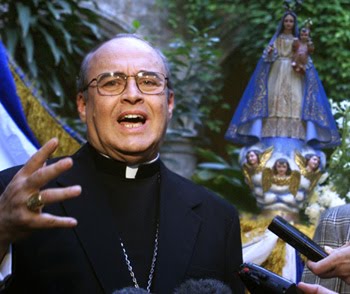
Omaha address by Cuban Archbishop Jaime Ortega sounds hopeful message that repression in Cuba is lifting
©by Leo Adam Biga
Originally published in El Perico
During a May 12 commencement address at Creighton University, Havana, Cuba archbishop Rev. Jaime Ortega described the uneasy journey the Catholic Church has navigated in the Communist island nation.
At a separate weekend event, Cardinal Ortega received an honorary law degree in recognition of his humanitarian work.
In introductory remarks last Thursday Creighton president Rev. John Schlegel, who’s visited Ortega in Cuba, praised the cardinal for “working relentlessly to mediate between the government of Raul Castro and the families of prisoners of conscience…Above all, Cardinal Ortega has proven to be a great pastor, a great leader, especially through challenging times, and a great priest.” Schlegel described Ortega as a “diplomat” seeking “the greater good, truth and justice.”
The estimated 125 attendees included Creighton faculty, Archdiocese of Omaha officials and members of Nebraska’s Cuban and greater Latino communities.
Speaking through a translator, Ortega charted the repression that followed the 1959 revolution that brought Fidel Castro to power. Ortega sounded hopeful about the new, freer Cuba emerging. He referred to frank, cooperative exchanges between the church and government authorities that recently brought the release of 52 political prisoners.
This avowed son of Cuba proudly declared, “I am a Cuban who lives in Cuba. I never wanted to live outside Cuba. It is a country I love with all my heart.”
He drew parallels between early Christian religious leaders serving their flocks amid oppression and clergy and pro-Democracy dissidents finding their voices suppressed under Fidel. He said rather than take a militant tack, the Cuban church followed a pastoral, passive approach.
“The Cuban bishops have tried to be shepherds in this way in Cuba,” he said. “Its role is not to confront the established powers.”
However, he says “the church is always asking for religious liberty, so that its followers can live their lives in peace.”
He outlined where the church and Cuba are today in comparison with the post-revolutionary period. “Initially,” he said, “there was a great acceptance of the revolution because of finding so many points of value with it.”
Within two years though, he said “very strong confrontation” and persecution distanced the church from the regime and the revolutionary fervor. He said priests were expelled from the country, Catholic schools closed, ministries and other expressions of religion curtailed and various “attacks” made on the church. He was among many young men in the church sent to labor camps.
The harsh measures, he said, “had a negative impact on the Catholic faithful” and “marked the memory” of older Cubans. He said, “This is a mark that is hard to erase.” While the bishops decried human rights violations, he said “the church as an organization was very diminished and had no means of communicating with its people.” He characterized the Cuban church then as “a church of silence,” adding, “The attitude of the church then was one of patience, perseverance, prudence.”
He said despite restrictions imposed on social, political, religious practices, fear of arrest and economic hardship, many Cuban Catholics remained faithful and risked much to speak out.
A turning point was a reflective, renewal process the Cuban Bishops Conference initiated in 1981, extending to every diocese, culminating with the 1986 National Ecclesial Encounter Cuba. “This constituted a very decisive moment for the history of the church in Cuba,” he said. It laid the groundwork for Pope John Paul II’s 1998 visit to Cuba. As a result, he said, “the church in Cuba let itself be known to the world and Cubans themselves realized there was in Cuba a church that was alive and dynamic.”
Since the conference and papal visit, he asserts the church has taken more of an active, public, missionary role and today is a church “that lives for its people,” rather than “wrapped up in itself,”” welcoming whoever comes to it.

Framing this empowerment, he said, is a new spirit of dialogue between the church and government, which he describes as “more fluid” under Raul Castro. In a Q & A after his address, Ortega said, “It has been much easier to find somebody with whom to dialogue. There seems to be a greater openness to changes.”
He’s encouraged by greater religious freedom, whose public manifestations include massive crowds for outdoor rites and a recently dedicated seminary.
On the activist front, he said an intentional process of “pastoral action” with authorities negotiated improved conditions for political prisoners, who were allowed to have contact with their families before finally gaining release. “Our humanitarian gesture was accepted,” Ortega said. He also alluded to recently announced Cuban social-political reforms.
With Cuba now thriving, he said its experience demonstrates “the human spirit should not be endangered or limited” and that liberation needs to come in both the spiritual and social life of people, adding, “It should never be necessary to negate God in order to enjoy human rights or to be active citizens.”
Ortega acknowledges that for victims of Cuban injustice “the baggage” and “suffering” remain. For “true reconciliation among all Cubans,” he said, there must be forgiveness and understanding — only then will the wounds inflicted under the old regime heal. Cuba, he insists, is moving on in acceptance and he suggests the rest of the world move on, too.
University of Nebraska at Omaha political science professor Jonathan Benjamin-Alvarado, who’s extensively studied Cuba, admires Ortega for “toeing the line for the purposes of advancing the church and its teachings and its ministry.”
Referring to criticism by some that Ortega’s been slow to press for more reforms, Benjamin-Alvarado says, “His approach perhaps wasn’t as quick as some would have liked, but the fact is it’s been successful. I think what he’s understood perhaps better than most was the limitations on what the church actually could do. He moved when he could and didn’t try to deal with issues he wasn’t able to have any answer or response to.”
Related articles
- Cuba Bids Farewell to Nuncio (onecatholicorg.wordpress.com)
- Cuban bishops: Country is slowly moving toward a democratic system (onecatholicorg.wordpress.com)
- Spain receive 37 more Cuban ex-political prisoners (foxnews.com)
Long Live Roberto Clemente: New exhibit looks at this late king of Latino ballplayers and human rights hero
I am a moderate baseball fan at best, but I am drawn to the stories behind the game and to the figures who animate it. One of the all-time great players, Roberto Clemente, made millions take notice of his baseball skills, which earned him a well-deserved spot in Cooperstown, but what he did off the field may be what he’s ultimately best remembered for. This little story for El Perico newspaper in Omaha takes a cursory look at the impact the late Roberto Clemente still has on people nearly 40 years after he tragically died at age 38 while attempting to carry out a humanitarian mission. The occasion for the story was a touring exhibition of his life that landed at El Museo Latino, and I simply asked a few folks in the local Latin community what Clemente’s legacy means to them. The exhibition continues through July 17.
Long Live Roberto Clemente:
New exhibit looks at this late king of Latino ballplayers and human rights hero
©by Leo Adam Biga
Originally published in El Perico
With baseball season in full swing, El Museo Latino hosts a touring exhibition from Puerto Rico celebrating National Baseball Hall of Fame legend Roberto Clemente.
Beyond Baseball: The Life of Roberto Clemente continues through July 17 as part of a 20-city tour.
It’s curated by Museo de Arte de Puerto Rico with the Carimar Design and Research studio and organized for touring by the Smithsonian Institution Traveling Exhibition Service. The Smithsonian Latino Center is a sponsor.
When Pittsburgh Pirates great and Latin symbol Roberto Clemente died December 31, 1972, his native Puerto Rico wept. He was only 38. The grief extended throughout the Americas.
The first great Latino star in the big leagues, Clemente was a trailblazer who opened pathways for other Latin players to follow. He’s remembered as more than a magnificent athlete, but as a man of the people, devoted to his countrymen and Spanish-speakers worldwide.
He died when a plane he was aboard delivering relief supplies to Nicaraguan earthquake victims went down in the ocean. His body was never recovered. It was not the first time he acted as a humanitarian — he helped needy people in the United States and Central America and held free baseball clinics for children in Puerto Rico. After his death his wife and children have continued his work.
In recognition of his brilliant play in the outfield, at the plate and on the base paths, the usual five year waiting period for Hall of Fame consideration was waived and he was elected by an overwhelming majority into Cooperstown. The Roberto Clemente Award was established to salute Major League Baseball players who combine outstanding play and community service. The award, given annually since 1973, made Clemente the inaugural honoree.
His homeland is replete with stadiums and streets named after him. As a national hero, his image adorns homes of Puerto Ricans there and everywhere.
With Clemente’s legacy so strong, El Perico asked members of Omaha’s Puerto Rican community and others for lasting impressions.
Antonia Correa vividly recalls the news of his tragic death on the island, where Clemente’s aid mission to stricken Nicaraguans was well known. His sudden loss cast a pale over holiday celebrations.
“It was a major emotional thing,” she says. “It was sad twice because we lost him, someone everybody was passionate about, and because of his trip to help victims.”

Correa’s memory of Clemente is forever fixed in context of what he died doing. “I remember him as this face of humanity. I keep in my mind the face of this humble man eager to help others.”
Maria Valentin remembers “days of mourning Roberto” after his death. In life he was beloved because he never forgot his roots. “He was very proud of being a Puerto Rican,” says Valentin.
Beyond baseball success, his charitable work endeared him even more.
“He was young and he wanted to help, and he did it and we loved him in the process,” says Valentin. She notes that he’s revered as “a champion for human rights” and “a role model for kids, adding “He was ours. He created a legacy not only for him but for all of us Puerto Ricans, carrying the country along. His talent, his energy, his commitment to help people still remains within us.”
She says his example of overcoming discrimination to excel when he and other Latin and black players were treated as “second class” citizens is inspiring. “He broke barriers for the younger generation. The language, the color, the strange territory should not stop you once you have a dream, once you have a talent.”
Hector Santiago says Clemente is a rare figure who transcends eras to still inspire.
Acclaimed jazz artist Miguel Zenon, who played Omaha May 21, says Clemente’s place in history “really surpasses anything that has to do with sports or fame. He just took it to another level in terms of what he achieved as a human being.”
University of Nebraska at Omaha professor Jonathan Benjamin-Alvarado says Clemente “presented for us the archetype of what we wish all humans do when given the immense gifts and skills he possessed…His dignified presence was equivalent to that of the icons of his age and his too-soon passing only served to remind us of what had been taken from us. He would have been the penultimate ambassador for sport and humanity to the Latin world.”
Special programs in conjunction with the exhibition include a lecture series, a baseball clinic and a celebration of Puerto Rican culture.
El Museo Latino is located at 4701 South 25th St. For details, call 402-731-1137 or visit http://www.elmuseolatino.org.
Related articles
- El Museo Latino in Omaha Opened as the First Latino Art and History Museum and Cultural Center in the Midwest (leoadambiga.wordpress.com)
- Review: “21”: The Story of Roberto Clemente (repeatingislands.com)
- Graphic biography of Puerto Rican Baseball great Roberto Clemente (repeatingislands.com)
Returning To Society: New community collaboration, research and federal funding fight to hold the costs of criminal recidivism down
Having posted an awful lot of fluff or soft journalism stories lately, I thought it time to present something completely different, as in the following story for The Reader (www.thereader.com) on reentry programs that work with offenders to prepare and guide them for what is hopefully their successful reintegration in society. I don’t tackle many serious or hard subjects like this, but I do enjoy the challenge. As freelancing for newspapers and magazines in Omaha does not pay well, I can never justify devoting the amount of research-reporting time such a story deserves. The compensation doesn’t come close as it is to compensating me for the time I invest, much less for the time I would like to invest.
Returning To Society: New community collaboration, research and federal funding fight to hold the costs of criminal recidivism down
©by Leo Adam Biga
A somewhat different version of the story appears in The Reader (www.thereader.com)
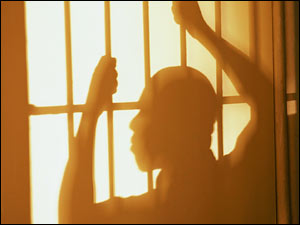
As the doors of America‘s overcrowded prisons swing ever wider, sending more ex-offenders back into society, reentry‘s become a major focus nationwide, including Nebraska.
America has 2.2 million individuals incarcerated in prison. That number’s expected to rise with the cost of housing inmates amid already strained resources.
Nationally, thousands enter and leave the corrections system every day. Hundreds of thousands every year. As community corrections, early parole releases and probation sentences send more offenders back into society, there’s new emphasis on preparing them for release and supporting their transition. Nebraska, like the rest of the U.S., is navigating this flood of returnees.
Not surprisingly, corrections is better at confining folks than “fixing” them, which helps explain why prisons see so many repeat offenders. A 2011 Pew Center on the States study found more than four in ten offenders return to state prison within three years of release. Nebraska does better than the national average, at about three in ten, but there’s concern too many end up back in the system or struggle on the outside, thus becoming a drain or risk.
For veteran reentry worker Teela Mickles, the problem is crystal clear. “Even individuals who’ve been in prison will say, ‘If you don’t get us before we get out, it’s a waste of time.’ This cold turkey stuff won’t work,” says Mickles, who works with inmates and parolees through her nonprofit Compassion in Action.
Two ex-offenders now working with returning citizens confirm reentry is an inside game that must start early on.
“Turning your life is very hard, take it from me,” says Ray Kyles, adding it was “only when I finally took an inventory of myself and seen what I was worth that I started transforming.” That change only came during his third and last stint in prison. “I’ve come to the conclusion that in order for a man or woman to be successful once they come out of prison they must start working within the moment they hit the prison system. It’s a learning process.”
“Transition starts on the inside,” says Garry Kern, who was incarcerated 13 years and is now a caseworker for Goodwill Partnerships. “It’s a mindset. That’s where change comes.”
There’s growing recognition of the importance of pre-release preparation.
“By helping an inmate get a high school diploma or GED, help them address their substance abuse and mental health issues, and by helping them become a better parent or learn a vocation, we are giving them a better chance to return to the community as a successful citizen,” says Nebraska Department of Correctional Services programs administrator Layne Gissler.
Reentry programs are voluntary for prisoners. “If waiting lists occur, generally the inmates who are closest to release are given priority for programming,” he says.

Teela Mickles, Compassion in Action
Ideally, pre-release programs lead to changed attitudes and behaviors inside that persist on the outside. That’s the expressed goal of the UNO Transformation Project. Using The Autobiography of Malcolm X and motivational interviewing as talking points, facilitators encourage inmates to take stock and develop personal life plans. The program, largely funded by UNO grad John Morgan, works with inmates on addressing six stability domains:
housing
employment
education
substance abuse
mental health
social networks
“So, your family, your friends, your health, the people you hang out with,” says project manager Nicole Kennedy, who wrote the curriculum. “We picked those six areas because the research tells us for every one one of those areas you can help stabilize somebody in, you see a reduction in recidivism.”
She says project modules ask inmates to be self-reflective.
“We’re recognizing that until somebody has taken the time to sit down and actually think about who they are, what they value and what they want out of life, all that programming is not really being applied in the most productive manner. What we’re trying to do is get them to think a little more deeply about how do all these factors relate to what plan you’re going to have when you return to the community. We’re asking these guys to take a critical look at some personal and sensitive topics.
“I think a lot of prison programming is very narrowly skill based. What we’re trying to do is much more broad based. You can’t really think about your substance abuse in isolation of your employment or your housing or your social networks. All of these factors, while they have their own unique components, will be impacted by the others. So it’s going to be harder for you to stay sober and clean if you don’t have a job and you don’t have a place to live, because the life pressure that brings will eventually build up. Likewise, if you’re not managing your substance abuse it could be really hard to keep a job. If you’re dependent on your family to provide you housing and are couch surfing, that’s going to take its toll on family relationships.”

The Nebraska Center for Justice Research
Kennedy credits Nebraska corrections officials for supporting a holistic model that serves inmates from the jump. She says there’s wide agreement the more inmates do to address their needs beforehand the more likely they are to make positive choices upon release.
“Corrections gives these guys a lot of tools and resources but this is kind of the mortar that holds those bricks together,” she says. “We’re really trying to get you to take all this information and apply it to yourself and your own unique circumstances.”
The Transformation Project refers its graduates to Ray Kyles and his You Are Not Alone program. Kyles is convinced accountability must first take root behind bars if an offender is to turn his or her life around.
“We need to start working with the choices you make in your life, We need to open your eyes up to what got you there. We need to get you to the point where you understand the trickle down effect of the crimes you may have committed — it’s not only hurting you, it’s hurting your family, it’s hurting the community. Until we understand the people we hurt we’ll still be wallowing in the world of that dumb shit of somebody owes me.”
Similarly, Teela Mickles says her reentry curriculum “is comprehensive and developmental in addressing the real issues in that individual for why drugs became an issue, for why crime became an issue. They have to understand, embrace and begin to work with the reasons why before they get out. That’s where job sustainability comes in, because an individual has to understand that there’s going to be a process of transition.”
Federal mandate and community advocacy are making reentry a priority in today’s more enlightened, research-based corrections field. It’s a multi-billion dollar industry that involves law enforcement professionals, judges, lawyers, corrections officials, probation and parole officers, caseworkers and community-based service providers, both professional and volunteer.
The sheer volume of inmates has increased with get-tough policies in the war on drugs. Nebraska’s projected prison population for 2011 is 4,713, which is near where it’s hovered for several years. From 1995 to 2009 Nebraska’s overall incarceration rate per 100,000 adults increased from 185 to 245.
The cost of prosecuting and detaining individuals, most of whom are nonviolent, has become more of a burden in budget-strapped times. In line with national trends, Nebraska’s overall corrections spending has skyrocketed, from $72 million in 1995 to $181 million in 2010. Nationally, state corrections expenditures are an estimated $50 billion per year. Those costs don’t include what communities spend to house, train, educate, counsel, treat, employ and otherwise transition ex-offenders to law-abiding, productive lives. When a parent goes to prison there are “hidden” costs for welfare, foster care, legal services, family court.
In response to the unsustainability of mass incarceration and high recidivism rates public-private coalitions have pushed for more proactive reentry efforts both behind the wall and outside it.
The 2003 federal Serious and Violent Offender Reentry Initiative (SVORI) and the 2008 Second Chance Act, both made hundreds of millions of dollars in grant monies available to reentry providers. Second Chance also established the National Reentry Resource Center, which offers education, training and technical assistance to providers, large and small.
These measures have brought new players onto the scene of a varied reentry landscape. In Nebraska, providers range in size, approach, scope and service area. Most are human-social service organizations or faith-based groups. The largest is Christian Heritage, a Lincoln, Neb. nonprofit that’s new to reentry yet has secured major Second Chance grants to fund programs that target reconnecting fathers with children and restoring families.
“The passing of the Second Chance Act has made some impact on our reentry efforts,” says Layne Gissler. For example, he says a new parenting program for incarcerated fathers administered by Christian Heritage “has been very beneficial.
“Outside of that,” he says, “our approach to reentry has remained the same. We utilize a multi-faceted approach that includes mental health and substance abuse programming, educational, vocational, parenting, life skills and other programs to address deficits. With the exception of the parenting program in our male facilities, these programs were in our facilities prior to passage of the Second Chance Act.”
The issue’s further come into focus through: a 2008 evaluation of Nebraska’s Serious and Violent Reentry Program by UNO’s School of Criminal Justice; the Douglas County Reentry Task Force, now reformed as the Reentry Initiatives Council; and the monthly Reentry Table Talk series at Metropolitan Community College.
Gissler said both the federal reentry initiative and the UNO study “helped educate, sharpen the focus and provide the necessary foundation for reentry in Nebraska,” adding, “There was a significant increase in the department’s long range commitment to reentry and the subsequent shift in emphasis based on risk.”
Increasingly, corrections works collaboratively with the community. The shared goal is reducing recidivism and improving quality of life outcomes. NDCS had fairly robust programs before, but is doing more with partners like UNO and Christian Heritage now that more dollars are available from Second Chance and other sources.
On the outside, ex-offenders encounter many hurdles piecing a life together in a fast-moving world that doesn’t cater to them. Jim Erwin of Christian Heritage advises inmates, their loved ones, sponsors and caseworkers work months in advance of release to line up leads on things like housing and employment. He and others working in the field say a safety plan and a support network is vital, The more on the margin someone lives, the greater the risk for recidivism. Substance abuse, family disputes or just being around negative influences can derail things.
“Folks can become very discouraged quickly if there’s not preparation,” says Mickles.
A big hurdle ex-offenders in Nebraska face is accessing vital records. There’s no central office to get a social security card, birth certificate, driver’s license, work permit. It presently takes days to obtain IDs from far-flung agencies. Support for a one-stop-shop is a hot topic and focus of the Douglas County Reentry Initiatives Council.
Douglas County Commissioner and UNO Transformation director Chris Rodgers
County Commissioner Chris Rodgers, who sits on the Council’s board, says Heartland Workforce Solutions in Omaha offers the framework for a one-stop-shop and the county’s seeking funds to help consolidate services for ex-offenders under the Heartland umbrella.
“There’s a need,” says Rodgers, who oversees the UNO Transformation Project. He says the Council looks at reentry in broad-based terms as well. “Our job is to identify issues and gaps and solve them within the system instead of reinventing the wheel.” If he’s learned anything it’s that successful reentry is up to the individual.
“It’s not magic, it’s hard work,” he says. “We’re not going to give you this yellow brick road outline to get there. What we do is lay you out a path with opportunity, but you have to put the work in.”
Ray Kyles of You Art Not Alone says, “Just like everything else, what you put in is what you get out. You become institutionalized the moment you get locked up by the police because from there on everything is given to you. Once you’re released from prison you still expect people to keep giving you. But what have you given yourself or what are you willing to give back to society? I’m not going to hold your hand, it just doesn’t work that way. I have a list of services gentlemen can go to for assistance. I get a hot jobs list every Monday.”
Christian Heritage’s Jim Erwin says, “remember to empower, not enable” ex-offenders.
To that end, Metro produces a reentry resources book it distributes to correctional facilities and community service providers to give inmates, ex-offenders, caseworkers and sponsors contacts for statewide programs and services.
“If an ex-inmate has a job, place to live and family-community support,” says Gissler, “the odds he or she will return to prison are much lower. A pro-social network is needed upon release and this has been provided in part by civic and faith-based groups. They have teams set up to assist ex-inmates with securing housing and employment.”
Providers who establish bonds behind the walls are better placed to help offenders once they’re on the outside, say reentry veterans. Consistently being there builds trust. “People need to understand the more they make themselves visible and empower the individuals inside in preparation to come out,” says Mickles, “the more effective their reentry programs on the outside will be.” Neither her program nor any others work in isolation. None has the capacity to address every need.
“We cant do it alone,” Mickles says. “That person coming out needs a job, a place to live. They may need drug rehabilitation. They may need legal assistance to get their kids back. Things like that. We have to work with all the entities to assist that individual with all the areas they need to experience a successful reentry.”
As Mickles does Compassion in Action by herself, she acts as a clearinghouse by referring ex-offenders to needed services she doesn’t provide. Kyles works much the same way.
Regardless of size or resources, reentry providers work collaboratively.
“We all need each other, there’s plenty of pain to go around, and we all have our areas of expertise, and the better we work together the better the population will be served,” says Mickles, who’s hopeful about the momentum surrounding reentry. “In doing reentry here for 30 years this is the first time Omaha is really on task as far as working together and helping each other do what we do best.”
Recently, some facilitator associations and forums have emerged to help bring reentry players at the same table for enhanced communication and coordination. The Reentry Alliance of Nebraska is one. The Reentry Initiatives Council is another. Omaha’s Northeast Weed & Seed program held a spring reentry workshop at Metro that included representatives from the Omaha Police Department, Heartland Workforce Solutions and the Douglas County Department of Corrections as well as ex-offenders and their advocates.
Since 2009 Metro liaison Tommie Wilson has organized the Reentry Table Talk the third Wednesday of every month. At the May 18 forum 48 attendees represented some two dozen organizations, including Eastern Nebraska Action Community Partnership (ENCAP). Some state corrections officials were there. Mickles was present. Christian Heritage’s Jim Erwin was the featured speaker.
Erwin says he attends in order “to build relationships” with other providers. Diane Good-Collins, who with her husband Steve operates ReLeasT transition home for women in Nebraska City, says, “The relationships I’ve made in this room have helped people beyond this room. You never know who you’re going to meet and how that’s going to affect someone else.”
As an ex-felon, Good-Collins is among those who’ve “been there-done that” and now work with ex-offenders. Entrepreneur Rodney Prince is another, though his role is more as advocate and watchdog. His was among the few critical voices heard at the event as he challenged those present “to be coordinated and streamlined,” adding, “We need you to be on the same page.” Activist Eliga Ali and Black Men United president Willie Hamilton expressed concerns about the effects that mass incarceration of black males has on families and communities.
Wilson says some sessions can get rather heated. It’s all in the name of continued dialogue.
“We started out with four people talking about what we needed to do,” says Wilson, who has a grandson in prison, “and now the meetings average 45-50. I gather people here to talk about what’s going on with reentry, to bridge that connection to find out where resources are, to learn who’s doing what, to collaborate. I also bring to the table ex-offenders. If they’re having difficulties finding things they can connect with people and get into programs.”
Programs are one thing, reality is another. Because life happens, how an ex-offender responds to events or situations will ultimately determine his or her fate.
Rodgers cautions change is “not a one size fits all” proposition. “People transform in different stages.”
Mickles agrees, saying, “The term for each individual to experience success is quite different. Also, the definition for success is quite different. It may not be no recidivism. The person may need to reoffend in order to be successful. I’ve learned to redefine certain things.” She says a woman she worked with reoffended several times before going straight, “and she’s now giving back to the community in a major way” as a reentry provider.
Good-Collins, tells a similar story of a chronic reoffender who’s finally turned her life around. After hundreds of lock ups, then being homeless, Good-Collins says the client is now in a stable home environment and working. “She got her first paycheck in over 30 years. She’s doing awesome.”
“With that individual acceptance and lack of preconceived anything,” Mickles says, “individuals tend to find themselves. But society needs to know there is a cost.”
Related articles
- Prison program aims to keep inmates clean after they’re released ()
- The Price Tag On Recidivism (andrewsullivan.thedailybeast.com)
- Tackling recidivism: They all come home (economist.com)
- Report promotes alternatives to prison as national recidivism rate holds steady (prisonmovement.wordpress.com)
- You: Va. returning prisoners to jail at lower-than-average rate, study shows (washingtonpost.com)
- Higher return to prison for women without drug abuse programs (esciencenews.com)
- Inside 30 Years Of California’s Disastrous Punitive Prison Legislation (huffingtonpost.com)
Rich music history long untold revealed and celebrated by Omaha Black Music Hall of Fame
Six years ago an enthusiastic gentleman by the name of Vaughn Chatman introduced me to his missionary zeal for our shared hometown of Omaha and his mission to bring attention to its rich black music heritage. He founded the Omaha Black Music as a public celebration of the large gallery of black music artists who have come from this place. Soon, the event morphed into honored not only blacks who distinguished themselves in music but in other fields of endeavor as well, and thus the event came to be known as the Omaha Black Music and Community Hall of Fame. I have interviewed many of the inductees in the Hall, including:
Preston Love Sr.
Buddy Miles
Arno Lucas
Lois “Lady Mac” McDonald
Cathy Hughes
You’ll find their stories and the stories of other inductees on this blog site. The event took a sabbatical a while back but is returning this year, July 29, at the Slowdown during Native Omaha Days. My story below appeared on the eve of the inaugural Omaha Black Music Hall of Fame . I hope to write about this year’s event.
©by Leo Adam Biga
Originally appeared in The Reader (www.thereader.com)
The fact that jazz and blues greats often played north Omaha’s live music haunts is well known. What’s not is this inner city’s huge roster of high-caliber musical talents. Enough Omaha artists have impacted the industry to rival the legacy of homies from historical music hotbeds like Kansas City. The contributions of these O-bred and born cats may add up to one of black music’s largest untold stories.
Bringing this weighty heritage to light “before it’s lost” motivated native Omahan Vaughn Chatman to create the new Omaha Black Music Hall of Fame, which honors 40 artists in an inaugural awards dinner August 4 at Harrah’s Casino in Council Bluffs. The inductees range from such swing era figures as the late Preston Love, big band leader Lloyd Hunter and rock pioneer Wynonie Harris, right on up to such modern artists as percussionist Luigi Waites, jazz guitarist Calvin Keys, songwriter-singer Gene “Booker” McDaniels, drummer/vocalist Buddy Miles, sideman/songwriter Arno Lucas and drummer/vocalist/keyboardist Lester Abrams.
“When you look at the overall picture, Omaha’s influenced all kinds of music and still does. Half the inductees are still out there playing and influencing the world,” Chatman said. “Buddy Miles came out of Omaha and went on to play with Jimi Hendrix (not to mention Stevie Wonder, David Bowie and a host of other legends). Lalomie Washburn started with Rufus and hooked up with Chaka Khan.”
The “awesome” Keys has played with everybody from Earl “Father” Hines to Ray Charles to Ahmad Jamal. McDaniels has written standards for many top artists, including the mega-hit Feel Like Makin’ Love for Roberta Flack. Lucas has collaborated with Luther Vandross, Al Jarreau, Michael Jackson, et cetera. Abrams headed the Omaha-based grand funk group L.A. Carnival. Lois “Lady Mac” McMorris has shared the stage and earned accolades from the likes of B.B. King.
“If Omaha’s looking for something to be known for, this is what we should be known for. That we’ve turned out a number of artists who’ve achieved recognition everywhere in this country and all over the world. There was an era when this was a great place for musicians. They all influenced each other,” Chatman said.
Miles, co-founder of the legendary Band of Gypsies with Hendrix, said he and his contemporaries earned their chops “doing a lot of jamming.” He and many of the other inductees were peers on the burgeoning music scene here. “Everybody was into music. We all shared ideas and information. Any type of musical adventure or experience that presented itself, we went for it,” Keys said. Mentors abounded, too. Keys recalled how jazz master Ed ‘Cleanhead’ Vinson “lived in Omaha for awhile. He used to come down on the scene, too. He taught everybody. He was the guru. There was another guitar player here named Luther ‘Guitar’ Woodruff. We called him Papa. He was a big influence.”

Alesia Rae
Keys and company were schooled, too, by former Count Basie sideman Preston Love. “He helped a lot of us,” Keys said. Visiting artists infused more inspiration. “Every time Wayne Bennett, who played with Bobby Blue Bland, would come through town, he had stories we would listen to and he had some new chords he had learned. That made us hungry to work. Omaha was a melting pot. We were right in the center of everything and we were a window for a lot of stuff going on.”
Chatman, a musician-turned-attorney living in Fair Oaks, Calif., was among the young bloods learning from the hepcats, including his late older brother Percy, an inductee. Back in the day, music was everywhere. It was in the streets, the projects, the churches, the bars, the barbershops, the theaters and the nightclubs — the Dreamland and Carnation Ballrooms, the Showcase Lounge, the Elks Club, the Off-Beat Supper Club . These spots were proving grounds, launching pads, classrooms and stages where innovative chord changes, oh-so-sweet riffs and hot new licks tickled the night.
While some of Omaha’s brightest talents remained, most, like Keys, left to chart music careers — in jazz, blues, R & B, soul and funk — in a myriad of back rooms, studios, concert halls and stadiums, both here and abroad. Whether on stage or in sessions, on the road or back home, the artists took a piece of Omaha with them.

Calvin Keys
“Contrary to popular belief, Omaha was not just about jazz or Preston Love. A lot of genres thrived here. A lot of music developed here. A lot of remarkable talent trained here. Cats like Buddy Miles and Lester Abrams created a unique Omaha sound, a big bass sound, that they introduced wherever they went,” Chatman said.
The Hall of Fame awards dinner, which costs $35 a plate, is reuniting O-artists separated by years of touring and recording. McDaniels and fellow inductee Richetta Wilson, who perfomed with Sarah Vaughn and Ella Fitzgerald, are to do a duet that night. Coinciding with Native Omaha Days, the biennial African-American homecoming, the banquet promises a nostalgic celebration of the city’s fat music times. Proceeds are to fund music scholarships for minority youths. Chatman, whose event is slated every two years during the Days, is working with local educators in the hope that a curriculum will be designed to teach Omaha’s rich black music history in the public schools.
The local talent pool runs so deep there’s no end of potential future inductees. Among the leading contenders are sax man Buddy Tate and bass fiddle player Alvin “Junior” Raglin, who went on to fame with Count Basie and Duke Ellington, respectively. “The list goes on and on, A whole lot of talent has come out of Omaha,” Keys said. “Yeah, Omaha was a mecca to be reckoned with,” Miles added.
Related articles
- Big Bad Buddy Miles (leoadambiga.wordpress.com)
- Enchantress “LadyMac” Gets Down (leoadambiga.wordpress.com)
- Get Crackin’ (leoadambiga.wordpress.com)
- Arno Lucas, Serious Sidekick (leoadambiga.wordpress.com)
- The Ties that Bind, One Family’s Celebration of Native Omaha Days (leoadambiga.wordpress.com)
- Native Omaha Days: A Black is Beautiful Celebration, Now, and All the Days Gone By (leoadambiga.wordpress.com)
- Native Omahans Take Stock of the African-American Experience in Their Hometown (leoadambiga.wordpress.com)
- Back in the Day, Native Omaha Days is Reunion, Homecoming, Heritage Celebration and Party All in One (leoadambiga.wordpress.com)
- A Change is Gonna Come, the GBT Academy in Omaha Undergoes Revival in the Wake of Fire (leoadambiga.wordpress.com)
- Luigi’s Legacy, The Late Omaha Jazz Artist Luigi Waites Fondly Remembered (leoadambiga.wordpress.com)
Lit Fest brings author Carleen Brice back home flush with success of first novel, “Orange Mint and Honey”
Another Omaha native writer enjoying breakout success is Carleen Brice, whose first two novels have done very well. This is the first of a few articles I’ve written about Carleen and her work. My story for The Reader (www.thereader.com) appeared shortly after her first novel, Orange Mint and Honey, announced her as a major new voice to be reckoned with, and she soon proved that debut novel was no fluke with Children of the Waters. More recently, the superb Lifetime Movies adaptation of Orange Mint, which goes under the title Sins of the Mother, won NAACP Image Awards for Outstanding TV Movie and for Jill Scott in the lead role of Nona. Now. Brice’s sequel to Orange Mint, which she calls It Might As Well Be Spring, is due out this summer, and she’s at work on yet another novel, Calling Every Good Wish Home. I feel a personal investment in Carleen because her late grandfather, Billy Melton, was a vital source and good friend. He always spoke with great pride about her accomplishments. Go to my Billy Melton category to check out some of the stories I wrote about him and his various passions and adventures.
You can find my other Carleen Brice articles, including one about that Lifetime adaptation, by clicking on her name in the category roll to the right. I expect I’ll be adding more pieces about her as her career continues going gangbusters. Billy’s smiling somewhere.

Lit Fest brings author Carleen Brice back home slush with success of first novel, “Orange Mint and Honey”
©by Leo Adam Biga
Originally published in The Reader (www.thereader.com)
Denver author Carleen Brice, an Omaha native who left here after graduating Central High School in the 1980s, is getting raves for her first novel, Orange Mint and Honey (One World Ballantine Books, 2008). It follows three nonfiction books and numerous newspaper-magazine essays-articles that earlier established her as a wry observer of the African American experience and the larger human condition.
Now Brice is returning as an invited author at this weekend’s (downtown) Omaha Lit Fest. That makes it sound like she hasn’t been back in awhile, which isn’t so, but now she’s riding the momentum of her novel being an Essence Magazine Recommended Read and a Target Bookmarked Breakout pick.
She’ll appear on a Saturday noon panel at the Bemis about music as an influence on writing. That’s apt as music’s a family legacy Brice inherited “by osmosis” from her beloved late grandfather, Billy Melton, or “Papa,” whose best friend was the late jazz musician and her surrogate uncle, Preston Love Sr. Her jazz-blues bassist husband, Dirk, jammed with Preston at Papa and grandmama Martha’s 50th wedding anniversary. Papa’s vast music collection led Brice to jazz singer Nina Simone. In Orange Mint Simone’s presence appears to the embittered, traumatized daughter, Shay, as a guide to find healing with her recovering alcoholic mother, Nona.
Shay, portrayed as a fan of classic jazz-blues, gets involved with a younger man she works with at a Denver music store. He schools her on contemporary artists.
Then consider Brice often uses music when writing to evoke moods she wants to convey. There’s plenty of mood swings in Orange Mint. The strained mother-daughter story is infused with pain and humor. Forgiveness walks a rocky road. The messy reconciliation between two strong wills rings true. The relationship is fiction but draws on the dynamic Brice had with her own mom. Just as Nona bore Shay as a teen, Brice’s late mother bore her at 15. Like Nona, her mom was a pistol. Unlike Nona, she was no alcoholic. Brice’s folks divorced when she was young.
“We had kind of the typical mother-daughter, love-hate so-close-that-we-drove-each-other-insane kind of relationship,” Brice said by phone. “We were more like sisters. What it’s like to have a young mom that you sort of sometimes feel like you’re raising her instead of she’s raising you comes out in the book.”
Brice’s novel never devolves into melodrama or soap opera. It satisfies and surprises in ways only a gifted writer and old soul can deliver. The book’s being adapted by a producer for a Lifetime Television movie and one hopes it’s treated with the care and sophistication it deserves. On her blog, The Pajama Gardener, a compendium of Brice’s musings about working in the earth and writing, activities she sees parallels in, the author votes for Angela Bassett to play Nona.
Nona’s passion for gardening reflects the kinds of creative, expressive outlet many black women have sought in lieu of limited opportunities for careers in the arts.

Orange Mint confirms the promise Brice has long exhibited as a storyteller.
Her first book dealt with African Americans and the grieving process and her next offered affirmations for people of color. More recently, she edited Age Ain’t Nothing But a Number (Souvenir Press, 2003), a collection of writings by black female authors, including icons Alice Walker, Terry McMillan, Niki Givoanni and Maya Angelau, that Brice put together on the subject of black women navigating mid-life. Brice contributed two pieces of her own to that well-reviewed compilation. One comments on the unrealistic expectations black women like herself face when young and how, in middle age, she’s attempted to free herself and her expressive soul from the bondage of myth.
Just don’t mistake those projects for advice column fodder. They’re much more than that. Brice writes with an eloquence and depth that put her on the same plane as the literary lionesses she shares the pages with in Age Ain’t Nothing. It’s only fitting that Brice, who grew up reading many of the very authors she’s now immortalized with, should be recognized as a serious new African American voice.
Early on she evidenced a love for the written word. “My mom liked to read,” she said, “so when I was really little I learned the joy of reading and storytelling, and I think that’s what led me to want to be a writer. I used to tell stories to other kids. I’d just make things up. I wrote my grandmother Martha stories. When I was in high school I studied creative writing. In college I studied journalism. Most of my job jobs involved writing. So it’s something I’ve always enjoyed.”
Brice no longer works a day job. She writes every day, a discipline she credits Dirk with inspiring in her. “Kind of like building my chops as a writer,” she said. “When not laying down “the bones” or “the heart” of her stories, she interacts with a literary community via book clubs, readers’ circles, writers’ groups.
She’s in-progress on a new novel, Children of the Waters, due out next July. It explores issues of race, identity and what really makes a family, she said. The story explores what happens when a pair of biracial sisters raised in separate families — one white, the other black — find each other as adults.
The author is musing with the idea of continuing Nona’s story in a future project.
Brice is among that vast exodus of blacks who’ve left this place over the years to realize their dreams elsewhere. But like many of these expatriates she’s never really left. She has lots of family and friends here. A contingent even came to Orange Mint’s release party in Denver. They’re a tight bunch and they’ll be representing at Lit Fest. They’ll have a good time, too, she said, as her “larger-than-life” family knows how to party — another legacy of sweet, ebullient Papa.
His music, she said, speaks through her.
The Sept. 19-20 (downtown) Omaha Lit Fest is its usual eclectic self, with a mish-mash of events that address diverse literary themes, some with more than a wink of the eye. The BIG theme this year is Plagiarism, Fraud & Other Literary Inspiration. Fest events take place at some of Omaha’s coolest venues, including the Bemis Center for Contemporary Arts, the RNG Gallery, Slowdown, Aromas Coffee House and the Omaha Public Library’s W. Dale Clark branch.
Some of Omaha’s and America’s hottest writers converge for readings, panel discussions and other litnik activities. Brice fits the bill to a tee. Think of the fest as a progressive mixer for readers, authors and artists engaging in a literary salon experience — Omaha-style. A scene where laidback meets high brow. For a complete schedule visitwww.omahalitfest.com.
Related articles
- Back in the Day, Native Omaha Days is Reunion, Homecoming, Heritage Celebration and Party All in One (leoadambiga.wordpress.com)
- Native Omahans Take Stock of the African-American Experience in Their Hometown (leoadambiga.wordpress.com)
The Worth of Things Explored by Sean Doolittle in his New Crime Novel “The Cleanup”
Omaha is home to many fine novelists and I have the opportunity to sit down and talk writing with some of them from time and time. One of these is Sean Doolittle, a crime novelist of the first rank and a man who leaves all pretensions at the door. The following story for The Reader (www.thereader.com) is the first piece I did on Sean and his work, and the second will soon be posted on this site as well. If you’re looking for a good summer read that engages your mind and your adrenalin then I highly recommend his intelligent page-turners.

Sean Doolittle
The Worth of Things Explored by Sean Doolittle in his New Crime Novel “The Cleanup“
©by Leo Adam Biga
Originally published in The Reader (www.thereader.com)
Sean Doolittle has you join him in the very booth at the very Omaha watering hole, the Homy Inn, where the violent denouement of his new novel The Cleanup (Dell) unfolds. Just as you slide in, he mentions you’re about to sit where Gwen, the wan victim in his tale of ever escalating misdeeds, nearly loses her life. The fact he looks a bit like the towering Red Dragon character in the film Manhunter gives you pause. Within minutes he reveals the same disarming tone of his classic crime fiction, which sardonically, not gravely, lets characters stew in their own juices.
In The Cleanup the Omaha-based author has his cop protagonist Matthew Worth discover a murder and rather than call it in, clean it up, which throws into motion, ala Scott Smith’s A Simple Plan, a cascade of unforeseen results that keep forcing Worth’s hand, raising the stakes each time. Things get complicated when it turns out the corpse was a mule in an illicit racket short a quarter million bucks. The question becomes how far will Worth go to cover his and the murderer’s tracks and how far will those after Worth’s neck or the loot, or both, go to get answers?
“I really like stories where the plot is dictated by the choices the characters make. It’s a continual reaction against cause and effect. That feels to me the way life is,” said Doolittle, whose previous novels Dirt, Burn, both set in L.A., and Rain Dogs elicited warm words from some of crime fiction’s top names. The Cleanup, due out October 31, is getting similar raves. His agent is in negotiations over a potential feature film deal. Unlike many crime authors, Doolittle’s “been lucky” to avoid pressure by editors/publishers to do a series or sequel. His are stand-alone books.
The new novel grew out of a short story, Worth, Doolittle wrote years ago that ended where The Cleanup begins. The character of Worth, a burned out cop reduced to supermarket patrol seeks to redeem himself, gnawed at him.
“I like the idea of this character really trying to do maybe the wrong thing for the right reasons,” he said. “He’s driven to do it. In a dream sort of state, he keeps going. There’s definitely a point of no return in a situation like that where once you step far enough over the line, you have to keep going and keep going. The impulsive action quickly becomes unreturnable. No matter how much he tries to dig himself out he just keeps digging himself in deeper and deeper and deeper. To me, it’s more intriguing than a mystery per se, where you’ve got some clues and you’re trying to piece together a puzzle of who-did-what.
“I’m much more interested in the way people respond to circumstances, what that leads them to do and how those actions compound on each other…There’s really not any sort of mystery in The Cleanup, except wondering how it’s all going to play out for the characters. There are little surprises along the way.”
As a nod to classic noir, Doolittle has Worth cross the line for the sake of a woman (Gwen) who, while not quite a femme fatale, draws the cop into a dark place where his one rash act has dangerous consequences in a kind of domino effect.
“In a way, we’re looking at this character of Worth on the day he did something he might not have done on any other day. It ends up changing his life,” Doolittle said of his disaffected hero, who in the course of the story moves from apathy to conviction. “He comes from a long line of police officers and so he goes into that profession as sort of a family trade. But he doesn’t have the temperament for it. He’s not cut out for it. He’s a laughing stock in the department.
“Here’s this guy who became a police officer for this sort of civic minded idea of being useful to the world and found much more self worth in the simple act of bagging people’s groceries than he ever had in the frustrating job of being a cop. In wanting to save her (Gwen) she represents what he wanted to do in becoming a police officer in the first place. This temporary savior complex that overcomes him has lots of levels in it that he puts all together in Gwen.”
What Worth doesn’t know is that his quest to find self-worth in helping Gwen out of a jam is really about saving himself. But, as Doolittle said, his redemption comes “at a fairly high cost by the time it’s all over.”
Although long “drawn to kind of darker stuff,” Doolittle’s not sure why and feels the reasons for it may be best left unexamined.
“It’s the sort of thing where you don’t really want to solve that mystery because it is your fuel and once you learn the secret maybe you lose the fuel,” he said. “The old chestnut is good drama is based on conflict and I think crime novels provide a very visceral, bottom line conflict you can start with and work from. I like what you can do within the general framework of a crime novel or a noir novel in terms of exploring human behavior. I think the way people respond to extreme pressure or in extraordinary circumstances is an interesting dramatic place to play around.”
He recalls the first story he wrote, for a school class exercise, was in the hard-boiled, first-person vein of a P.I. narrator. A kind of, “I was sitting in my office when…” tease. Strangely, he’d not yet read any crime fiction, “but I must have osmosed that sort of iconic story through my skin or something,” he said. “I don’t know if I caught pastiches on television…You just pick that stuff up everywhere.”

Among his earliest influences was Stephen King. That led him to Robert Bloch (Psycho). Then about the same time he was exposed to the neo-noir of Quentin Tarantino’s films and the breezy mayhem of Elmore Leonard’s novels, which led to old masters like Jim Thompson, Dashiell Hammett, Philip Chandler and James M. Cain. “I kind of started like a lot of people do,” he said, “by finding somebody in the mainstream and then reading my way back into the margins from there.”
Born and raised just outside Lincoln, Neb., Doolittle began as a journalism major at the University of Nebraska-Lincoln but switched to English under the tutelage of Gerald Shapiro and Judith Slater. As an undergrad his first “pro fiction,” a short story, sold and paid “real money.” He intended on an academic career teaching college English and writing, but after getting his master’s, he said, “I decided what I really wanted to do was write fiction. I got a regular job and just kept on writing.”
Married now with two young children, he still holds down a regular office gig, writing technical manuals for First Data Resources, but he hopes his books will catch on enough to “relieve the need for that day job.”
He credits his wife Jessica for cutting him slack over the odd writer’s life he leads. “When I’m in the middle of a book it’s not just that I’m physically away at the computer typing, when I’m walking around the house my head is somewhere else,” he said. “It’s very difficult to explain, even to a very supportive spouse…that sitting in a chair staring into space is working. You know, there are tough weeks when everybody’s had long days and any human being would lose their patience. With The Cleanup I was very much behind deadline and the end of that book got very tense. I was really having to lock myself away…to try to finish the book. Jessica was very understanding but by the end it was clear that something had to give.”
In his acknowledgements he thanks his mother for coming to the rescue in “the perfect storm” of deadlines, travel commitments and family illnesses that hit all at once. “Everything just fell apart,” he said. “Without my mother I don’t know how we would have gotten through that.”
Where Rain Dogs was set in Valentine, Neb. and The Cleanup in Omaha, the book he’s working on now is set in a fictional Iowa college town. For this as yet untitled “suburban thriller” he doesn’t want the distraction of adhering to a specific place but instead an Anytown USA readers can project their own experiences onto.
Just as he doesn’t like showing his work until he has a finished piece in hand, he dislikes talking about a book still in embryo. “The idea is kind of fragile for a period of time,” he said, “and you can really crush an idea by talking about it too much.” It’s why he’s reluctant to say much about a big screen adaptation of The Cleanup other than there’s “pretty strong interest” from “a fairly well known writer-director. It’s the first book that’s drawn interest prepublication. Things look fairly promising for a deal, but everything in Hollywood is talk until something happens.”
Doolittle may have left Omaha and environs for his new work but he plans to revisit Nebraska again in his fiction. “I’ve really enjoyed writing the last couple of books closer to home and I want to continue to work around this area.” Besides, it’s so much fun to track blood lettings in the very places one haunts.
Related articles
- Author Nesbø: I am attracted to dark side (cnn.com)
- Writers Tip #61: Advice From Elmore Leonard (worddreams.wordpress.com)
- A Killer Vision of a Corrupt Society (online.wsj.com)
- With His New Novel, ‘The Coffins of Little Hope,’ Timothy Schaffert’s Back Delighting in the Curiosities of American Gothic (leoadambiga.wordpress.com)
- Crime fiction for summer (salon.com)
- Lit Fest Brings Author Carleen Brice Back Home Flush with the Success of Her First Novel, ‘Orange Mint and Honey’ (leoadambiga.wordpress.com)


 Leo Adam Biga's My Inside Stories