Archive
Tech maven LaShonna Dorsey pushes past stereotypes
Tech maven pushes past stereotypes
©by Leo Adam Biga
Originally appeared in the December 2017 issue of The Reader (www.thereader.com)
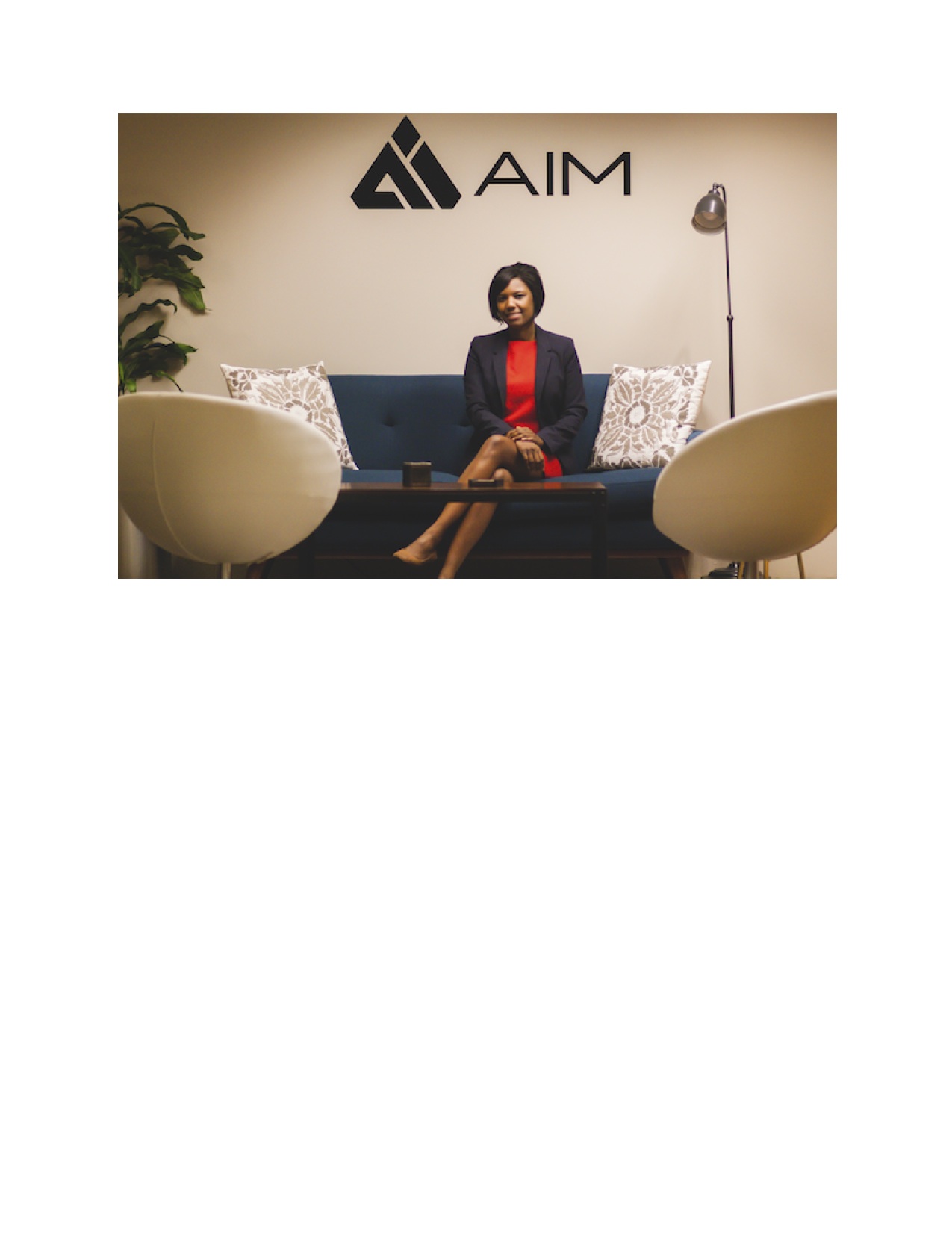
LaShonna Dorsey, 38, busts stereotypes. Start with this sunny disruptor launching and selling a successful technology organization in her hometown.
As an African-American entrepreneur, she bridged the digital divide with Interface Web School. Though now part of the AIM Institute, she still heads the coding school that’s won her and its work much recognition. Her AIM title is Vice President, Tech Education.
She’s bypassed the Omaha ceiling for young black professionals that finds many leaving for better advancement opportunities elsewhere.
She’s defied expectations by going public, rather than remain silent, about an assault she endured.
For this superstar doer who serves on multiple boards, AIM’s acquisition of Interface was strategic.
“Interface had really reached a point of capacity,” said Dorsey. “We were growing, which was great, but I just knew I couldn’t take on more classes without having more infrastructure and all that. AIM has the infrastructure, they’ve got the space, they’ve got human resources, accounting, marketing departments.”
AIM Interface solidifies and expands partnerships.
“We had really good relationships with the Nebraska Department of Labor and Heartland Workforce Solutions and still maintain those, but it’s a lot easier for us to partner with companies and other organizations because we’re AIM now.
“It fit right with where AIM and Interface wanted to go. They have the youth education side and professional development, but they didn’t have adult tech training. The cool thing is that Interface LLC was a for-profit and now we’re a program within a nonprofit and so we get to take advantage of having that 501 designation.”
Building Interface fulfilled a dream.
“I really thought I was a starter, and so it was good to see something through from idea to completion in a major way.”
She frequently shares her start-up story, warts and all.
“I felt like especially in the early days of Interface I often had to act like I had it altogether all the time because I was selling it, too. It’s kind of a challenging position to be in because you can’t be truly authentic.
“I was really grateful to have good friends and a really strong support system. That made a huge difference.”
She especially enjoys sharing her story with women.
“Women that have done a ton in their career appreciate how difficult it is to do something like this. Women just getting started are like, ‘How did you even do that?’ We have real conversations about what it’s like and the pitfalls – but also the rewards. Being in the middle myself, I am kind of still navigating that.
“I do feel I have a lot of value to add and information to share if people are ready to hear it. I tell people it wasn’t easy all the time, but the thing that kept me moving forward was that it was so rewarding. I have so many graduate stories of people whose lives were changed because of what they learned. It helped them get better jobs and buy homes. They’re still reaping the benefits. It’s still rippling. The culture of Interface is like that.”
She readily accepts being a role model and mentor to young black women.
Growing up in a single-parent family, Dorsey learned self-reliance skills. As a bright Goodrich scholar at the University of Nebraska at Omaha, she became a self-motivated high achiever. Early in her career, she proved a project management whiz.
“I like to just figure my way forward. I like problem solving. When things get a little too simple, then that is hard for me. Then I’m like, ‘Okay, what else can we do here?’ I’m not afraid of conflict, so I do lean into it, and I encourage people who work for me to do the same. If you really want to get the thing you want, you have to work through the hard stuff, too.”
Omaha’s limited horizons saw Dorsey leave in her 20s.
“But I came back. The thing that’s really tough here is that as you move up in your career, the leadership gets more white. Working in tech, you’re with a lot of white professionals and when I lived in west Omaha I’d go home, where it was all white, and I felt I had no community. It’s unfortunate and it felt uncomfortable.
“Living in a diverse community is important for me.”
Workplace inclusion requires more than new hires.

“You can hire a bunch of black and whatever programmers but that is not going to change the culture of organizations who might not be ready for it. You have to give people a space where they’re comfortable being themselves and not feeling like they have to fully assimilate in order to fit in.
“I cannot wait until we don’t have to have this conversation anymore and where it’s not special that I’m a black woman in tech. But it matters a lot to people and I have to talk about it.”
She feels she’s reached a personal breakthrough by reclaiming her given name, LaShonna, in place of Shonna and letting her hair go natural.
“Now, I feel like I can be more of myself.”
Dorsey embraces the new diversity in revitalized northeast Omaha, where African-American culture is being discovered by white millennials.
“Whenever you can create opportunities for people to have those experiences with people they don’t interact with on a daily basis, you start to change the narrative. That’s the only way were going to see change.”
Mindset to her is critical to create the transformation she and others hope to see there.
“I think we’re still many years out from seeing the fruits of it. There’s a lot of work to do because we can’t deny the fact poverty is the highest in those zip codes. That’s something to address and fix but people have to want it and see it even as an issue.”
She’s doing her part to equip adults with job-ready tech skills by bringing her code school to the Highlander Village purpose-built community on North 30th Street.
“Those economic improvement opportunities can make a big difference for people,” she said. “It will be awesome to see all of that come to life.”
Her career exploded two years ago, but few knew she was reeling from having barely survived an assault.
“Everything was still new at Interface and I still didn’t feel like I knew what I was doing all the time when I had this really difficult, tragic thing happen. There were many work days when I had to meet attorneys or go to court Turning those emotions on and off was really hard.”
It stemmed from someone she’d dated suddenly revealing a side he’d concealed before.
“It turned into a night where he took me from where I was without my permission. He strangled me three times, including once where I lost consciousness. He assaulted me in all sorts of ways in what was a five-hour ordeal.”
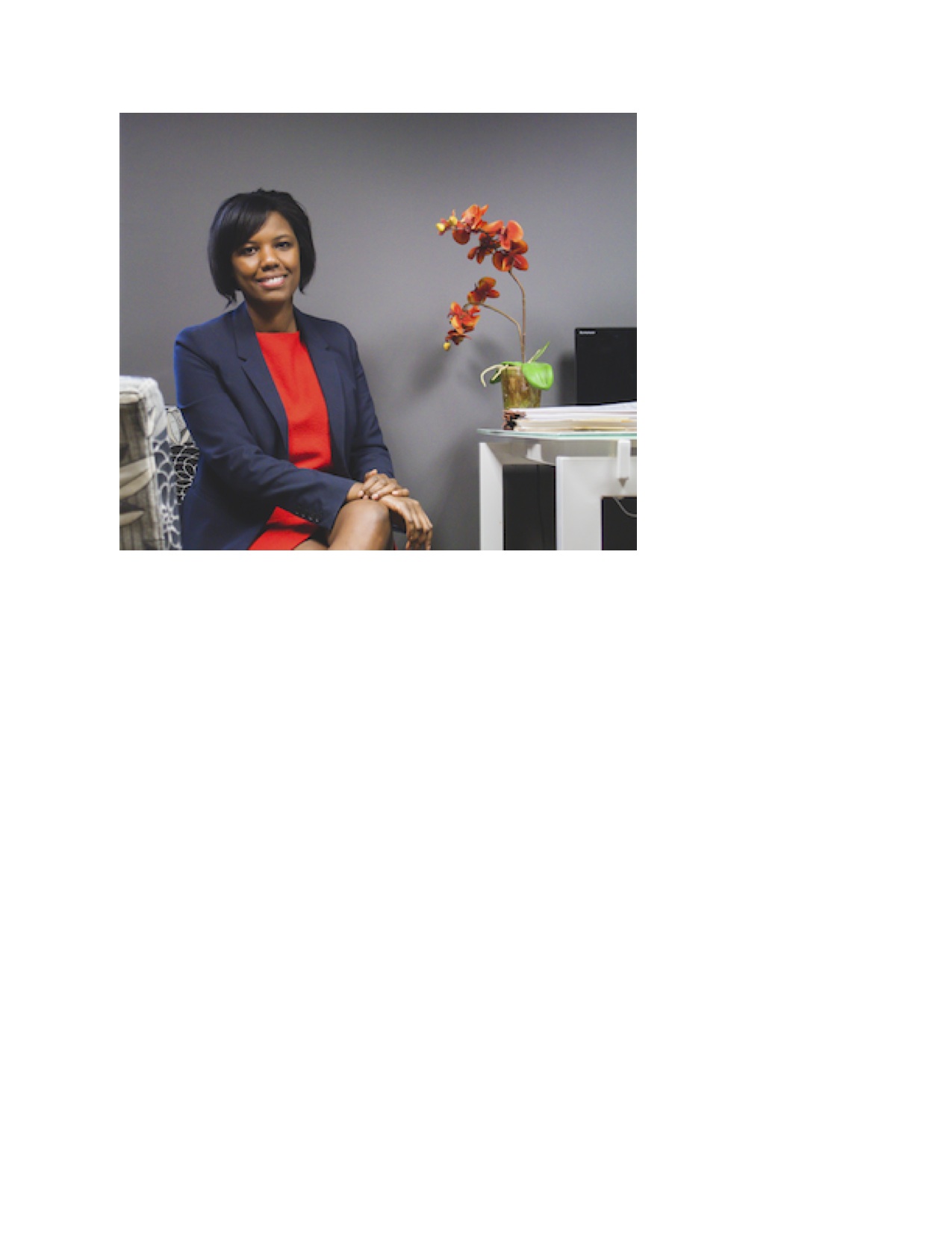
Fifteen months elapsed from when she pressed charges to her attacker’s sentencing.
“It was a really hard process. I totally understand why people don’t pursue that path because it is very difficult and as the victim you have to prove something happened. Typically, this kind of stuff happens one-on- one.”
Dorsey nearly didn’t report the incident for fear of how she’d be perceived.
“I remember thinking this is going to be so embarrassing and people are going to think I can’t do anything right. It’s irrational thinking, I know, but that was in my head. I decided to report it anyway.
“I try to do everything on my own all the time. But I did get some counseling and I did work through some of this with friends. Leaning into work helped a lot.”
Nature walks and karaoke nights helped, too.
Then she began dealing with it in public forums, including a poignant Facebook post.
“It was hard to carry around all the time. People were really supportive. They called me brave and things like that. I just felt it was relieving a burden for me.”
She posted soon after the last presidential election and urged people to walk through their fear and anger over the results as she had with her assault.
“Every time I talk about it publicly, more than one person will come up to me and say, ‘Me, too,’ or “My friend, my sister, my daughter.’ It’s so common. There’s a bunch of people who feel like they can’t talk about it, so I decided to share what happened to me.”
If nothing else, she said, her story reveals all is not what it seems on the path to success.
“People tend to look at the surface and just assume that because you’ve done a lot, it was without hardship.”
Visit Interfaceschool.com. Follow Dorsey on Facebook.
Read more of Leo Adam Biga’s work at leoadambiga.com.
Health and healing through culture and community
Donna Polk was raised African-American but she’s also part Native American, which is a common story. Still, she never imagined she would one day head a Native agency, but she has for decades now. The story of Natives being among us and yet unseen is also a common one. Csn Native Americans be any more invisible in this country? Were it not for the travesties of Whiteclay and Dakota Access Pipeline, where would Native voices be heard and Native faces seen? This marginalized people constituting many sovereign tribes and nations presents very real health challanges that only an organization like the Nebraska Urban Indian Health Coalition (NUIHC) can meet while still respecting Native cultural traditions. This long-standing nonproft has, until recently, been nearly invisible itself as far as the majority population is concerned because its clients are so far off the mainstream radar. But with the Coalition now in the news for plans to establish a new campus, director Donna Polk and programs director Nicole Tamayo are out front and center taking about Native needs and how the organization responds to them. Read my story about NUIHC in the November 2017 issue of The Reader (www.thereader.com).
Health and healing through culture and community
©by Leo Adam Biga
Originally published in the November 2017 issue of The Reader (www.thereader.com)
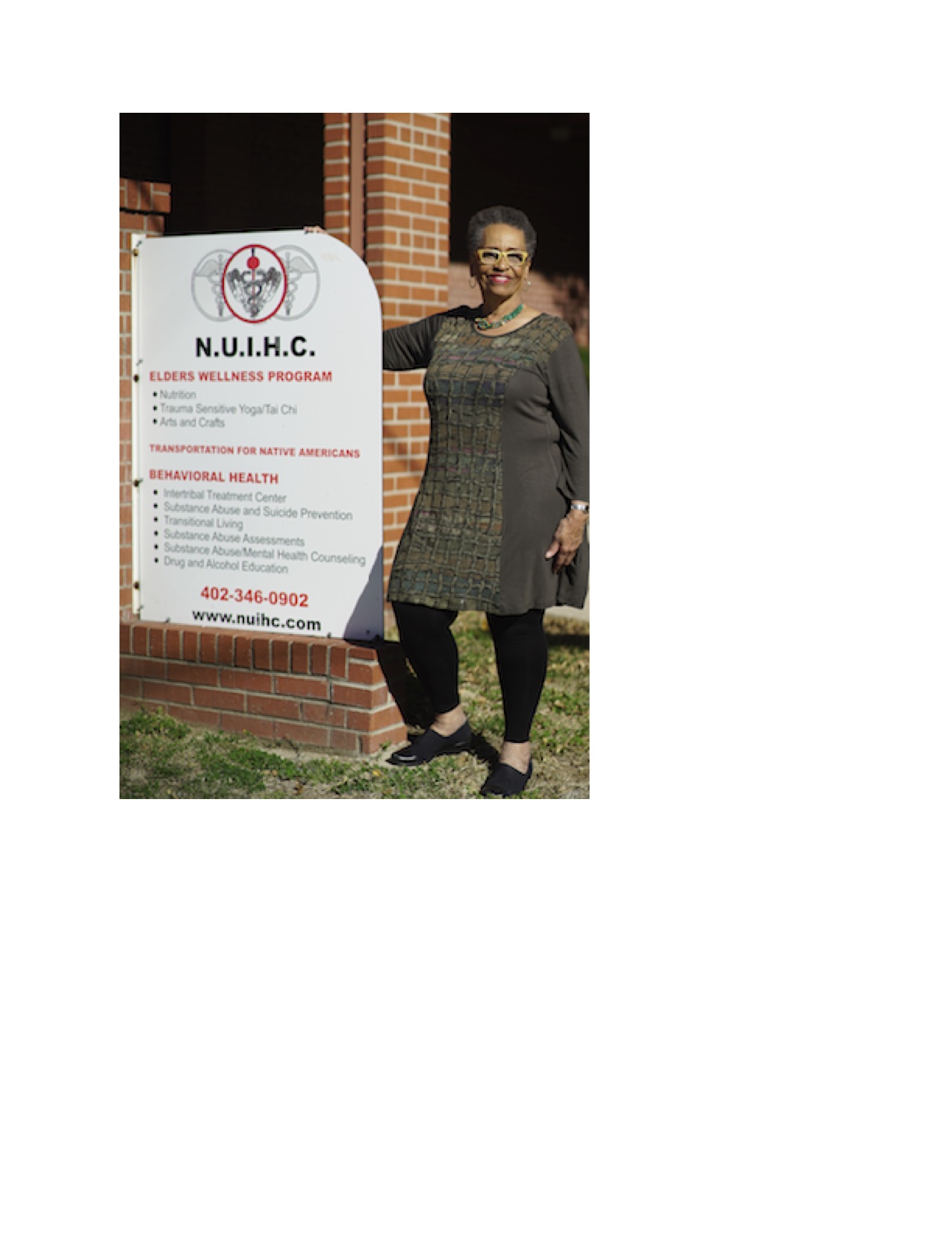
Donna Polk and Nicole Tamayo decry developer-led gentrification driving their Nebraska Urban Indian Health Coalition out of downtown Omaha.
Headquartered at 2240 Landon Court on 24th Street, between Farnam and Leavenworth, the nonprofit feels the squeeze enough from encroaching development that it plans moving to South Omaha to be closer to its Native base and to have larger facilities.
“We intend to move because we’ve outgrown this facility and we no longer fit into the demographics of this area. Gentrification is chasing us out. Our target population is no longer here and we need more space,” said Polk, longtime CEO of the agency formed in 1986.
The 12,000-square foot building contains residential and outpatient treatment, youth and elders programs, communal-event rooms, all within close proximity,
“By moving into a larger building well be able to have one floor more for the community and a second floor for programming. We’re very excited about that.”
She plans a small culinary training program.
Meanwhile. she and Tamyao don’t like how rising property values and rents displace residents in a long dormant, mixed-use urban area being revitalized.
But Polk is also practical enough to work with one of those gentrifying developers, Arch Icon. For the new NUIHC site, they’ve fixed on the former South Omaha Eagles Club at 24th and N. It has more than double the square footage. Adjacent to it, she wants to build 44 low-income transitional housing units to “provide secure, sober housing for a displaced community.”
Tamayo, NUIHC Youth and Family program director, said the city’s Native community once lived near downtown but long since dispersed. Transportation’s an issue but will be less so with the move.
Both women are mixed heritage like most of their clients, “There aren’t that many pure bloods,” said Tamayo, who’s Mexican and Native. Polk is African-American and Native. The agency has an all-Native board of directors except for one member. Board and staff dislike any efforts, intentional or not, that further marginalize an already nearly invisible population. Though not widely seen – the census estimates 3,400 reside here – Natives have real lives, families, issues and needs NUIHC responds to with culturally competent programs and services.
Tamayo oversees the Soaring Over Meth and Suicide (SOMS) program that gives young people preventive tools to avoid abusing substances or doing self-harm. The mother of four brings “a lot of life experience” to the job. People close to her have committed suicide, battled drug addiction and suffered mental illness.
She sees herself in the clients she serves.
“I grew up in the area. i did the gangs and the drugs and the running around. Anything positive that I can keep my kids in and the bigger support system that I can put around them is definitely a plus.”
NUIHC provides that safety net.
“There’s not a whole lot else here. There’s no Indian (community) center. There’s nothing for the kids. The family supports for most of them are not there.”
Omaha’s lacked a full-fledged Indian center since 1995.
“We try to fill that void,” Polk said, “but our focus is heath basically.”
NUIHC accepts some clients other Indian Health Service (IHS) centers don’t.
“You have to be an enrolled member of a federally recognized tribe to be able to receive services from an IHS,” said Tamayo. “A big part of our push, especially with the Adolescent Health Project we’re part of through the Women’s Fund of Omaha, is to build bridges and fill gaps between the different services so that other organizations work better with our community.
“That way clients will have better options.”
NUIHC operates a federally qualified community health clinic in Lincoln, Neb. serving Natives and non-Natives and a free transportation service in Sioux City, Iowa.
“At our Lincoln clinic we provide healthcare services to a large population of undeserved people in Lancaster County,” Polk said. “Incidence and prevalence of chronic disease in the Native community probably puts them at greatest risk than any racial or ethnic group with diabetes, heart disease, cancer, respiratory issues. It’s horrific. It mirrors the mortality and morbidity rate of the dominant culture but the effect is more devastating because diagnosis is often in late stages.”
In Omaha, NUIHC offers mental illness counseling and drug-alcohol addiction treatment. The brick building houses 10-in-patient beds. The campus includes five transitional living units across the street owned by the Winnebago tribe and leased back to NUIHC.
“When people graduate from this (treatment) program or any program in the country, they’re eligible to go to the transitional housing.”
NUIHC’s not seen an upsurge in treatment referrals since since Whiteclay, Neb. liquor stores closed, though alcohol remains a huge problem.
The agency’s broader health focus extends to teaching young people healthy choices and life skills and providing social-recreational activities for elders.
“The programming we do, even sex education, is working with the culture, bringing back traditional values in how to conduct yourself to have high self-esteem and self-worth for making healthy choices,” Tamayo said. “In the majority of our families, the youth do start to drink, use, smoke, whatever, by 10-11 years old.
“It’s looking at underlying issues rather than just educating them about using condoms and getting tested. We have to help them change their mindset. It’s getting them to understand what’s important and how to take care of themselves. We tell them you may not be able to control the environment you’re put in or what’s going on around you, but you still have control of the choices you make going forward What you did yesterday doesn’t have to dictate what you do today. If you choose to go to school today, then that’s one step closer to doing what you need to be doing to better your life. We keep encouraging them.”
Two annual NUIHC events happen this month: Empowering Youth to Lead a Healthy Life: Native American Health Conference on November 10 and Hoops 4 Life 3-on-3 basketball tournament on November 11. Both are at NorthStar Foundation.
The organization works closely with local colleges and universities. Some Native post-secondary students mentor Native high schoolers.
“We want our kids to see that this is possible – that this is something they can get to,” Tamayo said.
NUIHC convenes an All Nations Youth Council that has a real voice in agency matters.
“For any big push we have we get input from this community, including our youth,” she said. “We don’t want to be telling them what they need to be learning and working on if they have other things going on that need to be addressed. They discusses where we’re going with programming – if we’re hitting it or missing it.”
Last summer, participants of an NUIHC-sponsored youth group made a chaperoned road trip to Chicago and Washington D.C., where they presented cultural performances featuring traditional singing and dancing.
“A lot of our kids haven’t even been past Sioux City,” she said. “It’s giving them an opportunity to understand there’s a whole world out there and it’s very possible for them to reach and go to. They enjoyed it.
“We took them around to all the museums in D.C. The one they enjoyed the most was the Holocaust Museum. A lot of people wondered if that was going to be too traumatic for them. But when we talked to the kids afterward, they’re so used to seeing things on the reservation, they’re so knowledgable historically of the things that have happened to Native Americans, that this didn’t affect them as it might a lot of others.
“Trauma is just such a part of their daily life that it takes so much for them to be impacted by the experience.”
The Omaha office just got grant a to do domestic and sexual violence counseling.
In everything NUIHC does, great emphasis is placed on observing Native traditions. It even occasionally hosts funeral services, most recently for Zachary Bearheels, the mentally ill man tasered and punched multiple times by Omaha police last June before dying in custody.
“We use a spiritual base,” Polk said. “We don’t deal with religion or denomination – we deal with spirituality. Religion is for people afraid they’re going to hell, and spirituality is for people who’ve been there.”
Every effort’s made to respect client requests.
“If you want to go to the sweat lodge or have a ceremony with a medicine man or go to a pow-wow, you can do that.”
“Definitely. our focus is healthcare, but the connection between cultural activities and being able to identify who you are with how those things affect your health has come more about,” Tamayo said. “We’re able to do that to address the health issues we’re working with.
“We work with Omaha Public Schools and their NICE (Native Indian Centered Education) program on addressing truancy. We help school officials understand sometimes Native students will miss school to participate in traditional practices.”
NUIHC works with OPS and other stakeholders on cultural sensitivity to Native mobility and family dynamics that find youth moving from place to place.
“That’s very important because we look at that as a protective factor so kids can feel good about who they are,’ said Polk.
Tamayo appreciates the autonomy she’s given.
“Donna (Polk) has faith in me that I understand our families’ needs and what services to give them. I have full permission. It’s like open-door mentoring. We have to be really connected and visible in the community. It’s a lot of hours.
“I’ve been in the community my whole life on and off and I know most of these families on an individual level, so being able to reach out and do what I need to do to help them is a plus.”
That help may include informal counseling-coaching to navigate the complexities of life off the Rez.
“We partner with and reach out to reservations because so many of our families migrate back and forth between urban settings and reservations. We want them to feel like they’re getting help with things wherever they go,” Tamayo said.
“They feel like they’re so far away from home and they don’t have a connection here,” Polk said. “We help get them more involved in the community so they can keep that cultural connection they may be missing in an urban setting.”
Polk feels NUIHC is sometimes out-of-sight, out-of-mind. Its $2.3 million budget depends on the vagaries of federal and foundation funds and grants. The low-key, low-profile agency isn’t exactly a household name.
“I don’t lament the fact the general public may not know us or what we do here because the people who need our services know we’re here. That’s what’s important to me. Nationally, people know we’re here. We get clients from as far away as Alaska who come for treatment.”
She’s gearing up to raise millions to acquire and renovate the South Omaha Eagles building. Plans to build the Eagle Heights recovery community are contingent on TIF financing and other funding sources.
“Our mission is to create a small community for the original inhabitants of this land. Almost every group has a community people identify with. We believe we can blend in with South Omaha. It offers the land, the vibrancy and a welcoming spirit. We will be able to increase our ability to elevate the health status of urban Indians by offering additional services, including Intensive outpatient, parenting, caregiver training-assistance, community health and outreach.”
Visit http://www.nuihc.com.
The Urban League movement lives strong in Omaha
The November issue of The Reader (www.thereader.com) features my story on an old-line but still vital social action organization celebrating 90 years in Omaha.
The Urban League. The name may be familiar but the role it plays not. Since the National Urban League’s 1910 birth from the progressive social work movement, it’s used advocacy over activism to promote equality. The New York City-based NUL encouraged the creation of affiliates to serve blacks leaving the South in the Great Migration. One of its oldest continuously operating affiliates is the Urban League of Nebraska. The local non-profit started in 1927 as the Omaha Urban League and so operated until changing to Urban League of Nebraska (ULN) in 1968.
This century-plus national integrationist organization is anything but a tired old outfit living off 1950s-1960s Freedom Movement laurels. Its mission today within the ongoing movement is “to enable African-Americans to secure economic self-reliance, parity, power and civil rights.” Ditto for ULN, which marks 90 years in 2017. At various times the local office made housing, jobs and health priorities. Today, it does advocacy around juvenile justice, education and child welfare reform and is a service provider of education, youth development, employment and career services programs. It continues a long-standing scholarships program.
The Urban League movement lives strong in Omaha
©by Leo Adam Biga
Originally published in the November 2017 issue of The Reader (www.thereader.com)
The Urban League.
The name may be familiar but the role it plays not. Since the National Urban League’s 1910 birth from the progressive social work movement, it’s used advocacy over activism to promote equality. The New York City-based NUL encouraged the creation of affiliates to serve blacks leaving the South in the Great Migration. One of its oldest continuously operating affiliates is the Urban League of Nebraska. The local non-profit started in 1927 as the Omaha Urban League and so operated until changing to Urban League of Nebraska (ULN) in 1968.
This century-plus national integrationist organization is anything but a tired old outfit living off 1950s-1960s Freedom Movement laurels. Its mission today within the ongoing movement is “to enable African-Americans to secure economic self-reliance, parity, power and civil rights.” Ditto for ULN, which marks 90 years in 2017. At various times the local office made housing, jobs and health priorities. Today, it does advocacy around juvenile justice, education and child welfare reform and is a service provider of education, youth development, employment and career services programs. It continues a long-standing scholarships program.
Agency branding says ULN aspires to close “the social economic gap for African-Americans and emerging ethnic communities and disadvantaged families in the achievement of social equality and economic independence and growth.”
The emphasis on education and employment as self-determination pathways became more paramount after the Omaha World-Herald’s 2007 series documenting the city’s disproportionately impoverished African-American population. ULN became a key partner of a facilitator-catalyst for change that emerged – the Empowerment Network. In a decade of focused work, North Omaha blacks are making sharp socio-economic gains.
“It was a call to action,” current ULN president-CEO Thomas Warren said of this concerted response to tackle poverty. “This was the first time in my lifetime I’ve seen this type of grassroots mobilization. It coincided with a number of nonprofit executive directors from this community working collaboratively with one another. It also was, in my opinion, a result of strategically situated elected officials working cooperatively together with a common interest and goal – and with the support of the donor-philanthropic community.
“The United Way of the Midlands wanted their allocations aligned with community needs and priorities – and poverty emerged as a priority. Then, too, we had support from our corporate community. For the first time, there was alignment across sectors and disciplines.”
Unprecedented capital investments are helping repopulate and transform a long neglected and depressed area. Both symbolic and tangible expressions of hope are happening side by side.
“It’s the most significant investment this community’s ever experienced,” said Warren, a North O native who intersected with ULN as a youth. He said the League’s always had a strong presence there. He came to lead ULN in 2008 after 24 years with the Omaha Police Department, where he was the first black chief of police.
“I was very familiar with the organization and the importance of its work.”
He received an Urban League scholarship upon graduating Tech High School. A local UL legend, the late Charles B. Washington, was a mentor to Warren, whose wife Aileen once served as vice president of programs.
Warren concedes some may question the relevance of a traditional civil rights organization that prefers the board room and classroom to Black Lives Matter street tactics.
“When asked the relevance, I say it’s improving our community and changing lives,” he said, “We prefer to engage in action and to address issues by working within institutions to affect change. As contrasted to activism, we don’t engage much in public protests. We’re more results-oriented versus seeking attention. As a result, there may not be as much public recognition or acknowledgment of the work we do, but I can tell you we have seen the fruits of our efforts.”
“We’re an advocacy organization and we’re a services and solutions provider. We’re not trying to drum up controversy based on an issue,” said board chairman Jason Hansen, an American National Bank executive. “We talk about poverty a lot because poverty’s the powder keg for a lot of unrest.”
Impacting people where they live, Warren said, is vital if “we want to make sure the organization is vibrant, relevant, vital to ensuring this community prospers.”
“We deal with this complex social-economic condition called poverty,” he said. “I take a very realistic approach to problem-solving. My focus is on addressing the root causes, not the symptoms. That means engaging in conversations that are sometimes unpleasant.”
Warren said quantifiable differences are being made.
“Fortunately, we have seen the dial move in a significant manner relative to the metrics we measure and the issues we attempt to address. Whether disparities in employment, poverty, educational attainment, graduation rates, we’ve seen significant progress in the last 10 years. Certainly, we still have a ways to go.”
The gains may outstrip anything seen here before.
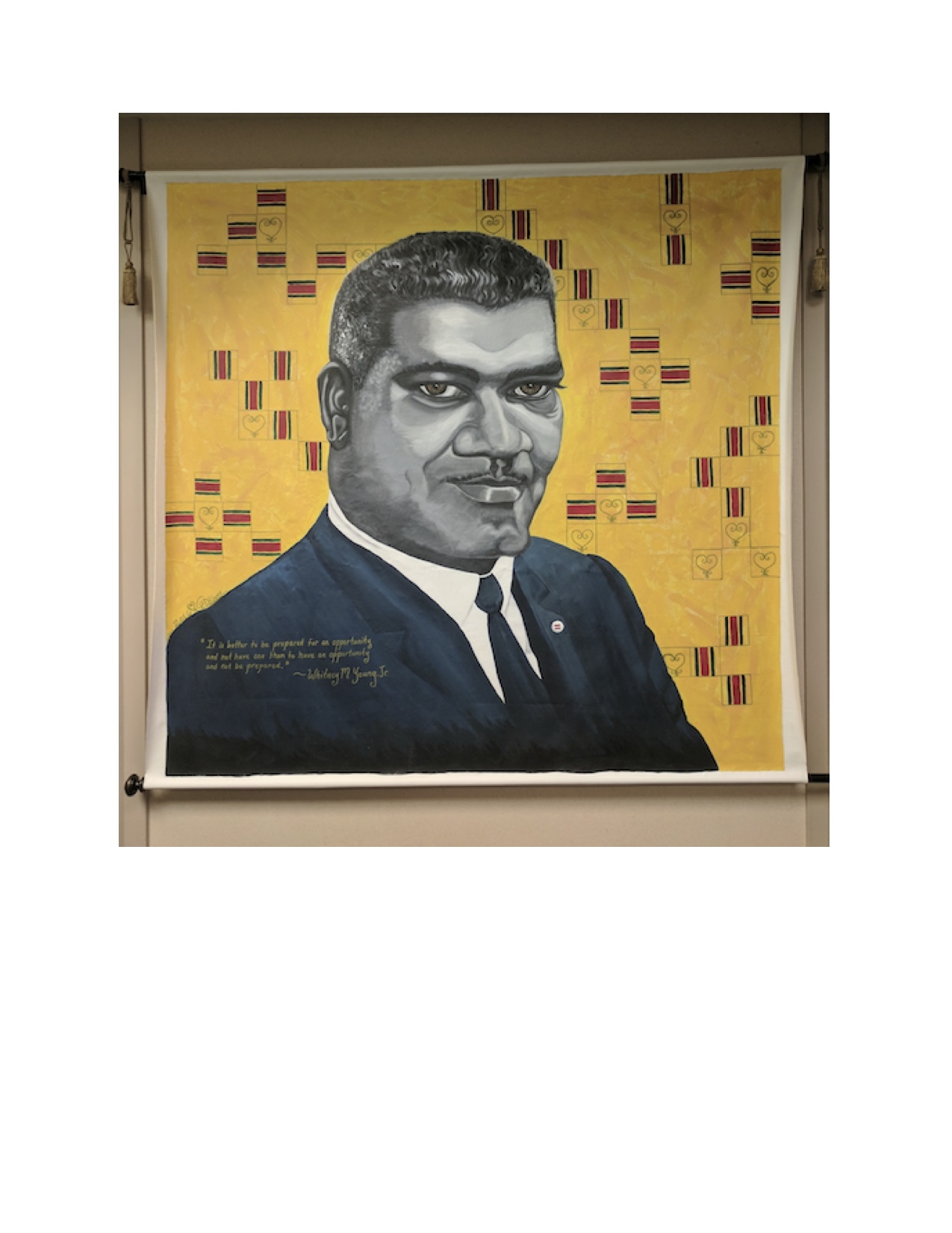
Soon after the local affiliate’s start, the Great Depression hit. The then-Omaha Urban League carried out the national charter before transitioning into a community center (housed at the Webster Exchange Building) hosting social-recreational activities as well as doing job placements. In the 1940s, the Omaha League returned to its social justice roots by addressing ever more pressing housing and job disparities. When the late Whitney Young Jr. came to head the League in 1950, he took the revitalized organization to new levels of activism before leaving in 1953. He went on to become national UL executive director, he spoke at the March on Washington and advised presidents. A mural of him is displayed in the ULN lobby.
Warren’s an admirer of Young, “the militant mediator,” whose historic civil rights work makes him the local League’s great legacy leader. In Omaha, Young worked with white allies in corporate and government circles as well as with black churches and the militant social action group the De Porres Club led by Fr. John Markoe to address discrimination. During Young’s tenure, modest inroads were made in fair hiring and housing practices.
Long after Young left, the Near North Side suffered damaging blows it’s only now recovering from. The League, along with the NAACP, 4CL, Wesley House, YMCA, Omaha OIC and other players responded to deteriorating conditions through protests and programs.
League stalwarts-community activists Dorothy Eure and Lurlene Johnson were among a group of parents whose federal lawsuit forced the Omaha Public Schools to desegregate. ULN sponsored its own community affairs television program, “Omaha Can We Do,” hosted by Warren’s mentor, Charles Washington.
Mary Thomas has worked 43 years at ULN, where she’s known as “Mrs. T.” She said Washington and another departed friend, Dorothy Eure, “really helped me along the way and guided me on some of the things I got involved in in civil rights. Thanks to them, I marched against discrimination, against police brutality, for affirmative action, for integrated schools.”
Rozalyn Bredow, ULN director of Employment and Career Services, said being an Urban Leaguer means being “involved in social programs, activism, voter rights, equal rights, women’s rights – it’s wanting to be part of the solution, the movement, whatever the movement is at the time.”
In the 1980s and 1990s, ULN changed to being a social services conduit under George Dillard.
“We called George Dillard Mr. D,” said Mrs. T. “A very good, strong man. He knew the Urban League movement well.”
She said the same way Washington and Eure schooled her in ciivl rights, Dillard and his predecessor, George Dean, taught her the Urban League movement.
“We were dealing with a multiplicity of issues at that particular time,” Dillard said, “and I imagine they’re still dealing with them now. At the time I took over, the organization had been through two or three different CEOs in about a five year period of time. That kind of turnover does not stabilize an organization. It hampers your program and mission.”
Dillard got things rolling. He formed a committee tasked with monitoring the Omaha Public Schools desegregation plan “to ensure it did not adversely affect our kids.” He implemented a black community roundtable for stakeholders “to discuss issues affecting our community.” He began a black college tour.
After his departure, ULN went through another quick succession of directors. It struggled meeting community expectations. Upon Thomas Warren’s arrival, regaining credibility and stability became his top priority. He began by reorganizing the board.
“When I started here in 2008 we had eight employees and an operating budget of $800,000, which was about $150,000 in the red,” Warren said. “Relationships had been strained with our corporate partners and with our donor-philanthropic community, including United Way. My first order of business was to restore our reputation by reestablishing relationships.”
His OPD track record helped smooth things over.
“As we were looking to get support for our programs and services, individuals were willing to listen to me. They wanted to know we would be administering quality services. They wanted to know our goals and measurable outcomes. We just rolled up our sleeves and went to work because during the recession there was a tremendous increase in demand for services. Nonprofits were struggling. But we met the challenge.
“In the first five years we doubled our staff. Tripled our budget. Currently, we manage a $3 million operating budget. We have 34 full-time employees. Another 24 part-time employees.”
Under Warren. ULN’s twice received perfect assessment scores from on-site national audits.
“It’s a standard of excellence for our adherence to best practices and compliance with the Urban League’s articles of affiliation,” he said.
Financially, the organization’s on sound footing.
“We’ve done a really admirable job of diversifying our revenue stream. More than 85 percent of our revenue comes from sources other than federal and state grants,” said board chair Jason Hansen. “We have a cash reserve exceeding what the organization’s entire budget was in 2008. It’s really a testament to strong fiscal management – and donors want to see that.”
“It was very important we manage our resources efficiently,” Warren said.
Along the way, ULN itself has been a jobs creator by hiring additional staff to run expanding programs.
“The growth was incremental and methodical,” Warren said, “We didn’t want to grow too big, too fast. We wanted to be able to sustain our programs. Our ability to administer quality programs got the support of our donor-philanthropic-corporate-public communities.
“We have been able to maintain our workforce and sustain our programs. The credit is due to our staff and to the leadership provided by our board of directors.”
Warren’s 10 years at the top of ULN is the longest since Dillard’s reign from 1983 to 2000. Under Warren, the organization’s back to more of its social justice past.
Even though Mrs. T’s firebrand activism is not the League’s style, sometimes causing her to clash with the reserved Warren, whom she calls “Chief,” she said they share the same values.
“We just try to correct the wrong that’s done to people. I always have liked to right a wrong.”
She also likes it when Warren breaks his reserve to tell it like it is to corporate big wigs and elected officials.
“When he’s fighting for what he believes, Chief can really be angry and forceful, and they can’t pull the wool over his eyes because he sees through it.”
Mrs. T feels ULN’s back to where it was under Dillard.
“It was very strong then and I feel it’s very strong now. In between Mr. D and Chief, we had a number of acting or interim directors and even though those people meant well, until you get somebody solid, you’ve got a weakness in there.”
Pat Brown agrees. She’s been an Urban Leaguer since 1962. Her involvement deepened after joining the ULN Guild in 1968. The Guild’s organized everything from a bottillon to fundraisers to nursing home visits.
“Things were hopping. We had everything going on and everything running smoothly taking part in community things, working with youth, putting on events.”
She sees it all happening again.
Kathy J. Trotter also has a long history with the League. She reactivated the guild, which is ULN’s civic engagement-fundraising arm. She said countless volunteers, including herself, have “grown” through community service, awareness and leadership development through Guild activities. She chaperoned its black college tour for many years.
Trotter likes “to share our vision that a strong African- American community is a better Nebraska” with ULN’s diverse collaborators and partners.
Much of ULN’s multicultural work happens behind-the-scenes with CEOs, elected officials and other stakeholders. ULN volunteers like Trotter, Mrs. T and Pat Brown as well as Warren and staff often meet notables in pursuit of the movement’s aims.
“I don’t think people realize the amount of work we do and the sheer number of programs and services we provide in education, workforce development, violence prevention,” Jason Hansen said. “We have programs and services tailored to fit the community.”
Most are free.
“When you talk about training the job force of tomorrow, it begins with youth and education,” Hansen said. “We’ve seen a significant rise of African-Americans with a four-year college degree. That’s going to provide a better pipeline of talent to serve Omaha.”
Warren devised a strategic niche for ULN.
“We narrowed our focus on those areas where we not only felt we have expertise but where we could have the greatest impact,” he said. “If we have clients who need supportive services, we simply refer them.”
Some referrals go to neighbors Salem Baptist Church, Charles Drew Health Center, Family Housing Advisory Services, Omaha Small Business Network and Omaha Economic Development Corporation.
“We feel we can increase our efficiency and capacity by collaboration with those organizations.”
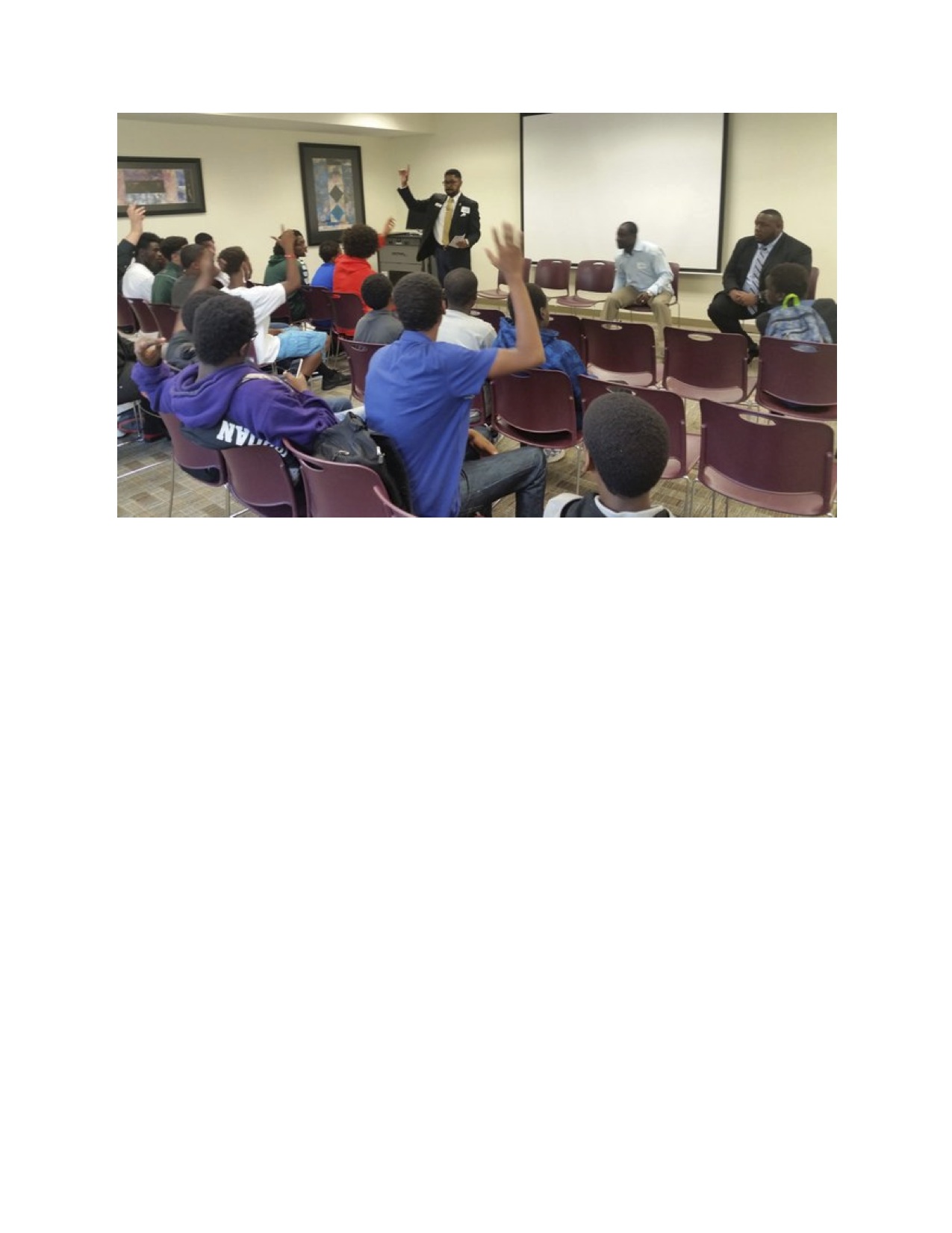
EDUCATION
Since refocusing its efforts, ULN regularly lands grants and contracts to administer education programs for entities like Collective for Youth.
ULN works closely with the Omaha Public Schools on addressing truancy. It utilizes African-American young professionals as Youth Attendance Navigators to mentor target students in select elementary and high schools to keep them in school and graduating on time.
Community Coaches work with at-risk youth who may have been in the juvenile justice system, providing guidance in navigating high school on through college.
ULN also administers some after school programs.
“Many of these kids want to know someone cares about their fate and well-being,” Warren said. “It’s mentoring relationships. We can also provide supportive services to their families.”
The Whitney Young Jr. Academy and Project Ready provide students college preparatory support ranging from campus tours to applications assistance to test prep to essay writing workshops to financial aid literacy.
“Many of them are first-generation college students and that process can be somewhat demanding and intimidating. We’re going to prepare the next generation of leaders here and we want to make sure they’re ready for school, for work, for life.”
Like other ULN staff, Academy-Project Ready coordinator Nicole Mitchell can identify with clients.
“Growing up in the Logan Fontanelle projects, I was just like the students I work with. There’s a lot I didn’t get to do or couldn’t do because of economics or other barriers, so my heart and passion is to make sure that when things look impossible for kids they know that anything is possible if you put the work and resources behind it. We make sure they have a plan for life after high school. College is one focus, but we know college is not for everyone, so we give them other options besides just post-secondary studies.”
“We want to make sure we break down any barrier that prevents them from following their dreams and being productive citizens. Currently, we have 127 students, ages 13 to 18, enrolled in our academy.”
Whitney Young Jr. Academy graduates are doing well.
“We currently have students attending 34 institutions of higher education,” said ULN College Specialist Jeffrey Williams. “Many have done internships. Ninety-eight percent of Urban League of Nebraska Scholarship recipients are still enrolled in college going back to 2014. One hundred percent of recipients are high school graduates, with 79% of them having GPAs above 3.0.”
Warren touts the student support in place.
“We work with them throughout high school with our supplemental ed programs, our college preparatory programs, making sure they graduate high school and enroll in a post-secondary education institution. And that’s where we’ve seen significant improvements.
“When I started at the Urban League, the graduation rate for African-American students was 65 percent in OPS. Now it’s about 80 percent. That’s statistically significant and it’s holding. We’ve seen significant increases in enrollment in post-secondary – both in community colleges and four-year colleges and universities. UNO and UNL have reported record enrollments of African-American students. More importantly, we’ve seen significant increases in African-Americans earning bachelor degrees – from roughly 16 percent in 2011 to 25 percent in 2016.”
With achievement up, the goal is keeping talent here.
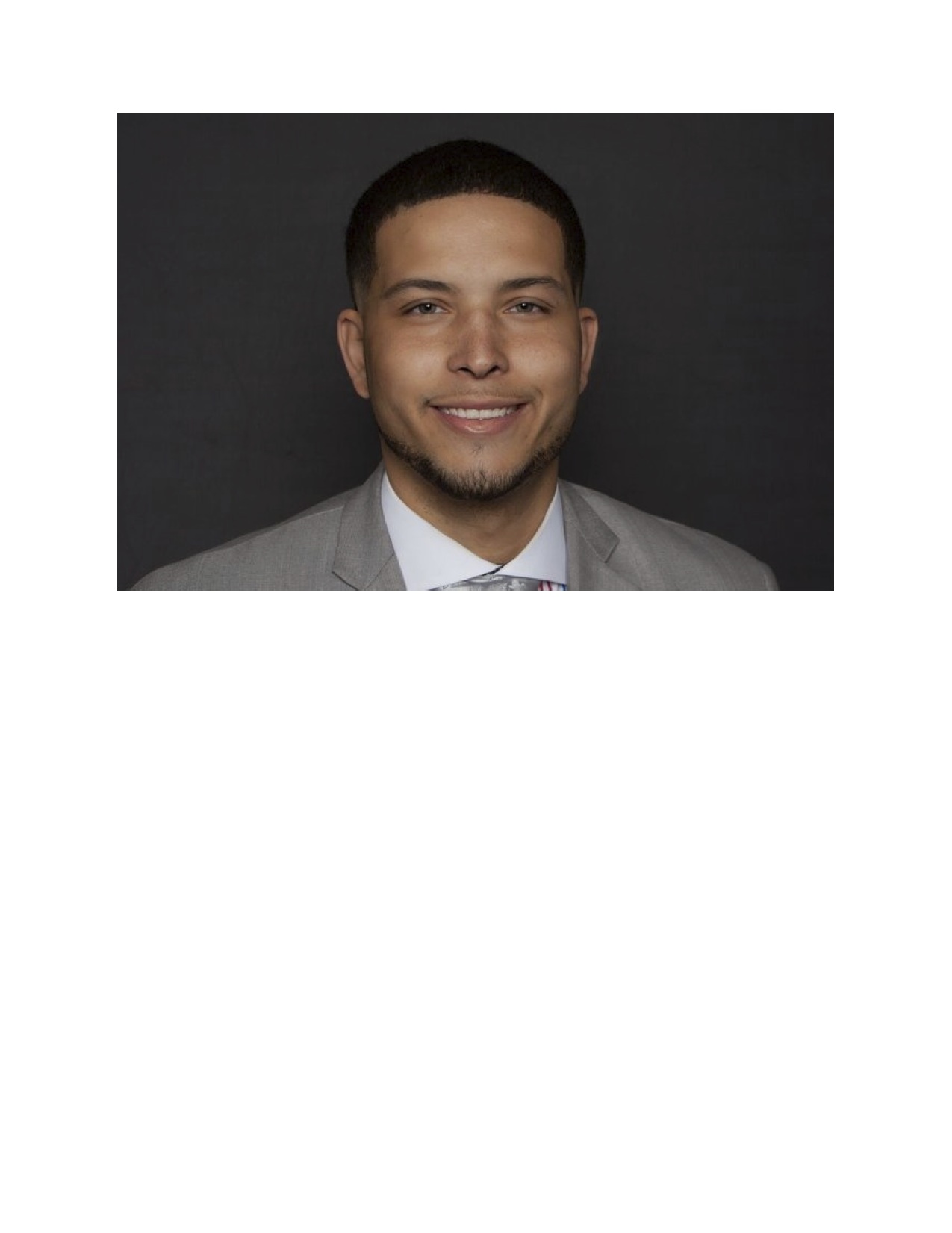
TALENT RETENTION
A survey ULN did in partnership with the Omaha Chamber of Commerce confirmed earlier findings that African-American young professionals consider Omaha an unfavorable place to live and work. ULN has a robust young professionals group.
“It was a call to action to me personally and professionally and for our community to see what we can do cultivate and retain our young professionals,” Warren said. “The main issues that came up were hiring and promotions, professional growth and development, mentoring and pay being commensurate with credentials. There was also a strong interest in entrepreneurship expressed.
“Millenials want to work in a diverse, inclusive environment. If we don’t create that type of environment, they’re going to leave. We want to use the results as a tool to drive some of these conversations and ultimately have an impact on seeing things change. If we are to prosper as a community, we have to retain our talent as a matter of necessity.We export more talent than we import. We need to keep our best and brightest. It’s in our own best interest as a community.”
The results didn’t surprise Richard Webb, ULN Young Professionals chair and CEO of 100 Black Men Omaha.
“I grew up in this community, so I definitely understand the atmosphere that was created. We’ve known the problems for a long time, but it seemed like we never had never enough momentum to make any changes. With the commitment and response we’ve got from the community, I feel there’s a lot of momentum now for pushing these issues to the front and finding solutions.”
“Corporate Omaha needs to partner with us and others on how we make it a more inclusive environment,” Jason Hansen said.
With the North O narrative changing from hopeless to hopeful, Hansen said, “Now we’re talking about how do we retain our African-American young talent and keep them vested in Omaha and I’d much rather be fighting that problem than continued increase in poverty and violence and declining graduation rates.
Webb’s attracted to ULN’s commitment to change.
“It’s representing a voice to empower people from the community with avenues up and out. It gathers resources and put families in better positions to make it out of The Hood or into a situation where they’re -self-sustaining.”
CAREER READINESS
On the jobs front, ULN conducts career boot camps and hosts job fairs. It runs a welfare to work readiness program for ResCare.
“We administer the Step-Up program for the Empowerment Network,” Warren said. “We case managed 150-plus youth this past summer at work sites throughout the city. We provide coaches that provide those youth with feedback and supervise their performance at the worksites.”
Combined with the education pieces, he said, “The continuum of services we offer can now start as early as elementary school. We can work with youth and young adults as they go on through college and enter into their careers. Kids who started with us 10 years ago in middle school are enrolled in college now and in some cases have finished school and entered the workforce.”
The Urban League maintains a year-round presence in the Community Engagement Center at the University of Nebraska at Omaha.
Olivia Cobb is part of another population segment the League focuses on: adults in adverse circumstances looking to enhance their education and employability.
Intensive case management gets clients job-school ready.
After high school, Cobb began studying nursing at Metropolitan Community College but gave birth to two children and dropped out. Through the Workforce Innovation and Opportunity Act program ULN administers, the single mom got the support she needed to reenter school. She’s on track to graduate with a nursing degree from Iowa Western Community College.
“I just feel like I’ve started a whole new chapter of my life,” Cobb said. “I was discouraged for awhile when I started having children. I thought I was going to have to figure something else out. I’m happy I started back. I feel like I’ve put myself on a whole new level.
“The Urban League is like another support. I can always go to them about anything.”
George Dillard said it’s always been this way.
“A lot of the stuff the Urban League does is not readily visible. But if you talk with the clients who use the Urban League, you’ll find the services it provides are a welcome addition to their lives. That’s what the Urban League is about – making people’s lives easier.”
ULN’s Rozalyn Bredow said Cobb is one of many success stories. Bredow’s own niece is an example.
“She wanted to be a nurse but she became a teen parent. She went to Flanagan High, graduated, did daycare for awhile. She finally came into the Workforce Innovation program. She went to nursing school and today she’s a nurse at Bergan Mercy.”
Many Workforce Innovation graduates enter the trades. Nathaniel Schrawyers went on to earn his commercial driver’s license at JTL Truck Driver Training and now works for Valmont Industries.
Like Warren, Bredow is a former law enforcement officer and she said, “We know employment helps curb crime. If people are employed and busy, they don’t have a whole lot of time to get into nonsense. And we know people want to work. That’s why we’ve expanded our employment and career services.”
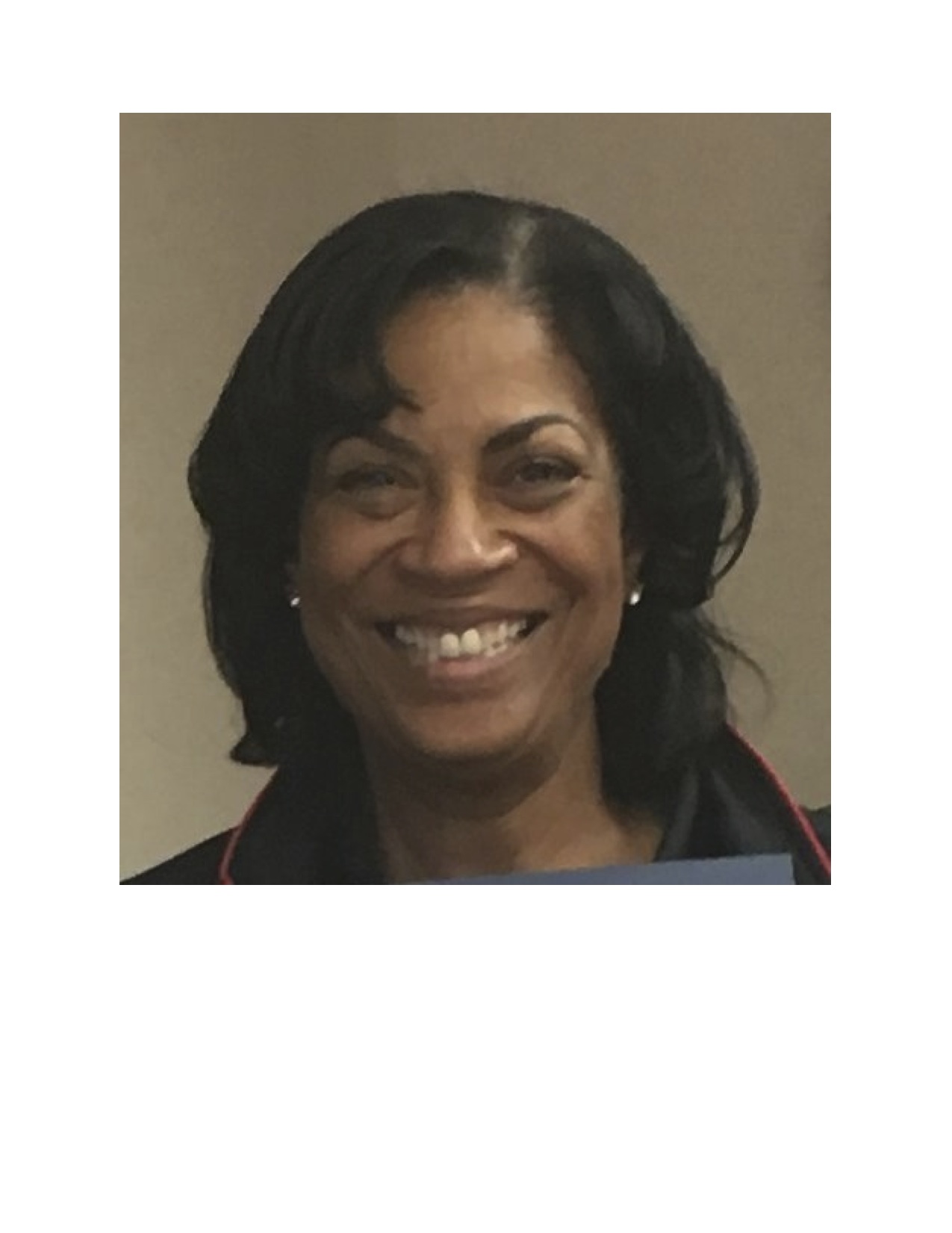
VIOLENCE PREVENTION
The League’s violence prevention initiatives include: Credit recovery to obtain a high school diploma; remedial and tutorial education; life skills management; college prep; career exploration; and job training.
“Gun assaults in the summer months in North Omaha are down 80 percent compared to 10 years ago,” Warren said. “That means our community is safer. Also,the rate of confinement at the Douglas County Youth Center is down 50 percent compared to five years ago. That means our youth and young adults are being engaged in pro-social activities and staying out of the system – leading productive lives and becoming contributing citizens.”
Warren co-chairs the Juvenile Detention Alternatives Initiative. “Our work is designed to keep our youth out of the system or to divert those that have been exposed to the system to offer effective intervention strategies.”
Richard Webb said having positive options is vital.
“It’s a mindset thing. Whenever people are seeing these resources available in their community to make it to greatness, then they do start changing their minds and realizing they do have other options.
“Growing up, I didn’t feel I had too many options in my footprint. My mom was below poverty level. My dad wasn’t in the house.”
But mentoring by none than other than Thomas Warren helped him turn his life around. He finished high school. earned an associates degree from Kaplan University and a bachelor’s degree from UNO. After working in sales and marketing, he now heads a nonprofit.
Wayne Brown, ULN vice president of programs, knows the power of pathways.
“My family was part of the ‘alternative economy.’ It was the family business. My junior year at Omaha Benson I was bumping around, making noise, when an Urban League representative named Chris Wiley grabbed me by the ear and gpt me to take the college and military assessment tests. He made sure I went on a black college tour. I met my wife on that tour. I got a chance to be around young people going in the college direction and I had a good time.”
Brown joined the Army after graduating high school and after a nine year service career he graduated from East Tennessee State University and Creighton Law School. After working for Avenue Scholars and the Omaha Community Foundation, he feels like he’s back home.
“I wouldn’t have been able to do all that if I hadn’t done what Mr. Wiley pushed me to do. So the Urban League gave me a start, a path to education and employment and a sense of purpose I didn’t have before.”
Informally and formally, ULN’s been impacting lives for nine decades.
“To be active in Omaha for 90 years, to have held on that long, is fantastic,” Pat Brown said. “Some affiliates have faltered and failed and gone out of business. But to think we’re still working and going strong says something. I hope I’m around for the 100th anniversary.”
Mrs. T rues the wrongs inflicted on the black community. But she’s pleased the League’s leading a revival.
“I’ve seen some good changes. It makes me feel good we are still here and still standing and that I’m around to see that. It’s a good change that’s coming.”
Visit http://www.urbanleagueneb.org.
Rony Ortega follows path serving more students in OPS
To be a public schools advocate, one doesn’t have to be a public education institution graduate. Nor does one need to be a professional public schools educator or administrator, But in Rony Ortega’s case, he checks yes to all three and he feels that background, plus a strong work ethic and desire to serve students, gives him the right experience for his new post as a district executive director in the Omaha Public Schools. He supervises and guides principals at 16 schools and he loves the opportunity of impacting more students than he ever could as a classroom teacher, counselor, assistant principal and principal. He also feels his own story of educational attainment (two master’s degreees and a doctorate) and career acheivement (a senior administrative position by his late 30s) despite a rough start in school and coming from a working-class family whose parents had little formal education is a testament to how far public education can carry someone if they work hard enough and want it bad enough. Read my profile of Rony Ortega in El Perico.
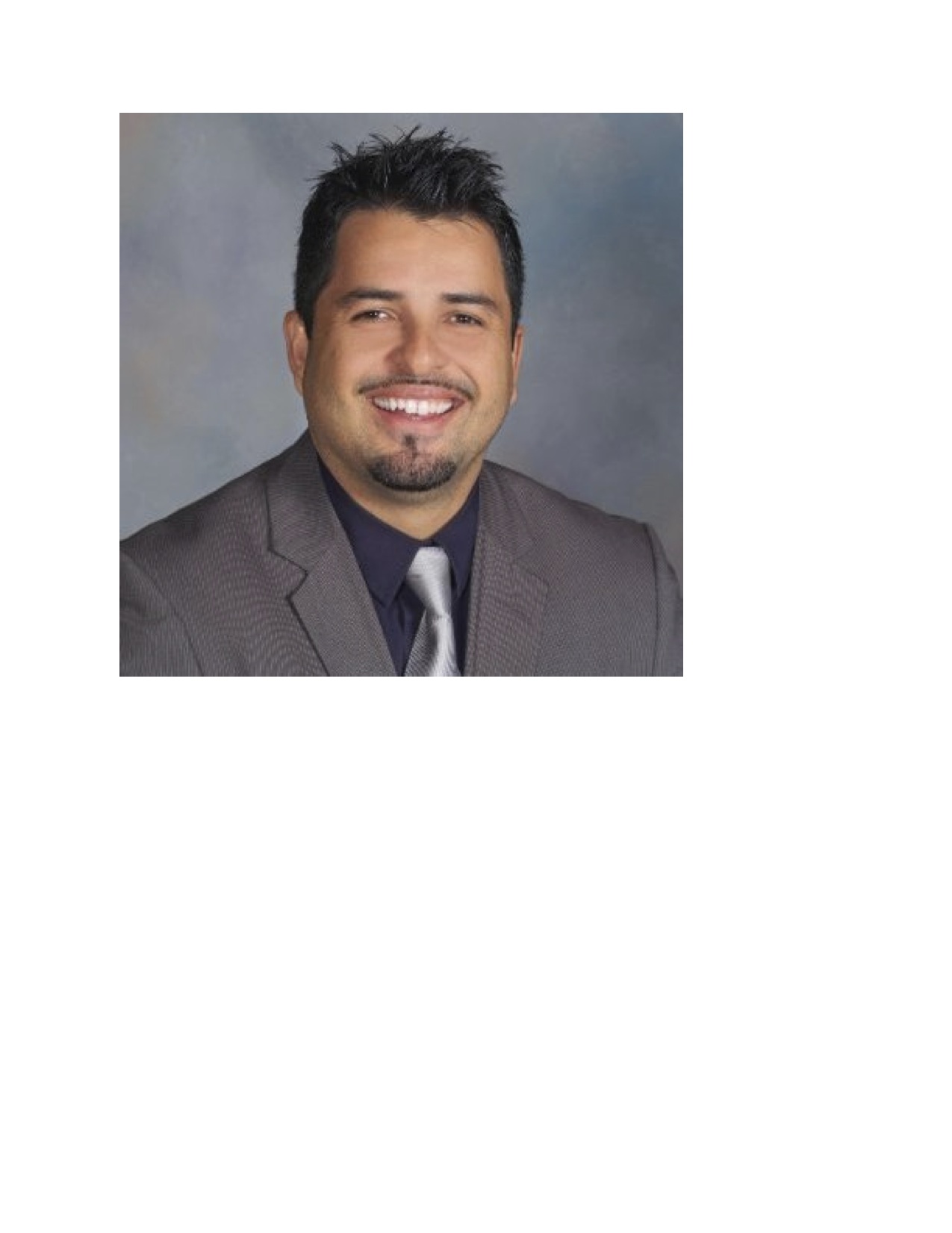
Rony Ortega follows path serving more students in OPS
©by Leo Adam Biga
Originally appeared in El Perico
Rony Ortega has gone far in his 15-year career as an educator. He worked in suburban school districts in Elkhorn and Papillion before recruited to the Omaha Pubic Schools by former OPS staffer and veteran South Omaha community activist, Jim Ramirez.
Ortega. who’s married with three daughters, all of whom attend OPS, has moved from classroom teacher and high school counselor to assistant principal at South High to principal of Buffett Middle School. Earlier this year, he was hired as a district executive director tasked with supporting and supervising principals of 16 schools.
The Southern California native traces his educational and professional achievement to his family’s move to Nebraska. Negative experiences in Los Angles public schools in the 1980s-1990s – gang threats, no running water, rampant dropouts – fueled his desire to be a positive change agent in education. In Schuyler, where his immigrant parents worked the packing plants, he was introduced to new possibilities.
“I’m thankful my parents had the courage to move us out of a bad environment. Really, it wasn’t until I got here I met some key people that really changed the trajectory of my life. I met the middle class family I never knew growing up. They really took me under their wing. We had conversations at their dinner table about college-careers – all those conversations that happen in middle class homes that never happened in my home until I met that family.
“That was really transformational for me because it wasn’t until then I realized my future could be different and I didn’t have to work at a meatpacking plant and live in poverty. I really credit that with putting me on a different path.”
He began his higher education pursuits at Central Community College (CCC) in Columbus.
“I went there because, honestly, it was my only option. I was not the smartest or sharpest kid coming out of high school. Just last year, I was given the outstanding alumnus award and was their commencement speaker. I was humbled. Public speaking is not something I really enjoy, but I did it because if I could influence somebody in that crowd to continue their education, it was worth it. And I owed it to the college. That was the beginning of my new life essentially.”
He noted that, just as at his old school in Schuyler, CCC-Columbus is now a Hispanic-serving institution where before Latinos were a rarity. His message to students: education improves your social mobility.
“No one can take away your education regardless of who you are, where you go, what you do.”
He completed his undergraduate studies at the University of Nebraska-Lincoln and went on to earn two master’s and a doctorate at the University of Nebraska at Omaha.
“I’m really the first in my family to have more of an educational professional background,” Ortega said, “I don’t think my parents quite yet grasp what I do for a living or what all my education means, so there’s some of that struggle where you’re kind of living in two worlds.”
He expects to keep advancing as an administrator.
“I have a lot of drive in me, I have a lot of desire to keep learning. I do know I want to keep impacting more and more kids and to have even a broader reach, and that is something that will drive my goals going forward.
“It’s very gratifying to see your influence and the impact you make on other people. There’s no better feeling than that.”
He’s still figuring out what it means to be an executive director over 16 principals and schools.
“For now, I’m focusing on building relationships with my principals, getting to know their schools, their challenges, observing what’s happening. So right now I’m just doing a lot of leading through learning. It’s quite the challenge with not only the schools being elementary, middle and high schools but being all over town. Every school has challenges and opportunities – they just look different. I’m trying to learn them.
“When I was a principal, I had teachers who needed me more than others. I’m learning the same thing is true with principals – some need you more because they’re new to the position or perhaps are in schools that have a few more challenges.”
Having done the job himself, he knows principals have a complex, often lonely responsibility. That’s where he comes in as support-coach-guide.
“We’re expecting principals to be instructional leaders but principals have a litany of other things to also do. Our theory of action is if we develop our principals’ capacity, they will in turn develop teachers’ capacity and then student outcomes will improve.”
He knows the difference a helping hand can make.
“No matter where I’ve been, there’s always been at least one person instrumental in influencing me. The research shows all it takes is one person to be in somebody’s corner to help them, and there’ve been people who’ve seen value in me and really invested in me.”
His educational career, he said, “is my way of giving back and paying it forward.”
“It’s so gratifying to wake up every day knowing you’re doing it for those reasons. That’s really powerful stuff.”
He purposely left the burbs for more diverse OPS.
“I kept thinking I’ve got to meet my heart. I wanted to do more to impact kids probably more like me.”
He’s proud that a district serving a large immigrant and refugee population is seeing student achievement gains and graduation increases, with more grads continuing education beyond high school.
As he reminds students, if he could do it, they can, too.
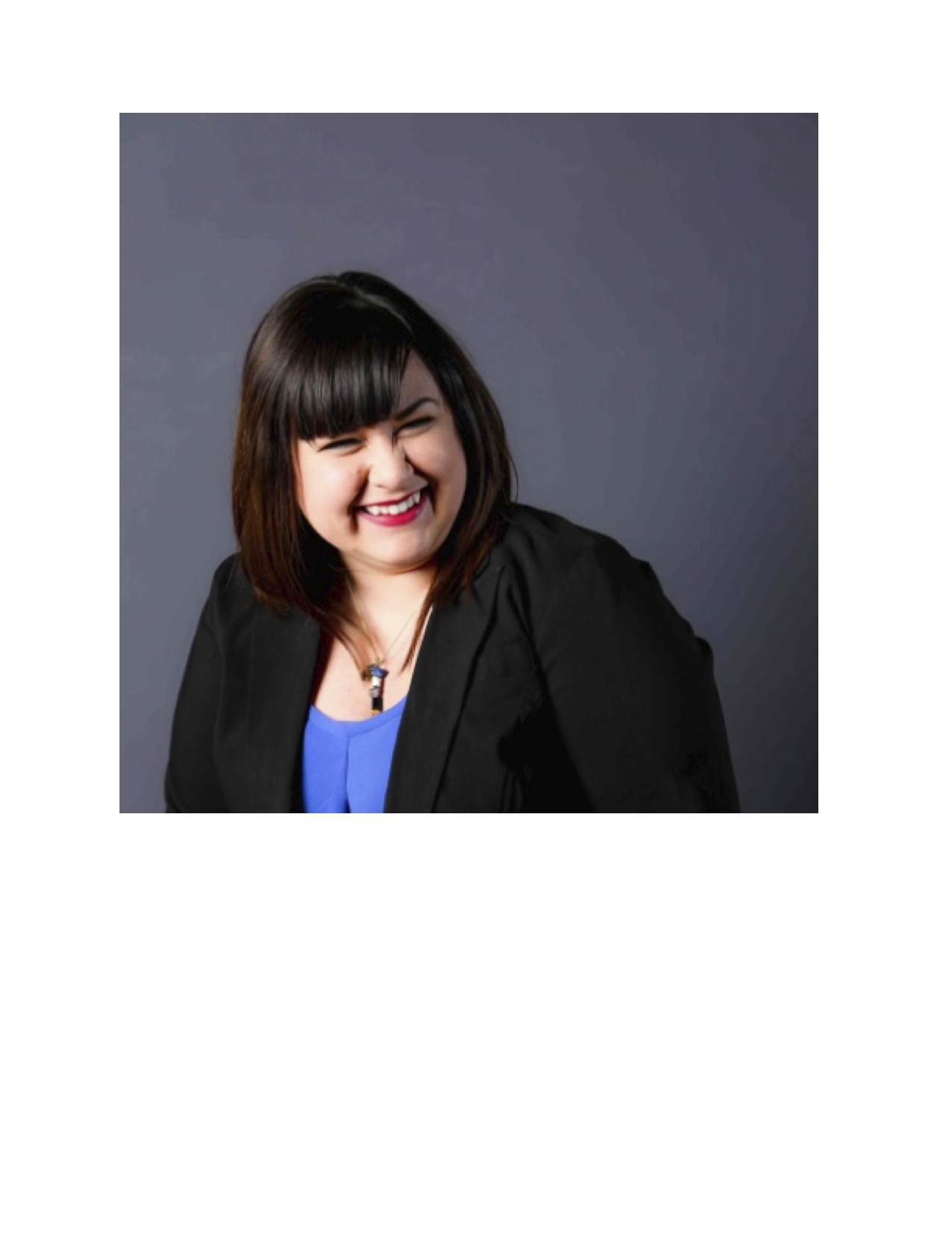
Amanda Ryan brings lifelong passion for education to school board
Serving on the Omaha Public Schools board has got to be one of the more challenging non-paid positions around. First of all, you have to get appointed or elected. Then comes the reality of representing your subdistrict and the community as a whole as a voting member of the governing body that’s over the superintendent and the administration of a very large and diverse urban school district serving 52,000 students. Throw in the fact that public schools are something every one has an opinion about – often a highly critical one at that – plus the fact that education brings up emotionally charged issues surrounding children, families, resources and opportunities, and certain disparities involving them, and you have the makings for one tough job. Despite all this, Omaha Public Schools board member Amanda Ryan loves the work and the responsibility. Her service is part of a lifelong passion she’s had for education. Read my El Perico profile of her here.
Amanda Ryan brings lifelong passion for education to school board
©by Leo Adam Biga
Originally appeared in El Perico
When Amanda Ryan and her fellow Omaha Board of Education members couldn’t agree on hiring a new OPS superintendent last spring, it left that search in limbo and the community asking questions.
Now, this emerging young leader is gearing up with her colleagues for a new search sure to be closely followed by stakeholders and media outlets.
The Minden, Neb. native is a third generation Mexican-American on her mother’s side and identifies as a Latina. “That’s something that’s really important to me,” said Ryan, who is single with no children.
The 26-year-old is finishing work on her master’s in sociology at the University of Nebraska at Omaha, just one of several markers she’s surpassed in her family.
“It’s interesting having to navigate being the first one in your family going to college,” she said.
Until winning the race for the Subdistrict 7 school board seat in 2016, she’d never run for or held public office before. She came on the board in a transition period that saw several new members elected to the body. The nine-member board selects the superintendent, sets policy, does strategic planning and oversees the broad brushstrokes of a diverse urban public school district serving 52,000 students, including many from migrant, immigrant and refugee populations.
Ryan feels her ethnic background, combined with her studies, her past experience working for Project Interfaith and her current job with the Institute for Holocaust Education, gives her insight into the district’s multicultural mosaic.
“I think all my education and life experience comes back to cultural understanding. With the wide array of students and staff we have in OPS. I think it’s important to remember those things.”
She sees a need for more minorities to empower themselves.
“In the political atmosphere we live in now, I think it’s really important people from marginalized communities express themselves and show that identity. That’s something I kind of ran on. It’s important kids see people similar to them doing important things so they realize, ‘Oh, I can be a leader, I can strive to do that as well.’ I think that’s something we need more of In Neb. We’re starting to have more leaders of color emerge, but it’s going to take some more time to do that.”
She credits former Omaha Public Schools board member and current Nebraska state legislator (District 7) Tony Vargas with emboldening her to run.
“Tony has been a very big influencer and mentor.”
Her decision to serve was intensely personal.
“Education has been such a huge motivating factor in my life. Everything I’ve done, every career aspiration I’ve had has to do with education. I can pinpoint teachers throughout my educational experience that have motivated me and helped me get to different places. I wanted it to pay it back somehow,”
Running for the board, she got some push-back for not having a child in OPS and for her youth. Regarding her age, she said, “I know during my campaign some people viewed it as a negative, but I think it’s a positive. It wasn’t that long ago I was in public school worrying about everything. I know some of these struggles these kids are going through.”
She has some goals for this academic school year.
“I am going to try in to be in the schools a lot more building relationships and rapport with teachers and administrators. I know morale is low. I think you can see that in board meetings when the teachers’ union and support staff come out and express these extreme frustrations.
“I want to do more community forum-listening sessions so that people are heard.”
In the wake of internal board contention that resulted in stalemates, members participated in a training session to improve communication skills and build unity.
“It was a bad experience for me starting off with all of that – the failed superintendent search, some of us wanting change in board leadership and others not wanting it. Then nobody wanting to work together to fix it. That was really hard.”
She said personality and idealogical differences – “I’m the furthest on the left politically on the board” – are being put aside.
“I do think it’s getting a lot better.”
She said disagreements are bound to occur and can even be healthy.
“Conflict isn’t bad. Out of conflict comes change and that change can be really good.”
About the new superintendent search, she said, “It’s something I really want to make sure we do right. We need to get good candidates and we need to select the right person. I think that’s going to be the biggest thing.”
Incumbent district chief Mark Evans is delaying his retirement a year to shepherd OPS until his successor’s hired and assumes the post next summer. Whoever fills that role, Ryan said, will have a full agenda.
“We’re going to be facing a lot of budget issues and we need somebody who’s going to be creative and progressive in how they deal with that. We are going to have to be very strategic to maximize as many different streams of revenue as we can. We need somebody who is politically savvy to work with state legislators and community organizations.”
Ryan knows something about making one’s own path.
“I’m ridiculously independent,” she said.
Read more of Leo Adam Biga’s work at leoadambiga.com.
Art in the heart of South Omaha
Until I saw a Facebook post about Omaha South putting on a production of “In the Heights” in collaboration with SNAP! Productions. it had somehow escaped me that South was the Omaha Public Schools’ Visual and Performing Arts Magnet. The show, which I saw and was most impressed by, was a fundraiser for a planned visual and performing arts addition at the school, which has a robust arts curriculum far surpassing anything found in another OPS building. Indeed, the quality of the show was so high that it sold me on writing a story for The Reader about the arts magnet emphasis at the inner city school. I then found out from faculty and students just how much is going on there and how passionate these educators and kids are about what they do in the arts. My resulting story is shared here. It appears in the September 2017 issue of The Reader (www.thereader.com).
Art in the heart of South Omaha
©by Leo Adam Biga
Appeared in the September 2017 issue of The Reader (www.thereader.com)
Chances are, you don’t know Omaha has a public high school of performing arts, It may further surprise you that South High School is that Fame-style institution.
South has been the Omaha Public Schools’ Visual & Performing Arts Magnet for two decades. But the architect for the arts emphasis there, retired South drama teacher Jim Eisenhardt, said “by the time we were named an arts magnet, we were already an arts magnet in all but name.”
Dramatic growth in student numbers has seen a corresponding growth in programs that finds South with the district’s most robust arts curriculum. Students can even elect to be an arts major. Seventy percent of all students take at least one arts class. Forty percent take at least two. Participation has exploded, especially in dance and guitar.
The interest and activity have South facing serious space issues to accommodate it all. Thus, the school’s embarked on a $12 million private fundraising campaign for a planned Visual & Performing Arts addition.
Becky Noble, South curriculum specialist and a drts Magnet facilitator, said space is at such a premium that some labs and classrooms meet in cramped former “closets.” Film and music technology classes share the same small digs. Neither has a dedicated studio.
“We can’t grow music tech and film anymore.”
With no permanent spaces for some classes, she said, “they’re constantly moving from place to place.” Even the dance studio is makeshift. The present black box theater lacks flexibility and accessibility.
She described conditions as “maxed out,” adding, “We need space that is appropriate to enhance learning.”
Then there’s the battle for updated technology. She said it can be difficult getting district officials to accept why not just any computers or software programs will do for the high-end things students create in film, digital art and music tech.
“We are so unusual in the district that sometimes they almost don’t know what to do about us.”
Asking for state-of-the-art gear and contracting professionals to teach dance takes some explaining.
“It’s an ongoing kind of beating our heads with having them understand that it is a special thing and it is important, it’s not just a fluff thing. We don’t have students in here for fluff. We have them in here because there is a real, honest curriculum.”
“Our basic philosophy to use art as a springboard to enhance problem-solving and abstract thought,” South theater director Kevin Barratt said.
Noble said the fact teachers make-do and still net great results speaks to their commitment.
“It is really a labor of love.”
The 55,000 square foot addition would add seven general education classrooms, dedicated studio spaces, a new black box theater and an art gallery. Noble said South’s fortunate to have a strong advocate making its case in Toba Cohen-Dunning, executive director of the Omaha Schools Foundation, the project’s fiscal agent.

Administrators, such as former principal Cara Riggs, are arts advocates, too. “She put some additional money behind it and now our current principal Ruben Cano is doing a great job of listening,” Noble said.
“The equity formula of the Omaha Public Schools allowed for dollars to follow students,” Riggs said. “As we received more dollars for our magnet students, we continued to find ways to strengthen our magnet programs, We found it important to create programs in the arts that students couldn’t get anywhere else in the metro: Dance taught by professional dance instructors; a piano lab and a guitar program; a film program and a computer gaming program.
“Our school culture improved and enrollment rocketed, with successful programs and positive word-of-mouth.”
South staffers, past and present, say they hoped the arts would catch fire but Eisenhardt said no one expected this.
“We started a dance class with 12 kids and now it’s up above 400 (with five styles offered). There are over 300 kids in guitar and piano.”
Alum Kate Myers Madsen, who was active in music and theater at South, theorizes why the arts flourish there.
“I think the reason it’s so well-received is that it’s so in the community of people who are incredibly talented but might not come from homes that have the means to put them in private voice or instrument lesson and dance classes. It’s providing huge value to students who normally would not be able to access it.”
This arts infusion didn’t just happen, it was intentionally built by Eisenhardt and Co. from 1982 to his 2006 retirement. He cultivated relationships with community arts organizations that exposed students to professionals in many disciplines. Over time, South became the district’s arts epicenter and the magnet designation naturally followed.
“My colleagues across the district knew what the arts program was at South,” he said. “No one ever asked me why we got it (magnet status) and not somebody else. There were great arts teachers already here like Toni Turnquist and Mary Lou Jackson and Josh Austin working hard to create something important.”
Then-principal Joyce Christensen granted great autonomy and Eisenhardt ran with it.
“She encouraged people to do things that were innovative and making sure the kids had the best experience they could in high school. I would just forge ahead and do something, not necessarily checking with her for permission first, but she supported it. She knew I would never do anything to embarrass South High.
“Roni Huerta, my counterpart as the magnet coordinator for Information & Technology, was a big supporter of what we did in the arts. Because of her we got the dance classes to count as physical education credits.”

Eisenhardt said Jerry Bartee, another former South principal, also lent great support.
Many things make South an arts magnet. Start with the array of class options available and the fact these disciplines have different sections and levels. There are multiple music ensembles as well.
Before coming to South, Eisenhardt was at Omaha Tech, where he formed relationships with Opera Omaha’s Jane Hill and the Omaha Community Playhouse’s Charles Jones. Opera rehearsals were held at Tech. The Nebraska Theatre Caravan rehearsed A Christmas Carol there. When Tech closed, Eisenhardt invited these rehearsals to travel to South. The ties were eventually formalized as Adopt-a-School partnerships.
“Both of those had great impact on our success as a magnet school,” Eisenhardt said.
Omaha music director Hal France worked with Opera Omaha then.
“We had a home on the South High Auditorium stage rehearsing all our shows with international and national opera singers and directors. Despite putting on five shows a year of their own at South, Jim always made the schedule work for us. It was a dream. It was a relationship based on trust that emanated first and foremost from Jim, a magnificent, remarkable host.”
Opera Omaha even collaborated with South on three productions with staff-students. The last of these, Bloodlines, was a 2004 original with a libretto by Jane Hill and Eisenhardt and a score by Deb Teason,
“Jane and I worked with the kids to write a script based on their experiences as immigrants in Omaha,” Eisenhardt said. “The title came from the idea that these immigrants worked the bloodlines in the packinghouses and also the bloodlines of their families.
“That year the Omaha World-Herald named it one of the top ten cultural events in Omaha. It was quite a production and really an important part of the development of the magnet. By the time that was over, the magnet was in full swing.”
Riggs said with those kinds of collaborations, “we were able to create extra-value in the school experience, beyond the many required academic courses.”
Outside district and arts circles, South’s magnet identity is a best-kept-secret. The school’s inner-city location, working-class environment and low achievement scores may not fit some perceptions of what an arts magnet should look like.
“That’s all a big part of it,” Noble said. “It’s our challenge. One of the things we talk a lot about is that we have to continue to get more and more known in the community.”
Noble hopes others see South’s diversity as an asset.
“When we go to some competitions, most of the other schools are all white, but our kids represent what the world looks like.”
Senior arts major Jax Barkhouse, who lives in West Omaha and was expected to follow his friends to a suburban school, battled those perception issues.
“It was especially hard for me because people were like, ‘Why are you going to South?’ They think bad things about it. But I only tell them good things about it.”
South has traditionally been the main receiving school for immigrant, refugee and migrant populations. After a sharp enrollment decline, it’s experienced a renaissance. The rebirth has coincided with the boon of the South 24th business district it borders and the arrival of Latino and Sudanese families in the surrounding neighborhoods it serves.
The school’s home to a dense demographic of Latinos, Africans, Asians, African-Americans and Caucasians. South’s vast arts program and additional magnets in Information & Technology and Dual Language have made it the school of choice for the overwhelming majority of students in its home attendance area.
South also draws students from outside the area attracted to its focused offerings.
Madsen, Barkhouse and junior Ori Parks bypassed their home schools for South due to its arts concentration.
“It surpassed anything I had expected,” said Madsen. “I did a lot of things outside school.”
South funded most of her travel to Great Britain for a Playhouse-sponsored theater immersion. Since graduating in 2006, she’s performed at the Shelterbelt, The Rose and Iowa Western Community College.
“The opportunities afforded me at South allowed me to really identify what it was I loved about the arts and which track I wanted to follow. I had been classically trained up until my freshman year in high school, so the opportunity to do musical theater really allowed me to see what it was that I loved about theater performing,”
Barkhouse followed his heart to South.
“I was supposed to go to Burke, but I chose to come down here because of the performing arts. I’m so glad that I chose South. I love it.”
He plans majoring in musical theater in college.
Parks, who lives closer to Benson, was sold on South because of its rich arts options.
“I was like, whoa, they have all this stuff.”
“Having easy access to the arts here at South is really a great benefit,” said Jennifer Au, among the 80 percent of arts majors on the honor roll. “I think being involved in the arts really helps me with my schoolwork.”
Results like these help explain why there’s such energy and interest from students in going there.
“When I left South, we averaged 1,300 students and now its 2,500,” said Eisenhardt, “and a lot of that’s because of the success the kids have found in the arts, the teachers there supporting the arts and the work the kids do outside the normal classroom.”

It doesn’t hurt that South graduates are findings careers in the arts. Rachel McCutcheon stage managed The Book of Mormon on Broadway. Paul Coate performed with Nebraska Shakespeare, Nebraska Repertory Theatre, Opera Omaha and the Omaha Symphony. Since moving to Minneapolis, he’s acted with the Guthrie Theatre and sung with the Minnesota Orchestra and St. Paul Chamber Orchestra.
“My experiences at South were the foundation on which I built my career as a performing artist,” Coate said. “The arts programming and faculty leadership were very strong. I feel very lucky to have been in such a good place at such a pivotal time in my life.
There’s real talent there, too. Just ask director Kevin Lawler, who’s helmed work nationally. He was at the Blue Barn when Hill asked him to direct Bloodlines. In his current post as Great Plains Theatre Conference artistic director, he’s made South an integral part of the annual Playfest series. Visiting L.A. playwright Michael John Garces wrote an original piece called South drawn in part from interviews with students that he and the show’s director, Scott Working, conducted.
“The staff work immensely hard to give the education, tools and positive creative channels to these, the next generation of great young creatives and artists of Omaha,” Lawler said. “There is so much talent and energy packed into South High each day that, with the proper support, the impact that it can have on our city in terms of our cultural life and our community will be immeasurable.”
South, with students as the mainstay performers, premiered at the conference in late May to a warm reception. In July, a joint South-SNAP! Productions mounting of In the Heights elicited raves and kicked off the “Art in the Heart of South Omaha” campaign for the new addition. South theater students worked the show, including Aimee Perez-Valentin, who ran tech. Alums participated as well, including Kate Myers Madsen in the role of Vanessa and Esmeralda Moreno Villanueva stage managing.
“It was very interesting being on the other side of it this time in this more mature role,” Madsen said. “”For me, it was very much coming home because that was my first stage where I stepped out as a musical theater performer. For a lot of these students, it was their first show. They were experiencing what I did the first time. I was blown away by their talent.
“We have a lot of talent, not only in Omaha but at this school specifically.”
Theater students have made the cut for the Playhouse’s apprentice program.
Senior Jax Barkhouse earned a role in the Playhouse’s production of Mamma Mia! opening September 15.
Grad Ja’Taun Markel Pratt is attending the New York Conservatory for Dramatic Arts.
South’s 2016 production of Check Please was selected to perform at the International Thespian Festival in Lincoln. Three students recognized for Outstanding Performances over the last four years
The Show Choir made it to nationals last year.
“We have kids at the top levels of dance who are getting dual enrollment credit at UNO for dance and who are majoring in dance at UNL,” Noble said.
2013 grad and University of Nebraska at Omaha senior Maria Fernanda Reyes performs with UNO’s prestigious Moving Company dance troupe.
Noble said South instrumental music students get a firm foundation in music theory, ear training, sight reading, et cetera. Music tech grads are being prepared to enter audio engineering college studies and careers.
“It’s a pretty amazing curriculum and we have kids going off to college to major in piano performance. Any of our teachers can tell you about the rigor they include in their program. Everyone here understands you meet them where they are and you move them up.
“We want to equip them with whatever they need to go on and be successful at the next level. We want them to be good. We want them to have the right training.”

South’s collaborations with arts professionals continue. Earlier this year vocal students performed in concert with Grammy-recording artist Eric Church at Pinnacle Bank Arena and the CenturyLink Center. “Years ago our choir performed with Michael Buble. We have developed a nice relationship with the Grammy Foundation. We received their Community Award for our wide-ranging arts programs. They are the ones who recommended us for Eric Church, whose people seemed very pleased with our kids.”
Noble knows talent when she sees it.
“I’m obviously biased, but I’m also realistic, and if it wasn’t good, I’d know it.”
Noble is among several staffers with still active careers in the local arts scene. She’s sung with professional ensembles, was the owner-executive director of the Dundee Dinner Theatre and is founder-director of Cabaret Theatre. South theater director Kevin Barratt is a veteran of Omaha stages.
“We have a lot of people on our staff who do work as artists in the community and that’s important to us because that’s how our students learn.”
Guest artists bring additional expertise.
“That’s a big part of the reason why we did In the Heights and brought in some people from the community (including director Michael Simpson from SNAP!). The more people you work with and the more opportunities you have like that the better you get.
“I think a lot of our success has to do with people who are passionate about it and don’t back down. And we are fighters – we do fight for it.”
Eisenhardt said it’s always been this way: “We provided the kids with more opportunities than any other school. The normal school did a couple (theater) shows a year. We did five a year at South (still do). We did things beyond school. We developed Neon Theatre, an improv troupe that provides entertainment for schools and civic groups. Our show choir performs 50 or more times a years. Those kinds of opportunities are important to the development of the magnet.
“South continues to reach out and collaborate with the community. It’s not so insular that it just does its thing and that’s enough. It reaches out to theater groups and art groups and dance groups and music groups and allows the kids to see that there’s more than just school time that needs to be spent on creating great art.”
South hosts a district-wide One-Act-Play Festival. Community professionals do staged readings and judging of the work.
The Opera Omaha and Playhouse partnerships continue, though not as intense.
“I think it’s just a shift in focus on the part of schools and organizations,” Noble said. “Partnerships develop because of a specific project as opposed to just a general partnership. Great Plains and SNAP! are not official partners but we do lots of work with those groups. We enjoy a great relationship with the Omaha Performing Arts education department. They are very supportive of our programs and when touring arts groups come into town, we often have the opportunity for performances-workshops.”
At South, David Weisser teaches the only filmmaking classes offered by an OPS school and he serves on the Film Streams education committee. His students and Josh Austin’s music tech students often collaborate, as do music, theater and dance students.

Noble, who teaches vocal and choral, speaks for her colleagues in describing the charge educators and visiting artists get when things click for students.
“It’s exceptional to see their passion and how they realize that something is speaking to them. You can’t downplay what the arts teach you. You can’t downplay the creativity, the independent thinking, the ability to work together and collaborate and all those things that are the skills you need to succeed in life.”
Esmeralda Moreno Villanueva, a graduate of the Playhouse apprenticeship program, said her intersection with the arts at South “changed my whole life.”
She studied drama, stage craft, guitar, music tech, film, piano and dance all for the first time at South.
“I ended up falling in love with the theater. I had wanted to be a nurse or something and I ended up changing my whole career-life plan. I love where I am right now.”
She’s pursuing an associate’s degree and working shows – currently stage managing Bent for SNAP! at the Shelterbelt.
“I call it my life calling. Theater is my life and I want it to my career. There’s so many things that make this beautiful work of art and I want to help make that art.
“It’s the perfect place for me. It’s my dream job.”
Now, South just needs enhanced facilities to help make more students’ dreams a reality.
“The addition is essential to provide adequate space for the school to develop legitimate “artists-of-the-theater,” Barratt said. “Coupled with our music, dance and visual arts departments, we need the space to help students prepare for the professional world.”
For arts and campaign updates, visit south.ops.org.
Read more of Leo Adam Biga’s work at leoadambiga.com.
Omaha School Board: In search of new normal after discord
The Omaha School Board weathered a rough fall 2016 through spring 2017 patch that saw the elected Omaha Public Schools governing body repeatedly fail to reach consensus. Most visibly, the board couldn’t agree on a new superintendent even though the sitting super had announced his plans to retire and selecting his successor was the board’s overriding order of business. That coming to loggerheads over the search was part of a pattern in which strong divisions, in-fighting and intransigence among members resulted in long, drawn- out votes and open bickering. Since much of this went public last year, the board’s been trying to find a new normal after the discord and to move forward with the help of some training to improve communication. Mark Evans has stayed on as superintendent to provide stability as the board gears up for a new search amidst the many other matters before it and the district. This is my piece on what went down and where things are moving. The story’s mostly told through board members’ and the superintendent’s own words. The story appears in the September 2017 issue of The Reader.
Omaha School Board: In search of new normal after discord
©by Leo Adam Biga
Appears in the September 2017 issue of The Reader (www.thereader.com)

Mark Evans
When the Omaha Public Schools board failed finding a new superintendent last spring, it marked the continuation of internal conflicts and district dirty laundry being aired.
Between the suspended search and the start of this new school year, holdover superintendent Mark Evans, who earlier announced his retirement, agreed to stay on an extra year. Some board members have openly championed him. Others have been at odds with him. In the wake of all this noise, Evans and board members say they’re moving past their sometimes fractious past.
A major order of business is reactivating the stalled search and reaching consensus on Evans’ successor. That decision, along with implementing a new student assignment plan, opening schools, a pending bond issue and resuming focus on a strategic plan Evans initiated, will be scrutinized by a wary community.
Things got messy enough that over the summer all nine board members participated in trainings conducted by Omaha-based consultant Marj Plumb centered around interpersonal communication and relationship building. More coaching sessions may follow.
Meanwhile, a Board Governance committee is forming to serve as a professional development-oversight body.

Lacy Merica, OPS School Board
Some history is necessary to understand how things got to this point. In January, the newly constituted board required 100-plus votes to elect a president – Lacey Merica. Many 5-4 decisions on district matters followed tense board meetings. When the search dragged on amid sharp division, the final three candidates withdrew from the process, citing dysfunction. Heated criticism from stakeholders peaked after the Omaha World-Herald published acrimonious emails between some board members. The sniping caused some observers to question members’ professionalism and focus.
Rifts have erupted over student achievement – where despite gains, gaps persist – response to disproportionate student suspensions and student transportation snafus.
District leadership has come under fire for not seeking enough educator-public input on instituting an extended school day, rolling out a new sex ed curriculum and calling off the superintendent search.

Bridget Donovan_President, Omaha Education Association_photo by Debra S. Kaplan
Omaha Education Association president Bridget Donovan said she wants leadership to invite principals, teachers and paras to be more involved in the new search “because I think that helps set up the success for the next superintendent.” Without more transparency, she said, “We don’t even know as a public or an employee what criteria they (the board) are using.”
With the new school year now underway, the clock’s ticking and the community’s watching to see how things are different this time around.
“I’m feeling a little bit hopeful they’re going to actually engage us in a meaningful way,” said Donovan, whose organization represents OPS educators. “I do believe the board is making an effort to do that,” though she questions if they’ve learned to constructively disagree.
Evans, Snow and Merica agree the board’s performance will be judged on how the school year proceeds and on the tenor of open meetings. They say since attending the training they note a discernible improvement in how they relate to each other and Evans.
Even with everything on the board’s plate, how members handle the new search will be the most telling marker for where they’ve arrived.
“With as big an issue as it was, I think they (the board) really have to get this right this time,” Donovan said. “They’re going to be under tremendous pressure.”
In August, a subcommittee devoted to the quest voted to cut ties with the previous search firm and to commission a new one. The goal is to move on a fast track and to hire a new superintendent by the end of December.
“We started the committee that will bring back recommendations to the board for what is the next step, what the timeline looks like and how the community’s going to have input in that,” Merica said.
She said it’s key “we get that community buy-in” after complaints OPS hasn’t been sufficiently transparent.
Evans and Co. downplayed any concerns that chaotic events of the past might dissuade qualified candidates from throwing their names in the ring.
“I think the new search firm will tell whoever those candidates are … that we learned from that experience, we’ve grown from that experience,” he said. “Actually, it’s a great time to come because we wound up finding a way to work together in a collective fashion.”
The board training provided insight into individual and interpersonal dynamics member now apply in practice.
“We talked a little bit about ourselves and our personalities,” Lacey Merica said. “It was really helpful to kind of get us all on the same page of hey, look at your (fellow) board members as human beings, too.”
If Snow’s learned anything, he said, It’s to “compromise and understand where people are coming from, and no matter if I disagree with their decision, respect them . . . Our objective is to make a decision as a unified board, not one individual.
Snow said the training was a lesson in swallowing pride.
“Everyone first has to acknowledge the fact that everyone has room to improve. And the fact that we were able to get every board member to show up proved that. The downfall about our board in the past and of most school boards across the country is they (members) only meet at board meetings. They only get the chance to talk about issues in the board meeting when a decision’s made, and if I don’t know you personally, I might take that personally.”
Mark Evans said the training wasn’t a mandate but a mutually agreed upon need.
“It was a discussion we all had. We wanted to send a message that we were going to try to live together and not have the controversies and conflict of the past and to try and get a feel for what caused some of the breakdown in communication and trust. It was just a desire to turn the page.”
“It’s going to be critical as we start the ‘sup’ search,” he said. “The student assignment plan is difficult, the busing issue is difficult. The bond issue – we’ve got board members that have different feelings there and that’s a big issue.
“Three years ago I don’t think we could have compromised on some of those issues. Today, I think we can. I think that’s part of the evolution of the process.”
Snow and Merica say there’s a new appreciation for the board speaking or acting as one.
“We all need to be unified when we are talking about putting up another bond for this school district,” said Snow. “We all need to be unified when we’re talking about launching a new student assignment plan. We all need to be on the same page.”
“I honestly think the Community Eligibility Provision is a good example,” Merica said of the free meal option for low income schools. “It was not a unanimous board vote to not expand the program and it’s something I and Amanda Ryan (fellow school board member) are really passionate about (expanding). Yeah, it’s upsetting, but it’s what’s best for the district. That was the board’s decision. So let’s keep working, let’s fix the problems identified, so that down the road we can expand it.”
No one’s under the allusion there won’t be disagreements, but maintaining decorum is a new emphasis, as is making an effort to have more face-to-face exchanges outside board meetings.

Marque A. Snow, Vice President of OPS School Barrd_Photo Courtesy of Omaha Public Schools
“If we disagree we’re going to sit down one-on-one and have that discussion,” Snow said.
“We have to communicate more with each other and ask questions and talk about issues,” Merica said.
“Chances are you’re going to have differences with different groups you come in contact with, but that doesn’t mean you stop the conversation,” OEA president Bridget Donovan said. “You have to be able to disagree appropriately with one another. It can’t become so personal when you disagree. It has to be worked out.”
The crucible the board underwent was perhaps unavoidable given its inexperience.
“I was hired in December 2012 by the 12-member board that in January, after I had been hired, got ousted,” said Evans. “So, these guys (current board) weren’t even a part of the selection committee for me.”
A new nine member board came on with seven new members.
“There was this whole sense of charge from the community at that point in time, and I think that was a part of the challenge, too,” Evans said. “Everybody had their own interpretation of the charge and I had my interpretation of what I was hired to do: to move student achievement in not only some schools but all schools, including schools that haven’t achieved in the past.”
Then the board underwent another makeover after the 2016 election. For many, it was their first elected public service post.
“I understood the dynamics of the political change,” Evans said. “That was tough on the board. There was not one board member that had a decade of service, for example. Usually when there’s a new board election there’s one or two that have been there a long time who can say to the new board member, ‘Well, this is why it’s this way.’ There wasn’t anyone that could do that. And I couldn’t do either because I was new, too, so I couldn’t give the whole history,”
Added to the challenge is the district’s complex profile.
“We are unique,” Merica said. “We are a large urban district. We have concentrations of poverty and not just poverty, it’s generational poverty, and that is different. We’ve got a large immigrant-refugee population.
“But we also have a community that’s more supportive of its public schools than a lot of other communities.”
Despite what Evans called “some bumps in the road,” he and the board say OPS remains a public education leader.
“When you look at all the things from 10,000 feet ,we are still educating kids, teachers are still showing up and working hard. Over 60 percent of our teachers have a masters degree or above. There are other school districts not even close to that level.”
Bridget Donovan is proud of the high caliber teachers and quality education found in OPS. She appreciates the difficult job the board has overseeing a large, diverse district. She doesn’t want a board that votes in lockstep since members represent different subdistricts and needs. But she also doesn’t want contention.
“We want thoughtful school board members who are voting what they believe is in the best interest. The more they can work together and communicate with one another, the better off they’ll be. I do think they’re working on it.”
Read more of Leo Adam Biga’s work at leoadambiga.com.
‘Alexander Payne: His Journey in Film’ Now a Metropolitan Community College non-credit Continuing Education class
“Alexander Payne: His Journey in Film”
Now a Metropolitan Community College non-credit Continuing Education class taught by yours truly.

Alexander Payne’s Journey in Film
Movie Discussion Club
9/26-10/24 (five classes offered ala carte or bundled)
MCC @ Do Space
7205 Dodge Street (catalog has the incorrect address)
Must be 18 years old
Watch for your MCC catalog in the mail. Register: mccneb.edu/ce • 531-MCC-5231
Explore the creative process of Oscar-winning Indiewood filmmaker Alexander Payne through screenings and discussions of his work. The book “Alexander Payne: His Journey in Film” serves as informal guide for this appreciation of the American cinema master who calls Omaha home and describes all his films as comedies. Payne’s in a long line of Nebraskans in Hollywood, yet he’s the only one who makes A-list films here. He not only brings the industry here via his productions, he hosts major film artists for special events and supports Omaha’s arts community.
Don’t be surprised if some film artists drop in to share a few things about Payne and their own cinema careers.
Purchase optional book from me for $25.95
Bundle all five classes to receive a discount.
MCC at Do Space
Tuesdays
5:45-8:45pm
09/26-10/24
Alexander Payne: Introduction/Overview/The Passion of Martin
Discover the influences that shaped Payne and how far he’s come on his writer-director journey. The film nerd fell in love with movies growing up in Omaha. Many travels and studies later, he embarked on a filmmaking path at UCLA. His student thesis short “The Passion of Martin” was his ticket to Hollywood. Rated R.
MCC at Do Space
Tue. 09/26
5:45-8:45pm
$10
Alexander Payne: Citizen Ruth
Though Payne got a production deal with a major studio right out of college, several years passed before he made his feature debut with “Citizen Ruth” and emerged as a filmmaker to be watched. For his first film, he chose an audacious subject: abortion. Laura Dern stars as Ruth Stoops, an unlikely symbol of both abortion camps. Rated R.
MCC at Do Space
Tue. 10/03
5:45-8:45pm
$10
Alexander Payne: Election
Payne’s second feature “Election” established him as a sharp new voice on the world cinema scene and earned him his first Academy Award nomination for this satire about a teacher and student engaged in a war of principles that’s more about their own insecurities. Matthew Broderick and Reese Witherspoon star as the embattled teacher and student, respectively. Rated R.
MCC at Do Space
Tue. 10/10
5:45-8:45pm
$10
Alexander Payne: About Schmidt
Working with a big budget and superstar (Jack Nicholson) for the first time, Payne scored a critical and commercial hit with “About Schmidt.” In the story a man set adrift by life events hits the road in search of meaning. The film’s success brought Payne, Nicholson and the film much adulation. Rated R.
MCC at Do Space
Tue. 10/17
5:45-8:45pm
$10
Alexander Payne: Sideways
Shooting his first feature outside Nebraska, Payne’s “Sideways” became a surprise box-office smash and elicited the best reviews of any of his films to that point. The story follows two loser buddies on a road trip in lush California wine country that results in more than they bargained for. The script won Payne and co-writer Jim Taylor their first Oscars for Best Adapted Screenplay. Rated R.
MCC at Do Space
Tue. 10/24
5:45p-8:45p
$10
Bundle all five classes for a total of $40 ($8 per class)


Brigitte McQueen Shew’s Union of art and community uses new Blue Lion digs to expand community engagement
Brigitte McQueen Shew’s Union of art and community uses new Blue Lion digs to expand community engagement
©by Leo Adam Biga
Brigitte McQueen Shew so believes the arts can promote social justice she founded and directs The Union for Contemporary Art as a resource supporting artists in their practice and as a change agent engaging underserved North Omaha. Last year, The Union moved from cramped 2417 Burdette Street quarters in northeast Omaha to much larger new quarters at the nearby renovated Blue Lion Center.
Once that occurred, the organization’s already full program slate increased, as didl the number of people it serves.
Union artist studio and coop spaces, exhibits, youth activities, mural projects, community garden, tool lending library and neighborhood potlucks expanded with the fall move to the Blue Lion and courtyard at 24th and Lake. With the move, The Union is now an anchor at the intersection of a once thriving black business corridor and live music scene finally emerging as a new arts and culture district.
Going from 3,000 to 16,000 square feet has enlarged adult and youth spaces and thus allowed greater capacity and participation. There are dedicated facilities for graphic art, printmaking, ceramics, fiber arts, woodworking, cooking. Instead of leasing a storefront for its Wanda Ewing Gallery, the organization has a permanent gallery for curated shows in its new home. A mixed use space doubles as a black box theater hosting performances by Union’s newly formed Performing Arts Collective. Under the direction of Denise Chapman, the Collective stages African-American theater, dance, spoken word and music events.
The two-story, brick. century-old Blue Lion housed many enterprises, including McGill’s Blue Room, before going empty in recent years. Its new life is made possible by the Sherwood Foundation, whose purchase and renovation was expressly for the Union. McQueen Shew coveted the building as her organizatIon’s home. “It perfectly fit us,” she says.

Seizing the moment
“The Union has been a key player in the revitalization of the Blue Lion,” says former board member Julia Parker, Omaha Small Business Network (OSBN) executive director. “This is a culturally significant building known as a gathering place in North Omaha and the home of small business and job creation. The reopening of the Blue Lion is yet another indicator North 24th Street is being reactivated as an arts, culture and small business district.”
That district already includes Loves Jazz & Arts Center and Carver Bank. It also encompasses the Omaha Star, the Omaha Economic Development Corporation, OSBN and the former homes of the Great Plains Black History Museum and the Dreamland Ballroom. The recently opened Fair Deal Village Marketplace features cargo container spaces for micro entrepreneurs and artists.
All of this is in addition to major construction projects on North 30th Street, including Highlander Village, three new Metropolitan Community College Fort Omaha campus buildings and a new mixed-use of the former Mr. C’s site. Together with new housing developments, the Nelson Mandela school, the North Star Foundation campus, No More Empty Pots, the 40th Street Theatre, North O’s long dreamed of revitalization is taking shape.
“It’s our moment,” McQueen Shew says. “More money is coming into the community than has happened in years. I think it’s an amazing thing that’s happening and if you look at 24th and Lake, it’s the hub that connects everything together. This is our moment and if we don’t seize it then it just quiets down again. This is the time. That’s why it’s so important to me and why I push so hard.”
Seventy Five North Revitalization Corp. executive director Othello Meadows, whose organization is developing Highlander, says, “There’s this culmination of a lot of things happening at once and I think there’s definitely pressure to continue to move the ball forward. We’re not going to be satisfied with the status quo. We’re looking at new and innovative ways to address old problems. The point really is to continue to push and learn and get better at serving the community. A lot of people are saying, ‘Let’s try something different’ or let’s do something in existence before but do it better.”
Even with all these currents, McQueen Shew says, “so much more needs to happen in making it a place people want to live, such as dealing with food policy issues. North Omaha is one of Nebraska’s largest food deserts. How do you expect families to move into this community and set down roots if you can’t even get food? There’s lots of vacant land that needs developing. There’s lots of things we’re lacking on an infrastructure level. We need to coalesce behind real economic development. We also need to train the next generation of leaders. Who will they be? Those conversations need to be tackled now because there are eyes on North Omaha in a positive way that weren’t on this community before, and that’s exciting.”
She insists the arts will drive people to North 24th but once there they need other gathering places to hang out, such as eateries and coffeehouses. Meadows agrees arts-entertainment amenities are essential. “In a healthy community you have multiple avenues of self-expression and self-actualization for people to explore their interests and to fulfill who they are,” he says.
Stakeholders see retail commerce flowing in North Downtown, Midtown, Benson and South Omaha but still lagging on North 24th.
“I’ve started pointedly asking investors, developers and realtors why they don’t think this of this neighborhood or community for development” McQueen Shew says.

Art as social change
That she and The Union are players in this equation is unexpected given the organization launched only six years ago and its leader got fed up with Omaha the first time she lived here A journalist by training and trade, McQueen Shew worked for a national magazine when she arrived in 2001 at the urging of an artist friend residing here. She liked the local arts scene and the people but she hated the segregation that excluded persons of color from opportunities that, by contrast, were open to everyone in New York City, where she’d lived, and in Detroit, where she grew up.
She left Omaha dismayed by its racial inequity, but returned to do something about it. She asked people hard questions.
“When I got here it was like, ‘Well, this is just the way it is, this is the way it’s always been.’ And so I started asking why. Why have you never crossed Cuming Street? Why don’t you ever go over there? Why did this happen? How has this been allowed to go on?”
It took her awhile to find the right advocacy-activist vehicle. Her failed Pulp store in Benson nearly cost her everything. Then she ran the Underground Gallery at the Bemis Center for Contemporary Arts before a new idea overtook her: starting a North Omaha-based organization to address chronic studio space shortages and limited access to equipment and to engage residents through programs. The Union name reflects her interest in community, inclusivity, unity and sharing.
Among Omaha residencies The Union uniquely requires fellows do a community service project in North Omaha. McQueen Shew feels it’s vital artists give back, connect with community and demystify the arts. She believes deeply in fellows being social practice artists who do public work with some greater purpose. The Union’s Neighborhood Tool Library began as a project by then-fellow Kjell Peterson. During their residency Dan Susman and Andrew Monbouquette worked on their sustainable foods documentary Growing Cities and formed Truck Farm, a mobile urban farm ed program operating independently today.
“Having artists engaged and visible in the community gives North Omaha residents a chance to meet artists and talk art and to find out it’s not all about sacred spaces but really a part of everybody’s life,” says McQueen Shew.
She’s aware most fellows get their first real taste of North Omaha during their residency and she’s confident they leave with changed perceptions and broader knowledge.
Before doing her Union fellowship artist Shea Wilkinson says she was “completely ignorant of what was in North Omaha” but the experience so inspired her that she’d North Omaha her home. “I love my home and my neighborhood there. One hears a lot about the crime but rarely does one hear the things that make it an area worth investing in. I have lived here three years now and love seeing the positive changes happening.”
Artist Angela Drakeford grew up in North O but she says her Union residency helped her “think about the realities of what it meant to be a black artist in America,” adding, “I started not only to think about who I was and who my audience was but also what my obligations were as an artist. The Union has a very radical mission to help empower the community. Honestly, I would not be the artist and person I am today without this fellowship. It was truly a transformational experience.”

Embracing, implementing, fine-tuning a vision
The first person McQueen Shew shared The Union’s radical concept with, Katie Weitz, caught her vision and got the Weitz Family Foundation to back it. Not everyone was supportive. “I had donors tell me I was committing career suicide when I started The Union – that no one would follow me over here and no one would come.” She ignored the naysayers. “Maybe it’s just about tenacity.” Grants came in. She took a year to flesh out the idea and to devise a strategy for making The Union, launched in 2011, sustainable. At the start it was just herself at the repurposed former food bank on Burdette. As more funding’s come, she’s added staff and programs.
For a small nonprofit with a short history the organization’s made a large impact and won over many fans. So much so it isuccessfuly realizing a $5 million Growth Campaign to support its operations and programs.
Board chair Mary Zicafoose, a textiles artist, admires how McQueen Shew has “carved out a template for an organization designed to uniquely serve the community and become a unifying bridge for the arts for the entire metropolitan area. Many hundreds of metro area citizens and arts supporters have broken bread and attended Union community events that previously had never ventured farther north than Cuming Street. That’s powerful in itself. It’s mission is to unify our greater community through the arts and that is what it does program by program, artist by artist, exhibition by exhibition.”
Zicafoose has an insider perspective on how McQueen Shew has gained so much traction so fast for the organization and its niche.
“The Union’s mission and Brigitte’s vision is a story about understanding one’s purpose, seizing opportunity, taking action and then moving forward without hesitation. Her vision and attitude is simply quite contagious. Hence, the great interest, growth, stellar track record and support of this project. Brigitte is also an articulate and accomplished networker.”
No More Empty Pots executive director Nancy Williams says, “Brigitte is genuine. She has a rich history and eloquently shares her experiences. Brigitte is also generous. Brigitte has many talents and knows how to effectively leverage those talents for The Union. She is focused and reaches out for help when needed.” When McQueen Shew put out a call for folks to clean up the current site shortly after moving in, Zicafoose says “It was transformed in one weekend with the sweat equity of a hundred community volunteers.”
Zicafoose marvels at all the organization does. “It’s really quite shocking the amount of programming that has emerged from this small building, lovingly worked and reworked, to make every inch of precious space be of purpose. The move provides more appropriate and much needed additional space for existing programs to expand and thrive as well as allow new programs to be born. Its strategic location makes it a natural hub and meeting place.”
Seventy Five North’s Meadows appreciates that The Union is “a constant and consistent presence” instead of a “one-off” project. He adds, “What I love about Brigitte and what she’s doing is that she’s made a commitment to this neighborhood and to being there all the time. Having access to explore art is an amazing opportunity for this community, whose population is often forgotten about.” For a community that’s had many promises made and unfulfilled it was important McQueen Shew and the Union develop trust and Meadows says that’s happened. “People know she’s there for the right reasons.”
Prospect Village Neighborhood Association’s Rondae Hill is impressed by how The Union’s partnered on art-infused beautification projects, including a mural, bus benches and a redesigned park, in her area.
“Prospect Village appreciates everything the Union has helped to start in our neighborhood. The mural brought new life to an old building that started a ripple effect of prosperity. It has now become the center of our neighborhood and brings pride to the area.”
Not everything The Union’s done has succeeded but it’s small and nimble enough to try new things. Three areas where McQueen Shew feels it’s fallen short is connecting with area residents, helping artist fellows with their community service projects and integrating exhibition themes across all programming. To strengthen those elements she’s hired Nicole Caruth as director of pedagogy and public practice.
“Nicole joined our staff to help ensure all of our programs revolve around our commitment to social practice,” McQueen Shew says.
“Even though we were in the community people still saw us as Other. We were still missing the opportunity to connect. We had to fix that. Here at The Union we do everything as a team, so we had conversations about that disconnect. Nicole comes from that background. She has the resources and the networking connections
to be in tune with community.
“It’s about being flexible, realizing the gap and then going back and fixing it,. You have to be willing to jump off and readjust the course. It’s probably easier for The Union to do that than it is for an organization thats been around 40 years. Almost everything we do is a grand experiment. If we do it once and it works, awesome, let’s keep it. If it fails, then we’ glean some knowledge and let it go. We’re in an amazing position to do that.”
Forging a more perfect Union
The Union name is apt because in classic union organizing style, McQueen Shew came to Omaha as an outside agitator to build solidarity around addressing certain disparities.
“It’s just such a simple premise – that you can use the arts as a vehicle for social justice and to effect change in your community. That you can put things in place to uplift your local artists but at the same time be working to make some headway into ridiculous issues with segregation in this community. No one else was putting those two things together. They were two very separate issues and I don’t think people we’re seeing the connection,” she says.
She’s coalesced like-minded people around the mission.
“I may have been the one to stand up and wave the flag but if other people weren’t willing to fall in line with that then it never would have happened. The Union wouldn’t exist without people willing to take a leap of faith on this idea the arts can be more than just something you look at on a wall. I’m just fortunate the people with the means to help us get there also felt it a risk worth taking.
“People have made sacrifices to do this with me. Our program manager Paige Reitz took a crazy cut in salary to be here because she believed in the work I was doing. Paige was not the only staff member to take a pay cut to work with us. Actually the majority of my staff did. People willing to sacrifice something of their own to put into this dream is really how tTe Union has continued to grow.”
The Growth Campaign, which went public last summer, closed in early 2017. Its millions have helped boost employee salaries in addition to increasing the budget and solidifying things moving forward.
Public celebrations of that growth happened in October when the organization held open houses and special events at the Blue Lion. Since then, McQueen Shew and staff have been proudly welcoming visitors to their new digs and the community’s new gathering place.
The Giving wheel keeps turning – Sowing seeds of philanthropy
The Giving wheel keeps turning
Sowing seeds of philanthropy
©by Leo Adam Biga
Appears in the May 2017 issue of The Reader (www.thereader.com)

Omaha charitable giving turns on a funding wheel of corporate, foundation and individual donors of all levels. There are also funding conduits or facilitators.
This city with its high concentration of millionaires, one certifiable billionaire and large corporate and family foundations is widely heralded for its generosity. Omaha’s no different than any other city though in relying on giving to fill gaps. Philanthropy fills the gulf between what nonprofits may generate and what they get from public (government) funding sources.
The Reader recently interviewed three local leaders intimately involved in the fabric of Omaha giving for insight into how philanthropy gets activated here.
Annually, organizations seek support for ongoing needs ranging from services, programs, events and activities to operating expenses. Special needs may also arise, such as capital construction projects or larger-scale civic endeavors, that require special asks.
The giving sector works collaboratively to identify and address persistent and emerging community-wide needs. Corporate, foundation, civic and other leaders convene to analyze and delegate where resources should go. This vetting and ranking explains why some efforts get funded and others don’t or why some programs are supported at higher levels than others. Curating simply prioritizes some things over others.
Different players on the giving wheel may have their own funding missions or targets but still join others in supporting special initiatives, campaigns or projects that require more collective impact.
All these efforts measure what kind of city Omaha is. Giving shapes the physical and intangible landscape – from infrastructure, skyline, parks and other amenities to health, vitality, livability and compassion.
Everyone agrees no one organization or philanthropist can make much of a difference alone. It’s in the giving power of many that real change can occur.
The Greater Omaha Chamber of Commerce works with the giving community to fulfill its goals. Prosper Omaha (2014-2018) is the latest funding program for the Chamber’s economic development partnership. President-CEO David Brown said, “We have a bifurcated agenda to provide services to our 3,200 business members and to figure out ways to grow and improve the community. Development and growth assumes if we can make it a better and growing community our member firms will benefit and be able to hire more people – and there’s a great spinoff benefit from that.
“We believe we should be a catalyst organization always thinking about ways we can improve the community at large, which again makes it a better place to live, work and play. We do that by not just working independently of others but in most cases collaborating with other organizations.”
David Brown
Examples of the Chamber’s catalytic work include working with community partners to create Careerockit, a week-long event in April that exposed 10,000-plus area students to thousands of career opportunities, and to get Omaha designated a TechHire Community, which adds the city to a national network receiving support for helping overlooked and underrepresented populations start technology careers. The Chamber also partnered to develop The Kitchen Council, a food startup incubator that gives members access to a fully-licensed commercial kitchen and other resources to lower barriers of entry and to spur entrepreneurship.
When the Chamber throws its weight behind something, ripples usually happen.
“We get a lot done in large measure because we collaborate with people who have the authority to get things done,” Brown said. “Our public advocacy work is really important for us to be able to cause change to happen. Frankly, the Chamber cannot pass a zoning ordinance but we can encourage other people to do so.
We can’t fix roads, but we can encourage the city or state administration to do so. Our role can only be effective if we can convene people who have similar goals in mind and can figure out a path forward to solving a problem or addressing a challenge.
“We are always thinking about what’s the next change that should happen. Then the next logical question is, who’s responsible for seeing that that change occurs
and how can we build a collaborative process to bring all the people interested in this issue to the table and actually cause that change to occur.”
The Chamber’s involved in things, he said, “that might surprise folks,” such as supporting education reform, investing in talent development and the retainment of young professionals to address the brain drain issue,” along with community-economic-entrepreneurship development. “We also worry about infrastructure. So transportation, especially the discussion about mass transit, is something we’re involved in.”
On a big picture scale, the Chamber engages in strategic planning.
“Right now we’re going through a Strategic Foresight process. We’ve hired economist Rebecca Ryan from Next Generation Consulting as a Futurist-in Residence. She’s helping us think about what the future of Omaha, particularly from an economic perspective, could be 20 years from now. We’ve asked as partners the Urban League of Nebraska and the United Way of the Midlands to be with us in this. We’re all thinking about what not only the economy needs to look like but what disruptions would happen if that economy were to come to fruition or what disruptions might keep us from accomplishing the kind of future we’re looking for.”
United Way executive director Shawna Forsberg said, “Much to the Chamber’s credit they’re not just looking at it from a business perspective. They’ve invited representation from the human services and inclusivity sides. It’s very thoughtfully run. Numerous stakeholders and influences are being brought to the table during this process so that it is a community weighing in on what needs to happen.”
Part of Ryan’s futurist work is spent with various local nonprofit boards and planning committees teaching them strategic planning tools.
“We’re doing some capacity building for the other partners we have in the community who need to be able to think about the future as well,” Brown said.
Helping nonprofits be sustainable is a focus of the Omaha Community Foundation, whose Nonprofit Capacity Building program’s 24-month curriculum is designed to strengthen organizational and leadership capacity needs. Ten area nonprofits are chosen each year to participate. Forty nine organizations have gone through the program. Currently, 20 organizations are in the program (10 in their first year and 10 in their second year).
Shawna Forsberg
Education is a core focus of the foundation, the United Way and the Chamber.
“I think education is the base for the kind of development we’re going to have to see in the future,” Brown said. “We’ve got to make sure our kids, whether the most affluent or the least affluent, whether in North Omaha, West Omaha, Council Bluffs or Sarpy County, are getting the best education they can get. We have a community with about 3 percent unemployment and yet we know there are pockets of higher unemployment. What causes that higher unemployment isn’t lack of jobs in many cases, it’s lack of preparedness, strong education or a high school diploma.
“There are some extenuating circumstances, such as lack of transportation, that keep people from being an active part of the workforce and we’ve got to mitigate those in some way or another. If we don’t, companies won’t find the people they need here and will look somewhere else. We’ve got to get as many people ready to work as possible in the areas where we know people can be hired and earn a great wage. So, education and transportation are things we’re paying a lot of attention to. Mass transit system improvement is pervasive in all of our conversations.”
Alleviating the high poverty that persists relates back to education and workforce development, Brown said.
United Way’s Shawna Forsberg said, “For people living in poverty it’s not just one thing that’s going to fix it. Typically, there’s multiple things that need to be addressed.” She said responding to complex issues means” being consistent but also flexible and nimble enough ” to adapt as needed. “We’re blessed that we have really strong networks and we work with so many different programs and agencies that it lends itself to really a community-wide understanding of where opportunities can arise.”
She said agencies like hers recognize the “need for more qualified individuals to hit the workforce.” “We want to work in concert with those who can provide those unique opportunities.”
Meanwhile, the state’s budget deficit has cut into public education, services and programs. Possible federal cuts to arts and human services funding loom large.
“It’s a very interesting time politically trying to understand what’s going to be coming regarding funding sources for many programs vital in the community,” Forsberg said. “It’s something we’re watching very carefully. It’s why advocacy and public policy is something we have to be involved with also.”
Omaha Community Foundation executive director Sara Boyd said, “There are resource constraints today because of budget challenges at the state and federal levels that affect the sector at large and changes the dynamics of what funding might look like. What is the affect of that on some of our more vulnerable populations? There are some people who are already vulnerable we don’t want to find in even worse situations. What does that mean for how we think about the work we do and how we invest as a community? Because of the uncertainty of some of the changes that may occur, it’s difficult sometimes to place a bet on where to invest. I don’t think there are answers yet.”
Forsberg said United Way’s historic mission is to “help those neighbors that need assistance” through a “safety net of services.” She added, “United Way will never depart from providing funding for critical programs to help people in dire straits, whether it be food security, safe housing, access to health care, escaping domestic violence. That is core to what we do.”
An example of United Way tracking and responding to such needs, Forsberg said, is its Financial Stability Work Task Force. “It identified a group of people being lost through the cracks called Opportune Youth – 16 to 24 year-olds either not working or not in school. There was a myriad of organizations working with these individuals but it wasn’t a coordinated effort. Now we have 30 different agencies at the table doing essential intake. We’re partnering with Nebraska Children and Families Foundation and leveraging the work of Project Everlast to extend that work into new areas because people can end up in this category in multiple ways.”
The resulting pilot Alliance program launches June 1.
Forsberg said, “A systems approach is crucial because you’ve got to meet the kids where they’re at but then figure out what you can do get them in a different trajectory. That may be helping ensure they get additional school but also connecting them to a financially stable job and making sure they have the support they need to be successful in that. That can’t be one program – it has to be a multitude of programs.”
United Way works across the community on education.
“The Chamber helped us convene a group conversation with superintendents from across the community,” Forsberg said, “We took a really take a hard look at how you measure whether a kid is progressing and what not-for-profit support could assist school systems with.
“Where they really need help is in literacy and ensuring kids stay in school, and so those are the areas in which we’re investing. Instead of looking at just graduation rates we’re looking at ninth grade attainment. That’s a critical pivot point for kids if they’re going to get through school in a successful manner. When they hit high school the supports are less and so to wait until their senior year it’s almost too late. It’s critical we give it earlier to identify a kid that needs some extra support.”
Forsberg said intervention can mean mentoring support but also building awareness within school systems and families to keep kids in classrooms.
“We’re going to measure progress, not only investments United Way is making but as a community how we’re doing in these areas and bring that to light.”
Sara Boyd
The Community Foundation’s Sara Boyd said the local Adolescent Health Project led by the Women’s Fund of Omaha, with support from her foundation and other players is another example of “a broader focus” with more partners at the table.” “It’s not one foundation, nonprofit, individual driving that work and there’s some intentionality in the strategies being invested there. There’s work in juvenile justice, on the public service side, on the philanthropic side, on the nonprofit side and people coming to a common table to try and drive that.”
Input from many sources is crucial, Boyd said, but even then solutions can be elusive.
“The challenge is these are really tricky issues, so even when there’s focused attention, energy and investment there’s still stumbling blocks along the way and it doesn’t move quickly.”
North Omaha redevelopment is unfolding at an historic rate and the giving community is investing heavily there. The Chamber’s North Omaha Development Strategy spurred the North Omaha Village Revitalization Plan now being realized. Philanthropic dollars are pouring in to support efforts by the Empowerment Network, 75 North, Metro Community College and others.
Boyd said what’s happening there is evidence of how “when conversations come together sometimes there’s synergy that can create momentum.” “I do really like the energy and the amount of real interest and attention focused on North Omaha. It would be awesome to see a tipping point. I guess i don’t exactly know where that lies. To me it would be huge success to say not only are we seeing this accumulation of impressive dollars, but also a tidal wave coming behind that of all these other amazing things addressing what the people of North Omaha want that community to be for them.”
She cautioned, “I’m not naive to think there aren’t some structural issues as a community we will need to wrestle with in order to maximize some of these investments made there that affect more deeply the lives of people who live in North Omaha.”
Boys said whatever the project, nothing happens in isolation. She feels funders are ever more attuned to “the relationship between it all.”
“Something we continue to work at collectively as a community is looking at projects not just as coincidentally being in the same area but how do they they relate to and complement one another.”
Boyd said her foundation’s “mission is to inspire giving to create a thriving community for all.” “If you grow giving you have the opportunity to strengthen nonprofits and to have more people participating potentially or at greater levels and you then have an opportunity to bring people together because of that increased engagement and participation.”
United Way takes a systemic view as well.
“We have been in the community for 94 years and the needs over that time have evolved,” Forsberg said. “We represent a large donor base. Part of our responsibility is to read that and have a community-wide perspective and understand where we can invest that’s really going to be meaningful. We see ourselves as convener, collaborator, information-aggregator. We really are trying to bring thought leaders in the community together to address these issues. It takes a system.
“It means being honest and transparent about what’s going well and what isn’t as a community and trying to figure out the best ways to address that. It’s recognizing it’s never going to be one organization or one funder that’s going to be able to tackle this on their own. It’s very much a collaborative effort across the community.”
That approach has recently become more formalized.
“In 2012 a very robust strategic planning process initiated by some strong leaders in our community really drove United Way to take a harder look at how we did our investment. We initiated a community assessment in partnership with the Omaha Community Foundation and the Iowa West Foundation. ConAgra Foods stepped in for Phase II of it. It took a neighborhood-level look at where the greatest needs were.”
That assessment led to United Way’s 2025 goals.
By 2025, United Way aims to support the delivery of two million-plus services addressing basic needs of people living in or at risk of poverty through a more integrated, coordinated, precise and measurable system of basic needs supports.
Forsberg said, “We pulled together task forces. Part of their focus was looking at who was doing what in these various areas. Based upon input from stakeholders and others in the community we discerned where we could make the greatest difference in supporting things like basic needs (for food, shelter).
Metrics are key to the approach.
“With support from the Sherwood Foundation and the Weitz Family Foundation we’ve implemented an analytics and performance team to ensure we’re being efficient with that send and not just looking at it from an individual program-level but at the whole system. That’s allowed us to take best practices in analyzing whether or not the way you’re investing is driving the change you hope to make. What we’ve found is it helps programs we support improve and it gives them more of an understanding of whether the impact they hope to drive is also being accomplished.”
Forsberg said, “We learned we definitely need to provide those solves but we also need to get into prevention. If you don’t have a full tummy, it’s really hard to do well in the classroom. But we also know it’s important we help people change the trajectory for themselves. Two areas identified are educational support and preparing people to enter the workforce.”
Shaping strategic community goals in partnership with givers is part of the Chamber’s mission, said Brown. Everything the Chamber does, he said, is measured.
“We incorporate most of the public and private foundations executive directors and staff into all of our strategic planning processes. We’ve invited them to be involved in all of our Strategic Foresight work. On the futurist side, they’ve been involved in our discussions of our economic development strategy and as issues come up in the community we find ourselves working on those projects together, too It’s not unusual for the Chamber and several of the foundations and other nonprofit groups to sit around the table with business leaders talking about how to solve a community problem.
“The philanthropic community also tends to be funders of some programs and activities we do. We’ve been successful in finding those places we have in common and producing something the foundations help fund.”
The Chamber’s David Brown said collaboration comes with the territory but Omaha does it to an unusual degree.
“A lot of collaboration happens in this community between philanthropists and businesses and the not-for-profit world to see what projects should move forward and which ones maybe not. I think Omaha has collaboration in its DNA. I rarely seen an organization stand up and say we are going to work on this project by ourselves and not seek input or not be involved in a strategic discussion about whether it has merit or not.
“When a project doesn’t work out, it’s usually because collaboration and communication hasn’t occurred at the normal level. I think we accomplish more together and that seems to be a common thread I see with most of my colleagues in this community whether on the business side or the not-for-profit side.”
OCF’s Boyd said working with partners like the Chamber and United Way helps the foundation “learn what role we can play.” She explained, “We’re placing some bets on areas where we think, given our history and skills, we might be able to add some value in partnership with things going on in the community.”
She said the discussions arising from collaborative meetings help narrow the focus on what the pressing needs are and where best the foundation can help. Another way the foundation gauges what’s happening is through the grant application process for its Fund for Omaha, “We see over the period of a couple grant cycles patterns and changes in requests for funding that give us a temperature read on some things moving and changing in the community and what that might mean. It might be emerging needs or gaps of service.”
On behalf of donors the foundation has granted $1.5 billion to nonprofits since 1982. In 2016, its donors granted $149 million. Its own Fund for Omaha granted $294,176 in 2016. As of the end of last year, the foundation’s assets number just over $1 billion.
The foundation’s desire to broaden its work and better measure community needs helped lead to the birth of The Landscape project – a public, data-driven reflection of the community across six areas of community life:
Health
Neighborhoods
Safety
Transportation
Workforce
Education
Those markers largely came out of the community perception or assessment study that OCF did with United Way and Iowa West Foundation.
“There are likely other areas over time we will add to The Landscape,” Boyd said.
Landscape information gleaned from experts and residents are available online to anyone.
“We wanted more people to participate in some of that thinking and we wanted more people to be able to iterate it,” Boyd said, “so having something more publicly available and opening that up for feedback can help those of us who interact on personal levels with different partners and residents in the community.”
“We’re looking more and more at how we align with some of these issues now spotlighted in The Landscape to try to reach out in new partnerships and new ways. We have a donor base that is community-broad, many of whom are plugging into some of these issues themselves, and we may be able to serve them better in their giving if we’re focusing our resources.”
Greater impact is the ultimate goal.
“We’re hoping the project will assist in bringing some of our philanthropy to another level by infusing more of that curation with the voice of the community – personal stories that add a greater dimension to our understanding. It’s not to say by any means the work of the foundation and The Landscape is going to be the thing that leads to change. It has to be efforts we all pursue. This just happens to be our particular part we feel we can play in conversation and interaction with all of the other people invested in moving these issues forward in our community.”
She and her colleagues are trying to find ways to get millennials to donate. The foundation’s found success doing that through its Omaha Gives campaign.
Increasingly, Boyd said, “we work to be an organization more inclusive of lots of different people and interests in the community,””I think we’re continuing to build different relationships and find new ways to partner with people who care and want to invest resources.”
Boyd, Forsberg and Brown are aware Omaha’s legendary giving is generational. While wealth will change hands, they say local philanthropists have been mindful creating instruments to ensure future giving.


 Leo Adam Biga's My Inside Stories