Archive
Tony Vargas beats the bushes for votes in pursuit of history
South Omaha has been home to machine politics and to legacy families serving in elected office and other avenues of public leadership. Trying to break the mold is Omaha transplant Tony Vargas. The brash New York City native and son of Peruvian immigrants has made quite a splash on the scene since moving here in 2012 with his wife, attorney and South Omaha native Lauren Micek Vargas. He was soon appointed to the Omaha Public Schools board. He co-founded New Leaders Council Omaha. Now he’s running for the Nebraska Legislative District 7 seat. The bi-lingual candidate has been pressing lots of flesh and knocking on lots of doors to better know the constituents and issues he’s vying to represent. The majority of residents in that district are Latino. The demographics roughly parallel those of the Subdistrict 9 OPS Board of Education seat he holds until his term ends this year. Should he win his state senate bid, this outlier would be the first Latino from Omaha to serve in the Nebraska Legislature and only the second Latino ever to serve in the Unicameral.
Tony Vargas beats the bushes for votes in pursuit of history
©by Leo Adam Biga
Originally appeared in El Perico

Nebraska Legislative District 7 candidate Tony Vargas canvasses homes wearing shoes with soles worn to the nub. Even though his feet get wet on rainy days, he intentionally sticks with that same beat-up footwear.
“It is a reminder that if I’m not knocking on doors, I’m not doing enough,” said Vargas, 32. “There is no substitute for hard work. People in our community are working their tails off trying to provide for themselves and their families and so I should be doing the same thing, which means meeting people where they’re at. There’s no substitute for that type of engagement.”
This bilingual son of Peruvian immigrants is nearing the end of his Omaha Public Schools Board of Education term representing Subdistrict 9.,which encompasses the same heavily Latino South Omaha area as Legislature District 7.
The former New York City public school teacher knows what it took for his family to make it in America. His father is a machinist shop steward and leader in his local union. His mother worked on assembly lines.
“It wasn’t until later in life my family had some success. I’m fully aware of all the struggles and sacrifices my parents made and I carry that with me in everything I do. My parents emphasized it was great our getting closer to the middle class but it didn’t mean anything unless we were helping others do the same.”
A life of public service has followed for Vargas.
“My parents instilled you can’t sit idly by and watch. I worked with Habitat for Humanity all throughout high school doing builds in my community and across the nation. In college I did service work. I became a public school teacher in a lower income community because I wanted to be where it reminded me of places I grew up and where I felt my skills would be most impactful.”
He was a Teach for America adviser and Leadership for Educational Equity’s director of policy and advocacy.
His wife, attorney Lauren Micek Vargas, is a South Omaha native who was a pubic school special education teacher, She worked for Legal Aid Nebraska before joining the Douglas County Public Defender Office. The couple moved here in 2012 so Lauren could finish law school at Creighton University. They have a home in Little Italy and attend St. Frances Cabrini Church. In 2013 Vargas felt called to apply for the vacant OPS Subdistrict 9 board seat. He was appointed over three others to complete the position’s remaining term.
Vargas is now vying for incumbent Nicole Fox’s District 7 state senate seat that she won by appointment when Jeremy Nordquist’s vacated the office. Vargas decisively won the spring primary – taking 10 of 12 precincts – over Fox and runner up John Synowiecki, who is a past District 7 representative. Vargas and Synowiecki both registered Democrats, are facing off in the nonpartisan Nov. 8 general election.
If elected Vargas would be the first Latino state senator from Omaha and only the second ever in the Unicameral. The potential history is not lost on Vargas.
“To me it does mean something and since my district is one of the state’s largest Latino populations, the topic does come up. But what really comes up is how I’m working to earn people’s votes and respect. My wife and I have been knocking on doors for a year. People are excited we are working to understand what their lives look and feel like. Still, some people do remark, ‘And you’ll be the first Latino elected from Omaha to this office.’ and that makes it a little more exciting for them.
“As much as I want to be a voice for the Latino community, I’m serving all people-all populations in my district.”
Vargas said his melting pot experience dovetails with the “very diverse district” he seeks to serve.
“I have many different identities that matter to me: my Latino identity; my immigrant identity; my working-class labor family identity; my public service-public school teaching identity. All those things keep me grounded. One thing my background really taught me is that in our current system there are haves and have nots and it tends to be much harsher on communities in poverty and of color. If we don’t find pathways to support them, we’re not improving our entire city.
“The same real problems I saw affecting people in New York I see in my community now. There are pockets seeing some growth, strength and development. But I see the majority of people still struggling in similar ways to how my family did.”
He said people are voicing “concerns around barriers to accessing quality health care, housing and not making high enough wages or getting enough hours from employers. I am hearing about underemployment and unemployment and the impact it has on kids and families.” Education inequities at inner city schools is another pressing issue. He’s proud of the track record he and his school board mates achieved.
“I think what we’ve done on the school board is really a step in the right direction in terms of improving infrastructure and the safety of our schools, closing the achievement gap in our neighborhoods, improving community engagement, holding the district accountable to what we do well and what we don’t do well and passing a strategic plan.”
His campaign stresses voter education.
As a founding board member of New Leaders Council Omaha, he trains millennials to be Next Gen leaders like himself.
Cinemateca series trains lens on diverse films and themes
I am sharing my El Perico story on the remainder of the Cinemateca series at Film Streams, Every two years Latin America motion pictures take center stage during the Cinemateca series that Film Streams hosts with OLLAS, the Office of Latino and Latin American Studies at the University of Nebraska at Omaha. The 2016 Cinemateca series held at the Ruth Sokolof Theater at 1340 Mike Fahey Street in North Downtown has a few weeks left. Tuesday nights showcase adult-themed features, including tonight’s showing of “Viva” from Cuba. Sample free food and refreshments related to the country of origin before the show and stick around for the post-screening panel.
NOTE: Tonight’s (Tuesday, September 13) showing of “Viva: is sold out.
NOTE: The Guatemalan film “Ixcanul” that showed earlier in the series is having a special return engagement screening on Friday, September 30.
 Check out the Cinemateca schedule at–
http://www.filmstreams.org/film_series/cinemateca-2016/
Cinemateca series trains lens on diverse films and themes
©by Leo Adam Biga
Author of Alexander Payne: His Journey in Film
Originally appeared in El Perico
This year’s sampling of Latin American motion pictures in the biennial Cinemateca series at Film Streams is heavy on fiction, though a much anticipated documentary is also featured.
Cinemateca’s been part of Film Streams since the North Downtown art cinema’s 2008 start. This fifth collaboration with the Office of Latino and Latin American Studies (OLLAS) at the University of Nebraska at Omaha includes five feature films for adult audiences and two features for families.
Each adult-themed feature has a single Tuesday night screening at 7, followed by a panel discussion.
Pre-show tapas from local Latino eateries will be served.
The family pics have multiple screening dates and times.
The 2016 curated series presents films from the United States, Cuba, Argentina, Brazil, Spain and Guatemala. The current series already screened the urban Spanish black comedy My Big Night and the indigenous Guatemalan drama Ixcanul.
The remaining schedule is:
September 13
Viva
OLLAS interim director Jonathan Benjamin-Alvarado called this 2015 Cuban-Irish co-production “a very beautiful movie,” adding, “I’ve seen Viva twice already but I can’t wait to see it again.” Hector Medina stars as Havana drag club hairdresser Jesus, whose performing dream gets sidetracked when his estranged father shows up. “Viva is a film of multiple story-lines anybody can latch onto, whether the drag culture in Havana, the dynamics of a father and son or the socio-economics of Cuban society in flux. It’s among the best films to come out of Cuba.”
Medina will be Cinemateca’s special guest at the screening.
September 20
El Clan
This 2015 Argentine drama is based on the true story of a seemingly typical middle class family operating a large, violent kidnapping ring. Benjamin-Alvarado said, “I like movies based on true stories and I want to see El Clan because it’s going to be wild.”
September 27
Los Sures
When originally released in 1984 this documentary about the vital Puerto Rican and Dominican inhabitants of Brooklyn’s Williamsburg neighborhood received little fanfare. But since the film’s rediscovery and restoration it’s become an archival treasure and talking point because it captures what the area was like before gentrification displaced minority residents. “It’s kind of this cautionary tale about what’s lost when communities are gentrified,” Benjamin-Alvarado said.
September 8,10, 11 and 15
Boy & the World
This silent, hand-drawn 2013 animated film from Brazil follows a rural boy searching for his father in the big city.
September 18 and 22
Habanastation
A privileged boy who gets lost in a Havana slum is befriended by his poor counterpart in this 2011 Cuban live-action film. Benjamin-Alvarado’s colleague at UNO, Steven Torres, said, “Jonathan and I really enjoyed the film. We wanted to bring it to Film Streams before but we couldn’t find a version with English subtitles and the exhibition rights were restricted. We finally worked things out with the director to screen the film with English subtitles. It’s an interesting film from many different standpoints because these two kids come to terms dealing with one another and working together to find solutions as they try to reconcile their very different backgrounds.”
There is free admission to all Habanastation screenings.
Torres said Cinemateca is intentionally diverse “We always try to include films from different countries and provide a variety of film traditions and genres to tap into different audiences. We try to think in inclusive term with films that might be aesthetically pleasing but might also have some content that could lead to interesting discussion.”
Benjamin-Alvarado said a vetting process winnows more than 100 prospective titles to the final seven. Even when there’s consensus, films are not always available due to rights- licensing issues. He said this year organizers were able to book their top choices. “We have quality films across the board. We think it’s a pretty special series. The audience is going to be in for a treat with each of the films.”
For cinephile Benjamin-Alvarado, Cinemateca represents Film Streams’s “ability to bring to the community the universality of the human experience.” He said, “It may be in a disparate location under very interesting conditions, yet it really breaks down to the essence of who we are as humans. Cinemateca offers people opportunities to explore connections to our shared humanity. These films offer glimpses into different cultures and situations that spark conversation. It’s a celebration of the filmmaking and an exploration into the lives of people we wouldn’t otherwise experience. We find they’re so much like us.” That reflective mirror, he said is “the beauty of film.”
He loves that Cinemateca is a showcase for “the Spanish language” and for “the quality of (Latin American) filmmaking that continues to grow and expand.”
Fillm Streams founder-director Rachel Jacobson said Cinemateca “has been one of our most enduring and fulfilling community partnerships.” She added, “OLLAS not only gets our mission and how to help fulfill it by programming interesting and diverse selections and complementing discussions, they have actually helped to shape the way we program.”
For showtimes and tickets, visit http://www.filmstreams.org.
New Artist Residency Program at El Museo Latino supports the practice of local Latino artists
Omaha artist residencies for area visual artists are popping up with more frequency. That’s a welcome development in a city that for a long time pretty much only offered these opportunities to visiting artists, other than those grant funded residencies in schools and such, which left locals searching for residencies elsewhere. The Union for Contemporary Art and Carver Bank opened up the local artist residency scene here and now El Museo Latino has added to the mix. As any artist will tell you, it’s important to have local residency options because artists everywhere, including here, struggle finding access to studio space, equipment and venues to show their work. A residency typically addresses all those concerns, at least temporarily, by givng the artist a concentrated period of time to focus on their practice and to grow themselves personally and professionally. If nothing else, it exposes the artist and his/her work to new opportunities, communites and networks that might lead to commissions and patrons. The barriers to practice and exhibition artists face can be even greater for artists of color and that’s why the Union, Carver and Museo artist residency programs are potential game changers for participants. The Union program is undergoing some tweaking with the organization’s move to the Blue Lion this fall. The Carver is dormant as the Bemis tries figuring out its purpose. That makes Museo’s new program even more important. Two questions I’m sure many artists are asking are, Why aren’t more arts organizations stepping up to offer artist residencies and will the same old artists get the residency slots that are available? Another question which I know fr a fact has already been asked is whether the Museo residency will be opened to non-Latinos and to non-area residents in the future.
New Artist Residency Program at El Museo Latino supports the practice of local Latino artists
©by Leo Adam Biga
Originally appeared in El Perico (el-perico.com)
Artists are a diverse lot but a fundamental issue they all face at some point is finding space to practice their craft and showcase their work. The challenge can be greater for artists of color who may lack access to facilities and materials as well as to circles of influence. El Museo Latino is helping fill that gap with its new Artist Residency Program in support of area Latino artists.
The program builds on international residencies the museum’s hosted and it realizes a long-held dream of founder-executive director Magdalena Garcia to offer a residency for local artists.
Bart Vargas, Hugo Zamorano and Aaron Olivo, all of Omaha, comprise the first class. They will toil away at Museo in July and August during their two-month residencies. Garcia says each is at different stages in their careers and each works in different mediums. Supporting diverse artists where they are at and giving them a blank slate to create is the residency’s mission. So, too is exposing residents to seasoned art professionals with national and international resumes.
“We have a lot of talent and a lot of need in the local Latino artist community,” Garcia says. “It isn’t just about giving them the space, it’s about giving them the resources to develop their work. We want to provide them with a framework of opportunity and see where they can run with that.”

Bart Vargas
The most established of the three, Vargas, a University of Nebraska at Omaha art educator, says, “One of the things I hope this residency does is promote awareness of Latino artists in the Omaha community. We have a thriving art scene in the metro area, but I feel Latino artists, or for that matter artists of color, are quieter or not seen as much. I hope this residency brings more visibility.” He adds, “Space, materials and time to make art are all costs to the artist. Anytime an artist is given free space and financial support, it is a blessing.

Hugo Zamorano
Zamorano, a recent UNO graduate, says, “The experience will grow me in practice because I will have a space to work in outside of home. I will also be working alongside two great artists, which I think will be great for learning off each other and talking about art. I am currently working with Aaron (Olivo) on a mural at 25th and N in La Plaza De La Raza. I have never worked with Bart directly, so I am excited for that.”
Olivo says, “El Museo Latino has been a part of our neighborhood for a long time and I have always felt a connection as an artist and South Omaha native. I am by no means a studied artist. This is a first for me, so every aspect will help me grow. Just the environment alone will broaden my view as an artist as well as someone who works directly in the neighborhood.”
 A
A
Garcia has built in a mentoring component. Mexican artist, art educator and art administrator Humberto Chavez and president-founder of the National Museum of Mexican Art in Chicago, Carlos Tortolero, will share their expertise and experience about exhibiting and venues.
“Both guests will make studio visits with our resident artists and engage in discussions with them. Hopefully we can expand our network of working with other institutions as well as other artists,” Garcia says. “That’s a real plus with our residency. We’re not just giving you a place to work, time to work, and a stipend, but we’re trying to provide some other opportunities you wouldn’t necessarily be able to get otherwise.”
Garcia has a history of making Museo a conduit between local and visiting artists. Just last year she developed the exhibition Maiz with Museo de Filatelia de Oaxaca (MUFI), a postage stamp museum in Oaxaca, Mexico. Twelve local artists showed work alongside that of 10 Oaxaca artists. The theme of corn was chosen due to its importance to both Nebraska and Latin America. Prints of five postage stamps depicting different varieties of corn were selected from the MUFI collection and the artists created works inspired by the images. The exhibit ran five months here and traveled to MUFI last April, where it’s on view through September. Maiz is among many cross-cultural exchanges Garcia’s organized. Her opening doors for the international community of artists of Mexican descent earned her a lifetime achievement in the arts award from the Mexican government in 2015.
Her efforts include a long association with the well-connected Humberto Chavez, whose artistic relationships extend throughout Mexico. Those ties offer the possibility for Museo resident artists to get their work seen by wider audience. “That’s a huge window of opportunity for our artists,” Garcia says.,

Magdalena Garcia, ©photo by Bill Sitzmann
Other than showing up 15 hours a week, she says, “There are very few requirements with the residency. We’re giving them the freedom to create, to experiment and to explore as they see fit. We’re not demanding they have work ready to exhibit at the end. But we will accommodate their work when it’s ready.”
All three artists plan trying out new mediums or returning to mediums they used to practice in or to further projects already underway. Aaron Olivo echoes a shared sentiment by saying, “We are responsible for paving a path for artists here in South Omaha as well as the surrounding area” and for using the residency to its “full potential.”
Garcia expects the artists to be program ambassadors. It has already drawn interest from Latino and non-Latino artists around the nation, though for now it’s only for Latino artists living within a 70 mile radius of Omaha. She intends to expand the program to two or three rounds of residents in 2017. Applications for the next round open in January.
The residency is made possible in part by a $20,000 National Endowment for the Arts grant that marked the first time Museo applied for direct funding from the NEA.
“We were thrilled to receive that and hopefully people see it as a reflection of our growth and the continuation of what we started out to do 23 years ago,” Garcia says.
Visit http://www.elmuseolatino.org.
Omaha South soccer poised for another state title run
The Omaha South High boys soccer program is a dynasty in the making. The only thing missing is a run of state championships. They have one, in 2013, and it came in record-setting, dominant fashion. There have been other state finals appearances, but so far that title three years ago is the only end of season, top dog bragging rights the Packers have been able to claim. Year in and year out for a decade now though the Packers are a threat to go all the way. This year is no different. This El Perico story I wrote appeared just as the 2016 state tourney got underway on Thursday, May 12. No. 3 ranked South expected to have it easy against wildcard North Platte but instead the Packers were extended to the limit before pulling out a 2-1 win. With the opening round win, South plays Saturday, May 14 against the state’s No. 1 ranked team, Omaha Westside, at Morrison Stadium on the Creighton University campus. It will be the teams’ first meeting this season. Should South win, the Packers will play for it all in the Tuesday, May 17 finals,, where they go up against their arch rival, Omaha Creighton Prep. But getting past Westside will pose a huge challenge. Then again, South seems to rise to the occasion more often than not.

Omaha South soccer poised for another state title run
©by Leo Adam Biga
Appearing in El Perico
The 18-2 No. 3-ranked Omaha South High boys soccer team is back in the state tournament a seventh straight time after winning the District A-3 championship at its own Collin Field on May 3.
South meets wildcard entry North Platte in the Class A quarterfinals on May 12. If the Packers win as expected they meet the winner of the Omaha Westside-Kearney match in Saturday’s semifinals. Westside is the top seed. The Packers and Warriors have not met this year. At state the only way South can face arch rival Omaha Creighton Prep, who beat the Packers in the regular season, is in the May 17 finals.
The state tournament is being played at Morrison Stadium on the Creighton University campus.
South topped Nebraska’s prep rankings the first half of the year and gained national bragging rights at the Smoky Mountain Cup in Gatlinburg, Tennessee. The team went unbeaten there to win its division. Back home a 3-2 loss to Millard South at the Metro Conference tournament, followed by a 1-0 setback to Prep, knocked South from the No. 1 perch. Inconsistent play nearly cost South more games.
“I feel when we got back from the mountains and the big emotional ride of that the kids’ legs were definitely tired and some of the kids were mentally tired, too,” Coach Joe Maass says. “We struggled a little bit.
We’d impose our will on a team and then kind of let up and let them come back. The Northwest game right before districts we were up 3-0 and they came back to make it 3-2. We won 4-2 but it wound up being a closer game than it should have been.”
In his team’s two losses and in several close calls Maass expressed frustration with South’s tendency to settle for long balls instead of playing to its midfield strength and controlling possession. South won its own Van Metre Invitational against a tough field but then scuffled in its last two regular season games before regaining form and swagger in district play. The Packers avenged their loss to Millard South by beating the Patriots 2-0 for the title.
“When we got to districts we were a little more focused, like we were in a must-win situation. Whenever our backs are against the wall is when our kids play the hardest and we’re the toughest.”
As has happened all season, South’s quality depth made the difference. Regular goalkeeper Luis Gama, a senior, missed districts due to injury but his backup, sophomore Adrian Felix, pitched two shutouts, including several outstanding saves against the Patriots. Midfielder Poe Reh had scored three goals all season before districts but netted four in back to back games.
Maass praised Felix for rising to the occasion, adding he always had confidence in him. He wasn’t surprised by what Reh did, either.
“Poh Reh was probably one of our better practice players during the season. In the games he would come close to making big plays but maybe didn’t have as much luck as some of the other players. But he’s been really a solid player throughout and then he just got hot that weekend with four goals in 24 hours.”
Through the 2016 campaign, even late in the season, Maass brought up several players from South’s dominant freshman, sophomore, JV teams. The late additions all made contributions. He says players are prepared to enter the bigger varsity stage by intense competition at practice. “In practice they’re competing on a level as if it’s a game.”
Individual and team expectations run high through the program.
“Our culture is based a lot on just belief that we can win every time. We are expecting to compete and win. It’s not good enough to just play on the team and walk around in your jersey in class. It’s about getting Ws.
You have to earn your spot and you have to maintain your spot.”
That winning mindset, he says, is “hard to beat.” “In Tennessee we were down two goals one game but we came right back and scored two and ended up winning. We just have the belief we can come back at all times. We beat Papio South in the 87th minute. We beat Omaha Central in the 99th minute in overtime.” He says it helps to have a senior-laden team. “They’ve played together for a long time.”
Then there’s South two sets of twins who demand excellence. “These four kids are very competitive, feisty and aggressive and they expect everybody else to play aggressive. Jimmi Becerril in particular. He’s the verbal guy that will get on people for not practicing as hard as they should. His brother Jordi is tough as nails but a little more soft spoken. But he pushes the pace as well. The other twins, Israel and Issac Cruz, are our defensive specialists and those guys have been really solid.”
Maass feels South’s poised for a good run at state. “We’re playing confident. We’re going to go just do our thing.” Adding to the confidence is that Morrison Stadium’s large field mirrors South’s home Collin Field.
“Our game is built around using the whole field and space to get around other teams’ size and athleticism. Once we get them out in space where they have to actually have skill on the ball, we have the advantage. A lot of teams just pack it in and hope to keep us out, playing for a shootout, because they know they’re not going to beat us if they play us straight up. It’s harder for teams to bunker in on a big field because there’s still space there.”
Having a team with a community behind it the way South does sure helps. “I know we’ll bring a lot of fans – we always do,” Maass says.
Keeper Luis Gama is expected back for state. His return could be key as Adrian Felix will miss the opener serving a one-game suspension for a red card violation in districts. No sweat for Maass. He feels secure in a third keeper he has ready, Fredy Nava. “He’s pretty good, too.”
At South, it’s always next man up.
South High soccer keeps pushing the envelope
When this story I wrote about the Omaha South High boys soccer team was originally published the second week of April in El Perico, the then-unbesten and top ranked Packers were freshly returned from winning their division at a national tourament in Tennessee. They were heading into the Metro Conference tourney with great confidence. But the Packers got upset there by Millard South and then dropped a second match to Omaha Creighton Prep a week and a half later. Having seemingly lost their momentum, they quickly regained it by winning their own Van Metre Invitational against a tough field and then dominating the A3 District playoffs, taking the title in a rematch with Millard South that the Packers won 3-0 to send the school to its seventh straight state tournament. I’m working on a new story about the team to preview its prospects for the tourney. Nothing’s ever a gimme in sports, but these Packers have overcome lots of injuries, including the loss of their goalkeeper late in the year, and then righted the ship after that mid-season swoon. Their depth and resiliency may be what leads them to the finals and a shot at the program’s second state championship. I would not bet against them.
As this story alludes to and as my profile on Coach Joe Maass from last year mentions more explicitly, South soccer has earned national attention in recent years as one of the country’s best high school squads. It’s also been singled out on the national stage for being part of a turnaround in South Omaha that is Hispanic-led. My new story and any subsequent stories I do on the program will continue this thread because it is at the heart of the bigger story that South soccer’s success represents. Somehow I missed until just now that the program got featured in Sports Illustrated in 2015. The feature is part of a larger series on the changing face of sports in America, as demographic shifts compel changes on and off the field at every level of sport. Titled “American Dreamers,” the article highlights the Packers’ journey from an after thought to a perennial power. It also looks at the ongoing transformation of South Omaha and South High and how this immigrant community takes great pride in their soccer team and the impact it’s had across the state. After South cemented its elite status by beating arch rival Omaha Creighton Prep for the 2013 championship players wrote to then-Nebraska Governor Dave Heineman asking him to work to help improve the lives of those in their community. The story also highlights “new life” at Omaha South, including an energized community and recent academic achievements.
South High soccer keeps pushing the envelope
©by Leo Adam Biga
Originally appeared in El Perico

Since capping a rebuilding effort with the Class A state title three years ago, the Omaha South boys soccer team now looks to new challenges.
South didn’t repeat after winning it all in 2013 but seeks getting back to the finals this year. A new goal became seeing how it stacks up versus top teams from the Southeast in the April 1-3 Smoky Mountain Cup in Gatlinburg, Tennessee. South, the No. 1 team in Nebraska and the No. 7 team in one national rankings, went 3-0 to win its eight-team bracket. The Packers played their best soccer to cement their own elite status.
“We went into uncharted territory to see how we measure up with other states,” Coach Joe Maass says. “We played against some of the best and did well and won, so maybe that shows Nebraska soccer is a little bit better than people would give it credit for on a national level. We didn’t just represent South, we represented the state of Nebraska. Our club teams go to national tournaments but we’d yet to see a hIgh school team do it. The fact we broke through is huge.”
Before the trip Maass expressed concern over how him team would fare with opening round foe Farragut (Tenn.) and its two Division I recruits and senior-laden roster. But South overcame a 2-0 deficit to force a shootout and won the kicks 5-3 to advance. In another comeback South beat McGill-Toolen (Alabama) 3-2 in the semifinals. In the finals South beat Station Camp, (Tenn.) 3-0 for the division title.
It was an impressive showing for a team Maass had openly questioned despite heading to the event unbeaten. He complained South was “winning” ugly and “not finishing” at the net though he did like its ball possession, defense and depth. Sweeping three unfamiliar opponents brought the team closer to the potential Maass sees for it.
“I think we came together, especially offensively.”
In what he called South’s “biggest team effort” to date, he felt his players finally began “to figure out their roles.”
Due to some key injuries South needed more players to step up besides leading goal scorer Alvaro Elizarraga and points leader Jimmi Becerril, and more players did.
“Juvenal Jacinto had a hairline fracture in his foot and was slowly trickling back in, but when we played McGill-Toolen he scored a really nice goal. He was really productive throughout the whole weekend. We brought up a JV player who had never even played in a game and he scored a goal against Farragut. He showed his ability to be productive up top as well.
“Our second or third leading scorer Ernesto Perez didn’t travel due to a hamstring, so it was really nice to see we have other options out there. I’m more confident in a few more players. Our depth showed. When somebody gets hurt, like Ernesto, it’s a huge loss but I think other teams would be hurting more.”
In addition to new contributors. Gatorade Player of the Year finalist Elizarraga scored three goals and steady hand Becerril had a big weekend scoring and assisting.
Maass says, “I think this year’s team is maturing. Our freshmen and sophomores are pressing for varsity time, so every day is a competition at practice. When we started the season I don’t think the younger kids believed they could actually get to the varsity level. Well, we’ve had some kids do that, so now they’re starting to believe. Every day in practice has been more of a battle than I can remember. I would say depth-wise we’re sitting pretty close to as good as we’ve been. That’s eventually going to get us closer to the state championship.”
He says besides the confidence boost that came with winning, the trip afforded “team-building” benefits.
“The overall experience of everybody going down and spending a few days together, riding around in a bus and sleeping in a cabin, it kind of covered everything you need to build a strong program behind the scenes,” he says. “It was almost like going on a retreat. It pulled us together like a family.”
“And the fact that we won reinforced everything. It might actually propel us into the end of the season.”
He adds that the chance “to experience life in a different area” was special. “None of our kids had been to the Smoky Mountains. It’s not like we’re a school with a bunch of rich kids that can just pile up and go somewhere. It was really a great opportunity for a school like ours.”
Maass felt better about his team coming out of the Smoky Cup and going into the Omaha Metro Tournament ahead of a key home contest with rival Creighton Prep on April 19. Then South hosts its four-team Van Metre tourney April 22-23 before closing the regular season on the road. Then its districts and a presumed date with state.
“Everybody assumes were No. 1. It makes the target always on us. When I started 17 years ago we were a bad team, so opportunities then were just to get our kids playing club. Now it’s progressed so far that we’ve won a state title and a national title. To me, winning the Smoky Cup was just another thing pushing the envelope.”
With South High boys basketball finally winning state, the school now has two championship-level teams that came from nothing. Only he and South hoops Coach Bruce Chubick know what it took to get there.
“Go back 10 years and you would see both programs were not built overnight,” Maass says. “Until you have done it, you really can’t understand the day-to-day challenges and stress. It takes a different type of personality to stay the course when things are going bad and there are setbacks. You do it because it’s about the kids being successful in life. In some cases, our programs create avenues-opportunities that can save the hardest of individuals.”
Yolanda Diaz success story with Little Miss Fashion nets her new recognition
One of Omaha’s most successful fashion designers, Yolanda Diaz, has earned many accolades for her Little Miss Fashion designs and for her entrepreneurial spirit. She was recently honored in Omaha and at the White House in Washington D.C. as Nebraska’s Small Business Person of the Year. Her story of perseverance and persistence is one we can all learn from. Her story also reminds me that the most commercially successful artists, in her case designer, are very entrepreneurial and must be in order to make a go of it. Through a lot of hard work she has mastered both the creative side of her work along with the business side. Most artists or creatives fail on the business side of things. She has been determined to not let that happen.
Yolanda Diaz
Yolanda Diaz success story with Little Miss Fashion nets her new recognition
©by Leo Adam Biga
Originally appeared in El Perico
Yolanda Diaz dreamed of being a fashion designer growing up in Monterey, Mexico. Living in poverty far from any fashion capitals, it seemed an unrealistic aspiration to some. Not to her. She actually realized her dream in Mexico and then did so all over again in America. Her clothing manufacturing company in South Omaha, Little Miss Fashion, has become such a success that she’s been named Nebraska Small Business Person of the Year.
The recognition comes from the U.S. Small Business Administration. Diaz will accept her award at May 1-2 ceremonies in Washington D.C., where she will be joined by other state winners. The 2016 National Small Business Person of the Year will be announced then.
She is also being honored May 3 at the Nebraska Small Business Person of the Year Award Luncheon and Entrepreneurial Workshops at the Salvation Army Kroc Center at 2825 Y Street. The 8:30 a.m to 12:30 p.m. event is free and open to the public. Registration is required. Call 402-221-7200 to register.
This is not the first time Diaz has been singled out for her entrepreneurial achievements. Her story has captured the imagination of business organizations and media outlets since 2011. Still, this newest recognition was not something she expected..
“Honestly, it surprised me,” she says. “However, I feel very happy. Even though my business has not grown as fast as I would like, it has grown in ways I didn’t expect. I have been working hard for years and I think the award is recognition not just for me but for all the people who work hard like I do in the community. There are a lot of people around me working hard and there are institutions and organizations helping me.
“It is an honor for me to have the opportunity to get this recognition.”
Aretha Boex, lead center director for the Nebraska Business Development Center, nominated Diaz for all that she’s done to find success. “She is hard working to the core. Her tenacity and her drive is very contagious. When you work with someone like her you buy into their passion and their idea,.” Boex says. Boex’s admiration grew when she discovered Diaz has mentored women at the Latina Resource Center and trained correctional facility inmates to sew. “She cares and she’s really out there to make a difference.”
Diaz’s children’s collections are sold online through Zulily and Etsy and in select boutiques. The business has seen ups and downs and she’s learned many hard lessons, but through business workshops and loans she’s grown her operation to where she now employs nine people. Her husband and son also assist.
She says news of the award is encouraging her local network of English-as-second-language entrepreneurs.
“They say, ‘Well, one day I will be in the same place as you,’ and I say, ‘You can do it, you will. If you work hard you will get the recognition one day.’”
Boex says there’s plenty in Diaz’s story to inspire others. “She’s a woman who built her business from the ground up. She moved here from Mexico to pursue the American Dream. There’s a lot to take away from her experience and how hard work really pays off. She had the resilience and the courage to build this from scratch. She’s a great success story. We love working with her.”
Diaz’s road to success began in Mexico, where she learned to stitch on an antique sewing machine.
“I really loved doing it, I fell in love with fashion because it gives me everything I want. ”


Marta Chavez (front) and Dolores Diarcos (back) working at Little Miss Fashion

Diaz holds her best-selling Little Miss Fashion design.

Diaz hopes to move Little Miss Fashion production into a location nine times larger in the near future.

(Diaz, owner of Little Miss Fashion LLC, Janell Anderson Ehrke, GROW Nebraska CEO, Laurie Magnus Warner, Central Plains Foundation Board Member)
From an early age she began making her own school apparel from old clothes and fabric scraps. Her ever-changing personal wardrobe drew much attention. Her dreams were encouraged when her talent was identified by a mentor who became her first client and referred other clients to her. Diaz even landed a contract to create school uniforms.
She steeped herself in her craft and built a successful business, learning from seamstresses and studying at design schools. Her business thrived but her then-husband didn’t support her pursuits. That proved frustrating to Diaz. who self-describes as “very independent.” After she and her family came to the States in 1996, her first marriage ended. She remarried and worked regular jobs searching for her niche here. She made pet tents before making children’s clothes. She started her company in 2003 under a different name, at first targeting the Latino market before expanding to the Anglo market. Along the way, she’s participated in the micro loan program Grameen America and taken classes at the Juan Diego Center, the Nebraska Business Development Center (NBDC) and Gallup University.
“She built her business while she had a night job, fulfilling all the orders herself, cutting and assembling by hand, which meant long hours, in addition to having a family. So she really believed in this,” says Boex.
A regular designer at Omaha Fashion Week, Diaz showed a collection that sparked interest from Zulily. The onset of online sales orders forced her to outsource production to Mexico, where family members pitched-in. Now everything’s done in-house in Omaha. An SBA microloan from the Omaha Small Business Network provided working capital to grow her business enough to meet large orders. Little Miss Fashion now averages $10,000 sales a month from online orders. Last May Diaz received a second SBA microloan through Nebraska Enterprise Fund. The loans allowed her to buy additional commercial sewing machines, purchase materials and hire more workers. She gets ongoing management consulting and export support from NBDC. Diaz recently sealed a deal to sale her clothing lines through the German e-commerce company Windelbar.de.
Every step of her journey, from improving her English to learning how to write a business plan to doing budgets to managing employees, has helped her succeed.
“I like challenges. I never say never,” she said. “A lot of work, but a lot of fun. I still learn something new every day.”
True to her entrepreneurial spirit, Diaz envisions growing into more markets, a larger production facility and her own retail shop. But for now, she’s content knowing she’s “doing what I’ve wanted to all my life – I’m following my passion.”
Follow Little Miss Fashion on Facebook or visit http://littlemissfashionusa.com/.
Lourdes Gouveia: Leaving a legacy but keeping a presence
One of the smartest and kindest people I know, Lourdes Gouveia, has stepped down from directing the Office of Latino/Latin American Studies of the Great Plains or OLLAS, a program she helped found at the University of Nebraska at Omaha. A sociologist by training and practice, she and her program have helped the university, policymakers and other stakeholders in the state better understand the dynamics of the ever growing and more fluid Latino immigrant and Latin American population. OLLAS has become a go-to resource for those wanting a handle on what’s happening with that population. She is very passionate about what she’s built, the strong foundation laid down for its continued success and the continuing research she’s doing. Though no longer the director, she’s still very much engaged in the work of OLLAS and related fields of interests. She’s still very much a part of the UNO scene.

Lourdes Gouveia: Leaving a legacy but keeping a presence
©by Leo Adam Biga
Appearing in El Perico
When sociology professor and researcher Lourdes Gouveia joined the University of Nebraska at Omaha faculty in 1989 it coincided with the giant Latino immigration wave then impacting rural and urban communities.
Little did she know then she would found the Office of Latino/Latin American Studies of the Great Plains or OLLAS in 2003. She recently stepped down as director of that prestigious center she’s closely identified with.
The idea for OLLAS emerged after her field work in Lexington, Neb. documenting challenges and opportunities posed by the influx of new arrivals on communities that hadn’t received immigrants in a century. She focused on the labor trend of Latinos recruited into meatpacking. While doing a post-doctorate fellowship at Michigan State University she came to see the global implications of mobile populations.
“It really did become a transformative experience,” recalls the Venezuela native and University of Kansas graduate. “It gave me a whole new level of understanding of issues I had been working on. It opened opportunities I had no idea we’re going to be so influential and consequential in my life. These were colleagues as motivated as I was to try to understand this tectonic and dramatic shift going on of increased immigration from Latin America accompanied with an economic recession in the United States.
“I learned a tremendous amount. It just opened a lens that gave me confidence to understand this shift in a larger context.”
When Gouveia returned from her post doc she accepted an invitation to head what was just a minor in Latino Studies at UNO.
“I said yes but with a condition we explore something larger. Many of us were beginning to realize the minor was just not enough of a space to understand, to educate our students, to work with the community on issues of this magnitude.”
She led a committee that conceived and launched OLLAS and along with it a major in Latin American Studies.
“OLLAS was built upon a very clear vision that Neb. and Omaha in particular was seeing profound changes in the makeup of the Latino immigrant and Latino American population. Neither the university nor the community, let alone policymakers. were sufficiently prepared to understand the significance of those changes and their long-term consequences or respond in any informed, data-driven, rationale way. That message resonated with people on the ground and at the top.”

Lourdes Gouveia (far right) is the Director of OLLAS at UNO. (Photo Courtesy UNO)
Significant seed money for making OLLAS a reality came from a $1 million U.S. Department of Education grant that then-Sen. Chuck Hagel helped secure.
From the start, Gouveia says OLLAS has existed as a hybrid, interdisciplinary center that not only teaches but conducts research and generates content-rich reports.
“Community agencies, policymakers, students and others tell us they find enormous value in those research reports and fact sheets we produce. That is a mainstay of what we do. It’s done with a lot of difficulty because they require enormous work, expert talent and rigor and we don’t always have the resources at hand. Yet we have maintained that and hope to expand that.”
She says OLLAS is unlike anything else at UNO.
“We’re an academic program but we’re also a community project. So we’re constantly engaging, partnering, discussing, conversing with community organizations, even government representatives from Mexico and Central America, in projects we think enhance that understanding of these demographic changes. We’re also looking at the social-economic conditions of the Latino population and what it has to do with U.S. immigration or U.S. involvement in Latin America.”
OLLAS also plays an advocacy role.
“We use our voices in public, whether writing op-ed pieces or holding meetings and conferences with political leaders or elected officials. We use our research to make our voices heard and to inform whatever issues policymakers may be debating, such as the refugee crisis.”
Gouveia says the way OLLAS is structured “allows us to be very malleable, more like a think tank.” adding, “We define ourselves as perennial pioneers always trying to anticipate the questions that need answers or the interests emerging we can fulfill. It’s extremely exhausting because we’re constantly inventing and innovating but it’s extremely rewarding. We’re about to put out a report, for example, on the changes of the Latino population across the city. Why? Because we are observing Latinos are not just living in South Omaha but are spread across the city. As we detect trends like this on the ground we try to anticipate and answer questions to give people the tools to use the information in their work. That guarantees we’re always going to be relevant to all these constituencies.”

OLLAS faculty and staff
OLLAS has grown in facilities and staff, including a project coordinator, a community engagement coordinator and research associates, and in currency. Gouveia says, “I’m very satisfied we did it right. We thoughtfully arrived correctly at the decision we just couldn’t be a regular department offering courses and graduating students but we also had to produce knowledge. Our reports are a good vehicle for putting out information in a timely manner about a very dynamic population and set of population changes.”
She says OLLAS could only have happened with the help of many colleagues, including Jonathan Benjamin-Alvarado and Theresa Barron-McKeagney, “who shared enthusiastically in the mission we were forging.” She say OLLAS has also received broad university support and community philanthropic support.
“There was resistance, too,” she adds. “It’s a very creative space that breaks with all conventions. Like immigrants we create fear that somehow we’re shaking the conventional wisdom. But I think our success has converted many who were initially skeptical. I think we’ve pioneered models that others have come to observe and learn from.”
One concern she has is that as Latino students in the program have increased UNO’s not kept apace its hiring of Latino faculty.
A national search is underway for her successor.
“I feel very good about stepping out at this time. It surprised a lot of people. As a founding director you cannot stay there forever. Once you have helped institutionalize the organization then it’s time to bring in the next generation of leaders with fresh visions and ideas.”
Besides, there’s research she’s dying to get to. And it’s not like this professor emeritus is going away. She confirms she’ll remain “involved with OLLAS, but in a different way.”
Visit http://www.unomaha.edu/ollas/.
South Omaha stories on tap for free PlayFest show; Great Plains Theatre Conference’s Neighborhood Tapestries returns to south side
Omaha’s various geographic segments feature distinct charecteristics all their own. South Omaha has a stockyards-packing plant heritage that lives on to this day and it continues its legacy as home to new arrivals, whether immigrants or refugees. The free May 27 Great Plains Theatre Conference PlayFest show South Omaha Stories at the Livestock Exchange Building is a collaboration between playwrights and residents that shares stories reflective of that district and the people who comprise it. What follows are two articles I did about the event. The first and most recent article is for The Reader (www.thereader.com) and it looks at South O through the prism of two young people interviewed by playwrights for the project. The second article looks at South O through the lens of three older people interviewed by playwrights for the same project. Together, my articles and participants’ stores provide a fair approximation of what makes South O, well, South O. Or in the vernacular (think South Side Chicago), Sou’d O.
South Omaha stories on tap for free PlayFest show
Great Plains Theatre Conference’s Neighborhood Tapestries returns to south side
©by Leo Adam Biga
Appearing in the May 2015 issue of The Reader (www.thereader.com)
Perhaps more than any geographic quadrant of the city, South Omaha owns the richest legacy as a livestock-meatpacking industry hub and historic home to new arrivals fixated on the American Dream.
Everyone with South O ties has a story. When some playwrights sat down to interview four such folks, tales flowed. Using the subjects’ own words and drawing from research, the playwrights, together with New York director Josh Hecht, have crafted a night of theater for this year’s Great Plains Theatre Conference’s Neighborhood Tapestries.
Omaha’s M. Michele Phillips directs this collaborative patchwork of South Omaha Stories. The 7:30 p.m. show May 27 at the Livestock Exchange Building ballroom is part of GPTC’s free PlayFest slate celebrating different facets of Neb. history and culture. In the case of South O, each generation has distinct experiences but recurring themes of diversity and aspiration appear across eras.
Lucy Aguilar and Batula Hilowle are part of recent migration waves to bring immigrants and refugees here. Aguilar came as a child from Mexico with her undocumented mother and siblings in pursuit of a better life. Hilowle and her siblings were born and raised in a Kenya refugee camp. They relocated here with their Somali mother via humanitarian sponsors. In America, Batula and her family enjoy new found safety and stability.
Aguilar, 20, is a South High graduate attending the University of Nebraska at Omaha. GPTC associate artistic director and veteran Omaha playwright Scott Working interviewed her. Hilowle, 19, is a senior at South weighing her college options. Harlem playwright Kia Corthron interviewed her.
A Deferred Action for Childhood Arrivals (DACA) work permit recipient, Aguilar is tired of living with a conditional status hanging over head. She feels she and fellow Dreamers should be treated as full citizens. State law has made it illegal for Dreamers to obtain drivers licenses.
“I’m here just like everybody else trying to make something out of my life, trying to accomplish goals, in my case trying to open a business,” and be successful in that,” Aguilar says.
She’s active in Young Nebraskans for Action that advocates restrictions be lifted for Dreamers. She follows her heart in social justice matters.
“Community service is something I’m really passionate about.”
She embraces South O as a landing spot for many peoples.
“There’s so much diversity and nobody has a problem with it.”
Hilowle appreciates the diversity, too.
“You see Africans like me, you see African Americans,, Asians, Latinos, whites all together. It’s something you don’t see when you go west.”
Both young women find it a friendly environment.
“It’s a very open, helpful community,” Aguilar says. “There are so many organizations that advocate to help people. If I’m having difficulties at home or school or work, I know I’ll have backup. I like that.”
“It’s definitely warm and welcoming,” Hilowle says. “It feels like we’re family. There’s no room for hate.”
Hilowle says playwright Kia Corthon was particularly curious about the transition from living in a refuge camp to living in America.
“She wanted to know what was different and what was familiar. I can tell you there was plenty of differences.”
Hilowle has found most people receptive to her story of struggle in Africa and somewhat surprised by her gratitude for the experience.
“Rather than try to make fun of me I think they want to get to know me. I’m not ashamed to say I grew up in a refugee camp or that we didn’t have our own place. It made me better, it made me who I am today. Being in America won’t change who I am. My kids are going to be just like me because I am just like my mom.”
She says the same fierce determination that drove her mother to save the family from war in Somalia is in her.
About the vast differences between life there and here, she says, “Sometimes different isn’t so bad.” She welcomes opportunities “to share something about where I come from or about my religion (Muslim) and why I cover my body with so many clothes.”
Aguilar, a business major seeking to open a South O juice shop, likes that her and Hilowle’s stories will be featured in the same program.
“We have very different backgrounds but I’m pretty sure our future goals are the same. We’re very motivated about what we want to do.”
Similar to Lucy, Batula likes helping people. She’s planning a pre-med track in college.
The young women think it’s important their stories will be presented alongside those of much older residents with a longer perspective.
Virgil Armendariz, 68, who wrote his own story, can attest South O has long been a melting pot. He recalls as a youth the international flavors and aromas coming from homes of different ethnicities he delivered papers to and his learning to say “collect” in several languages.
“You could travel the world by walking down 36th street on Sunday afternoon. From Q Street to just past Harrison you could smell those dinners cooking. The Irish lived up around Q Street, Czechs, Poles, and Lithuanians were mixed along the way. Then Bohemians’ with a scattering of Mexicans.”
He remembers the stockyards and Big Four packing plants and all the ancillary businesses that dominated a square mile right in the heart of the community. The stink of animal refuse permeating the Magic City was called the Smell of Money. Rough trade bars and whorehouses served a sea of men. The sheer volume of livestock meant cows and pigs occasionally broke loose to cause havoc. He recalls unionized packers striking for better wages and safer conditions.
Joseph Ramirez, 89, worked at Armour and Co. 15 years. He became a local union leader there and that work led him into a human services career. New York playwright Michael Garces interviewed Ramirez.
Ramirez and Armendariz both faced discrimination. They dealt with bias by either confronting it or shrugging it off. Both men found pathways to better themselves – Ramirez as a company man and Armendariz as an entrepreneur.
While their parents came from Mexico, South Omaha Stories participant, Dorothy Patach, 91, traces her ancestry to the former Czechoslovakia region. Like her contemporaries of a certain age, she recalls South O as a once booming place, then declining with the closure of the Big Four plants, before its redevelopment and immigrant-led business revival the last few decades.
Patach says people of varied backgrounds generally found ways to co-exist though she acknowledges illegal aliens were not always welcome.
New York playwright Ruth Margraff interviewed her.
She and the men agree what united people was a shared desire to get ahead. How families and individuals went about it differed, but hard work was the common denominator.
Scott Working says the details in the South O stories are where universal truths lay.
“It is in the specifics we recognize ourselves, our parents, our grandparents,” he says, “and we see they have similar dreams that we share. It’s a great experience.”
He says the district’s tradition of diversity “has kept it such a vibrant place.” He suspects the show will be “a reaffirmation for the people that live there and maybe an introduction to people from West Omaha or North Omaha.” He adds, “My hope is it will make people curious about where they’re from, too. It’s kind of what theater does – it gives us a connection to humanity and tells us stories we find value in and maybe we learn something and feel something.”
The Livestock Exchange Building is at 4920 South 30th Street.
Next year’s Neighborhood Tapestries event returns to North Omaha.
For PlayFest and conference details, visit http://www.mccneb.edu/gptc.

South Omaha stories to be basis for new theater piece at Great Plains Theatre Conference
©by Leo Adam Biga
Originally appeared in El Perico
Historically, South Omaha is a melting pot where newcomers settle to claim a stake of the American Dream.
This hurly burly area’s blue-collar labor force was once largely Eastern European. The rich commerce of packing plants and stockyards filled brothels, bars and boardinghouses. The local economy flourished until the plants closed and the yards dwindled. Old-line residents and businesses moved out or died off. New arrivals from Mexico, Central America, South America and Africa have spurred a new boon. Repurposed industrial sites serve today’s community needs.
As a microcosm of the urban American experience it’s a ready-made tableaux for dramatists to explore. That’s what a stage director and playwrights will do in a Metropolitan Community College-Great Plains Theatre Conference project. The artists will interview residents to cultivate anecdotes. That material will inform short plays the artists develop for performance at the GPTC PlayFest’s community-based South Omaha Neighborhood Tapestries event in May.
Director Josh Hecht and two playwrights, Kia Corthron and Ruth Margraff, will discuss their process and preview what audiences can expect at a free Writing Workshop on Saturday, January 24 at 3 p.m. in MCC’s South Campus (24th and Q) Connector Building.
Participants Virgil Armendariz and Joseph Ramirez hail from Mexican immigrant clans that settled here when Hispanics were so few Armendariz says practically everybody knew each other. Their presence grew thanks to a few large families. Similarly, the Emma Early Bryant family grew a small but strong African-American enclave.
Each ethnic group “built their own little communities,” says Armendariz, who left school to join the Navy before working construction. “There were communities of Polish, Mexicans, Bohemians, Lithuanians, Italians, Irish. Those neighborhoods were like family and became kind of territorial. But it was interesting to see how they blended together because they all shared one thing – how hard they worked to make life better for themselves and their families. I still see that even now. A lot of people in South Omaha have inherited that entrepreneurial energy and inner strength. I feel like the blood, sweat and tears of generations of immigrants is in the soil of South Omaha.”
Armendariz, whose grandmother escaped the Mexican revolution and opened a popular pool hall here, became an entrepreneur himself. He says biases toward minorities and newcomers can’t be denied “but again there’s a common denominator everybody understands and that is people come here to build a future for their families, and that we can’t escape, no matter how invasive it might seem.”

Dancers from Xiotal Omaha’s Día de Muertos perform at Metro Community College’s Fort Omaha Campus on Nov. 1.
![Mexican pride making strides [JUMP]“I’m not just teaching them dance, I’m teaching them how rich our culture is.” Hector Marino, founder of Omaha’s Xiotal Ballet Folklorico Mexican dance company](https://i0.wp.com/bloximages.newyork1.vip.townnews.com/omaha.com/content/tncms/assets/v3/editorial/4/96/4967bd2a-2be2-5fb9-8104-d897d4a9ce8f/5474eef0a80d4.image.jpg)
Hector Marino talks with the performers of Xiotal Omaha before their Día de Muertos performance at Metro Community College’s Fort Omaha Campus on Saturday, Nov. 1.
He says recent immigrants and refugees practice more cultural traditions than he knew growing up. He and his wife, long active in the South Omaha Business Association, enjoy connecting to their own heritage through the Xiotal Ballet Folklorico troupe they support.
“These talented people present beautiful, colorful dance and music. When you put that face on the immigrant you see they are a rich part of our American past and a big contributor to our American future.”
Ramirez, whose parents fled the Cristero Revolt in Mexico, says he and his wife faced discrimination as a young working-class couple integrating an all-white neighborhood. But overall they found much opportunity. He became a bilingual notary public and union official while working at Armour and Co. He later served roles with the Urban League of Nebraska and the City of Omaha and directed the Chicano Awareness Center (now Latino Center of the Midlands). His activist-advocacy work included getting more construction contracts for minorities and summer jobs for youths. The devout Catholic lobbied the Omaha Archdiocese to offer its first Spanish-speaking Mass.
He’s still bullish about South Omaha, saying, “It’s a good place to live.”
Dorothy Patach came up in a white-collar middle-class Bohemian family, graduated South High, then college, and went on to a long career as a nursing care professional and educator. Later, she became Spring Lake Neighborhood Association president and activist, helping raise funds for Omaha’s first graffiti abatement wagon and filling in ravines used as dumping grounds. She says the South O neighborhood she lived in for seven decades was a mix of ethnicities and religions that found ways to coexist.
“Basically we lived by the Golden Rule – do unto others as you want them to do unto you – and we had no problems.”
She, too, is proud of her South O legacy and eager to share its rich history with artists and audiences.
MCC Theatre Program Coordinator Scott Working says, “The specifics of people’s lives can be universal and resonate with a wide audience. The South Omaha stories I’ve heard so far have been wonderful, and I can’t wait to help share them.”
Josh Hecht finds it fascinating South O’s “weathered the rise and fall of various industries” and absorbed “waves of different demographic populations.” “In both of these ways” he says, “the neighborhood seems archetypally American.” Hecht and Co. are working with local historian Gary Kastrick to mine more tidbits.
Hecht conceived the project when local residents put on “a kind of variety show ” for he and other visiting artists at South High in 2013.
“They performed everything from spoken word to dance to storytelling. They told stories about their lives and it was very clear how important it was for the community to share these stories with us.”
Hecht says he began “thinking of an interactive way where they share their lives and stories with us and we transform them into pieces of theater that we then reflect back to them.”
Working says, “This project will be a deeper exploration and more intimate exchange between members of the community and dramatic artists” than previous Tapestries.
The production is aptly slated for the Stockyards Exchange Building, the last existing remnant of South O’s vast packing-livestock empire.
Pad man Esau Dieguez gets world champ Terence Crawford ready
Terence Crawford of Omaha is a two-time world champion who’s proven his mettle time and again against tough foes. When he climbs through the ropes into the ring on fight night it’s just him and his opponent in a mano a mano test of will and skill and toughness. But he’ll be the first to tell you that a whole team of people helps get him ready for that harsh proving ground of the square circle and its sweet science. His Team Crawford is a group of coaches and trainers who put him through his paces so that come fight night he’s prepared to take care of business. The people who make up Team Crawford have been with the champ for years. One of its members is Esau Dieguez, a Guatemala native who fought for many years and wound up in Omaha looking for work and fell in with Crawford and Co. and has been the fighter’s trusted pad man during his remarkable rise up the boxing ladder. In my El Perico profile of Dieguez learn something about his own journey to get to this point of being a key member in the camp of one of boxing’s greatest new stars and perhaps it’s next superstar. Top Rank’s Bob Arum thinks Crawford is that fighter and after Crawford easily dispatched Thomas Dulorme in Arlington, Texas on April 18 to capture the vacant WBO light welterweight title only months after his second successful defense of the WBO lightweight title he won in early 2014, it’s jard to to argue the point. Just know the next time you see Crawford fight that Dieguez had a hand in his success.

Pad man Esau Dieguez gets world champ Terence Crawford ready
©by Leo Adam Biga
Originally appeared in El Perico
Few know what it’s like being on the receiving end of punches from a world boxing champion. Esau Dieguez knows. Most days he absorbs punches thrown by former world lightweight boxing champion Terence “Bud” Crawford when the champ’s in training. That’s because Dieguez is the mitt man or pad man in the Team Crawford camp.
Wearing well-padded gloves, Dieguez catches blow after after blow offered by Crawford as the two men move around the ring in a classic workout to help the fighter deliver crisper, faster single shots or combinations. Perfecting the Sweet Science gets Crawford sharp.
He was plenty sharp last year. He dethroned lightweight champ Ricky Burns in Scotland to win the WBO title before twice defending the title in his hometown of Omaha in front of large, CenturyLink Center crowds. Those three big wins in 2014 earned him wide acclaim as fighter of the year. Crawford then relinquished his title to go after the vacant WBO junior welterweight title in an April 18 fight against Thomas Dulorme in Arlington, Texas.
Dieguez, 43, is among the veteran coaches and trainers who get Crawford ready to fight. Dieguez has worked with him since 2004. Their association goes back earlier, to when Dieguez, 16 years his senior, fought professionally and a promising teenager named Terence Crawford was a sparring partner.
The young fighter impressed him.
“Even when he was like 13-14 years old, he was really good. I thought he was going to be a world champion,” says Dieguez. “He has the talent. He’s just a natural. And he works really hard. A lot of fighters, they’ve got the talent, but they don’t work hard. He’s got the talent and he works hard, too. Man, he works really, really hard.
“You have to be smart and work hard to be somebody in this sport.”
For a long time Dieguez harbored his own boxing dreams. After a successful amateur career in his native Guatemala, where he won national championships. he moved to Calif. to turn pro. Things didn’t work out and this husband and father of five resettled in Omaha. He found a steady job with Quality Pork International in the shipping department and hooked up with the CW boxing club, whose budding star was Crawford.
By the time Dieguez called it quits as a fighter, Crawford emerged as one of America’s top talents. Dieguez has been there as he’s evolved from promising amateur to dominating pro.
Dieguez still works with young boxers at Crawford and McIntyre’s B&B Boxing Academy in North Omaha, where he works with national qualifiers Abel Soriano, Sergio Ramirez and Treven Coleman Avant. But his niche catching leather from Crawford trumps everything as he may not get a chance to work with a world champ again. Besides, it’s special being part of the inner circle that prepares the champ for battle.
“I’m the coach that works the mitts with him. It helps him a lot with snapping punches. It helps him with a lot of techniques like counterpunching. That’s what I do with him – I have him work on his combinations and counter punches, his timing, his speed.”
Dieguez has been called “the best pad man in the business” by Crawford and by Crawford’s co-manager, Brian BoMac” McIntyre.
“Yes, that’s what they call me,” he says. “I’m just trying to be the best at what i do. God gave me the skill to work with the pads and I enjoy it.”
McIntyre also refers to Dieguez as “my right-hand man,” adding that his trust in him is such that “he can step in the head coach’s position at any time – if one of us goes down, Esau is right there. Esau is the man. He and Terence have the best rhthym I’ve seen since (Floyd) Mayweather and Roger (Mayweather). I do the pads during camp but that week of the fight I step back and I tell Esau to make sure Terence’s rhythm and speed and power is there, and Esau will be right on it.”
So just how hard does Crawford hit?
“Man, I cannot explain it,” Dieguez says. “I work with a lot of fighters but he’s stronger than the rest. He’s naturally strong. When he throws his punches he doesn’t throw only with the arm, he throws with his whole body. That makes his punching stronger. He’s still working to snap those punches and put them together with more power.”
Heading into Crawford’s April 18 fight, his first since moving up to the junior welterweight class, Dieguez felt Crawford would be stronger than ever with the added five pounds and not struggling to make weight. Crawford indeed proved strong in the heavier division, scoring an easy technical knockout of Dulorme to capture the vacant WBO title.
Dieguez sees Crawford “getting better and better” and the team around Crawford getting better, too.”
He says just as Crawford’s learned to hone his instincts to become a real technician, Team Crawford members have learned to combine their experience and expertise to push the fighter to greater heights.
Contributing to the champ’s success and seeing it happen in Omaha, he says, “is something I thought would never happen,” adding, “Being part of the team of a world champion is an honor and a blessing.”
When Crawford goes off to train in Colorado Springs, where the altitude improves his conditioning, the team goes with him, including Dieguez, and they train right alongside the champ.
“We do all what he does, running in the mountains, cutting weight. We’re always together. That’s motivation for him. We keep pushing him. We all have the same goals, we’re all thinking greatness for Bud and working really hard for it. All of us are focused on it.”
Team members wear T-shirts, sweatshirts and caps that read: Mindset. A not so subtle reminder of their single-minded focus.
Dieguez and Co. were in Colo. six weeks, stopped in Omaha for a few days and then went to Texas for Crawford’s fight with Dulorme.
“It’s not easy to stay away from the family but this is what we have to do. When we work for our goal we have to make sacrifices. It’s part of the price. People that don’t pay the price, don’t get nothing. We’re paying the price and everybody’s happy with the results.”
Masterful: Joe Maass leads Omaha South High soccer evolution
Soccer is still no where near as popular in America as football, basketball and baseball but it’s undeniably growing year by year in having a hold on people’s interest and imagination. The emergence of soccer as a prime sport at Omaha South High School gives insight into the demographics at work that will likely one day see the sport challenge the big three team sports and perhaps even overtake them, not just in Omaha or greater Neb., but around the nation. South High is a microcosm for how South Omaha has changed from its largely Eastern European population base from the late 19th century through the 1970s to a largely Hispanic, African and Asian base in recent years. Then and now many of the immigrant and refugee families drawn there have found work in the meatpacking industry, and thus the school’s nickname, Packers. This demographic transformation has had many effects, including a student population that is increasingly soccer-centric. Boys soccer head coach Joe Maass has been there since 2000, when the change was near full flower. Since then he’s taken a moribound program that couldn’t win and nobody wanted to coach and turned it into a budding dynasty. He’s done it with players of Mexican and Latin American heritage and more recently of African heritage who have played soccer practically from the time they could walk and run. These experienced, skilled and passionate players, wave after wave and class after class of them, have made South a perennial contender for metro, district and state titles. Just a few years ago it would have been unthinkable for a a high school soccer game to outdraw a football or basektball game, but that’s often what South high soccer manages to do. When the program first emerged as a force to be reckoned with a few years ago and the team made it to their first state finals, record crowds turned out and most of the fans were rooting for South. The majority of fans were Hispanic. It was a hugh love fest for the team, the school and the South Omaha community. Maass is the mastermind who’s embraced this flood of talent and passion and let it flourish. My El Perico story about Maass and the evolution of South High Soccer was published just as this year’s team has found itself and climbed to No. 1 in the rankings. With the way the Packers are playing, they will be the odds-on favorite to win their second state title in three years.
As this story mentions, South soccer has earned national attention in recent years as one of the country’s best high school squads. It’s also been singled out on the national stage for being part of a turnaround in South Omaha that is Hispanic-led. Somehow I missed until just now that the program got featured in Sports Illustrated in 2015. The feature is part of a larger series on the changing face of sports in America, as demographic shifts compel changes on and off the field at every level of sport. Titled “American Dreamers,” the article highlights the Packers’ journey from an after thought to a perennial power. It also looks at the ongoing transformation of South Omaha and South High and how this immigrant community takes great pride in their soccer team and the impact it’s had across the state. After South cemented its elite status by beating arch rival Omaha Creighton Prep for the 2013 championship players wrote to then-Nebraska Governor Dave Heineman asking him to work to help improve the lives of those in their community. The story also highlights “new life” at Omaha South, including an energized community and recent academic achievements.
Joe Maass
Masterful: Joe Maass leads Omaha South High soccer evolution
©by Leo Adam Biga
Originally appeared in El Perico
Omaha South High soccer coach Joe Maass enjoys being part of a transformation that’s seen his soccer program blossom from awful to brilliant and his school rise from woebegone to thriving.
He was 26 when he got the job in 2000. That’s unusually young for a big school head coach but it wasn’t like candidates were busting down the doors. Slowly but surely though Maass turned that no-win situation around. He now has South soccer a perennial contender and a point of pride for the school and community it represents.
South has built a near dynasty on the strength of mostly Latino players who’ve become the new face of the more than century-old school. Michael Jaime became the first Gatorade Nebraska Boys Soccer Player of the Year (2013-2014) from South, one of several all-state players with Spanish surnames the school’s produced. In 2010 Manny Lira was the captain of the all-state team. Those players and several others went on to earn college scholarships.
For the ninth consecutive season South’s regarded as a major threat. The No. 1-ranked Packers opened the season with 10 straight wins. Since their first and only defeat of the year, 1-0 to Papiliion LaVista-South on April 13 in the Metro Conference championship game, they’ve beaten traditional rivals Omaha Westside and Omaha Creighton Prep, and on April 20 they avenged their lone loss to Papio LaVista-South. They’ve come together as a team despite injury and suspension.

Maass says the prospects for his 2015 team are promising.
“As a unit we’re really good. I have a lot of pretty good players but there’s not like one or two players miles ahead of everybody else in the state, so this is definitely going to be a team year where a lot of different kids contribute. I think making state would be a fair goal and then maybe when we get there…”
Anything can happen. Only a few years after being a losing team, South made its first state final in 2010, the game infamous for the “green card” incident when opposing fans threw mock green cards on the field to insinuate South players were illegal immigrants. It was the most public in a long line of racial insults directed at South.
Maass says he was proud of “the way his team handled it,” adding, “The kids didn’t retaliate – they stood up for the team and school and for what was right and wrong.”
South then put together arguably the greatest season ever by a Neb. Class A boys soccer team in 2013, going 23-0 en route to the state title, setting many records in the process. Elite Soccer Report named South the top team among states where soccer’s a spring sport.
“We won the whole thing and we did it the right way,” Maass says.
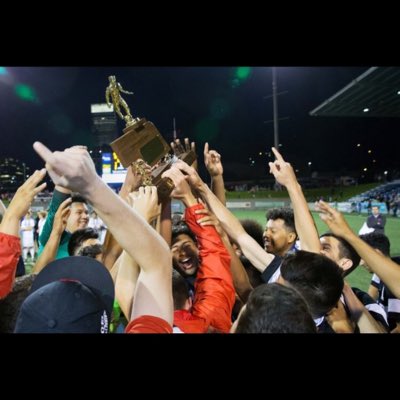
None of it seemed possible 16 years ago.
“Everything that’s been accomplished I would never have imagined. I have a huge sense of pride in that and in knowing that if I stopped coaching tomorrow South High soccer’s still going to be pretty good because we’ve built a strong program.”
Not bad considering what Maass started with.
“The guy who was the head coach before me saw I had some energy and passion, so he stepped down and recommended me to replace him. The truth is nobody else applied, so they just gave it to me because essentially nobody wanted that job. There was nothing desirable about it. It was not very forgiving.
“The program was pretty bad back then. The school really didn’t fund the program. The uniforms were really old. The sport of soccer didn’t get much attention or respect, especially down here.”
Besides low interest and expectations – South won eight games his first four years – it was hard getting kids to play and fans to follow.
“I had somewhere around 11 or 12 players. The first practice there were 15 kids on the field and four of them were off the streets, they weren’t even students. I only had one senior. The next year it was maybe 13 to 15 players. Then 18. Each year it just grew a little bit.”
He scoured South O parks and fields for promising talent and before long gifted players, even some elite club players, filled his rosters.
The facilities were subpar until Collin Stadium opened in 2009, giving the by-then vastly improved program a distinct home advantage with its full-sized soccer field.
The one constant, Maass says, is that “the kids were great kids.” “But,”
he adds, “I don’t think anybody saw South going from being the worst team in the state to what it is now. We’re pretty much a projected top 10 team every year and that’s where we want to be – a top 10 team that everybody has to kind of somewhat fear.”
These days the program gets 100-plus students trying out and carries 80 to 90 players across its varsity, junior varsity and freshman squads. Grads are getting scholarships to play at the University of Nebraska at Omaha, Bellevue University and other schools. Several are coaching for South, including Leo Enriquez and Cesar Lira, and several others are coaching for club teams or competing schools.
Where South soccer used to be an after-thought, it’s now a conversation starter. Cara Riggs was South’s principal when Maass engineered the turnaround. More than all the wins, she appreciated the way Maass cared.
“Joe sometimes comes off as tough, maybe even gruff. Underneath that exterior is a very soft-hearted, compassionate man who cares very deeply about the kids he works with. He has high expectations of your hard work and he’s willing to go above and beyond for you and your success. His loyalty to South High, its students and South Omaha is as strong as a Mack truck.”
Tobias Maertzke, a German exchange student who played at South a few years ago, lived with Maass and his wife while going to school there. “He’s like a family member almost,” Maass says.
Maass acknowledges he’s softened and matured since becoming a father. He and his wife have two children.
“I’ve mellowed quite a bit. I’m still fiery but not overly fiery like I used to be. The first couple years i was probably a little bit rough actually. I had a great understanding for the game but maybe not an understanding for all the kids, whereas now I feel I understand the kids, the game, how the referees work. I feel the refs respect me, so they’re not as quick to give me a yellow card if I step out of line.”
Riggs says South soccer made a positive impact far beyond the field.
“The success of Joe’s soccer program has been a definite booster for school pride and community respect. The success helped put South back on the map and recognized again in the Omaha community.”

Maass, whose roots are in that neighborhood, says, “The sense of community that came back to South Omaha is just amazing to me.”
Having built South to be an elite program and kept it there, Maass is not sure which feat is more difficult.
“It was really hard to get there but it’s hard to stay on top though because more kids are playing the sport now and other schools are starting to mirror the things we’ve done.”
Of all the achievements South’s attained, including district and metro crowns and records for most goals scored and most shutouts recorded in a single season, the 2013 state title stands out.
“Winning a championship at South after they hadn’t won one in years was big. It felt great to feel our program was on top of the world.”
Championships and records are nice, he says, “but at the end of the day” it’s the relationships he forges with “the kids” and following their life pursuits that matter most to him.
“I see them out in the community. It’s interesting to see where they end up. I hope in some way I’ve impacted these kids. That by far outweighs everything else.”
Just like the team’s Twitter page tag line reads, “We are a family, friends and a team with one big heart.. Packers.”


 Leo Adam Biga's My Inside Stories